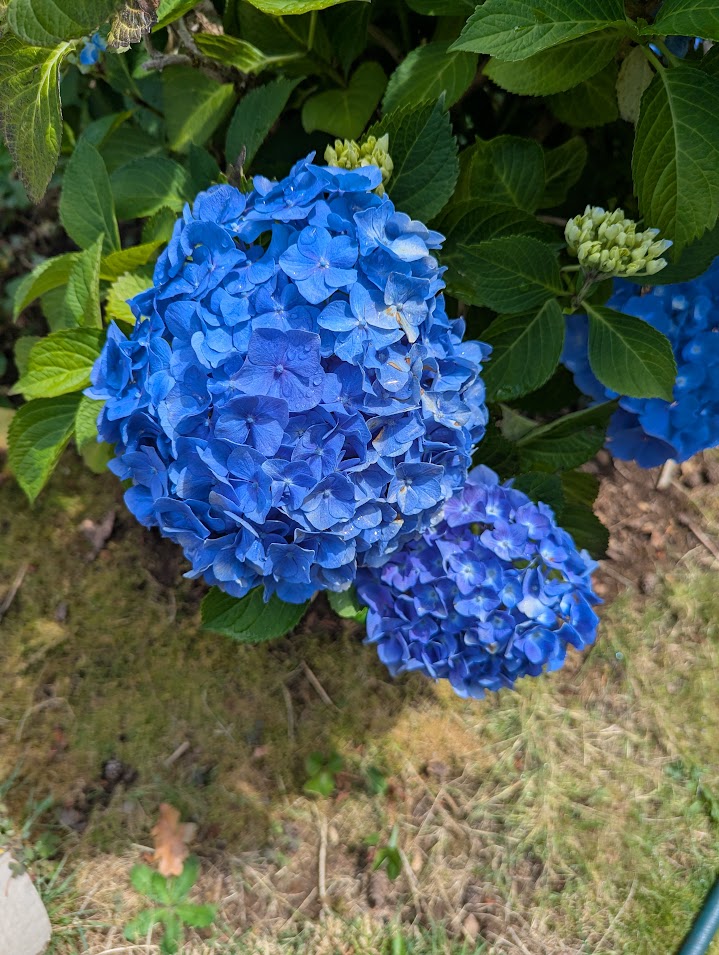
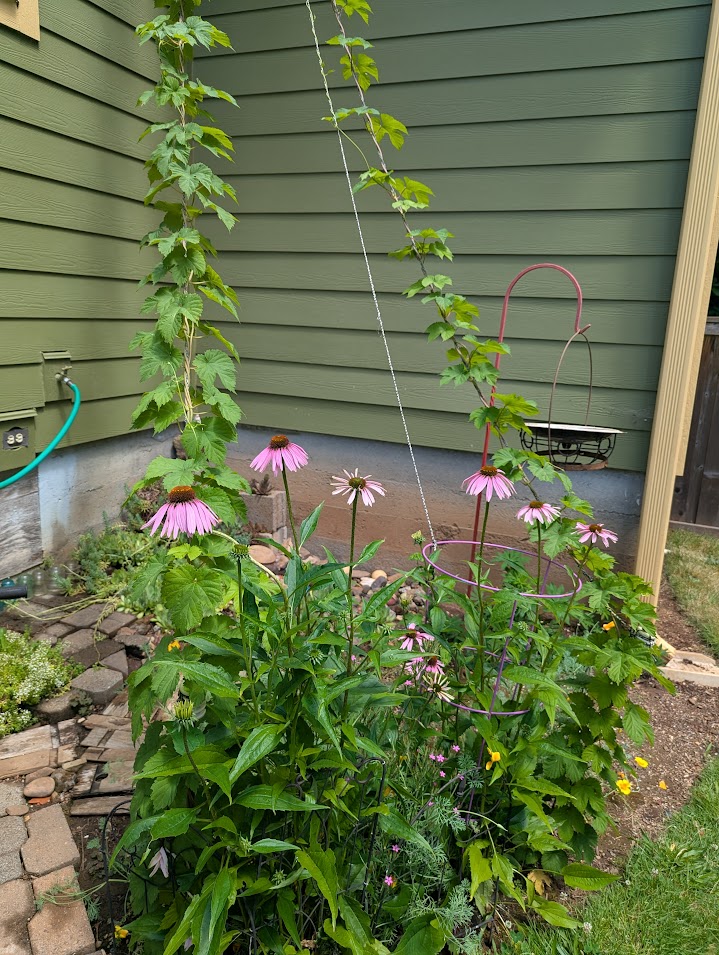
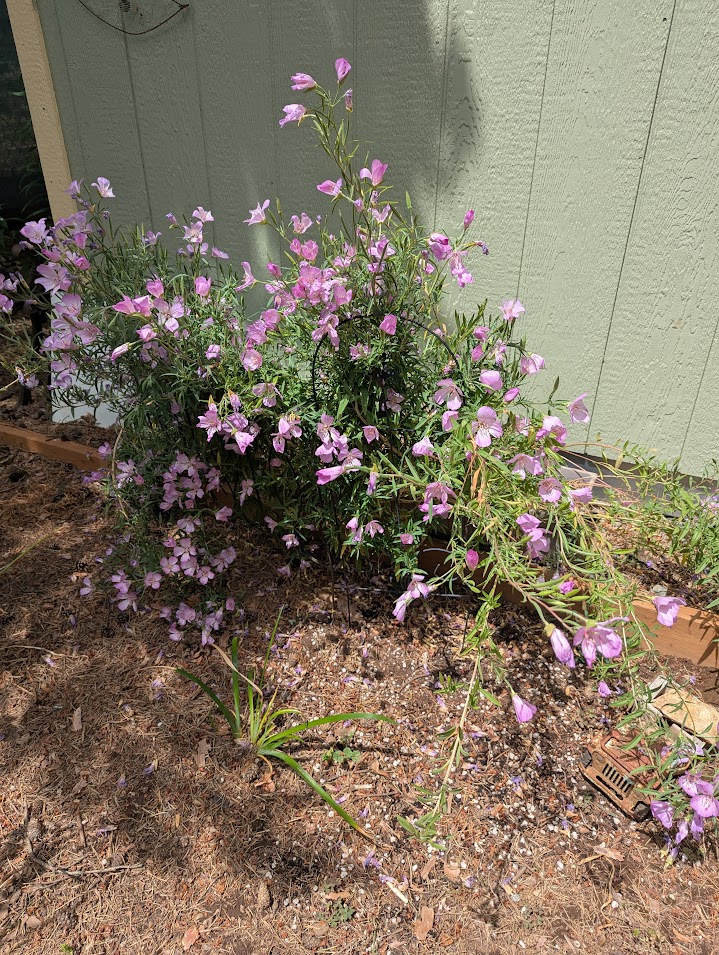
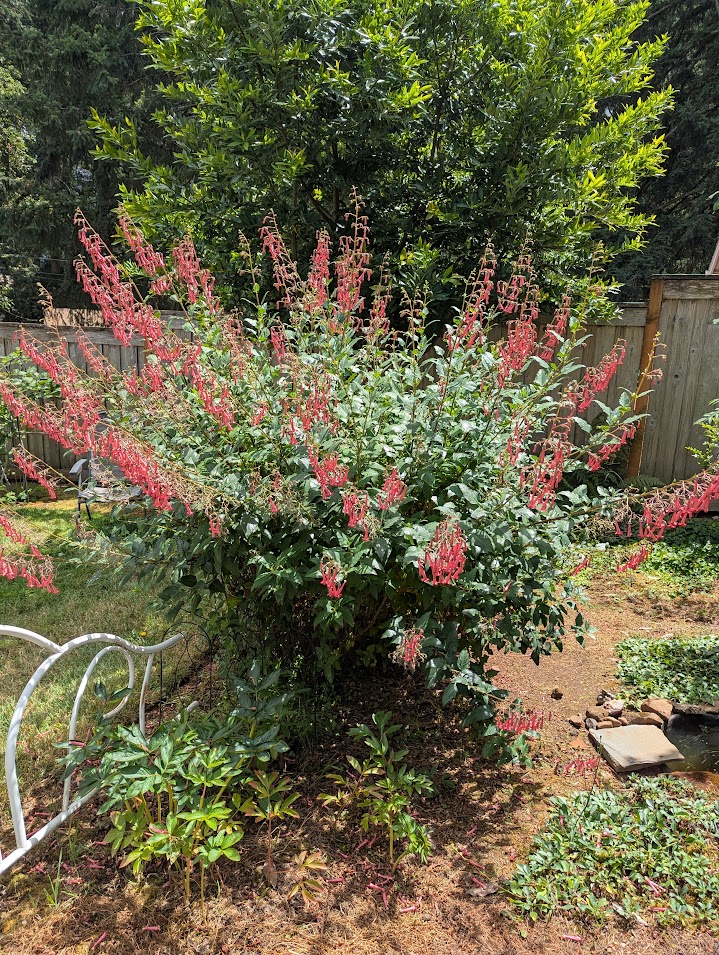
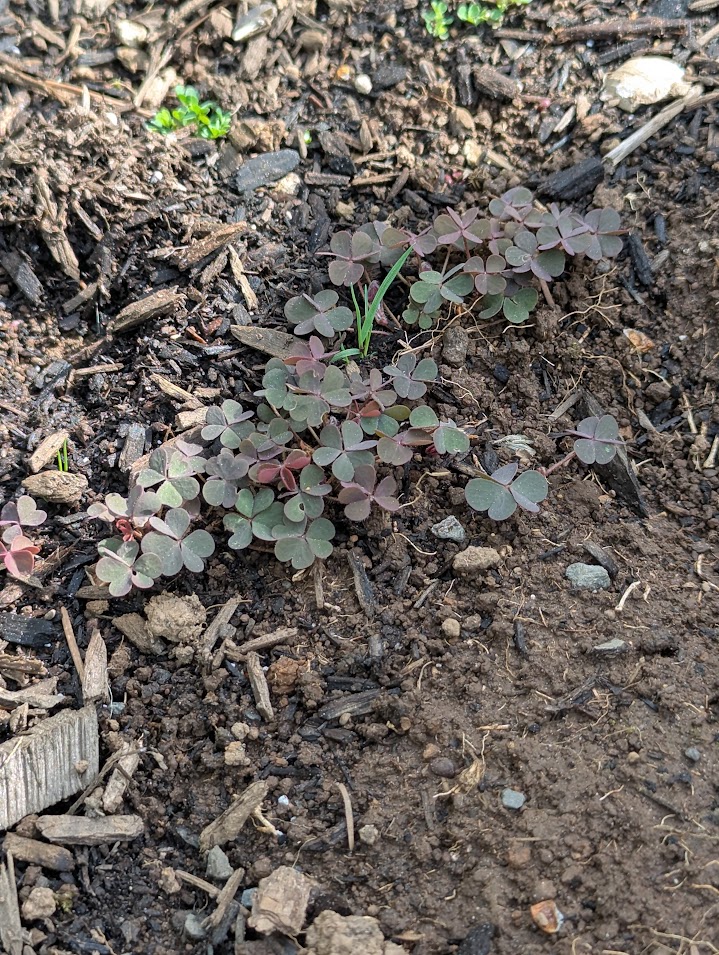
We have a frost advisory tonight. Mid- to late- October. It’s a late frost this year, and probably a light frost, but I can finally think about cutting back my peonies. I have already cut back the hydrangea and dead-headed what the birds won’t dine on over the winter. Stalks with seeds for birds litter my garden this time of year. Pretty certain the neighbors with perfect lawns are rolling their eyes once again.
I have cardboard hiding grass where I want to expand flower beds next spring, so if it isn’t the dead and dying seed heads for birds, it’s the bricks and cardboard on the lawn that drive those 1950’s lawn afficionados.
Actually, I think it only bothers the landlord next door and that’s fine.
My husband has been door-to-door collecting leaves the neighbors are willing to pile up on the street curb for him. He’s ready to spread them over the vegetable garden area for the winter: a free-to-us and eco-friendly ground cover to prevent weeds in the spring.
I cut woody stems down to knee high: the bugs like to drill into the stems and overwinter.
The peonies get trimmed to the ground after the first frost. The roses get mulched, but not pruned back until February of next year. I’ve pruned the dead out of the rhododendrons. And I have sown winter seeds in hopes the rains will come soon and help them germinate.
I have also picked up all the little wire fences that hold plants up or keep the dog from trampling the tender stalks. Once the plants are gone, the dog can’t see the wire fences (he’s 90% blind) and we don’t want him tangled up in wires.
I’m not sure how to winterize my ponds this year, but I cleaned them, rescued a few fish (they may overwinter), but the solar panels and pumps… What do I do with those? Something to look up in a pond book or ask the ever-wise internet.
I have decorated for All Hallow’s Eve. Last year I think we had five spooks come by, but the night was very dark, very wet, and our street has no street lights. If it is dry, we might get 20 little critters, half of them teenagers. Otherwise, no matter how clever I am or how many strings of lights I put out, the little beasties stay to well-lit streets.
I just can’t fathom why.
And, last, as a parting statement: I will be changing up what and how I blog (again) soon.
I’m slow on the uptake sometimes. I was going to add some water to the upper pond. I keep a watering can full of city water that I allow to sit over night to expel all the bad chemicals (and our city water has a ton of them). Usually I just need to add a little water to each pond every other day.
The first thing I noticed was tiny white specks floating in the muddy water.
“What the…?” I reached for the net and began to scoop the dots out. THEN I noticed that the moss in one of the planters had been dislodged and turned upside down. Mind you, this pond is only about 24″ in circumference and holds 15 gallons of water.
“WHAT?” My voice was getting a little louder now.
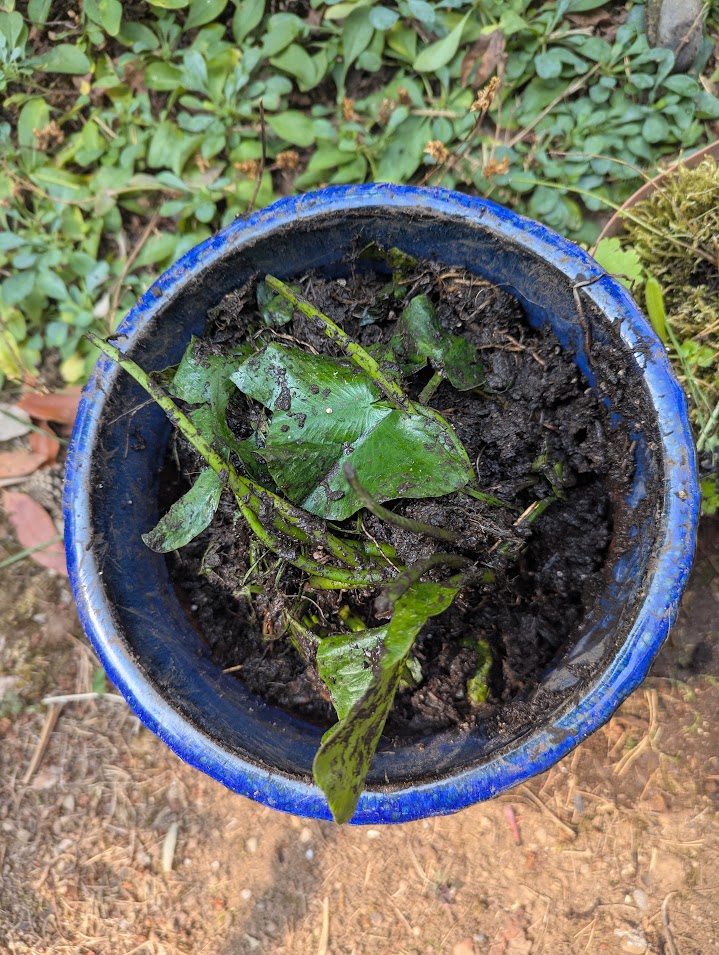
THEN, by some miracle of observation, I noted that the blue planter had been thoroughly trashed and the water lily was gone.
“What in holy!? WHAT?!”
My husband hurried over, “What’s wrong?”
“Some critter trashed the planters.”
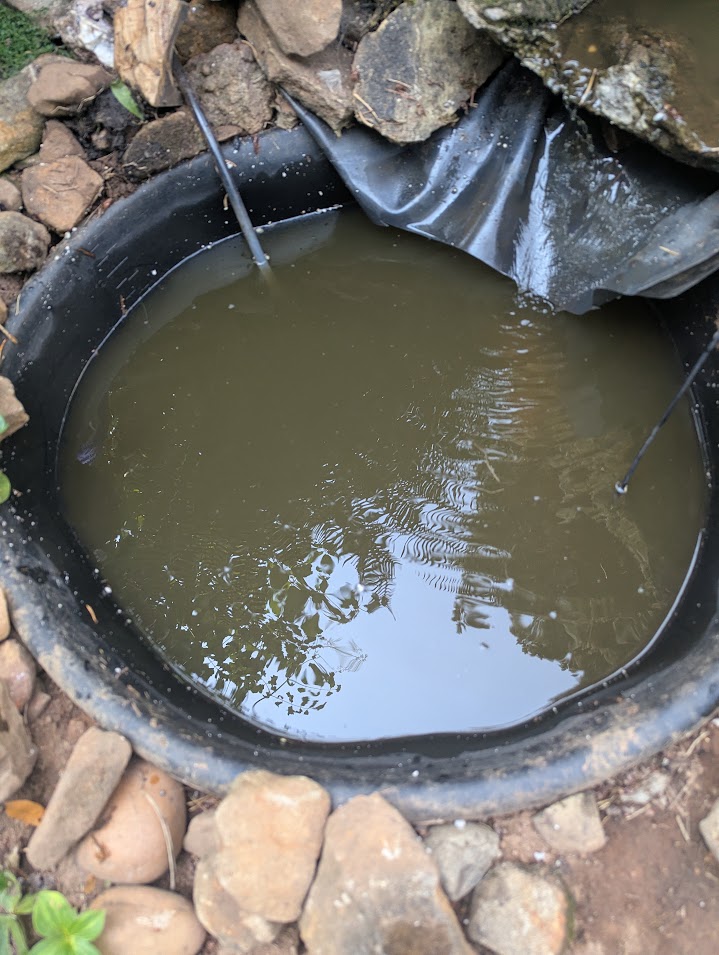
Yup, the white floaters were vermiculite. The water was muddier than normal. There was even dirt up on the rocks.
Well, isn’t that a fine “how-do-you-do”!
I replaced the moss on the first planter, no real damage done. Dug through the blue planter and found the lily had merely been pulled out and then stuffed back in, upside-down. It was fine and quite salvageable.
The pond is murky brown, I’m not certain any fish still live in it, and the pump was pumping muddy water. I just cleaned that pump yesterday, thank you very much.
If we lived in Seattle, I could hope it was the work of one Jimothy the short-spined raccoon, but I don’t live in Seattle and it was more likely the damage done by a normal sized masked bandit. I don’t think it was the work of a squirrel or a crow: the water lily had been uprooted, turned over, and stuffed back into the planter. I also don’t think it was the work of one muppet named Ruger, although he is one of the primary reasons I have to add water every day: he thinks pond water is better than clean water in his dish. Also, he’s out by nine at night and is only outside long enough to potty sometime in the early morning hours.
I didn’t think to take photos before I rescued plants. I will need to add soil to the blue planter, but it looks like the lily will survive. There’s so much mud in the water that I will have to completely empty the pond and clean it out. If any fish managed to survive, I will relocate them to the lower pond with the other mosquito fish. Then I will refill this pond with clean city water and let it sit a day or two before I call Vector Control to add new gambusia.
Also, I have a trail camera. It wasn’t set up last night, but it is set up now. We may not know what the vandal looks like but we are certain it will return to the scene of the crime!
That’s the heading for a popular advertisement for purslane (Portulaca oleracea). It goes on to advise the reader to keep the plant and nurture it’s existence.
I say:
PULL IT.
I see this herbal remedies ad frequently that touts the benefits of purslane, some of which are listed below (per an AI summary on the Interwebs):
“Purslane is rich in omega-3 fatty acids, antioxidants, vitamins A, C, and E, and essential minerals like magnesium and calcium, making it beneficial for heart health, reducing inflammation, and supporting overall well-being. Additionally, it may help manage blood sugar levels and promote digestive health. Health Benefits * Heart Health * Blood Sugar Management * Digestive Health * Anti-Inflammatory Properties * Antioxidant Protection“
Yada Yada Yada. Etc., etc. etc.
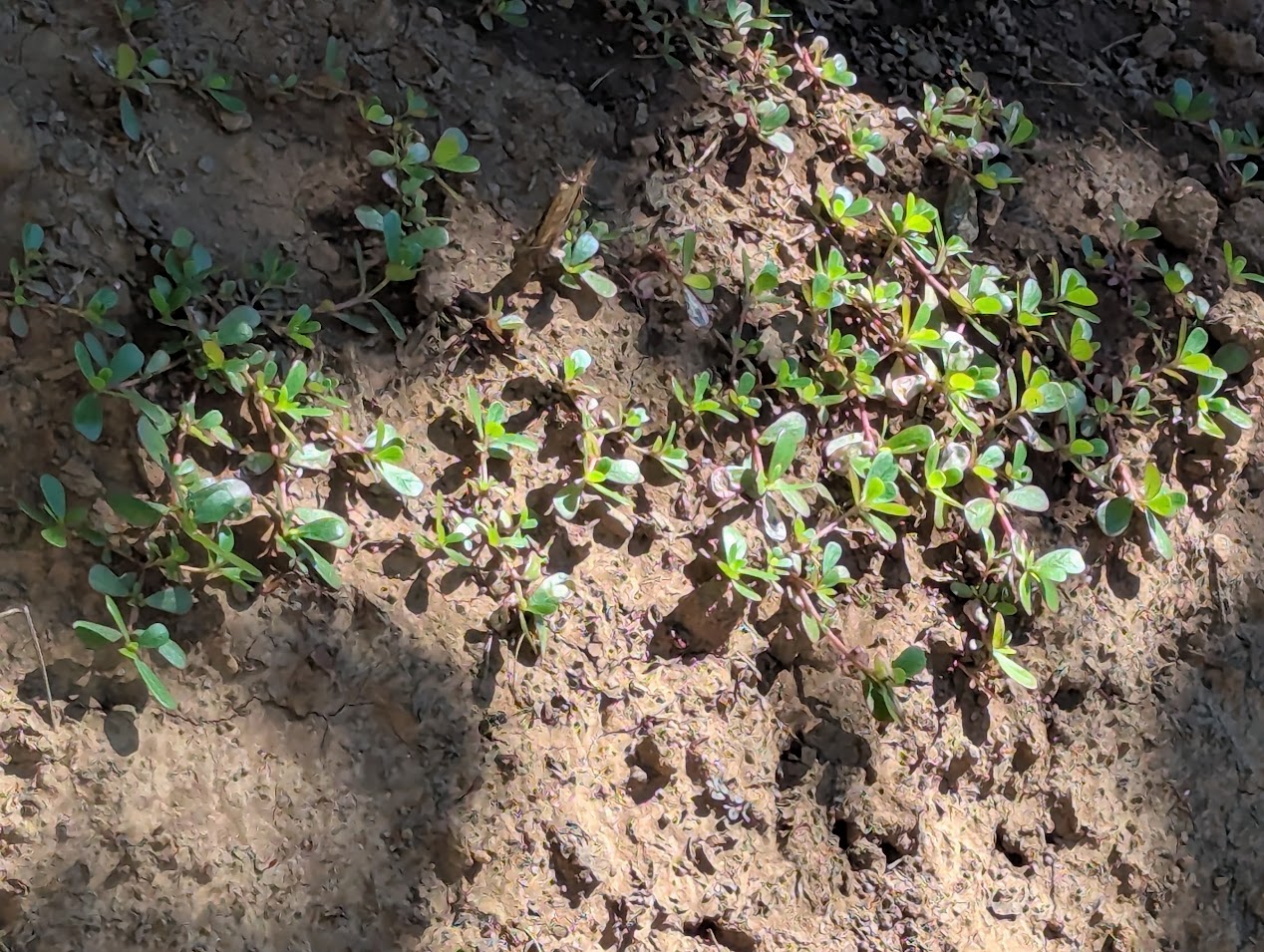
There are not enough health benefits to purslane to justify an entire garden buried in this pernicious weed. Purslane is a weed.
I spent three days pulling this sucker (sucker of water) out of the raised beds in our vegetable garden. It takes over in a matter of weeks, or even days, covering every visible speck of open ground the vegetables are not planted in. It is worse than the grass I battle in my flower beds.
No, I take that back: purslane is relatively easy to pull out of the ground whereas the grass grows on runners and comes back if you leave so much as a quarter of an inch of the plant in the soil. Purslane doesn’t do that, but it is just as nasty a weed as grass in every other aspect.
If you want to save some for your salad, go for it. My advice is: pull it, kill it, and don’t allow it to multiply. There are a lot of other herbs out there that provide the same benefits and don’t take over the garden. Grow those.
Just my two-cents’ worth of gardening advice. You’re welcome.
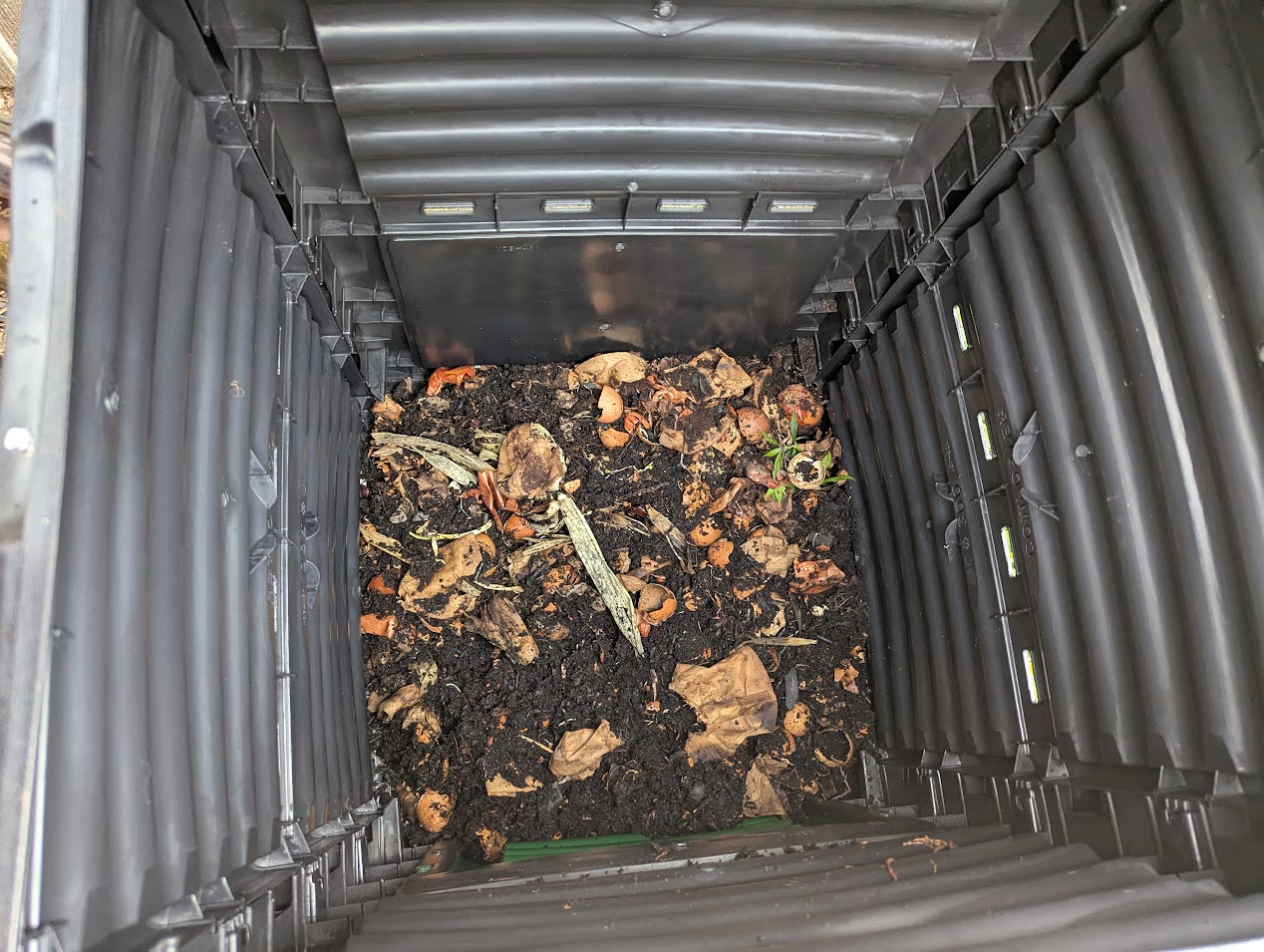
This post is actually about an argument. We both knew the old compost bin was done for: the door no longer stayed on and I had to place a pot in front of it to keep the critters at bay. I think I bought this compost bin around fifteen years ago, but I won’t swear to that. We’ve added things from the kitchen, ashes from the fire, early grass clippings (before the weeds start to bloom), and little else. It has stewed, produced soldier flies, and been a haven for red worms for a long time.
The only thing that doesn’t compost quickly is egg shells. But egg shells are vital to compost for the calcium they add.
I knew I could build my own compost bin and we probably have instruction in several books, but it would be a Jaci project with little to no help from my husband. He has other things he worries about and works on. Other than adding to the compost and supporting the effort to compost, it really isn’t his “thing”. And I am overwhelmed by things to do.
Buying a new bin was the only option left, but – Boy Howdy! The prices for a pre-made compost bin are astoundingly high in 2026. And not one of the local big box stores has a demo model on the floor: you can only order from Lowes or Home Depot ONLINE for a compost bin. That seems ludicrous in this day and age when we are supposed to be environmentally aware, but there you go.
Want a compost bin? Buy it sight unseen online and have it delivered to your house or the store, no other option. We looked. We walked aisles and asked questions. It’s ridiculous.
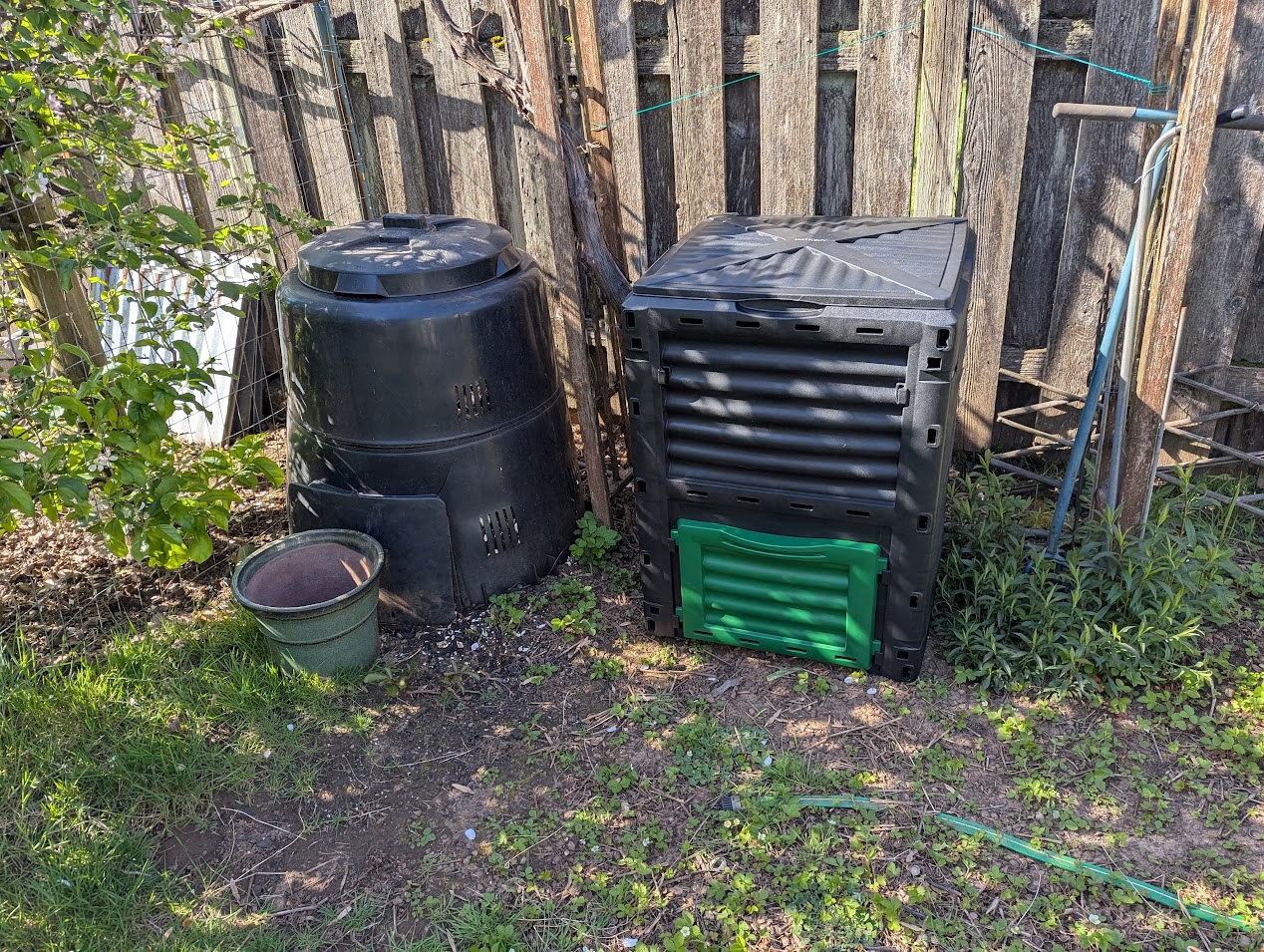
I turned to Amazon: all I wanted was a bin of comparable size to our original bin and for a lot less money than most manufacturers are asking. I wasn’t willing to spend $100 for the thing and I didn’t want a rotating one: just something similar to what we already had. And Amazon delivered: the one I bought is $76 at a big box store and I paid $49. Same capacity as the former bin. (Old on the left, new on the right)
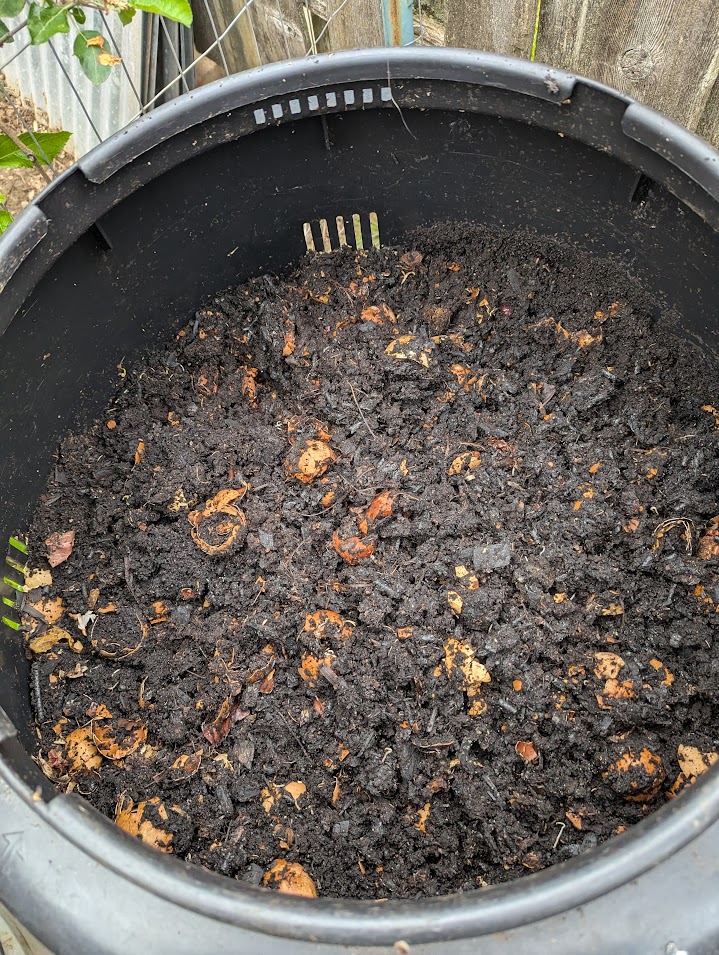
Now came the hard part: moving debris from the old to the new. I ran into an issue almost immediately, and that issue led to a minor spat between husband and myself: the debris in the former bin was already heavily composted, dense, black, gooey, wormy. I moved about six inches of garbage before I ran into the issue. I tried screening it, but it was muddy, wet, wormy, thick.
Not smelly. This stuff was pure black gold, beautiful compost with uncomposted egg shells. I tried to explain this to my husband one night when he was not interested in my story and we ended at an impasse. My verbal skills were lacking and his interest had waned. I dropped the subject.
A day later, however, I managed to get him to walk over and look at what I was dealing with. And he was awed by the state of the compost in Bin #1. And he offered a solution: Just keep it in Bin #1 and use it up. We’ll start a whole new collection in Bin #2, no hard labor on my end.
Well, except for moving that beautiful black compost to flower beds, egg shells included.
Annnnnd – after I wrote this, my next door neighbor GAVE me a compost bin just like the original;, so now I have TWO compost bins and one that I am still emptying. I’m putting the beautiful black stuff into old bird seed bags and will mix it into the soil of flower beds as the year moves on.
Anyone who grows honeysuckle knows the struggle: aphids.
“At least if they attack the honeysuckle, they will stay off the (roses, lupines, elderberries).”
“I will never grow honeysuckle again.”
That last statement was from other gardeners. Me, I like my honeysuckle. But I have tried everything: Neem oil, scented water sprays, gentle hosing off, lacewings and ladybugs purchased from the store… EVERYTHING.
Or so I thought.
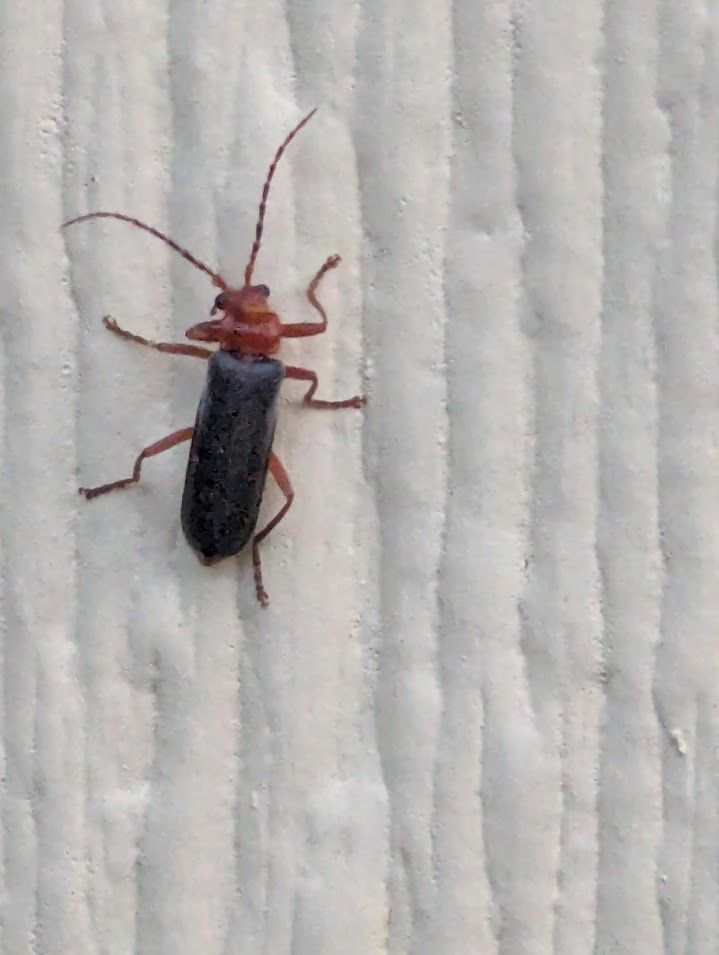
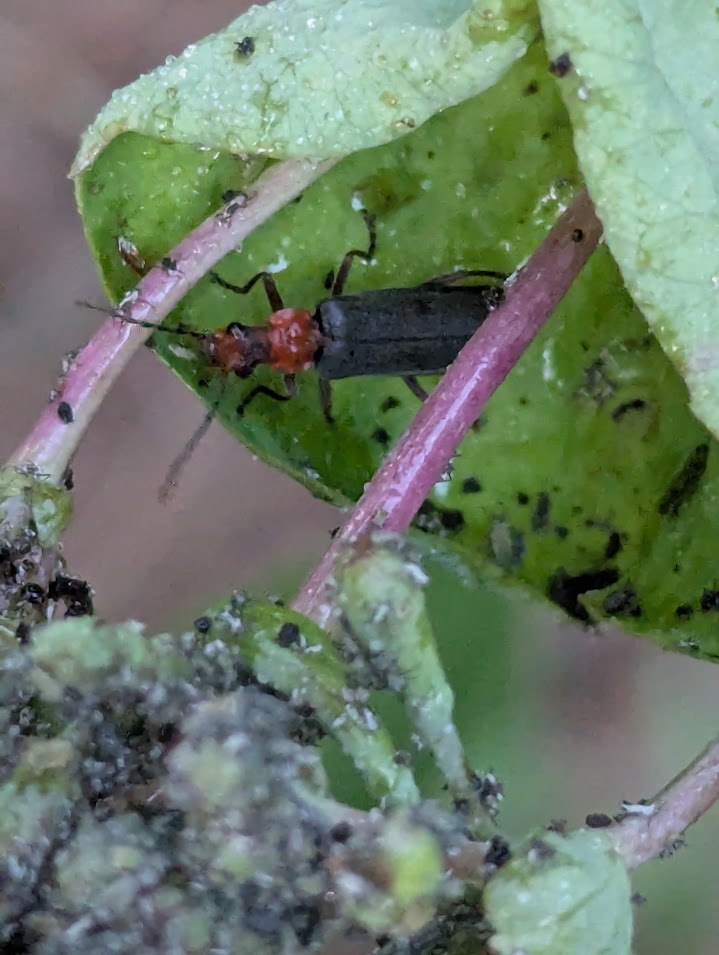
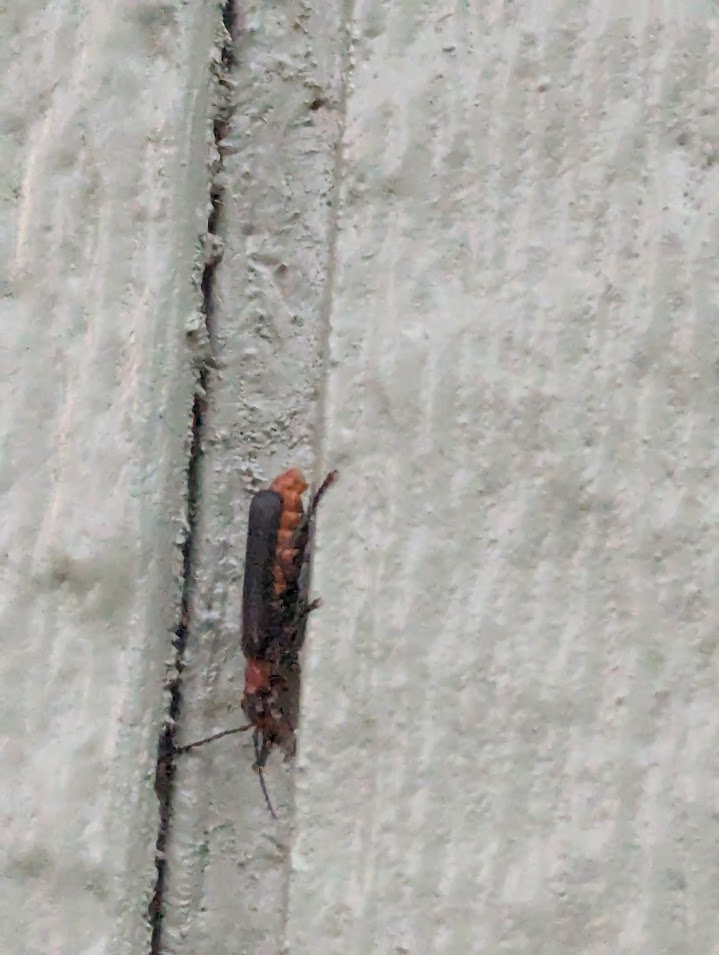
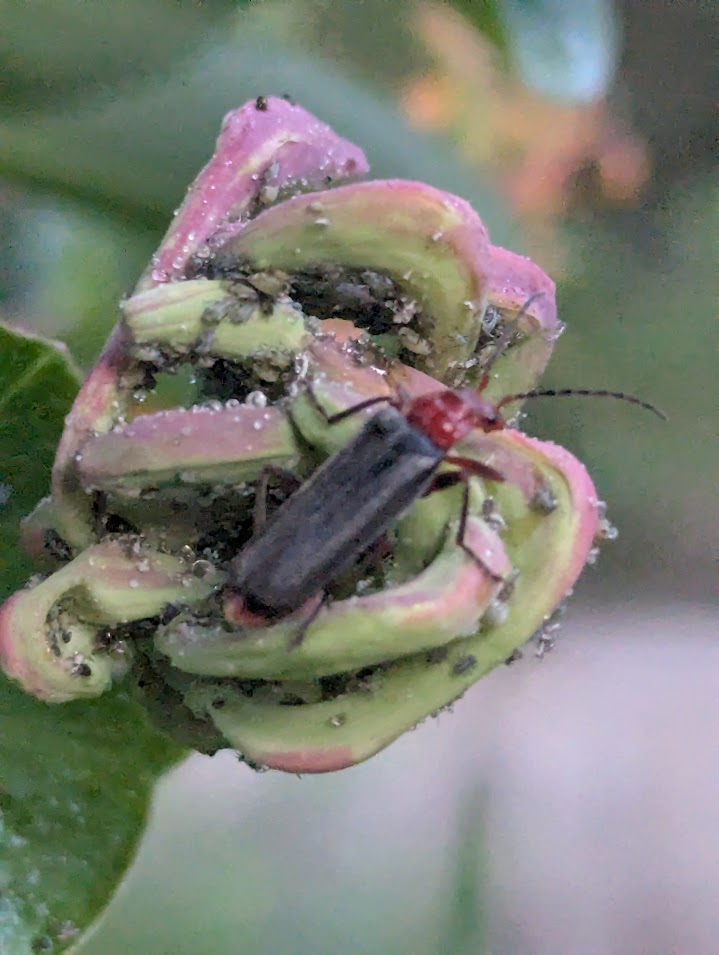
That all changed when evening was young and a mass of insects swirled in the air over and around the honeysuckle. A soldier beetle hatch (Pacificanthia).
I’ve seen them around, but never en masse like this, and I have never really paid much attention to them: friend or foe?
Turns out, they are a gardener’s best friend, probably more than lacewings or lady beetles purchased from a store. Soldier beetle adults are voracious and they LOVE LOVE LOVE aphid meat.
While I still don’t know the exact species of soldier beetle that hatched out, I do know that my honeysuckle has never been happier.
YUM! Aphids!
I don’t know much about these beetles: where they lay their eggs, what the larvae underground eat, or what the coccoon looks like, but I now know this: the adults will decimate an aphid infestation in short order.
Sometimes, you choose your ground cover at the nursery or the garden show. Here are a few I have loved.
creeping thyme
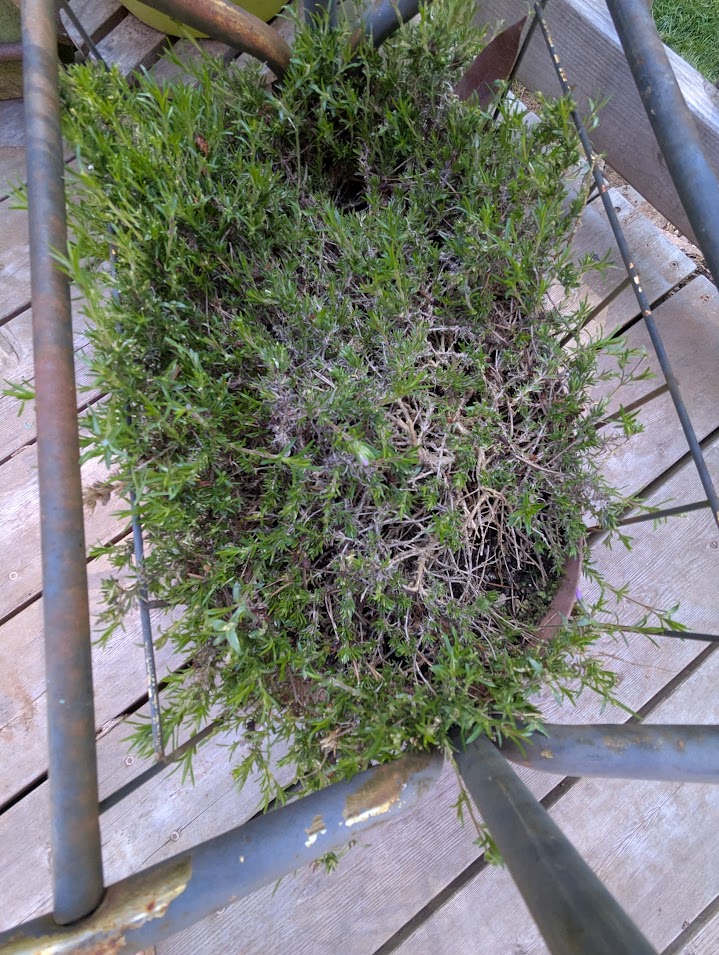
Creeping thyme – Thymus serpyllum. Slow growing, best in rocky places or between stepping stones. I have seeds to plant more. There are several varieties and I have at least three of them. Holds up to light foot traffic, flowers are pretty and range from yellow to a light purple (my favorite).
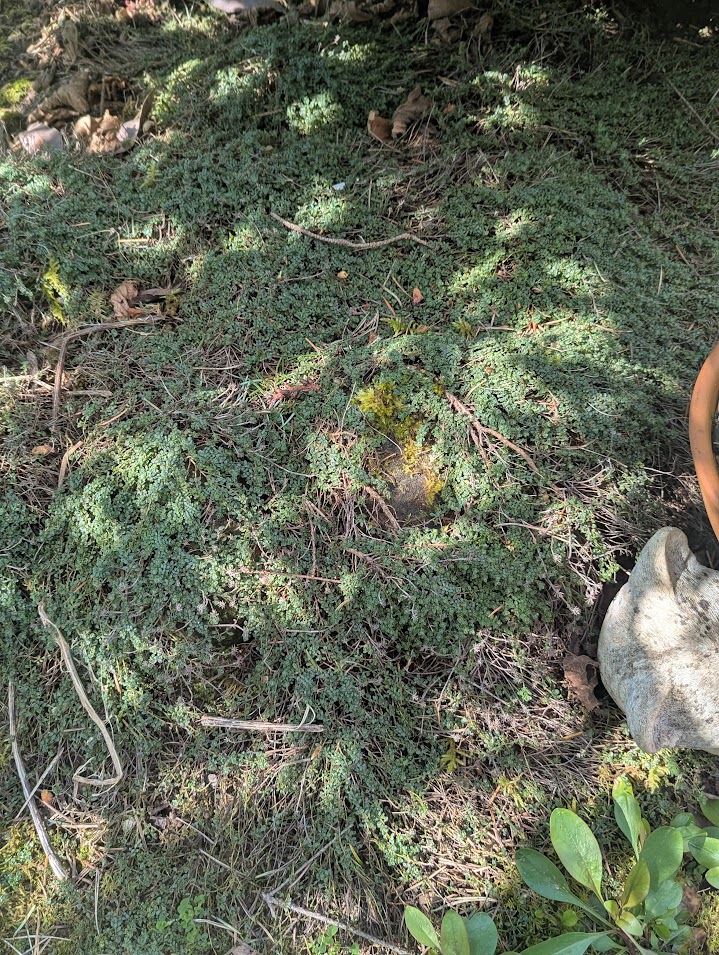
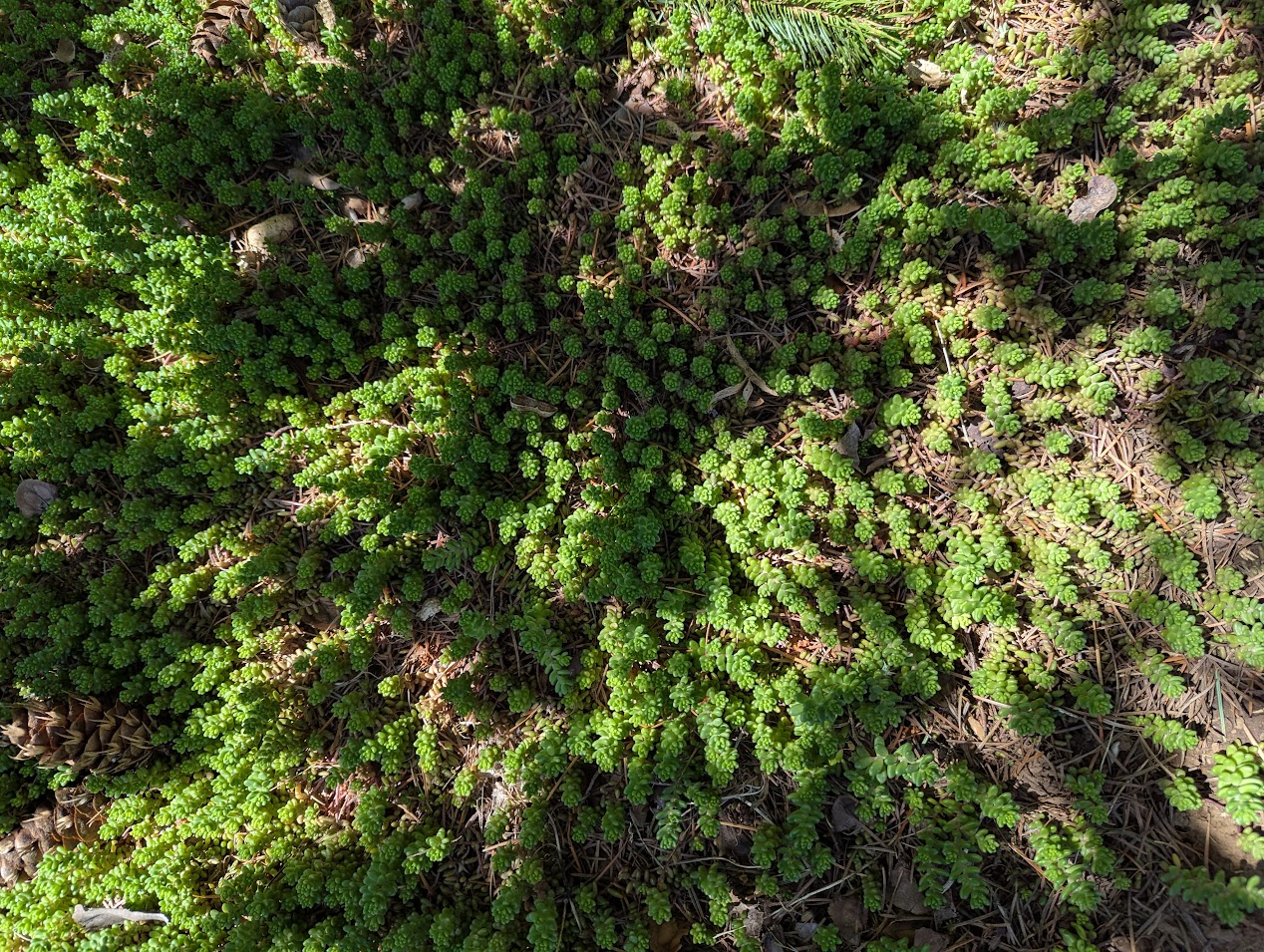
Gold Moss stonecrop – Sedum acre. This is everywhere in my yard now. I only bought one little plant years ago. It’s so easy to maintain, loves to creep over rocks, and flowers mid-summer.
Flowering phlox/moss phlox – Phlox subulate. Mine doesn’t look too healthy in the pot, but I will be moving it to the ground somewhere so it can spread. It grows thick and only blooms in the spring.
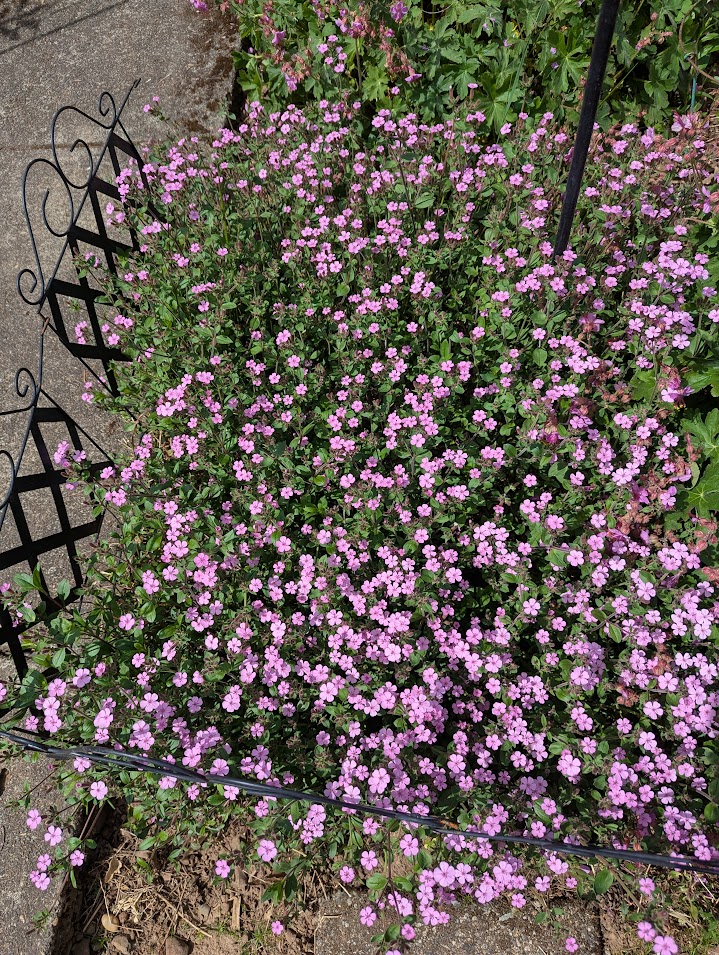
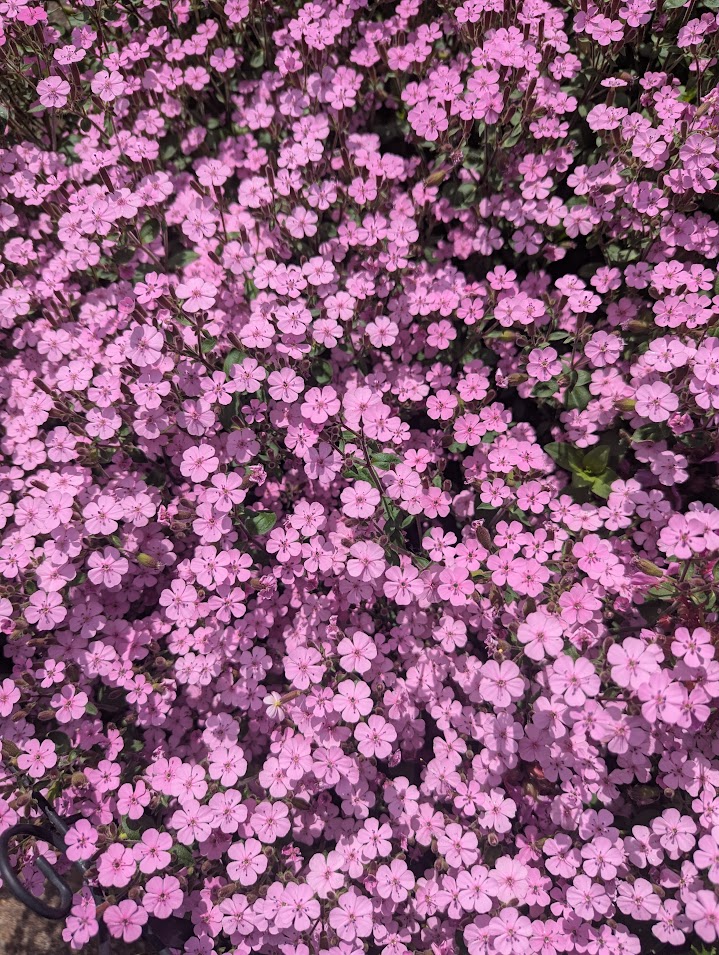
Rock Soapwort – Saponaria ocymoides. So lovely and will bloom all summer if I dead head the first bloom. It does get leggy, and spreads easily. Doesn’t seem to crowd out other plants (in face, the geraniums might crowd it out a bit).
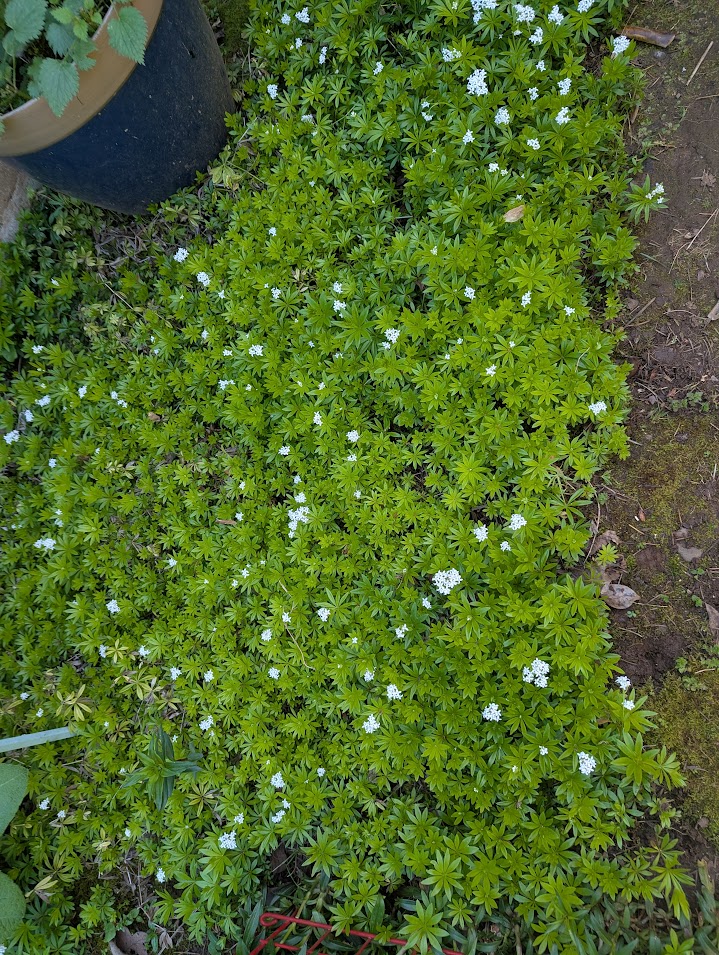
Sweet woodruff – Galium odoratum A polite ground cover. I love this shade-loving herb. It does not take well to foot traffic but it fills in empty spaces and doesn’t compete too much with the other plants. It is simply a polite ground cover.
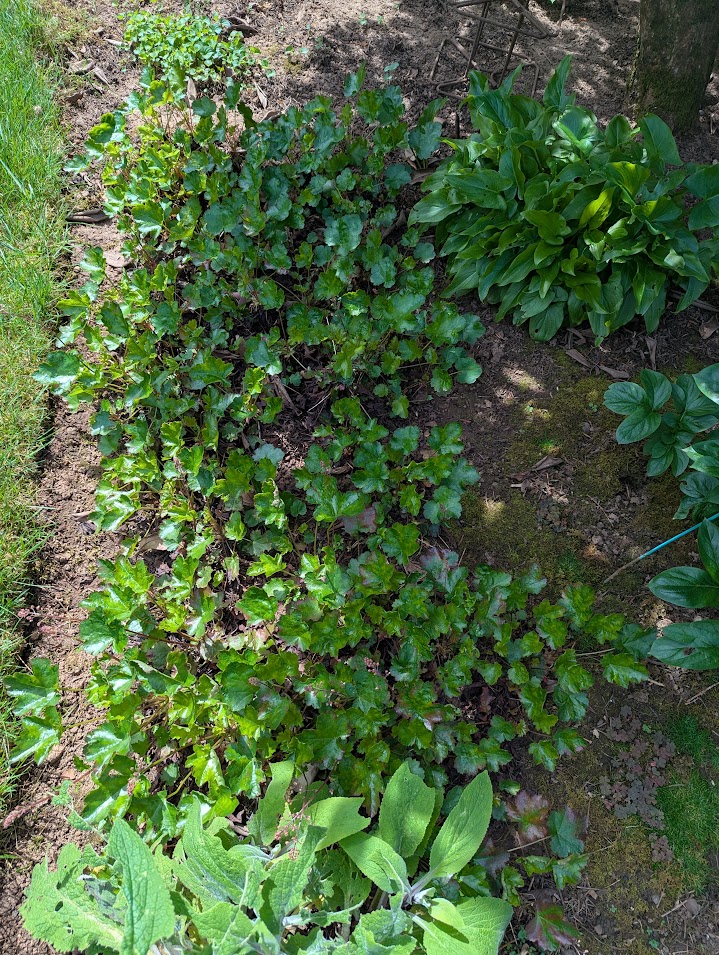
Coral bells – Heuchera. I have a love/hate relationship with them. They spread easily and densely, but never where I want them to spread. There are soooo many species. I have no idea the exact species I have, but I have ripped it out, replanted it in different areas, and ignored it.
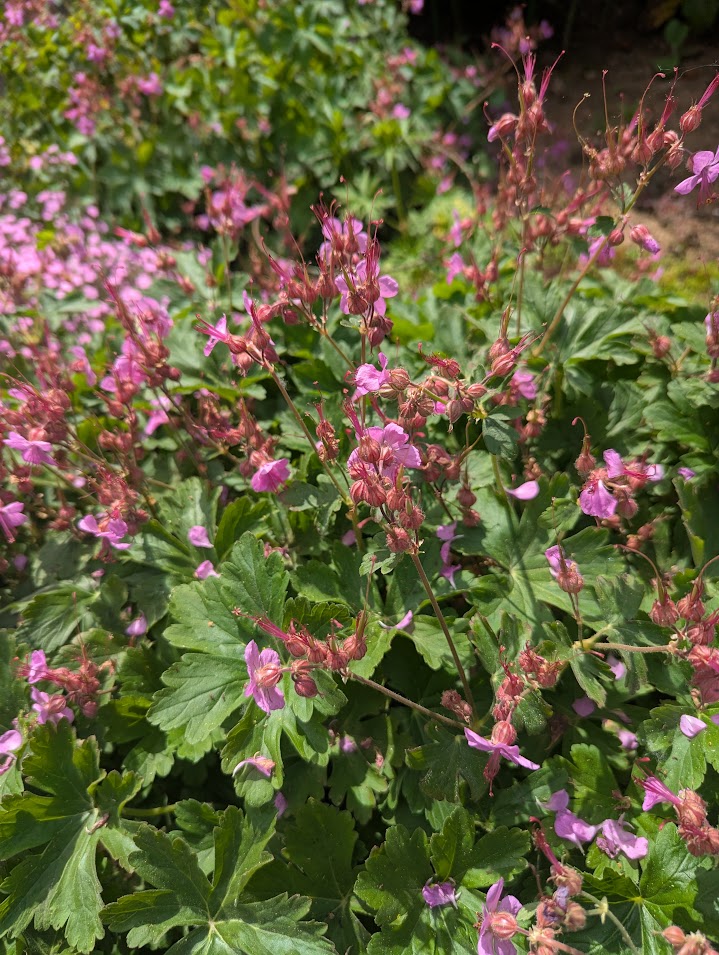
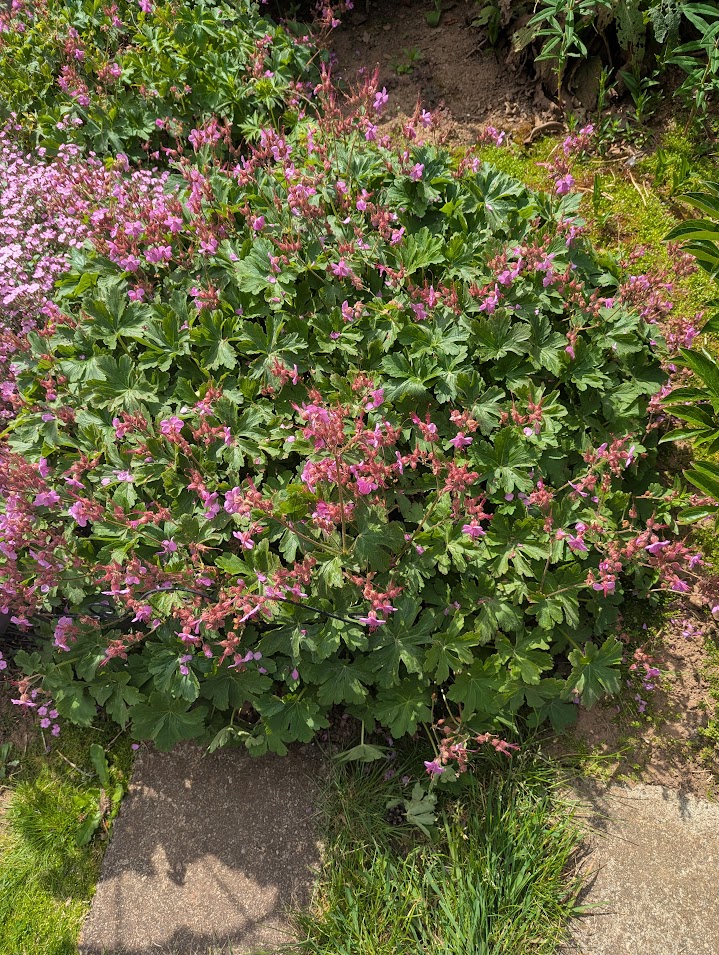
Sticky Geranium – Geranium viscosissimum. I don’t remember when I first bought this and planted it in a little wooden box. It has overgrown the box multiple times, and like the coral bells, I have ripped it out and replanted it elsewhere. In fact, ripping half of it out is an annual end to summer. It also happens to be a native to North America. I may soon move some plants to an area I would like my husband to *not* have to mow.
lithodora
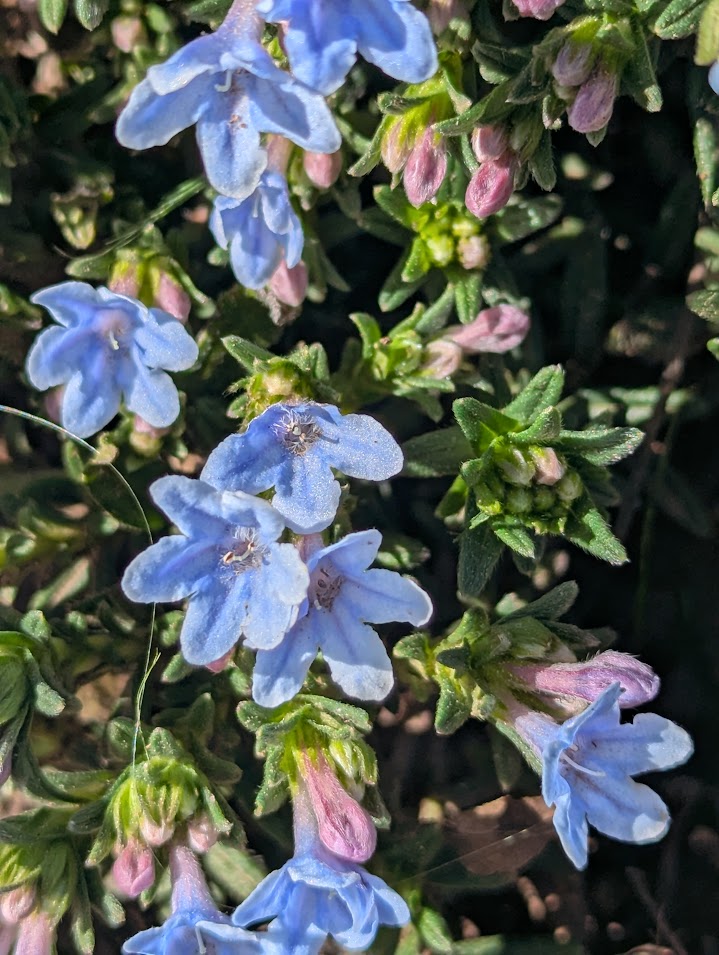
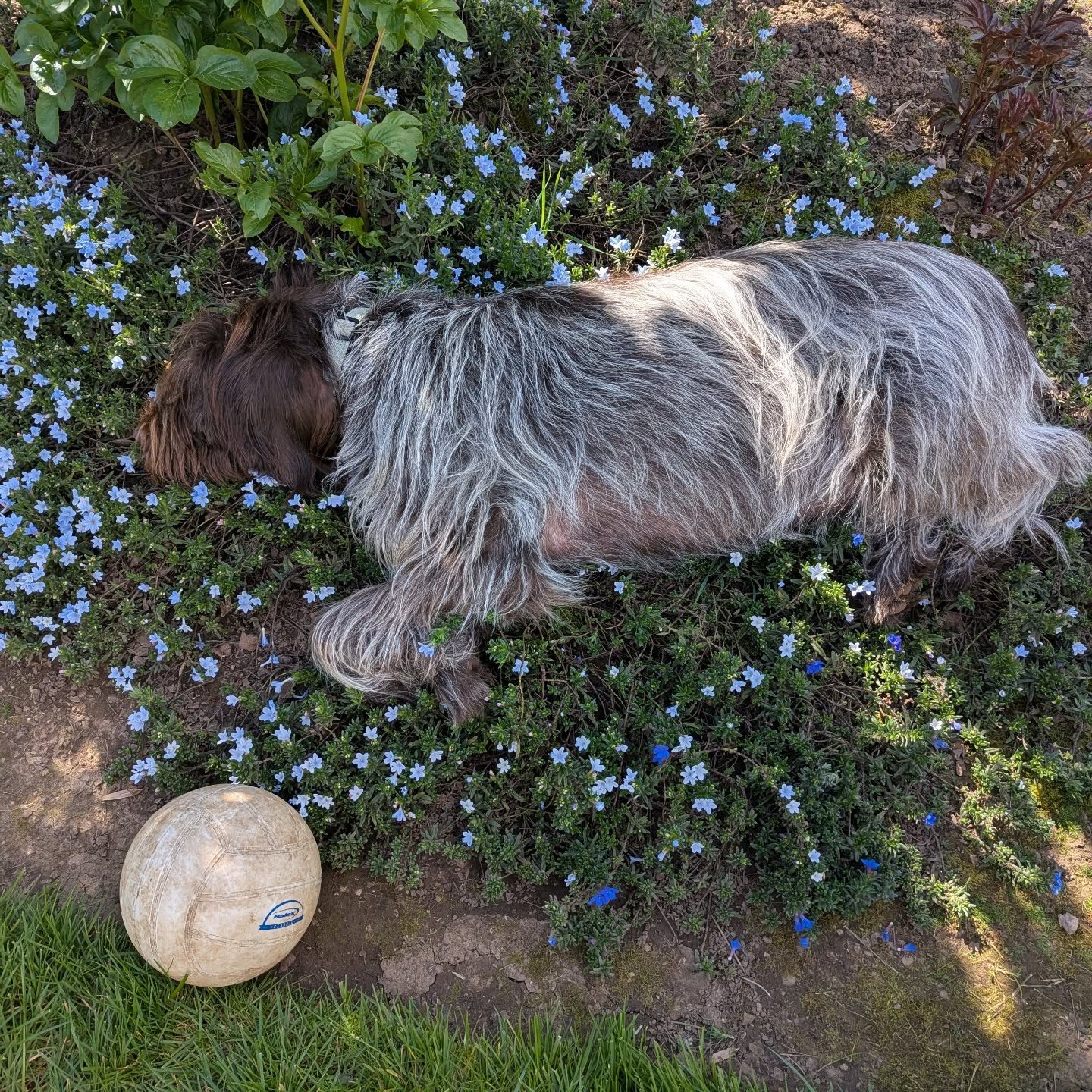
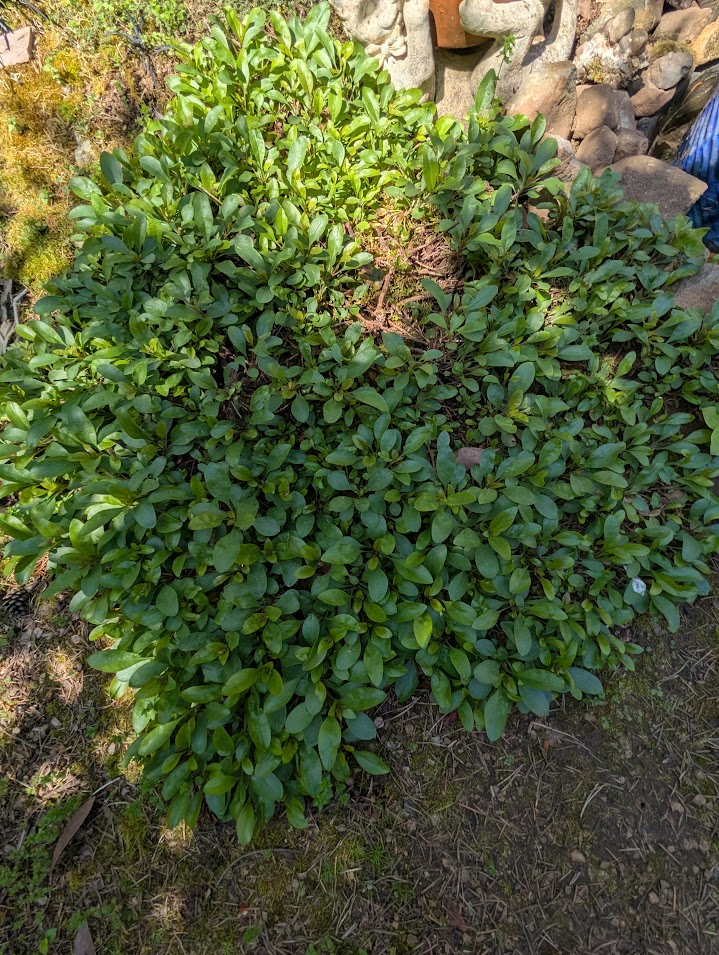
Lithodora ‘Heavenly Blue’ – Lithodora diffusa. This has gone through many changes and two dogs that tried to kill it by loving it too much. Yet here it is. And I just learned it is also called “Purple Gromwell”. Huh. And it is in the Boraginaceae family, along with borage and forget-me-nots.
The dog in the middle of it is a bonus feature: that’s our epileptic, mostly blind, emotional support Wirehaired Pointing Griffon, Ruger.Ruger is five and the second dog to love the lithodora.
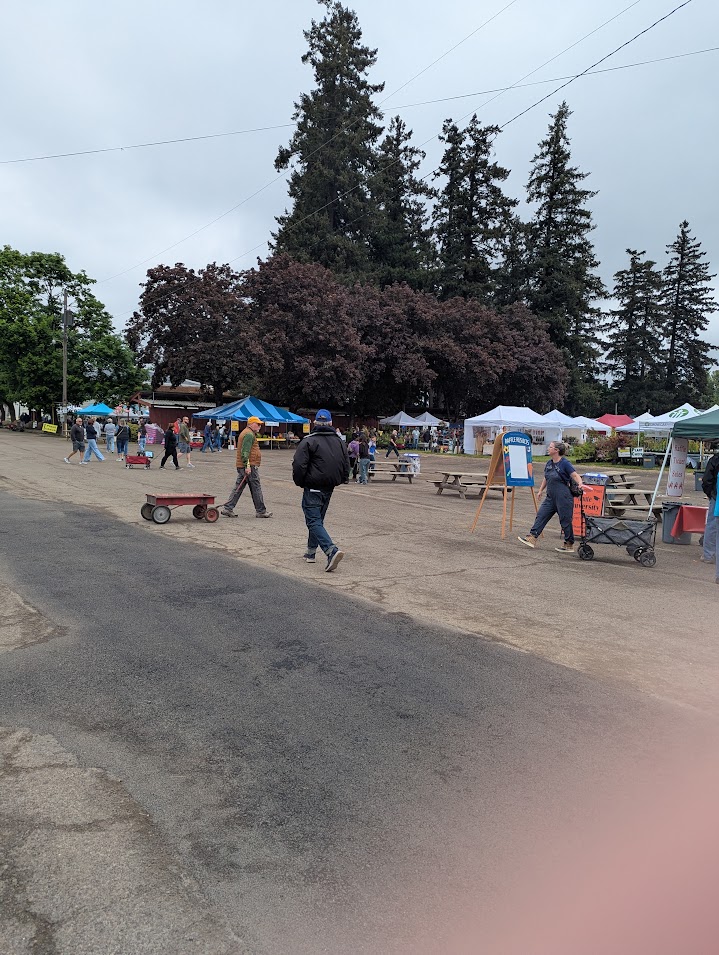
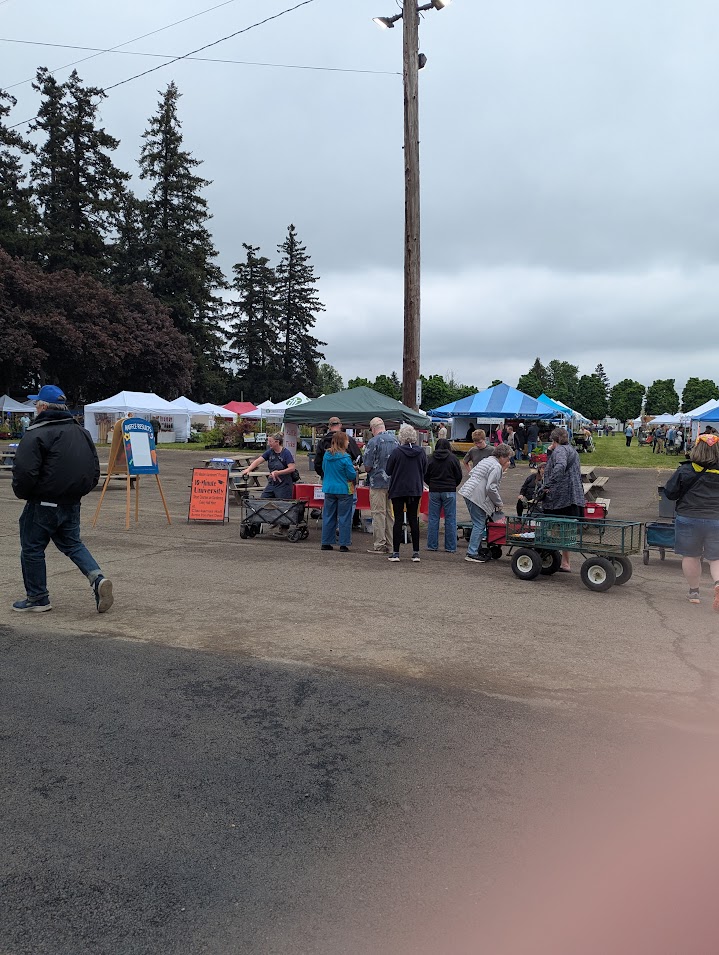
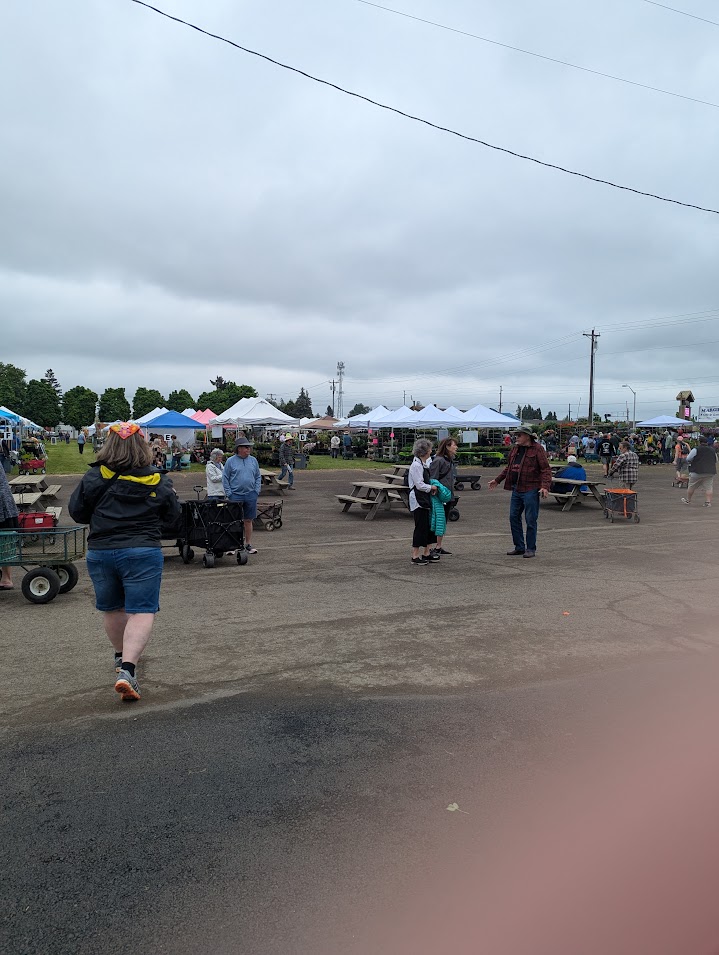
I interrupt my series on ground covers to tell you I spent a little money this week.There were more vendors of Native plants this year, which was a boon to my soul. I was still pretty stingy with my money, by-passing a lot of plants I would love to add to the yard.
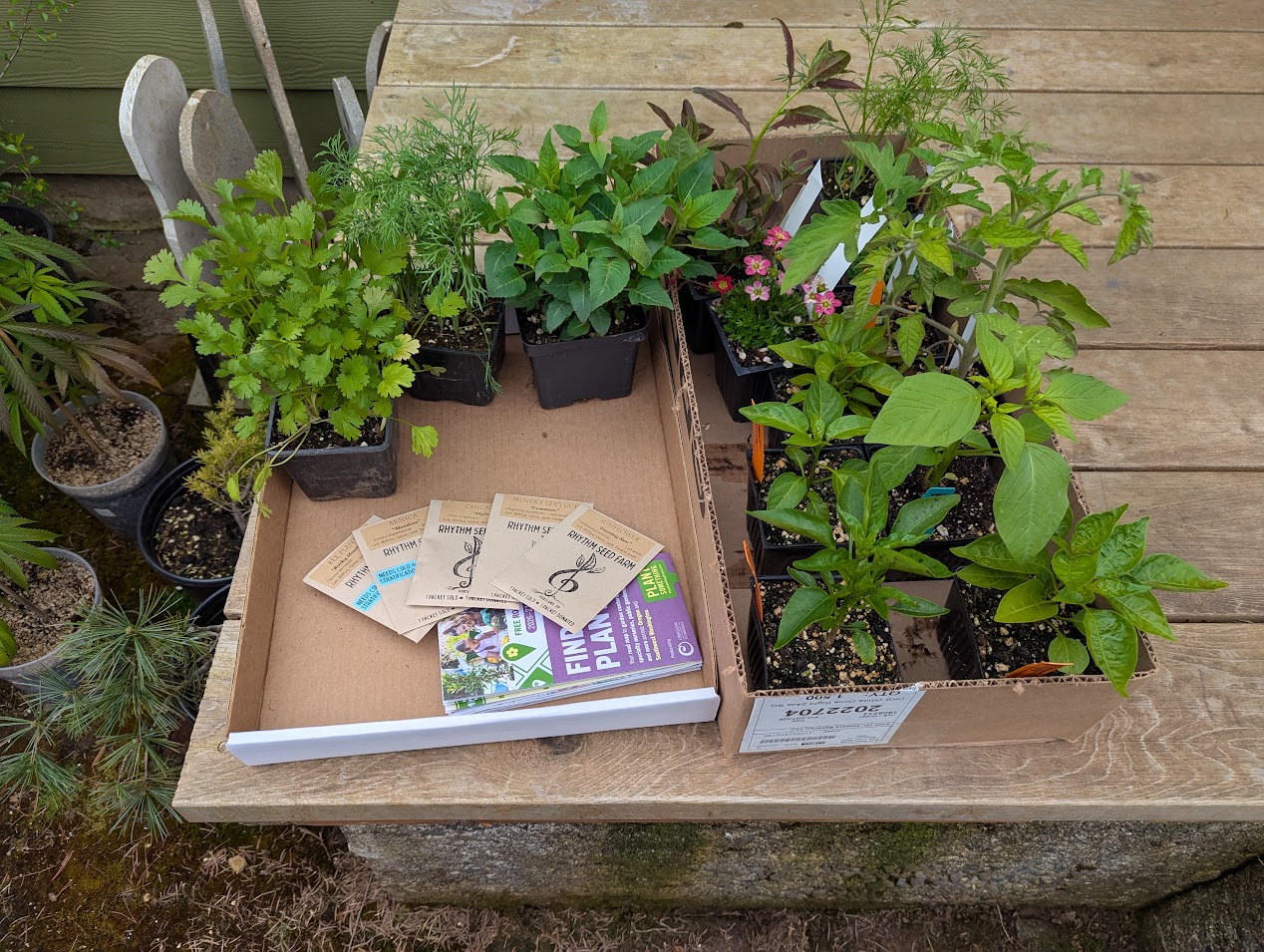
My husband had no such restraint. He found tomato varieties he likes to grow, dill, and I-don’t-know what else for the vegetable garden (his domain). He’s the chef. My contribution was to purchase some garbanzo seeds from a small seed company out of Portland. We’ve never grown garbanzos but Don makes a killer hummus and it just seemed logical to buy some seeds to grow our own. Caveat: they will probably not get planted until the fall. We’ll have garbanzos next year.
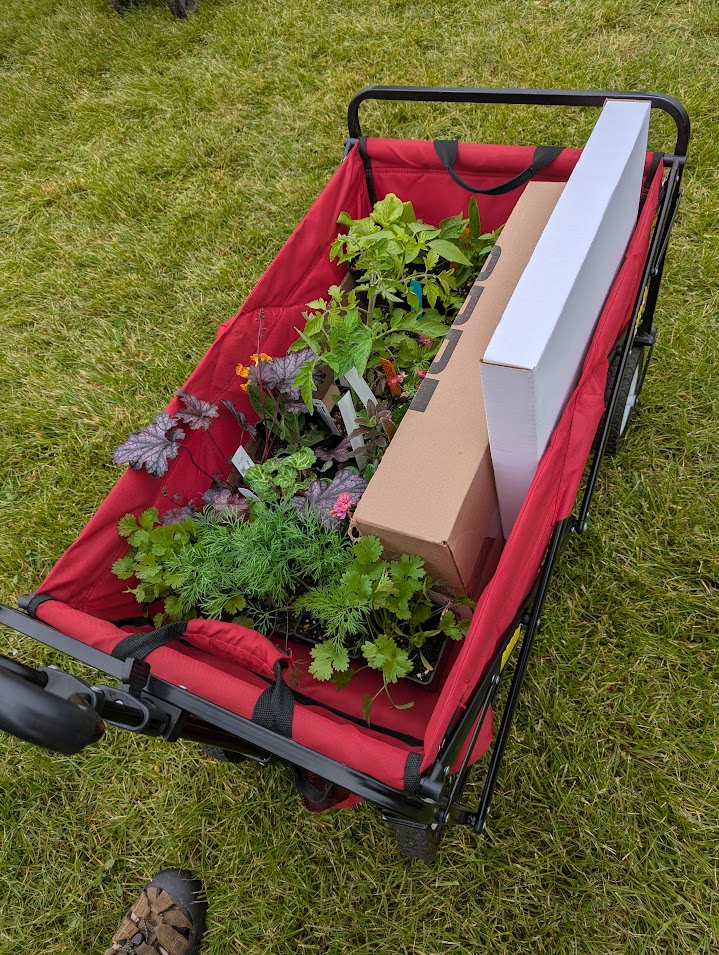
You can see our little wagon filled up pretty quickly between Don’s plants, my plants, and our good friend’s plants. Next year, that good friend may have to bring his own little red wagon!
The haul from Saturday was pretty impressive, but Sunday was looming with the first Farmer’s Market of the season in Milwaukie, Oregon. My husband wanted to buy some lamb from our favorite lamb rancher (SuDan Farms) and I hoped the herb people would be there with some plants…
Two more tomato plants and three herb plants later, we stopped for a beer before heading home and toasted our plant haul of the weekend.
Yesterday and today were spent putting all my purchases into the ground, along with some annuals I grabbed at the local grocers (locally grown plants from a small nursery in town).
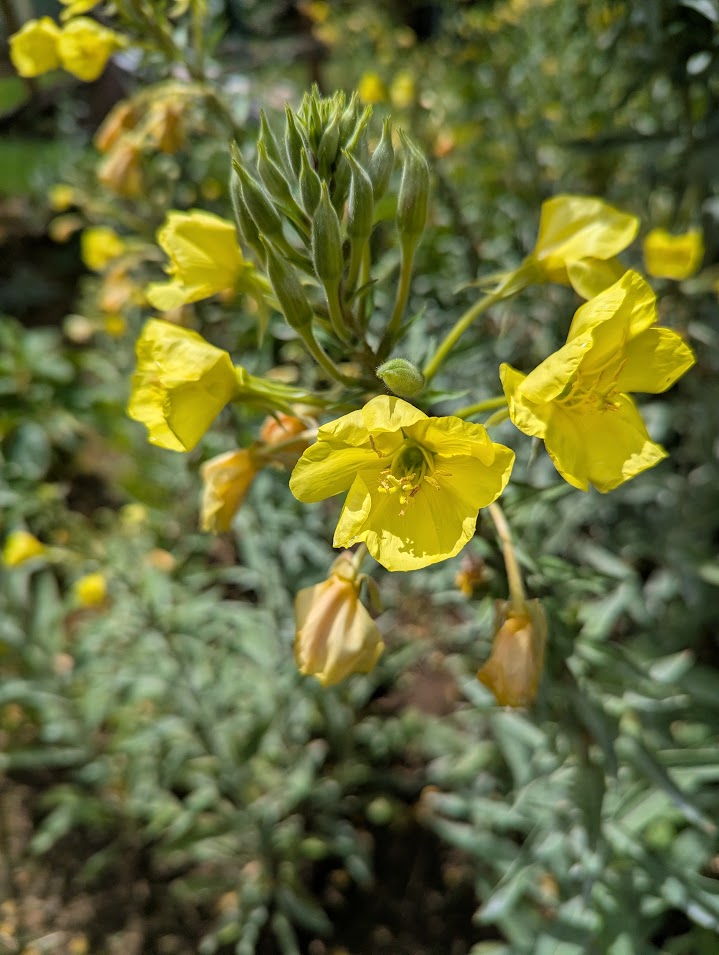
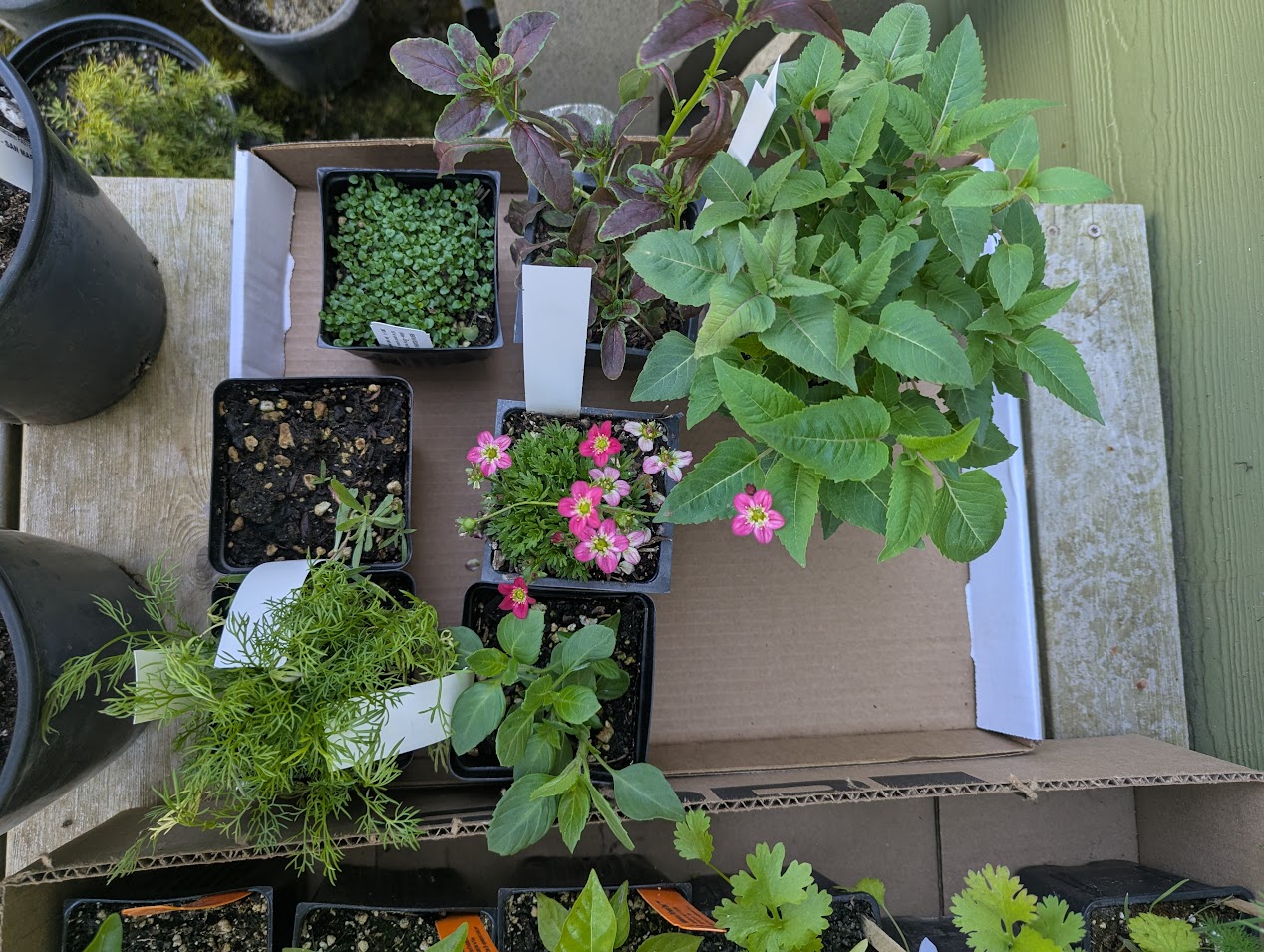
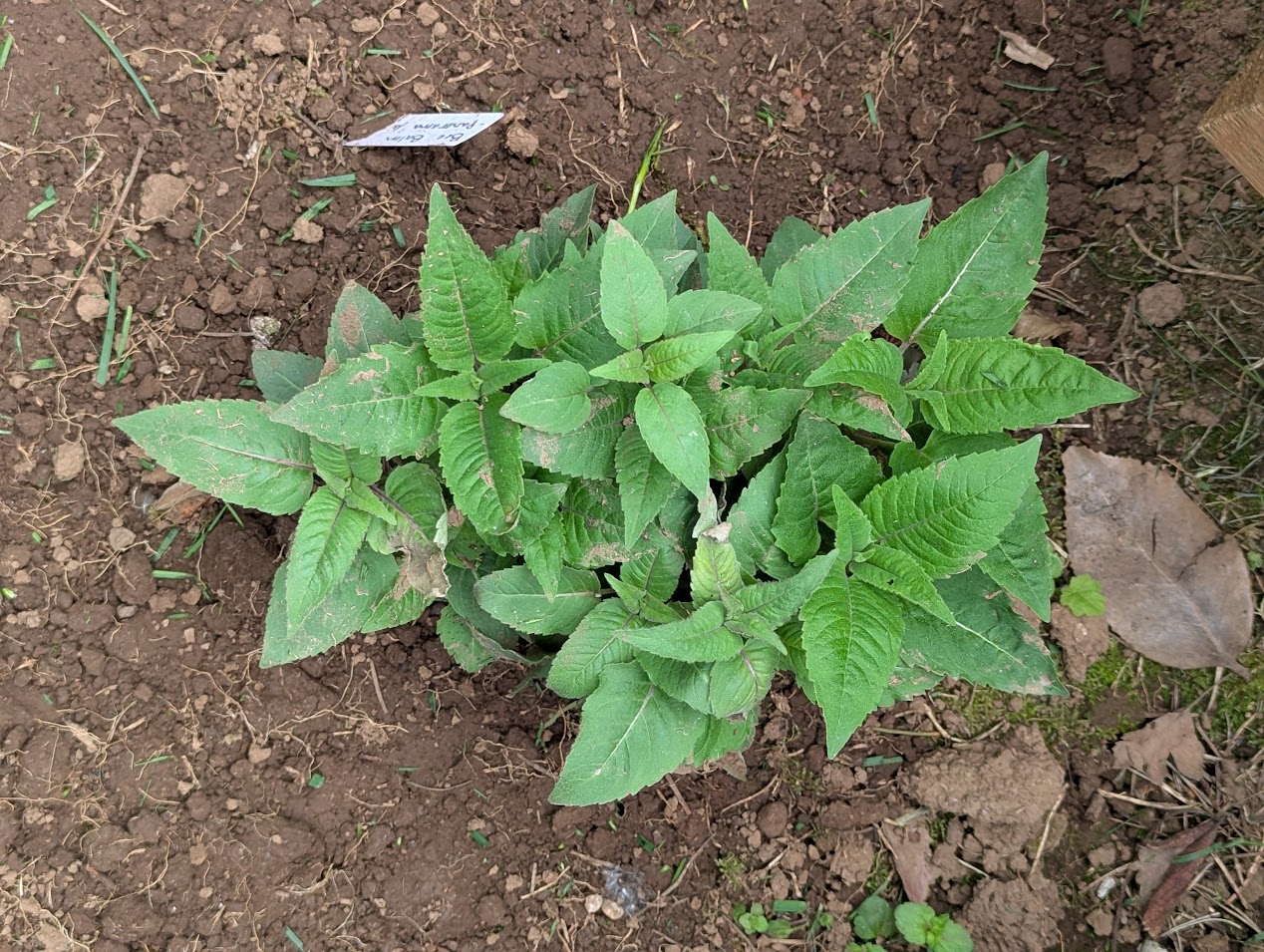
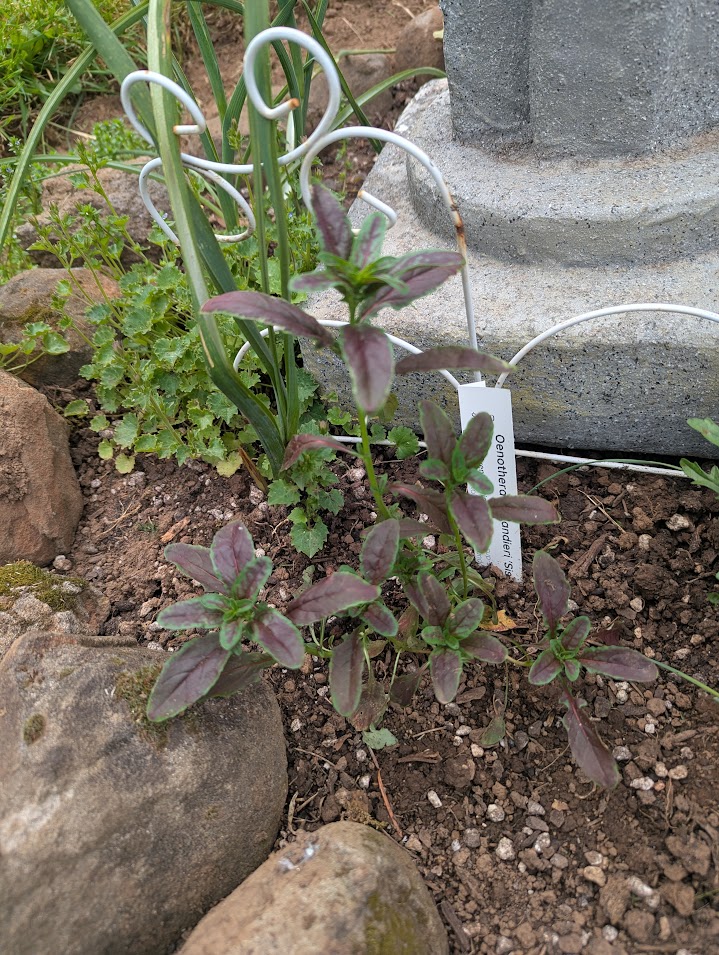
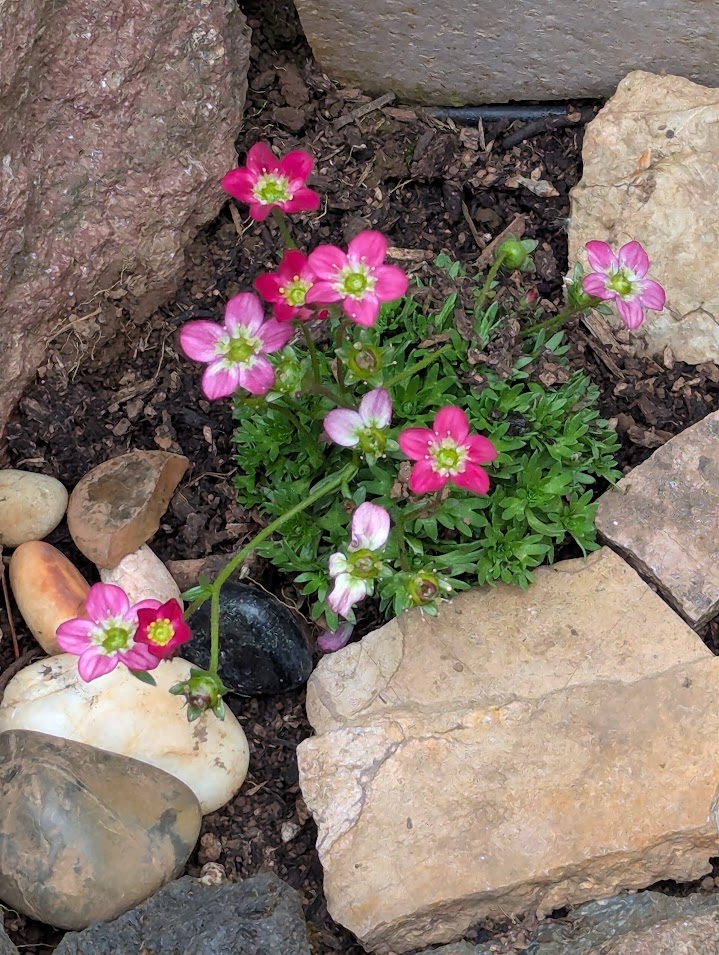
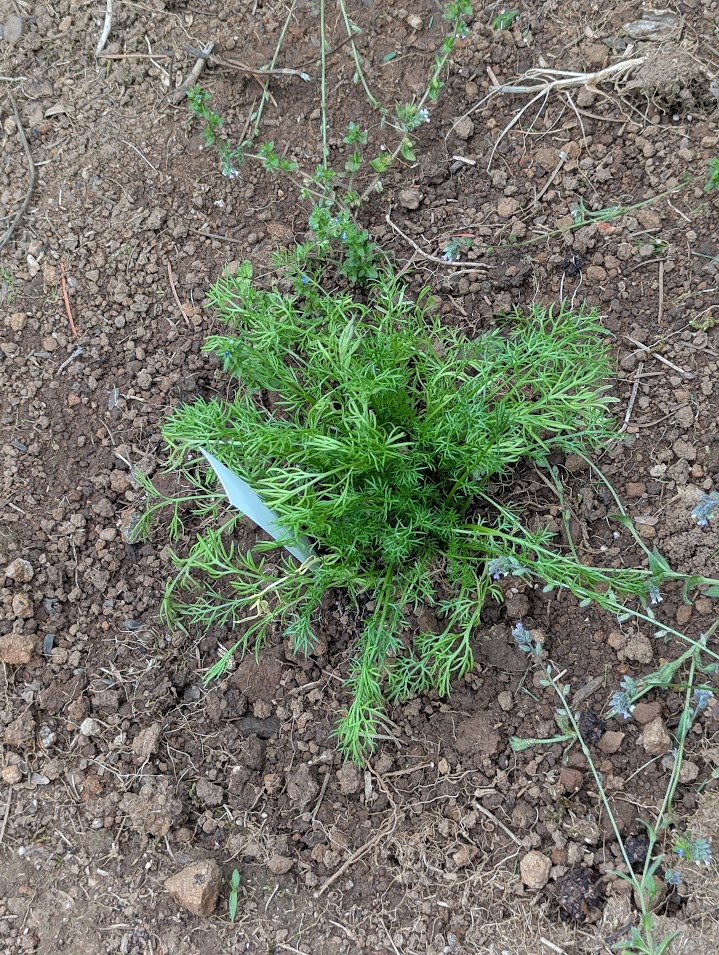
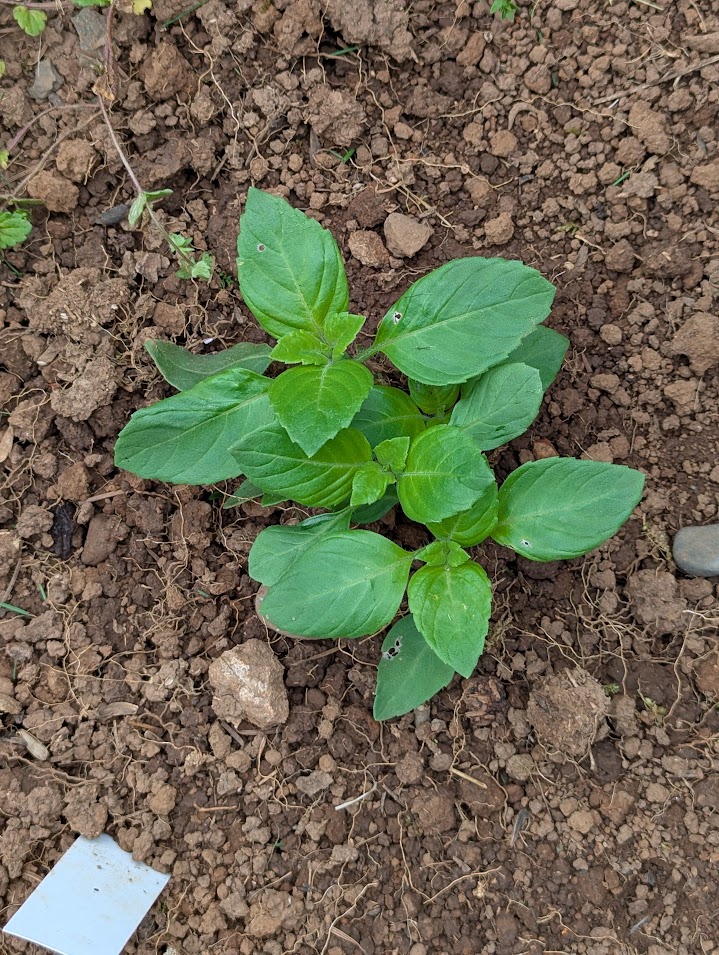
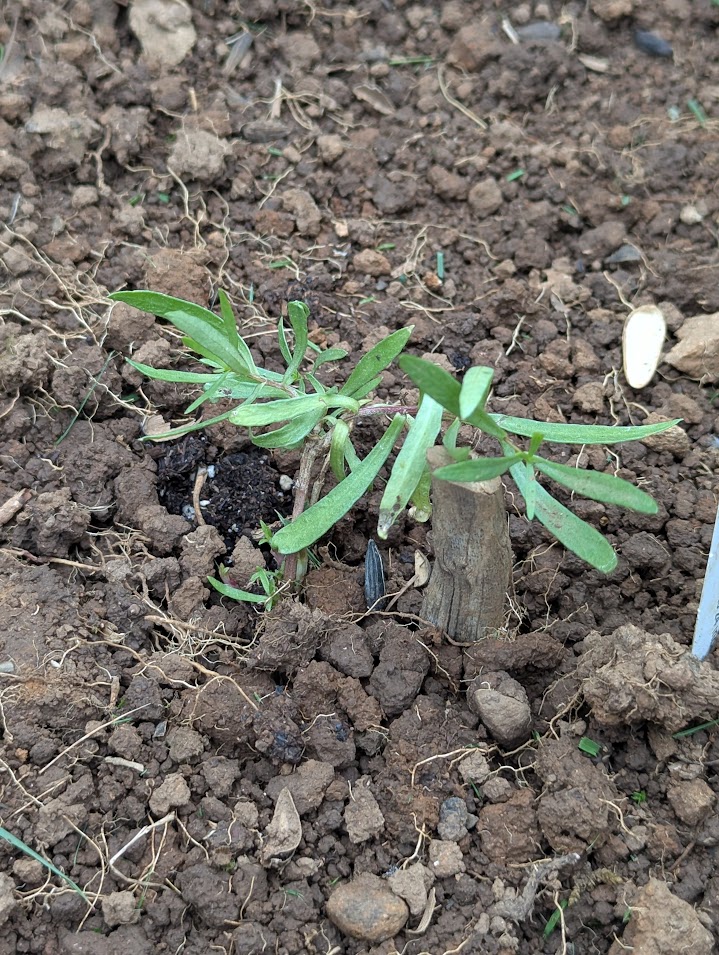
I got: Beebalm (I had two last year, but they failed to resurface this spring. This year, new location with more sun), a primrose (Oenothera berlandieri ‘Siskiyou’), Moss rockfoil (Saxifraga ardensii ‘ MartoTM Rose’), chamomile, Holy basil, and a French tarragon. Don bought 3 peppers (jalapeno, serrano, and a poblano), 2 dill, 2 cilantro, 1 tomatillo, and 4 tomatoes (Bobcat, Genovese, and two San Marzanos). He also threw in a small ground cover: Corsican mint which I planted by the deck.
I added five seed packets to my purchase from Rhythm Seed Farm: sunflower (Helianthus annuus), Miner’s lettuce for fall planting, chickpea (Myles) for fall planting, Meadow arnica (Arnica chamissonis), and Rocky Mountain bee plant (Cleome serrulate). The last two are in the freezer for stratification right now.
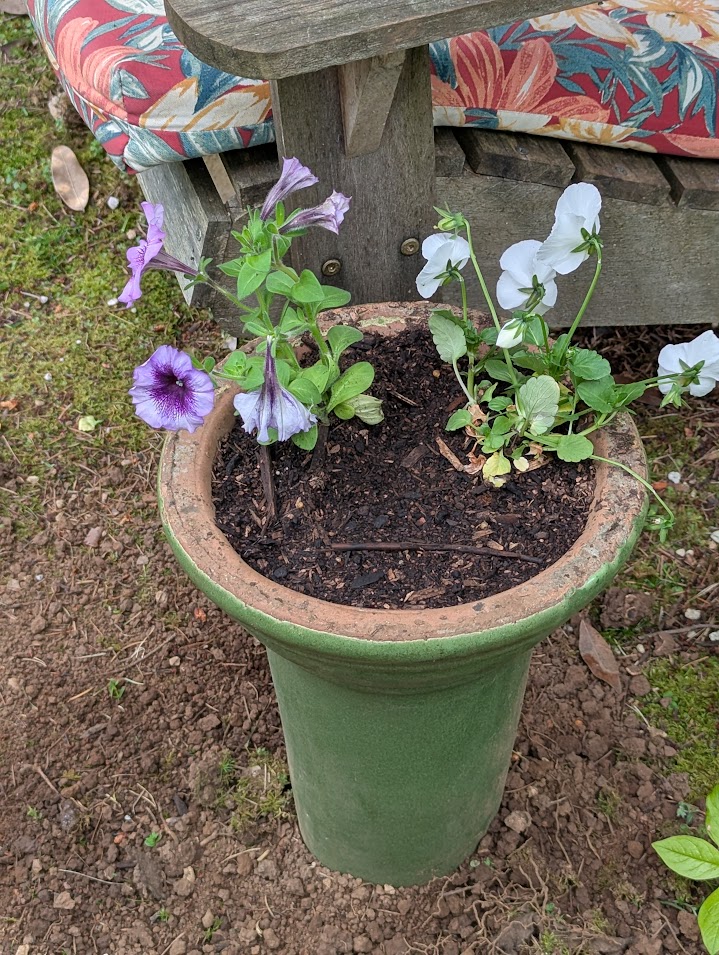
Oh, lest I forget: I bought pansies and petunias for annual color. I always have petunias. And now we wait to see how they all grow.
Many of the afore-mentioned “weeds” in my previous three posts are now ground covers I allow to spread. Ground covers reduce the need for bark dust or other material that has to be purchased every year or every other year (I used hazelnut shells in the past) by doing the same thing: holding moisture in the soil. I like the idea of plants over the bark dust/hazelnut cover, simply because plants offer color. And many ground covers crowd out weeds, like the persistent grasses that plague my flower beds.
bleeding hearts
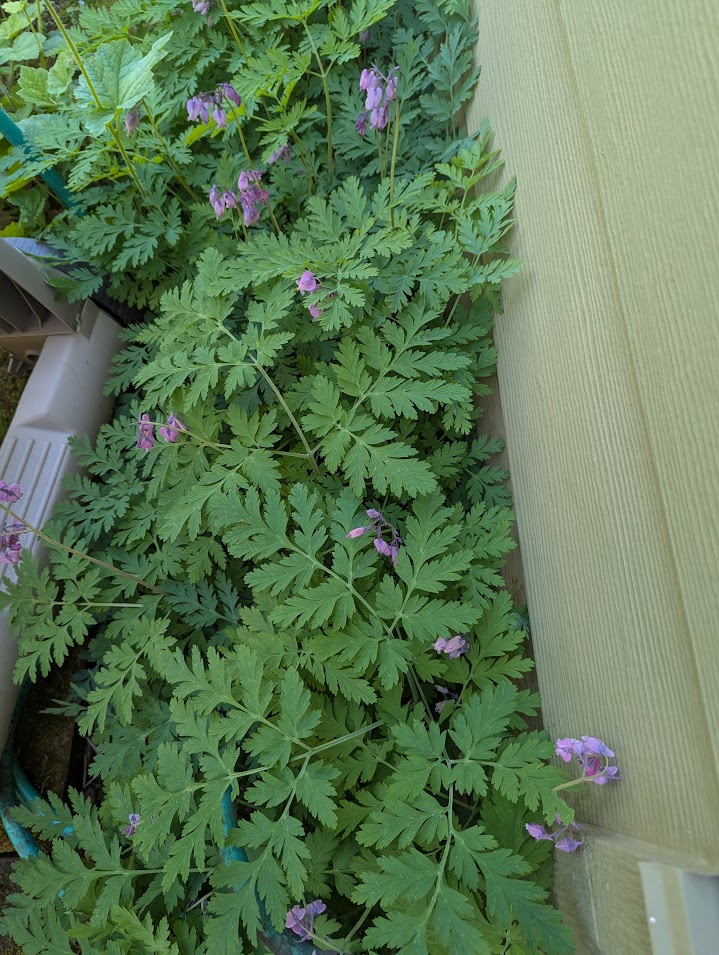
Pacific bleeding hearts – Dicentra Formosa. These beauties came with the house. They are a seasonal ground cover, growing in late winter and fading is the heat of summer, but they are native plants. I did purchase a couple commercially developed bleeding hearts for the flower bed around our decking, but the natives are here to stay. They grow wild in little corners of the yard and I am planting more north of the garage in our little median between properties. Bees love them. They take no effort to grow and are easily controlled.
Many or our native ground covers came into our yard as hitchhikers on something we dug up on Federal lands: the blue elderberry, the black-cap raspberry, a yew, and so on. You never know what all you might haul home in a root ball from the wild.
douglas meadowfoam
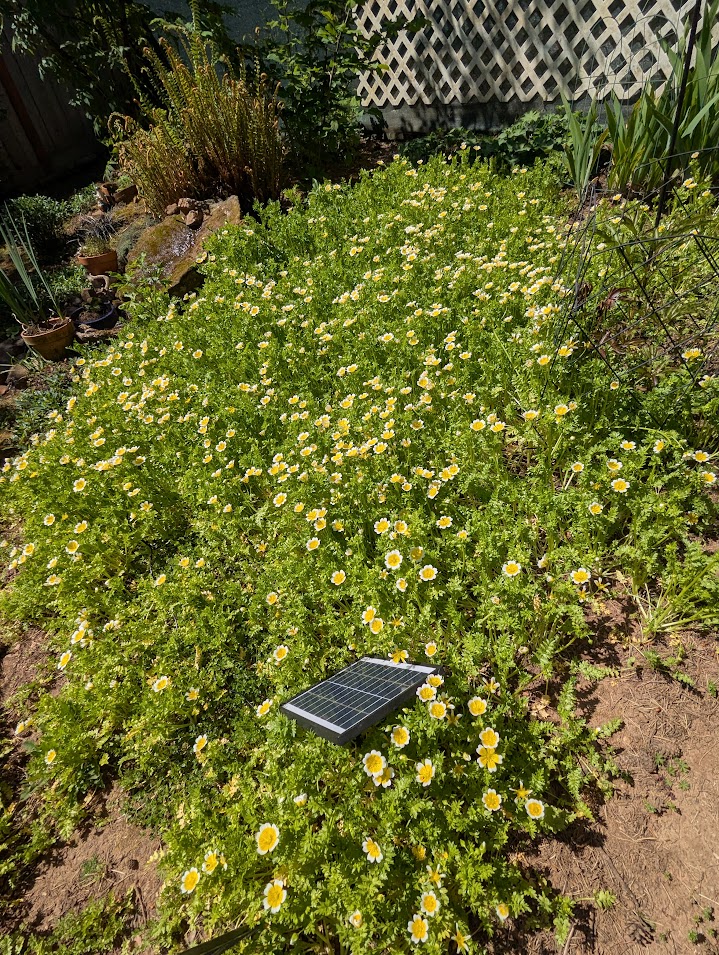
Douglas Meadowfoam – Limnanthes douglasii. Poached egg plant, so called because of the beautiful flowers. One or two showed up when we planted a yew and a big-leaf maple tree (both of which later died, sadly). They have spread to cover half of the flower bed in my little “prayer garden”. They start growing in early winter, covering the ground with greenery. The bloom is in early spring. By the time the heat comes on, the lants wither and die, like the bleeding hearts. I have tried other plantings to cover up the barren soil there, but this delicate ground cover doesn’t tolerate other plantings too much. Peonies are about the only exception. I don’t want to lose this ground cover, so I put up with barren ground for a couple months every year. It is worth the price when they bloom!
kinnickinnick
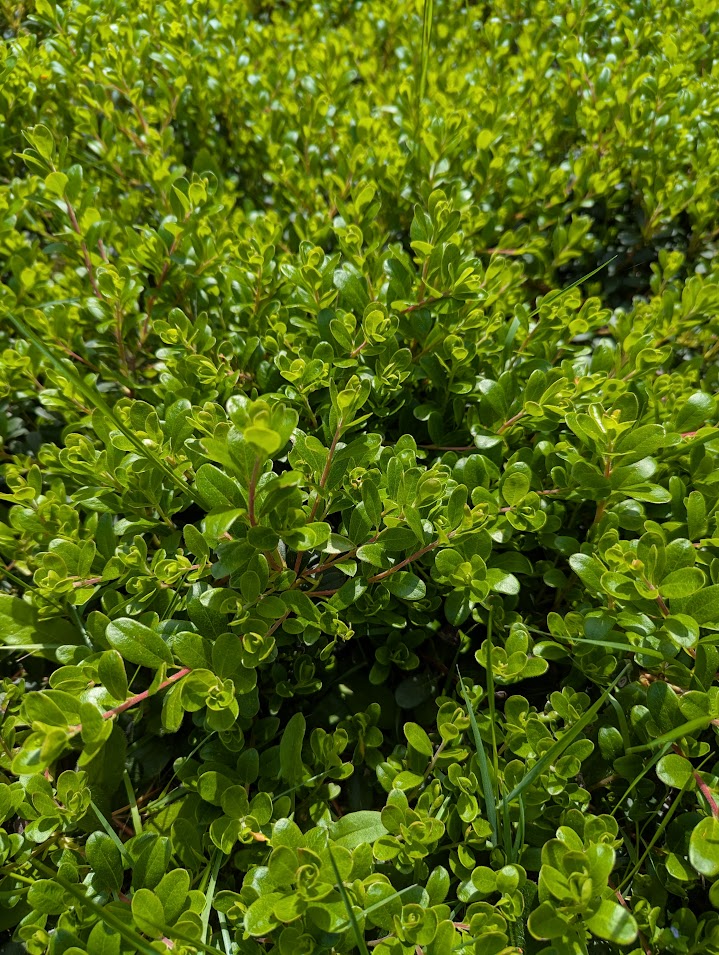
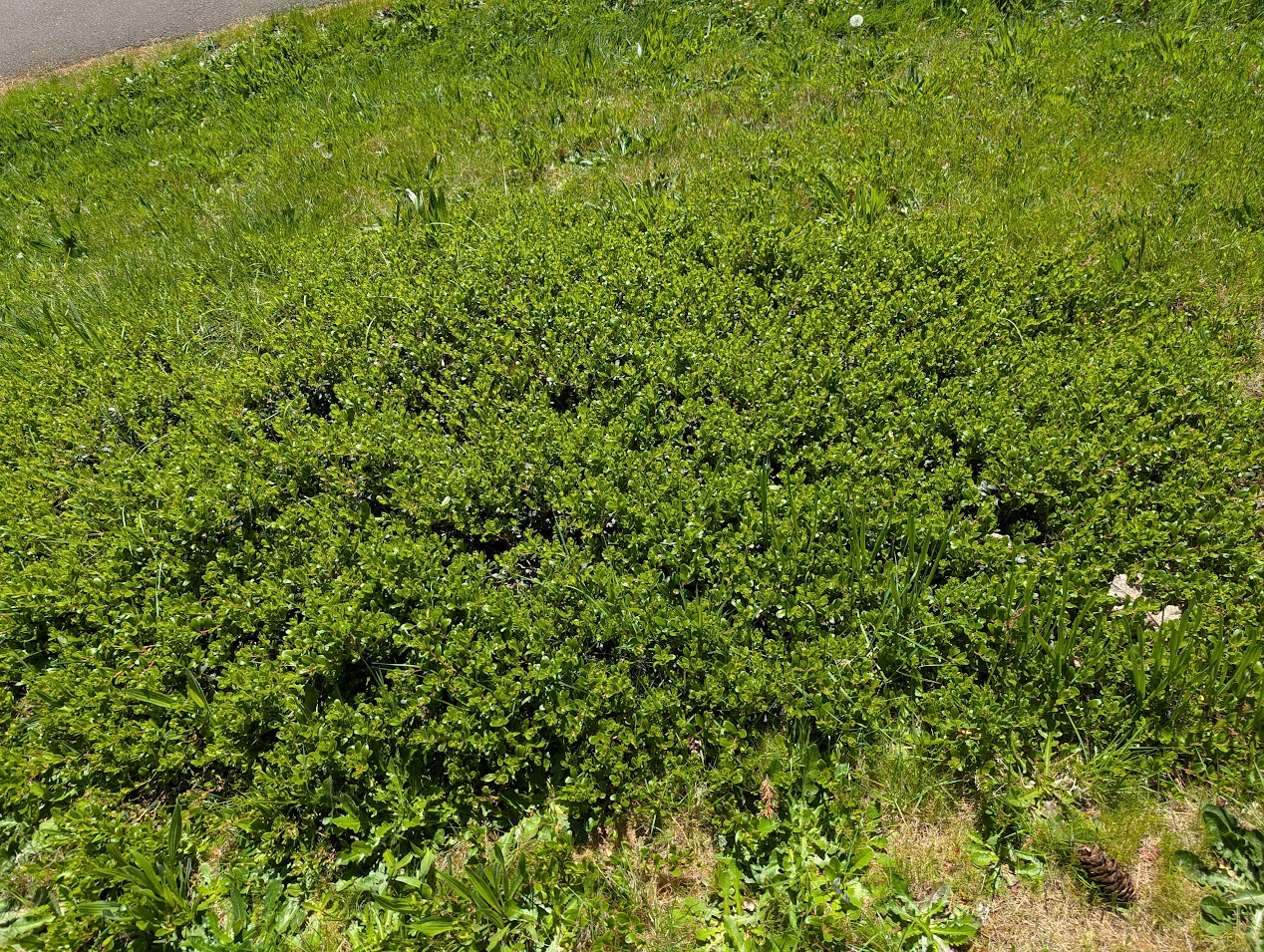
Kinnickinnick – Arctostaphylos uva-ursi. “Bear berry”. This is a common ground cover along commercial buildings in the Pacific Northwest. It blooms with tine red flowers, produces some berries, acts as a weed guard, is drought tolerant, and native. It is fast spreading. This is just one plant that was about 6” wide when Don first dug it up. It now covers an area of about 8×4’, and even the torpedo grass under it struggles to survive. I have read the fruit is edible, boiled, but I leave it for the birds. Native mining bees love the flowers.
wild gingerwild ginger
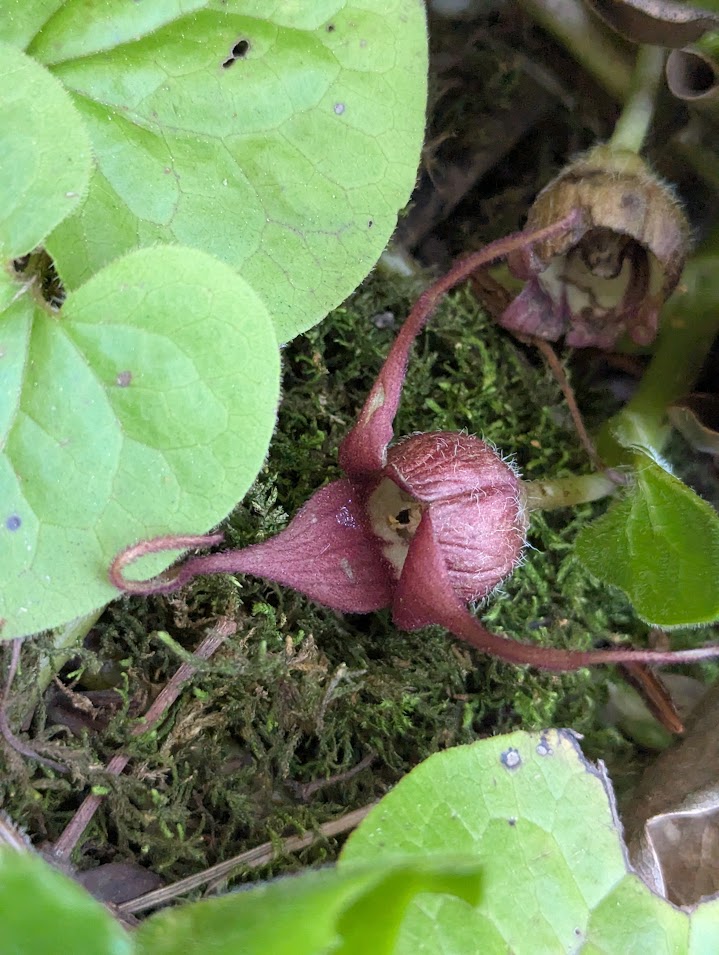
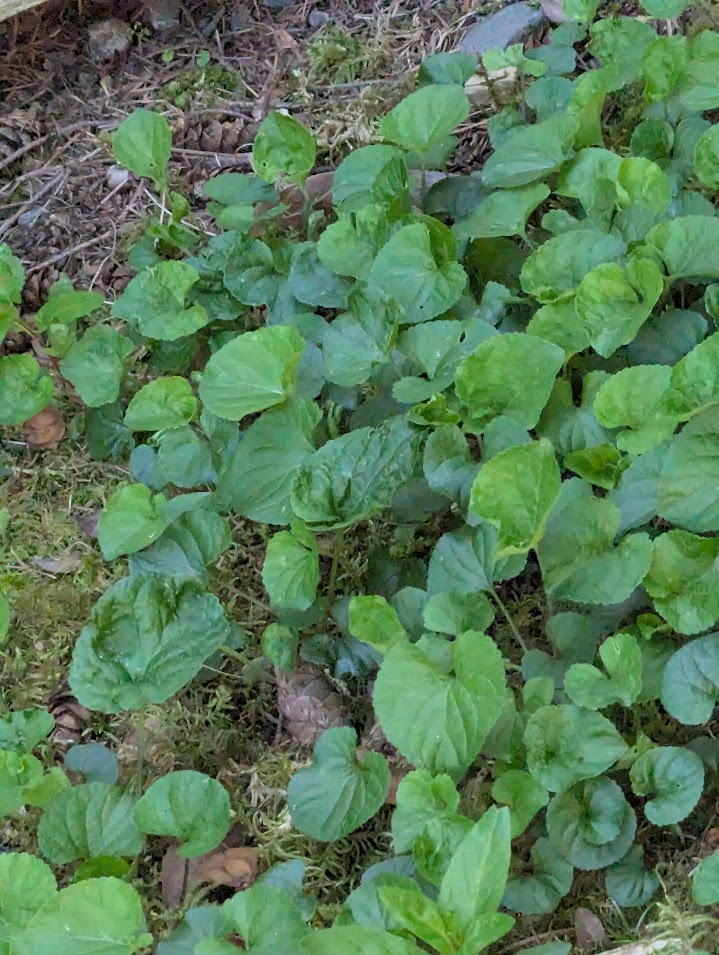
Wild ginger – Asarum canadense L. – This also started as a single clump of ginger roots dug up in the forest. It is not the same as the ginger root one buys in the grocery although the roots are edible. It is a shade plant, loves moist ground, and spreads slowly. Birds, bees, and even a rodent or two love it . The flowers are stunning, but you have to look hard to find them. Evergreen.
wild strawberrieswild strawberries
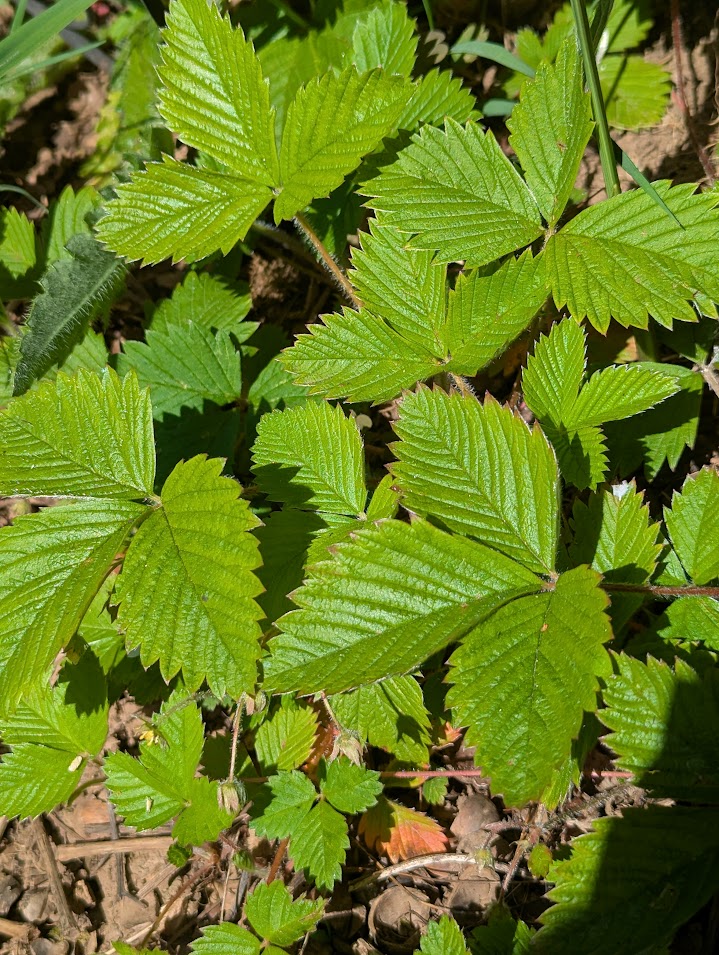
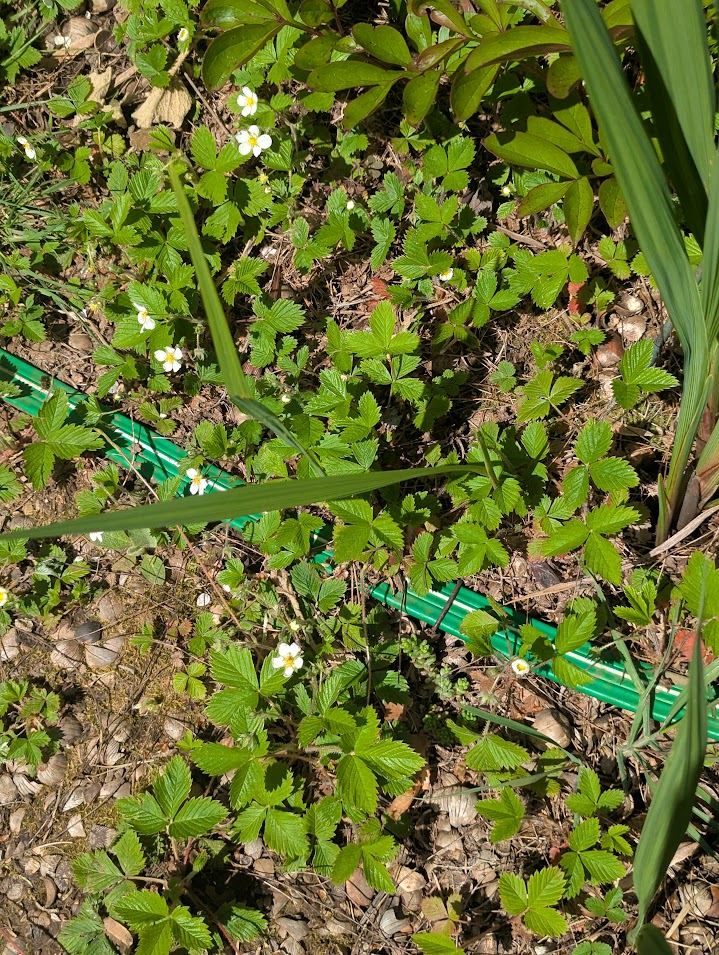
Wild strawberries – This native ground cover is most likely Fragaria vesca, or woodland strawberry. I rarely see the fruit on these as the birds and slugs beat me to them: the fruit is tiny, sweet, and it takes a lot of them to make a meal (usually a pancake breakfast when camping and foraging). They don’t bother other plantings and don’t really keep the ground moist, but they are evergreen, and that counts for a lot as other flowers fade. Fast spreading, easy to control, drought tolerant. Don planted this a long time ago and I wasn’t pleased, but I have grown to be happy with it.
penstemmonpenstemmon
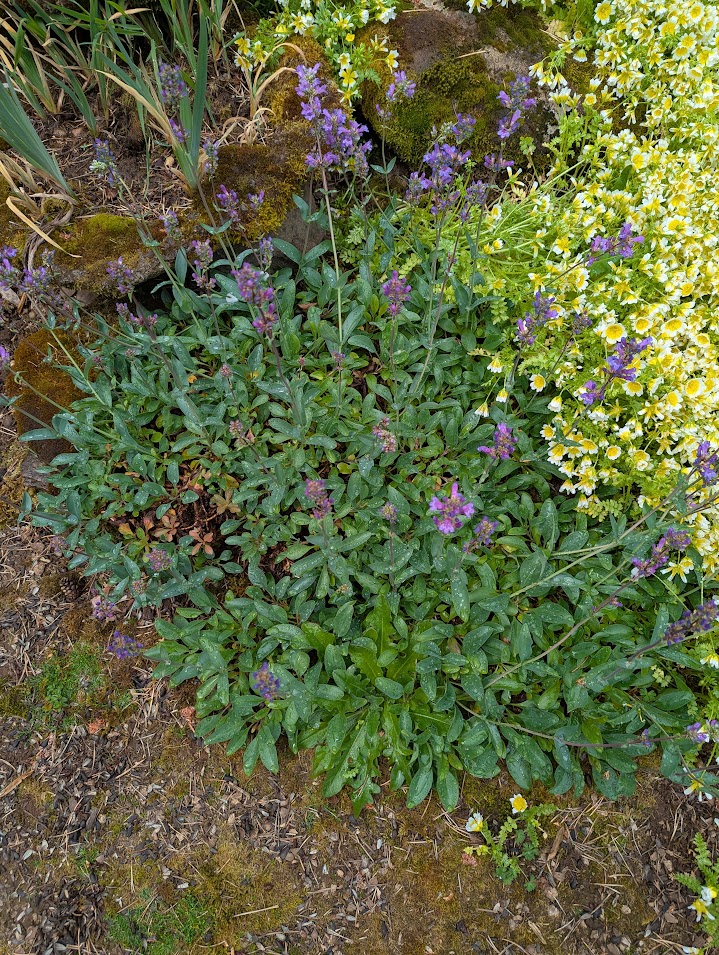
Penstemmon – we have at least three different natives planted in the prayer garden, which also happens to be a rocky slope, perfect for this drought tolerant, slow spreading perennial. We have collected from several areas in the State of Oregon, including the high desert country of eastern and central Oregon, and the alpine country of the Cascades. I’d have to key out which species this one is.
inside-out flower
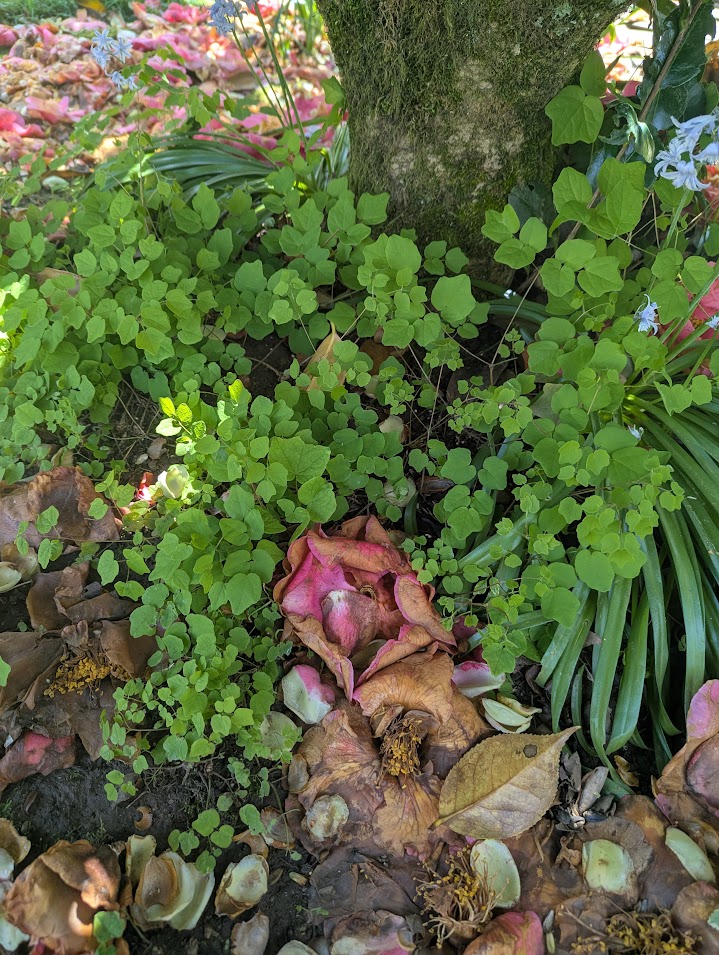
Inside-out flower – Vancouveria hexandra. We bought the first one at Portland Nursery some years back, but have since added more to the yard as hitch hikers with other plants. I can’t begin to tell you how much I love this shade-loving, fast spreading, resilient, and odd flower. I planted it under the Camellia where the only other ground cover was Bishop’s weed. And for years I thought the Bishop’s weed would one day win out, but as I was weeding and raking away old Camellia blossoms this year, I came to the realization that it was the Inside-out flower that was winning the fight for space in the shade.
It disappears in the winter, comes back every spring, and blooms multiple times over the summer. The blooms are tiny, delicate, and inside-out as flowers go: the sepals are bent back, exposing the pistil and stamens.
This won’t be the last thing I have to say about weeds. I haven’t touched on blackberries, fireweed, or cultivars gone wild. But I’ll leave you with these last few for now.
corn speedwellthyme-leaved speedwell
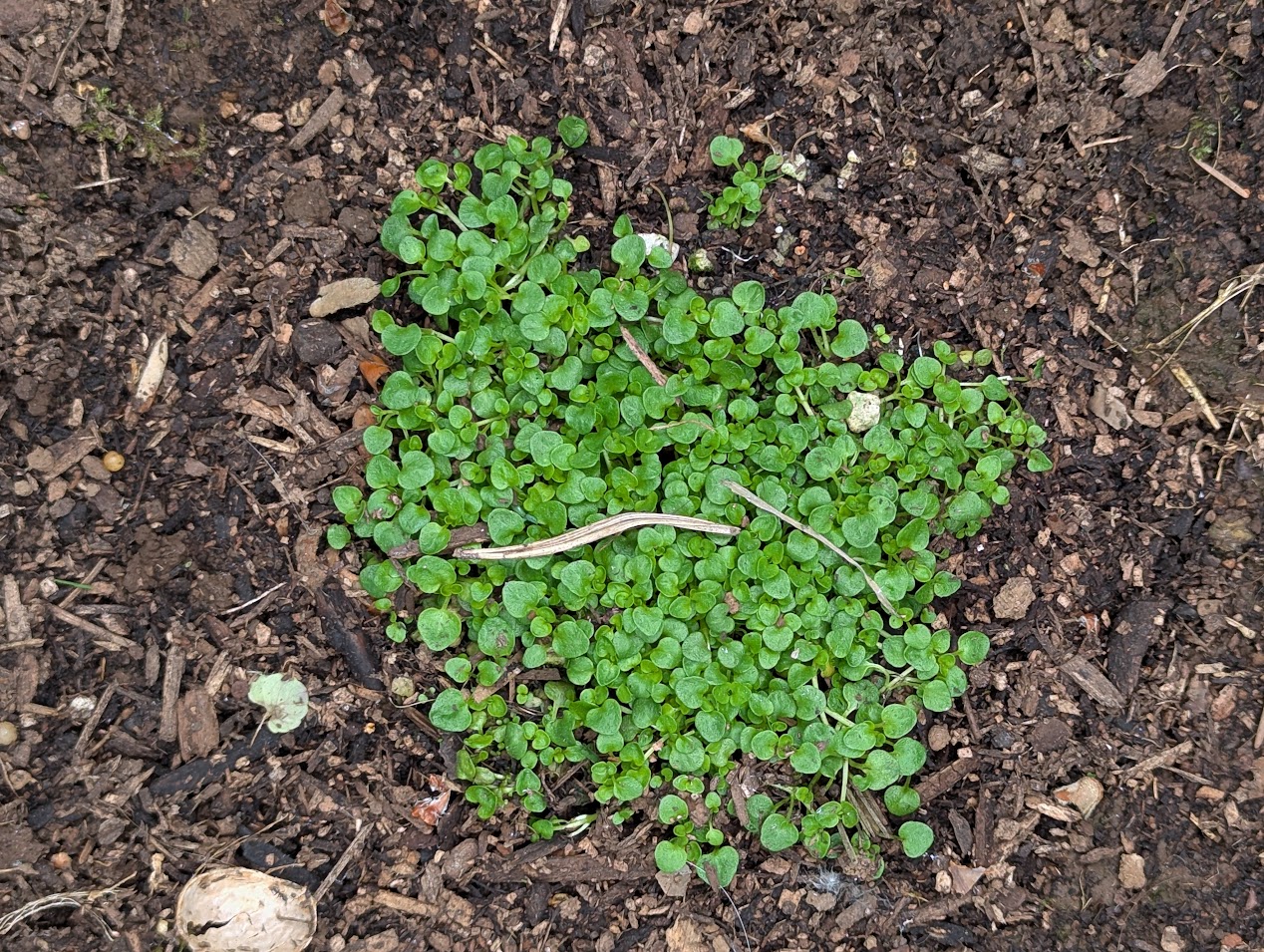
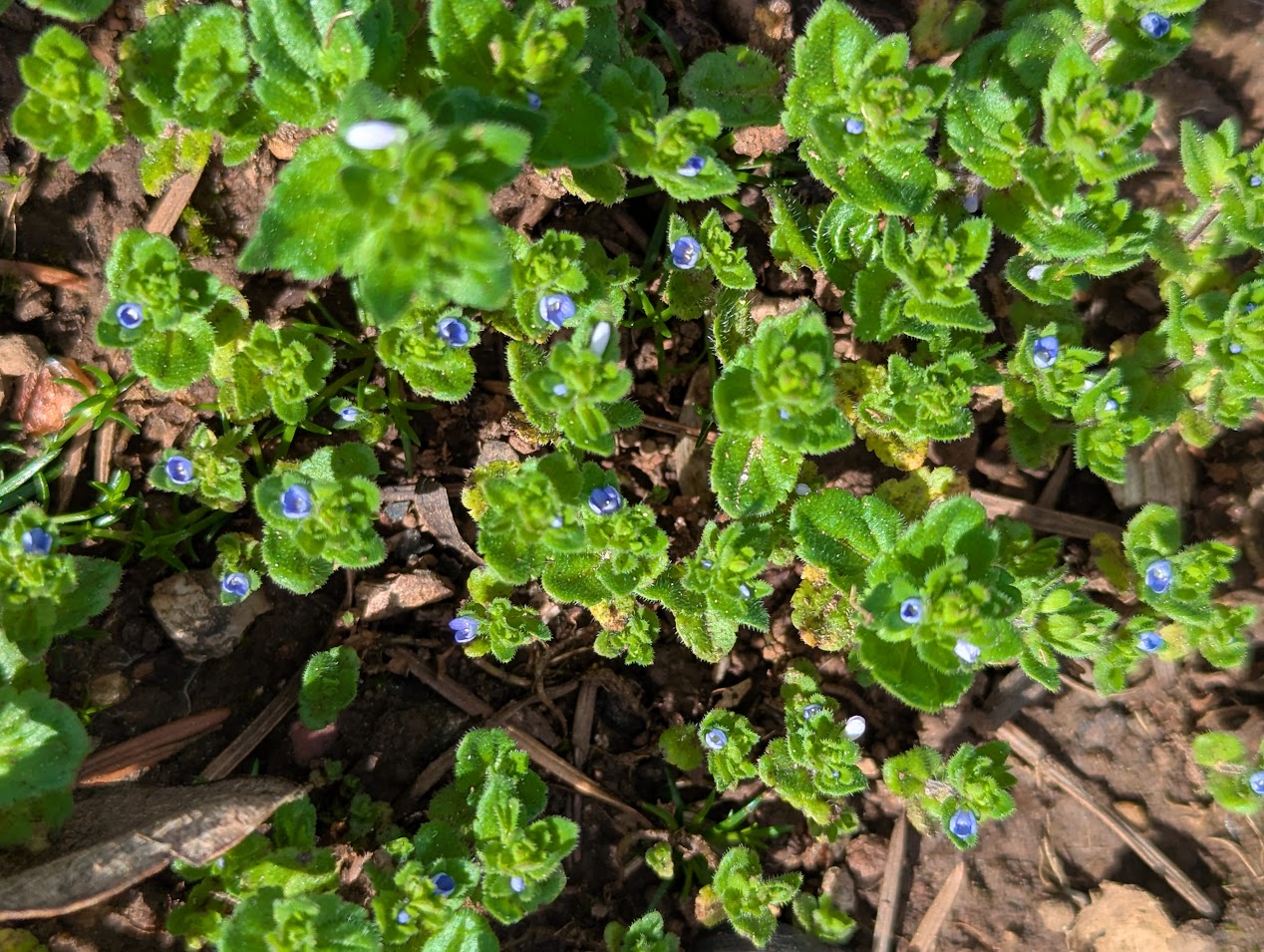
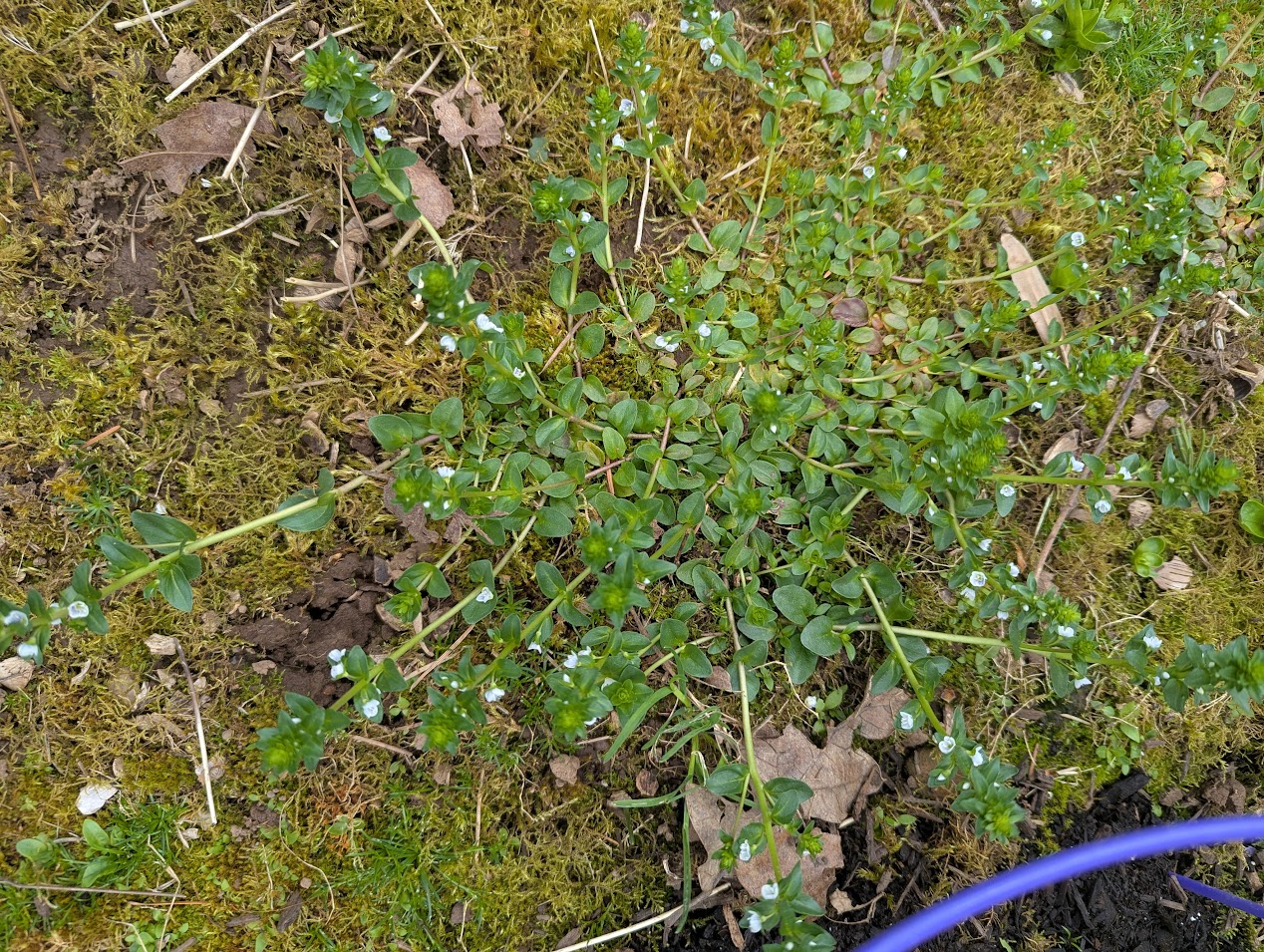
Speedwells. According to the plant app on my phone, we have at least three speedwells growing in our yard: Veronica arvensis aka wall speedwell, corn speedwell, field speedwell, or rock speedwell, and Veronica serpyllifolia aka thyme-leaved speedwell, and Veronica persica, or bird’s eye speedwell aka Persian speedwell. They are in the plantain family (we have plantain growing in the big weed patch, and I don’t mean the kind that looks like a banana). Plantains are edible herbs. The speedwells are tiny groundcovers with teensy flowers, non-native, and have limited medicinal uses (burn salve). They are next to impossible to get ahead of, don’t compete with other plants, and make a wonderful groundcover mat. I gave up trying to weed them out of my flower beds. They are simply here to stay.
Stinky Bob
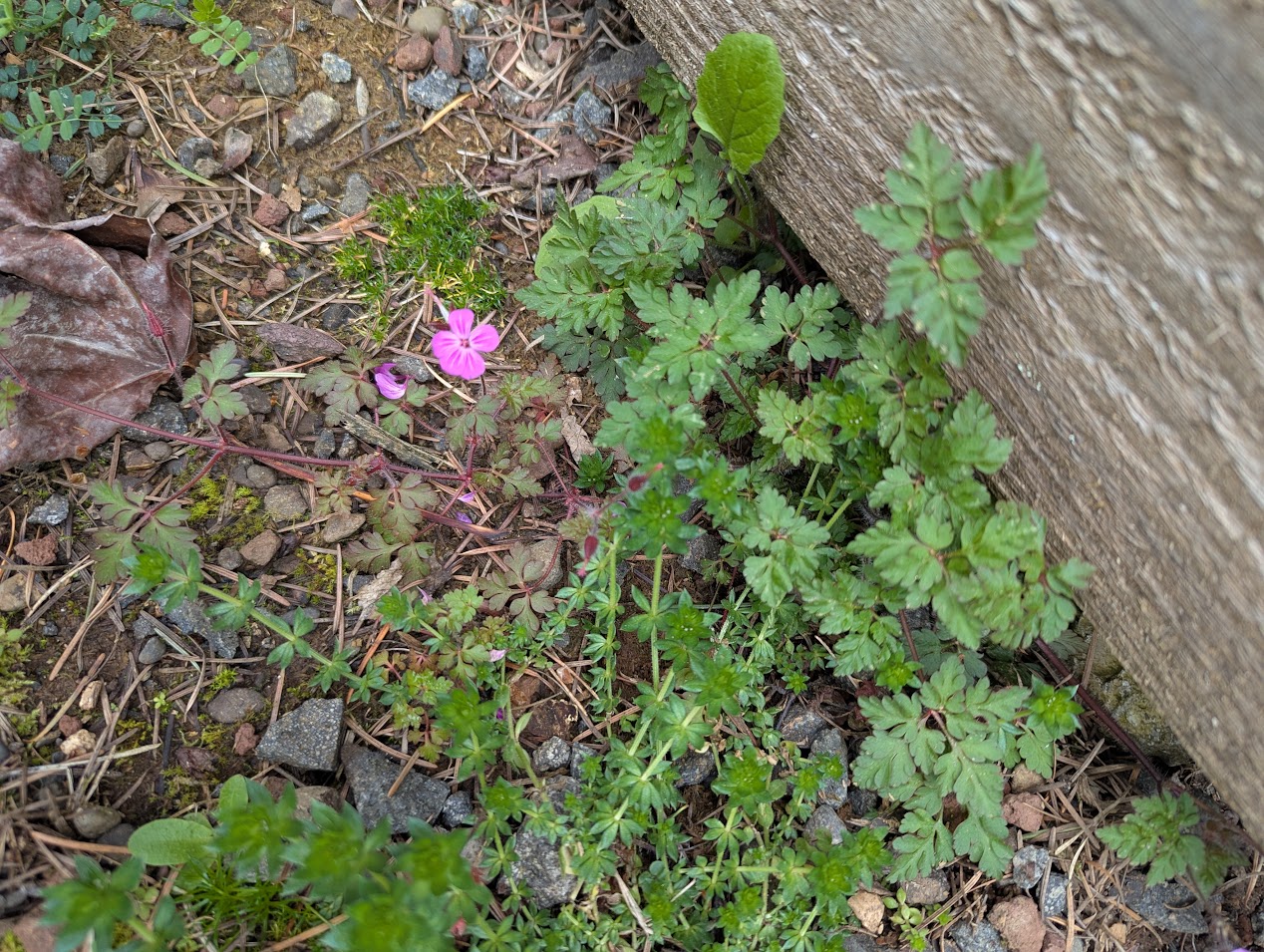
Herb Robert. Geranium robertianum. Stinky Bob. Do not make the mistake I did one summer: “Oh, such pretty flowers!” This escapee from hanging garden baskets is the nastiest, shallow-rooted, invasive ornamental. It competes. It covers ground quickly. It smells worse than most geraniums smell. I believe it is banned in Washington State to the north of us. If it isn’t, it should be. I have geraniums in the ground, I don’t need Herb Robert. Most geraniums are easy to control, make a wonderful, thick carpet, compete with everything – but so easy to cut back and pull up!. And they don’t spread like a prairie fire. Herb Robert, on the other hand… Just pull it.
Sweet Violet (after the blooms are gone)
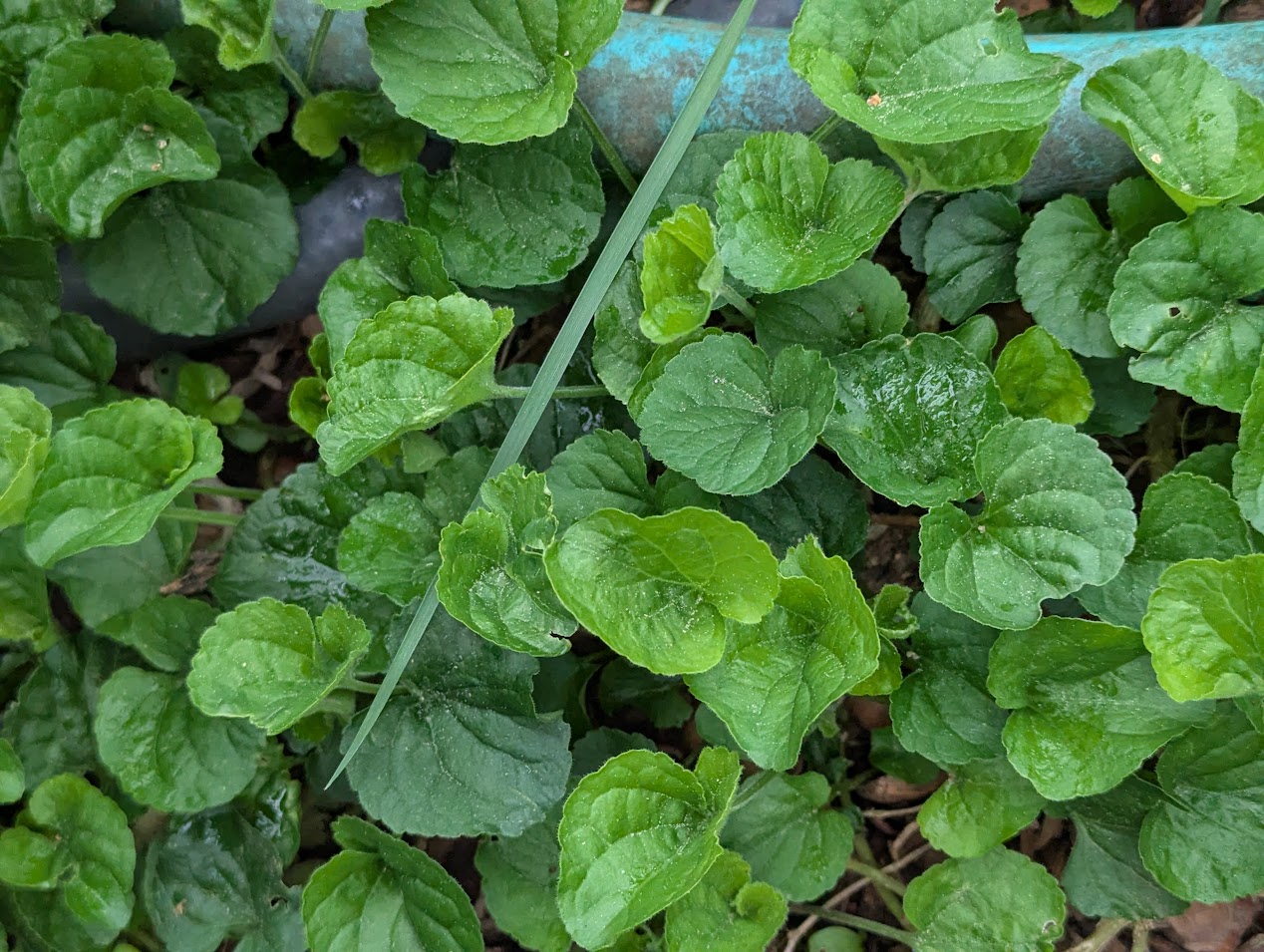
Sweet violet. Viola oderata. I wish it was a native wild violet, but the wood violet, or English violet, is introduced. I just control it. It spreads rapidly and out-competes some plants. The pretty purple blooms are early and loved by bees. Fragrant, but such short stems they hardly work for a bud vase. They were one of my mother’s favorite wildflowers from her childhood, so I don’t try to completely eradicate them. Besides, they fill in all the deep shade places where other groundcovers won’t grow.
Tansy ragwort. Jacobaea vulgaris. Pretty yellow flowers that you see growing all along Oregon highways and right-of-ways, but a plant that you can get fined for if you don’t eliminate it from your fields. They even introduced a moth species to try to kill off the plant, the very pretty cinnabar moth. It didn’t work. If you haul horses from Western Oregon or Washington, you must purchase your hay in Eastern Oregon. Livestock won’t touch it except as a last resort or if it is hidden in a bale of hay, and it is deadly when ingested. It shows up now and then in our yard and I get out a Grandpa tool or a shovel to dig down and pull the entire tap root out. This plant is easily a “KILL ON SIGHT” invasive introduced species.
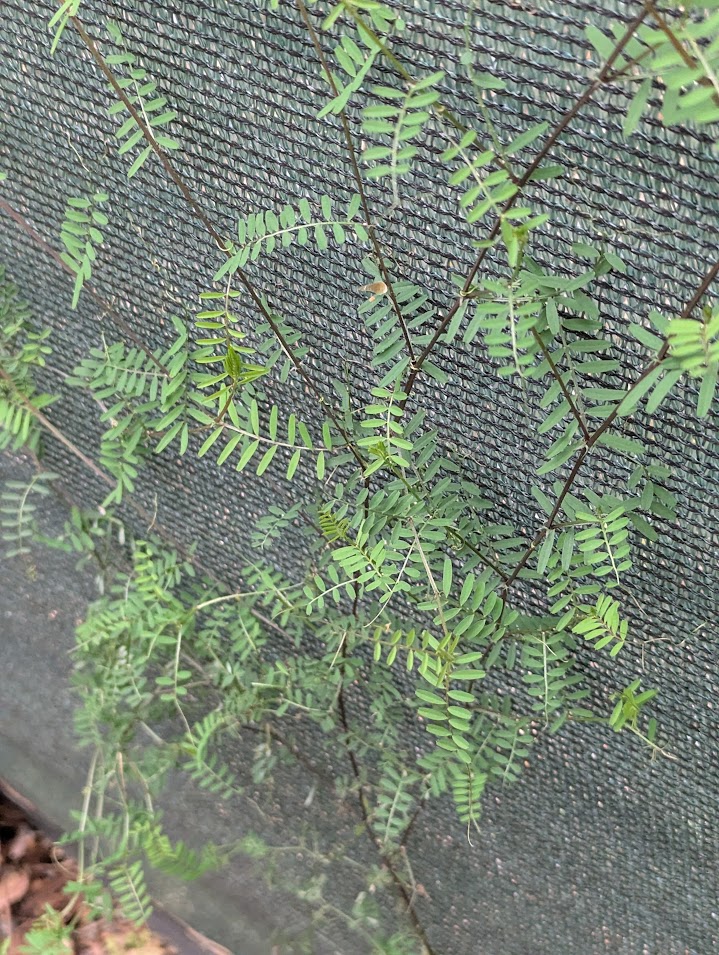
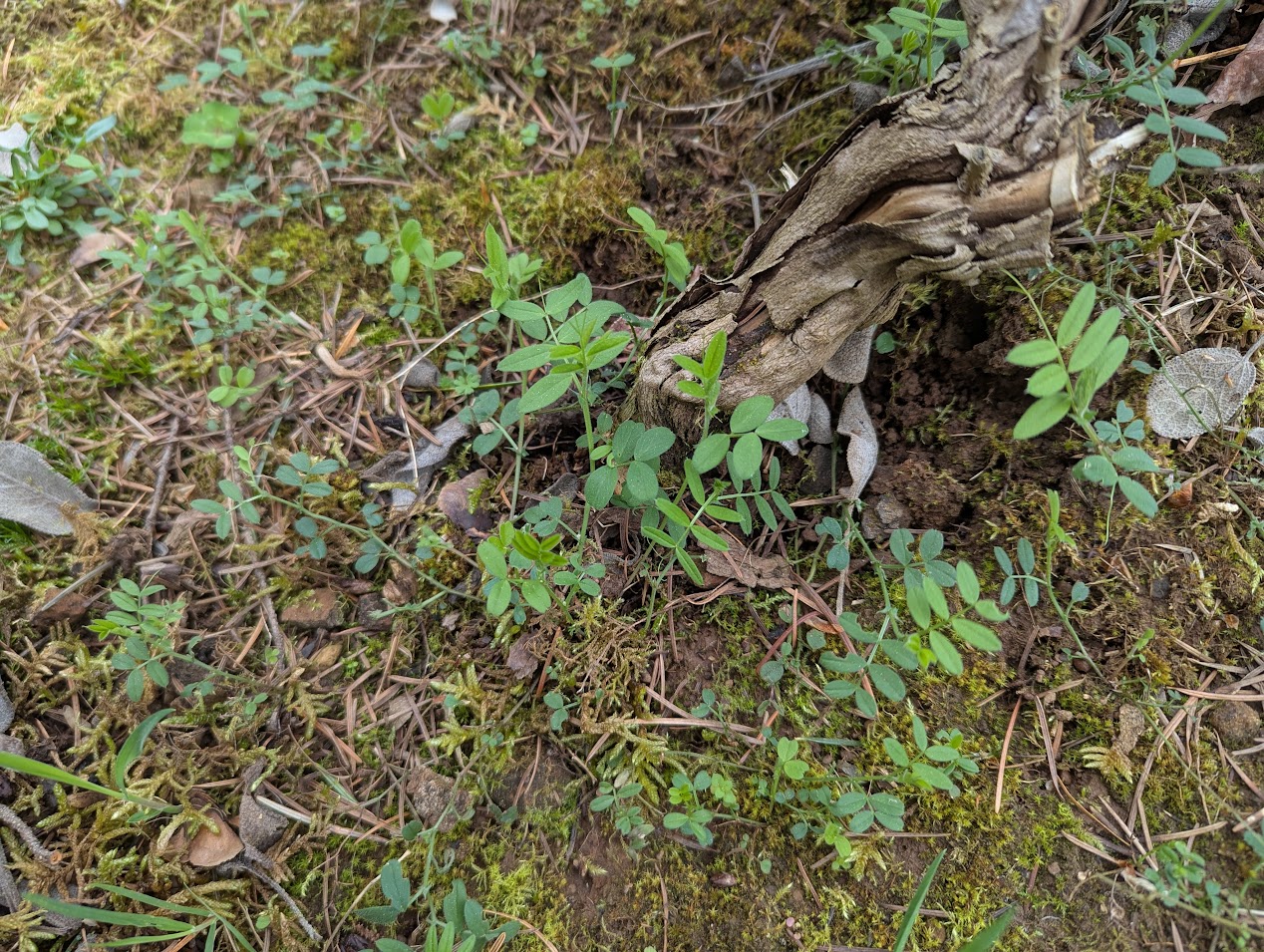
Tiny vetch. Vicia hirsuta. Introduced. This is a fairy garden miniature vetch with purple flowers and pea pod seed arils. Easy enough to pull, but why bother? It climbs the fence, it climbs my shrubs, it dies and adds nitrogen to the soil, and it is far from invasive. It doesn’t compete. It’s just such a pretty, tiny, miniature version of regular vetch. I leave it for the most part but sometimes I just pull it. It has no root system.
Creeping wood sorrel. Oxalis cornucalata var. atropurpurea. Pretty yellow flowers, deep tap root, and machine-gun like reflexes for releasing a million and one seeds into the air, your eyes, and everywhere else. It’s a losing battle. Whoever introduced this species of sorrel, I dislike you. Yes, I get that it is edible. So is cilantro, but I don’t have to grow it in my garden. (Cilantro, in case you are wondering, tastes like having my mouth washed out with soap.) I think if there were to be a battle between chickweed, hairy bittercress, and creeping wood sorrel, the wood sorrel would win by virtue of deadly aim, distance seeds can fly, and the hair-trigger of the seed arils.
For now, that is my summary of weeds I battle. There are more, I promise you. There are still the ones we leave growing in the front yard: plantain (& I don’t mean the kind that produces a banana-like fruit), flowers spread from neighboring yards like cinquefoil or rose campion, and the ones I grow for my own herbal use like stinging nettle.
Don’t worry: I don’t allow the nettle to produce flowers and thereby produce more plants.