This won’t be the last thing I have to say about weeds. I haven’t touched on blackberries, fireweed, or cultivars gone wild. But I’ll leave you with these last few for now.
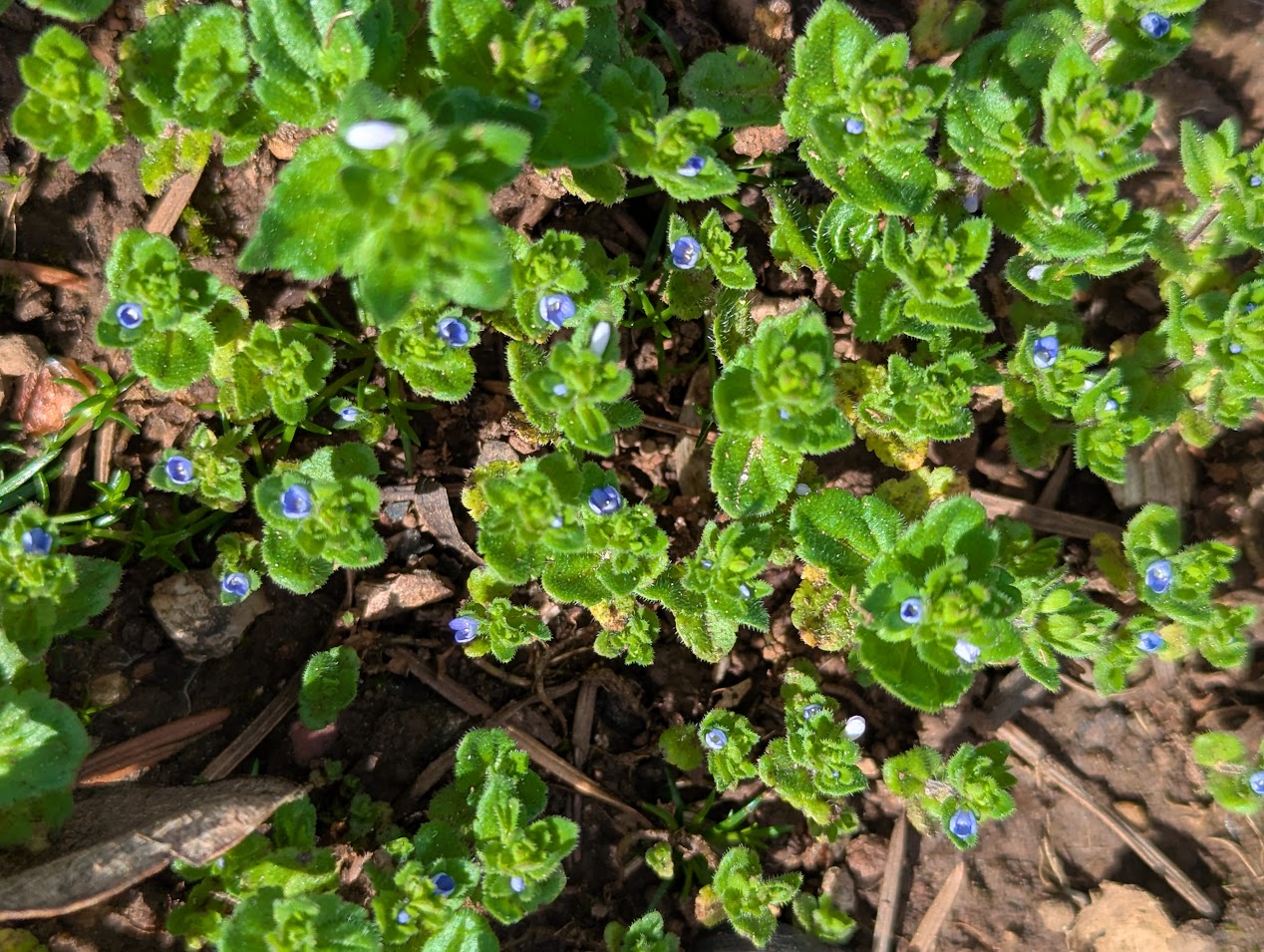
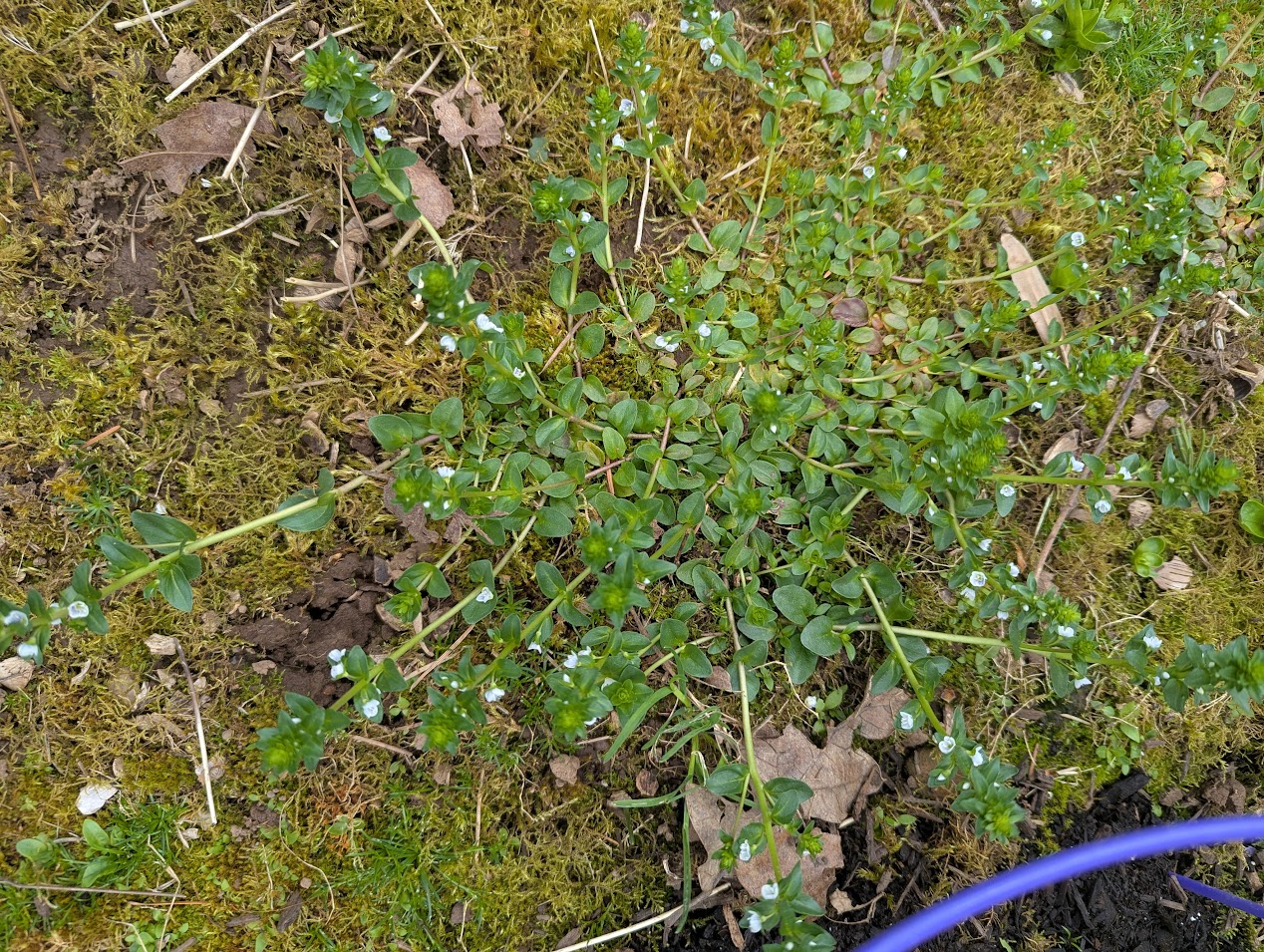
Speedwells. According to the plant app on my phone, we have at least three speedwells growing in our yard: Veronica arvensis aka wall speedwell, corn speedwell, field speedwell, or rock speedwell, and Veronica serpyllifolia aka thyme-leaved speedwell, and Veronica persica, or bird’s eye speedwell aka Persian speedwell. They are in the plantain family (we have plantain growing in the big weed patch, and I don’t mean the kind that looks like a banana). Plantains are edible herbs. The speedwells are tiny groundcovers with teensy flowers, non-native, and have limited medicinal uses (burn salve). They are next to impossible to get ahead of, don’t compete with other plants, and make a wonderful groundcover mat. I gave up trying to weed them out of my flower beds. They are simply here to stay.
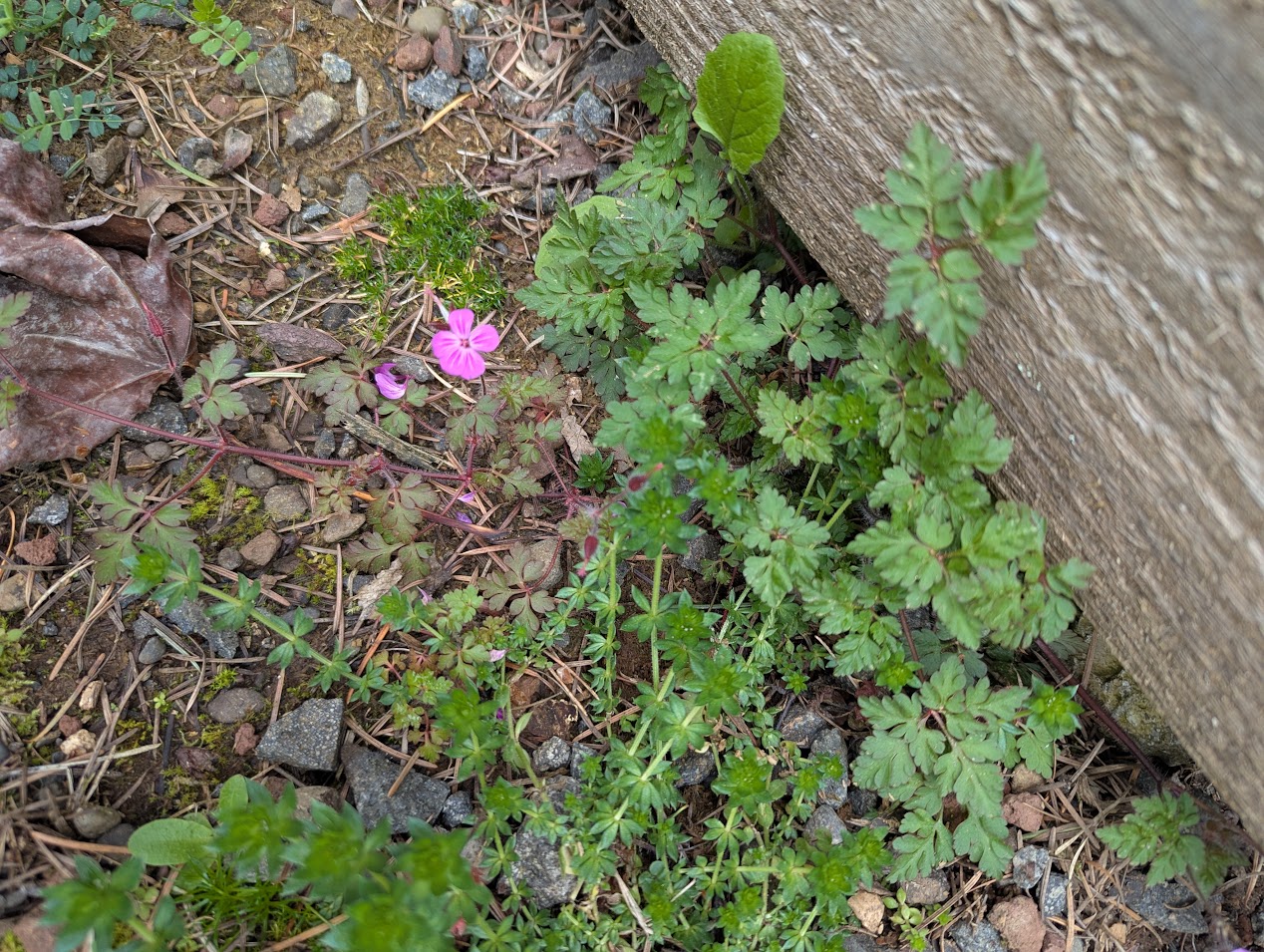
Herb Robert. Geranium robertianum. Stinky Bob. Do not make the mistake I did one summer: “Oh, such pretty flowers!” This escapee from hanging garden baskets is the nastiest, shallow-rooted, invasive ornamental. It competes. It covers ground quickly. It smells worse than most geraniums smell. I believe it is banned in Washington State to the north of us. If it isn’t, it should be. I have geraniums in the ground, I don’t need Herb Robert. Most geraniums are easy to control, make a wonderful, thick carpet, compete with everything – but so easy to cut back and pull up!. And they don’t spread like a prairie fire. Herb Robert, on the other hand… Just pull it.
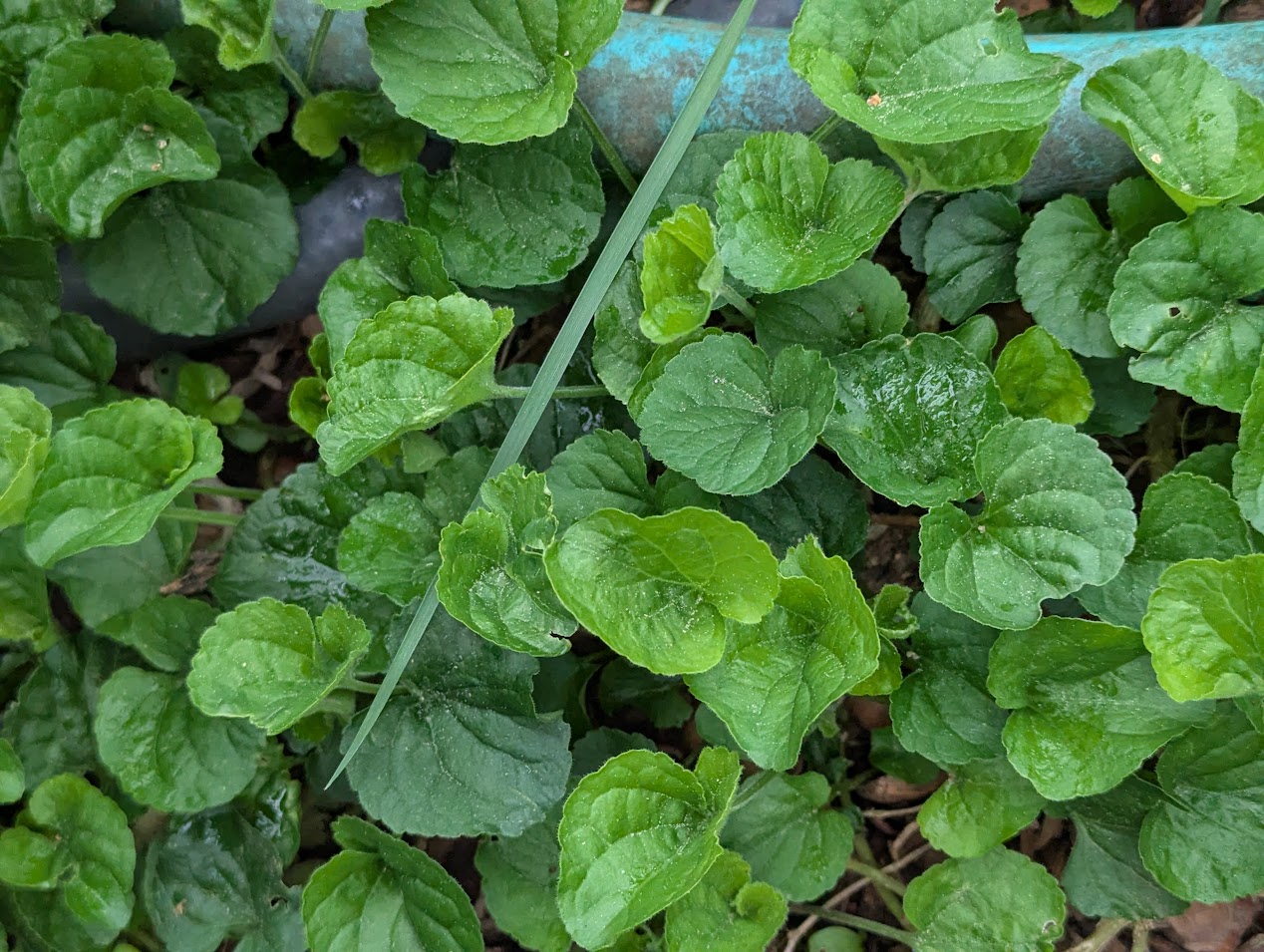
Sweet violet. Viola oderata. I wish it was a native wild violet, but the wood violet, or English violet, is introduced. I just control it. It spreads rapidly and out-competes some plants. The pretty purple blooms are early and loved by bees. Fragrant, but such short stems they hardly work for a bud vase. They were one of my mother’s favorite wildflowers from her childhood, so I don’t try to completely eradicate them. Besides, they fill in all the deep shade places where other groundcovers won’t grow.
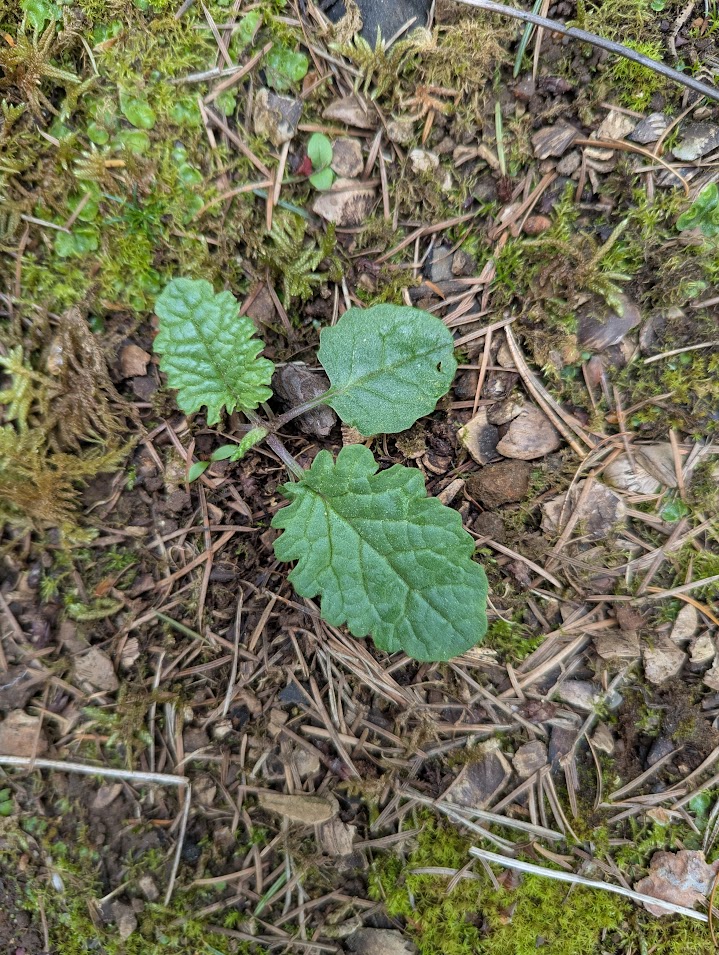
Tansy ragwort. Jacobaea vulgaris. Pretty yellow flowers that you see growing all along Oregon highways and right-of-ways, but a plant that you can get fined for if you don’t eliminate it from your fields. They even introduced a moth species to try to kill off the plant, the very pretty cinnabar moth. It didn’t work. If you haul horses from Western Oregon or Washington, you must purchase your hay in Eastern Oregon. Livestock won’t touch it except as a last resort or if it is hidden in a bale of hay, and it is deadly when ingested. It shows up now and then in our yard and I get out a Grandpa tool or a shovel to dig down and pull the entire tap root out. This plant is easily a “KILL ON SIGHT” invasive introduced species.
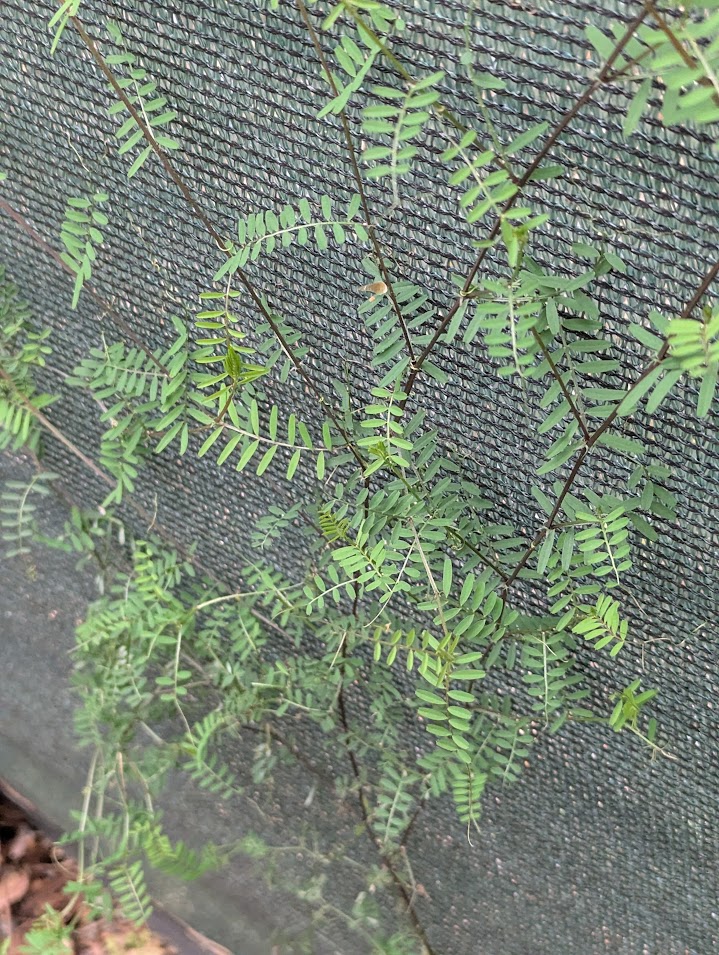
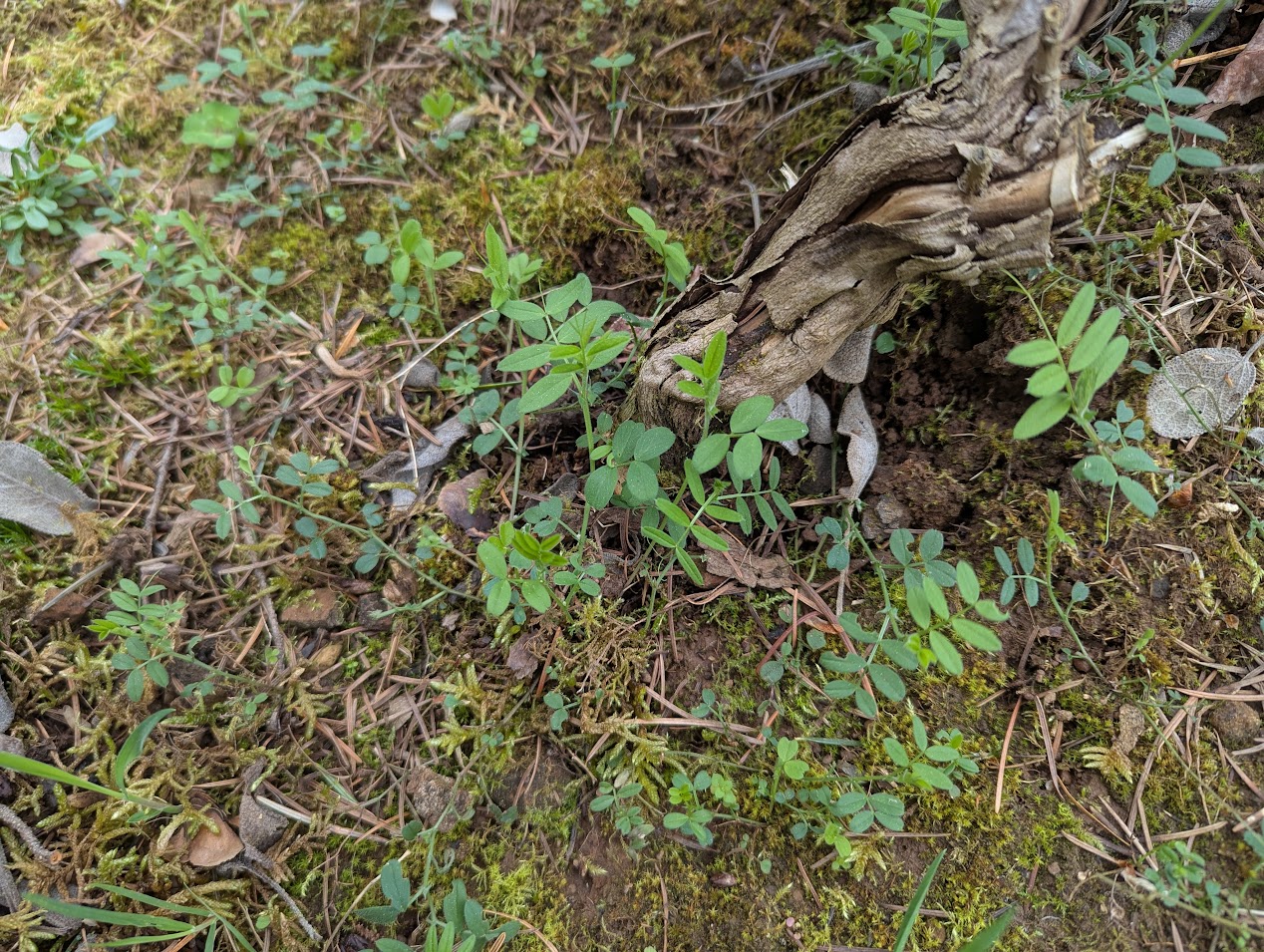
Tiny vetch. Vicia hirsuta. Introduced. This is a fairy garden miniature vetch with purple flowers and pea pod seed arils. Easy enough to pull, but why bother? It climbs the fence, it climbs my shrubs, it dies and adds nitrogen to the soil, and it is far from invasive. It doesn’t compete. It’s just such a pretty, tiny, miniature version of regular vetch. I leave it for the most part but sometimes I just pull it. It has no root system.
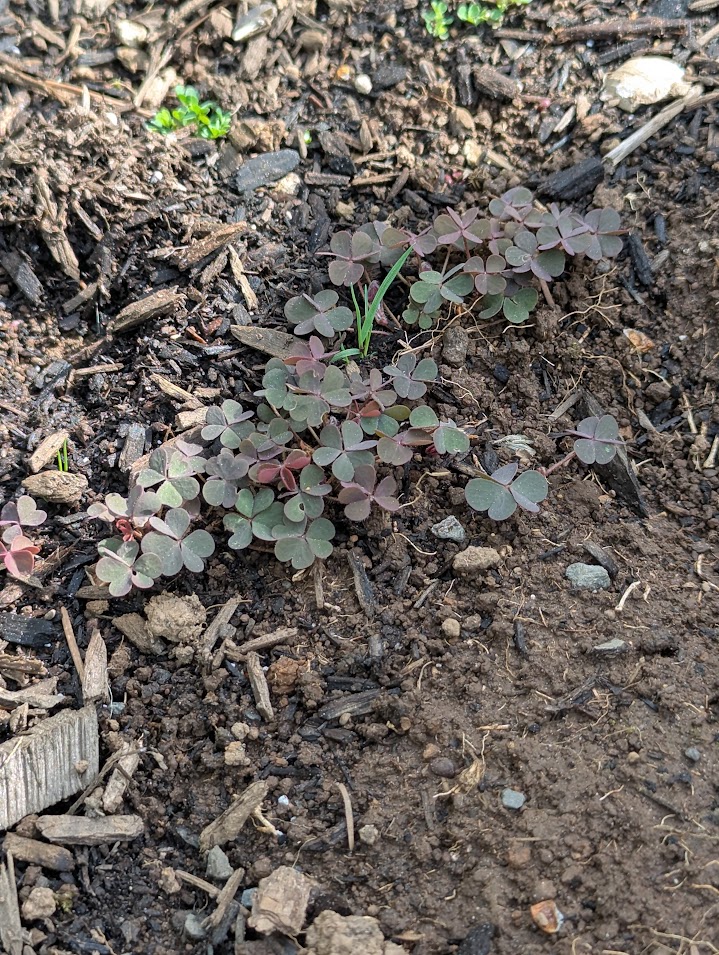
Creeping wood sorrel. Oxalis cornucalata var. atropurpurea. Pretty yellow flowers, deep tap root, and machine-gun like reflexes for releasing a million and one seeds into the air, your eyes, and everywhere else. It’s a losing battle. Whoever introduced this species of sorrel, I dislike you. Yes, I get that it is edible. So is cilantro, but I don’t have to grow it in my garden. (Cilantro, in case you are wondering, tastes like having my mouth washed out with soap.) I think if there were to be a battle between chickweed, hairy bittercress, and creeping wood sorrel, the wood sorrel would win by virtue of deadly aim, distance seeds can fly, and the hair-trigger of the seed arils.
For now, that is my summary of weeds I battle. There are more, I promise you. There are still the ones we leave growing in the front yard: plantain (& I don’t mean the kind that produces a banana-like fruit), flowers spread from neighboring yards like cinquefoil or rose campion, and the ones I grow for my own herbal use like stinging nettle.
Don’t worry: I don’t allow the nettle to produce flowers and thereby produce more plants.


