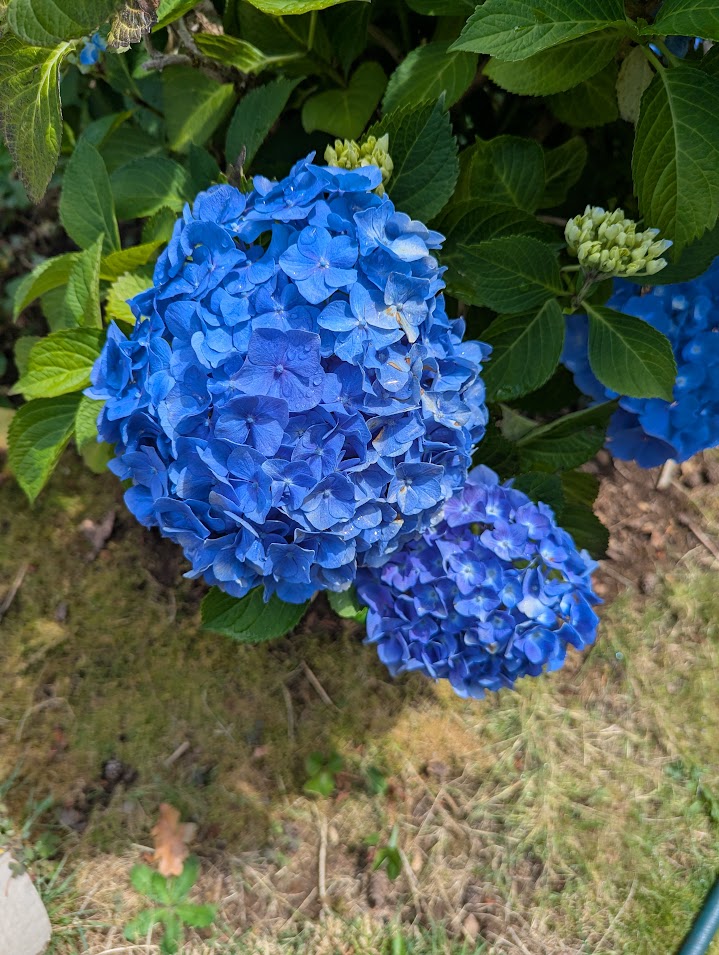
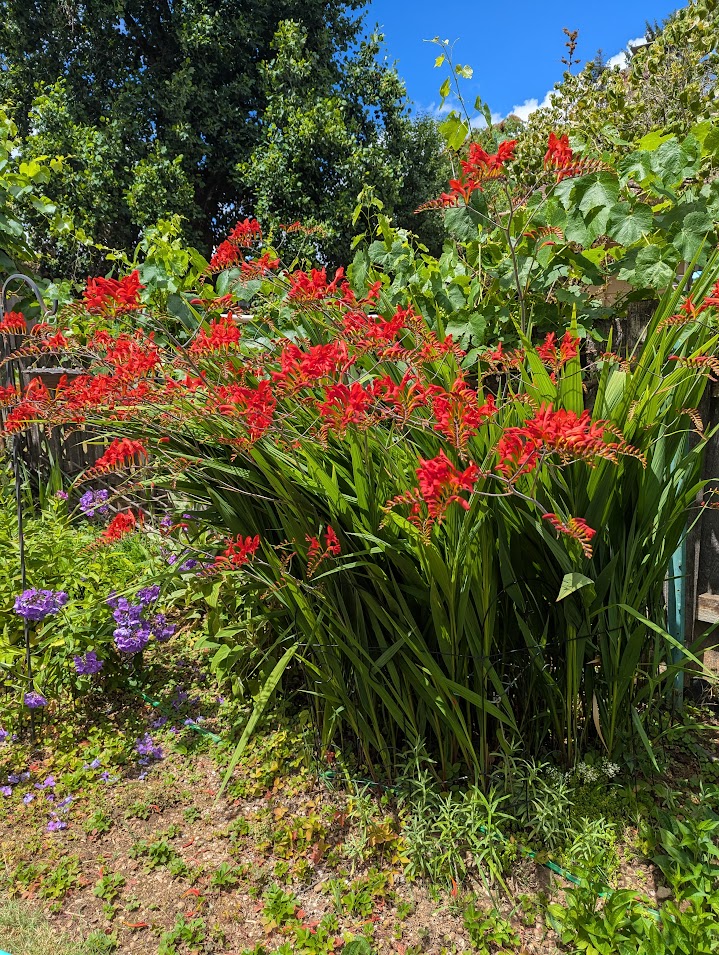
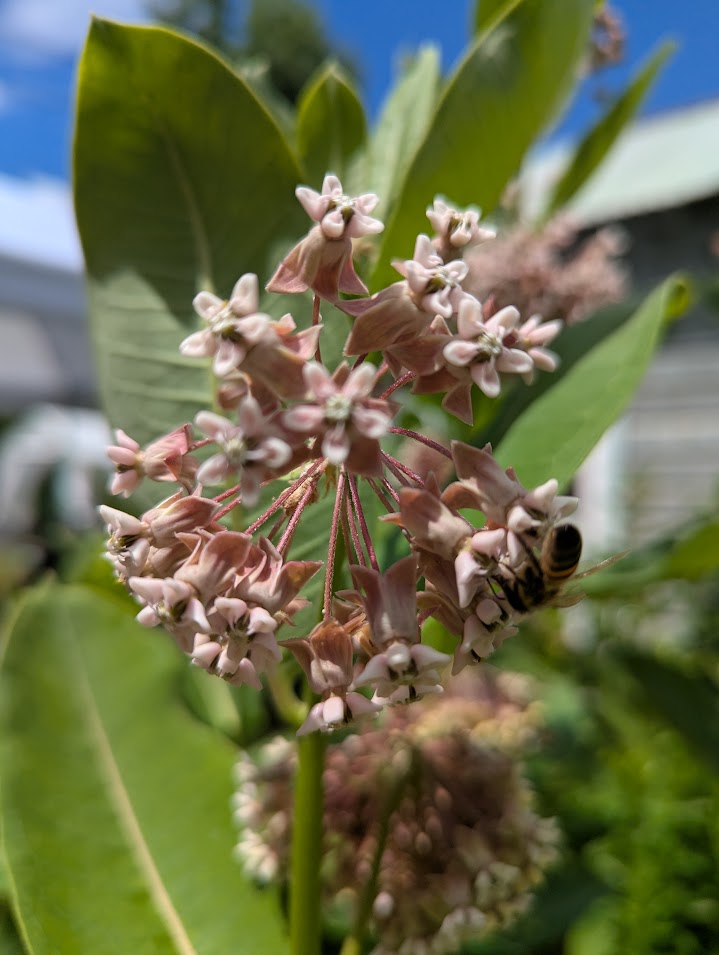
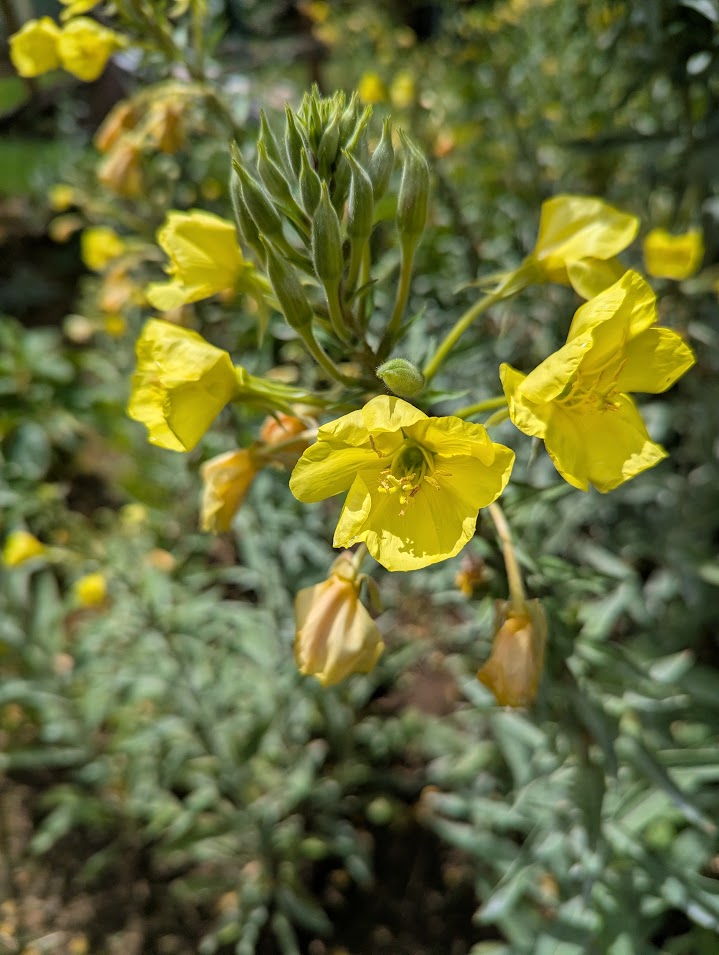
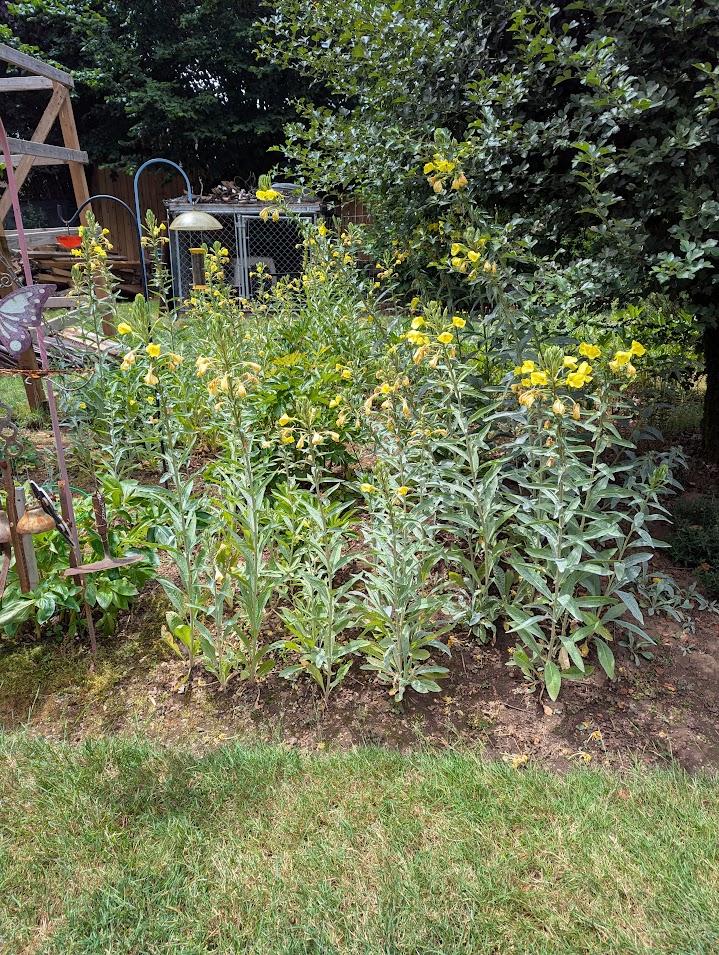
We have a frost advisory tonight. Mid- to late- October. It’s a late frost this year, and probably a light frost, but I can finally think about cutting back my peonies. I have already cut back the hydrangea and dead-headed what the birds won’t dine on over the winter. Stalks with seeds for birds litter my garden this time of year. Pretty certain the neighbors with perfect lawns are rolling their eyes once again.
I have cardboard hiding grass where I want to expand flower beds next spring, so if it isn’t the dead and dying seed heads for birds, it’s the bricks and cardboard on the lawn that drive those 1950’s lawn afficionados.
Actually, I think it only bothers the landlord next door and that’s fine.
My husband has been door-to-door collecting leaves the neighbors are willing to pile up on the street curb for him. He’s ready to spread them over the vegetable garden area for the winter: a free-to-us and eco-friendly ground cover to prevent weeds in the spring.
I cut woody stems down to knee high: the bugs like to drill into the stems and overwinter.
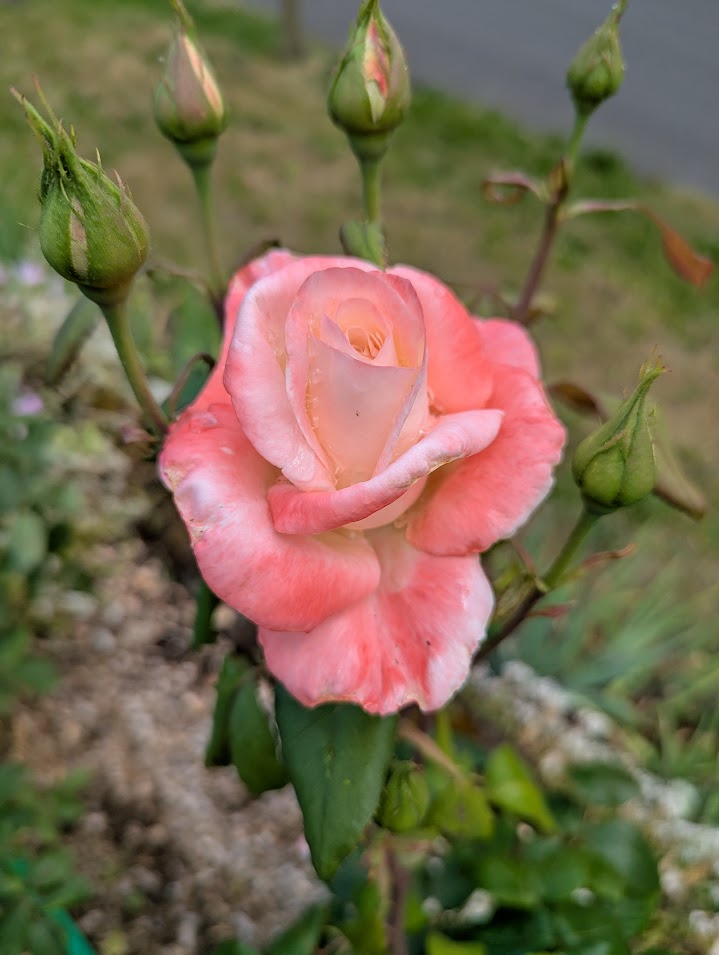
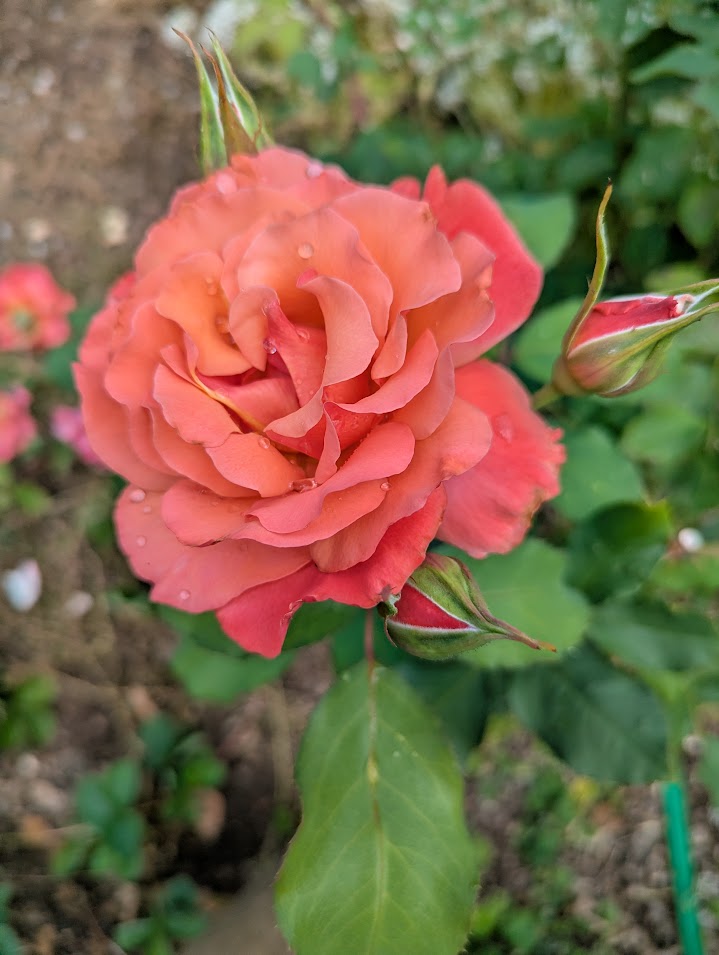
The peonies get trimmed to the ground after the first frost. The roses get mulched, but not pruned back until February of next year. I’ve pruned the dead out of the rhododendrons. And I have sown winter seeds in hopes the rains will come soon and help them germinate.
I have also picked up all the little wire fences that hold plants up or keep the dog from trampling the tender stalks. Once the plants are gone, the dog can’t see the wire fences (he’s 90% blind) and we don’t want him tangled up in wires.
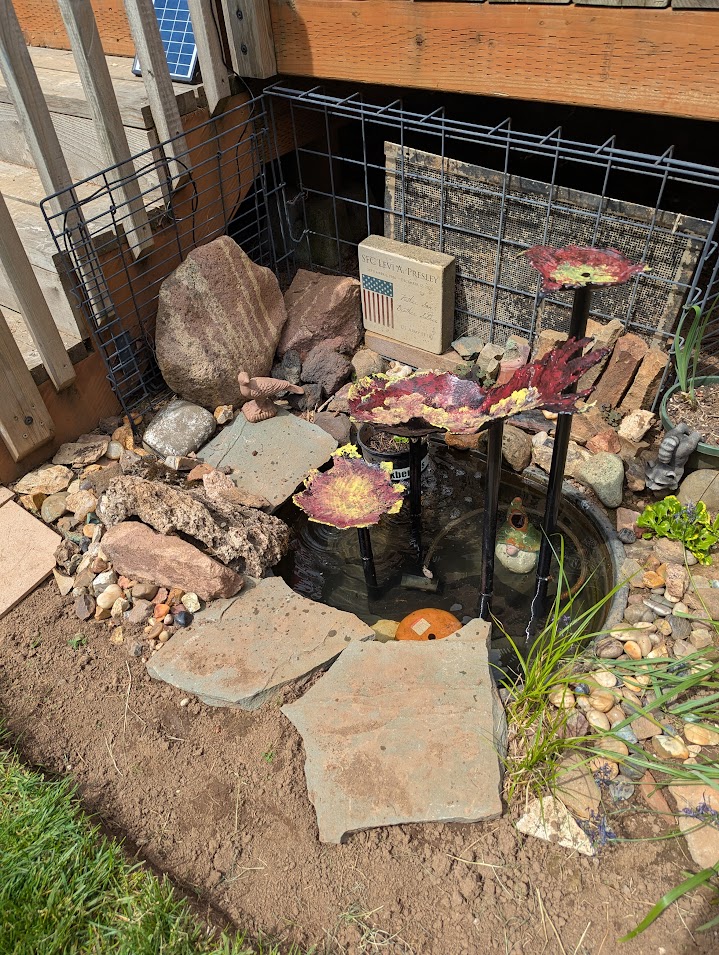
I’m not sure how to winterize my ponds this year, but I cleaned them, rescued a few fish (they may overwinter), but the solar panels and pumps… What do I do with those? Something to look up in a pond book or ask the ever-wise internet.
I have decorated for All Hallow’s Eve. Last year I think we had five spooks come by, but the night was very dark, very wet, and our street has no street lights. If it is dry, we might get 20 little critters, half of them teenagers. Otherwise, no matter how clever I am or how many strings of lights I put out, the little beasties stay to well-lit streets.
I just can’t fathom why.
And, last, as a parting statement: I will be changing up what and how I blog (again) soon.
I read once (a long time ago) that in the event of a nuclear event, three creatures will still be standing: the coyote, the rat, and the cockroach.
Rats. We all hate them. Well, not Willard. Or the owners of cute pet rats purchased from a pet store. Or Michael Jackson, who sang that hit song, “Ben”, back in 1972. If you are unfamiliar with either the song or the names, you need go no further back in time than to 1971 when the movie, “Willard” was released. It’s a cult classic. The rats are not cute, and Ben is certainly not a loveable pet as the song implies. Ben did not come from a pet store. I have never quite understood what pet rat owners see in the buggers, but…”to each his own”.
There are a lot of species of rats in the world, the most notorious of which is the very large Norway rat. The common brown rat. The rat that has long been blamed for the spread of the Black (Bubonic) Plague. The rats that stow away on merchant ships, chew into the stores, poop and pee on all the foods, and then jump ship in the harbor. The first creatures to leave a sinking ship according to the old idiom.
Rats.
I am not a fan of rats. I’ve had them die inside the walls of my home and bloat, host bot flies, and stink to high heaven until their bodies finally deflate and the maggots have nothing else to feed on. I have listened to them rustle inside the walls and I have heard them set off the instant kill traps that rarely work as advertised (the rats flop around awhile before they finally die. It’s disturbing). I have observed them hiding In gutters in NE Portland, sneak across drive-in parking lots, and dash through the aisles in major grocery stores. I have watched them climb trees to get to bird seed.
But here’s the thing: I’m not fond of rattlesnakes, either. Or scorpions. Earwigs. Little deer mice that carry Hanta Virus. Spiders crawling on my face. We all get the “heebie jeebies” over something. That doesn’t mean we’re always right or the thing bothering us is really something to be unreasonably frightened of. They exist, and so do we.
This past week I have discovered a dead squirrel in my yard. A neighbor discovered one in its dying throes. Tonight, someone else posted that the found two dying or dead squirrels. Everyone loves squirrels, right?
They’re cute, they eat peanuts, they pose, they tease our dogs and cats. They’re photogenic. They also carry fleas, raid bird nests, poop on everything, and – in the case of at least two of those squirrel deaths – are not native. The ones in my immediate neighborhood were Eastern grey squirrels that have been pushing out the Eastern Fox squirrels which, in turn, pushed out our native Douglas squirrels. Still, they are adorable, cute, beloved, and generally loved whereas rats are the opposite. And the poison which killed the squirrels in all of the above cases was poison meant to kill rats.
The problem with poison is this: it is non-species-specific. It doesn’t discriminate, it doesn’t break down, and it induces an agonizing death in the creature unfortunate to have eaten it.
And once that creature has died (usually not in the same yard where the poison was administered, but in a neighbor’s yard), the poison remains as potent as before it was administered.
In two of the cases listed above, the property owner discovered the dead/dying squirrels BEFORE the beloved cat or dog did.
Read that last line again. Say it out loud for those in the back of the room. The poison someone sets out to kill the rats they think are living in their yard is the poison that kills the neighbor’s dog or cat. It is the poison that kills the vulture, the mouse, the coyote, the raccoon, or the skunk that feeds on the carrion. Then it kills whatever dines on those carcasses. Birds, rodents, bears, pets.
Sticky traps are not a whole lot better, often trapping songbirds and sentencing them to an agonizing death.
I could go on, but I won’t. You get the picture.
“But…But…My neighbor feeds the birds and the bird seed attracts the rats and…”
In my neighborhood, we are often blamed for the rats that wander through “Just looking for a home”. We feed the birds. We also have a vegetable garden, fruit trees, a grapevine, berry bushes, and a compost heap. Two doors down (to the north and to the south), we have neighbors that raise chickens for the eggs. A quarter mile away as the crow flies, there is a major waterway that flows into a major port. We are surrounded by little wild parks where deer, coyotes, skunks, raccoons, and the occasional mountain lion dwell.
We have rats. Rats live where there is water, shipping lanes, grocery stores, backyard gardens, fruit trees, chicken coops. They live where skunks and raccoons live. Rats feed coyotes and foxes.
I’m not a fan of rats. Willard (the movie) cemented a deep-seated human loathing of the creature. We have mitigated entries into buildings on our property to repel rats (except the garage. There’s always still one building where the buggers might consider building a nest). What we have NOT done is take down our bird feeders, eliminated our wildlife watering spots, planted lawn where the vegetables grow, or lopped down the fruit trees. We have accepted that rats live among us, like it or not.
I read once (a long time ago) that in the event of a nuclear event, three creatures will still be standing: the coyote, the rat, and the cockroach.
Our neighbors still have a long way to go to understand they live in a world where the creature is the undisputed king of survival.
I’m slow on the uptake sometimes. I was going to add some water to the upper pond. I keep a watering can full of city water that I allow to sit over night to expel all the bad chemicals (and our city water has a ton of them). Usually I just need to add a little water to each pond every other day.
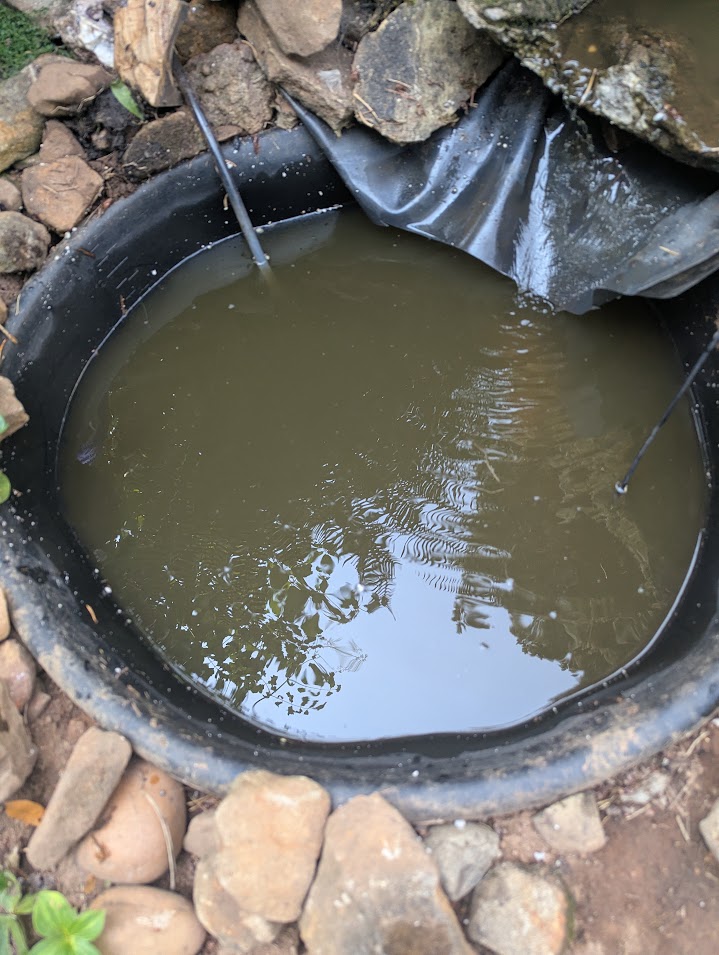
The first thing I noticed was tiny white specks floating in the muddy water.
“What the…?” I reached for the net and began to scoop the dots out. THEN I noticed that the moss in one of the planters had been dislodged and turned upside down. Mind you, this pond is only about 24″ in circumference and holds 15 gallons of water.
“WHAT?” My voice was getting a little louder now.
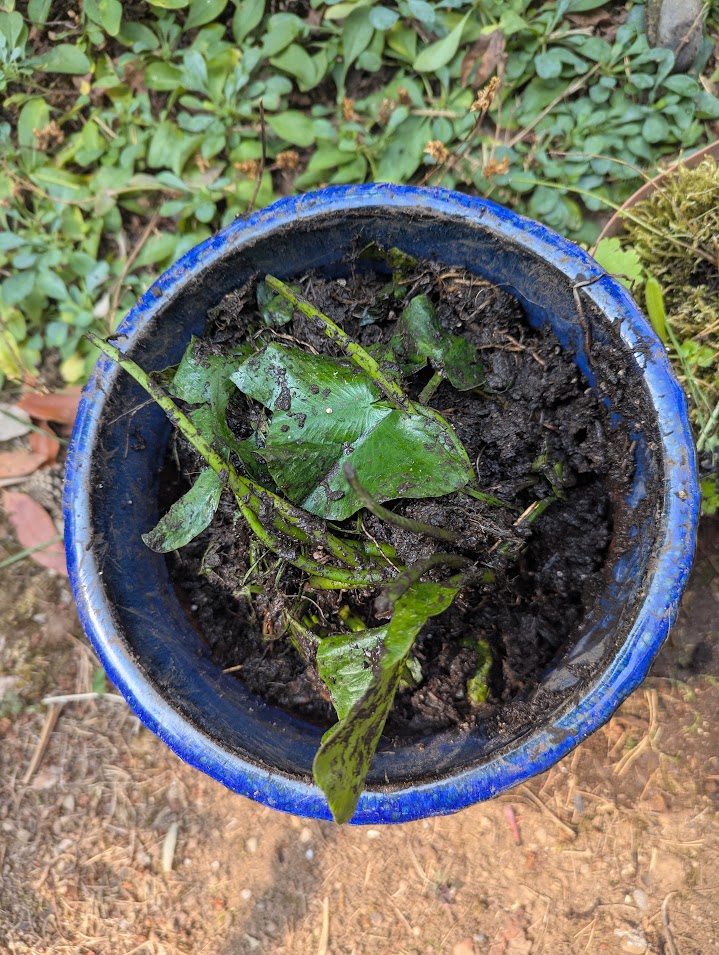
THEN, by some miracle of observation, I noted that the blue planter had been thoroughly trashed and the water lily was gone.
“What in holy!? WHAT?!”
My husband hurried over, “What’s wrong?”
“Some critter trashed the planters.”
Yup, the white floaters were vermiculite. The water was muddier than normal. There was even dirt up on the rocks.
Well, isn’t that a fine “how-do-you-do”!
I replaced the moss on the first planter, no real damage done. Dug through the blue planter and found the lily had merely been pulled out and then stuffed back in, upside-down. It was fine and quite salvageable.
The pond is murky brown, I’m not certain any fish still live in it, and the pump was pumping muddy water. I just cleaned that pump yesterday, thank you very much.
If we lived in Seattle, I could hope it was the work of one Jimothy the short-spined raccoon, but I don’t live in Seattle and it was more likely the damage done by a normal sized masked bandit. I don’t think it was the work of a squirrel or a crow: the water lily had been uprooted, turned over, and stuffed back into the planter. I also don’t think it was the work of one muppet named Ruger, although he is one of the primary reasons I have to add water every day: he thinks pond water is better than clean water in his dish. Also, he’s out by nine at night and is only outside long enough to potty sometime in the early morning hours.
I didn’t think to take photos before I rescued plants. I will need to add soil to the blue planter, but it looks like the lily will survive. There’s so much mud in the water that I will have to completely empty the pond and clean it out. If any fish managed to survive, I will relocate them to the lower pond with the other mosquito fish. Then I will refill this pond with clean city water and let it sit a day or two before I call Vector Control to add new gambusia.
Also, I have a trail camera. It wasn’t set up last night, but it is set up now. We may not know what the vandal looks like but we are certain it will return to the scene of the crime!
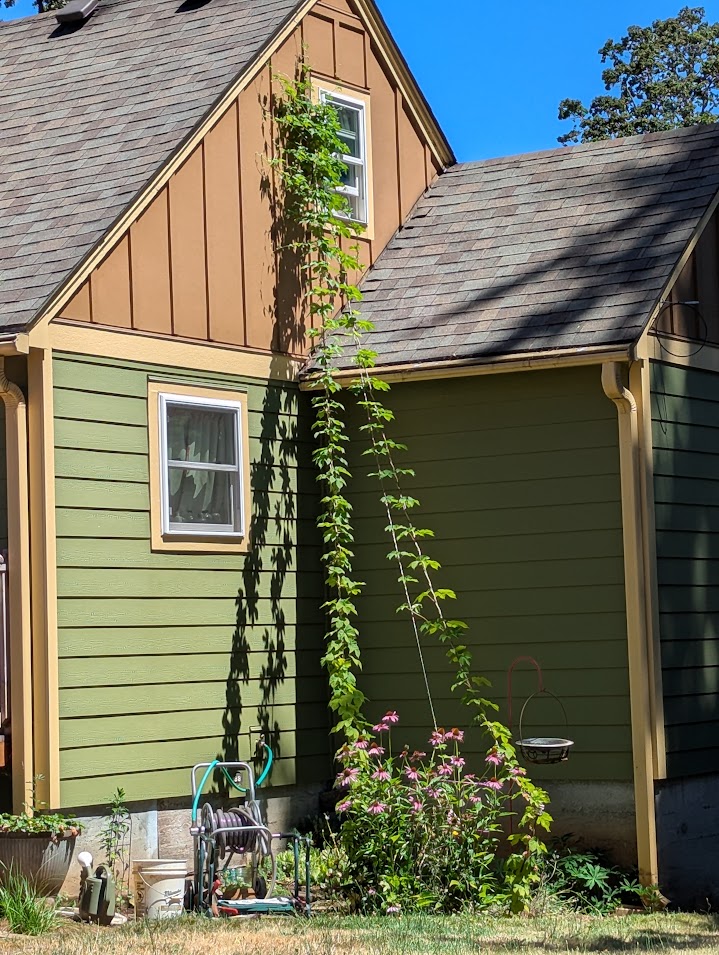
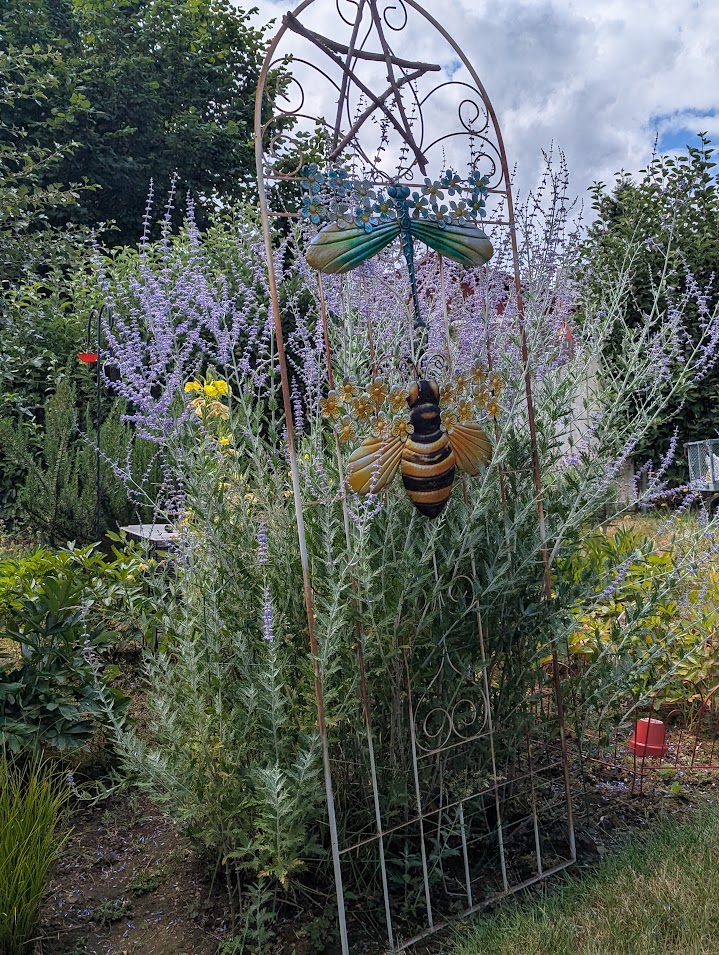
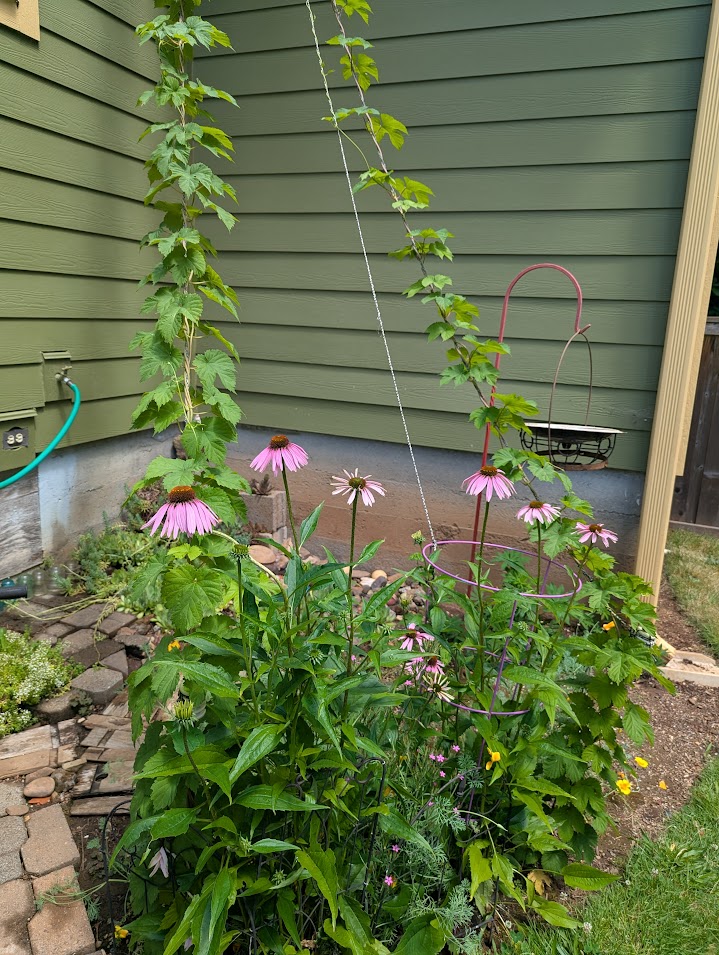
My hops have out-done themselves this year. They haven’t bloomed yet but they are reaching for the sky. I think I will add more hops next year, not for any reason other than i just like watching them race up the rope. It is a very hot corner of the yard. I’ll probably move the purple coneflowers, but maybe not.
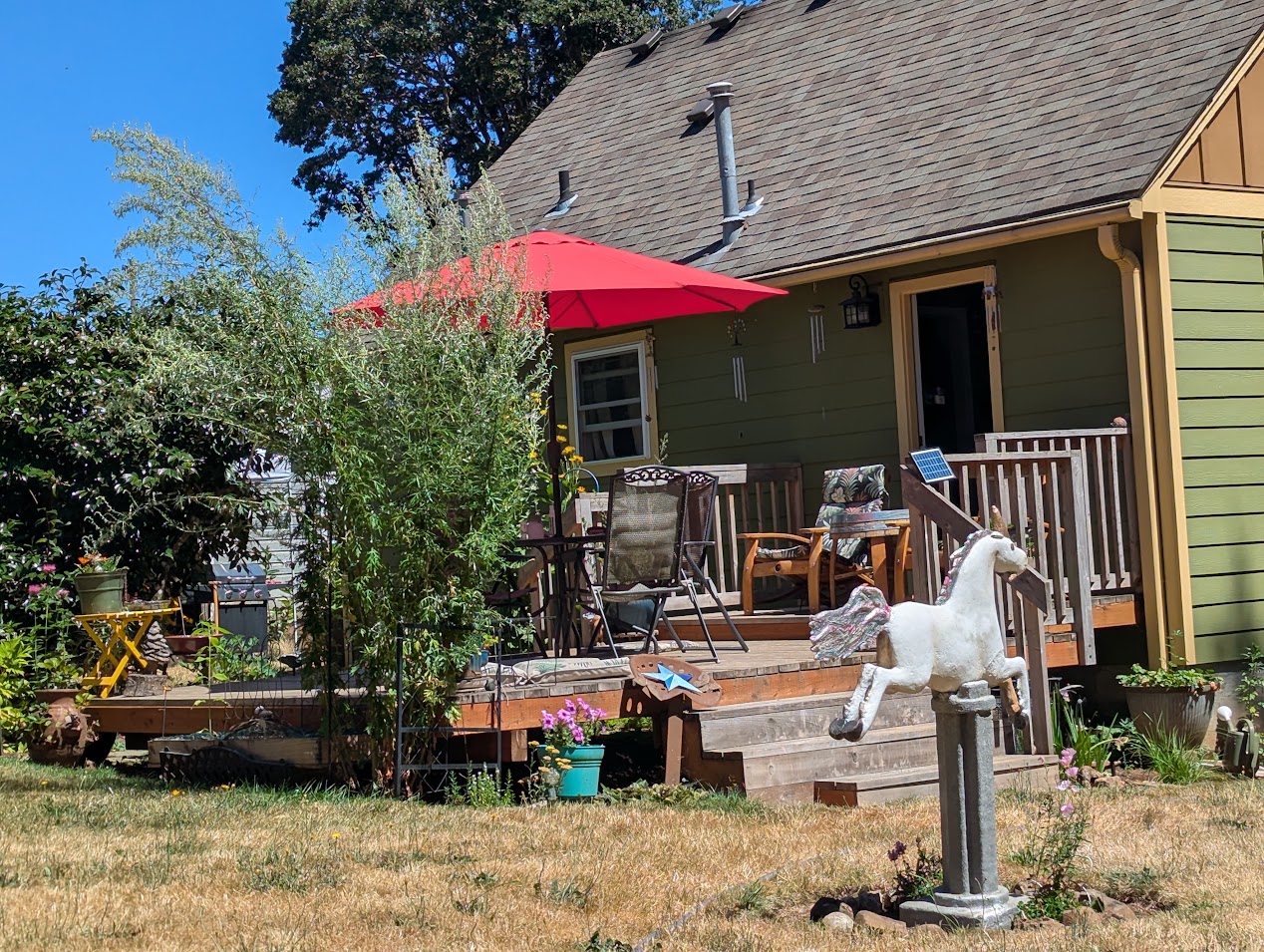
That’s mugwort towering over the red umbrella. I bought it without knowing what it is used for (it has impressive medicinal uses). It is supposed to reach heights of 4-6 feet (less than two meters). Nope, mine is three meters plus (over ten feet). And it has yet to fully bloom – supposedly the flowers are blue, but they remain mysterious little buds for now.
The unicorn is just a fun something I made.
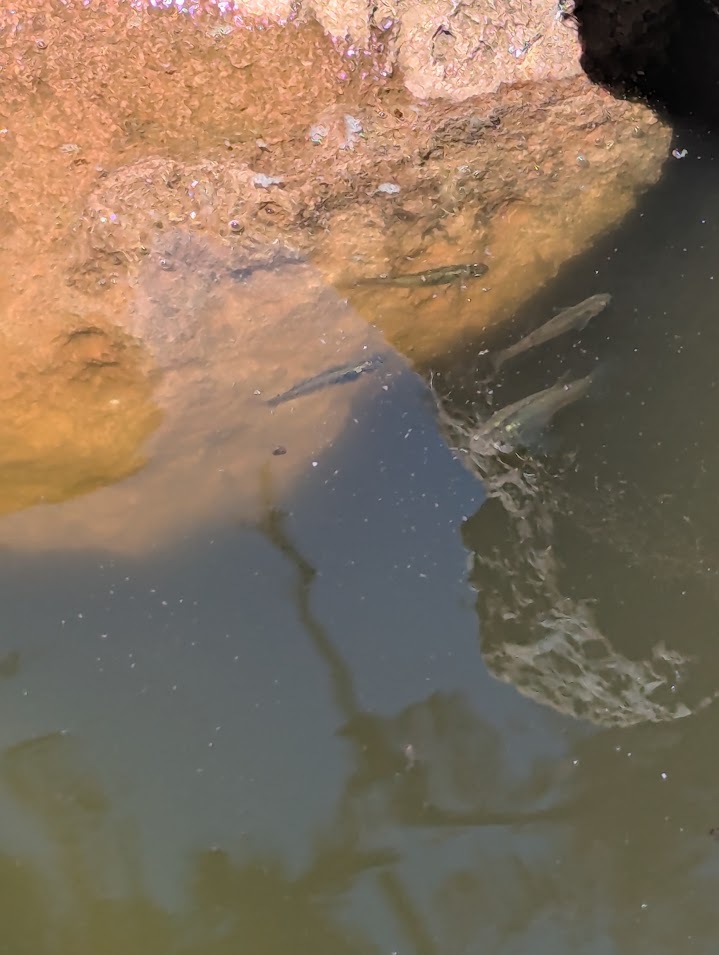
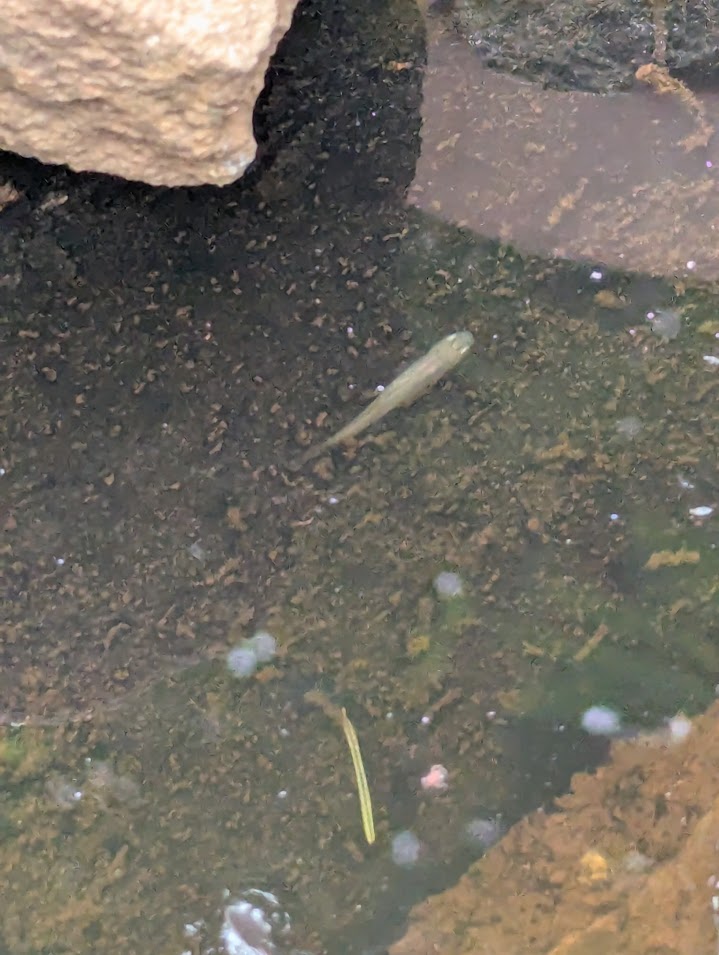
It is really neither here nor there, but my mosquito fish spawned. The large one is the female (photo on left). The spawn showed up the other day. I think there are a few survivors yet (Gambusia are cannibals so the little ones have to be quick). My husband thinks I am nuts for caring so much about fish that live in murky water for the sole purpose of keeping our yard free of mosquitoes (they do a decent job), but here I am: obsessing over Gambusia small fry.
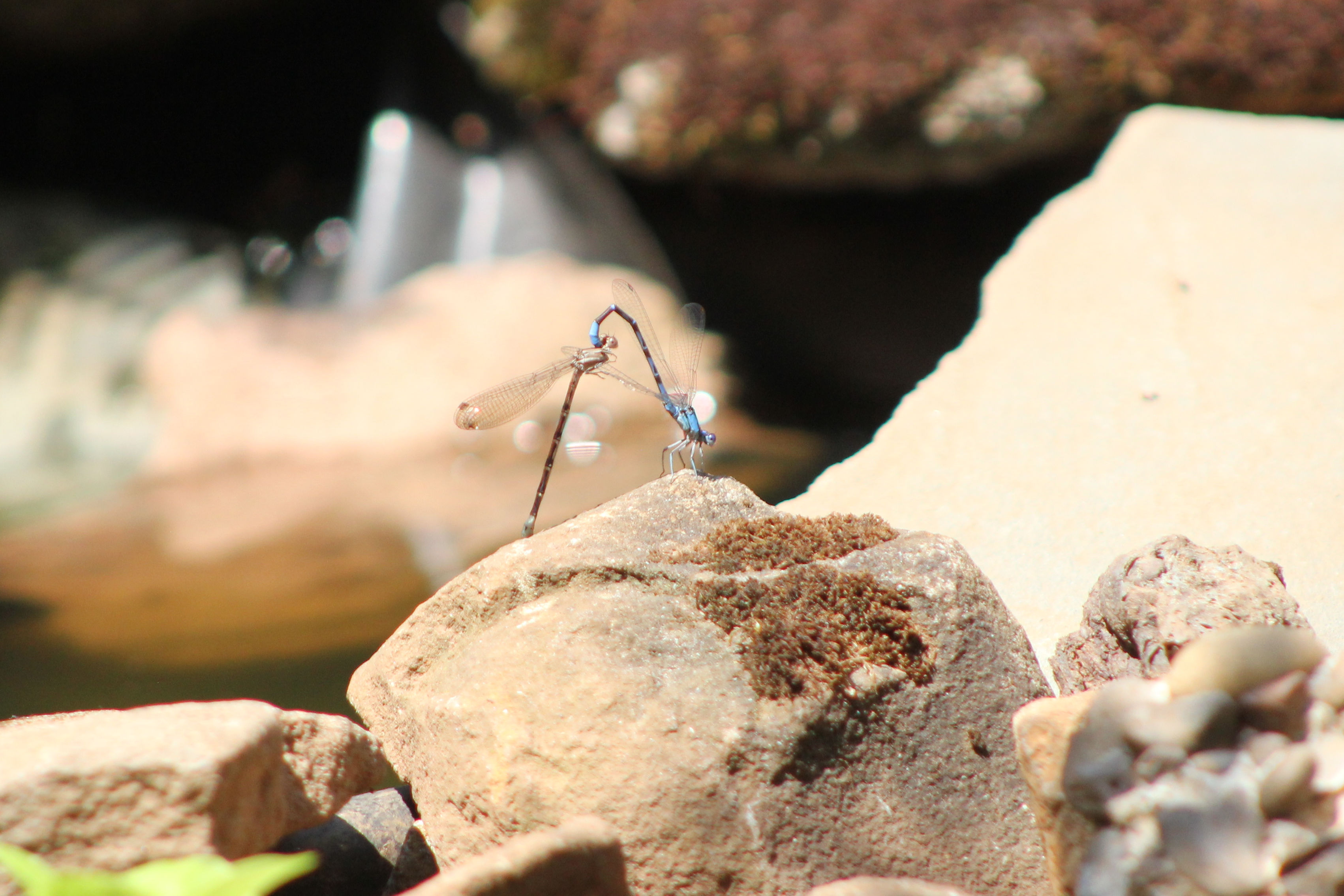
We watched this ritual happen two different days, and in both sequences, they did eventually connect and lay eggs in the pond. If the mosquito fish don’t eat the nymphs, we will have more bluets in the future.
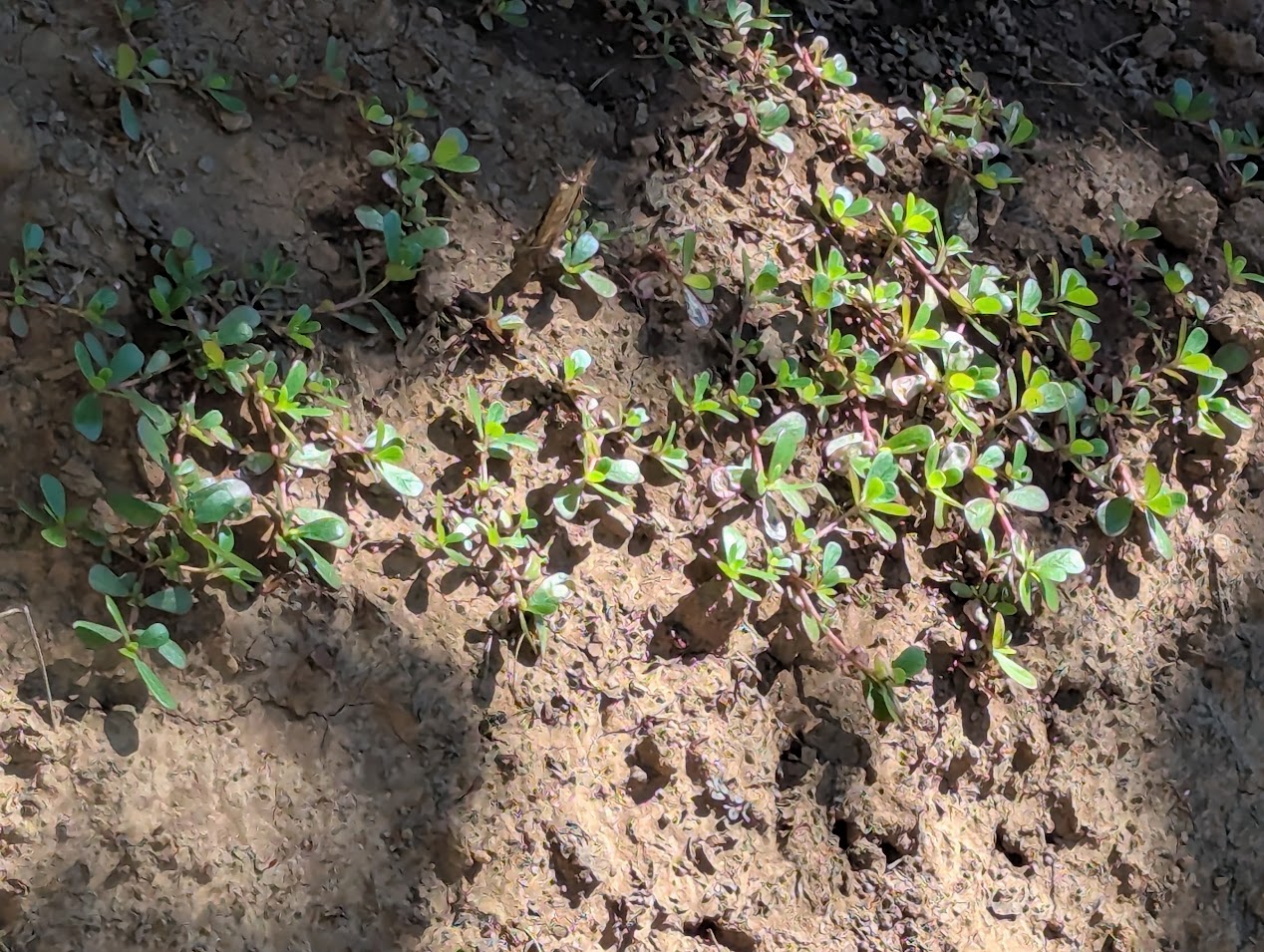
That’s the heading for a popular advertisement for purslane (Portulaca oleracea). It goes on to advise the reader to keep the plant and nurture it’s existence.
I say:
PULL IT.
I see this herbal remedies ad frequently that touts the benefits of purslane, some of which are listed below (per an AI summary on the Interwebs):
“Purslane is rich in omega-3 fatty acids, antioxidants, vitamins A, C, and E, and essential minerals like magnesium and calcium, making it beneficial for heart health, reducing inflammation, and supporting overall well-being. Additionally, it may help manage blood sugar levels and promote digestive health. Health Benefits * Heart Health * Blood Sugar Management * Digestive Health * Anti-Inflammatory Properties * Antioxidant Protection“
Yada Yada Yada. Etc., etc. etc.
There are not enough health benefits to purslane to justify an entire garden buried in this pernicious weed. Purslane is a weed.
I spent three days pulling this sucker (sucker of water) out of the raised beds in our vegetable garden. It takes over in a matter of weeks, or even days, covering every visible speck of open ground the vegetables are not planted in. It is worse than the grass I battle in my flower beds.
No, I take that back: purslane is relatively easy to pull out of the ground whereas the grass grows on runners and comes back if you leave so much as a quarter of an inch of the plant in the soil. Purslane doesn’t do that, but it is just as nasty a weed as grass in every other aspect.
If you want to save some for your salad, go for it. My advice is: pull it, kill it, and don’t allow it to multiply. There are a lot of other herbs out there that provide the same benefits and don’t take over the garden. Grow those.
Just my two-cents’ worth of gardening advice. You’re welcome.
This post is actually about an argument. We both knew the old compost bin was done for: the door no longer stayed on and I had to place a pot in front of it to keep the critters at bay. I think I bought this compost bin around fifteen years ago, but I won’t swear to that. We’ve added things from the kitchen, ashes from the fire, early grass clippings (before the weeds start to bloom), and little else. It has stewed, produced soldier flies, and been a haven for red worms for a long time.
The only thing that doesn’t compost quickly is egg shells. But egg shells are vital to compost for the calcium they add.
I knew I could build my own compost bin and we probably have instruction in several books, but it would be a Jaci project with little to no help from my husband. He has other things he worries about and works on. Other than adding to the compost and supporting the effort to compost, it really isn’t his “thing”. And I am overwhelmed by things to do.
Buying a new bin was the only option left, but – Boy Howdy! The prices for a pre-made compost bin are astoundingly high in 2026. And not one of the local big box stores has a demo model on the floor: you can only order from Lowes or Home Depot ONLINE for a compost bin. That seems ludicrous in this day and age when we are supposed to be environmentally aware, but there you go.
Want a compost bin? Buy it sight unseen online and have it delivered to your house or the store, no other option. We looked. We walked aisles and asked questions. It’s ridiculous.
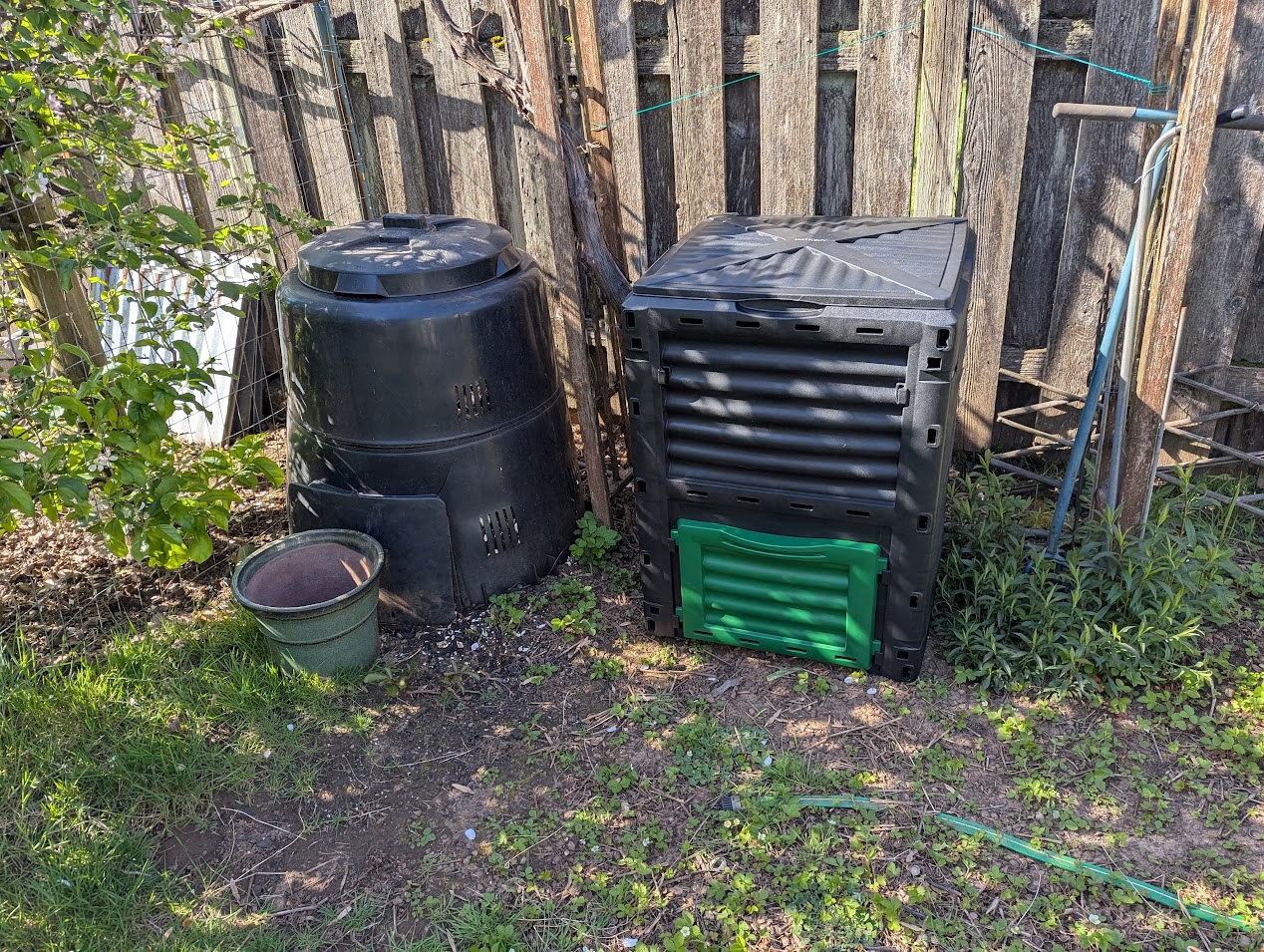
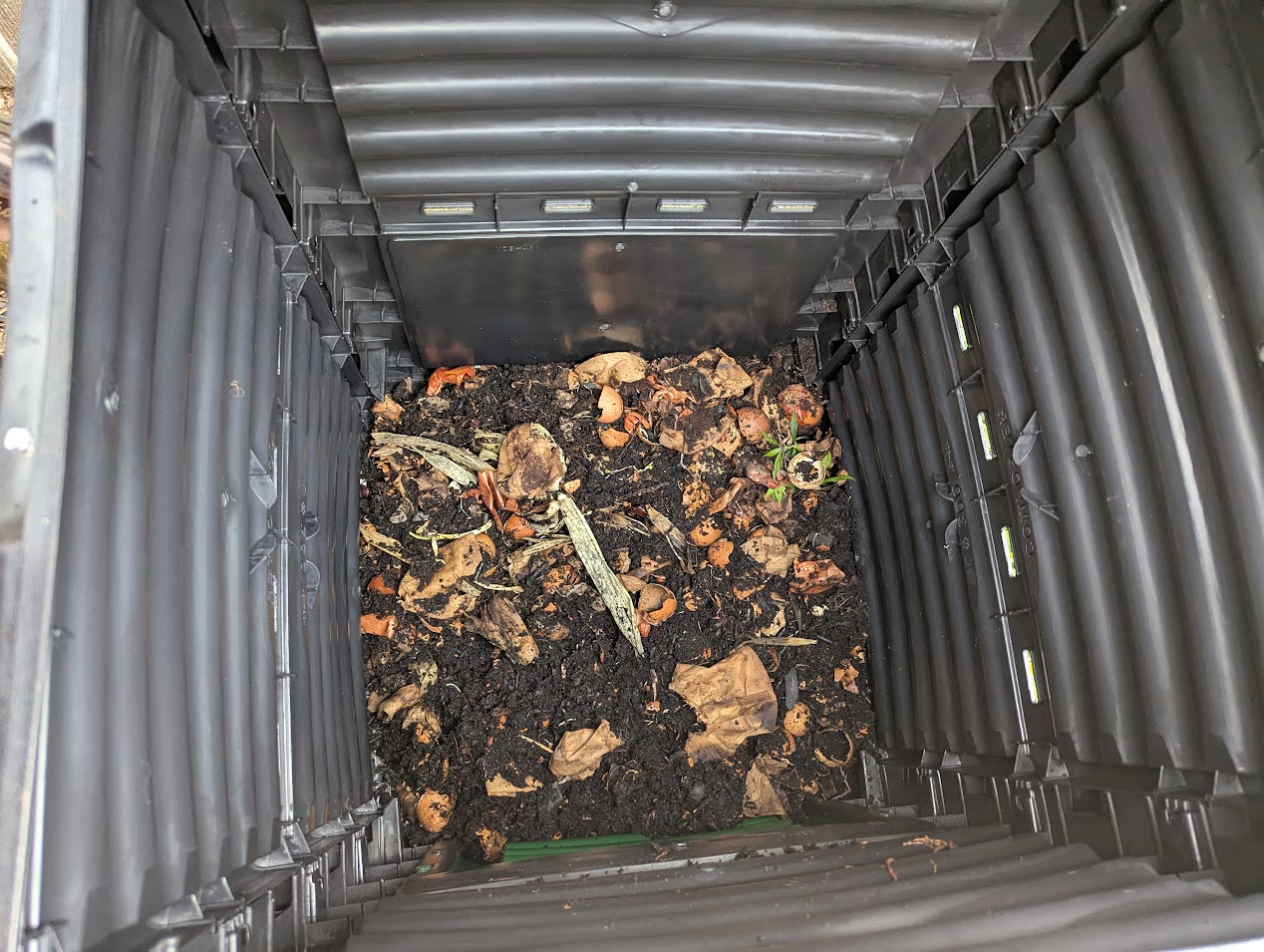
I turned to Amazon: all I wanted was a bin of comparable size to our original bin and for a lot less money than most manufacturers are asking. I wasn’t willing to spend $100 for the thing and I didn’t want a rotating one: just something similar to what we already had. And Amazon delivered: the one I bought is $76 at a big box store and I paid $49. Same capacity as the former bin. (Old on the left, new on the right)
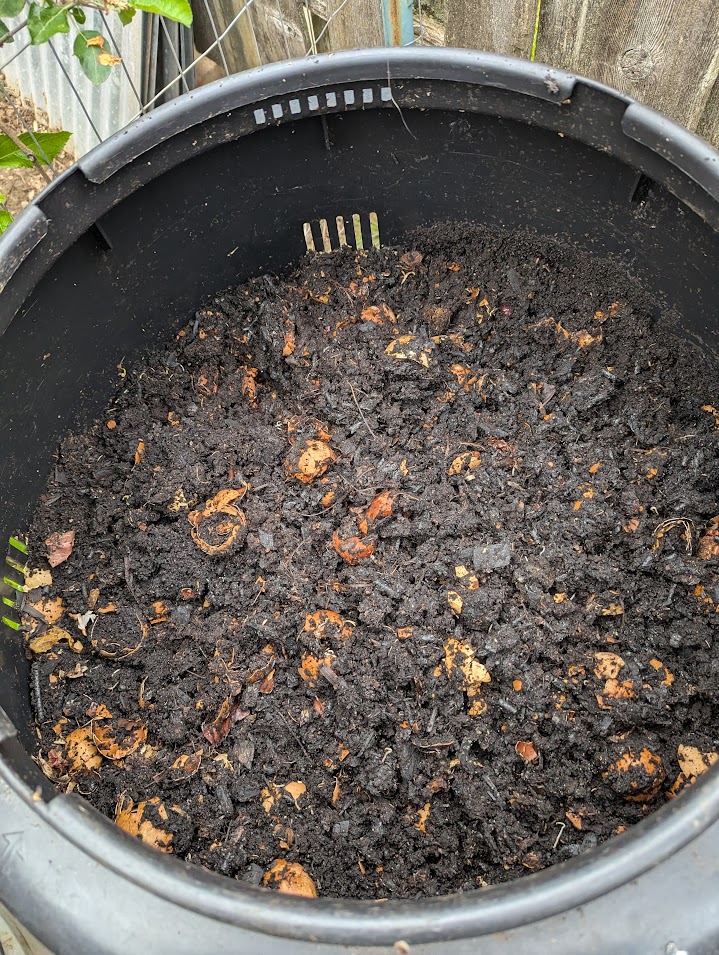
Now came the hard part: moving debris from the old to the new. I ran into an issue almost immediately, and that issue led to a minor spat between husband and myself: the debris in the former bin was already heavily composted, dense, black, gooey, wormy. I moved about six inches of garbage before I ran into the issue. I tried screening it, but it was muddy, wet, wormy, thick.
Not smelly. This stuff was pure black gold, beautiful compost with uncomposted egg shells. I tried to explain this to my husband one night when he was not interested in my story and we ended at an impasse. My verbal skills were lacking and his interest had waned. I dropped the subject.
A day later, however, I managed to get him to walk over and look at what I was dealing with. And he was awed by the state of the compost in Bin #1. And he offered a solution: Just keep it in Bin #1 and use it up. We’ll start a whole new collection in Bin #2, no hard labor on my end.
Well, except for moving that beautiful black compost to flower beds, egg shells included.
Annnnnd – after I wrote this, my next door neighbor GAVE me a compost bin just like the original;, so now I have TWO compost bins and one that I am still emptying. I’m putting the beautiful black stuff into old bird seed bags and will mix it into the soil of flower beds as the year moves on.
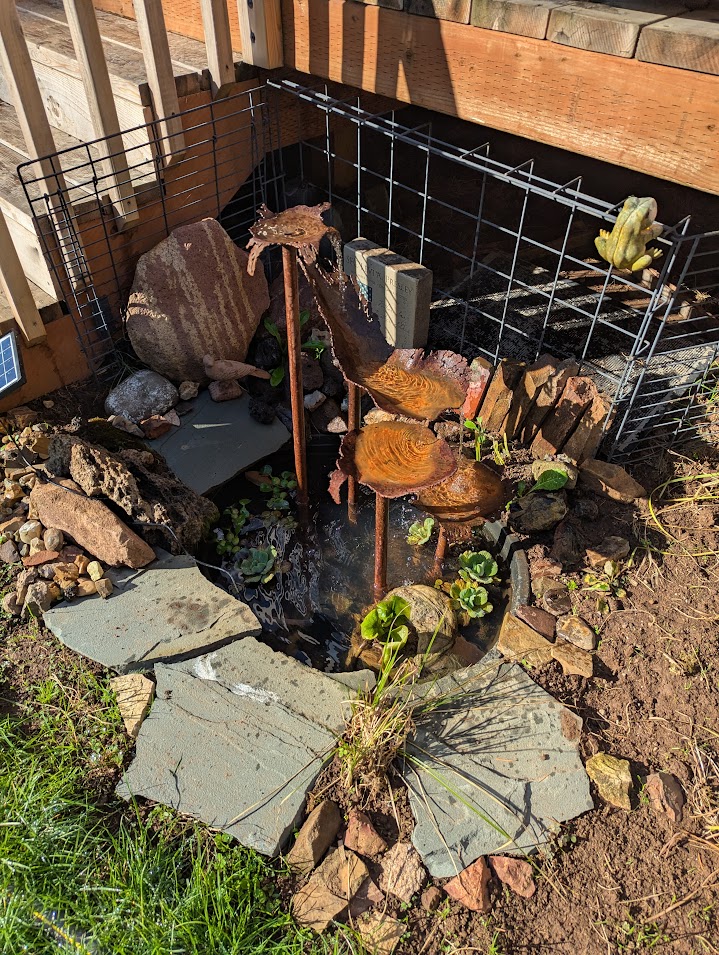
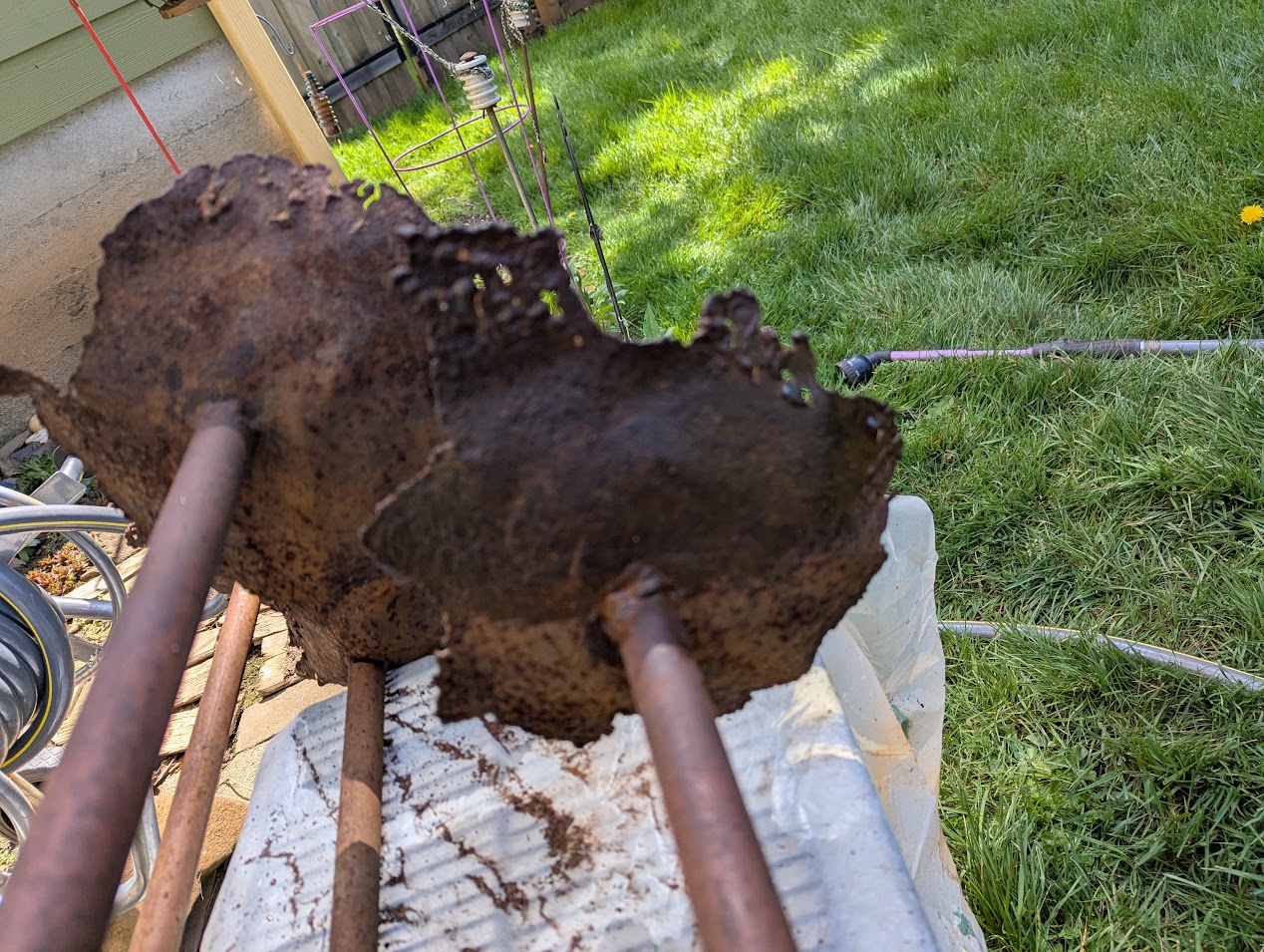
I blogged last year about how I created a couple water features. This one with the rusty yard sale fountain has had to undergo some changes. The rusty fountain rusted more in the water and filled the pump and hose with sediment. We decided that was not suitable for mosquito fish or cost effective for my time (cleaning the pump and draining the pond frequently).
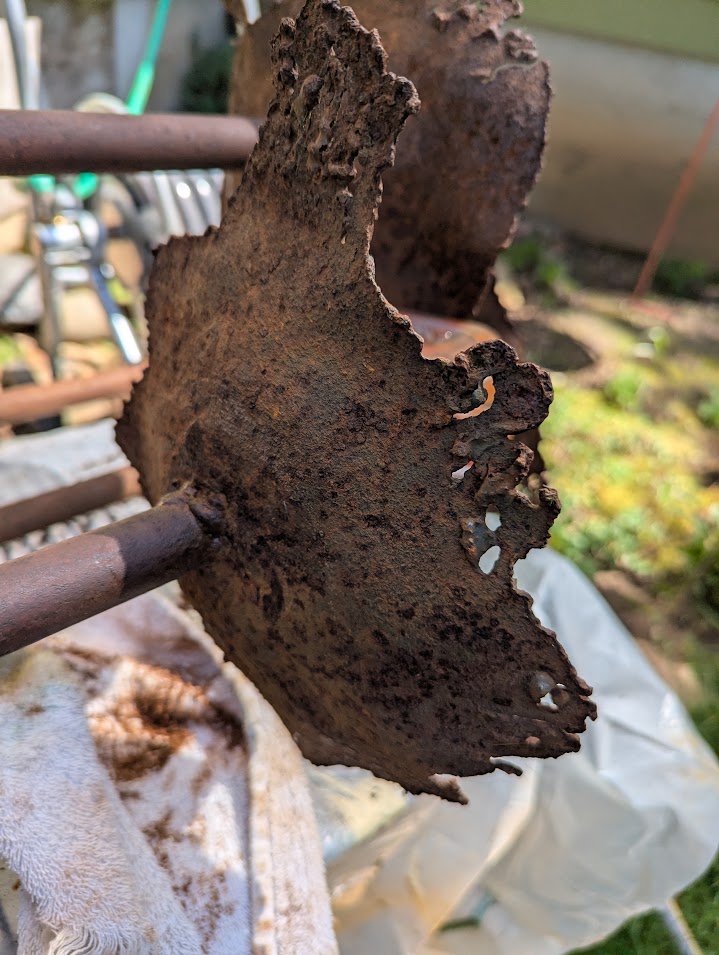
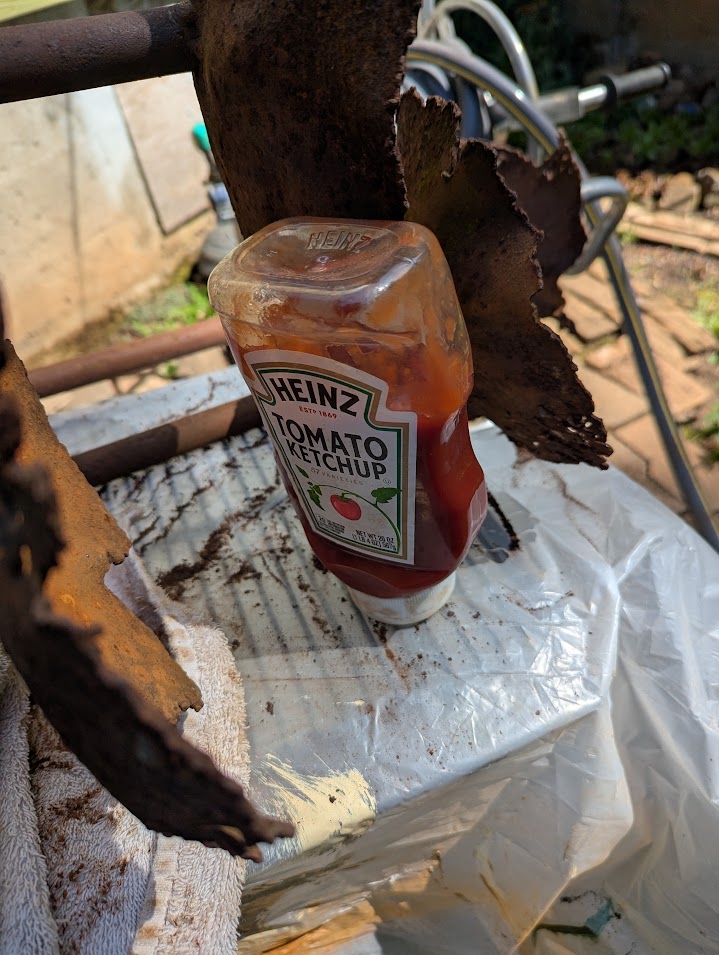
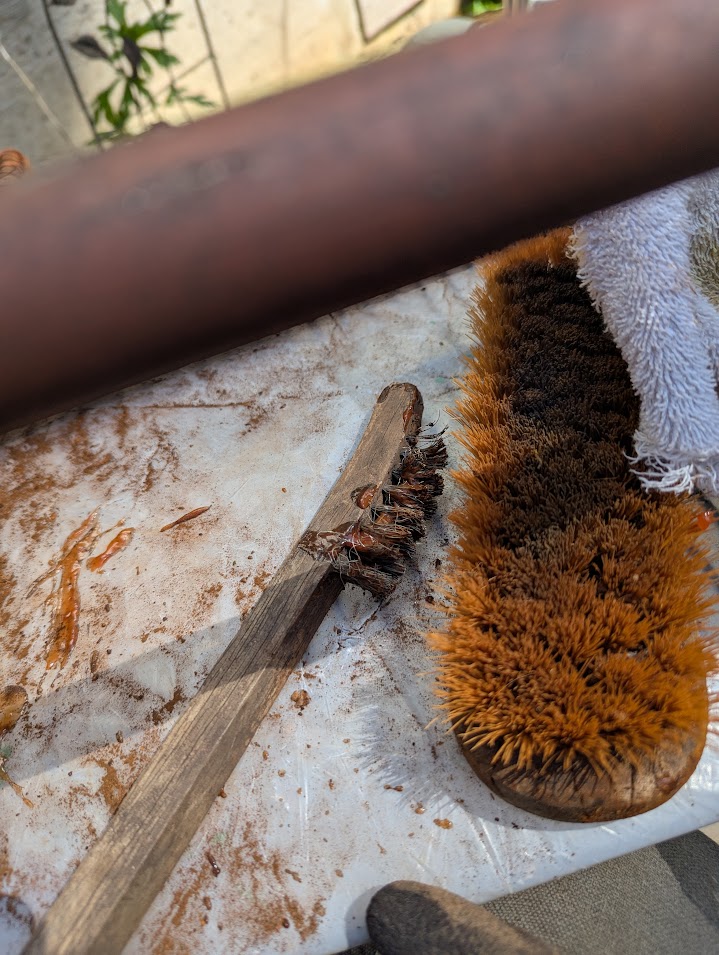
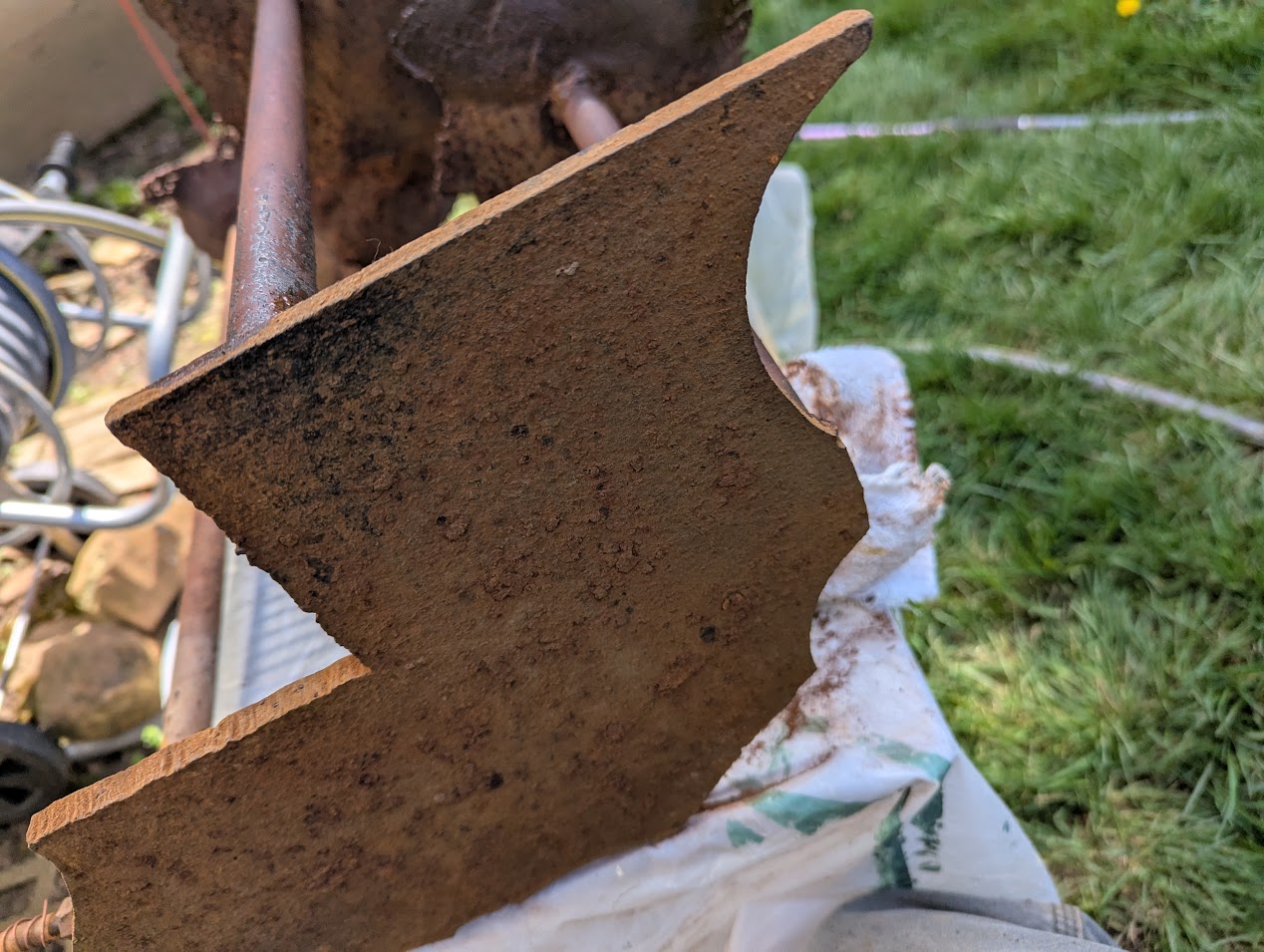
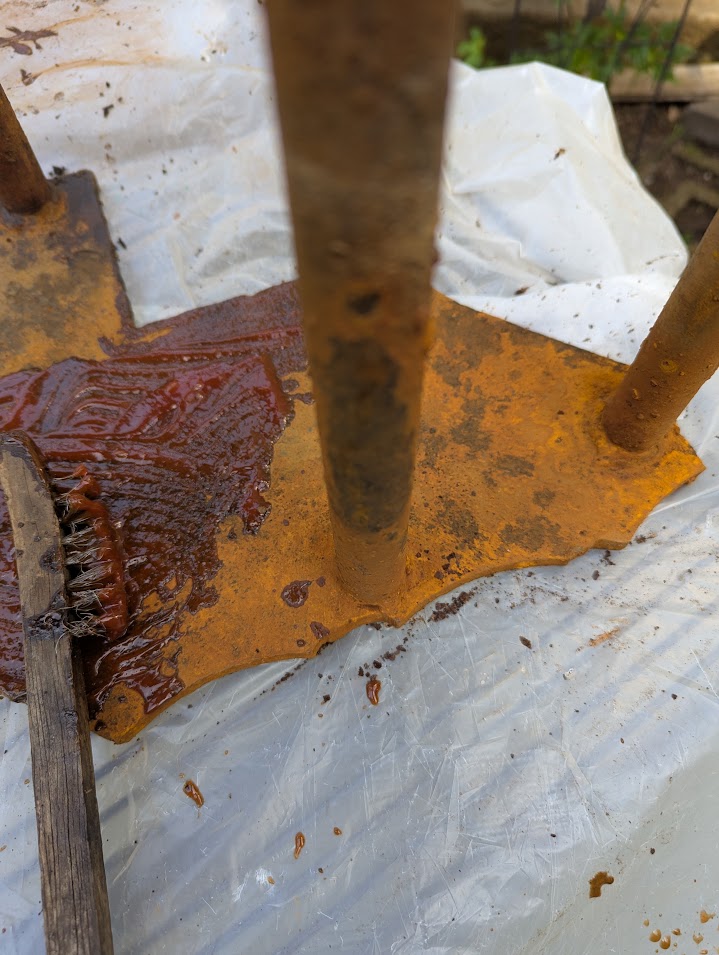
The fountain came out and I was left with “how to deal with rust”. A friend in the UK sent me a short video on getting rid of rust using catsup. Well, catsup and a copper scrubber, to be exact. I wasn’t certain it would work, but we had an extra bottle of catsup (ketchup, I just like the spelling ‘catsup’ better). No copper scrubber, but there was a spare wire brush from a barbecue long ago that I borrowed from my husband’s work bench. (I told him later).
By golly! It worked!
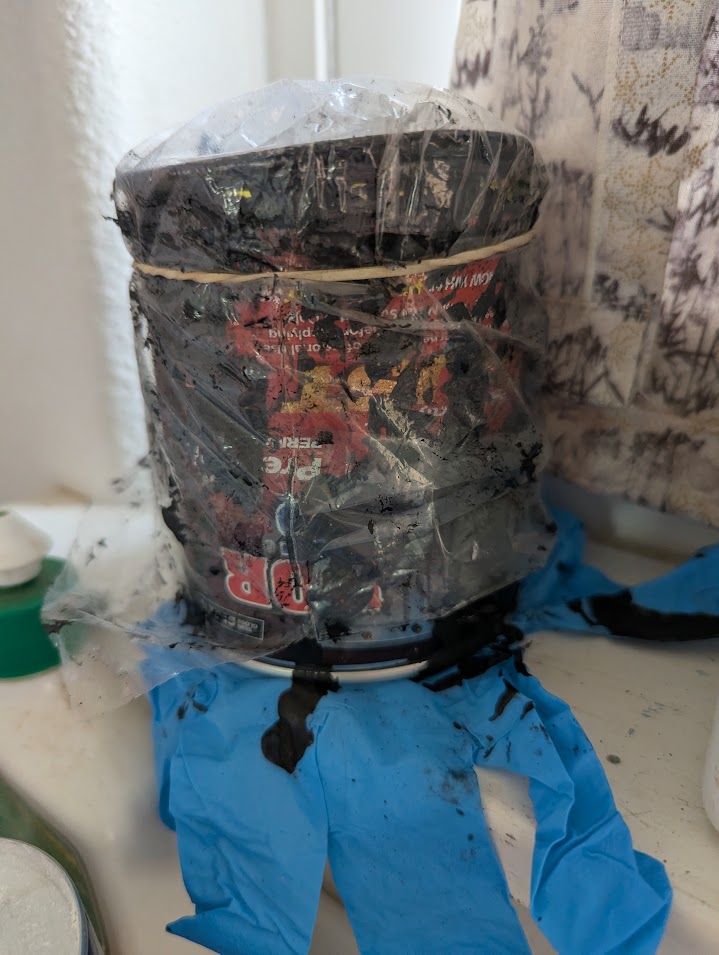
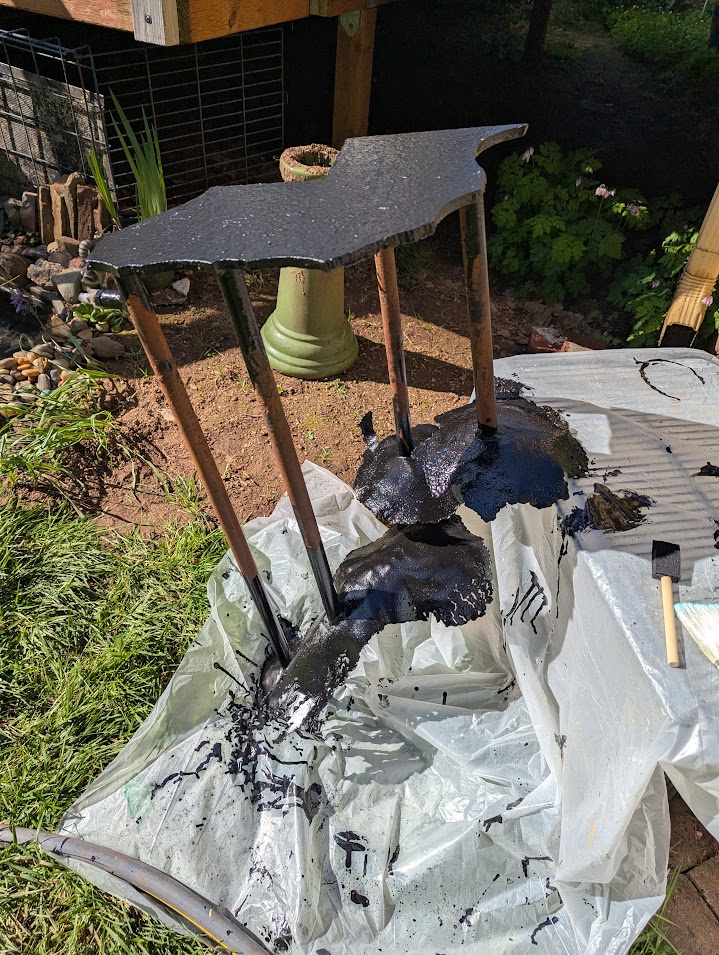
I wasn’t going for full rust removal as we purchased a product that car mechanics know well: a kind of paint that covers rust and prevents more from forming, something called “POR”. This little can cost nearly $50 (!!) and the stuff is super runny. It is a mess to work with! I wore rubber gloves, used a drop cloth, and still dripped it everywhere!
The final touch was to add some color using some outdoor latex paint I already had in possession: claret wine and yellow. I sponged that on and let it dry.
Now I am waiting for Clackamas County Vector Control to deliver some gambusia (mosquito fish). I want to get a few native water plants as well. I already have a couple native water lilies in planters, but something floating on the top of the water would be nice.
I do have to change the filters once a week in the pump, and a lot of earthworms and slugs manage to drown in the pond along with sundry insects. Not sure how to avoid that.
Post Script: May 6, 2026 – My fish have arrived! About the size of guppies, five to a pool. And just in time: hundreds, if not thousands, of little blood suckers are swimming in those waters waiting to hatch into flying blood suckers.
Post Script Script: 6/5/2026 – I know I have two survivors. The mosquito larvae are gone. Whether or not I have more survivors (gambusia) is up for debate. But we don’t have mosquitoes breeding.
Anyone who grows honeysuckle knows the struggle: aphids.
“At least if they attack the honeysuckle, they will stay off the (roses, lupines, elderberries).”
“I will never grow honeysuckle again.”
That last statement was from other gardeners. Me, I like my honeysuckle. But I have tried everything: Neem oil, scented water sprays, gentle hosing off, lacewings and ladybugs purchased from the store… EVERYTHING.
Or so I thought.
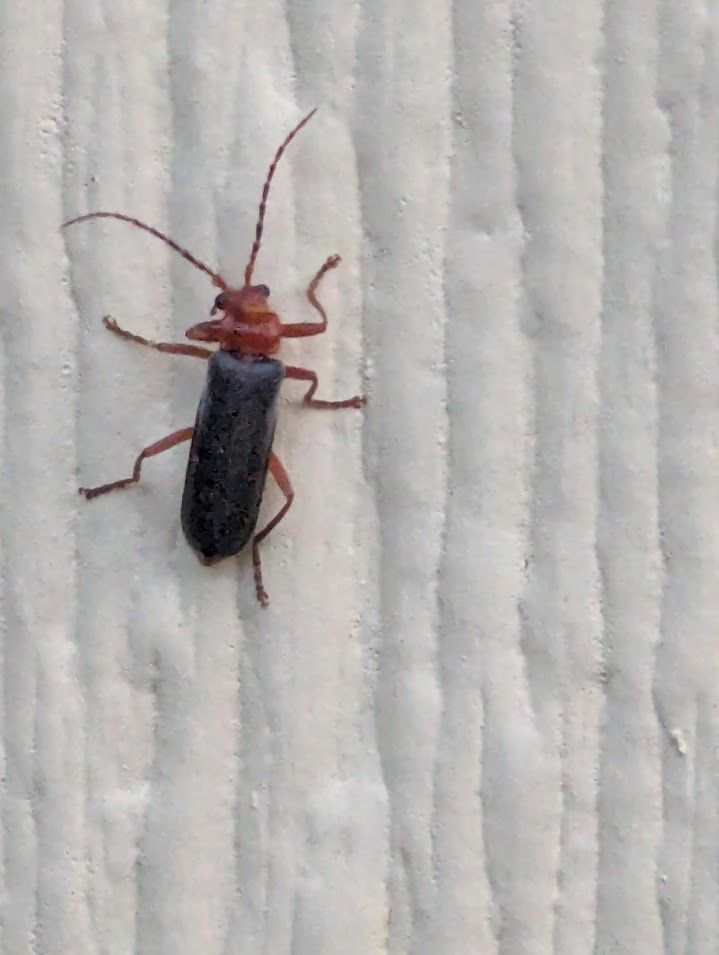
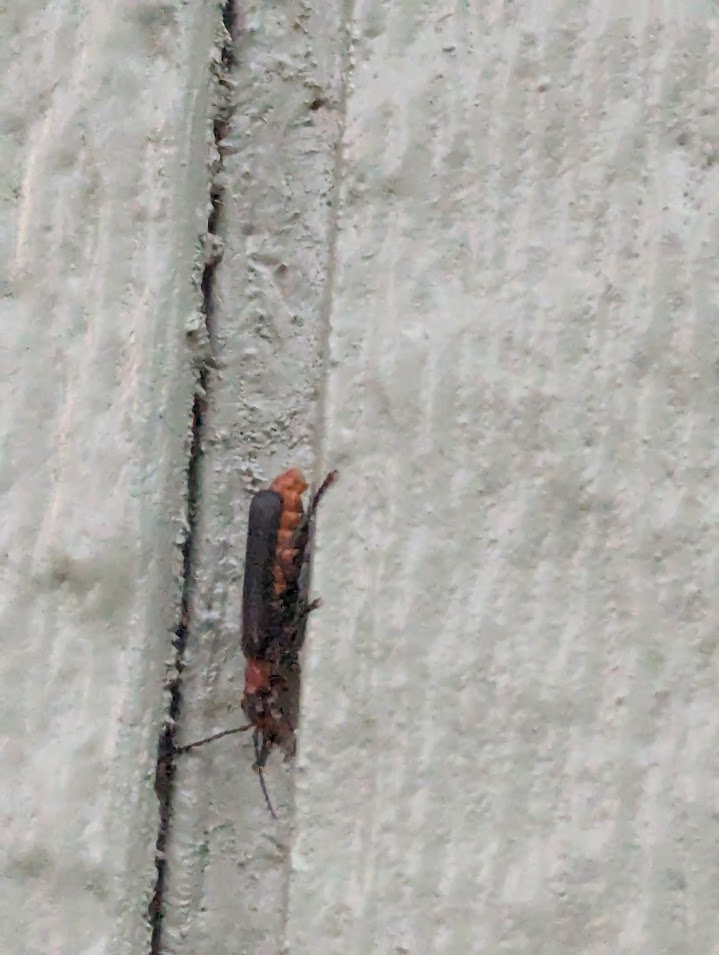
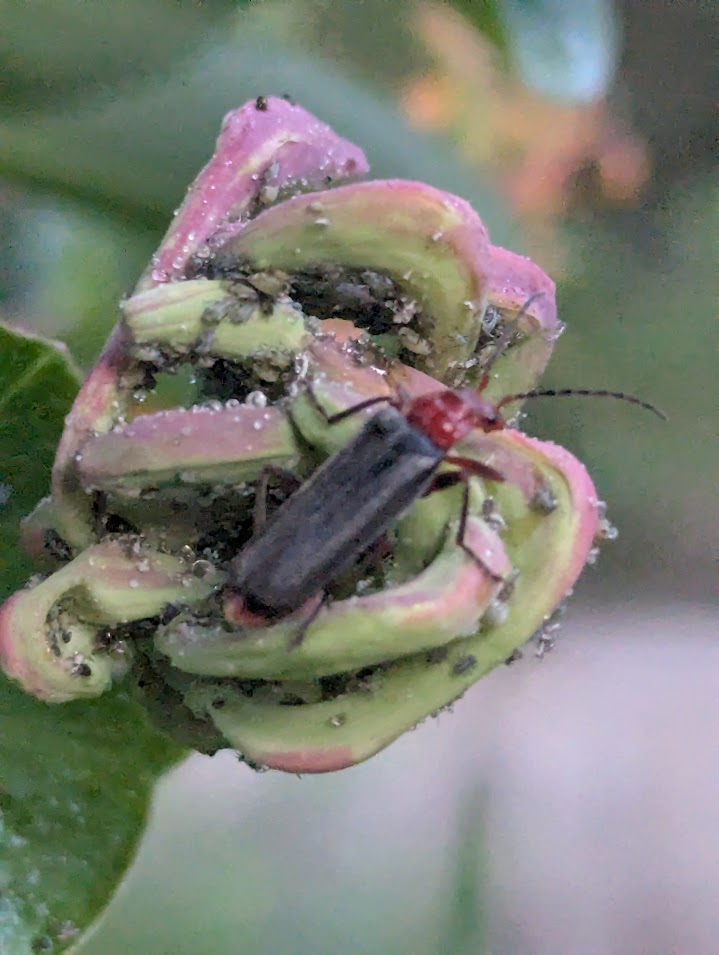
That all changed when evening was young and a mass of insects swirled in the air over and around the honeysuckle. A soldier beetle hatch (Pacificanthia).
I’ve seen them around, but never en masse like this, and I have never really paid much attention to them: friend or foe?
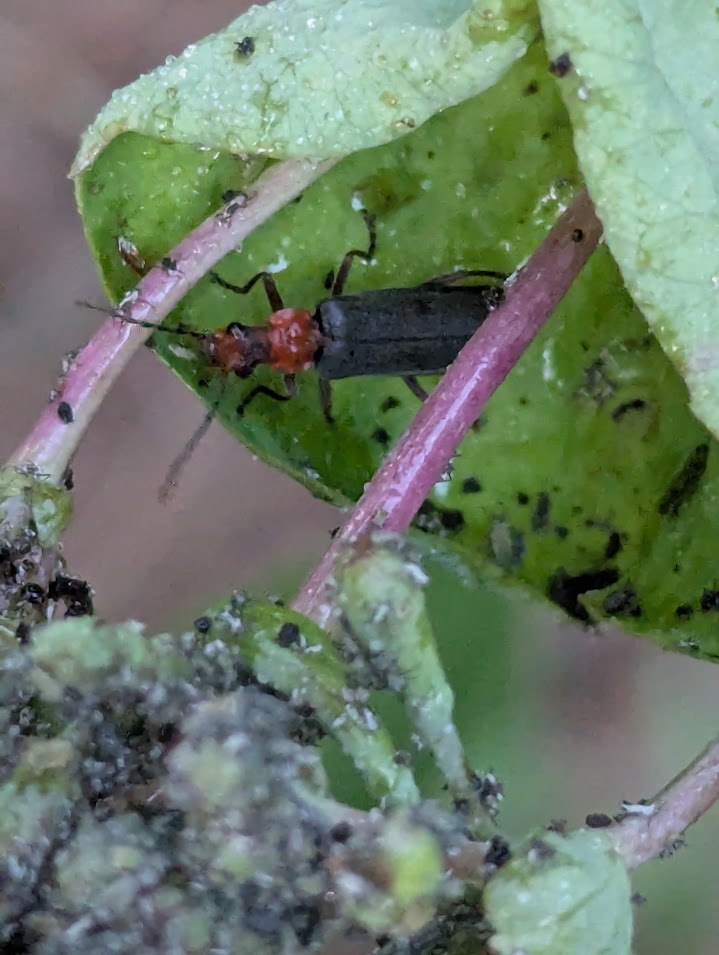
Turns out, they are a gardener’s best friend, probably more than lacewings or lady beetles purchased from a store. Soldier beetle adults are voracious and they LOVE LOVE LOVE aphid meat.
While I still don’t know the exact species of soldier beetle that hatched out, I do know that my honeysuckle has never been happier.
YUM! Aphids!
I don’t know much about these beetles: where they lay their eggs, what the larvae underground eat, or what the coccoon looks like, but I now know this: the adults will decimate an aphid infestation in short order.