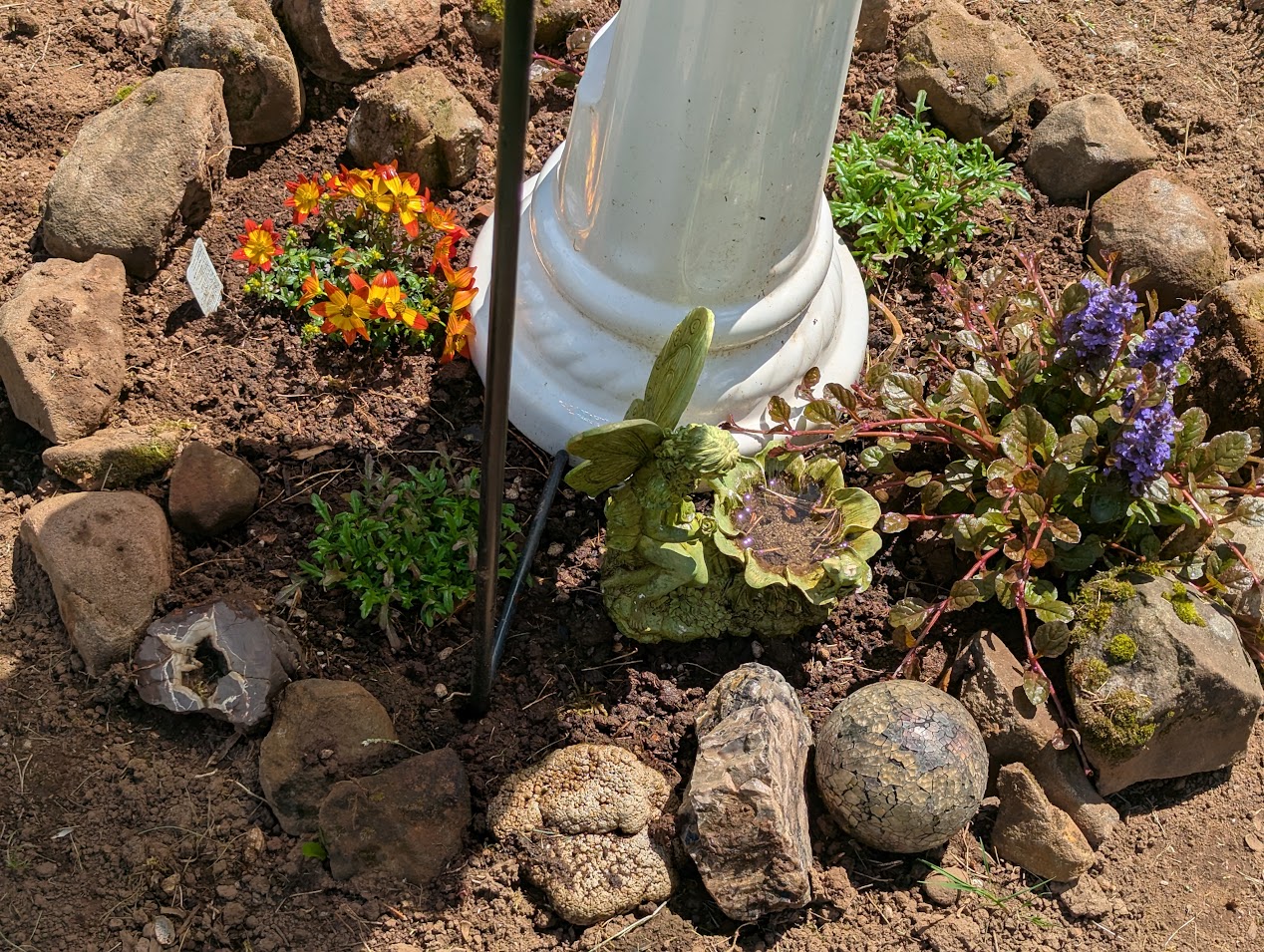
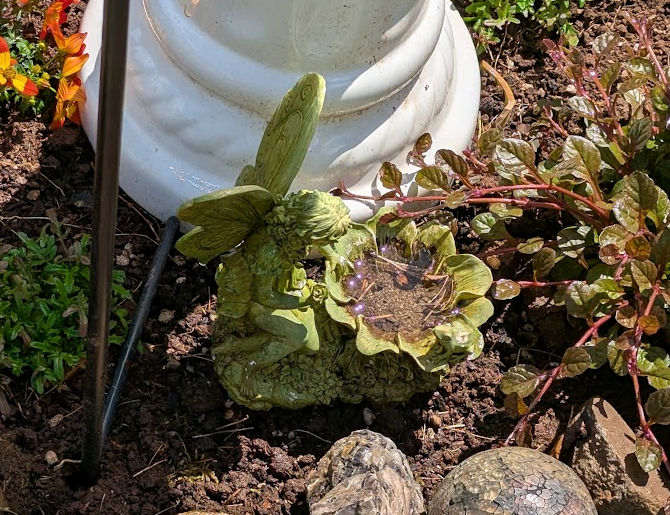
I have given up on pulling some ‘weeds’. They are just too much effort, aren’t really harming anything in my yard, have pretty flowers, and insects love them. Of course, there are a lot of weeds I still pull. And grasses. I hate grass. I’m allergic to most grass.
I digress. Weeds. The “love them or hate them” plants that plague the modern lawn and garden. Here, in no particular order, are six of the common ones in our yard.
Baby Blue Eyes. Nemophilia menziesii. I love this plant! My husband hates it in the vegetable garden, but I tend to leave it in the flower beds. The flowers are pretty, it works as a ground cover, and it doesn’t interfere with any of the cultivars or native plants I tend. Oh, that’s right: Baby Blue Eyes are a native plant! Bonus points for that!
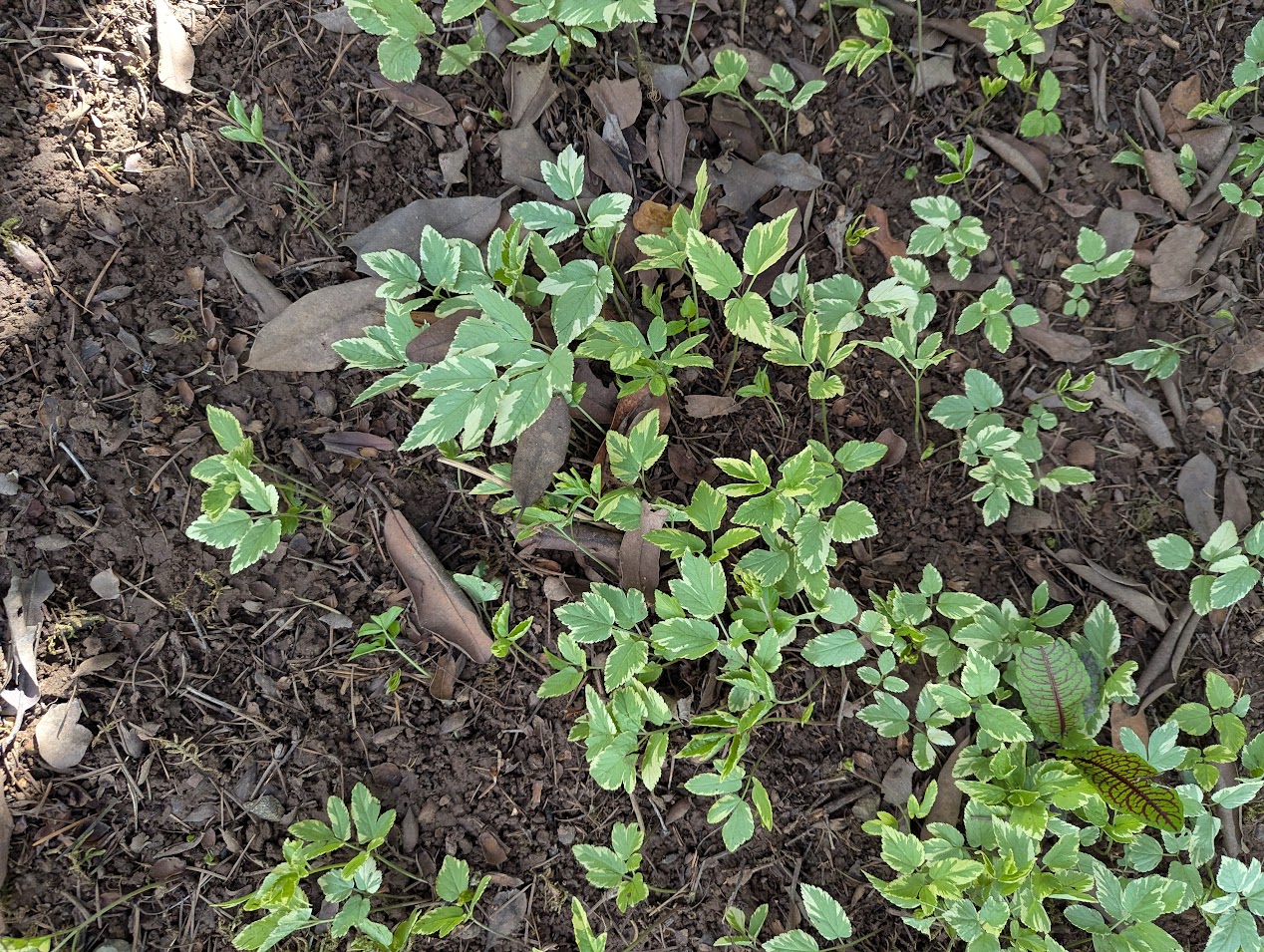
Bishop’s Weed. Aegoyodium podagraria ‘Variegatum’. I happen to like this one, too. I encourage it as a ground cover. Insects like it as well, and it isn’t all that difficult to keep in one spot. It is not a native and is considered by some gardeners to be invasive. (Also known as “Bishop’s Goatweed”.)
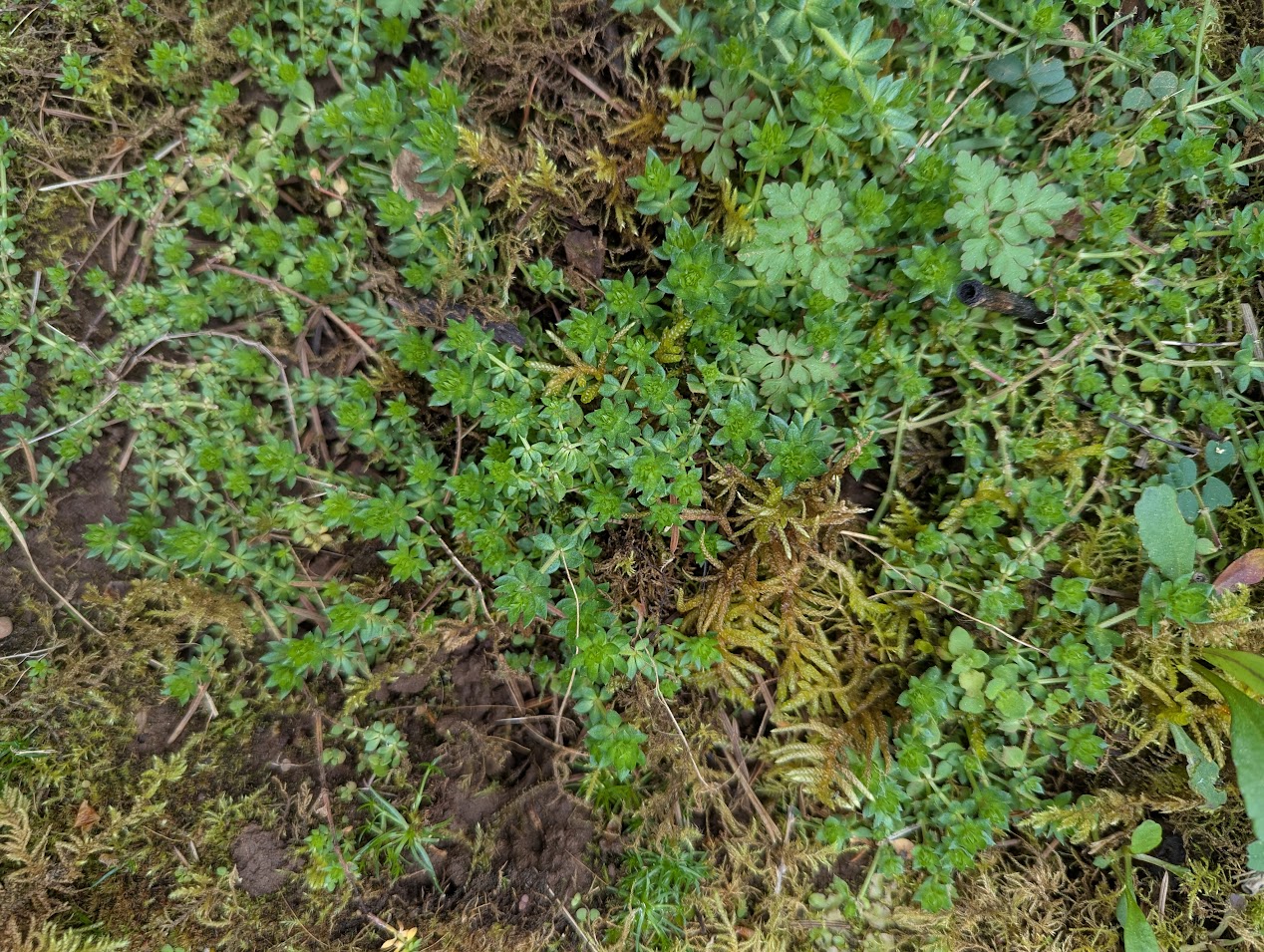
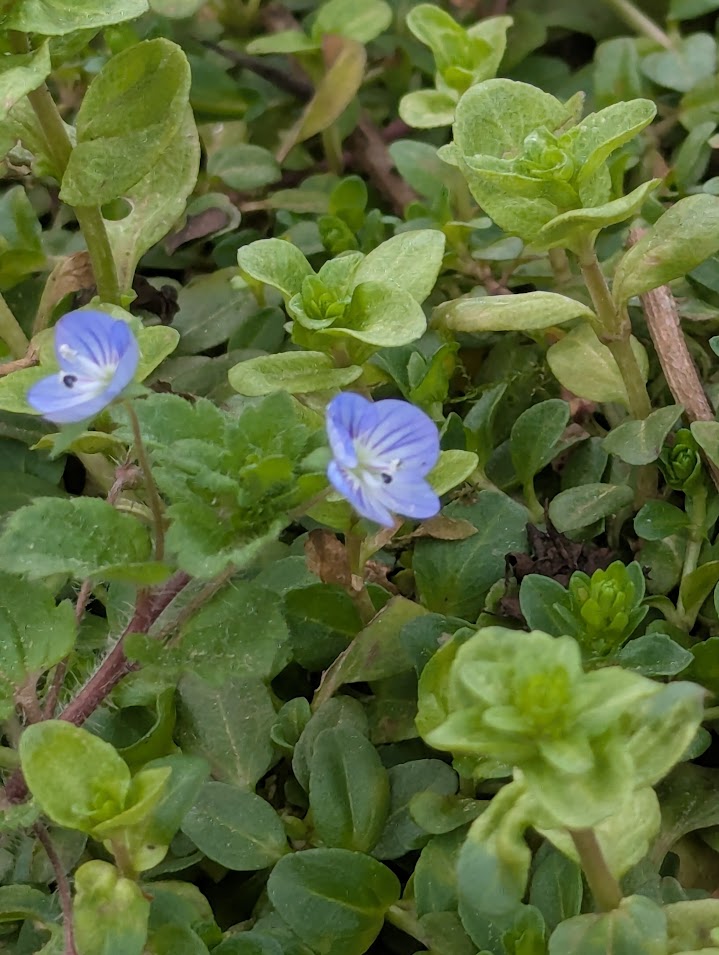
Blue Field Madder. Genus: Shirardea, family: Rubiaceae. I have given up trying to slow this low-growing ground cover. It has pretty flowers, doesn’t compete with my other plants, and acts as a nice ground cover. I don’t use bark dust so ground covers help to hold the moisture in. I did a little research for this post and discovered the root of this plant is sometimes used as a red dye. It is pretty small, so I wonder how much of the root one would have to dig to make a dye? It is considered “naturalized” which means that it is almost considered a native. Like foxglove and a host of other plants, attempts to control the spread have failed. I grow foxglove, too.
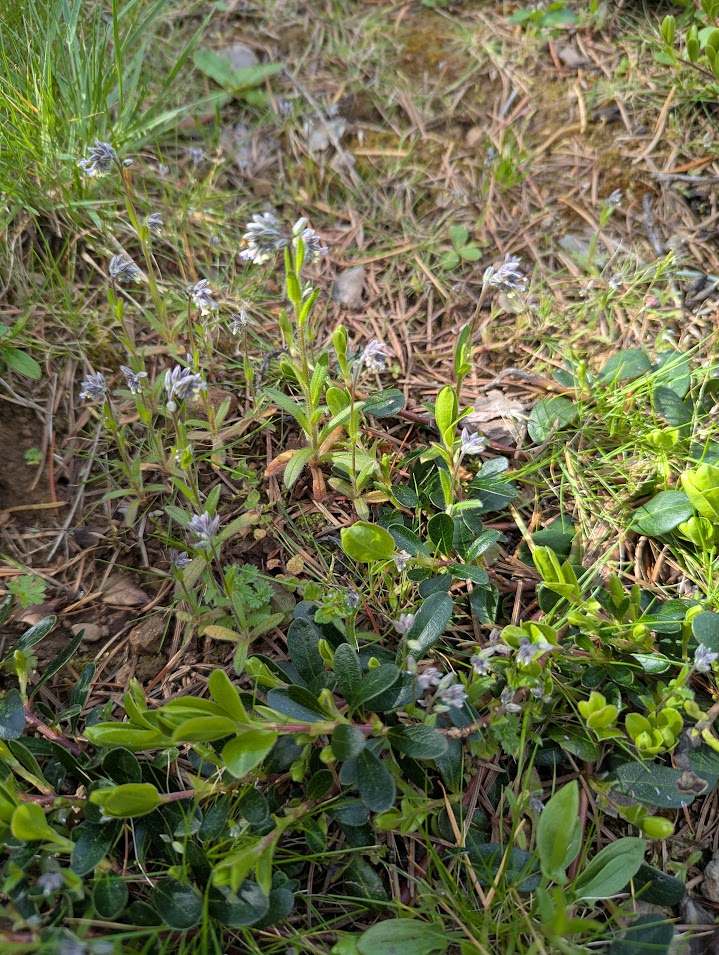
Changing forget-me-not. Myotis acetosella. Introduced. This is such a pretty plant! The flowers are tiny, they change from blue to yellow, and the entire plant resembles a miniature forget-me-not but doesn’t grow much taller than the neighboring lawn grass. I leave it in the front yard (which is basically a haven for weeds much to the dismay of neighbors who love a monoculture grass lawn, especially out front. Sometimes I find it in the back lawn. It seems to like to grow in the grasses.
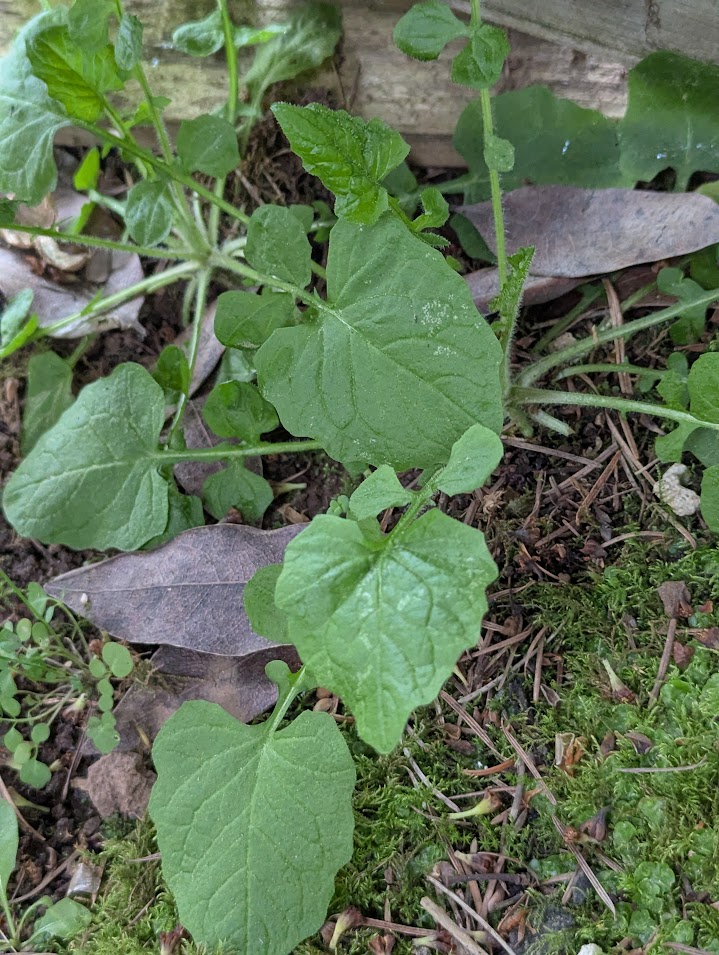
Common nipplewort. Lapsana communis. Has tine, pretty, yellow flowers if it lives long enough top bloom. It grows around 12” tall, competes with everything, and I do not like it. Fortunately, it has a shallow root system and is easily pulled. It is also considered an invasive introduced species. I try not to give it too much leeway to expand in my yard. It does happen to be edible and useful as a herb, which makes it not all that nasty of a backyard weed.
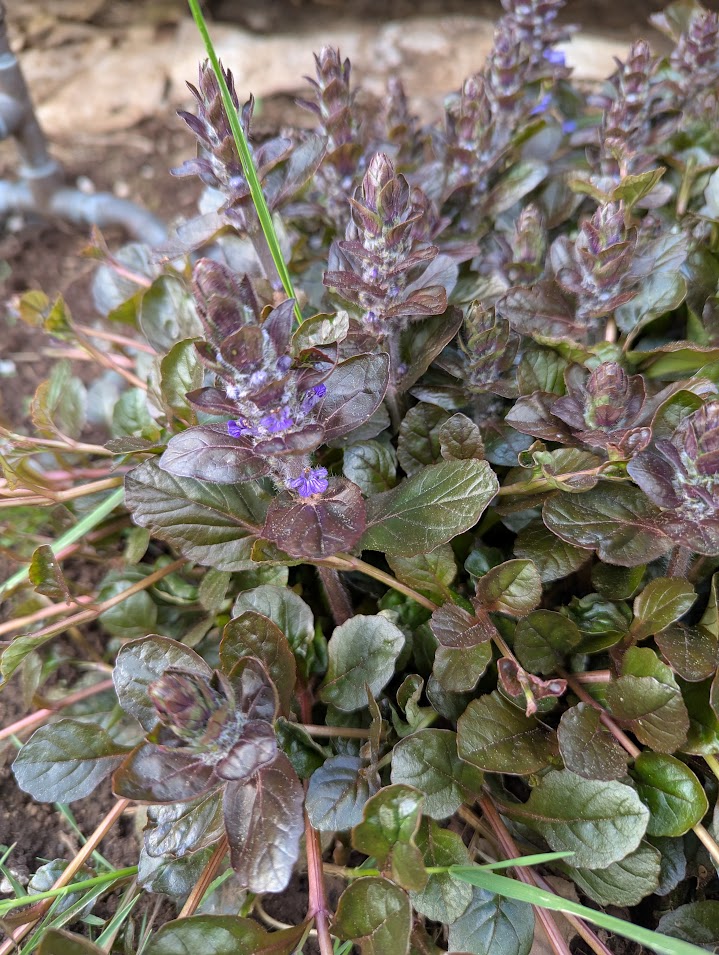
Bugleweed. Ajuga reptans. I actually paid money for this when I first started building a flower garden in our yard. I have ripped it out numerous times. It comes back like Arnold Schwarzenegger. You could almost nickname it “The Terminator” because of how competitive it is. Nothing grows under this ground cover. It is aggressive. It fools you into thinking it is gone, eradicated, and then… Voila! There it is, again. Pretty purple flowers and foliage. I have relegated a patch to a border bed and I hope to keep it relegated there since I cannot kill it. Don’t pay money for this cultivar unless it is the only plant you want in your flower bed. Like Vinca Major or Minor, you get one single species and it covers the ground with great enthusiasm.
And here you thought I liked all weeds. Nope. Some just have to die.
Also: I have no idea why some plants are listed as “invasive” and some are listed as “naturalized”. Foxglove is poisonous but listed as “naturalized” and tansy ragwort is poisonous but listed as “invasive”. Both have pretty flowers and attract pollinators. I’m sure someone will comment and explain the designations to me. Both fall under “introduced” or “non-native” species. Native species of plants are merely listed as poisonous or non-poisonous.