Feeds:
Posts
Comments

Posts Tagged ‘Douglas Meadowfoam’

Intro: PART ONE – Hitchhikers

Many of the afore-mentioned “weeds” in my previous three posts are now ground covers I allow to spread. Ground covers reduce the need for bark dust or other material that has to be purchased every year or every other year (I used hazelnut shells in the past) by doing the same thing: holding moisture in the soil. I like the idea of plants over the bark dust/hazelnut cover, simply because plants offer color. And many ground covers crowd out weeds, like the persistent grasses that plague my flower beds.
bleeding hearts

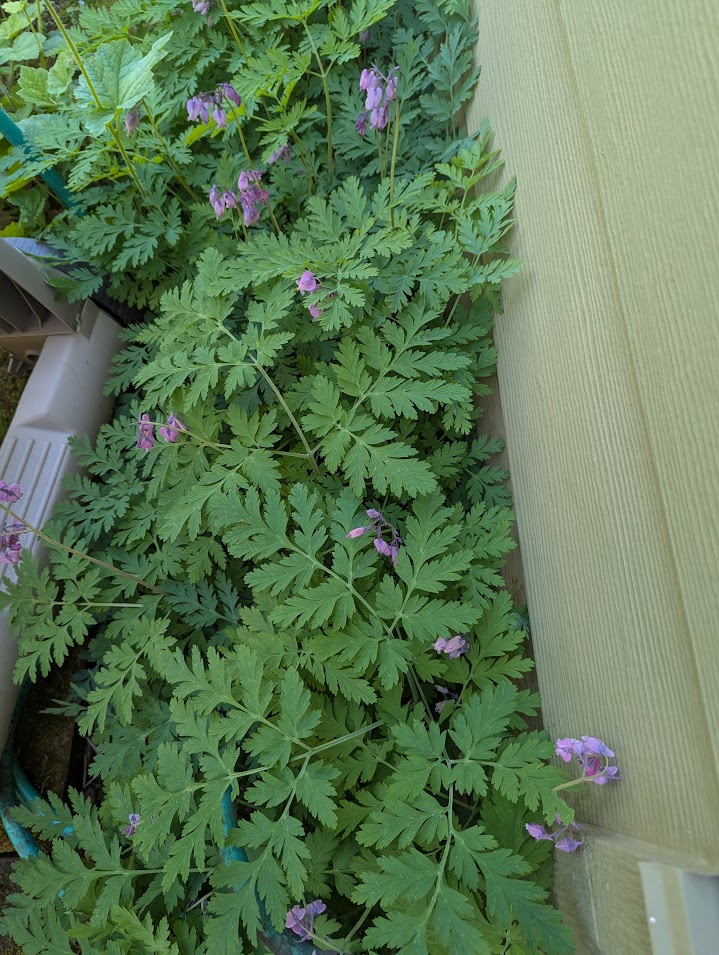
Pacific bleeding hearts – Dicentra Formosa. These beauties came with the house. They are a seasonal ground cover, growing in late winter and fading is the heat of summer, but they are native plants. I did purchase a couple commercially developed bleeding hearts for the flower bed around our decking, but the natives are here to stay. They grow wild in little corners of the yard and I am planting more north of the garage in our little median between properties. Bees love them.  They take no effort to grow and are easily controlled.

Many or our native ground covers came into our yard as hitchhikers on something we dug up on Federal lands: the blue elderberry, the black-cap raspberry, a yew, and so on. You never know what all you might haul home in a root ball from the wild.
douglas meadowfoam

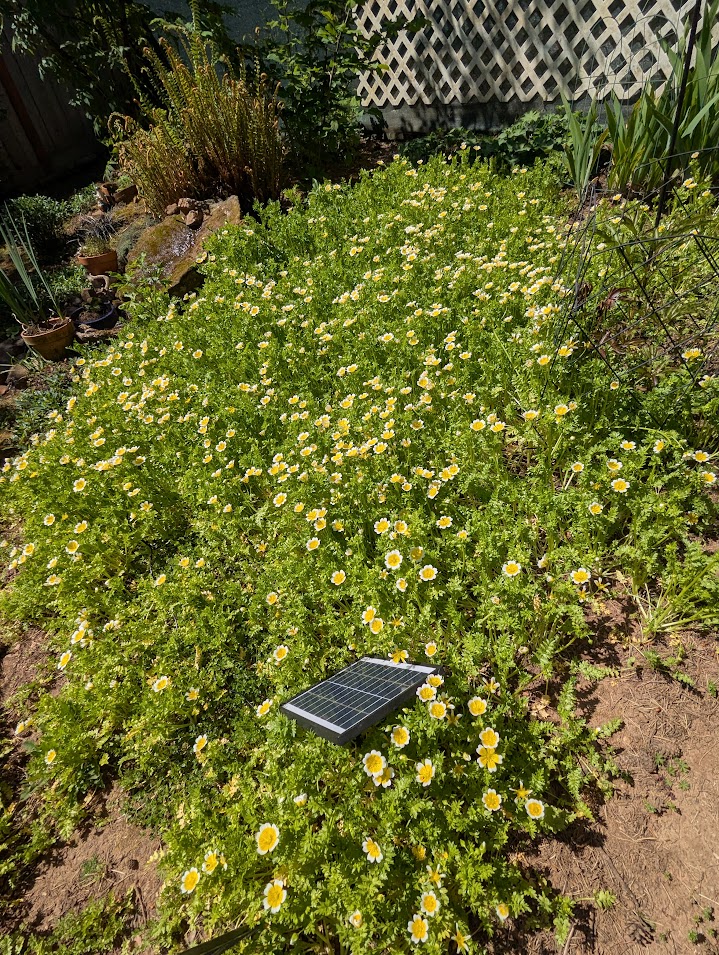
Douglas Meadowfoam – Limnanthes douglasii. Poached egg plant, so called because of the beautiful flowers. One or two showed up when we planted a yew and a big-leaf maple tree (both of which later died, sadly). They have spread to cover half of the flower bed in my little “prayer garden”. They start growing in early winter, covering the ground with greenery. The bloom is in early spring. By the time the heat comes on, the lants wither and die, like the bleeding hearts. I have tried other plantings to cover up the barren soil there, but this delicate ground cover doesn’t tolerate other plantings too much. Peonies are about the only exception. I don’t want to lose this ground cover, so I put up with barren ground for a couple months every year. It is worth the price when they bloom!
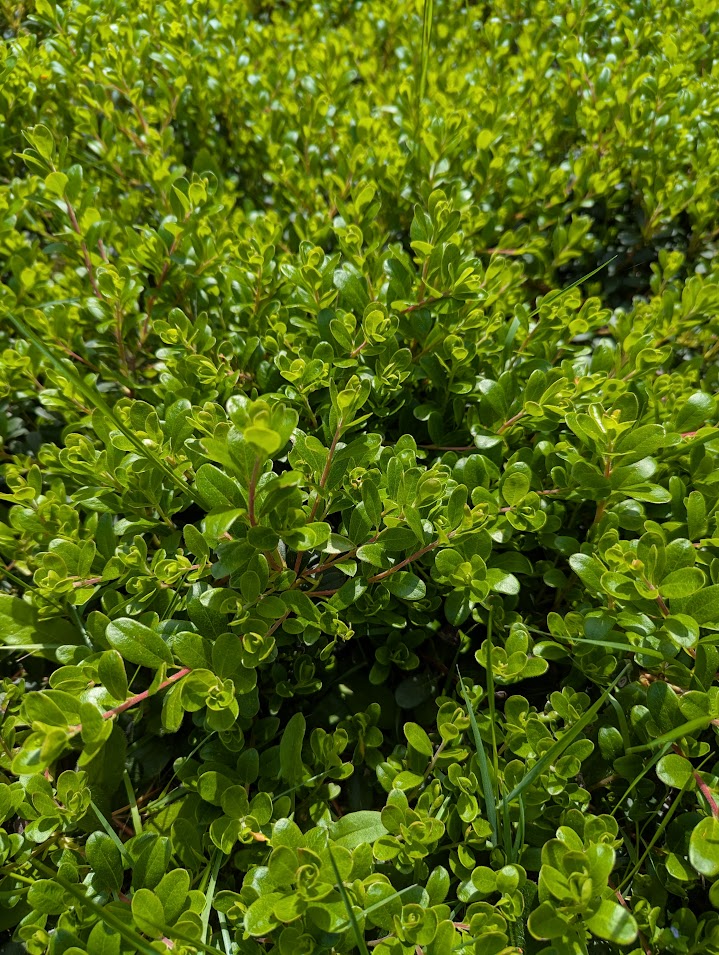
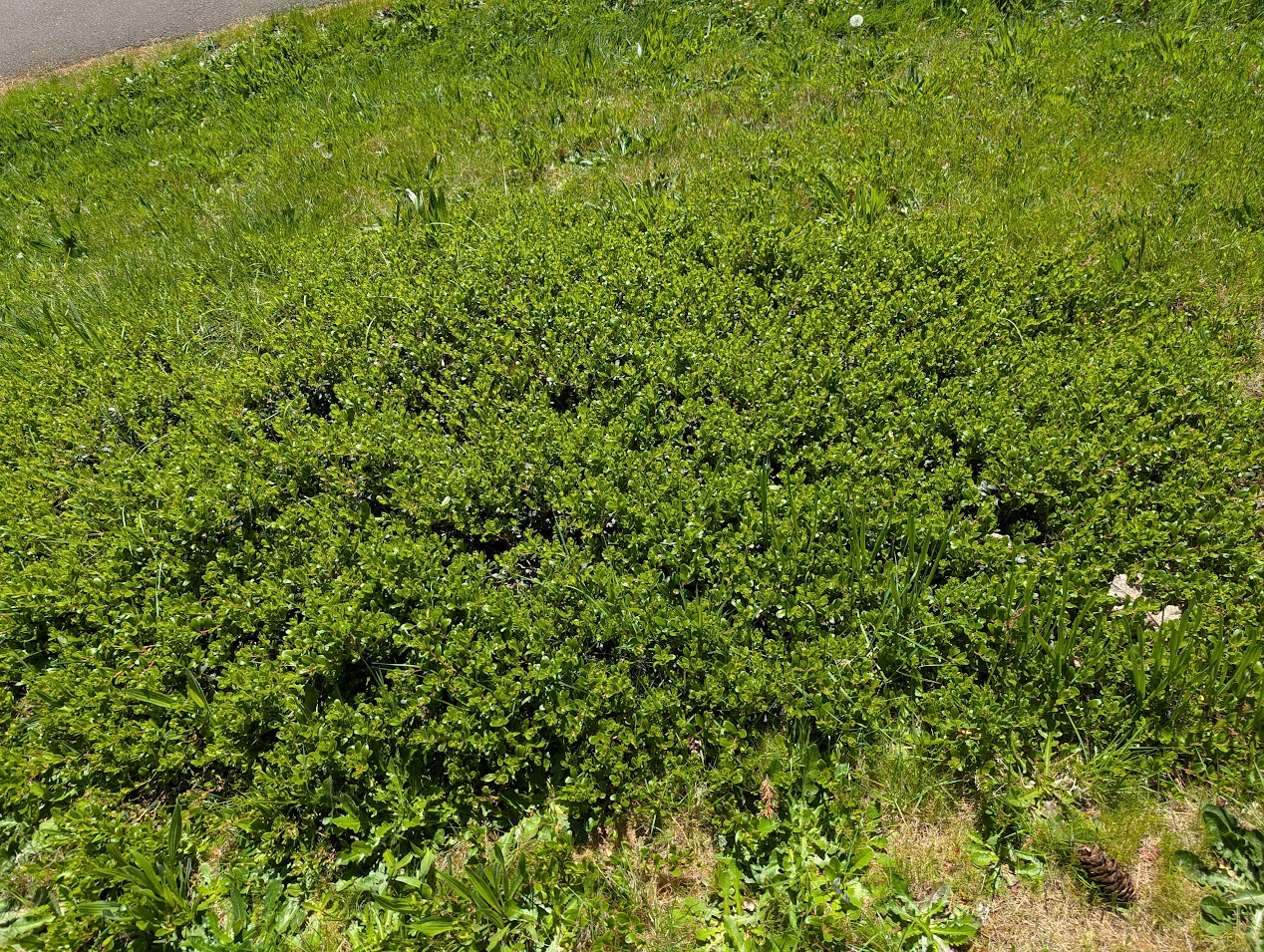
Kinnickinnick – Arctostaphylos uva-ursi. “Bear berry”. This is a common ground cover along commercial buildings in the Pacific Northwest. It blooms with tine red flowers, produces some berries, acts as a weed guard, is drought tolerant, and native. It is fast spreading. This is just one plant that was about 6” wide when Don first dug it up. It now covers an area of about 8×4’, and even the torpedo grass under it struggles to survive. I have read the fruit is edible, boiled, but I leave it for the birds. Native mining bees love the flowers.
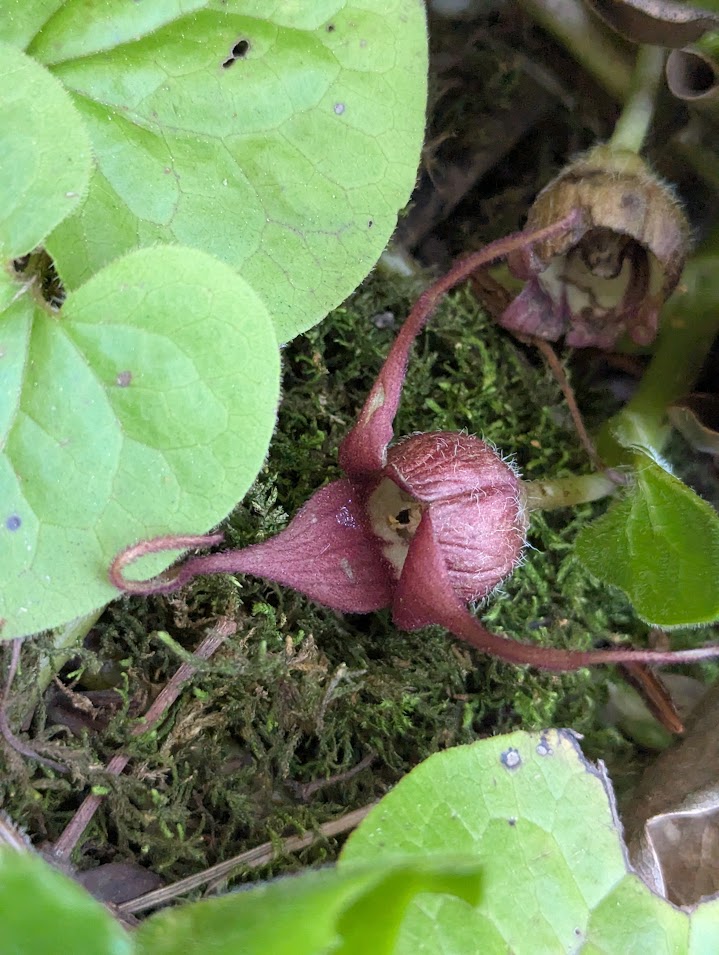
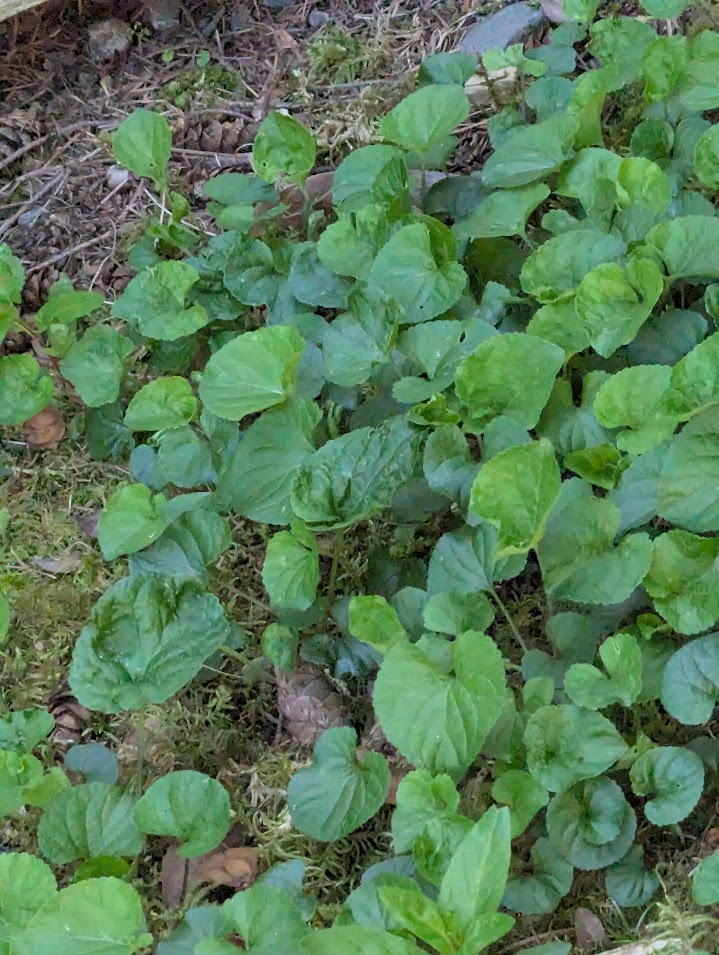
Wild ginger – Asarum canadense L. – This also started as a single clump of ginger roots dug up in the forest. It is not the same as the ginger root one buys in the grocery although the roots are edible. It is a shade plant, loves moist ground, and spreads slowly. Birds, bees, and even a rodent or two love it . The flowers are stunning, but you have to look hard to find them. Evergreen.
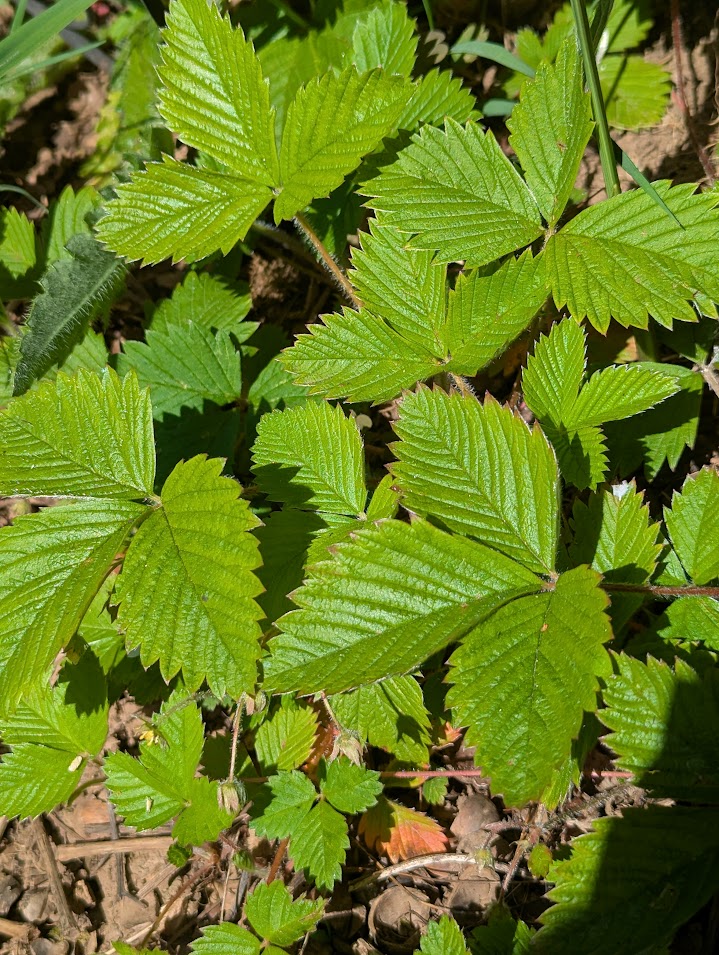
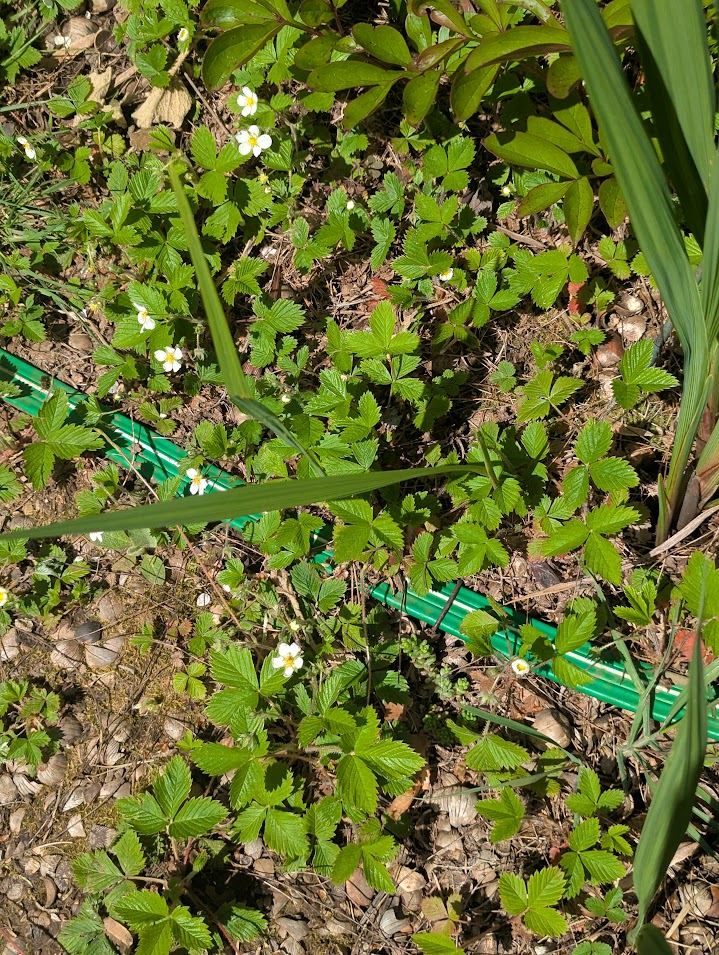
Wild strawberries – This native ground cover is most likely Fragaria vesca, or woodland strawberry. I rarely see the fruit on these as the birds and slugs beat me to them: the fruit is tiny, sweet, and it takes a lot of them to make a meal (usually a pancake breakfast when camping and foraging). They don’t bother other plantings and don’t really keep the ground moist, but they are evergreen, and that counts for a lot as other flowers fade. Fast spreading, easy to control, drought tolerant. Don planted this a long time ago and I wasn’t pleased, but I have grown to be happy with it.
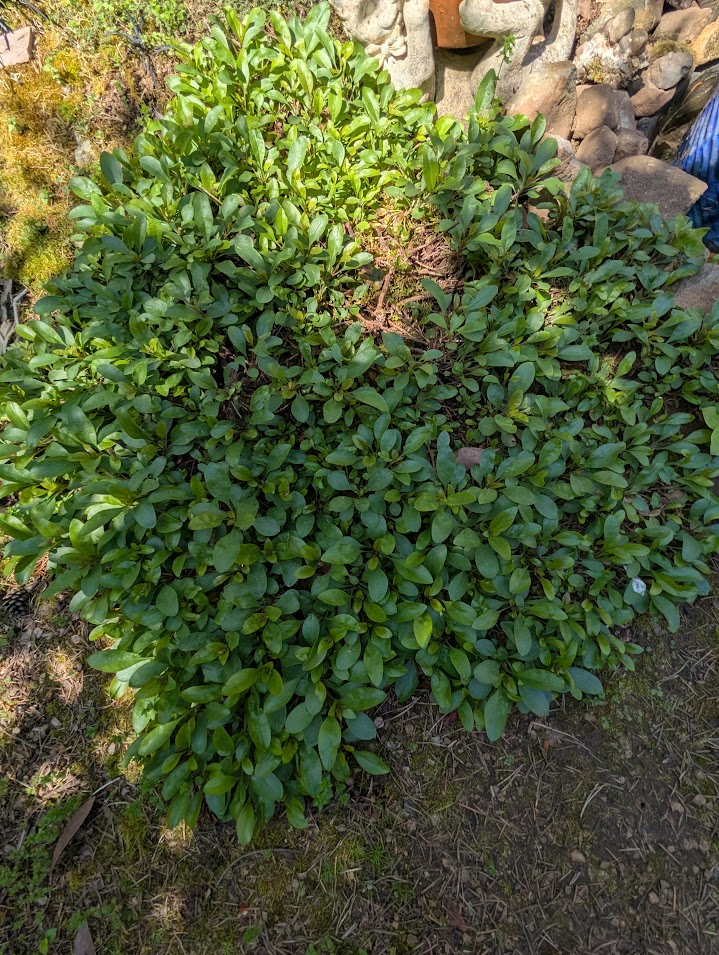
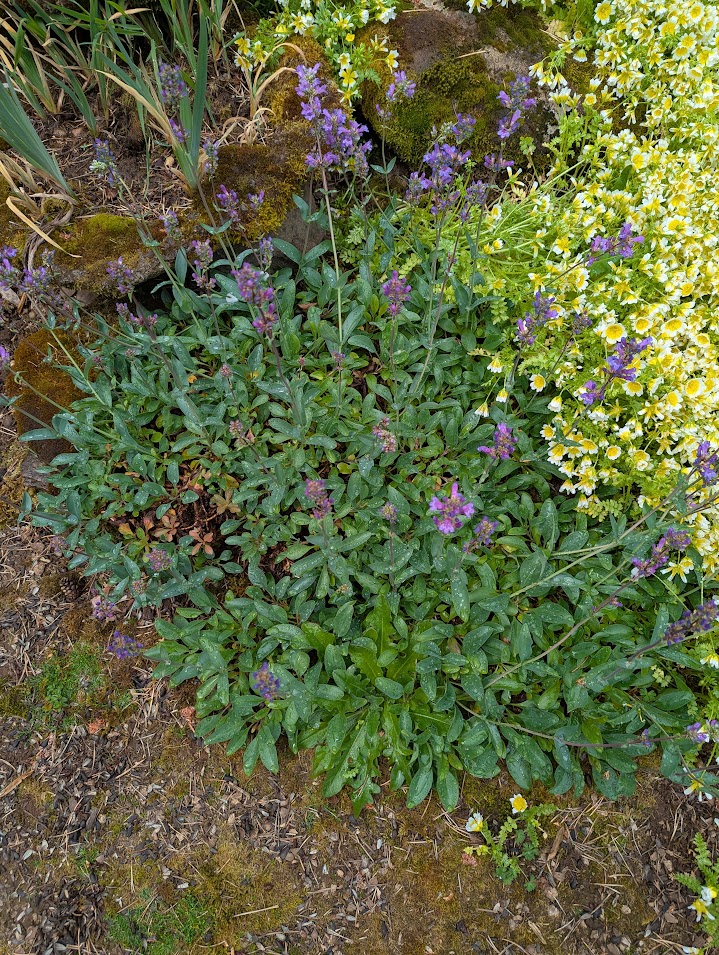
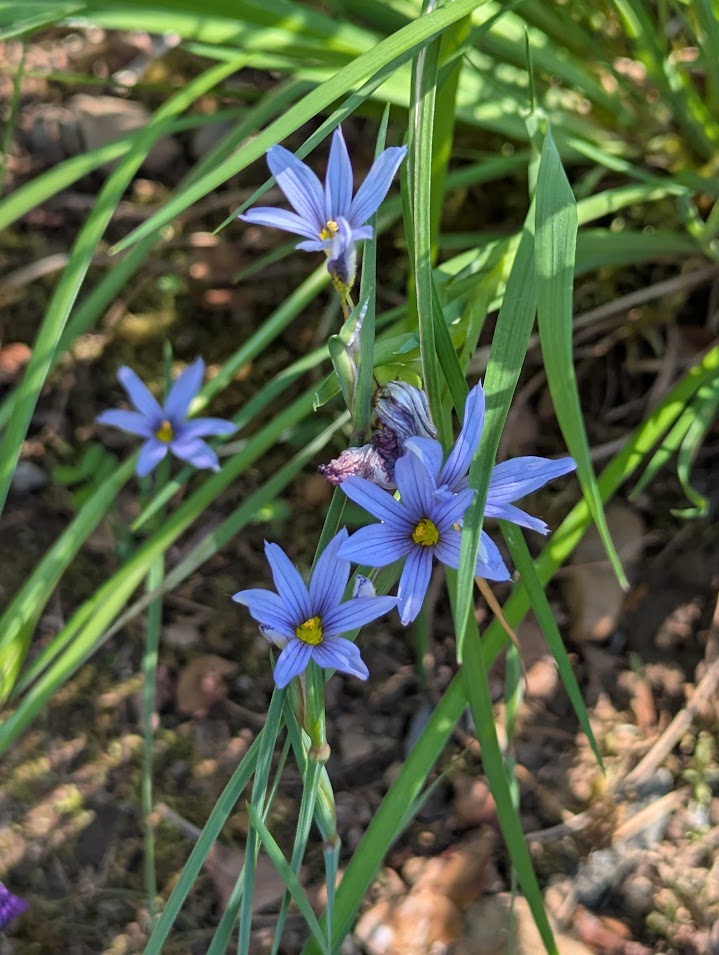
Penstemmon – we have at least three different natives planted in the prayer garden, which also happens to be a rocky slope, perfect for this drought tolerant, slow spreading perennial. We have collected from several areas in the State of Oregon, including the high desert country of eastern and central Oregon, and the alpine country of the Cascades. I’d have to key out which species this one is.
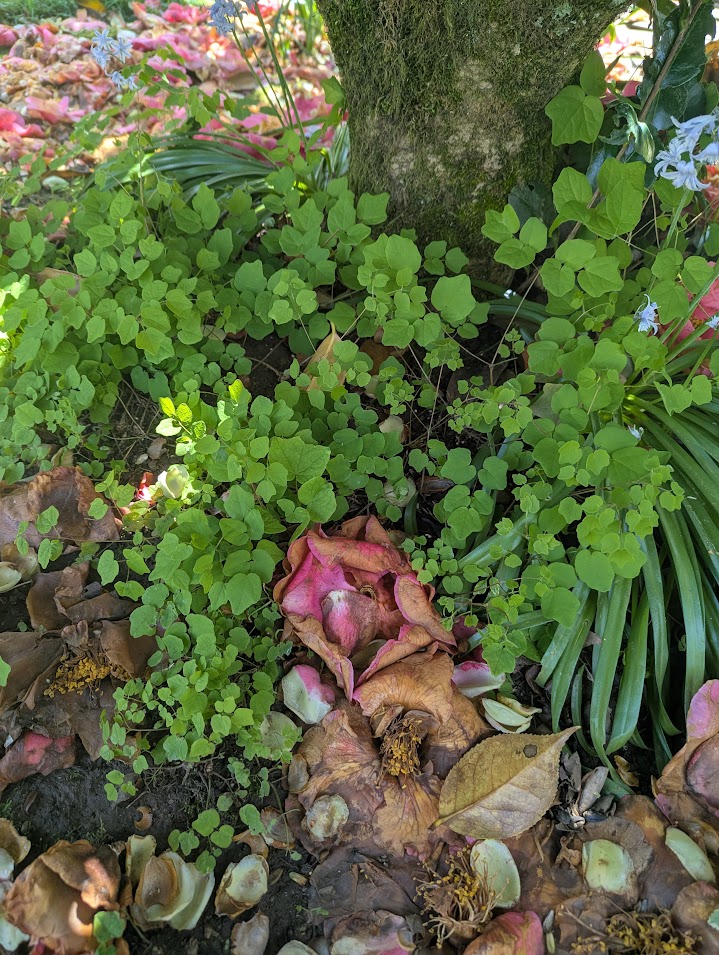
inside-out flower

Inside-out flower – Vancouveria hexandra. We bought the first one at Portland Nursery some years back, but have since added more to the yard as hitch hikers with other plants. I can’t begin to tell you how much I love this shade-loving, fast spreading, resilient, and odd flower. I planted it under the Camellia where the only other ground cover was Bishop’s weed. And for years I thought the Bishop’s weed would one day win out, but as I was weeding and raking away old Camellia blossoms this year, I came to the realization that it was the Inside-out flower that was winning the fight for space in the shade.

It disappears in the winter, comes back every spring, and blooms multiple times over the summer. The blooms are tiny, delicate, and inside-out as flowers go: the sepals are bent back, exposing the pistil and stamens.

Read Full Post »

Tiny pinks on long stems. This mallow started life in out garden as a tiny free specimen. I put it in a planter and it thrived. Moved it into the ground and it nearly died. It is in a large planter, soil mixed with sand, and it is happy once again. It is a bee favorite & common on the Coast.

stinging nettle – urtica dioica

I hope you know what plant that is without the ID below it: run into this without enough clothes on and you’ll wish you had never met it. I crawled into it once when I was a child. Nettle stings all over my face! Fortunately, the damage is never serious and the sting can be dealt with (in my case, I probably smeared mud all over my face. I was a clever child – HA!). I started growing it for the medicinal benefits of nettle tea. It is in a pot so it doesn’t escape into the yard and I deadhead the flowers before they produce seeds: this is all the nettle I need in my yard. Harvest with care: garden gloves, long sleeves. I dry the leaves in the dehydrator instead of hanging them to dry. I’ve read you can cook the leaves as a spinach substitute (I’m not fond of cooked spinach except on pizza). The leaves lose their sting when dry. I mix the leaves with feverfew and yarrow for a green tea that I can drink without sweetener.

Nettle may lower your blood pressure, help with blood sugar, hay fever, reduce inflammation, and help with enlarged prostate, and contains antioxidants and many vitamins. (I may write more on nettle in another post on herbs in the future.)

Wild irises.

I love irises! These are my wild native irises (I have “domestic” irises as well). The first two iridacea shown love moist soil and are planted in a little shady swale next to the south fence of our yard along with the camassia. I need to divide the flag iris this fall. The Douglas iris is more like its commercial counterparts: dry soil is fine. They love sunshine. The blooms are larger than the flag iris but still delicate.

wild camas – camassia quamish

Wild camas (which is related to asparagus) is a beloved forage plant for the Indigenous peoples of the PNW. I loves marshy areas. I have not tried eating it: I have too few of the plants to forage just yet.

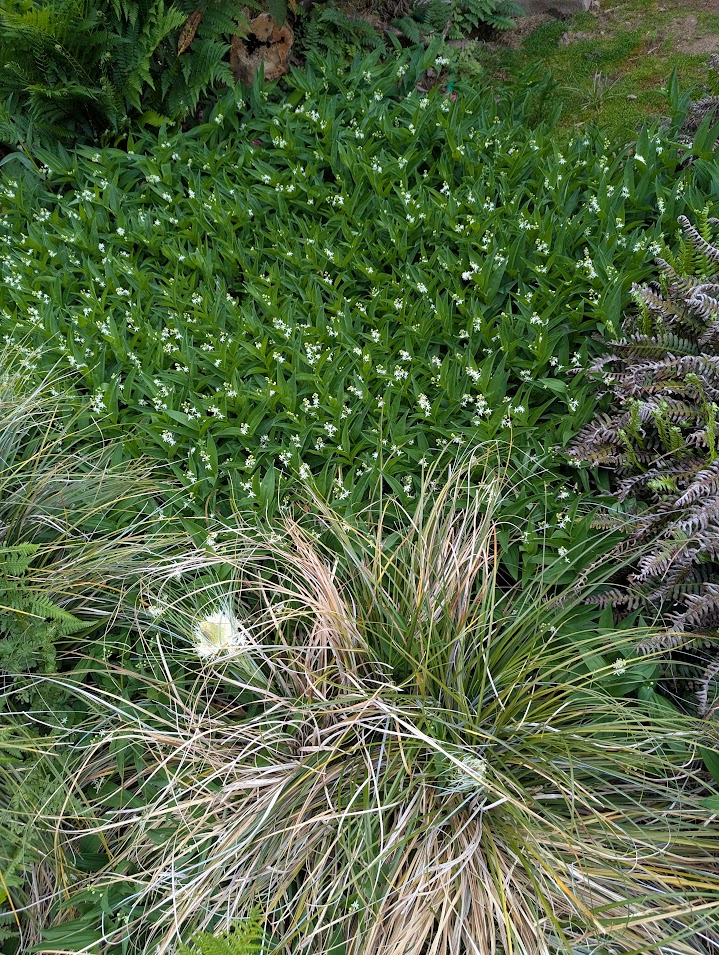
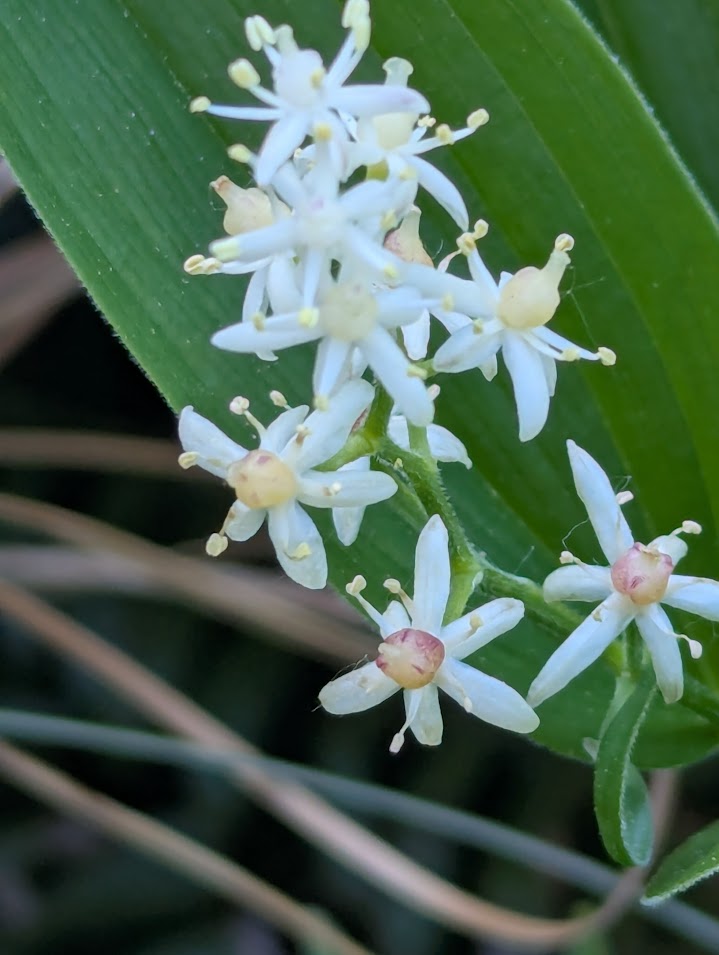
My husband brought me a gift of bear grass one year along with the deer ferns. Falso Solomon’s seal hitched a ride. My bear grass has never failed to bloom: the spikes tower above the heavy leaves. I think one of my plants is showing its age and beginning to die out, but it produced three beautiful spikes of flowers this year. And the false Solomon’s seal never disappoints, but it is gone by summer and the ground bare where it flourished in the wet of spring.

This beautiful ground cover was also a hitch hiker. I think it came with the yew and maple (long gone now). It spreads quickly, covers the ground beautifully, and attracts every bee, bee fly, and wasp. It greens up in the Autumn, overwinters green, and blooms in the spring – and then it is gone. The ground bare.

I have not tried too many other plants mixed in with the false Solomon’s seal to cover the bare spot in summer, but I have tried where the meadowfoam is. And meadowfoam does not like to be shaded out during the dormant stage! The bare spots in the photo are where i removed plants that shaded out the meadowfoam and it died back. However… it seems to love peonies and grows profusely around them despite the shade of summer, so I may try putting a couple peonies in there.

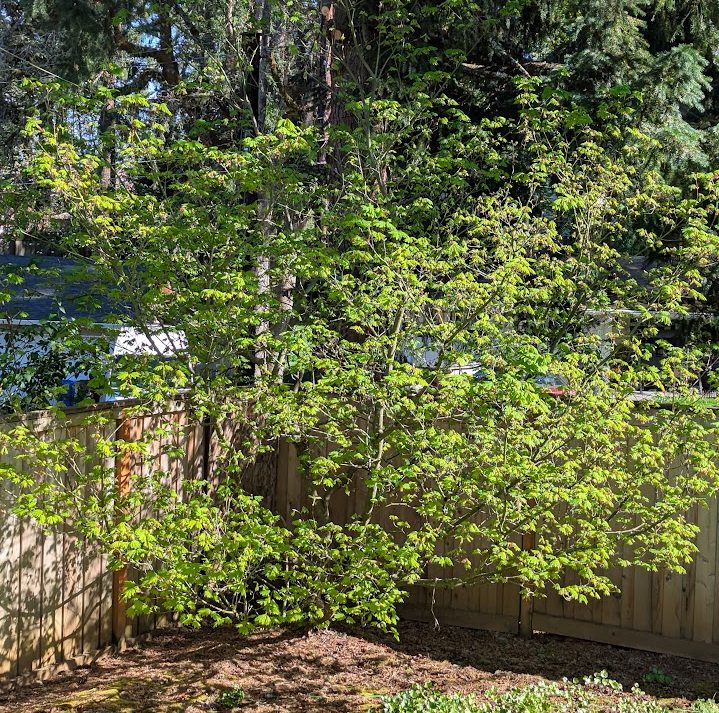
vine maple – acer circinatum

Don dug this out of a bar pit one year. he intended to make it into a Bonsai tree, but vane maple grows too quickly and he had to put it into the ground. It is as large as it is ever going to get. The leaves turn brilliant red in the autumn. The squirrels love the helicopter seeds. Very little grows under it but I am hoping some huechera (coral bells) will take off.

narrowleaf milkweed – asclepias fascicularis

Milkweed. I could write a blog post on this, the last of my Natives to show off. I planted it by seed: two kinds of native milkweeds, the showy (pink flowers) and a few of the narrowleaf. They didn’t grow. Well, to heck with that idea, right? I could purchase some starts but it just never seemed to happen. And four years after I tossed those seeds in the garden, I had a thick stem poking out of the ground. Suspicious, I broke a leaf off and watched as it oozed thick milky sap. Eureka! It only took four years for those seeds to grow! And grow they did: I now have to fight the plants to keep them contained in the corner of garden where I planted them: milkweed spreads by runners underground.

Bees, flies, butterflies (but never Monarchs – so far), and milkweed beetles love the plants. Invasive as the plant is, it grows well in the little corner of yard where it is, sharing space with peonies, asters, Voodoo lilies, and grape hyacinth. The hyacinth blooms first, then the peonies, followed by the voodoo lily. The milkweed rises up and blooms, fades and dies, and the asters bloom. A perfect full summer garden of bloom.

That is it for my native plants! My next posts will be about herbs in the garden, uses, recipes, and cautions. I’m excited for those posts!

Read Full Post »

The real reason I am posting tonight is because I want to remember the names of the plants I planted today. I’m terrible at remembering the names of plants!I often revert back to my blog and the archives to look up the names of plants. After awhile, it comes naturally, but the initial memorization is not easy for me.

It is why I carry several field guides with me every time we go out into the woods or desert:I look up the same thing until I have it memorized, and then I look it up because I want to reinforce to myself that I know what it is.

We made our annual drive up the Willamette Valley yesterday to visit our favorite garden nurseries. We started at Nichol’s Garden Nursery where we have purchased garden seeds for over 30 years, usually by mail but sometimes by making the drive to Albany. Nichols is nested up against ATI Wah Chang, in a unique clash of commercial and concrete and the peaceful hazel-nut mulch lined paths through the herb beds behind the little red house that serves as the store for Nichol’s.

Rose Marie Nichols McGee was signing books. She’s a delightful soul and while she wouldn’t recognize me from one year to the next, I always find her warm and genuine. And quite knowledgeable. I pointed to an unique purple plant growing in her beds and she said, “Cerinthe retorta. We don’t sell the plant, but you’ll find the seeds indoors.” I bought the seeds.

We spent $24 at Nichols before heading on over to our other Albany favorite, Garland’s Nursery. They have one of the largest Bonsai collections around. They also usually have a lot of gift items and a plethora of plants I simply cannot live without. For whatever reasons, this year we left Garland’s empty-handed. We saw some interesting ideas, but nothing that jumped out at us, begging to be purchased. We’re not in the market for large shrubs or trees at the moment, and they have a wonderful collection of those.

We turned around and headed back south on I-5 until 99E splits from the freeway. Then we meandered down 99E to Woodburn and Al’s Garden Center. They also have a collection of unique and interesting gift items, acres of trees, and a very small Bonsai collection. They are outstanding for perennials. I spent more money at Al’s, but I didn’t buy the beautiful clematis I’ve been dreaming of. I didn’t have enough money for that.

Today I planted my plants.

I placed the Erysimum ‘Bowles’ Mauve in my prayer garden where it can grow tall and spread out. (Open the link to see what it is going to look like when it matures – it’s a beautiful purple flower!)

This Armeria “joystick lilac” is called “Bellarine Lilac”. I purchased one a few years ago that is a different color and is thriving in the same general area as the new one:

It makes an excellent cut flower and that was my goal this weekend: to add to the perennials that I can cut and cut and cut to enjoy indoors all summer long.

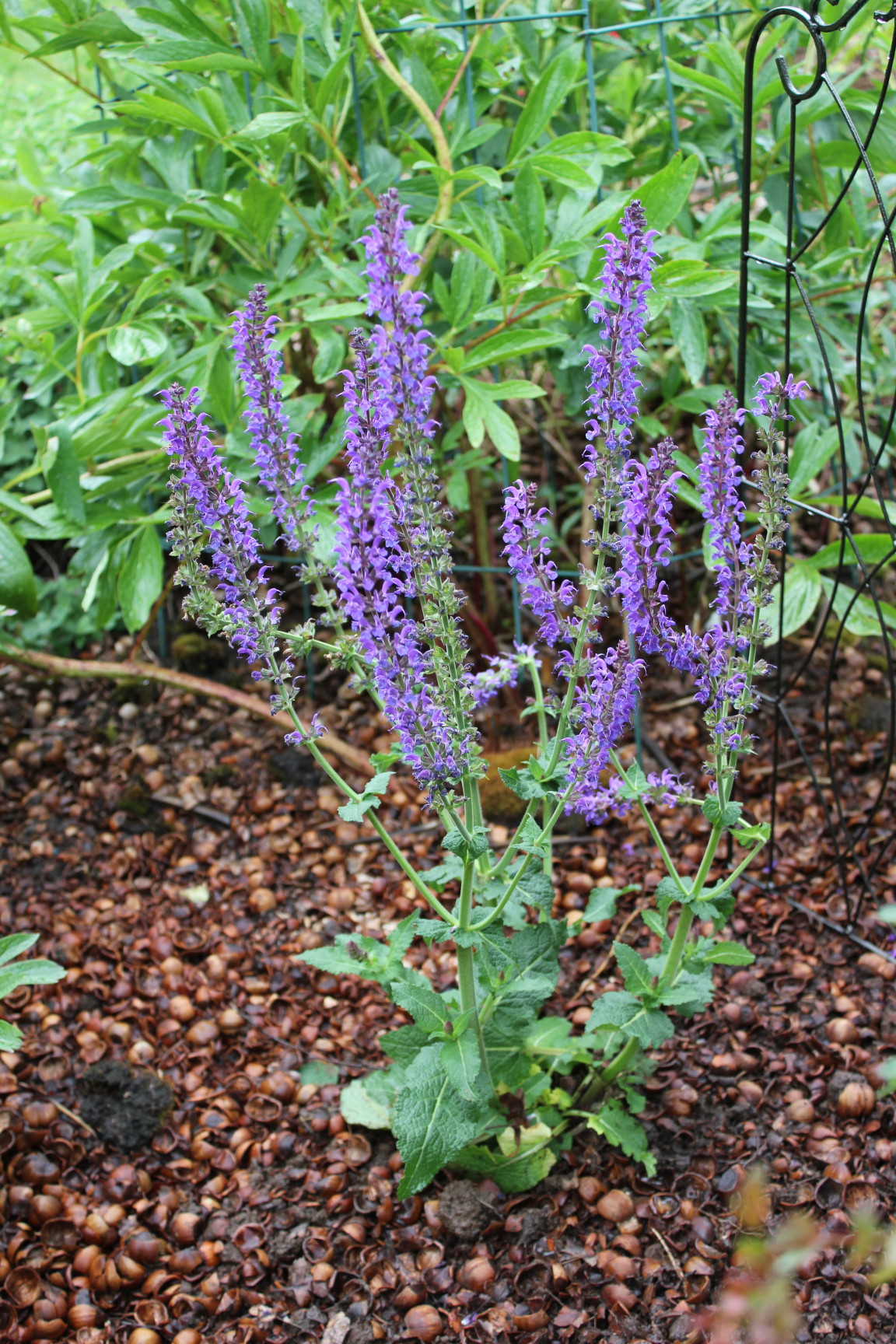
This is one of two salvias I fell in love with at Al’s. Don actually picked them out. “May Night Meadow Sage” or Salvia nemarosa ‘Mainacht’. Blooms May- August as long as you keep it “dead-headed.

I could scarcely not notice the strong sage aroma from this beauty as I put it in the ground: ‘Hot Lips’ Sage (Salvia ‘Hot Lips’). Those delicate red-and-white flowers will be a welcome addition to bouquets throughout the summer!

Strange mushrooms popped up in the garden under the New Moon (or maybe it was the Solar Eclipse that brought these out?)!

This is a transplant from Nevada. I found him in a shed behind my father’s old house. I remember my mom loved him and so I hauled him north. All he needs is a load of hens & chicks to feel useful. I’m pretty certain I can find some of those!

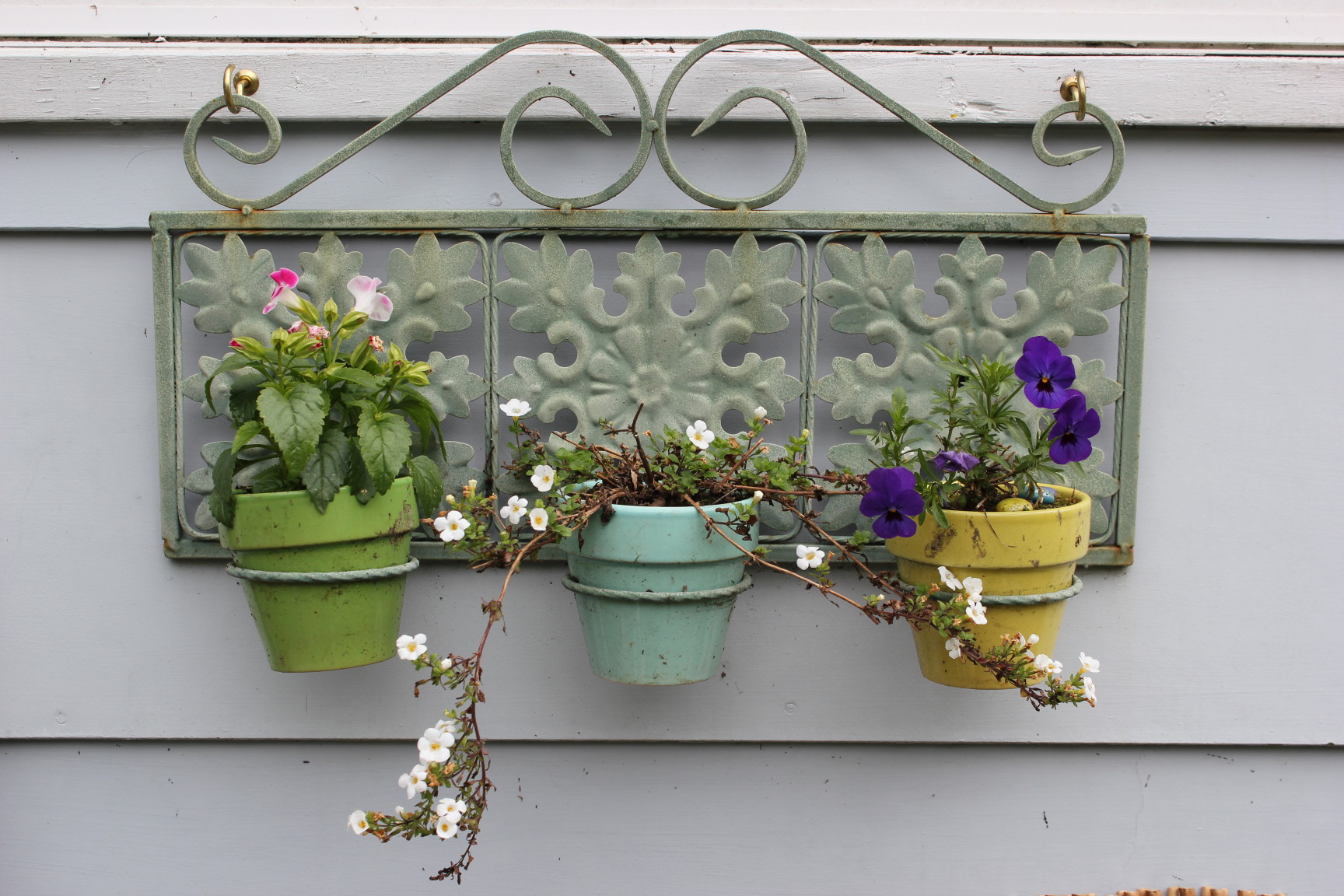
I didn’t plant these today. The two on the right are survivors from last year. It’s just my favorite garden yard sale find. This wall sconce and …

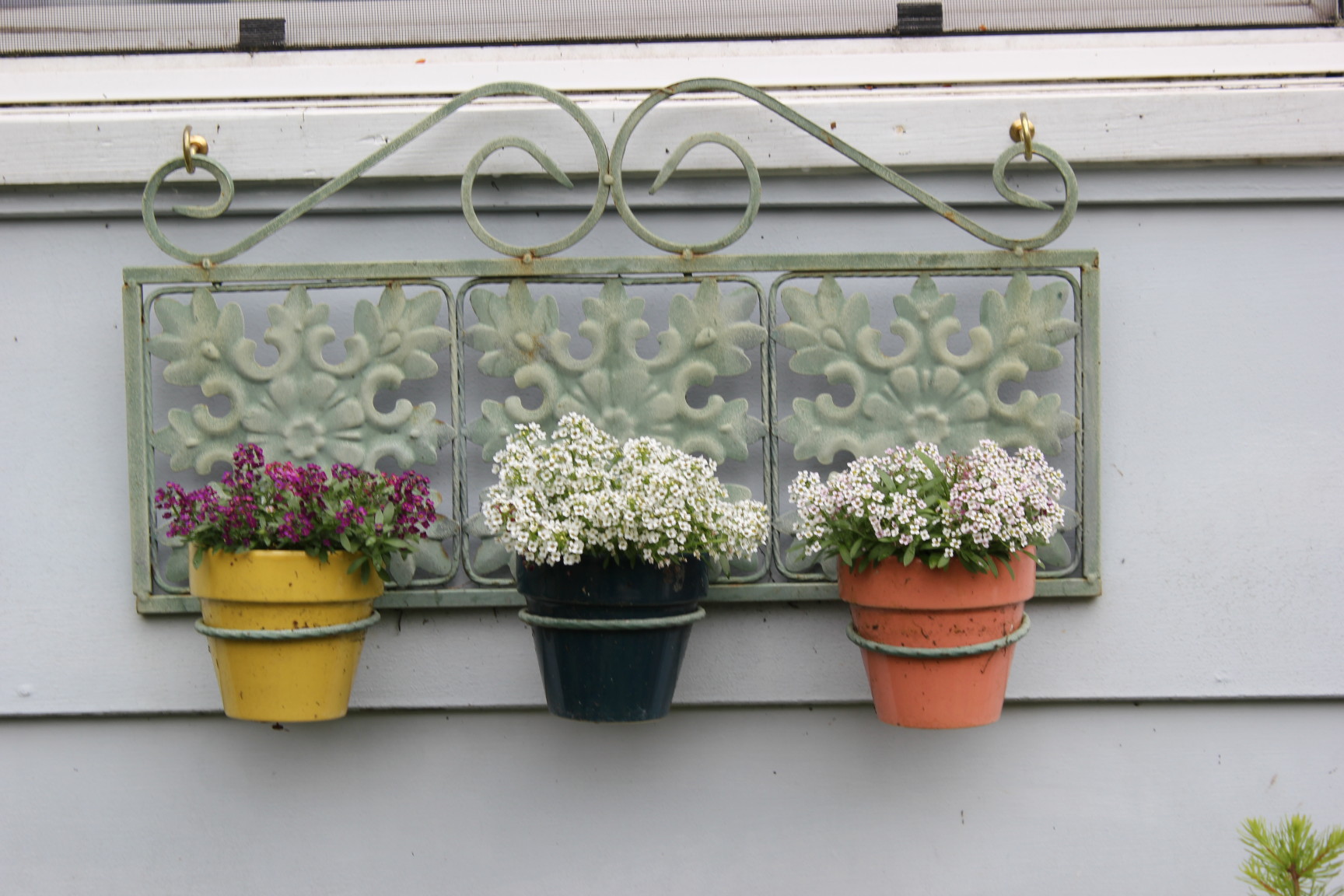
This one (filled with Sweet Allysum).

A project I’d like to tackle this summer: my own natural garden arches. (Nichol’s Garden Nursery)

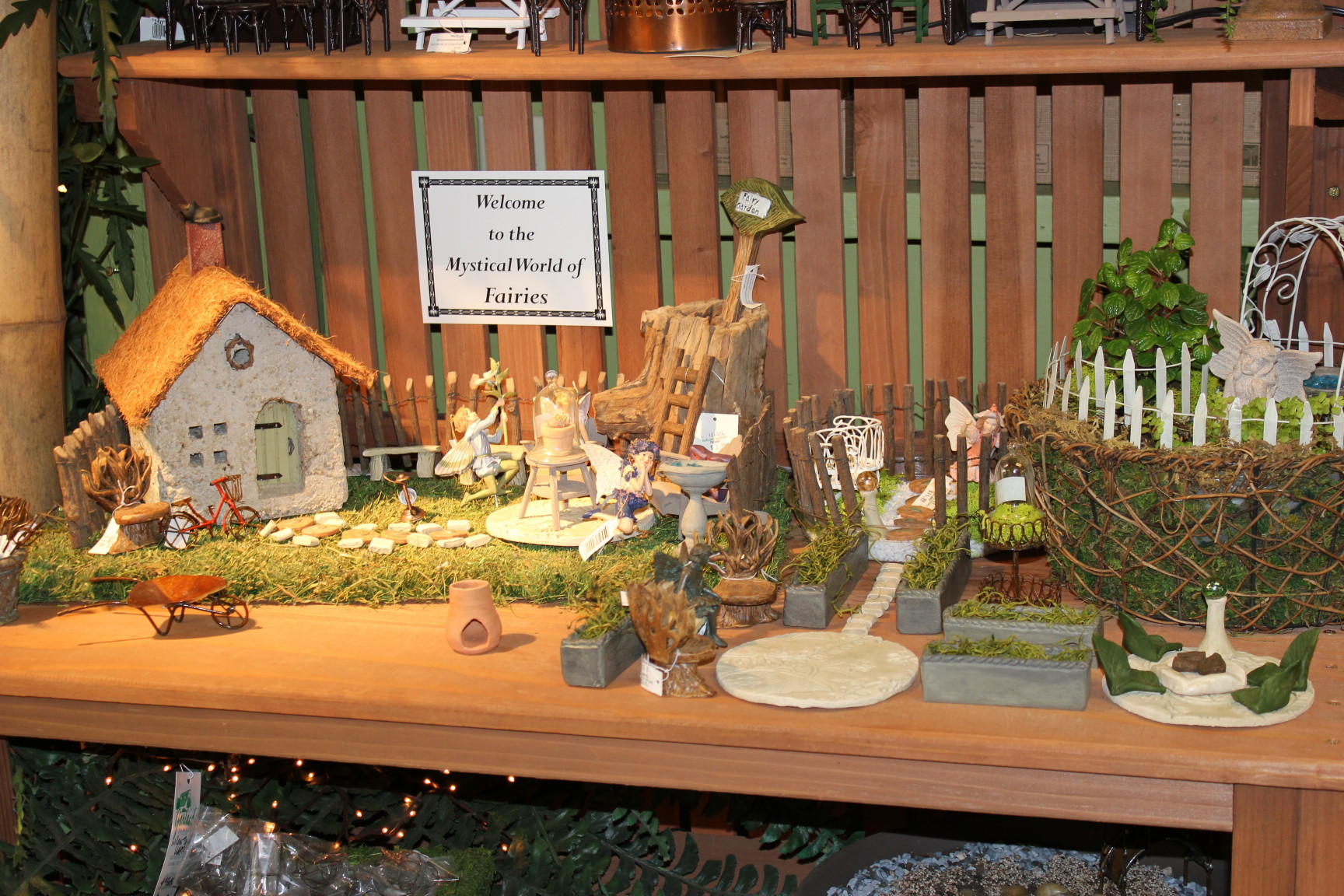
Hm. I need to remember to try to make some Faerie villages in my garden. I am not really into the Victorian Fairy theme, but no one says you have to populate a Fairy Garden with “The Beautiful People” of Faerie-dom. The ordinary folk are quite sufficient.

A bin full of over-priced faerie furniture. Ideas, ideas, ideas. And thank God for the “no flash” setting on a good digital camera.

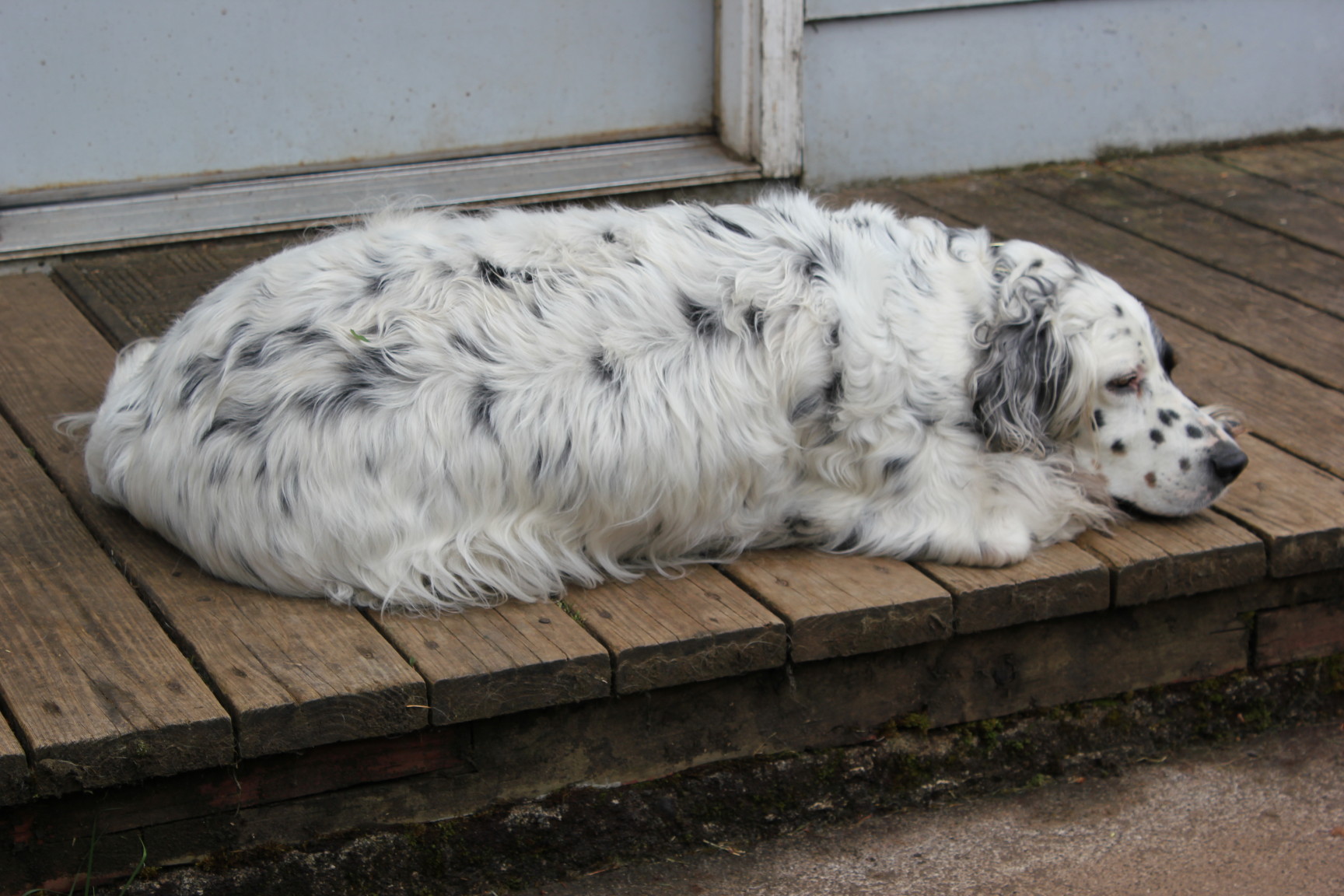
My helper. He had a bad experience at Home Depot today. He loves to walk through HD, but he hates it when I have to stop and buy something. He also hates all the head pats and people oohing over him. So this woman says, “He’s an unhappy dog.” Really?

And I said, “No, he just wants to be walking. He hates it when I stop.”

She also lectured me on how fat he is. Hello?! I know: that’s WHY we’re walking at Home Depot. Sometimes people are too nosy for their own good.

Harvey started wagging his tail again when we left the store.

I have to share this. Several years ago, my husband dug up a vine maple and brought it home for the garden. The roots were entangled with a very young yew tree and a number of other wildflowers. This one took off.

It is Douglas’ Meadowfoam (Limnanthes douglasii) or “Poached Egg Flower”. It only lasts a short while in the Spring and I enjoy every moment of it. O have to keep it fenced off because the dogs like to curl up on it!

Oh – remember why I was posting this particular post? So I could remember the names of the plants I bought? I like to add the Latin names here and there to make myself sound smarter than I am. I look them up. My husband memorizes them; I look them up.

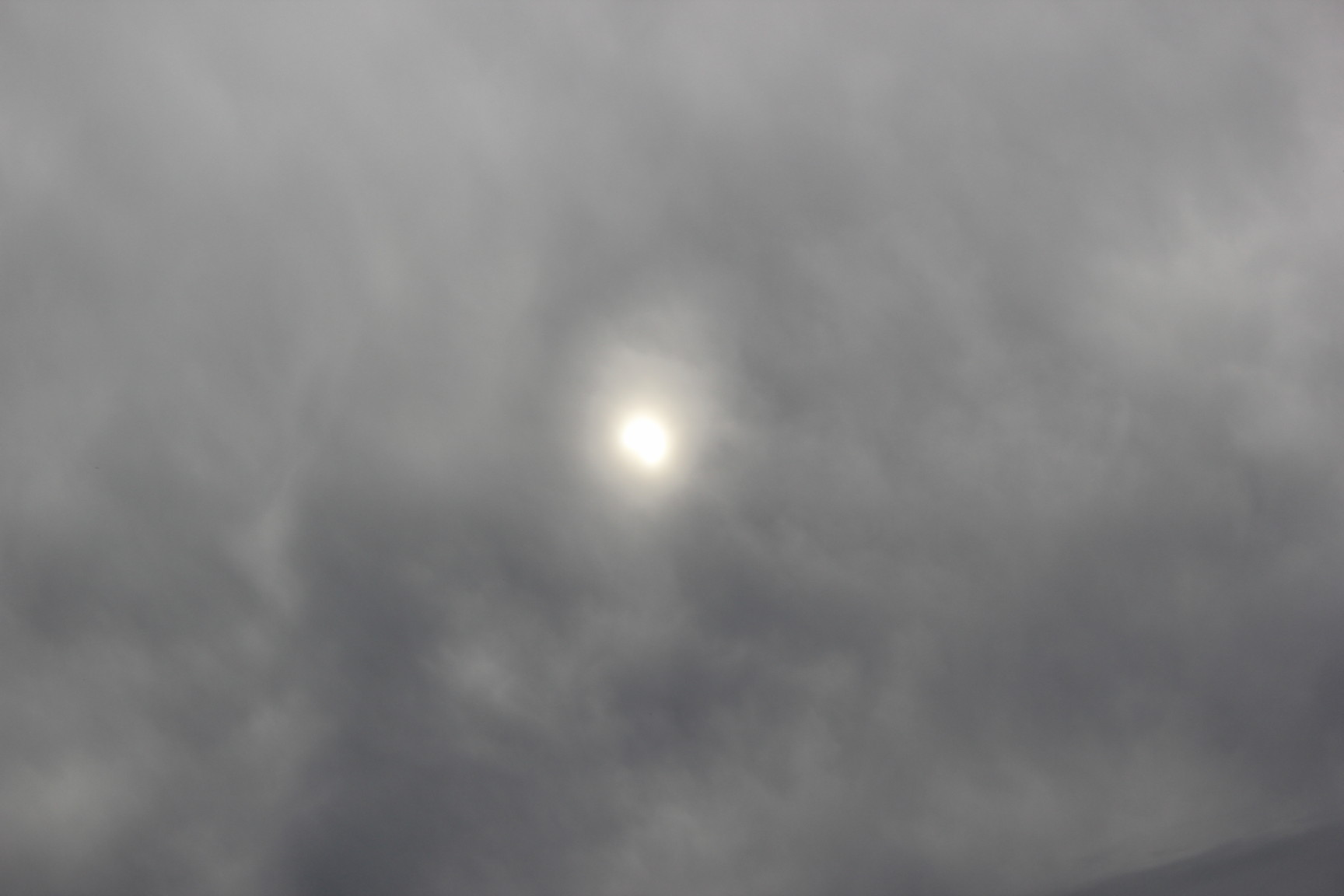
Last but not least: that solar eclipse that happened when the New Moon crossed in front of the sun.

That was as good a view as I got of it. Maybe next time.

Read Full Post »