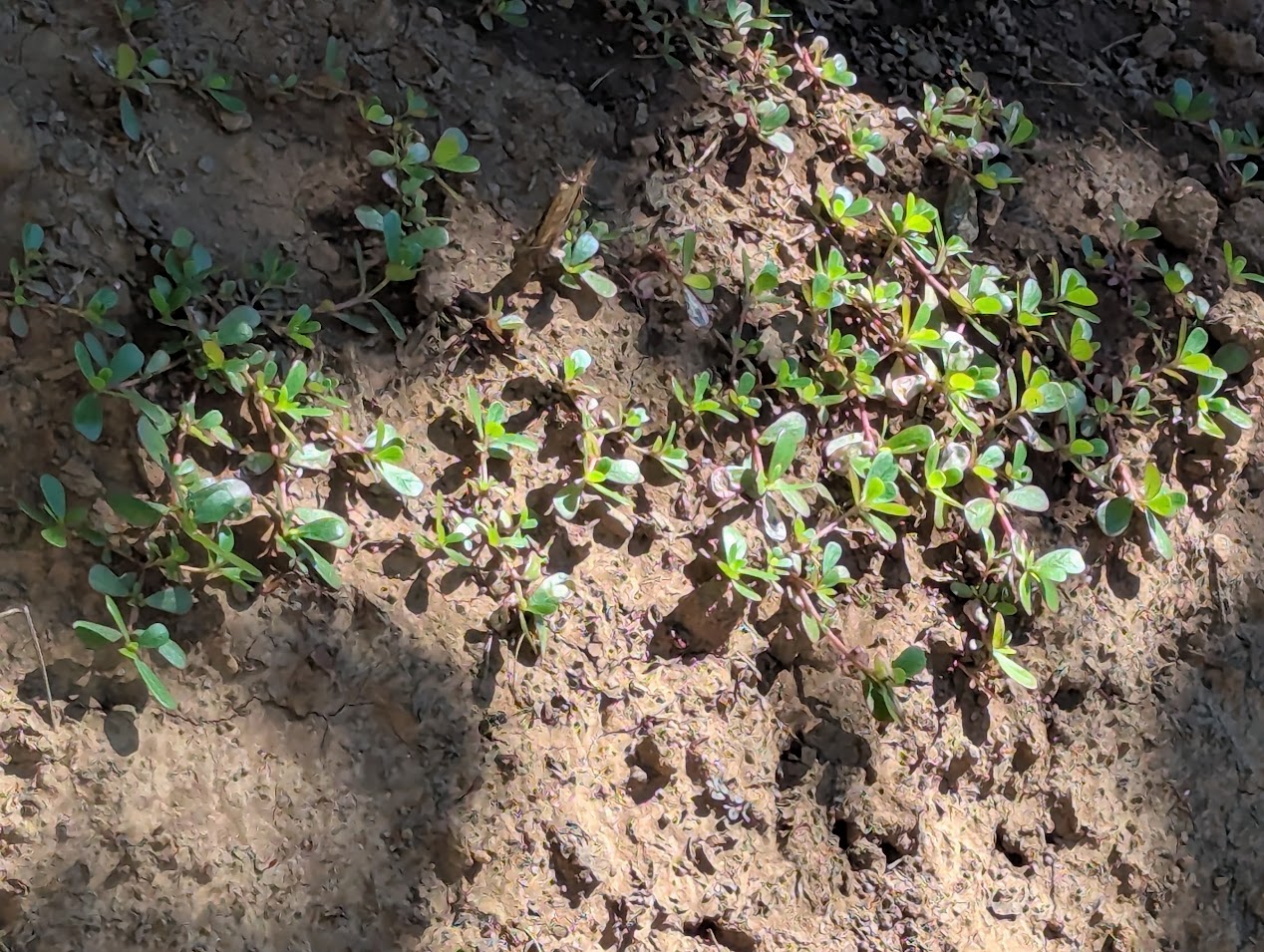
That’s the heading for a popular advertisement for purslane (Portulaca oleracea). It goes on to advise the reader to keep the plant and nurture it’s existence.
I say:
PULL IT.
I see this herbal remedies ad frequently that touts the benefits of purslane, some of which are listed below (per an AI summary on the Interwebs):
“Purslane is rich in omega-3 fatty acids, antioxidants, vitamins A, C, and E, and essential minerals like magnesium and calcium, making it beneficial for heart health, reducing inflammation, and supporting overall well-being. Additionally, it may help manage blood sugar levels and promote digestive health. Health Benefits * Heart Health * Blood Sugar Management * Digestive Health * Anti-Inflammatory Properties * Antioxidant Protection“
Yada Yada Yada. Etc., etc. etc.
There are not enough health benefits to purslane to justify an entire garden buried in this pernicious weed. Purslane is a weed.
I spent three days pulling this sucker (sucker of water) out of the raised beds in our vegetable garden. It takes over in a matter of weeks, or even days, covering every visible speck of open ground the vegetables are not planted in. It is worse than the grass I battle in my flower beds.
No, I take that back: purslane is relatively easy to pull out of the ground whereas the grass grows on runners and comes back if you leave so much as a quarter of an inch of the plant in the soil. Purslane doesn’t do that, but it is just as nasty a weed as grass in every other aspect.
If you want to save some for your salad, go for it. My advice is: pull it, kill it, and don’t allow it to multiply. There are a lot of other herbs out there that provide the same benefits and don’t take over the garden. Grow those.
Just my two-cents’ worth of gardening advice. You’re welcome.
What follows is a list of six plants that I consider “weeds” but which may not be considered such by other gardeners. Some I allow to grow and spread and some I try to eliminate. My success varies on both accounts.
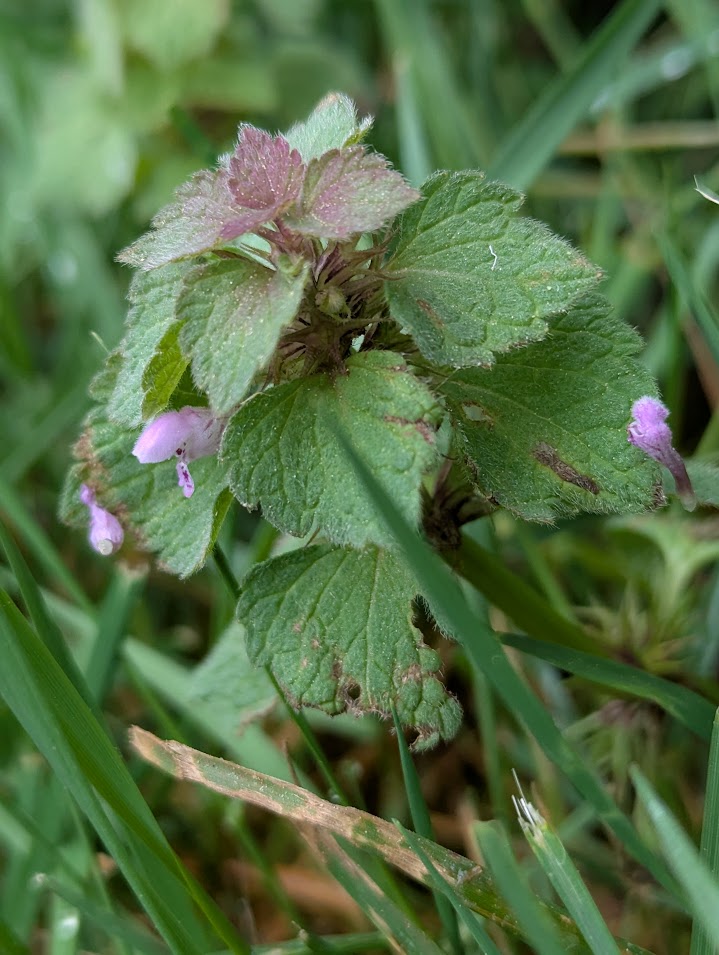
dead nettle
1, Dead Nettle. Lamium pupurpueum. Surprisingly, this common weed is an introduced species and not a native to North America. It is considered “common” which is different from “naturalized” or “invasive”. Just “common”. And common it is. It is one of the first blooms of a season, a favorite among pollinators, and has pretty, tiny, purple flowers. It is an edible herb in the mint family. My husband fights it in the vegetable garden, but it doesn’t seem to grow too much in my flower beds, but hangs out on the edges of the lawn and in the places where little else grows. Shallow root system, so easily pulled. I neither like nor dislike it, so I don’t go out of my way to pull it up but if it is growing where I don’t want it, I pull it.
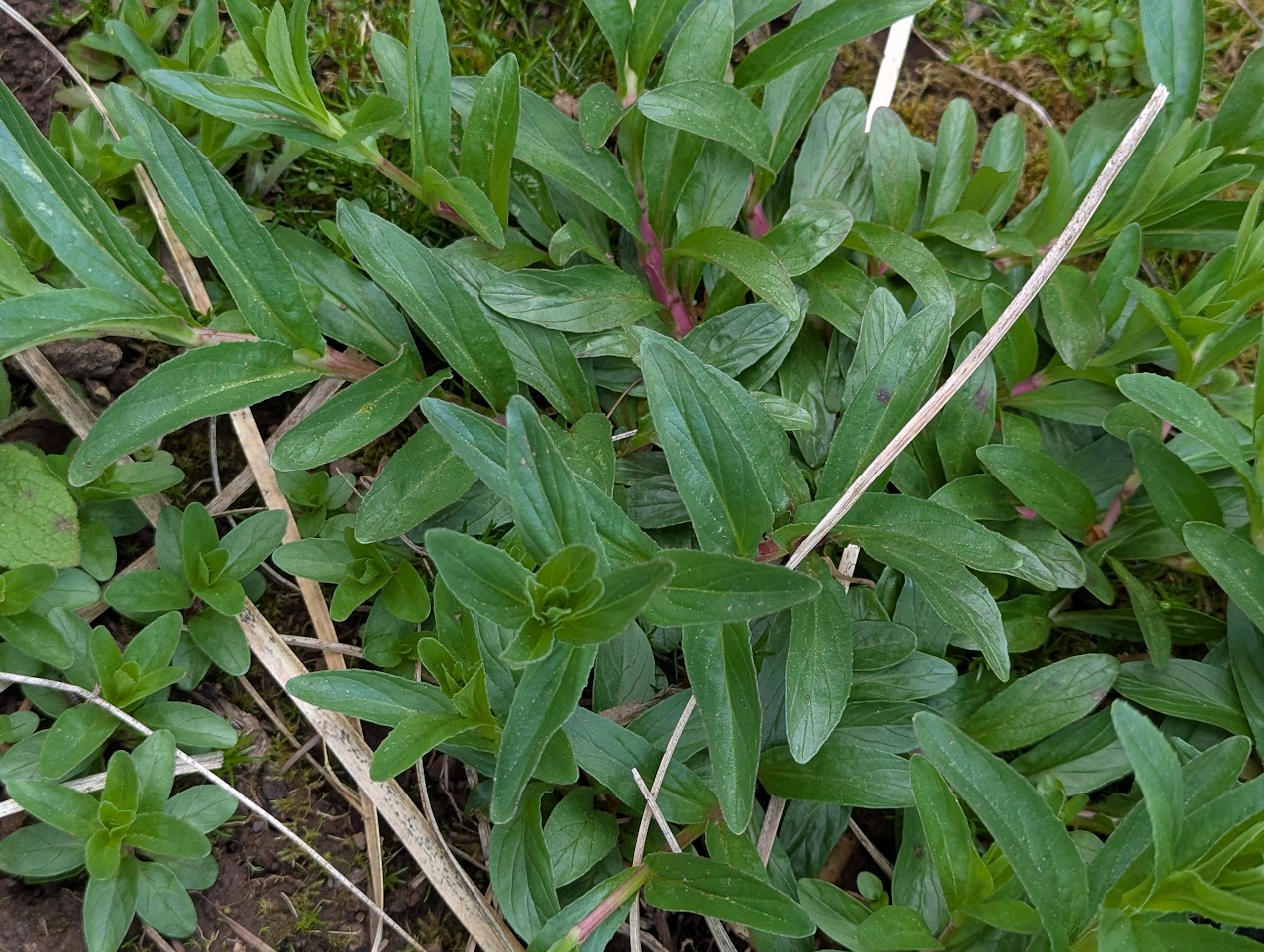
fringed willow herb
2. Fringed willowherb. Epilobium ciliatum. Another native plant, like the Baby Blue Eyes mentions in my prior post. It has a deep tap root and can be difficult to pull. Tiny pink flowers. It competes with other plants, which is what makes it a “weed” in my eyes, but, then, it is a native plant to the Pacific Northwest. I’d love to leave it but it seems to be taking over my (native) false Solomon’s seal (feathery false lily of the valley, plumed spikenard, Maianthemum racemosum). It is a conundrum.
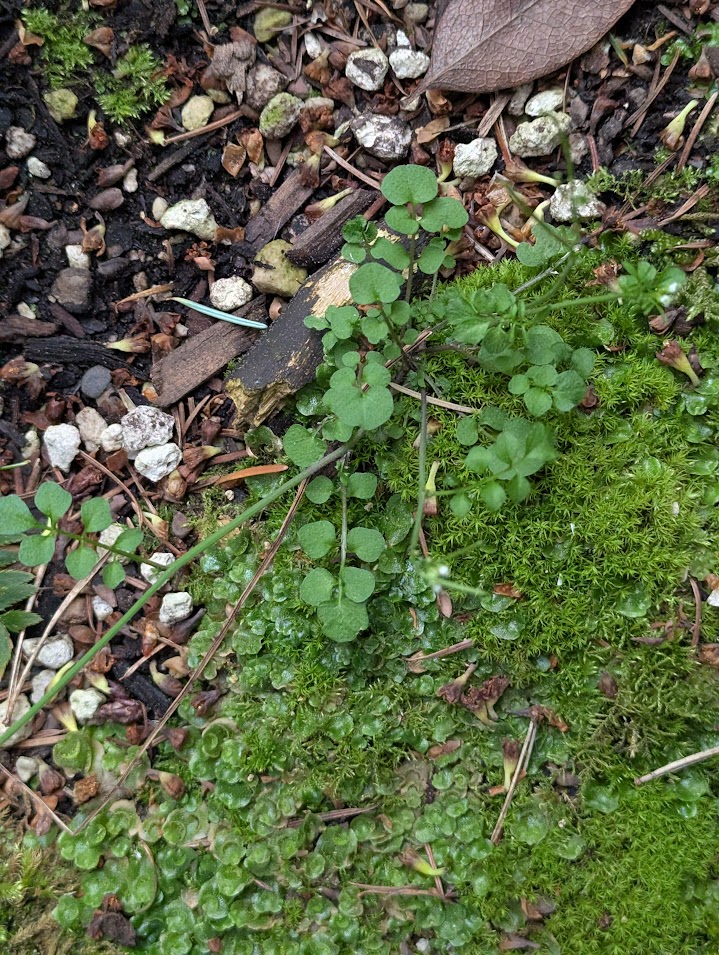
hairy bittercress,,, although I’m not certain the app is looking at the right thing. Could be chickweed (the leaves).
3. Hairy bittercress. Cardamine hirusta. This is an introduced pot herb and a favorite of butterflies. Pull it! Pull it before it seeds and those seeds shoot out like tiny missiles. I put this one in the same class as chickweed (not pictured). Early bloomer, bees love it, then it goes to see and you’ll find yourself being fired upon by missiles the size of sand that aim mostly for your eyes. I rarely get to it before it seeds because it grows, flowers, and matures before the rain stops in the spring. Ditto chickweed. Both weeds have medicinal uses, but I just try to pull them. Very shallow root system but those flying seeds are nasty.
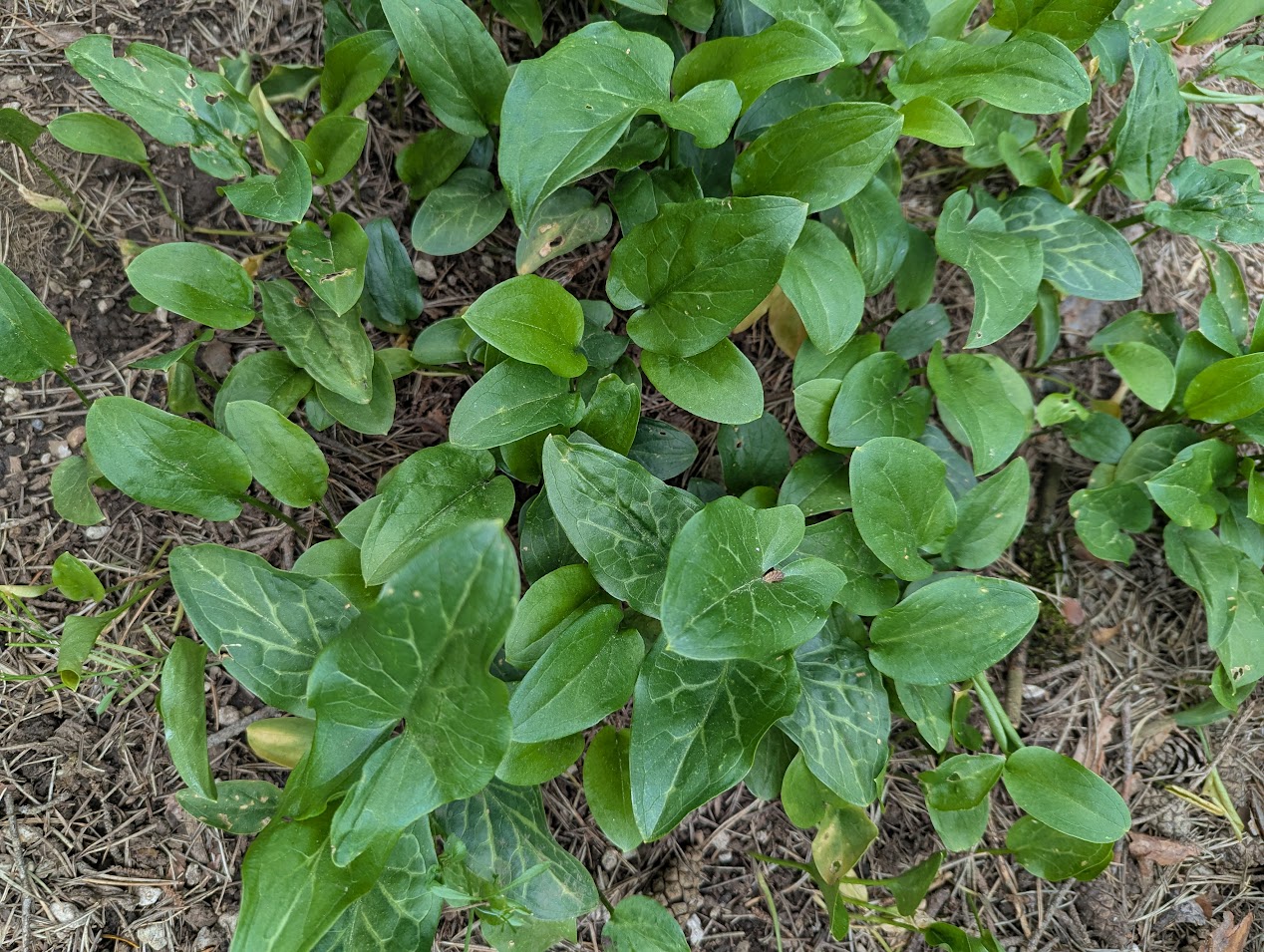
Italian arum
4.Italian arum. Arumitalicum. This is nasty, nasty, nasty. Highly invasive. Very toxic. Only use gloves to handle. It is everywhere, literally. It is an arum, the bulbs are deep in the ground, and the only way to eradicate it is to dig them out and throw they in the garbage. I am losing the battle. The flowers are pretty and so are the red berries. I have them relegated to one area of the garden right now and when I find them elsewhere, I try to deprive them of sustenance by pulling up all of the green (with gloved hands). Digging just seems to spread the bulbs, like digging grape hyacinth or daffodils does. You just get more.
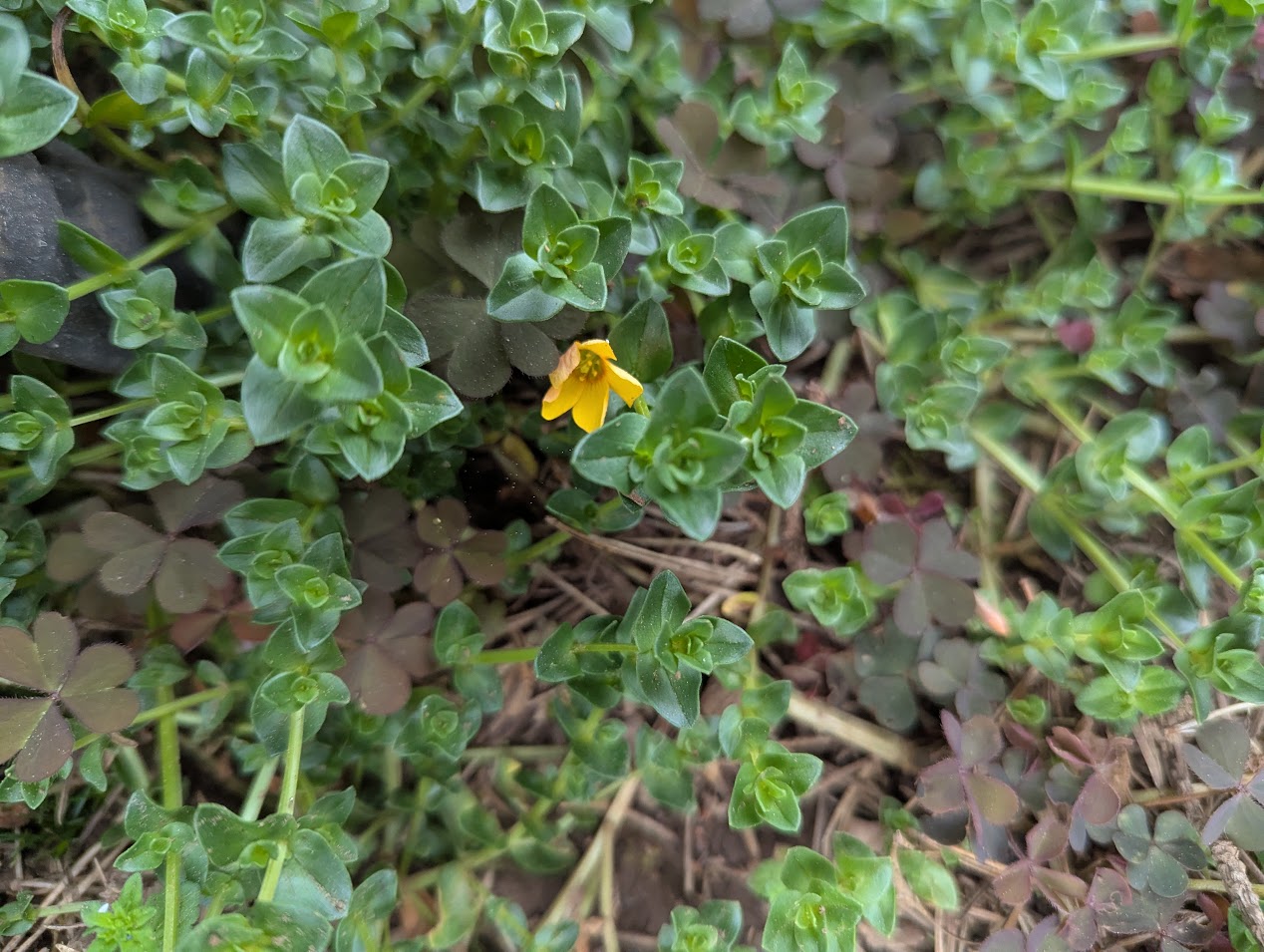
Not the flower – just the leaves. The flower is similar, though
5.Scarlet pimpernel. Lysimachia arvensis. Toxic in pastures but most livestock won’t touch it unless there’s little else to eat. Pretty orange flowers, a wide spread of greenery, a lovely (but invasive) groundcover. I’m torn with this one. It is ornamental. I don’t have livestock. Birds planted it in the yard. It doesn’t seem to compete with other plants so I am leaving it (for now). It is considered invasive in Oregon, so I may have to rethink that.
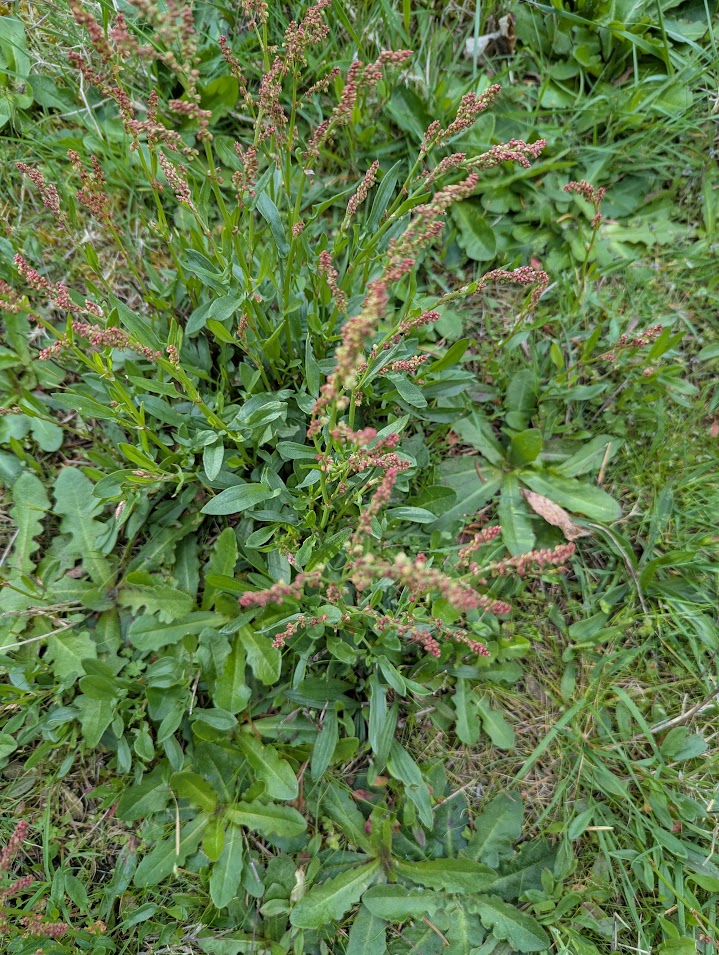
sheep sorrel
6.Sheep sorrel. Rumex acetosella. I grew up calling it “sorrel”, no “sheep” added. Also known as red sorrel, field sorrel, sourweed. Edible in small amounts, Considered invasive, certainly is common. Usually, it stays to the front yard but I pull it in all flower beds. I do love the tiny red flowers, but not enough to continue to let it take over flower beds. It can hang out in that front weed patch the makes our neighbors ashamed to know us (we call it our “pollinator habitat” and my husband mows it once the grasses get tall enough).
It is slow progress turning a lawn into a flower patch. I tossed out clover seed early this spring, hoping to change the area to a red-and-white clover field, but the darn things didn’t germinate. Eventually, that is the plan: eliminate the noxious weeds and the grass by growing something better: we currently have kinnikinnick covering a large portion and I’ve carved out some flower beds, but the most visible portion remains a huge weed patch. We have real lawn in the backyard.
I have given up on pulling some ‘weeds’. They are just too much effort, aren’t really harming anything in my yard, have pretty flowers, and insects love them. Of course, there are a lot of weeds I still pull. And grasses. I hate grass. I’m allergic to most grass.
I digress. Weeds. The “love them or hate them” plants that plague the modern lawn and garden. Here, in no particular order, are six of the common ones in our yard.
Baby Blue Eyes
Baby Blue Eyes. Nemophilia menziesii. I love this plant! My husband hates it in the vegetable garden, but I tend to leave it in the flower beds. The flowers are pretty, it works as a ground cover, and it doesn’t interfere with any of the cultivars or native plants I tend. Oh, that’s right: Baby Blue Eyes are a native plant! Bonus points for that!
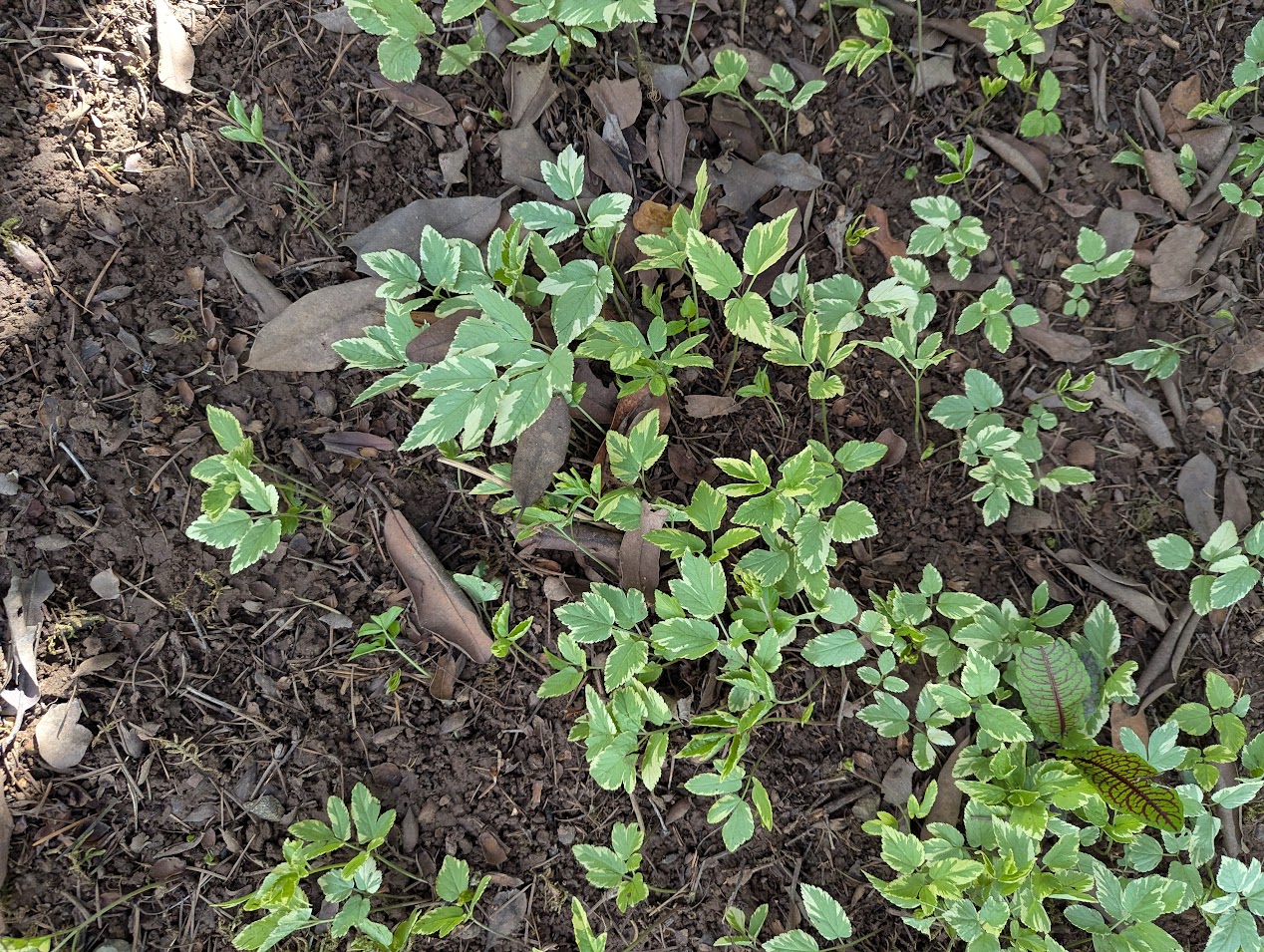
Bishop’s Weed. Aegoyodium podagraria ‘Variegatum’. I happen to like this one, too. I encourage it as a ground cover. Insects like it as well, and it isn’t all that difficult to keep in one spot. It is not a native and is considered by some gardeners to be invasive. (Also known as “Bishop’s Goatweed”.)
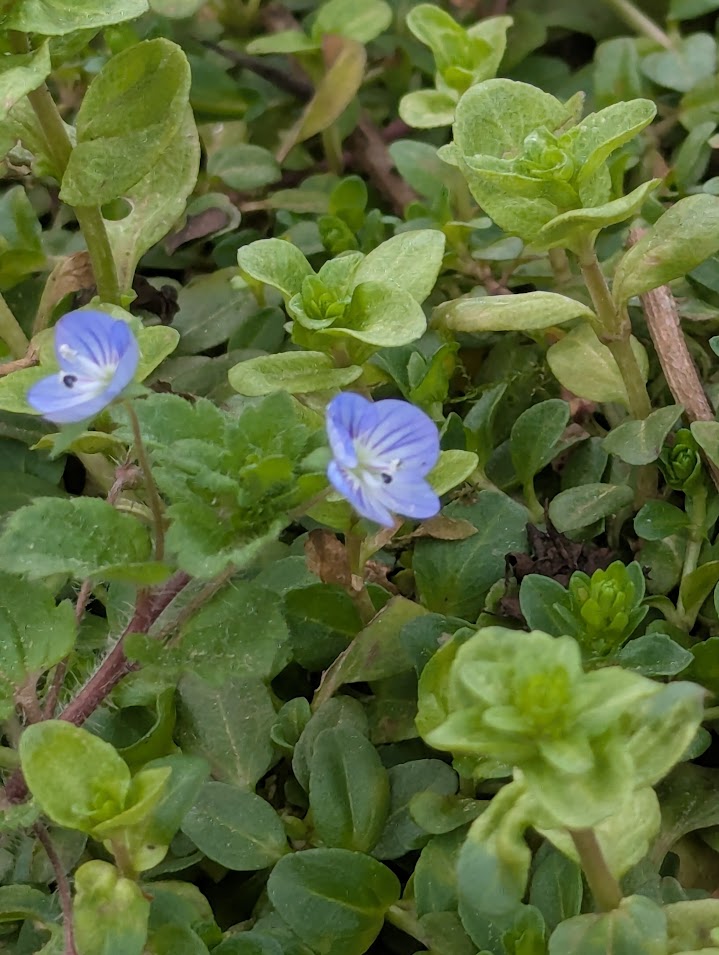
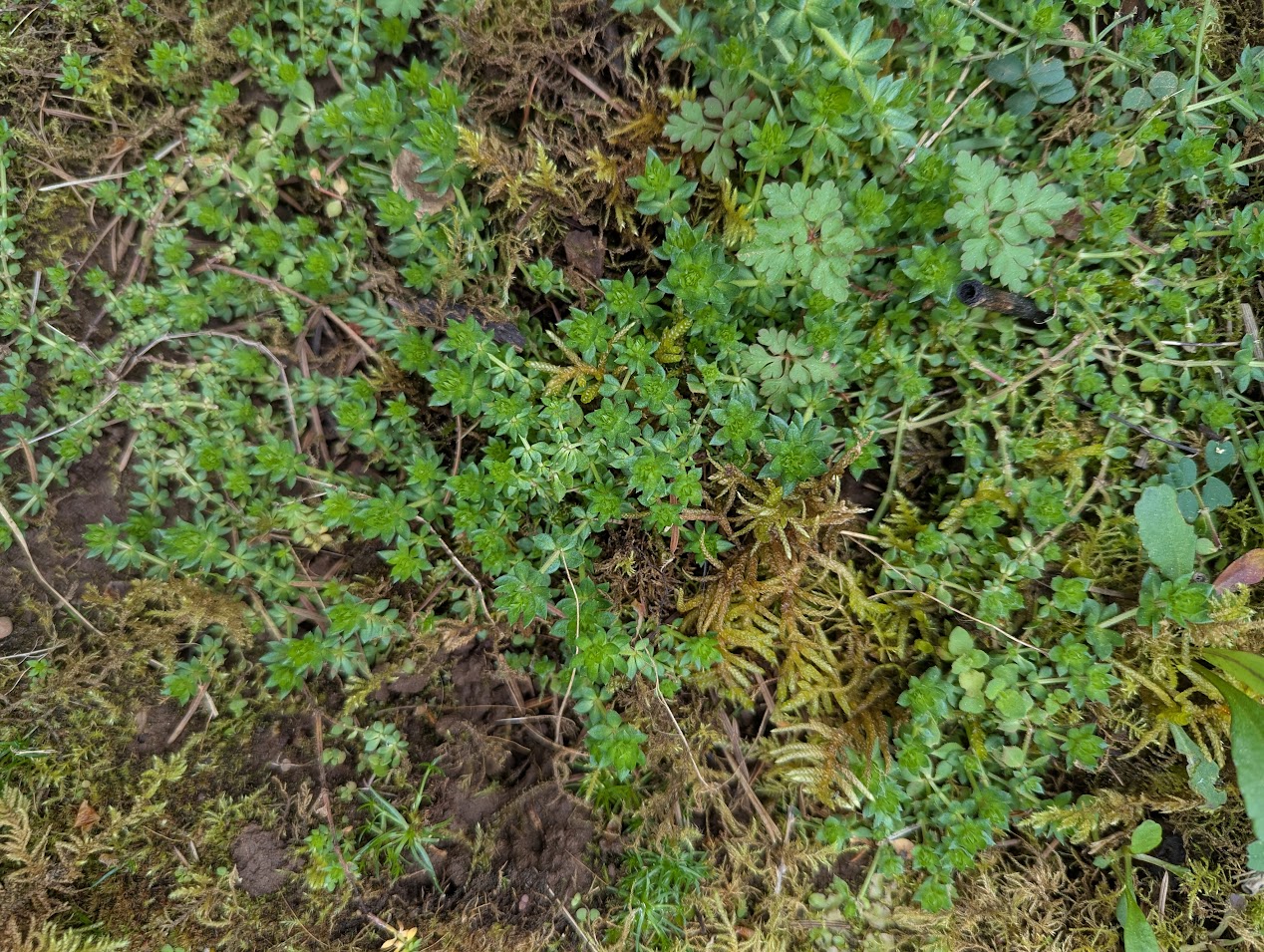
Blue Field Madder. Genus: Shirardea, family: Rubiaceae. I have given up trying to slow this low-growing ground cover. It has pretty flowers, doesn’t compete with my other plants, and acts as a nice ground cover. I don’t use bark dust so ground covers help to hold the moisture in. I did a little research for this post and discovered the root of this plant is sometimes used as a red dye. It is pretty small, so I wonder how much of the root one would have to dig to make a dye? It is considered “naturalized” which means that it is almost considered a native. Like foxglove and a host of other plants, attempts to control the spread have failed. I grow foxglove, too.
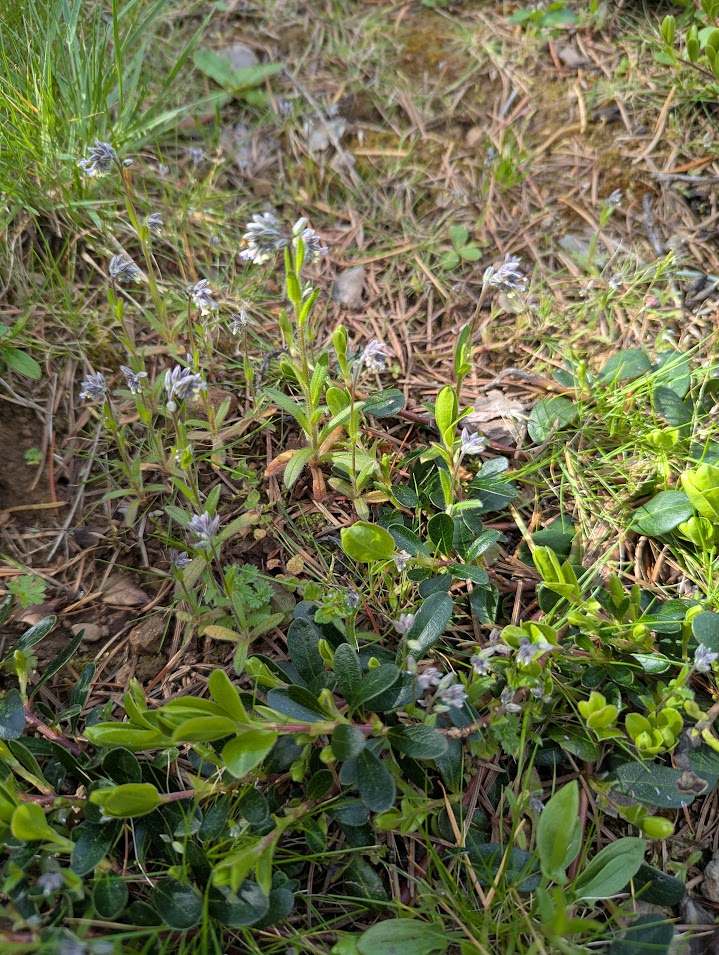
Changing forget-me-not. Myotis acetosella. Introduced. This is such a pretty plant! The flowers are tiny, they change from blue to yellow, and the entire plant resembles a miniature forget-me-not but doesn’t grow much taller than the neighboring lawn grass. I leave it in the front yard (which is basically a haven for weeds much to the dismay of neighbors who love a monoculture grass lawn, especially out front. Sometimes I find it in the back lawn. It seems to like to grow in the grasses.
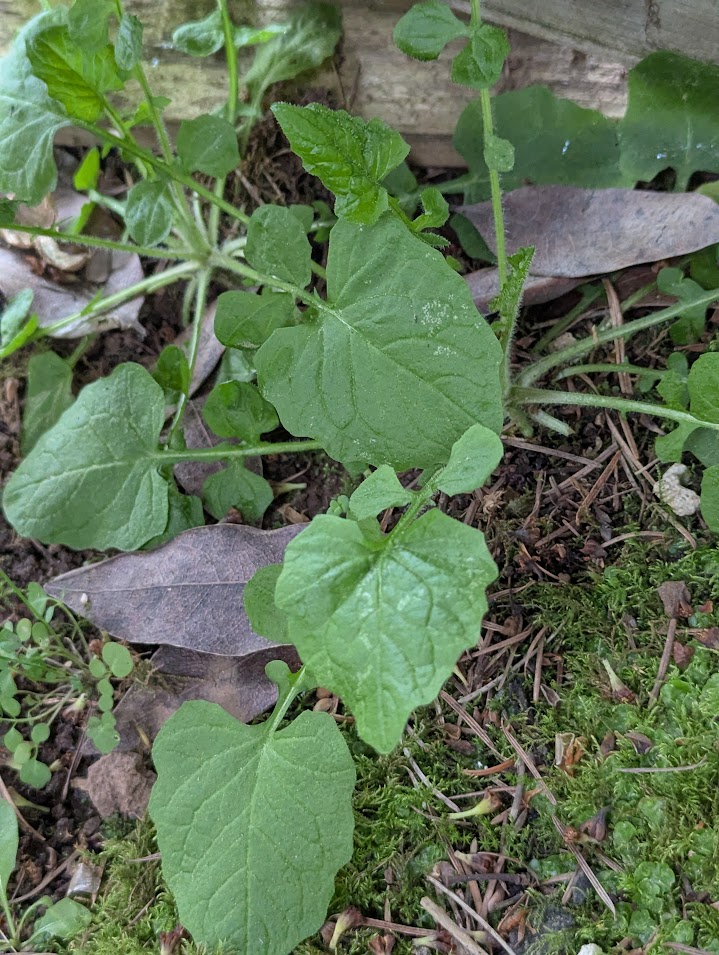
Common nipplewort. Lapsana communis. Has tine, pretty, yellow flowers if it lives long enough top bloom. It grows around 12” tall, competes with everything, and I do not like it. Fortunately, it has a shallow root system and is easily pulled. It is also considered an invasive introduced species. I try not to give it too much leeway to expand in my yard. It does happen to be edible and useful as a herb, which makes it not all that nasty of a backyard weed.
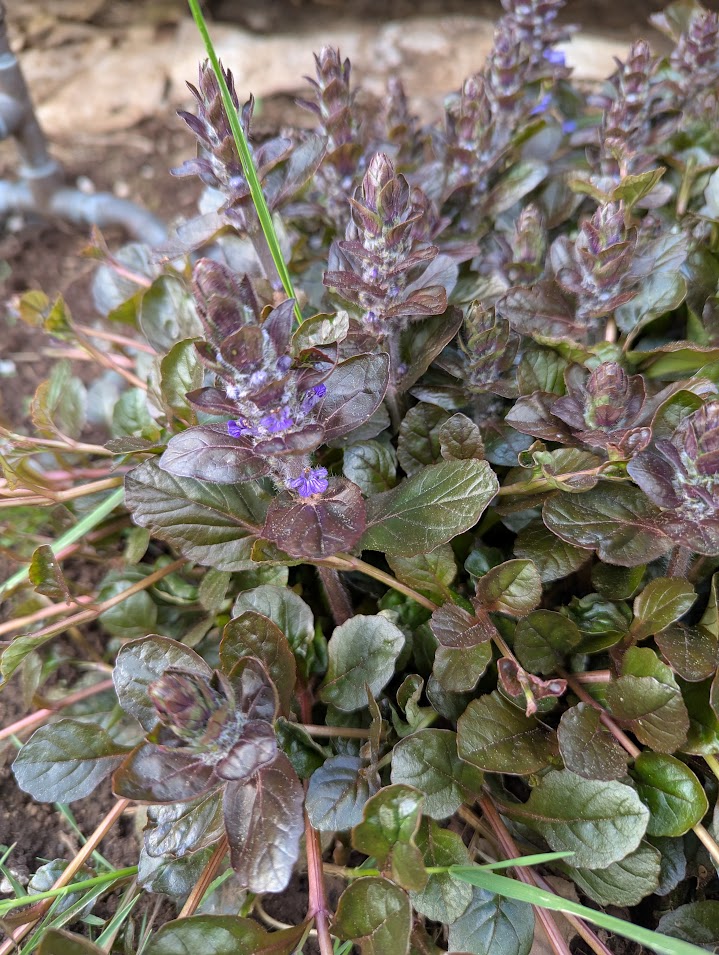
Bugleweed. Ajuga reptans. I actually paid money for this when I first started building a flower garden in our yard. I have ripped it out numerous times. It comes back like Arnold Schwarzenegger. You could almost nickname it “The Terminator” because of how competitive it is. Nothing grows under this ground cover. It is aggressive. It fools you into thinking it is gone, eradicated, and then… Voila! There it is, again. Pretty purple flowers and foliage. I have relegated a patch to a border bed and I hope to keep it relegated there since I cannot kill it. Don’t pay money for this cultivar unless it is the only plant you want in your flower bed. Like Vinca Major or Minor, you get one single species and it covers the ground with great enthusiasm.
And here you thought I liked all weeds. Nope. Some just have to die.
Also: I have no idea why some plants are listed as “invasive” and some are listed as “naturalized”. Foxglove is poisonous but listed as “naturalized” and tansy ragwort is poisonous but listed as “invasive”. Both have pretty flowers and attract pollinators. I’m sure someone will comment and explain the designations to me. Both fall under “introduced” or “non-native” species. Native species of plants are merely listed as poisonous or non-poisonous.
 Jaci Dawn