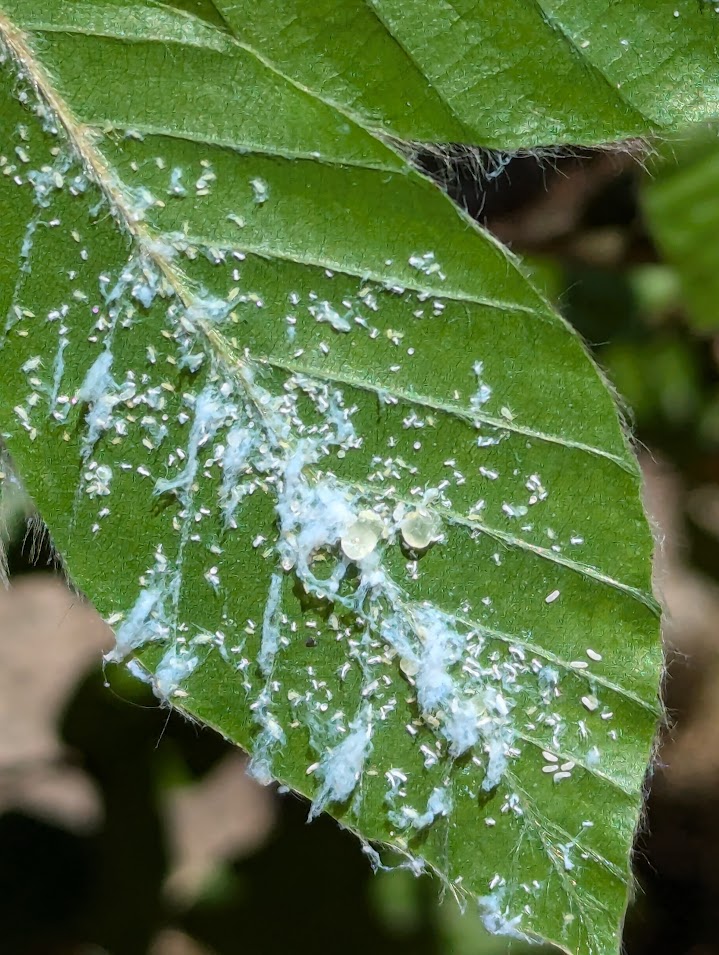
Anyone who grows honeysuckle knows the struggle: aphids.
“At least if they attack the honeysuckle, they will stay off the (roses, lupines, elderberries).”
“I will never grow honeysuckle again.”
That last statement was from other gardeners. Me, I like my honeysuckle. But I have tried everything: Neem oil, scented water sprays, gentle hosing off, lacewings and ladybugs purchased from the store… EVERYTHING.
Or so I thought.
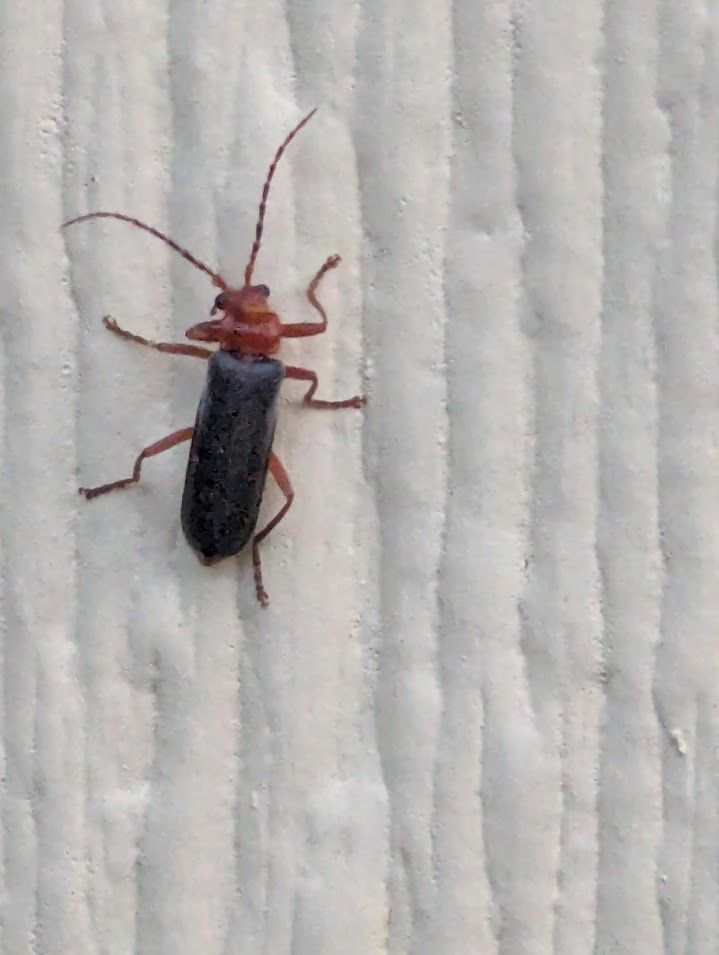
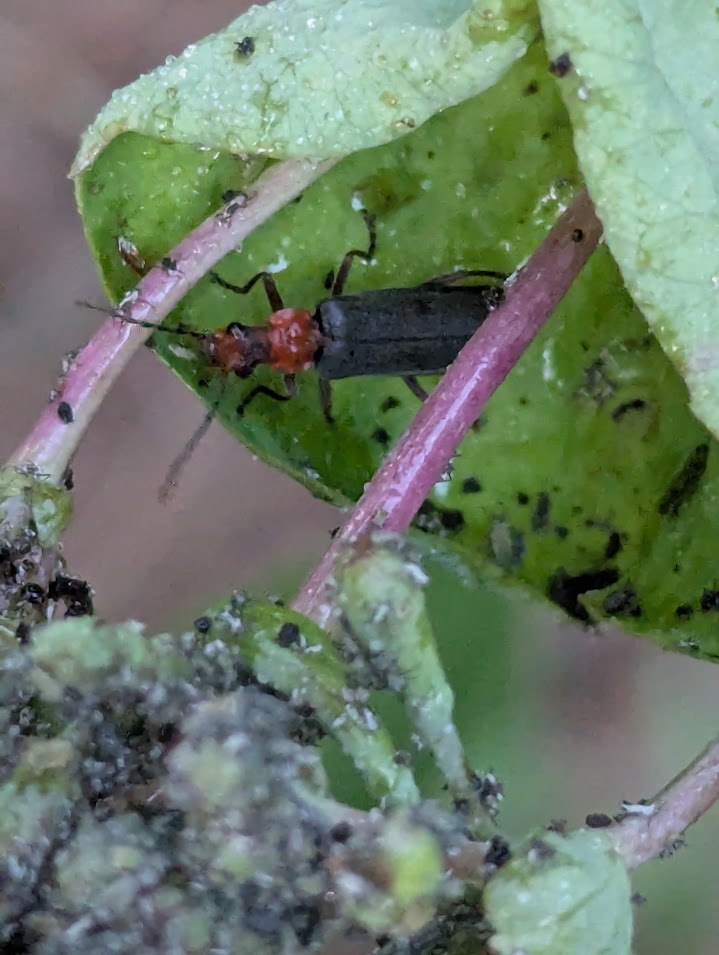
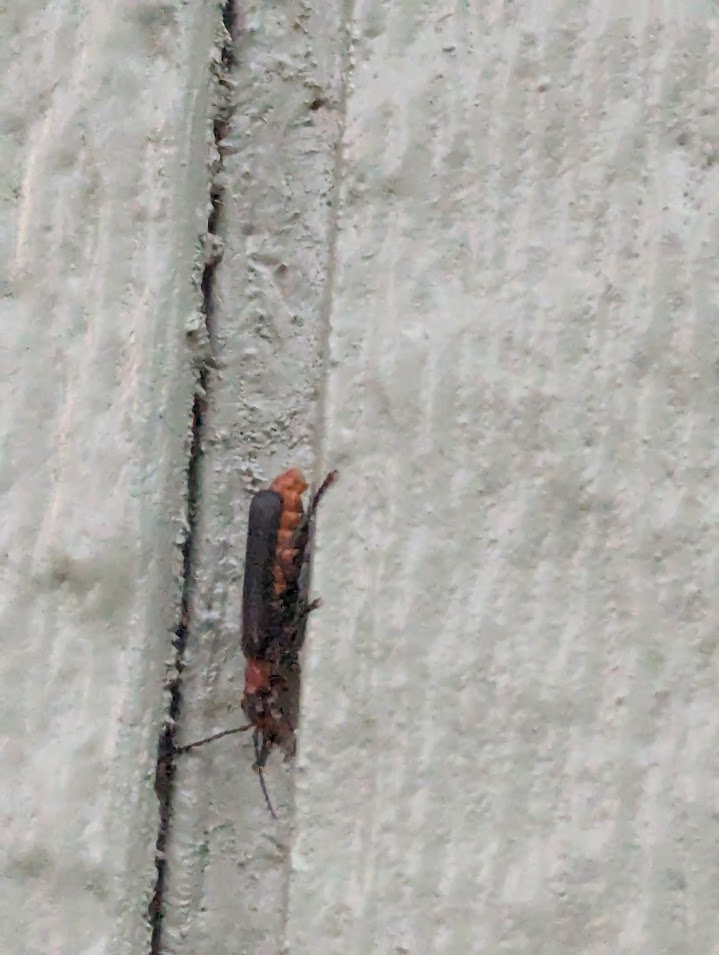
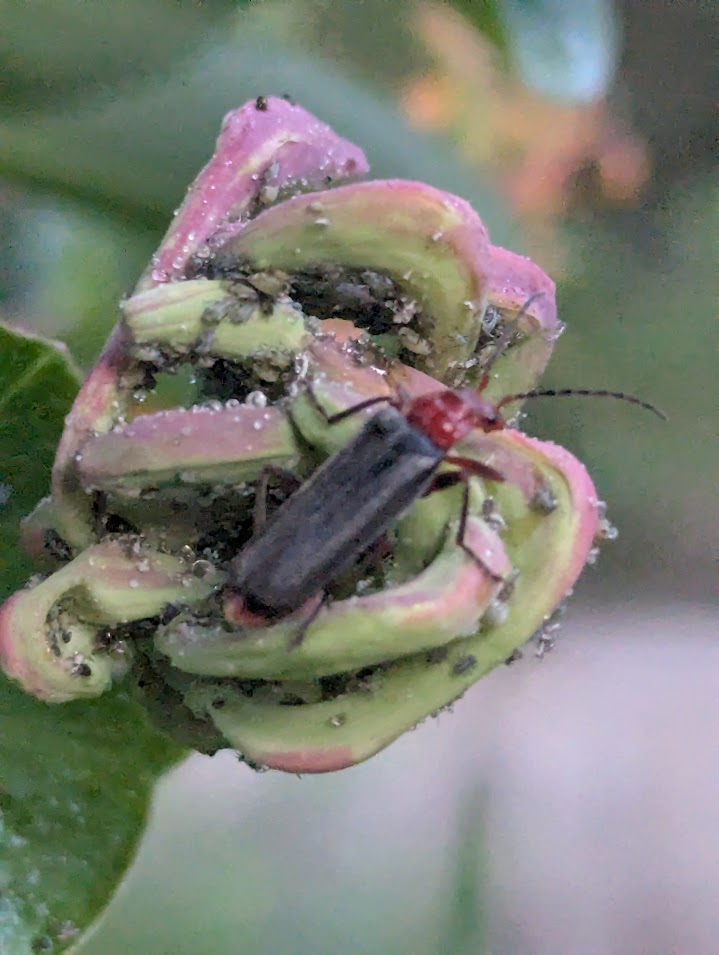
That all changed when evening was young and a mass of insects swirled in the air over and around the honeysuckle. A soldier beetle hatch (Pacificanthia).
I’ve seen them around, but never en masse like this, and I have never really paid much attention to them: friend or foe?
Turns out, they are a gardener’s best friend, probably more than lacewings or lady beetles purchased from a store. Soldier beetle adults are voracious and they LOVE LOVE LOVE aphid meat.
While I still don’t know the exact species of soldier beetle that hatched out, I do know that my honeysuckle has never been happier.
YUM! Aphids!
I don’t know much about these beetles: where they lay their eggs, what the larvae underground eat, or what the coccoon looks like, but I now know this: the adults will decimate an aphid infestation in short order.
Sometimes, you choose your ground cover at the nursery or the garden show. Here are a few I have loved.
creeping thyme
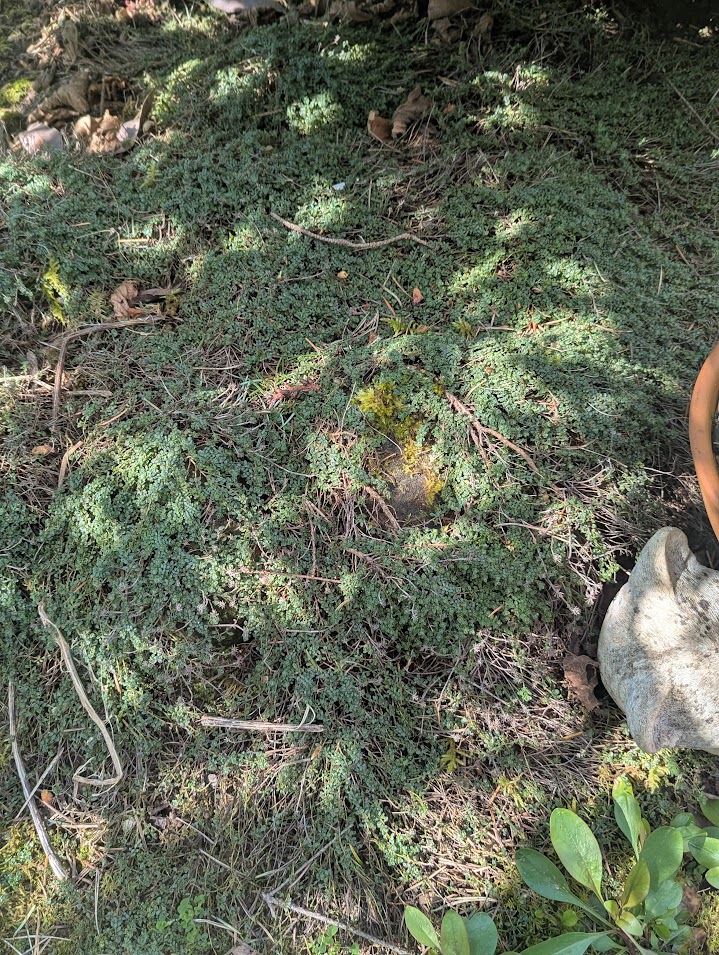
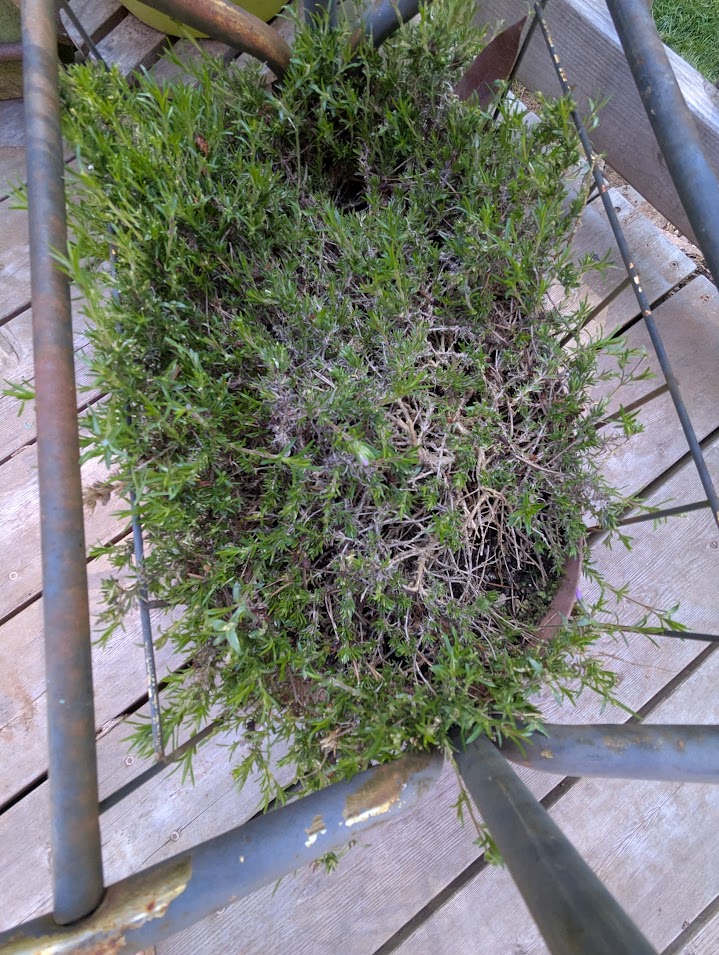
Creeping thyme – Thymus serpyllum. Slow growing, best in rocky places or between stepping stones. I have seeds to plant more. There are several varieties and I have at least three of them. Holds up to light foot traffic, flowers are pretty and range from yellow to a light purple (my favorite).
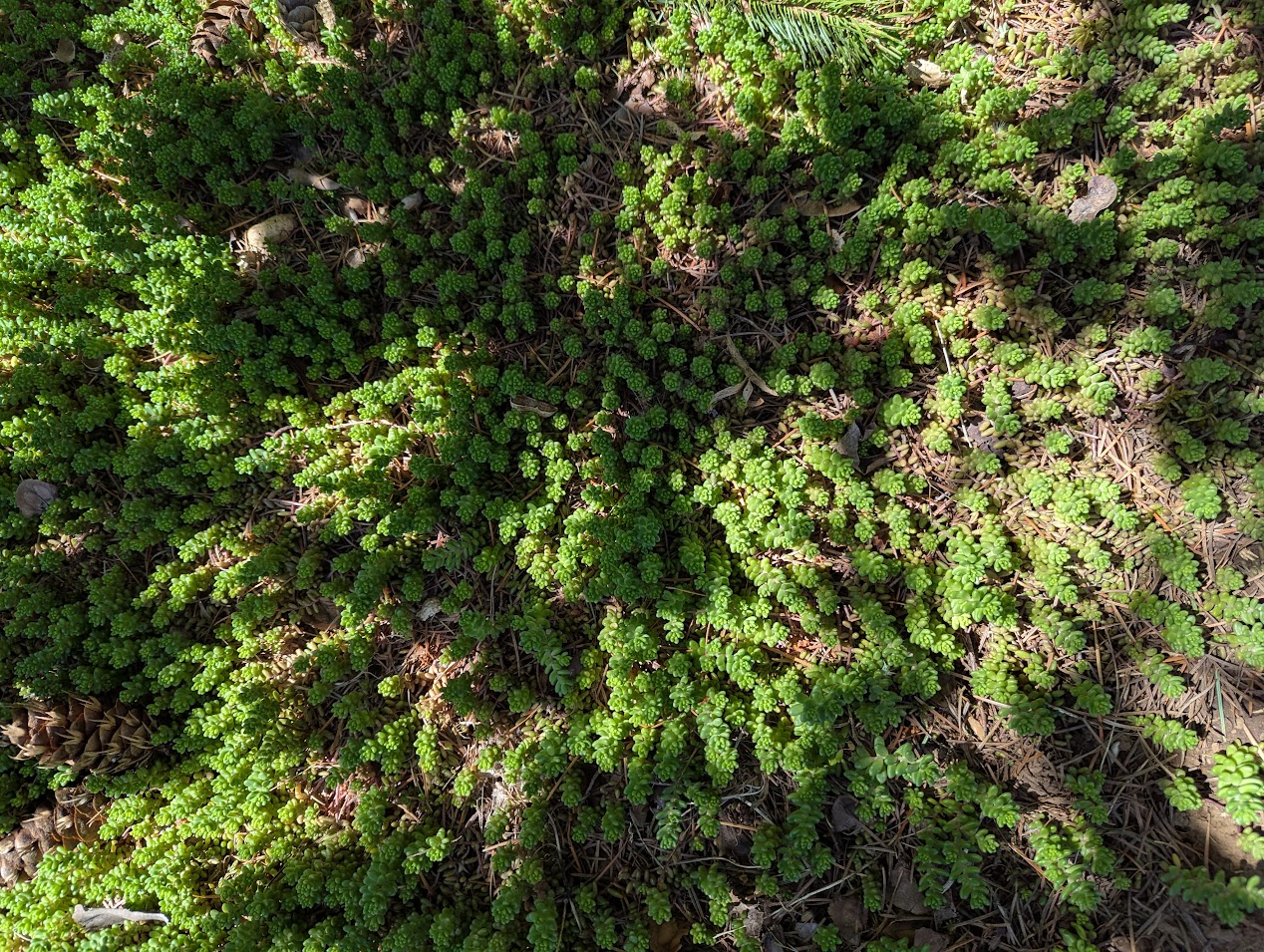
Gold Moss stonecrop – Sedum acre. This is everywhere in my yard now. I only bought one little plant years ago. It’s so easy to maintain, loves to creep over rocks, and flowers mid-summer.
Flowering phlox/moss phlox – Phlox subulate. Mine doesn’t look too healthy in the pot, but I will be moving it to the ground somewhere so it can spread. It grows thick and only blooms in the spring.
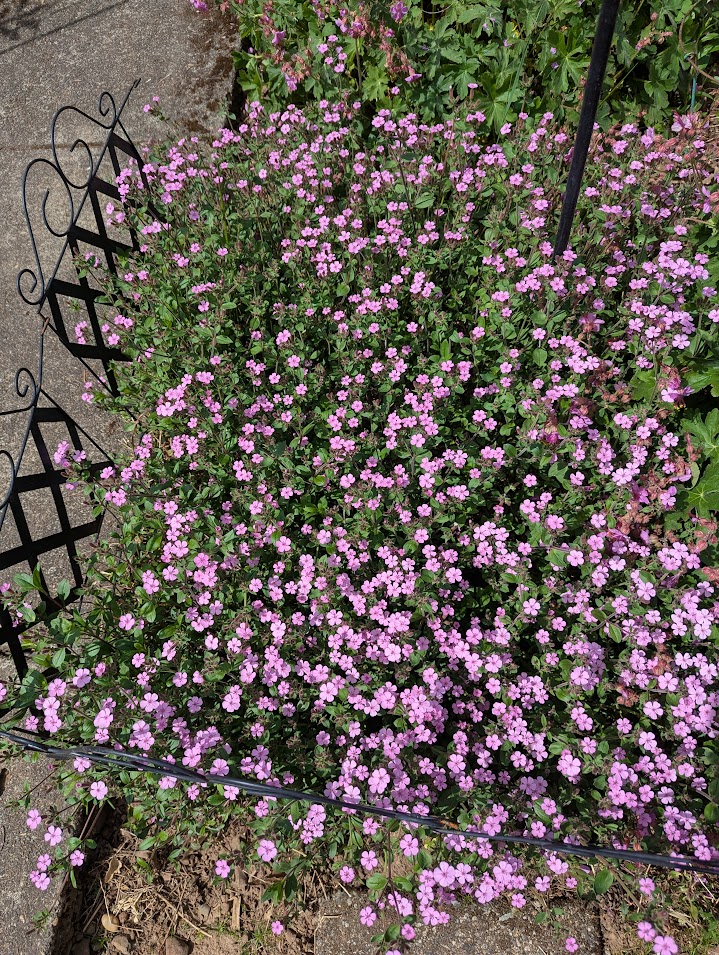
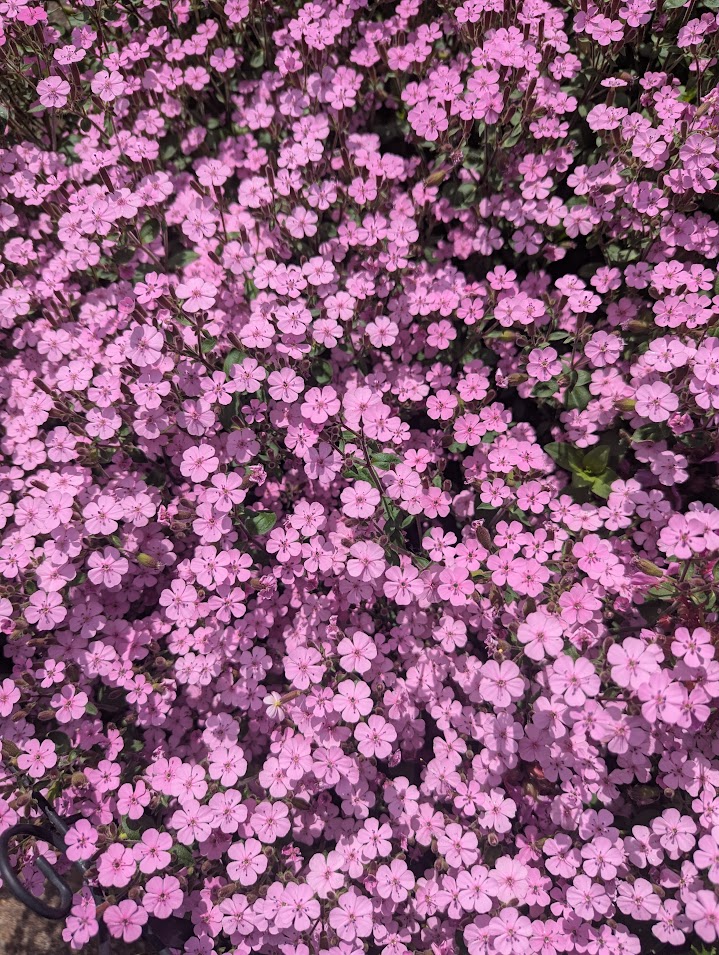
Rock Soapwort – Saponaria ocymoides. So lovely and will bloom all summer if I dead head the first bloom. It does get leggy, and spreads easily. Doesn’t seem to crowd out other plants (in face, the geraniums might crowd it out a bit).
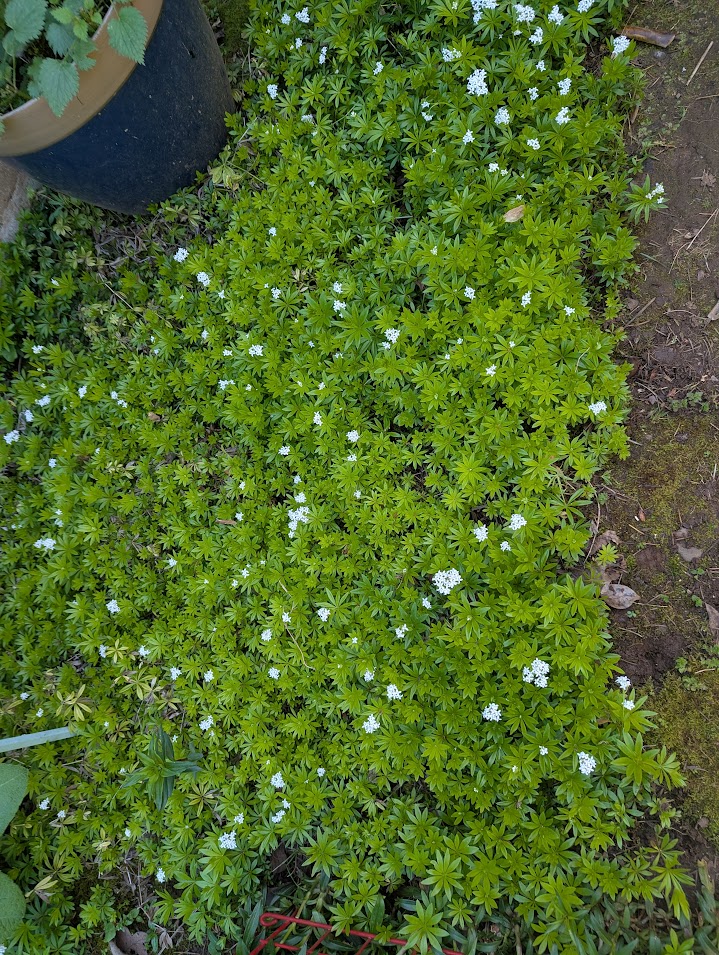
Sweet woodruff – Galium odoratum A polite ground cover. I love this shade-loving herb. It does not take well to foot traffic but it fills in empty spaces and doesn’t compete too much with the other plants. It is simply a polite ground cover.
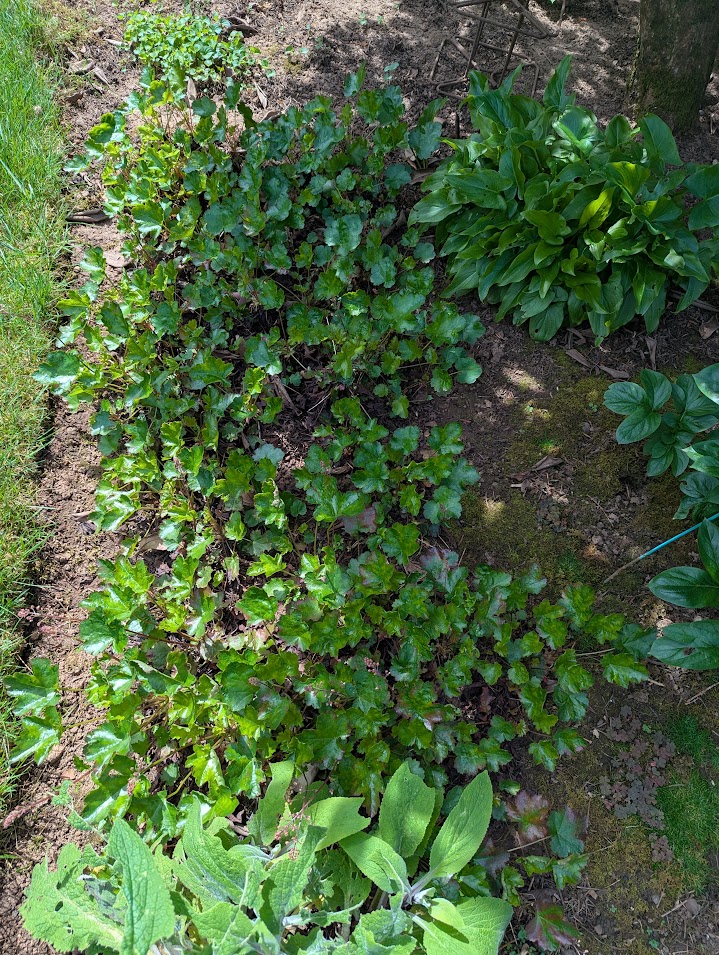
Coral bells – Heuchera. I have a love/hate relationship with them. They spread easily and densely, but never where I want them to spread. There are soooo many species. I have no idea the exact species I have, but I have ripped it out, replanted it in different areas, and ignored it.
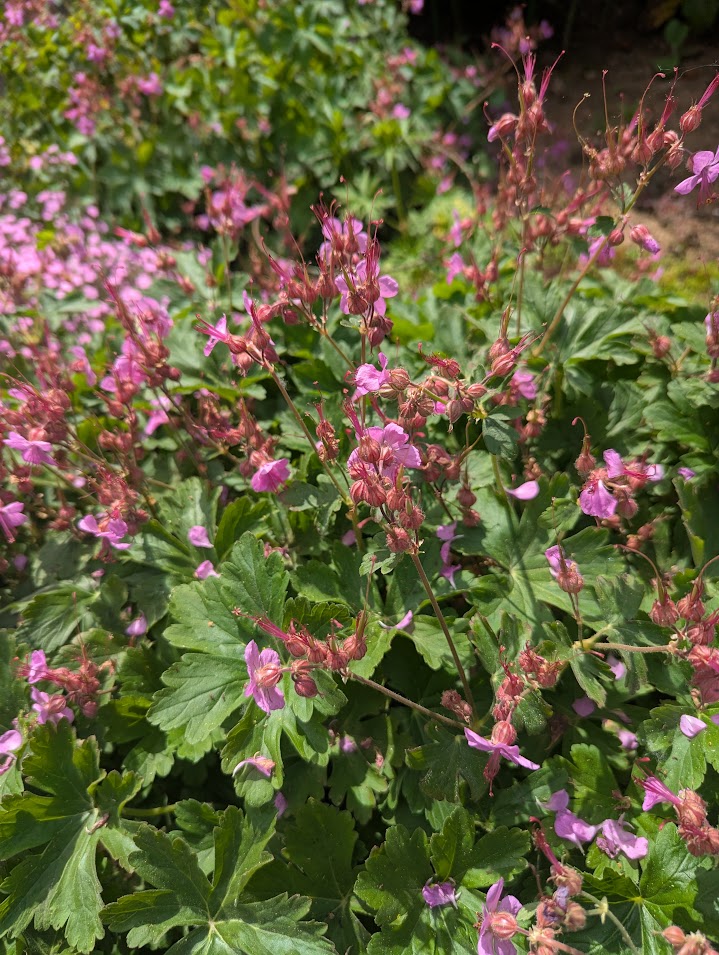
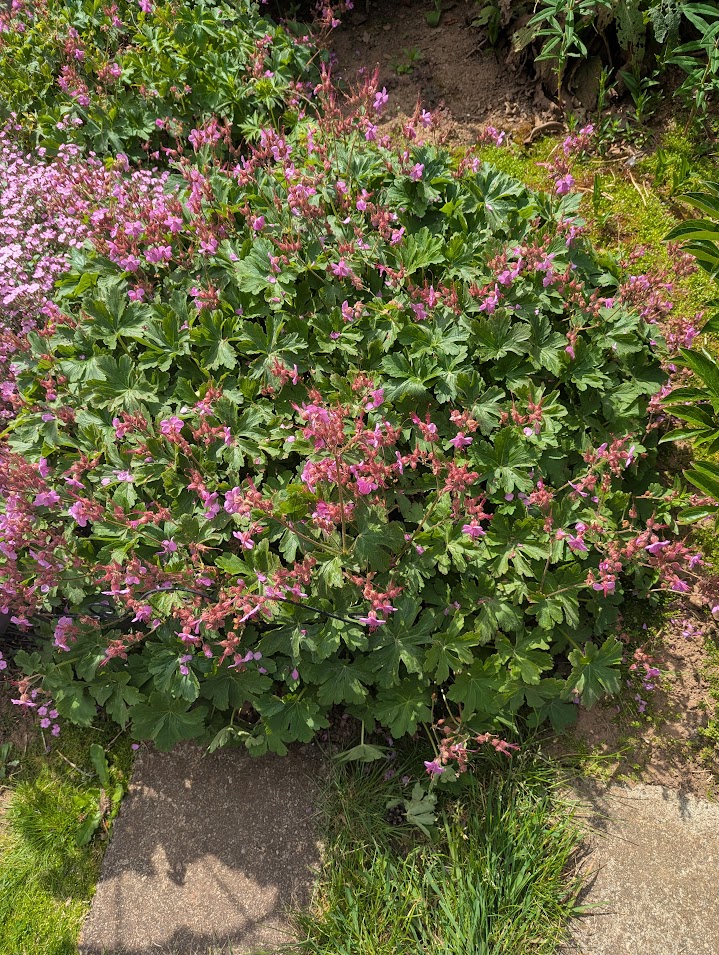
Sticky Geranium – Geranium viscosissimum. I don’t remember when I first bought this and planted it in a little wooden box. It has overgrown the box multiple times, and like the coral bells, I have ripped it out and replanted it elsewhere. In fact, ripping half of it out is an annual end to summer. It also happens to be a native to North America. I may soon move some plants to an area I would like my husband to *not* have to mow.
lithodora
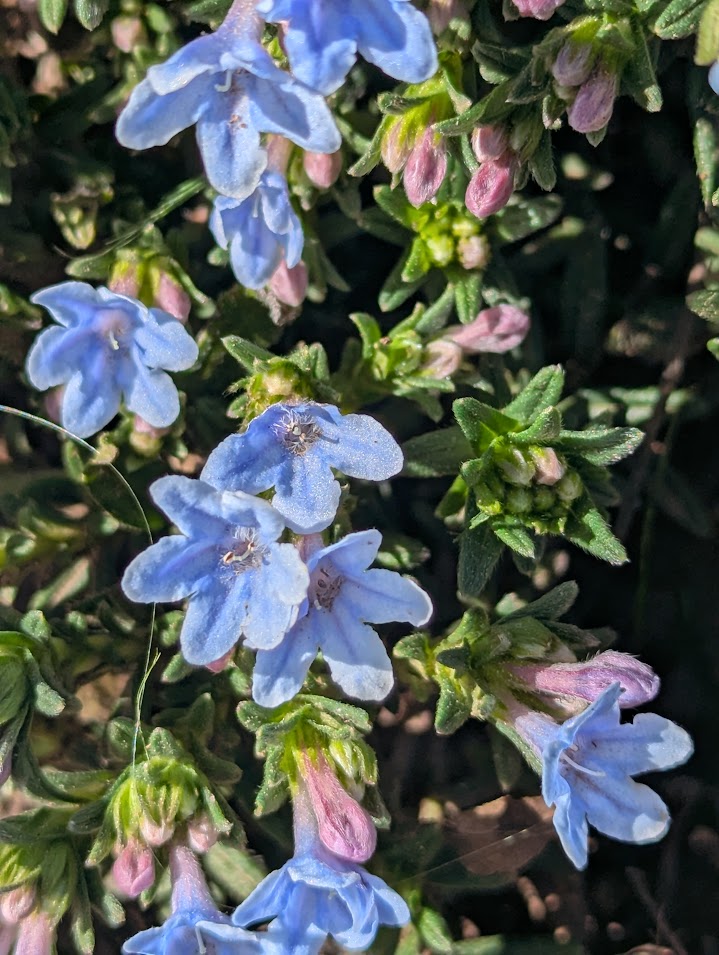
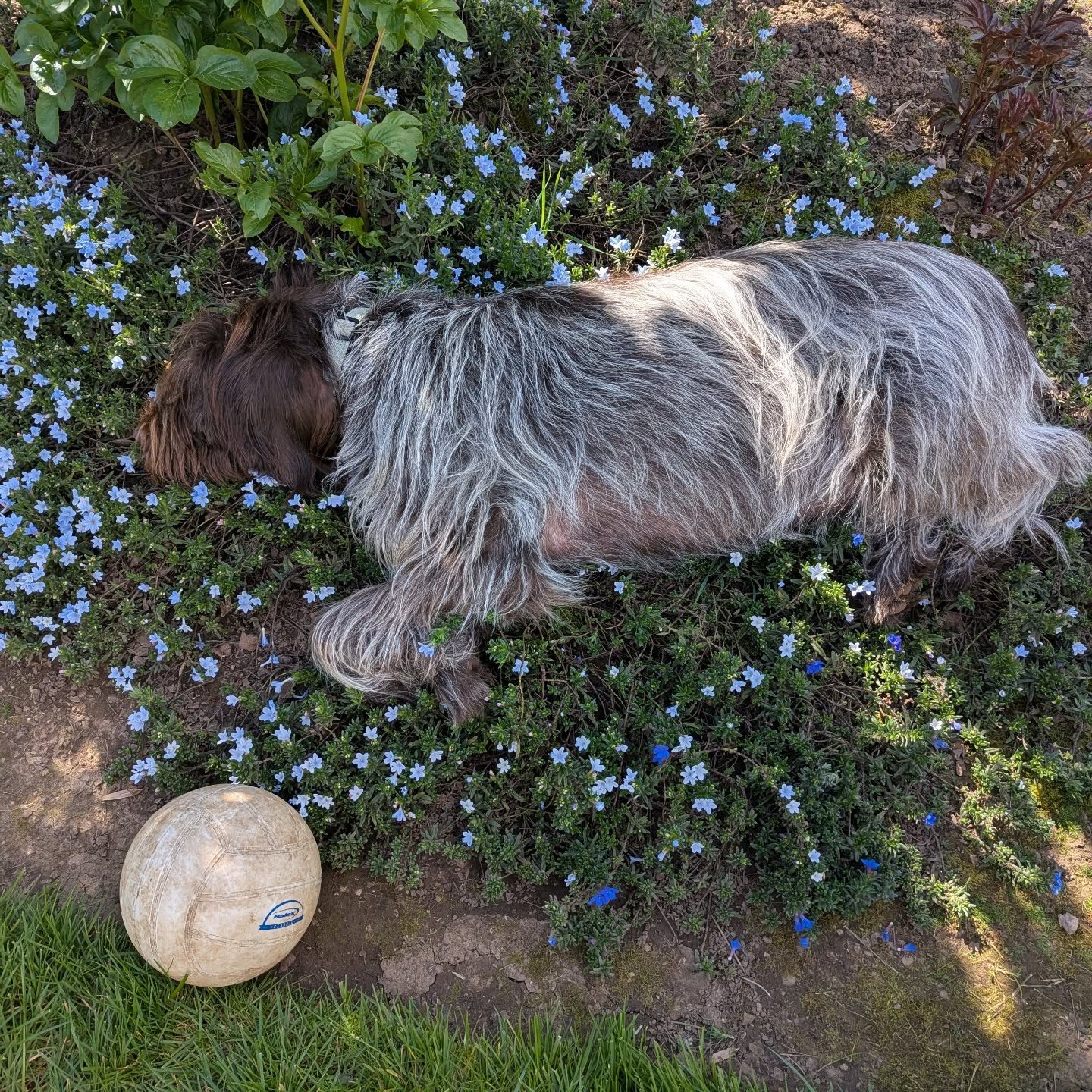
Lithodora ‘Heavenly Blue’ – Lithodora diffusa. This has gone through many changes and two dogs that tried to kill it by loving it too much. Yet here it is. And I just learned it is also called “Purple Gromwell”. Huh. And it is in the Boraginaceae family, along with borage and forget-me-nots.
The dog in the middle of it is a bonus feature: that’s our epileptic, mostly blind, emotional support Wirehaired Pointing Griffon, Ruger.Ruger is five and the second dog to love the lithodora.
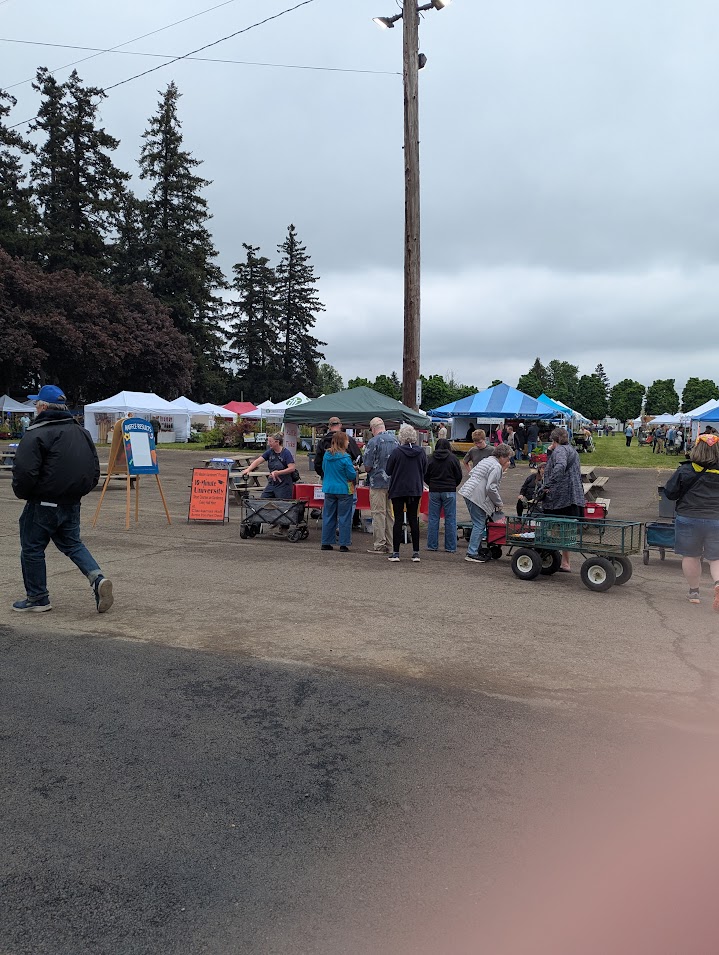
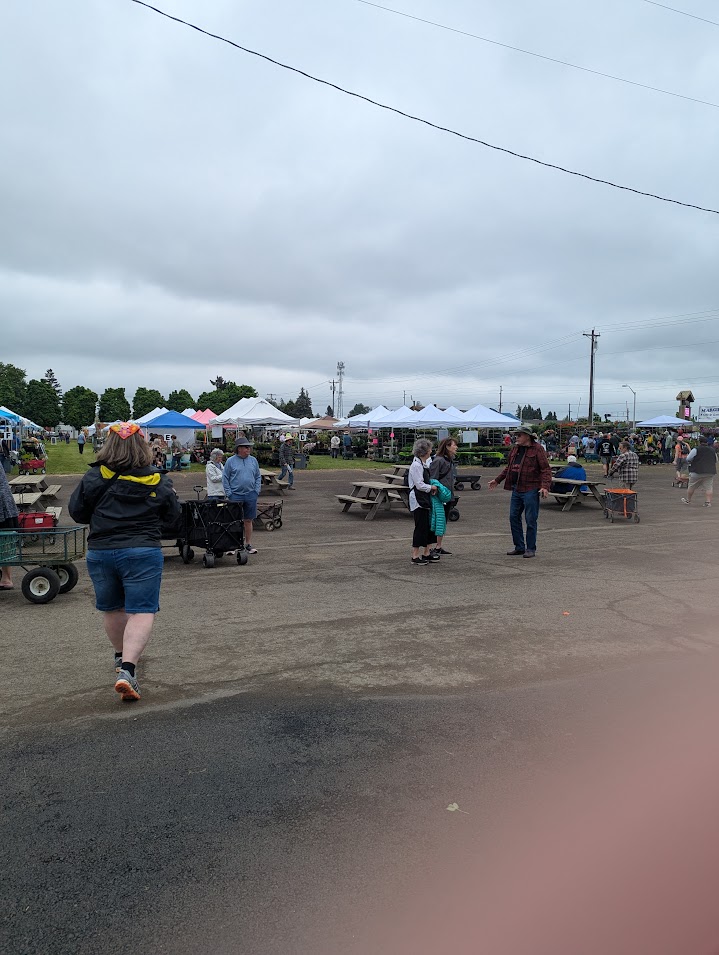
I interrupt my series on ground covers to tell you I spent a little money this week.There were more vendors of Native plants this year, which was a boon to my soul. I was still pretty stingy with my money, by-passing a lot of plants I would love to add to the yard.
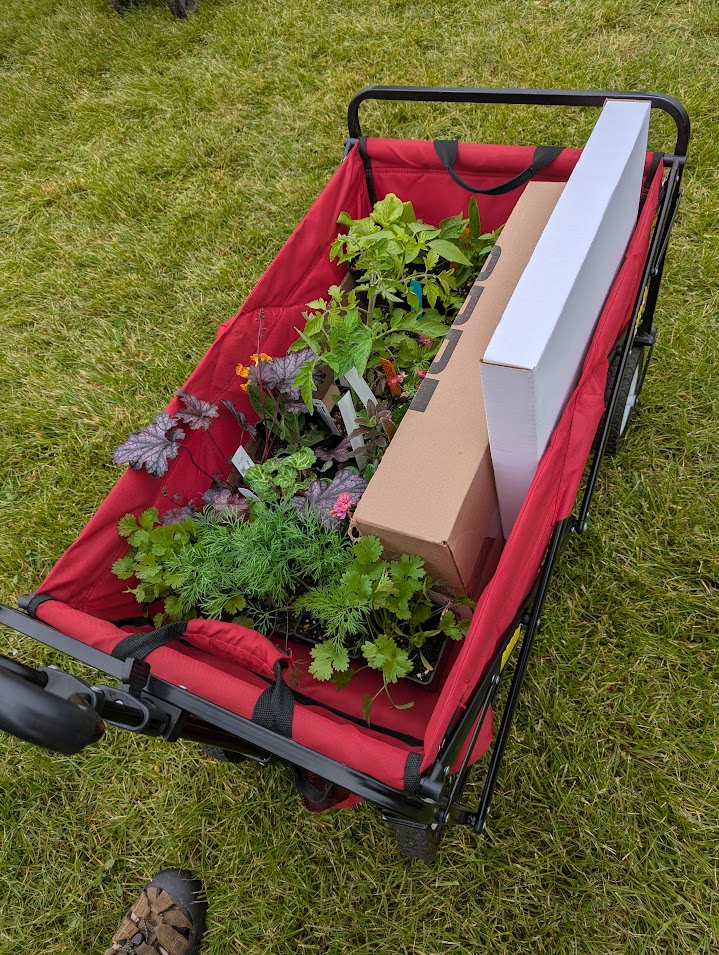
My husband had no such restraint. He found tomato varieties he likes to grow, dill, and I-don’t-know what else for the vegetable garden (his domain). He’s the chef. My contribution was to purchase some garbanzo seeds from a small seed company out of Portland. We’ve never grown garbanzos but Don makes a killer hummus and it just seemed logical to buy some seeds to grow our own. Caveat: they will probably not get planted until the fall. We’ll have garbanzos next year.
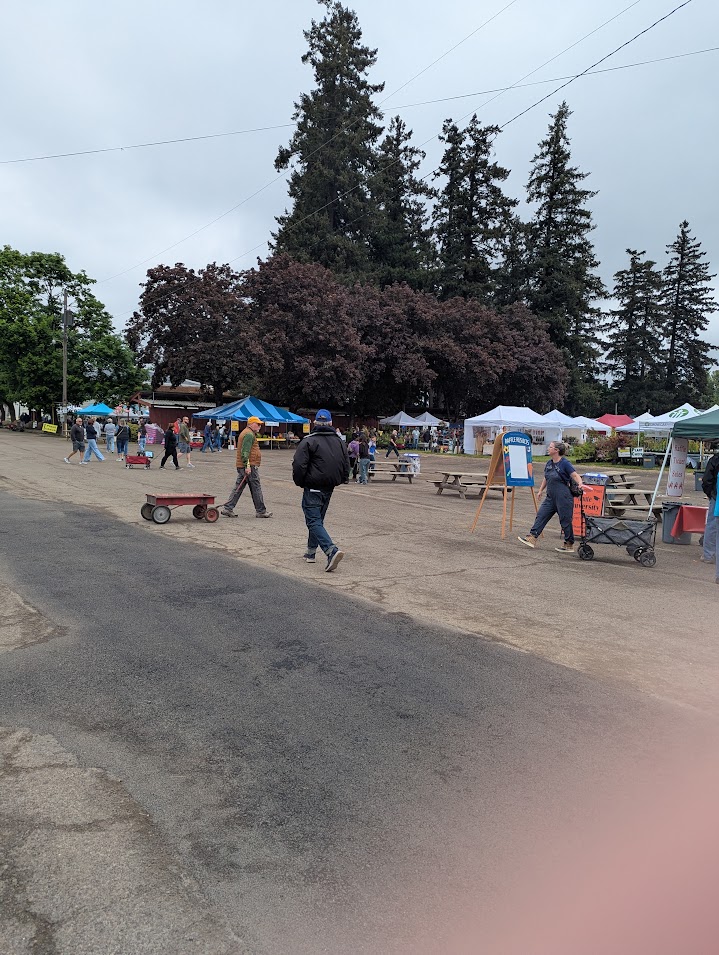
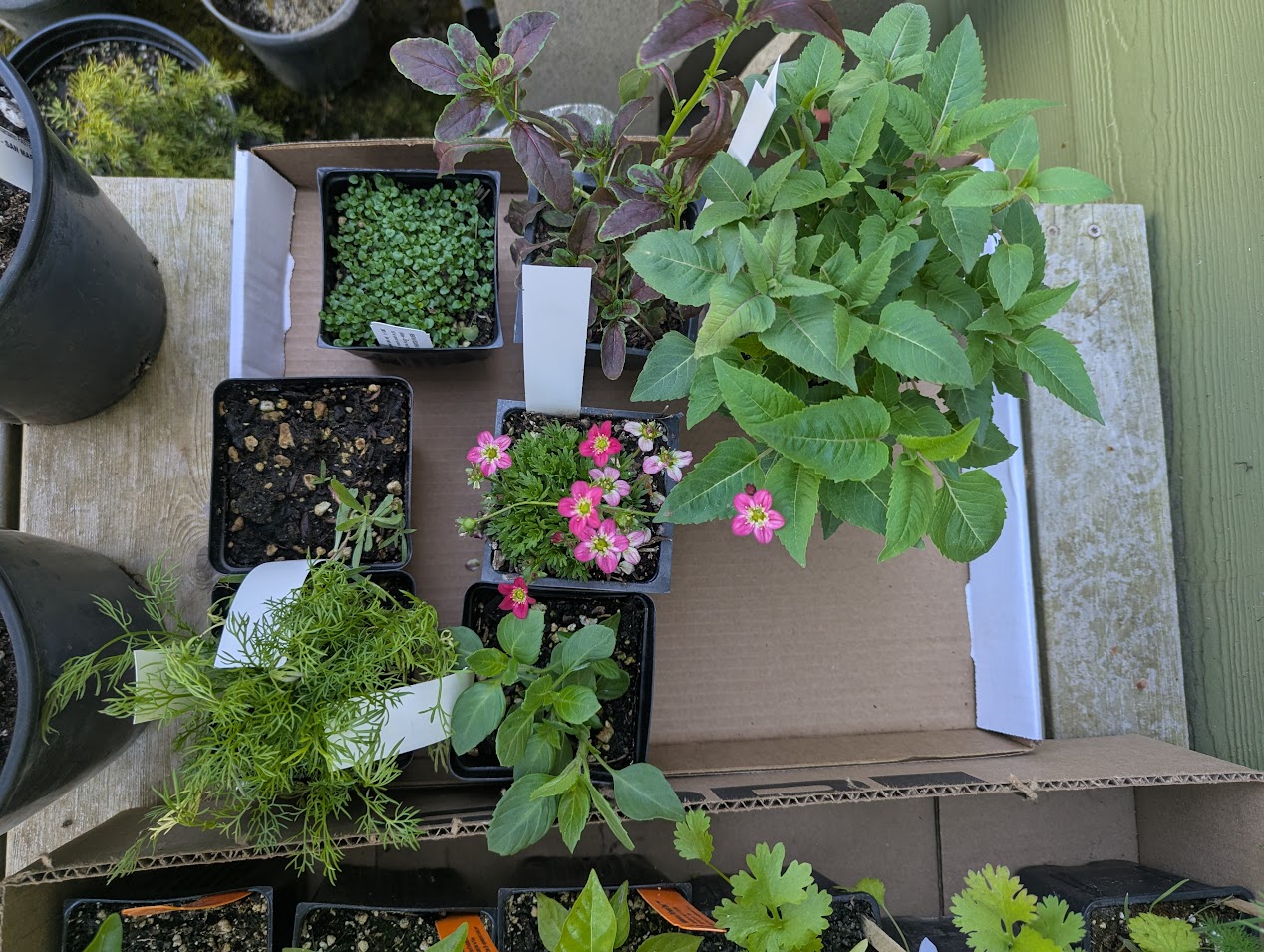
You can see our little wagon filled up pretty quickly between Don’s plants, my plants, and our good friend’s plants. Next year, that good friend may have to bring his own little red wagon!
The haul from Saturday was pretty impressive, but Sunday was looming with the first Farmer’s Market of the season in Milwaukie, Oregon. My husband wanted to buy some lamb from our favorite lamb rancher (SuDan Farms) and I hoped the herb people would be there with some plants…
Two more tomato plants and three herb plants later, we stopped for a beer before heading home and toasted our plant haul of the weekend.
Yesterday and today were spent putting all my purchases into the ground, along with some annuals I grabbed at the local grocers (locally grown plants from a small nursery in town).
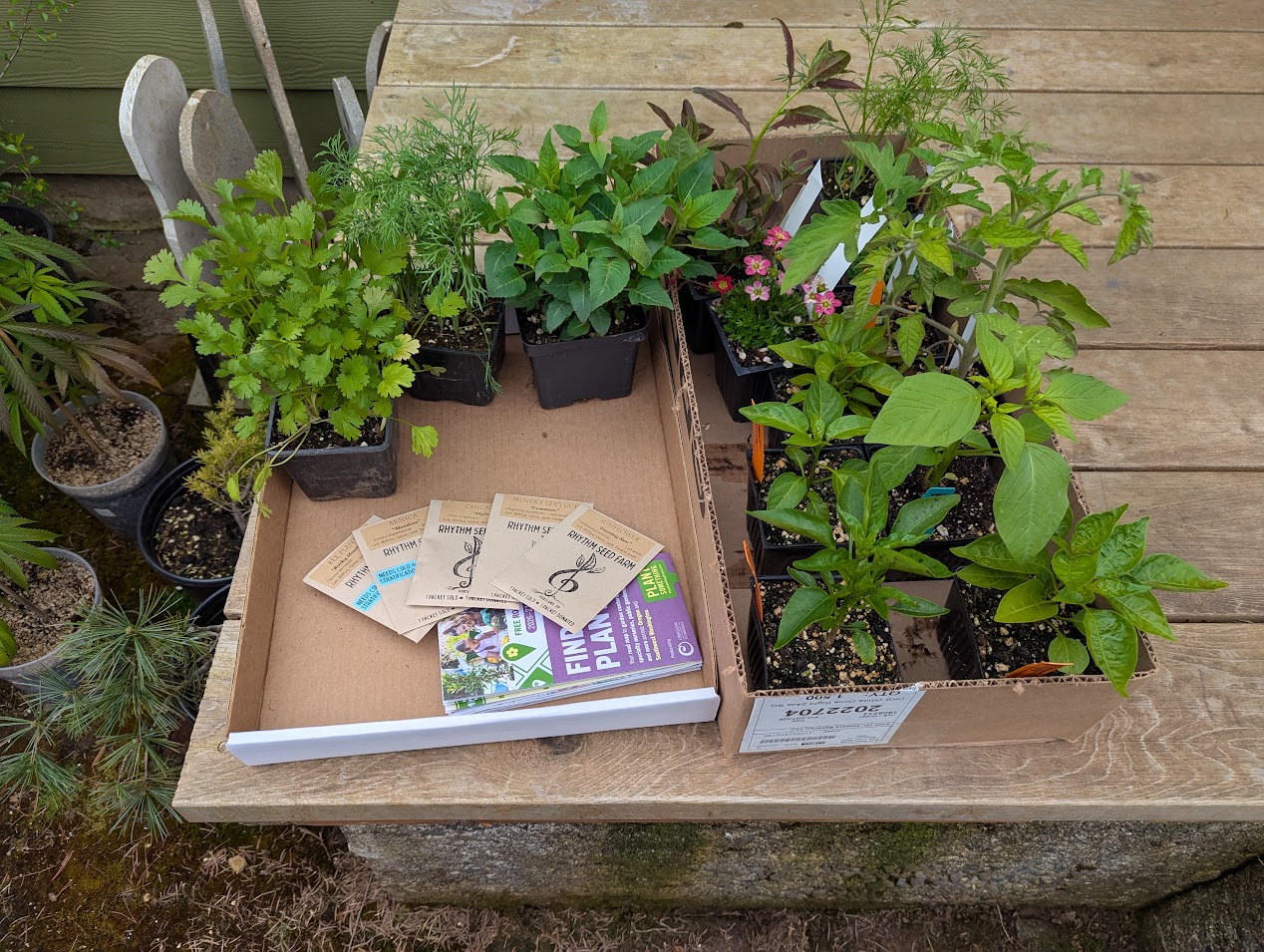
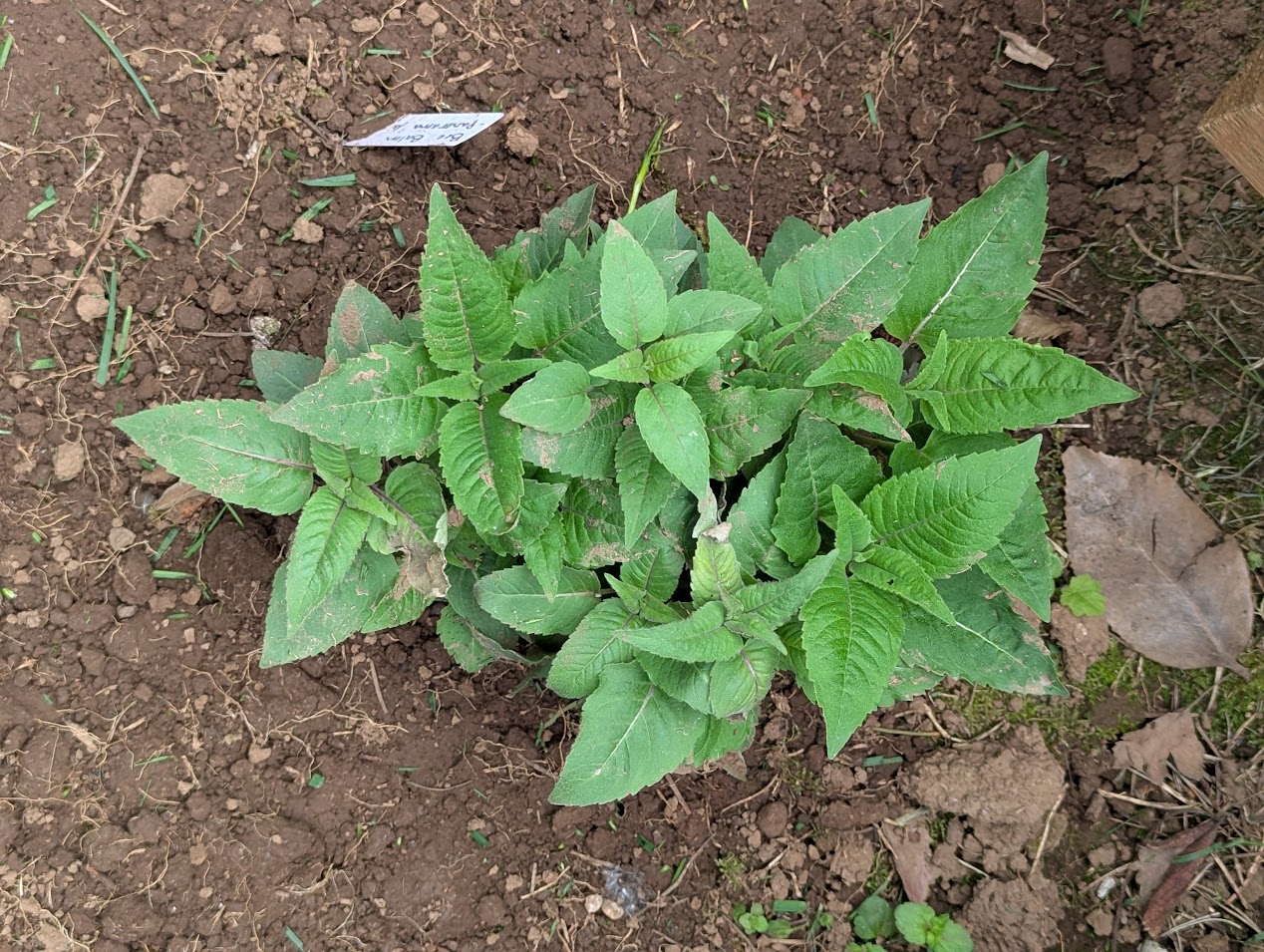
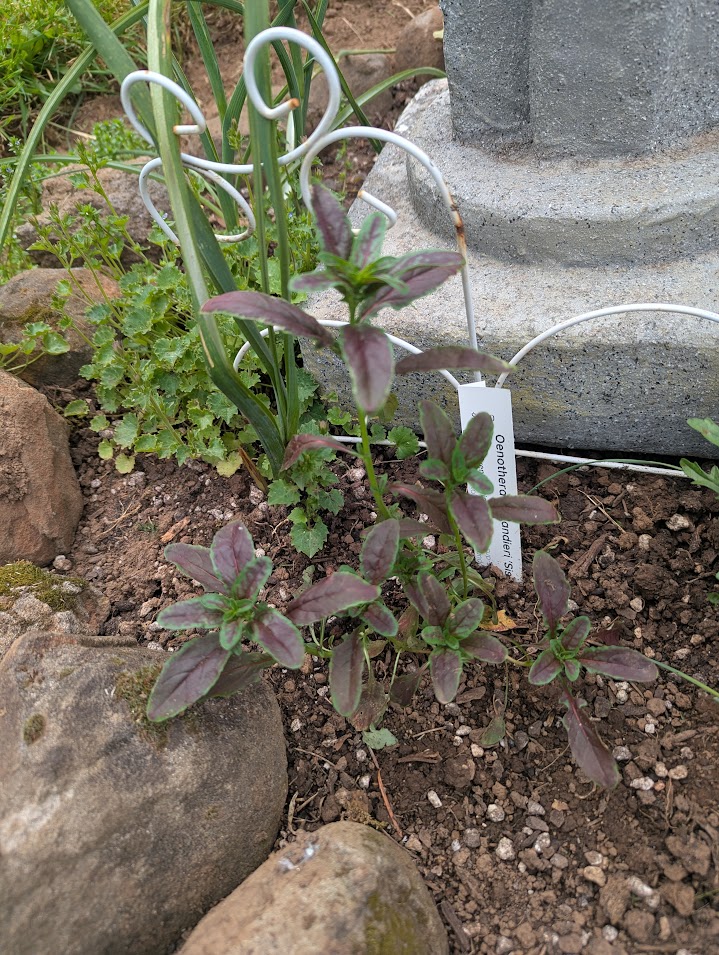
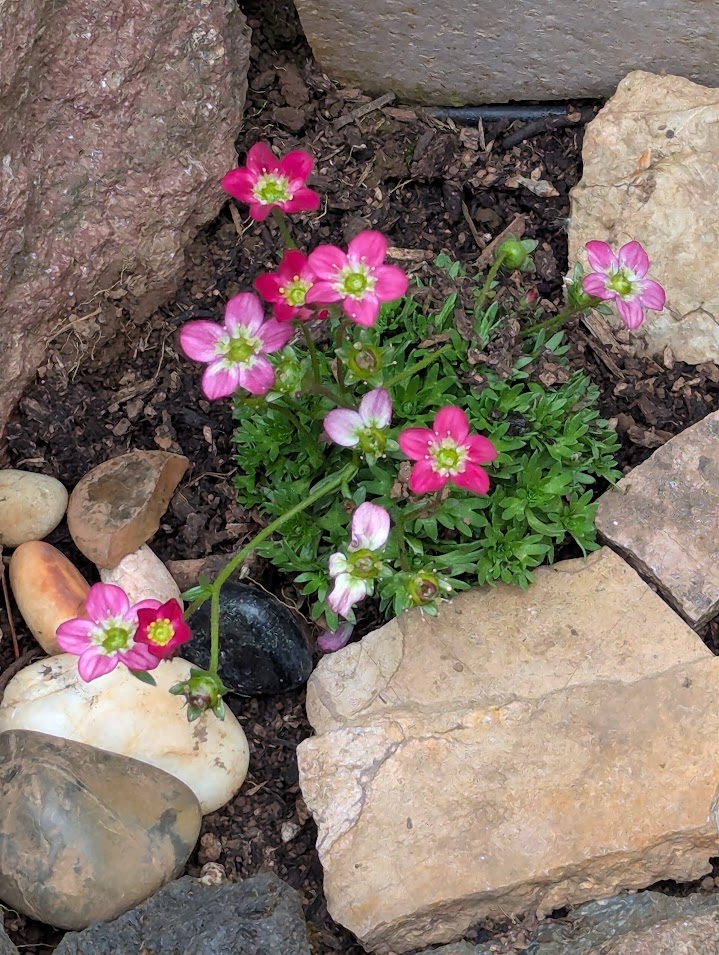
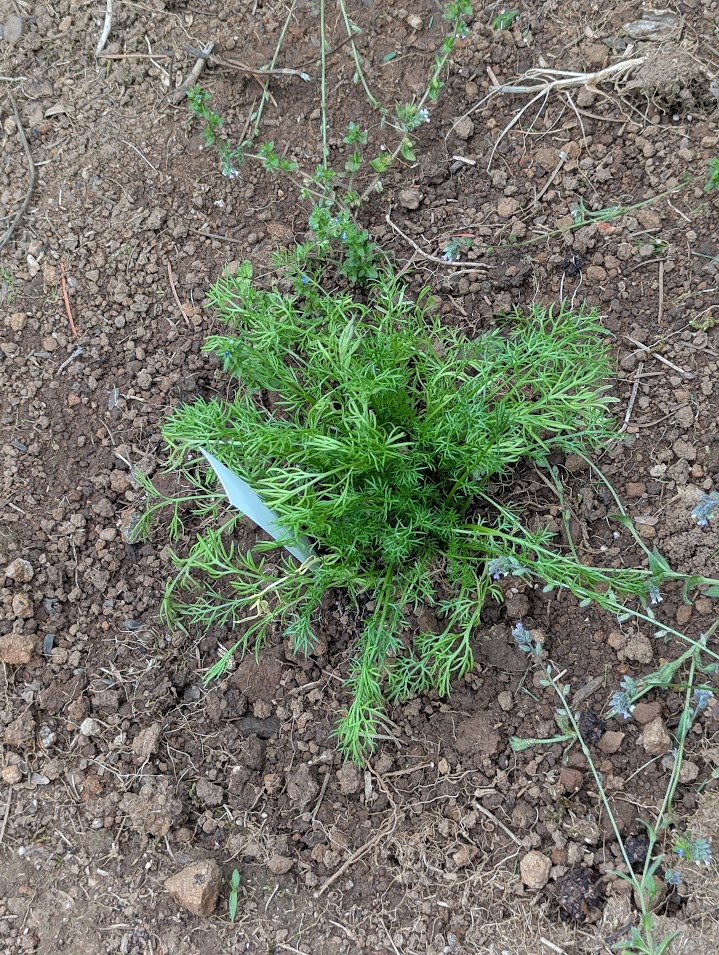
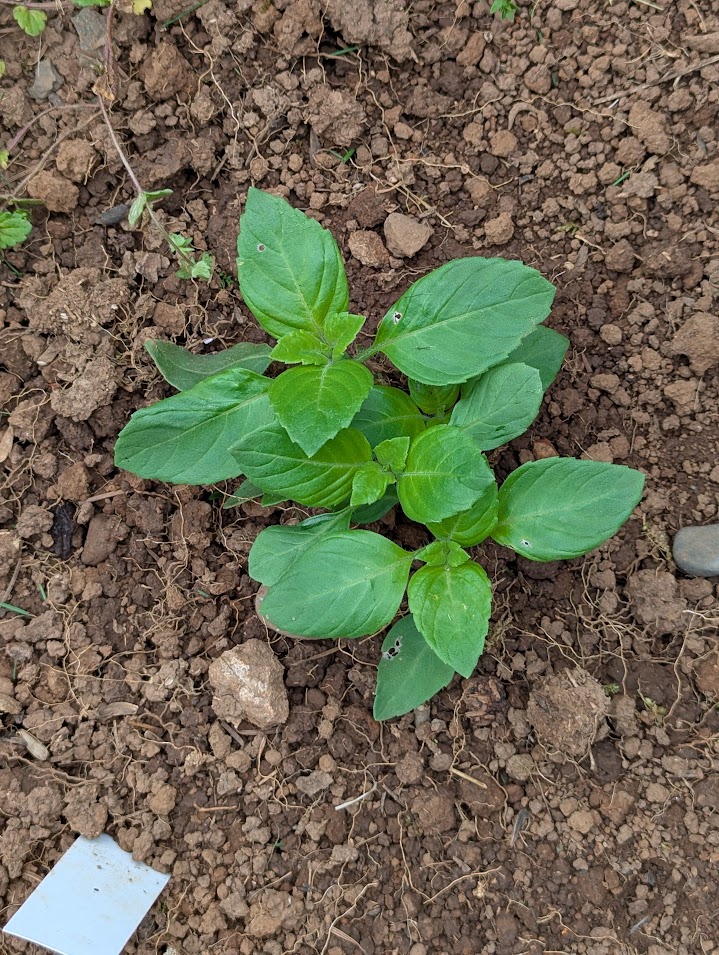
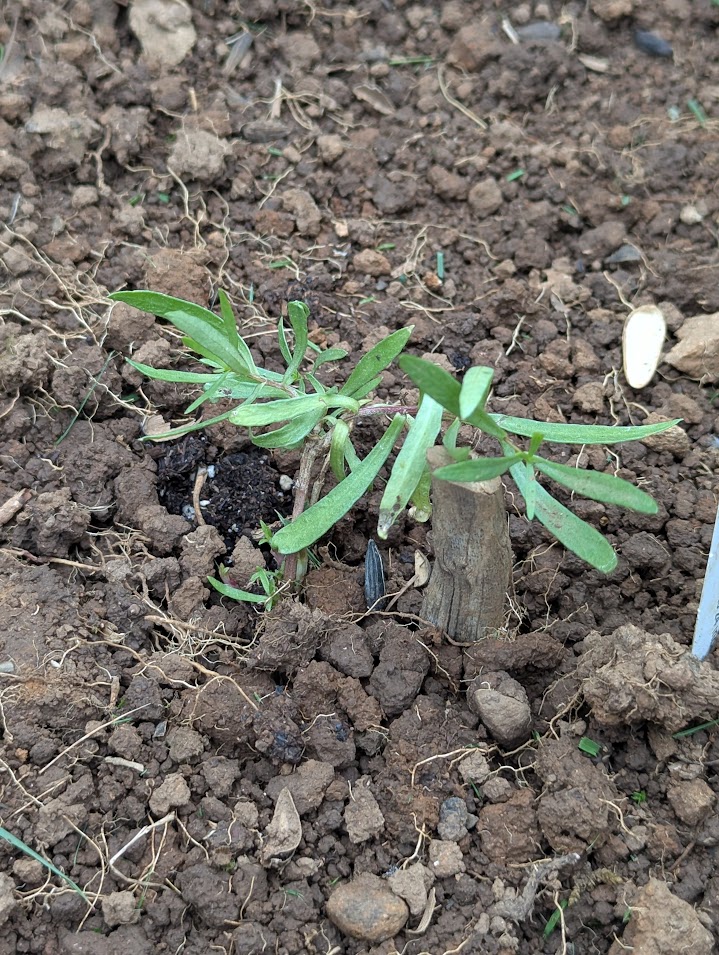
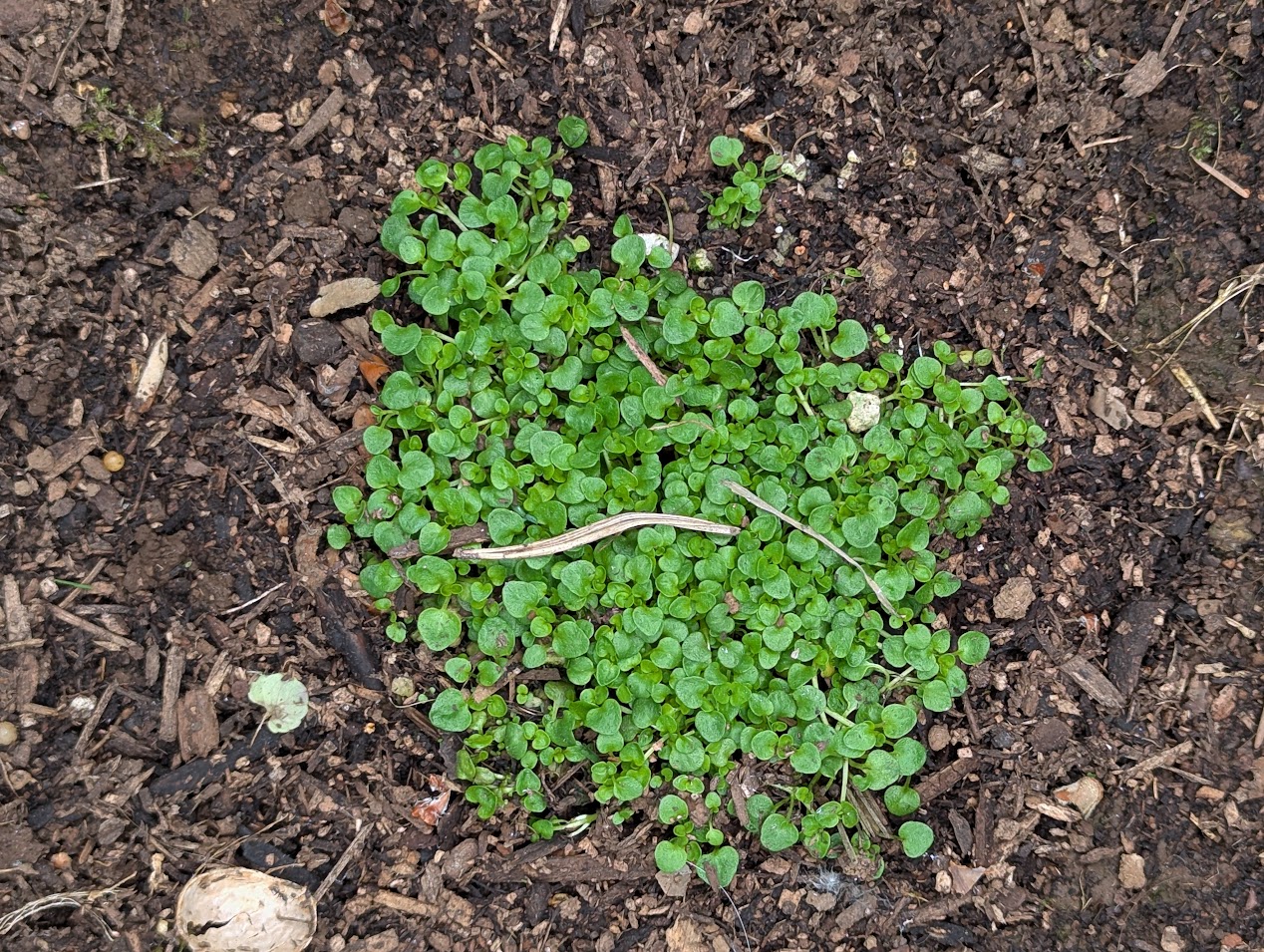
I got: Beebalm (I had two last year, but they failed to resurface this spring. This year, new location with more sun), a primrose (Oenothera berlandieri ‘Siskiyou’), Moss rockfoil (Saxifraga ardensii ‘ MartoTM Rose’), chamomile, Holy basil, and a French tarragon. Don bought 3 peppers (jalapeno, serrano, and a poblano), 2 dill, 2 cilantro, 1 tomatillo, and 4 tomatoes (Bobcat, Genovese, and two San Marzanos). He also threw in a small ground cover: Corsican mint which I planted by the deck.
I added five seed packets to my purchase from Rhythm Seed Farm: sunflower (Helianthus annuus), Miner’s lettuce for fall planting, chickpea (Myles) for fall planting, Meadow arnica (Arnica chamissonis), and Rocky Mountain bee plant (Cleome serrulate). The last two are in the freezer for stratification right now.
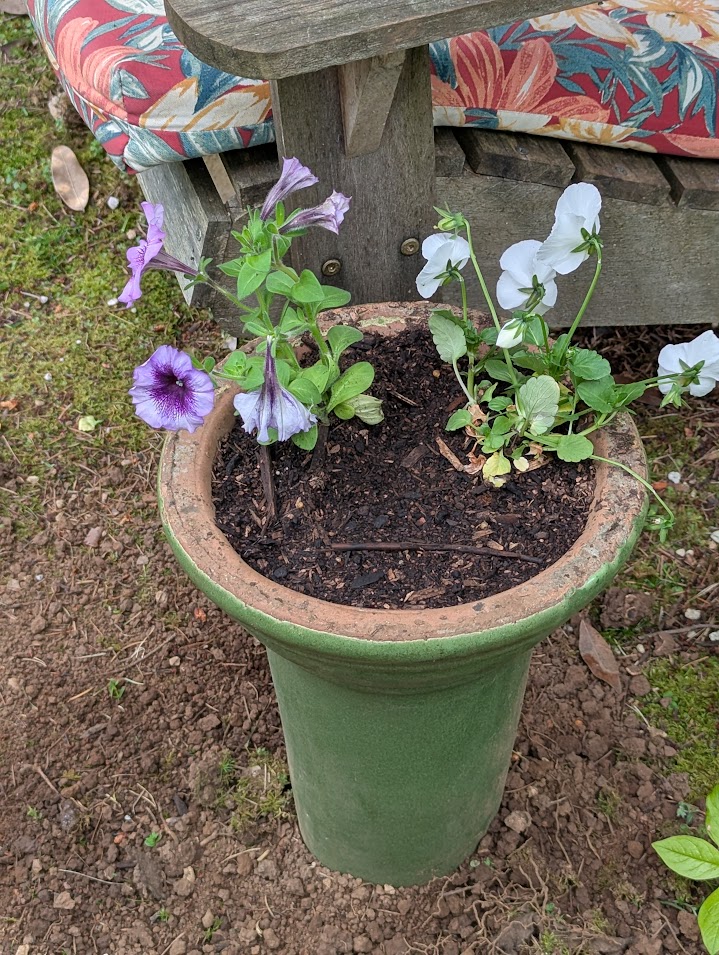
Oh, lest I forget: I bought pansies and petunias for annual color. I always have petunias. And now we wait to see how they all grow.
This won’t be the last thing I have to say about weeds. I haven’t touched on blackberries, fireweed, or cultivars gone wild. But I’ll leave you with these last few for now.
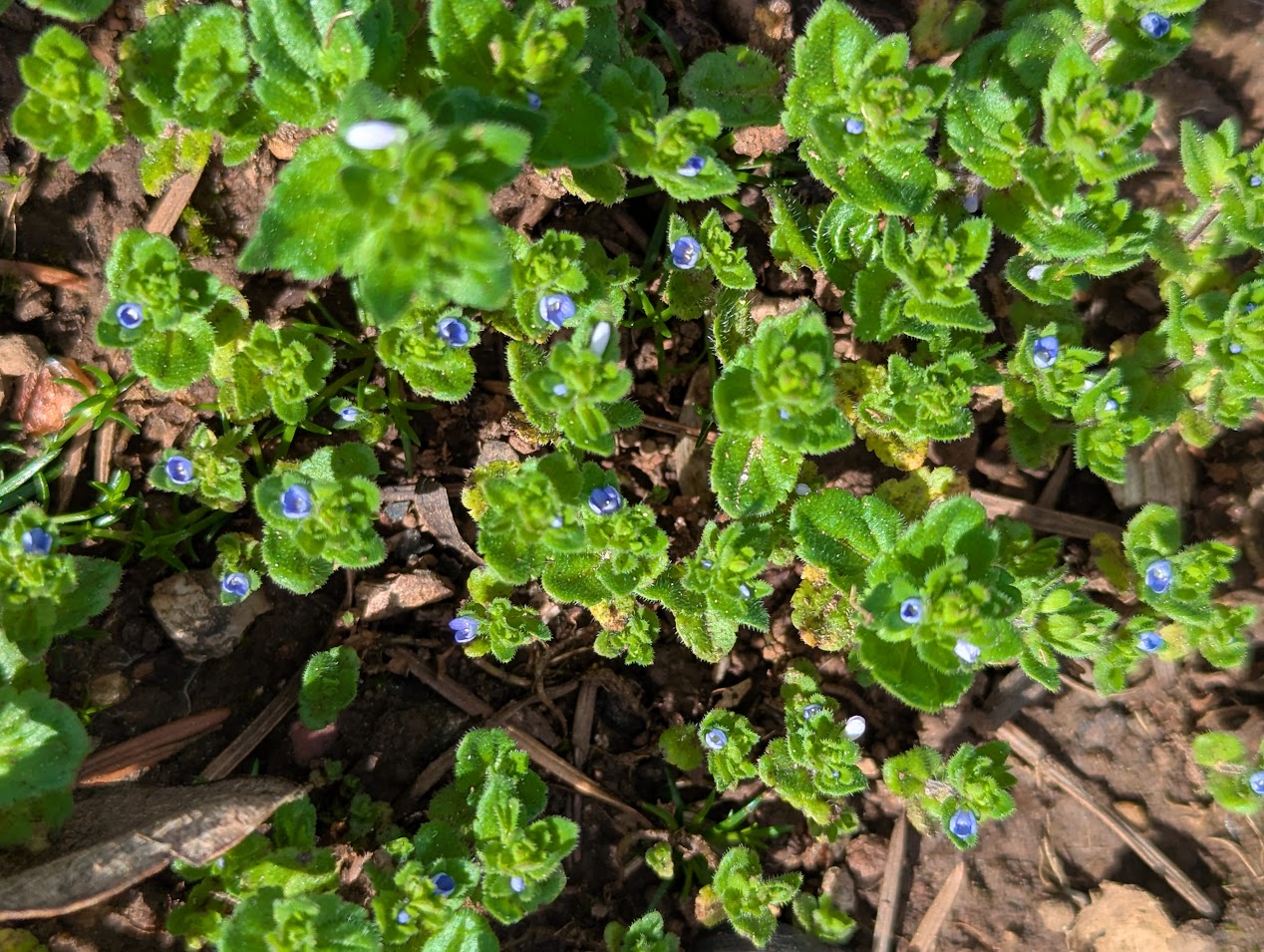
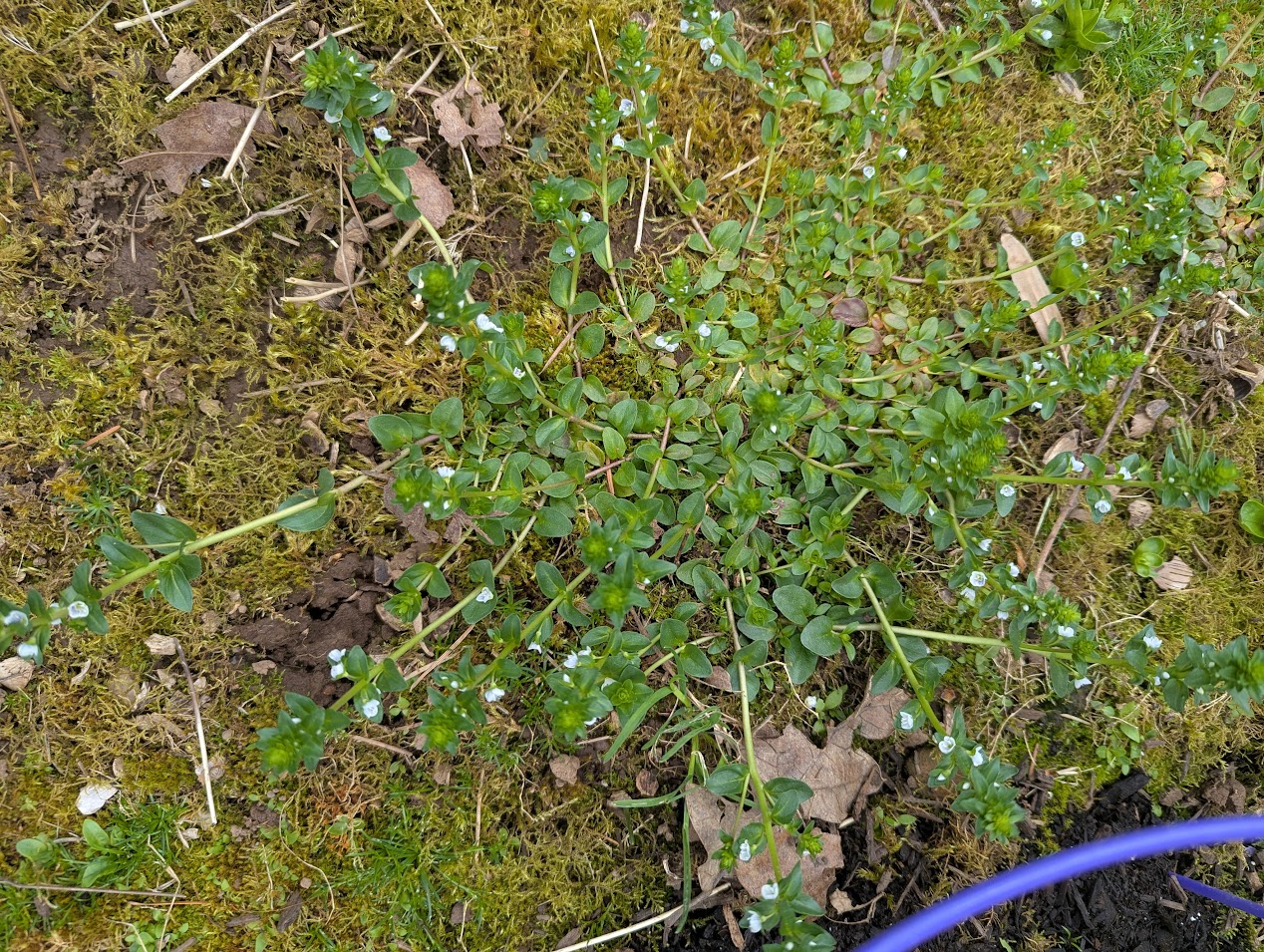
corn speedwellthyme-leaved speedwell
Speedwells. According to the plant app on my phone, we have at least three speedwells growing in our yard: Veronica arvensis aka wall speedwell, corn speedwell, field speedwell, or rock speedwell, and Veronica serpyllifolia aka thyme-leaved speedwell, and Veronica persica, or bird’s eye speedwell aka Persian speedwell. They are in the plantain family (we have plantain growing in the big weed patch, and I don’t mean the kind that looks like a banana). Plantains are edible herbs. The speedwells are tiny groundcovers with teensy flowers, non-native, and have limited medicinal uses (burn salve). They are next to impossible to get ahead of, don’t compete with other plants, and make a wonderful groundcover mat. I gave up trying to weed them out of my flower beds. They are simply here to stay.
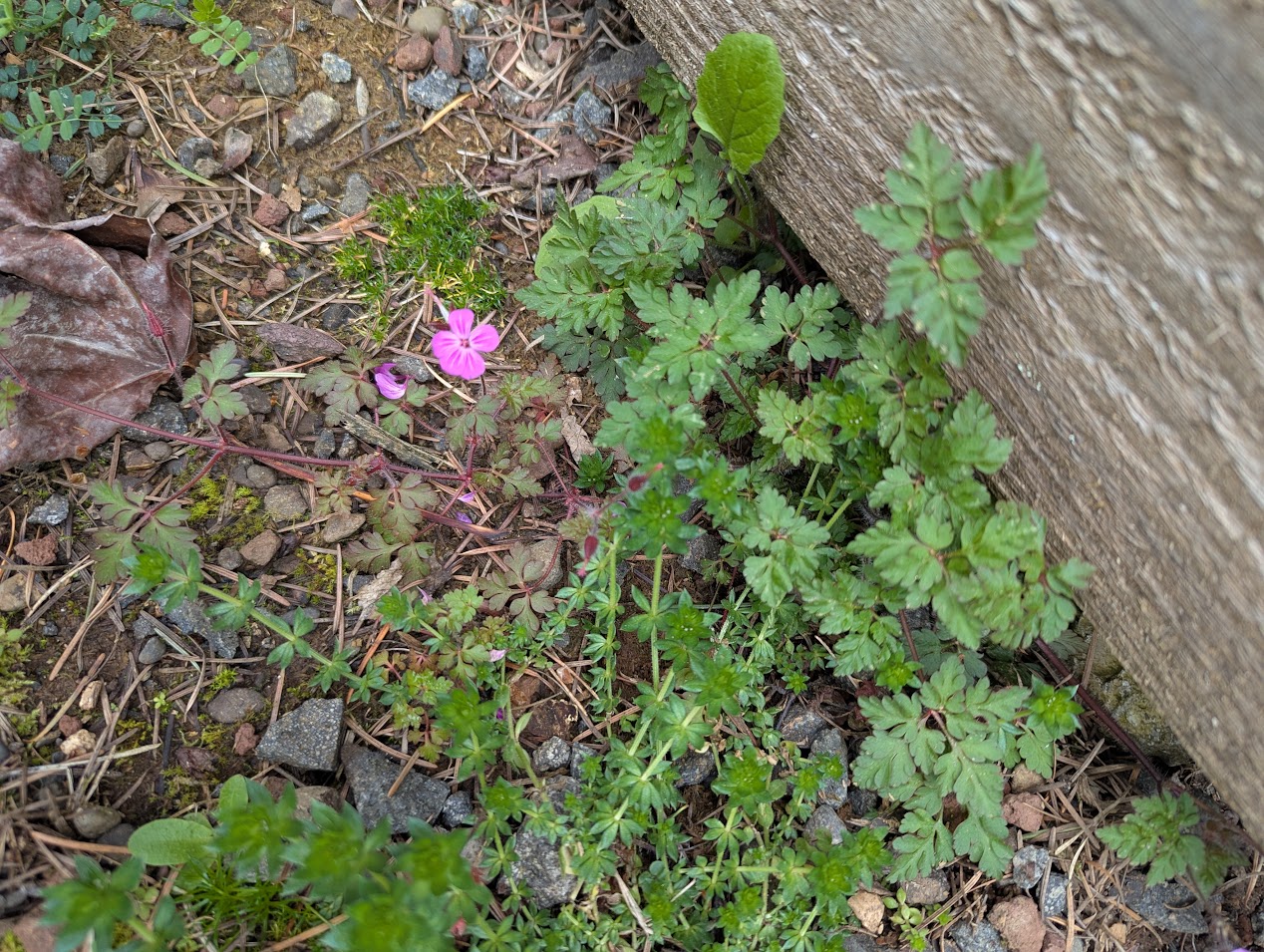
Stinky Bob
Herb Robert. Geranium robertianum. Stinky Bob. Do not make the mistake I did one summer: “Oh, such pretty flowers!” This escapee from hanging garden baskets is the nastiest, shallow-rooted, invasive ornamental. It competes. It covers ground quickly. It smells worse than most geraniums smell. I believe it is banned in Washington State to the north of us. If it isn’t, it should be. I have geraniums in the ground, I don’t need Herb Robert. Most geraniums are easy to control, make a wonderful, thick carpet, compete with everything – but so easy to cut back and pull up!. And they don’t spread like a prairie fire. Herb Robert, on the other hand… Just pull it.
Sweet Violet (after the blooms are gone)
Sweet violet. Viola oderata. I wish it was a native wild violet, but the wood violet, or English violet, is introduced. I just control it. It spreads rapidly and out-competes some plants. The pretty purple blooms are early and loved by bees. Fragrant, but such short stems they hardly work for a bud vase. They were one of my mother’s favorite wildflowers from her childhood, so I don’t try to completely eradicate them. Besides, they fill in all the deep shade places where other groundcovers won’t grow.
Tansy ragwort. Jacobaea vulgaris. Pretty yellow flowers that you see growing all along Oregon highways and right-of-ways, but a plant that you can get fined for if you don’t eliminate it from your fields. They even introduced a moth species to try to kill off the plant, the very pretty cinnabar moth. It didn’t work. If you haul horses from Western Oregon or Washington, you must purchase your hay in Eastern Oregon. Livestock won’t touch it except as a last resort or if it is hidden in a bale of hay, and it is deadly when ingested. It shows up now and then in our yard and I get out a Grandpa tool or a shovel to dig down and pull the entire tap root out. This plant is easily a “KILL ON SIGHT” invasive introduced species.
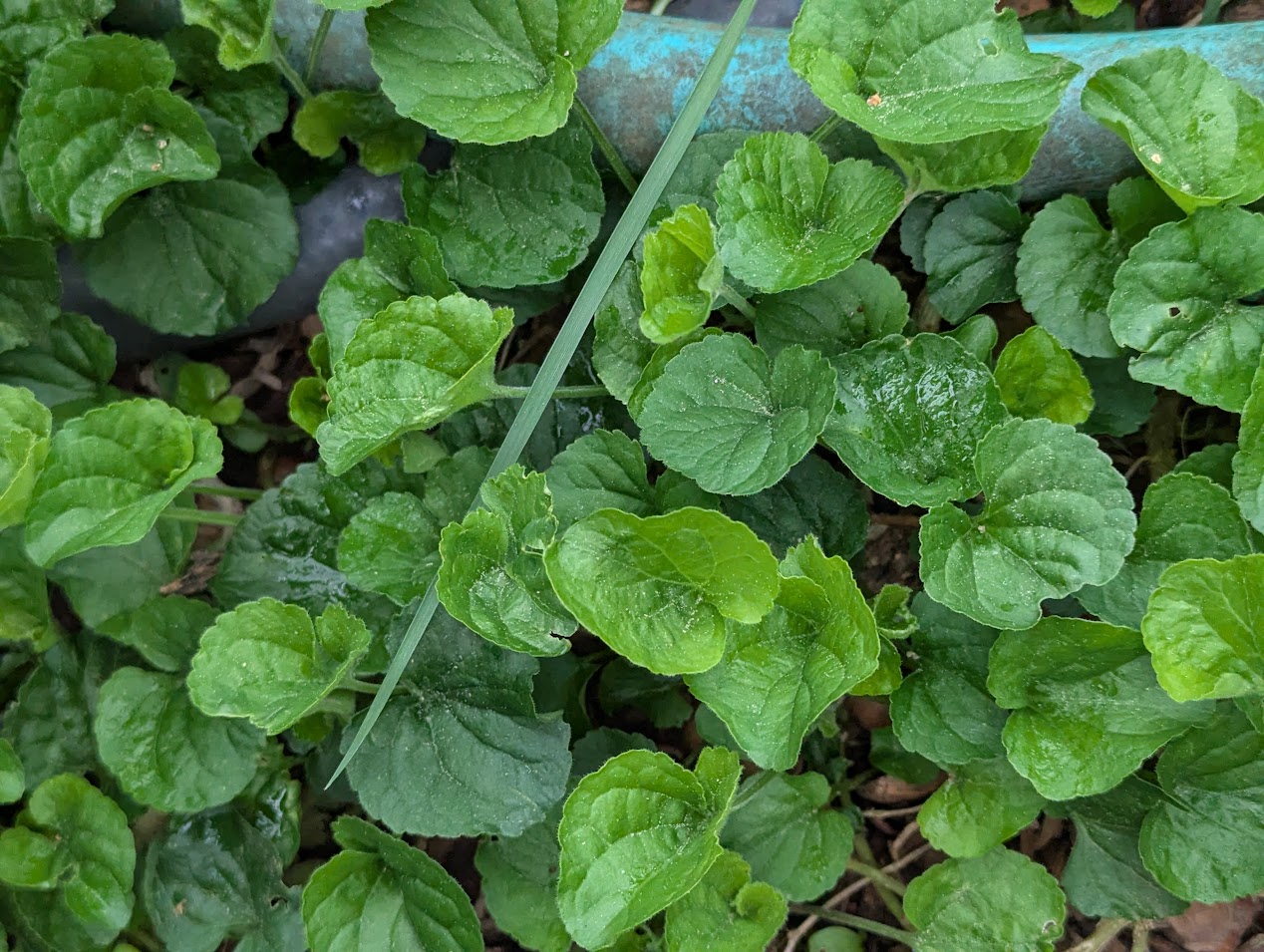
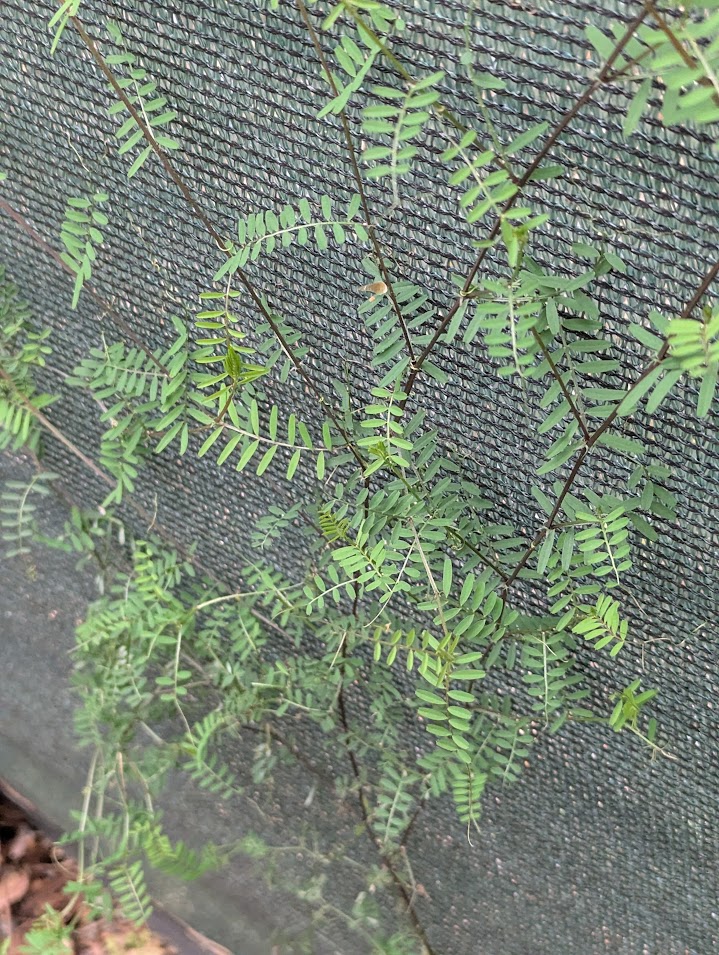
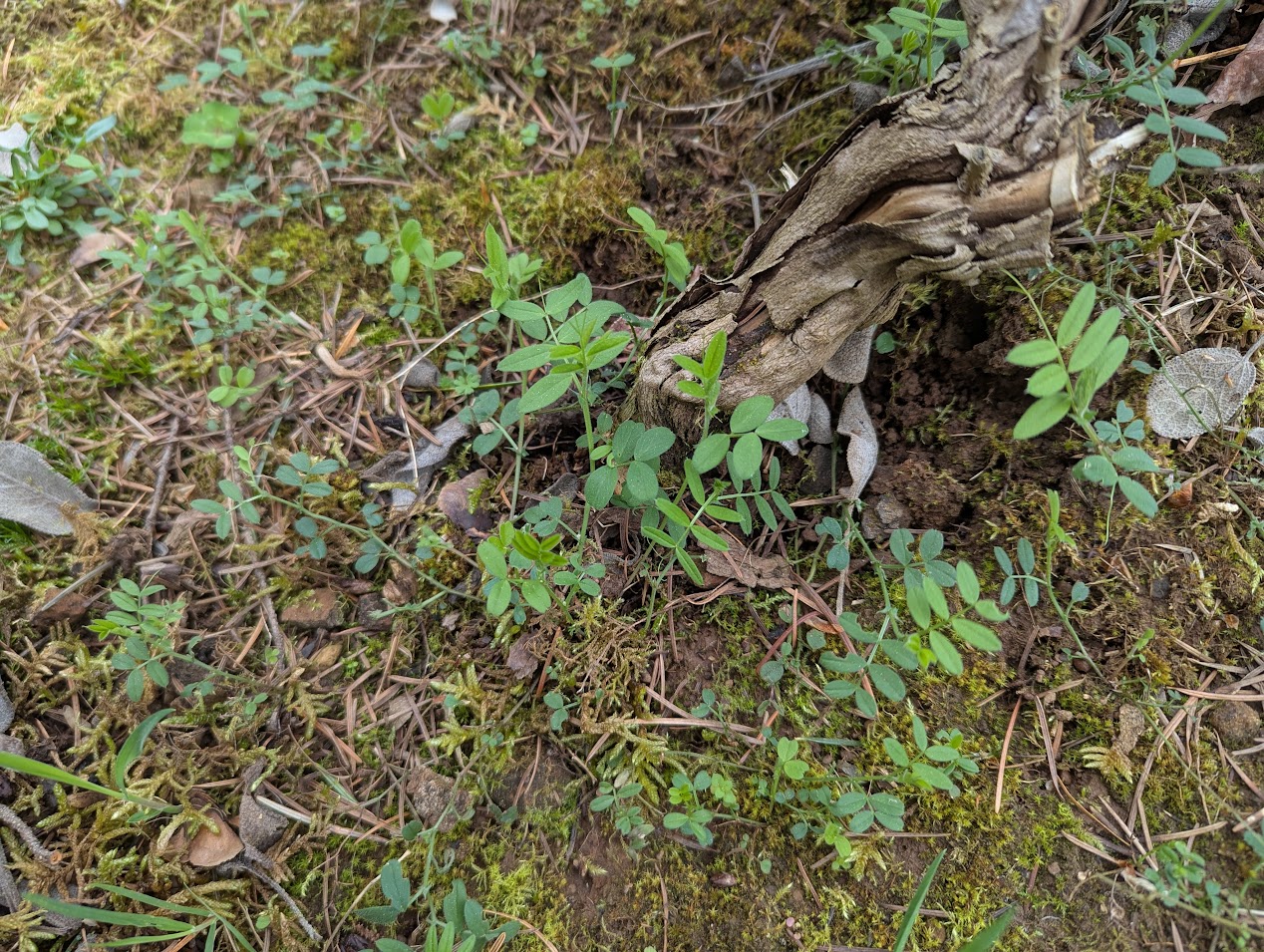
Tiny vetch. Vicia hirsuta. Introduced. This is a fairy garden miniature vetch with purple flowers and pea pod seed arils. Easy enough to pull, but why bother? It climbs the fence, it climbs my shrubs, it dies and adds nitrogen to the soil, and it is far from invasive. It doesn’t compete. It’s just such a pretty, tiny, miniature version of regular vetch. I leave it for the most part but sometimes I just pull it. It has no root system.
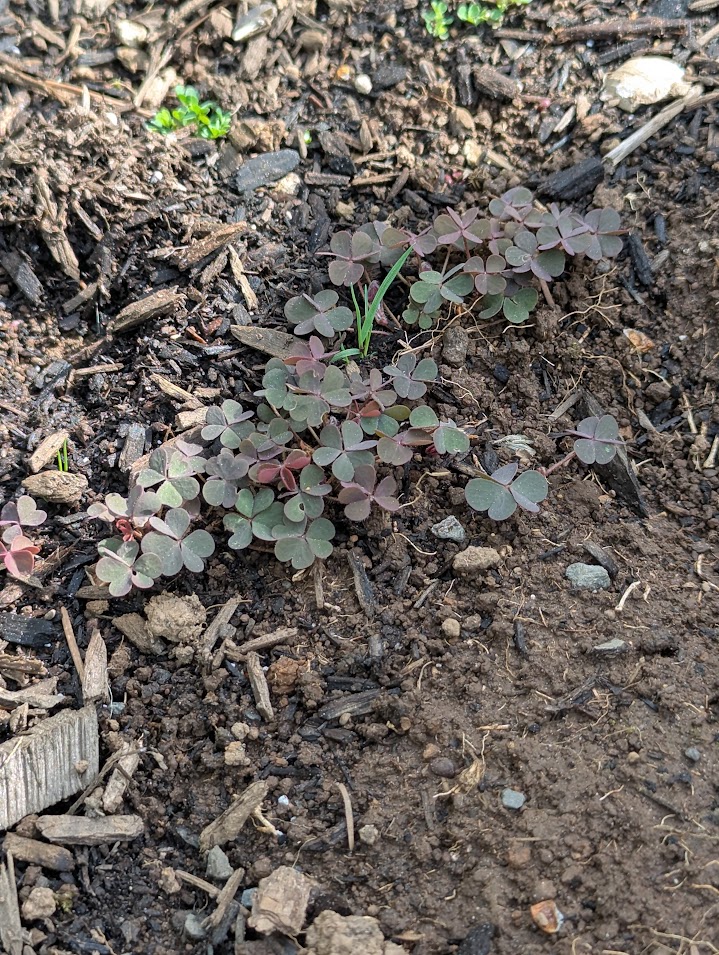
Creeping wood sorrel. Oxalis cornucalata var. atropurpurea. Pretty yellow flowers, deep tap root, and machine-gun like reflexes for releasing a million and one seeds into the air, your eyes, and everywhere else. It’s a losing battle. Whoever introduced this species of sorrel, I dislike you. Yes, I get that it is edible. So is cilantro, but I don’t have to grow it in my garden. (Cilantro, in case you are wondering, tastes like having my mouth washed out with soap.) I think if there were to be a battle between chickweed, hairy bittercress, and creeping wood sorrel, the wood sorrel would win by virtue of deadly aim, distance seeds can fly, and the hair-trigger of the seed arils.
For now, that is my summary of weeds I battle. There are more, I promise you. There are still the ones we leave growing in the front yard: plantain (& I don’t mean the kind that produces a banana-like fruit), flowers spread from neighboring yards like cinquefoil or rose campion, and the ones I grow for my own herbal use like stinging nettle.
Don’t worry: I don’t allow the nettle to produce flowers and thereby produce more plants.
We took a little break and drove down to the annual Garden Palooza event at a local nursery in the Willamette Valley. This event draws people from Portland all the way to Corvallis. We go early on Fridays and there’s still a parking lot full when we arrive, This year didn’t seem quite as crowded but it was fast filling up by the time we left.
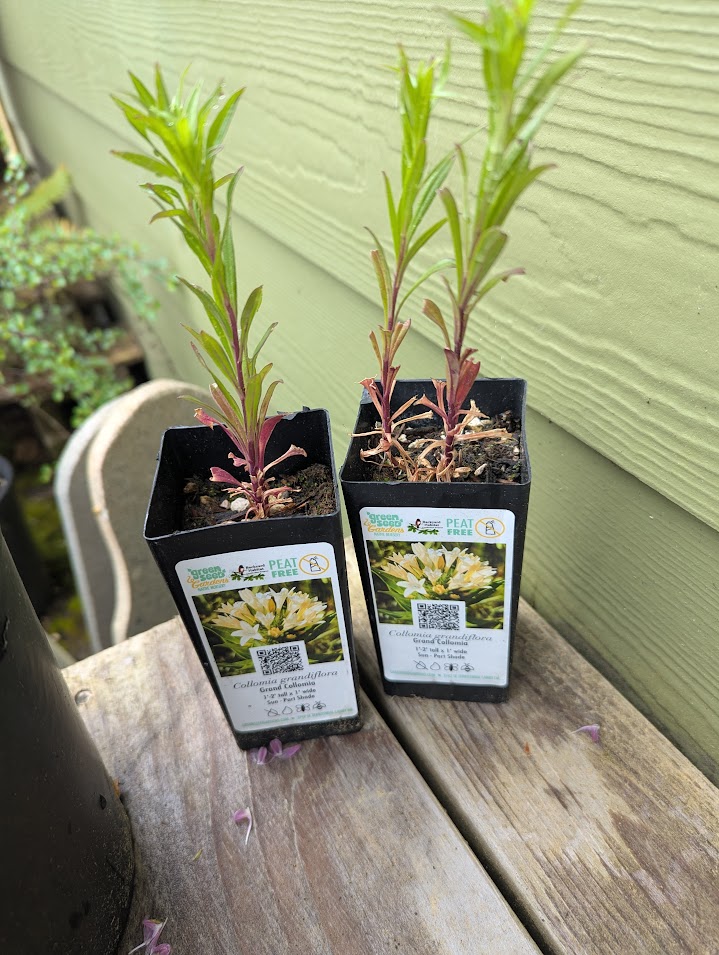
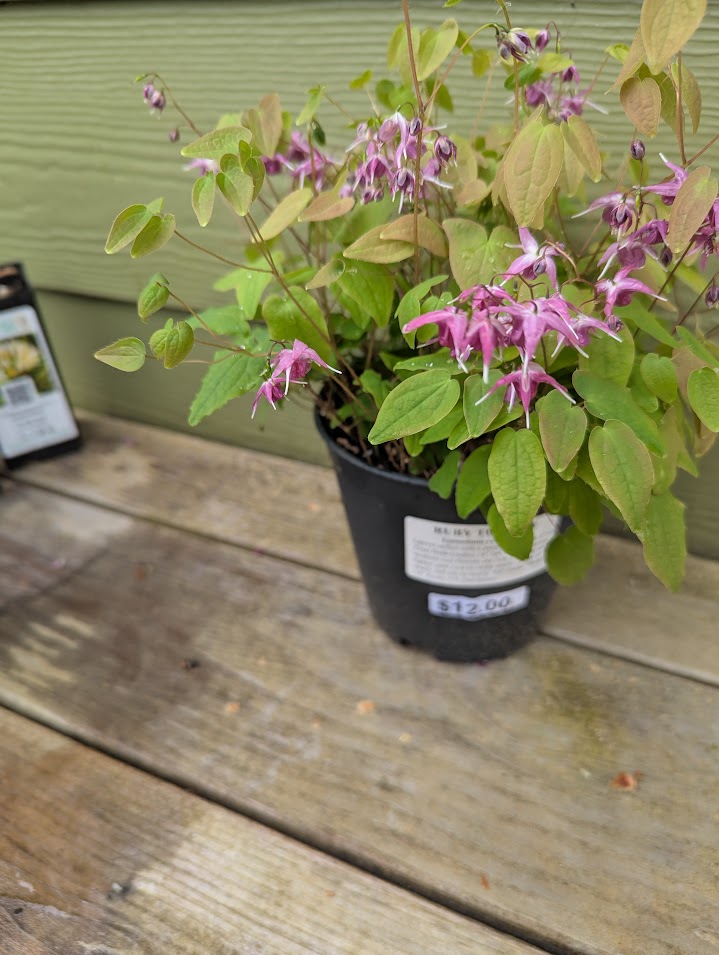
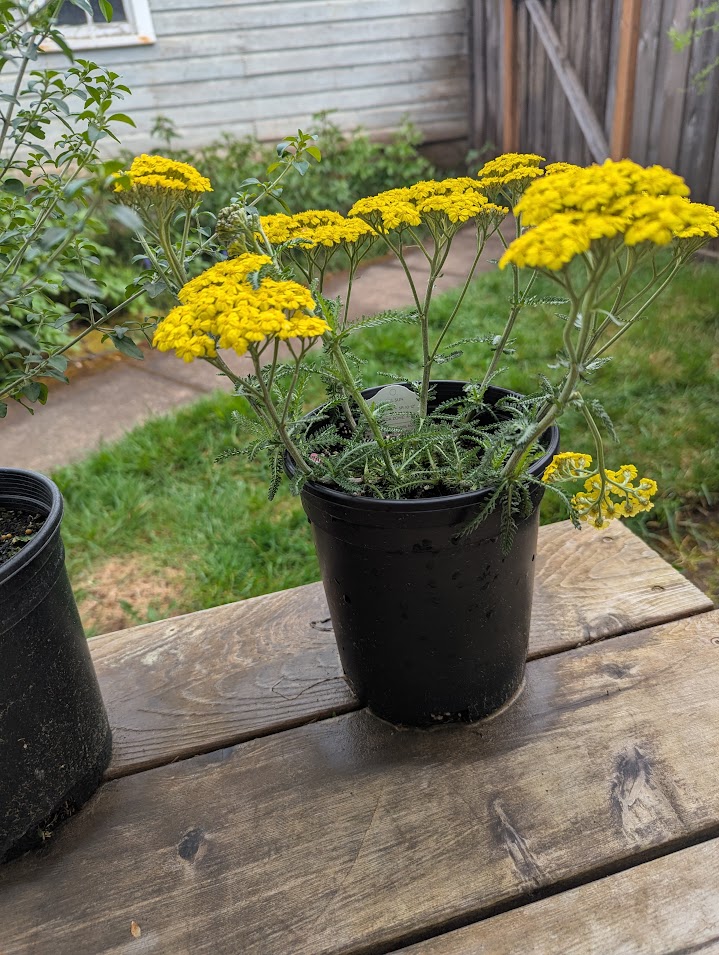
Grand collomia. Can’t get my seeds to germinate, so I have starts!full shade. “epinedium youngianum” (Young’s barrenwortbright yellow yarrowAustralian mint
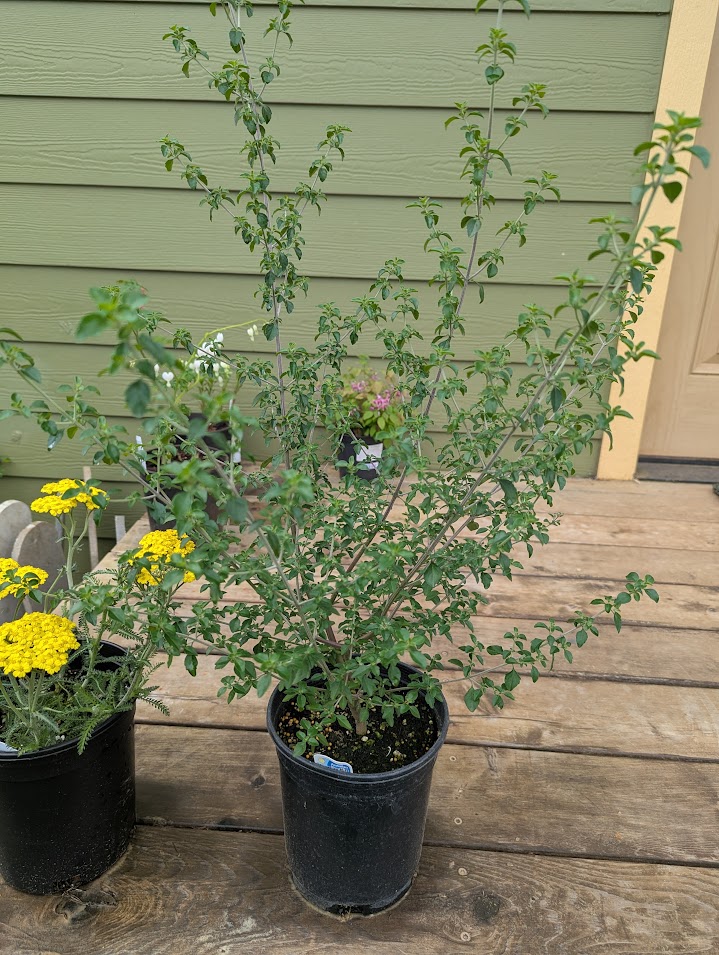
Prices for plants were all over the place, too. I wrote down the price of commercial bleeding hearts at the gate: $6/gallon pot. We saw 4-inch pots for as much as $14 and as low as $4. I found grand collomia starts (two to a pot) for $4, a big yellow yarrow for $12 (gallon pot), an exotic looking “epinedium youngianum” (Young’s barrenwort) also for $12. And a lot of commercial bleeding hearts in gallon pots for anything from $12 to $24! I returned and bought two of the first ones I saw at $6. Our friend found a bottle bush (he likes mine) for a decent price as well. We stopped at another nursery on our way home because the vendor at the event told my husband they sold smaller versions of a plant he fell in love with at the nursery: an Australian mint with purple flowers.
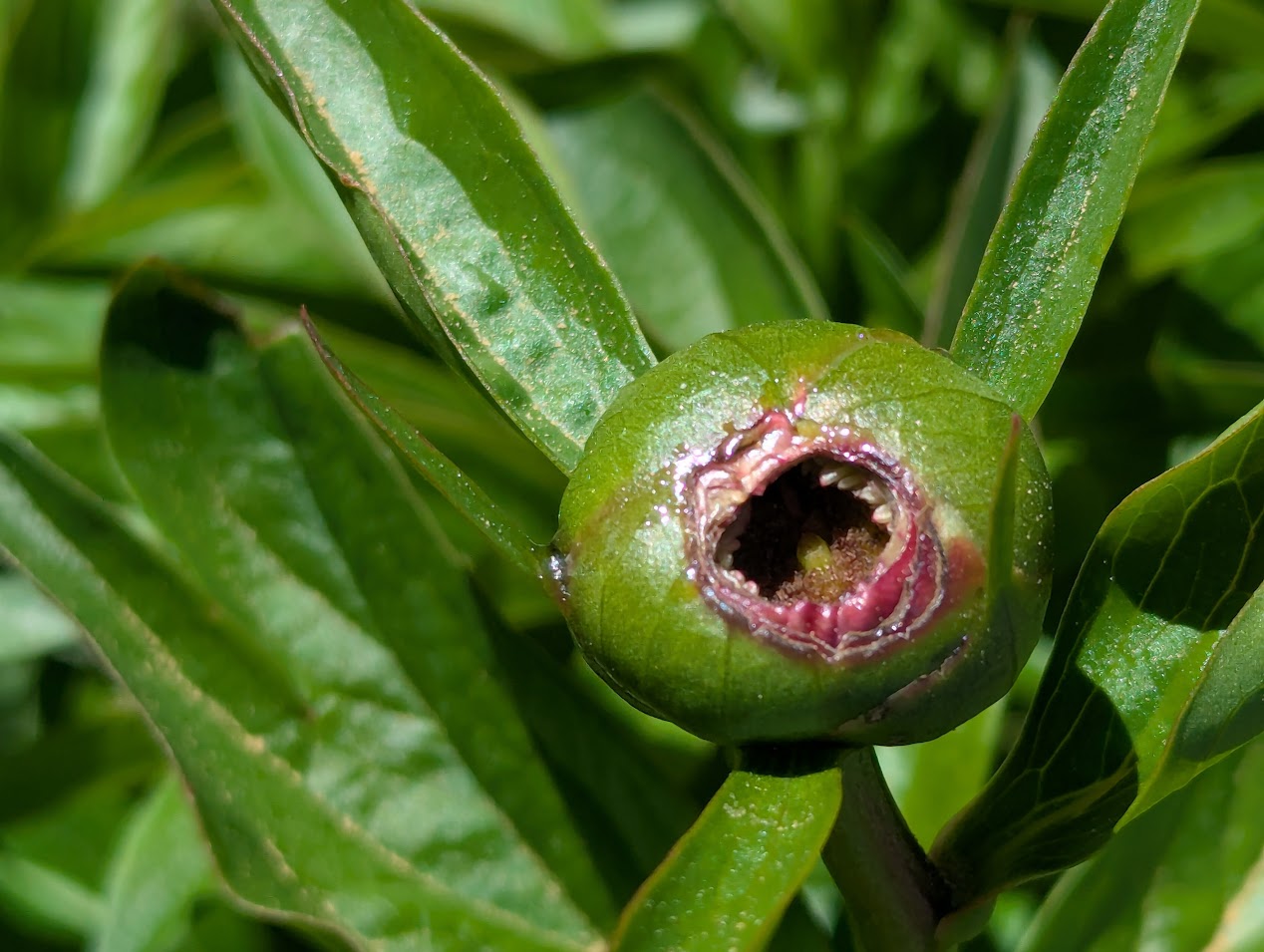
peony bloom destroyed by insect
I also asked the expert from Brother’s Tree Peonies about this damage to one of my peonies. His eyes got large and he said, “Bugs don’t like peonies!” But then he came up with an answer: the culprit is most likely a carpenter bee who dug out the hole, decided it didn’t like peonies, and moved on to a better home. Makes perfect sense to me and it is only one peony, the “test” peony. Because bugs don’t like peonies.
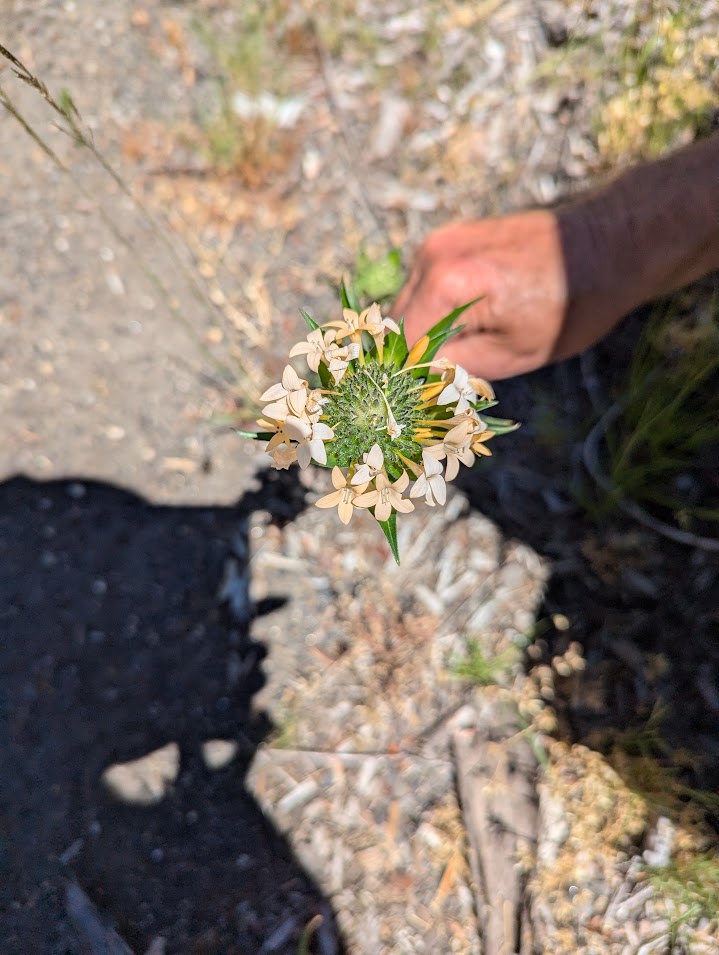
Grand Collomia in bloom, roadside flower. Native.
Now to wait out the next week of rain clouds. And to get ahead of Round One with Allergies.
I’m ashamed: I have not kept up on the blog. Well, I’m not really ashamed, but I am a tad bit regretful that I haven’t kept up. I think of things to write during the day when I am elbows deep in something, but evening comes, and all that inspiration has evaporated. Poof! Gone! Dissipated into the Nether.
We put in a new shed, replacing the homemade one that came with the house when we moved in here over 20 years ago.
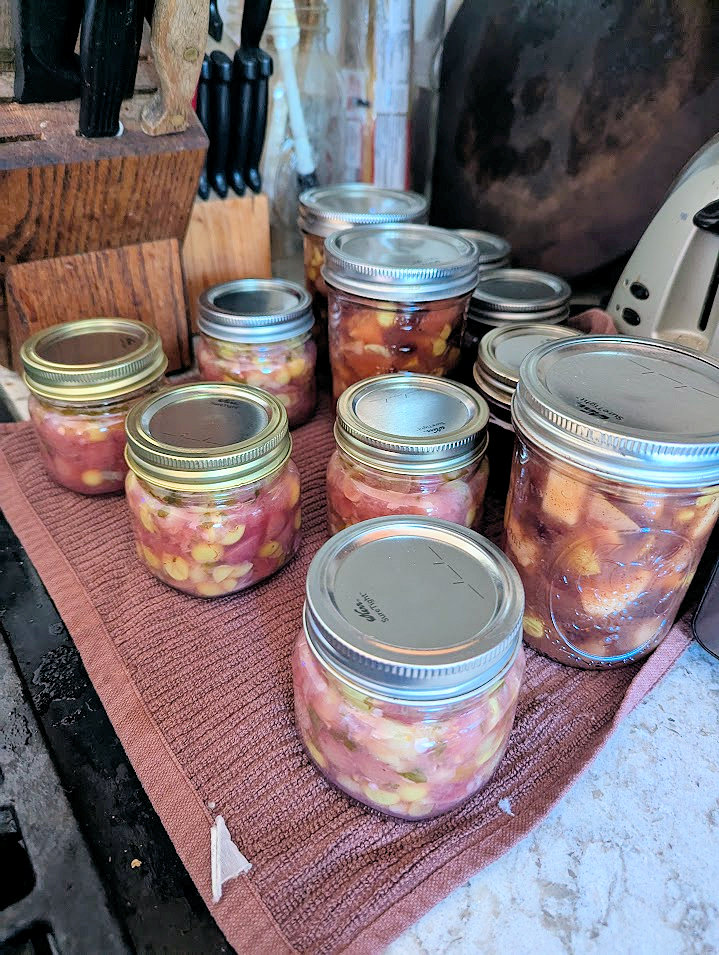
I have been busy canning enough for the two of us: salsa, compote, conserve, chutney. Herbs have been dried or are drying for herbal teas. We foraged huckleberries and elderberries from the National Forest (those are in the freezer, awaiting a moment of inspiration).
We also foraged some more native plants for the yard, some of which have already been planted in the ground and some which are waiting for me. They won’t have to wait long: I have been busy moving plants around and tilling new sites for more plants. I’m waiting for the next round of rain to pass through and will use the ensuing dry days to my advantage.
I have filled the hummingbird feeders and hung them out: I took them down during the hot days of late August when honeybees get lazy and swarm the nectar. I melted and mixed up a new batch of bird suet. That came down when the weather warmed up and the starlings started coming around. The starlings are gone now, moved to parking lots. The weather is cooler and the suet won’t melt or mold now. We’ve started feeding the corvids and small songbirds again. (Corvids: California scrub jays, Steller’s jay, and crows.)
I have cleaned up the space between our shed and the neighbor’s lawn. That’s a bit of a sore point: our garage is set back three feet as per the law, but the yard maintenance person insists on mowing our portion, including over my ferns and day lilies. ARGH. I have tried little fences, cardboard, and now I am merely tilling up the strip to plant more flowers. When we first moved in, the elderly woman who lived in that house asked me to do that so her lawn person wouldn’t have to mow that (because we aren’t the best at keeping up the lawn mowing, preferring to let our yard go “natural”). I wasn’t in a place to do it then, but I am in a place to do it now.
Too bad that Selma died several years ago and we have had renters living next door since. Renters who did not mess with our three feet until the landlord hired this current lawn guy. I have even posted a sign on the side of the garage: DO NOT MOW OVER THE FERNS, PLEASE. He still hits them. So I am in a passive-aggressive war with him (and by extension, the landlady to the property). Yes, I could make a phone call, but it is infinitely more fun doing it this way. Don’t judge me.
(If you’re thinking I’m afraid of confrontation, you’d be very, very wrong. Most people are afraid of confrontation with me. When I come into a confrontation, I come with both barrels loaded and a back-up cannon. The world is much safer when I resort to passive-aggressive flower planting.)
I hacked my poor hydrangea back by at least two feet. It used to be planted under the pine tree (Nature rest its branches and rotting roots). The pine tree fell over some seven or eight years ago. The hydrangea is now in full sun, and summers have heated up the past five or six years. I have covered it with umbrellas, sheets, and tablecloths, but it still gets sunburned. The flowers fade too quickly. It has grown spindly. I could either kill it outright or prune it way back and see if it survives.
A woman walking her dog by the house commented on it. I told her I hopes I hadn’t killed it by my merciless hacking. She said she’d watch it and if it lives, she’s hacking back her overgrown hydrangea next fall. That’s me: inspiring neighbors to bush cruelty.
I also cut the Rose of Sharon back quite a bit, the forsythia, and the mock orange. They aren’t as noticeable a hack job as the hydrangea that was five feet tall one day and less than three feet tall the next. Turn me loose with pruners and a saw…
I meant to do a blog on sprinklers, highlighting our eclectic collection, most of which we don’t actually use. I may still do that. It sounds like a wintertime post. Meanwhile, I am considering this post finished.
I have a surprising number of herbs growing in my garden, some wild and treated like weeds, some I have purchased with intention, and some that I purchased but didn’t have a clue they could be used medicinally or otherwise. I knew there were four herbs in the picture, but when I started looking up the different plants and uses, I discovered that ALL the plants around the fountain bird bath are useful herbs. I’m always learning new things in the garden and often kicking myself for the mistakes I make. But mistakes and learning are what make gardening an adventure!
As a side note: the plants in pots won’t always be leaning like that: we’re staining the deck and I had to move them temporarily. What we do for a photo op, right?
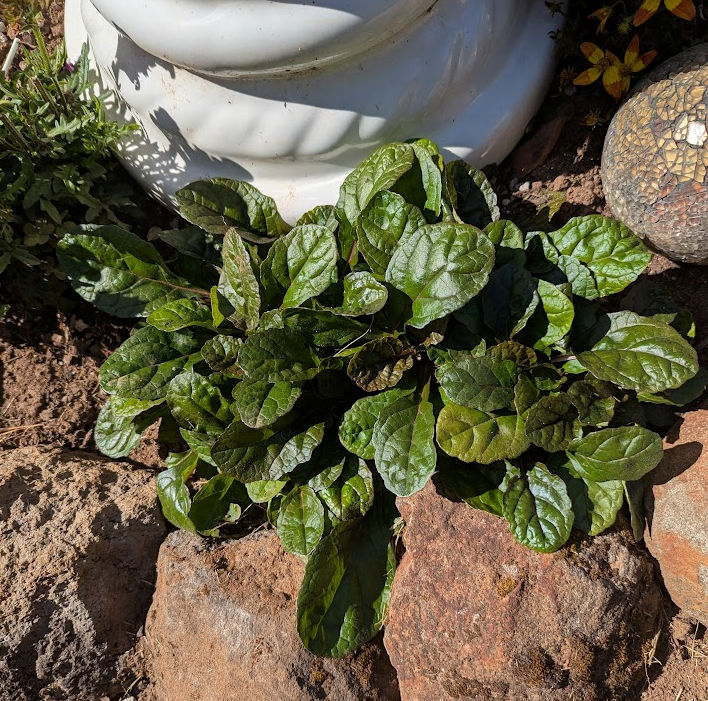
Bugleweed (Lycopus europeus) (Ajuga is another name). I bought the Bugleweed as a ground cover a couple decades ago and have been trying to get rid of it ever since. I had no idea it was an herb and had medicinal uses: hyperthyroidism, coughs, sleeplessness. I’m still on the fence about eradicating it entirely as a mistake or trying to fine a place where I want it to work its magic of crowding out other plants. It has a pretty blue/purple flower in the spring.
The tickweed (bidens)was purchased for color and length of blooming period. I’d never noticed them before at plant sales but when I was shopping for plants to put around the birdbath, it stood out for color and the fact it will bloom all summer, no dead-heading necessary. It apparently has seeds that cling to your pants like ticks cling to deer. I didn’t know that when I bought it, but it’s only one plant… Right? As an herb it has antibiotic properties. I probably will never use it.
Serbian bellflower (Campanula Poscharskyana). I just recently traded it out of a pot where it wasn’t doing well and put it in the ground by the birdbath. I learned the flowers are edible along with the leaves, making it more than just a pretty blue flower: it is a salad green! Of course it isn’t blooming right now, but maybe I can revive it! (The bloom is from another bellflower in the yard.)
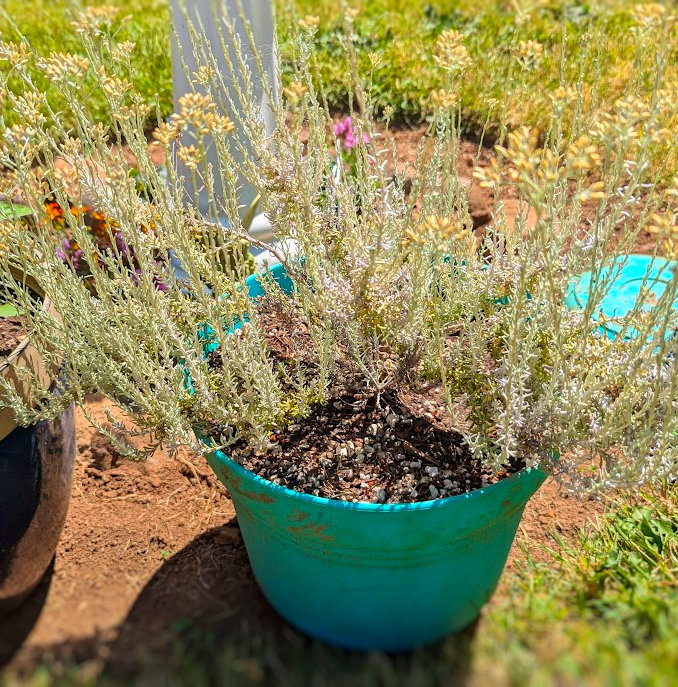
Curry plant (Helichrysum italicum): We bought that for the aroma, the sage colored leaves, and the pretty flowers. Curry plant is not the same as the spice curry which is a blend of spices, but it smells like the spice. It has minimal uses in the kitchen as an edible as it only imparts a very light curry taste to food.
I purchased the blue hyssop (hyssopus officinalis) a few years ago thinking I would use the leaves in tea some day. It grows scraggly, rather like an English thyme, and the leaves are tiny like the thyme. I currently have some drying – not enough to make a cup of tea, but it is a start. It has little blue flowers and is a great addition to a pollinator garden. There are a variety of kitchen uses for this herb as well as the medicinal uses (hyssop is mentioned several times in the Bible as a “cleansing” herb). It can be used to treat ulcers, asthma, and head colds. It is a great antioxidant!
Wild Bergamot (Monarda fistulosa). Medicinal uses are antibacterial, antiviral, and anti-inflammatory. Culinary uses include teas and as a spice added to soups. It is also a pollinator plant and it is a native to North America. The bees and I are waiting for it to bloom.
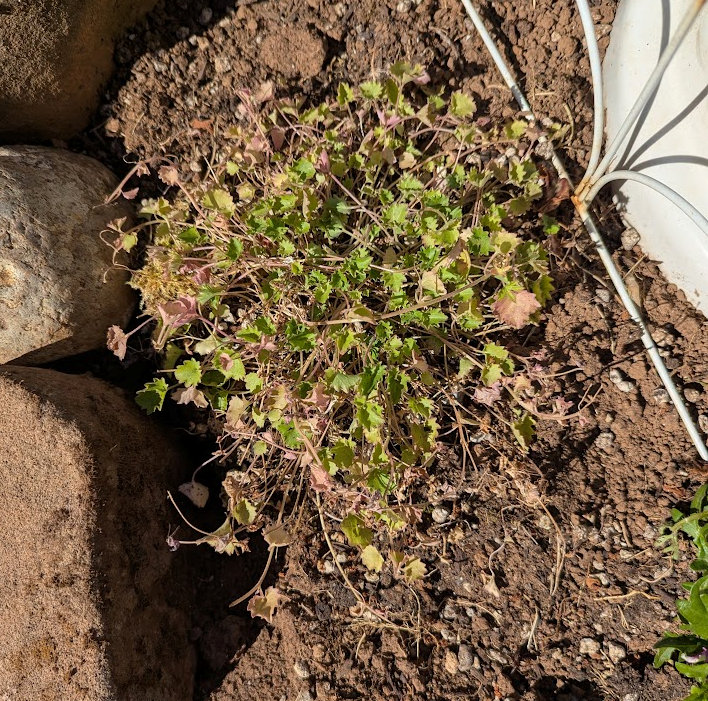
Last is the Mystery Plant. I was looking for a ground cover at a garden sale and this one jumped out at me: it blooms all summer, giving me the color I want. So I bought it, brought it home, and discovered the identifying tag had been removed at the point of sale, presumably for the seller’s inventory purposes, but now I had no idea what I purchased! I had to wait for it to flower to key it out. “Mystery Plant” is Self Heal (prunella vulgaris) is also known as Heal All. You can use the leaves and flowers in salads or tea. It has much the same properties as the Blue Hyssop. Pretty all summer AND useful!
Finally, a disclaimer:
I do not know enough about herbs to encourage the reader to use them and as with any new thing you add to your diet or healing regimen, do so with caution. I am writing about these herbs as much to learn about them as to show off my garden. ALWAYS research first. And certainly don’t trust ME. I’m only in it for the pretty flowers.
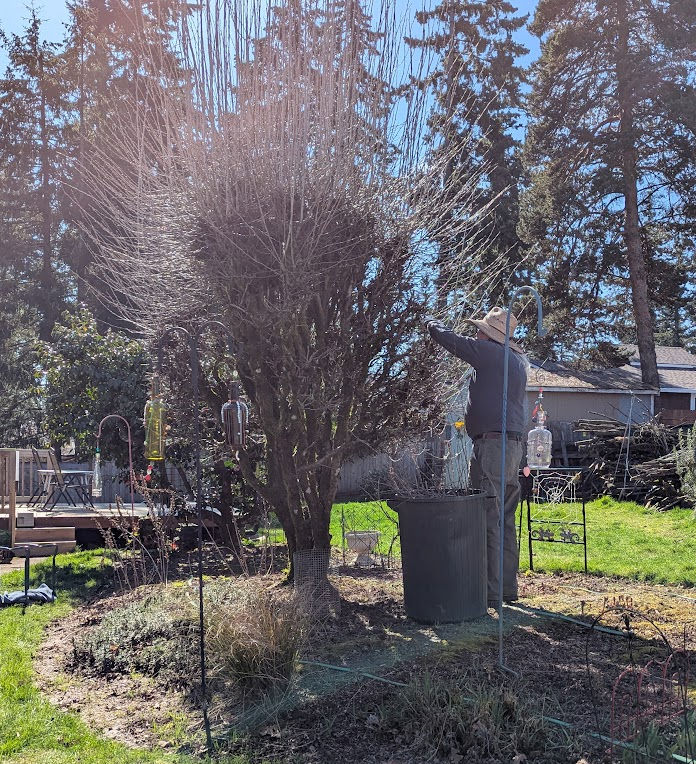
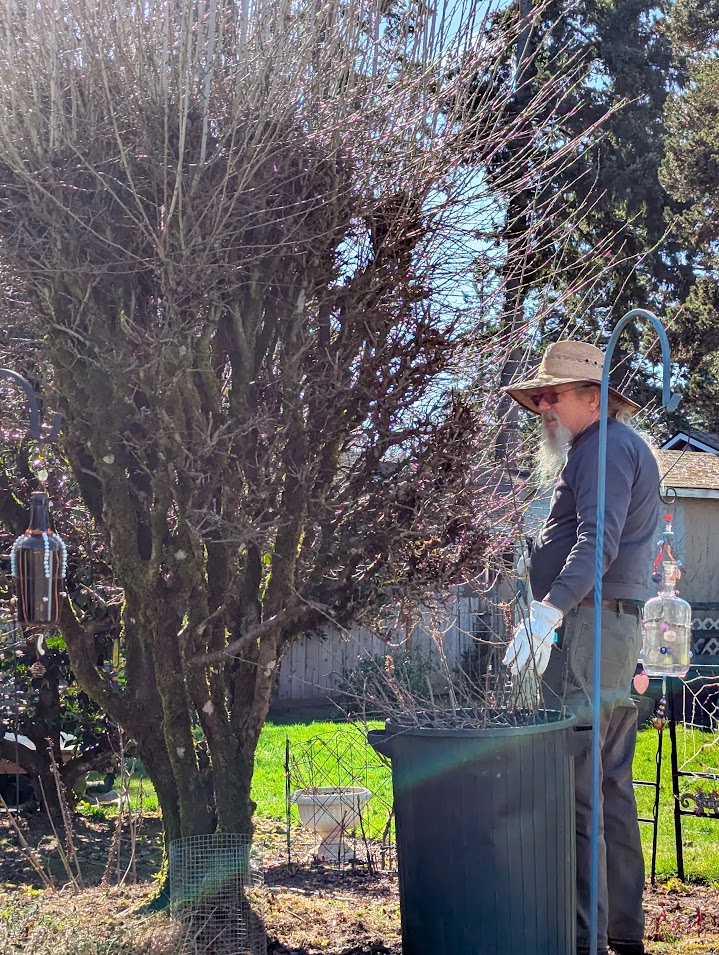
The weather cooperated in time for the annual pruning of the apple trees and the Hawthorne. I forgot to take “before” pictures of the apple trees, but, hey, “after” pictures work.
We purchased espalier apples in 2003 to use as a “fence” around the vegetable garden site. There are six varieties on each tree, some do better than others, and we always have more apples than we can use. I think of investing in a cider press off and on: we could make a lot of vinegar, juice, and cider!
Certain varieties do better than others: the dominant apple (the base to the espalier) does best (yellow trasparent). But we still get a decent crop of Granny Smith and Red Delicious off these trees, and – maybe – someday we will figure out why the other three varieties struggle. The fence around the apple trees is twofold: the dog can climb under the apple trees and get into the garden and the dog likes to pick apples off the tree (ripe or not ripe). Apples are not good for the dog (apple pips are poisonous). He still manages to get apples off the trees, which he then plays with as a cat would play with a mouse, until we take the apple from him and toss it into the yard debris bin.
Pruning takes place before the leaves unfurl and the blossoms swell. Then we hope there won’t be a late hard frost. It is all you can do.
The Hawthorne is a little more involved. Apples don’t have thorns. The apple trees are not over five feet tall. That darn Hawthorne…
We didn’t buy the Hawthorne. We dug it out of the horse pasture when we gave my horses away (to a good home) and moved into town. It was all of three feet tall and had been run over by a Caterpillar multiple times and browsed by deer almost as often. It is a Native tree. And it absolutely loves its new location.
20 years after moving it, it stands over 10’ tall. It hosts birds and insects. We don’t allow it to blossom but if we did, it would host pollinators and produce berries (seeds). Pruning it is a several-day production that includes ladders, avoiding stepping on my peonies, and picking up anything the dog might later step on and puncture his footpad.
The dog has enough problems without thorns between his toes. And when I weed under the tree later in the season, I have enough trouble without a sharp one-inch thorn piercing my gloves.
Also, I don’t do any of this work. I take pictures and sometimes pick up the stray thorny branches my husband misses. My husband is proprietary about the apple trees and I wouldn’t touch pruning that Hawthorne with a ten-foot pruning hook. Nope, nope, nope. Not I.
What ensues is a bit of a photo documentary of the pruning on one native Hawthorne tree in our back yard, including some dangerously slanted ladders on the mound of earth where we decided to put said Hawthorne.
We’re staring down winter this month. The killing frost finally arrived and more is to come. Tender plants will be moved into the greenhouse for the duration of 20°(F) nights: Don’s Bonsai trees, our newest tree peony, and the curry plant (which is not the same as the spice you buy in the store which is actually a blend of spices). It is time to earmark seed catalogs and set aside money to buy those precious seeds.
Lenten RoseDaffodilsCamellia
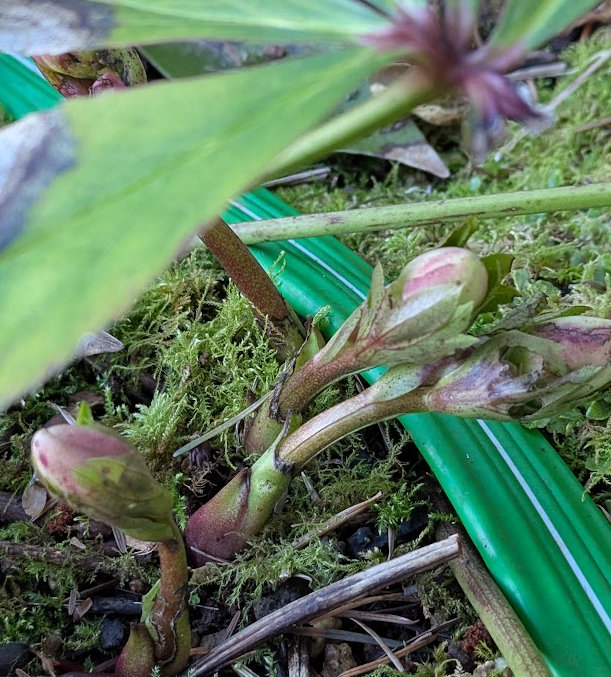
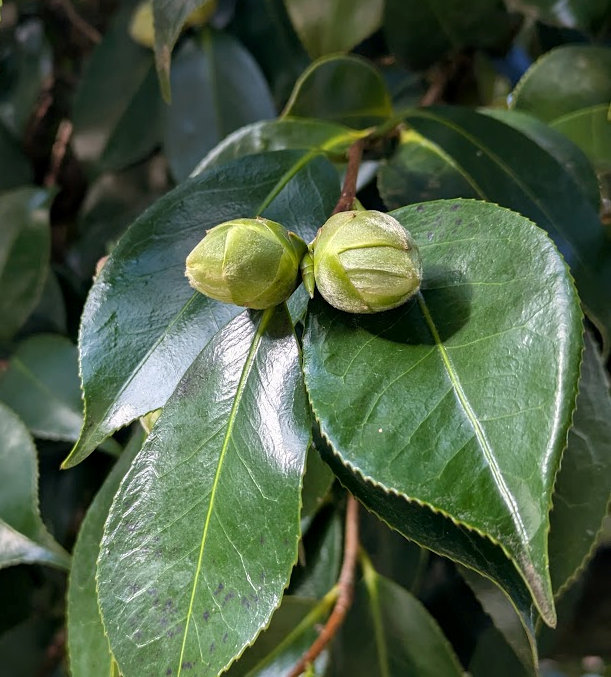
The worst winter weather usually hits us in February when we’re ready for a thaw and the daffodils are pushing upward whilst the buds on the Camellia, Rhododendrons, and Lenten roses are swelling. February can bring all kinds of weather surprises in the Pacific Northwest and big freezes with sudden thaws are some of them.
We moved to the Willamette Valley in 1983, then a Zone 7b (it is currently a Zone 8 although I overheard someone claim we are now a Zone 9 – I haven’t verified that). It is a maritime climate, not the dry and arid climate of my youth. We are surrounded by mountains: the low Coast range to the West and the towering Cascades to the east. Snow, when it happens, usually coats the “upper” elevations: anything over 500’ above sea level.
Cloudy season runs from October through early June, sometimes into July. With clouds, the rain comes. We get more rain than we get any other precipitation, and more ice than snow when the weather gets cold. I hate rain and ice. I really, really despise ice. Where snow is insulating, ice penetrates. Snow rarely lasts long enough here for me to begin to wish for sunnier days or for the February thaw to just get over. Rain just covers the sun and makes the days seem dark and lifeless.
I have perfected complaining about the weather like a true Pacific Northwesterner.
I’d rather be outside with my hands deep in the soil, stirring up the things that live in the dirt and getting my fingernails broken, chipped, and full of mud. Sitting out the dreary days of February are the worst: there’s the promise of March and starting seeds in little pots in the windows or in the greenhouse. March, with the first teasing blooms on crocus, daffodils, Lenten roses, and rhododendron.
February is the month for taxes. The month for tying up loose ends in my art studio before I begin another season of pop-up markets. The month of marking my calendar for the upcoming garden shows (and the annual rock and gem show). It is the month to find a semi-decent day midway through to prune back roses and tame the wild grape vine a little bit (I rather like having it grow wild).
I will order roses the first of March. Start seeds in pots: tender herbs and rare wildflowers. The seeds I have placed in the freezer will be taken out and planted in seed starter soil. And I will repot all of my houseplants, at least the ones that have survived my indoor brown thumb. I will set aside money for the plants we plan to purchase in April and May. In March, we begin to hope again.
frozen planter 2021Camellia Kisses the Ground 2021There went the Rhodie 2021
For now, it is February, and I need to move my tender plants into the greenhouse before a week of below-freezing nighttime temperatures. Maybe we will get a few inches of insulating snow to play in. I hope we don’t get an ice storm. The “big” ice storm of February 2021 is not yet forgotten (we lost one rhododendron and went without power for eight days). But it is February, and if ice comes, so does the big thaw of warm south winds.
Real cold comes with sunny skies, and sunny skies mean Vitamin D and a fire in the Breeo fire pit. I can’t complain about sunshine and a warm fire pit.
Our yard is a curious yard for flower and herb gardening: nearly full shade during the winter when the sun is low and the Doug firs around us block its rays (there are no trees (per se) in our yard). In the summer, there are large swaths of the yard that are full sun to part sun. And there are sections that remain shady all year round, with just a little sunshine in the middle of the summer.
And the soil! Where once there were livestock over seventy years ago, the soil is rich, loamy, and wormy. Ignored sections tend to be clay, the predominant soil type of this area. I have well-drained areas and a few areas that remain wet. I battle fungus: black and brown spot, moss, and – in some corners, powdery mildew. Aphids are the biggest insect pestilence, but I have to be careful in my battle against them because our yard is also a pollinator habitat: birds and beneficial insects teem year-round.
My battle against invasive plants is slow and deliberate, executed with extreme caution: I have a liquid herbicide that I apply with a paint brush on the newly cut stems of offending plants: Himalayan blackberry, the neighbor’s flowering fruit tree that insists on shooting up starts in out yard, and a few miscellaneous “weeds”. It has to be done when the sun is out for several days in a row and protected from the curious nose of our doggo.
I have also applied the salt-vinegar-soap mixture to certain leafy plants, but that also needs to be done with caution. The salt will render the soil unfertile for a few years if you use too much. And it doesn’t outright kill, it merely stops the growth and then I have to go in and snip off any green starts I see, denying the offending plant needed sunshine and air. (1-gallon white vinegar – best to use 30% stuff you can get at places like Home Depot – + 1 cup salt and a dash of Dawn liquid soap to help it adhere to the leaves and stalks). A hot day works best. I killed the Comfrey that was taking over part of my yard with that solution and a LOT of snipping. It took three or four years to win the battle.
(Yes, I know: Comfrey is a wonderful herb and a pollinator friend. But it is also invasive, tends to powdery mildew, and causes lovely rashes on contact. Borage, a close relative, is much easier to contain and the pollinators love it just as well.) (An opinion, not a rule.)
Aphids are trickier. I’ve tried Neem and I have tried a natural recipe of soap and water (easy on the soap and it must be Dawn). I planted Marigolds between my hybrid tea roses, but I haven’t tried that around my honeysuckle. I started using a natural spray of essential oils last summer (too late, I am afraid): thyme, peppermint, cloves, and rosemary mixed in a quart of water and sprayed liberally. I also planted two native honeysuckles to complement the cultivar I already have, and I am hoping that the native ones have some resistance to aphids.
I purchased copper fungicide last year to help combat the brown- and black- spot fungus that is ever present in a Pacific Northwest semi-shade yard. I applied it to the ground when I mulched my roses, but I do need to apply it to my peonies as well (and my yard is full of peony cultivars!). My understanding is that the fungus lives in the soil (or profligates there). I also found two natural remedies in my Garden Notes file today.
1 litre 7-Up (less 1 cup – you drink that) + 1 cup mouthwash + dash Murphy’s oil or Dawn liquid soap. Doesn’t specify what brand mouthwash, but I will assume it is one that is “minty” fresh.
1 T baking soda + 1 gallon water + 1 T white vinegar + 1 T cannola oil. Since it is being used on plant foliage, I would assume you use the food variety of vinegar, less acidic. I can foresee this leaving a white residue of baking powder of plants, but it is quite diluted. The only other problem I have with this is the cannola oil. We don’t use cannola oil in any of our cooking or baking.
The former recipe looks doable for me, but I’d love to hear from other folk what remedies wou have tried (natural, mind you).
Slugs and snails are our “other” pestilence here in the Pacific Northwest. You can pour beer into a receptacle and let them drown themselves (rather gross to throw away every morning with their fat carcasses, and a waste of beer). You can use slug bait (I do, but only in places where I can shelter it from birds, mice, and doggo). But the best deterrent is simply removal. Toss those puppies into the middle of the asphalt street and let Nature (or tire treads) take its course. Eliminate hiding places (this is a biggie: the fewer places for slugs to hide, the fewer slugs you have. Snails, too.)
I do have another trick up my sleeve, but it is for potted plants: copper tape applied around the base of the pot. Copper conducts electricity which gives slugs what is equivalent to a “hot wire” shock to a horse. My husband has copper piping that he places around the lettuce and similar greens in the vegetable garden. Science, folks.