
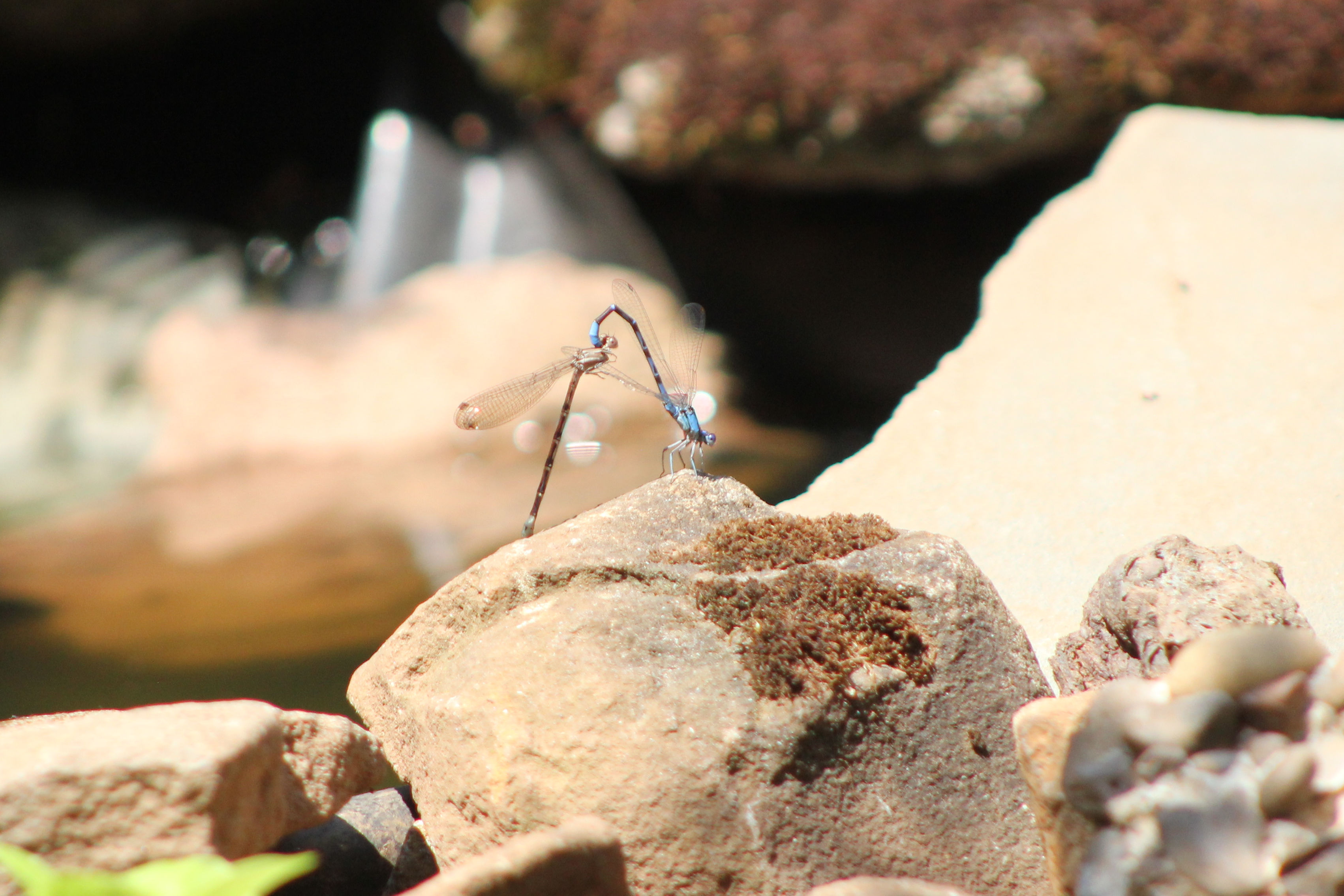


We watched this ritual happen two different days, and in both sequences, they did eventually connect and lay eggs in the pond. If the mosquito fish don’t eat the nymphs, we will have more bluets in the future.
Posted in Uncategorized, tagged bluet, boreal bluet, damselfly, insects, nature on July 16, 2026| Leave a Comment »
We watched this ritual happen two different days, and in both sequences, they did eventually connect and lay eggs in the pond. If the mosquito fish don’t eat the nymphs, we will have more bluets in the future.
Posted in gardening, Uncategorized, tagged blooms, flower, flowers, gardening, nature on June 30, 2026| Leave a Comment »
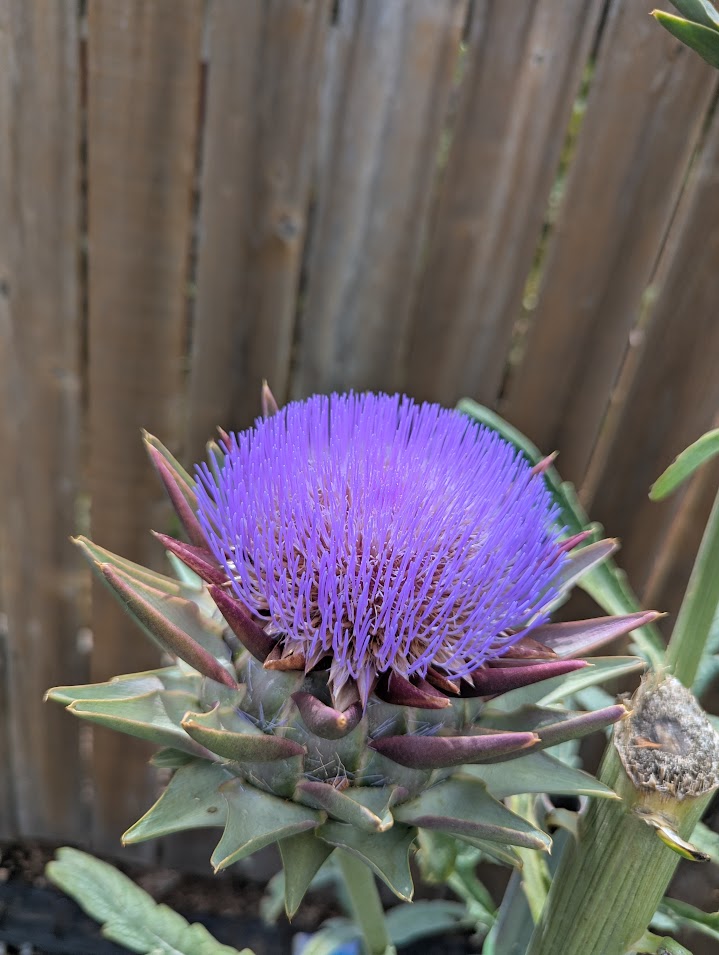
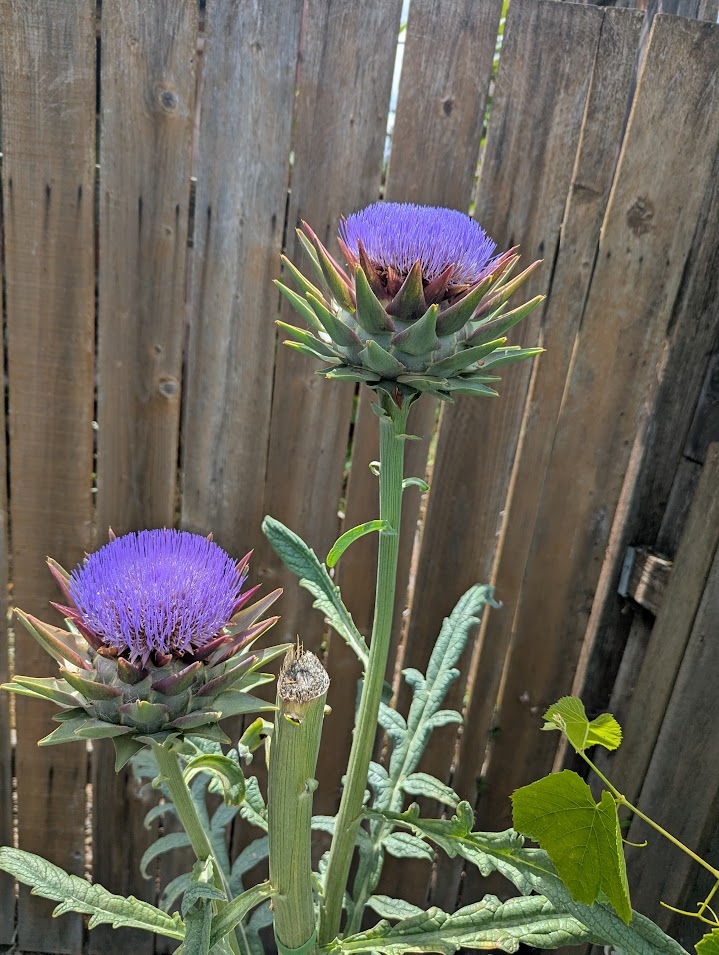
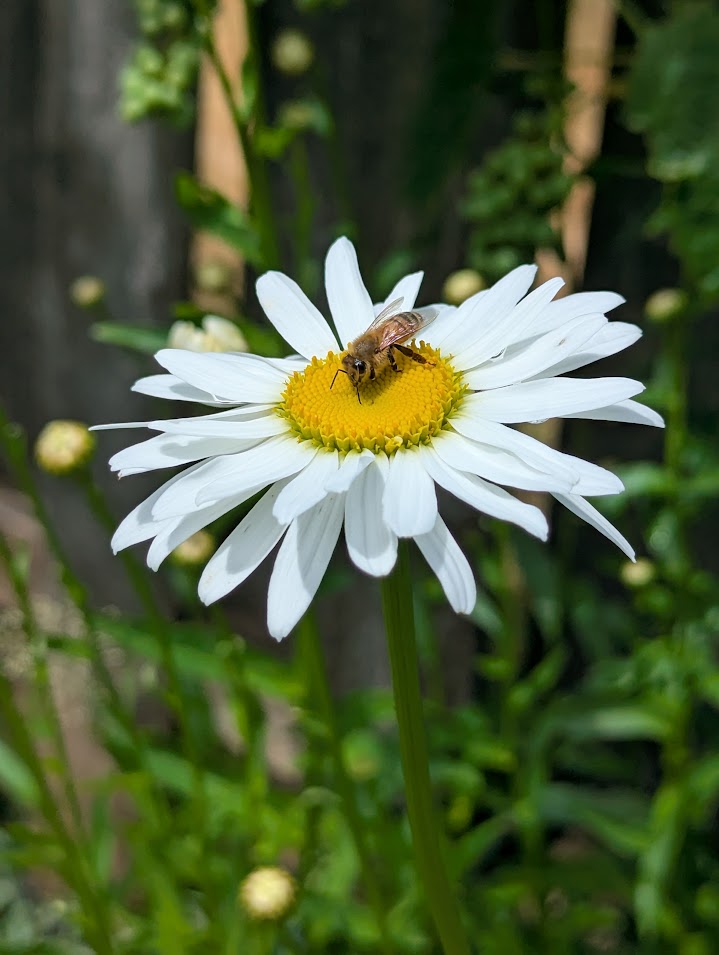

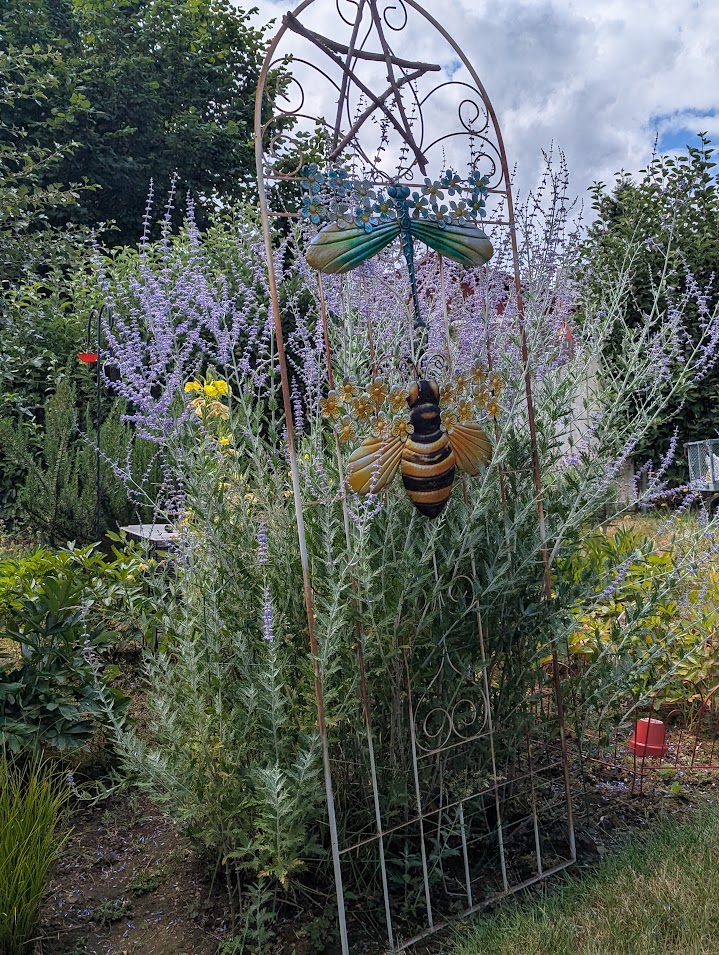

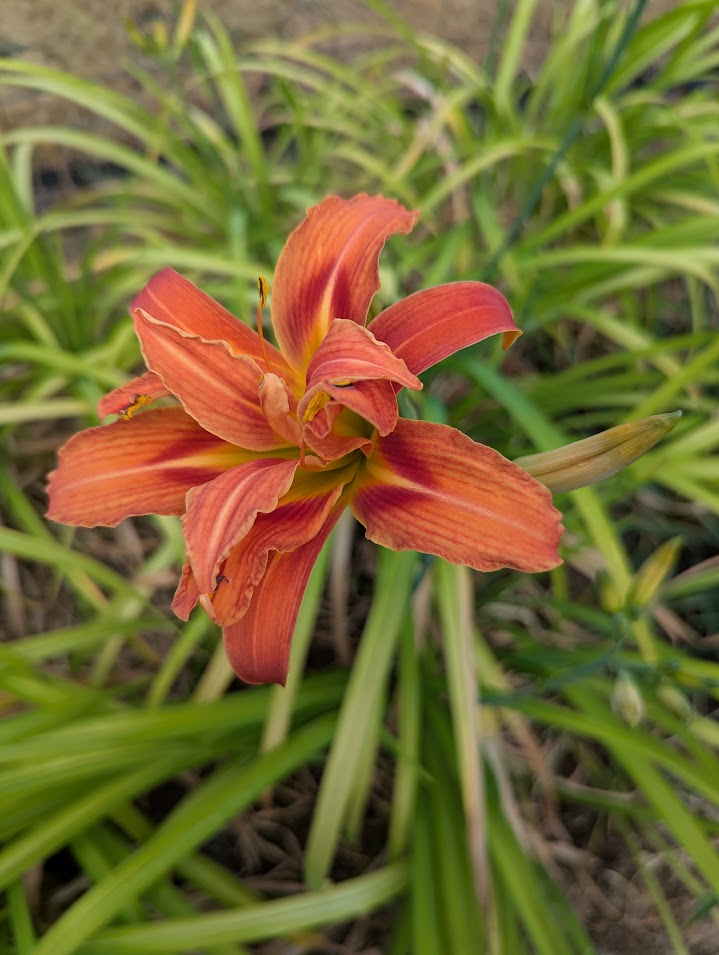
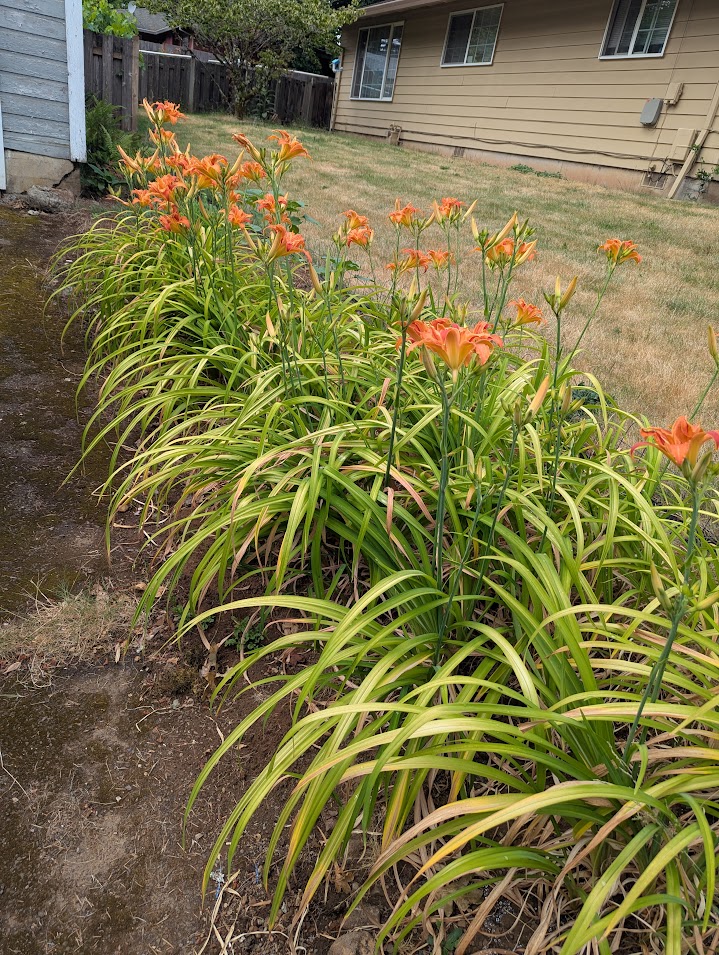

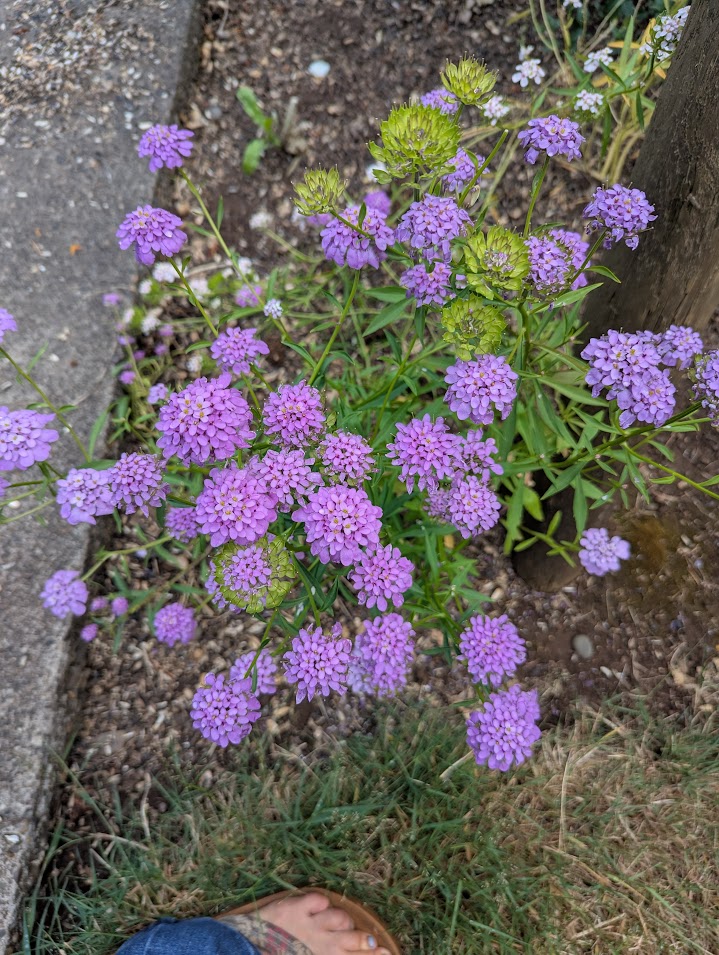
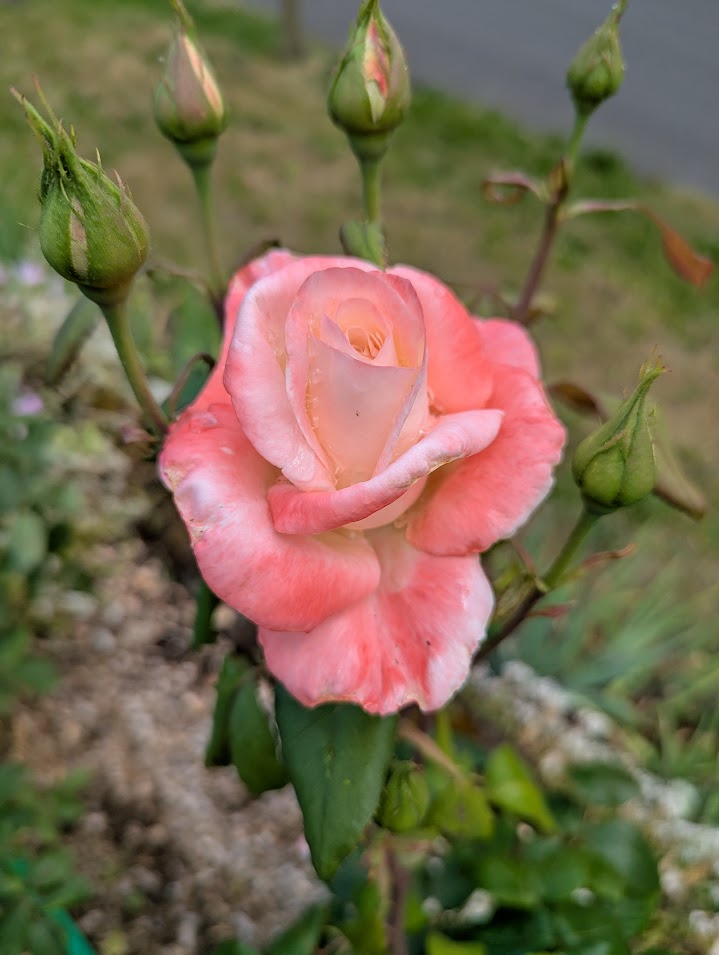
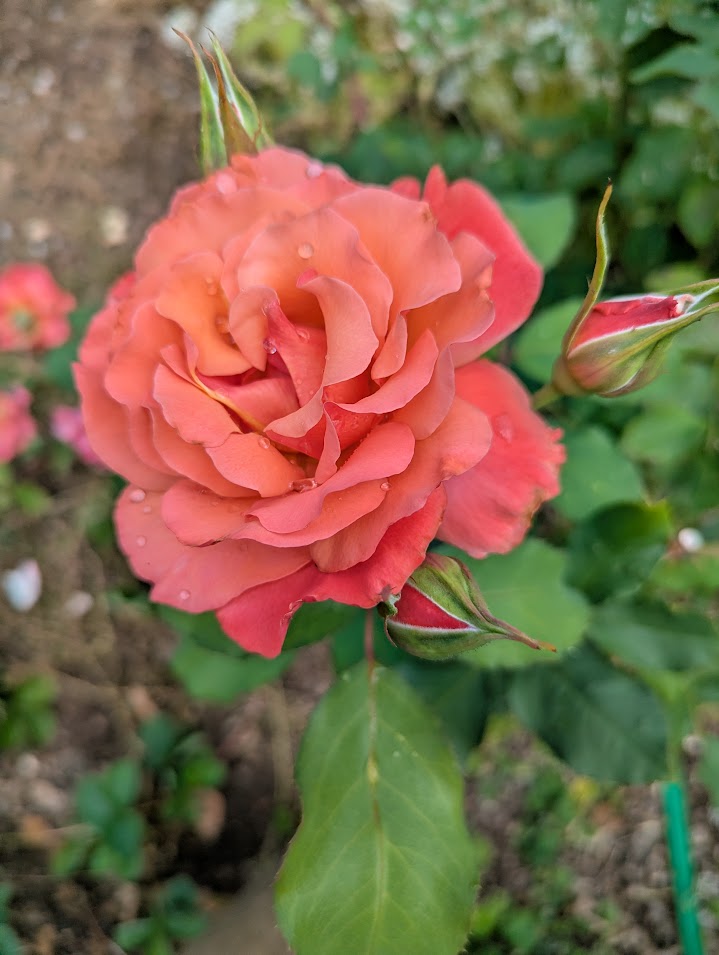
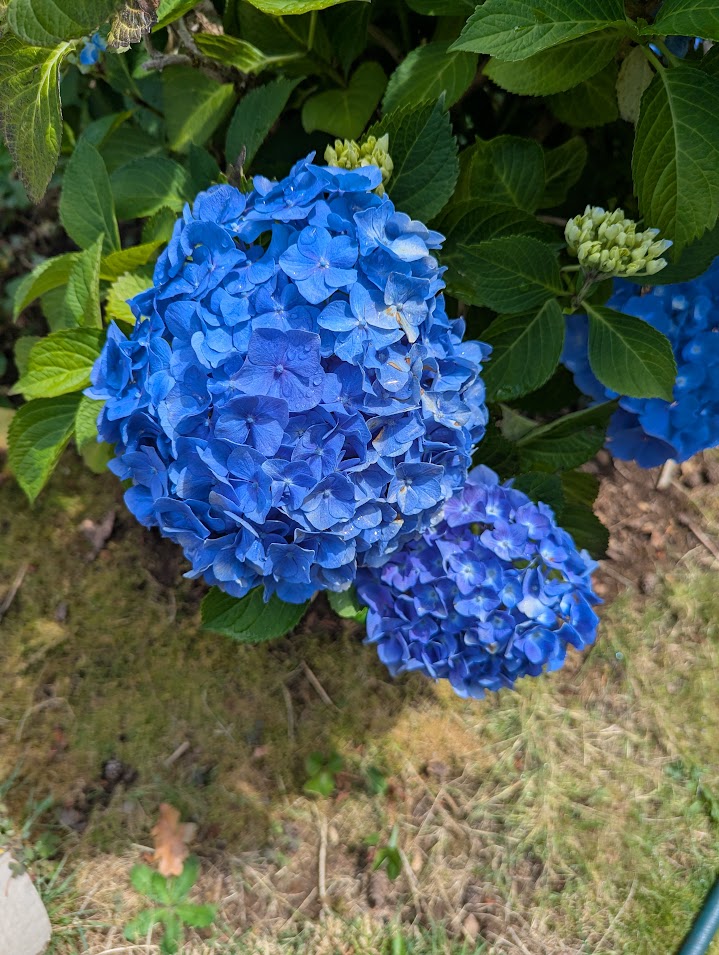

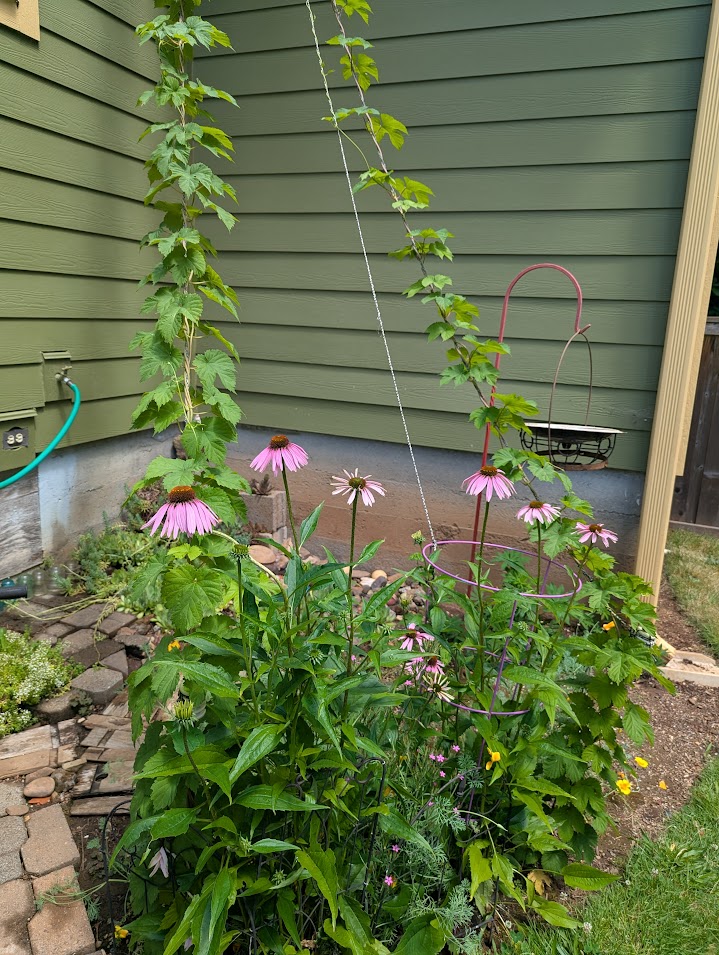

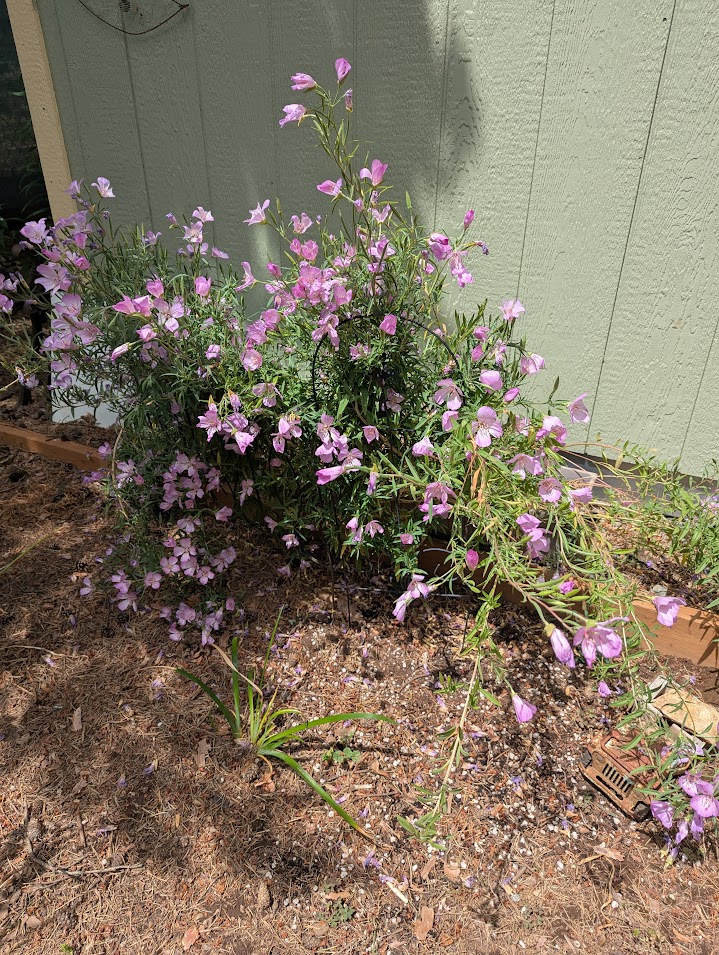
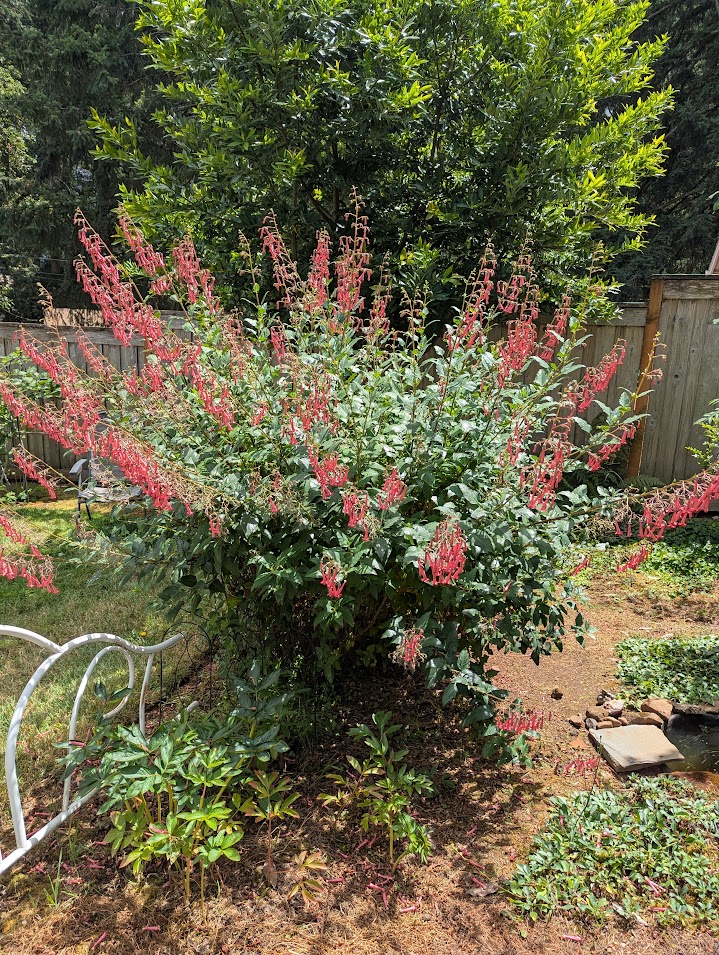


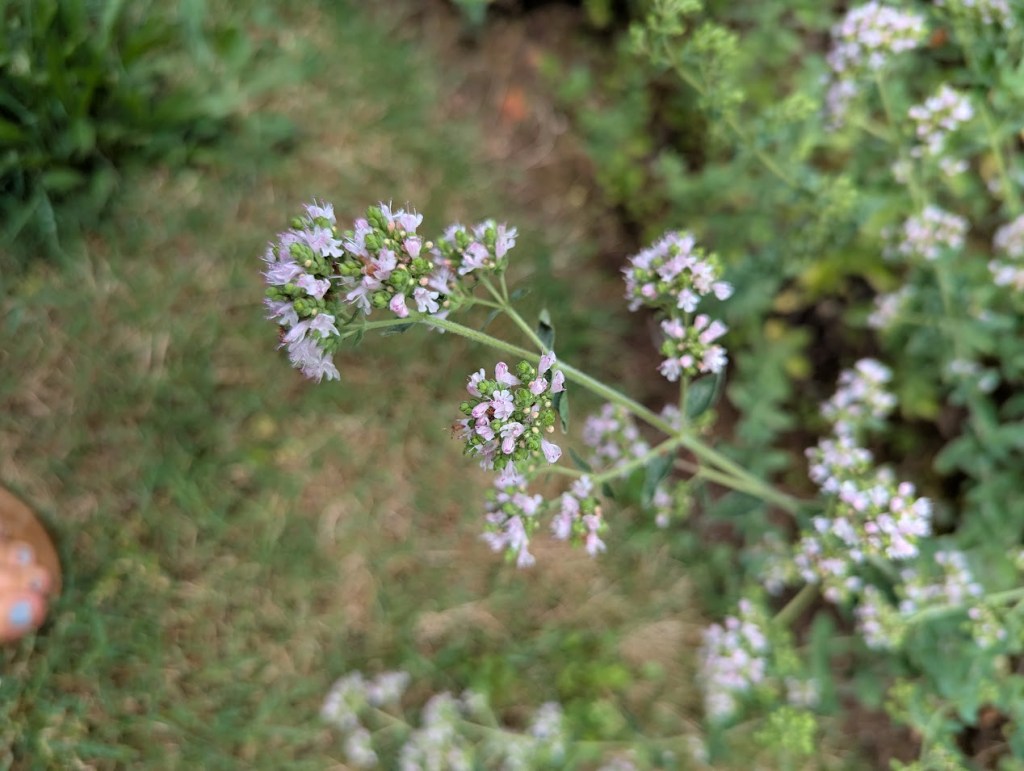
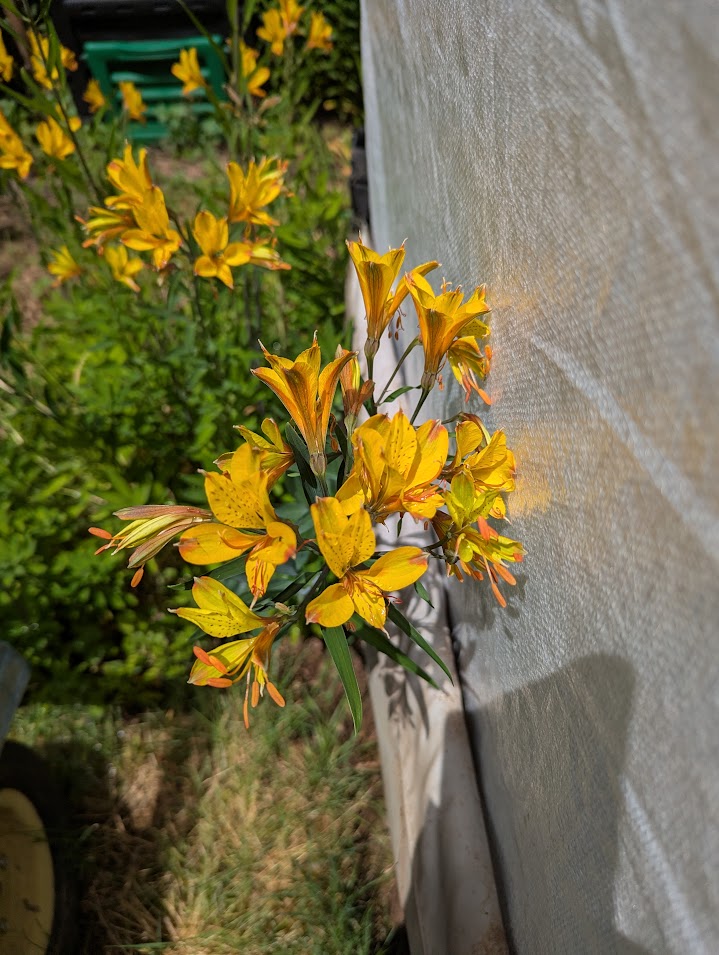

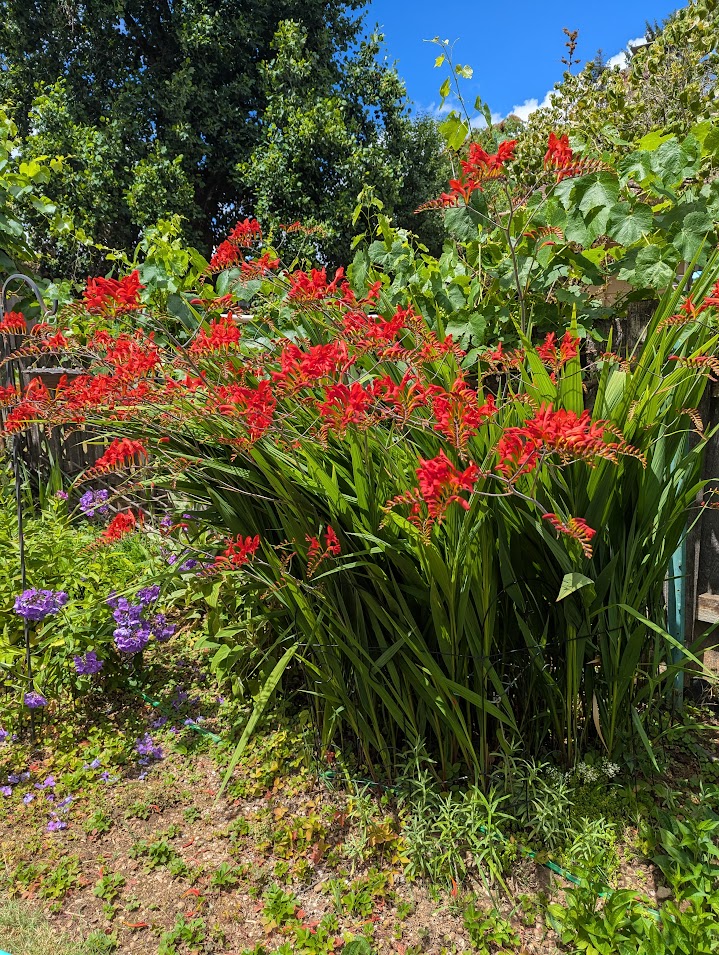
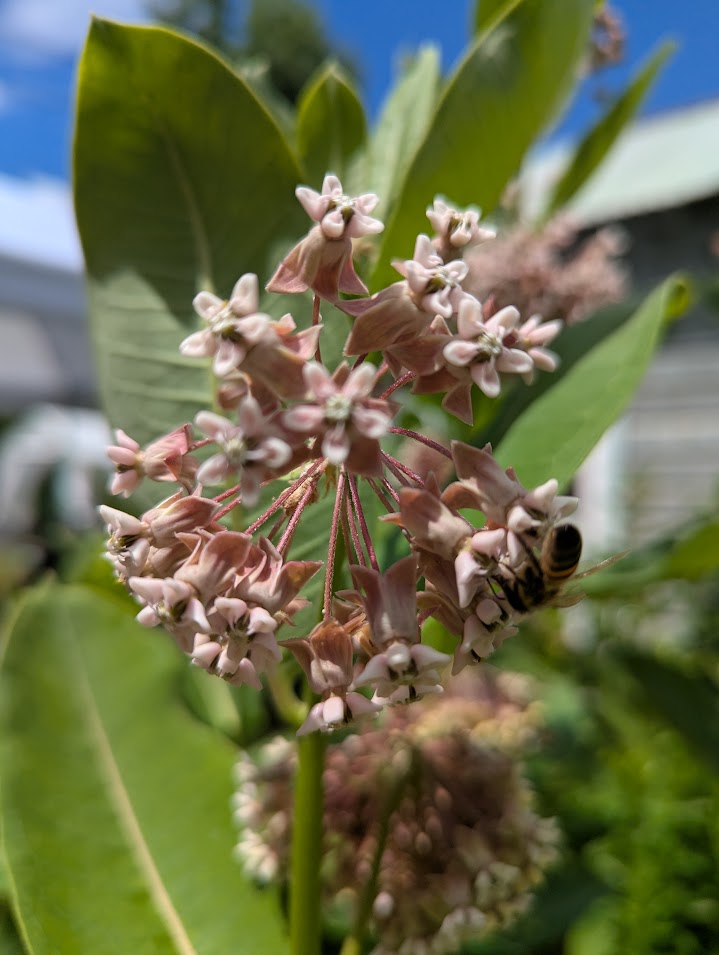

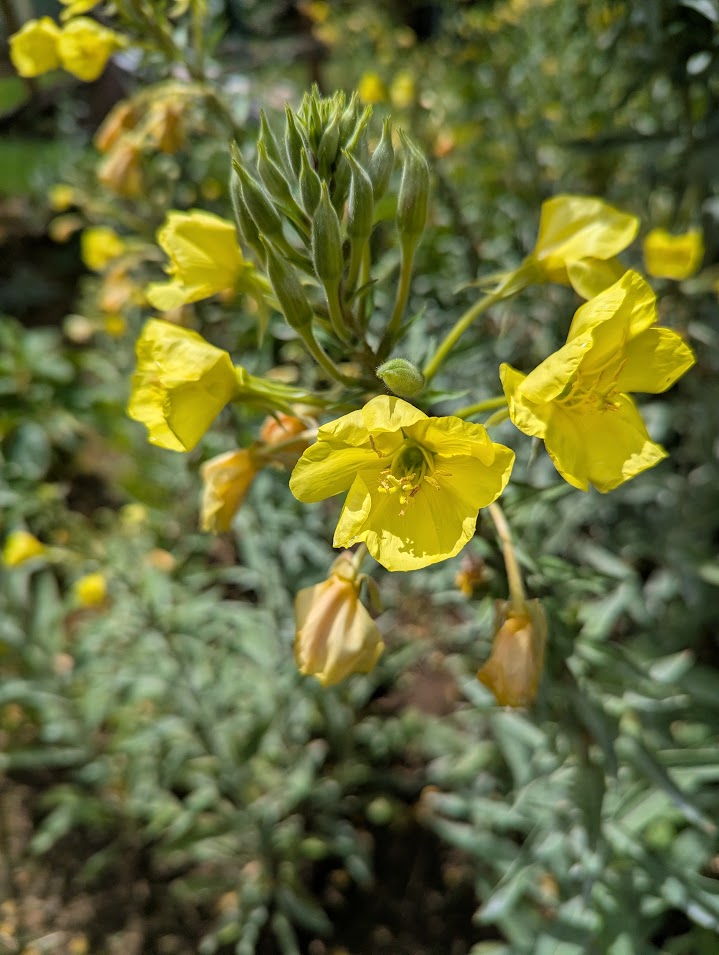
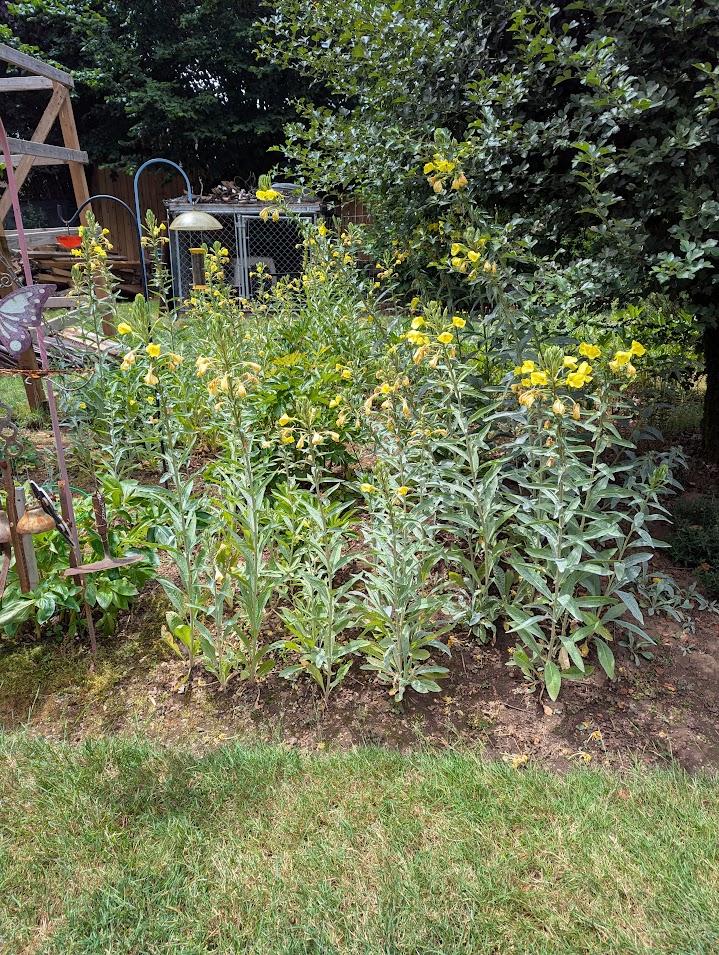
The bees have never been happier. Nor the hummingbirds.
Posted in gardening, Uncategorized, tagged compost, garden, gardening, nature on June 8, 2026| 1 Comment »
This post is actually about an argument. We both knew the old compost bin was done for: the door no longer stayed on and I had to place a pot in front of it to keep the critters at bay. I think I bought this compost bin around fifteen years ago, but I won’t swear to that. We’ve added things from the kitchen, ashes from the fire, early grass clippings (before the weeds start to bloom), and little else. It has stewed, produced soldier flies, and been a haven for red worms for a long time.
The only thing that doesn’t compost quickly is egg shells. But egg shells are vital to compost for the calcium they add.
I knew I could build my own compost bin and we probably have instruction in several books, but it would be a Jaci project with little to no help from my husband. He has other things he worries about and works on. Other than adding to the compost and supporting the effort to compost, it really isn’t his “thing”. And I am overwhelmed by things to do.
Buying a new bin was the only option left, but – Boy Howdy! The prices for a pre-made compost bin are astoundingly high in 2026. And not one of the local big box stores has a demo model on the floor: you can only order from Lowes or Home Depot ONLINE for a compost bin. That seems ludicrous in this day and age when we are supposed to be environmentally aware, but there you go.
Want a compost bin? Buy it sight unseen online and have it delivered to your house or the store, no other option. We looked. We walked aisles and asked questions. It’s ridiculous.
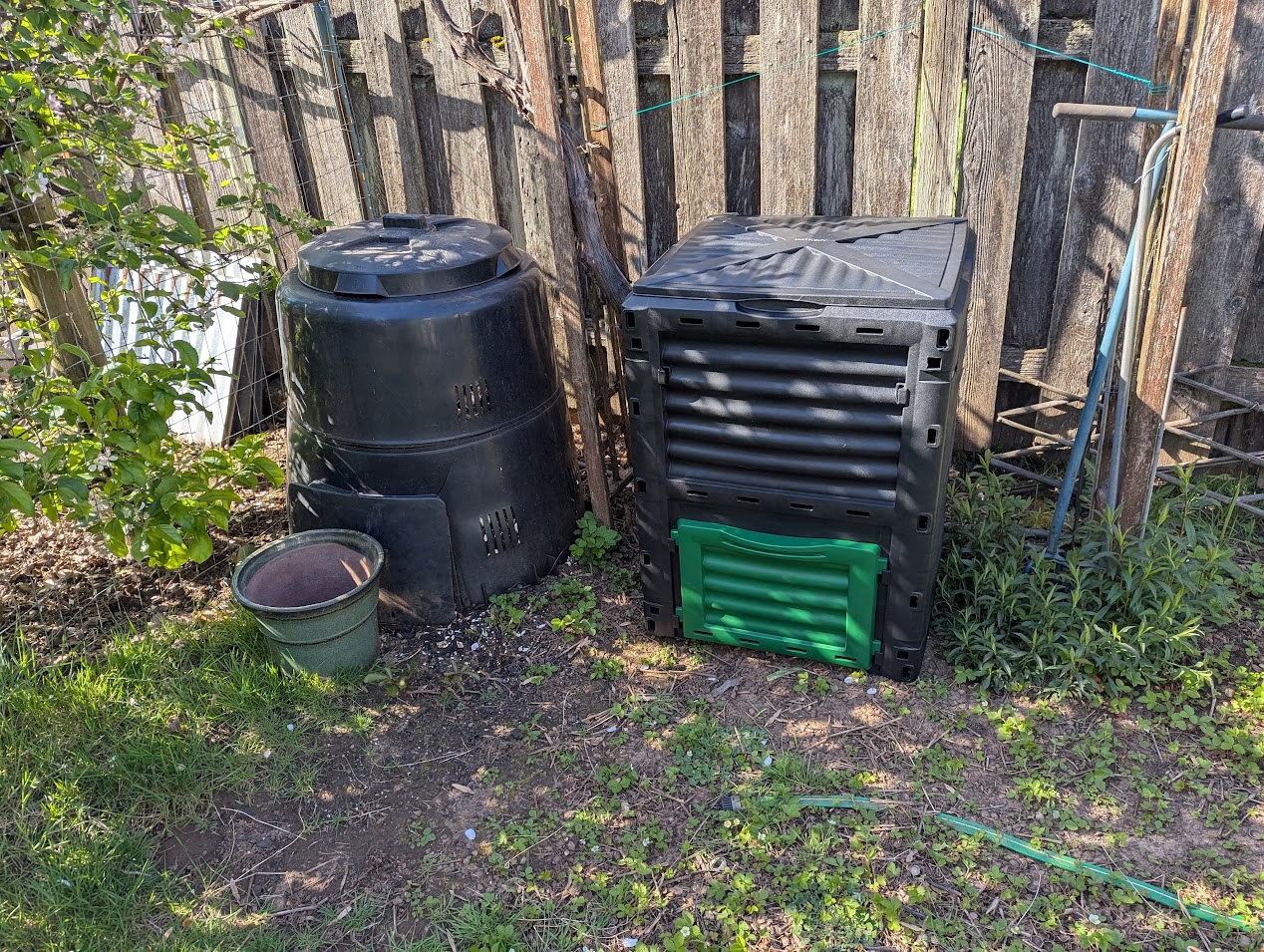
I turned to Amazon: all I wanted was a bin of comparable size to our original bin and for a lot less money than most manufacturers are asking. I wasn’t willing to spend $100 for the thing and I didn’t want a rotating one: just something similar to what we already had. And Amazon delivered: the one I bought is $76 at a big box store and I paid $49. Same capacity as the former bin. (Old on the left, new on the right)
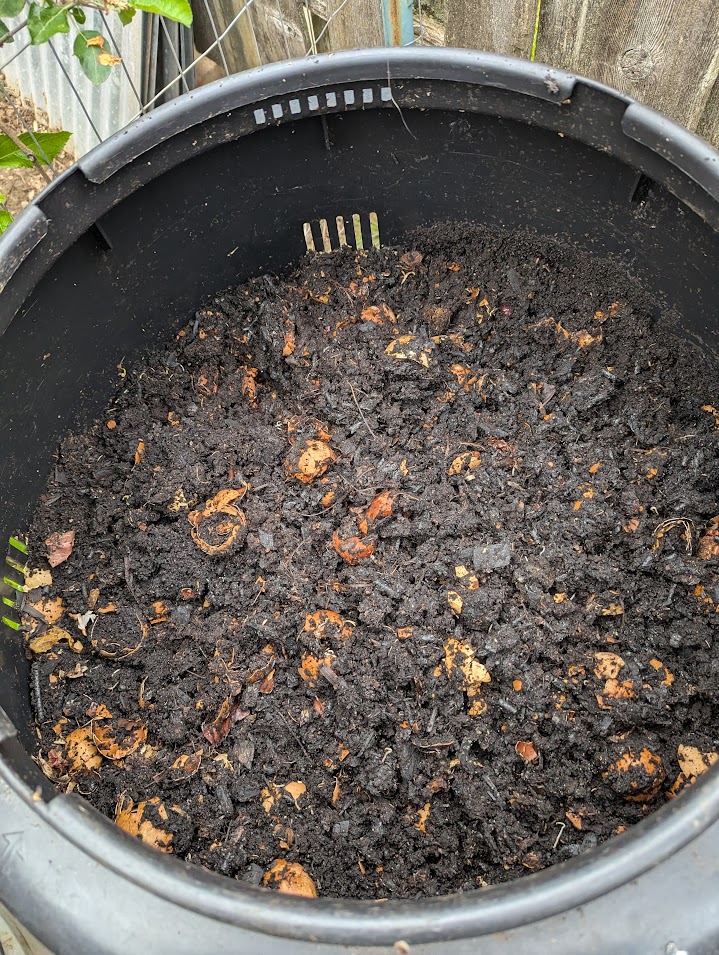
Now came the hard part: moving debris from the old to the new. I ran into an issue almost immediately, and that issue led to a minor spat between husband and myself: the debris in the former bin was already heavily composted, dense, black, gooey, wormy. I moved about six inches of garbage before I ran into the issue. I tried screening it, but it was muddy, wet, wormy, thick.
Not smelly. This stuff was pure black gold, beautiful compost with uncomposted egg shells. I tried to explain this to my husband one night when he was not interested in my story and we ended at an impasse. My verbal skills were lacking and his interest had waned. I dropped the subject.
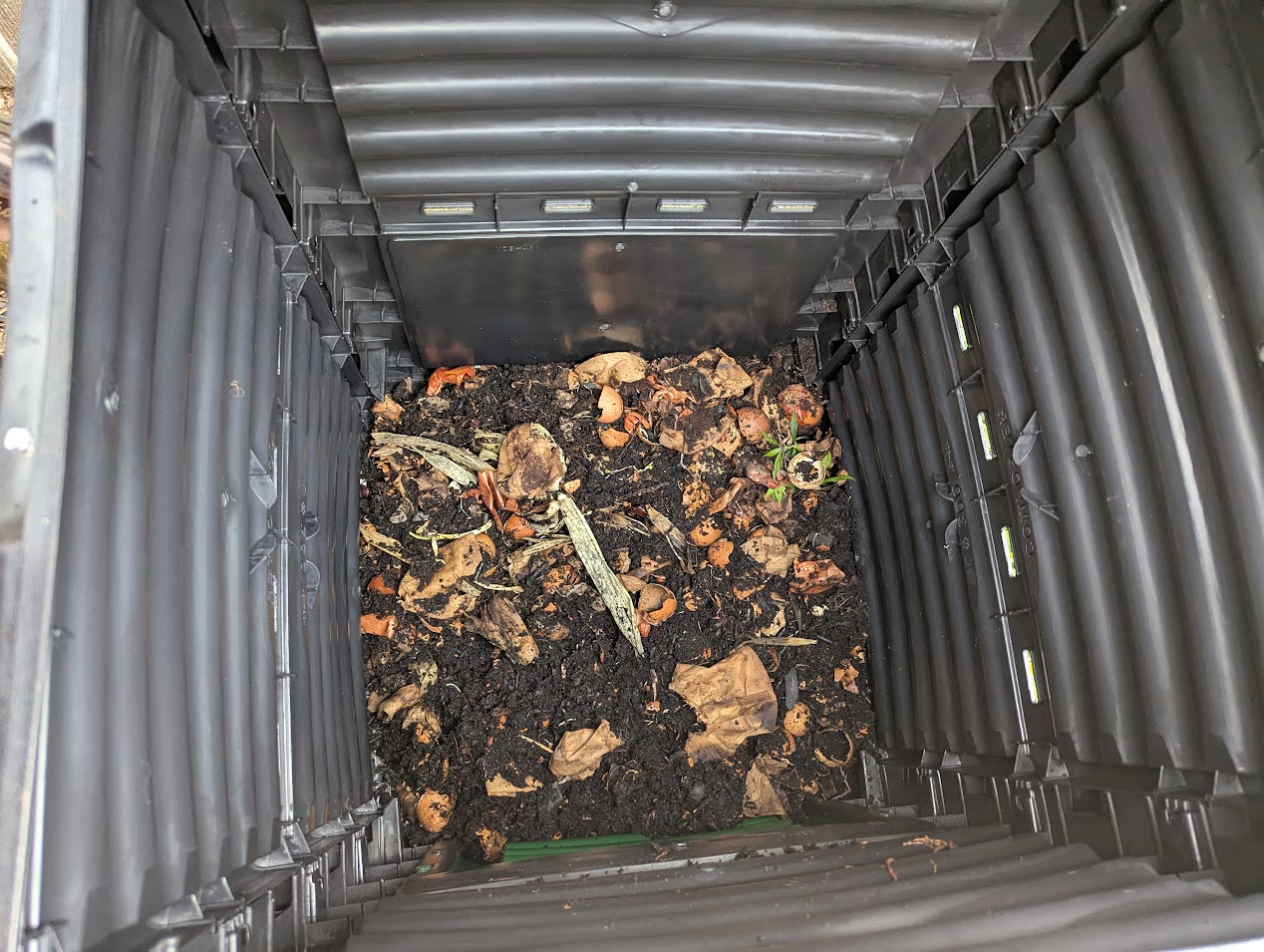
A day later, however, I managed to get him to walk over and look at what I was dealing with. And he was awed by the state of the compost in Bin #1. And he offered a solution: Just keep it in Bin #1 and use it up. We’ll start a whole new collection in Bin #2, no hard labor on my end.
Well, except for moving that beautiful black compost to flower beds, egg shells included.
Annnnnd – after I wrote this, my next door neighbor GAVE me a compost bin just like the original;, so now I have TWO compost bins and one that I am still emptying. I’m putting the beautiful black stuff into old bird seed bags and will mix it into the soil of flower beds as the year moves on.
Posted in Uncategorized, tagged gambusia, garden fountain, life, mosquito fish, nature, pond, writing on June 5, 2026| Leave a Comment »
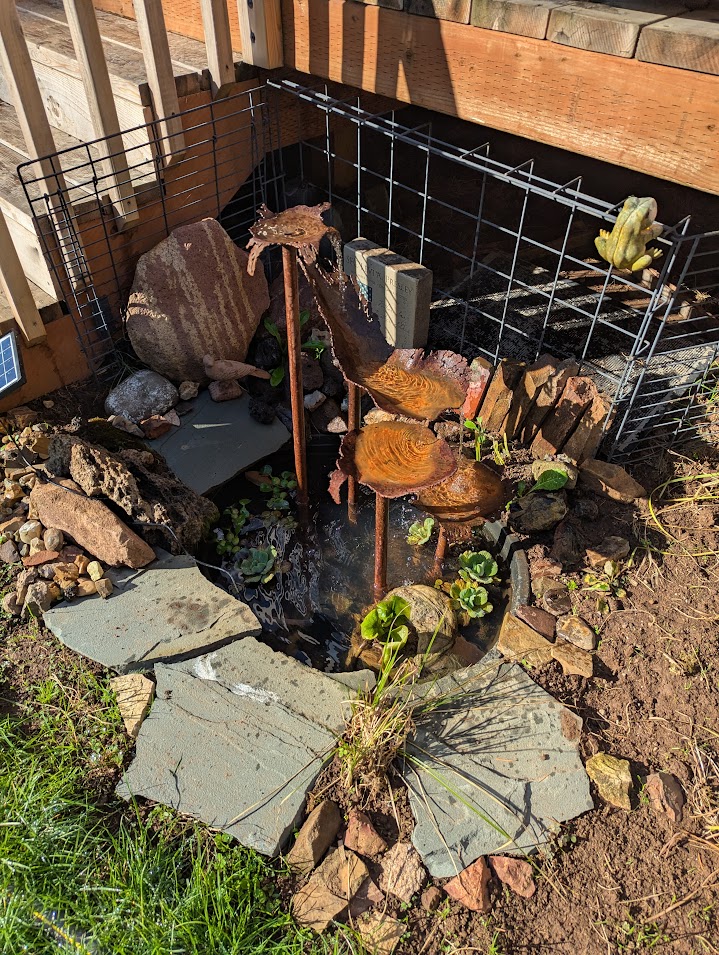
I blogged last year about how I created a couple water features. This one with the rusty yard sale fountain has had to undergo some changes. The rusty fountain rusted more in the water and filled the pump and hose with sediment. We decided that was not suitable for mosquito fish or cost effective for my time (cleaning the pump and draining the pond frequently).
The fountain came out and I was left with “how to deal with rust”. A friend in the UK sent me a short video on getting rid of rust using catsup. Well, catsup and a copper scrubber, to be exact. I wasn’t certain it would work, but we had an extra bottle of catsup (ketchup, I just like the spelling ‘catsup’ better). No copper scrubber, but there was a spare wire brush from a barbecue long ago that I borrowed from my husband’s work bench. (I told him later).
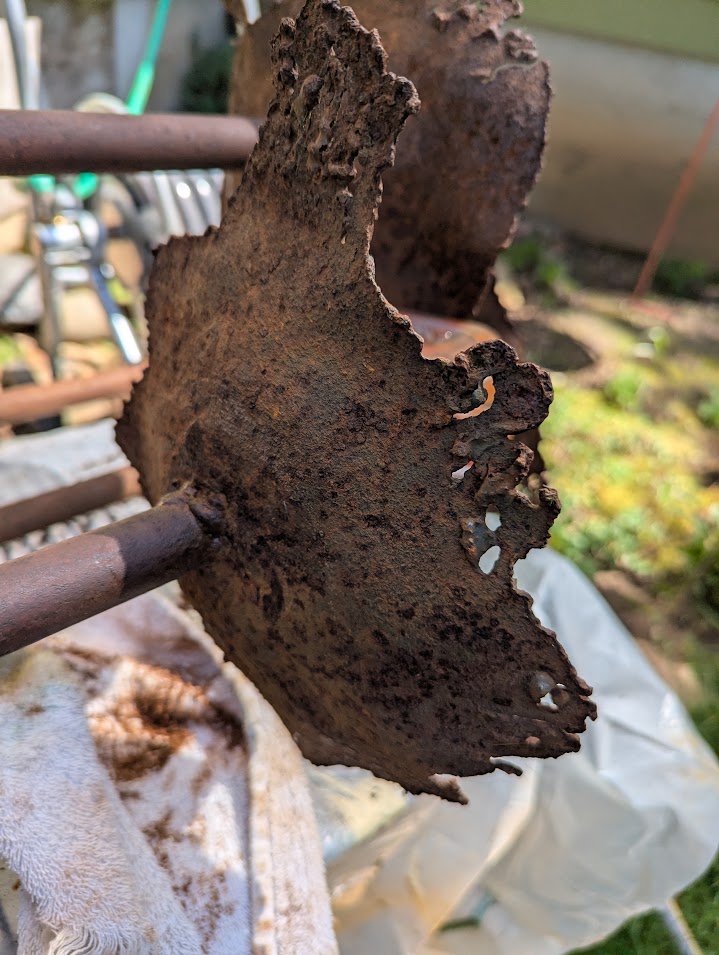
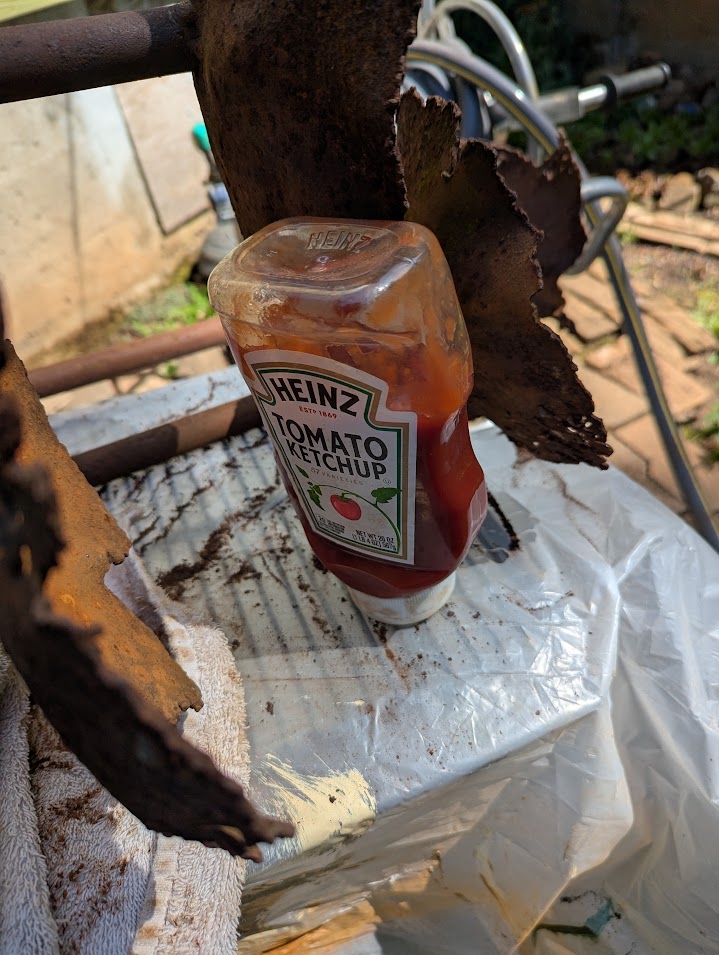
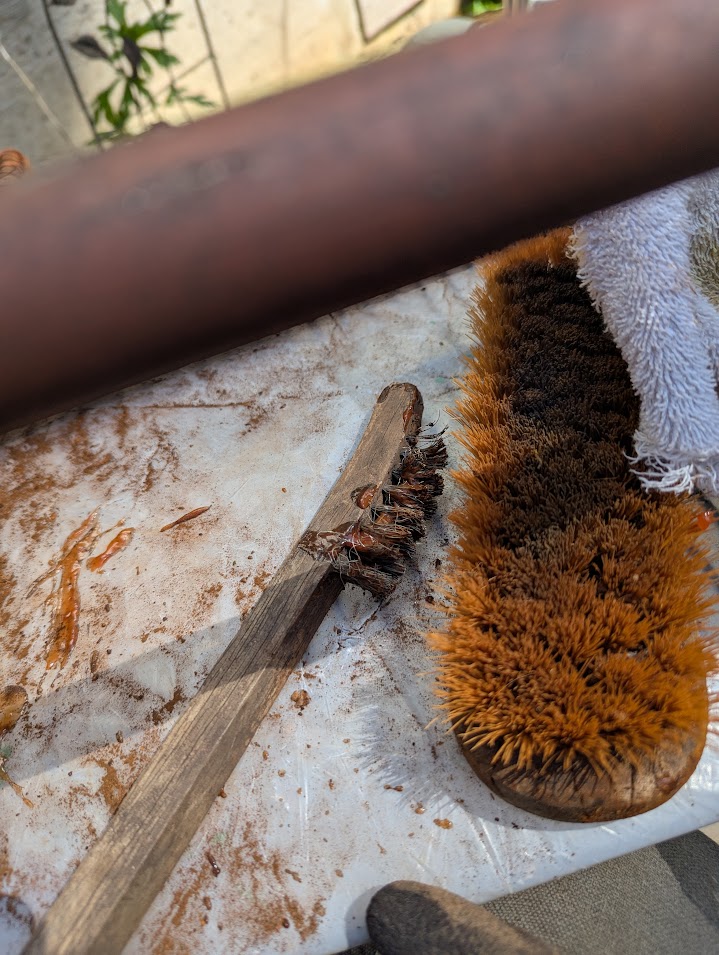
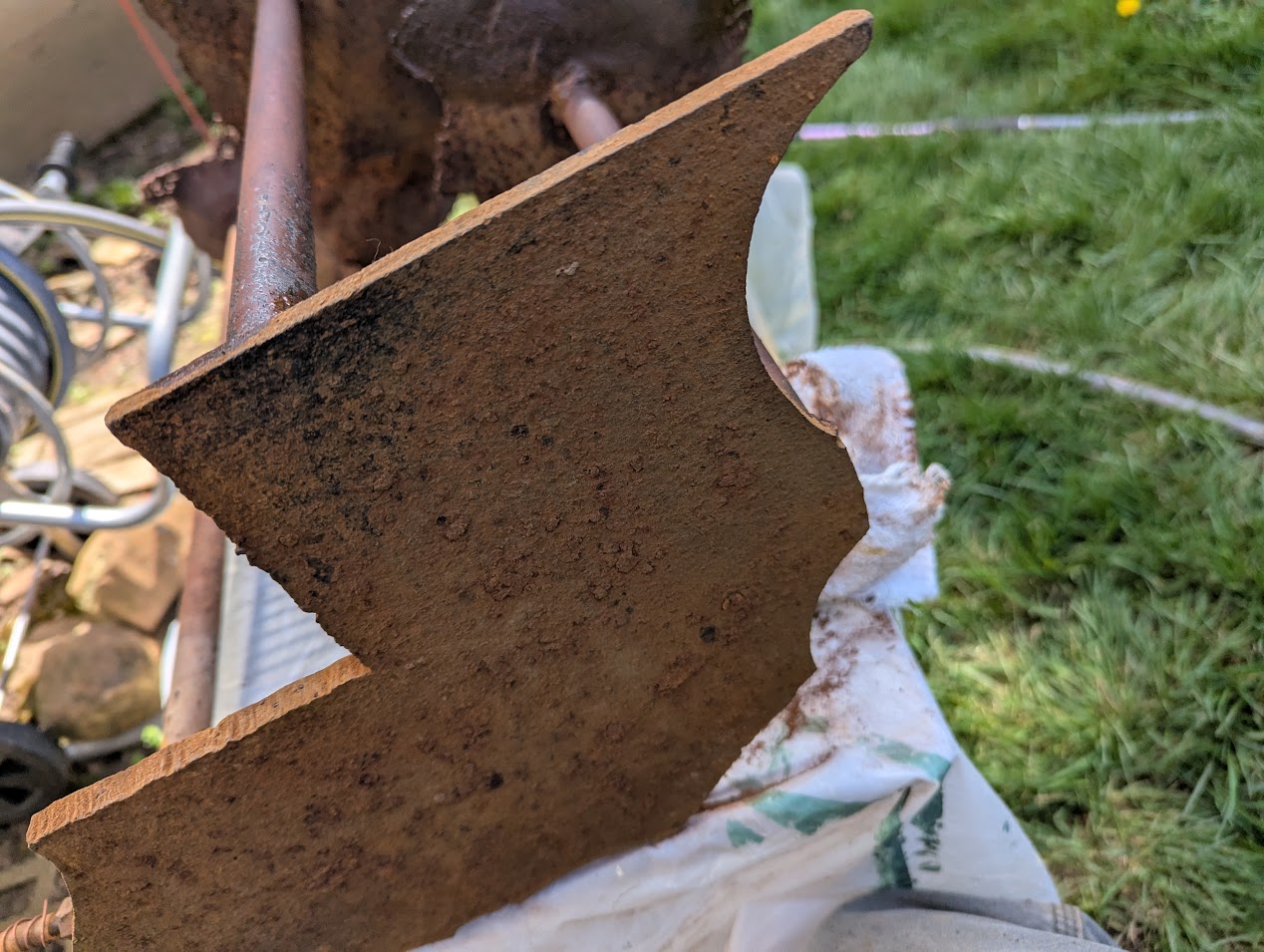
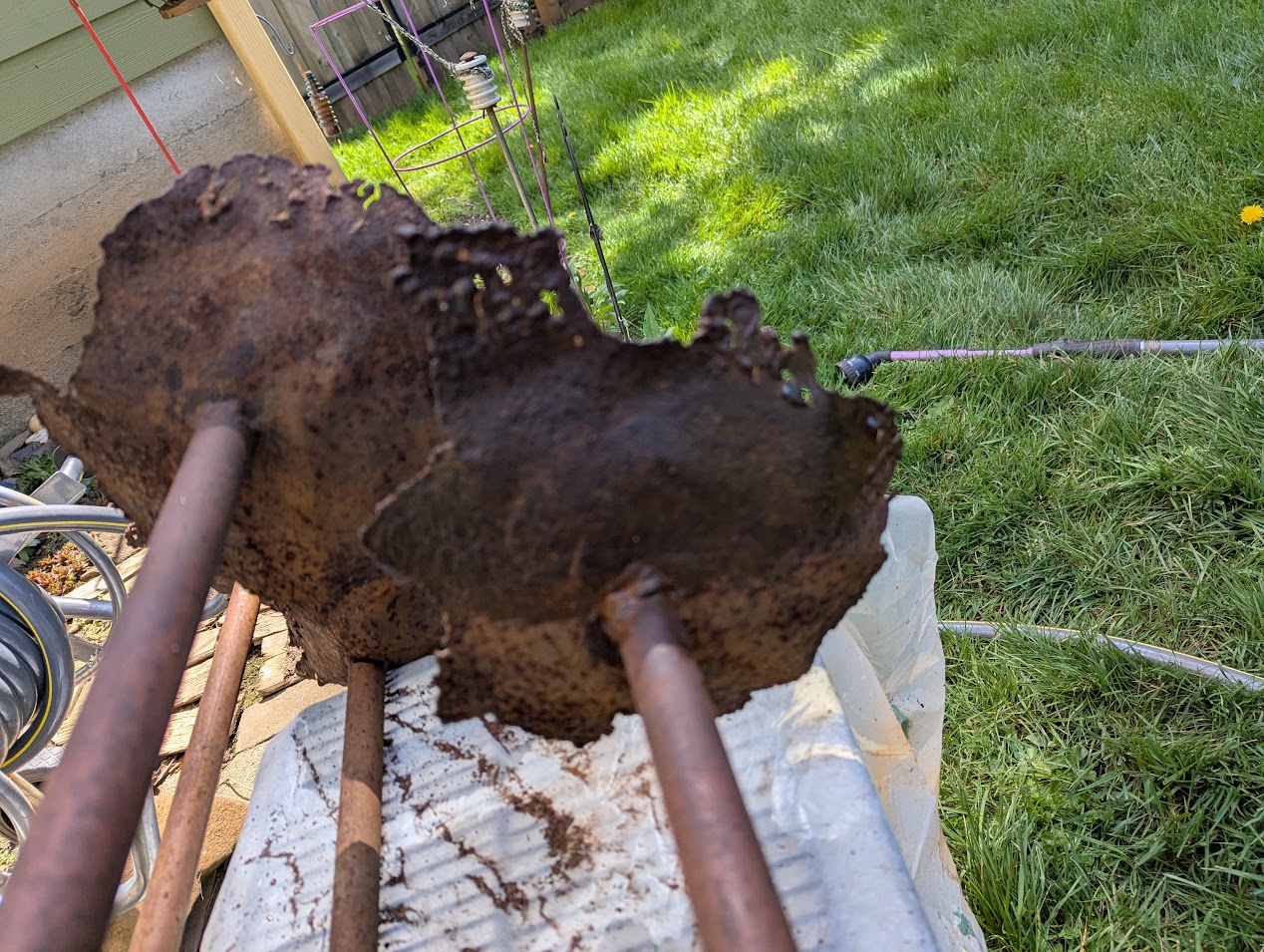
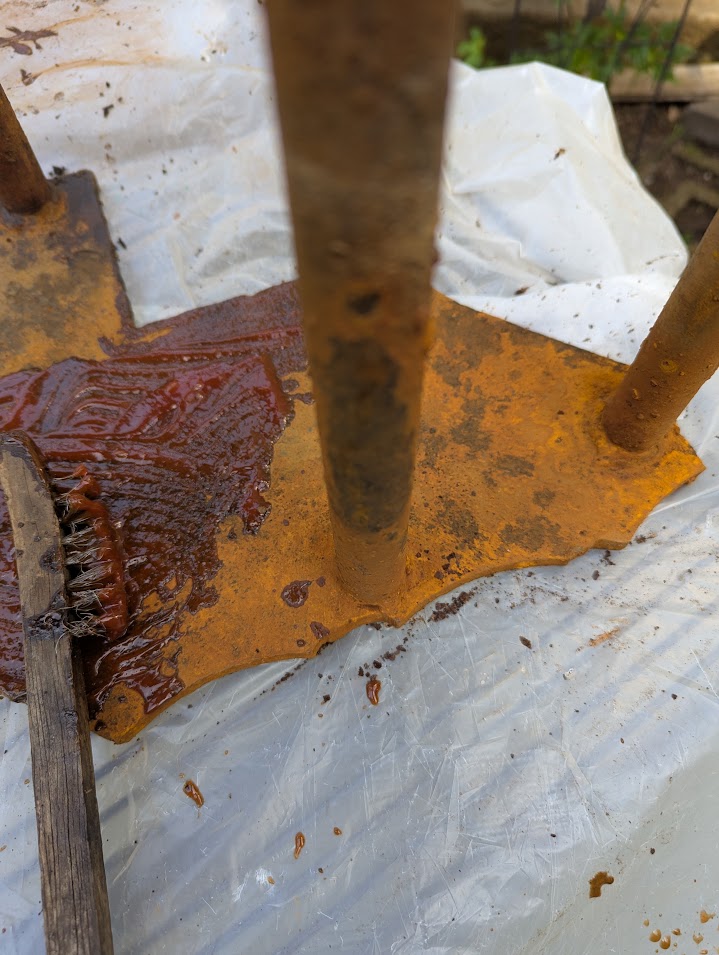
By golly! It worked!
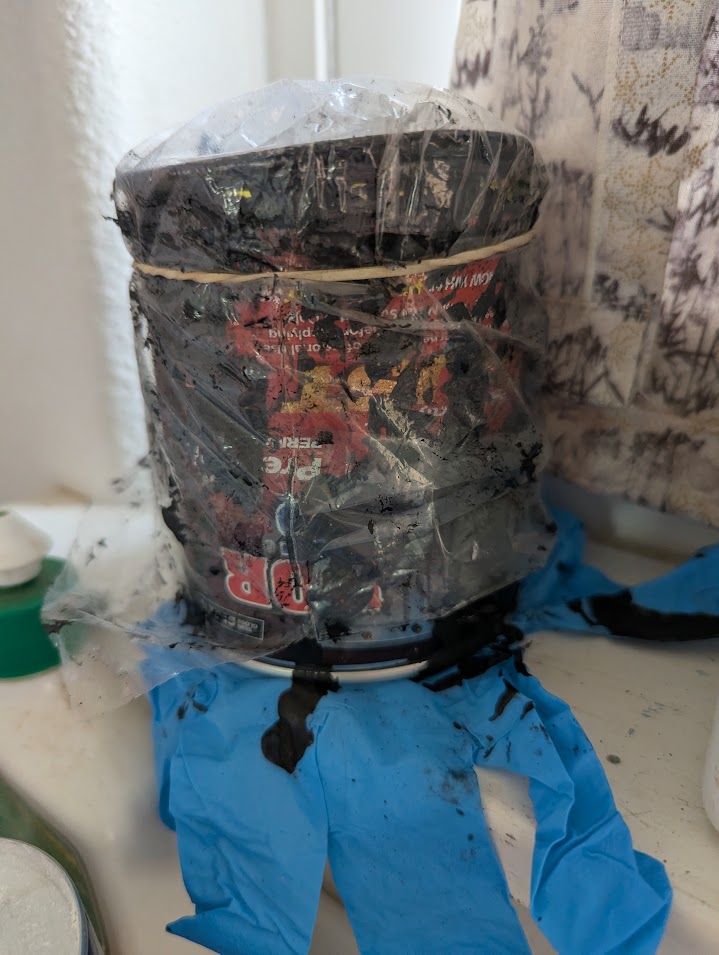
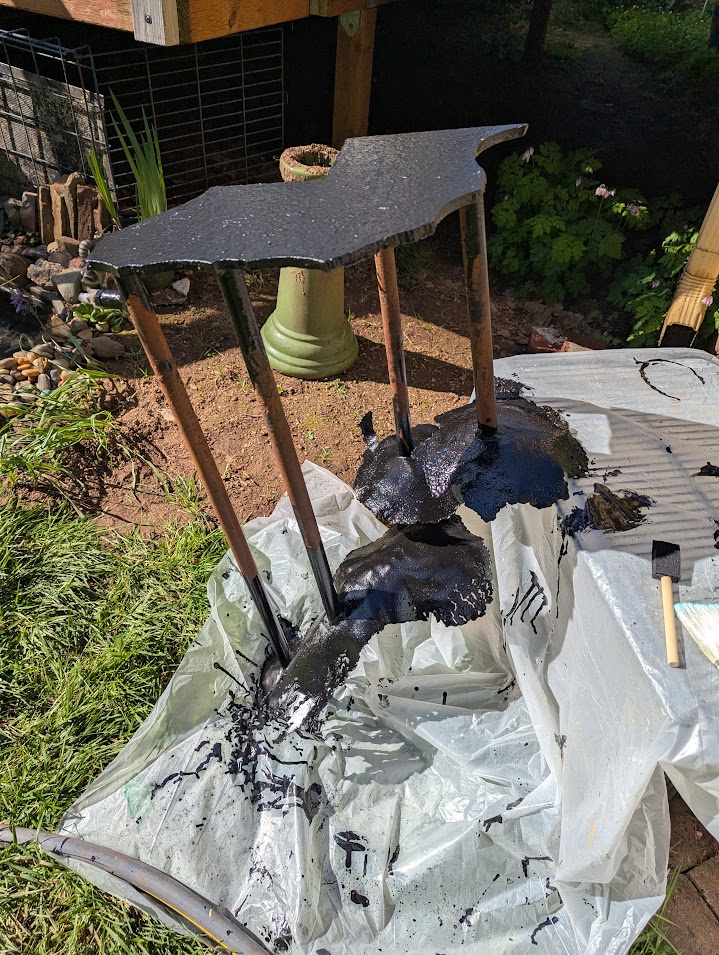
I wasn’t going for full rust removal as we purchased a product that car mechanics know well: a kind of paint that covers rust and prevents more from forming, something called “POR”. This little can cost nearly $50 (!!) and the stuff is super runny. It is a mess to work with! I wore rubber gloves, used a drop cloth, and still dripped it everywhere!
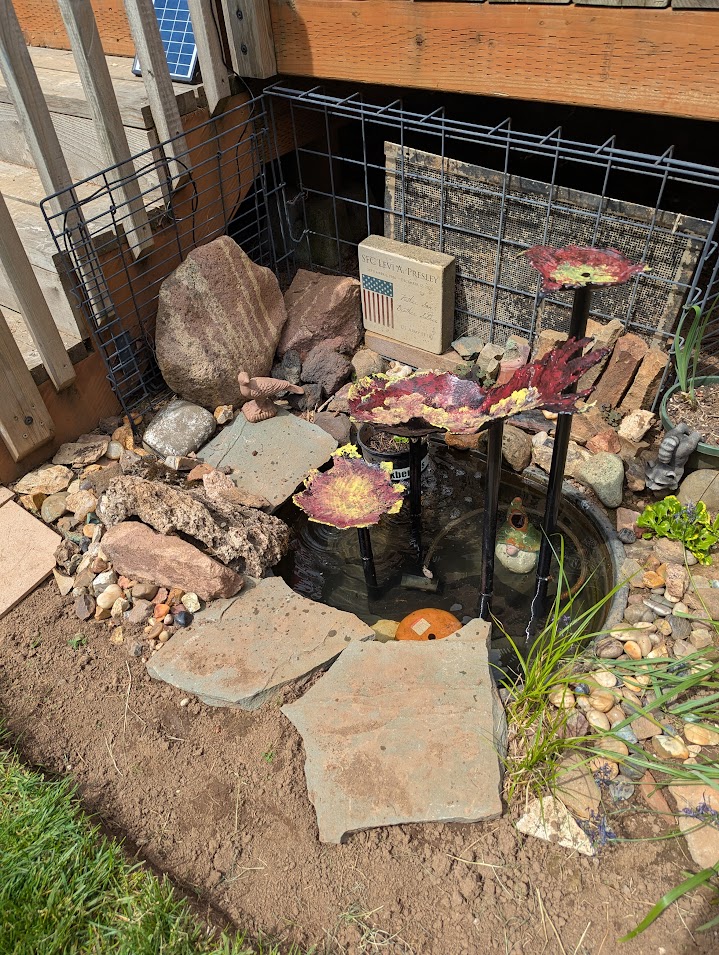
The final touch was to add some color using some outdoor latex paint I already had in possession: claret wine and yellow. I sponged that on and let it dry.
Now I am waiting for Clackamas County Vector Control to deliver some gambusia (mosquito fish). I want to get a few native water plants as well. I already have a couple native water lilies in planters, but something floating on the top of the water would be nice.
I do have to change the filters once a week in the pump, and a lot of earthworms and slugs manage to drown in the pond along with sundry insects. Not sure how to avoid that.
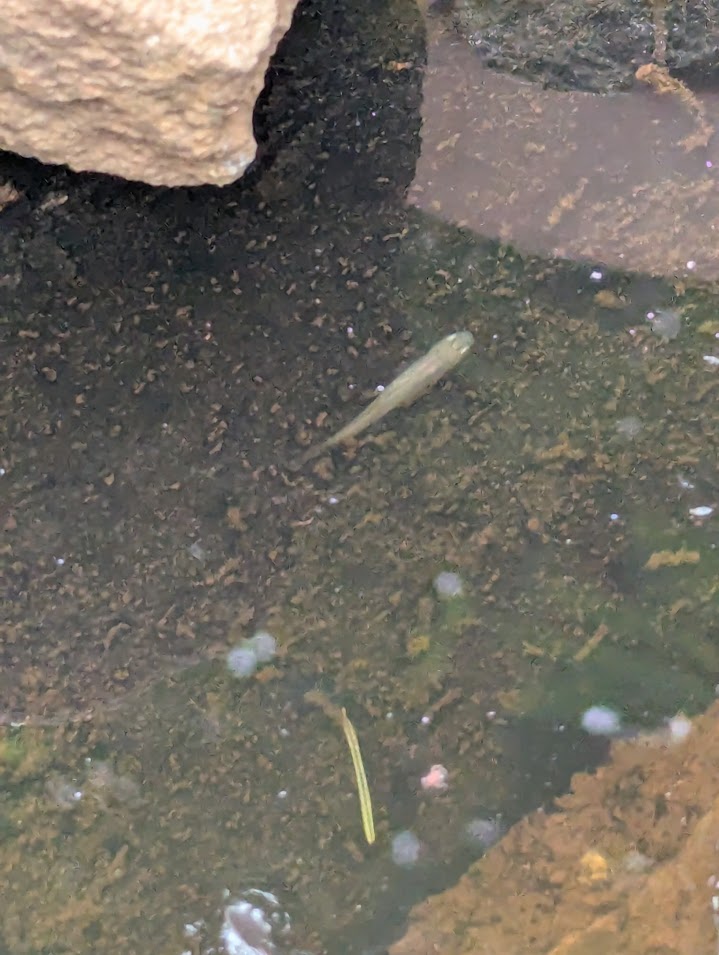
Post Script: May 6, 2026 – My fish have arrived! About the size of guppies, five to a pool. And just in time: hundreds, if not thousands, of little blood suckers are swimming in those waters waiting to hatch into flying blood suckers.
Post Script Script: 6/5/2026 – I know I have two survivors. The mosquito larvae are gone. Whether or not I have more survivors (gambusia) is up for debate. But we don’t have mosquitoes breeding.
Posted in gardening, Uncategorized, tagged flowers, garden, gardening, ground covers, nature, plants on May 13, 2026| Leave a Comment »
Sometimes, you choose your ground cover at the nursery or the garden show. Here are a few I have loved.
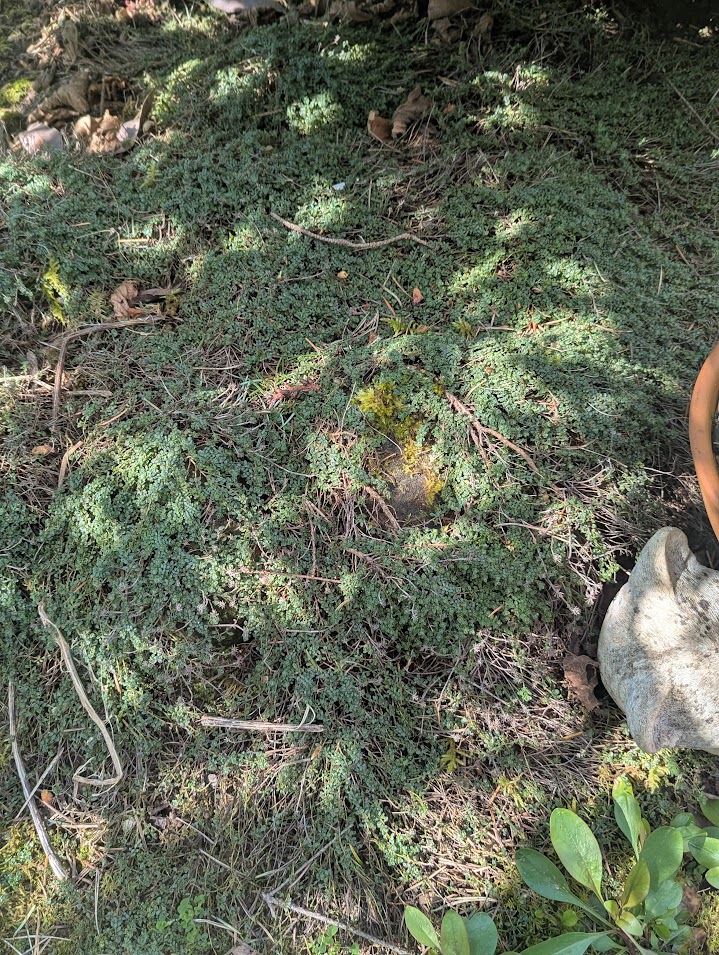
Creeping thyme – Thymus serpyllum. Slow growing, best in rocky places or between stepping stones. I have seeds to plant more. There are several varieties and I have at least three of them. Holds up to light foot traffic, flowers are pretty and range from yellow to a light purple (my favorite).
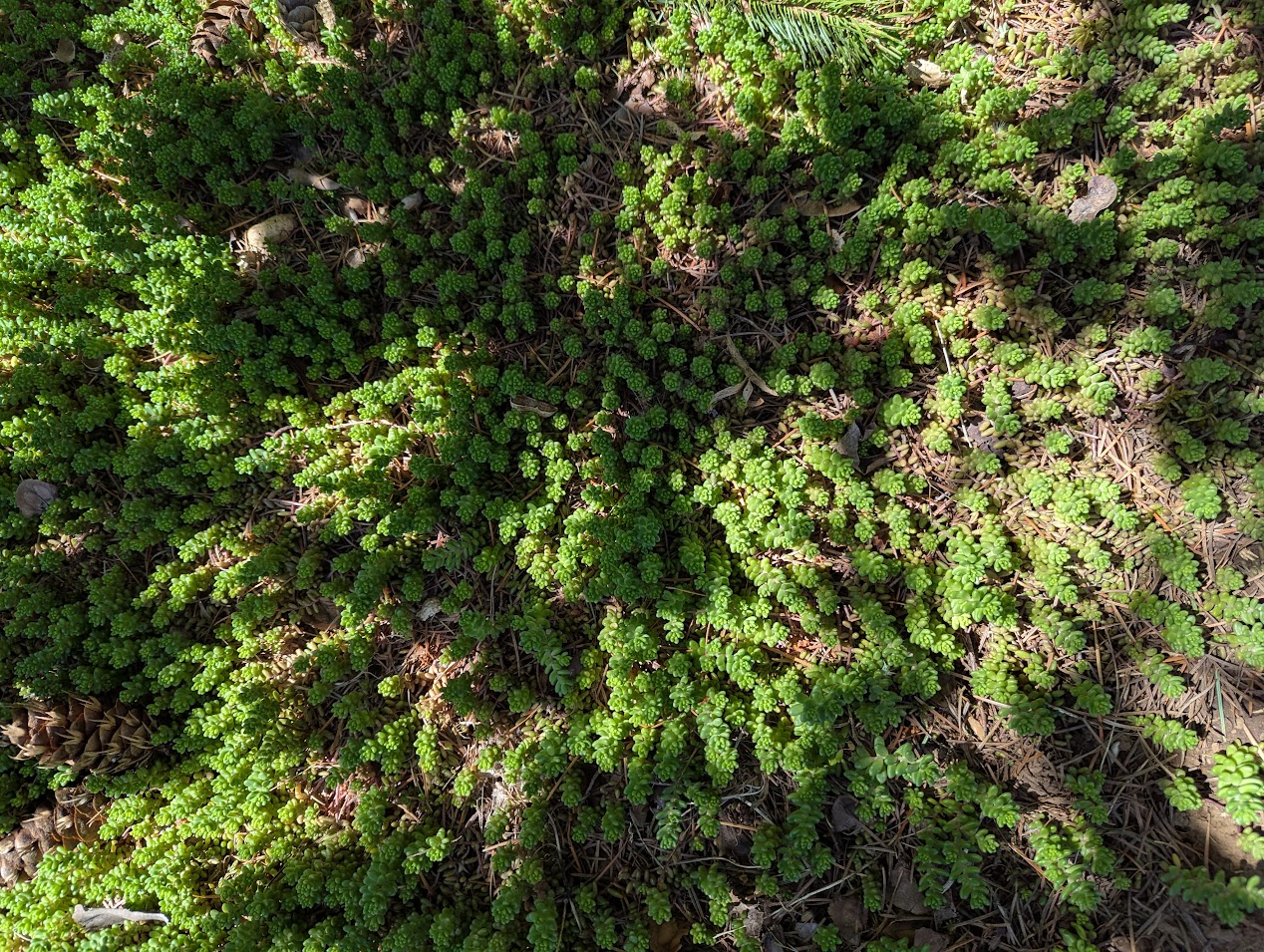
Gold Moss stonecrop – Sedum acre. This is everywhere in my yard now. I only bought one little plant years ago. It’s so easy to maintain, loves to creep over rocks, and flowers mid-summer.
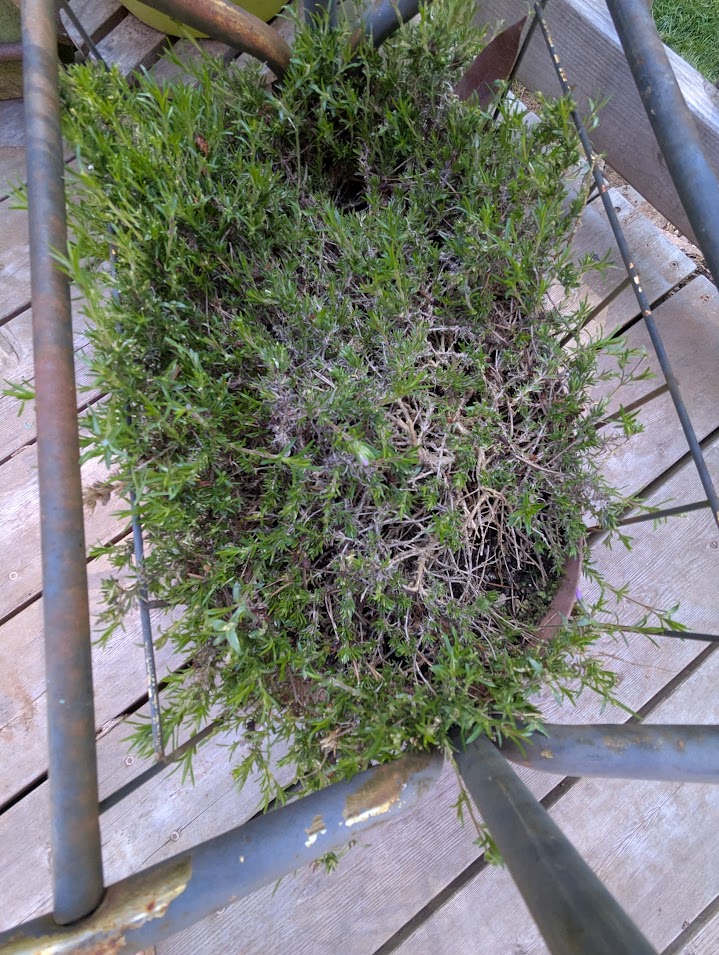
Flowering phlox/moss phlox – Phlox subulate. Mine doesn’t look too healthy in the pot, but I will be moving it to the ground somewhere so it can spread. It grows thick and only blooms in the spring.
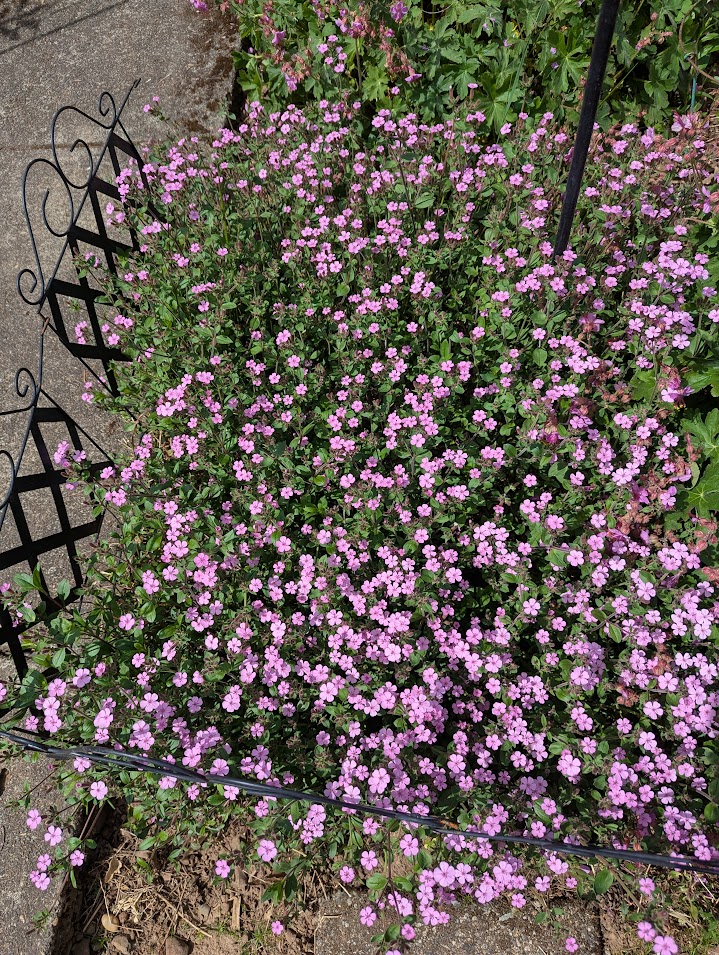
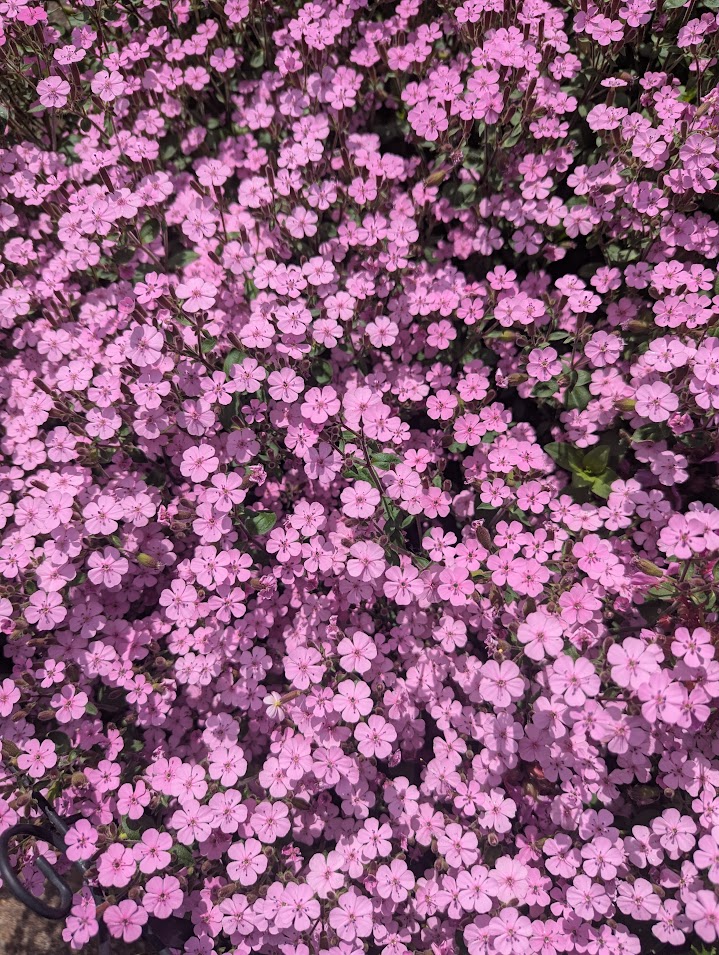
Rock Soapwort – Saponaria ocymoides. So lovely and will bloom all summer if I dead head the first bloom. It does get leggy, and spreads easily. Doesn’t seem to crowd out other plants (in face, the geraniums might crowd it out a bit).
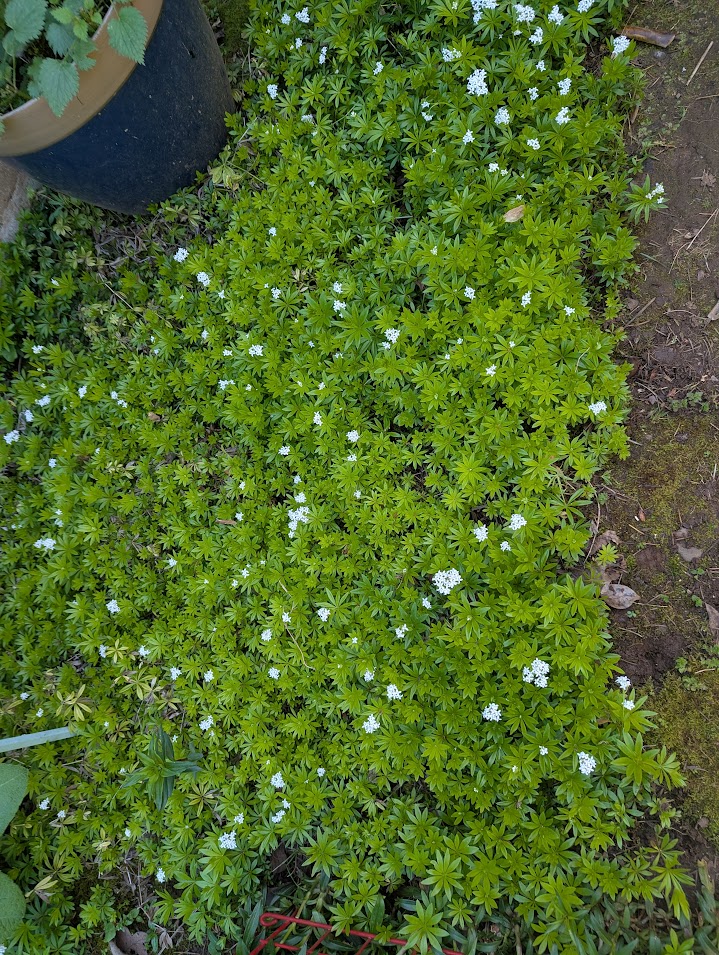
Sweet woodruff – Galium odoratum A polite ground cover. I love this shade-loving herb. It does not take well to foot traffic but it fills in empty spaces and doesn’t compete too much with the other plants. It is simply a polite ground cover.
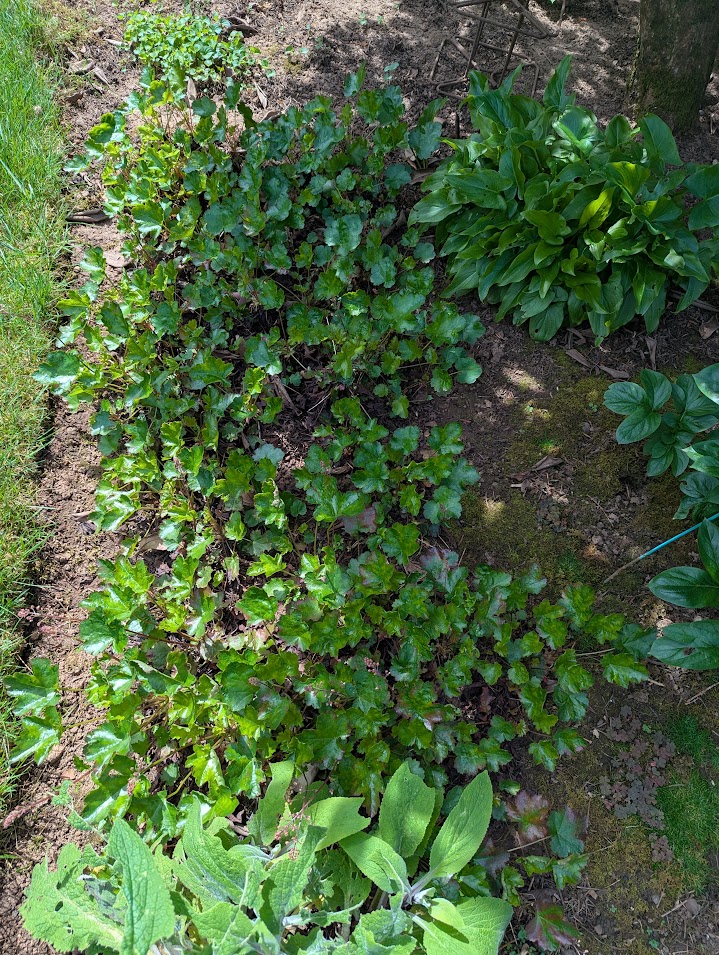
Coral bells – Heuchera. I have a love/hate relationship with them. They spread easily and densely, but never where I want them to spread. There are soooo many species. I have no idea the exact species I have, but I have ripped it out, replanted it in different areas, and ignored it.
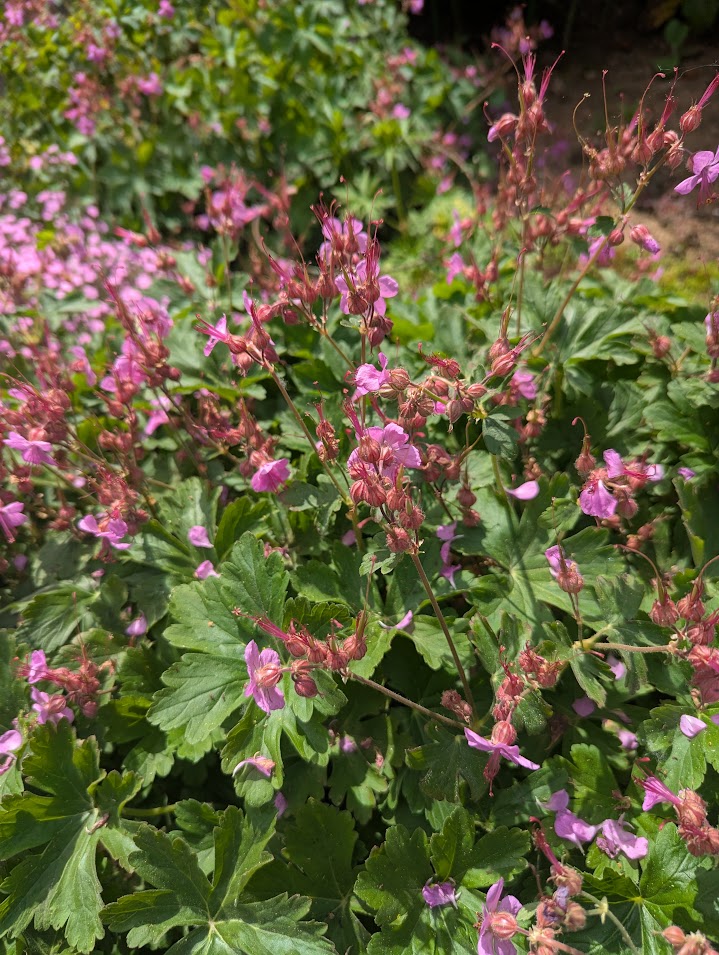
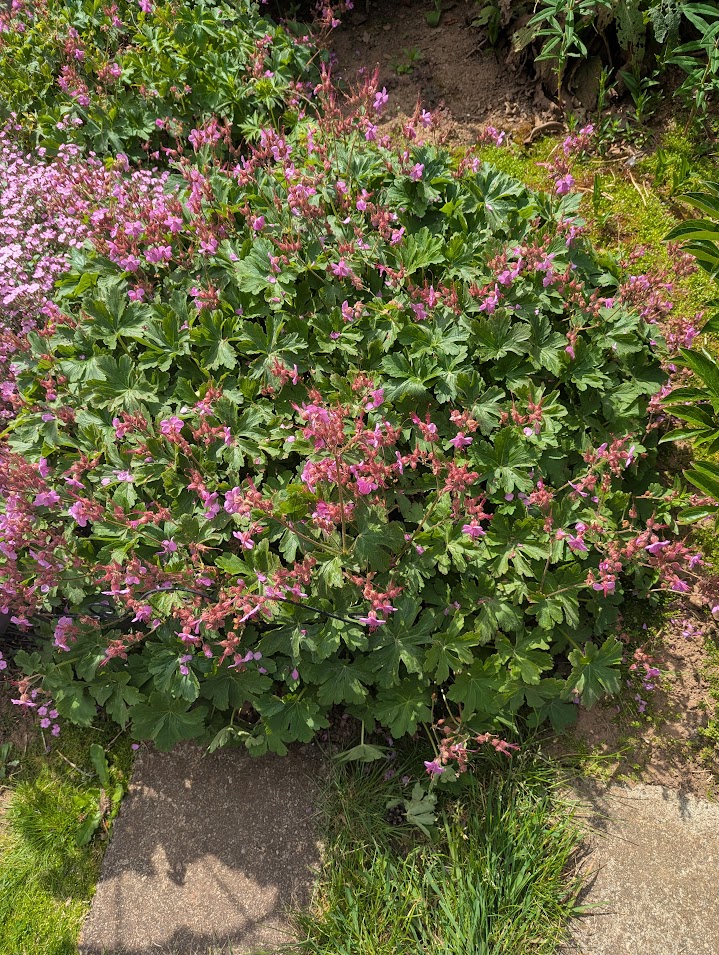
Sticky Geranium – Geranium viscosissimum. I don’t remember when I first bought this and planted it in a little wooden box. It has overgrown the box multiple times, and like the coral bells, I have ripped it out and replanted it elsewhere. In fact, ripping half of it out is an annual end to summer. It also happens to be a native to North America. I may soon move some plants to an area I would like my husband to *not* have to mow.
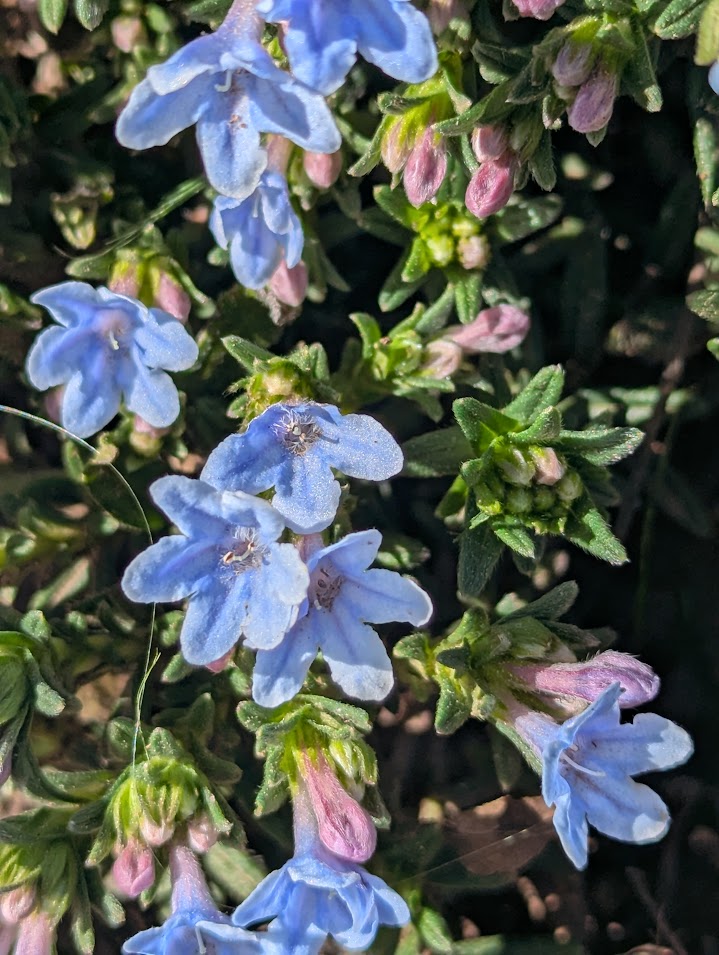
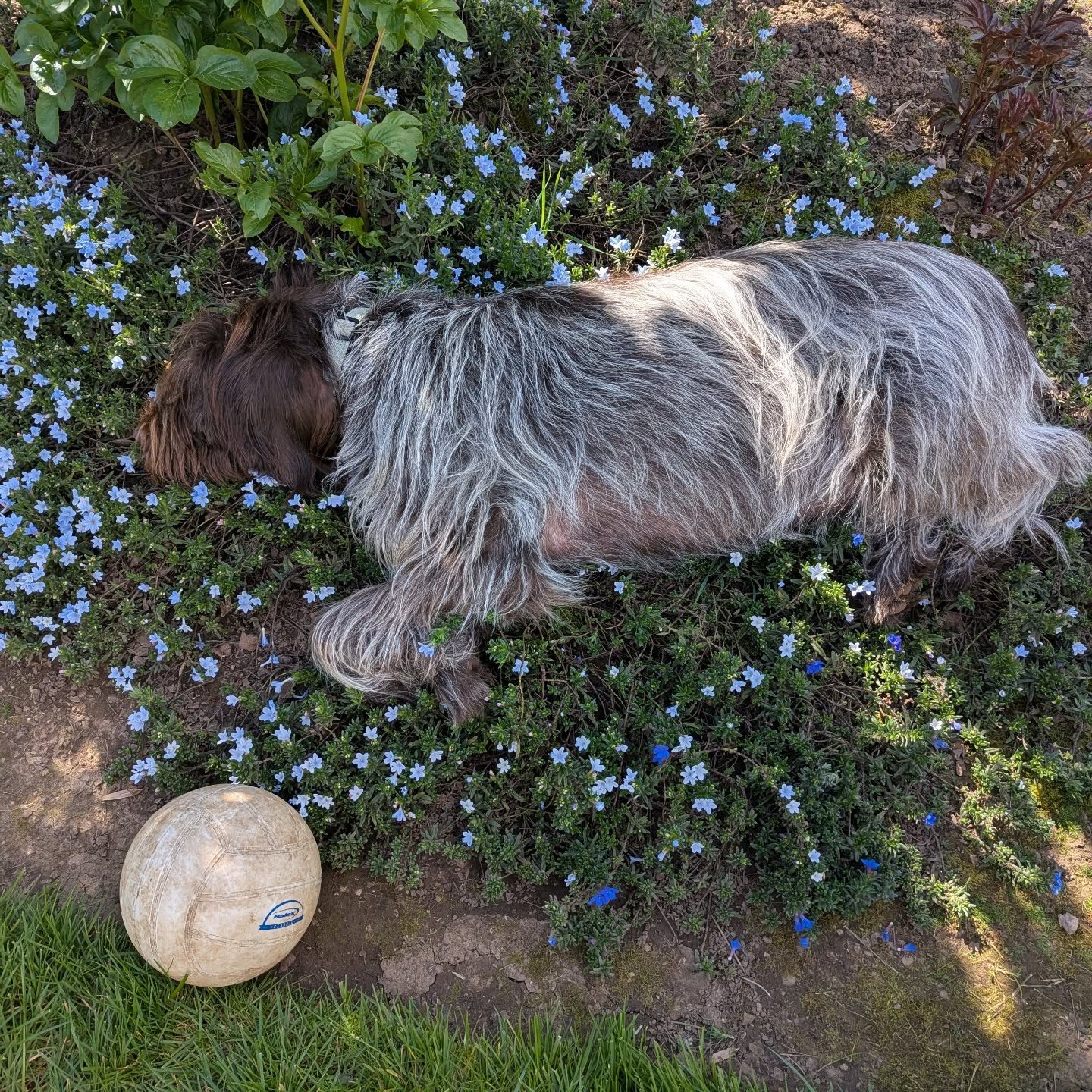
Lithodora ‘Heavenly Blue’ – Lithodora diffusa. This has gone through many changes and two dogs that tried to kill it by loving it too much. Yet here it is. And I just learned it is also called “Purple Gromwell”. Huh. And it is in the Boraginaceae family, along with borage and forget-me-nots.
The dog in the middle of it is a bonus feature: that’s our epileptic, mostly blind, emotional support Wirehaired Pointing Griffon, Ruger.Ruger is five and the second dog to love the lithodora.
Posted in gardening, Uncategorized, tagged garden, garden fair, gardening, herb gardening, herbs, plant buying, plants, seeds, vegetables on May 6, 2026| Leave a Comment »
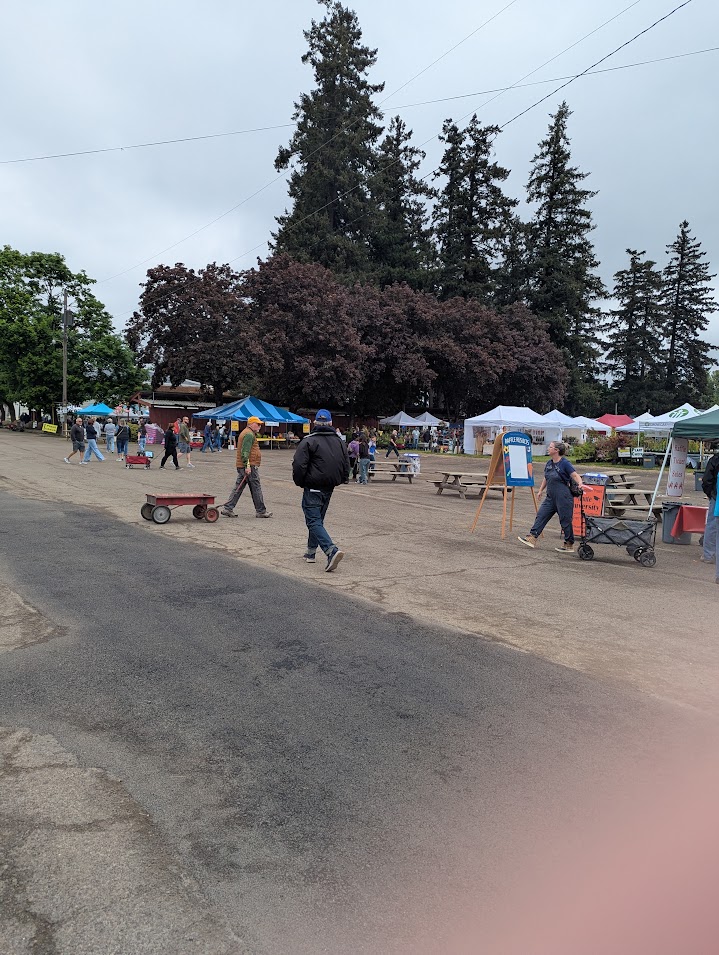
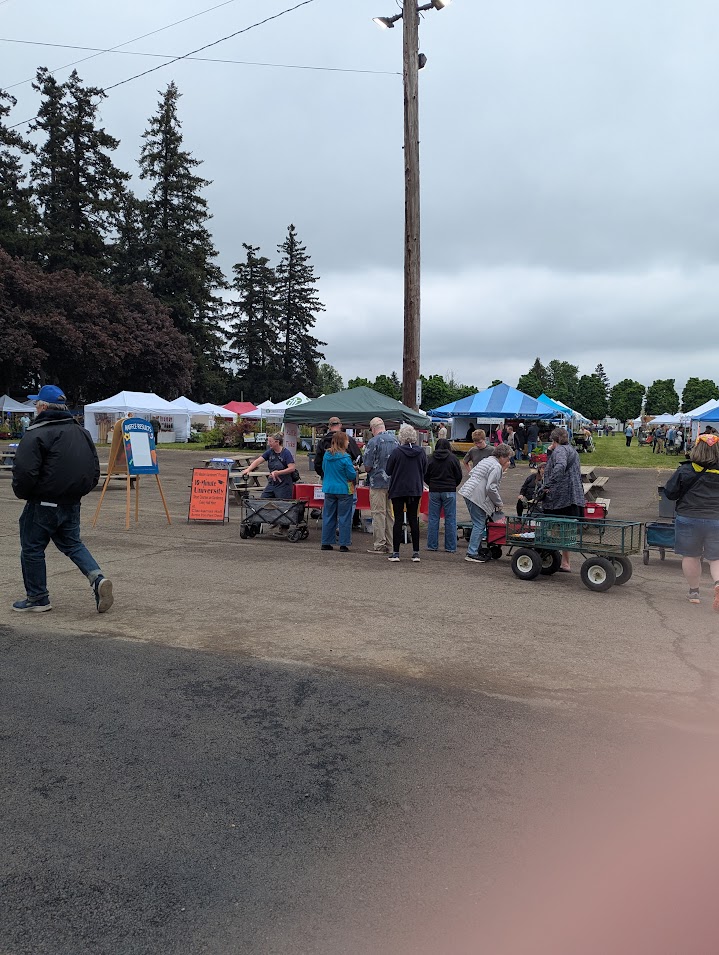
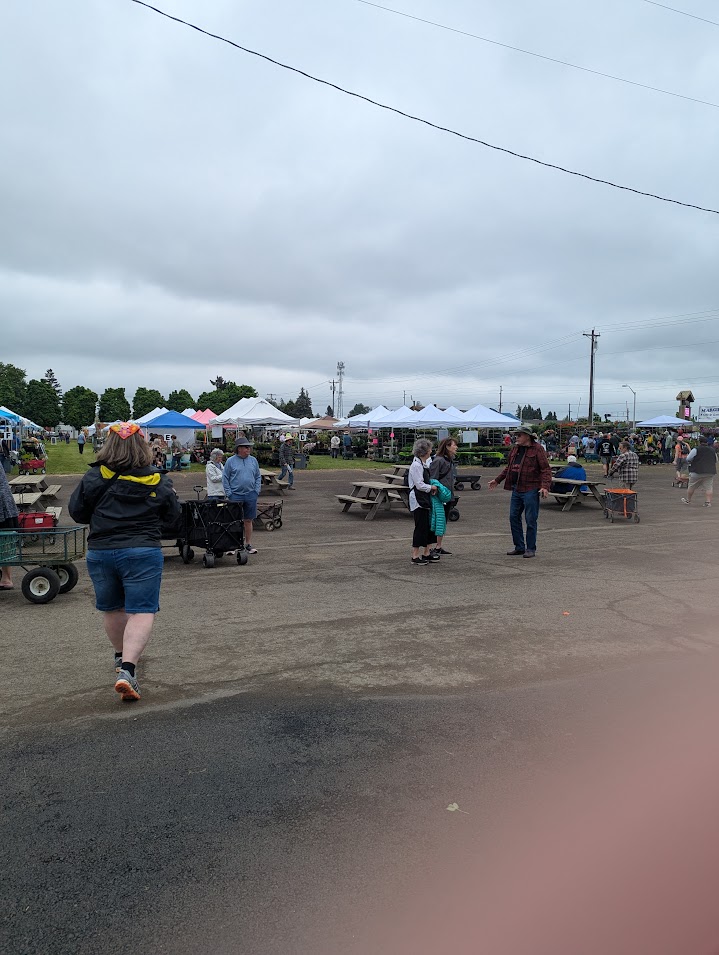
I interrupt my series on ground covers to tell you I spent a little money this week.There were more vendors of Native plants this year, which was a boon to my soul. I was still pretty stingy with my money, by-passing a lot of plants I would love to add to the yard.
My husband had no such restraint. He found tomato varieties he likes to grow, dill, and I-don’t-know what else for the vegetable garden (his domain). He’s the chef. My contribution was to purchase some garbanzo seeds from a small seed company out of Portland. We’ve never grown garbanzos but Don makes a killer hummus and it just seemed logical to buy some seeds to grow our own. Caveat: they will probably not get planted until the fall. We’ll have garbanzos next year.
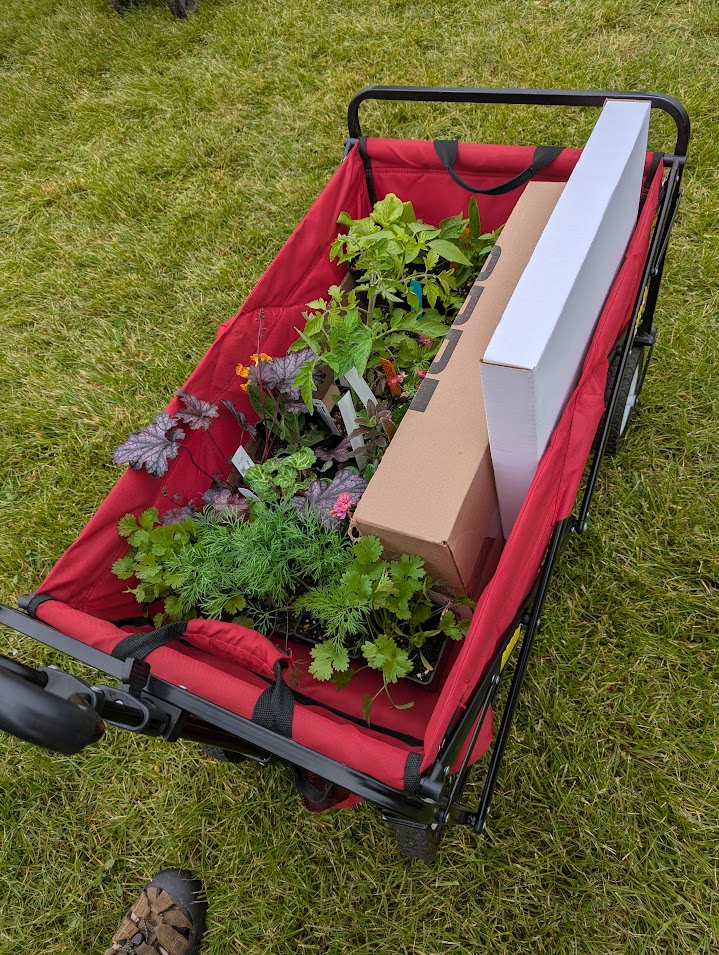
You can see our little wagon filled up pretty quickly between Don’s plants, my plants, and our good friend’s plants. Next year, that good friend may have to bring his own little red wagon!
The haul from Saturday was pretty impressive, but Sunday was looming with the first Farmer’s Market of the season in Milwaukie, Oregon. My husband wanted to buy some lamb from our favorite lamb rancher (SuDan Farms) and I hoped the herb people would be there with some plants…
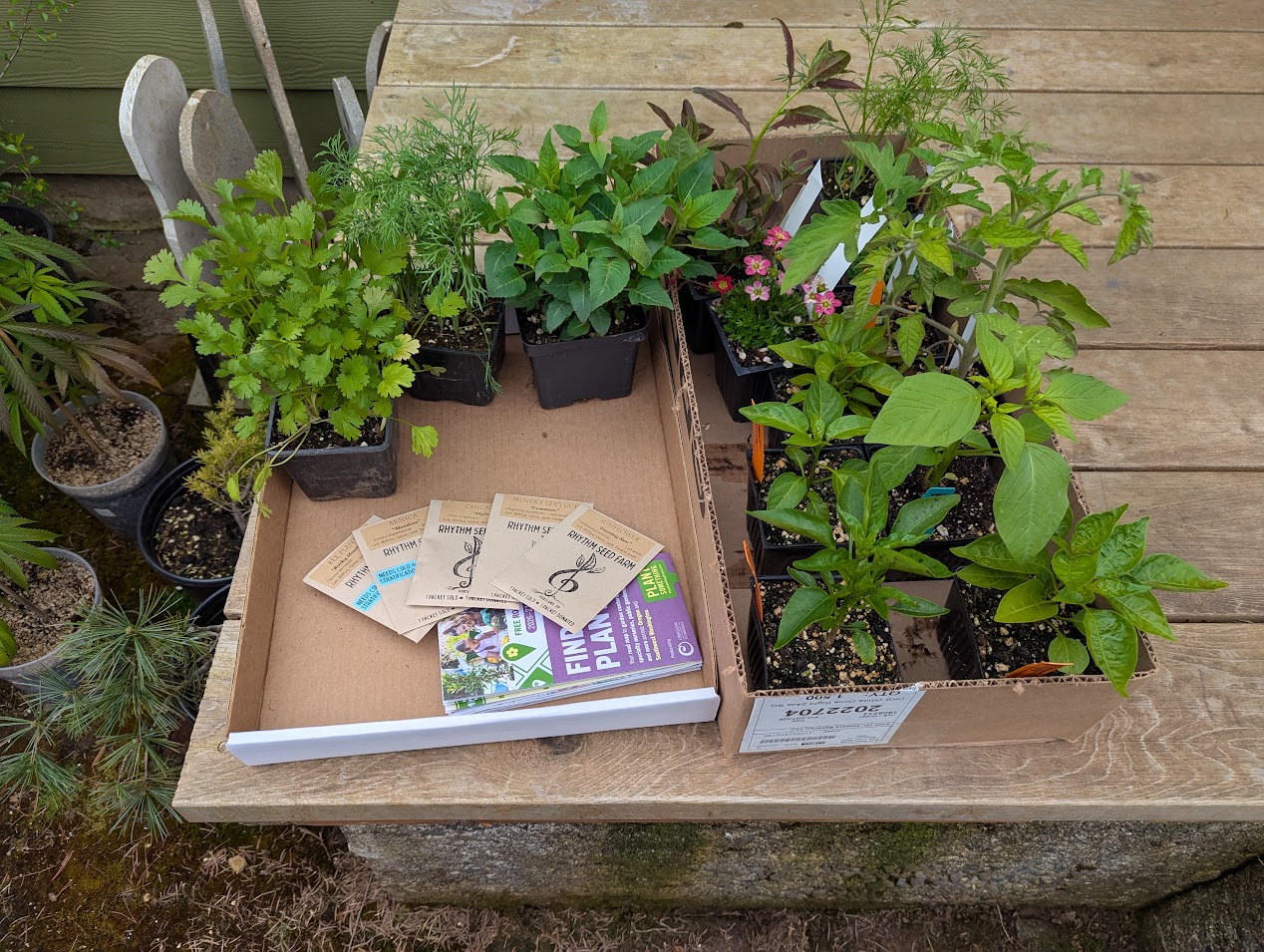
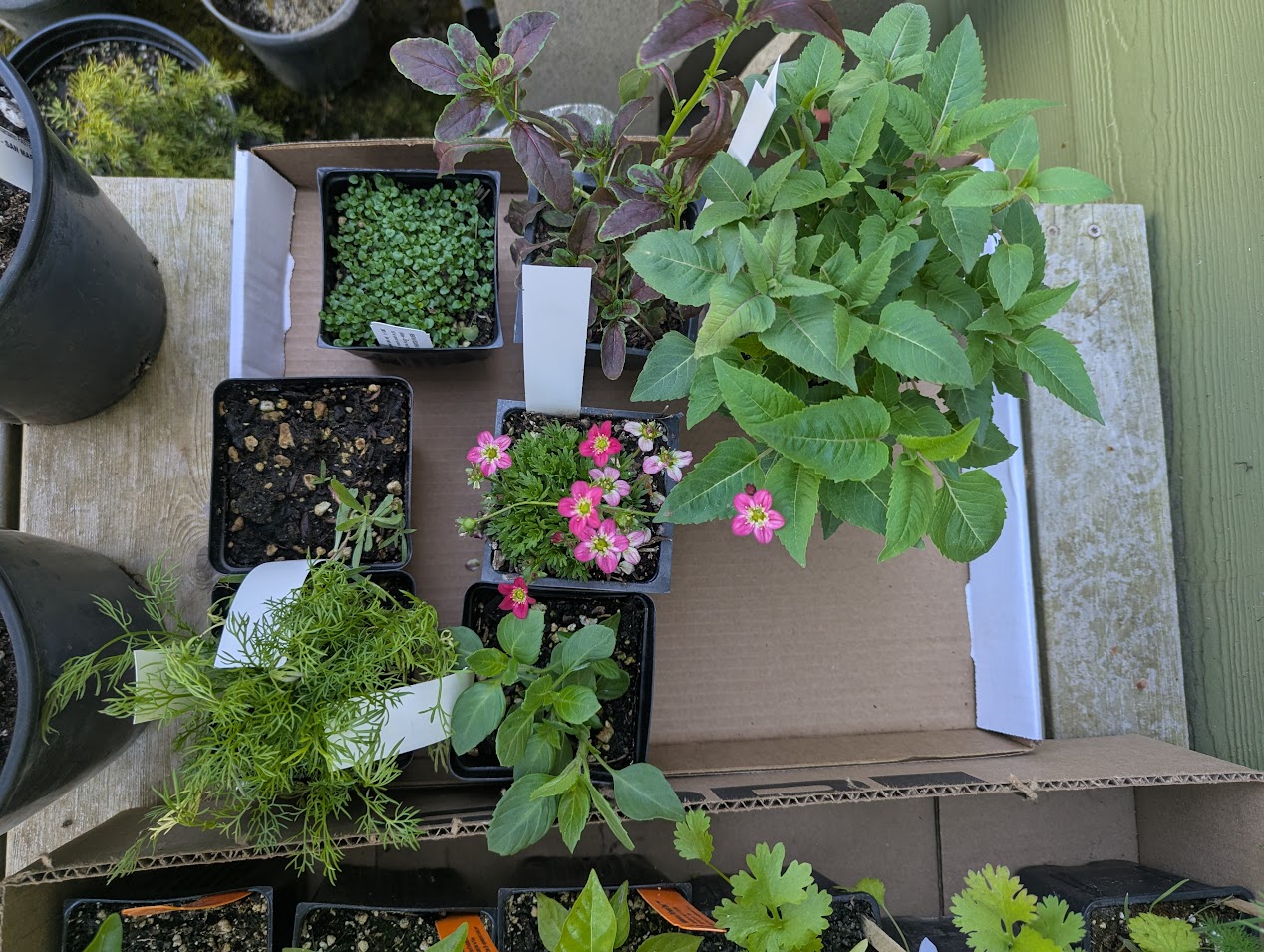
Two more tomato plants and three herb plants later, we stopped for a beer before heading home and toasted our plant haul of the weekend.
Yesterday and today were spent putting all my purchases into the ground, along with some annuals I grabbed at the local grocers (locally grown plants from a small nursery in town).
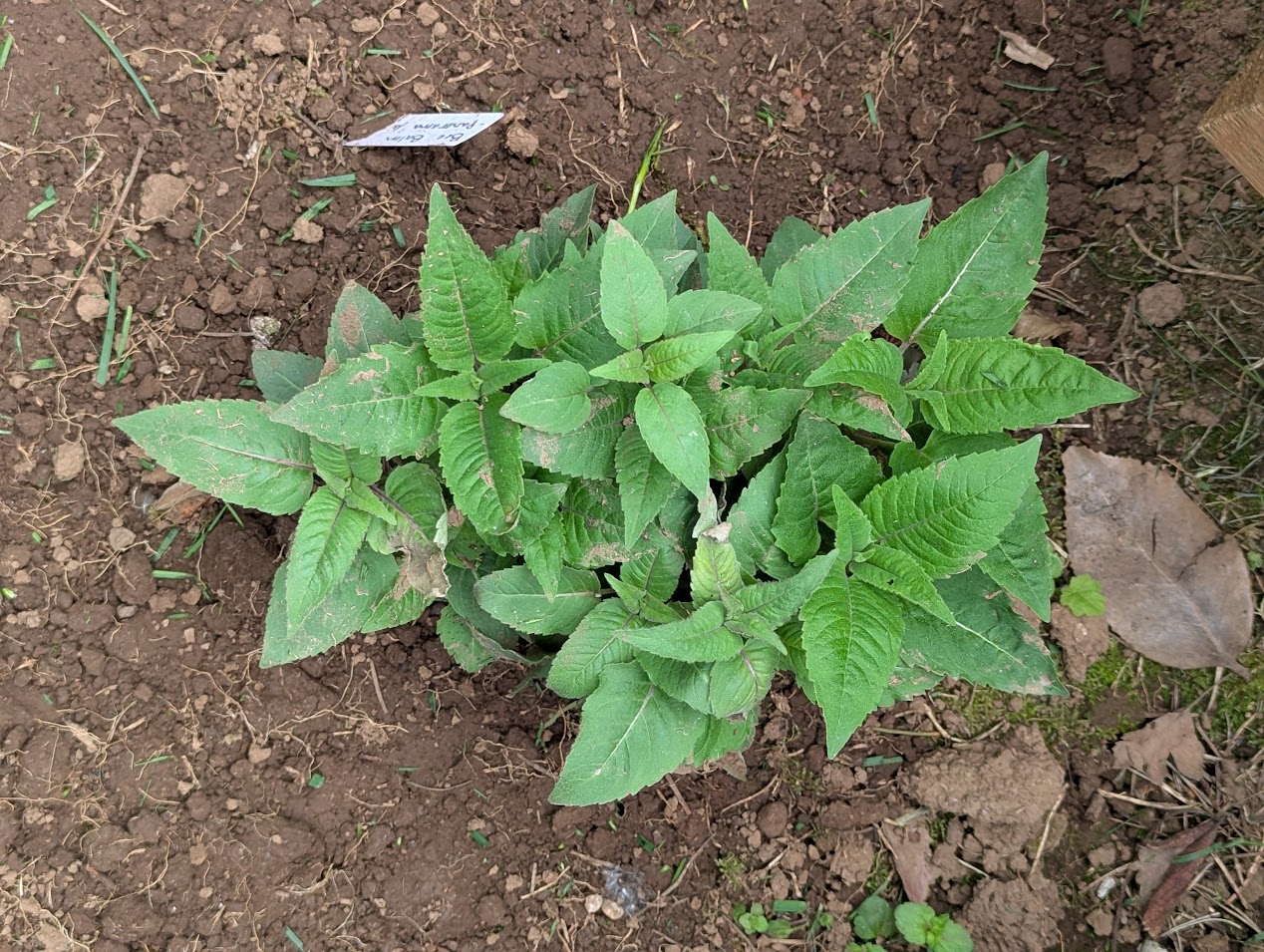
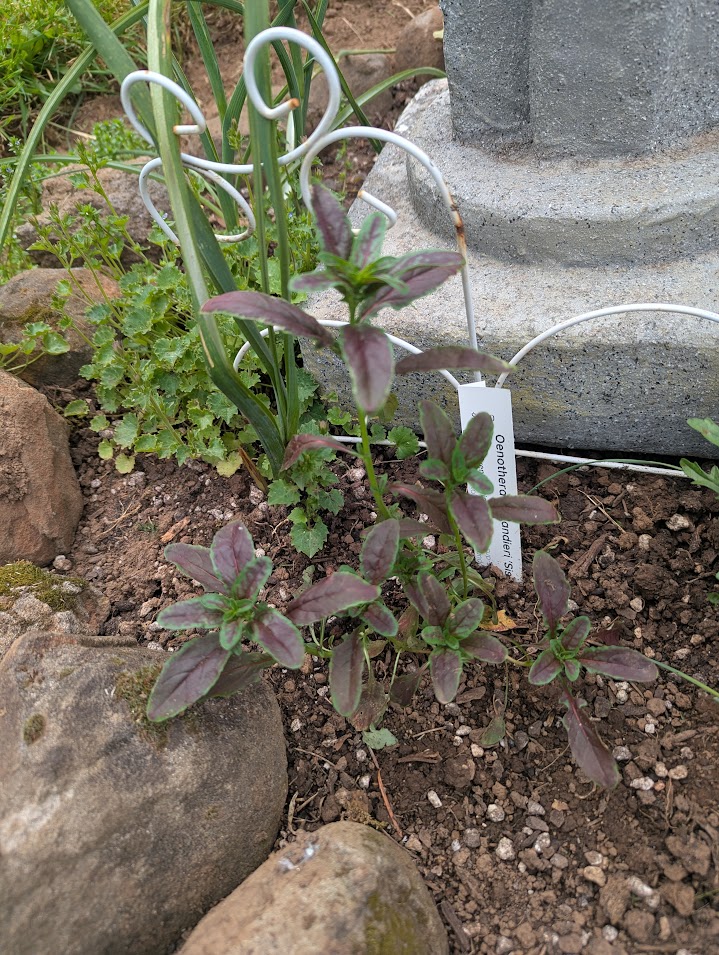
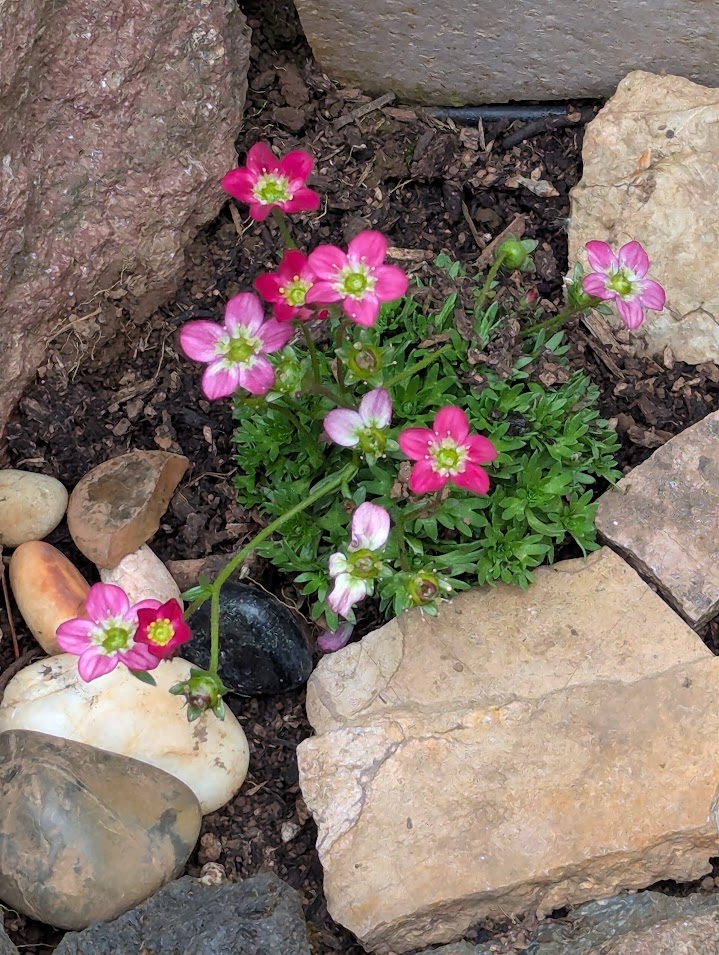
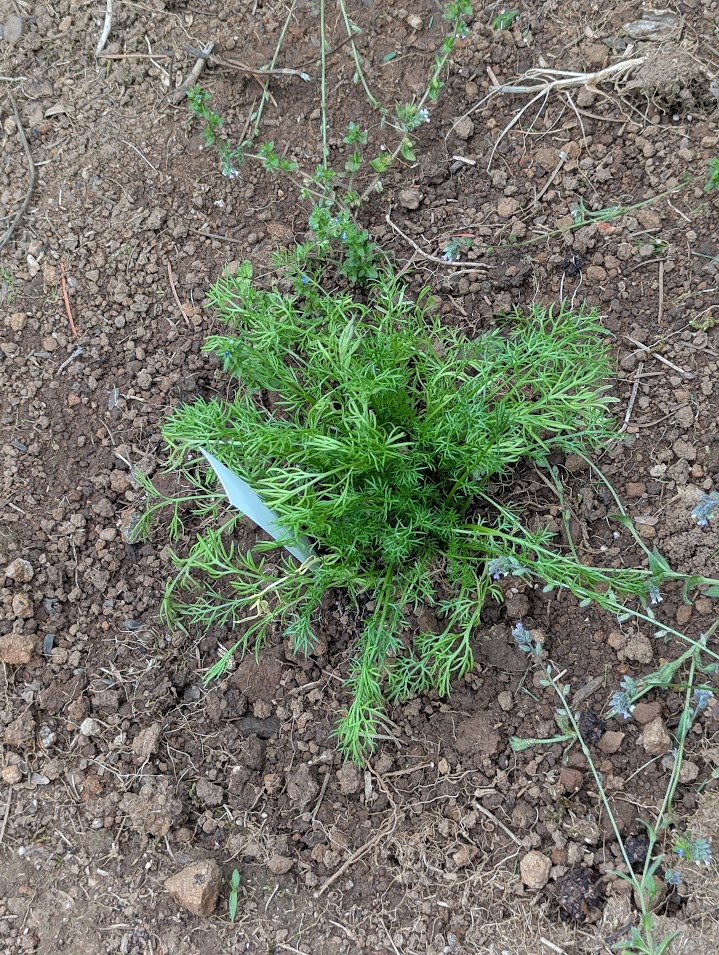
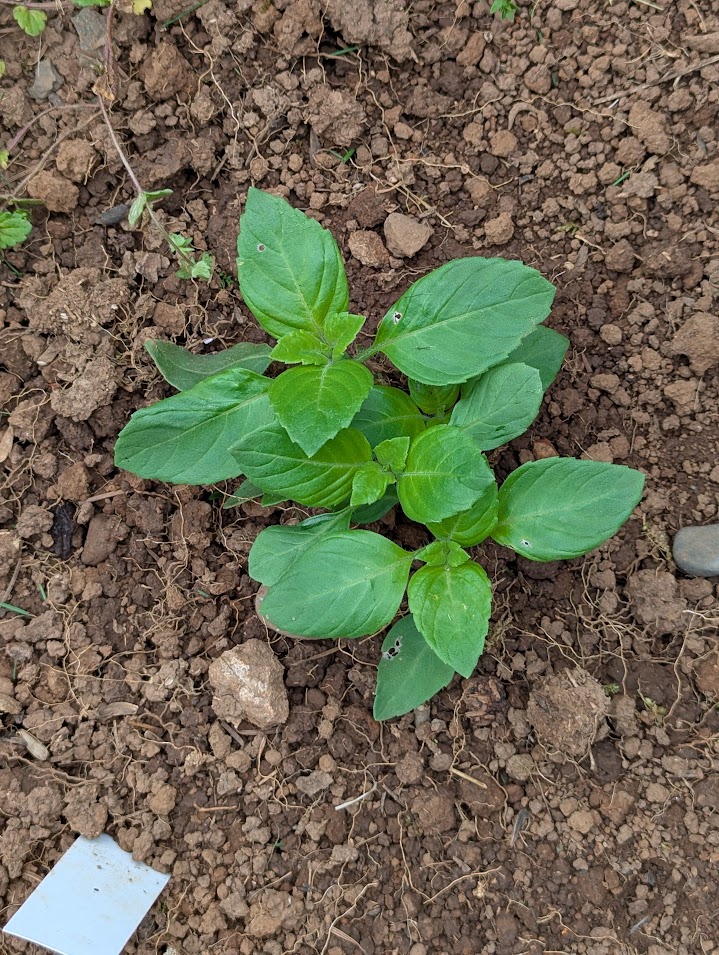
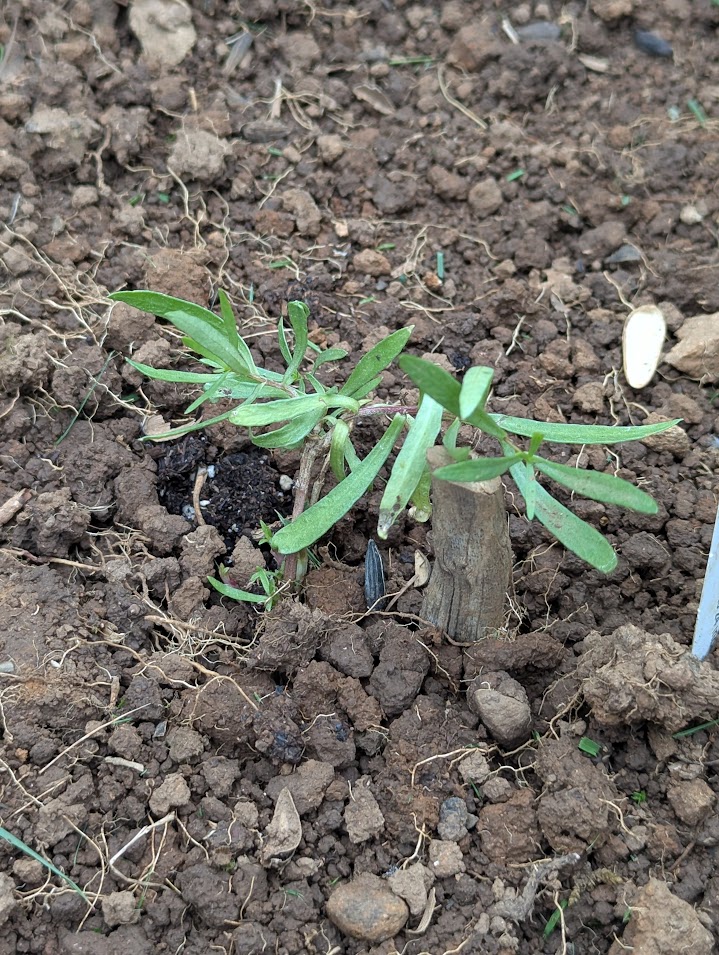
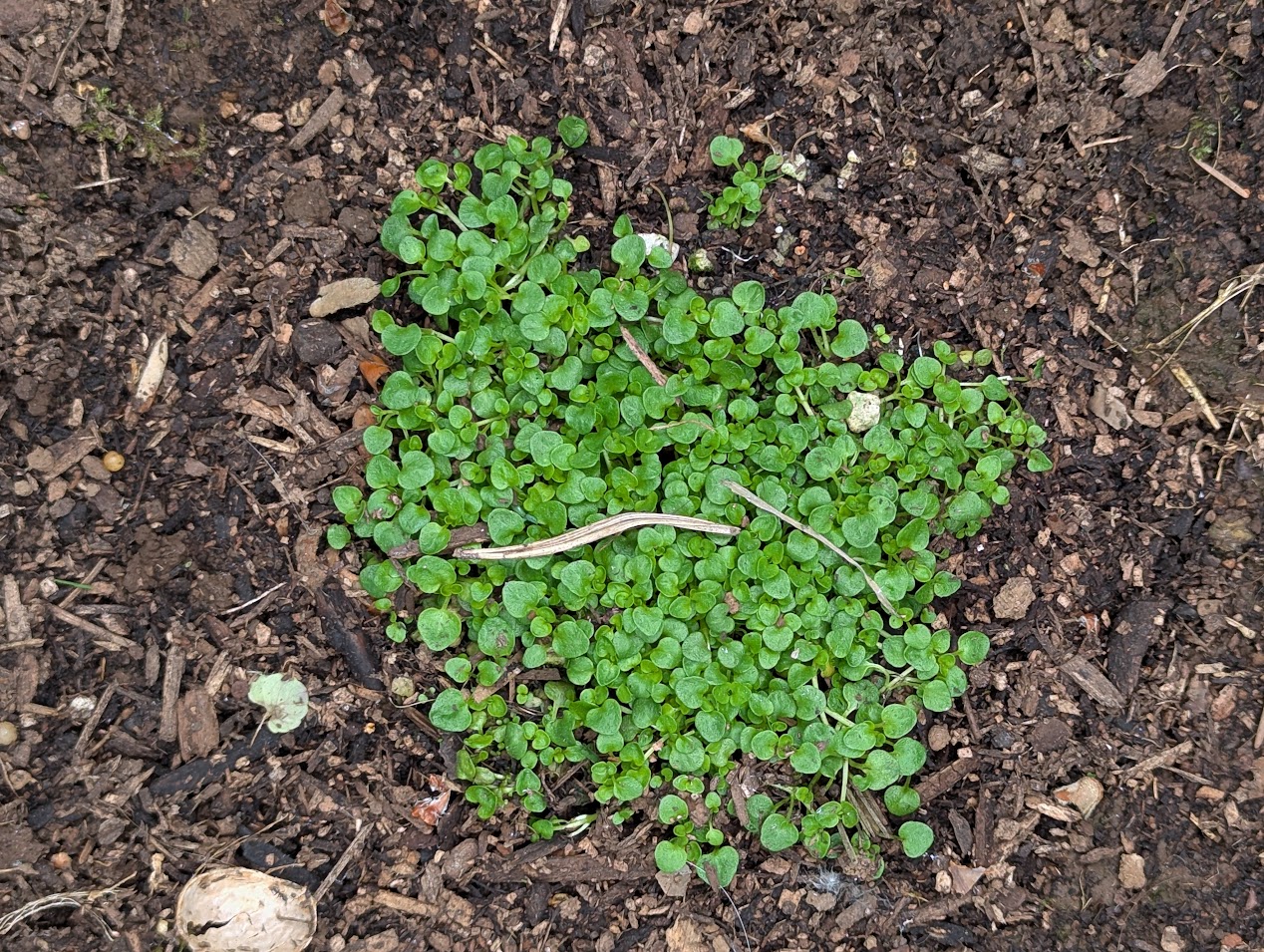
I got: Beebalm (I had two last year, but they failed to resurface this spring. This year, new location with more sun), a primrose (Oenothera berlandieri ‘Siskiyou’), Moss rockfoil (Saxifraga ardensii ‘ MartoTM Rose’), chamomile, Holy basil, and a French tarragon. Don bought 3 peppers (jalapeno, serrano, and a poblano), 2 dill, 2 cilantro, 1 tomatillo, and 4 tomatoes (Bobcat, Genovese, and two San Marzanos). He also threw in a small ground cover: Corsican mint which I planted by the deck.
I added five seed packets to my purchase from Rhythm Seed Farm: sunflower (Helianthus annuus), Miner’s lettuce for fall planting, chickpea (Myles) for fall planting, Meadow arnica (Arnica chamissonis), and Rocky Mountain bee plant (Cleome serrulate). The last two are in the freezer for stratification right now.
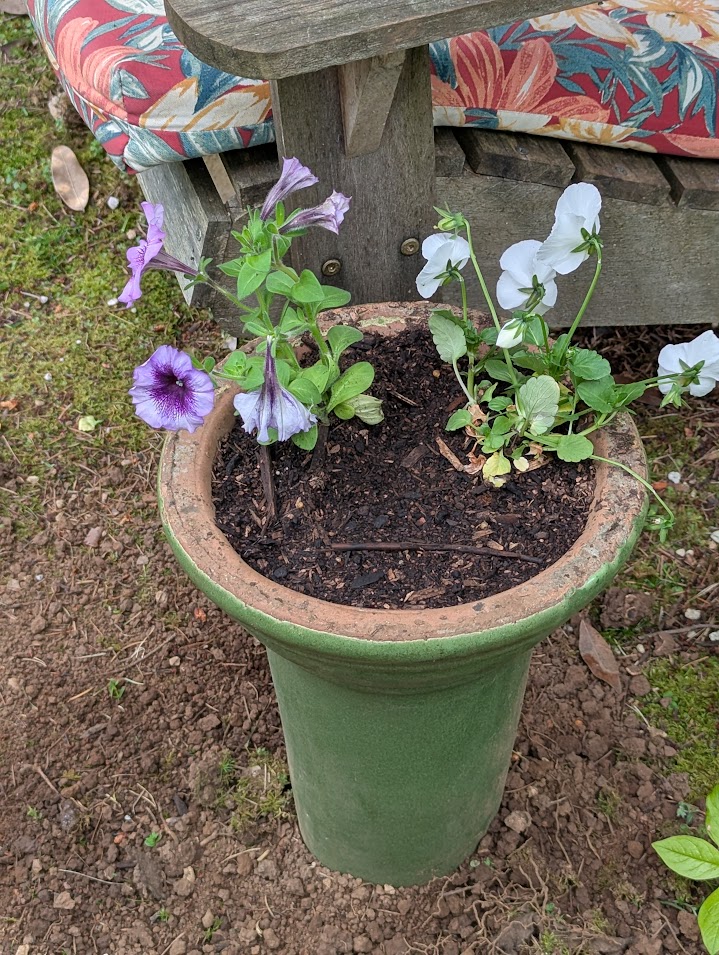
Oh, lest I forget: I bought pansies and petunias for annual color. I always have petunias. And now we wait to see how they all grow.
Posted in gardening, Uncategorized, tagged Douglas Meadowfoam, flowers, garden, gardening, ground covers, kinnickinnick, native plants, native-plants, nature, Pacific bleeding hearts, pacific northwest native plants, penstemmon, poached egg flower, wild ginger, wild strawberry on April 30, 2026| Leave a Comment »
Intro: PART ONE – Hitchhikers
Many of the afore-mentioned “weeds” in my previous three posts are now ground covers I allow to spread. Ground covers reduce the need for bark dust or other material that has to be purchased every year or every other year (I used hazelnut shells in the past) by doing the same thing: holding moisture in the soil. I like the idea of plants over the bark dust/hazelnut cover, simply because plants offer color. And many ground covers crowd out weeds, like the persistent grasses that plague my flower beds.
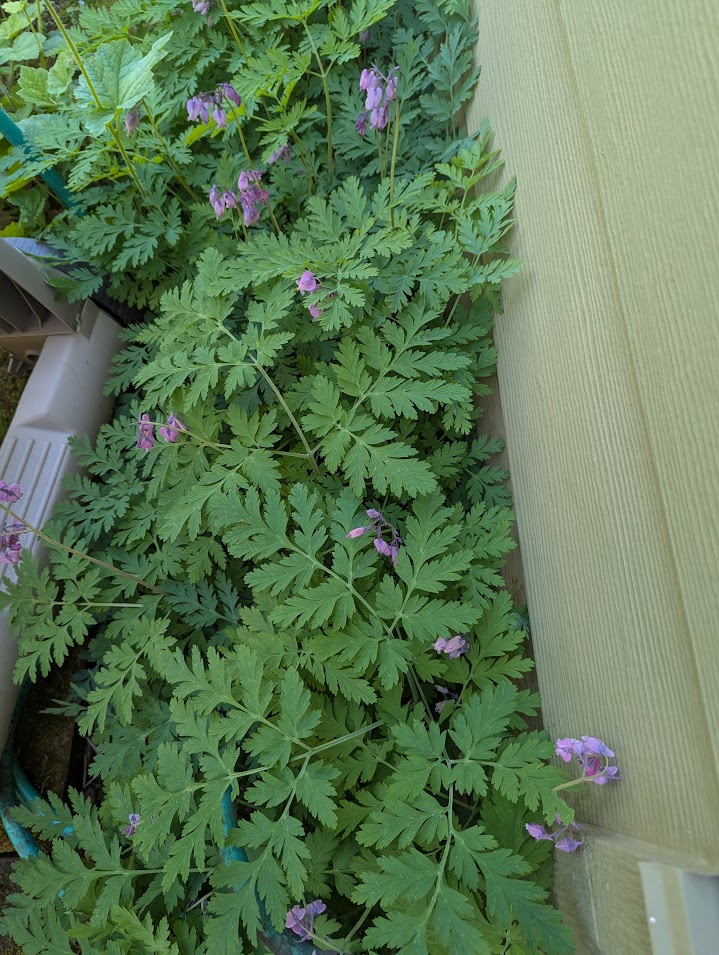
Pacific bleeding hearts – Dicentra Formosa. These beauties came with the house. They are a seasonal ground cover, growing in late winter and fading is the heat of summer, but they are native plants. I did purchase a couple commercially developed bleeding hearts for the flower bed around our decking, but the natives are here to stay. They grow wild in little corners of the yard and I am planting more north of the garage in our little median between properties. Bees love them. They take no effort to grow and are easily controlled.
Many or our native ground covers came into our yard as hitchhikers on something we dug up on Federal lands: the blue elderberry, the black-cap raspberry, a yew, and so on. You never know what all you might haul home in a root ball from the wild.
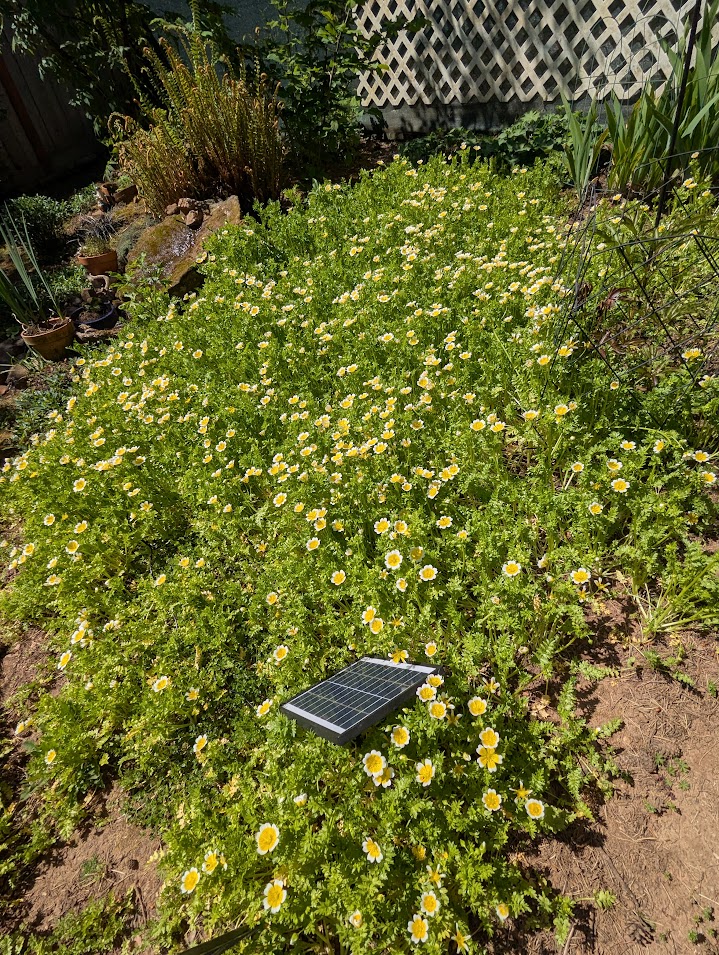
Douglas Meadowfoam – Limnanthes douglasii. Poached egg plant, so called because of the beautiful flowers. One or two showed up when we planted a yew and a big-leaf maple tree (both of which later died, sadly). They have spread to cover half of the flower bed in my little “prayer garden”. They start growing in early winter, covering the ground with greenery. The bloom is in early spring. By the time the heat comes on, the lants wither and die, like the bleeding hearts. I have tried other plantings to cover up the barren soil there, but this delicate ground cover doesn’t tolerate other plantings too much. Peonies are about the only exception. I don’t want to lose this ground cover, so I put up with barren ground for a couple months every year. It is worth the price when they bloom!
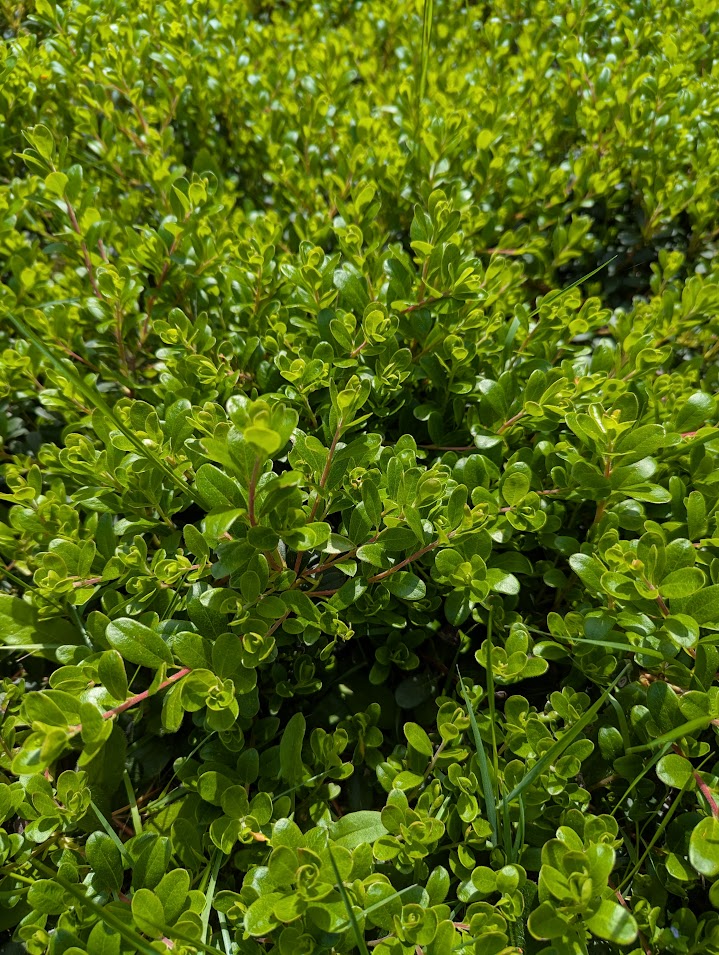
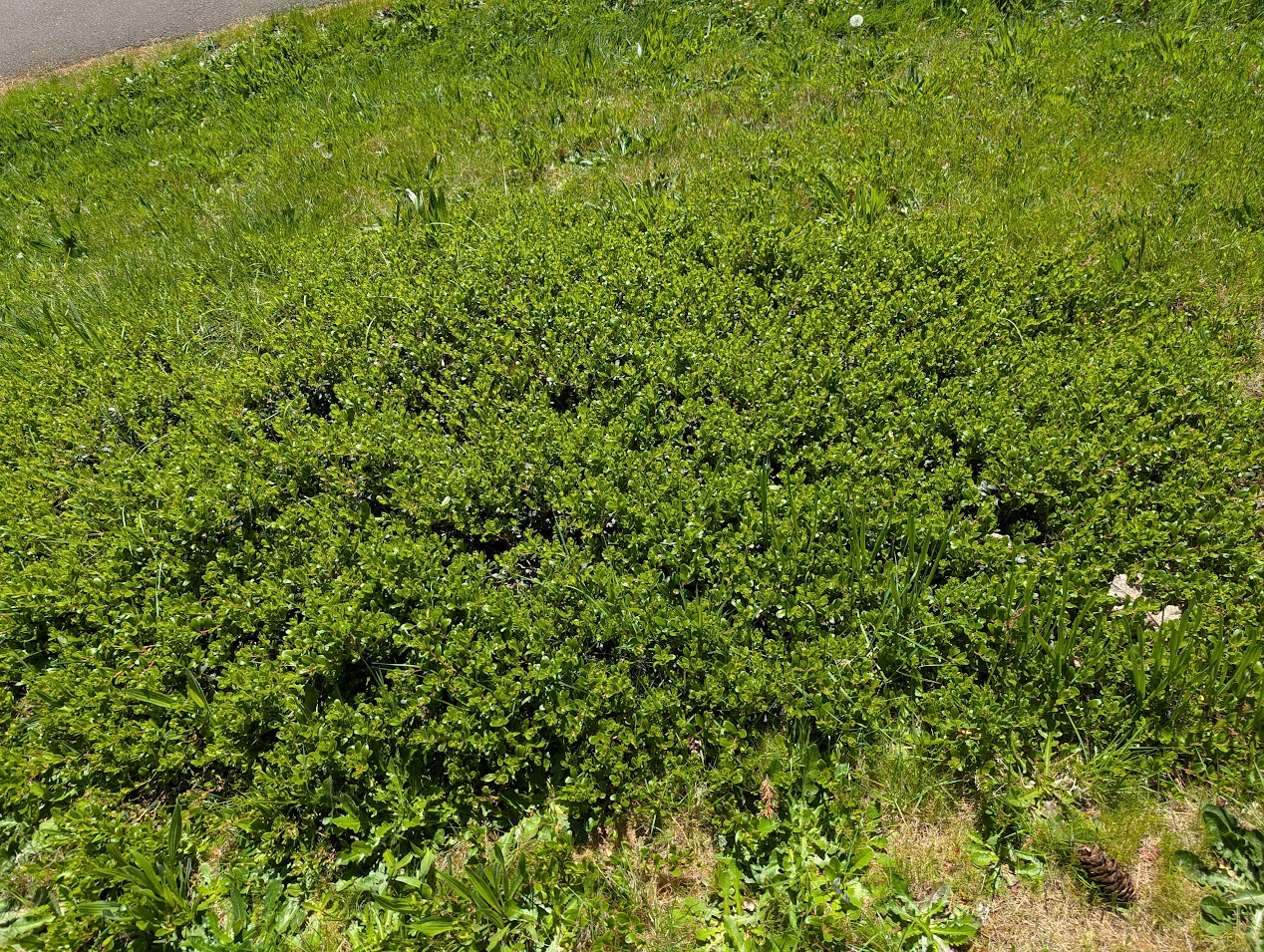
Kinnickinnick – Arctostaphylos uva-ursi. “Bear berry”. This is a common ground cover along commercial buildings in the Pacific Northwest. It blooms with tine red flowers, produces some berries, acts as a weed guard, is drought tolerant, and native. It is fast spreading. This is just one plant that was about 6” wide when Don first dug it up. It now covers an area of about 8×4’, and even the torpedo grass under it struggles to survive. I have read the fruit is edible, boiled, but I leave it for the birds. Native mining bees love the flowers.
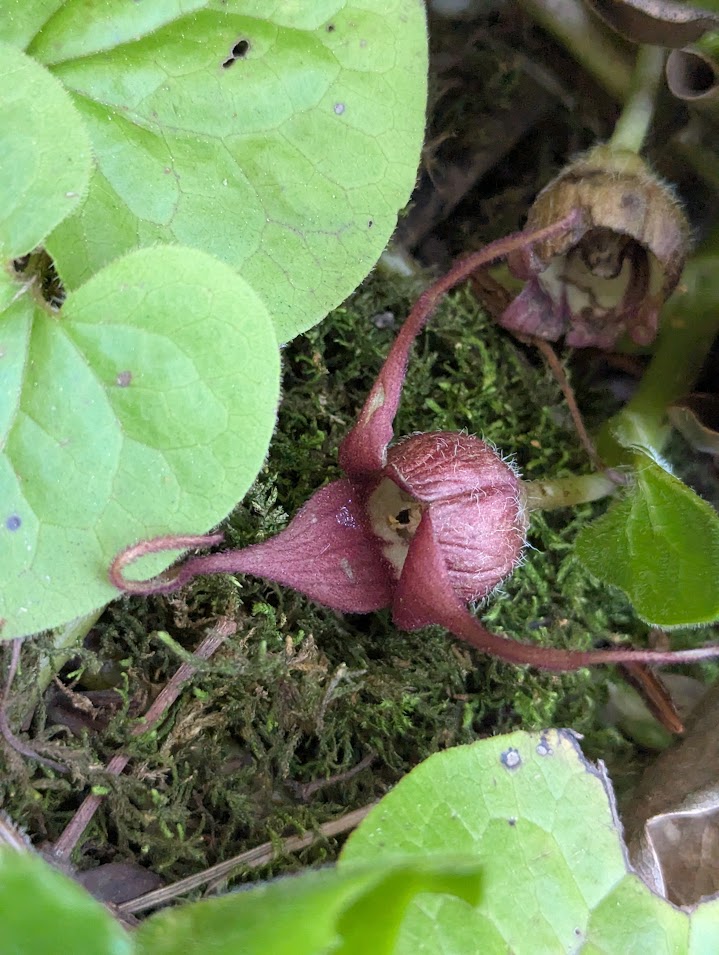
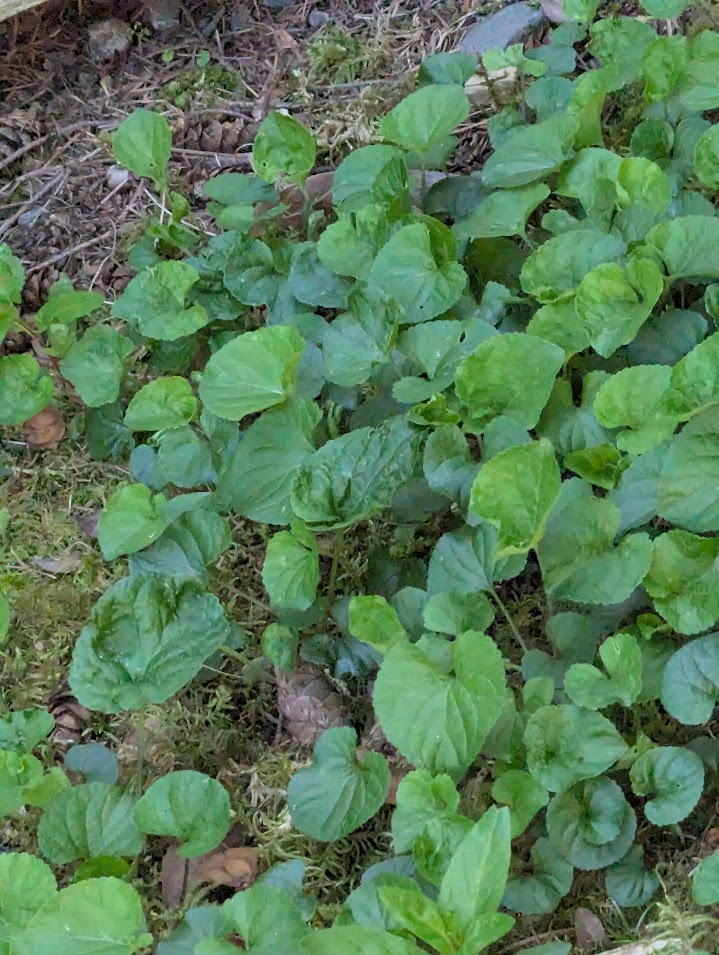
Wild ginger – Asarum canadense L. – This also started as a single clump of ginger roots dug up in the forest. It is not the same as the ginger root one buys in the grocery although the roots are edible. It is a shade plant, loves moist ground, and spreads slowly. Birds, bees, and even a rodent or two love it . The flowers are stunning, but you have to look hard to find them. Evergreen.
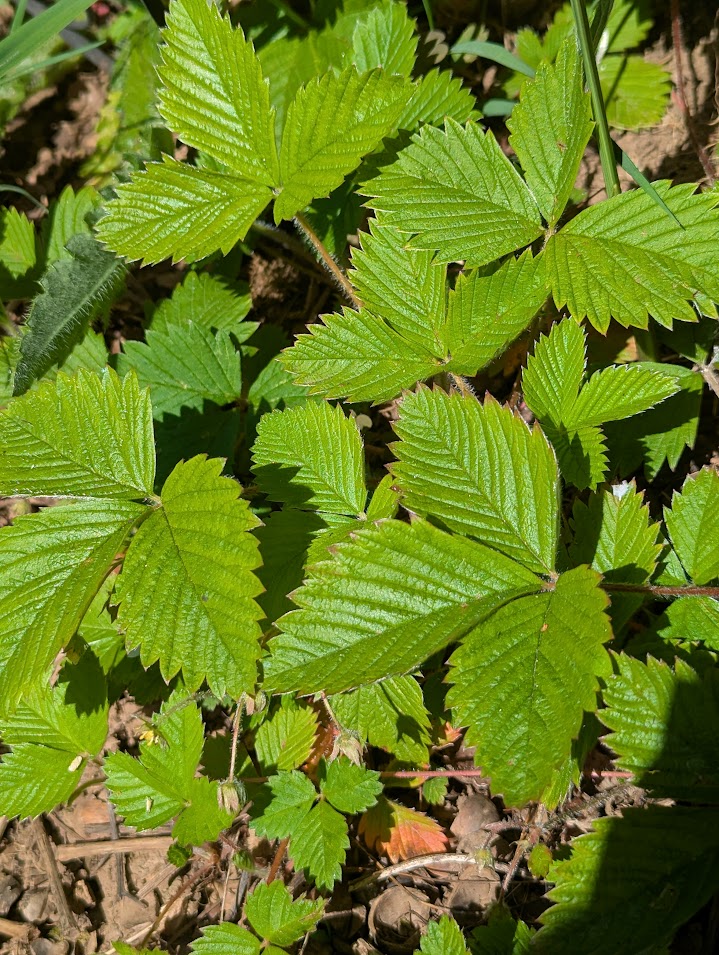
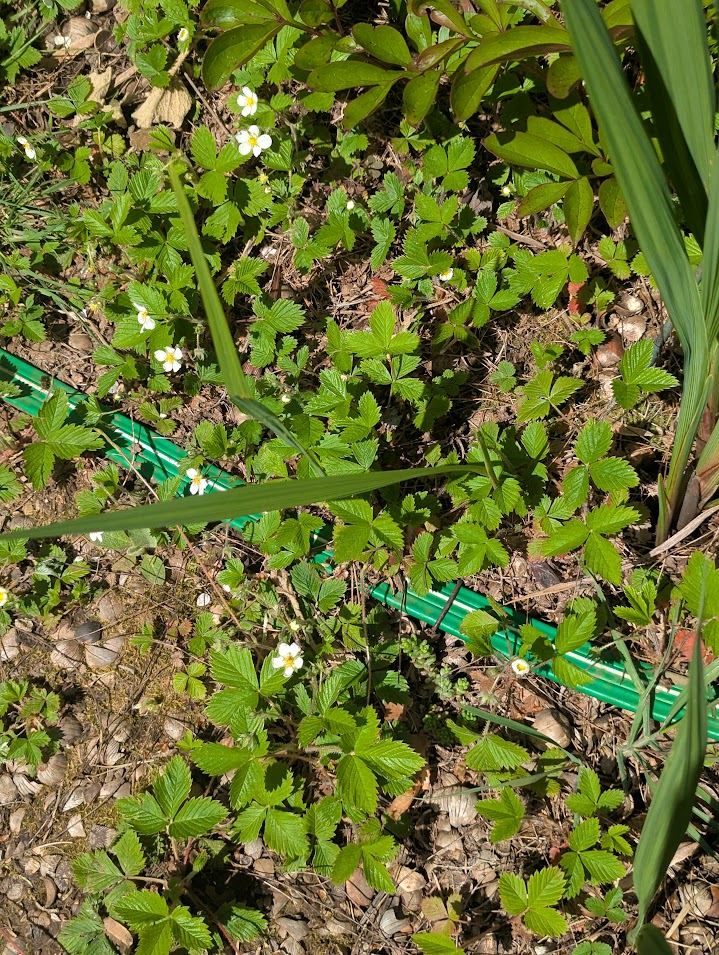
Wild strawberries – This native ground cover is most likely Fragaria vesca, or woodland strawberry. I rarely see the fruit on these as the birds and slugs beat me to them: the fruit is tiny, sweet, and it takes a lot of them to make a meal (usually a pancake breakfast when camping and foraging). They don’t bother other plantings and don’t really keep the ground moist, but they are evergreen, and that counts for a lot as other flowers fade. Fast spreading, easy to control, drought tolerant. Don planted this a long time ago and I wasn’t pleased, but I have grown to be happy with it.
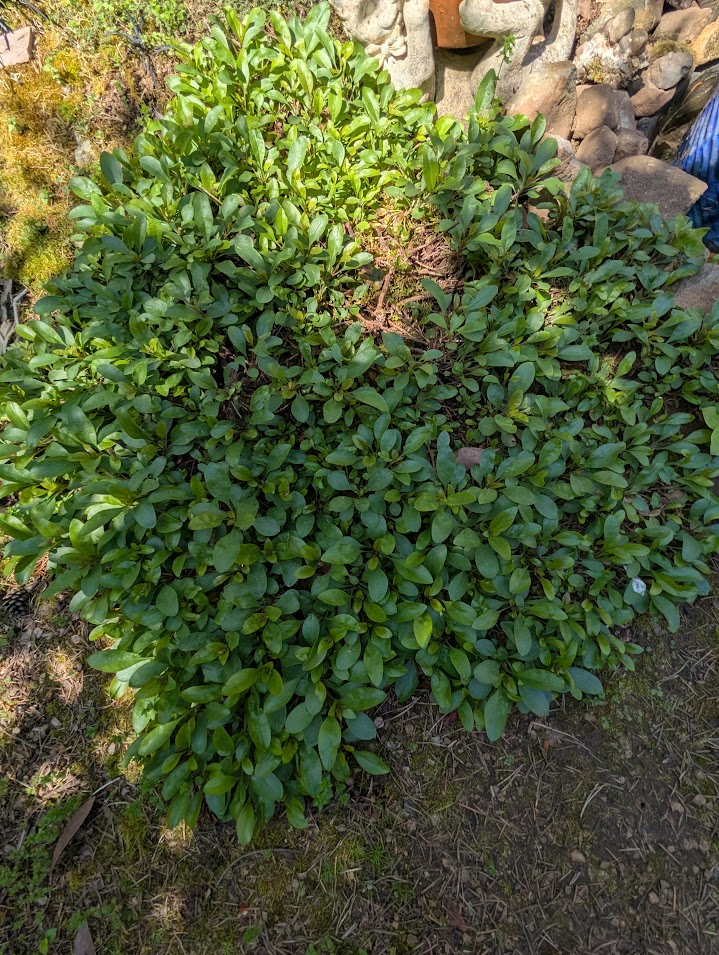
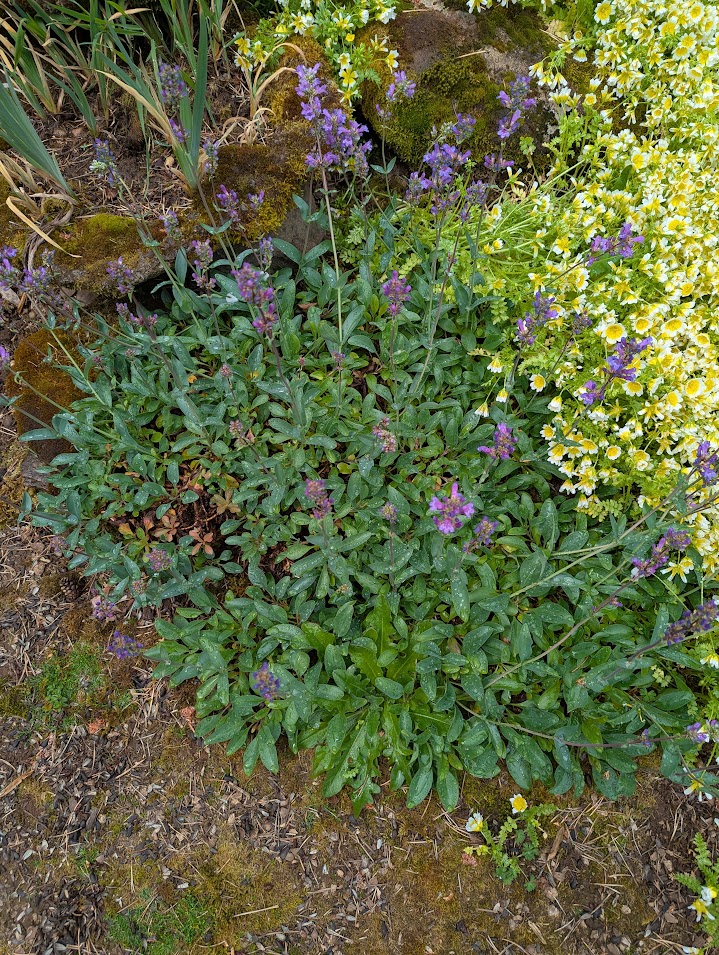
Penstemmon – we have at least three different natives planted in the prayer garden, which also happens to be a rocky slope, perfect for this drought tolerant, slow spreading perennial. We have collected from several areas in the State of Oregon, including the high desert country of eastern and central Oregon, and the alpine country of the Cascades. I’d have to key out which species this one is.
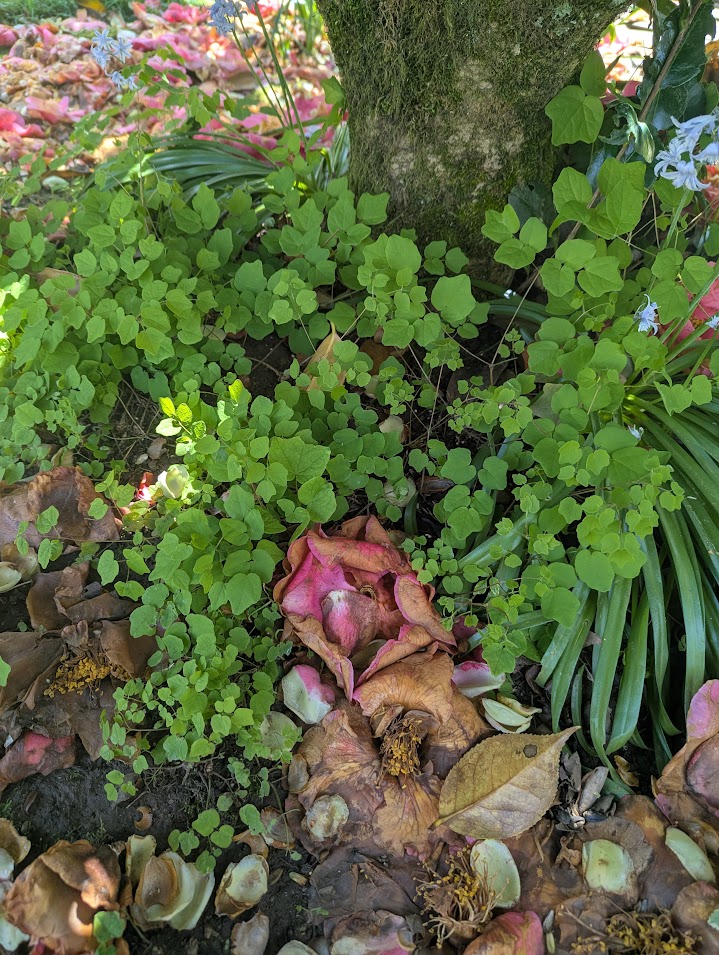
Inside-out flower – Vancouveria hexandra. We bought the first one at Portland Nursery some years back, but have since added more to the yard as hitch hikers with other plants. I can’t begin to tell you how much I love this shade-loving, fast spreading, resilient, and odd flower. I planted it under the Camellia where the only other ground cover was Bishop’s weed. And for years I thought the Bishop’s weed would one day win out, but as I was weeding and raking away old Camellia blossoms this year, I came to the realization that it was the Inside-out flower that was winning the fight for space in the shade.
It disappears in the winter, comes back every spring, and blooms multiple times over the summer. The blooms are tiny, delicate, and inside-out as flowers go: the sepals are bent back, exposing the pistil and stamens.
Posted in gardening, Uncategorized, tagged fixed leak, gardening, life, nature, pond, water feature, writing on April 11, 2026| Leave a Comment »
It is raining today, a light rain that will knock the pollen out of the air, but which keeps me inside the house. This is all right with me. We just came out of a weeklong dry spell during which I was able to get a lot of yard work done but at the price of my health. My face feels like it is swollen out to the end of my nose, my eyes feel (and look) like they have been sandblasted, and my nose is dripping. Allergies have come on early and brutally this season.
I was able to fix a leak in (under) one of my water features. This involved a trip to Lowe’s for some lawn edging and a surprise purchase of a 3×4’ plastic for under a sink. We looked at pond lining (too expensive and way too much lining for my purpose) before we found the under-the-sink lining. Honestly, if you need this stuff under your kitchen sink, you need a plumber. For my little purpose, the size and thickness were perfect, as was the very low price. (We also found the lawn edging I wanted and a bonus shelving unit for the shed we had installed last year, the shelving being on sale and reasonable priced.)
Both water features need work, but the second one isn’t a leak: it is the rusty “fountain” I bought at a yard sale. We need to do something about the rust. But I didn’t tackle that this past week. That job will be a future blog post.
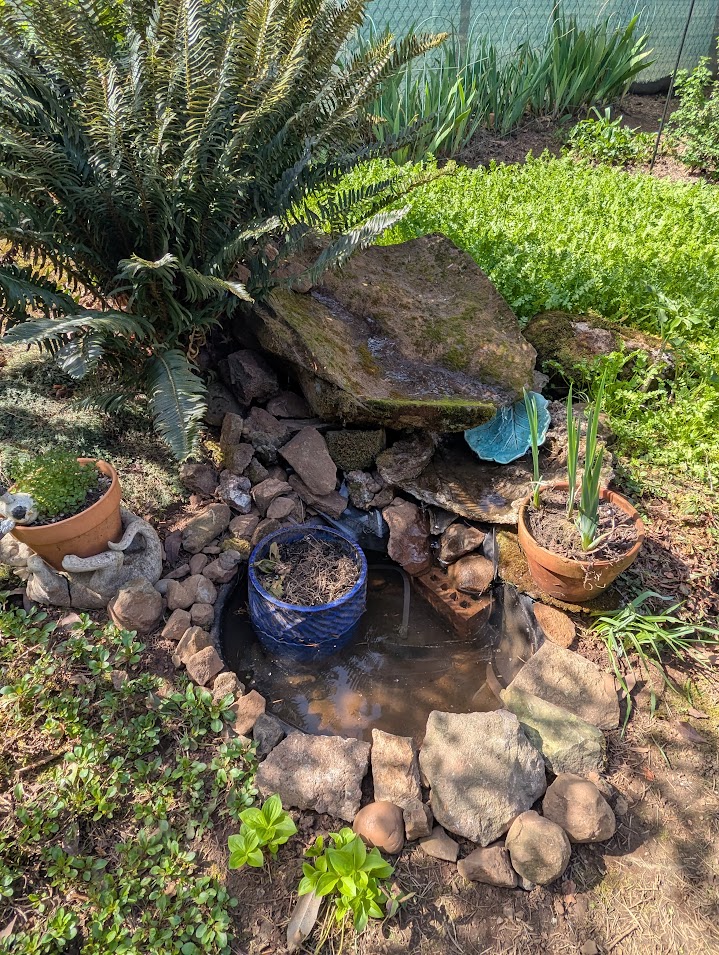
Using a crowbar and moving a number of rocks around, I was finally able to stop the leak in the pond. The large rock forms a natural water course, but the water tends to drip under the lip and into the earth below. I tipped that rock at a slightly steeper angle, then played with the rocks and dish it drips into. The plastic lining went up under all of that (some feat considering the rock probably weighs 70+ pounds). But the result was that I managed to get the right angle and the pond now stays full. I will need to get some mosquito fish next, but I’ll fix the other pond first.
Posted in Uncategorized on March 18, 2026| Leave a Comment »
163 years ago, my great-great uncles were marching to the Atlantic Ocean with General Sherman. I really do want to record their service in the Union Army, but the season has moved from Winter to Spring, and I am spending MY days in the garden in my own yard pulling weeds,
Willard, Wilber, John, and Thomas were penning letters home in July of 1863. Telling of victories, illnesses, and losses. Wilber and John would not return home. Willard and Thomas would return home broken men.
I have found it too difficult to follow the letters home that I have in my collection, some from the brothers and some from the in-laws (Barnards, Miranda Wilcox married into the family). The war was gruesome, terrible, unrelenting, and it took a heavy toll on the men and women who lived through it.
I may pick this thread up again when the weather turns once again, but for now I am finished with the American Civil War. God rest my ancestors.
Posted in Uncategorized on January 16, 2026| Leave a Comment »
Continuing with my notes:
Battery A, 1st Chicago Light Artillery was stationed at Camp Smith, two miles from Cairo for five months.
Camp Smith, June 11, 1861
The furniture of our tents consist of a soap box apiece to put our clothes in, some wooden stools to sit on when we eat, and a board table. We have a stand in our tent to write on. We made the stool, table, and stand ourselves. We have to put all our things but all the boxes out of our tent when we sleep. The first meal we had in Cairo was a passanle (sic) breakfast. At dinner they gave us some beef that needed better teeth than I have; hard bread. Cold potatoes without washing; river water without filtering.
Willard J. Wilcox
Passanle – passable, I would guess.
Sept. 6 Battery A was moved to Paducah where it remained until Feb. 4, 1862. Moved to Ft Heiman and participated in the battle of Ft Donelson, Feb 14 and 15, 1862, and the battle of Shiloh, April 6 and 7, 1862. Then moved to Corinth and from there to Memphis, reaching Memphis June 17, 1862.
BATTLE OF FT. DONELSON.
Battery A was with Thayer’s Brigade.
Feb. 13,1862. Skirmishing; Feb. 24, repulse of Union gunboats; Feb. 16, rebel assault on Union forces; Feb. 16, fort surrenders.
“At night amid snow and sleet, with no tents, shelter nor fire, and many with no blankets, the hungry exhausted troops on both sides lay down in ditches and behind logs and tried to sleep. Many of the Wounded froze.”
“In the battle of the 15th, during the rebel assault, McClermand’s (sic) forces were driven back, an officer shouted, “We are all cut to pieces.”
“An order was dispatched to bring Battery A forward at full speed. Col. John A. Thayer, commanding the Brigade, formed it on the double quick into line. The battery came up on the run, and swung across the road, which had been left open for it. Hardly had it unlimbered before the enemy appeared, and firing began.”
“The new front thus formed covered the retiring regiments, helpless from lack of ammunition. The enemy coming up the road and through the shrubs and trees on both sides of it, making the battery and the 1st Nebraska the point of attach (sic). They met this storm, no man flinching, and their fire was terrible. To say they did well, is not enough – their conduct was splendid. They, alone, repelled the charge. Too much praise cannot be given Lieut. Wood and his company and Lieut. McCord and his regiment.”
-Report of General Lew Wallace.
April 1st, 1862
“The 8th Missouri and 11th Indiana regiments did not like it because we had to leave their division, but the 9th Illinois was pleased to have us in their brigade.” W.J. Wilcox
*I have left the punctuation as written.
General McClernand had not properly secured his flanks. And his men were driven back almost two miles.
General Lew Wallace commanded the 11th Indiana Infantry Regiment.
Lt. Peter Wood was commanding Battery A. Lt. McCord was commanding the 1st Nebraska.


