Feeds:
Posts
Comments

Posts Tagged ‘spring’

It has already been two weeks since we went to the “biggest” early garden sale of the year. Where does time go, we ask. Well, we have had unusually DRY weather, and I have immersed myself in gardening, not writing. Then allergies hit and I am presently confined to the inside of the house, my eyes itching, my nose dripping, and my life a prisoner to tree pollen. I have no idea which trees: ash, alder, birch? Not evergreens: I can watch the yellow pollen coat the cars and everything in the yard with nary a sneeze. But these deciduous trees try to kill me. Every year.

There was no allergen in the air on the day we went to Garden Palooza. I carried my list of plants and set a budget. No annuals: it was still much too cold during the days and nights for me to fill my planters with my favorite annuals: petunias. Petunias are a nod to a woman who was very influential during my childhood (my best friend’s mother). This year will be especially poignant: Marie passed away at the age of 98. I love petunias because she grew them every year and they were beautiful and sunny.

I wanted Native plants and perennials and a good ground cover. Something to plant around that pedestal bird bath, something that would bloom throughout the summer. I had it in my mind to get a couple creeping phlox plants, but learned they only bloom in the springtime. Well, shoot. But I found something else that blooms all summer and snagged those up.

Problem is: the vendor pulled the identification tags out of the pots when he sold me two of them and now I have no idea WHAT I was buying!

I did find a Native plant nursery that had one of the plants I want, but the owner read through my list and told me he would have several plants on my wish list later in the season – just call and ask in a couple weeks. Woot! He sold me a clarkia: “Farewell to Spring”.

I grabbed a peppermint to put in a planted by the front door to discourage rats from hiding beneath the stairs. Most of our house has been “rat proofed” but there are a few points where they *might* get under the house and peppermint works as a great deterrent. I’ll just pot it (to keep it from getting away – it can be invasive) and place it by one of those points. Lovely scent as well.

Rue for out front in the bed I am preparing for an herb garden. I’ll also plant holy basil, hyssop, English thyme. More, but I haven’t given that much thought (yet – it’s early for seeds). The English thyme was another purchase: I have one in a planter, but it would be nice to have one in the ground as well. My live-in chef uses a lot of fresh thyme in his cooking. (My husband, folks, I’m nowhere near rich enough to pay for a chef. Gourmet cooking is his retirement hobby, and it keeps me overweight and sated.)

Another creeping thyme for planting between pavers out front. It’s a yellow thyme, very eye-catching, and – I hope – drought tolerant and prolific.

Last was the mystery plant.

I tried my plant app, but it wanted to identify the plant as arugula. It is NOT arugula. We have that growing wild and unkept throughout the vegetable garden beds. I’m not a huge fan of arugula, but the aforementioned chef loves it. He let it get away. I know what arugula is.

Google lens wanted to make it arugula as well. What the heck!? Why did that vendor take the tag out!? (Well, I know why: inventory, plain and simple. The other vendors used two tags in the pots and kept one but left the other for me. This particular vendor only had one tag per plant.) Dang-nab it!
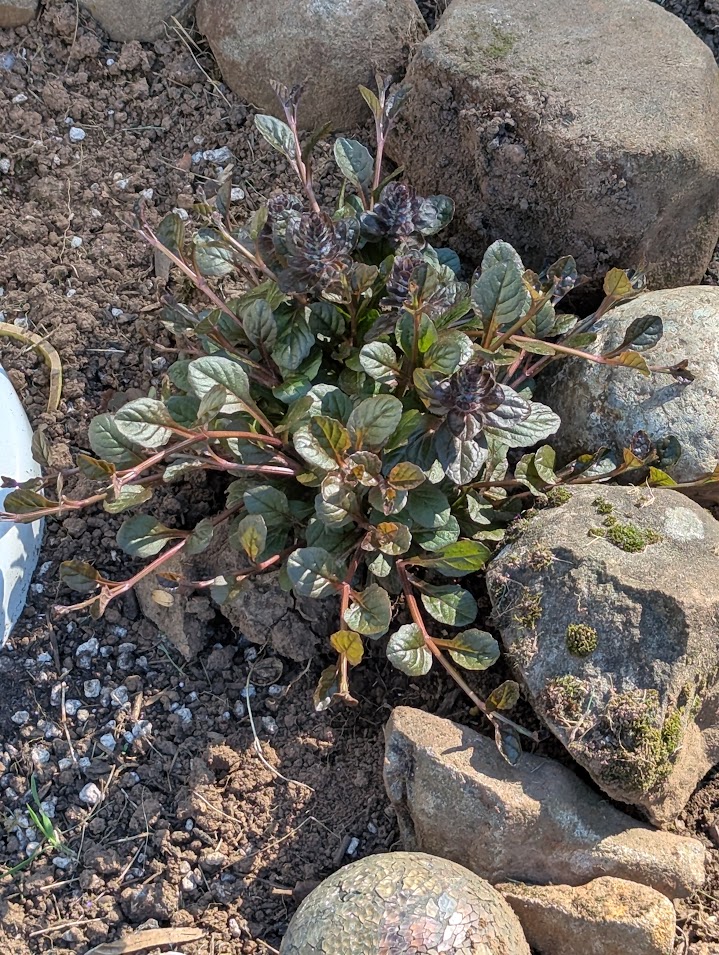
Soooooo – until it flowers, I have no idea what I purchased to put around the bird bath. In the meantime, I placed some bugleweed around it. I’ve been trying to get rid of the bugleweed since I planted it twenty years ago, but it returns every year in a new place. Might as well make use of it. It blooms early and has pretty purplish leaves. Whatever it was that I bought at the garden sale blooms late and has green leaves. Fingers crossed I can identify it sooner than later.

Oh, and I bought a few nasturtium starts. I prefer the trailing kind, but I had a weak moment and suddenly four starts were in the cart and paid for. Yummy nasturtiums. Pretty nasturtiums. I have since purchased seeds for the trailing kind so I can run them up trellises.

Also: I stayed under budget so I have more to spend later.

PS – yes, those are silk flowers. Some day I will explain those. Maybe.
Read Full Post »

 How I love thee, False Spring! I love the sunshine! The warm air! The wee buds poking up out of the ground!

Daffodils! (Except the parts the slugs came and nibbled on!)

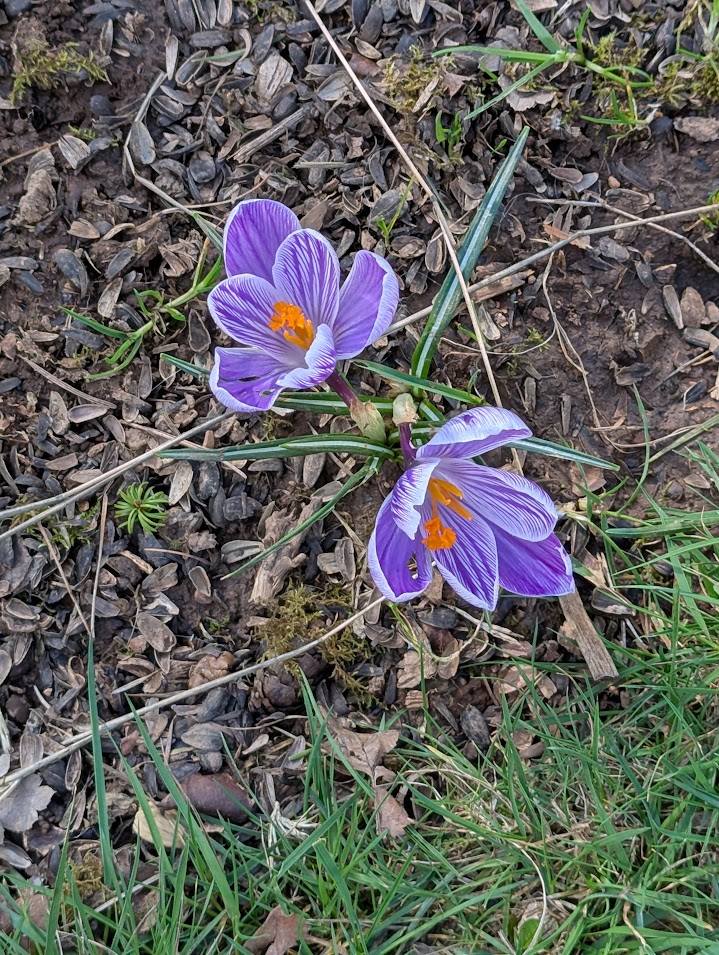
Crocus! (Until the dang squirrel makes off with the flower and eats it all!)

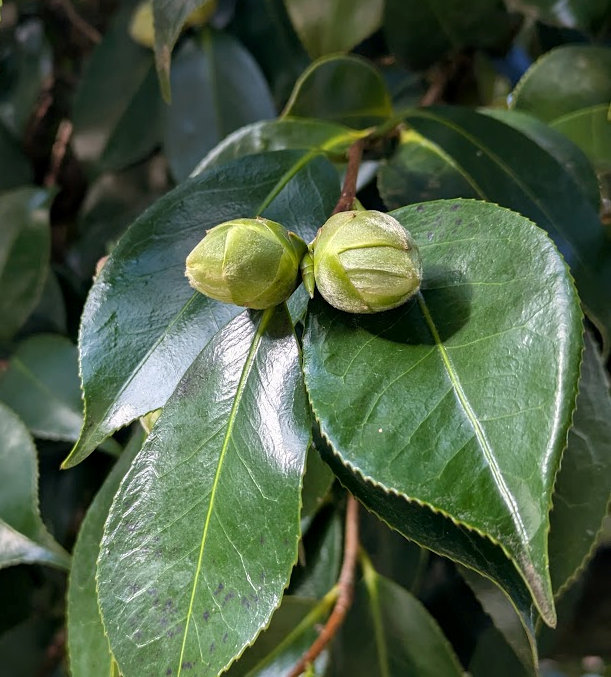
The Camellia! (What buds have escaped both the dog and the squirrel! What the dog tastes in Camellia buds is beyond me but it isn’t harmful to him – surprise! – and he only picks off the blossoms on the lowest branches. Squirrels tend to the upper blossoms where I cannot see, so that leaves the bulk of the bush to me! Me, me, me!)

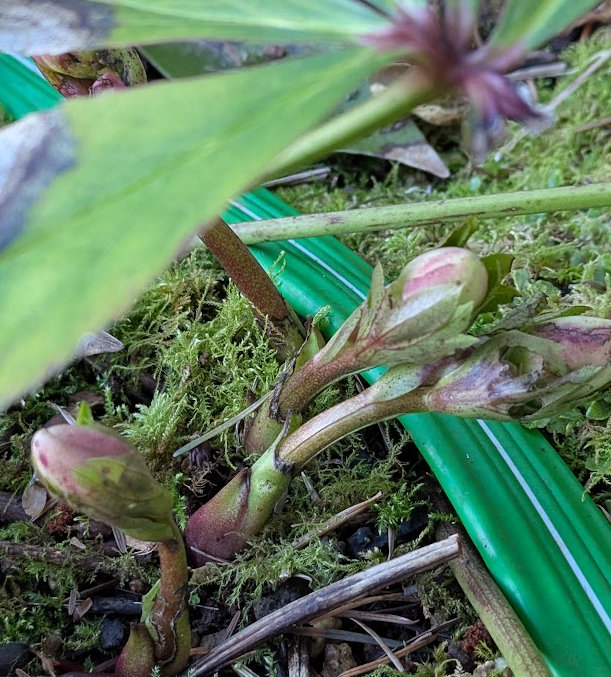
The Lenten Rose (Hellebore)! (Mine needs some fungicide, I think. The leaves look rather sad.)

The grape hyacinth!

No. Just NO.

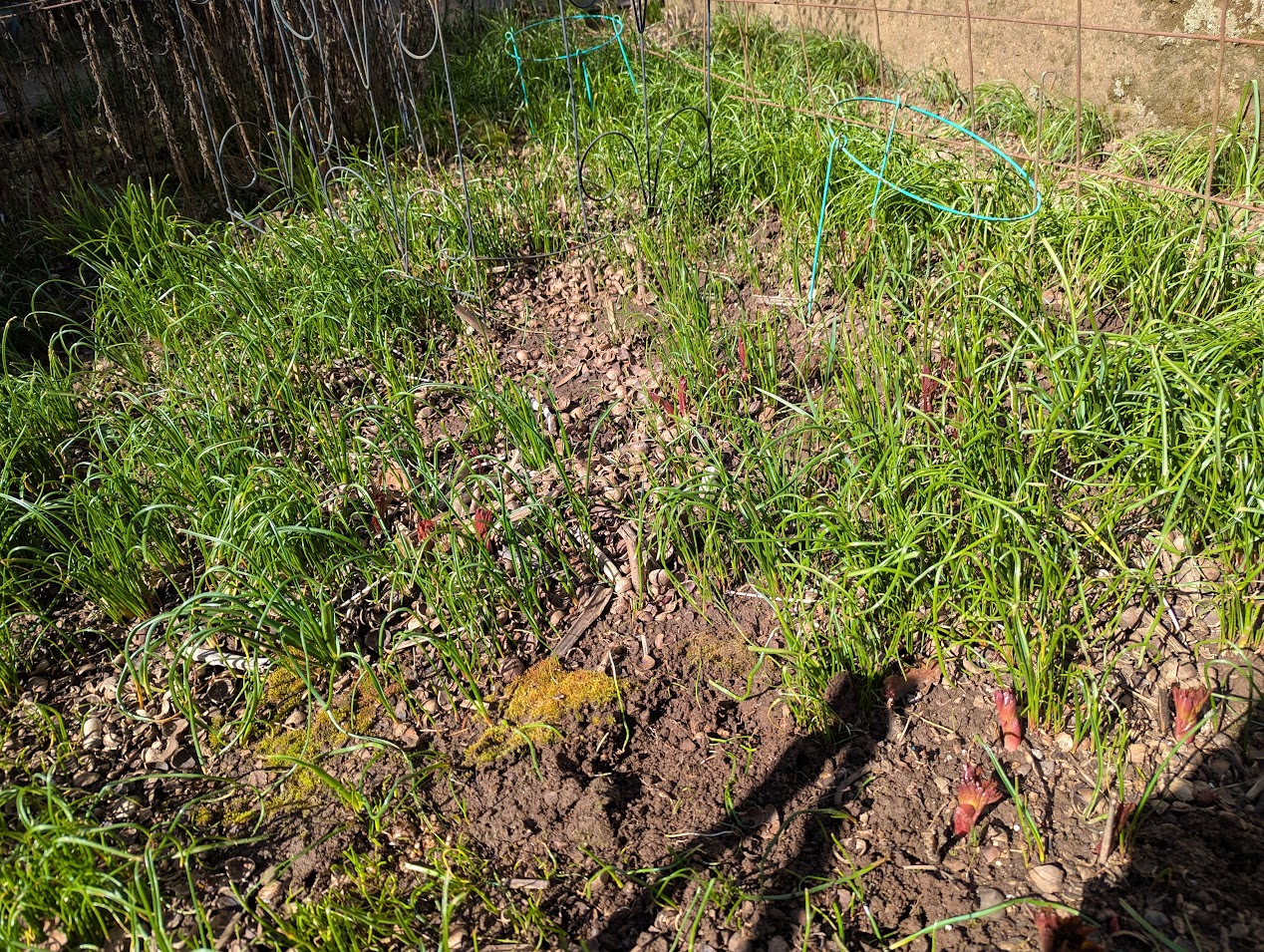
Look at them there in my flower bed, crowding out the peonies. All those clumps of impenetrable hyacinth bulbs! I think the last time I purged them was about five years ago. And today they came out in the handfuls, all those little bulbs crowded together just under the surface, clinging to each other like seeds in a pomegranate.

Kill! Pull! Purge!

Except they don’t all come out and there are some with tiny promises of fragrant grape-colored clusters of bell-shaped flowers. I left those.

And I know I will do this again in about five years.

Because grape hyacinths. They merely regroup.

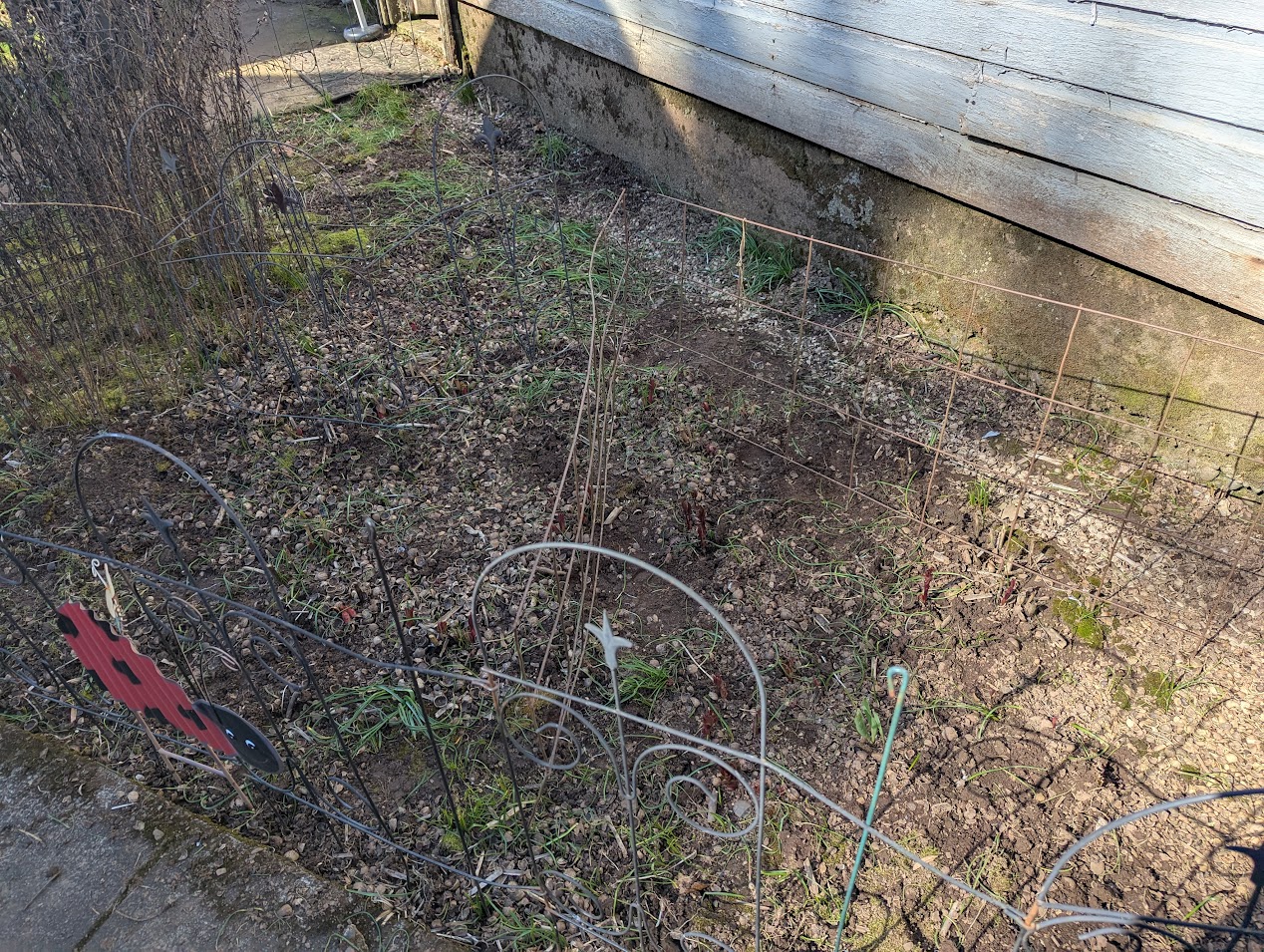
This particular flower bed is my most successful. It is low maintenance, except for the every-five-years purge of invasive and stubborn grape hyacinths.

This garden bed blooms from early spring  starting with the hyacinth, which I promise, will still raise up tiny spikes of purple flowers rimmed with a delicate white border. Not as fragrant as the larger hyacinths that come in a variety of pink, purple, and blue shades, but pretty enough to place in a bud vase and prolific enough to be a nuisance.

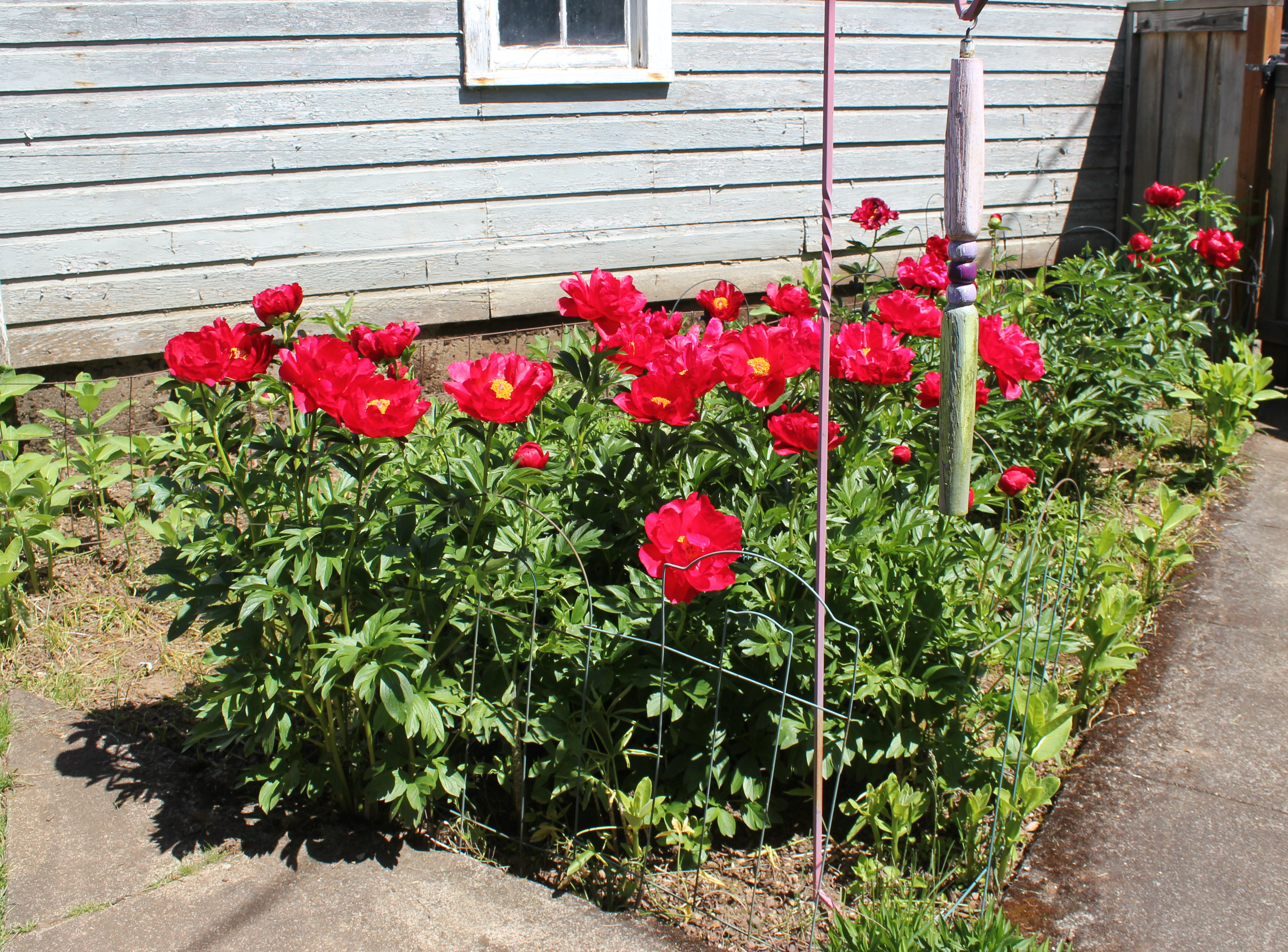
Then come the peonies. Blood red and scarlet. The peonies thrive despite the crowding of tiny bulbs. I throw them some light fertilizer early and a little copper fungicide to ward off brown spot, but otherwise, I ignore them. Well, I pick them and place them in pretty vases that I allow to sit outside overnight until all the ants fall off. Ants love peonies.

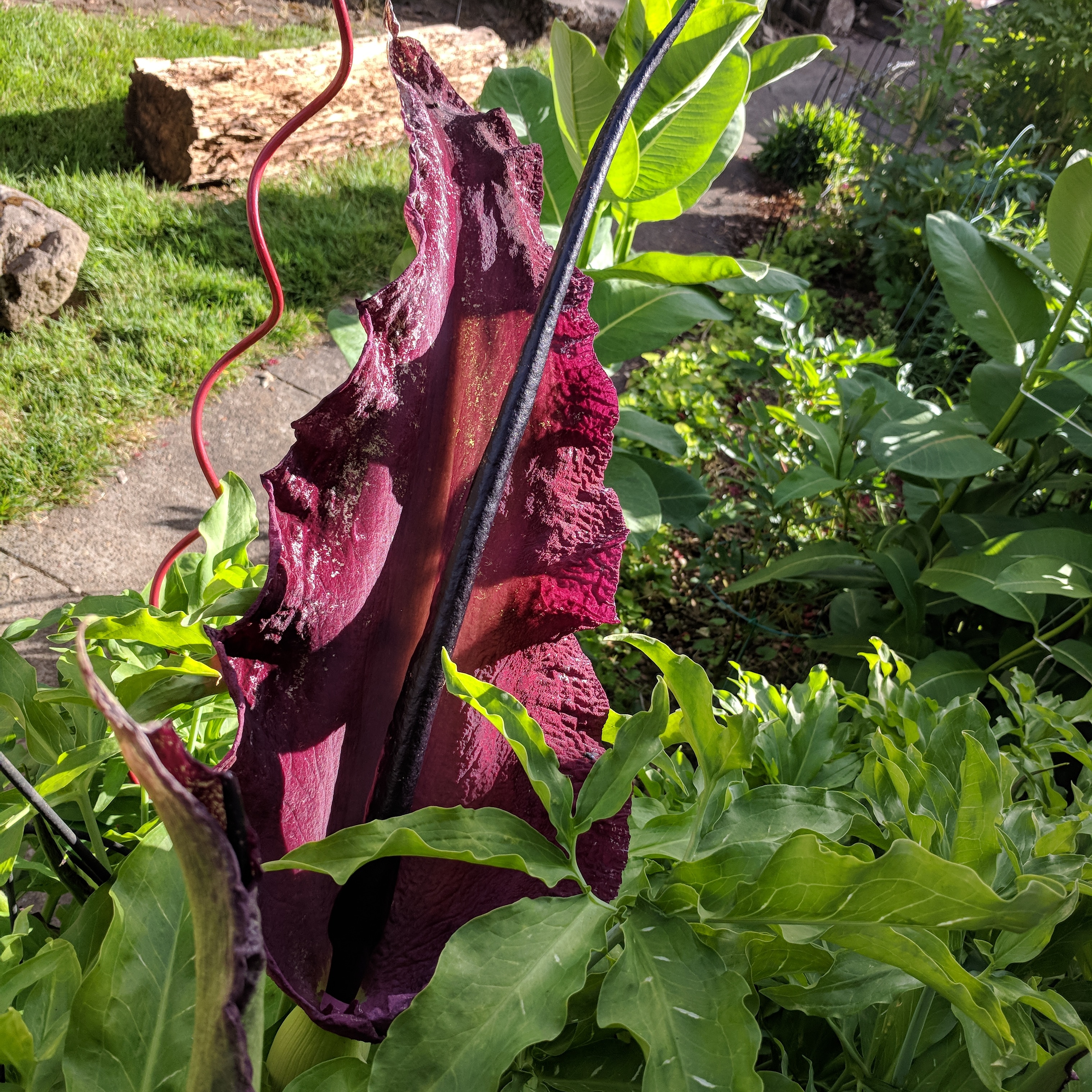
As the peonies fade, the Voodoo Lily comes on. Pungent, odiferous, and so dark a purple as to be almost black. We dug the parent plant up at a rental we lived in some 40 years ago. Didn’t think anyone would care if we took such an obnoxious smelling plant with us, and no doubt they haven’t missed it: surely we missed some of the bulbs.

It smells like rotten hamburger. It attracts beetles and flies (and not a few dogs). It repels neighbors and guests, but it also piques their interest: what is this mysterious plant? Dracunculus Vulgaris. Voodoo Lily. The harbinger of our wedding anniversary (it blooms the first week of June).

And when the lily fades and dies back, the milkweed springs upward. And upward. It blooms with a strong aroma, something far less offensive than the former: milkweed is aromatic and sweet, enticing and hypnotizing. Here come the bees, wasps, flies, butterflies, and beetles. Pink and white clusters of hundreds of flowers. And with it, our hope of seeing a magnificent orange-and-black Monarch butterfly or the yellow-green-and black striped Monarch caterpillar (that feeds exclusively on milkweed).

If you plant it they will come. We hope.

The milkweed, in turn, goes to seed and begins to fade, the seed pods hardening. Summer is at an end. And with a burst of color, the asters open up: tall magenta ones and shorter light purple ones. The bees and wasps that filtered off to other flowers when the milkweed faded are back in force. It is one last feast of nectar, of pollen, of summery intoxication.

Then it all fades away and the grape hyacinth begins to poke its persistent leaves upward, greening the winter brown ground.

**note: the only photo that is not mine is that of the grape hyacinth. Credit goes to NickyPe and Pixabay.

Read Full Post »

February

We’re staring down winter this month. The killing frost finally arrived and more is to come. Tender plants will be moved into the greenhouse for the duration of 20°(F) nights: Don’s Bonsai trees, our newest tree peony, and the curry plant (which is not the same as the spice you buy in the store which is actually a blend of spices). It is time to earmark seed catalogs and set aside money to buy those precious seeds.

The worst winter weather usually hits us in February when we’re ready for a thaw and the daffodils are pushing upward whilst the buds on the Camellia, Rhododendrons, and Lenten roses are swelling. February can bring all kinds of weather surprises in the Pacific Northwest and big freezes with sudden thaws are some of them.

We moved to the Willamette Valley in 1983, then a Zone 7b (it is currently a Zone 8 although I overheard someone claim we are now a Zone 9 – I haven’t verified that). It is a maritime climate, not the dry and arid climate of my youth. We are surrounded by mountains: the low Coast range to the West and the towering Cascades to the east. Snow, when it happens, usually coats the “upper” elevations: anything over 500’ above sea level.

Cloudy season runs from October through early June, sometimes into July. With clouds, the rain comes. We get more rain than we get any other precipitation, and more ice than snow when the weather gets cold. I hate rain and ice. I really, really despise ice. Where snow is insulating, ice penetrates. Snow rarely lasts long enough here for me to begin to wish for sunnier days or for the February thaw to just get over. Rain just covers the sun and makes the days seem dark and lifeless.

I have perfected complaining about the weather like a true Pacific Northwesterner.

I’d rather be outside with my hands deep in the soil, stirring up the things that live in the dirt and getting my fingernails broken, chipped, and full of mud. Sitting out the dreary days of February are the worst: there’s the promise of March and starting seeds in little pots in the windows or in the greenhouse. March, with the first teasing blooms on crocus, daffodils, Lenten roses, and rhododendron.

February is the month for taxes. The month for tying up loose ends in my art studio before I begin another season of pop-up markets. The month of marking my calendar for the upcoming garden shows (and the annual rock and gem show). It is the month to find a semi-decent day midway through to prune back roses and tame the wild grape vine a little bit (I rather like having it grow wild).

I will order roses the first of March. Start seeds in pots: tender herbs and rare wildflowers. The seeds I have placed in the freezer will be taken out and planted in seed starter soil. And I will repot all of my houseplants, at least the ones that have survived my indoor brown thumb. I will set aside money for the plants we plan to purchase in April and May. In March, we begin to hope again.

For now, it is February, and I need to move my tender plants into the greenhouse before a week of below-freezing nighttime temperatures. Maybe we will get a few inches of insulating snow to play in. I hope we don’t get an ice storm. The “big” ice storm of February 2021 is not yet forgotten (we lost one rhododendron and went without power for eight days). But it is February, and if ice comes, so does the big thaw of warm south winds.

Real cold comes with sunny skies, and sunny skies mean Vitamin D and a fire in the Breeo fire pit. I can’t complain about sunshine and a warm fire pit.

Read Full Post »

It is that time of year when an organic gardener’s thoughts turn to soil amendments, natural slug repellent, and turning compost so that the soil at the bottom of the heap can be used. We also turn our heads and slam on the brakes at every plant sale we see, especially if there might be native plants to be had. We know if our garden spots are shade, wet, well-drained, full sun, part sun, clay, or well worked topsoil. My flower beds are all of those listed.

I have a list of plants I want. I always have a list of what I want to do in my flower beds. The vegetable garden belongs to my husband. He always has a list of the vegetables he wants to grow. Have list, will shop.

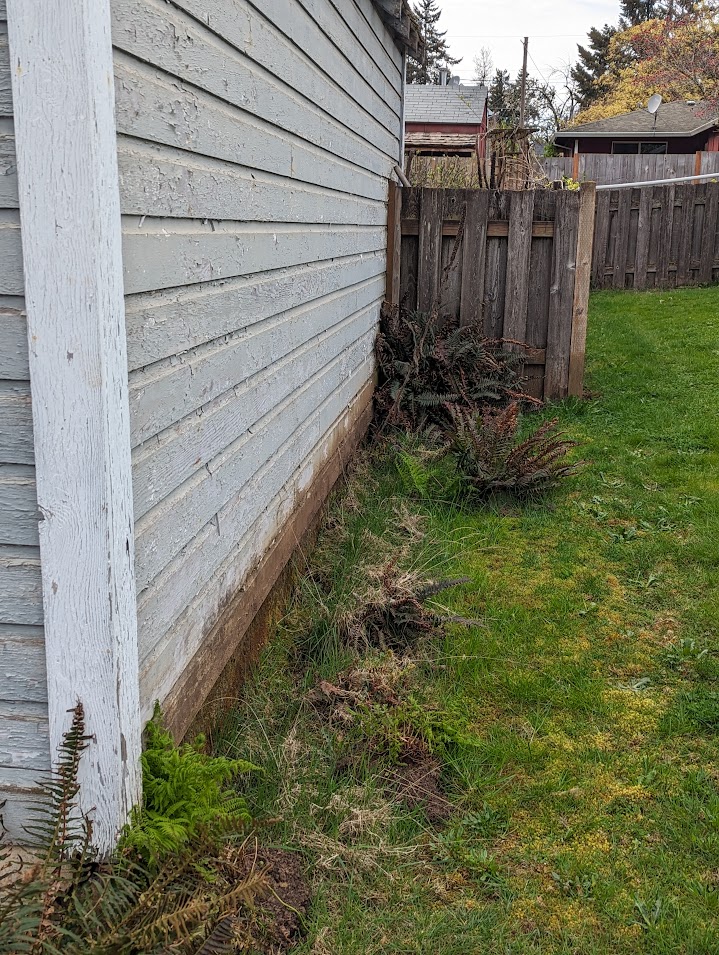
This year one of my goals is to completely fill the useless spot just north of our garage with sword ferns. It’s a three-foot mandated distance between our garage and the adjacent property line. No one wants to mow it. Full shade. No available water. The only true solution is to plant sword ferns and allow them to fill in the spot, kill the grass, and end the need for mowing. I have been adding small ferns to the spot over the years but this year I have four large sword ferns donated by a friend from his pasture. If I plant them now in the cool weather they will be established by summer and there will no longer be a need to mow north of the garage. Minimal maintenance, win-win for both parties.

Last fall I filled in the sunny portion of that piece of property with orange day lilies. I also have a magnificent yucca plant growing there. I picked the yucca up out of a FREE pile in front of a house one day. The orange day lilies were given to me by someone. There are daffodils growing there as well, a gift from the previous owner of this house. No more mowing a section of our lot that is difficult to get to and maintain. Ta da!

Minimal maintenance.

I took my list to a plant sale last weekend. It was a fund raiser for a State Park nestled in Lake Oswego. The prices of the (mostly) natives was more than I cared to pay, so I walked out empty-handed and right into the arms of a group giving away bare root saplings of “native” trees and shrubs. I turned down the witch-hazel (and later learned it is not a native to Oregon, although it is indigenous to parts of North America). I already had a mock orange that is two years old and establishing itself. There were a couple others that I questioned as to whether or not they were truly natives. I settled on three bare root plants: black gooseberry, a dogwood, and Indian Plum.

The dogwood is not the native Pacific dogwood, but a Florida import. Say, what??! Oh well, it was free, and I picked out saplings small enough that my husband can work his Bonsai magic on them. I was the only person standing around that had any idea what I was getting with the gooseberry. I’m more familiar with the yellow kind from the more arid side of the State, but this is a native from the Oregon coast – and a gooseberry promises tart berries perfect for a pie. I may have to make a gooseberry/huckleberry pie: I have an evergreen huckleberry (also native to the coast) that produces tiny berries in the late fall.

The Indian Plum is not a plum but produces tart berries that look similar to plums. It was a subsistence plant to the tribes of the Pacific Northwest and is one of the earliest flowering bushes which is a boon to the native pollinators. I’ll figure that out if and when it bears fruit. It can just be an ornamental for now: a native ornamental and attractant to pollinators.

My list incudes two lavenders: a Spanish lavender and a French lavender. I had both in my garden and they both died. My Spanish lavender was over 15 years old. I think I simply had the French lavender in the wrong part of the yard. I also want to get a second campanula, toad lily, phlox sublate (McDaniel’s Cushion), curry plant, and Chinook hop. I need a new rhubarb: the one I have doesn’t grow tall now produce long juicy stems. I’d like to add oxalis and bunch berries to the shade flowers. I also have some annuals on my list: petunias and climbing nastrutiums.

I purchased 19 packets of herb seeds from Mountain Rose Herbs. Those are waiting to be sown. Not for today. I bought the nasturtium seeds from Reneé’s Garden. The Chinook hop from Thyme Garden. The rhubarb is coming from Gurney’s. And the rose I bought from Jackson Perkins is showing some signs of life… (All of my English tea roses are from J&P, this one was a replacement for a floribunda I didn’t like. The floribunda went to a good home. This rose is also on probation until it starts growing…)

Today was the first day of Garden Palooza, a large plant sale south of here, almost to Salem. It is held at Bauman’s Farm & Garden in Gervais. I set aside a certain dollar amount and hope we don’t go over budget, but this year we were way under budget and came away with more plants!

I found both lavenders. My husband found the tomato starts he wants. He also found a pretty campanula for me. The one I currently have is a blue color: Serbian bellflower (campanula poscharsky). The new one is Birch’s Campanula and it will be a pretty purple color. Bauman’s also had so many pretty petunias! I found a full sun ground cover called Creeping Baby’s Breath (gypsophila cerastiodes). Drought tolerant. I need so many ground covers, they do a much better job than bark mulch at keeping the soil moist and weed free. Also, as perennials, the ones I pick out will last longer than bark or hazelnut shell mulch.

Oh, but the best buy of the day? Don found a tree peony for $24. Not $240 or $140, but $24. Tree peonies are not inexpensive even in a year without inflation. There are three old ones in the yard presently along with at least 80 other peony plants. I’m told the yard had more peonies but that was when Barney Schultz lived here, and he died over 30 years ago. The house sat empty, was purchased and flipped, and the grass killed so many peonies during the years of neglect. Then we bought it and I have single-handedly cleared all those peony flower beds, carefully divided tubers, and coaxed those beauties to new life. In short, I don’t need another peony or tree peony.

But $24. Gallon pot. Paeonia lutea var. Ludlowii (Tibetan Tree Peony). It’s young and I may have to wait a few years to see the large yellow blooms it promises. My other tree peonies are white, cream, and pale yellow fringed with red. Of course I bought it.

Our friend gifted us with two filbert trees as well as the ferns. We already have one filbert but the hazelnuts have never produced nuts. You learned you need more than one filbert. (Side note: the trees are filbert trees, the fruit is referred to as a hazelnut.)

So much planting in the near future. And making of larger flower beds to accommodate the 19 varieties of plants I purchased in seed form from Mtn. Rose Herbs.

The next big plant sale is the first of May.

Read Full Post »

My husband and I sat around our little outdoor firepit tonight, discussing gardening, weeding, and animals I counted at least 22 ducklings in the community pond this morning, and at least five mama ducks. One hen had one duckling. The hen I have been following still had nine (hers are the oldest, hatched Thursday of last week). Three pairs of Rufous-sided Towhees flitted around us, emboldened by the absence of dogs, perhaps. Never have we observed the elusive towhee behaving as boldly as tonight, the three pair!

The sun set, the sky darkened, and the first bat of the season flitted – briefly – overhead. A large bat, at least 8″ wingspan. We both have fond summer memories of bats diving in while we played out our last evening games, and horror stories of bats entangling in hair (my parents discouraged such hysteria). We both tossed rocks to bats in those dusky summer evenings to see if they would catch them: they always did.

Last night, as I took my husband on a tour of the front yard and the weeding/edging I had done on this first absolutely gorgeous Spring day in the Pacific Northwest, we nearly stepped on a small gray animal. It was deep in the moss and grass of the lawn, just a slight movement, followed by a naked pink half-tail. It was oblivious of us standing above it, watching. I forbade my husband from pulling it out by the tail just to see what it looked like: we both know what moles look like. It just wanted earthworms or crane fly grubs.

Burr hurr aye. (A la Brian Jacques and the Redwall series of books. Read them. They are magical.)

I have been in a funk since Christmas. I haven’t created anything new artistically. I haven’t written. I feel dead inside, creatively. My day job is just another place to go to, and make money, but not a place of passion or exciting change. I’ve felt “dead”.

I don’t know what I am going to do with this blog: keep it, practice writing, or… Family history, gardening, grandchildren? I feel as dull as the grey clouds that hover over the earth, promising only rain, and cold rain at that.

It is good to feel Spring is finally here, and that life might be awakening. I spent yesterday working with my hands in the loam, hoping to rekindle a little life in my heart.

IMG_20180422_171307

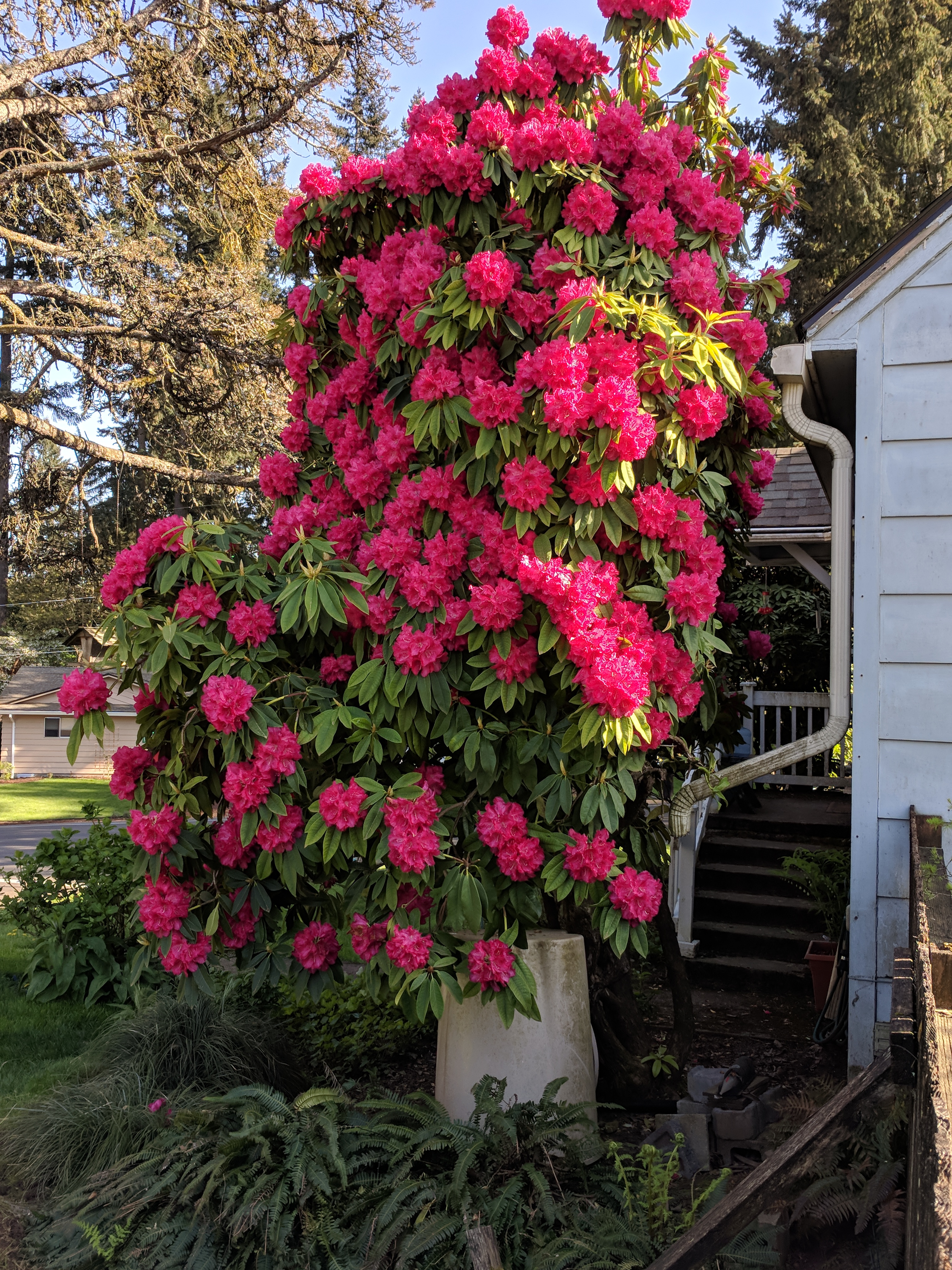
The giant rhododendron on the north… And the broken rain barrel. 😦


IMG_20180422_171452

The stark differnece between last year’s black-cap raspberry vines and this year’s canes. I need to cut out last year’s canes – nest year’s will go there in less that six months from now, and this year’s canes will be pruned out next spring.

I was going to move this ceramic “bird” house, but there’s a paper-wasp nest inside. I bought the bird house at a farmer’s market… love that the paper-wasps have taken over it. (Mud-daubers, paper wasps).

Finally, tonight we watched towhees – at least three pair – buzz about the yard, gathering sticks and nesting material. Rufous-sided towhees are elusive and secretive birds, more often heard than seen. To have three pair flitting about around us, unafraid, was amazing.

I do not know what I am going to do with my blog. Perhaps it had worn out its welcome and is a thing of the past, and I need to move on. But what if I do not record these seemingly mundane experiences? What if you never learn if the towhees nested and raised young, or the paper-wasps hatched, or the ducklings survived… Or the mole lived happily ever after because we are the gardeners who do not set mole traps or spray pesticides/herbicides?

I don’t know.

Read Full Post »

I really want to go outside and put seeds and seedlings into the ground, but the fact remains that it is *only* the end of March and no matter how nice the weather is, the last official frost date is around April 15th here, and it is guaranteed to rain cats, dogs, frogs, fish, and buckets between now and the end of Rose Festival. It does not help my itchy green thumb that my peonies are sporting large buds on the verge of opening.

The last time I had peonies open in April was in 2003. I know this because I cut several blossoms and played Door-bell ditch with my closest neighbors on the first of May. It was my first May Day in this house and I didn’t know anyone in the neighborhood and figured hand-delivered peony flowers would be a great ice breaker. (They were, I made friends, and I got my vases back – a bonus.)

I haven’t been able to cut peonies for May Day since because they haven’t bloomed before the first of May since.

I will probably plant pansies this coming weekend, and despite all my knowledge of last frost dates, I will probably plant sunflower seeds, too. If the sun stays out over the weekend, I will make a futile attempt to get ahead of the weeds (if my left arm holds out – I’m currently nursing a painful case of “tennis elbow”).

I have been unable to keep the hummingbird feeders filled. I counted four different birds at one of the unpopular feeders out back. I have no idea how many birds are draining the two out front, but I am replacing one of those every four to five days right now. Drained dry.

Summer is coming and I have opted to stay home this summer. I have a big family reunion in Colorado in June (one that was supposed to happen last summer but didn’t, due to a wedding). My reasons are complicated, but first – and foremost, I changed jobs and I won’t have enough time off to go this year. I’ll really miss seeing my elderly Aunts and that weighs heavy on my heart.

This is where being a long-distance grandmother is not fun and I understand what my mom must have gone through when I moved so far away. There is something to be said about living a lot closer to one’s relatives. I guess we make choices and mine was to live as far away and as independently as I could, so I shouldn’t be too surprised that my own children made the same choices. It’s in the blood.

I am loving my job. More specifically, I am loving the parttime. Yes, I love the new job, and I work with great people – no doubt about that. The part I was worried about when I accepted the position – that is is less than 40 hours a week – is turning out to be a huge bonus. I don’t come home stressed out. I have time to do things. I feel stress falling off of me like layers of dead skin. I’m three months into it and still finding it quite novel to have so much time left after work. I have a life!

I HAVE A LIFE.

I haven’t had a “life” for so long that I don’t know quite what to do with it. I’m even making social plans again, something I hid from before. I actually answer the phone when friends call. I go to lunch and dinner.

I have been writing more on my art blog about my life than on this blog.

I’m still bird watching, but I have not been taking photos. I need to grab the camera and go for a birding walk soon. Or just a photography walk. Harvey is getting to be a great companion on walks & is pretty patient when I want to stop and take photos.

Have I mentioned that I now have nine grandchildren? And I’m so young! Someone asked me “how did that happen?” and I told them (straight-faced), “I never had the birds-and-bees talk with my kids?”

021

I recently painted five of them. They were posed in a photo, looking out at the snow falling on the ground along the eastern U.S. I took that photo and juxtaposed a photo of our house during the snowstorm of 2009. My five grandbabies looking out the window at my house on the opposite coast of the continental USA.

It makes me happy.

Spring makes me happy, too.


Read Full Post »

It was a beautiful day out today. The hope of spring was in the air – and better yet, the sun was out for a good part of the day!

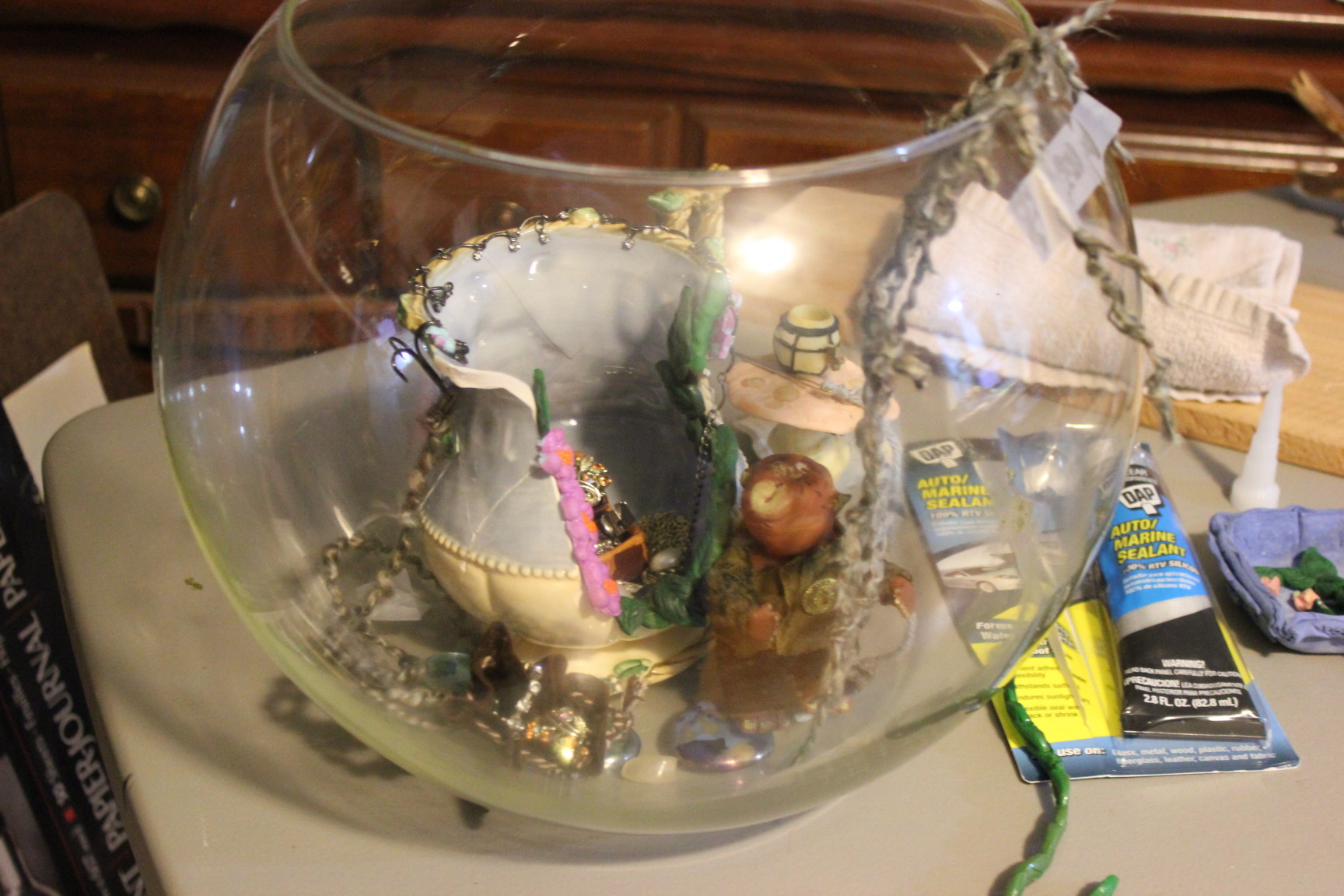
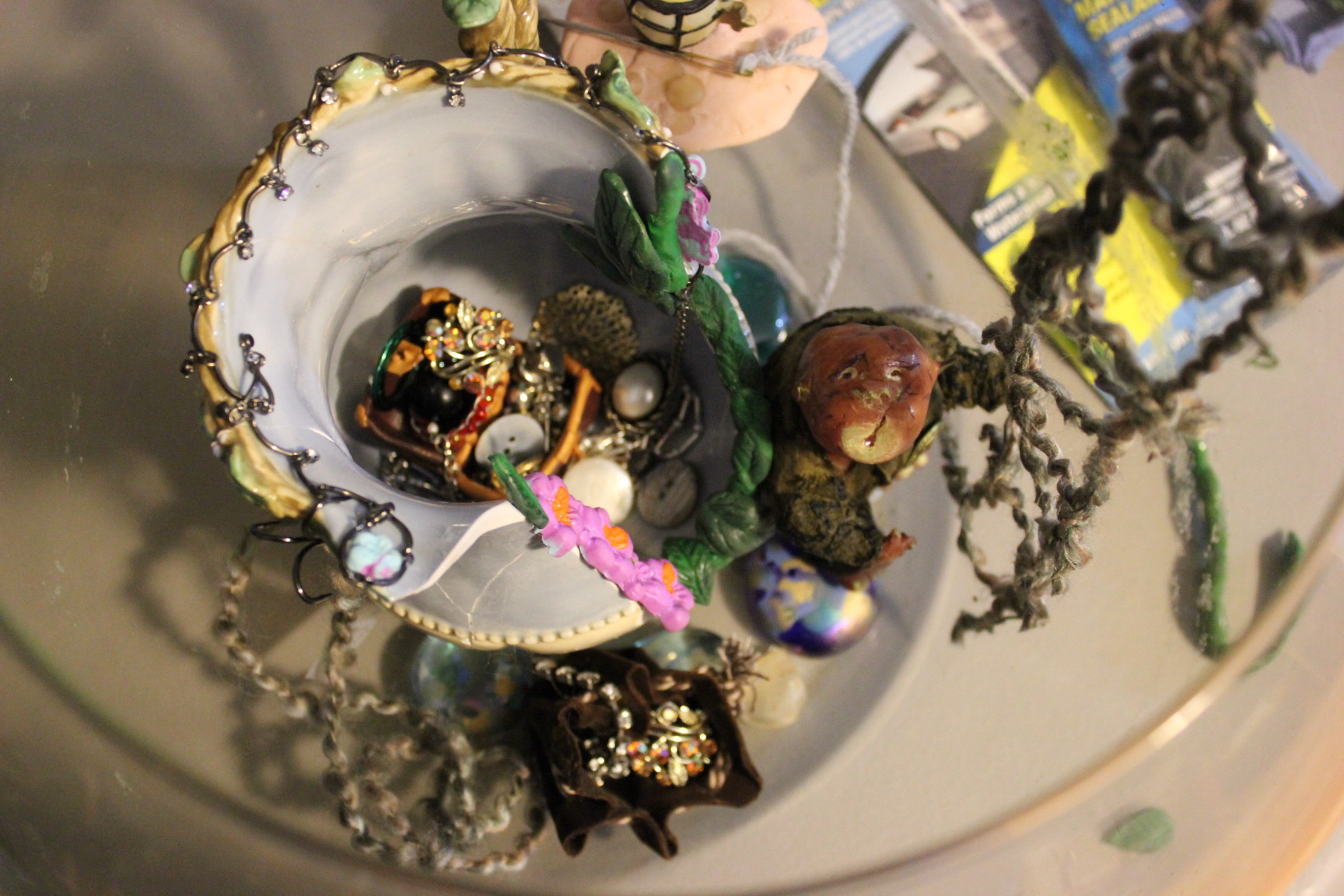
No, I didn’t work in the garden. It was tempting, but I had other indoor plans for the day as I finish up the Faerie House I have been working on. No, it isn’t finished, but I am down to the final stages of gluing.

Things have been in upheaval in other areas of my life and I need to concentrate on the thing I always meant to make my career: art. I have let it go for so long that I feel like I am in high school again, just starting over. That is OK: Grandma Moses didn’t start to paint until she was in her 80’s. But once she learned, she painted with a vengeance.

So everything I am doing in my studio right now is practice. I’m brushing up on old skills, trying to remember how it felt to ride that bicycle of my youth. Then I will hone those skills. I am kind of excited for this new phase in my life, but the learning curve is a little intimidating! Ah well: press on.

I managed three things: I walked around the garden and noted all the hopeful changes. I worked in my studio. I shopped at Goodwill.

54

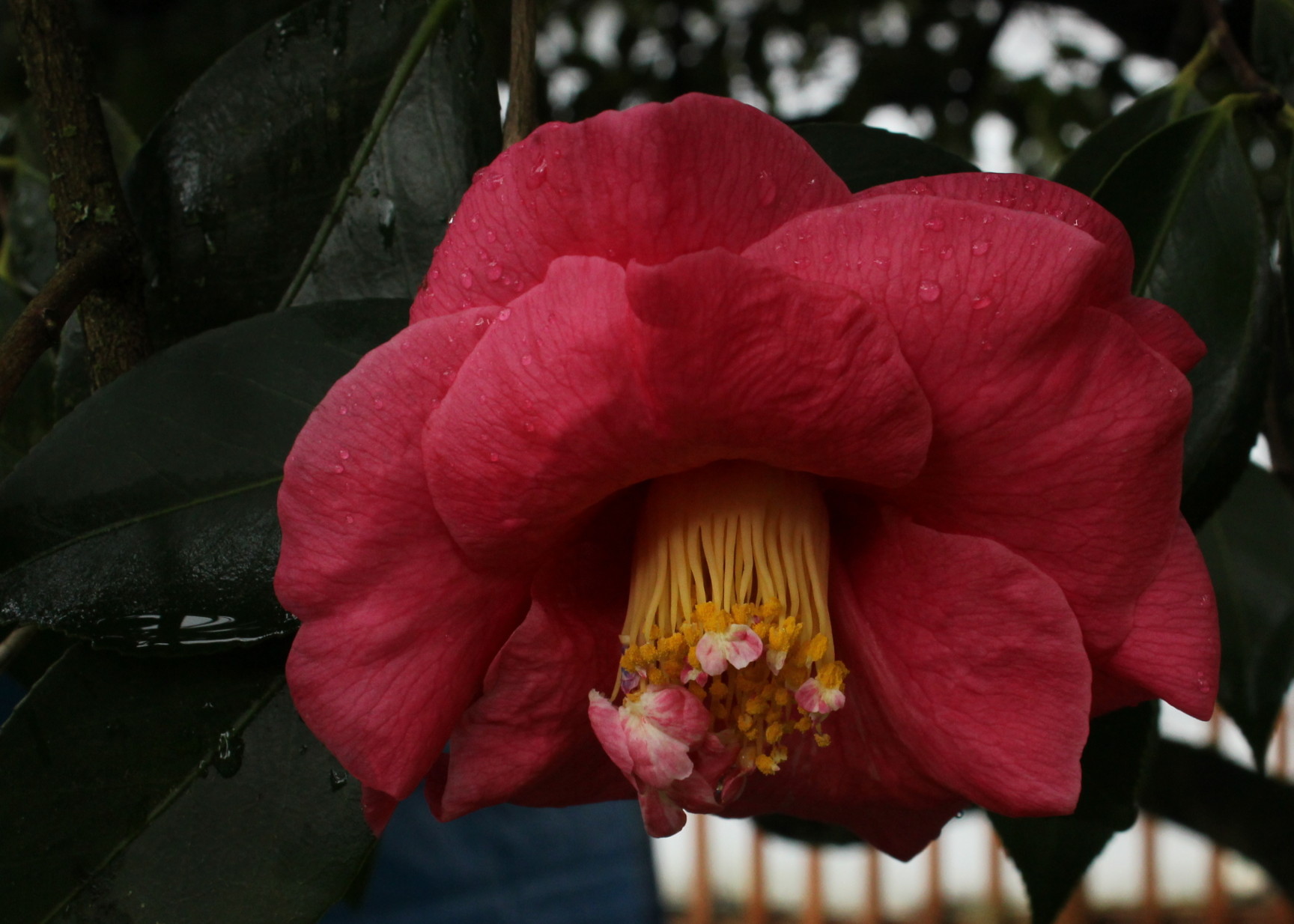
The Camellia is starting to bloom. The first three blossoms have been open for almost a week now, but others promise to open. The Anna’s Hummingbirds are probably in seventh heaven: just two weeks ago, I observed the female testing all the tightly closed buds on the Camellia, almost willing them to open for her.

002

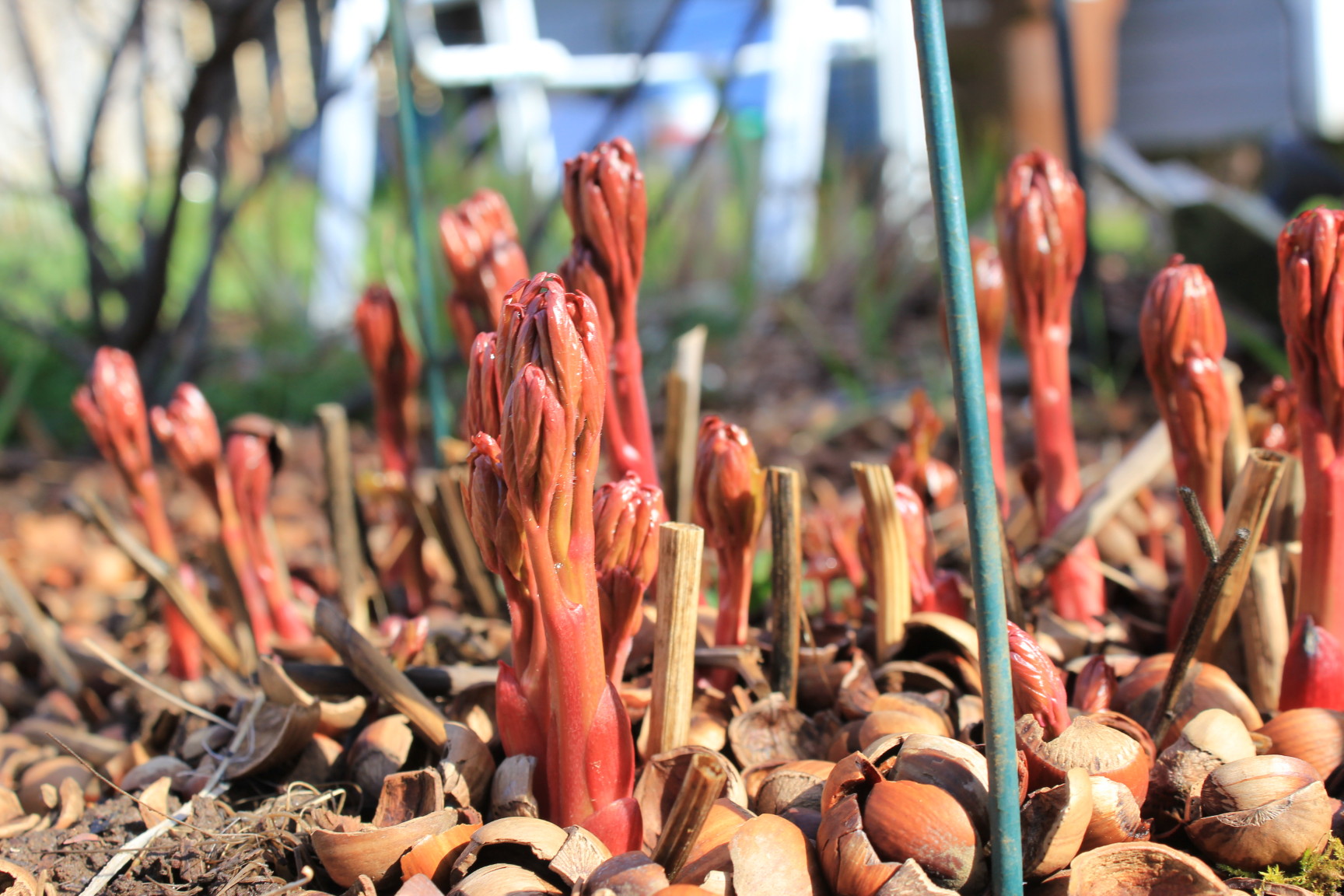
The peonies are pushing up through the mulch!

004

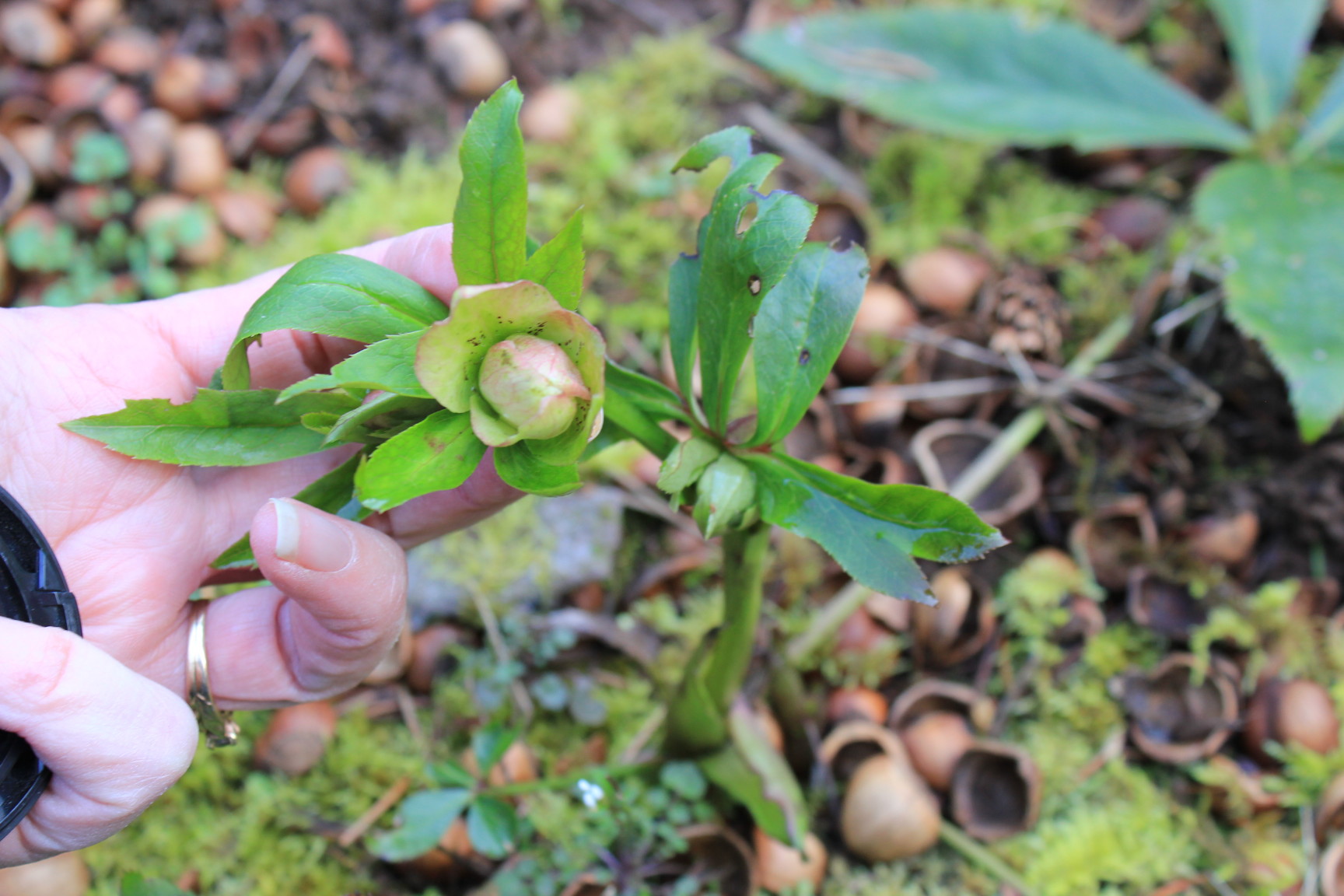
My sole surviving Lenten Rose (Hellebore) is blooming! Usually, it is pouring rain through February and I never see the Lenten Rose in bloom (if ever it has bloomed before). I am sad that only one of the many I have planted has managed to survive, but – dang! It has one bud opening and another two to follow.

005

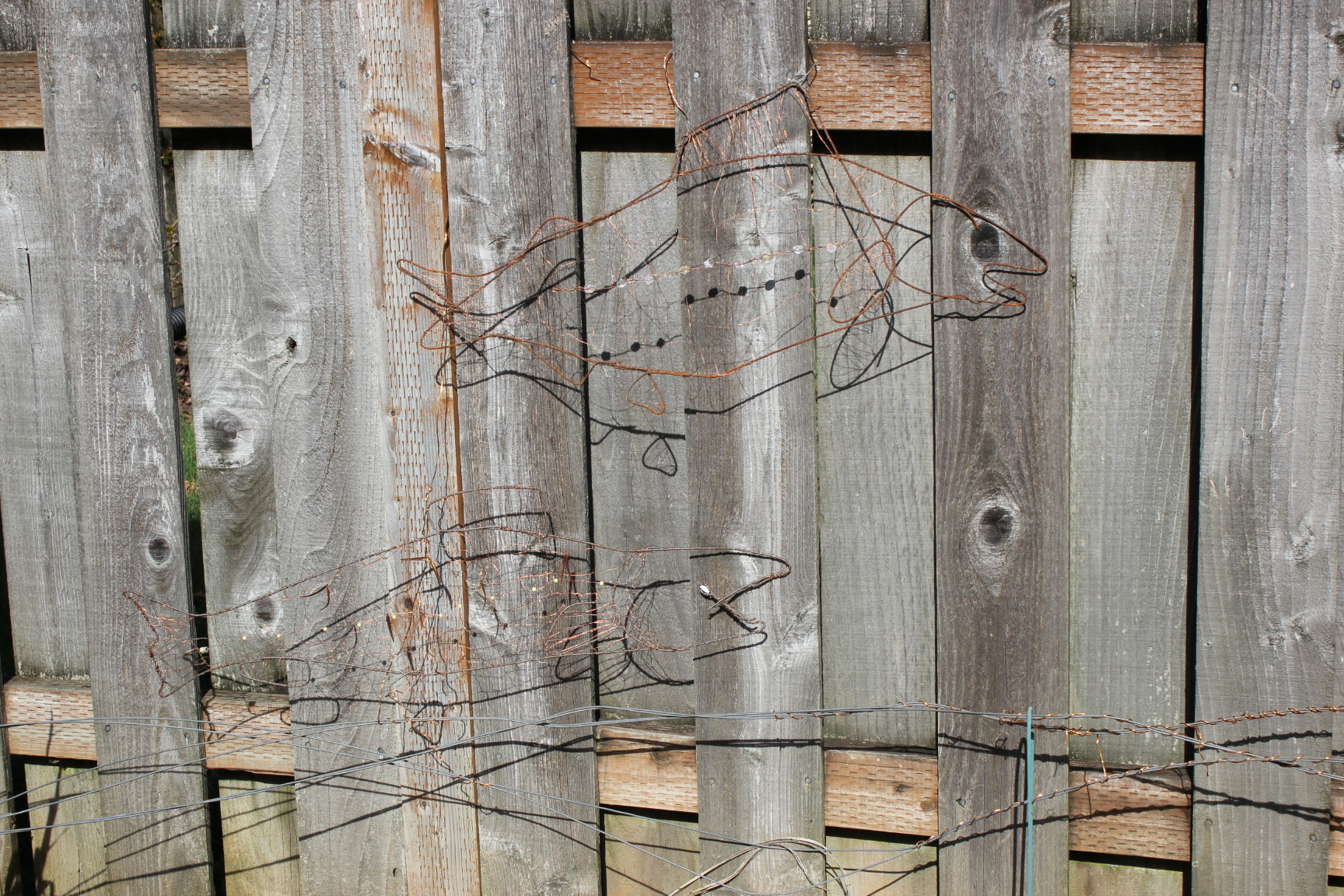
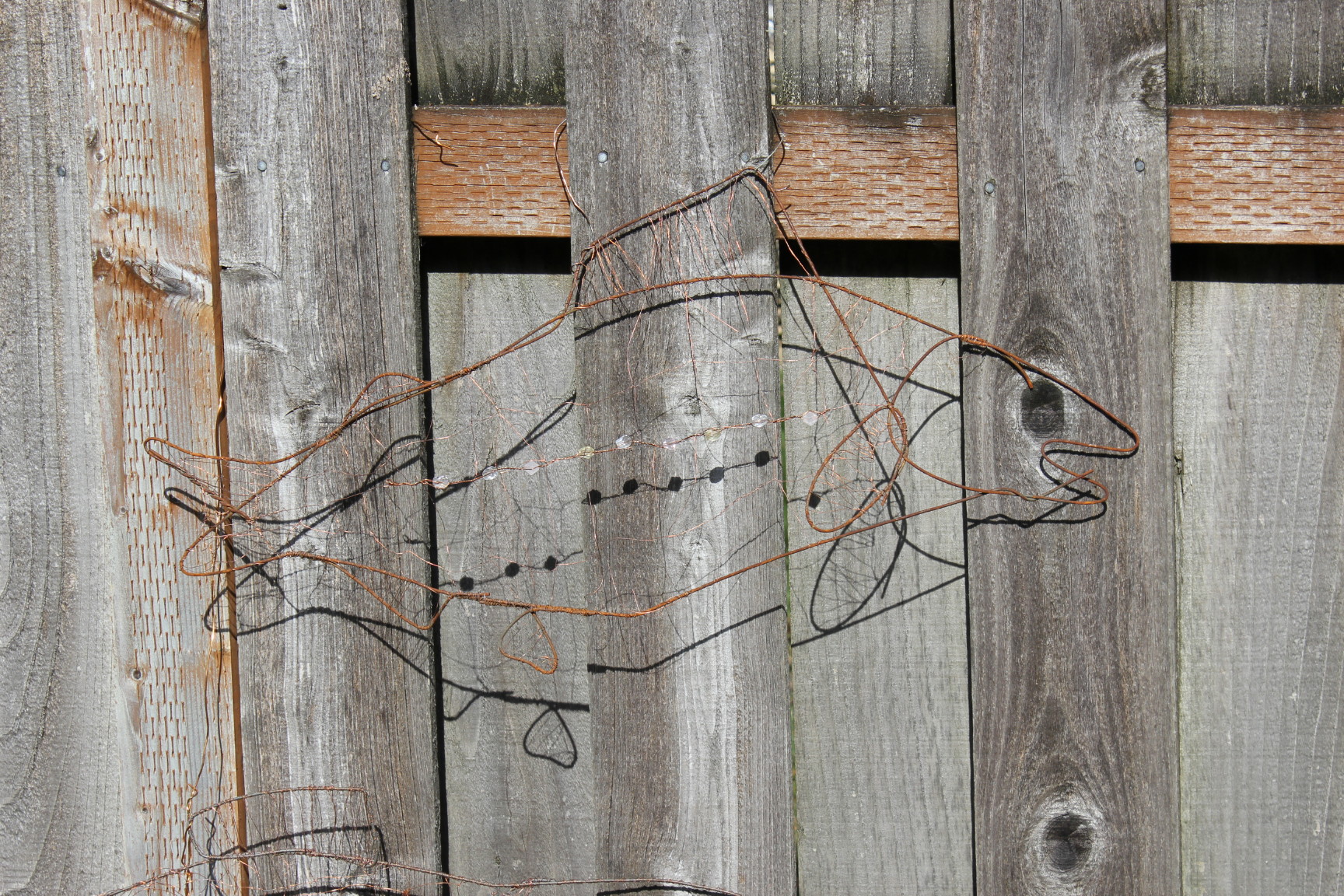
My salmon are swimming merrily along the fence… Usually, they are hidden behind my gladiolas, but in the winter they are laid bare to the world.

006

Actually, the only reason I snapped this photo is because I never realized before that I had so carefully placed the top salmon. The knot on the fence is perfect.

010

I am *this close* to being finished with the faerie house! Dill has revealed much more of his character to me.

011

He’s a Brownie and a thief. Once I glue everything in place and set the ground cover in place, I will blog about Dill on my other blog (the artsy one).

014

I played with pen & ink and water color crayon. I had no real plan for the drawing, hence the less-than-stellar background. All I really wanted to do was practice a little.

In the middle, there was the trip to Goodwill. Actually, I went out because I needed to purchase a “grappling hook” for Dill (a size 2 triple fish hook, available at the general store – BiMart). I spend an inordinate amount of time and money at BiMart: they are local, Northwest grown and a small business that often undersells the big box stores. You can get almost anything at BiMart, but you can’t get everything.

Without going into a huge commercial break there, our local Goodwill is in the same strip mall parking lot as BiMart, which is how I ended up at Goodwill today.

013

And I found these. Actually, there were a whole lot of decoys on display. I suspect some duck hunter grew old and died and his family tossed all of his floating mallards. But mixed in with the generic mallard decoys were these two treasures. Mourning doves.

I live in a friendly community. A white-haired woman had just handled the decoys and discarded them. I picked them up in her wake and said, out-loud, “Cool! Gone.”

She turned around and asked. “Are you going to put them out in your yard?”

“You bet!” Then I added, “My husband just rolls his eyes.”

“Mine does, too,” she replied. She was scouring for art projects, too.

But the greatest score had nothing to do with art. It was just something for $1.99 that tugged at my heart.

009

An 8×10″ black and white photo of an old Cocker Spaniel looking plaintively up at the camera lens. It looks a little like my childhood pet (well, Butchy was not “my” dog: he was the family pet and he adopted us. And he was not a Cocker Spaniel, but was a mutt of indeterminate origin with a lot of Cocker in him). Butch had the white on his chest and I guess that is the first thing I noticed about the photo.

But mostly, I noticed the dog’s eyes. He (or she) loved the person who was taking the photo. and the feeling was mutual, because the photo was enlarged to fill an 8×10″ plastic frame that someone kept on display in their home until another dog replaced this one or the person passed away and the family discarded the photo.

What’s a dog in the scheme of things, anyway? A pet no one living remembers. Nameless. Ageless. Just a dog.

That was a dog that was once a puppy that wormed its way into someone’s heart. Maybe it was a great hunting companion. Or just a good kids’ dog. Maybe it could chase a rock into a muddy river and stayed under water until it retrieved the *very same rock* that was thrown. Butchy did that, time and again. We were terrible children, testing his nose, over and over and over again: marking the rock and lobbing it into moving water and waiting.

He always returned with the rock we’d thrown.

Just for the record: I cried myself sick the day I learned Butchy died of a high-iron diet. Our parents hid it from us for a week. Butch died while we were at church and Dad took him to some remote place to bury him. I don’t think he ever intended to tell us the truth, but our mother caved in and confessed the brutal tale.

Butch always loved to chase cars. One bit him back.

So I bought the picture. Not because it’s worth anything or even that I need the cheap plastic frame. I bought it because it was was a dog that was important enough to someone to rate an 8×10″ photo. Just look at those eyes.

Read Full Post »