Feeds:
Posts
Comments

Posts Tagged ‘nature’

I have decided to turn this blog into a Gardening blog. I find myself drawn outdoor more often now that I am retired, and I am even beginning to delve into the murky waters of maintaining houseplants without killing them. I have a lot of gardening how to and how not to ideas, along with my own journey into landscaping the property we currently live on (and, hopefully, any property we move onto in the future, assuming we don’t end up in some Senior Living facility where I will be forced to garden houseplants).

I did get quite a bit done in the garden in 2024. The biggest item on my to-do list was to build a retaining wall inside the vegetable garden area. I bought a pallet of concrete stones a couple years ago (like, three or four years ago). The pallet has been sitting in our driveway taking up valuable parking space for that amount of time. I had a vision of what I wanted to do but the excuses for not doing it were myriad.

I’m not going to kid you: I am 68 years old and things are a little harder to do now.

But I sucked it up last summer and started hauling rocks from the driveway into the veggie garden area. The idea is not only to stop the neighbor’s gravel from eroding into our yard, but to create a long planting bed along the edge of the fence.

It’s almost complete: I have enough rocks left over to put one more layer around the fence, enough corrugated tin to use as a weed/gravel barrier, and then we need to put good potting soil into the space created. It’s not as straight as it could be, but I did it entirely myself, from the weed removal to the rock hauling (well, I coerced a certain someone to help a little with the rock hauling, but most of it was my back ache). My husband will be elected to cut the tin into smaller pieces but I will tell him that when the weather improves and I finish the planting beds.

Now, we just have to agree what plants are going to be planted in that border bed. I want a large rhubarb somewhere in there. My husband has already planted an espalier pear tree and an artichoke that hasn’t produced fruit, but also hasn’t died. We haven’t had a killing frost yet this winter so it may still die. Then, again, maybe it won’t and 2025 will be the year that we get at least one artichoke from it.

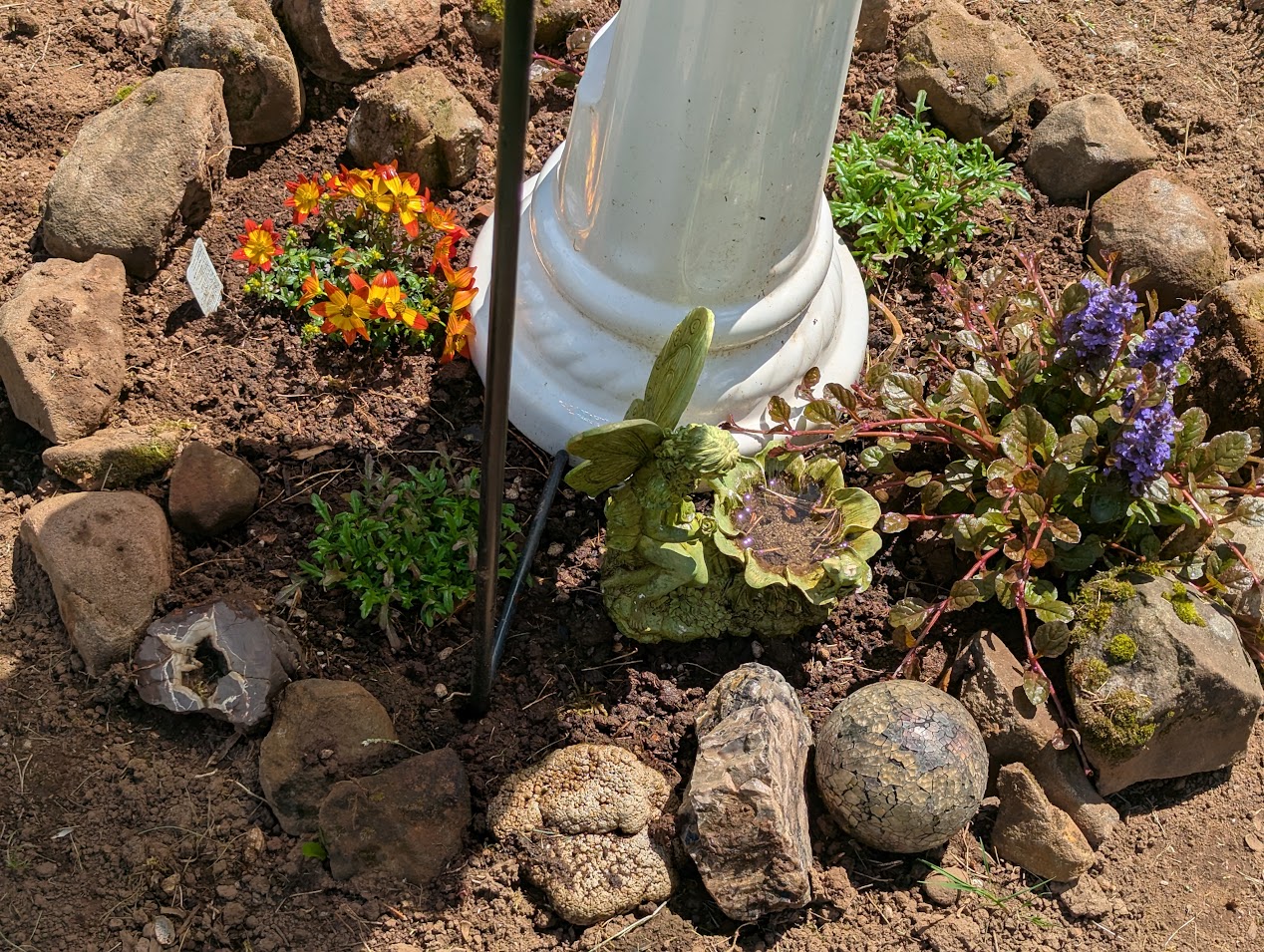
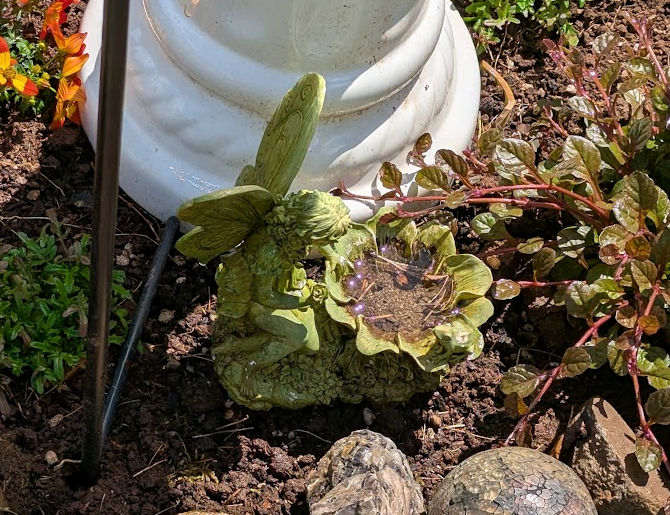
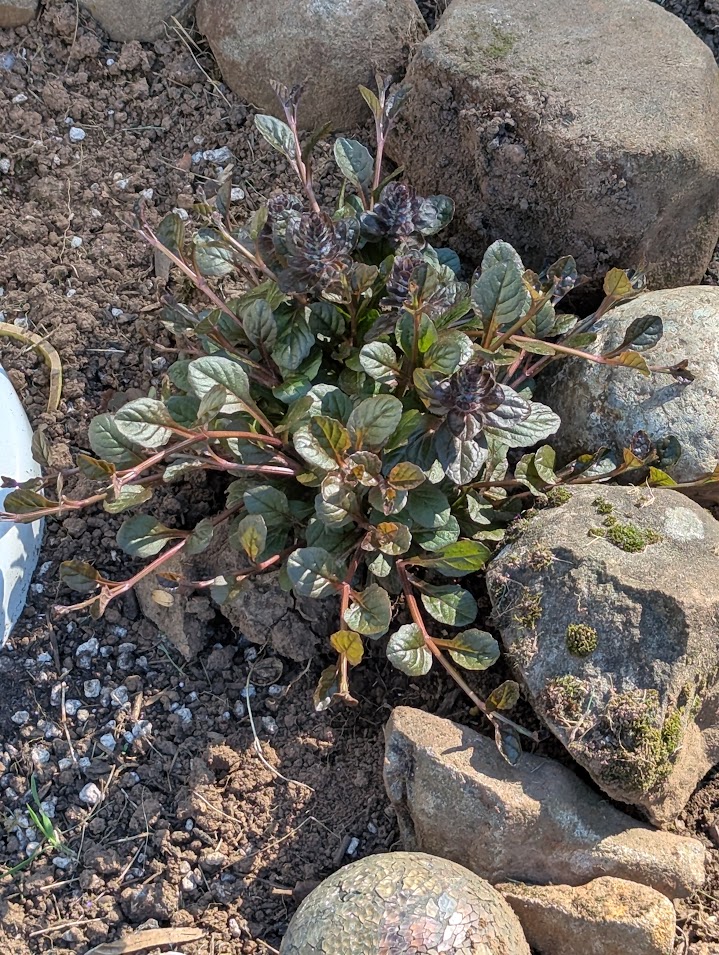
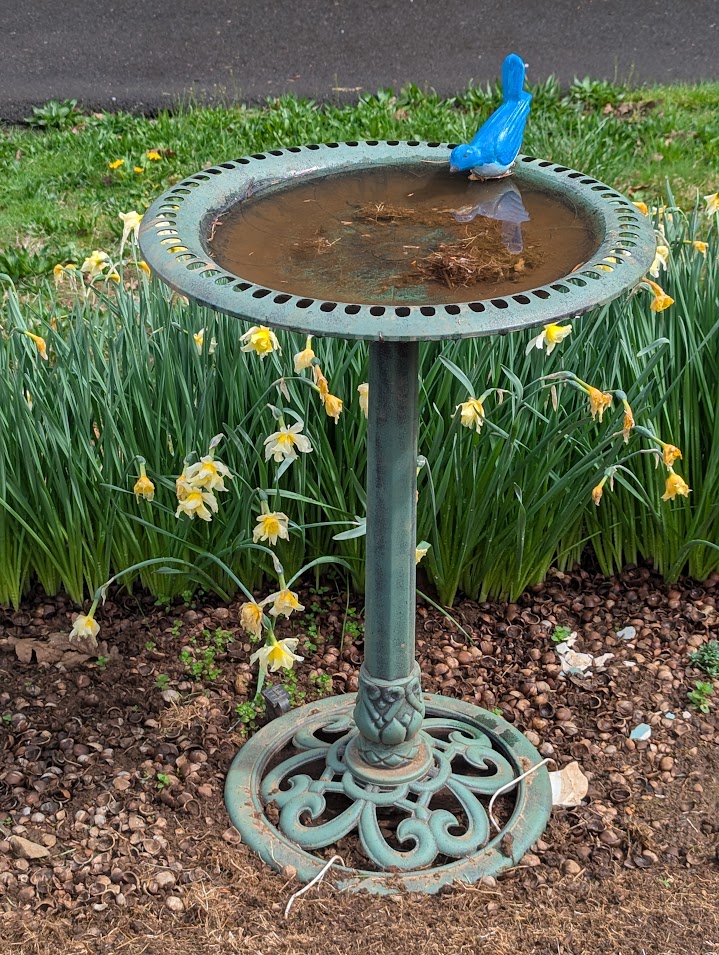
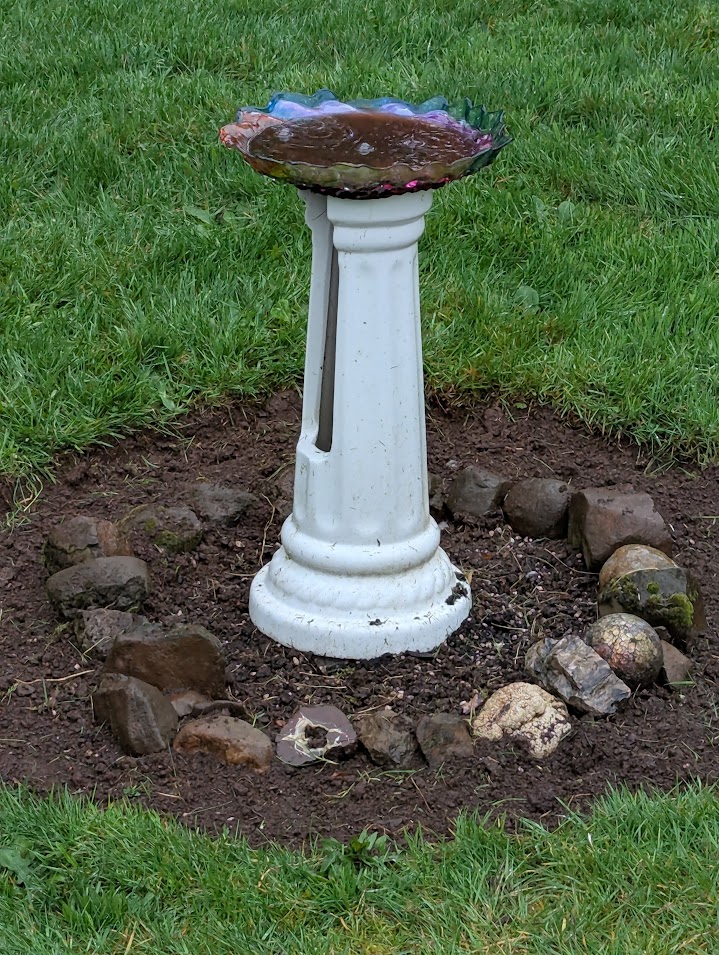
My favorite project of 2024 was a bird bath that I made out of a discarded pedestal to a sink we pulled out of our bathroom during the remodel. I placed it in the center of the lawn south of our new deck and dug out a flower bed around it. I placed native round rocks all around that and planted some annuals (I rarely garden with annuals, but it was late in the season, and they were all I could find at the local nursery). I will replace them with something perennial in 2025.

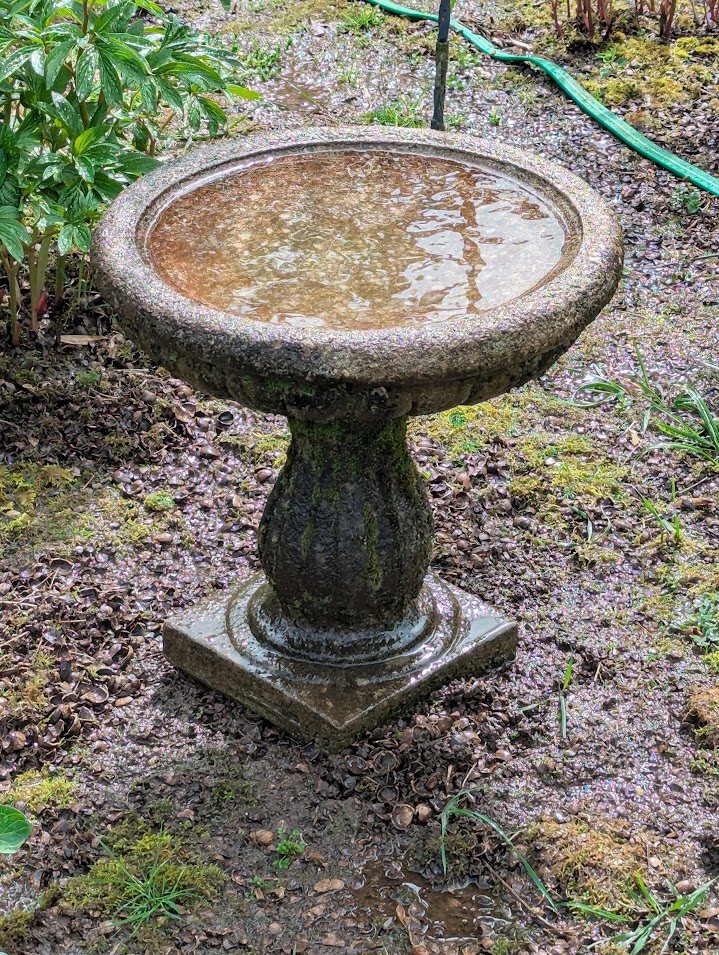
I have multiple bird baths of different depths and sizes: this is the one the crows love. The only expense was the bowl I used for the basin: $4.99 at a thrift store. E6000 is the glue I used to attach it to the pedestal.

Read Full Post »

I spent several hours in the garden today. It is mid-October and things are slowing down. I haven’t watered in a few weeks, trusting the rains to come and do the work for me. The rain has been sporadic but comes often enough that even the planters remain green and growing. The rain barrel is full and soon I will have to close it off for the winter. I lost one rain barrel to a late winter’s freeze when I forgot to drain it, I don’t wish to do that again.

I cleaned one birdbath, the one the crows drop pieces of dog excrement in as they search for undigested peanuts. It’s a battle: the dog wants the bird peanuts, but he doesn’t even chew them: he swallows them whole, shell and all. The crows have learned there are nuts to find in shit, and they soften said shit in the water they (and other birds) are supposed to use for drinking and bathing. I console myself that they are no longer leaving me gifts of newly hatched birds in the water. Crows or raccoons: someone has to wash their food.

I try to get a late edging around my flower beds to discourage the spring growth of grasses (plural) which make spring weeding miserable. Grass and wood sorrel, my chief enemies. I cut the peonies to the ground now. I leave the evening primrose stalks of rich seeds along with the Russian sage and black-eyed Susans: the goldfinches, house finches, juncos, and chickadees will feast of them throughout the winter. So, too, the oregano. The rosemary is just beginning to bloom and honeybees swarm it in the waning Autumn sun.

I have finished most of my flower beds already. Mentally, I note where certain plants are that need to be moved in the spring, and which ones will need to be moved later in the Fall, when the stalks have died back, and the rhizomes or bulbs are left. I divided my Dutch irises a few days ago, today I dug up a couple dozen rhizomes of the purple ones and set them on the corner in a box marked “free”. I have more than enough purple Dutch irises, ones my father gifted me many years ago from my mother’s garden. I keep the blue and white ones, my favorites.

Once, someone on an Internet forum tried to school me on how to take care of irises. I was wrong, he said, to state that irises are basically weeds and need little care. I laughed. My irises came from 6500’ elevation in Nevada. My mother had them planted in gravel, on the southwest side of the garage, under the shadow of the motorhome. She died in 1995. My father hated irises and left them to die. Sometime between 2002 and 2003, he dug them up, threw them in a box, and shipped them to me, here, in the fertile Willamette Valley. I have divided them three times since then and given countless ones away. Irises are basically weeds and can survive a lot of abuse, drought, ice, snow, and even slugs, the latter being their greatest enemy in my garden.

I do kill some plants. Sometimes I do it intentionally and sometimes they just don’t like the way I treat them. Houseplants are usually the first to turn brown leaves upward and refuse to put out new roots, but I am getting better at keeping them green. I don’t always know why a certain plant will not take off in my yard, especially when I have had some degree of success with the plant in the past. Flowering currant, a native to the Willamette Valley, is one such failure. I grew it at another house, but it has failed to take root in this yard, and I have tried numerous times. But it took me over three years to rid my garden of comfrey and Japanese anemonies, and I am still battling fireweed (although not too fiercely, as I rather like fireweed).

This past summer I experimented with growing more native herbs. I already had several herbs in the ground but expanded. I planted nettles in a planter and kept them cut back so they could not go to seed and spread in my yard. I harvested leaves, dried them, and have already tried them in tea. I wore long sleeves and gloves when I harvested them: I have memories of crawling into a nest of nettles under the aspens in the Ruby Mountains when I was a girl. It was not pleasant. I don’t blame the nettles, but the little girl who didn’t pay attention.

I harvested yarrow and feverfew. My husband wants me to grow colorful yarrow next year, not the plain white stuff of our childhood. I will no doubt oblige. I have Lady’s Mantle, Holy Basil, Elencampe, sage, lavender, wild sorrel (I didn’t plant that, it has taken over our “lawn”), mallow, thyme, hyssop, elderberry, and more.  Sometimes, I just sit and stare into my garden and the many flower beds and wonder what all I have planted and what I can harvest and what I should get rid of or introduce.

My garden is a canvas. I have plants I dislike and some I even hate: grass is one. There are many kinds of grass, and I despise most of them. I like sedges. There are a couple ornamental grasses I can live with. But grass as a whole, I despise. I am allergic to most grass. If I could have a yard free of grass, I would be in Heaven. And for that reason, I grew flax this past summer. I hope to sow flax seeds into the lawn, mixed with the false dandelions and wild sorrel. I am slowly cutting out more and more of the lawn area for flower and herb beds. I don’t think about the color or composition as much as I think about eliminating the grasses.

I reached a place where I must quit garden work. The largest flower bed has been cleared and most of all the other ones are winter-ready. I still have peonies to cut back, and asters that are just now fading which will need to be dead-headed before the cold sets in. There is one tree peony that I hope to dig up and transplant into a container, separating the grass from its roots and (hopefully) giving it a new start at life. It is probably fifty years old and I wish to be very careful.  I moved one tree peony two years ago and it is happy in its new location. I can do this.

Photo: climbing nasturtium that took all blessed summer to grow and is finally climbing and blooming right before the rains come.

Read Full Post »

Warning: this is strictly a gardening post. It is advice on how to handle Creeping Myrtle when she gets out of control.

Don’t worry: you don’t need a stun gun. A shovel will come in handy, however.

Flash-back: nearly 29 years ago. We lived in a cute bungalow with a wonderful shade garden. We had no money and we were robbing Peter to pay Paul, and we lost the cute little bungalow to our bad debts. In the meantime, I learned to garden in the Willamette Valley, and I first encountered the encroaching powers of Periwinkle.

It grows slowly. It is nowhere as invasive as the dreaded English Ivy (she’s a real bitch in the gardening world, and the City of Portland has banned her from yards) or Kudzu, that invader from the Far East. He’s a nasty invader.

Myrtle, however, is patient. Shallow-rooted. She is also a European invader, but one which can be contained with a little patience and an investment in labor. When I was young – 29 years ago – it didn’t seem like it was all that hard to trim the Periwinkle back. I managed to contain it to one flower bed. It wasn’t “hard” in my mind: I just put a shovel under it and “rolled it up” like a carpet, eventually cutting off all the runners and roots when I rolled up the periwinkle carpet to the point I wanted to contain it. So easy to do when you’re still young… And there are no peonies to save.

Flash forward to a much wiser and much older us. When we moved in, I noted the variegated Vinca Minor that grew in the little triangle flower bed. “I’ll cut it back when it becomes a nuisance,” I thought. I was still in my forties.

It grows slowly, did I mention that? So it took it ten years to cover half the triangle. The triangle is an area about 12’x10’x6′. The problem is this: there are several peonies in that triangle, and they have slowly been choked out by the pretty purple  ground cover.

This weekend, I decided that I really needed to tackle that project. I forgot that I was in the latter half of my fifth decade. The weather was cool and over-cast and I watered heavy: what could go wrong?

Oh, age, time, sunshine, and the fact that the Periwinkle grows so thick that water doesn’t penetrate the foliage enough to moisten the soil adequately for removal of the creeping vine. Nothing else.

Basically, it was the same procedure I used back when I was young: you get a shovel under the Periwinkle and lift it up. Lift and shake the topsoil from the roots, and cut the vines until you pull off an entire section. Repeat. If you do this early enough in the life of the plant, you can contain it to one area and keep it from invading where it should not.

I never maintained it and I had half the triangle to clear out.

Truthfully, I originally thought I’d just hack it back a little. But when I got started, I realize I really didn’t want to do this again. *Ever Again.* It was either clean the Vinca Minor completely out of the bed or repeat this procedure in ten years, when I’d be pushing 70. Um, NO.

It took me two days. I worked hard until the cloud cover burned off and the radiant heat from the garage (the north side of the triangle) forced me to give it up. I retired a pair of jeans and a sweaty t-shirt by 1:00PM on Saturday. I was wobbly-kneed, dehydrated, and sore in every muscle. I sat in the lawn chair and stared at this now-nemesis of mine.

I like Creeping Myrtle. The flowers are pretty and they last in a bud vase. The foliage is evergreen and the variety in our garden is a variegated kind which is striking. But as of yesterday, I hated it in that triangle. I hated it because I knew that if I didn’t get it completely out of there, that it would eventually come back and haunt me – or haunt whoever takes over this home when I die.

I’m pretty certain Barney did not plant it.

Barney Schultz bought this house in 1930. It was partially built then and he finished it. He raised animals, ran a butcher’s shop out of the garage (or somewhere nearby) and he loved peonies. Eventually, he sold off most of the land and gave up making sausage. But he never gave up on growing peonies. Sometime in the 1970’s or early 1980’s, he carried arm fulls of peony blooms across the street for the neighbor’s daughter’s wedding celebration. Everyone who knew Barney remembered his passion for peonies. My 85 year old neighbor to the north tells me that the yard was once a “meadow of peonies”.

Barney would not have liked the Periwinkle. Of course, he would have hated the grass that invades the peony beds, too. And the mole that cruises the yard, but that’s another post.

As I hacked at the last yard of Periwinkle, I felt like Barney was standing on the sidewalk, looking down. “Thank you,” he whispered, “for saving my peonies.”

077

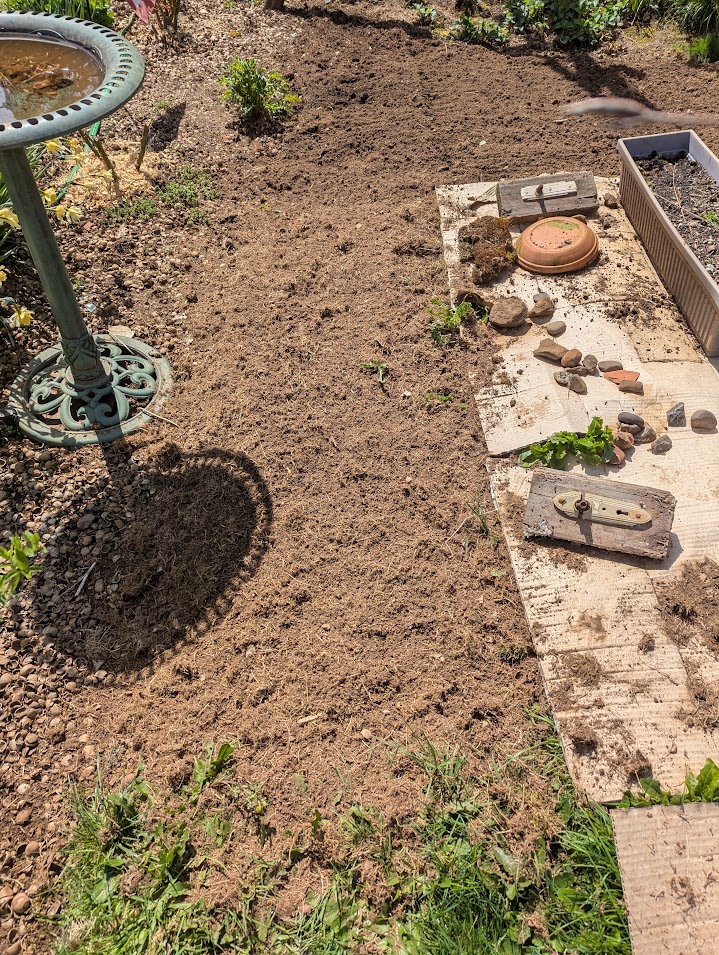
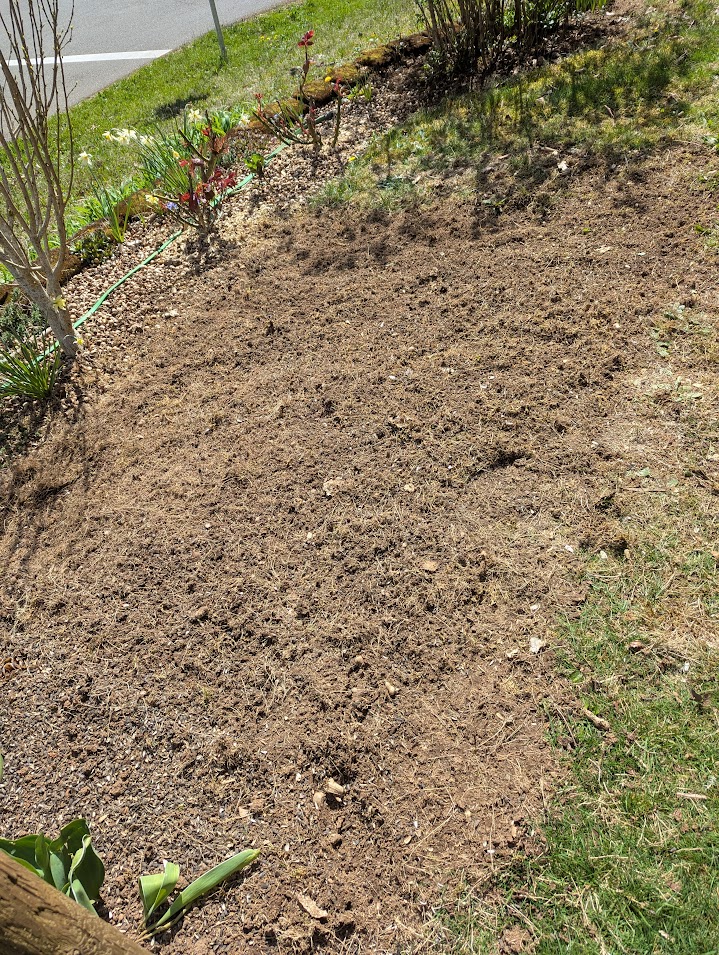
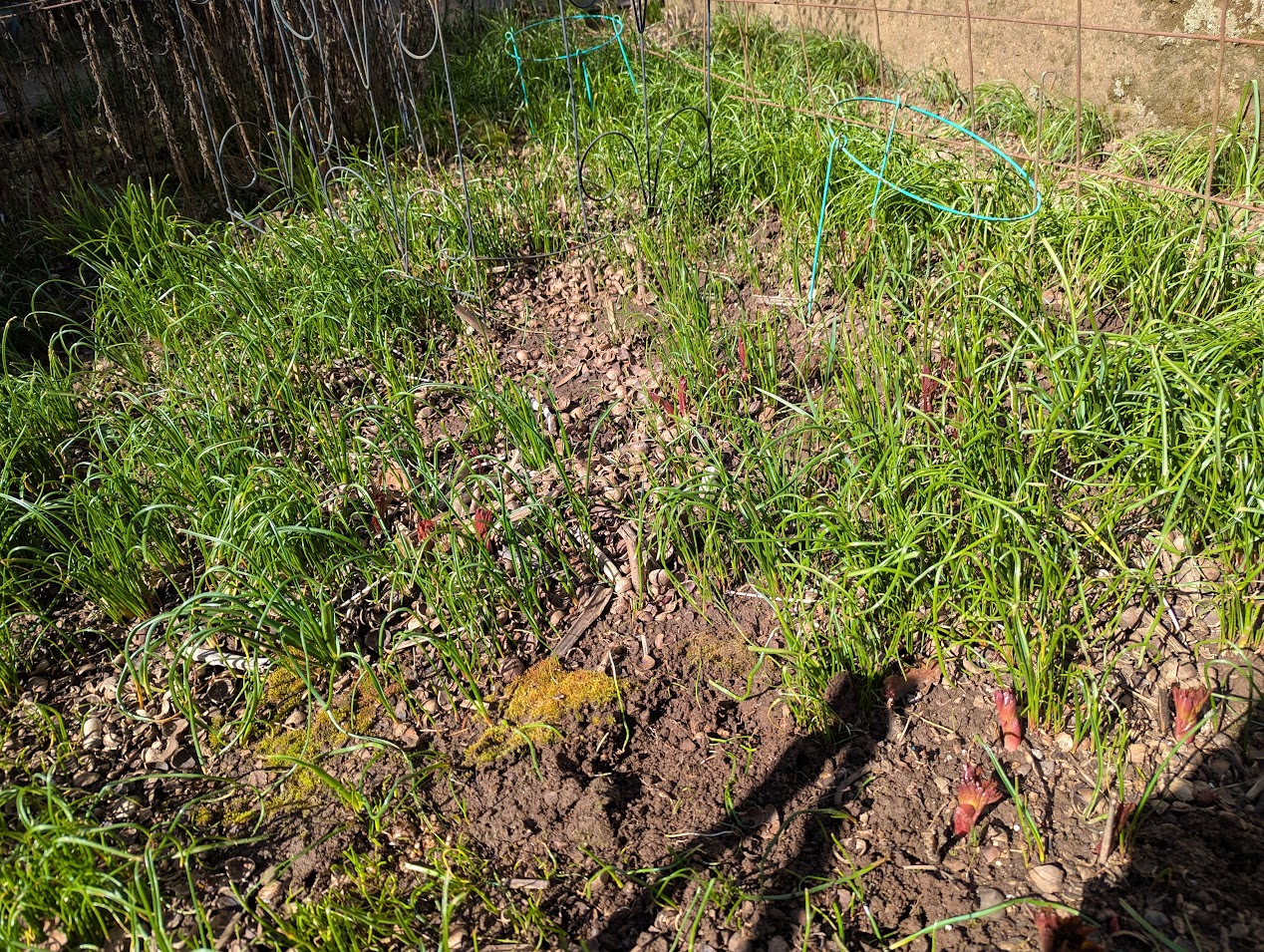
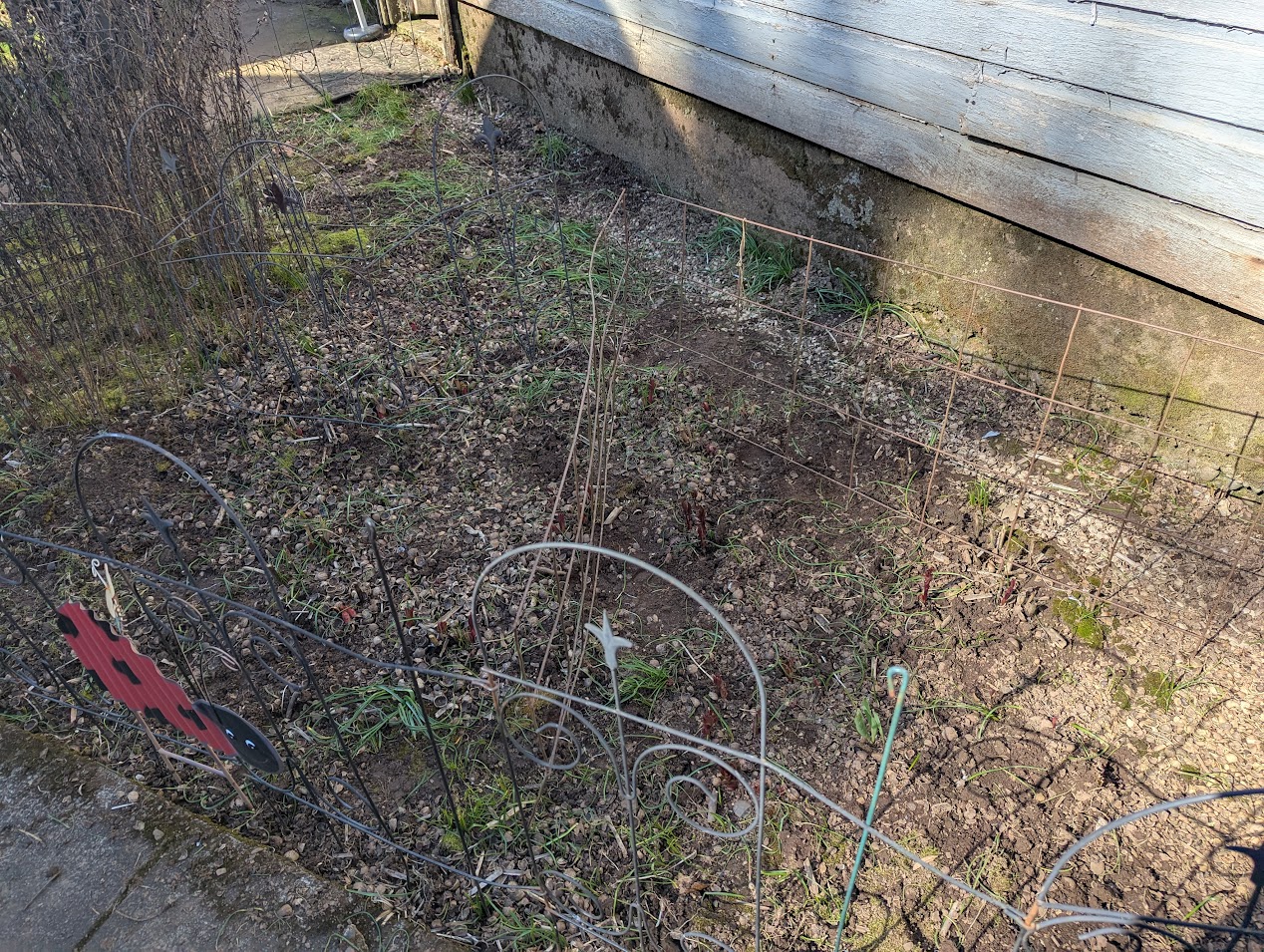
It looks pretty barren now that I am finished. I moved some of the creeping thyme in hopes that some day I will have to “control” that as well (it’s even easier to control)(that’s the green bit of life to the right of the photo). The peonies that have been buried for 10 years breathed a sigh of relief.

078

I saved three flats of Myrtle.

I asked my husband what he thought I should do with it. Put it out on the street with a “free” sign?

He said, “Plant it under the lilacs.” He hates mowing under the lilacs. It grows slowly. I don’t have to give up the Periwinkle entirely. It’s a win-win solution.

I’ll do that next weekend. I’m too tired to think about it now.

Read Full Post »

« Newer Posts