Feeds:
Posts
Comments

Posts Tagged ‘native-plants’

It is time to cut the milkweed out of my garden.

I planted it many years ago. It never sprouted. Four years later, there was a tiny plant that looked suspiciously like a milkweed growing next to some peonies. I clipped a leaf off to see if it would ooze the sticky white sap that gives milkweed its name: it oozed. Excited, I let it grow. The milkweed plants are limited to a “triangle” between the garage and two sidewalks. I cut them down when the seed pods appear: I don’t need more plants. Also, I don’t want to wait another four years for the seeds to sprout when the plant does just fine by sending out runners from those very sturdy rhizomes.

I was afraid the milkweed would crowd out the peonies and the asters. It doesn’t. The three plants grow together happily. What the milkweed did affect was my arum, dracunculus vulgaris, or “Dragon Lily”. The milkweed runners take up the space the lily’s bulbs are in and I’ve slowly lost many plants in that tiny garden space. There are a few left and this fall I will dig them up and move them to a better location, free of water- and space- hogging competition.

Unfortunately, milkweed does nothing to impede the growth of grape hyacinth, I don’t think anything short of a heavy-duty herbicide affects grape hyacinth (and I refuse to go that route). Every year I pull several hundred bulbs out of the ground and compost them. (Sometimes, I will give them away to a desperate gardener who doesn’t know better than to start them in their yard. I’m pretty sure I’m digging up bulbs to send to my brother in Reno this fall. “Hey, Bro, your yard needs some early spring color. I promise you won’t hate me in ten years…”)

Now, when the first purple grape flowers begin to bloom, I do my first – and only – weeding of the space. I cut hyacinths for a bud vase. I toss the ones that pull up with the ever-present grass. I do my best to rid the space of grape hyacinth bulbs while enjoying the aroma and color. Of course, I fail and the hyacinth prevails.

In the Spring, I cut back the old stalks of peony and aster just as the first new stems begin to push their way skyward around the fading hyacinth. Purple stems of peonies, green stems of aster, the spotted stems of Dragon Lily rise above the fading green and brown stems of faded hyacinth. Buds form on the peonies and soon the area bursts with pink and red peonies so thick I have to tie them to stakes to keep them upright.

The peonies fade and drop their petals just as the aster and the milkweed stalks begin to mature. The green of the aster is first to top out at 2-3’ tall. Milkweed will soon tower over the asters and all one will see will be the green stalks of milkweed.
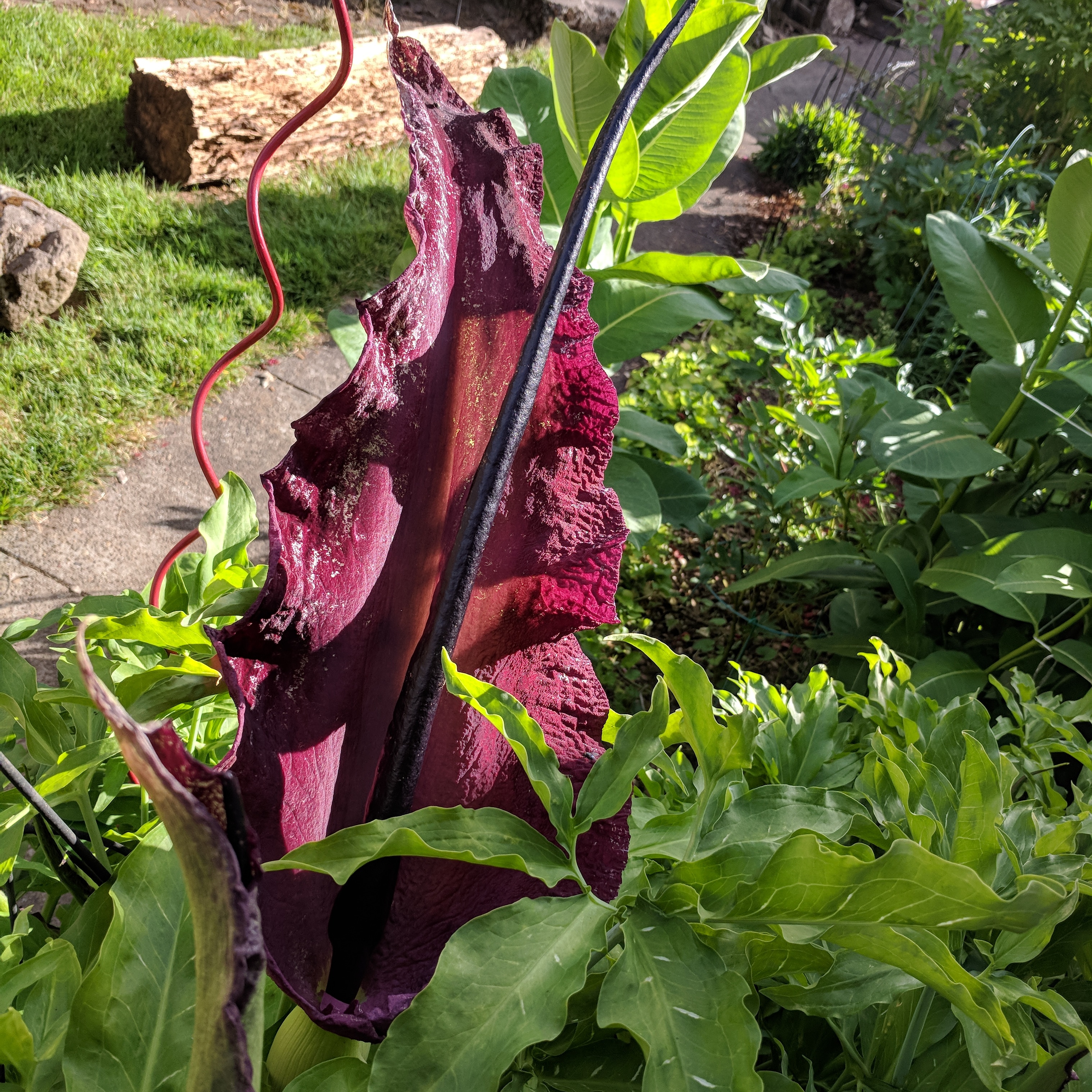
But before it does, at the end of May and always on our anniversary on the 7th of June, the aroma of rotten hamburger wafts in the air: the Dragon Lilies have opened. Flies and beetles rush in to await their demise in bowl of this carnivorous beauty. The smell lasts a couple days. The flowers wilt and the entire plant begins to wilt and turn yellow.

Now it is the milkweed’s turn.

I have two varieties: Showy milkweed (Asclepias speciosa – native to Oregon) with pink florets and California milkweed (A. Californica) with white florets. The latter isn’t a native to Oregon, and it doesn’t grow as prolifically as the Showy milkweed does, but the blooms are pretty and the aroma is the same: sweet and enticing, the polar opposite of the faded Dragon lily.

I planted milkweed thinking I could attract migrating Monarch butterflies. I didn’t know then that this part of the lower end of the Willamette Valley is not on the migratory path for these beautiful and endangered butterflies. No worries: the value blooming milkweed has for other pollinators outweigh my misplaced intentions. Every early bee, butterfly, and tiny wasp brave the sticky edges of the flowers to get at the pollen inside. Occasionally, a honeybee will get stuck and will have to struggle free. A few plants wilt and die, host to the milkweed beetle which does exist in this half of the valley.

Below the tall stems that now tower between four and six feet, a junco might build a ground nest. The nests are soft grass circles, now much larger than the palm of my hand. We won’t know there’s a nest there until a fledgling bird hops out of the cover while the parent birds hover nearby.
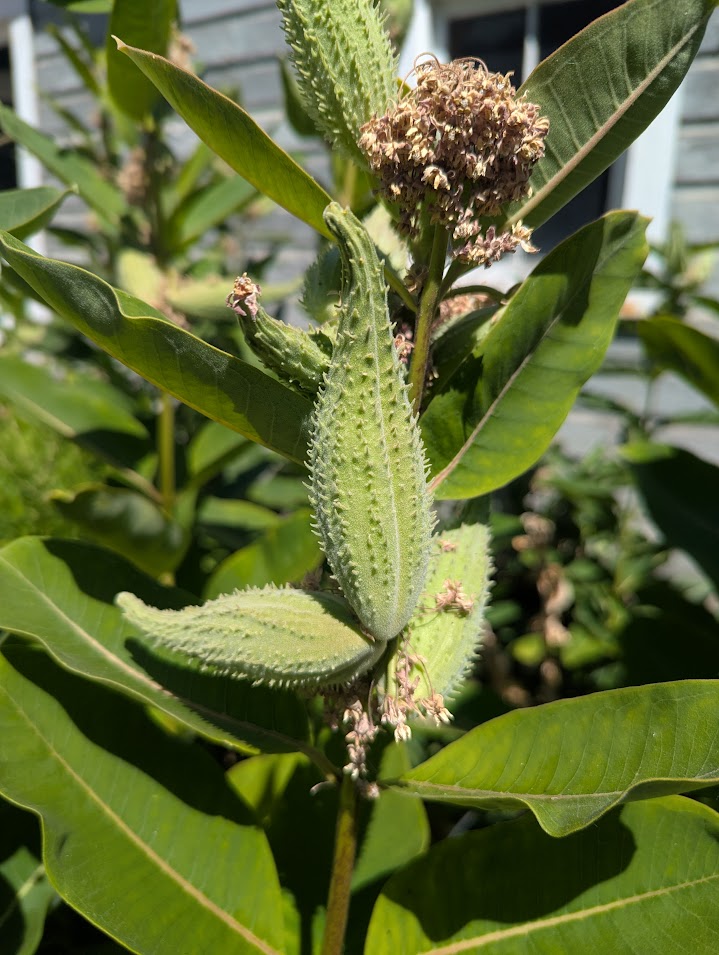
The bloom of milkweed lasts a couple weeks giving us quite a show of pink and white, and busy pollinator insects. But then the flowers fade and the few that were pollinated will start developing seed pods. These are green and soft, and quite edible if you are not allergic (I am). When the pods ripen, they turn brown and hard then pop open to release thousands of sees hanging from wispy “umbrellas”. The wind catches the seeds and like the dandelion – well, you know the rest of the story! The ground is soon covered in tiny, milkweed parachutes looking for a home.

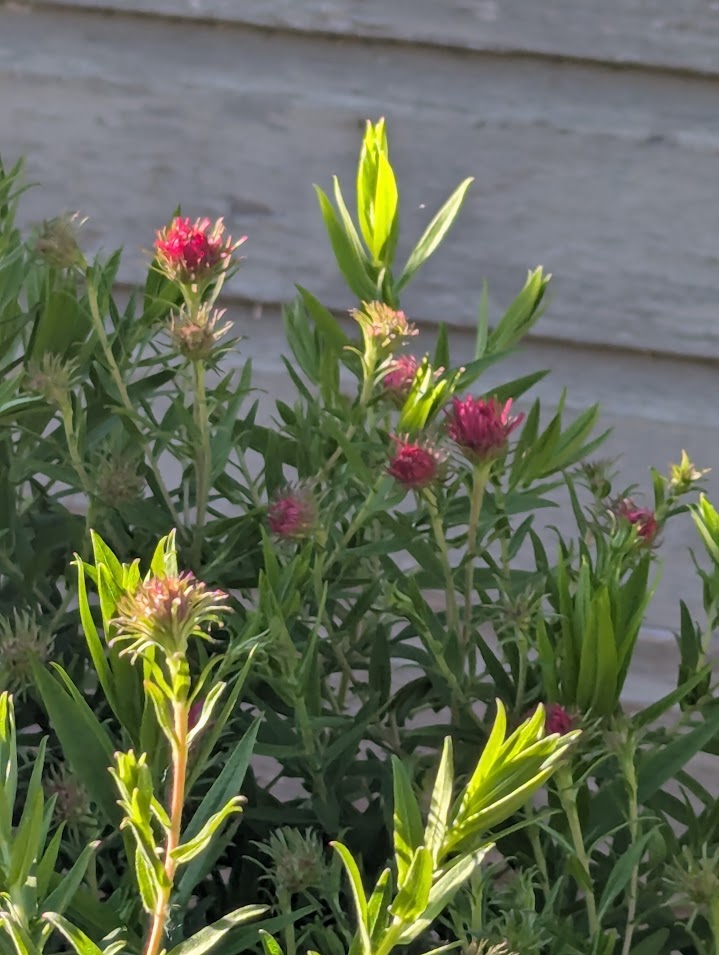
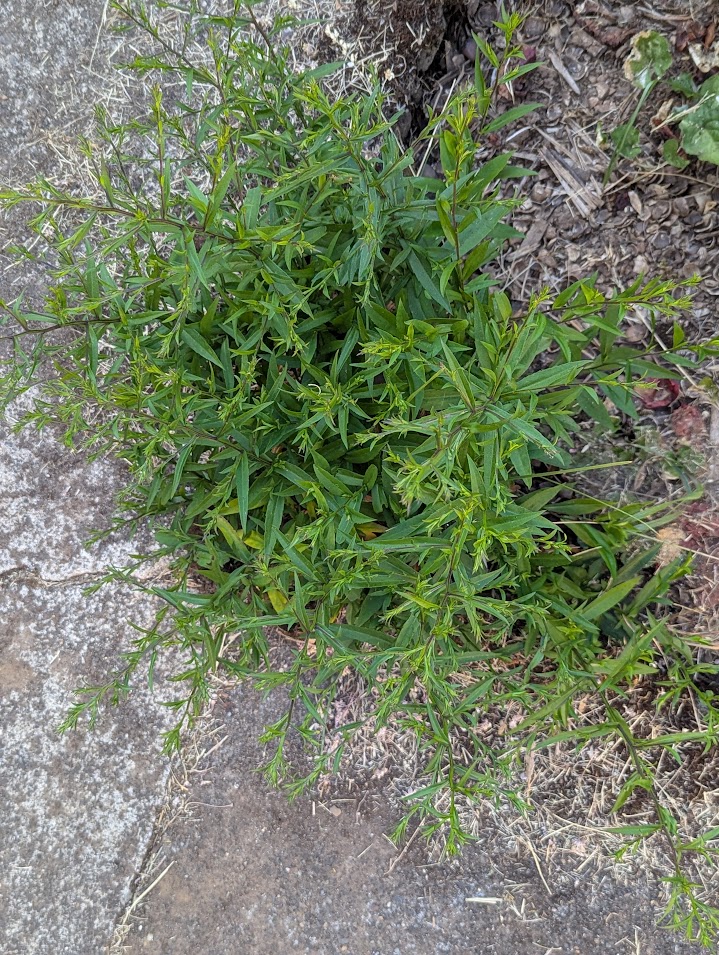
But I mow down the milkweed, not simply to avoid the parachutes, but because the milkweed towers above the asters. And the asters put on a late show of color lasting through August and into September. The tall asters are a riot of magenta pink. The aster that grows in the crack in the sidewalk puts out lilac-colored flowers. The tiny bees – those mining bees and other ground dwellers – love the asters.

The milkweed is gone now, and I wait for that last eruption of color. Too soon, the rain will come and everything will turn brown. (Photo is of a year I did not cut down the milkweed stalks and the seeds flew everywhere.)

Read Full Post »

Tiny pinks on long stems. This mallow started life in out garden as a tiny free specimen. I put it in a planter and it thrived. Moved it into the ground and it nearly died. It is in a large planter, soil mixed with sand, and it is happy once again. It is a bee favorite & common on the Coast.

stinging nettle – urtica dioica

I hope you know what plant that is without the ID below it: run into this without enough clothes on and you’ll wish you had never met it. I crawled into it once when I was a child. Nettle stings all over my face! Fortunately, the damage is never serious and the sting can be dealt with (in my case, I probably smeared mud all over my face. I was a clever child – HA!). I started growing it for the medicinal benefits of nettle tea. It is in a pot so it doesn’t escape into the yard and I deadhead the flowers before they produce seeds: this is all the nettle I need in my yard. Harvest with care: garden gloves, long sleeves. I dry the leaves in the dehydrator instead of hanging them to dry. I’ve read you can cook the leaves as a spinach substitute (I’m not fond of cooked spinach except on pizza). The leaves lose their sting when dry. I mix the leaves with feverfew and yarrow for a green tea that I can drink without sweetener.

Nettle may lower your blood pressure, help with blood sugar, hay fever, reduce inflammation, and help with enlarged prostate, and contains antioxidants and many vitamins. (I may write more on nettle in another post on herbs in the future.)

Wild irises.

I love irises! These are my wild native irises (I have “domestic” irises as well). The first two iridacea shown love moist soil and are planted in a little shady swale next to the south fence of our yard along with the camassia. I need to divide the flag iris this fall. The Douglas iris is more like its commercial counterparts: dry soil is fine. They love sunshine. The blooms are larger than the flag iris but still delicate.

wild camas – camassia quamish

Wild camas (which is related to asparagus) is a beloved forage plant for the Indigenous peoples of the PNW. I loves marshy areas. I have not tried eating it: I have too few of the plants to forage just yet.

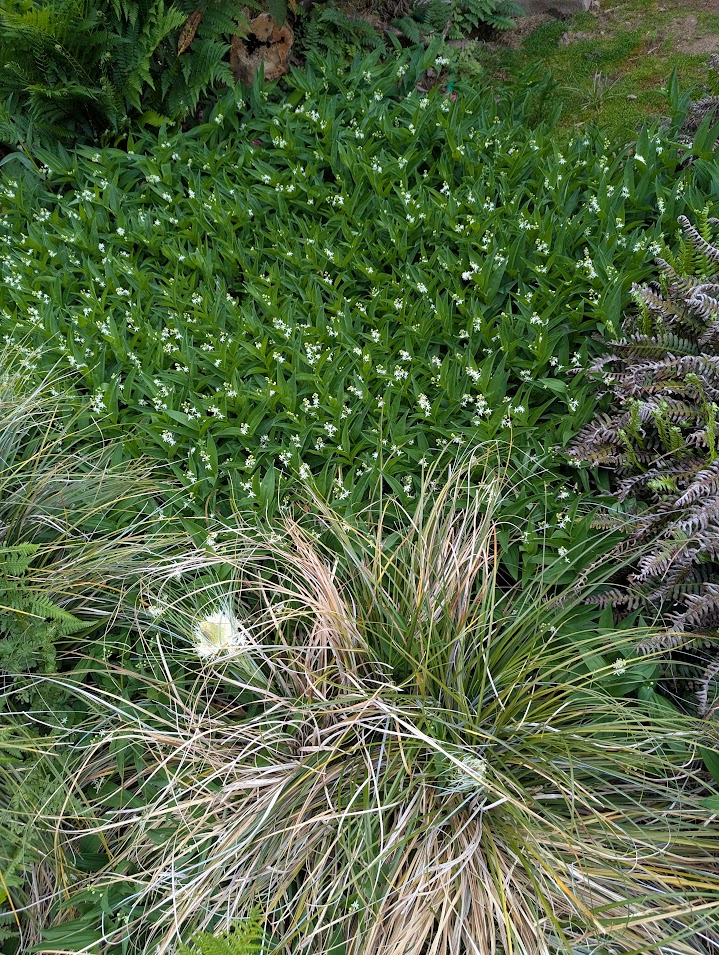
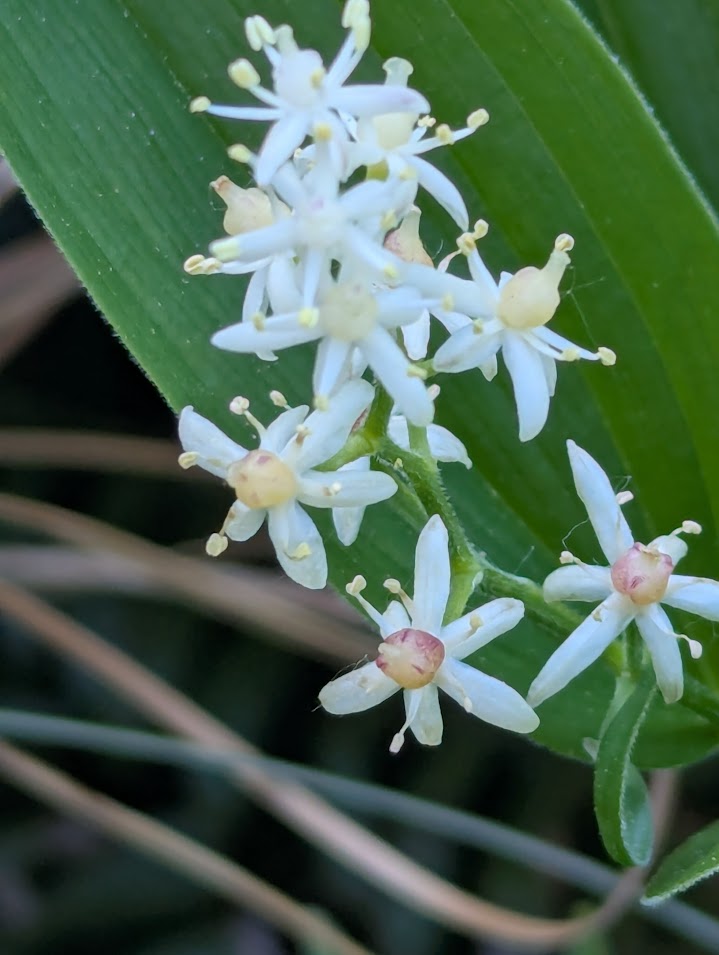
My husband brought me a gift of bear grass one year along with the deer ferns. Falso Solomon’s seal hitched a ride. My bear grass has never failed to bloom: the spikes tower above the heavy leaves. I think one of my plants is showing its age and beginning to die out, but it produced three beautiful spikes of flowers this year. And the false Solomon’s seal never disappoints, but it is gone by summer and the ground bare where it flourished in the wet of spring.

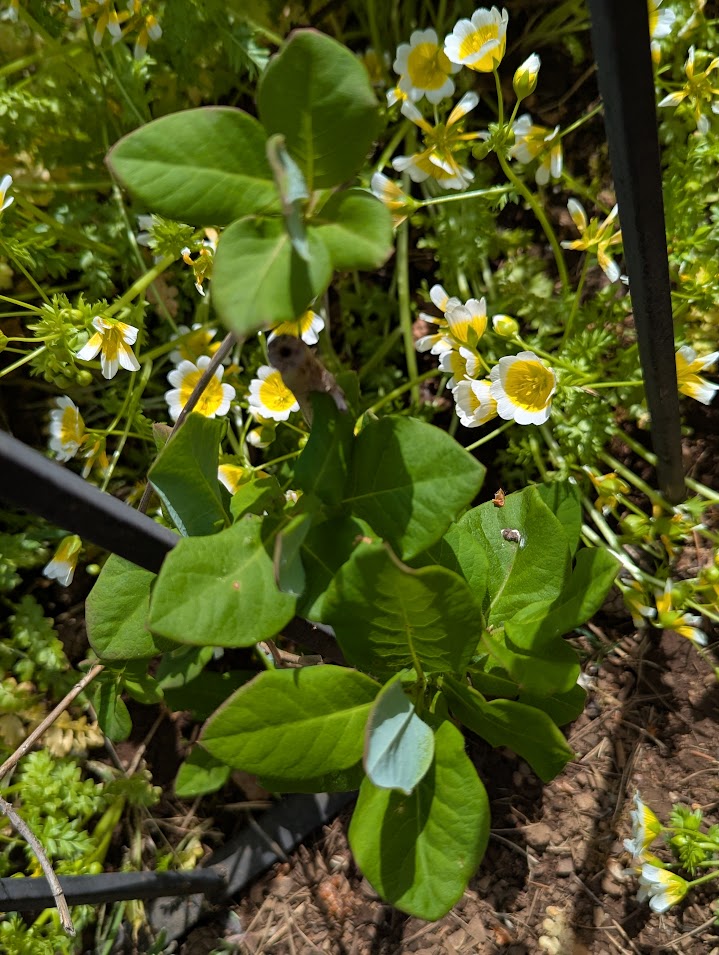
This beautiful ground cover was also a hitch hiker. I think it came with the yew and maple (long gone now). It spreads quickly, covers the ground beautifully, and attracts every bee, bee fly, and wasp. It greens up in the Autumn, overwinters green, and blooms in the spring – and then it is gone. The ground bare.

I have not tried too many other plants mixed in with the false Solomon’s seal to cover the bare spot in summer, but I have tried where the meadowfoam is. And meadowfoam does not like to be shaded out during the dormant stage! The bare spots in the photo are where i removed plants that shaded out the meadowfoam and it died back. However… it seems to love peonies and grows profusely around them despite the shade of summer, so I may try putting a couple peonies in there.

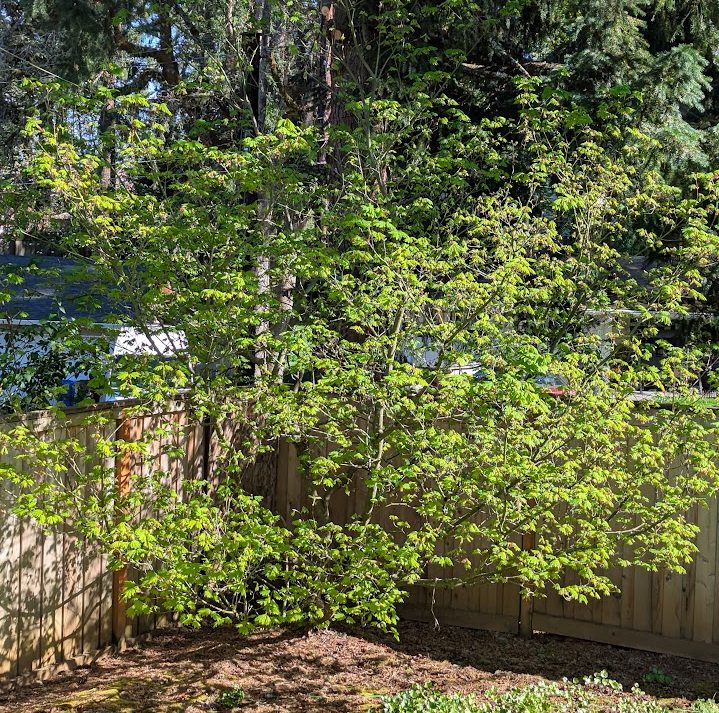
vine maple – acer circinatum

Don dug this out of a bar pit one year. he intended to make it into a Bonsai tree, but vane maple grows too quickly and he had to put it into the ground. It is as large as it is ever going to get. The leaves turn brilliant red in the autumn. The squirrels love the helicopter seeds. Very little grows under it but I am hoping some huechera (coral bells) will take off.

narrowleaf milkweed – asclepias fascicularis

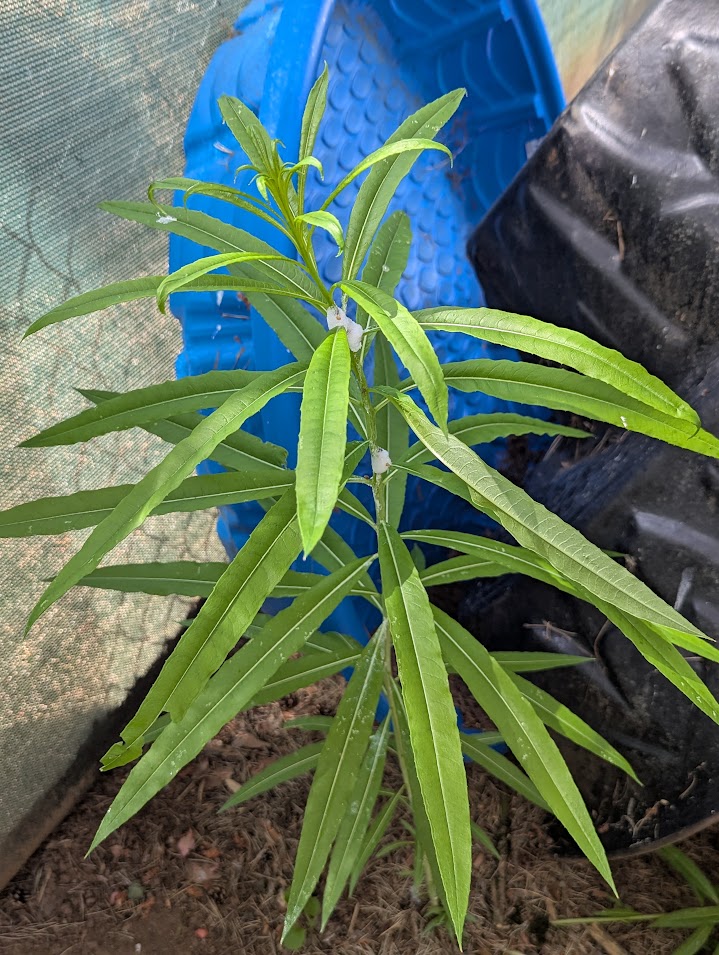
Milkweed. I could write a blog post on this, the last of my Natives to show off. I planted it by seed: two kinds of native milkweeds, the showy (pink flowers) and a few of the narrowleaf. They didn’t grow. Well, to heck with that idea, right? I could purchase some starts but it just never seemed to happen. And four years after I tossed those seeds in the garden, I had a thick stem poking out of the ground. Suspicious, I broke a leaf off and watched as it oozed thick milky sap. Eureka! It only took four years for those seeds to grow! And grow they did: I now have to fight the plants to keep them contained in the corner of garden where I planted them: milkweed spreads by runners underground.

Bees, flies, butterflies (but never Monarchs – so far), and milkweed beetles love the plants. Invasive as the plant is, it grows well in the little corner of yard where it is, sharing space with peonies, asters, Voodoo lilies, and grape hyacinth. The hyacinth blooms first, then the peonies, followed by the voodoo lily. The milkweed rises up and blooms, fades and dies, and the asters bloom. A perfect full summer garden of bloom.

That is it for my native plants! My next posts will be about herbs in the garden, uses, recipes, and cautions. I’m excited for those posts!

Read Full Post »

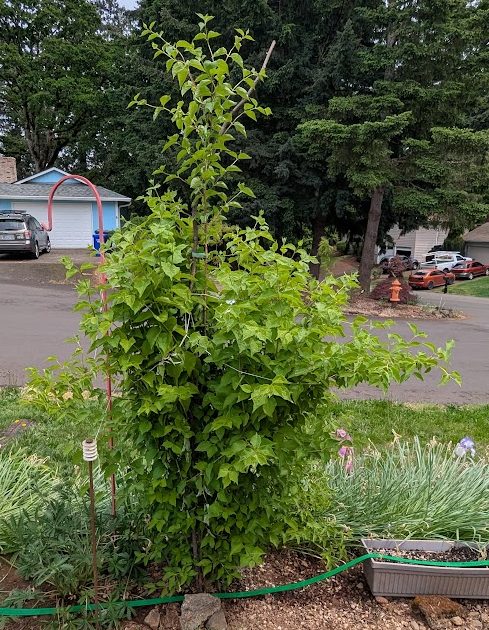
Lewis’ or Oregon mock orange – philadelphus lewisii

It has not bloomed yet, but I’ve only had it since 2023. It grows rather spindly – perhaps too much good soil and water and growing too quickly? But I found if i staked those spindly branches, they were much stronger the next year. One of my favorite wild bushes, blooms in June – July, smells amazing, and reminds me of rattlesnake draws in Eastern Oregon or Nevada where it commonly grows along a spring in the basalt.

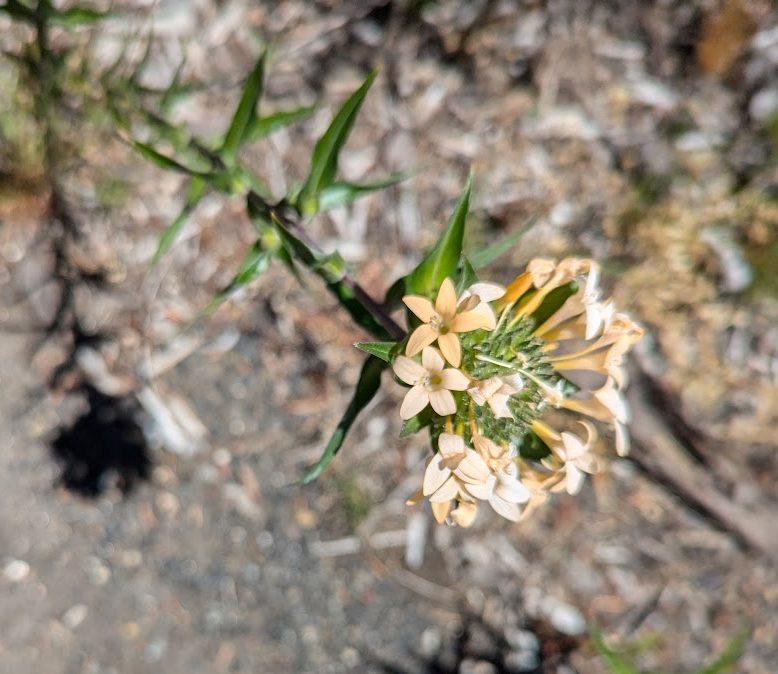
We discovered this growing along the roadside after a fire. It grows about 3-4′ tall. It is a native annual and we could purchase seeds (we tried seed collecting last fall, but beetles had devoured most of them!). This year, we dug one up (you can get a permit at the USFS). Hopefully, it makes it. Pic on the left is the one we dug up, pic on the right is a photo from last summer.

Penstemmons are hard to identify without a field guide and a key, but we love them. The one on the left is one we dug up on Saturday (we dug up two, we won’t know if they are the same species or not until they bloom. There’s a fourth one in the front garden, but it is still very tiny and hasn’t bloomed. The one on the right – I am fairly certain it is the Little Flower penstemmon: the flowers are tiny. It came with a yew and Rocky Mountain maple (both dead and gone now). Penstemmons make great ground covers, especially in those dry, rocky spots.

Note: we don’t know what killed the trees, but all the plants that came with survived. The trees thrived for about five years, the maple died off first. The yew lived a couple more years before suddenly dying on us.

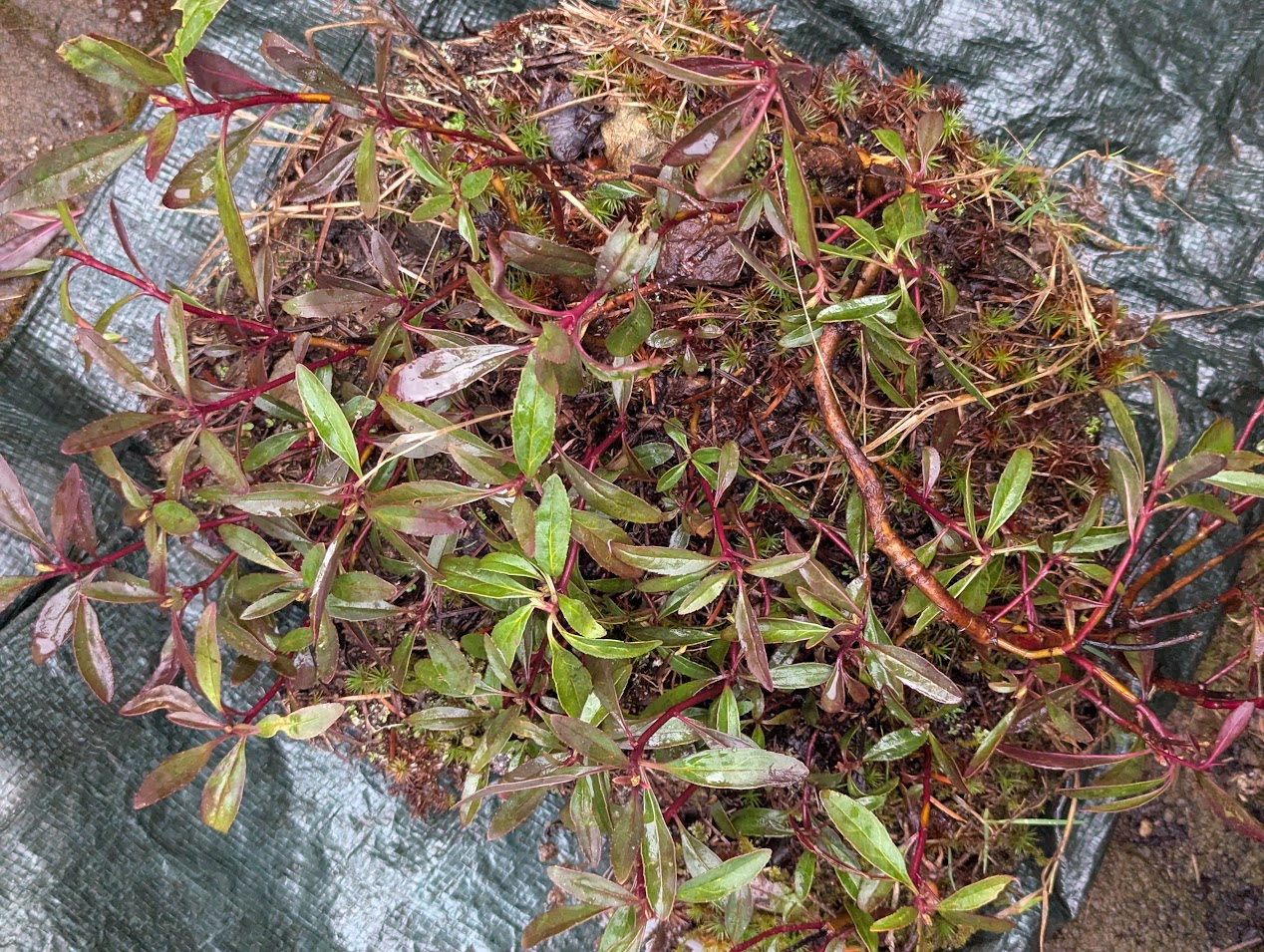
Who doesn’t love paintbrush? It is parasitic which I didn’t know (and which explains why I’ve never succeeded in growing it in the past). The plant on the right is one I just purchased from a native plant nursery, complete with instructions on how/where to plant it and what plants it might want to attach to. The second one is one we just dug up. Unfortunately, it is attached to an oxeye daisy – a native daisy, but one that is a bit of a weed. I prefer my Shasta daisies which stay in their place, but they aren’t natives, so…

I planted the purchased paintbrush near a large leaf arnica (also a native, no photo). I will plant the new one nearby as well.

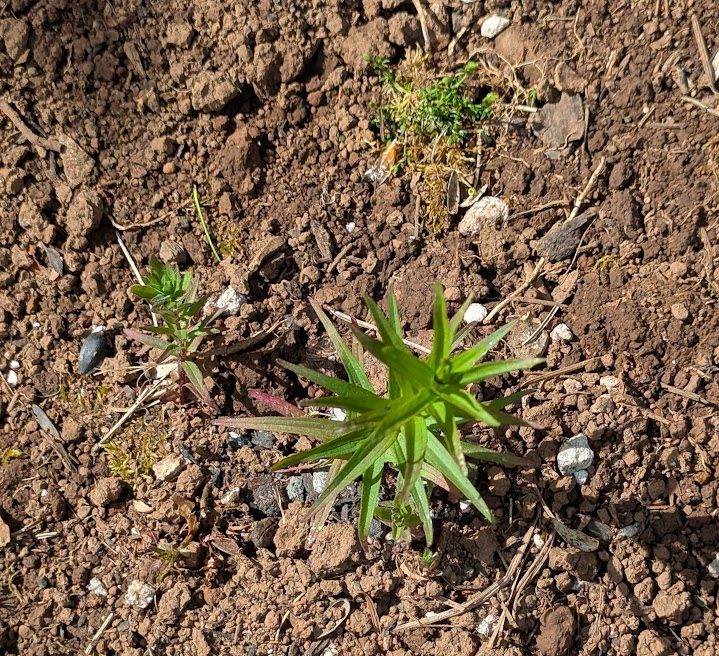
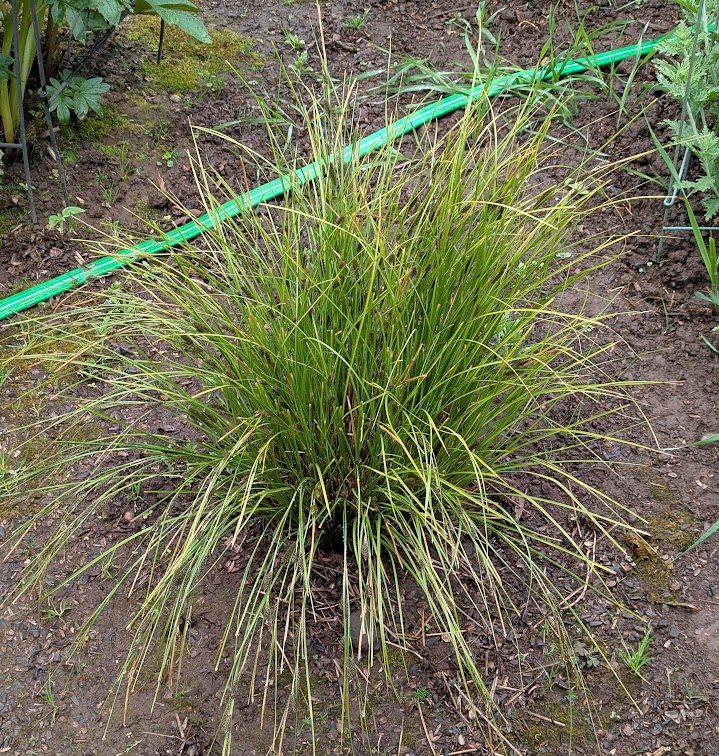
I’ll be honest: this could be an ornamental sedge. I don’t know. Birds planted it in our yard. I made the decision not only to keep it, but to move it to a better spot. I’d be happy if I learned it was a native dense sedge as my husband thinks.

black hawthorne – cretaegus douglasii

Ah – the Hawthorne! Long ago we lived in a trailer park next to a large open space full of nasty Himalayan blackberries (very invasive) and a lot of native plants (including the afore-mentioned oxeye daisy). This little tree was bulldozed a couple times by our landlord and chewed on a lot by the local black tail deer population. When we purchased our house, my husband dug this up (it was about 3′ tall at the time) and planted it in the ground. I believe he was planning on making a Bonsai out of it, but it just loved its new location.

trumpet honeysuckle – lonecera cilosa

I bought a honeysuckle from a nursery. It is pretty. The aphids love it. But I *really* wanted a native one. Last summer, my husband and I made a foraging trip into the Cascades and found this growing there. No, I don’t have pics of the flowers (yet), but we know it is a hummingbird plant and it is what I wanted.

But the real story is about the bear. I have only seen one in real life, and that was a grizzly in Yellowstone when I was ten (1965). I take that back: I saw a black bear once as it raced across the road in front of us in Central Oregon. I was in a car. I’ve hiked, camped, and hiked some more, and never seen a bear in the wild that I could count. Until we were digging the honeysuckle. A young black bear was making its way downhill toward us as we finished up our lunch. Not a scary thing, but we had the dog with us (unleashed – we weren’t anywhere near other people or dogs). So we quickly packed up to leave and we let the bear wander off in another direction as we secreted the dog out of the area.

fireweed – amaenerion angustifoliam

I have seen this for sale at garden shows. That factoid makes me laugh: fireweed is invasive. Once you have it in your yard, you will never get rid of it. I know: I planted it. And I ripped it out. It is pretty, I will grant you that. Alaska’s State flower (my daughter tells me that you can tell when winter is near because the fireweed quits blooming in Alaska). It blooms all summer. I found this survivor of the fireweed I killed nearly ten years ago (hahaha!) hiding behind the shed. And I am letting it go because it is better than English Ivy, black nightshade (Solanum americanum), and Himalayn blackberries – all of which we also have (only the nightshade is native).

California bay – umbelluria californica

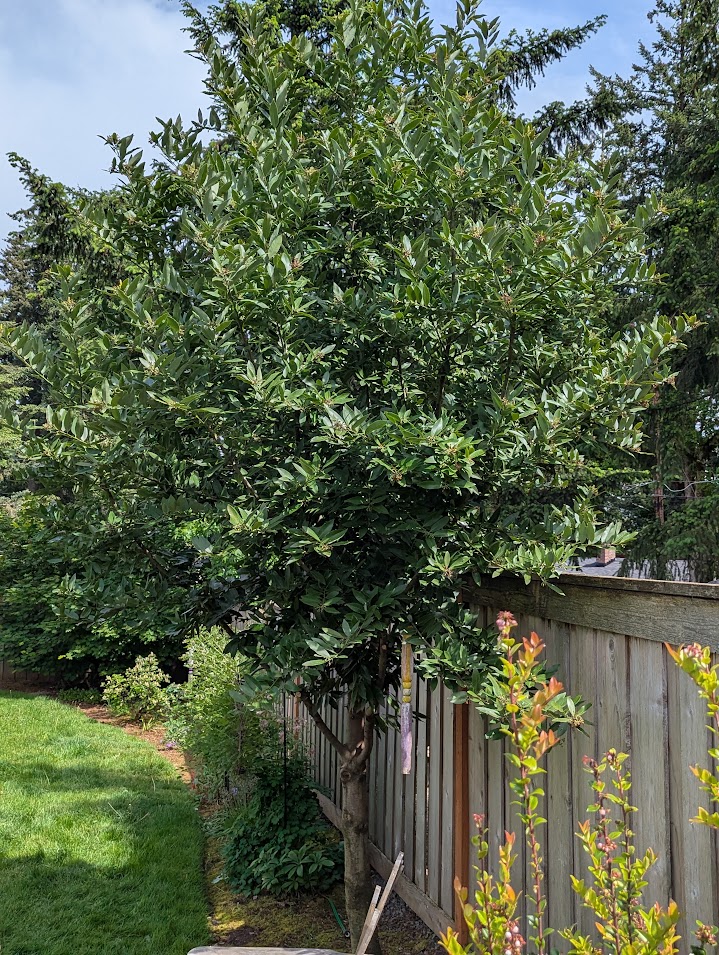
The birds planted this. I fell in love with it. I trim it up and will allow it to grow, It is not the same as a Bay Laurel, but it smells the same and you can use the leaves the same. Pretty yellow flowers in the early spring. Easy keeper.

This is just the beginning of a blog post I have been mulling for quite some time: what native plants do we already have in our garden? It began as a small idea but I soon discovered I have more native plants than I previously thought – and some plants I thought were native are really “naturalized” introductions (foxglove, common mullein, ground or creeping juniper). It also grew with the photos ♥

Read Full Post »

Rain, rain, rain. Weeds, grass, plant sales. March and April are months when the sun comes out and warms the earth, then the rain comes down and soaks the ground. We still have frost some mornings and other days we can break out the shorts and t-shirts. I keep trying to find good subjects to write about.

A summary of my weeks:

The Native Plant “Sale” was not a plant sale. Tables of pamphlets and flyers from every conservation and forestry group within fifty miles, a few tables hawking garden tools, a lot of free evergreens (Noble fir and Douglas fir for the most part), and one single, lowly table with a few native plants that I have already dug up in the woods and started at home. Waste of time.

On dry days, I have argued with the different grasses, but the soil is saturated and weeding just isn’t productive.

Veteran gardeners in the area know that you don’t start setting out plants or sowing seeds until after Mother’s Day (a few cold crops are excepted but I’m not a vegetable gardener). It is far too muddy to rototill the veggie plot and make the beds, at least in our yard. We did get some pruning done, but I have already posted about that.

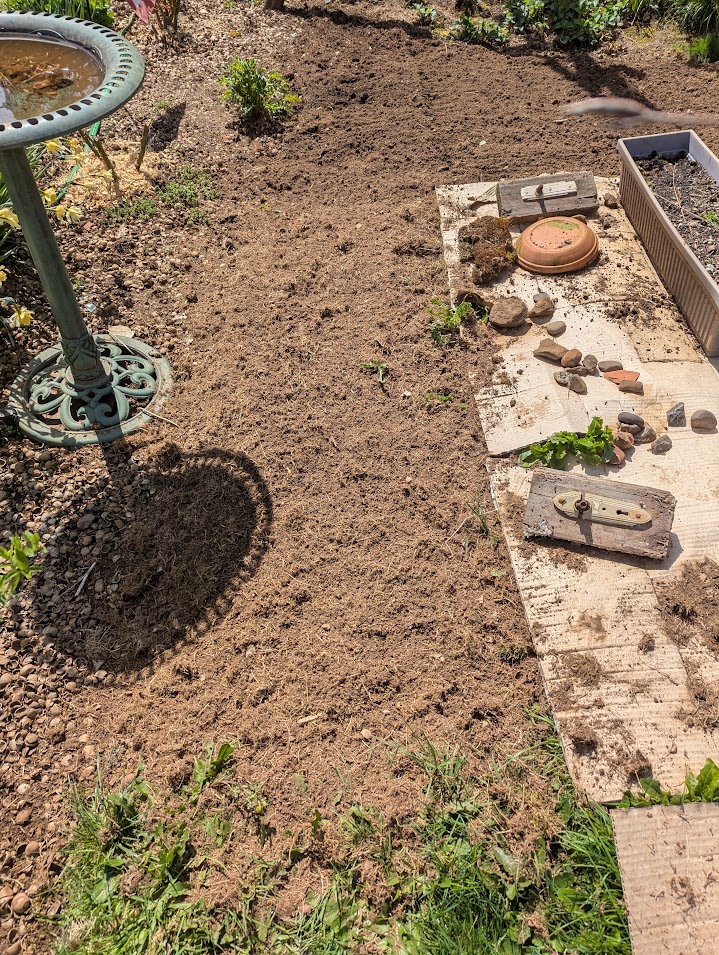
We had a three-day streak of lovely dry weather last week, but three days is not long enough for the saturated earth to dry out sufficiently for weeding or tilling. I did pull up cardboard from a couple areas in the hopes the ground would dry enough for me to try my nifty new electric hand tiller. It was not long enough. But I still tried.

The tiller works reasonably well on sod, but the mud clings to the tines and I had to stop three times, unplug the tiller, and clean out the tines for another go at it. The tiller tends to bounce along the surface, not really digging into the hard clay so I can see myself making several run throughs to get the ground broken up enough to plant. But where I’ve already done the work of removing the sod – oh, that tiller LOVES to dig.

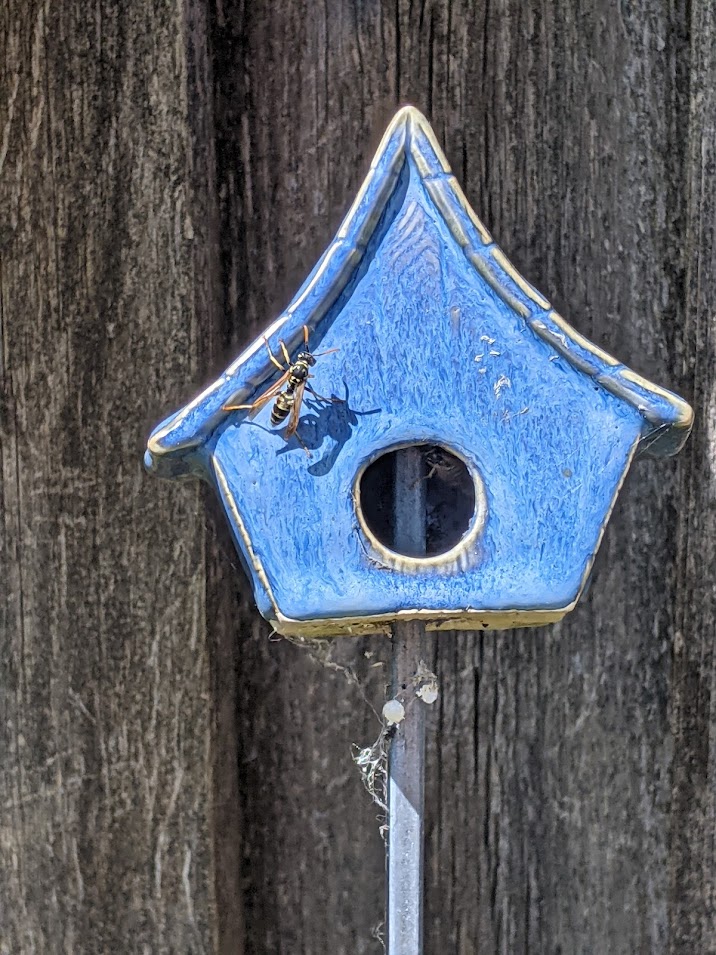
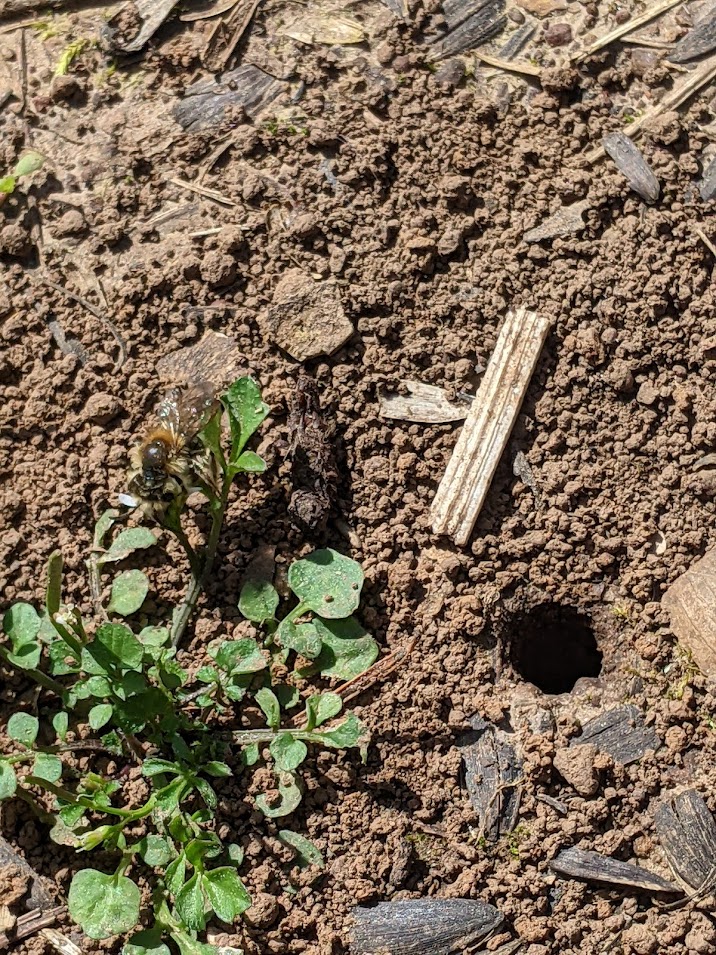
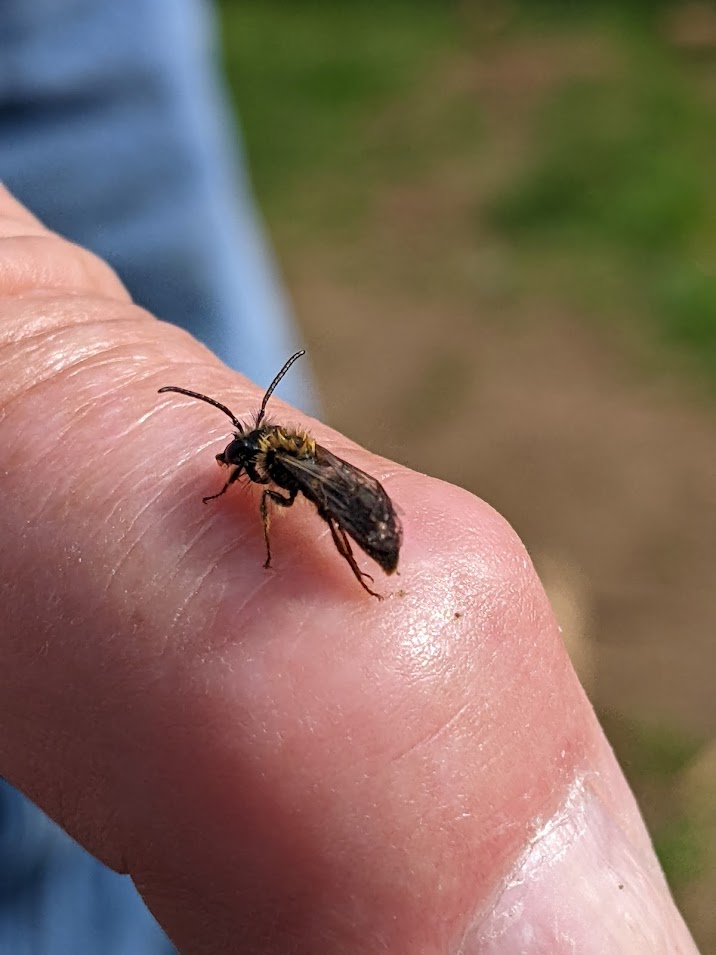
Native bees are starting to come out of their hives: a field of mining bees in the neighbor’s yard was buzzing with happy bees in the sunshine and our paper wasps have returned for another year of building nests and pollinating flowers. We have even spotted a few tiny butterflies, too small and too quick to identify. I was attacked by thrips one afternoon (apparently, they like beer and human flesh). Hm. Will need to watch for plant damage from those pests!

The turkey vultures have returned. I love the turkey vultures. The bald eagles are sitting on a nest in the nearby wild park, but we see them soaring on thermals on nicer days. The crows are rebuilding a nest across the street. And three pairs of small songbirds have scoped out the little birdhouse under the grape arbor!

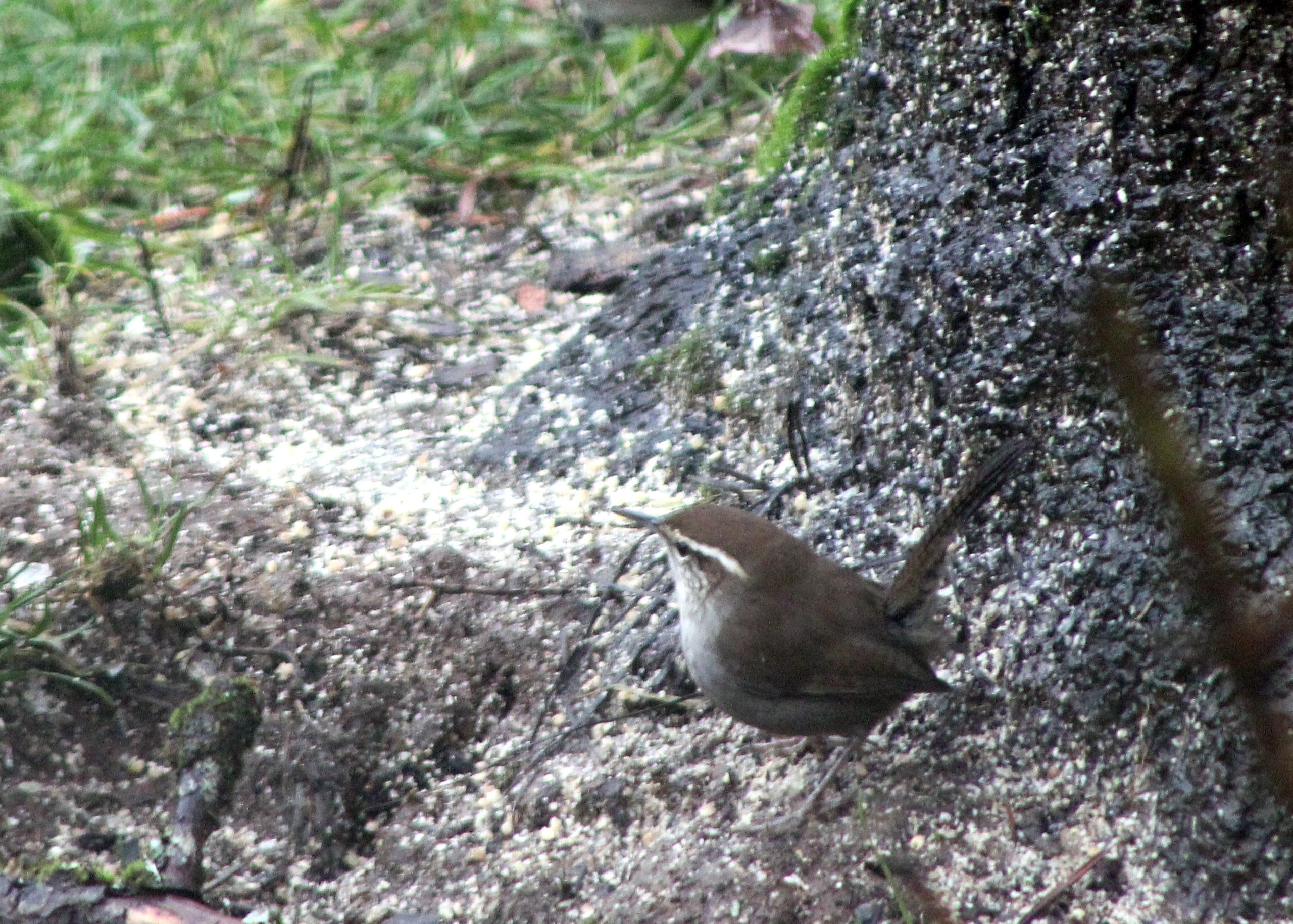
We’ve seen white-breasted nuthatches look at it, and yesterday the chestnut-backed chickadees tried to claim it (the black-capped chickadees raised a brood in it a few years ago – photo on the right is from then). But the Bewick’s wrens (photo on the left) have first dibs this year! When the chickadees used it, they didn’t bother with a nest or any filler: those little eggs and hatchlings grew up on the hard wood floor. But Bewicks have carried grass, stems of last year’s goldenrod, and feathers into the little house until the lip of the nest is even with the little hole on the side.

I don’t think the birdhouse is actually meant for birds, just for backyard decoration. There’s no hinge to lift for easy cleaning in the fall, for one thing. We’ll have to completely dismantle it this fall in order to clean out the nest debris. But we love that it gets used and now I think I need to find a couple more similar sized bird houses for the nuthatches and chickadees!

Finally, we have a huge plant sale coming up the end of this week, and this one really IS a plant sale: “Garden Palooza” out at Bauman’s Farm. We go every year and every year we find unique plants to add to the garden as well as the few annuals I like to grow (petunias and nasturtiums). They aren’t very strong on native plants, but I would like to find some creeping phlox and some “walkable” ground covers to grow between pavers. I have some more room for sempervivums in my rock garden as well.

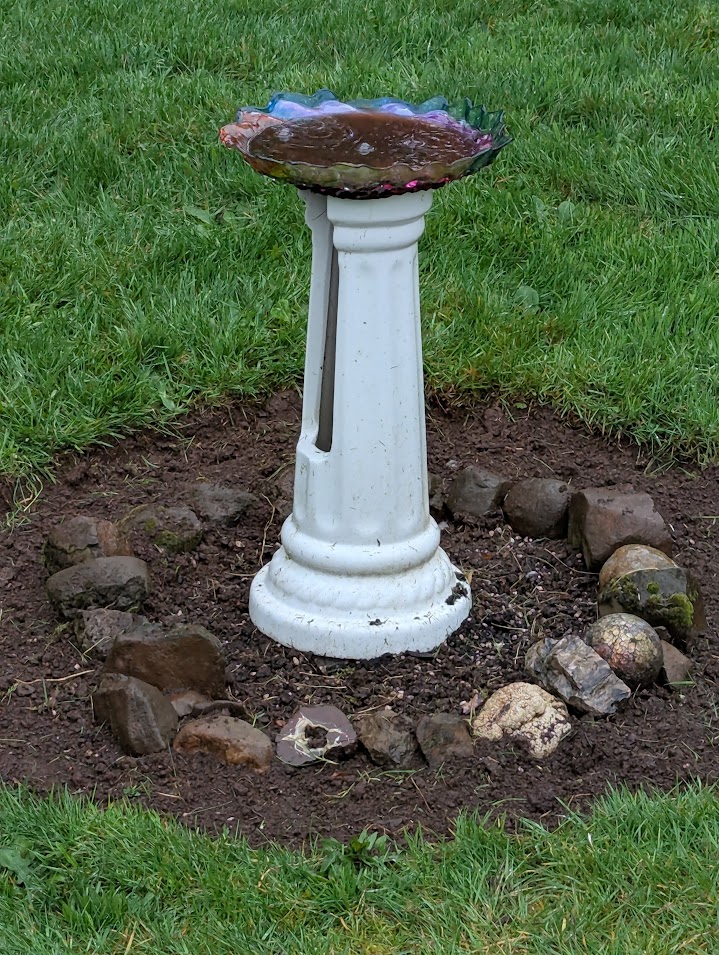
Last, because it was nice out, I glued to decorative bowl back onto the porcelain pedestal for a pretty bird bath. The crows found it as soon as it filled with water and they immediately picked up peanut-laced dog poop to wash in it. As I have no hoses out yet, the water remains gross and smelly.

I love crows…Until I don’t.

Read Full Post »

Time to Prune  

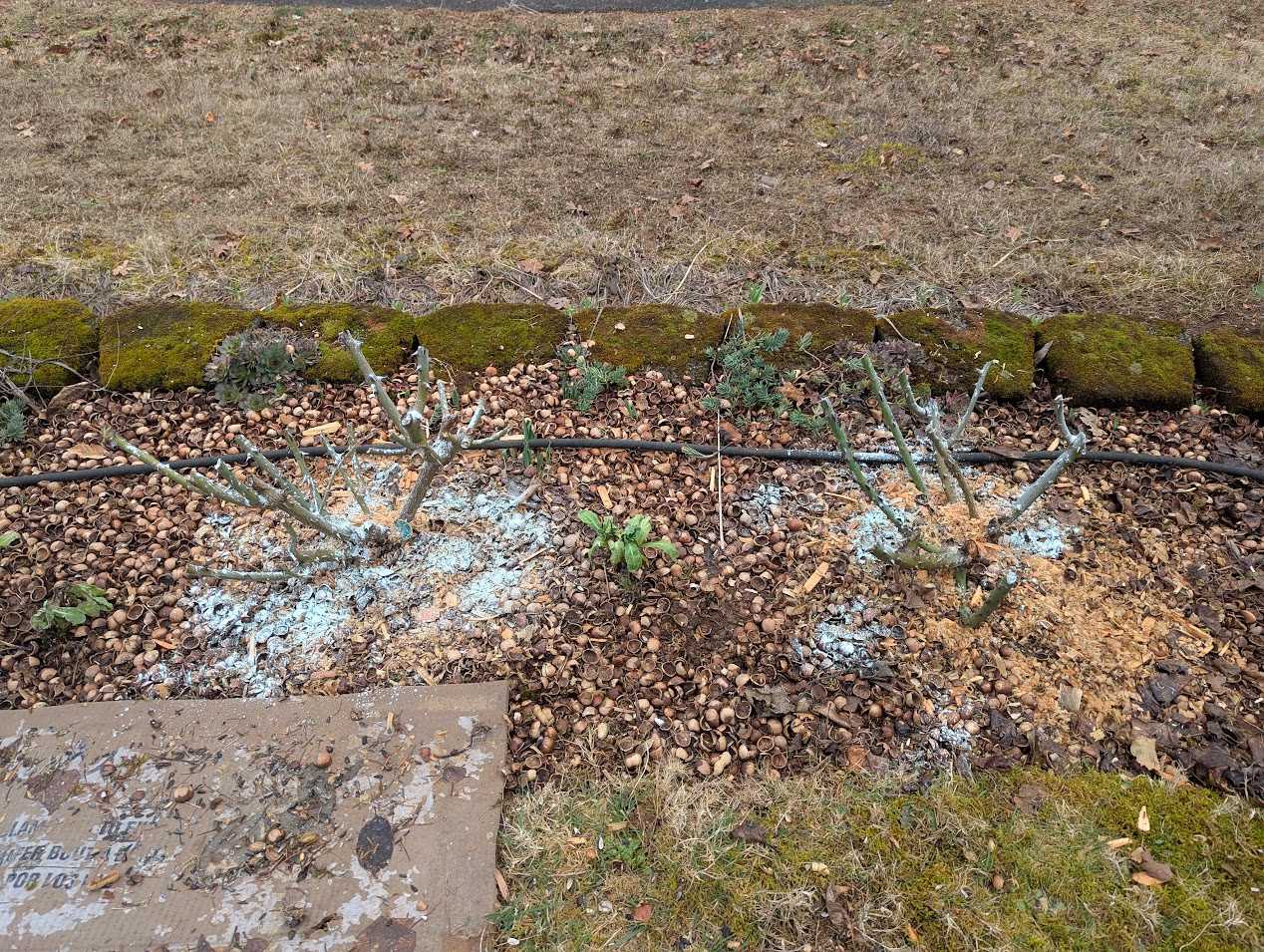
I always prune my roses back on Lincoln’s birthday (or as close to that date as I can get). I grow English hybrid tea roses for the most part and they need to be cut back before their Spring growth.

As an aside, I was once attacked on a birding site because I do not like “introduced” and “invasive” bird species. I stand my ground: wherever you live, invasive species of plants or animals are a problem. And, yes, I already know white people are an invasive species. Spare me the guilt: I did not choose my ancestors; I did not make their choices. But I am here, and I am doing my best to not make the mistakes of past generations. Besides, I am the product of conquests and colonialism: my ancestry reaches deep into the unrest in the Baltic regions and England, Ireland, and Scotland. I do know my ancestors did not promote slavery (but some of them were racist) and they did not participate in the Indian Wars or Manifest Destiny (although I am certain some of them were sympathizers)

This person tried to “guilt” me by declaring, “I bet you grow roses.” Well, yes, I do. There are native roses to the Americas, although I do not have them in my garden. The roses most of us grow are from England or France (the “Old World” as it were) and are anything BUT invasive. They require a lot of work just to keep the one growing and disease-free. They don’t produce seeds or spread by runners or rhizomes or bulbs. They only provide aroma and beauty at the cost of a lot of labor (I need to stress the labor part). Roses are bit of a bright spot.

The time to prune them back is traditionally Lincoln’s Birthday, or the 12th of February (for those younger folk who don’t know the birthdays of the original two presidents who were honored before the date – President’s Day – became all-inclusive). The other birthday was that of George Washington who declined to become king: February 22nd. Now we celebrate all presidents, including Rutherford B. Hayes, Grover A. Cleveland, and even Richard M. Nixon. I suppose they all whined they weren’t given an award for participation at some moment in time and we caved. Not all presidencies are worthy of honor. But that’s getting political and I came here to talk about roses.

I have three at the moment. I had four, but I did a thing last year: I dug up one rose and gave it away to plant another rose which immediately died. I have veteran’s Honor and Rio Samba, both English Tea Roses, and a floribunda called Tuscan Sun. I am not a fan of floribundas, but this one has large, scented blooms and gets to stay. I want to order tow more roses this Spring: a yellow rose and perhaps a white rose.  But that is aside the point. I have the three to deal with right now.

I pruned them back to roughly 8 – 12” (20-30.5CM). Then I sprinkled them with copper fungicide.

My yard promotes the growth of fungus. My peonies and roses are the most susceptible: black or brown spot affects them. I’m at war with something I cannot see.  I have read the pros and cons of using copper fungicide (not good for insects). I know the devastating effects of the two fungi. Since it seems to attack those two plants specifically, I made the decision to apply it to those plants only. Both are cultivars from other parts of the world (there are native peonies to the Americas, but the Western peony does not like our maritime climate in the Willamette Valley – I have tried). Neither are essential to native pollinators. Peonies are resistant to most pests, and roses are subject to aphids and fungus. I think I am safe applying it to just those plants and crossing my fingers to not hurt the native pollinators.

I inherited the peonies: I did not plant them. They came with the property, and I counted over 100 plants last year. I have no idea what cultivars they are as the tags were lost to history after the original owner passed and the property went to the people who flipped it, and then to us. I love peonies. They were one of the deciding factors in purchasing this property. They don’t require a lot of care.

I planted the roses. I accept the amount of work it requires to have beautiful blooms. And who wouldn’t, once ensnared by the rose’s beauty?

It was 25° on Lincoln’s birthday and it was over 50° today. Time to prune. Only time will tell if the copper fungicide works against the black and brown spot fungus that lives in the soil. I have my fingers crossed.

(photos courtesy of Jackson Perkins, Edmund’s Roses, and rosesalesonline. )

Read Full Post »

It froze this morning. It has been freezing for the past week or so. It has also been reaching into the upper forties and lower fifties (Fahrenheit). The fruit flies have not died off and some small mayflies have hatched already. The pine siskins have moved on, but the year-round resident birds have been hitting the feeders with regularity.

There is not much one can do in the garden right now: too early to prune, too early to plant, still winter. February is often the month we get our “big” storm of the season: snow, ice, melt, floods. January is a month of holding patterns, waiting.

While we wait for the first peeks of green (or red, in the case of peonies), the insect pollinators are snug in their cocoons and hiding places. They are insulated under layers of fallen leaves (assuming you adhere to “leave the leaves” – our neighbors don’t, but they allow my husband to collect the leaves they have gathered, and we use them as mulch to prevent spring weeds and help the pollinators). Our yard is “pollinator friendly”.

We recently learned what we are doing right to help pollinators and what more we can do. And right now, in the still of January as it tips into February, is the time to think about emerging insects. Bees, specifically, need our help. There are several hundred species of bees in the United States alone, a few hundred in the State of Oregon, and possibly two- to three- hundred in our town alone. Our yard is likely host to over 40 species of native bees. I know we have identified close to thirty different species, not including the non-native (and non-threatened) European honeybee.

I wish I had photos of all the bees we have found on our little quarter of an acre. We have ground-dwelling bees, bees that love hollow stems, bees that are less than 3/8” of an inch (2CM) all the way up to the big, fat bumblebees that seek out our rhododendron blooms in the early Spring. The bumblebee is especially “of concern” ecologically. Some species of bumblebee are teetering on extinction, like the rusty-patched bumblebee. Bumbles pollinate more plants than honeybees and are native to our continent. (Honeybees are not native bees, are not threatened, and are a thriving industry. They are fine.)

We don’t begin to rake up the leaves and clear out the dead fall around the daylilies until the temperature has been hovering around 50° (F) for a week. This allows the bees, butterflies, moths, and beetles time to warm up, hatch out, stretch their lags and wings, and begin the summer-long process of pollinating flowers, vegetables, and fruits. Certainly, some of these are harmful insects (non-beneficial) but most of them are “good” guys: the beneficials. And beneficials are necessary for the ecosystem.

We learned recently that it helps to not “deadhead” all of the flower stalks, but to cut them down in lengths. Bees and other beneficials hibernate inside the plant stalks, slowly emerging as the air warms and the days get longer. I don’t deadhead a lot of the seed plants: evening primrose, mullein, asters, and goldenrod. The birds dine on the seeds throughout the winter. I never thought about insects.

That messy pile of tree limbs and branches we have yet to get rid of is not only home to our dog’s “beaver hut” (he has quite an excavation under the pile!) but is home to more insects trying to find a good place to overwinter. And here I was, thinking we’d have to finally cut the wood up and recycle it somehow!

That patchy mess we loosely refer to as a “lawn” out front encourages ground dwelling bees and gives us impetus to turn the yard into a meadow of native wildflowers, further encouraging native pollinators to stay and thrive. I am excited to add native plantings to the lawn with more flowers and less mowing! (I will probably have to paint a sign explaining to my neighbors why our yard isn’t as “pristine” as their golf-club perfect lawns or patches of sterile gravel.)

We already grow a lot of native plants, some purchased from nurseries, some collected from the wild, and some that birds introduced by pooping on our yard. The Xerxes Society provided me with a list of more natives, many of which I can purchase seeds for through local nurseries. Yee haw! I’m watching little $$ fly out the window, but it is SO worth it to create a habitat for miniscule creatures like bees.

I’m not going to go into how we depend on native pollinators and how their declining numbers impact our very own survival. You can find that information and more through The Xerxes Society. This non-profit is based here in the Pacific Northwest but reaches out across the continent. It is my favorite non-profit, close to my heart (BUGS!), and is highly rated as a non-profit. You may not think something so Lilliputian might impact our giant lives, but we depend on insects and invertebrates for so much. I’m not a rabid “tree hugger” but when it comes to insects… Well, I’m probably a rabid “bee hugger.”

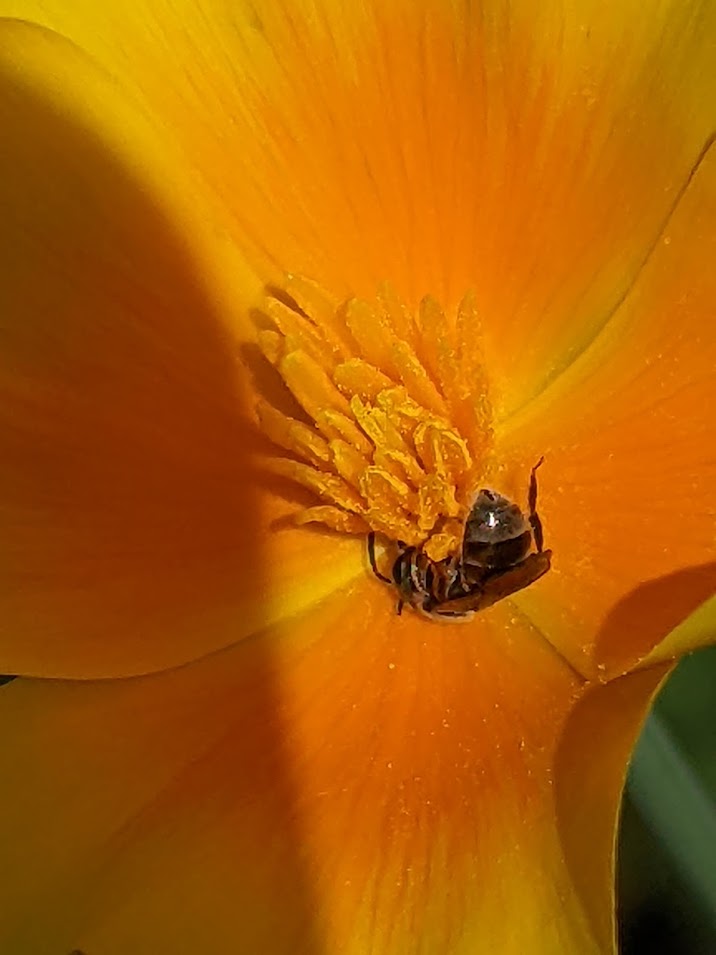
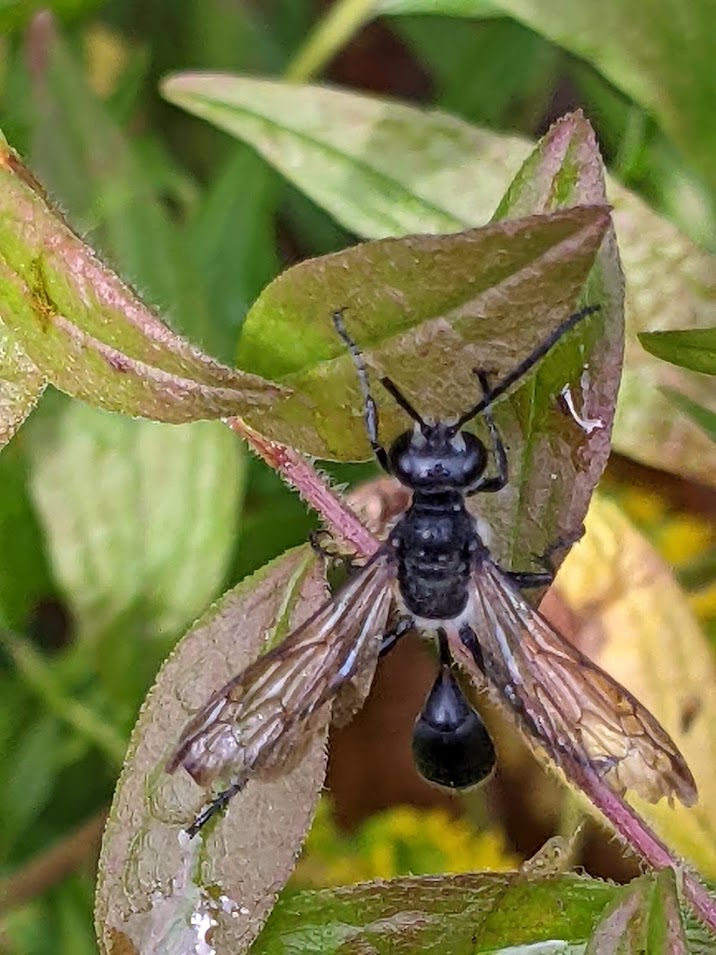
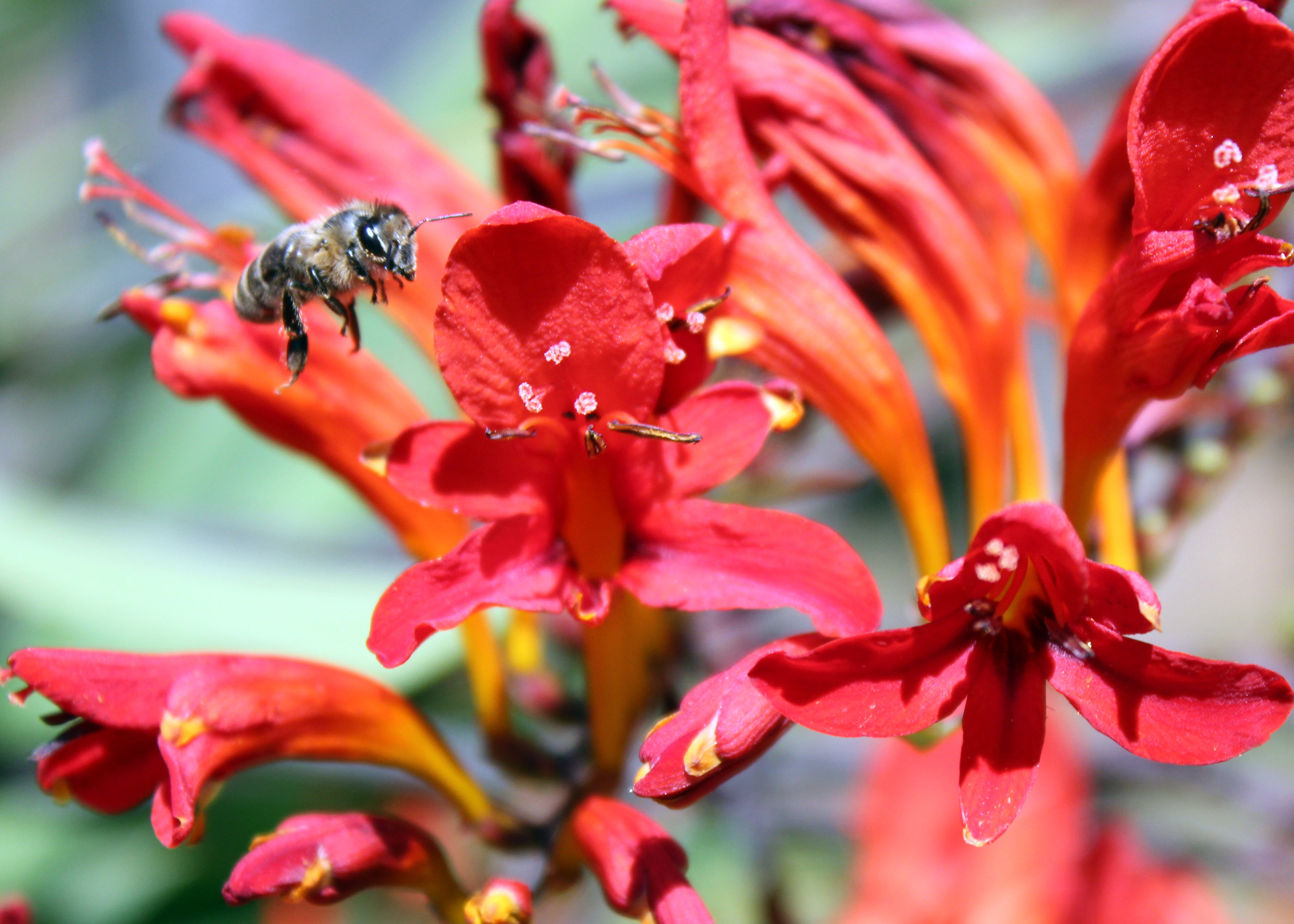
(I also do not know all the bees, wasps, and hover flies I photographed and posted to this article. I apologize for the oversight, but all photos are mine.)
Read Full Post »

It is that time of year when an organic gardener’s thoughts turn to soil amendments, natural slug repellent, and turning compost so that the soil at the bottom of the heap can be used. We also turn our heads and slam on the brakes at every plant sale we see, especially if there might be native plants to be had. We know if our garden spots are shade, wet, well-drained, full sun, part sun, clay, or well worked topsoil. My flower beds are all of those listed.

I have a list of plants I want. I always have a list of what I want to do in my flower beds. The vegetable garden belongs to my husband. He always has a list of the vegetables he wants to grow. Have list, will shop.

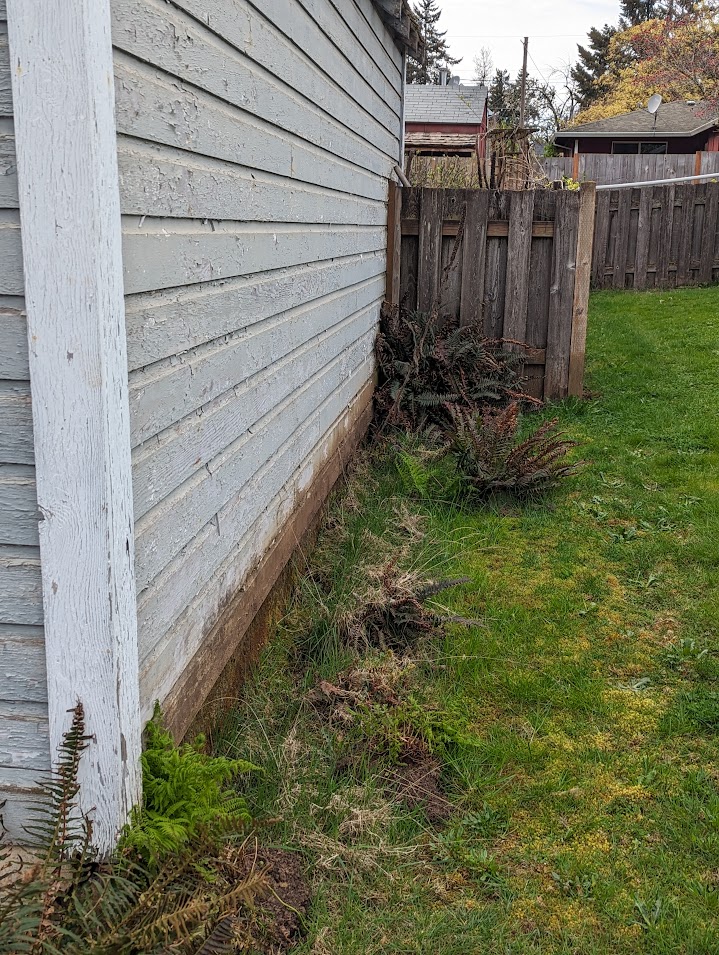
This year one of my goals is to completely fill the useless spot just north of our garage with sword ferns. It’s a three-foot mandated distance between our garage and the adjacent property line. No one wants to mow it. Full shade. No available water. The only true solution is to plant sword ferns and allow them to fill in the spot, kill the grass, and end the need for mowing. I have been adding small ferns to the spot over the years but this year I have four large sword ferns donated by a friend from his pasture. If I plant them now in the cool weather they will be established by summer and there will no longer be a need to mow north of the garage. Minimal maintenance, win-win for both parties.

Last fall I filled in the sunny portion of that piece of property with orange day lilies. I also have a magnificent yucca plant growing there. I picked the yucca up out of a FREE pile in front of a house one day. The orange day lilies were given to me by someone. There are daffodils growing there as well, a gift from the previous owner of this house. No more mowing a section of our lot that is difficult to get to and maintain. Ta da!

Minimal maintenance.

I took my list to a plant sale last weekend. It was a fund raiser for a State Park nestled in Lake Oswego. The prices of the (mostly) natives was more than I cared to pay, so I walked out empty-handed and right into the arms of a group giving away bare root saplings of “native” trees and shrubs. I turned down the witch-hazel (and later learned it is not a native to Oregon, although it is indigenous to parts of North America). I already had a mock orange that is two years old and establishing itself. There were a couple others that I questioned as to whether or not they were truly natives. I settled on three bare root plants: black gooseberry, a dogwood, and Indian Plum.

The dogwood is not the native Pacific dogwood, but a Florida import. Say, what??! Oh well, it was free, and I picked out saplings small enough that my husband can work his Bonsai magic on them. I was the only person standing around that had any idea what I was getting with the gooseberry. I’m more familiar with the yellow kind from the more arid side of the State, but this is a native from the Oregon coast – and a gooseberry promises tart berries perfect for a pie. I may have to make a gooseberry/huckleberry pie: I have an evergreen huckleberry (also native to the coast) that produces tiny berries in the late fall.

The Indian Plum is not a plum but produces tart berries that look similar to plums. It was a subsistence plant to the tribes of the Pacific Northwest and is one of the earliest flowering bushes which is a boon to the native pollinators. I’ll figure that out if and when it bears fruit. It can just be an ornamental for now: a native ornamental and attractant to pollinators.

My list incudes two lavenders: a Spanish lavender and a French lavender. I had both in my garden and they both died. My Spanish lavender was over 15 years old. I think I simply had the French lavender in the wrong part of the yard. I also want to get a second campanula, toad lily, phlox sublate (McDaniel’s Cushion), curry plant, and Chinook hop. I need a new rhubarb: the one I have doesn’t grow tall now produce long juicy stems. I’d like to add oxalis and bunch berries to the shade flowers. I also have some annuals on my list: petunias and climbing nastrutiums.

I purchased 19 packets of herb seeds from Mountain Rose Herbs. Those are waiting to be sown. Not for today. I bought the nasturtium seeds from Reneé’s Garden. The Chinook hop from Thyme Garden. The rhubarb is coming from Gurney’s. And the rose I bought from Jackson Perkins is showing some signs of life… (All of my English tea roses are from J&P, this one was a replacement for a floribunda I didn’t like. The floribunda went to a good home. This rose is also on probation until it starts growing…)

Today was the first day of Garden Palooza, a large plant sale south of here, almost to Salem. It is held at Bauman’s Farm & Garden in Gervais. I set aside a certain dollar amount and hope we don’t go over budget, but this year we were way under budget and came away with more plants!

I found both lavenders. My husband found the tomato starts he wants. He also found a pretty campanula for me. The one I currently have is a blue color: Serbian bellflower (campanula poscharsky). The new one is Birch’s Campanula and it will be a pretty purple color. Bauman’s also had so many pretty petunias! I found a full sun ground cover called Creeping Baby’s Breath (gypsophila cerastiodes). Drought tolerant. I need so many ground covers, they do a much better job than bark mulch at keeping the soil moist and weed free. Also, as perennials, the ones I pick out will last longer than bark or hazelnut shell mulch.

Oh, but the best buy of the day? Don found a tree peony for $24. Not $240 or $140, but $24. Tree peonies are not inexpensive even in a year without inflation. There are three old ones in the yard presently along with at least 80 other peony plants. I’m told the yard had more peonies but that was when Barney Schultz lived here, and he died over 30 years ago. The house sat empty, was purchased and flipped, and the grass killed so many peonies during the years of neglect. Then we bought it and I have single-handedly cleared all those peony flower beds, carefully divided tubers, and coaxed those beauties to new life. In short, I don’t need another peony or tree peony.

But $24. Gallon pot. Paeonia lutea var. Ludlowii (Tibetan Tree Peony). It’s young and I may have to wait a few years to see the large yellow blooms it promises. My other tree peonies are white, cream, and pale yellow fringed with red. Of course I bought it.

Our friend gifted us with two filbert trees as well as the ferns. We already have one filbert but the hazelnuts have never produced nuts. You learned you need more than one filbert. (Side note: the trees are filbert trees, the fruit is referred to as a hazelnut.)

So much planting in the near future. And making of larger flower beds to accommodate the 19 varieties of plants I purchased in seed form from Mtn. Rose Herbs.

The next big plant sale is the first of May.

Read Full Post »