Feeds:
Posts
Comments

Posts Tagged ‘milkweed’

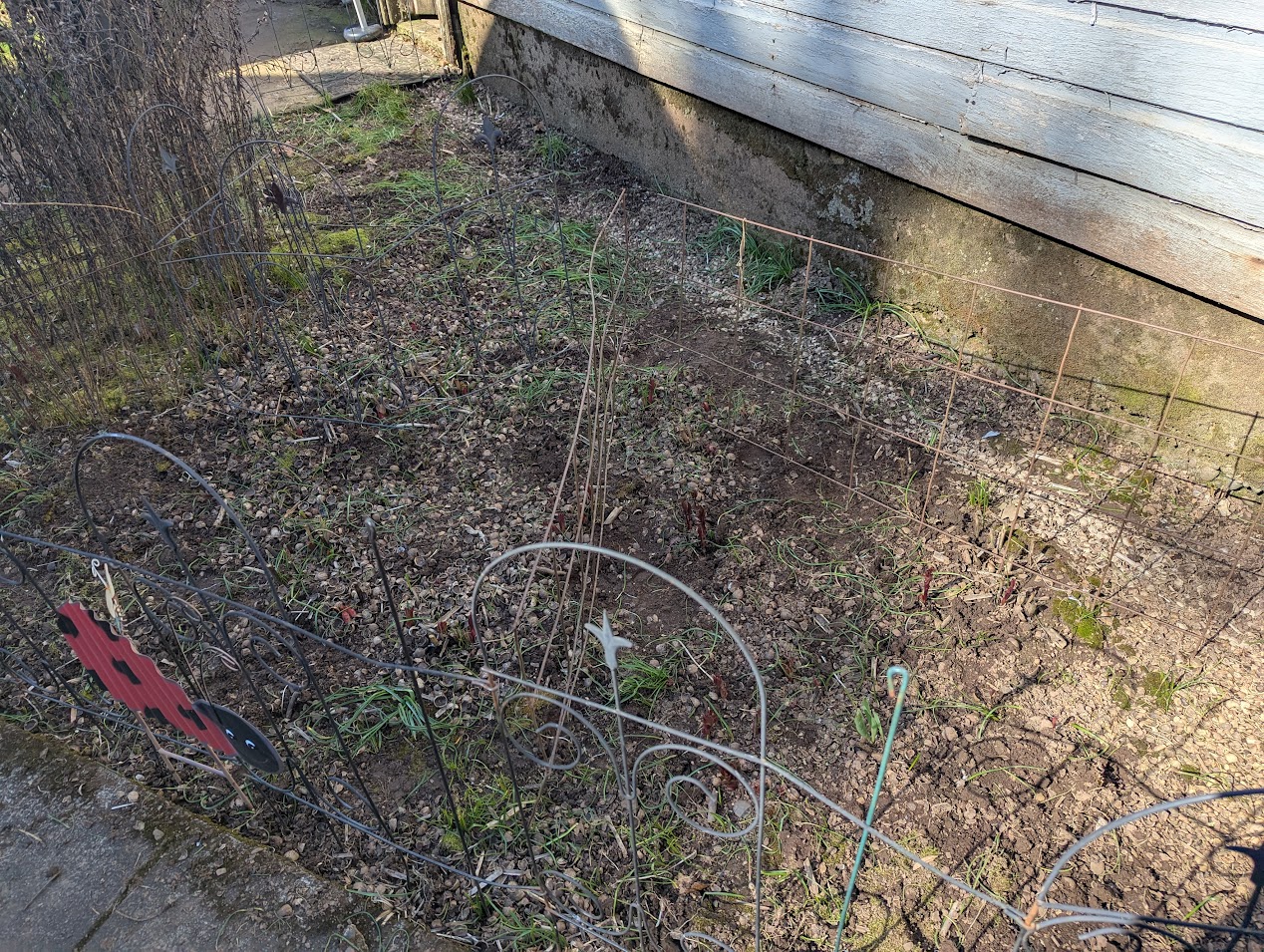
It is time to cut the milkweed out of my garden.

I planted it many years ago. It never sprouted. Four years later, there was a tiny plant that looked suspiciously like a milkweed growing next to some peonies. I clipped a leaf off to see if it would ooze the sticky white sap that gives milkweed its name: it oozed. Excited, I let it grow. The milkweed plants are limited to a “triangle” between the garage and two sidewalks. I cut them down when the seed pods appear: I don’t need more plants. Also, I don’t want to wait another four years for the seeds to sprout when the plant does just fine by sending out runners from those very sturdy rhizomes.

I was afraid the milkweed would crowd out the peonies and the asters. It doesn’t. The three plants grow together happily. What the milkweed did affect was my arum, dracunculus vulgaris, or “Dragon Lily”. The milkweed runners take up the space the lily’s bulbs are in and I’ve slowly lost many plants in that tiny garden space. There are a few left and this fall I will dig them up and move them to a better location, free of water- and space- hogging competition.

Unfortunately, milkweed does nothing to impede the growth of grape hyacinth, I don’t think anything short of a heavy-duty herbicide affects grape hyacinth (and I refuse to go that route). Every year I pull several hundred bulbs out of the ground and compost them. (Sometimes, I will give them away to a desperate gardener who doesn’t know better than to start them in their yard. I’m pretty sure I’m digging up bulbs to send to my brother in Reno this fall. “Hey, Bro, your yard needs some early spring color. I promise you won’t hate me in ten years…”)

Now, when the first purple grape flowers begin to bloom, I do my first – and only – weeding of the space. I cut hyacinths for a bud vase. I toss the ones that pull up with the ever-present grass. I do my best to rid the space of grape hyacinth bulbs while enjoying the aroma and color. Of course, I fail and the hyacinth prevails.

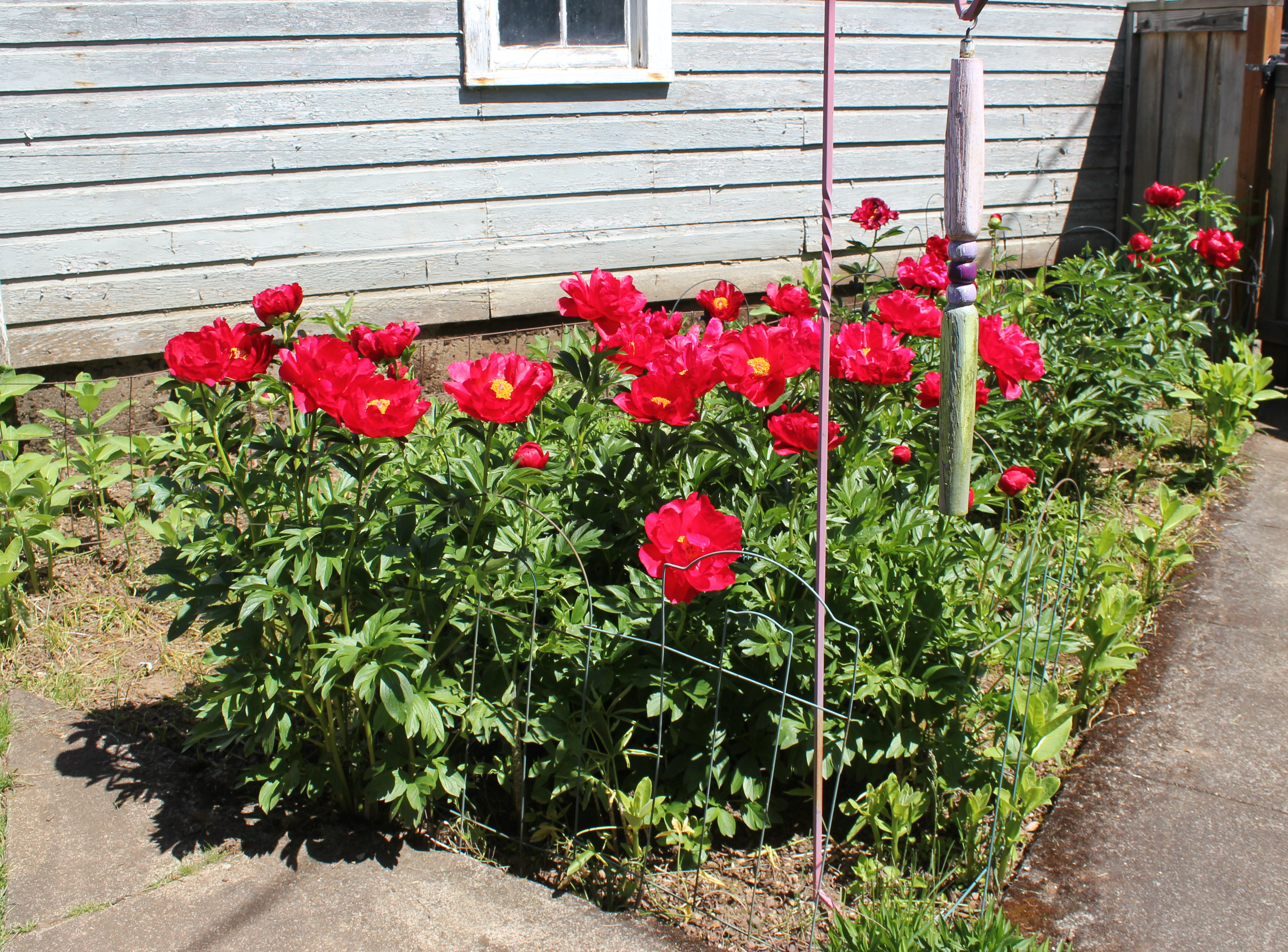
In the Spring, I cut back the old stalks of peony and aster just as the first new stems begin to push their way skyward around the fading hyacinth. Purple stems of peonies, green stems of aster, the spotted stems of Dragon Lily rise above the fading green and brown stems of faded hyacinth. Buds form on the peonies and soon the area bursts with pink and red peonies so thick I have to tie them to stakes to keep them upright.

The peonies fade and drop their petals just as the aster and the milkweed stalks begin to mature. The green of the aster is first to top out at 2-3’ tall. Milkweed will soon tower over the asters and all one will see will be the green stalks of milkweed.
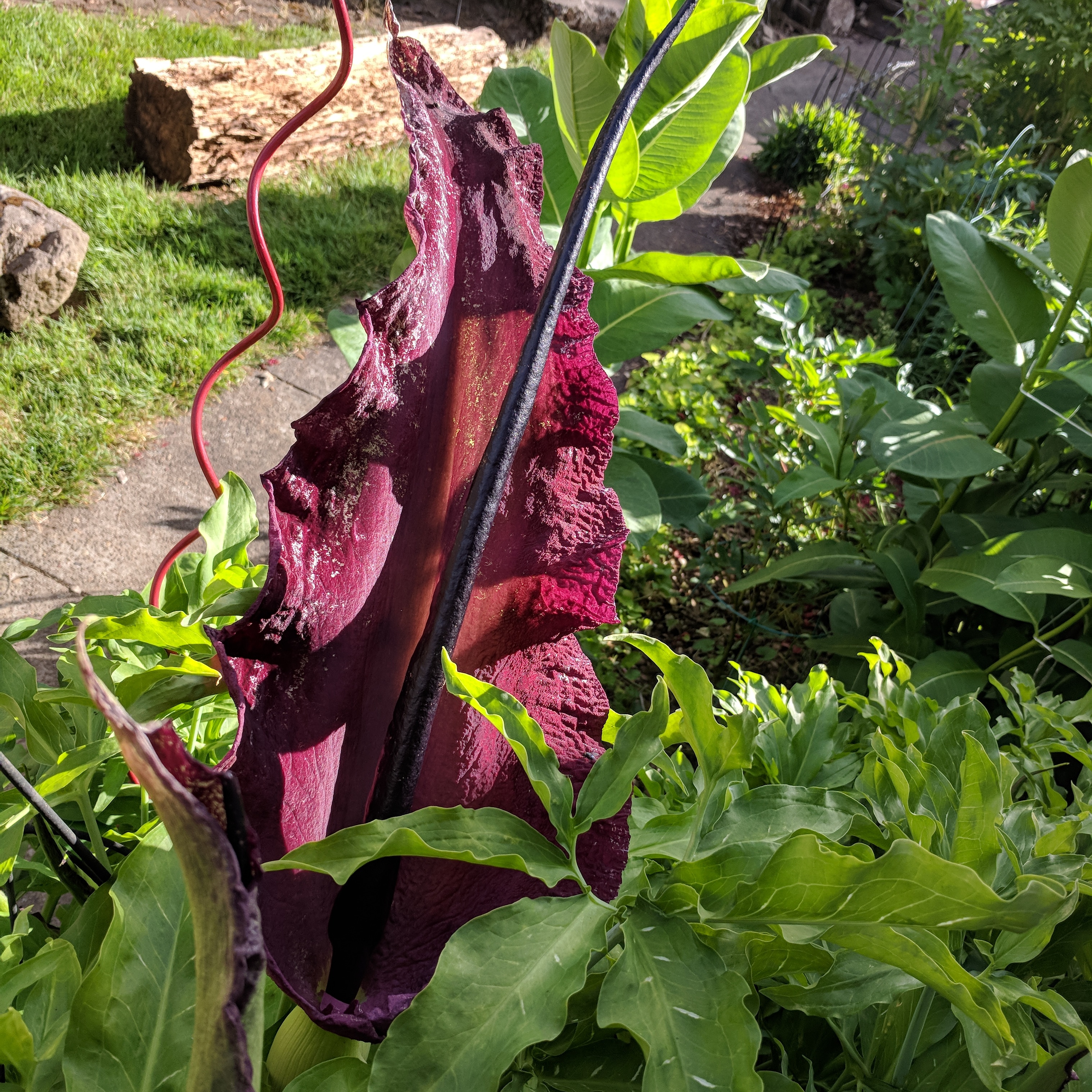
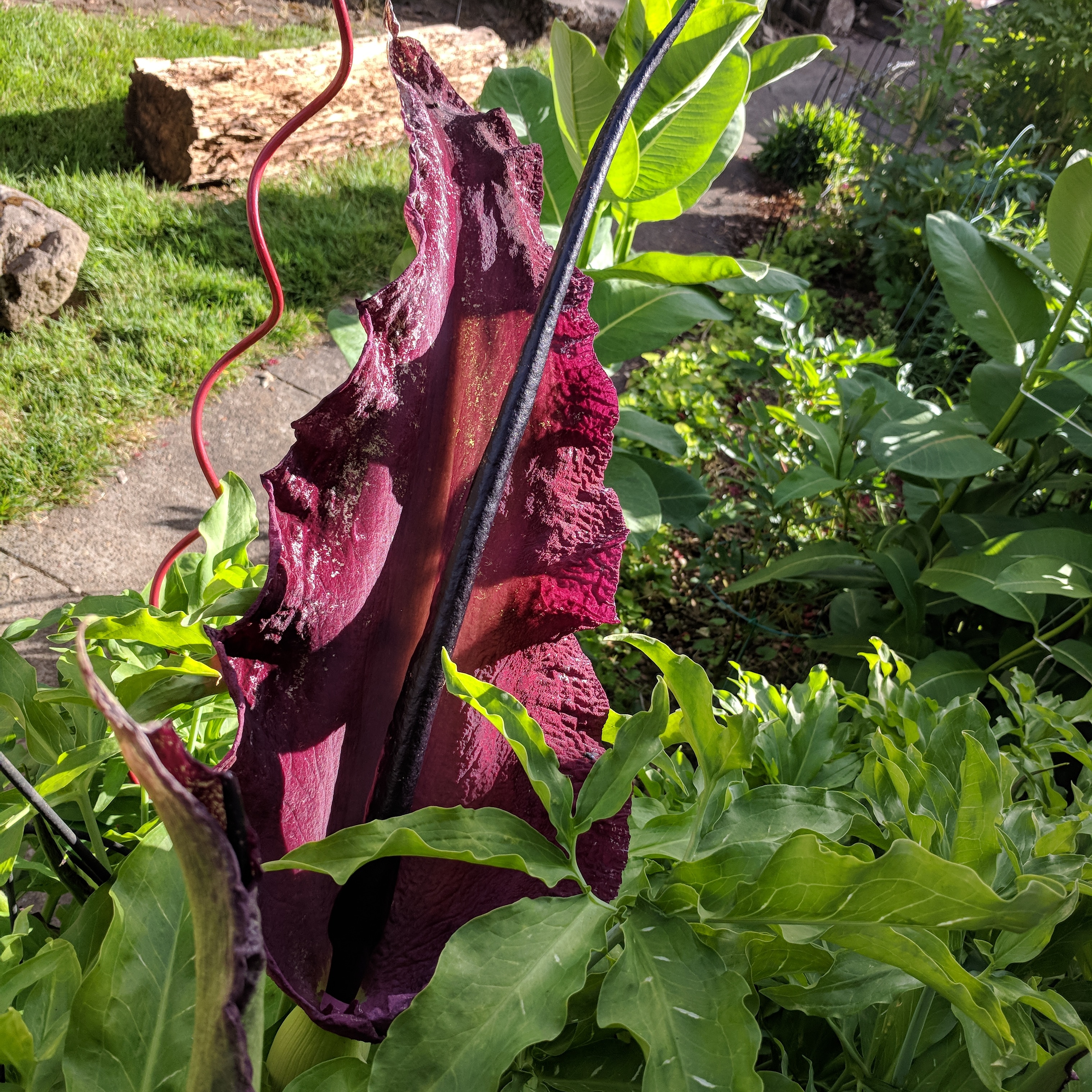
But before it does, at the end of May and always on our anniversary on the 7th of June, the aroma of rotten hamburger wafts in the air: the Dragon Lilies have opened. Flies and beetles rush in to await their demise in bowl of this carnivorous beauty. The smell lasts a couple days. The flowers wilt and the entire plant begins to wilt and turn yellow.

Now it is the milkweed’s turn.

I have two varieties: Showy milkweed (Asclepias speciosa – native to Oregon) with pink florets and California milkweed (A. Californica) with white florets. The latter isn’t a native to Oregon, and it doesn’t grow as prolifically as the Showy milkweed does, but the blooms are pretty and the aroma is the same: sweet and enticing, the polar opposite of the faded Dragon lily.

I planted milkweed thinking I could attract migrating Monarch butterflies. I didn’t know then that this part of the lower end of the Willamette Valley is not on the migratory path for these beautiful and endangered butterflies. No worries: the value blooming milkweed has for other pollinators outweigh my misplaced intentions. Every early bee, butterfly, and tiny wasp brave the sticky edges of the flowers to get at the pollen inside. Occasionally, a honeybee will get stuck and will have to struggle free. A few plants wilt and die, host to the milkweed beetle which does exist in this half of the valley.

Below the tall stems that now tower between four and six feet, a junco might build a ground nest. The nests are soft grass circles, now much larger than the palm of my hand. We won’t know there’s a nest there until a fledgling bird hops out of the cover while the parent birds hover nearby.
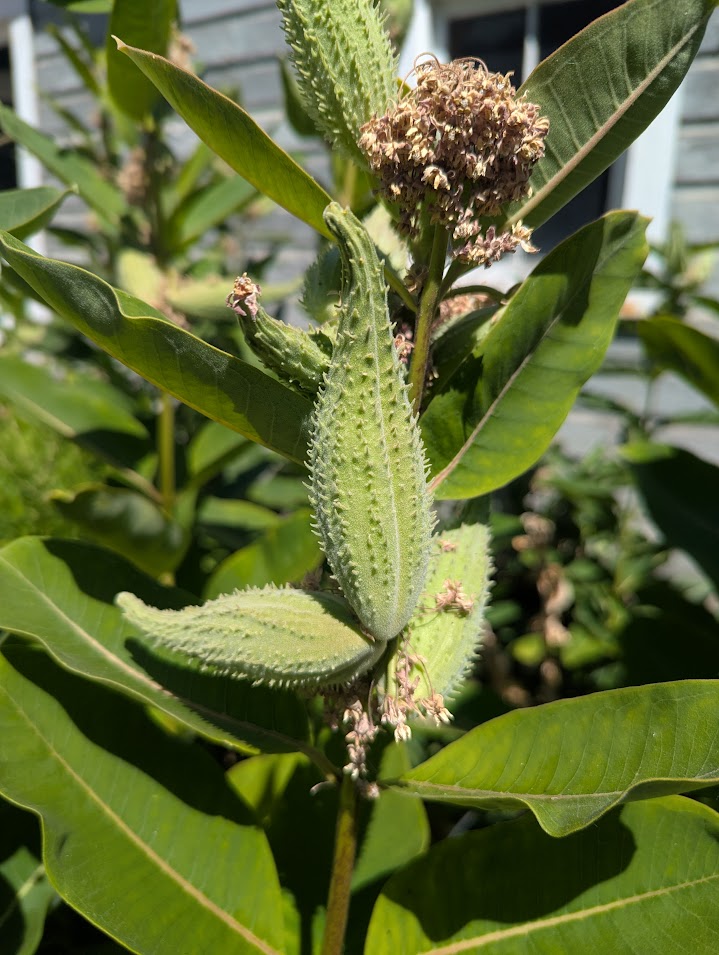
The bloom of milkweed lasts a couple weeks giving us quite a show of pink and white, and busy pollinator insects. But then the flowers fade and the few that were pollinated will start developing seed pods. These are green and soft, and quite edible if you are not allergic (I am). When the pods ripen, they turn brown and hard then pop open to release thousands of sees hanging from wispy “umbrellas”. The wind catches the seeds and like the dandelion – well, you know the rest of the story! The ground is soon covered in tiny, milkweed parachutes looking for a home.

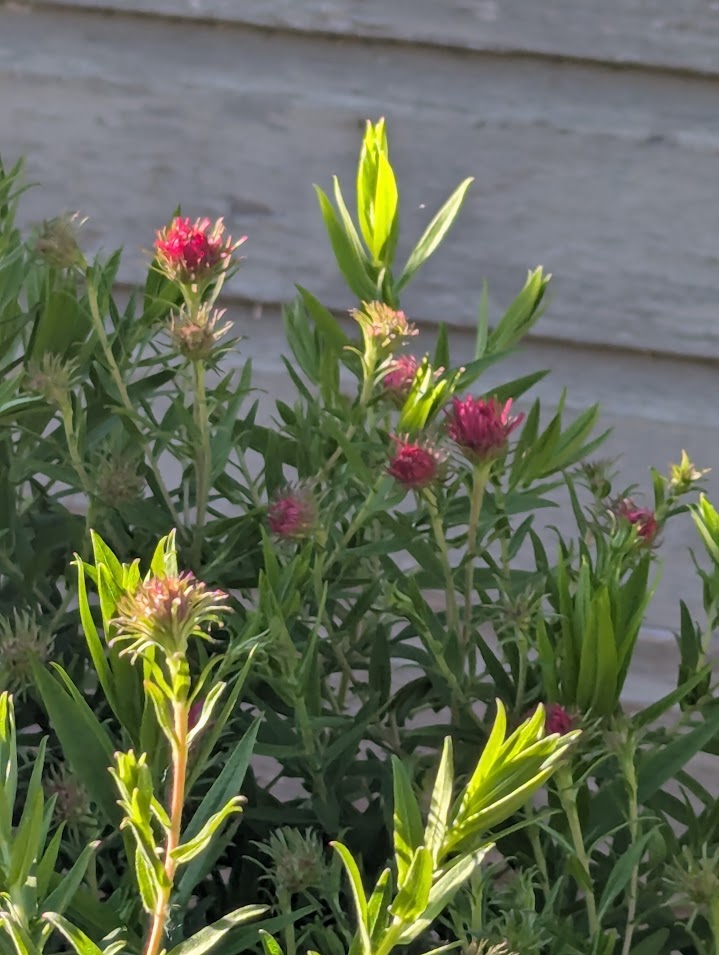
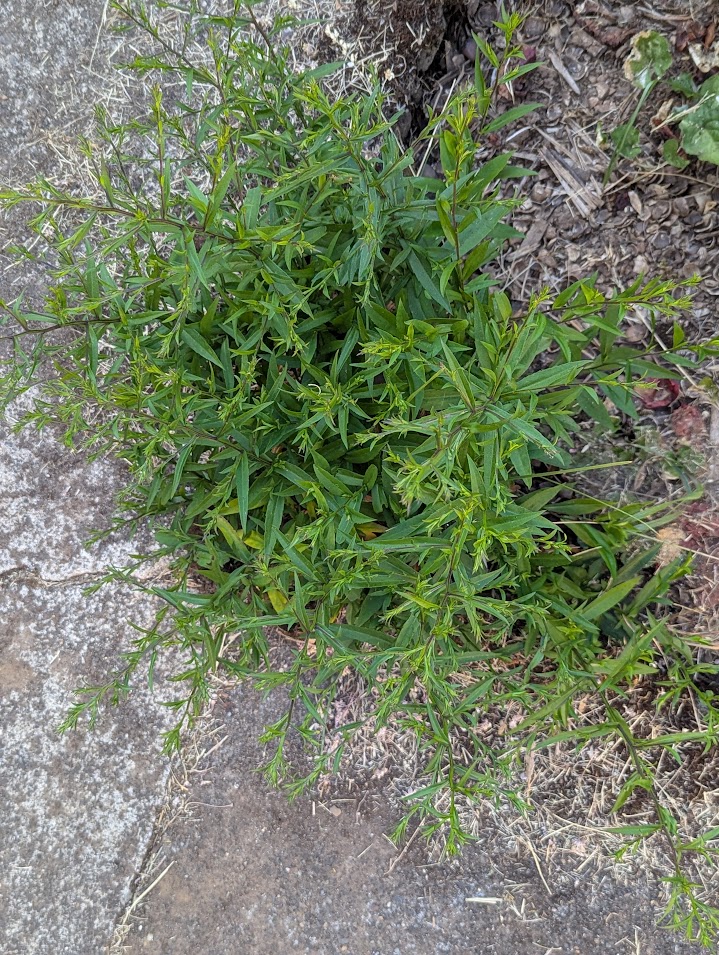
But I mow down the milkweed, not simply to avoid the parachutes, but because the milkweed towers above the asters. And the asters put on a late show of color lasting through August and into September. The tall asters are a riot of magenta pink. The aster that grows in the crack in the sidewalk puts out lilac-colored flowers. The tiny bees – those mining bees and other ground dwellers – love the asters.

The milkweed is gone now, and I wait for that last eruption of color. Too soon, the rain will come and everything will turn brown. (Photo is of a year I did not cut down the milkweed stalks and the seeds flew everywhere.)

Read Full Post »

Tiny pinks on long stems. This mallow started life in out garden as a tiny free specimen. I put it in a planter and it thrived. Moved it into the ground and it nearly died. It is in a large planter, soil mixed with sand, and it is happy once again. It is a bee favorite & common on the Coast.

stinging nettle – urtica dioica

I hope you know what plant that is without the ID below it: run into this without enough clothes on and you’ll wish you had never met it. I crawled into it once when I was a child. Nettle stings all over my face! Fortunately, the damage is never serious and the sting can be dealt with (in my case, I probably smeared mud all over my face. I was a clever child – HA!). I started growing it for the medicinal benefits of nettle tea. It is in a pot so it doesn’t escape into the yard and I deadhead the flowers before they produce seeds: this is all the nettle I need in my yard. Harvest with care: garden gloves, long sleeves. I dry the leaves in the dehydrator instead of hanging them to dry. I’ve read you can cook the leaves as a spinach substitute (I’m not fond of cooked spinach except on pizza). The leaves lose their sting when dry. I mix the leaves with feverfew and yarrow for a green tea that I can drink without sweetener.

Nettle may lower your blood pressure, help with blood sugar, hay fever, reduce inflammation, and help with enlarged prostate, and contains antioxidants and many vitamins. (I may write more on nettle in another post on herbs in the future.)

Wild irises.

I love irises! These are my wild native irises (I have “domestic” irises as well). The first two iridacea shown love moist soil and are planted in a little shady swale next to the south fence of our yard along with the camassia. I need to divide the flag iris this fall. The Douglas iris is more like its commercial counterparts: dry soil is fine. They love sunshine. The blooms are larger than the flag iris but still delicate.

wild camas – camassia quamish

Wild camas (which is related to asparagus) is a beloved forage plant for the Indigenous peoples of the PNW. I loves marshy areas. I have not tried eating it: I have too few of the plants to forage just yet.

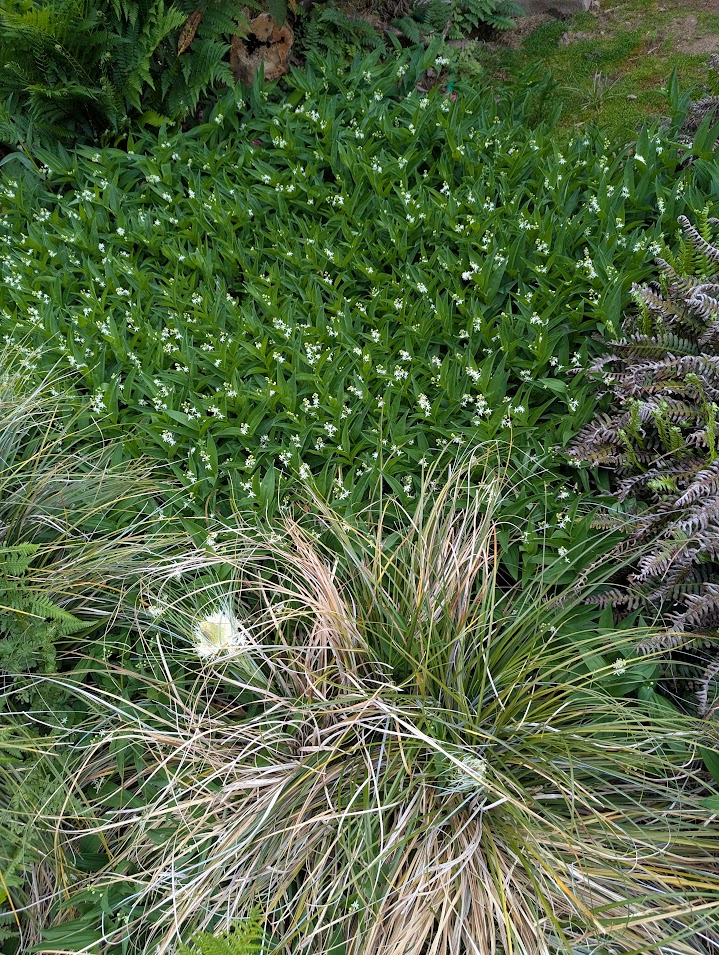
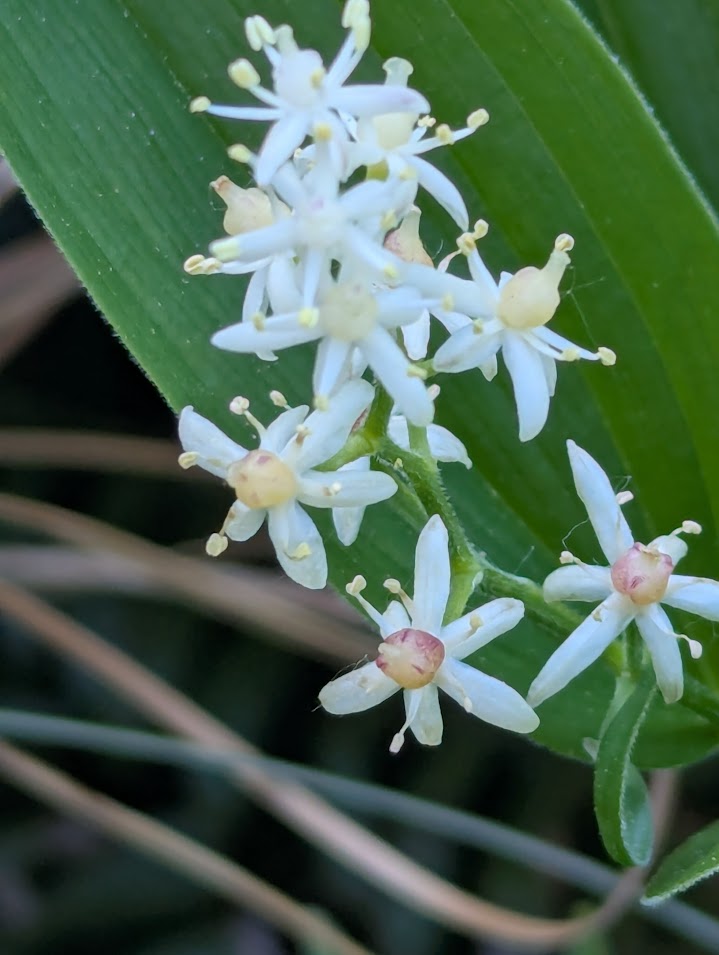
My husband brought me a gift of bear grass one year along with the deer ferns. Falso Solomon’s seal hitched a ride. My bear grass has never failed to bloom: the spikes tower above the heavy leaves. I think one of my plants is showing its age and beginning to die out, but it produced three beautiful spikes of flowers this year. And the false Solomon’s seal never disappoints, but it is gone by summer and the ground bare where it flourished in the wet of spring.

This beautiful ground cover was also a hitch hiker. I think it came with the yew and maple (long gone now). It spreads quickly, covers the ground beautifully, and attracts every bee, bee fly, and wasp. It greens up in the Autumn, overwinters green, and blooms in the spring – and then it is gone. The ground bare.

I have not tried too many other plants mixed in with the false Solomon’s seal to cover the bare spot in summer, but I have tried where the meadowfoam is. And meadowfoam does not like to be shaded out during the dormant stage! The bare spots in the photo are where i removed plants that shaded out the meadowfoam and it died back. However… it seems to love peonies and grows profusely around them despite the shade of summer, so I may try putting a couple peonies in there.

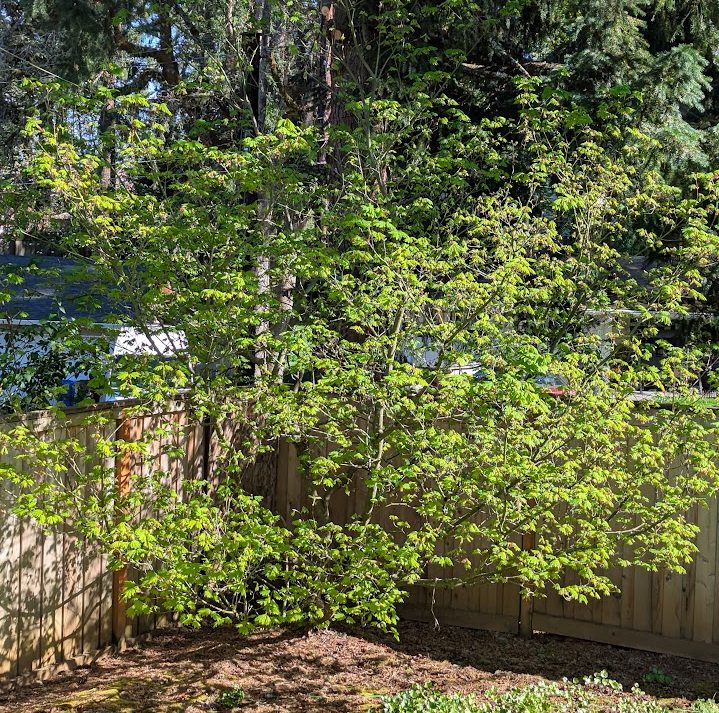
vine maple – acer circinatum

Don dug this out of a bar pit one year. he intended to make it into a Bonsai tree, but vane maple grows too quickly and he had to put it into the ground. It is as large as it is ever going to get. The leaves turn brilliant red in the autumn. The squirrels love the helicopter seeds. Very little grows under it but I am hoping some huechera (coral bells) will take off.

narrowleaf milkweed – asclepias fascicularis

Milkweed. I could write a blog post on this, the last of my Natives to show off. I planted it by seed: two kinds of native milkweeds, the showy (pink flowers) and a few of the narrowleaf. They didn’t grow. Well, to heck with that idea, right? I could purchase some starts but it just never seemed to happen. And four years after I tossed those seeds in the garden, I had a thick stem poking out of the ground. Suspicious, I broke a leaf off and watched as it oozed thick milky sap. Eureka! It only took four years for those seeds to grow! And grow they did: I now have to fight the plants to keep them contained in the corner of garden where I planted them: milkweed spreads by runners underground.

Bees, flies, butterflies (but never Monarchs – so far), and milkweed beetles love the plants. Invasive as the plant is, it grows well in the little corner of yard where it is, sharing space with peonies, asters, Voodoo lilies, and grape hyacinth. The hyacinth blooms first, then the peonies, followed by the voodoo lily. The milkweed rises up and blooms, fades and dies, and the asters bloom. A perfect full summer garden of bloom.

That is it for my native plants! My next posts will be about herbs in the garden, uses, recipes, and cautions. I’m excited for those posts!

Read Full Post »

 How I love thee, False Spring! I love the sunshine! The warm air! The wee buds poking up out of the ground!

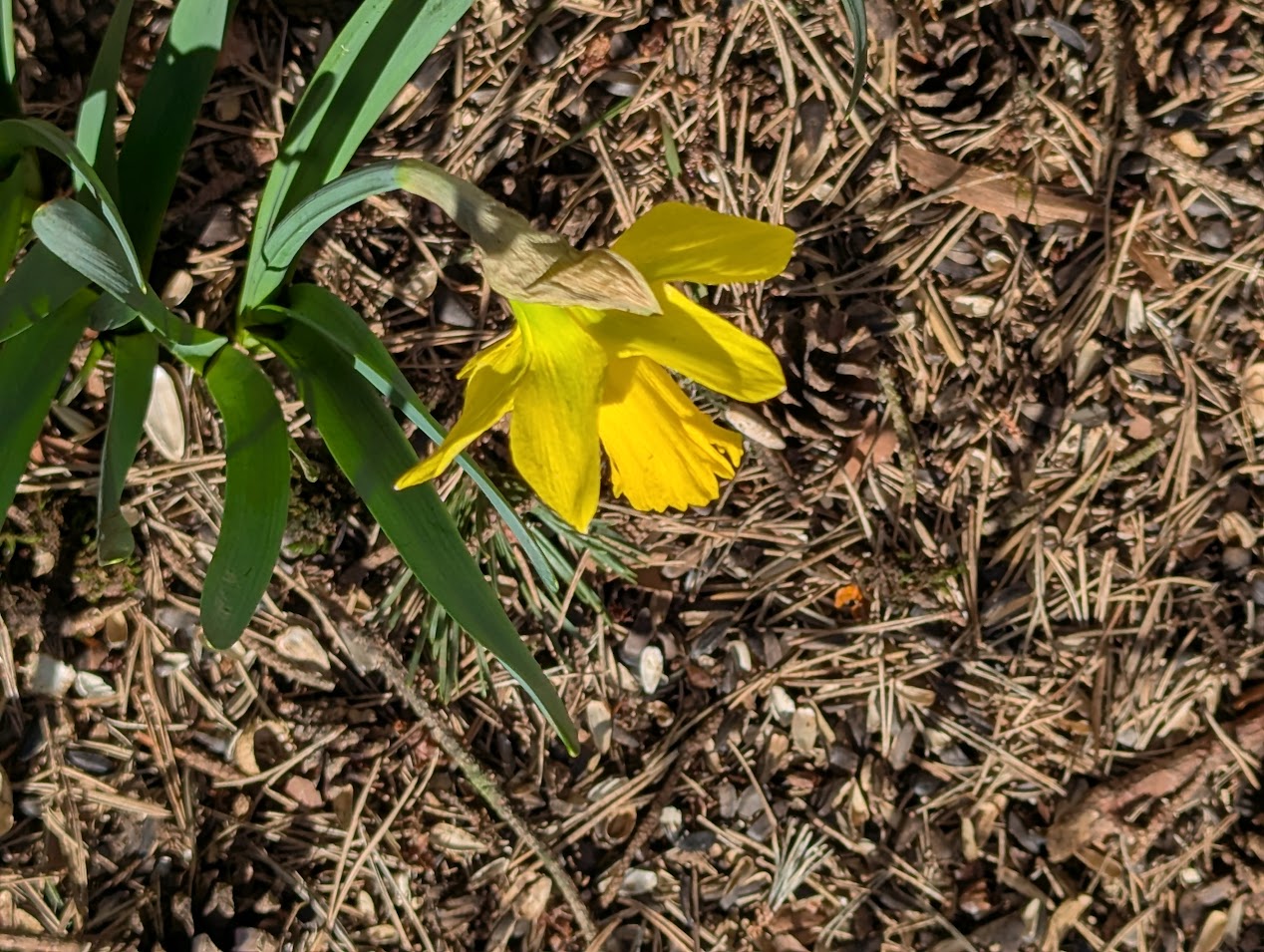
Daffodils! (Except the parts the slugs came and nibbled on!)

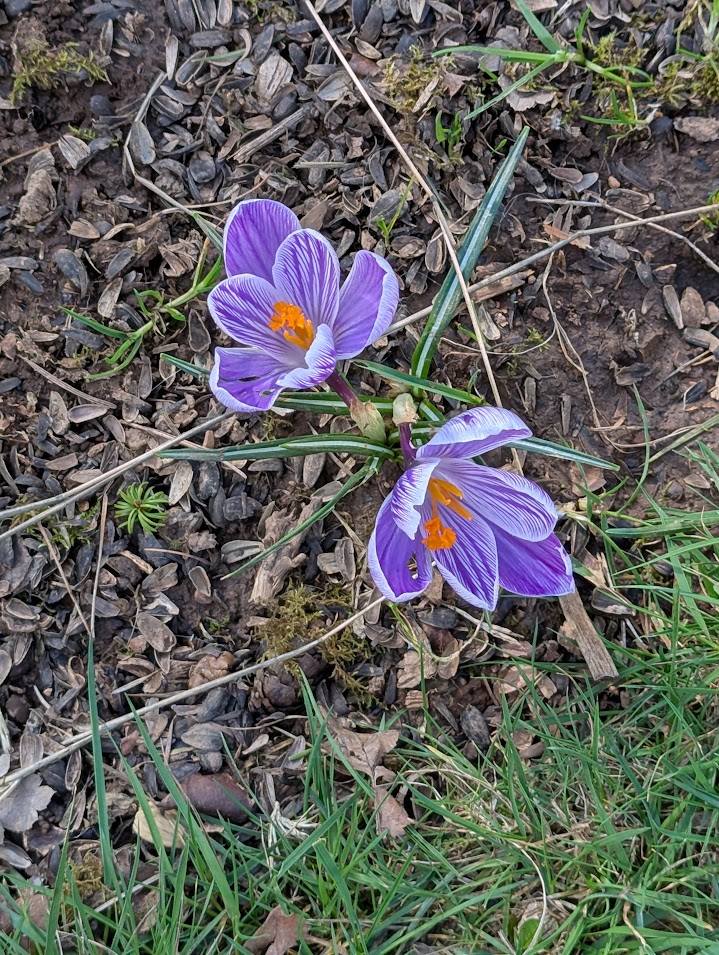
Crocus! (Until the dang squirrel makes off with the flower and eats it all!)

The Camellia! (What buds have escaped both the dog and the squirrel! What the dog tastes in Camellia buds is beyond me but it isn’t harmful to him – surprise! – and he only picks off the blossoms on the lowest branches. Squirrels tend to the upper blossoms where I cannot see, so that leaves the bulk of the bush to me! Me, me, me!)

The Lenten Rose (Hellebore)! (Mine needs some fungicide, I think. The leaves look rather sad.)

The grape hyacinth!

No. Just NO.

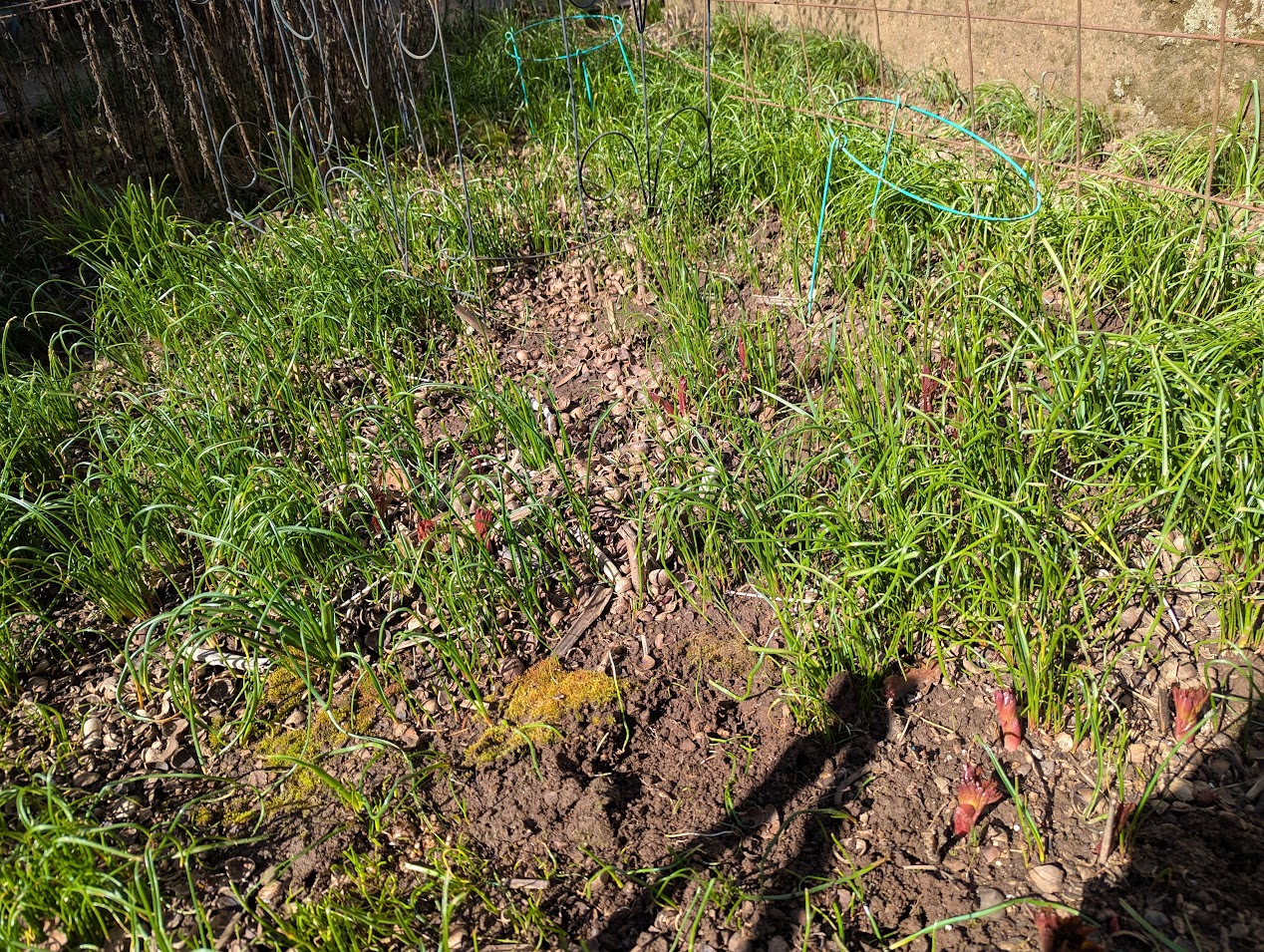
Look at them there in my flower bed, crowding out the peonies. All those clumps of impenetrable hyacinth bulbs! I think the last time I purged them was about five years ago. And today they came out in the handfuls, all those little bulbs crowded together just under the surface, clinging to each other like seeds in a pomegranate.

Kill! Pull! Purge!

Except they don’t all come out and there are some with tiny promises of fragrant grape-colored clusters of bell-shaped flowers. I left those.

And I know I will do this again in about five years.

Because grape hyacinths. They merely regroup.

This particular flower bed is my most successful. It is low maintenance, except for the every-five-years purge of invasive and stubborn grape hyacinths.

This garden bed blooms from early spring  starting with the hyacinth, which I promise, will still raise up tiny spikes of purple flowers rimmed with a delicate white border. Not as fragrant as the larger hyacinths that come in a variety of pink, purple, and blue shades, but pretty enough to place in a bud vase and prolific enough to be a nuisance.

Then come the peonies. Blood red and scarlet. The peonies thrive despite the crowding of tiny bulbs. I throw them some light fertilizer early and a little copper fungicide to ward off brown spot, but otherwise, I ignore them. Well, I pick them and place them in pretty vases that I allow to sit outside overnight until all the ants fall off. Ants love peonies.

As the peonies fade, the Voodoo Lily comes on. Pungent, odiferous, and so dark a purple as to be almost black. We dug the parent plant up at a rental we lived in some 40 years ago. Didn’t think anyone would care if we took such an obnoxious smelling plant with us, and no doubt they haven’t missed it: surely we missed some of the bulbs.

It smells like rotten hamburger. It attracts beetles and flies (and not a few dogs). It repels neighbors and guests, but it also piques their interest: what is this mysterious plant? Dracunculus Vulgaris. Voodoo Lily. The harbinger of our wedding anniversary (it blooms the first week of June).

And when the lily fades and dies back, the milkweed springs upward. And upward. It blooms with a strong aroma, something far less offensive than the former: milkweed is aromatic and sweet, enticing and hypnotizing. Here come the bees, wasps, flies, butterflies, and beetles. Pink and white clusters of hundreds of flowers. And with it, our hope of seeing a magnificent orange-and-black Monarch butterfly or the yellow-green-and black striped Monarch caterpillar (that feeds exclusively on milkweed).

If you plant it they will come. We hope.

The milkweed, in turn, goes to seed and begins to fade, the seed pods hardening. Summer is at an end. And with a burst of color, the asters open up: tall magenta ones and shorter light purple ones. The bees and wasps that filtered off to other flowers when the milkweed faded are back in force. It is one last feast of nectar, of pollen, of summery intoxication.

Then it all fades away and the grape hyacinth begins to poke its persistent leaves upward, greening the winter brown ground.

**note: the only photo that is not mine is that of the grape hyacinth. Credit goes to NickyPe and Pixabay.

Read Full Post »

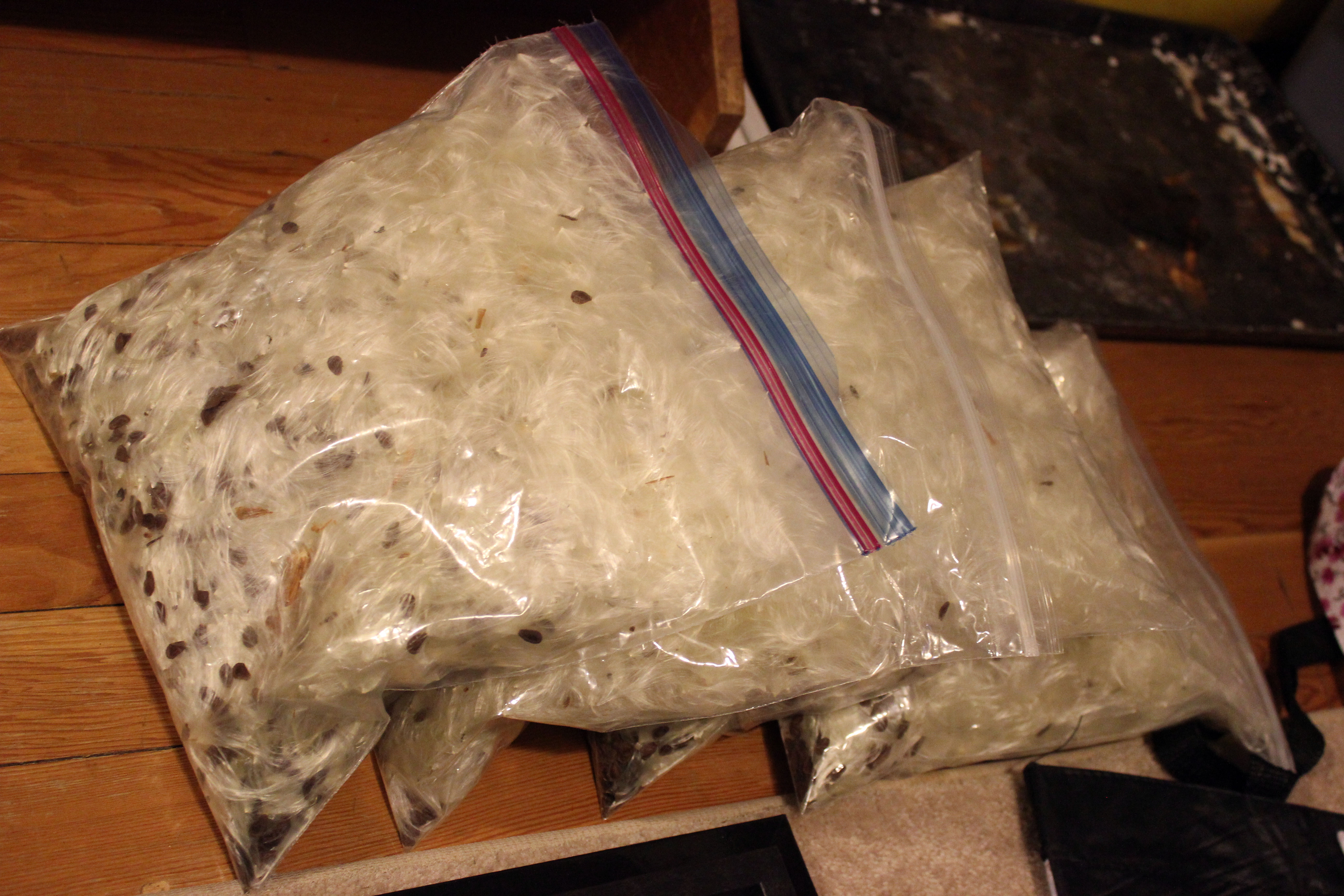
It looked like we had a pillow fight out in the back yard today. Only, there wasn’t a ‘we’, there weren’t any pillows, and the stuff floating around in the air and clinging to everything was the fluffy white stuff that helps milkweed seeds go airborne. Except, they didn’t go airborne: I was attempting to stuff the seeds into gallon plastic bags as I ripped them out of the very dry pods.

Let me try to explain: Monarch butterflies are these regal, orange-and-black butterflies that once roamed from Mexico to Canada, along routes where milkweed grows.Monarch butterflies are in decline, as are honeybees, bumblebees, and who knows what other beneficial insects that rely on natural plantings that use no pesticides/herbicides.

Milkweed in a generic name for Ascelpias L., a genera of nearly 140 species. It used to grow wild throughout much of the Northern Hemisphere, and at least three known insects dine solely on milkweed, the Monarch Butterfly being one of those species. Sometime in the 1960’s, communities began using herbicides to kill the milkweed growing along ditches, or they ran culverts and covered up the ditches. The more the milkweed habitat was destroyed, the more it dribbled down to the species which rely on milkweed for survival. Monarch Butterflies began their decline.

I was 12 when they buried the “ditch” across the street in a culvert and a lawn. I wanted to go lay down in front of the bulldozers and sing protest songs, but my father absolutely forbade me. One thing you did not do: defy my father on one of his ‘absolutes’. For instance, we kids never wore socks to bed after he found out we’d done it just once. (My brother and I do wear socks to bed, but Dad has long since passed, and we only do so in the comfort of our own homes. I don’t know why you can’t wear socks to bed, but I am certain that Wilcoxes do not wear socks to bed!

I felt I let the Monarchs down. I’d raised a dozen of them in jars, allowing them to walk all over my hands as their wings stretched and dried and they finally took off in a gentle flutter of wings. There’s really not a thrill that comes any closer to coaxing a still-wet butterfly out of its crystal cyrsalis and feeling its sticky feet measure the distance on your hands before it takes to flight.

Nearly two decades ago, scientists began urging people to grow milkweed in their garden, and milkweed seeds became available from the big seed companies down to the organic seed companies. The problem with that is this: milkweed doesn’t readily grow from see. It is a biennial, which means it takes two years to mature – if you can get it to even sprout that first year. People started planting the wrong species of milkweed for their area, and even if they could get it to grow, the butterflies didn’t come.

Four to five years ago, I took two seed packets of milkweed: one ‘showy’ and one ‘common’. These are the species native to the Willamette Valley. I put them in the freezer for one to three months before sowing them in the early spring. And nothing happened.

The following spring(a year later), I espied something coming up that I though might actually be milkweed. the litmus test: pinch a leaf off and see if it ‘bleeds’ thick, sticky, milky, sap. YES!!

The plants got about a foot tall and died back. Damn.

The next year, there were more sprouts. I mean a lot more: despite the fact that the plant had not matured and sown seeds, I had double the number of plants as I had the year before. They grew to about three feet in height before dying back. Again, before flowering. Meanwhile, I read about someone up the Valley (that would be south of here as the Willamette flows north) who had Monarchs on her milkweed.

This summer, the milkweed sprouts doubles, and doubled again. I easily had four times the number of plants from the previous year, and they all produced flowers: showy and common. No Monarchs, but the honeybees, bumblebees, wasps, and a couple of other butterflies, and – of course – milkweed beetles – pollinated the flowers. We watched with growing excitement as pods developed.

Milkweed pods can be used for any number of home crafting. Not to mention the seeds developing inside of them…

Then the rains came and the pods turned into soggy messes, half-opened. Gotta love where I live.

I cut as many pods as I could from the plants, brought them inside, and dried them in the bathtub. And I ignored them for months (September, October, November, halfway into December). It’s a good thing our shower is separate from the bathtub, know what I’m saying?

Today, I hauled all my containers out into the back yard and began freeing the seeds from the pods. You can imagine the air.

002

I’m going to have to figure out how to get rid of the rest of the fluff and save the seeds. These are gallon bags. I lost about another bagful to the light breeze that helped me winnow out the seeds.

They are mixed up: common and showy. Showy has pink flowers; common has white flowers. My husband thinks we should covertly let the seeds go in the city park down the hill (the one with a creek running through it). I think I should ship them to whoever asks for them and let whoever gets them begin their own journey of restoring habitat for the Monarch Butterfly. Recipient gets to deal with the feathery stuff.

Here’s how to grow them from seed: place in freezer for 1-3 months. Sow in early spring, with just a little soil covering them. Wait four years, but make certain to water occasionally. You could try talking to them, too, I hear talking to plants works. By year five, maybe the butterflies will come, but even if they do now, the native bumblebees and wasps will thank you, as will the declining honeybees.

To hell with municipalities that label milkweed with the invasive Russian thistle and other noxious weeds.

003

Bonus: you can spray paint the pods and make unique Christmas/Easter/whatever ornaments. You can create little dioramas. Make them into little insect boats to float the River Styx.

Let me know if you want one of my gallon bags and I will send it out to you in early January. No strings attached – well, one: you have to plant them and hope.

Read Full Post »

I tossed a few milkweed seeds onto the ground back in… oh, 2012, I think. Maybe 2013. Nothing came of it. The winter of 2012, I put a packet of milkweed seeds into the freezer and then pulled them out the next spring, once again sowing them in the little triangle by the garage. Nothing came of it.

In 2014, some weeds popped up in the triangle that looked slightly sturdier and somewhat like what I remembered milkweed looked like. And, yes, when pinched, they oozed milky white sap, thick and sticky. Success! Only they didn’t grow very tall and they didn’t flower at all. I think that was the year they did a special on Oregon Public Broadcasting about how you really should start milkweed from a root cutting, not from the seed.

So why sell the seeds? ARGH.

By 2015, I knew that you really should plant milkweed that is native to your area if you want to attract Monarch butterflies back into the region. Oh dear… What had I planted?? I kept the seed packet from the second sowing: Showy milkweed. Score! Native to the Willamette Valley.

That summer, I had around six plants poking up through the ground! They were spaced along the back of the triangle, in the hottest, driest bit of soil, and while they grew to about 24″ tall, there was not a hint of flower on them. But now my hopes were kindled: every year, without fail, something had sprouted. I hoped that the roots were getting established, and subsequent years would prove my crop. The Monarchs were reportedly showing up in backyards around the Willamette Valley, as well.

I have a little history with Monarch butterflies. We lived on a street facing a dry creek bed in Northern Nevada in the 1960’s. The ditch ran in the winter and during thunderstorms (“Don’t play in the culverts! Watch upstream! A flash flood could happen any time!” – my mother’s words echo in my ears to this day), and in the summer, it was host to gophers, milkweed, monarchs, the occasional Black Widow in the culvert, and maybe a stray rattlesnake. You don’t think about the dangers when you are a kid (but your mother’s words will echo forever in your ears, long after she’s gone: “Don’t crawl in the culvert! Watch for snakes! Look upstream always!”).

Every summer, we kids would go and collect Monarch caterpillars and harvest as much milkweed as we could stuff into a jar. As the milkweed was devoured, we added more. Then, one magical day, the caterpillars would crawl to the top of the jar or a branch of the fading milkweed, and they’d hang upside down. The yellow-and-black skin would shed to reveal an emerald green chrysalis. And we’d check the chrysalis daily to see if the little gold dots were being added to. Then, one day, the chrysalis would change from green to a clear shell, and we could see the butterfly trapped inside. Oh, how we’d hover over those precious shells, waiting for them to crack open and the new butterfly to emerge!

There’s a magic in holding your hand out for the Monarch to climb onto it, wings still wet and pliable. The butterfly would walk around your hands, drying out its wings, until they were stiff, scaly, and fragile – and then you set the creature free to find a lover, lay more eggs, or fly back to Mexico for the winter.

In the late 1960’s, the City of Winnemucca covered up the ditch and put in culverts, presumably to keep us kids from getting caught in there during a flash flood (hadn’t happened, but , you know, people sue, and Joni Mitchell was singing this radical song about paving paradise and putting up a parking lot (Big Yellow Taxi). My dad wouldn’t let me go out there and lay down in front of the bulldozers in protest, and all that milkweed habitat was lost forever.

I regret that I didn’t rebel against him and make a scene. I read a Xerxes Society article a year ago that they couldn’t find any milkweed in Northern Nevada. I was only 12. I remember when the northern half of the state was covered in Monarchs.

I digress.

I had a minor success with milkweed in 2016: more plants came up (maybe 9) and some even budded. Unfortunately, the flowers never formed and the stalks withered and died. I did find a milkweed bug on one, so I knew the news was getting out in the insect world that we were growing milkweed. I also read about someone who only had nine plants, had caterpillars, and couldn’t find enough milkweed to satisfy the little rogues – she was begging people for plants to sacrifice to the caterpillars. I think she did succeed in getting some to butterfly stage.

This spring, 2017, my little triangle was suddenly infested with milkweed!

012

That’s milkweed all along the back, between three and five feet in height (.9 to 1.5 meters).

It gets better.

011

I knew I planted the Showy Milkweed four years ago. It’s pink, fragrant, and native to the Willamette Valley.

009

I planted the narrow leaf milkweed about five years ago. Also native to the Willamette Valley, but white and fragrant.

I have two varieties!

No Monarchs (yet), but I have their food source.

The other flowers in the triangle bloom earlier (peonies, dragon lily) or later (aster). I can dig up and move the peonies and aster as needed. I can also dig up the milkweed root stalk and move to other areas of my yard. I expect by next year, I will have a grand crop, not to mention the seed pods (oooo -arts and crafts!). I will probably be able to give others root stalk.

See where I am going with this? I am totally making up for being 12 and helpless in the face of “progress” and I am creating a new habitat.

I am so jazzed!!

And – a word to those who wish to follow in my footsteps: it takes patience. Years. Nurture. Bees.


Read Full Post »