Feeds:
Posts
Comments

Posts Tagged ‘gardening’

It has already been two weeks since we went to the “biggest” early garden sale of the year. Where does time go, we ask. Well, we have had unusually DRY weather, and I have immersed myself in gardening, not writing. Then allergies hit and I am presently confined to the inside of the house, my eyes itching, my nose dripping, and my life a prisoner to tree pollen. I have no idea which trees: ash, alder, birch? Not evergreens: I can watch the yellow pollen coat the cars and everything in the yard with nary a sneeze. But these deciduous trees try to kill me. Every year.

There was no allergen in the air on the day we went to Garden Palooza. I carried my list of plants and set a budget. No annuals: it was still much too cold during the days and nights for me to fill my planters with my favorite annuals: petunias. Petunias are a nod to a woman who was very influential during my childhood (my best friend’s mother). This year will be especially poignant: Marie passed away at the age of 98. I love petunias because she grew them every year and they were beautiful and sunny.

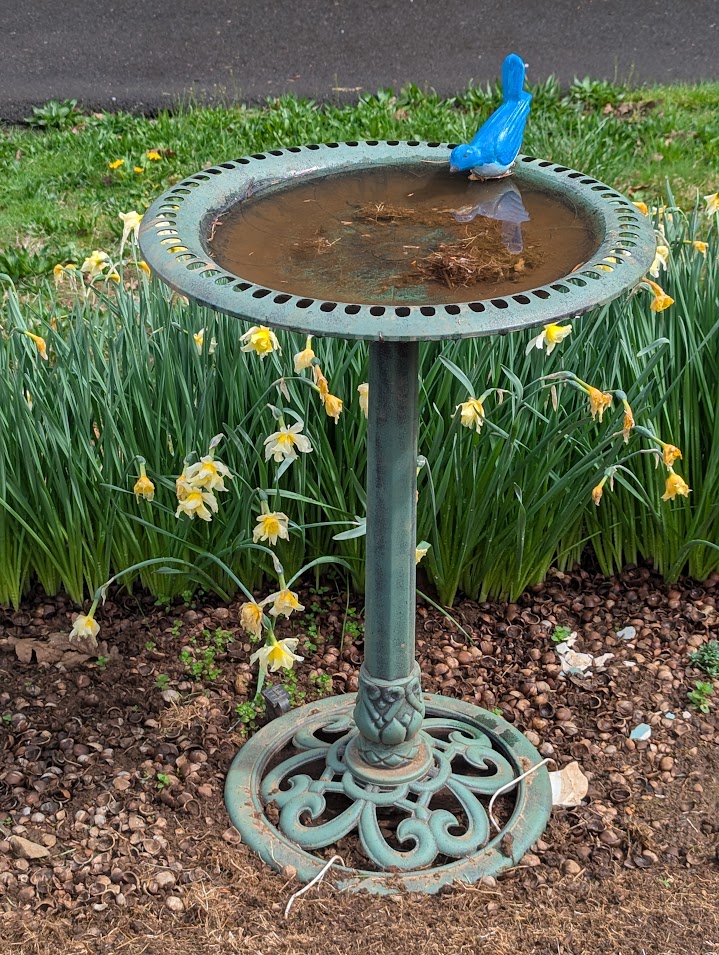
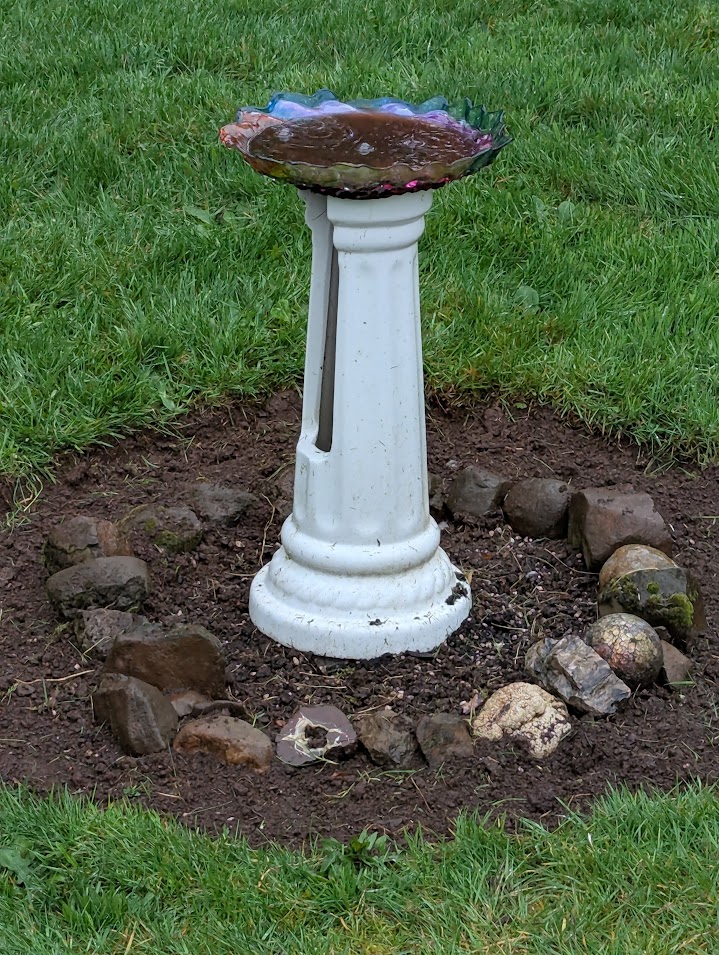
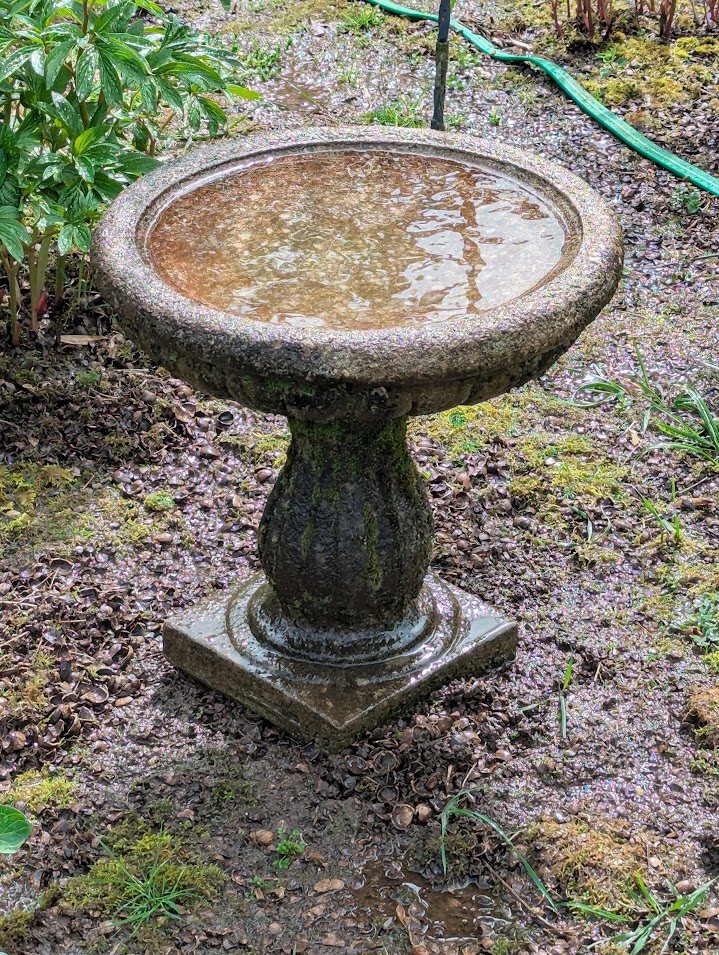
I wanted Native plants and perennials and a good ground cover. Something to plant around that pedestal bird bath, something that would bloom throughout the summer. I had it in my mind to get a couple creeping phlox plants, but learned they only bloom in the springtime. Well, shoot. But I found something else that blooms all summer and snagged those up.

Problem is: the vendor pulled the identification tags out of the pots when he sold me two of them and now I have no idea WHAT I was buying!

I did find a Native plant nursery that had one of the plants I want, but the owner read through my list and told me he would have several plants on my wish list later in the season – just call and ask in a couple weeks. Woot! He sold me a clarkia: “Farewell to Spring”.

I grabbed a peppermint to put in a planted by the front door to discourage rats from hiding beneath the stairs. Most of our house has been “rat proofed” but there are a few points where they *might* get under the house and peppermint works as a great deterrent. I’ll just pot it (to keep it from getting away – it can be invasive) and place it by one of those points. Lovely scent as well.

Rue for out front in the bed I am preparing for an herb garden. I’ll also plant holy basil, hyssop, English thyme. More, but I haven’t given that much thought (yet – it’s early for seeds). The English thyme was another purchase: I have one in a planter, but it would be nice to have one in the ground as well. My live-in chef uses a lot of fresh thyme in his cooking. (My husband, folks, I’m nowhere near rich enough to pay for a chef. Gourmet cooking is his retirement hobby, and it keeps me overweight and sated.)

Another creeping thyme for planting between pavers out front. It’s a yellow thyme, very eye-catching, and – I hope – drought tolerant and prolific.

Last was the mystery plant.

I tried my plant app, but it wanted to identify the plant as arugula. It is NOT arugula. We have that growing wild and unkept throughout the vegetable garden beds. I’m not a huge fan of arugula, but the aforementioned chef loves it. He let it get away. I know what arugula is.

Google lens wanted to make it arugula as well. What the heck!? Why did that vendor take the tag out!? (Well, I know why: inventory, plain and simple. The other vendors used two tags in the pots and kept one but left the other for me. This particular vendor only had one tag per plant.) Dang-nab it!
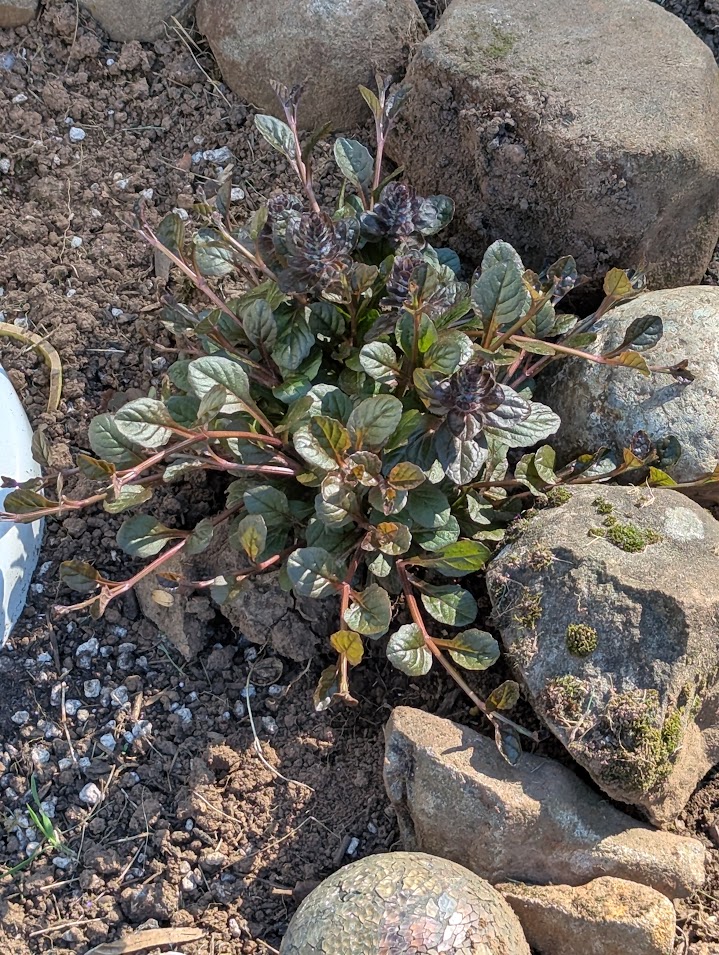
Soooooo – until it flowers, I have no idea what I purchased to put around the bird bath. In the meantime, I placed some bugleweed around it. I’ve been trying to get rid of the bugleweed since I planted it twenty years ago, but it returns every year in a new place. Might as well make use of it. It blooms early and has pretty purplish leaves. Whatever it was that I bought at the garden sale blooms late and has green leaves. Fingers crossed I can identify it sooner than later.

Oh, and I bought a few nasturtium starts. I prefer the trailing kind, but I had a weak moment and suddenly four starts were in the cart and paid for. Yummy nasturtiums. Pretty nasturtiums. I have since purchased seeds for the trailing kind so I can run them up trellises.

Also: I stayed under budget so I have more to spend later.

PS – yes, those are silk flowers. Some day I will explain those. Maybe.
Read Full Post »

Yesterday’s post ended in a pile of dog poop. It was a photo of one of our birdbaths where the crows like to rinse off the dog poop in search of undigested nuggets. Crows can be so fun (sarcasm font).

I started with just one bird bath in the yard many years ago, but the crows kept soaking dead baby birds in it. I started feeding the crows to keep them from raiding neighboring nests and depositing the fledglings in the bird bath – and that has worked quite well. But after I added the central one to the back yard last year, dog poop has become the primary crow issue.

I love crows… Until I don’t.
I have added several more bird baths over the years, some of which are no longer: ice and winter have a way of breaking up ceramics. The original bird bath was destroyed in a nasty winter storm. My husband purchased a new one for me the next Christmas.

It’s concrete. The bowl surface is rough, giving small birds and insects a fighting chance if they get stuck in the deeper water. The small birds and wasps love it. I placed it in the backyard where the crows don’t use it. They don’t use it mostly because of its proximity to outdoor seating, an issue that the wee song birds don’t seem to have. And it has worked well. I need to clean it a few times in the summer and I ignore it through the winter.

Last year, I added this plastic monstrosity to the front yard. It is there specifically for crows. They put everything into the water before they eat it: peanuts, bread and hamburger buns that other people toss them, and things I probably do not want to think about. I have yet to find a fledgling bird in there but fried chicken… Oh, yes. I hose it out over the retaining wall and think no more about it: whatever is in it drops behind the wall of orange daylilies, out of sight – out of mind.

I have often perused the aisles of thrift stores for bowls or platters that are the right depth for bird baths. A lot of them don’t make it through the winter: ice is hell on porcelain and glass. And I forget to haul them inside for the season. I have a variety of plant stands (wrought iron) and plant hangers that I use to suspend the make-shift bird baths (and bee watering holes). And we have gone through a variety of cheap dishes.

Last year, we remodeled our bathroom, and I grabbed the porcelain pedestal to our former sink. I spent some time thrifting until I found the “right” bowl to glue onto the porcelain (E6000 – the best crafter’s glue!). It lasted the season before the glue gave out and I hauled the bowl into the house for the season. The only caveat: dog poop, undigested peanuts, and crows. I’ll return to this eyesore in a moment.

A couple years ago, we hit a yard sale with plant hangers and more for sale. I got my Rose of Sharon there and four of these funky home-made plant hangers. The bush is doing quite well, but I discovered the plant handers are much too heavy for shepherd’s hooks when plants are added to the mix. But I had four of them and they are so cool. (Did I just date myself with that phrase? Probably. But they *are* “so cool”.)

Two became bird feeders. I wired a screen onto the first one. It’s easy to clean and the small birds love it. So do the squirrels, but that’s another issue I haven’t quite dealt with (yet). I converted one of those frames for hanging plants into a basket to hold the other bird feeder platform: an inverted aluminum canning lid sainted white and punctured with holes for the rain to soak through. The crows and squirrels occasionally knock this one off the hanger, but it works quite well otherwise.

I have found small platters or bowls to place on the other two that can be used by birds or bees as watering places. I only have one in use right now. The last is languishing in the shed waiting for inspiration or a new cheap porcelain bowl for the birds.

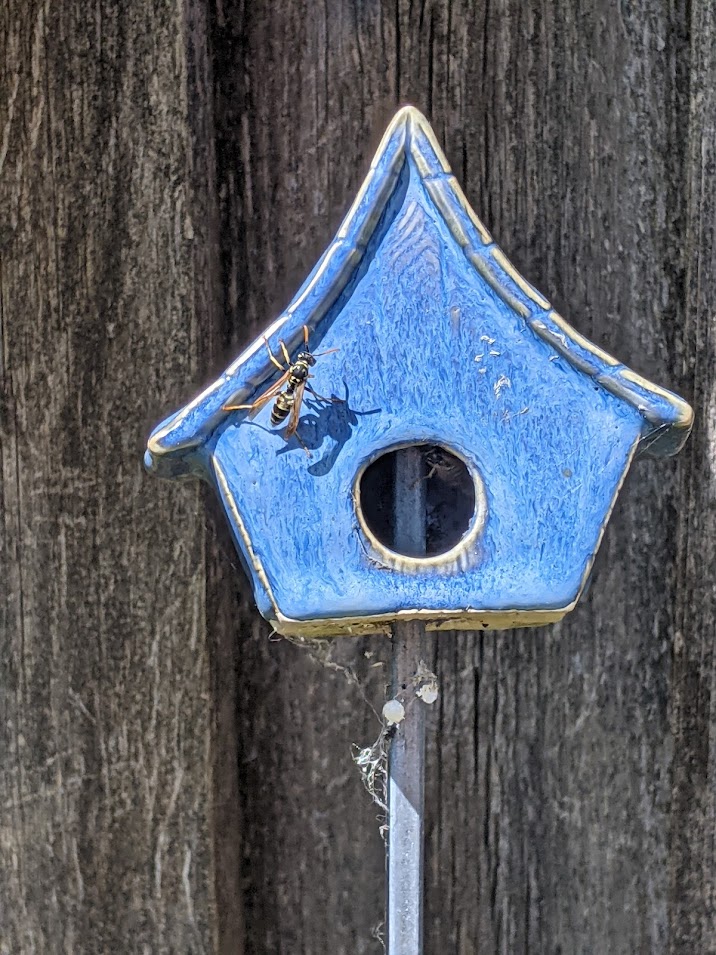
Somewhere in that timeline, we wandered through a town-wide antique fair and I came across a very unique hanger. The seller was offended that I wanted to use it for birds (“It’s a hanger for Aladdin lamps!” he protested). Yes, but it has no lamp, and you want more money than it is worth. We compromised on the price (I paid too much but it was the principle of the argument). $5 got me this hanger that I use for watering bees and wasps. Yes, I do need to clean the lower bowl, and the marbles contained therein, but its not like bees or wasps are thirsty right now. The guy selling it wanted $10 but he didn’t have a corresponding lamp to go with it and I know you probably can’t find one. At least not one you’d want to hang outside in the weather.

Which circles me around to the original subject: the birdbath I had to clean today. I mentioned to my husband that I needed a hose out to clean it, he thought I was whining, muttered something about “the hoses are on hose reels with wheels”, and proceeded to dig the hoses on wheels out of the shed for me. I did not mean he had to do it instantaneously and he forgets that a hose reel with a 100’ farm hose on it weighs more than I can easily move. So, we were both irritated with each other. Isn’t marriage fun?

Yes, yes it is. I’d sooner have a growling contest with someone I know will stay with me regardless than have to haul those heavy hose reels out on my own. In the rain.

Last night before I fell asleep, my brain hashed over the challenge of the crows. I came up with several non-viable ideas before I thought of this one: using one of those wire flowering basket hangers they sell at the supermarket laden with flowers. I was going to use this particular basket for something else (even purchased the coconut fiber liner) but… It looks nice and I’m hoping it goes a long way toward discouraging crows without making enemies of them – and keeping the integrity of the bird bath in place for the smaller birds that would like to use it.

This solution is To Be Determined.

Read Full Post »

Rain, rain, rain. Weeds, grass, plant sales. March and April are months when the sun comes out and warms the earth, then the rain comes down and soaks the ground. We still have frost some mornings and other days we can break out the shorts and t-shirts. I keep trying to find good subjects to write about.

A summary of my weeks:

The Native Plant “Sale” was not a plant sale. Tables of pamphlets and flyers from every conservation and forestry group within fifty miles, a few tables hawking garden tools, a lot of free evergreens (Noble fir and Douglas fir for the most part), and one single, lowly table with a few native plants that I have already dug up in the woods and started at home. Waste of time.

On dry days, I have argued with the different grasses, but the soil is saturated and weeding just isn’t productive.

Veteran gardeners in the area know that you don’t start setting out plants or sowing seeds until after Mother’s Day (a few cold crops are excepted but I’m not a vegetable gardener). It is far too muddy to rototill the veggie plot and make the beds, at least in our yard. We did get some pruning done, but I have already posted about that.

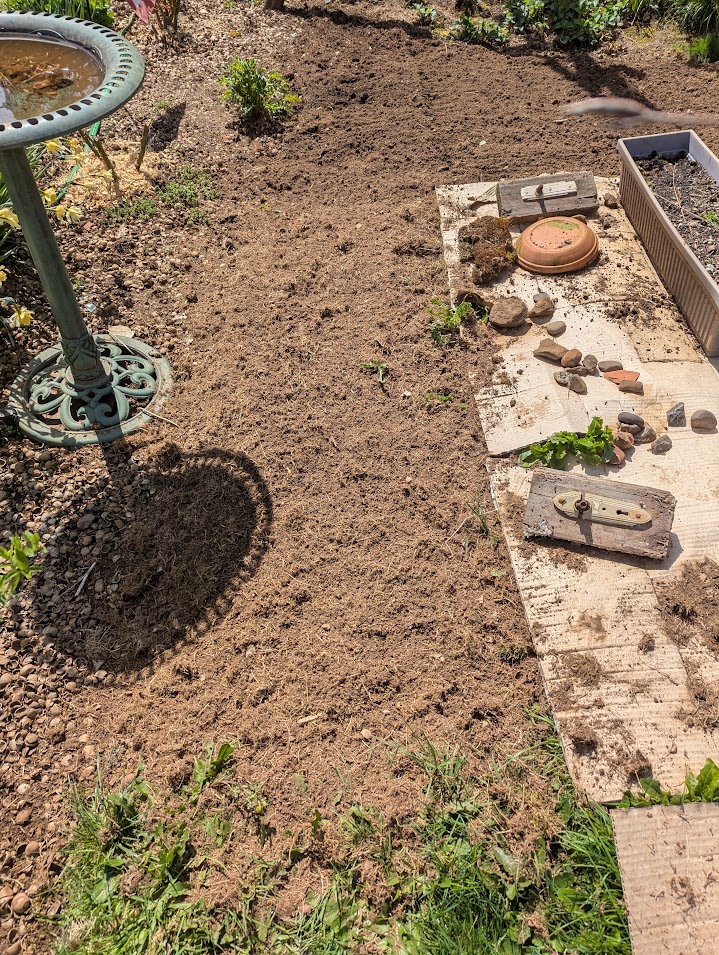
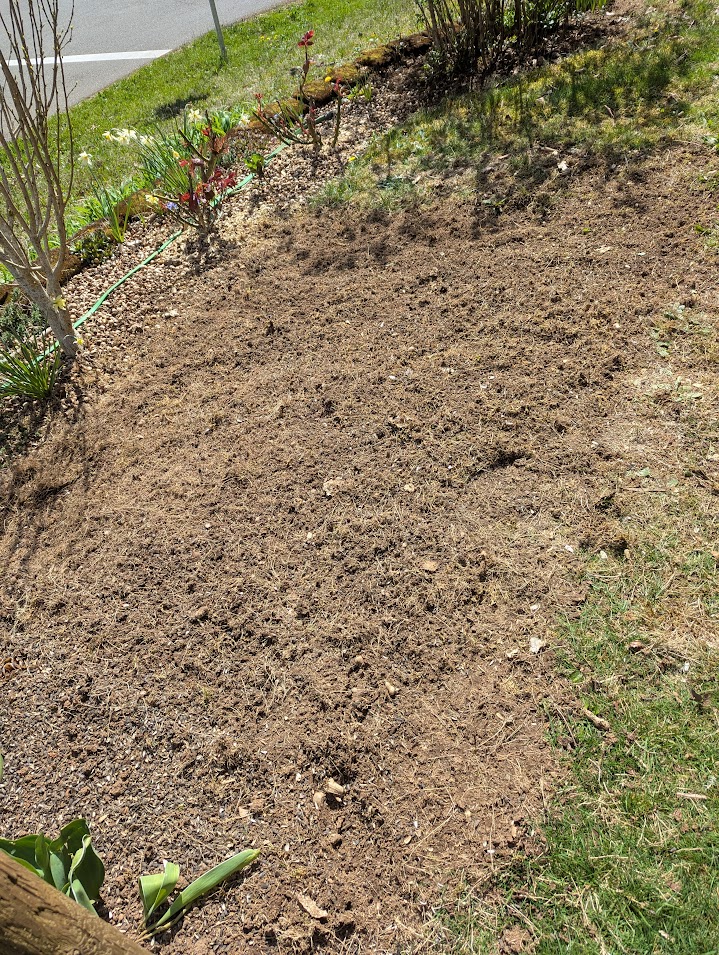
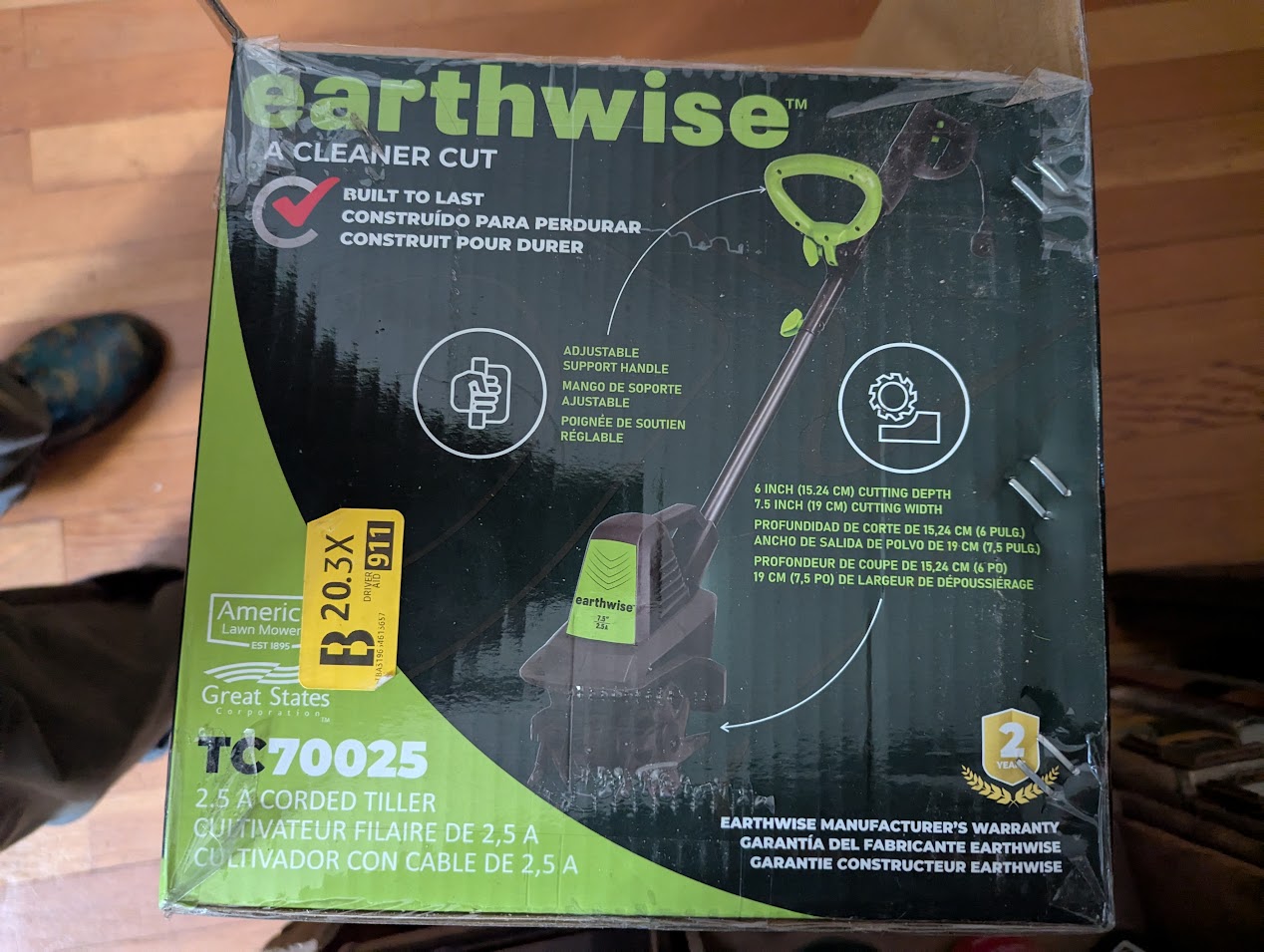
We had a three-day streak of lovely dry weather last week, but three days is not long enough for the saturated earth to dry out sufficiently for weeding or tilling. I did pull up cardboard from a couple areas in the hopes the ground would dry enough for me to try my nifty new electric hand tiller. It was not long enough. But I still tried.

The tiller works reasonably well on sod, but the mud clings to the tines and I had to stop three times, unplug the tiller, and clean out the tines for another go at it. The tiller tends to bounce along the surface, not really digging into the hard clay so I can see myself making several run throughs to get the ground broken up enough to plant. But where I’ve already done the work of removing the sod – oh, that tiller LOVES to dig.

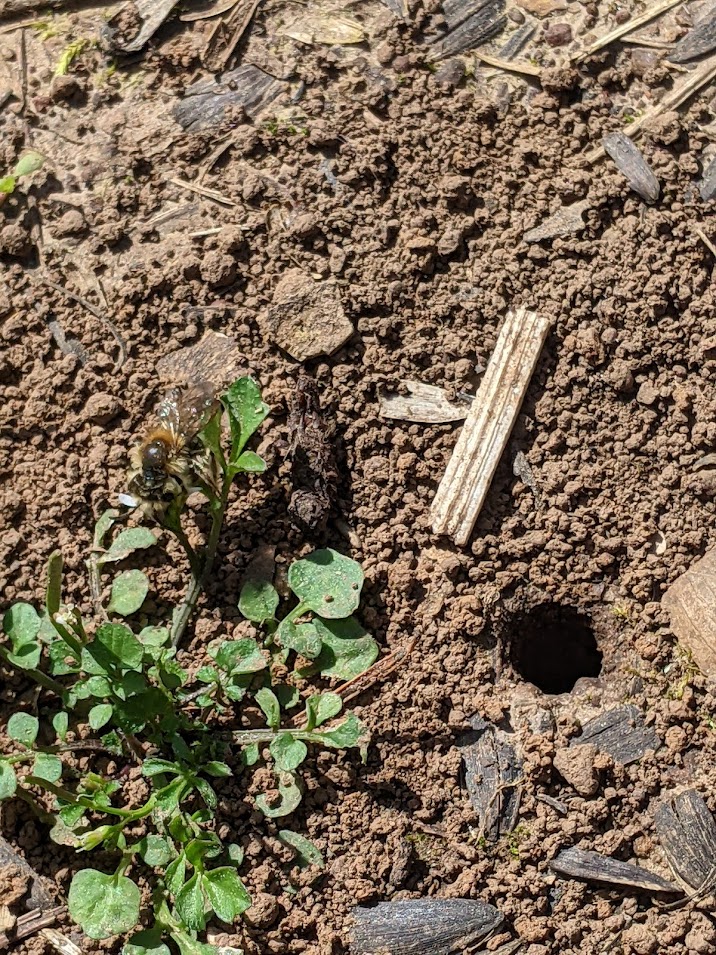
Native bees are starting to come out of their hives: a field of mining bees in the neighbor’s yard was buzzing with happy bees in the sunshine and our paper wasps have returned for another year of building nests and pollinating flowers. We have even spotted a few tiny butterflies, too small and too quick to identify. I was attacked by thrips one afternoon (apparently, they like beer and human flesh). Hm. Will need to watch for plant damage from those pests!

The turkey vultures have returned. I love the turkey vultures. The bald eagles are sitting on a nest in the nearby wild park, but we see them soaring on thermals on nicer days. The crows are rebuilding a nest across the street. And three pairs of small songbirds have scoped out the little birdhouse under the grape arbor!

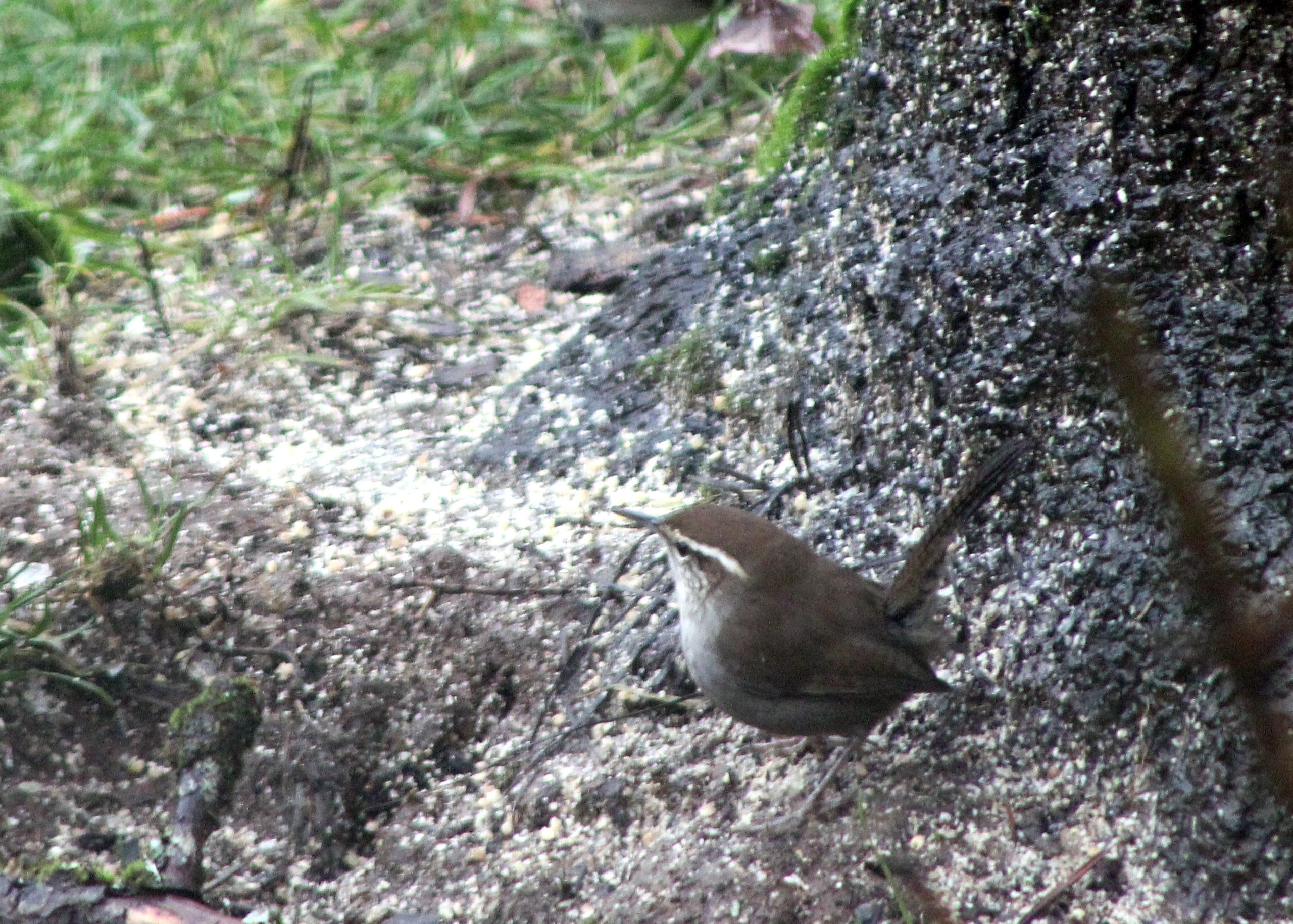
We’ve seen white-breasted nuthatches look at it, and yesterday the chestnut-backed chickadees tried to claim it (the black-capped chickadees raised a brood in it a few years ago – photo on the right is from then). But the Bewick’s wrens (photo on the left) have first dibs this year! When the chickadees used it, they didn’t bother with a nest or any filler: those little eggs and hatchlings grew up on the hard wood floor. But Bewicks have carried grass, stems of last year’s goldenrod, and feathers into the little house until the lip of the nest is even with the little hole on the side.

I don’t think the birdhouse is actually meant for birds, just for backyard decoration. There’s no hinge to lift for easy cleaning in the fall, for one thing. We’ll have to completely dismantle it this fall in order to clean out the nest debris. But we love that it gets used and now I think I need to find a couple more similar sized bird houses for the nuthatches and chickadees!

Finally, we have a huge plant sale coming up the end of this week, and this one really IS a plant sale: “Garden Palooza” out at Bauman’s Farm. We go every year and every year we find unique plants to add to the garden as well as the few annuals I like to grow (petunias and nasturtiums). They aren’t very strong on native plants, but I would like to find some creeping phlox and some “walkable” ground covers to grow between pavers. I have some more room for sempervivums in my rock garden as well.

Last, because it was nice out, I glued to decorative bowl back onto the porcelain pedestal for a pretty bird bath. The crows found it as soon as it filled with water and they immediately picked up peanut-laced dog poop to wash in it. As I have no hoses out yet, the water remains gross and smelly.

I love crows…Until I don’t.

Read Full Post »

Garden Buddy

I am deviating from writing about gardening today. I have a post that will come up Saturday or Sunday (depending on how the Native Plant Sale goes) but I want/need to write about my Garden Buddy.

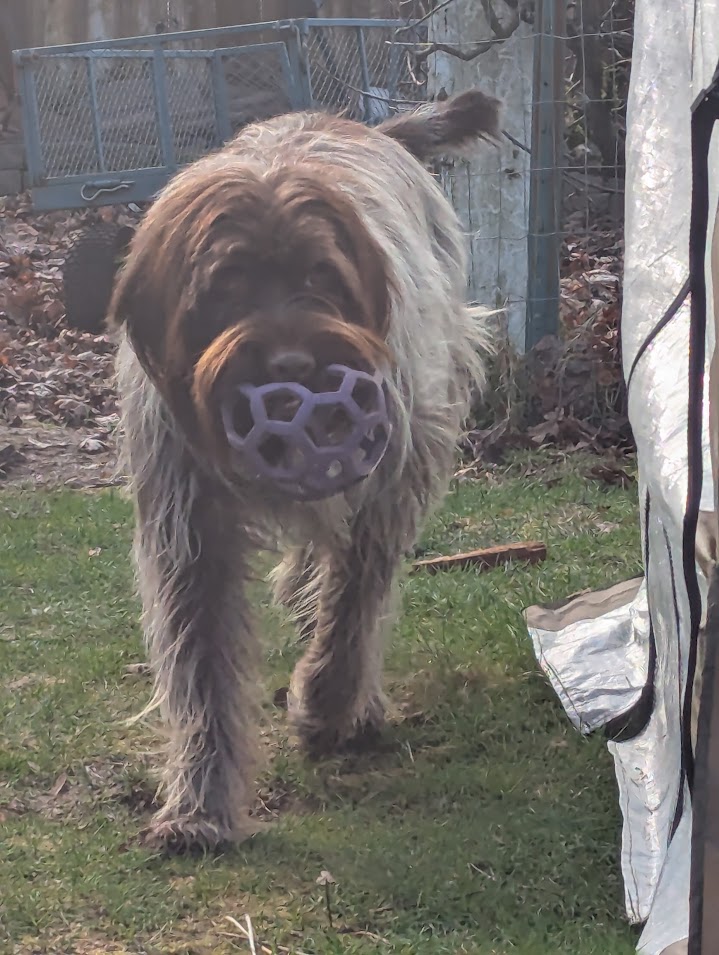
A Wirehaired Pointing Griffon.

The dog. The dog loves to help garden. When I dig up sod, he picks up the pieces and shakes the dirt out of them (everywhere – I’ll be picking up pieces of sod and dirt after he’s finished). He steals weeds out of the weed bucket. He walks in front of me and places his nose in whatever hole I am digging. Or he drops his purple indestructible ball in front of me and wants me to throw it. He also walks through all the little wire fences I put up to KEEP him from walking through tender plants.

Sometimes (a lot of the time, really), we play “Hot and Cold”. He can’t find whatever toy we’ve tossed for him and we tell him if he is “hot” (near) or “cold” (wandering away. He knows the difference and often zeroes in on what was right in front of his nose all the time. It’s funny.

We also play “Squirrel!” where we point to where a squirrel is on the fence or in the yard and Ruger looks the other direction. We have come to the conclusion that certain squirrels are paying him off to not chase them. And, sometimes, he lands right under the fence after them, chasing the length of the fence after them – often in the opposite direction of the squirrel. He’s an Idiot.

Or so we thought.

What he is, aside from being epileptic, is brilliant and blind. And we did not know he was blind until his neurologist came into the exam room and looked at both of us and asked, “You do know he’s blind, don’t you?”

Jaws dropped. Denial set in. Surely, she didn’t know our Ruger, a dog who was on his second Vet visit of the day and who had wowed everyone he came into contact with, the dog who just had his Rabies vaccination completed and didn’t run into a door or any object in the first vet’s office. Surely, she hadn’t just watched him leave our side to go with the Vet Tech to her exam room, confident and pulling at his leash?

Then she asked how long did we think he had been blind? Did it coincide with his first epileptic fit in April of 2024? Had we noticed anything before then?

And were we willing to shell out another $5,000 for a doggie MRI to see if he had a tumor in his brain or not.

They did more tests. The inside of his eyes are “normal” according to the doggie ophthalmologist onsite. The blindness seems to stem from his brain, confirming (to the neurologist) that he probably has a brain tumor. We really should just borrow the money from Care Credit and pay for the MRI.

So we asked questions: if he has a tumor as proven by this Very Expensive procedure, what would be the prognosis and treatment? Quality of life? If we refuse that test, what is his prognosis?

Honestly? They’re the same. Steroids (prednisone) and more pills and lethargy for a very active doggo. We’d just be out the five grand and however much money it costs to keep pumping him with drugs to feed out need to have a companion and beloved dog. And we’d be making huge credit card payments on top of our HELOC and Mortgage, all with our Social Security income and static pension. And the bigger question:

Would Ruger even know if we denied him the MRI (a test that would stress him further)? Does he even know he is blind, or does he think that this is just the way things are? He navigates just fine, he jumps on the bed and off the deck (and occasionally falls off the deck), and we have already banned him from coming up to the second floor because he has a tendency to go too quickly back down the stairs, losing his footing, sliding into the wall of the small landing and crashing into the pantry at the foot. Which has a mirror.

This is so much to absorb and come to terms with. I have already decided that the first person to Troll us for deciding against the MRI can pay for the MRI (not a loan, but a gift of $5000). I expect there will be those people who think we should “spare no expense” for our fur baby, but – Hell – we’ve buried a human child which is a pain unlike the loss of a beloved fur baby (and I don’t mean to dismiss that pain – I still cry for a cat I lost 30 years ago).

The gist of this tale is this: blind animals don’t know they are blind. They navigate by senses so much more attuned to the world around us that they can hide their blindness for years. Ruger has no idea he is “handicapped” by a lack of the ability to blink when a flashlight is shined into his retina. We had no idea we were dealing with a dog that plays “Hot and Cold” because he can’t SEE the object he is hunting for. Or that the reason he looks the wrong way when we point is because HE DOESN’T KNOW WE ARE POINTING. He only knows there is a squirrel out there, somewhere, and it’s up to all his other sense to “find” it – even if it runs the opposite direction than he does (along the fence that he never seems to run into).

When I told the neurologist that I think he’s been blind a LOT longer than a year, she felt there was some hope that he doesn’t actually have a tumor. He’s on a regimen of prednisone to see if any of his sight can be recovered. He’s on a regimen of Phenobarbital to stop him from having epileptic seizures (which could also be a brain tumor, but we aren’t going there – not yet). He’s going to be dopey and stumbly for about a week, but then he should just be his normal adjusted-to-downers self.

He’s four years old. We got him a month before we buried our son. He’s been a therapy dog without knowing that is what he is. He’s beautiful and has these deep (unblinking) brown eyes that stare into your soul (probably his nose smelling your soul, but – hey!). And he still likes to help garden.

And – PS – if you don’t like our decision to not pay for what we cannot afford, I take PayPal or Venmo. 🙂

Read Full Post »

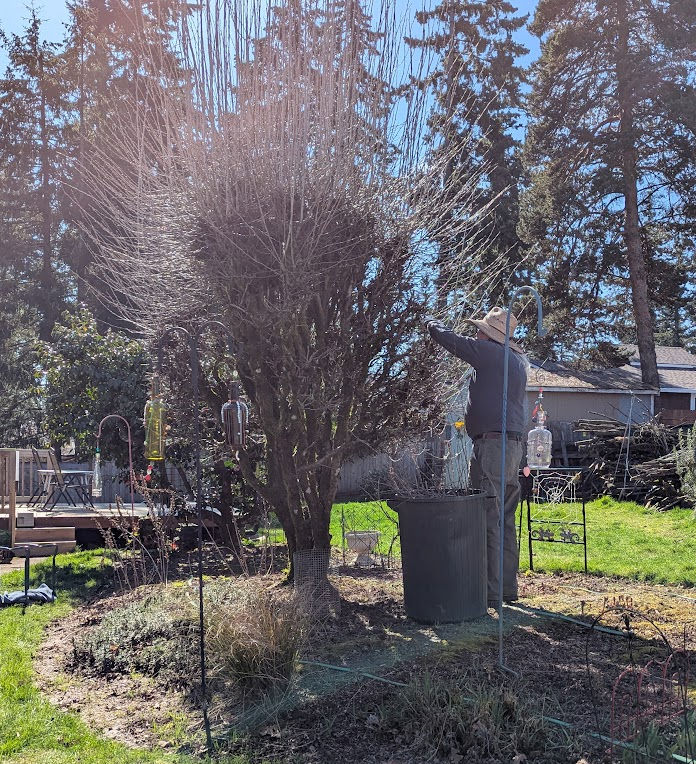
The weather cooperated in time for the annual pruning of the apple trees and the Hawthorne. I forgot to take “before” pictures of the apple trees, but, hey, “after” pictures work.

We purchased espalier apples in 2003 to use as a “fence” around the vegetable garden site. There are six varieties on each tree, some do better than others, and we always have more apples than we can use. I think of investing in a cider press off and on: we could make a lot of vinegar, juice, and cider!

Certain varieties do better than others: the dominant apple (the base to the espalier) does best (yellow trasparent). But we still get a decent crop of Granny Smith and Red Delicious off these trees, and – maybe – someday we will figure out why the other three varieties struggle.  The fence around the apple trees is twofold: the dog can climb under the apple trees and get into the garden and the dog likes to pick apples off the tree (ripe or not ripe). Apples are not good for the dog (apple pips are poisonous). He still manages to get apples off the trees, which he then plays with as a cat would play with a mouse, until we take the apple from him and toss it into the yard debris bin.

Pruning takes place before the leaves unfurl and the blossoms swell. Then we hope there won’t be a late hard frost. It is all you can do.

The Hawthorne is a little more involved. Apples don’t have thorns. The apple trees are not over five feet tall.  That darn Hawthorne…

We didn’t buy the Hawthorne. We dug it out of the horse pasture when we gave my horses away (to a good home) and moved into town. It was all of three feet tall and had been run over by a Caterpillar multiple times and browsed by deer almost as often. It is a Native tree. And it absolutely loves its new location.

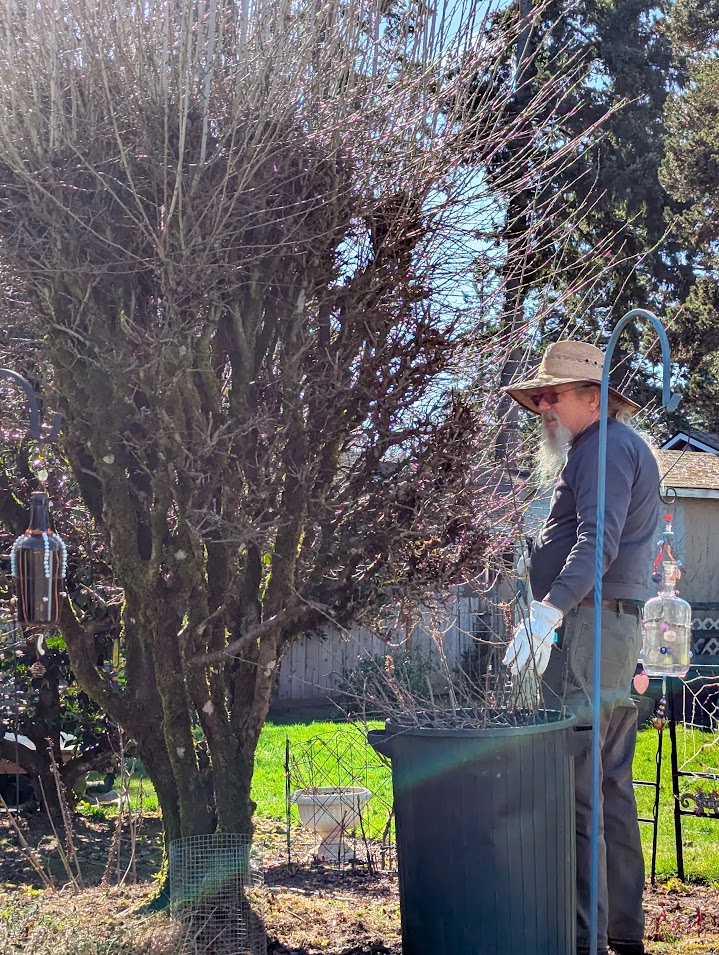
20 years after moving it, it stands over 10’ tall. It hosts birds and insects. We don’t allow it to blossom but if we did, it would host pollinators and produce berries (seeds). Pruning it is a several-day production that includes ladders, avoiding stepping on my peonies, and picking up anything the dog might later step on and puncture his footpad.

The dog has enough problems without thorns between his toes. And when I weed under the tree later in the season, I have enough trouble without a sharp one-inch thorn piercing my gloves.

Also, I don’t do any of this work. I take pictures and sometimes pick up the stray thorny branches my husband misses. My husband is proprietary about the apple trees and I wouldn’t touch pruning that Hawthorne with a ten-foot pruning hook. Nope, nope, nope. Not I.

What ensues is a bit of a photo documentary of the pruning on one native Hawthorne tree in our back yard, including some dangerously slanted ladders on the mound of earth where we decided to put said Hawthorne.

Read Full Post »

 How I love thee, False Spring! I love the sunshine! The warm air! The wee buds poking up out of the ground!

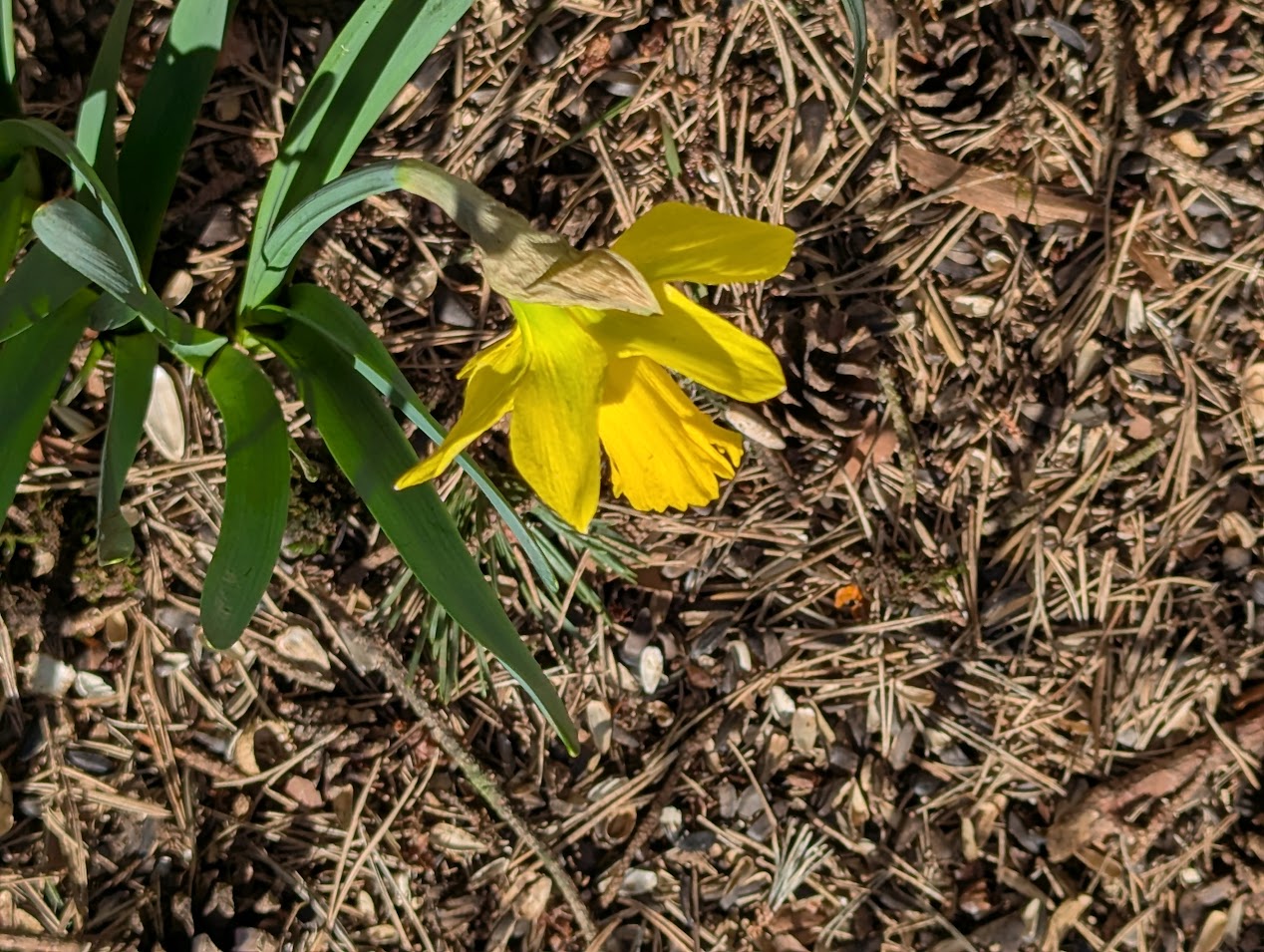
Daffodils! (Except the parts the slugs came and nibbled on!)

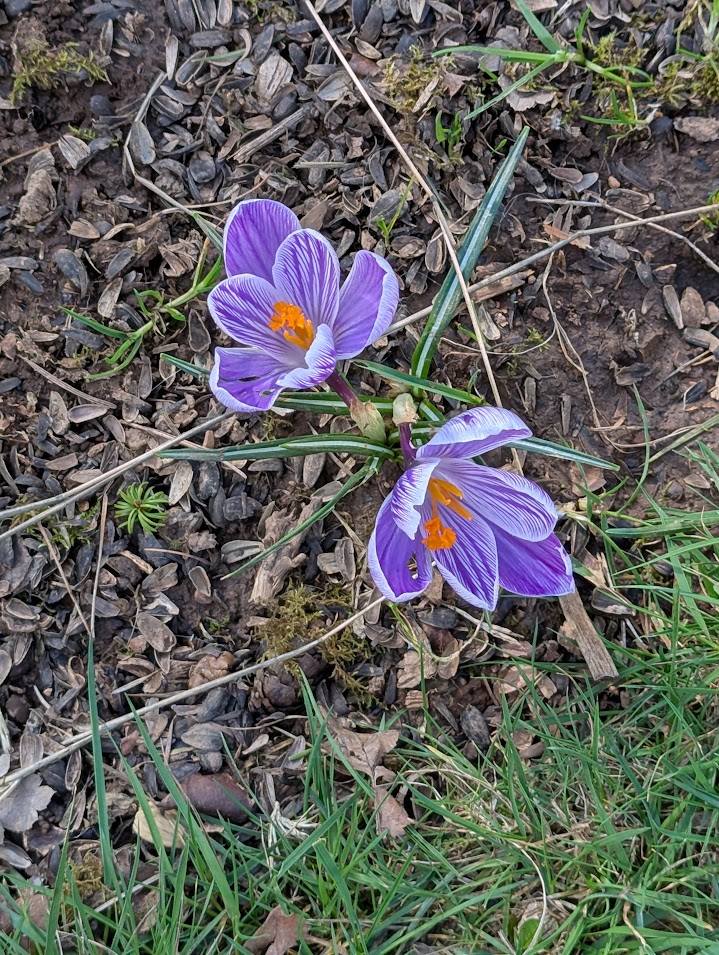
Crocus! (Until the dang squirrel makes off with the flower and eats it all!)

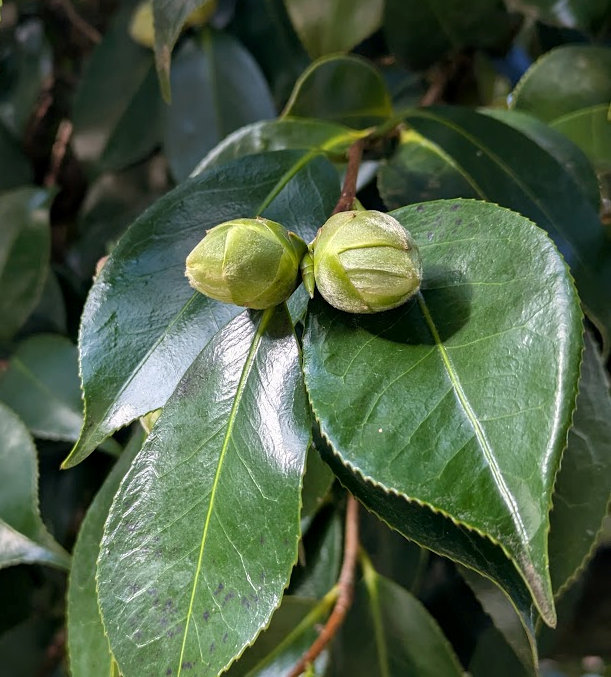
The Camellia! (What buds have escaped both the dog and the squirrel! What the dog tastes in Camellia buds is beyond me but it isn’t harmful to him – surprise! – and he only picks off the blossoms on the lowest branches. Squirrels tend to the upper blossoms where I cannot see, so that leaves the bulk of the bush to me! Me, me, me!)

The Lenten Rose (Hellebore)! (Mine needs some fungicide, I think. The leaves look rather sad.)

The grape hyacinth!

No. Just NO.

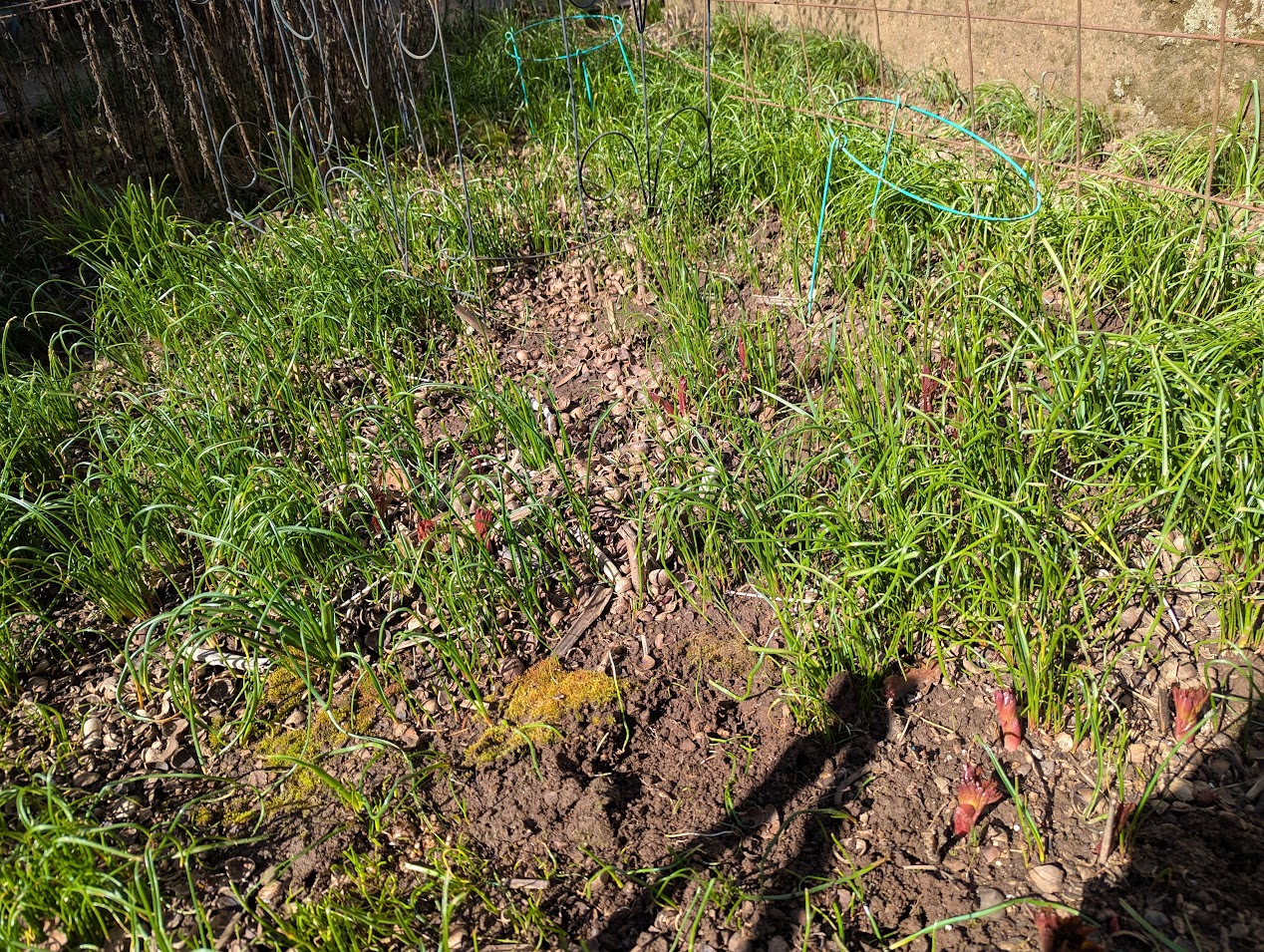
Look at them there in my flower bed, crowding out the peonies. All those clumps of impenetrable hyacinth bulbs! I think the last time I purged them was about five years ago. And today they came out in the handfuls, all those little bulbs crowded together just under the surface, clinging to each other like seeds in a pomegranate.

Kill! Pull! Purge!

Except they don’t all come out and there are some with tiny promises of fragrant grape-colored clusters of bell-shaped flowers. I left those.

And I know I will do this again in about five years.

Because grape hyacinths. They merely regroup.

This particular flower bed is my most successful. It is low maintenance, except for the every-five-years purge of invasive and stubborn grape hyacinths.

This garden bed blooms from early spring  starting with the hyacinth, which I promise, will still raise up tiny spikes of purple flowers rimmed with a delicate white border. Not as fragrant as the larger hyacinths that come in a variety of pink, purple, and blue shades, but pretty enough to place in a bud vase and prolific enough to be a nuisance.

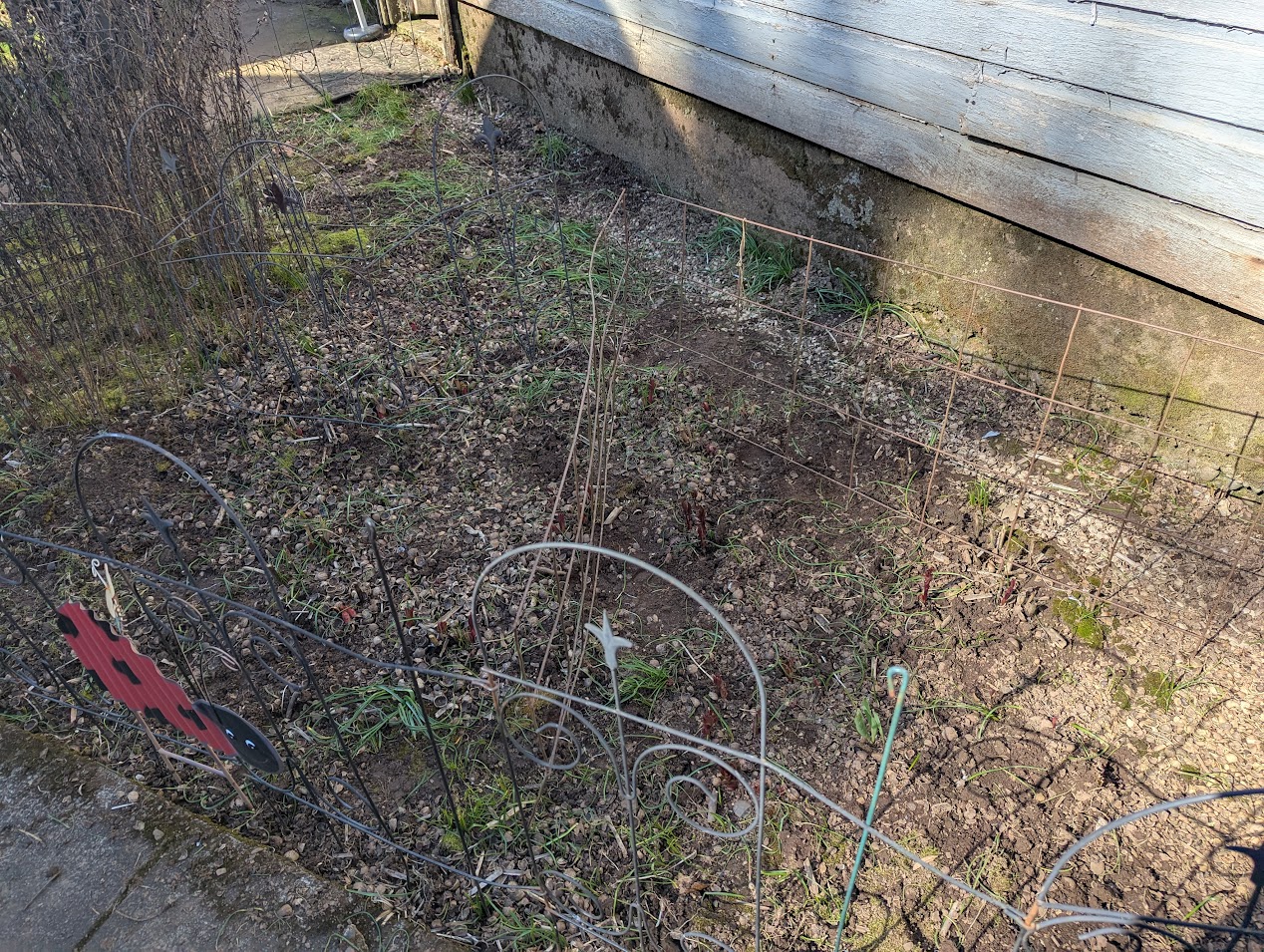
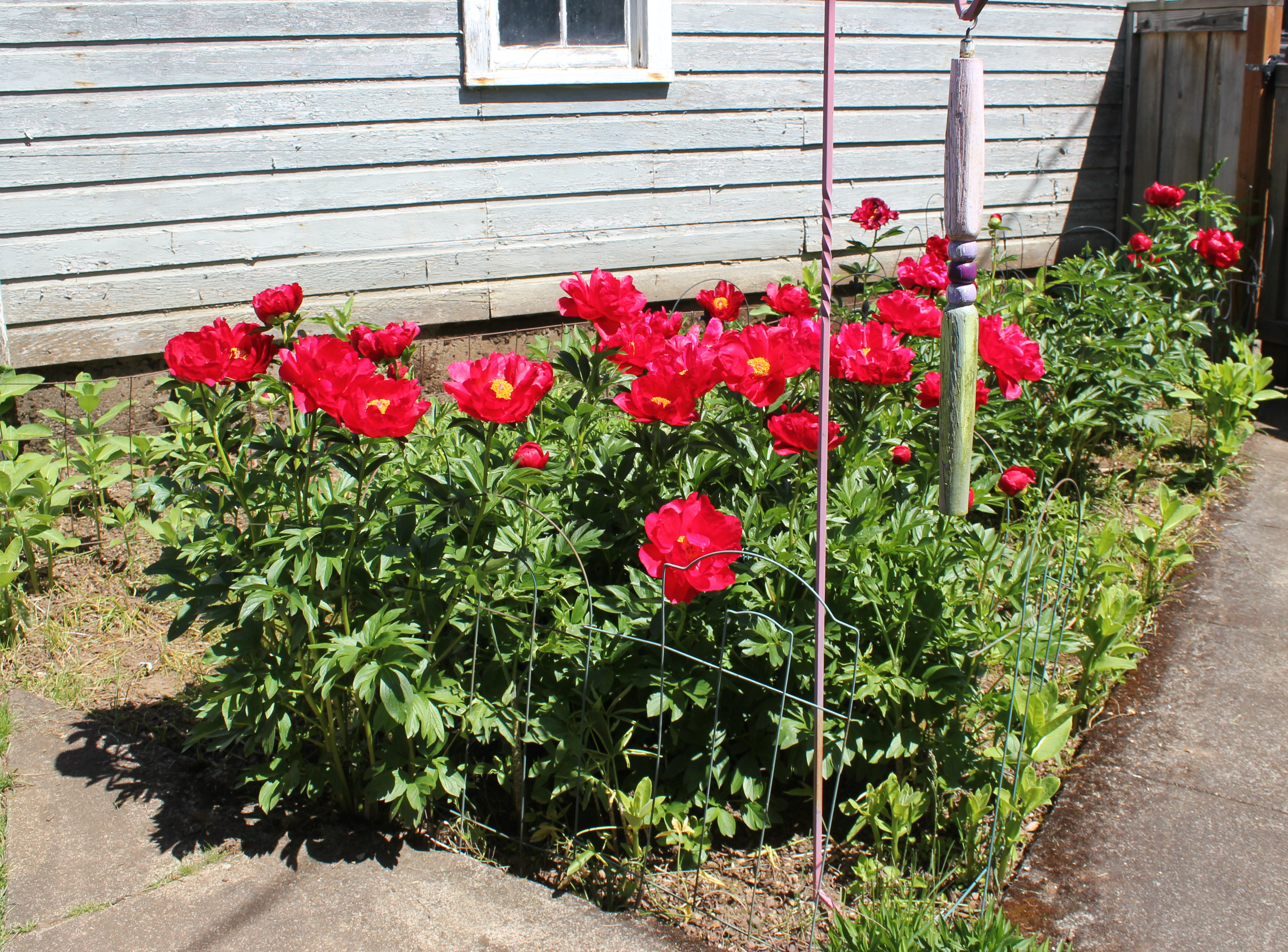
Then come the peonies. Blood red and scarlet. The peonies thrive despite the crowding of tiny bulbs. I throw them some light fertilizer early and a little copper fungicide to ward off brown spot, but otherwise, I ignore them. Well, I pick them and place them in pretty vases that I allow to sit outside overnight until all the ants fall off. Ants love peonies.

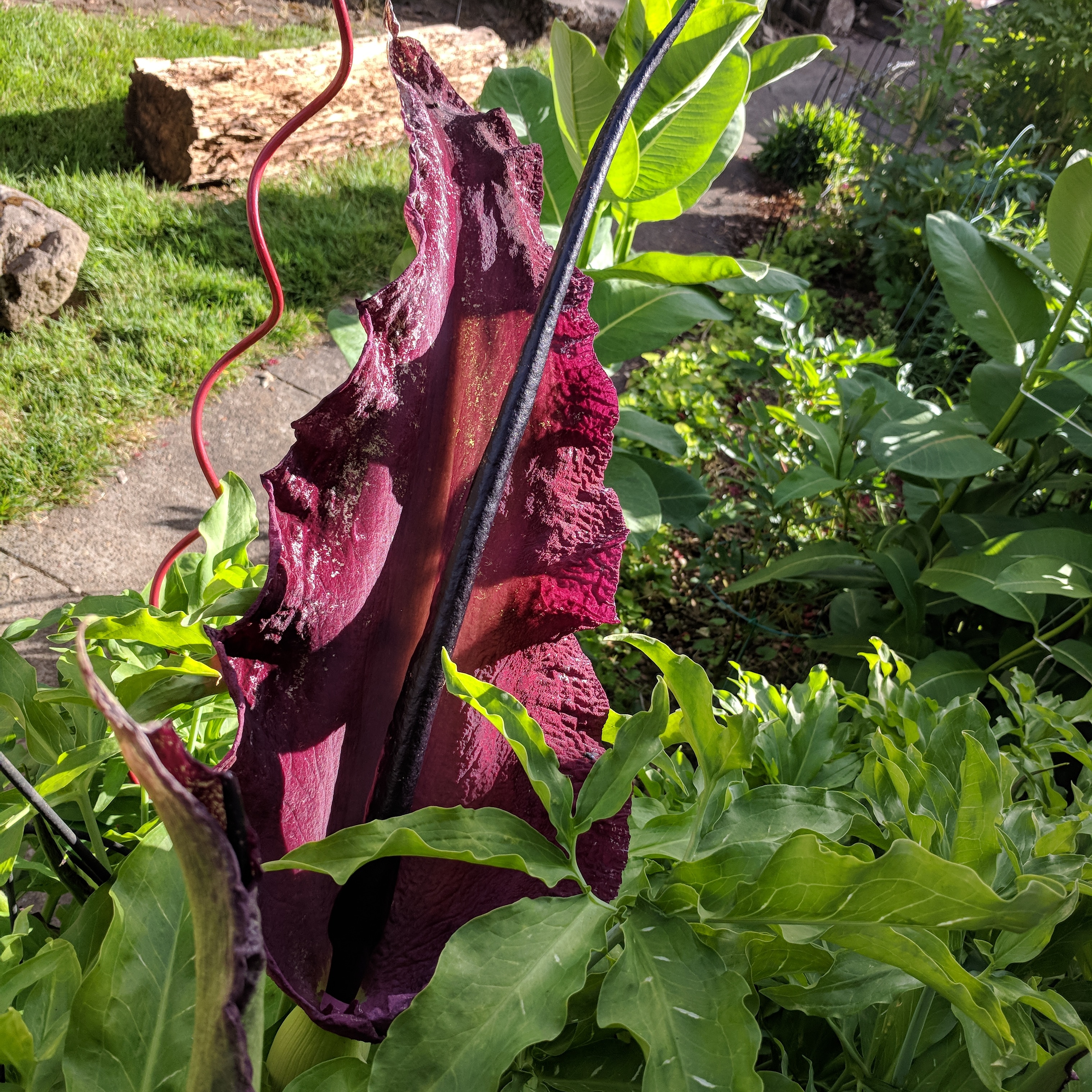
As the peonies fade, the Voodoo Lily comes on. Pungent, odiferous, and so dark a purple as to be almost black. We dug the parent plant up at a rental we lived in some 40 years ago. Didn’t think anyone would care if we took such an obnoxious smelling plant with us, and no doubt they haven’t missed it: surely we missed some of the bulbs.

It smells like rotten hamburger. It attracts beetles and flies (and not a few dogs). It repels neighbors and guests, but it also piques their interest: what is this mysterious plant? Dracunculus Vulgaris. Voodoo Lily. The harbinger of our wedding anniversary (it blooms the first week of June).

And when the lily fades and dies back, the milkweed springs upward. And upward. It blooms with a strong aroma, something far less offensive than the former: milkweed is aromatic and sweet, enticing and hypnotizing. Here come the bees, wasps, flies, butterflies, and beetles. Pink and white clusters of hundreds of flowers. And with it, our hope of seeing a magnificent orange-and-black Monarch butterfly or the yellow-green-and black striped Monarch caterpillar (that feeds exclusively on milkweed).

If you plant it they will come. We hope.

The milkweed, in turn, goes to seed and begins to fade, the seed pods hardening. Summer is at an end. And with a burst of color, the asters open up: tall magenta ones and shorter light purple ones. The bees and wasps that filtered off to other flowers when the milkweed faded are back in force. It is one last feast of nectar, of pollen, of summery intoxication.

Then it all fades away and the grape hyacinth begins to poke its persistent leaves upward, greening the winter brown ground.

**note: the only photo that is not mine is that of the grape hyacinth. Credit goes to NickyPe and Pixabay.

Read Full Post »

I purchased an electric small rototiller.

Inexpensive and probably not highly rated, but perfect for all I want it to do, which isn’t much more than knock down the sod so I can plant more things.

But I had a heck of a time putting it together until I handed it to my husband and he had it assembled in 15 minutes. i hate men.

I tested it on a muddy section of yard (it is far too muddy to be doing anything right now, but this was just a test patch).

That’s what I want to achieve. So – I have the small rototiller I want and it works like I want and I should be able to post more about how I have opened up areas to more garden space. It does bounce around and work my back, but not like the old way of doing things with the manual edger. Yay.

ANNNND I ordered three roses from Jackson-Perkins. Their roses run from $35 – $44 but the day I decided to order two more roses, they had a special going for “3 roses for $75”. OY. Can’t pass that up! I have two yellow and one white English Tea roses coming.

  1. Oregold – a tried and true fragrant yellow rose
  2. Soft Whisper
  3. St. Patrick

Last year, for whatever reason, they sent me my rose in February and it was too cold to plant. I’ve never had this issue with J&P before. It was strange and the rose died, but I’m giving them a second chance since they have always been reliable over the last 40 years I have ordered from them. I will post when they come in and I plant them, but I am pleasantly surprised that they have not shipped them too early. I think last year was a fluke.

Read Full Post »

Time to Prune  

I always prune my roses back on Lincoln’s birthday (or as close to that date as I can get). I grow English hybrid tea roses for the most part and they need to be cut back before their Spring growth.

As an aside, I was once attacked on a birding site because I do not like “introduced” and “invasive” bird species. I stand my ground: wherever you live, invasive species of plants or animals are a problem. And, yes, I already know white people are an invasive species. Spare me the guilt: I did not choose my ancestors; I did not make their choices. But I am here, and I am doing my best to not make the mistakes of past generations. Besides, I am the product of conquests and colonialism: my ancestry reaches deep into the unrest in the Baltic regions and England, Ireland, and Scotland. I do know my ancestors did not promote slavery (but some of them were racist) and they did not participate in the Indian Wars or Manifest Destiny (although I am certain some of them were sympathizers)

This person tried to “guilt” me by declaring, “I bet you grow roses.” Well, yes, I do. There are native roses to the Americas, although I do not have them in my garden. The roses most of us grow are from England or France (the “Old World” as it were) and are anything BUT invasive. They require a lot of work just to keep the one growing and disease-free. They don’t produce seeds or spread by runners or rhizomes or bulbs. They only provide aroma and beauty at the cost of a lot of labor (I need to stress the labor part). Roses are bit of a bright spot.

The time to prune them back is traditionally Lincoln’s Birthday, or the 12th of February (for those younger folk who don’t know the birthdays of the original two presidents who were honored before the date – President’s Day – became all-inclusive). The other birthday was that of George Washington who declined to become king: February 22nd. Now we celebrate all presidents, including Rutherford B. Hayes, Grover A. Cleveland, and even Richard M. Nixon. I suppose they all whined they weren’t given an award for participation at some moment in time and we caved. Not all presidencies are worthy of honor. But that’s getting political and I came here to talk about roses.

I have three at the moment. I had four, but I did a thing last year: I dug up one rose and gave it away to plant another rose which immediately died. I have veteran’s Honor and Rio Samba, both English Tea Roses, and a floribunda called Tuscan Sun. I am not a fan of floribundas, but this one has large, scented blooms and gets to stay. I want to order tow more roses this Spring: a yellow rose and perhaps a white rose.  But that is aside the point. I have the three to deal with right now.

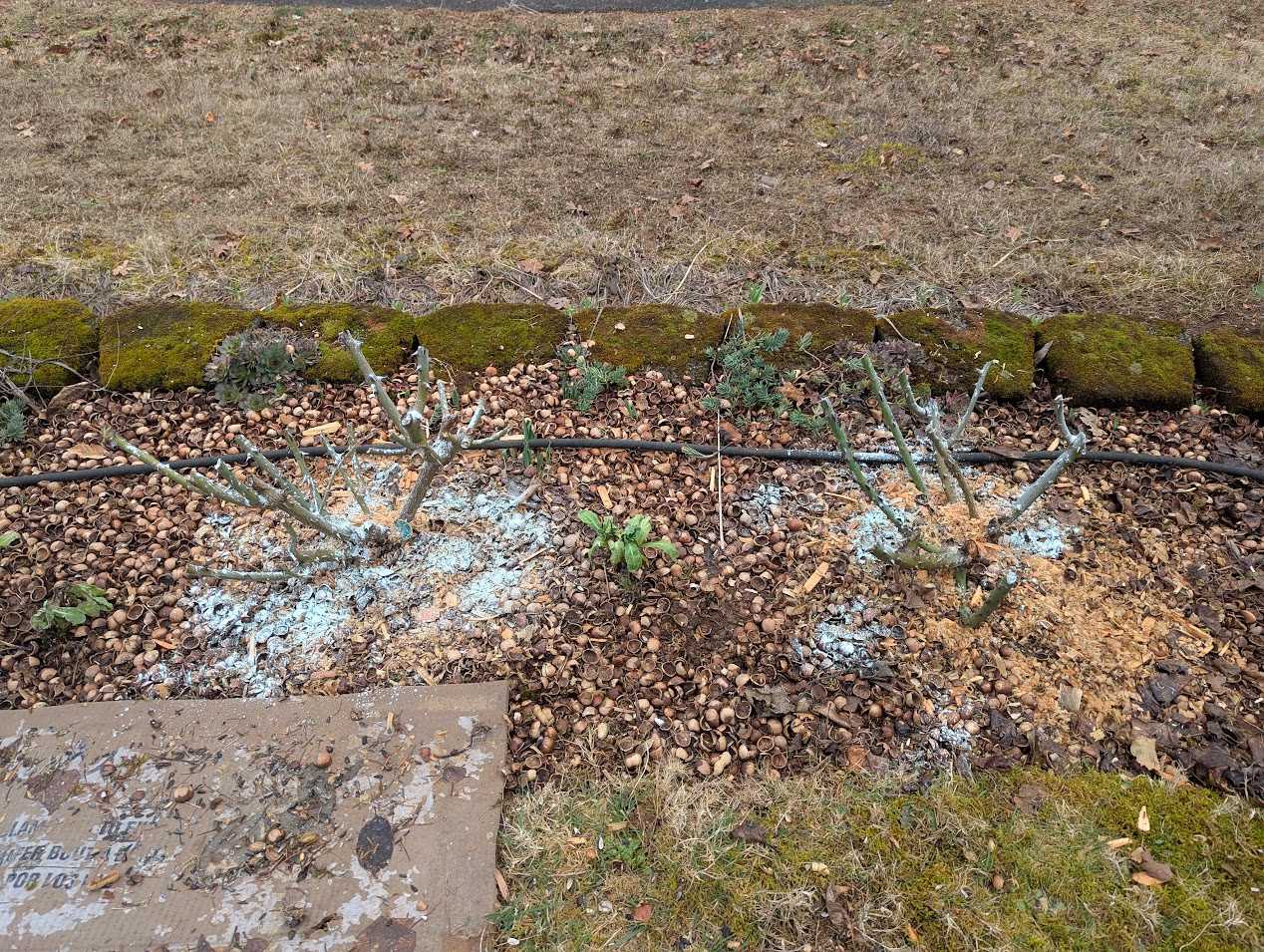
I pruned them back to roughly 8 – 12” (20-30.5CM). Then I sprinkled them with copper fungicide.

My yard promotes the growth of fungus. My peonies and roses are the most susceptible: black or brown spot affects them. I’m at war with something I cannot see.  I have read the pros and cons of using copper fungicide (not good for insects). I know the devastating effects of the two fungi. Since it seems to attack those two plants specifically, I made the decision to apply it to those plants only. Both are cultivars from other parts of the world (there are native peonies to the Americas, but the Western peony does not like our maritime climate in the Willamette Valley – I have tried). Neither are essential to native pollinators. Peonies are resistant to most pests, and roses are subject to aphids and fungus. I think I am safe applying it to just those plants and crossing my fingers to not hurt the native pollinators.

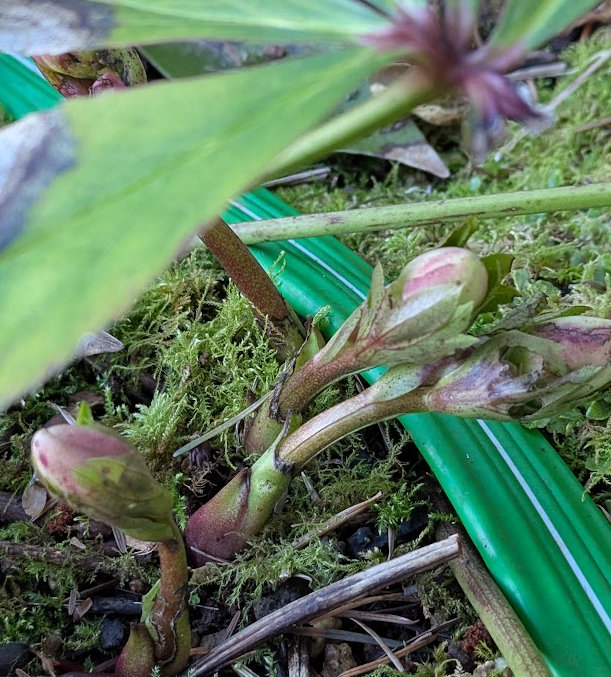
I inherited the peonies: I did not plant them. They came with the property, and I counted over 100 plants last year. I have no idea what cultivars they are as the tags were lost to history after the original owner passed and the property went to the people who flipped it, and then to us. I love peonies. They were one of the deciding factors in purchasing this property. They don’t require a lot of care.

I planted the roses. I accept the amount of work it requires to have beautiful blooms. And who wouldn’t, once ensnared by the rose’s beauty?

It was 25° on Lincoln’s birthday and it was over 50° today. Time to prune. Only time will tell if the copper fungicide works against the black and brown spot fungus that lives in the soil. I have my fingers crossed.

(photos courtesy of Jackson Perkins, Edmund’s Roses, and rosesalesonline. )

Read Full Post »

February

We’re staring down winter this month. The killing frost finally arrived and more is to come. Tender plants will be moved into the greenhouse for the duration of 20°(F) nights: Don’s Bonsai trees, our newest tree peony, and the curry plant (which is not the same as the spice you buy in the store which is actually a blend of spices). It is time to earmark seed catalogs and set aside money to buy those precious seeds.

The worst winter weather usually hits us in February when we’re ready for a thaw and the daffodils are pushing upward whilst the buds on the Camellia, Rhododendrons, and Lenten roses are swelling. February can bring all kinds of weather surprises in the Pacific Northwest and big freezes with sudden thaws are some of them.

We moved to the Willamette Valley in 1983, then a Zone 7b (it is currently a Zone 8 although I overheard someone claim we are now a Zone 9 – I haven’t verified that). It is a maritime climate, not the dry and arid climate of my youth. We are surrounded by mountains: the low Coast range to the West and the towering Cascades to the east. Snow, when it happens, usually coats the “upper” elevations: anything over 500’ above sea level.

Cloudy season runs from October through early June, sometimes into July. With clouds, the rain comes. We get more rain than we get any other precipitation, and more ice than snow when the weather gets cold. I hate rain and ice. I really, really despise ice. Where snow is insulating, ice penetrates. Snow rarely lasts long enough here for me to begin to wish for sunnier days or for the February thaw to just get over. Rain just covers the sun and makes the days seem dark and lifeless.

I have perfected complaining about the weather like a true Pacific Northwesterner.

I’d rather be outside with my hands deep in the soil, stirring up the things that live in the dirt and getting my fingernails broken, chipped, and full of mud. Sitting out the dreary days of February are the worst: there’s the promise of March and starting seeds in little pots in the windows or in the greenhouse. March, with the first teasing blooms on crocus, daffodils, Lenten roses, and rhododendron.

February is the month for taxes. The month for tying up loose ends in my art studio before I begin another season of pop-up markets. The month of marking my calendar for the upcoming garden shows (and the annual rock and gem show). It is the month to find a semi-decent day midway through to prune back roses and tame the wild grape vine a little bit (I rather like having it grow wild).

I will order roses the first of March. Start seeds in pots: tender herbs and rare wildflowers. The seeds I have placed in the freezer will be taken out and planted in seed starter soil. And I will repot all of my houseplants, at least the ones that have survived my indoor brown thumb. I will set aside money for the plants we plan to purchase in April and May. In March, we begin to hope again.

For now, it is February, and I need to move my tender plants into the greenhouse before a week of below-freezing nighttime temperatures. Maybe we will get a few inches of insulating snow to play in. I hope we don’t get an ice storm. The “big” ice storm of February 2021 is not yet forgotten (we lost one rhododendron and went without power for eight days). But it is February, and if ice comes, so does the big thaw of warm south winds.

Real cold comes with sunny skies, and sunny skies mean Vitamin D and a fire in the Breeo fire pit. I can’t complain about sunshine and a warm fire pit.

Read Full Post »

It froze this morning. It has been freezing for the past week or so. It has also been reaching into the upper forties and lower fifties (Fahrenheit). The fruit flies have not died off and some small mayflies have hatched already. The pine siskins have moved on, but the year-round resident birds have been hitting the feeders with regularity.

There is not much one can do in the garden right now: too early to prune, too early to plant, still winter. February is often the month we get our “big” storm of the season: snow, ice, melt, floods. January is a month of holding patterns, waiting.

While we wait for the first peeks of green (or red, in the case of peonies), the insect pollinators are snug in their cocoons and hiding places. They are insulated under layers of fallen leaves (assuming you adhere to “leave the leaves” – our neighbors don’t, but they allow my husband to collect the leaves they have gathered, and we use them as mulch to prevent spring weeds and help the pollinators). Our yard is “pollinator friendly”.

We recently learned what we are doing right to help pollinators and what more we can do. And right now, in the still of January as it tips into February, is the time to think about emerging insects. Bees, specifically, need our help. There are several hundred species of bees in the United States alone, a few hundred in the State of Oregon, and possibly two- to three- hundred in our town alone. Our yard is likely host to over 40 species of native bees. I know we have identified close to thirty different species, not including the non-native (and non-threatened) European honeybee.

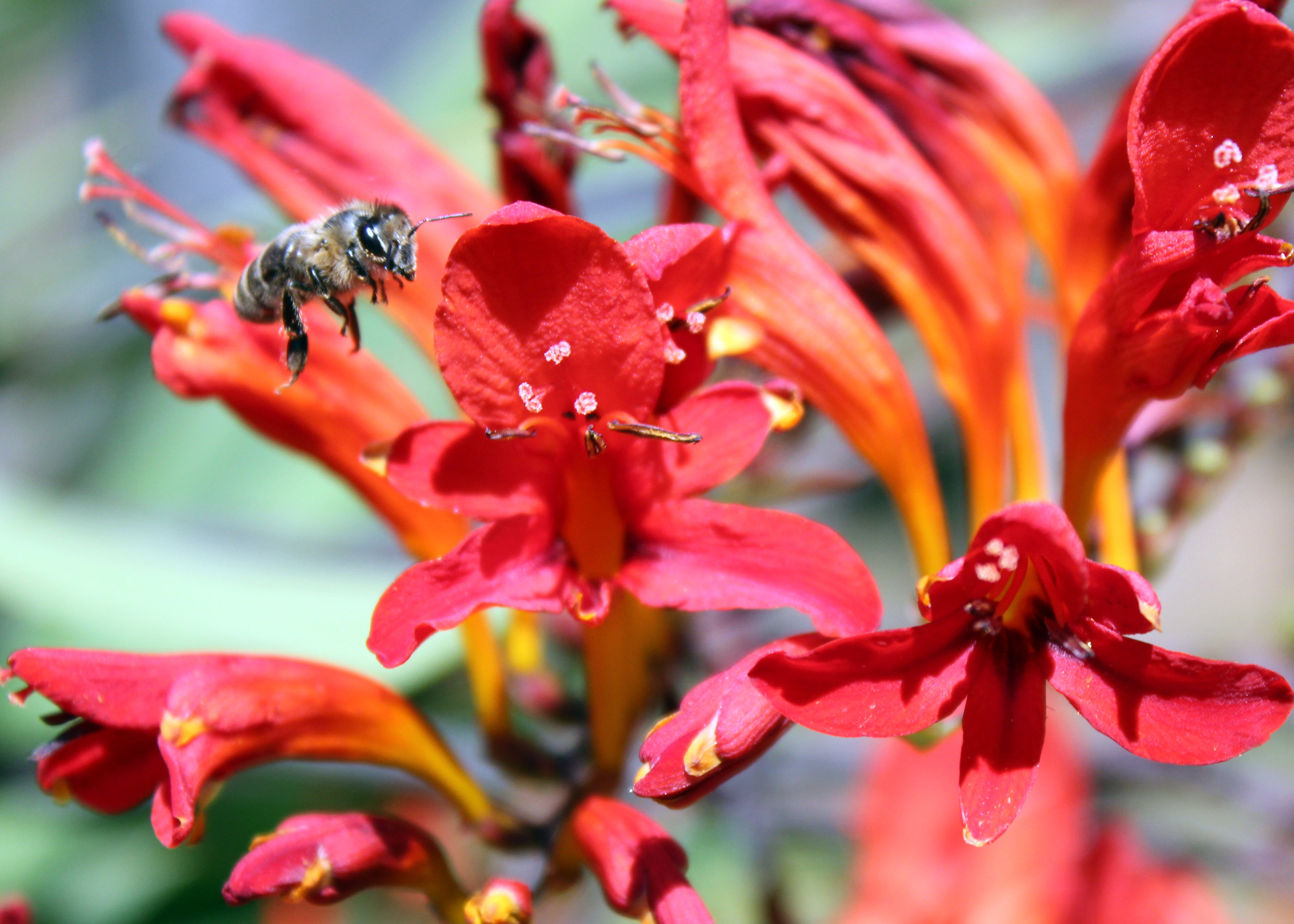
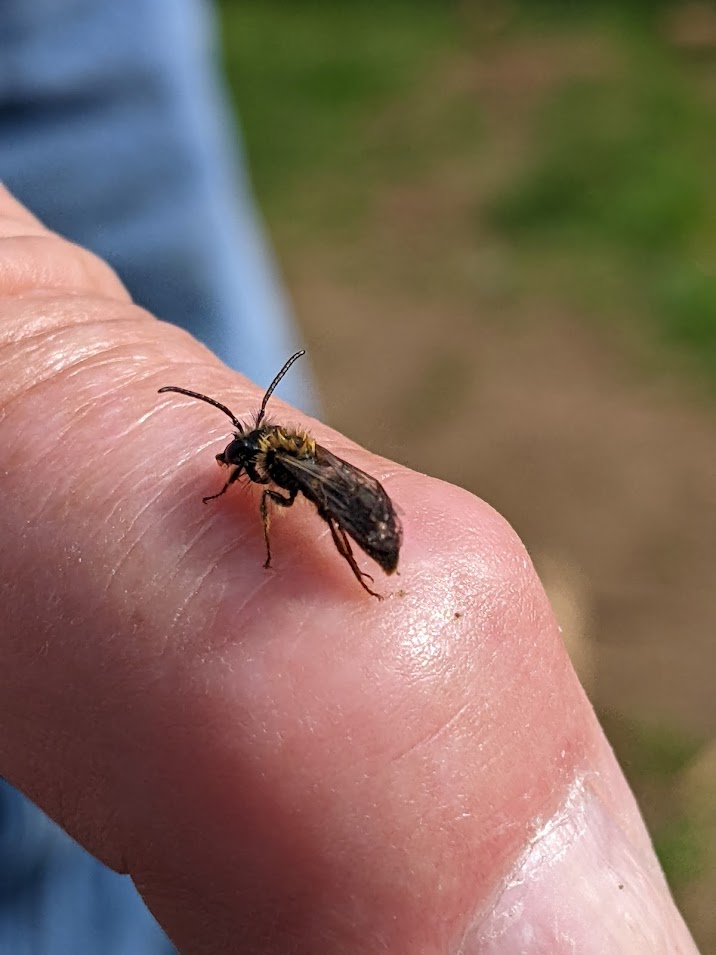
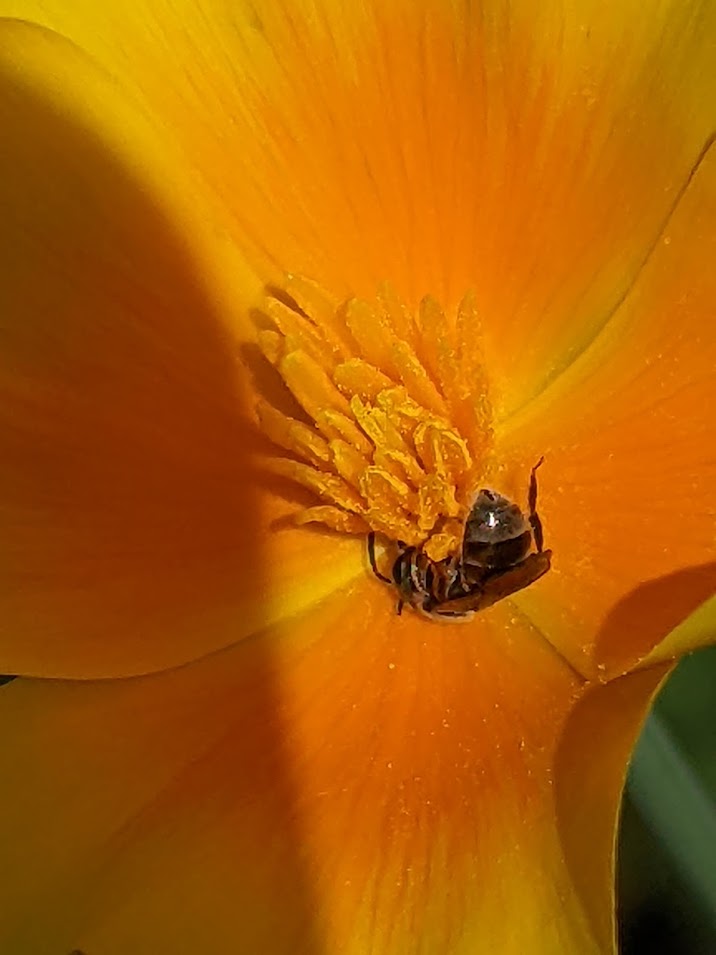
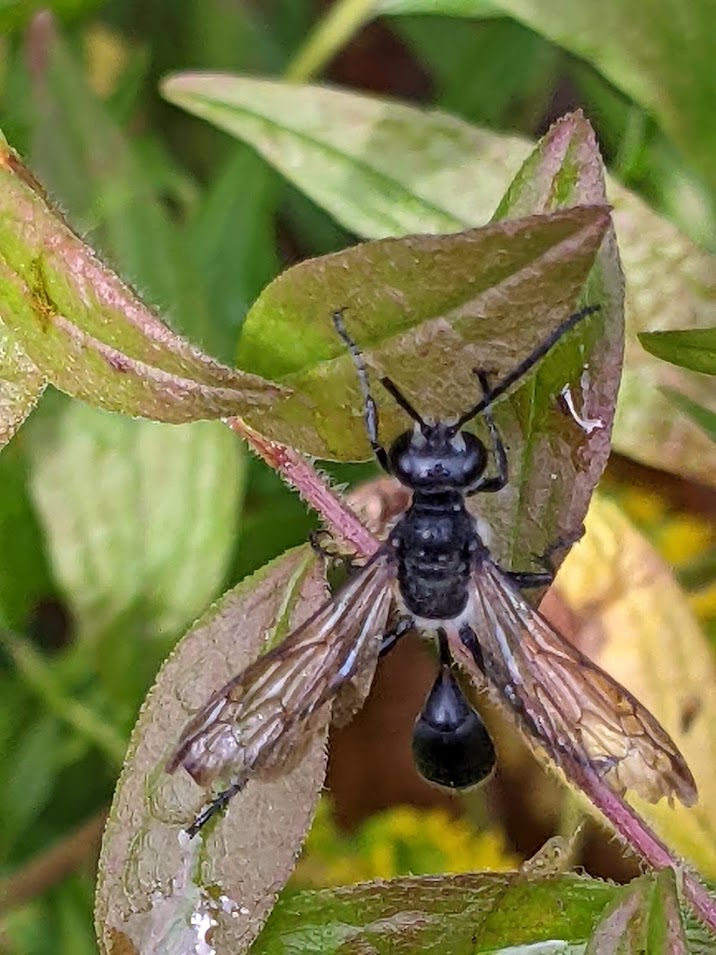
I wish I had photos of all the bees we have found on our little quarter of an acre. We have ground-dwelling bees, bees that love hollow stems, bees that are less than 3/8” of an inch (2CM) all the way up to the big, fat bumblebees that seek out our rhododendron blooms in the early Spring. The bumblebee is especially “of concern” ecologically. Some species of bumblebee are teetering on extinction, like the rusty-patched bumblebee. Bumbles pollinate more plants than honeybees and are native to our continent. (Honeybees are not native bees, are not threatened, and are a thriving industry. They are fine.)

We don’t begin to rake up the leaves and clear out the dead fall around the daylilies until the temperature has been hovering around 50° (F) for a week. This allows the bees, butterflies, moths, and beetles time to warm up, hatch out, stretch their lags and wings, and begin the summer-long process of pollinating flowers, vegetables, and fruits. Certainly, some of these are harmful insects (non-beneficial) but most of them are “good” guys: the beneficials. And beneficials are necessary for the ecosystem.

We learned recently that it helps to not “deadhead” all of the flower stalks, but to cut them down in lengths. Bees and other beneficials hibernate inside the plant stalks, slowly emerging as the air warms and the days get longer. I don’t deadhead a lot of the seed plants: evening primrose, mullein, asters, and goldenrod. The birds dine on the seeds throughout the winter. I never thought about insects.

That messy pile of tree limbs and branches we have yet to get rid of is not only home to our dog’s “beaver hut” (he has quite an excavation under the pile!) but is home to more insects trying to find a good place to overwinter. And here I was, thinking we’d have to finally cut the wood up and recycle it somehow!

That patchy mess we loosely refer to as a “lawn” out front encourages ground dwelling bees and gives us impetus to turn the yard into a meadow of native wildflowers, further encouraging native pollinators to stay and thrive. I am excited to add native plantings to the lawn with more flowers and less mowing! (I will probably have to paint a sign explaining to my neighbors why our yard isn’t as “pristine” as their golf-club perfect lawns or patches of sterile gravel.)

We already grow a lot of native plants, some purchased from nurseries, some collected from the wild, and some that birds introduced by pooping on our yard. The Xerxes Society provided me with a list of more natives, many of which I can purchase seeds for through local nurseries. Yee haw! I’m watching little $$ fly out the window, but it is SO worth it to create a habitat for miniscule creatures like bees.

I’m not going to go into how we depend on native pollinators and how their declining numbers impact our very own survival. You can find that information and more through The Xerxes Society. This non-profit is based here in the Pacific Northwest but reaches out across the continent. It is my favorite non-profit, close to my heart (BUGS!), and is highly rated as a non-profit. You may not think something so Lilliputian might impact our giant lives, but we depend on insects and invertebrates for so much. I’m not a rabid “tree hugger” but when it comes to insects… Well, I’m probably a rabid “bee hugger.”

(I also do not know all the bees, wasps, and hover flies I photographed and posted to this article. I apologize for the oversight, but all photos are mine.)

Read Full Post »

« Newer Posts - Older Posts »