Feeds:
Posts
Comments

Posts Tagged ‘garden’

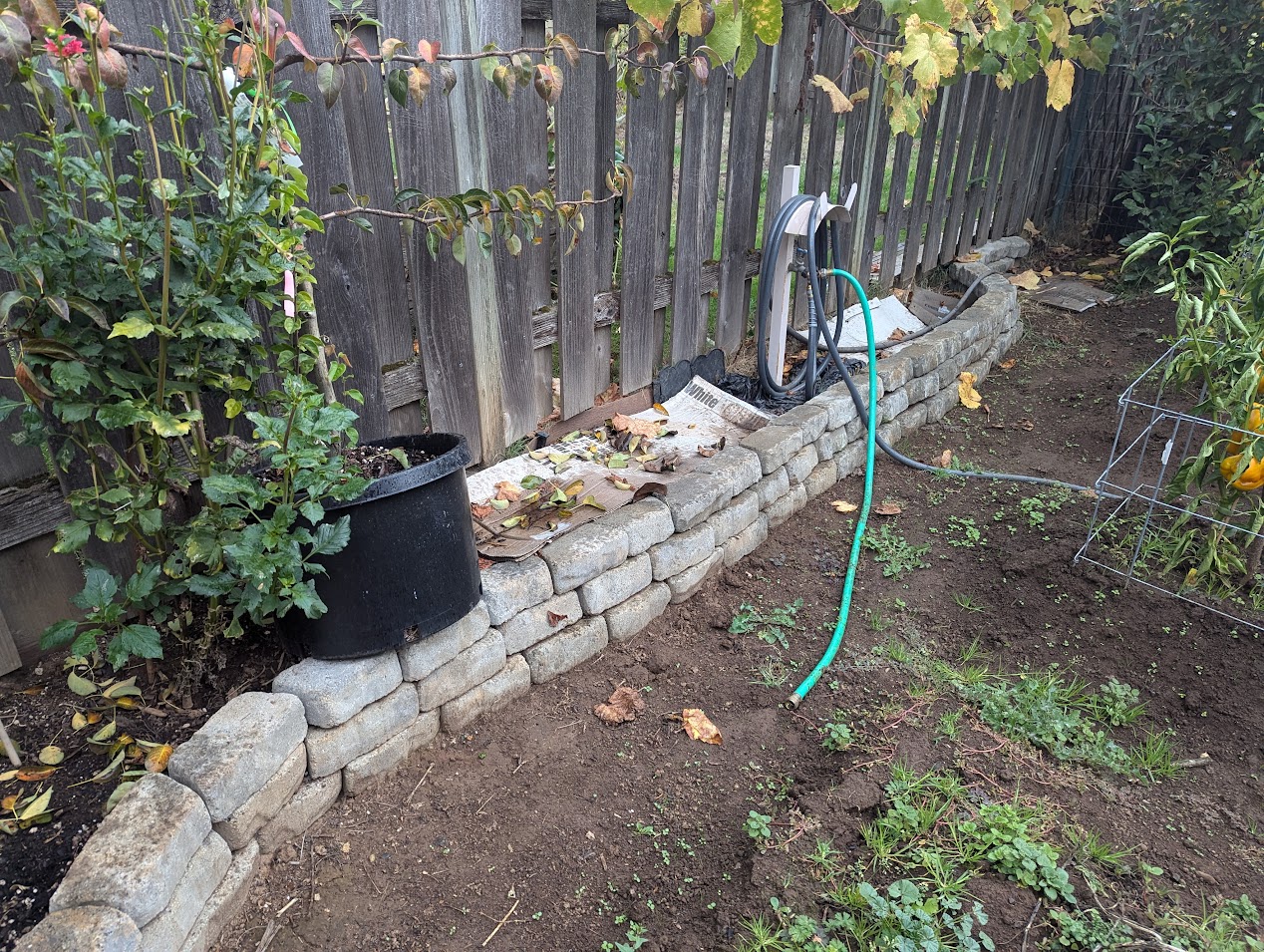
Here’s a garden hint for the do-it-yourself old-timey organic gardener: cardboard.

I have spent too many years with an edger and muscle power digging out sod for new flower beds (or just to preserve flower beds already invaded by grass). I would cut out little squares, then slice the edger underneath and lift up the square of sod. In the right conditions, you can shake out most of the soil caught up in the roots, but that doesn’t happen most of the time. What you have just lifted out of the ground is now something you can’t put into your personal compost (grass, roots, seeds of weeds are all a huge no-no in a small compost.) or into the public yard debris bin (if your community does yard debris pickup, even).

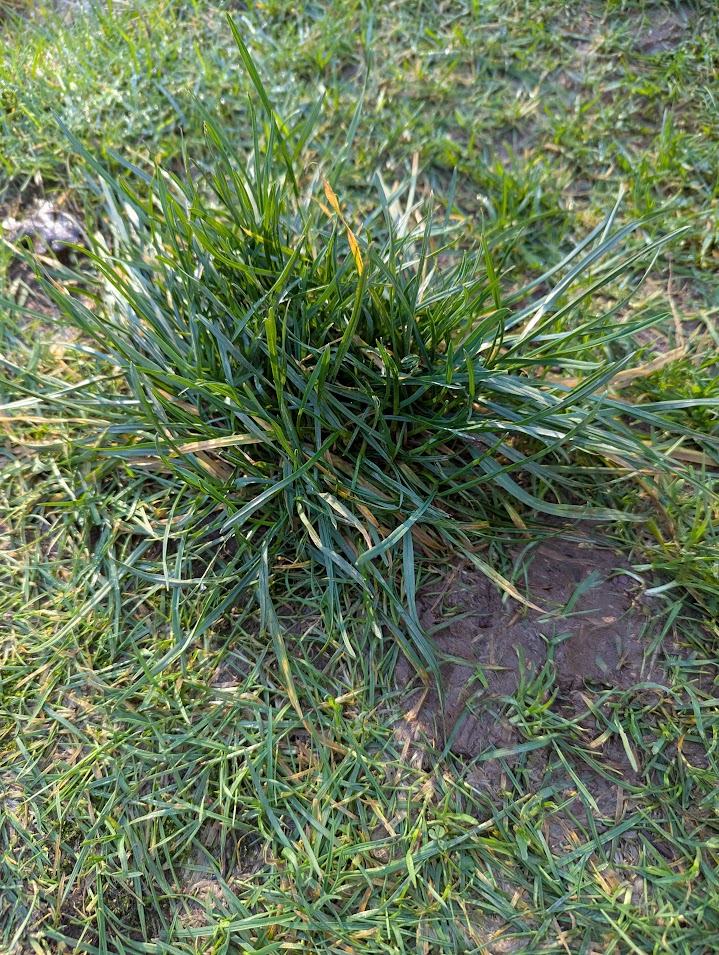
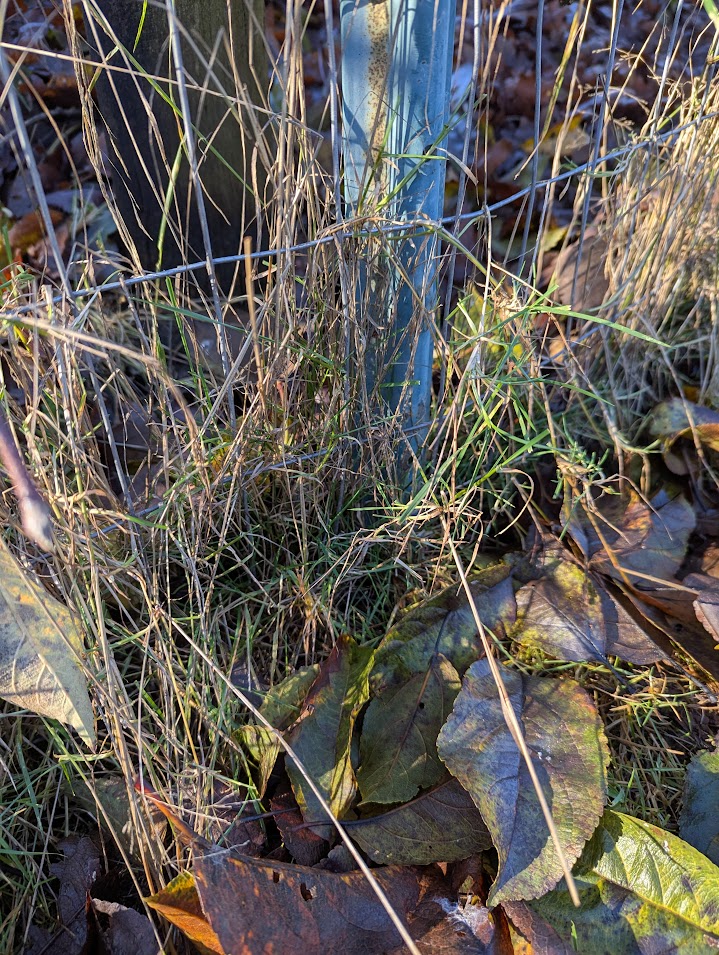
The “lawn” consists of at least six different types of grass in our yard. From what I can discern there’s two kinds of pasture grass (a fescue and one “Yorkshire Fog”), two bluegrass, one rye grass, and one native bent grass. Several of those spread by rhizomes and “root runners” – those are the worst!
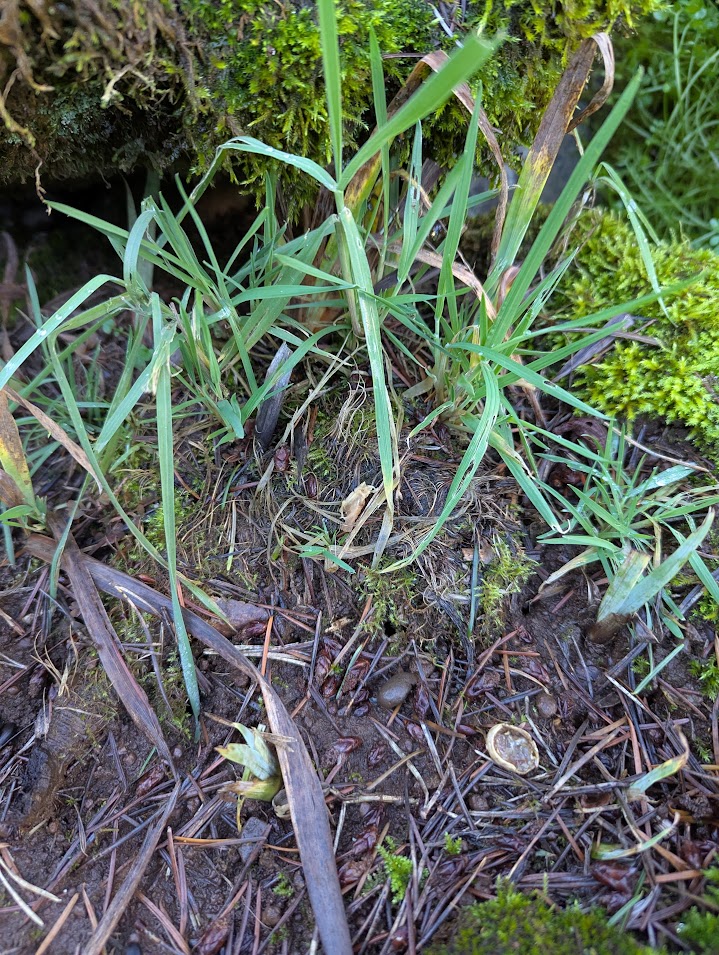
Your personal small compost pile probably does not get “hot” enough to kill the grass roots or weed seeds. They will break down (albeit VERY slowly) into something resembling soil, but when you use it, the grass and weed seeds will gaily sprout upward and you have more weeding to do.

Where we live, we have a yard debris service that is “free” (included in your monthly garbage bill, extra for extra bins which we always need). This yard debris is hauled to a commercial composter where the compost gets hot enough to destroy all those seeds and grass starts, but here’s the caveat: they don’t accept sod with soil clinging heavily to the roots. And sod *is* heavy.

I developed a system whereby I hauled the sod to the hazelnut tree and tossed it underneath, root side up, to die. Nothing grows under it except for the stray Himalayan blackberry and a bit of escaped English ivy (both are a pestilence). I have tried. Everything ends up dying like the sod I toss under it, and the sod takes years to break down into soil under the hazelnut (but doesn’t resprout, because nothing grows under hazelnuts except the aforementioned invasive plants. I’m working on getting rid of those).

I was young and had energy and muscle tone in those days. I also knew I was losing a lot of precious topsoil with that approach. My new flower beds were lower than the ground around them.

The cardboard idea has been around for a long time. I simply hadn’t tried it. Who wants large, open boxes of brown cardboard melting in your yard in the rain over the winter. (Love all those prepositional phrases in one sentence!) The winter of 2023/24 changed my mind. I’m getting older and slower and the edger is losing its sharpness (I know: a trip to a tool sharpener would fix that issue in a jiffy and for a sum). I decided to give the appearance factor a good “who cares?” and I placed cardboard in the front yard where I wanted a new flower bed.

The result was wonderful. Awesome. The grass (such as it is in our yard – more on that later) and the sorrel, the false dandelions, dandelions, and even the thistles all died. I approached it the same way I had been doing, but now that the sod was dead, the soil just fell off the roots leaving me with just a handful of dead grass and roots. I tossed those items into the yard debris bin and shook out the soil (and consequent insects and arthropods and worms necessary for good soil) back into the bed. Sifted a few rocks out (OK, a LOT of rocks out – we live on top of a bluff formed by ancient lava flows and some sedimentary rocks, plus there was gravel dumped in the front yard by previous owners). The result was a fluffy bed ready for planting, rich in nutrients, and poor in repeat unwanted plant growth. My herbs thrived and I had little weeding to do through the growing season.

This Autumn, I added a lot more cardboard cover to the yard, estimating the amount of energy I hope to have in the Spring/Summer and where I want new flower beds.

This Spring, I hope to add a small rototiller to my repertoire, replacing the edger. I don’t know why I never got a small rototiller in the past. I enjoy the manual labor, I was only working with small yards, and I was too cheap to spend the money. My husband has a rototiller for the vegetable garden, but it is too large for the small spaces I work in and is never available when I want to work. That search and the result will be another blog post in the future.
Read Full Post »

I have decided to turn this blog into a Gardening blog. I find myself drawn outdoor more often now that I am retired, and I am even beginning to delve into the murky waters of maintaining houseplants without killing them. I have a lot of gardening how to and how not to ideas, along with my own journey into landscaping the property we currently live on (and, hopefully, any property we move onto in the future, assuming we don’t end up in some Senior Living facility where I will be forced to garden houseplants).

I did get quite a bit done in the garden in 2024. The biggest item on my to-do list was to build a retaining wall inside the vegetable garden area. I bought a pallet of concrete stones a couple years ago (like, three or four years ago). The pallet has been sitting in our driveway taking up valuable parking space for that amount of time. I had a vision of what I wanted to do but the excuses for not doing it were myriad.

I’m not going to kid you: I am 68 years old and things are a little harder to do now.

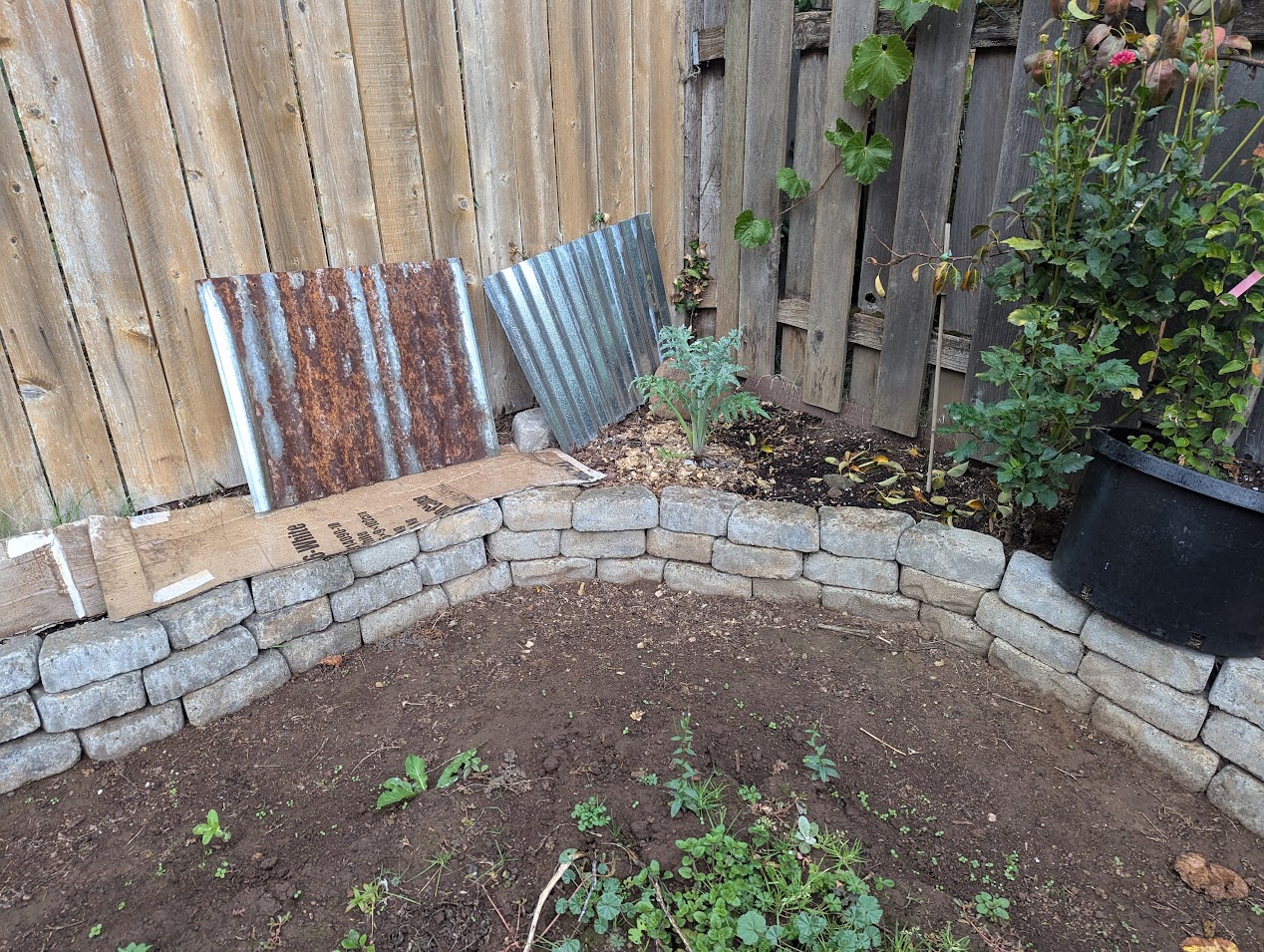
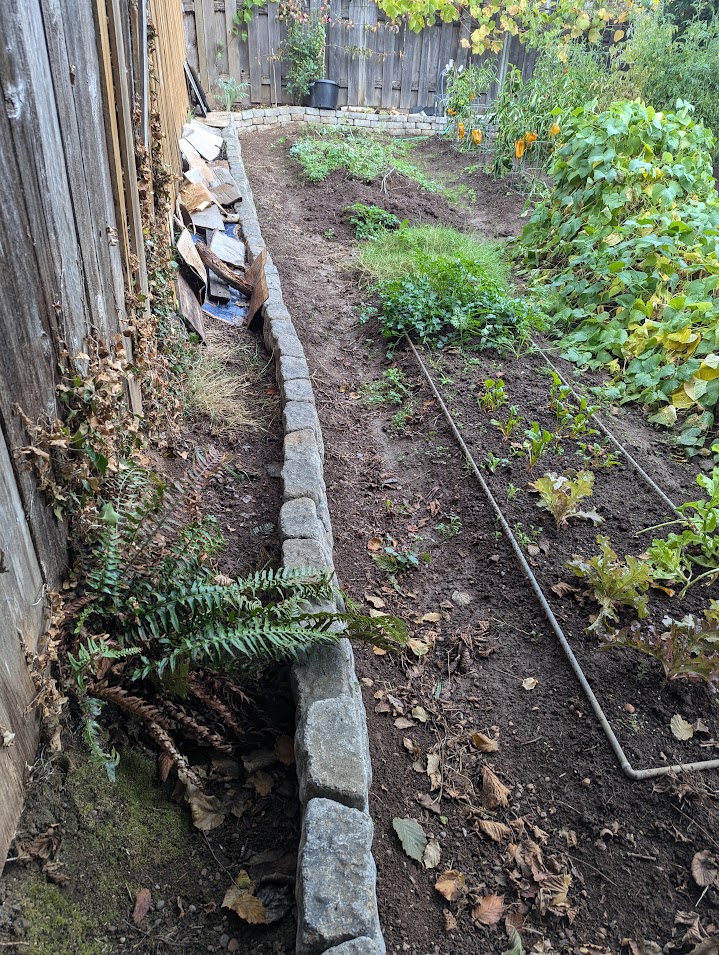
But I sucked it up last summer and started hauling rocks from the driveway into the veggie garden area. The idea is not only to stop the neighbor’s gravel from eroding into our yard, but to create a long planting bed along the edge of the fence.

It’s almost complete: I have enough rocks left over to put one more layer around the fence, enough corrugated tin to use as a weed/gravel barrier, and then we need to put good potting soil into the space created. It’s not as straight as it could be, but I did it entirely myself, from the weed removal to the rock hauling (well, I coerced a certain someone to help a little with the rock hauling, but most of it was my back ache). My husband will be elected to cut the tin into smaller pieces but I will tell him that when the weather improves and I finish the planting beds.

Now, we just have to agree what plants are going to be planted in that border bed. I want a large rhubarb somewhere in there. My husband has already planted an espalier pear tree and an artichoke that hasn’t produced fruit, but also hasn’t died. We haven’t had a killing frost yet this winter so it may still die. Then, again, maybe it won’t and 2025 will be the year that we get at least one artichoke from it.

My favorite project of 2024 was a bird bath that I made out of a discarded pedestal to a sink we pulled out of our bathroom during the remodel. I placed it in the center of the lawn south of our new deck and dug out a flower bed around it. I placed native round rocks all around that and planted some annuals (I rarely garden with annuals, but it was late in the season, and they were all I could find at the local nursery). I will replace them with something perennial in 2025.

I have multiple bird baths of different depths and sizes: this is the one the crows love. The only expense was the bowl I used for the basin: $4.99 at a thrift store. E6000 is the glue I used to attach it to the pedestal.

Read Full Post »

I spent several hours in the garden today. It is mid-October and things are slowing down. I haven’t watered in a few weeks, trusting the rains to come and do the work for me. The rain has been sporadic but comes often enough that even the planters remain green and growing. The rain barrel is full and soon I will have to close it off for the winter. I lost one rain barrel to a late winter’s freeze when I forgot to drain it, I don’t wish to do that again.

I cleaned one birdbath, the one the crows drop pieces of dog excrement in as they search for undigested peanuts. It’s a battle: the dog wants the bird peanuts, but he doesn’t even chew them: he swallows them whole, shell and all. The crows have learned there are nuts to find in shit, and they soften said shit in the water they (and other birds) are supposed to use for drinking and bathing. I console myself that they are no longer leaving me gifts of newly hatched birds in the water. Crows or raccoons: someone has to wash their food.

I try to get a late edging around my flower beds to discourage the spring growth of grasses (plural) which make spring weeding miserable. Grass and wood sorrel, my chief enemies. I cut the peonies to the ground now. I leave the evening primrose stalks of rich seeds along with the Russian sage and black-eyed Susans: the goldfinches, house finches, juncos, and chickadees will feast of them throughout the winter. So, too, the oregano. The rosemary is just beginning to bloom and honeybees swarm it in the waning Autumn sun.

I have finished most of my flower beds already. Mentally, I note where certain plants are that need to be moved in the spring, and which ones will need to be moved later in the Fall, when the stalks have died back, and the rhizomes or bulbs are left. I divided my Dutch irises a few days ago, today I dug up a couple dozen rhizomes of the purple ones and set them on the corner in a box marked “free”. I have more than enough purple Dutch irises, ones my father gifted me many years ago from my mother’s garden. I keep the blue and white ones, my favorites.

Once, someone on an Internet forum tried to school me on how to take care of irises. I was wrong, he said, to state that irises are basically weeds and need little care. I laughed. My irises came from 6500’ elevation in Nevada. My mother had them planted in gravel, on the southwest side of the garage, under the shadow of the motorhome. She died in 1995. My father hated irises and left them to die. Sometime between 2002 and 2003, he dug them up, threw them in a box, and shipped them to me, here, in the fertile Willamette Valley. I have divided them three times since then and given countless ones away. Irises are basically weeds and can survive a lot of abuse, drought, ice, snow, and even slugs, the latter being their greatest enemy in my garden.

I do kill some plants. Sometimes I do it intentionally and sometimes they just don’t like the way I treat them. Houseplants are usually the first to turn brown leaves upward and refuse to put out new roots, but I am getting better at keeping them green. I don’t always know why a certain plant will not take off in my yard, especially when I have had some degree of success with the plant in the past. Flowering currant, a native to the Willamette Valley, is one such failure. I grew it at another house, but it has failed to take root in this yard, and I have tried numerous times. But it took me over three years to rid my garden of comfrey and Japanese anemonies, and I am still battling fireweed (although not too fiercely, as I rather like fireweed).

This past summer I experimented with growing more native herbs. I already had several herbs in the ground but expanded. I planted nettles in a planter and kept them cut back so they could not go to seed and spread in my yard. I harvested leaves, dried them, and have already tried them in tea. I wore long sleeves and gloves when I harvested them: I have memories of crawling into a nest of nettles under the aspens in the Ruby Mountains when I was a girl. It was not pleasant. I don’t blame the nettles, but the little girl who didn’t pay attention.

I harvested yarrow and feverfew. My husband wants me to grow colorful yarrow next year, not the plain white stuff of our childhood. I will no doubt oblige. I have Lady’s Mantle, Holy Basil, Elencampe, sage, lavender, wild sorrel (I didn’t plant that, it has taken over our “lawn”), mallow, thyme, hyssop, elderberry, and more.  Sometimes, I just sit and stare into my garden and the many flower beds and wonder what all I have planted and what I can harvest and what I should get rid of or introduce.

My garden is a canvas. I have plants I dislike and some I even hate: grass is one. There are many kinds of grass, and I despise most of them. I like sedges. There are a couple ornamental grasses I can live with. But grass as a whole, I despise. I am allergic to most grass. If I could have a yard free of grass, I would be in Heaven. And for that reason, I grew flax this past summer. I hope to sow flax seeds into the lawn, mixed with the false dandelions and wild sorrel. I am slowly cutting out more and more of the lawn area for flower and herb beds. I don’t think about the color or composition as much as I think about eliminating the grasses.

I reached a place where I must quit garden work. The largest flower bed has been cleared and most of all the other ones are winter-ready. I still have peonies to cut back, and asters that are just now fading which will need to be dead-headed before the cold sets in. There is one tree peony that I hope to dig up and transplant into a container, separating the grass from its roots and (hopefully) giving it a new start at life. It is probably fifty years old and I wish to be very careful.  I moved one tree peony two years ago and it is happy in its new location. I can do this.

Photo: climbing nasturtium that took all blessed summer to grow and is finally climbing and blooming right before the rains come.

Read Full Post »

It is that time of year when an organic gardener’s thoughts turn to soil amendments, natural slug repellent, and turning compost so that the soil at the bottom of the heap can be used. We also turn our heads and slam on the brakes at every plant sale we see, especially if there might be native plants to be had. We know if our garden spots are shade, wet, well-drained, full sun, part sun, clay, or well worked topsoil. My flower beds are all of those listed.

I have a list of plants I want. I always have a list of what I want to do in my flower beds. The vegetable garden belongs to my husband. He always has a list of the vegetables he wants to grow. Have list, will shop.

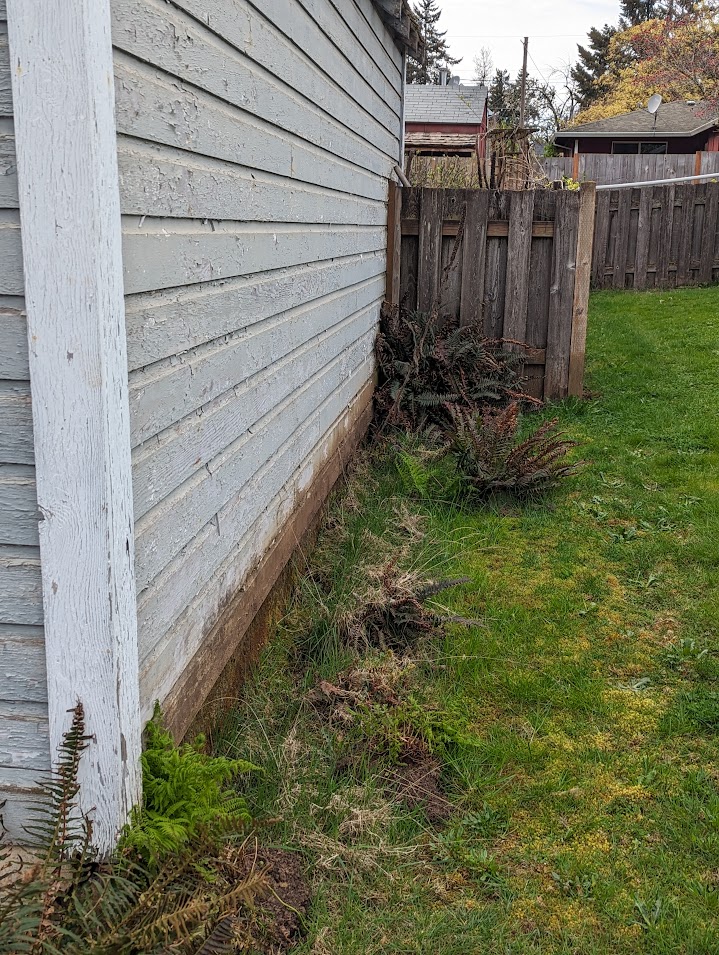
This year one of my goals is to completely fill the useless spot just north of our garage with sword ferns. It’s a three-foot mandated distance between our garage and the adjacent property line. No one wants to mow it. Full shade. No available water. The only true solution is to plant sword ferns and allow them to fill in the spot, kill the grass, and end the need for mowing. I have been adding small ferns to the spot over the years but this year I have four large sword ferns donated by a friend from his pasture. If I plant them now in the cool weather they will be established by summer and there will no longer be a need to mow north of the garage. Minimal maintenance, win-win for both parties.

Last fall I filled in the sunny portion of that piece of property with orange day lilies. I also have a magnificent yucca plant growing there. I picked the yucca up out of a FREE pile in front of a house one day. The orange day lilies were given to me by someone. There are daffodils growing there as well, a gift from the previous owner of this house. No more mowing a section of our lot that is difficult to get to and maintain. Ta da!

Minimal maintenance.

I took my list to a plant sale last weekend. It was a fund raiser for a State Park nestled in Lake Oswego. The prices of the (mostly) natives was more than I cared to pay, so I walked out empty-handed and right into the arms of a group giving away bare root saplings of “native” trees and shrubs. I turned down the witch-hazel (and later learned it is not a native to Oregon, although it is indigenous to parts of North America). I already had a mock orange that is two years old and establishing itself. There were a couple others that I questioned as to whether or not they were truly natives. I settled on three bare root plants: black gooseberry, a dogwood, and Indian Plum.

The dogwood is not the native Pacific dogwood, but a Florida import. Say, what??! Oh well, it was free, and I picked out saplings small enough that my husband can work his Bonsai magic on them. I was the only person standing around that had any idea what I was getting with the gooseberry. I’m more familiar with the yellow kind from the more arid side of the State, but this is a native from the Oregon coast – and a gooseberry promises tart berries perfect for a pie. I may have to make a gooseberry/huckleberry pie: I have an evergreen huckleberry (also native to the coast) that produces tiny berries in the late fall.

The Indian Plum is not a plum but produces tart berries that look similar to plums. It was a subsistence plant to the tribes of the Pacific Northwest and is one of the earliest flowering bushes which is a boon to the native pollinators. I’ll figure that out if and when it bears fruit. It can just be an ornamental for now: a native ornamental and attractant to pollinators.

My list incudes two lavenders: a Spanish lavender and a French lavender. I had both in my garden and they both died. My Spanish lavender was over 15 years old. I think I simply had the French lavender in the wrong part of the yard. I also want to get a second campanula, toad lily, phlox sublate (McDaniel’s Cushion), curry plant, and Chinook hop. I need a new rhubarb: the one I have doesn’t grow tall now produce long juicy stems. I’d like to add oxalis and bunch berries to the shade flowers. I also have some annuals on my list: petunias and climbing nastrutiums.

I purchased 19 packets of herb seeds from Mountain Rose Herbs. Those are waiting to be sown. Not for today. I bought the nasturtium seeds from Reneé’s Garden. The Chinook hop from Thyme Garden. The rhubarb is coming from Gurney’s. And the rose I bought from Jackson Perkins is showing some signs of life… (All of my English tea roses are from J&P, this one was a replacement for a floribunda I didn’t like. The floribunda went to a good home. This rose is also on probation until it starts growing…)

Today was the first day of Garden Palooza, a large plant sale south of here, almost to Salem. It is held at Bauman’s Farm & Garden in Gervais. I set aside a certain dollar amount and hope we don’t go over budget, but this year we were way under budget and came away with more plants!

I found both lavenders. My husband found the tomato starts he wants. He also found a pretty campanula for me. The one I currently have is a blue color: Serbian bellflower (campanula poscharsky). The new one is Birch’s Campanula and it will be a pretty purple color. Bauman’s also had so many pretty petunias! I found a full sun ground cover called Creeping Baby’s Breath (gypsophila cerastiodes). Drought tolerant. I need so many ground covers, they do a much better job than bark mulch at keeping the soil moist and weed free. Also, as perennials, the ones I pick out will last longer than bark or hazelnut shell mulch.

Oh, but the best buy of the day? Don found a tree peony for $24. Not $240 or $140, but $24. Tree peonies are not inexpensive even in a year without inflation. There are three old ones in the yard presently along with at least 80 other peony plants. I’m told the yard had more peonies but that was when Barney Schultz lived here, and he died over 30 years ago. The house sat empty, was purchased and flipped, and the grass killed so many peonies during the years of neglect. Then we bought it and I have single-handedly cleared all those peony flower beds, carefully divided tubers, and coaxed those beauties to new life. In short, I don’t need another peony or tree peony.

But $24. Gallon pot. Paeonia lutea var. Ludlowii (Tibetan Tree Peony). It’s young and I may have to wait a few years to see the large yellow blooms it promises. My other tree peonies are white, cream, and pale yellow fringed with red. Of course I bought it.

Our friend gifted us with two filbert trees as well as the ferns. We already have one filbert but the hazelnuts have never produced nuts. You learned you need more than one filbert. (Side note: the trees are filbert trees, the fruit is referred to as a hazelnut.)

So much planting in the near future. And making of larger flower beds to accommodate the 19 varieties of plants I purchased in seed form from Mtn. Rose Herbs.

The next big plant sale is the first of May.

Read Full Post »

2021.January 1

My word for 2020 was “Discover” and it lasted for about two months before we found ourselves starting a two-week “lock down” that lasted through the end of the year, ten months later. I didn’t do much “discovering”.

It is now the first day of 2021. I have no word for the year. The only resolution I have is to be kinder and to be quicker to reach out to someone when they are hurting, sick, or bereaved. I probably could lose 25 pounds, too.

Today, I worked through grief by deep cleaning the bathroom. I have already rearranged the kitchen cupboards. Two days in a row, I have been out in the garden cutting the deadheads I didn’t get to in the fall because it’s currently warmer now than it was in October and November when I normally do those things. I closed the door when I worked in the bathroom, but I had help in the garden. Too much help.

His name is Ruger. Ruger Buhl’s Fall Surprise, per AKC records. He’s a Wirehaired Pointing Griffon, born the 24th of September and hauled home to Oregon mid-November. He chews on all my plants which is not a good thing. I don’t know what is poisonous to puppies and what isn’t. I’m guessing peonies, primroses, asters, different salvias, and irises are not. I dug out all the foxglove in November. I know we have some arum in the corner flower bed that I will need to dig out because this dog is so mouthy – and because it is starting to show green shoots.

I have a stack of paperwork to filter through but no desire to. There’s a stack of sympathy cards, Christmas cards, and Christmas-cards-as-sympathy-cards to go through. I need to call my cousin in Montana back because the last time I spoke to her, I blubbered the entire two minutes. We have received so much support from Seventh Group Special Forces (Airborne) and I need to preserve all those commendations sent to us, specifically.

I need ideas to send gifts to my grandchildren who not only lost their father but who were taken from his home to live with their mother in Texas. She didn’t have custody when our son was living; he did. But she is the birth mother, and the law recognizes her first and the widow, second. I did decide I should put together three memory books of photos on Shutterfly. Monthly letters and cards. My daughter bought a subscription to Highlights Magazine for one of them. Is there a Pokémon magazine club? (Note to self: do the research).

I am not the only person grieving right now. I need to focus on taking care of myself, but also on helping my loved ones walk through their grief.

I don’t have a word for 2021. I have a sentence. LOVE ONE ANOTHER.

Disney World 2020, Levi in the middle with all of his children. ♥

Read Full Post »

It’s cool and getting ready to rain right now, but for the past three days I have taken my coffee outside to sip while I watch the world around me grow. Some mornings were a tad chilly, but a towel on my bench and a blanket over my knees, hot coffee in hand – who cares as long as the sun peeps out from behind clouds?

The birdsong this morning drowned out the ambient sounds of the city (the distant freeway, traffic on the street beyond our fence, the drone of airplanes): “Cheery Up! Cheery Up!” sang robins delineating their territories and calling their mates. The familiar “Brr-Whirr” of the Spotted Towhee told me that they are nesting nearby.

The past few days, a male Anna’s hummingbird has been doing it’s dangerous aerobatics over our heads: it flies thirty feet up into the air, hovers, then makes an arcing dive. Ten feet above the ground, it abruptly changes directions back toward the heavenlies and the wind through its wing feathers creates a loud “CHIRP!” overhead. He’s courting a mate, but often she’s nowhere in sight. (It is a startling sound if you don’t know it is coming and he lets loose his miniature version of a sonic boom just over your head.)

My computer is being crazy slow today and my photos are not loading properly.

IMG_5745I’d love to show off the new flower bed I created in front of the house, where I have planted my rose (which is showing no signs of life!), a Rose of Sharon, and left room for many more perrennials while cutting down the need for lawn mowing. Purple anemones, Vinca Minor, hens-and-chicks, above the wall, Lady’s Mantle and orange daylilies below, on the city right-of-way.
Along the back fence, I pulled and cut and swore at English Ivy that has entrenched itself over the past 15 years (the last wild spot in our yard). I’ve weeded and planted – no more than three hours per day (my mind wants to keep doing but my hands and back rebel – especially my hands! – and I have to give the work up. Still, I have accomplished more in April of this year than any single year in the past – yay for retirement and the freedom to be out there when the air is clear and the day is still cool enough to work!

IMG_5735

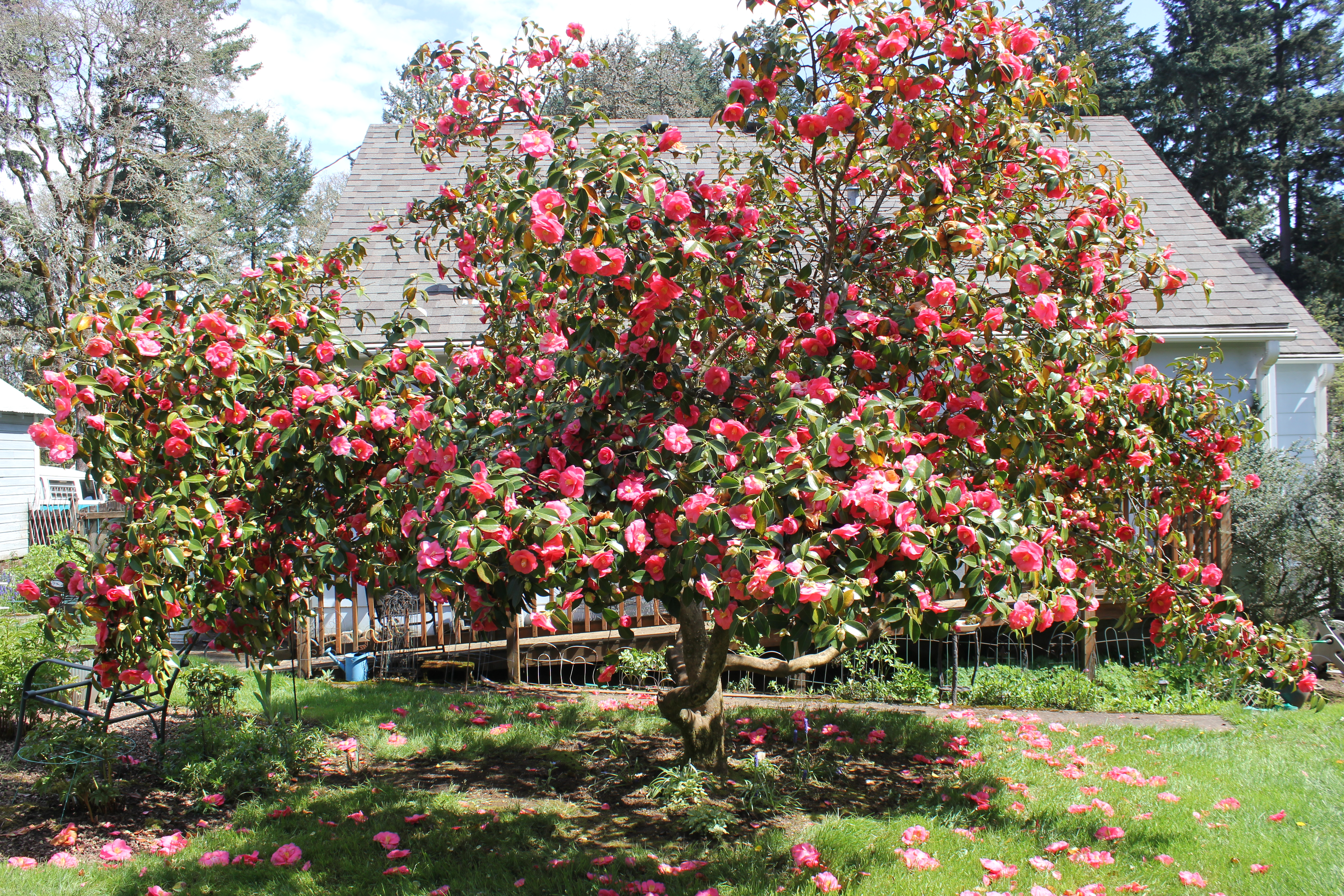
The crazy Camellia is over-laden with blooms, a cacophony of pretty pink-and-yellow flowers, new green leaves, dying yellow leaves, and messy wet fallen blooms. I hate it when it looks like this, the limbs drooping low with all the weight and the slippery mess underneath.

IMG_5744

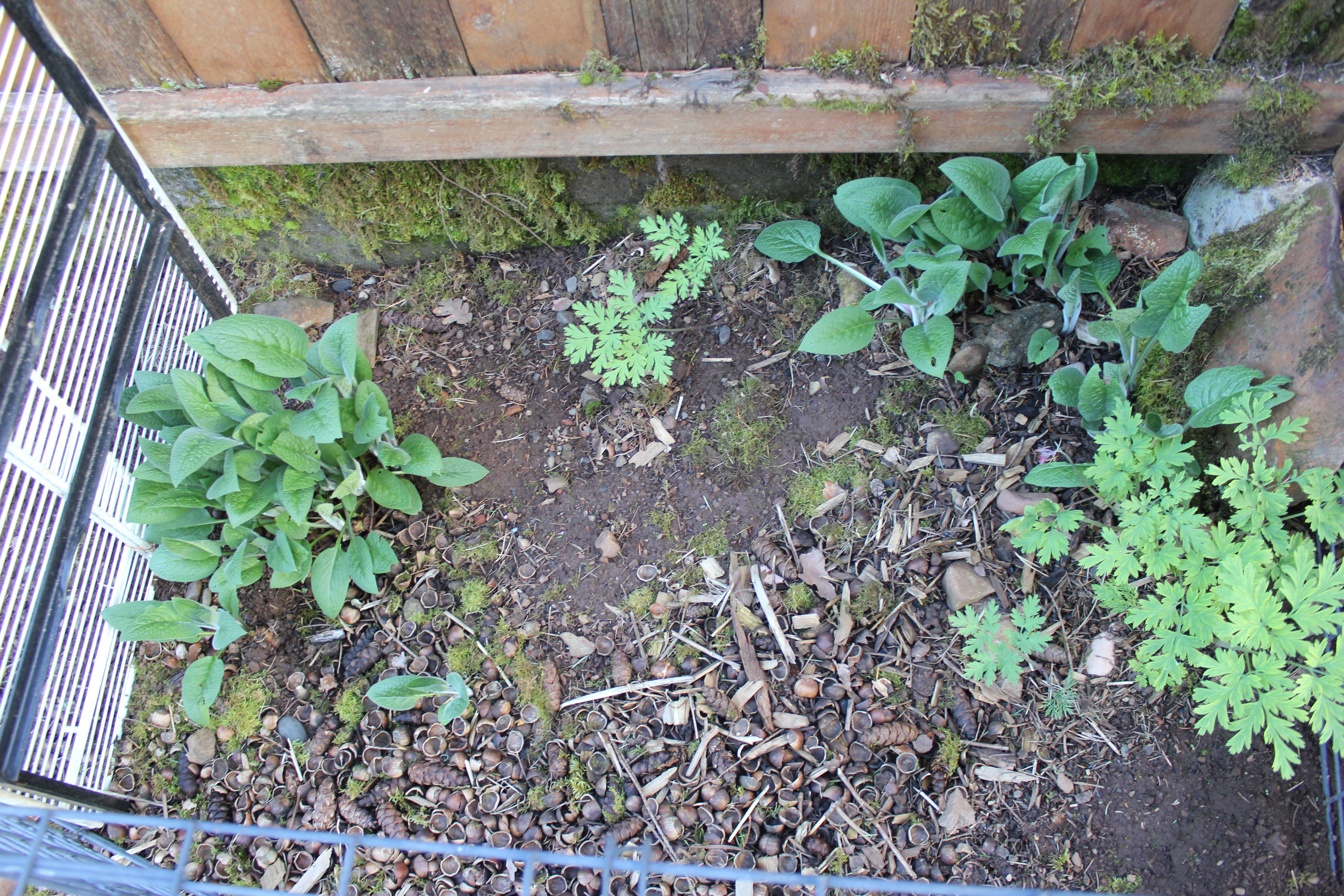
My husband broke my garden bench (it was rotting through). I’m excited about this corner because I have Comfrey that will try to push past its boundary of weird metal grating – a perfect bee flower I have to gold in check because it *is* invasive and it can cause caustic reaction to skin. I planted a blue elderberry to the right of the comfrey (behind the yew), a blue huckleberry just to the left of the white grate and a red flowering currant behind the bench. COLOR! (The black plastic is killing the nasty Oregon Grape). I plan to encourage the forget-me-nots to fill in a neglected space – but I also love them right where they are in this photo, blooming bright blue and covered in mason bees.

IMG_5743

It looks sweet and tiny here, inside its cage, but that broad-leafed plant will be six feet tall by mid summer: Comfrey.

I love this time of year, my hands in the dirt, the small insects and invertebrates (except the slugs!), and the myriad of birds who come to visit. Mesmerized by diamond-dew drops in the early morning, I sip my coffee and know I will not get anything done inside the house on such a day.

Read Full Post »

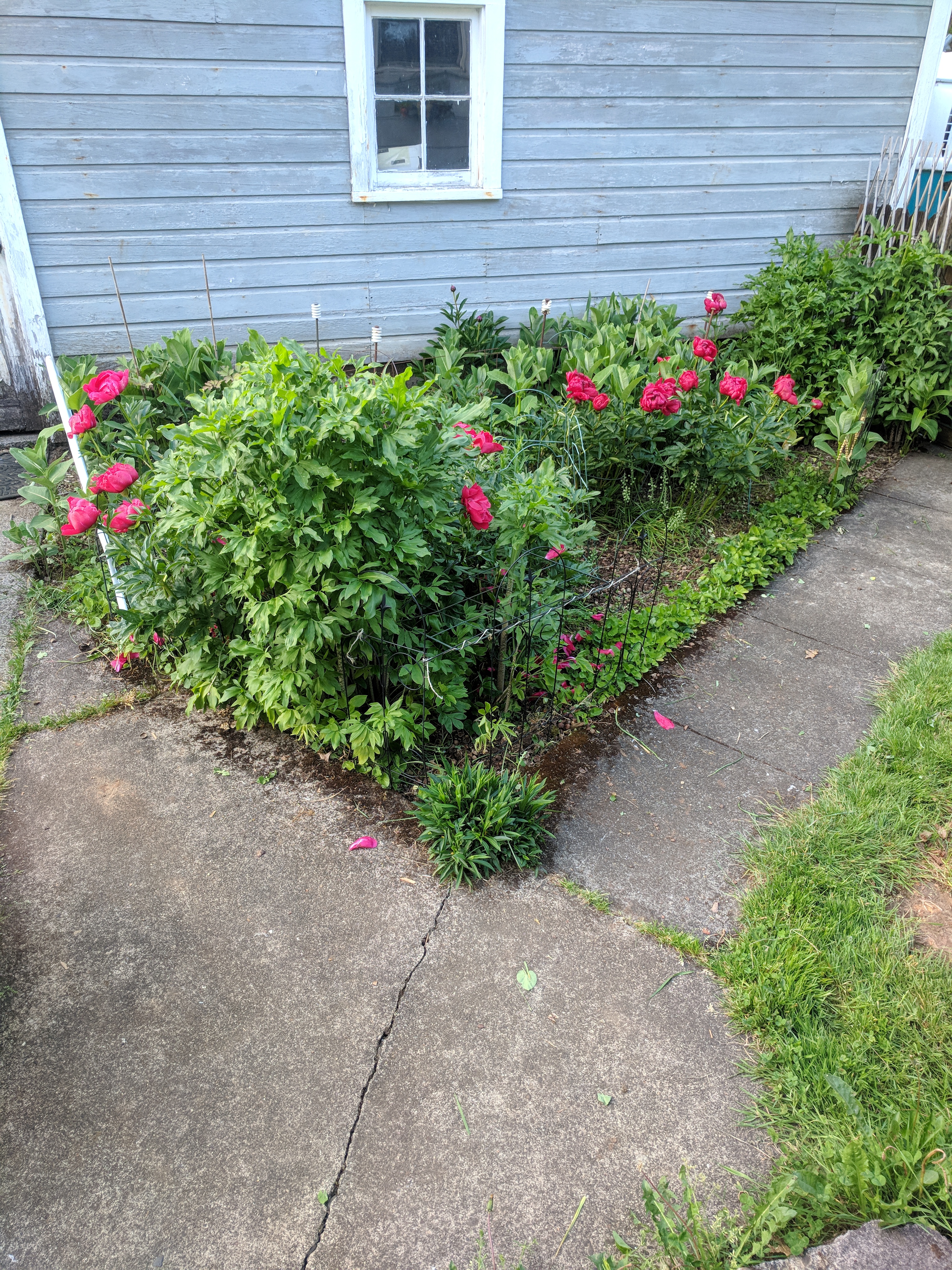
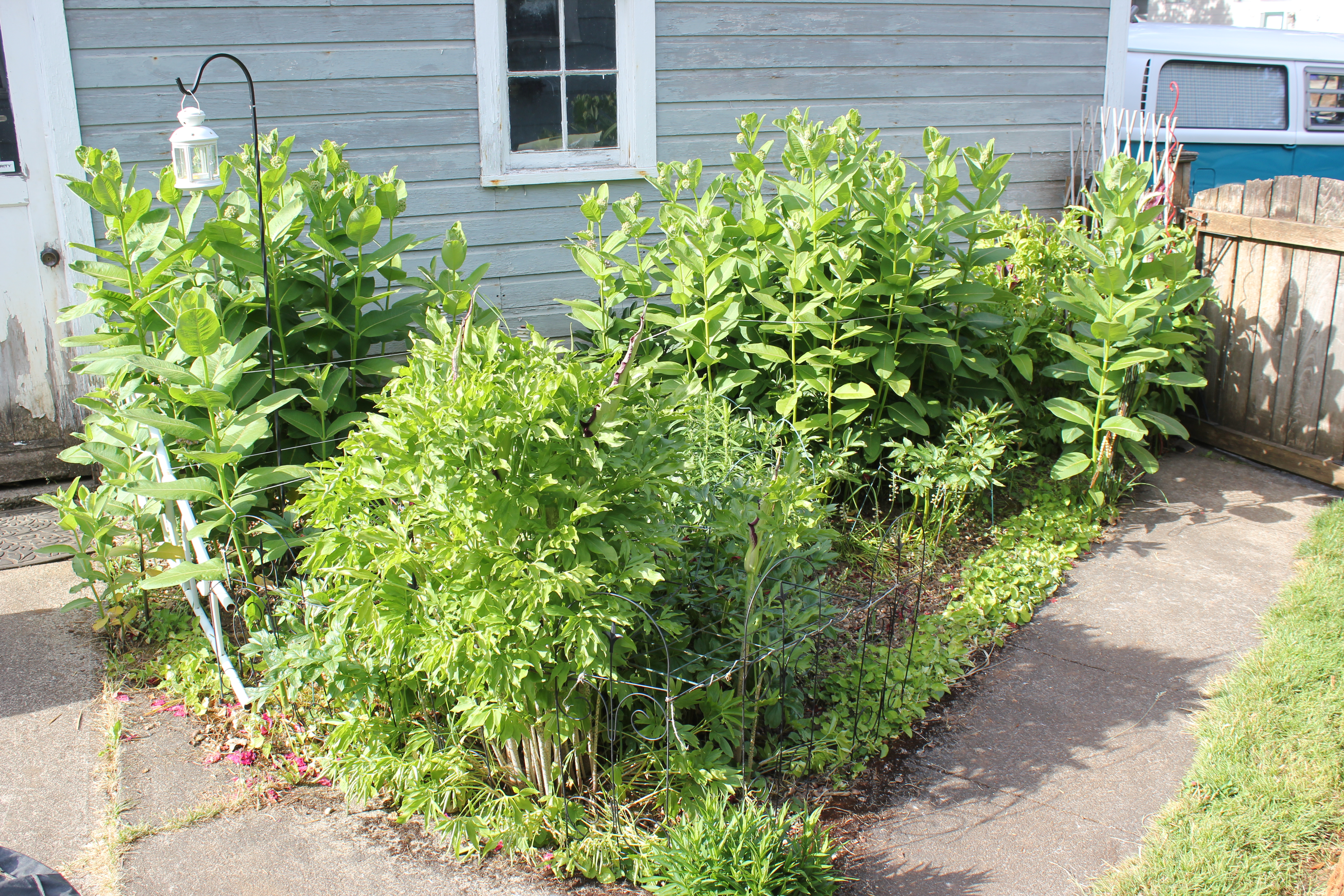
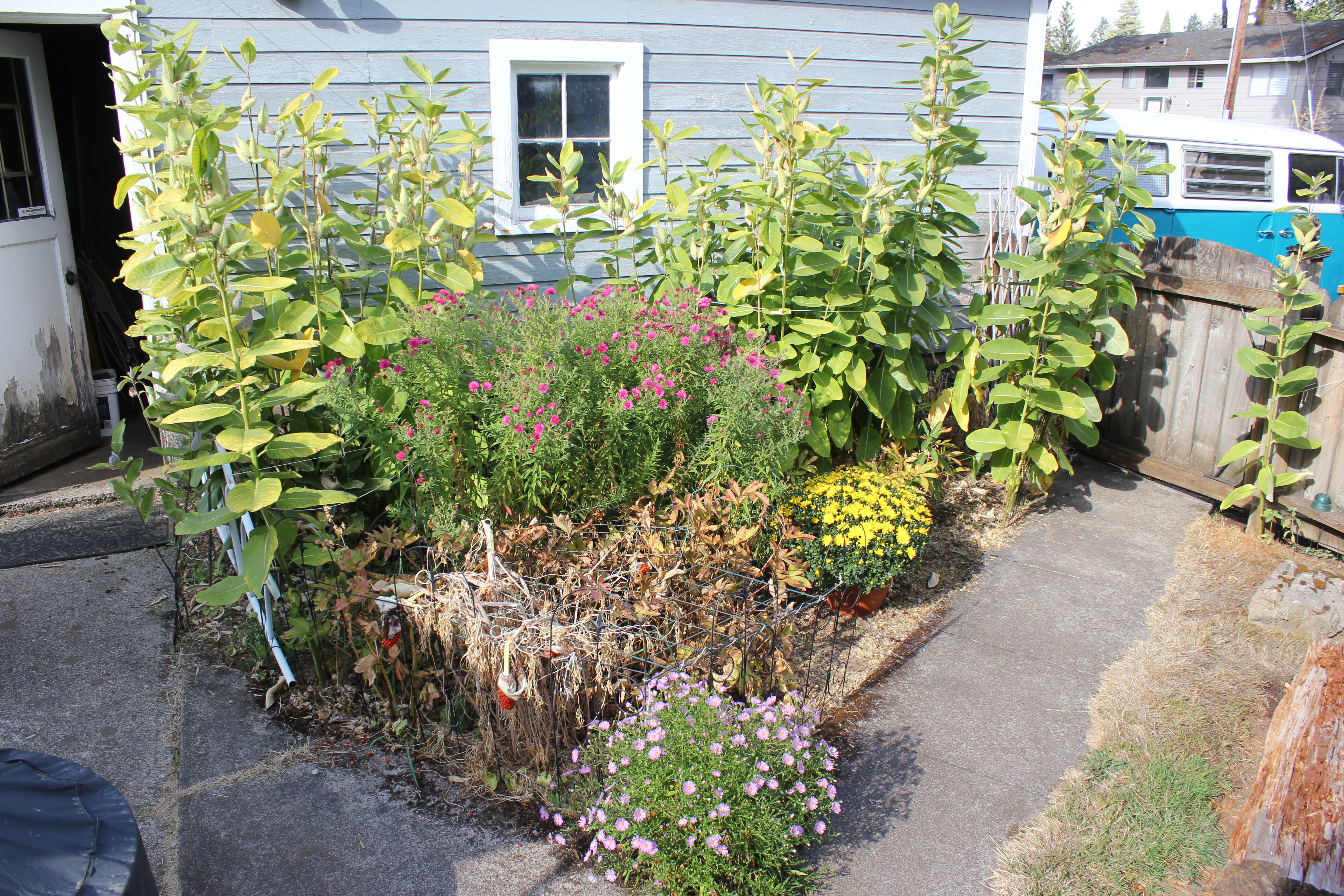
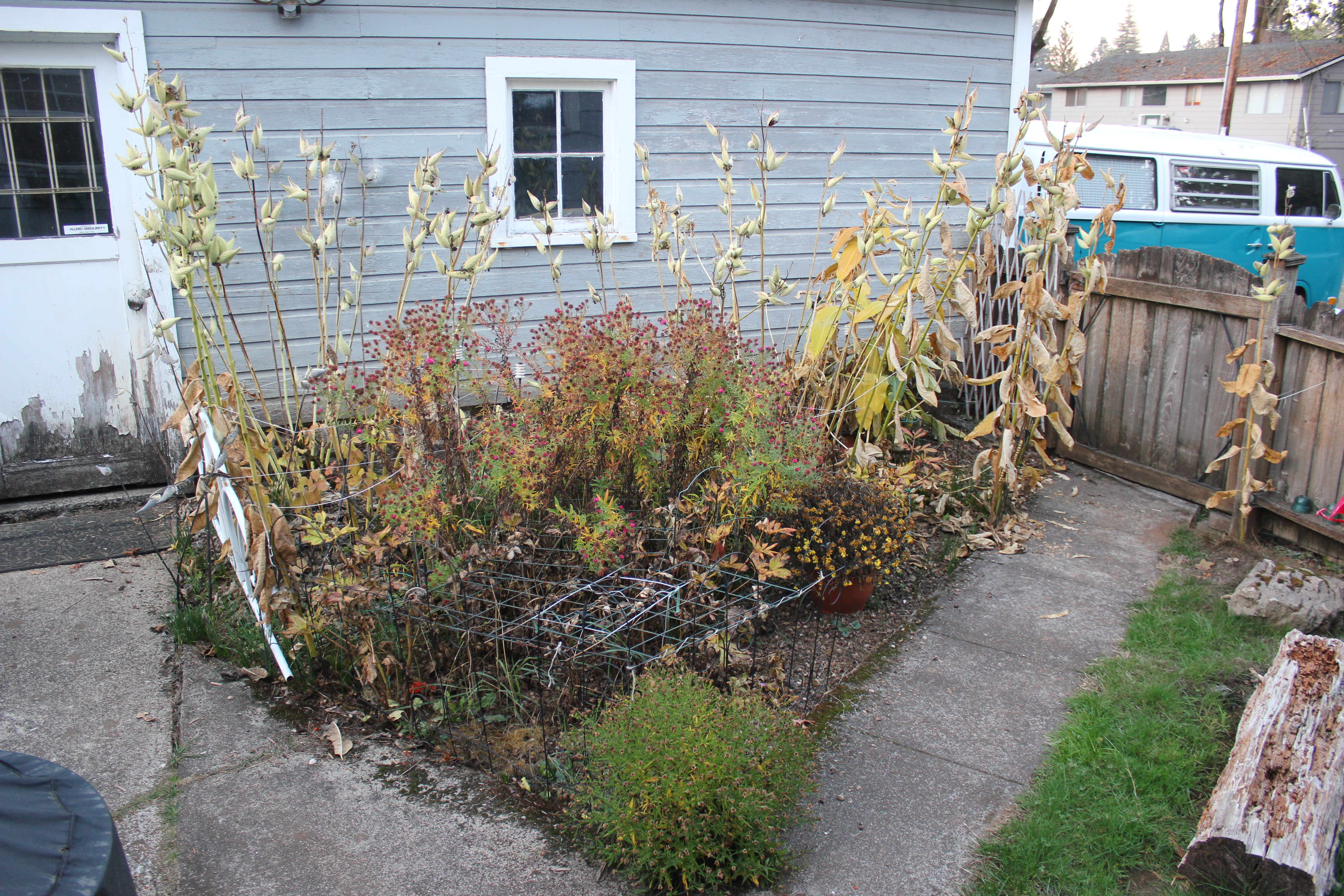
One of my favorite flower beds is right out the back door. It’s a little triangle that is always full of something growing from May through October. This year, I tried to snap a photo diary of the corner garden.

I missed April – when the grape hyacinth and the tiny wild violets are the only color in this little corner.

May

May is peony time.

IMG_20180529_182502_288

The Dragon Lily (dracunculus vulgaris) ends May and starts June with its stench – and striking beauty.

June

Even though the Dragon Lily is in full bloom, the corner seems a sea of green as the peonies fade, the milkweed and the asters push upward.

July

July. The peonies and dragon lilies fade as the milkweed blooms, fragrant and alluring. The corner goes from one aroma (dead meat) to another (sweet milkweed) in a matter of weeks.

August

August. The asters bloom when the milkweed fades – red and tall in the back, purple and lodged in a crack in the sidewalk. (The yellow mum was a potted plant.) You can see the faded glory of the Dragon Lilies, seed heads brilliant red, and the peony leaves turning brown. Seed pods are forming on the milkweed plants now.

Sept

And just like that the sun is low in the sky and September is leaching the color from the milkweed plants.

Oct

It is late October now. The rains have held off. The leaves have fallen from most of the milkweed. The asters cling to a little bit of green, but their blooms are all but faded now.

Soon, it will be an empty space of grown, brown and sad, all the stalks cut back before the new growth begins again in April. The rains will come, the days grow dark and – for me – depressing. But the cycle will resume in four short months.

The grape hyacinth, the violets, and the peonies came with the house and this little corner. I pulled back a blanket of creeping myrtle (aka periwinkle or variegated vinca minor) to bare the ground. We planted the Dragon Lilies, babies from a single corm we stole from a rental many moons ago and have carried around with us for 30 years. (Want some? We’ll gladly ship – up to zone 8.) I planted the little purple aster from a plant a dear friend gave me some 25 years ago. It’s been divided and planted elsewhere, but this little bit insists on pushing up through a crack in the sidewalk right at the apex of the flower bed. The tall red aster surprised me that first autumn in the house – an added bonus of the many flowers already here and hidden by neglect.

The milkweed, now – that was a project. I tried two or three times over the years to grow it by seed. I gave up four or five years ago, but one fine day three years ago, a small plant survived long enough for me to identify that it was, indeed, showy milkweed. Last year, more came up and they flowered for the first time. This year, they tripled in number. They are truly one of my finer moments in gardening, even if they are now rather prolific.


Read Full Post »

And I have not raised my hand once to type out the tales of my days.

There were birds. Dozens of birds. The Bewick’s Wrens built their nest in the garage and fled as soon as the babies fledged. The Spotted Towhees taught their fledgling to bathe in one of our three bird baths. The Dark-eyed Juncos fooled us with fledglings that looked more sparrow than junco. The Bushtits took communal baths. Black-capped Chickadee, Chestnut-backed Chickadee, Band-tailed Pigeons, Sharp-shinned Hawk,. Rufous Hummingbird challenged all other hummingbirds and sometimes the bigger birds. Anna’s Hummingbirds came and chirped in our faces.No dogs to chase them. No resident cat. The birds moved in and became our pets for a season.

I dug in the earth, turning over earthworms and pulling out ribbons of grass roots to make room for more flower beds. The flower beds bloomed and fed the birds, bees, and wasps. The flowers faded and turned to seed, continuing to feed the birds. Soon, the milkweed pods will burst open and the yard will be littered with fluff. I’ll save it for the nesting birds next Spring.

I spent time sitting with my husband, shushing his political rants and encouraging his dreams. We drank too much beer. We made new friends. We had a couple hellacious rows. We rekindled our love, the love that covers a multitude of sins – and, as it were, disagreements of political nature.

We mourned the loss of our youngest daughter as she chose to remove herself from our lives. It may – or may not be – permanent. She wasn’t ready to commit to either possibility, only that for now, for herself, she must separate herself from her past, which includes all of her blood family. We wish her well, but we will always mourn her.

In August, I had an epiphany: I could do this retirement thing at the age of 62. I am finally at an age where money will come in – slight, but enough to subsidize my dream of writing and painting. I applied for my Social Security Benefits, told my boss, and contacted Human Resources. Now, I am counting the days. December 28th, 2018.

The coldness is creeping in. The days are still bright with sunshine, but the edge of winter will come with clouds and rain, rain and clouds. My prayer book is brimming with the heartbreak and needs of my friends. My dreams are restless and thematic, always returning to sharing a bedroom with my messy little sister and trying to decide what items to pack to move. Often, there is a dog in the dream, or a loving cat. Once, I screamed in my dream, venting my frustration at all things emotional: it wasn’t a real scream, not the kind that wakes you up. It was all inside my head, exploding.

I have stared at the screen of my computer, wanting to write. I have stared at the blank page, wanting to draw. Nothing came. I rolled with the punch, not wanting to fight the cosmos. Who has the energy? I asked.

Tonight, I am standing up and punching the cosmos in the eye. I can do this thing!


Read Full Post »

We have had a long, hot, dry summer – the kind of summer I love, but which is not natural to the area where I live now. The earth has been parched, the Cascade Mountains are on fire, and smoke has been lingering in the valleys. We looked and felt like Reno on a typical summer day, but a little more humid. There was one sprinkling of rain in August, but we haven’t had anything that felt like real rain until last night, when we were blessed with about three hours of steady rain.

The garden looked so happy to have received this gift from Heaven this morning, that I had to take photos. These are the result on my time spent worshiping the Creator (making any kind of art is a form of worship). Enjoy.

Read Full Post »

015

There are definite signs of the change of season around here. The birds are starting to pair up, the air is warmer, and buds are beginning to swell.

005

Heck, I might even have daffodils to pick next week!

The Periwinkle is already beginning to boast a few flowers, and crocuses are in full swing (all except mine, which are woeful), and the Camellia has a few pink blooms open. I noted the honeysuckle is leafing out, too.

Last week I even started some seeds: two kinds of sunflowers and one variety of heirloom tomatoes.

007

The sunflowers wasted no time in sprouting upward and today I noticed that the tomato plants are making a brave attempt to sprout.

I decided to start the sunflowers this way because the last two years have been a bust for me. In 2011, my sunflowers started but stunted. In 2012, not a single sunflower seed planted out-of-doors bothered to sprout. I don’t know if the chickadees ate the seeds as soon as I sowed them, or is something else came along and nipped the fragile sprouts, but I had no sunflowers last summer.

My husband never got the vegetable garden sorted out last summer and the only tomato plant we had was a volunteer that sprouted up by the compost bin. It did eventually produce some fruit, but that corner of the yard is only full sun for two months out of the summer and by September – when tomatoes need the sun the most – it is a shade garden. I thought if I had some nice tomato plants started this year, I could work them into my full-sun flower beds and maybe – just maybe – I would have some tomatoes by the season’s end.

Of course, the veggie garden may be a “go” this year, but I’m not holding my breath. We get distracted and I am certainly not going to be the one to haul out the rototiller and attempt to turn all that soil! Sure, I probably could, but my husband can be territorial. So I will leave that to him, and if he gets it done or not will be his decision. But I will incorporate veggies in and out of my flowers, just in case.

My garden desperately wanted me to go around and finish dead-heading all the flowering plants that faded after the rainy season started, so I worked on that today. I re-staked my grapevine win hopes that I will get some grapes this year. This is year number 3 and I have it pruned down to the strongest vine. Crossing my fingers on that one.

001

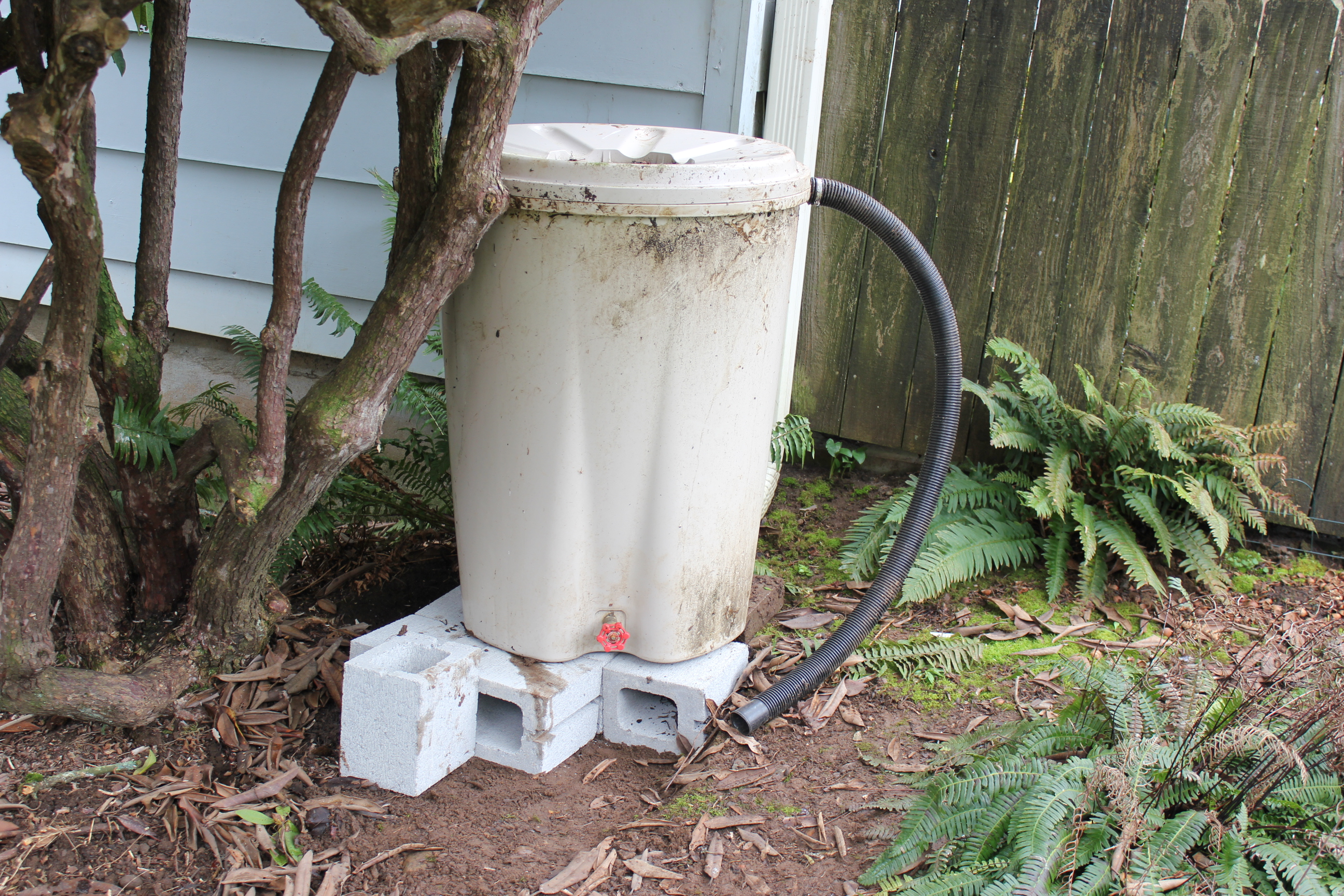
This was my first project of the day: getting the rain barrels set up. I have two. One is permanently plumbed into the drain for the rain gutters. It has an on/off switch and all I did was open the flange so the water from the rain gutters will now be diverted into the rain barrel. The second barrel is free standing.

First, I replaced the paving stones I had with regular cinder blocks, and made the ground a lot more level than it was last year. Then I removed a 4′ section of the rain gutter drain (when we had the new rain gutters installed, I made them set this pipe up for me so I could remove that 4′ section every March 1 and replace it every October 1 with little hassle).

I found a rain barrel pump that I hope to purchase before watering season begins. The biggest problem with the rain barrels is there is no water pressure! The only downside to the solar pump is that the pictured rain barrel is in a very shaded location. The other barrel is in a sunny location. But if it is portable enough, I can probably make it work here, too. That would be beyond awesome.

That was pretty much all the prep work I did, other than to peruse garden catalogs and dream of new plants.

003

Harvey was quite bored with the whole thing. “Walk! Walk! Food! Walk! Food!” He’s such a “Dug”.

Read Full Post »

« Newer Posts - Older Posts »