Feeds:
Posts
Comments

Grape Hyacinth

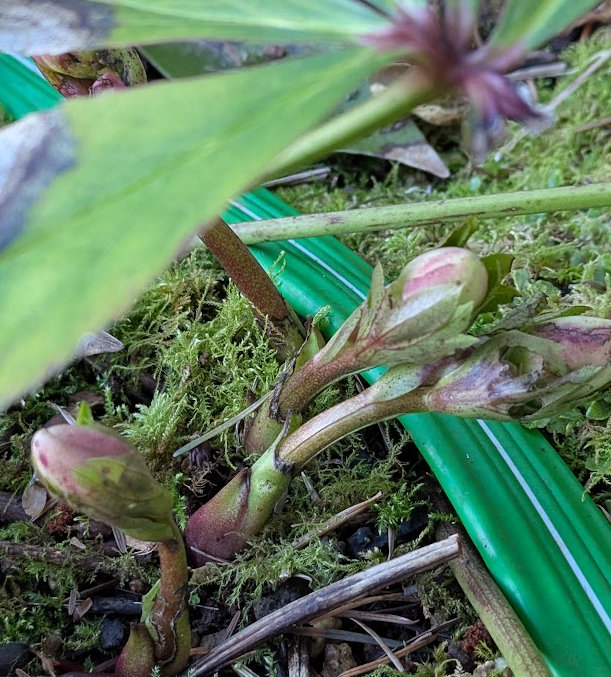
 How I love thee, False Spring! I love the sunshine! The warm air! The wee buds poking up out of the ground!

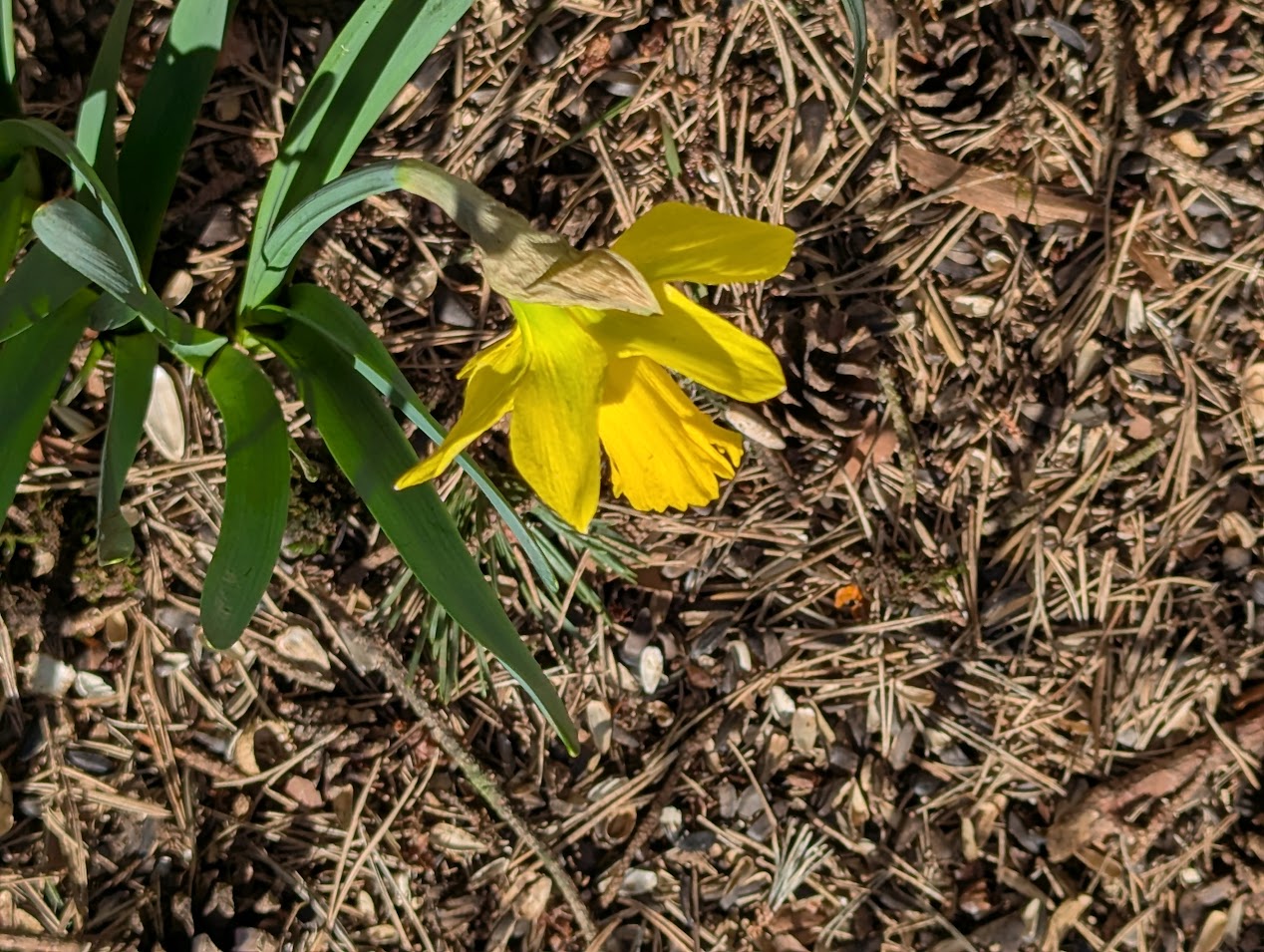
Daffodils! (Except the parts the slugs came and nibbled on!)

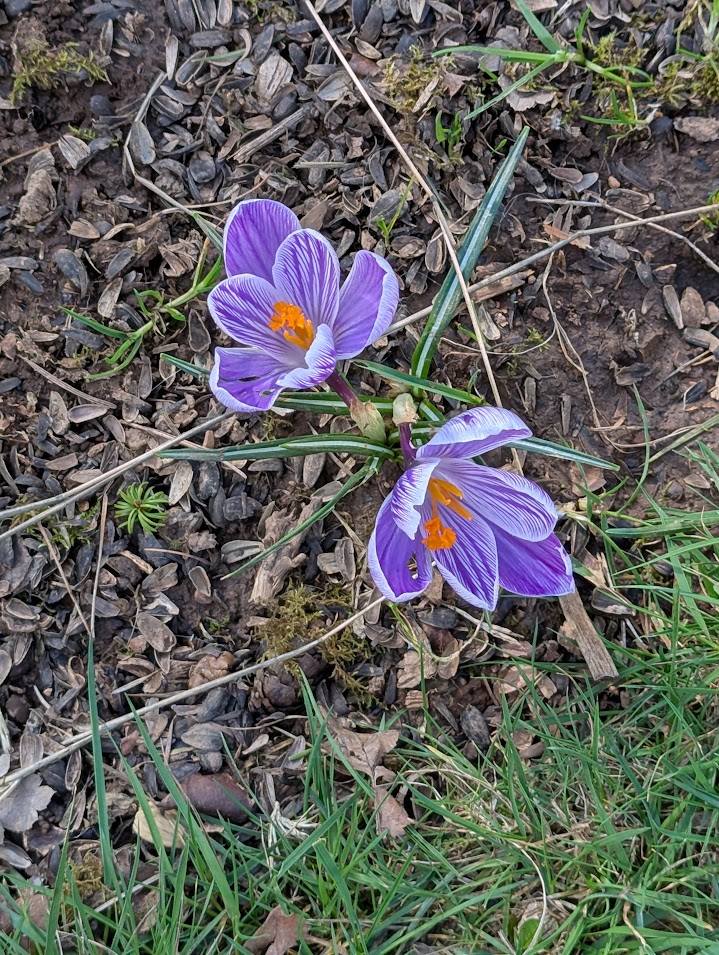
Crocus! (Until the dang squirrel makes off with the flower and eats it all!)

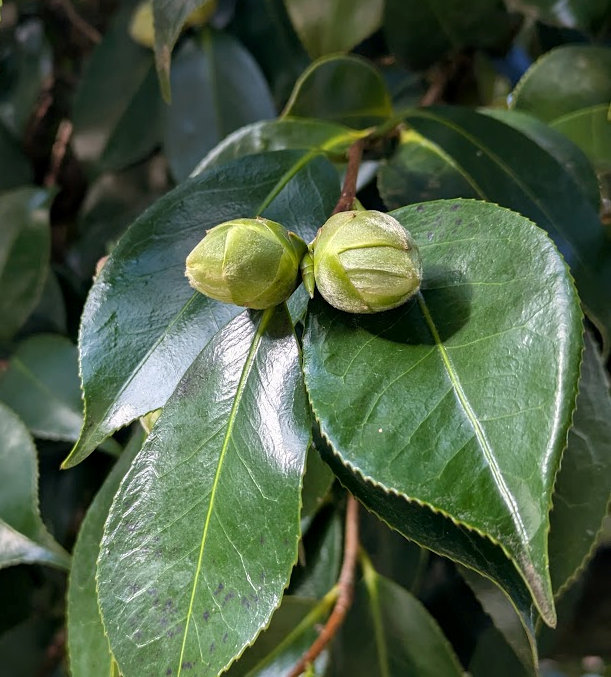
The Camellia! (What buds have escaped both the dog and the squirrel! What the dog tastes in Camellia buds is beyond me but it isn’t harmful to him – surprise! – and he only picks off the blossoms on the lowest branches. Squirrels tend to the upper blossoms where I cannot see, so that leaves the bulk of the bush to me! Me, me, me!)

The Lenten Rose (Hellebore)! (Mine needs some fungicide, I think. The leaves look rather sad.)

The grape hyacinth!

No. Just NO.

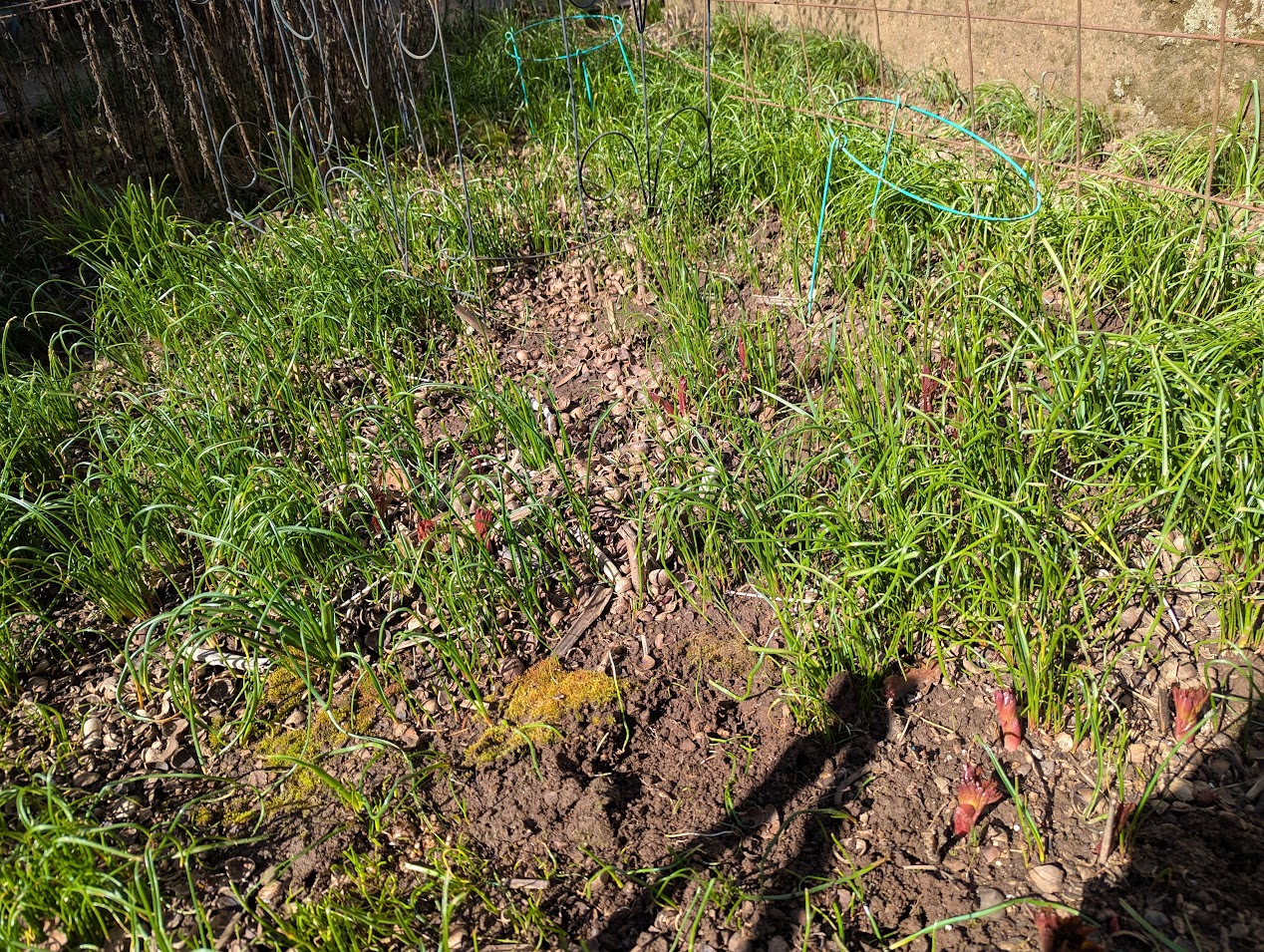
Look at them there in my flower bed, crowding out the peonies. All those clumps of impenetrable hyacinth bulbs! I think the last time I purged them was about five years ago. And today they came out in the handfuls, all those little bulbs crowded together just under the surface, clinging to each other like seeds in a pomegranate.

Kill! Pull! Purge!

Except they don’t all come out and there are some with tiny promises of fragrant grape-colored clusters of bell-shaped flowers. I left those.

And I know I will do this again in about five years.

Because grape hyacinths. They merely regroup.

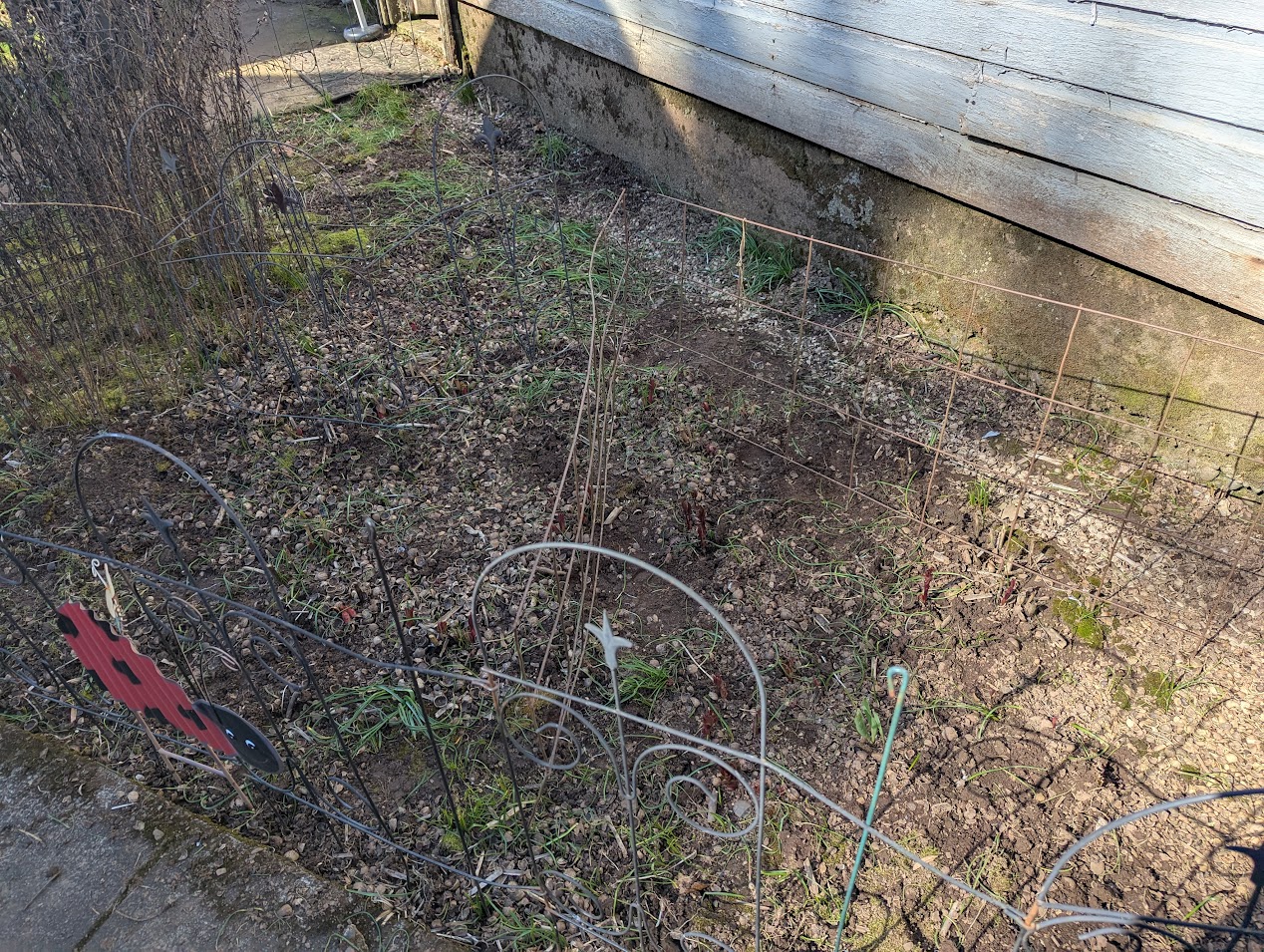
This particular flower bed is my most successful. It is low maintenance, except for the every-five-years purge of invasive and stubborn grape hyacinths.

This garden bed blooms from early spring  starting with the hyacinth, which I promise, will still raise up tiny spikes of purple flowers rimmed with a delicate white border. Not as fragrant as the larger hyacinths that come in a variety of pink, purple, and blue shades, but pretty enough to place in a bud vase and prolific enough to be a nuisance.

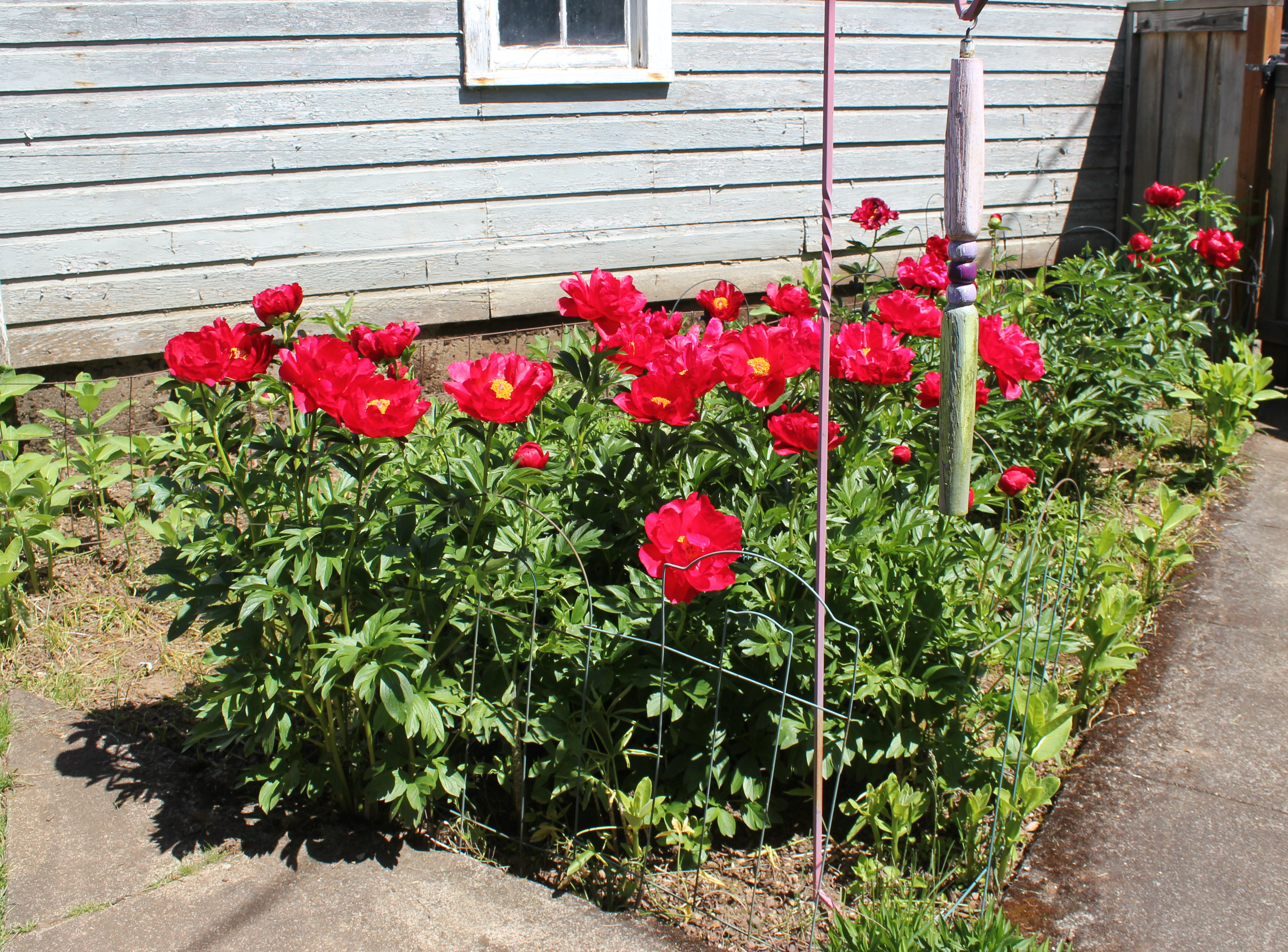
Then come the peonies. Blood red and scarlet. The peonies thrive despite the crowding of tiny bulbs. I throw them some light fertilizer early and a little copper fungicide to ward off brown spot, but otherwise, I ignore them. Well, I pick them and place them in pretty vases that I allow to sit outside overnight until all the ants fall off. Ants love peonies.

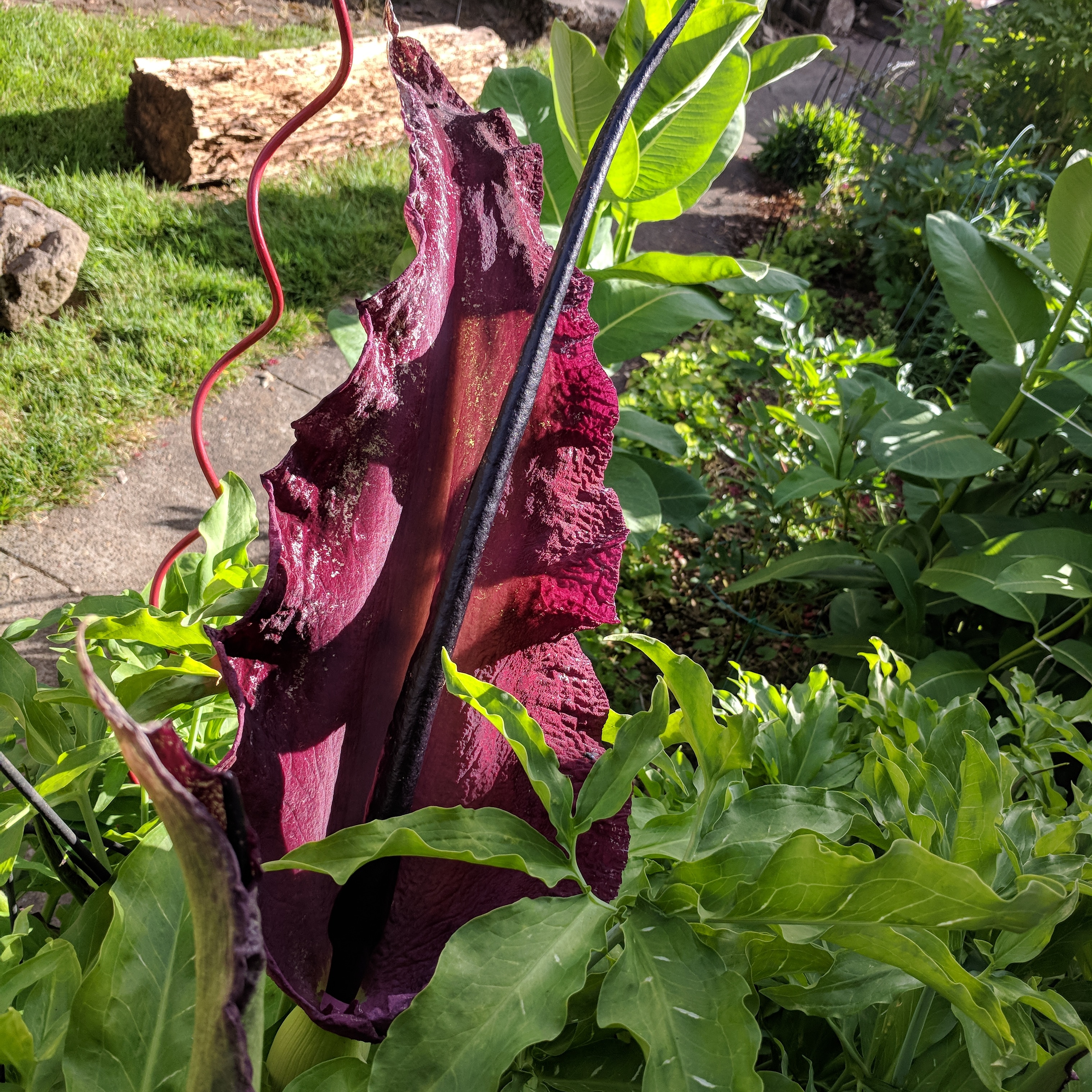
As the peonies fade, the Voodoo Lily comes on. Pungent, odiferous, and so dark a purple as to be almost black. We dug the parent plant up at a rental we lived in some 40 years ago. Didn’t think anyone would care if we took such an obnoxious smelling plant with us, and no doubt they haven’t missed it: surely we missed some of the bulbs.

It smells like rotten hamburger. It attracts beetles and flies (and not a few dogs). It repels neighbors and guests, but it also piques their interest: what is this mysterious plant? Dracunculus Vulgaris. Voodoo Lily. The harbinger of our wedding anniversary (it blooms the first week of June).

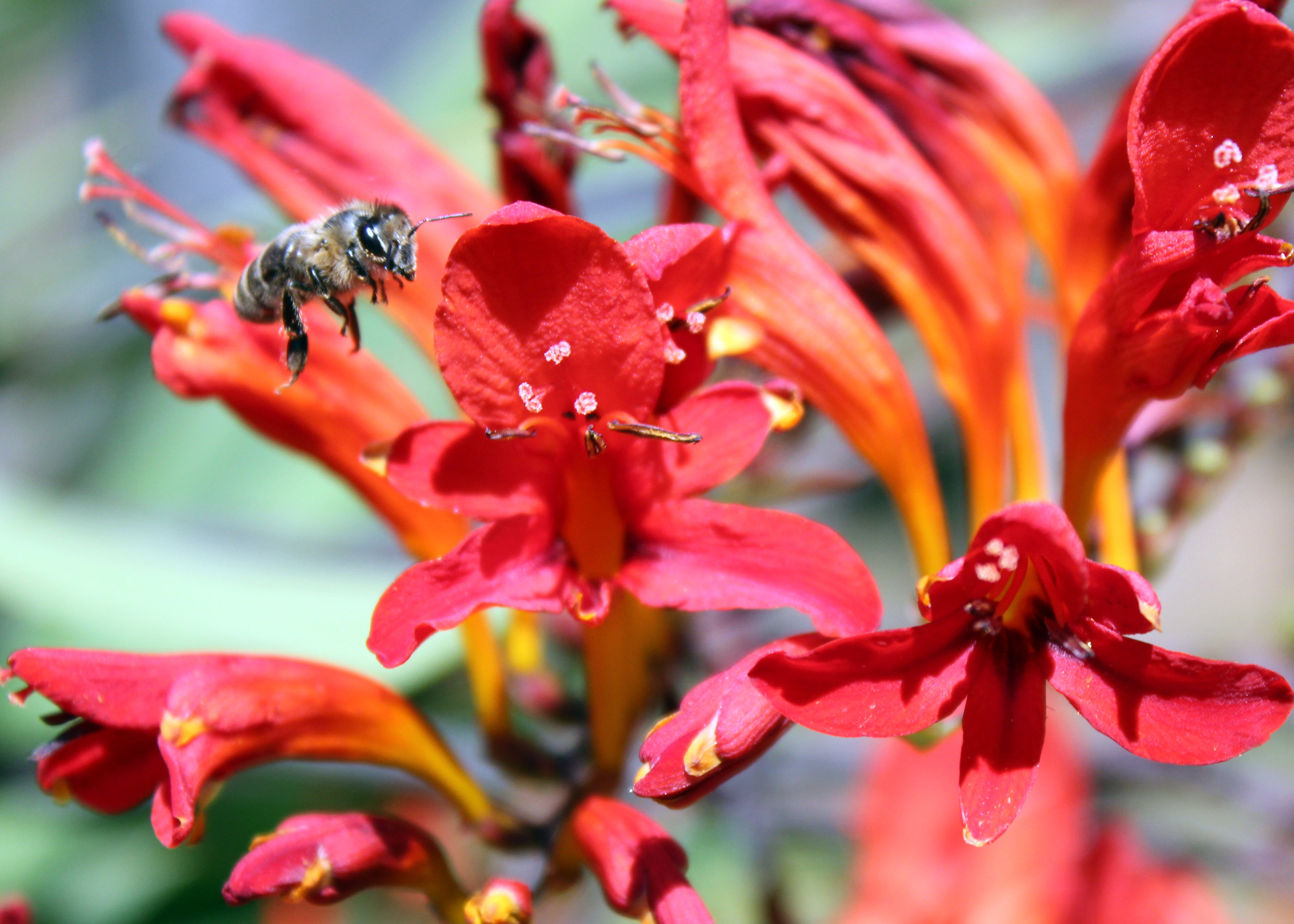
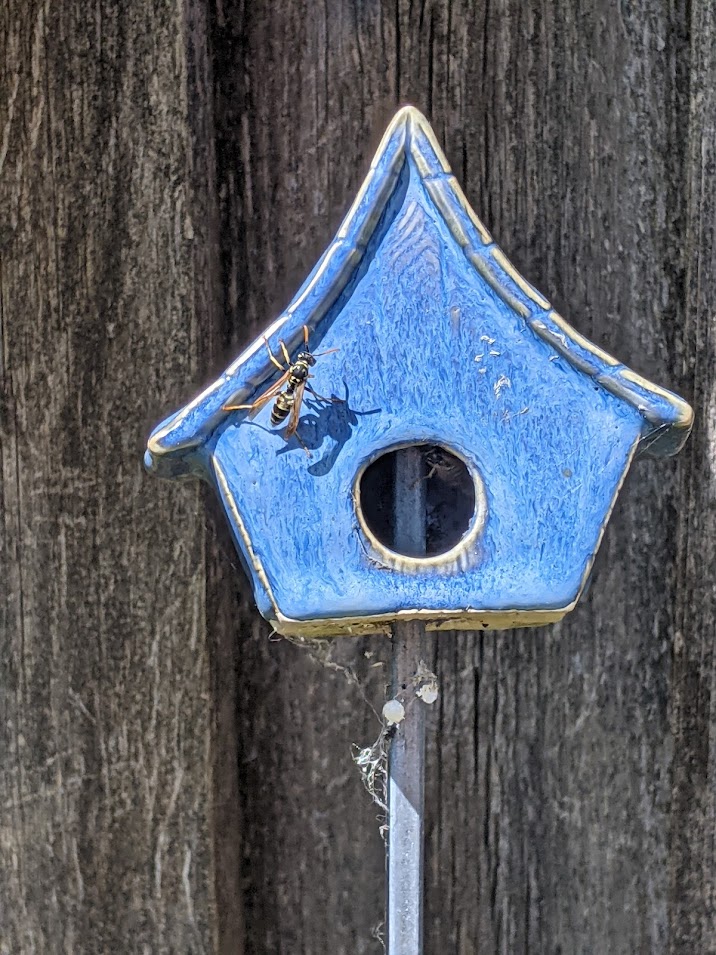
And when the lily fades and dies back, the milkweed springs upward. And upward. It blooms with a strong aroma, something far less offensive than the former: milkweed is aromatic and sweet, enticing and hypnotizing. Here come the bees, wasps, flies, butterflies, and beetles. Pink and white clusters of hundreds of flowers. And with it, our hope of seeing a magnificent orange-and-black Monarch butterfly or the yellow-green-and black striped Monarch caterpillar (that feeds exclusively on milkweed).

If you plant it they will come. We hope.

The milkweed, in turn, goes to seed and begins to fade, the seed pods hardening. Summer is at an end. And with a burst of color, the asters open up: tall magenta ones and shorter light purple ones. The bees and wasps that filtered off to other flowers when the milkweed faded are back in force. It is one last feast of nectar, of pollen, of summery intoxication.

Then it all fades away and the grape hyacinth begins to poke its persistent leaves upward, greening the winter brown ground.

**note: the only photo that is not mine is that of the grape hyacinth. Credit goes to NickyPe and Pixabay.

I Committed

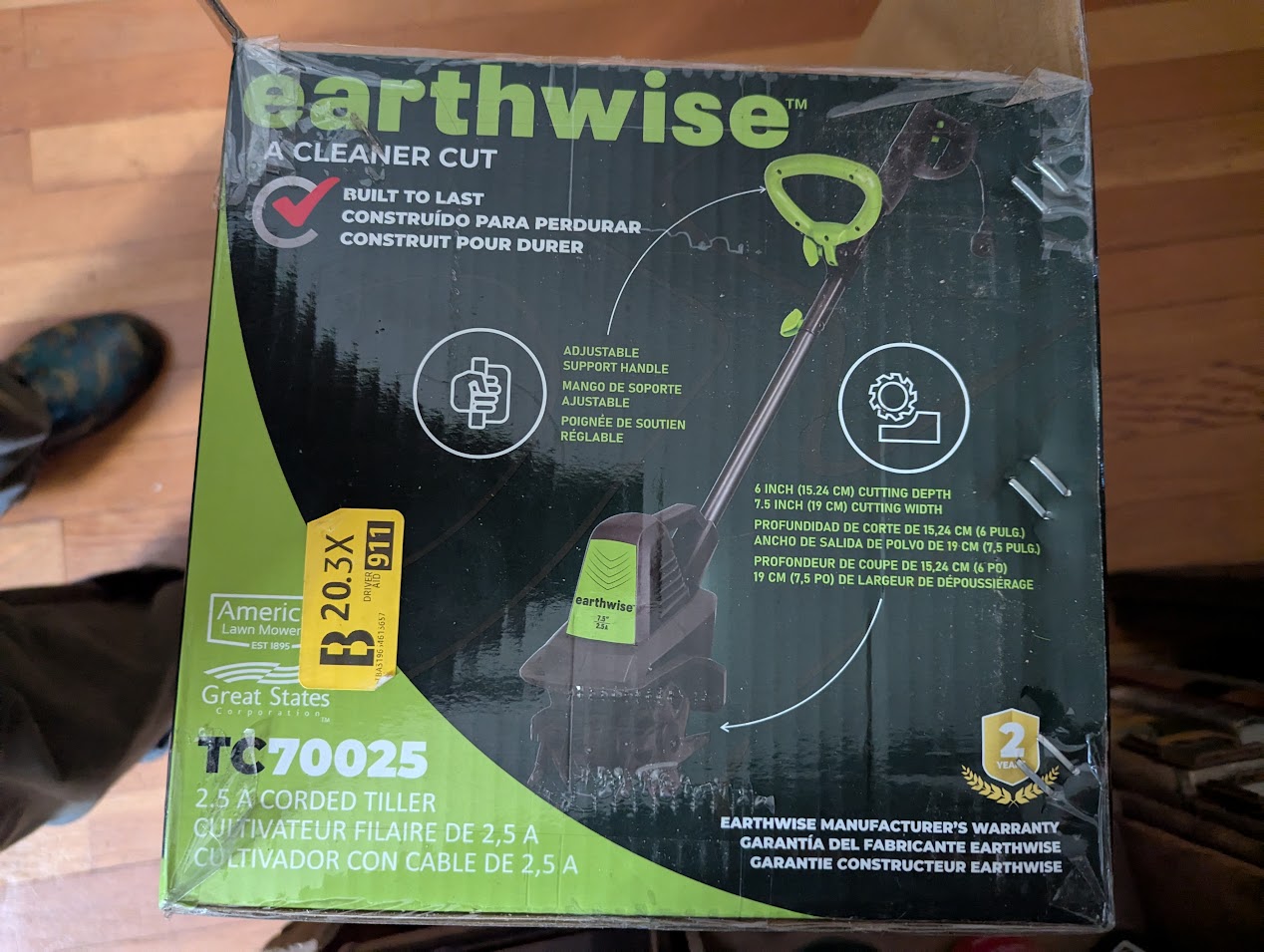
I purchased an electric small rototiller.

Inexpensive and probably not highly rated, but perfect for all I want it to do, which isn’t much more than knock down the sod so I can plant more things.

But I had a heck of a time putting it together until I handed it to my husband and he had it assembled in 15 minutes. i hate men.

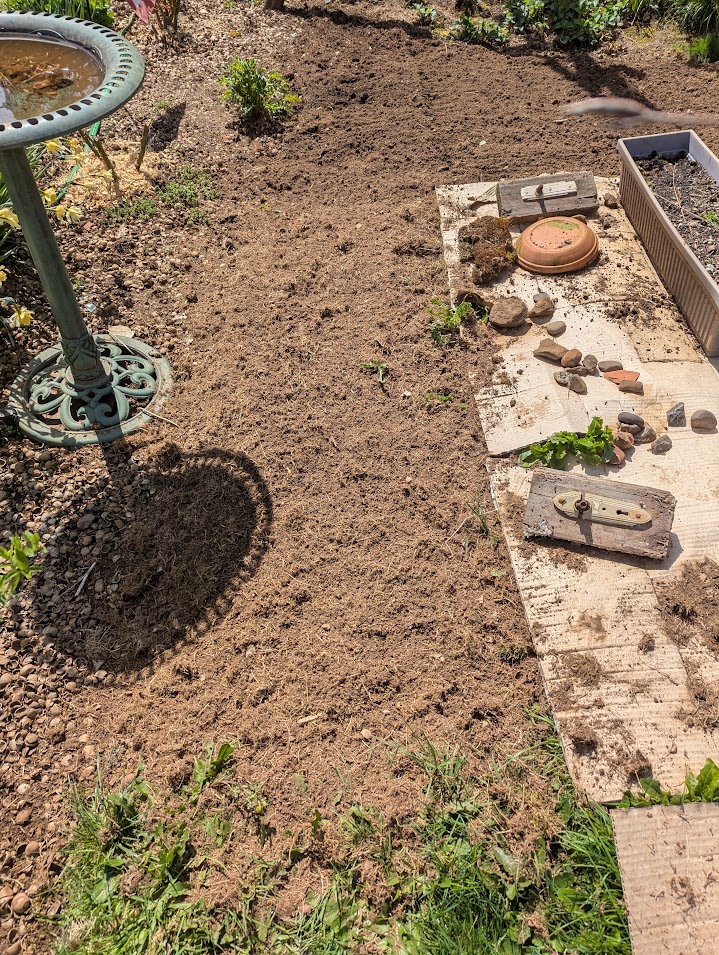
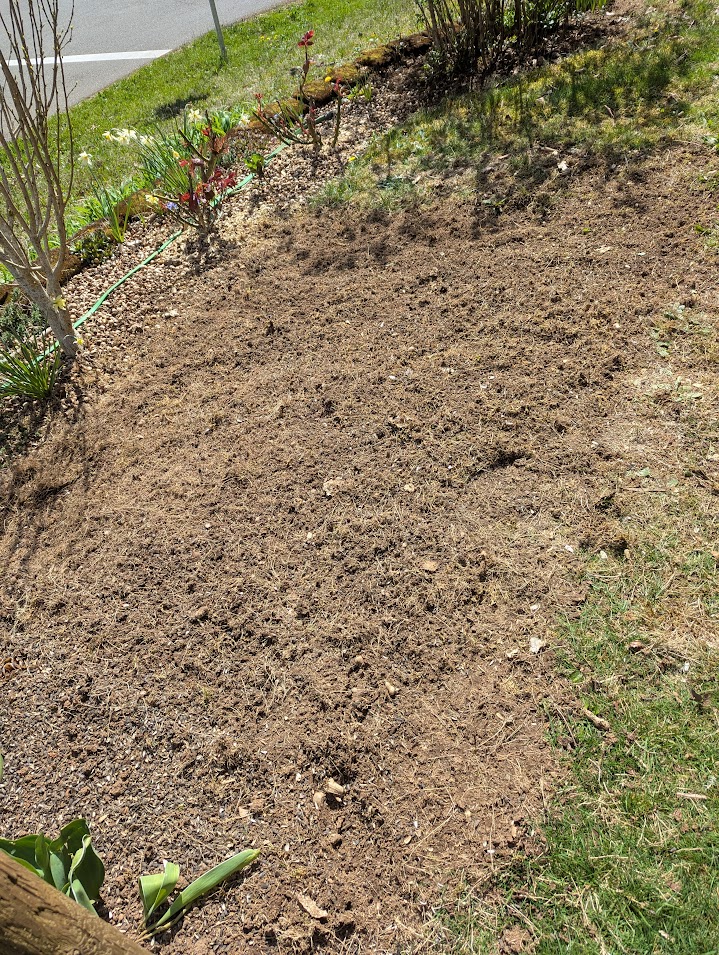
I tested it on a muddy section of yard (it is far too muddy to be doing anything right now, but this was just a test patch).

That’s what I want to achieve. So – I have the small rototiller I want and it works like I want and I should be able to post more about how I have opened up areas to more garden space. It does bounce around and work my back, but not like the old way of doing things with the manual edger. Yay.

ANNNND I ordered three roses from Jackson-Perkins. Their roses run from $35 – $44 but the day I decided to order two more roses, they had a special going for “3 roses for $75”. OY. Can’t pass that up! I have two yellow and one white English Tea roses coming.

  1. Oregold – a tried and true fragrant yellow rose
  2. Soft Whisper
  3. St. Patrick

Last year, for whatever reason, they sent me my rose in February and it was too cold to plant. I’ve never had this issue with J&P before. It was strange and the rose died, but I’m giving them a second chance since they have always been reliable over the last 40 years I have ordered from them. I will post when they come in and I plant them, but I am pleasantly surprised that they have not shipped them too early. I think last year was a fluke.

Time to Prune  

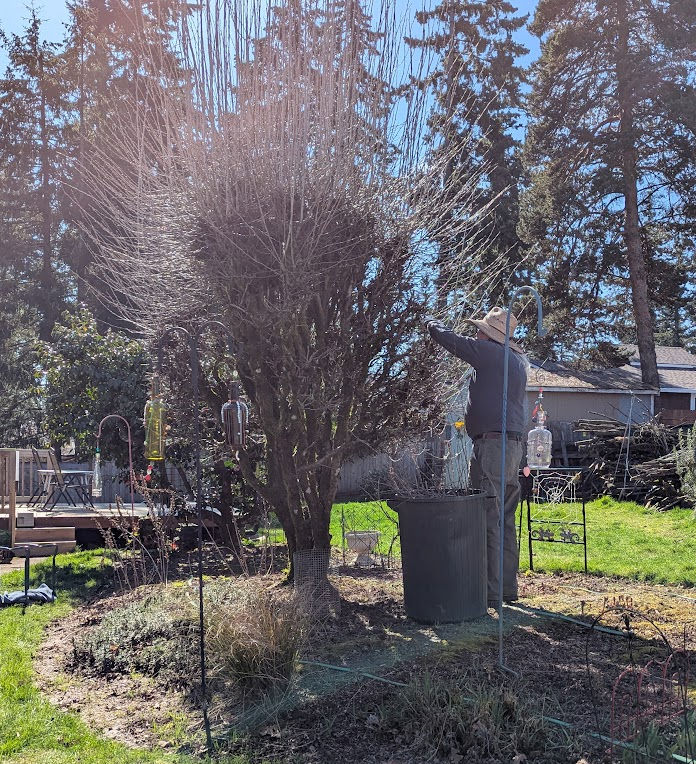
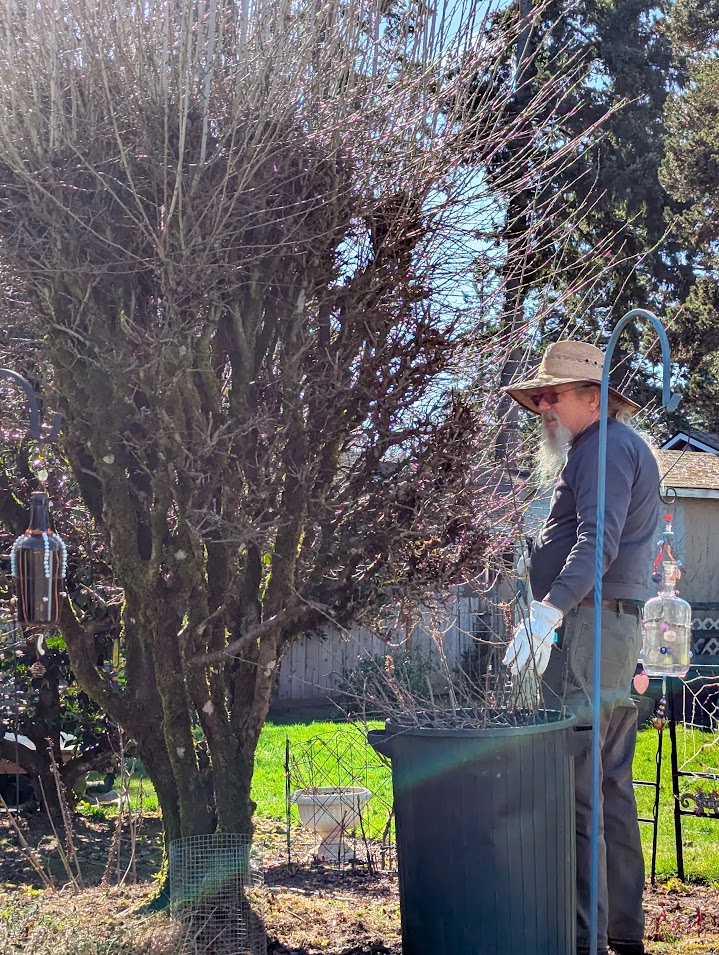
I always prune my roses back on Lincoln’s birthday (or as close to that date as I can get). I grow English hybrid tea roses for the most part and they need to be cut back before their Spring growth.

As an aside, I was once attacked on a birding site because I do not like “introduced” and “invasive” bird species. I stand my ground: wherever you live, invasive species of plants or animals are a problem. And, yes, I already know white people are an invasive species. Spare me the guilt: I did not choose my ancestors; I did not make their choices. But I am here, and I am doing my best to not make the mistakes of past generations. Besides, I am the product of conquests and colonialism: my ancestry reaches deep into the unrest in the Baltic regions and England, Ireland, and Scotland. I do know my ancestors did not promote slavery (but some of them were racist) and they did not participate in the Indian Wars or Manifest Destiny (although I am certain some of them were sympathizers)

This person tried to “guilt” me by declaring, “I bet you grow roses.” Well, yes, I do. There are native roses to the Americas, although I do not have them in my garden. The roses most of us grow are from England or France (the “Old World” as it were) and are anything BUT invasive. They require a lot of work just to keep the one growing and disease-free. They don’t produce seeds or spread by runners or rhizomes or bulbs. They only provide aroma and beauty at the cost of a lot of labor (I need to stress the labor part). Roses are bit of a bright spot.

The time to prune them back is traditionally Lincoln’s Birthday, or the 12th of February (for those younger folk who don’t know the birthdays of the original two presidents who were honored before the date – President’s Day – became all-inclusive). The other birthday was that of George Washington who declined to become king: February 22nd. Now we celebrate all presidents, including Rutherford B. Hayes, Grover A. Cleveland, and even Richard M. Nixon. I suppose they all whined they weren’t given an award for participation at some moment in time and we caved. Not all presidencies are worthy of honor. But that’s getting political and I came here to talk about roses.

I have three at the moment. I had four, but I did a thing last year: I dug up one rose and gave it away to plant another rose which immediately died. I have veteran’s Honor and Rio Samba, both English Tea Roses, and a floribunda called Tuscan Sun. I am not a fan of floribundas, but this one has large, scented blooms and gets to stay. I want to order tow more roses this Spring: a yellow rose and perhaps a white rose.  But that is aside the point. I have the three to deal with right now.

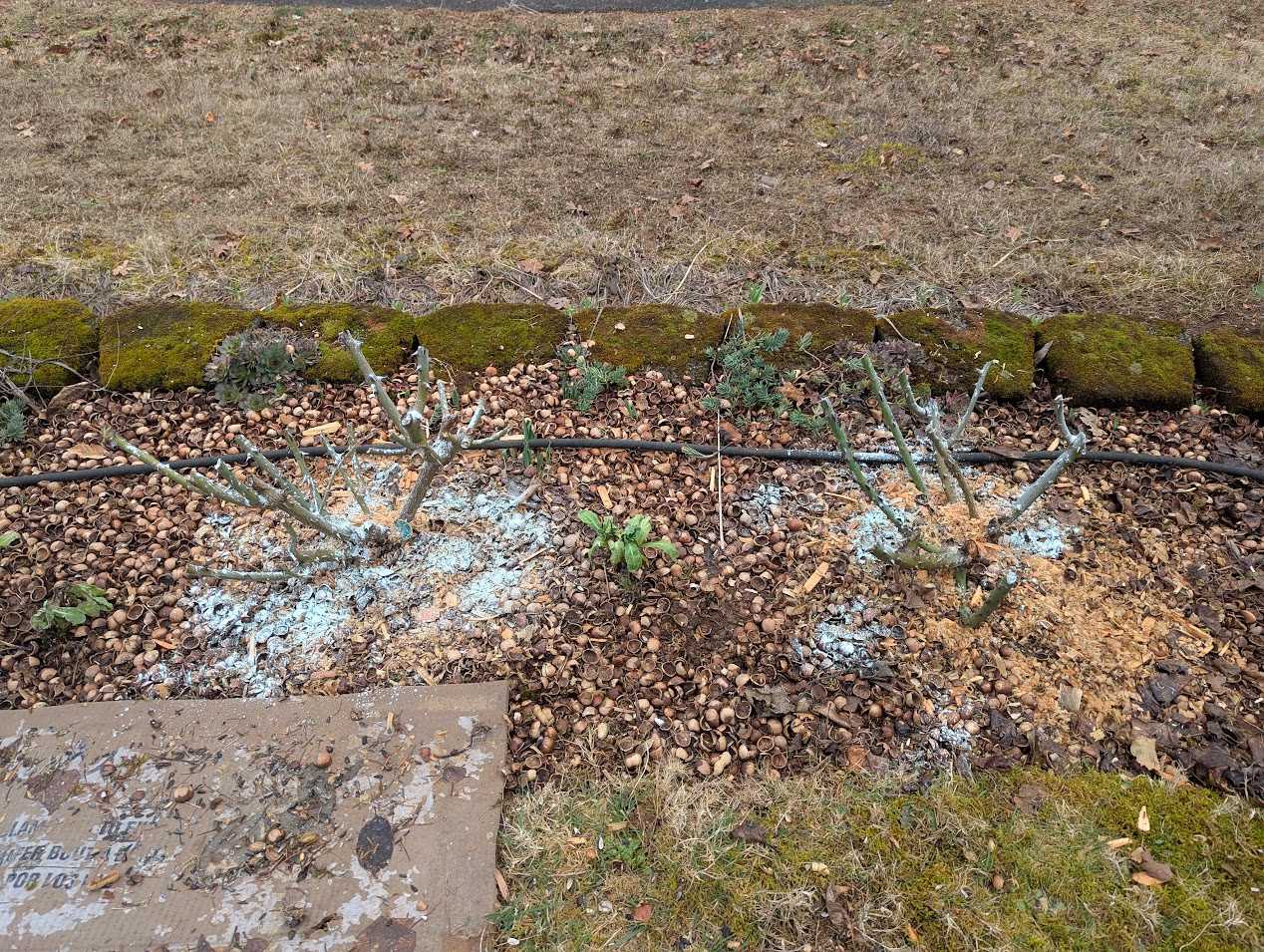
I pruned them back to roughly 8 – 12” (20-30.5CM). Then I sprinkled them with copper fungicide.

My yard promotes the growth of fungus. My peonies and roses are the most susceptible: black or brown spot affects them. I’m at war with something I cannot see.  I have read the pros and cons of using copper fungicide (not good for insects). I know the devastating effects of the two fungi. Since it seems to attack those two plants specifically, I made the decision to apply it to those plants only. Both are cultivars from other parts of the world (there are native peonies to the Americas, but the Western peony does not like our maritime climate in the Willamette Valley – I have tried). Neither are essential to native pollinators. Peonies are resistant to most pests, and roses are subject to aphids and fungus. I think I am safe applying it to just those plants and crossing my fingers to not hurt the native pollinators.

I inherited the peonies: I did not plant them. They came with the property, and I counted over 100 plants last year. I have no idea what cultivars they are as the tags were lost to history after the original owner passed and the property went to the people who flipped it, and then to us. I love peonies. They were one of the deciding factors in purchasing this property. They don’t require a lot of care.

I planted the roses. I accept the amount of work it requires to have beautiful blooms. And who wouldn’t, once ensnared by the rose’s beauty?

It was 25° on Lincoln’s birthday and it was over 50° today. Time to prune. Only time will tell if the copper fungicide works against the black and brown spot fungus that lives in the soil. I have my fingers crossed.

(photos courtesy of Jackson Perkins, Edmund’s Roses, and rosesalesonline. )

Garden Art

I don’t have a gardening post tonight.

This is the view off our deck this morning; it has since morphed to freezing rain on top of the two inches of already slick snow.

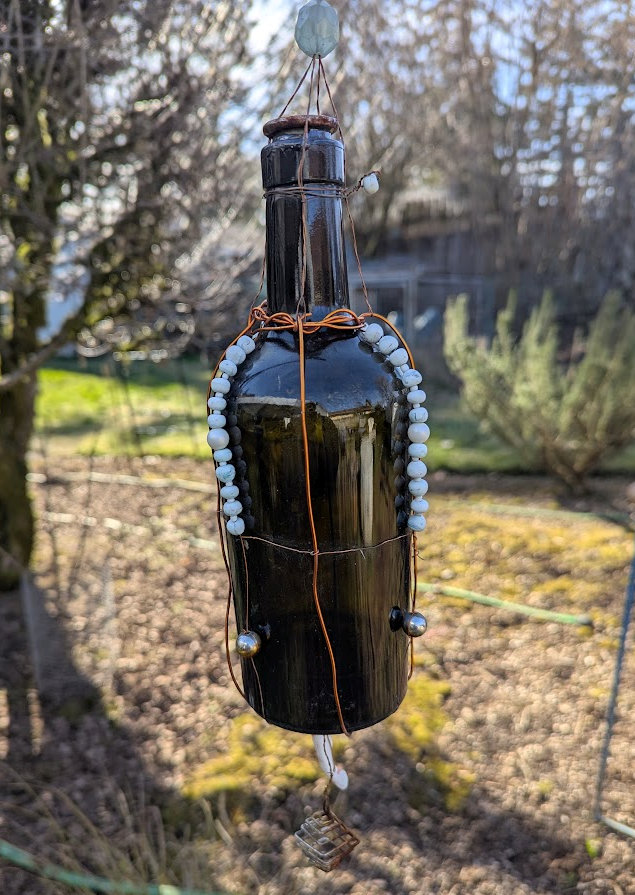
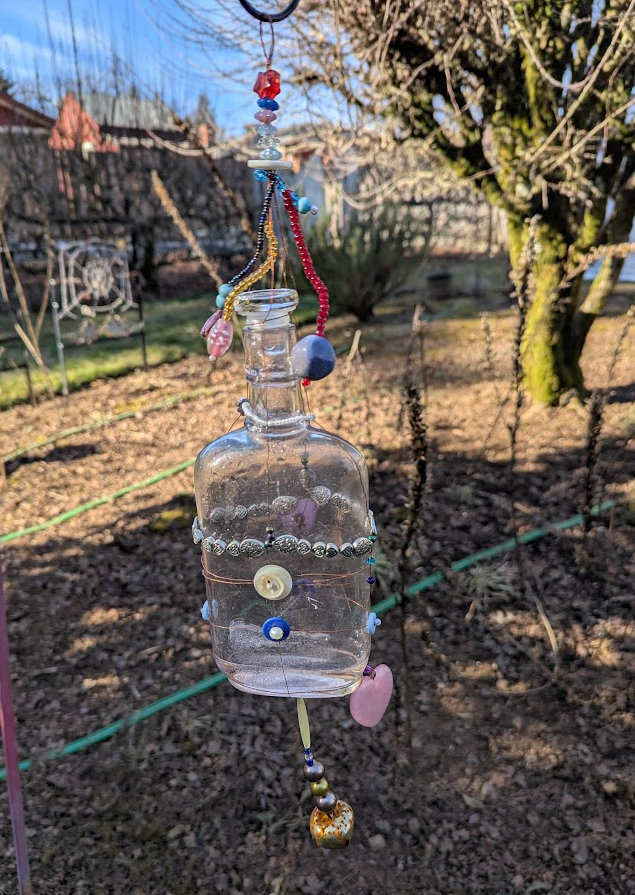
Yesterday, the sun was shining. I took a few photos of some of the yard art I have hanging around, just some bottles on Shepherd’s hooks. I make these in the heat of the summer months when it is too hot to garden and too nice out to be inside. I’m not one for air conditioning, shade does me just fine.

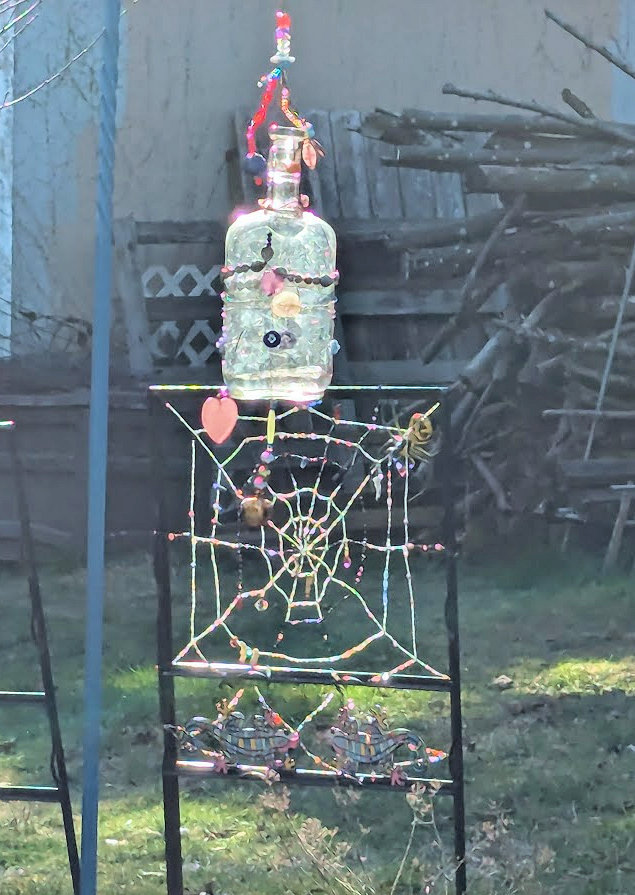
Beads, wire, some old bottle or some wine bottles. They serve no purpose other than to hang in my garden. Maybe they ward off evil spirits, but that isn’t why I make them. I make them because I need to keep my fingers busy. The spider web in the background is another summertime project done with beads and fine copper wire.

I make other things, too.

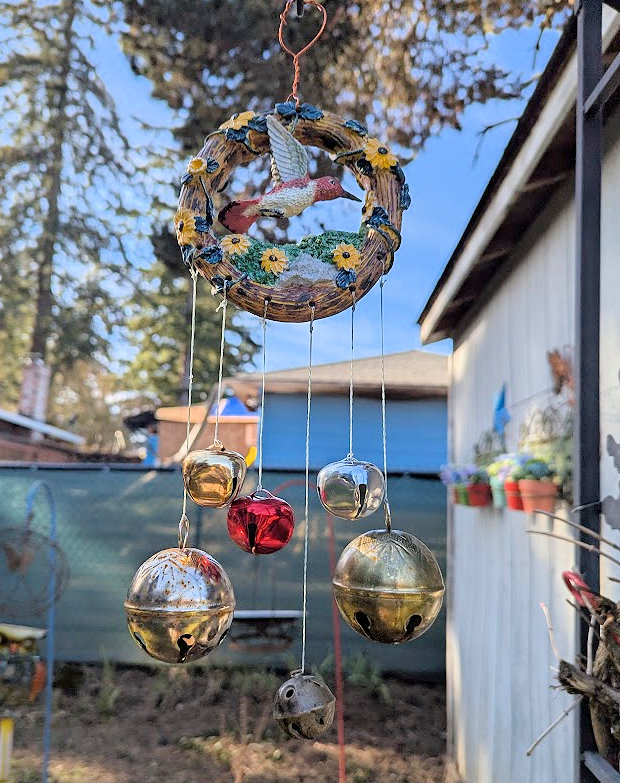
A mobile out of jingle bells and a resin hummingbird.

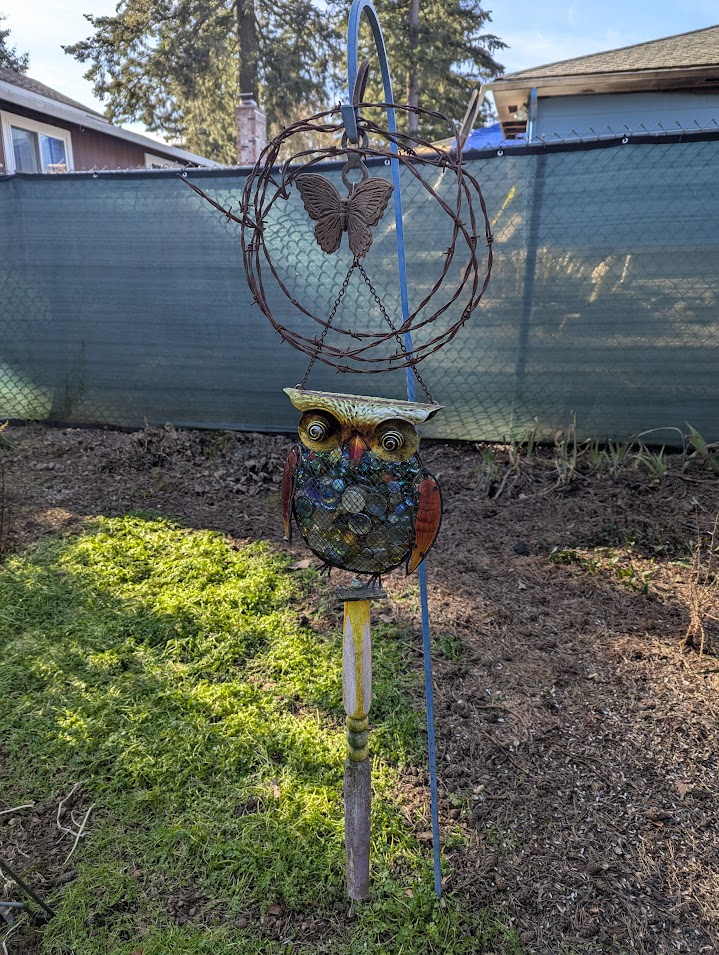
Or I just hang several things together: some rusty barbed wire, an “owl” my bonus daughter gave me (I think it was supposed to be a bird feeder, but the mesh is too large to hold seeds). I added marbles instead – we have no lack of of shiny objects! A newel post from a crib (that needs repainting).

I made a mobile out of old scrap metal I found in my son’s boxes in the attic (those I did not pass on to his children or widow) and rusty things in our yard. Odd things that I attached to a broken butterfly wind chime. A little copper wire and 20# fishing line ties it all together.

The Crescent Moon. This was in a pile of garbage some <expletive> contractor dumped in a favorite camping spot of ours, one we will never get to revisit because the road has been closed for six years. It is a portion of a fiberglass window. The rest of the garbage was just that: fiberglass, broken wood, and things that should have been hauled to a landfill, but there was this with its rounded edges and crooked break. I etched the face and inked it in. It spins in the breeze.

Beauty out of ashes. Beauty out of garbage. There’s an object lesson there. Make something beautiful out of the life you are handed, even when someone dumps a load of crap in your lap. Let God make something beautiful out of the garbage heap and scraps of your life. Repurpose the discards.

Simple things.

February

We’re staring down winter this month. The killing frost finally arrived and more is to come. Tender plants will be moved into the greenhouse for the duration of 20°(F) nights: Don’s Bonsai trees, our newest tree peony, and the curry plant (which is not the same as the spice you buy in the store which is actually a blend of spices). It is time to earmark seed catalogs and set aside money to buy those precious seeds.

The worst winter weather usually hits us in February when we’re ready for a thaw and the daffodils are pushing upward whilst the buds on the Camellia, Rhododendrons, and Lenten roses are swelling. February can bring all kinds of weather surprises in the Pacific Northwest and big freezes with sudden thaws are some of them.

We moved to the Willamette Valley in 1983, then a Zone 7b (it is currently a Zone 8 although I overheard someone claim we are now a Zone 9 – I haven’t verified that). It is a maritime climate, not the dry and arid climate of my youth. We are surrounded by mountains: the low Coast range to the West and the towering Cascades to the east. Snow, when it happens, usually coats the “upper” elevations: anything over 500’ above sea level.

Cloudy season runs from October through early June, sometimes into July. With clouds, the rain comes. We get more rain than we get any other precipitation, and more ice than snow when the weather gets cold. I hate rain and ice. I really, really despise ice. Where snow is insulating, ice penetrates. Snow rarely lasts long enough here for me to begin to wish for sunnier days or for the February thaw to just get over. Rain just covers the sun and makes the days seem dark and lifeless.

I have perfected complaining about the weather like a true Pacific Northwesterner.

I’d rather be outside with my hands deep in the soil, stirring up the things that live in the dirt and getting my fingernails broken, chipped, and full of mud. Sitting out the dreary days of February are the worst: there’s the promise of March and starting seeds in little pots in the windows or in the greenhouse. March, with the first teasing blooms on crocus, daffodils, Lenten roses, and rhododendron.

February is the month for taxes. The month for tying up loose ends in my art studio before I begin another season of pop-up markets. The month of marking my calendar for the upcoming garden shows (and the annual rock and gem show). It is the month to find a semi-decent day midway through to prune back roses and tame the wild grape vine a little bit (I rather like having it grow wild).

I will order roses the first of March. Start seeds in pots: tender herbs and rare wildflowers. The seeds I have placed in the freezer will be taken out and planted in seed starter soil. And I will repot all of my houseplants, at least the ones that have survived my indoor brown thumb. I will set aside money for the plants we plan to purchase in April and May. In March, we begin to hope again.

For now, it is February, and I need to move my tender plants into the greenhouse before a week of below-freezing nighttime temperatures. Maybe we will get a few inches of insulating snow to play in. I hope we don’t get an ice storm. The “big” ice storm of February 2021 is not yet forgotten (we lost one rhododendron and went without power for eight days). But it is February, and if ice comes, so does the big thaw of warm south winds.

Real cold comes with sunny skies, and sunny skies mean Vitamin D and a fire in the Breeo fire pit. I can’t complain about sunshine and a warm fire pit.

It froze this morning. It has been freezing for the past week or so. It has also been reaching into the upper forties and lower fifties (Fahrenheit). The fruit flies have not died off and some small mayflies have hatched already. The pine siskins have moved on, but the year-round resident birds have been hitting the feeders with regularity.

There is not much one can do in the garden right now: too early to prune, too early to plant, still winter. February is often the month we get our “big” storm of the season: snow, ice, melt, floods. January is a month of holding patterns, waiting.

While we wait for the first peeks of green (or red, in the case of peonies), the insect pollinators are snug in their cocoons and hiding places. They are insulated under layers of fallen leaves (assuming you adhere to “leave the leaves” – our neighbors don’t, but they allow my husband to collect the leaves they have gathered, and we use them as mulch to prevent spring weeds and help the pollinators). Our yard is “pollinator friendly”.

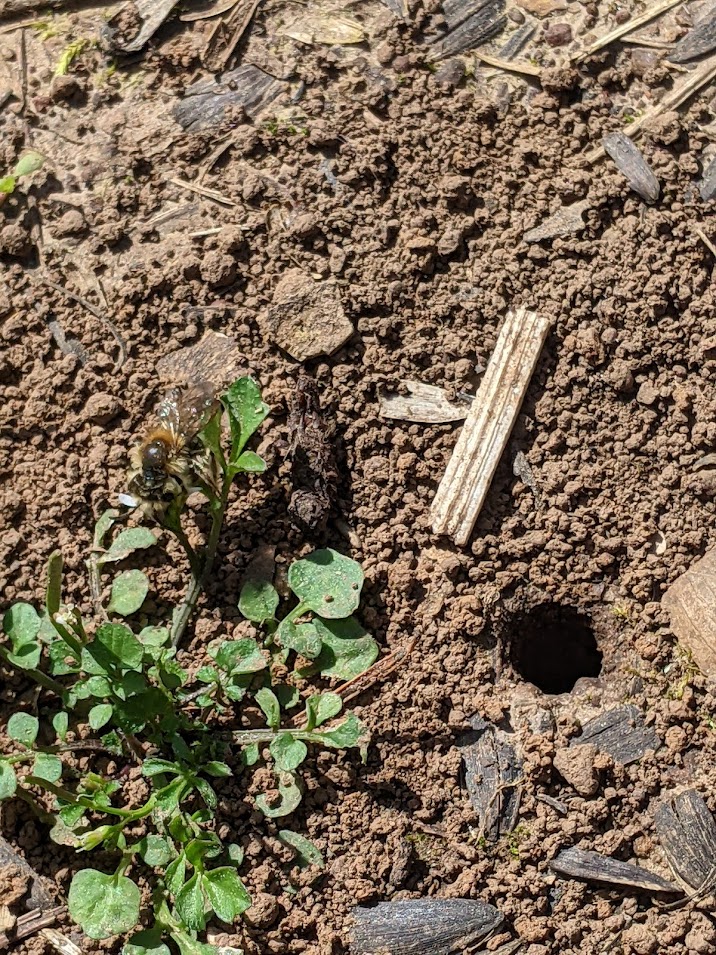
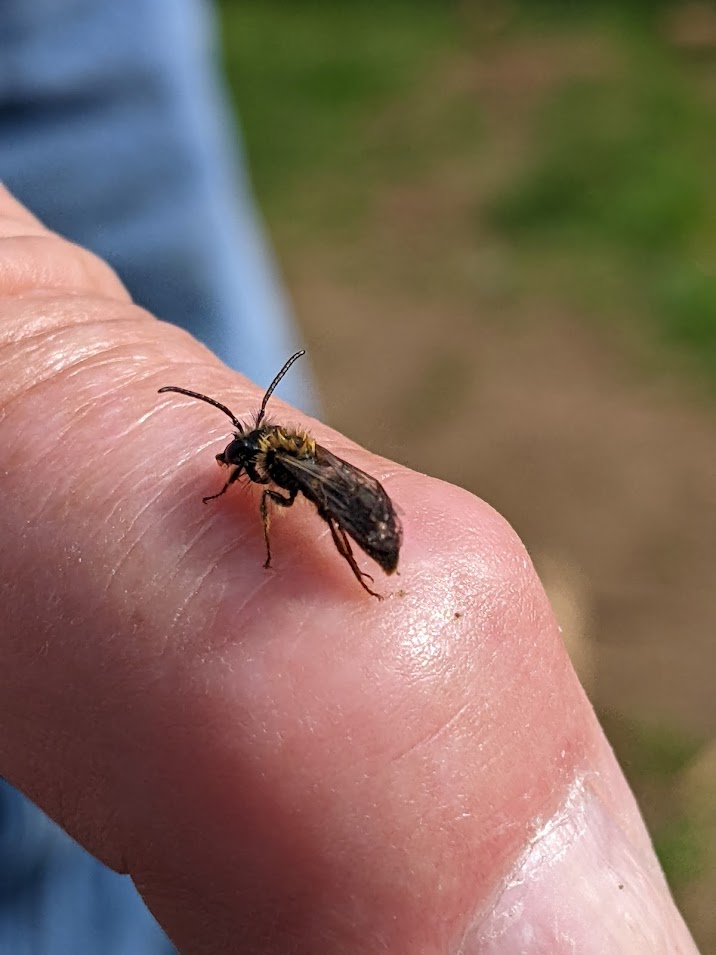
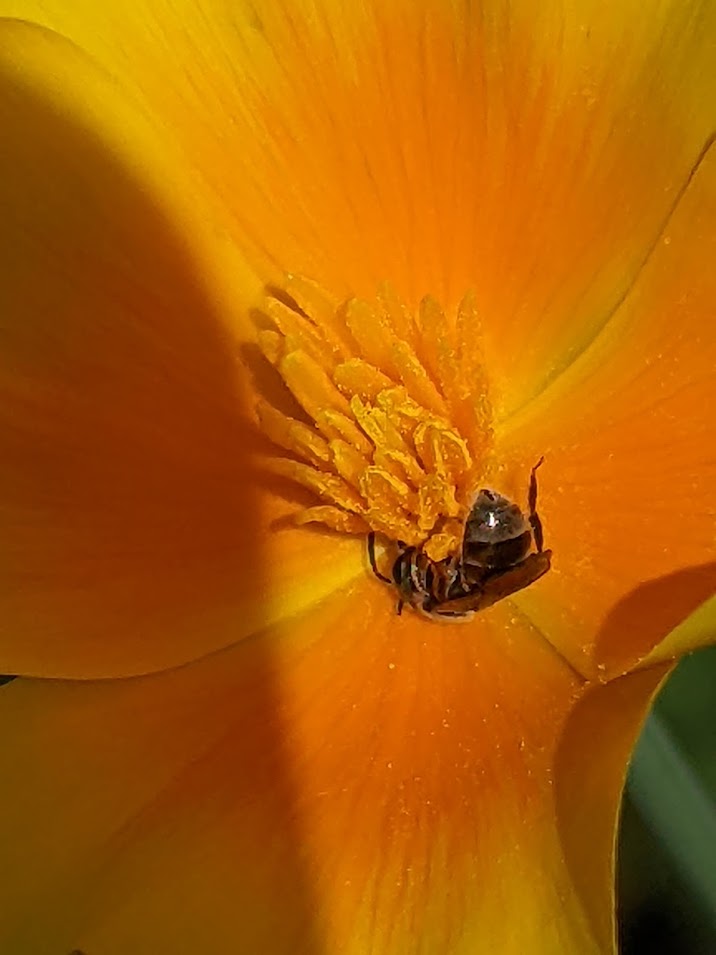
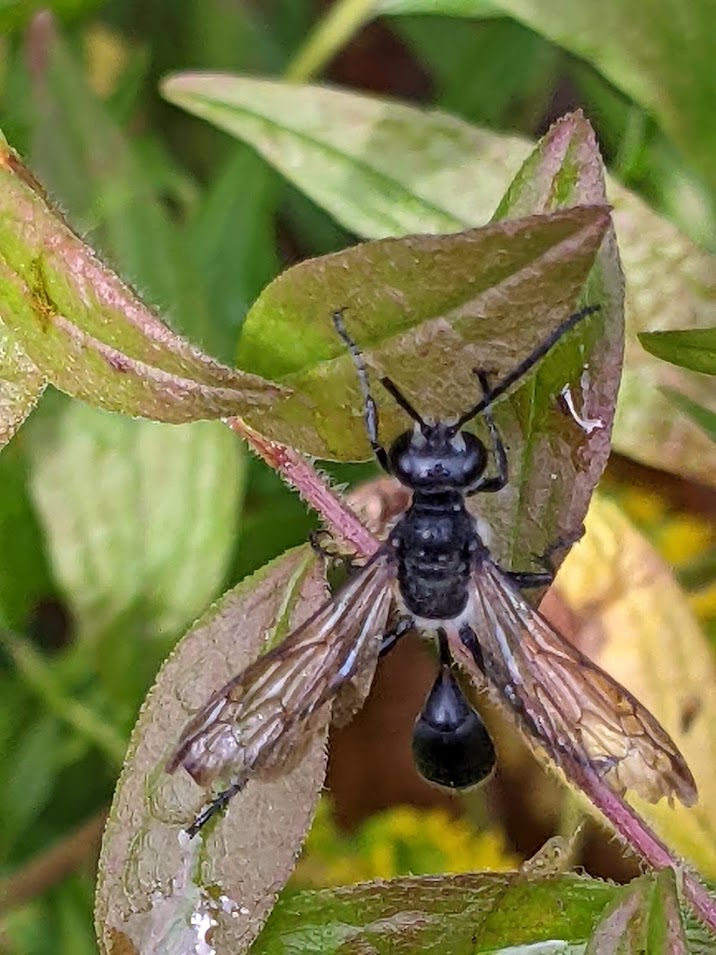
We recently learned what we are doing right to help pollinators and what more we can do. And right now, in the still of January as it tips into February, is the time to think about emerging insects. Bees, specifically, need our help. There are several hundred species of bees in the United States alone, a few hundred in the State of Oregon, and possibly two- to three- hundred in our town alone. Our yard is likely host to over 40 species of native bees. I know we have identified close to thirty different species, not including the non-native (and non-threatened) European honeybee.

I wish I had photos of all the bees we have found on our little quarter of an acre. We have ground-dwelling bees, bees that love hollow stems, bees that are less than 3/8” of an inch (2CM) all the way up to the big, fat bumblebees that seek out our rhododendron blooms in the early Spring. The bumblebee is especially “of concern” ecologically. Some species of bumblebee are teetering on extinction, like the rusty-patched bumblebee. Bumbles pollinate more plants than honeybees and are native to our continent. (Honeybees are not native bees, are not threatened, and are a thriving industry. They are fine.)

We don’t begin to rake up the leaves and clear out the dead fall around the daylilies until the temperature has been hovering around 50° (F) for a week. This allows the bees, butterflies, moths, and beetles time to warm up, hatch out, stretch their lags and wings, and begin the summer-long process of pollinating flowers, vegetables, and fruits. Certainly, some of these are harmful insects (non-beneficial) but most of them are “good” guys: the beneficials. And beneficials are necessary for the ecosystem.

We learned recently that it helps to not “deadhead” all of the flower stalks, but to cut them down in lengths. Bees and other beneficials hibernate inside the plant stalks, slowly emerging as the air warms and the days get longer. I don’t deadhead a lot of the seed plants: evening primrose, mullein, asters, and goldenrod. The birds dine on the seeds throughout the winter. I never thought about insects.

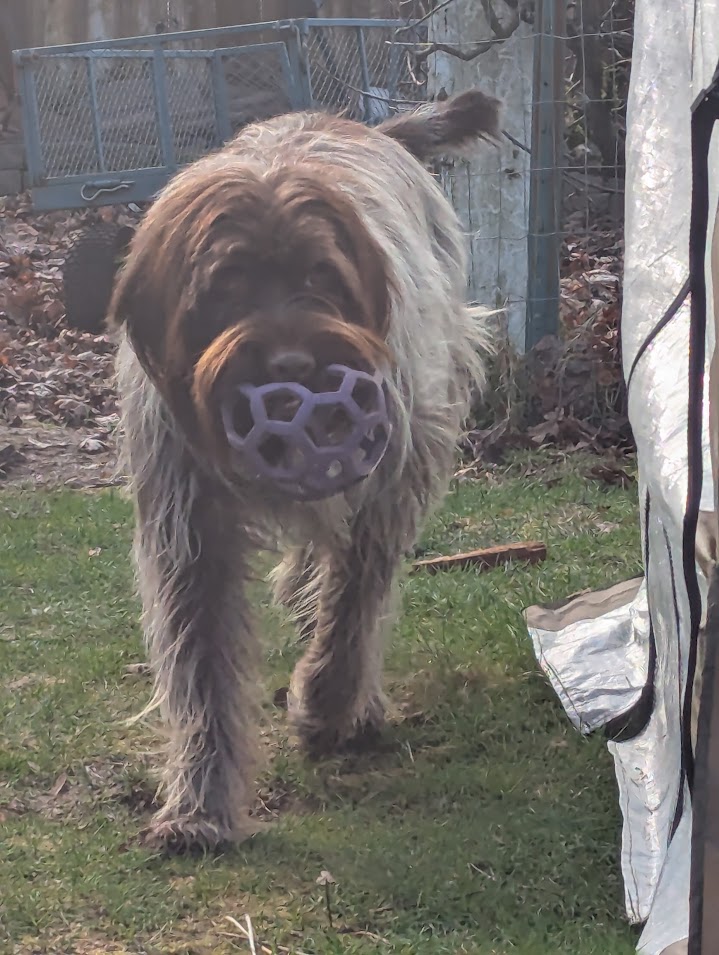
That messy pile of tree limbs and branches we have yet to get rid of is not only home to our dog’s “beaver hut” (he has quite an excavation under the pile!) but is home to more insects trying to find a good place to overwinter. And here I was, thinking we’d have to finally cut the wood up and recycle it somehow!

That patchy mess we loosely refer to as a “lawn” out front encourages ground dwelling bees and gives us impetus to turn the yard into a meadow of native wildflowers, further encouraging native pollinators to stay and thrive. I am excited to add native plantings to the lawn with more flowers and less mowing! (I will probably have to paint a sign explaining to my neighbors why our yard isn’t as “pristine” as their golf-club perfect lawns or patches of sterile gravel.)

We already grow a lot of native plants, some purchased from nurseries, some collected from the wild, and some that birds introduced by pooping on our yard. The Xerxes Society provided me with a list of more natives, many of which I can purchase seeds for through local nurseries. Yee haw! I’m watching little $$ fly out the window, but it is SO worth it to create a habitat for miniscule creatures like bees.

I’m not going to go into how we depend on native pollinators and how their declining numbers impact our very own survival. You can find that information and more through The Xerxes Society. This non-profit is based here in the Pacific Northwest but reaches out across the continent. It is my favorite non-profit, close to my heart (BUGS!), and is highly rated as a non-profit. You may not think something so Lilliputian might impact our giant lives, but we depend on insects and invertebrates for so much. I’m not a rabid “tree hugger” but when it comes to insects… Well, I’m probably a rabid “bee hugger.”

(I also do not know all the bees, wasps, and hover flies I photographed and posted to this article. I apologize for the oversight, but all photos are mine.)

Our yard is a curious yard for flower and herb gardening: nearly full shade during the winter when the sun is low and the Doug firs around us block its rays (there are no trees (per se) in our yard). In the summer, there are large swaths of the yard that are full sun to part sun. And there are sections that remain shady all year round, with just a little sunshine in the middle of the summer.

And the soil! Where once there were livestock over seventy years ago, the soil is rich, loamy, and wormy. Ignored sections tend to be clay, the predominant soil type of this area. I have well-drained areas and a few areas that remain wet. I battle fungus: black and brown spot, moss, and – in some corners, powdery mildew. Aphids are the biggest insect pestilence, but I have to be careful in my battle against them because our yard is also a pollinator habitat: birds and beneficial insects teem year-round.

My battle against invasive plants is slow and deliberate, executed with extreme caution: I have a liquid herbicide that I apply with a paint brush on the newly cut stems of offending plants: Himalayan blackberry, the neighbor’s flowering fruit tree that insists on shooting up starts in out yard, and a few miscellaneous “weeds”. It has to be done when the sun is out for several days in a row and protected from the curious nose of our doggo.

I have also applied the salt-vinegar-soap mixture to certain leafy plants, but that also needs to be done with caution. The salt will render the soil unfertile for a few years if you use too much. And it doesn’t outright kill, it merely stops the growth and then I have to go in and snip off any green starts I see, denying the offending plant needed sunshine and air. (1-gallon white vinegar – best to use 30% stuff you can get at places like Home Depot – + 1 cup salt and a dash of Dawn liquid soap to help it adhere to the leaves and stalks). A hot day works best. I killed the Comfrey that was taking over part of my yard with that solution and a LOT of snipping. It took three or four years to win the battle.

(Yes, I know: Comfrey is a wonderful herb and a pollinator friend. But it is also invasive, tends to powdery mildew, and causes lovely rashes on contact. Borage, a close relative, is much easier to contain and the pollinators love it just as well.) (An opinion, not a rule.)

Aphids are trickier. I’ve tried Neem and I have tried a natural recipe of soap and water (easy on the soap and it must be Dawn). I planted Marigolds between my hybrid tea roses, but I haven’t tried that around my honeysuckle. I started using a natural spray of essential oils last summer (too late, I am afraid): thyme, peppermint, cloves, and rosemary mixed in a quart of water and sprayed liberally. I also planted two native honeysuckles to complement the cultivar I already have, and I am hoping that the native ones have some resistance to aphids.

I purchased copper fungicide last year to help combat the brown- and black- spot fungus that is ever present in a Pacific Northwest semi-shade yard. I applied it to the ground when I mulched my roses, but I do need to apply it to my peonies as well (and my yard is full of peony cultivars!). My understanding is that the fungus lives in the soil (or profligates there). I also found two natural remedies in my Garden Notes file today.

  1. 1 litre 7-Up (less 1 cup – you drink that) + 1 cup mouthwash + dash Murphy’s oil or Dawn liquid soap. Doesn’t specify what brand mouthwash, but I will assume it is one that is “minty” fresh.
  2. 1 T baking soda + 1 gallon water + 1 T white vinegar + 1 T cannola oil. Since it is being used on plant foliage, I would assume you use the food variety of vinegar, less acidic. I can foresee this leaving a white residue of baking powder of plants, but it is quite diluted. The only other problem I have with this is the cannola oil. We don’t use cannola oil in any of our cooking or baking.

The former recipe looks doable for me, but I’d love to hear from other folk what remedies wou have tried (natural, mind you).

Slugs and snails are our “other” pestilence here in the Pacific Northwest. You can pour beer into a receptacle and let them drown themselves (rather gross to throw away every morning with their fat carcasses, and a waste of beer). You can use slug bait (I do, but only in places where I can shelter it from birds, mice, and doggo). But the best deterrent is simply removal. Toss those puppies into the middle of the asphalt street and let Nature (or tire treads) take its course. Eliminate hiding places (this is a biggie: the fewer places for slugs to hide, the fewer slugs you have. Snails, too.)

I do have another trick up my sleeve, but it is for potted plants: copper tape applied around the base of the pot. Copper conducts electricity which gives slugs what is equivalent to a “hot wire” shock to a horse. My husband has copper piping that he places around the lettuce and similar greens in the vegetable garden. Science, folks.

I’d love to have your input on solutions!

Indoor Gardening

I purchased two four-inch potted plants today. I am truly trying to have an indoor green thumb, but I haven’t had much luck cultivating that talent. I started killing houseplants when I was pregnant with my oldest and my luck hasn’t changed much since. So far, I have managed to keep a pothos living (and expanding) and a couple peace lilies. The latter are beginning to look sad after twenty-nine years (I got them when my mother died). The pothos I have had for much, much longer.

I had a Christmas cactus that I grew for thirty-some-odd years, until my favorite cat finally knocked it over and killed it. She broke the pot it was in, too. I was very sad about that: I had purchased the planter and cactus for a nickel at a church bazaar when I was about nine years old. But of all the cats I have ever lived with, this one was my all-time favorite, so she was forgiven. I think she was angry because we kept introducing more cats into our household. I’ve never had the heart to buy another Christmas cactus or to replace the broken pottery. But I have had other cats.

The pothos survived my pregnancies and has been divided several times. Nowadays, I just trim it back and refuse to root any more starts from it: I have two of its babies, and that is plenty. (The seemingly dead plant is a ginger plant. It may or may not be dead. I might have left it outside too long and the cold got it. We’re holding out hope.)

The peace lilies have always been my red flag: when they wilt, I know I have forgotten to water in a couple weeks! But water them and they bounce right back. This is how terrible I am at indoor gardening! They have been divided, but the first few years of my retirement have been hard on them. I always had them at work, in my office, where they thrived. Now they languish and I am promising them to do better in 2025.

I don’t remember when I picked up the old aquarium or when I decided to try growing plants in it. (I kill fish, this was never going to be used for fish!). Most of my early attempts died, but the asparagus fern has clung tenaciously to life. I added one parlor palm, and it thrived, so I added another. There’s an English ivy in there now, but I don’t know if it will live long or not: it picked up a fungus that I have treated with copper fungicide. Time will tell. I started talking to my plants when I started the terrarium, but I didn’t start daily misting until a week ago.

I know: most plants need daily misting, especially in the winter. I’m trying to be so much better! I check the roots with a meter once a week in the winter and water lightly as needed, no more waiting for the peace lily to wilt! I snip the dying leaves off. I opened the Rodale Book on Indoor Gardening that we have owned for at least twenty years, and I finally read it (the parts that are pertinent, anyway).

I did all the reading and buying of plant guides after I purchased an 8” potted Wandering Jew last fall. It was severely root bound and started dying shortly after I brought it home. I tried repotting it, but I didn’t have a pot large enough and the damage was done. So, I cut a few starts off and put them in a jar on my windowsill and am patiently waiting for them to have enough fine roots to survive repotting, probably in March of this year.

The death of the Wandering Jew impressed on me how little I really know about growing and keeping indoor plants. Who kills a Wandering Jew? Or a Spider plant, for that matter? I mean, other than me. And why am I so terrible at this? All my plants are in a southern or eastern exposure, but they really don’t get a lot of sun: in the summer we keep those blinds closed to keep the house cool and, in the winter, the tall Douglas firs across the street block the sun from our house. My surviving plants are all lovers of indirect light. I can check that box and look for more plants that like indirect light.

The house gets dry in the winter and the heat vent blows on the plants: of course they need misting! Somehow, I just never grasped the need to mist my houseplants. According to the several sources I read, twice a day misting is optimal, but they should be happy with once-a-day misting. That is more than they have been getting!

Today, I found a cute little coleus and a tiny spider plant, newly potted, and on sale at a local grocer. I know, I know – don’t make splurge decisions. But I did. I won’t transplant them until I see they are thriving. I will read up on them. I will transplant them when I pot the Wandering Jew starts. I’d like to put one of them in the terrarium, but I need to know it will thrive in that container.

The dinosaurs need more vegetation.  My goal is to be a better indoor plant grower and to help the dinosaurs in the terrarium.

Notes From Last Week

I wrote last week’s garden post without remembering that I own a manual tiller. I don’t use it for tilling which is why it didn’t register on my brain. I use it to help turn the compost. I do have a compost turning tool, but between the pair of them, I can get quite a bit of things turned and mixed inside the compost bin.

Here’s the tool. You are supposed to press it into the ground and twist, but I never had much luck with that maneuver. The ground needs to be soft, to being with. Compact grasses and sod are too much for it. It does work well in muddy soil.

I tried it out today with varying degrees of success. The most important thing to remember is that it still requires a lot of twisting which eventually screws up my old back. I got it to work in mossy grass, in already loose soil, and in muddy soil. Bottom line is: it is only going to work to a moderate degree and I still need to purchase a motorized small tiller of some variety.

While I was at it, I turned the soil inside the compost bin with the official compost bin tool. You push the tool deep into the compost and pull it out. The little blades open and pull up stuff from the bottom of the compost. I pulled up a lot of decomposed matter, soldier fly maggots, and red worms. The latter two creatures are extremely beneficial to compost and a sign that one’s compost bin is working.

I purchased the bin for a small fee from Metro. The tools I bought online. The compost comes from several areas: the kitchen, the lawnmower, and the firepit. We compost eggshells, rotten vegetables, leftovers from vegetables, and whatever we pare from fruits, onions, potatoes, and the like. Grass clippings get added in the early part of the growing season, before the grass goes to seed. Flower discards, but never weed discards. Charcoal and burnt ends from the barbecue and the firepit. It takes a couple of years to heat up enough to create soil or mulch, but that’s just that our yard sits in the shade for six – eight months of the year. The bin gets as much sun as possible.

Soldier flies are only one of the major composting insects we harbor, but they are probably the most important. They are large flies, don’t come into the house (except by accident), and live only to mate and lay eggs in the compost. The compost keeps the eggs and maggots warm, then they pupate, and more flies are born. It’s a very cool life cycle. The red worms are great for bait fishing, but they seem to stay inside just the compost bin: we have a yard full of earthworms that aerate the soil and feed the few moles that dig through the yard in search of a meal.

Earthworms and moles are both beneficial to the yard, although moles do occasionally upset some plant roots whilst they search for their favorite protein: earthworms. Moles also prey on crane fly* larva and cut worms, both very destructive insects.

*We used to call crane flies “Mosquito hawks” because they look like giant mosquitoes without the proboscis. They don’t eat in their adult stage: that’s for mating and laying eggs, hovering around outdoor lights, and scaring the bejesus out of people who don’t know what they are.  It’s their larvae that damage the roots of grasses and plants, but mostly grasses.

Here’s a garden hint for the do-it-yourself old-timey organic gardener: cardboard.

I have spent too many years with an edger and muscle power digging out sod for new flower beds (or just to preserve flower beds already invaded by grass). I would cut out little squares, then slice the edger underneath and lift up the square of sod. In the right conditions, you can shake out most of the soil caught up in the roots, but that doesn’t happen most of the time. What you have just lifted out of the ground is now something you can’t put into your personal compost (grass, roots, seeds of weeds are all a huge no-no in a small compost.) or into the public yard debris bin (if your community does yard debris pickup, even).

The “lawn” consists of at least six different types of grass in our yard. From what I can discern there’s two kinds of pasture grass (a fescue and one “Yorkshire Fog”), two bluegrass, one rye grass, and one native bent grass. Several of those spread by rhizomes and “root runners” – those are the worst!

Your personal small compost pile probably does not get “hot” enough to kill the grass roots or weed seeds. They will break down (albeit VERY slowly) into something resembling soil, but when you use it, the grass and weed seeds will gaily sprout upward and you have more weeding to do.

Where we live, we have a yard debris service that is “free” (included in your monthly garbage bill, extra for extra bins which we always need). This yard debris is hauled to a commercial composter where the compost gets hot enough to destroy all those seeds and grass starts, but here’s the caveat: they don’t accept sod with soil clinging heavily to the roots. And sod *is* heavy.

I developed a system whereby I hauled the sod to the hazelnut tree and tossed it underneath, root side up, to die. Nothing grows under it except for the stray Himalayan blackberry and a bit of escaped English ivy (both are a pestilence). I have tried. Everything ends up dying like the sod I toss under it, and the sod takes years to break down into soil under the hazelnut (but doesn’t resprout, because nothing grows under hazelnuts except the aforementioned invasive plants. I’m working on getting rid of those).

I was young and had energy and muscle tone in those days. I also knew I was losing a lot of precious topsoil with that approach. My new flower beds were lower than the ground around them.

The cardboard idea has been around for a long time. I simply hadn’t tried it. Who wants large, open boxes of brown cardboard melting in your yard in the rain over the winter. (Love all those prepositional phrases in one sentence!) The winter of 2023/24 changed my mind. I’m getting older and slower and the edger is losing its sharpness (I know: a trip to a tool sharpener would fix that issue in a jiffy and for a sum). I decided to give the appearance factor a good “who cares?” and I placed cardboard in the front yard where I wanted a new flower bed.

The result was wonderful. Awesome. The grass (such as it is in our yard – more on that later) and the sorrel, the false dandelions, dandelions, and even the thistles all died. I approached it the same way I had been doing, but now that the sod was dead, the soil just fell off the roots leaving me with just a handful of dead grass and roots. I tossed those items into the yard debris bin and shook out the soil (and consequent insects and arthropods and worms necessary for good soil) back into the bed. Sifted a few rocks out (OK, a LOT of rocks out – we live on top of a bluff formed by ancient lava flows and some sedimentary rocks, plus there was gravel dumped in the front yard by previous owners). The result was a fluffy bed ready for planting, rich in nutrients, and poor in repeat unwanted plant growth. My herbs thrived and I had little weeding to do through the growing season.

This Autumn, I added a lot more cardboard cover to the yard, estimating the amount of energy I hope to have in the Spring/Summer and where I want new flower beds.

This Spring, I hope to add a small rototiller to my repertoire, replacing the edger. I don’t know why I never got a small rototiller in the past. I enjoy the manual labor, I was only working with small yards, and I was too cheap to spend the money. My husband has a rototiller for the vegetable garden, but it is too large for the small spaces I work in and is never available when I want to work. That search and the result will be another blog post in the future.