Feeds:
Posts
Comments

Archive for July, 2025

It is time to cut the milkweed out of my garden.

I planted it many years ago. It never sprouted. Four years later, there was a tiny plant that looked suspiciously like a milkweed growing next to some peonies. I clipped a leaf off to see if it would ooze the sticky white sap that gives milkweed its name: it oozed. Excited, I let it grow. The milkweed plants are limited to a “triangle” between the garage and two sidewalks. I cut them down when the seed pods appear: I don’t need more plants. Also, I don’t want to wait another four years for the seeds to sprout when the plant does just fine by sending out runners from those very sturdy rhizomes.

I was afraid the milkweed would crowd out the peonies and the asters. It doesn’t. The three plants grow together happily. What the milkweed did affect was my arum, dracunculus vulgaris, or “Dragon Lily”. The milkweed runners take up the space the lily’s bulbs are in and I’ve slowly lost many plants in that tiny garden space. There are a few left and this fall I will dig them up and move them to a better location, free of water- and space- hogging competition.

Unfortunately, milkweed does nothing to impede the growth of grape hyacinth, I don’t think anything short of a heavy-duty herbicide affects grape hyacinth (and I refuse to go that route). Every year I pull several hundred bulbs out of the ground and compost them. (Sometimes, I will give them away to a desperate gardener who doesn’t know better than to start them in their yard. I’m pretty sure I’m digging up bulbs to send to my brother in Reno this fall. “Hey, Bro, your yard needs some early spring color. I promise you won’t hate me in ten years…”)

Now, when the first purple grape flowers begin to bloom, I do my first – and only – weeding of the space. I cut hyacinths for a bud vase. I toss the ones that pull up with the ever-present grass. I do my best to rid the space of grape hyacinth bulbs while enjoying the aroma and color. Of course, I fail and the hyacinth prevails.

In the Spring, I cut back the old stalks of peony and aster just as the first new stems begin to push their way skyward around the fading hyacinth. Purple stems of peonies, green stems of aster, the spotted stems of Dragon Lily rise above the fading green and brown stems of faded hyacinth. Buds form on the peonies and soon the area bursts with pink and red peonies so thick I have to tie them to stakes to keep them upright.

The peonies fade and drop their petals just as the aster and the milkweed stalks begin to mature. The green of the aster is first to top out at 2-3’ tall. Milkweed will soon tower over the asters and all one will see will be the green stalks of milkweed.
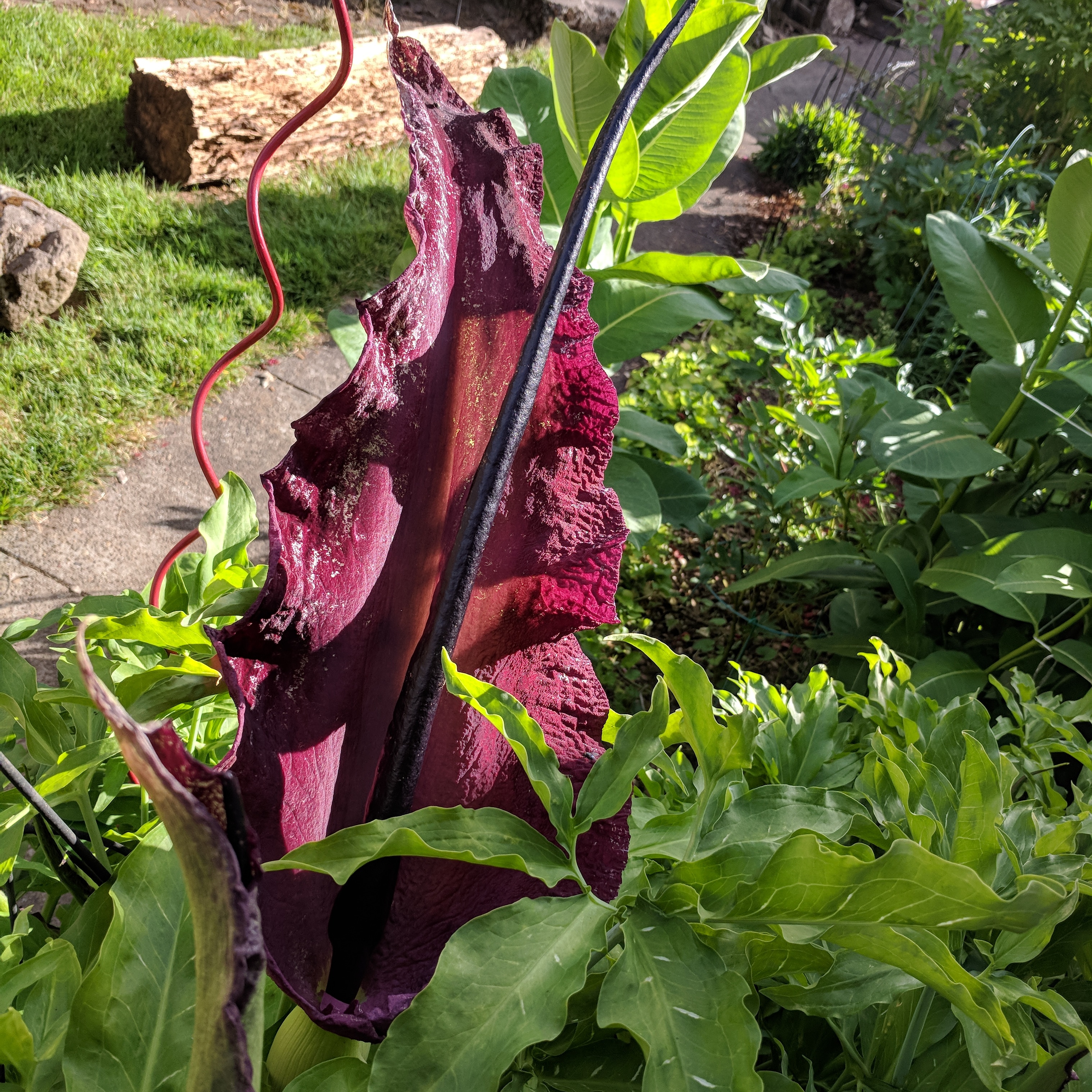
But before it does, at the end of May and always on our anniversary on the 7th of June, the aroma of rotten hamburger wafts in the air: the Dragon Lilies have opened. Flies and beetles rush in to await their demise in bowl of this carnivorous beauty. The smell lasts a couple days. The flowers wilt and the entire plant begins to wilt and turn yellow.

Now it is the milkweed’s turn.

I have two varieties: Showy milkweed (Asclepias speciosa – native to Oregon) with pink florets and California milkweed (A. Californica) with white florets. The latter isn’t a native to Oregon, and it doesn’t grow as prolifically as the Showy milkweed does, but the blooms are pretty and the aroma is the same: sweet and enticing, the polar opposite of the faded Dragon lily.

I planted milkweed thinking I could attract migrating Monarch butterflies. I didn’t know then that this part of the lower end of the Willamette Valley is not on the migratory path for these beautiful and endangered butterflies. No worries: the value blooming milkweed has for other pollinators outweigh my misplaced intentions. Every early bee, butterfly, and tiny wasp brave the sticky edges of the flowers to get at the pollen inside. Occasionally, a honeybee will get stuck and will have to struggle free. A few plants wilt and die, host to the milkweed beetle which does exist in this half of the valley.

Below the tall stems that now tower between four and six feet, a junco might build a ground nest. The nests are soft grass circles, now much larger than the palm of my hand. We won’t know there’s a nest there until a fledgling bird hops out of the cover while the parent birds hover nearby.
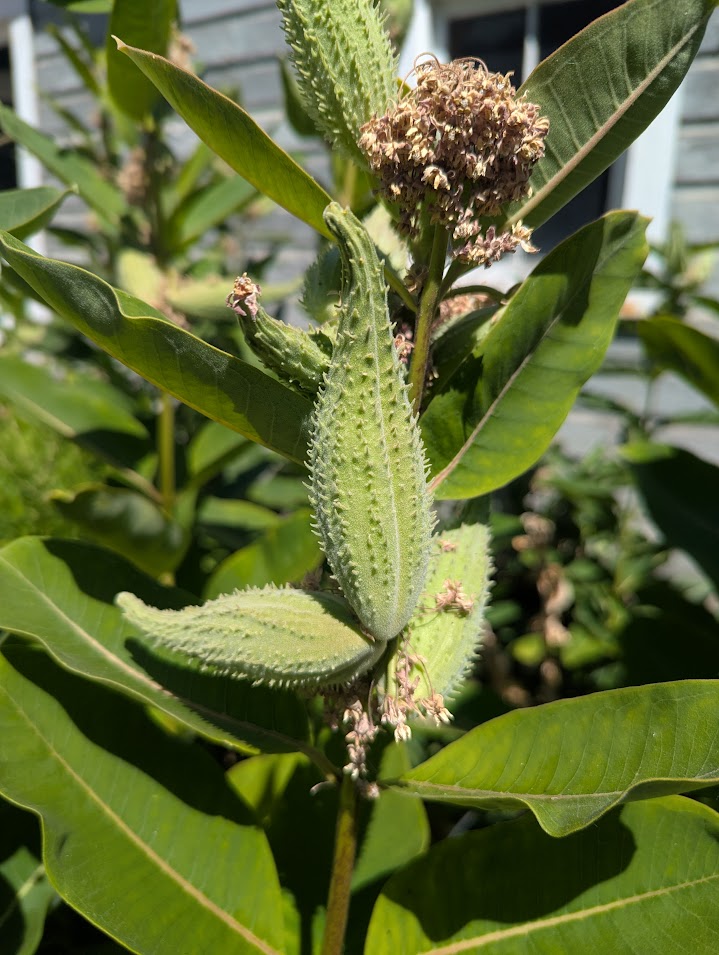
The bloom of milkweed lasts a couple weeks giving us quite a show of pink and white, and busy pollinator insects. But then the flowers fade and the few that were pollinated will start developing seed pods. These are green and soft, and quite edible if you are not allergic (I am). When the pods ripen, they turn brown and hard then pop open to release thousands of sees hanging from wispy “umbrellas”. The wind catches the seeds and like the dandelion – well, you know the rest of the story! The ground is soon covered in tiny, milkweed parachutes looking for a home.

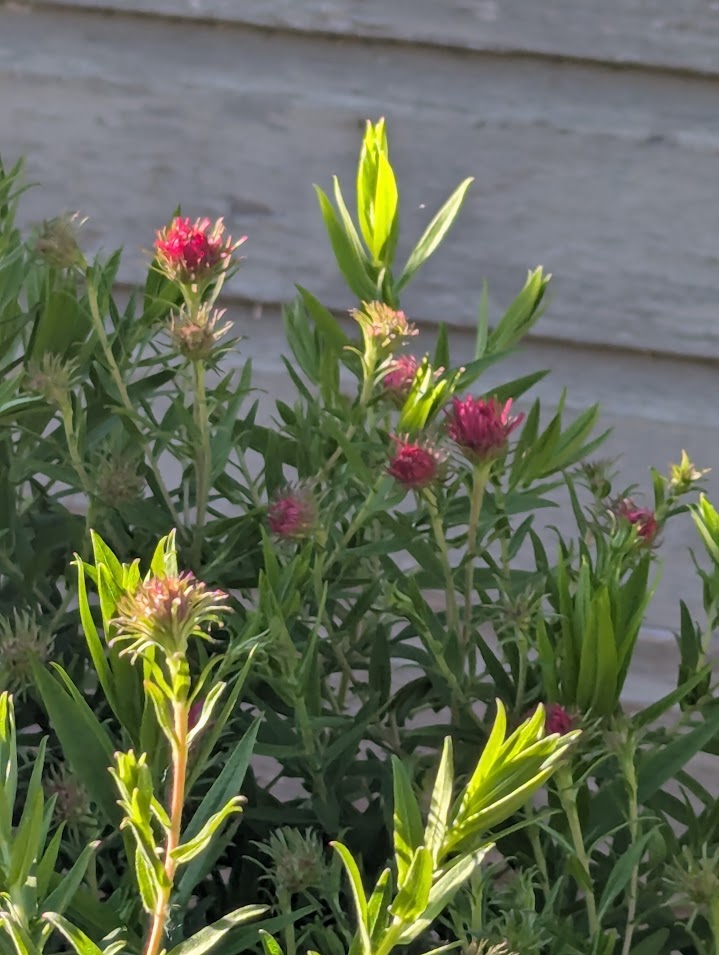
But I mow down the milkweed, not simply to avoid the parachutes, but because the milkweed towers above the asters. And the asters put on a late show of color lasting through August and into September. The tall asters are a riot of magenta pink. The aster that grows in the crack in the sidewalk puts out lilac-colored flowers. The tiny bees – those mining bees and other ground dwellers – love the asters.

The milkweed is gone now, and I wait for that last eruption of color. Too soon, the rain will come and everything will turn brown. (Photo is of a year I did not cut down the milkweed stalks and the seeds flew everywhere.)

Read Full Post »

The Weed Called Oregano.           

I don’t remember when I first planted oregano in my yard. We moved here in 2002 and I started carving out the “island” in 2003, so it was probably 21 years ago?

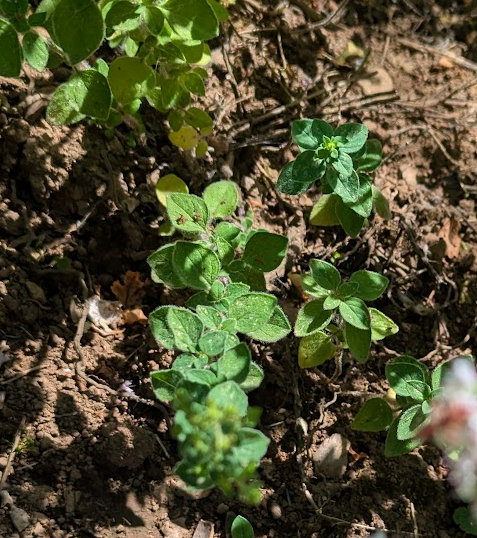
The “bed” of oregano has gone through some changes over the years: choked with that pesky grass, fenced off from dogs and to keep it upright, and it’s current incarnation that is 10x the original plant. I didn’t bother to rein it in this summer, but I did get rid of (most) of the pestilence grass.

We don’t purchase dried oregano in jars. Sometimes, I cut a handful of sprigs before it blooms, hang them upside down to dry, and scrape the dry leaves into an old jar that still has the original label on it: “Oregano”. We use it fresh during the spring and summer months when we can step outside and clip what we need off the plant. By Autumn it is fading and come winter, only dead stalks remain that I cut down and compost.

In spring, the cycle begins again.

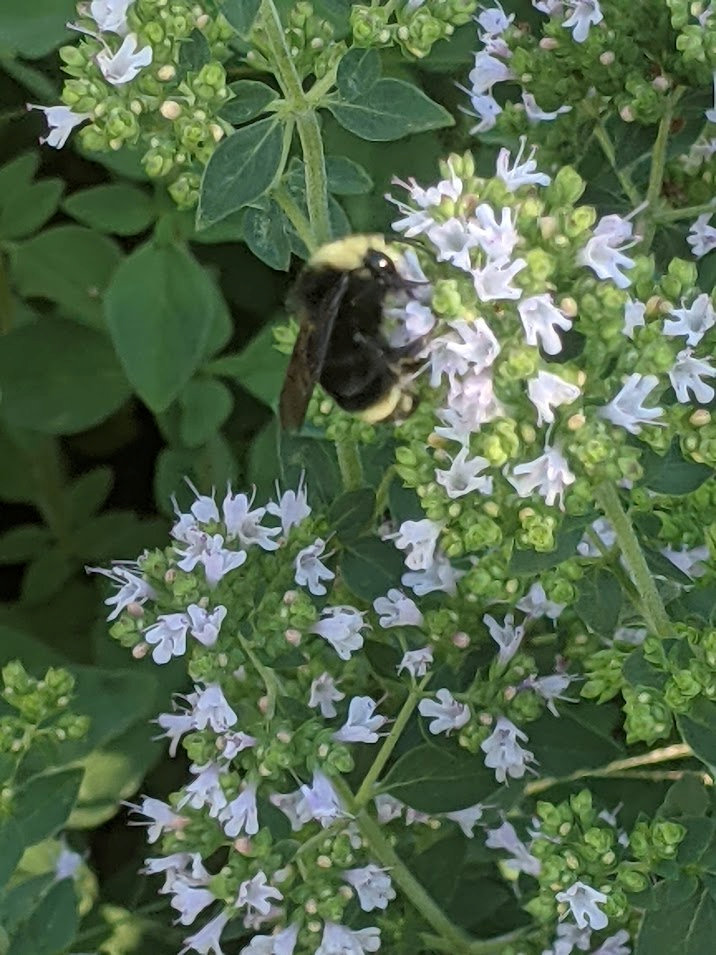
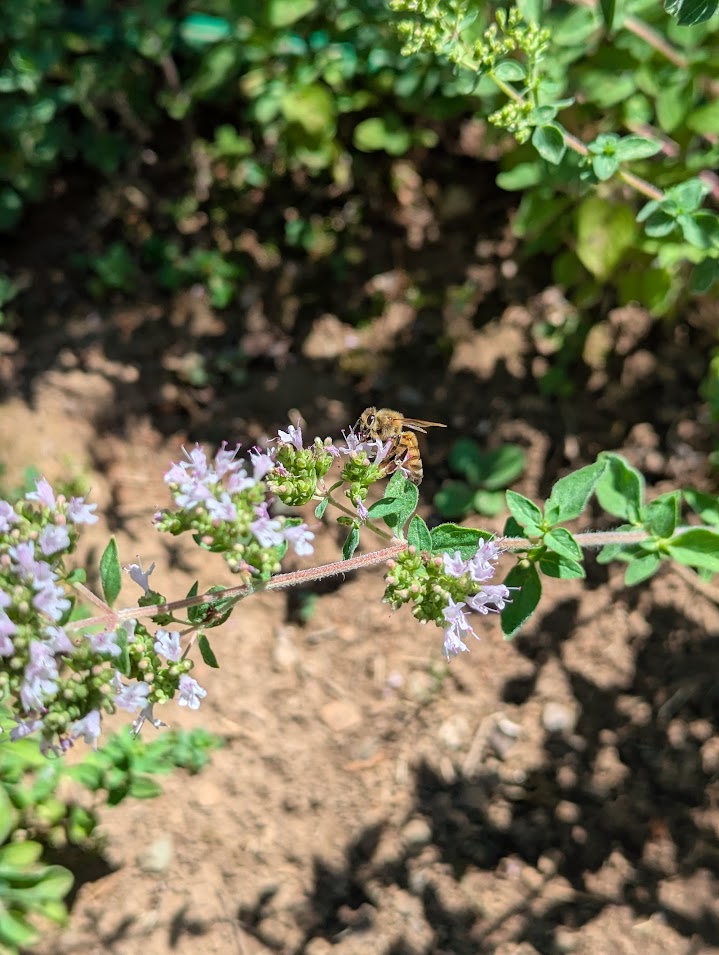
I find new plants growing everywhere in the yard: oregano is self-seeding. I pull it with the other weeds, savoring the aroma as I do. I could allow it to grow everywhere and some day when I am too old to do my weeding by hand, that is probably what will happen: it will grow around the peonies, the rosemary, the lavenders, and the evening primroses.

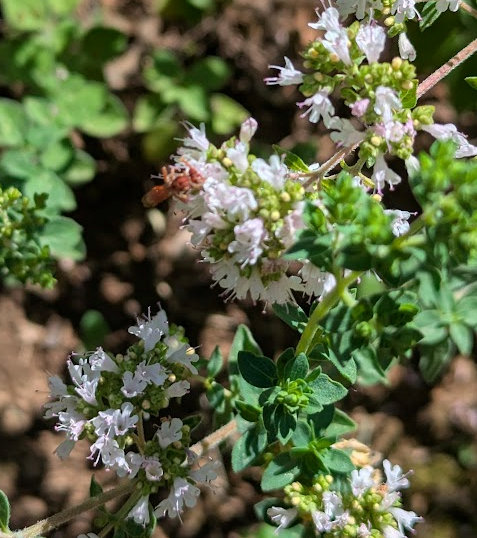
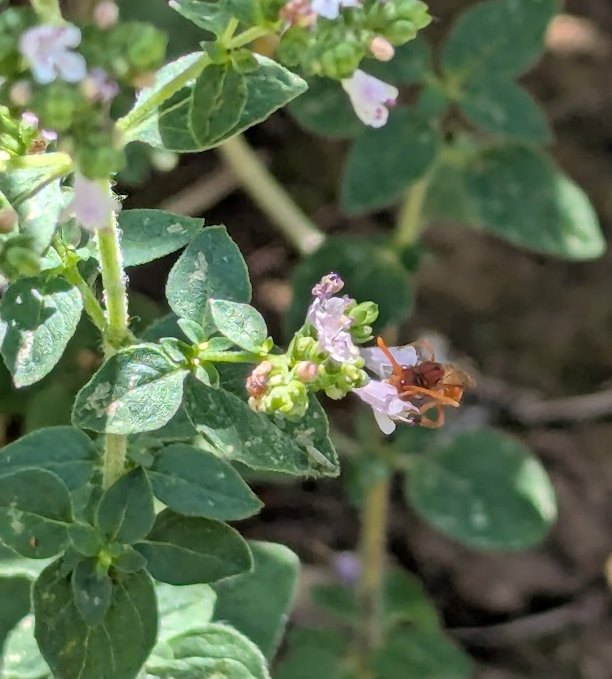
I wouldn’t mind and the pollinators would certainly benefit from the profuse tiny purple blooms. I wonder what oregano honey tastes like? Some honeybee keeper must know: as soon as it begins to bloom, the bed is covered with honeybees and other pollinators.

Our dogs (one at a time over the years) will stand with their noses deep in the aroma, snapping at whatever bees they see. They get stung and jump back, shaking the head furiously before wading back in to snap at another bee. Our mantra is, “Leave the bees alone <Ruger, Murphy, Harvey, Sadie>!” They leave, but they always return to the scene of the crime.

I wonder if the bees taste like honey or like a good Italian dish spiced generously with oregano?

Read Full Post »

The recipe:

4 ounces fresh leaves and flowers. ½ tsp crushed anise seed and 3 crushed cardamom seeds. 2 ½ cups of water. Put all that together and simmer 20 minutes, then run through a fine filter until all you have is the flavored water. Over a low heat, dissolve 2 cups white sugar and 1 ½ cups brown sugar in the liquid. Boil over medium heat until “a drop in cold water forms a hard ball” (read below for my notes). Pour immediately into a well-oiled pan to cool. Score when partially cooled.

I decided to try making candy. I used to make it when I was younger and lived in a drier climate but that fell by the wayside along with my desire to become an herbalist when we moved to the Willamette Valley. Candy requires low humidity or it fails. I won’t go into all the weather around here: it rains in the Willamette Valley nine months out of twelve. We don’t get the most rain or the most humidity, but the days when I wanted to make candy were usually too humid. So I just didn’t bother.

Besides, you need a really good sense of when “a drop in cold water forms a hard ball” stage is reached. I don’t have that so I rely on thermometers when – and IF – I decide to make candy.

I love to make candy. I’ve made a killer penuche and I’m no mean hand at making divinity, or I was when we lived in dry country, and I frequently made candy. I even made a great horehound candy once.   That was BC (Before Children) and Before the Willamette Valley, so a Very Long Time Ago. I’m ancient, you know.

I grew horehound this year with the intent of repeating that long ago success. It grew, blossomed, and I trimmed it back using a recipe I found in an herbal remedies book (the original recipe having been lost in multitude moves over the decades).

It failed. But I will try again! Below are my errors and the recipe, should you wish to try your hand at this.

4 ounces fresh leaves and flowers.

I trimmed back the horehound as far as I dared. With stems, I only procured 3.5 ounces. Well, it should still work.

½ tsp crushed anise seed and 3 crushed cardamom seeds. Don’t have either, but I can substitute nutmeg and cinnamon to taste.

2 ½ cups of water. Put all that together and simmer 20 minutes, then run through a fine filter until all you have is the flavored water. Over a low heat, dissolve 2 cups white sugar and 1 ½ cups brown sugar in the liquid. Boil over medium heat until “a drop in cold water forms a hard ball” or approximately 252° F (according to Betty Crocker). Pour iimmediately into a well oiled pan to cool. Score when partially cooled.

NOTE: The candy is a bit too soft. I should have used the Interwebs instead of a dated Betty Crocker and the candy should be cooked to Hard Crack stage, or 300° F (149° C). That’s a minor mistake. The candy is still usable and storable (use wax paper). But I would prefer a harder candy.

It is also a bit bitter. Let’s be honest: lot bitter, really. It might be OK if you have a bad sore throat and a linger cough, but… It’s not Ricola™ by any means. It would probably be less astringent if I had not used the stems. I’m pretty certain the stems ruined it.

The substitution of cinnamon and nutmeg was a negligible factor, but I think the next time I try this recipe (and there will be a next time), I will use the cardamom and anise seeds.

Read Full Post »

I have a surprising number of herbs growing in my garden, some wild and treated like weeds, some I have purchased with intention, and some that I purchased but didn’t have a clue they could be used medicinally or otherwise. I knew there were four herbs in the picture, but when I started looking up the different plants and uses, I discovered that ALL the plants around the fountain bird bath are useful herbs. I’m always learning new things in the garden and often kicking myself for the mistakes I make. But mistakes and learning are what make gardening an adventure!

As a side note: the plants in pots won’t always be leaning like that: we’re staining the deck and I had to move them temporarily. What we do for a photo op, right?

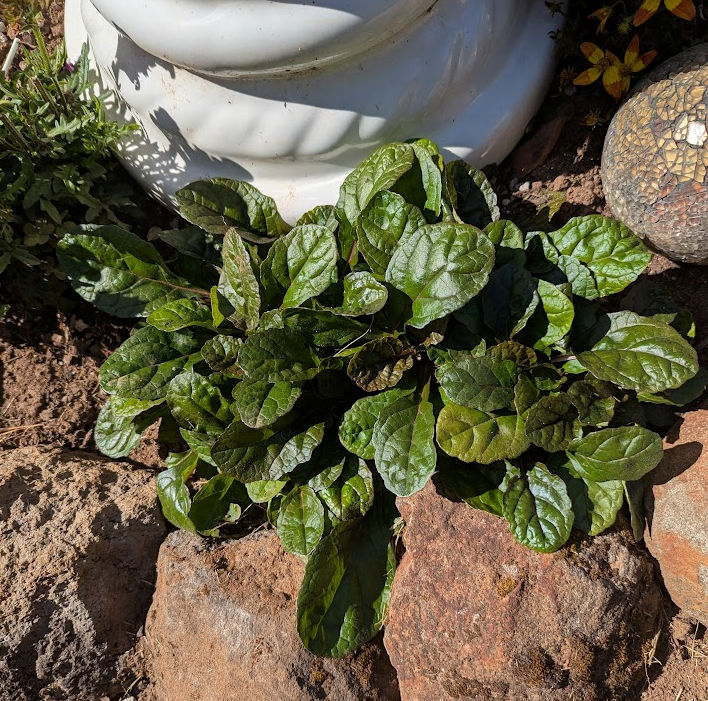
Bugleweed (Lycopus europeus) (Ajuga is another name). I bought the Bugleweed as a ground cover a couple decades ago and have been trying to get rid of it ever since. I had no idea it was an herb and had medicinal uses: hyperthyroidism, coughs, sleeplessness. I’m still on the fence about eradicating it entirely as a mistake or trying to fine a place where I want it to work its magic of crowding out other plants. It has a pretty blue/purple flower in the spring.

The tickweed (bidens)was purchased for color and length of blooming period. I’d never noticed them before at plant sales but when I was shopping for plants to put around the birdbath, it stood out for color and the fact it will bloom all summer, no dead-heading necessary. It apparently has seeds that cling to your pants like ticks cling to deer. I didn’t know that when I bought it, but it’s only one plant… Right? As an herb it has antibiotic properties. I probably will never use it.

Serbian bellflower (Campanula Poscharskyana). I just recently traded it out of a pot where it wasn’t doing well and put it in the ground by the birdbath. I learned the flowers are edible along with the leaves, making it more than just a pretty blue flower: it is a salad green! Of course it isn’t blooming right now, but maybe I can revive it! (The bloom is from another bellflower in the yard.)

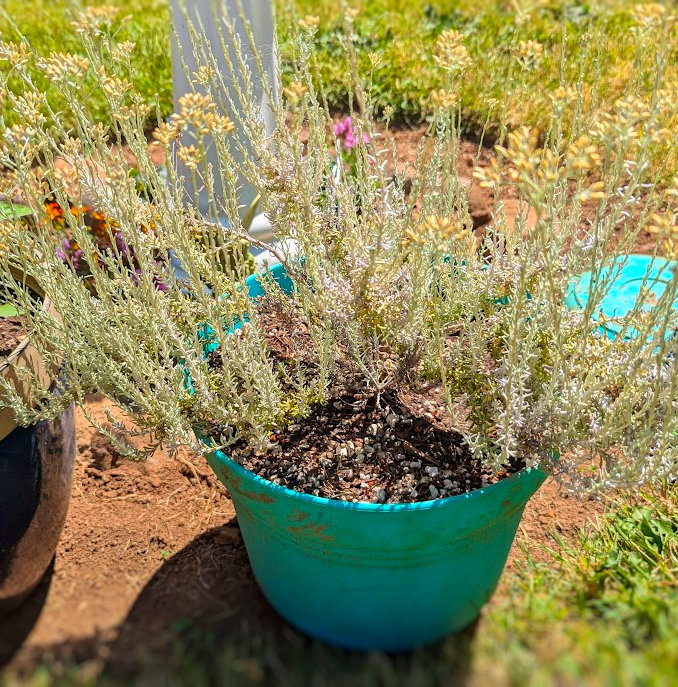
Curry plant  (Helichrysum italicum): We bought that for the aroma, the sage colored leaves, and the pretty flowers. Curry plant is not the same as the spice curry which is a blend of spices, but it smells like the spice. It has minimal uses in the kitchen as an edible as it only imparts a very light curry taste to food.

I purchased the blue hyssop (hyssopus officinalis) a few years ago thinking I would use the leaves in tea some day. It grows scraggly, rather like an English thyme, and the leaves are tiny like the thyme. I currently have some drying – not enough to make a cup of tea, but it is a start. It has little blue flowers and is a great addition to a pollinator garden. There are a variety of kitchen uses for this herb as well as the medicinal uses (hyssop is mentioned several times in the Bible as a “cleansing” herb). It can be used to treat ulcers, asthma, and head colds. It is a great antioxidant!

Wild Bergamot (Monarda fistulosa). Medicinal uses are antibacterial, antiviral, and anti-inflammatory. Culinary uses include teas and as a spice added to soups. It is also a pollinator plant and it is a native to North America. The bees and I are waiting for it to bloom.

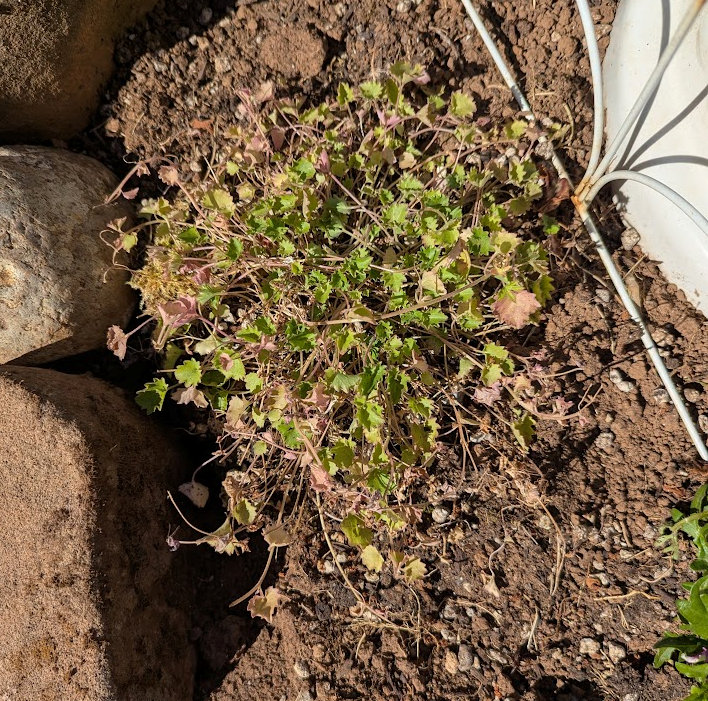
Last is the Mystery Plant. I was looking for a ground cover at a garden sale and this one jumped out at me: it blooms all summer, giving me the color I want. So I bought it, brought it home, and discovered the identifying tag had been removed at the point of sale, presumably for the seller’s inventory purposes, but now I had no idea what I purchased! I had to wait for it to flower to key it out. “Mystery Plant” is Self Heal (prunella vulgaris) is also known as Heal All. You can use the leaves and flowers in salads or tea. It has much the same properties as the Blue Hyssop. Pretty all summer AND useful!

Finally, a disclaimer:

I do not know enough about herbs to encourage the reader to use them and as with any new thing you add to your diet or healing regimen, do so with caution. I am writing about these herbs as much to learn about them as to show off my garden. ALWAYS research first. And certainly don’t trust ME. I’m only in it for the pretty flowers.

Read Full Post »