Feeds:
Posts
Comments

Archive for May, 2025

Tiny pinks on long stems. This mallow started life in out garden as a tiny free specimen. I put it in a planter and it thrived. Moved it into the ground and it nearly died. It is in a large planter, soil mixed with sand, and it is happy once again. It is a bee favorite & common on the Coast.

stinging nettle – urtica dioica

I hope you know what plant that is without the ID below it: run into this without enough clothes on and you’ll wish you had never met it. I crawled into it once when I was a child. Nettle stings all over my face! Fortunately, the damage is never serious and the sting can be dealt with (in my case, I probably smeared mud all over my face. I was a clever child – HA!). I started growing it for the medicinal benefits of nettle tea. It is in a pot so it doesn’t escape into the yard and I deadhead the flowers before they produce seeds: this is all the nettle I need in my yard. Harvest with care: garden gloves, long sleeves. I dry the leaves in the dehydrator instead of hanging them to dry. I’ve read you can cook the leaves as a spinach substitute (I’m not fond of cooked spinach except on pizza). The leaves lose their sting when dry. I mix the leaves with feverfew and yarrow for a green tea that I can drink without sweetener.

Nettle may lower your blood pressure, help with blood sugar, hay fever, reduce inflammation, and help with enlarged prostate, and contains antioxidants and many vitamins. (I may write more on nettle in another post on herbs in the future.)
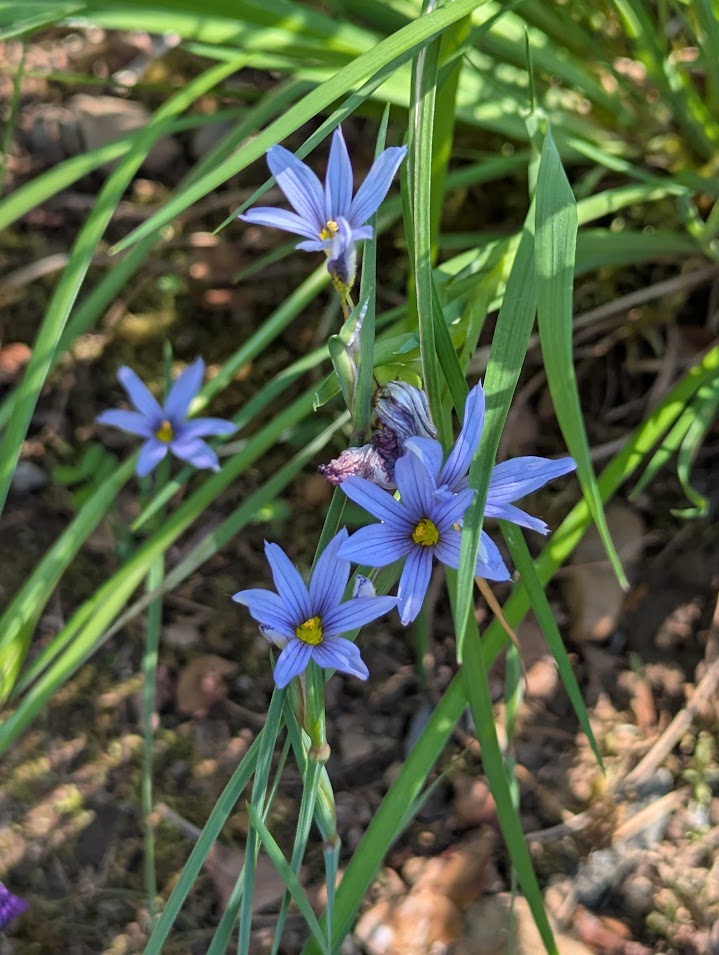
Wild irises.

I love irises! These are my wild native irises (I have “domestic” irises as well). The first two iridacea shown love moist soil and are planted in a little shady swale next to the south fence of our yard along with the camassia. I need to divide the flag iris this fall. The Douglas iris is more like its commercial counterparts: dry soil is fine. They love sunshine. The blooms are larger than the flag iris but still delicate.

wild camas – camassia quamish

Wild camas (which is related to asparagus) is a beloved forage plant for the Indigenous peoples of the PNW. I loves marshy areas. I have not tried eating it: I have too few of the plants to forage just yet.
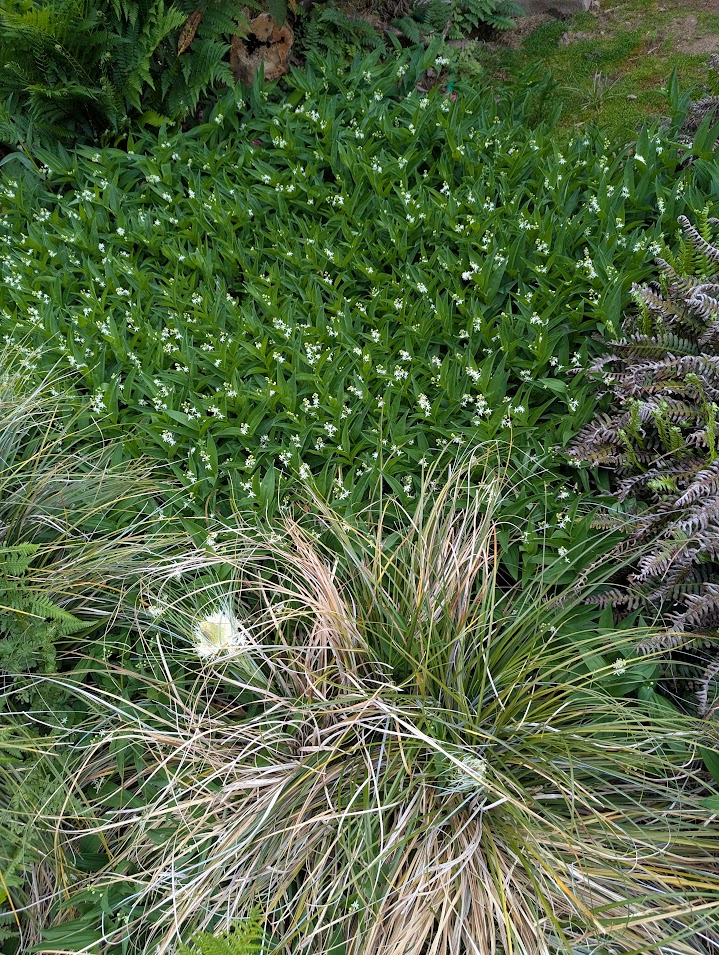
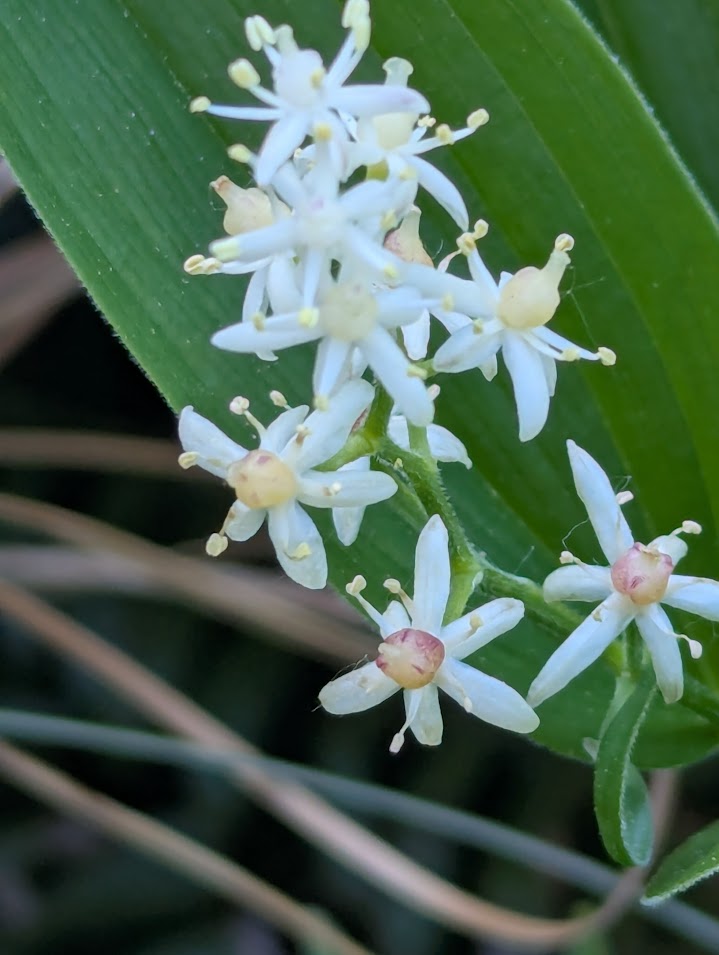
My husband brought me a gift of bear grass one year along with the deer ferns. Falso Solomon’s seal hitched a ride. My bear grass has never failed to bloom: the spikes tower above the heavy leaves. I think one of my plants is showing its age and beginning to die out, but it produced three beautiful spikes of flowers this year. And the false Solomon’s seal never disappoints, but it is gone by summer and the ground bare where it flourished in the wet of spring.

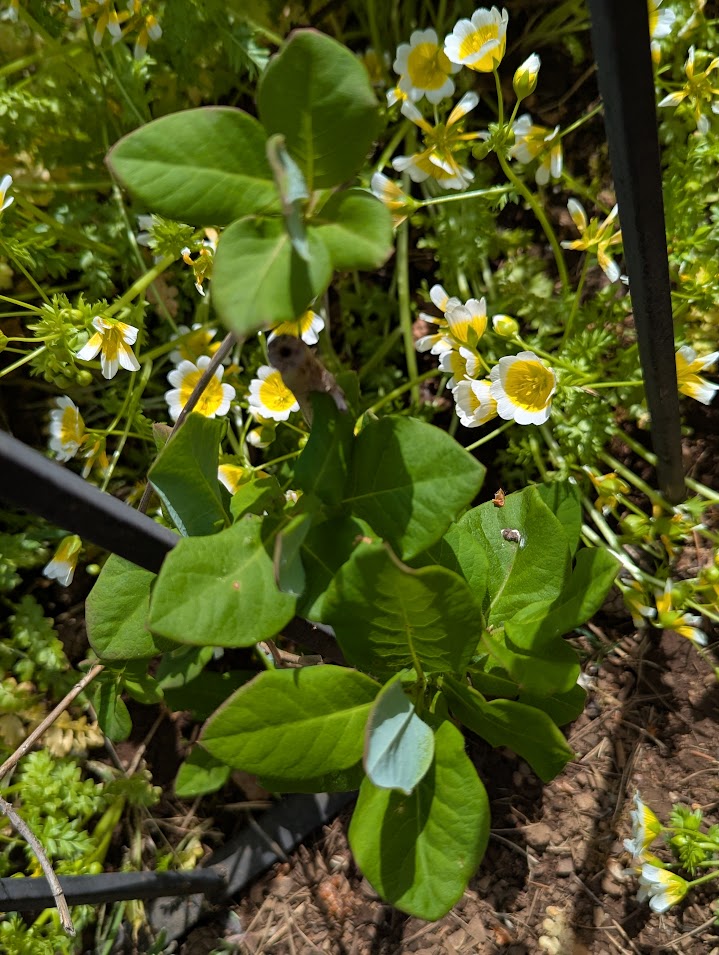
This beautiful ground cover was also a hitch hiker. I think it came with the yew and maple (long gone now). It spreads quickly, covers the ground beautifully, and attracts every bee, bee fly, and wasp. It greens up in the Autumn, overwinters green, and blooms in the spring – and then it is gone. The ground bare.

I have not tried too many other plants mixed in with the false Solomon’s seal to cover the bare spot in summer, but I have tried where the meadowfoam is. And meadowfoam does not like to be shaded out during the dormant stage! The bare spots in the photo are where i removed plants that shaded out the meadowfoam and it died back. However… it seems to love peonies and grows profusely around them despite the shade of summer, so I may try putting a couple peonies in there.
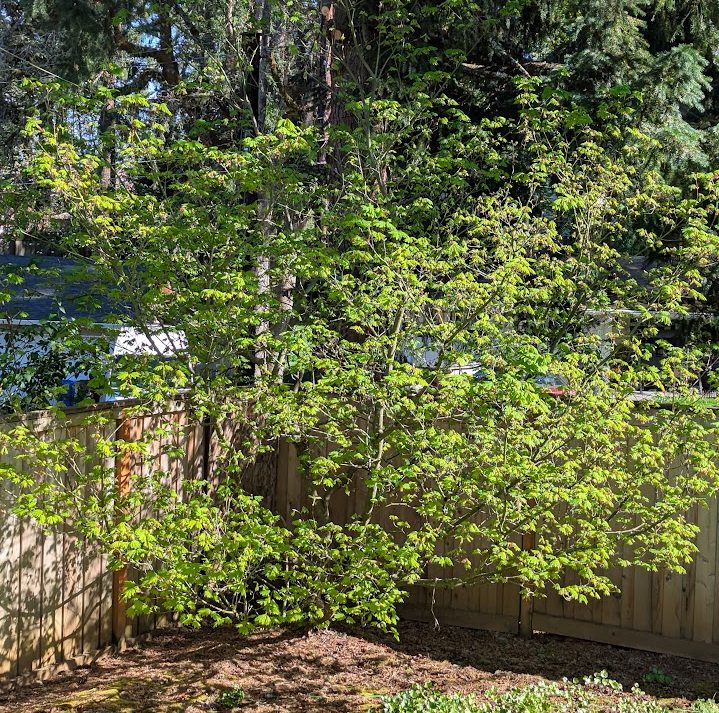
vine maple – acer circinatum

Don dug this out of a bar pit one year. he intended to make it into a Bonsai tree, but vane maple grows too quickly and he had to put it into the ground. It is as large as it is ever going to get. The leaves turn brilliant red in the autumn. The squirrels love the helicopter seeds. Very little grows under it but I am hoping some huechera (coral bells) will take off.

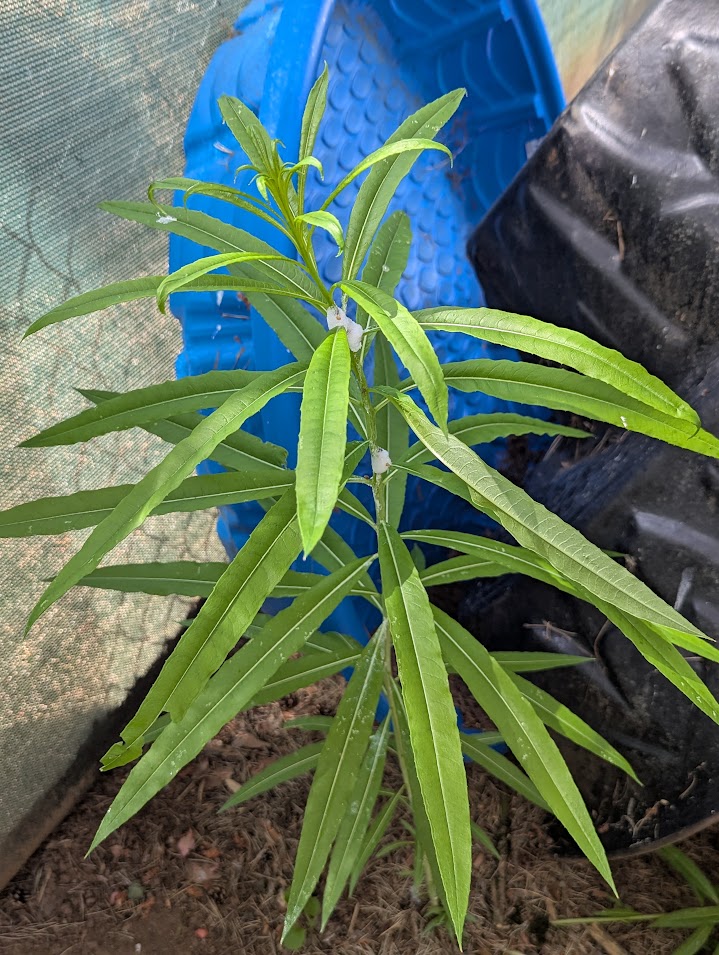
narrowleaf milkweed – asclepias fascicularis

Milkweed. I could write a blog post on this, the last of my Natives to show off. I planted it by seed: two kinds of native milkweeds, the showy (pink flowers) and a few of the narrowleaf. They didn’t grow. Well, to heck with that idea, right? I could purchase some starts but it just never seemed to happen. And four years after I tossed those seeds in the garden, I had a thick stem poking out of the ground. Suspicious, I broke a leaf off and watched as it oozed thick milky sap. Eureka! It only took four years for those seeds to grow! And grow they did: I now have to fight the plants to keep them contained in the corner of garden where I planted them: milkweed spreads by runners underground.

Bees, flies, butterflies (but never Monarchs – so far), and milkweed beetles love the plants. Invasive as the plant is, it grows well in the little corner of yard where it is, sharing space with peonies, asters, Voodoo lilies, and grape hyacinth. The hyacinth blooms first, then the peonies, followed by the voodoo lily. The milkweed rises up and blooms, fades and dies, and the asters bloom. A perfect full summer garden of bloom.

That is it for my native plants! My next posts will be about herbs in the garden, uses, recipes, and cautions. I’m excited for those posts!

Read Full Post »

wild ginger – asarum canadense

One small plant Don dug up in the forest has turned into a spreading clump of wild ginger ground cover. It is nestled beneath the forsythia, one of the rhododendrons, and a sword fern. I don’t think there is any use for it (I could be wrong, but it is not the same thing as the ginger root used in cooking – that’s from Asia). It does smell the same!

bunchberry – cornus canadensis

We just purchased this. I’ve tried to grow bunchberry several times and failed miserably, but this time I hope to succeed! Planted in a shady place with lots of rotten wood to latch onto. It has pretty white flowers like a Dogwood tree, but is a wild ground cover.

California poppy – escholzia californica

It is not blooming yet. But I have quite a little collection of this – one of my favorite roadside wildflowers. My husband is not a fan, but what does he know?

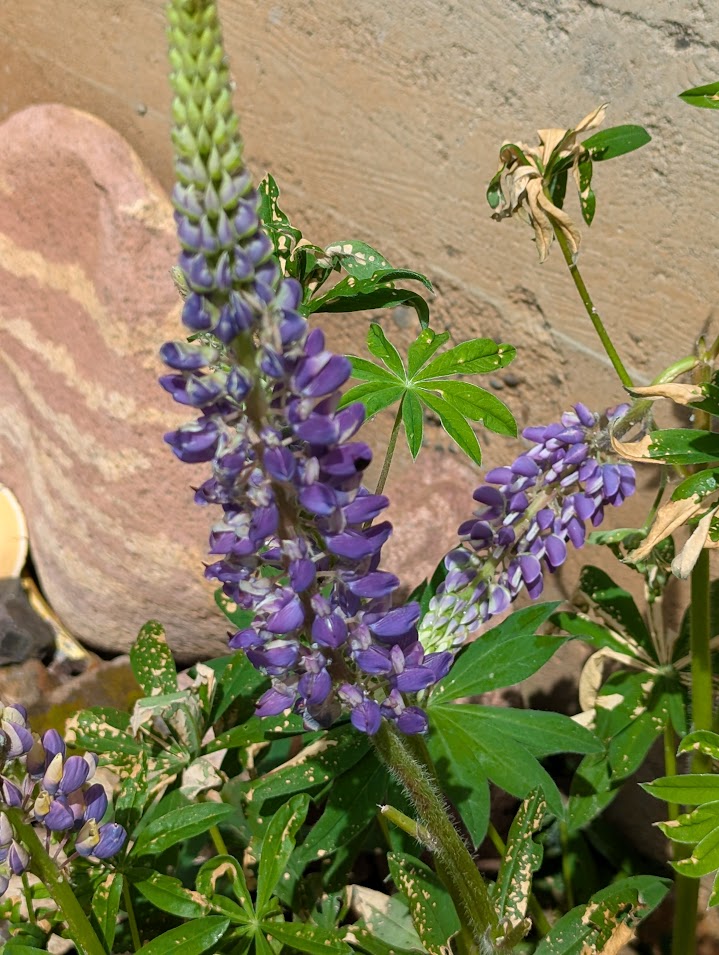
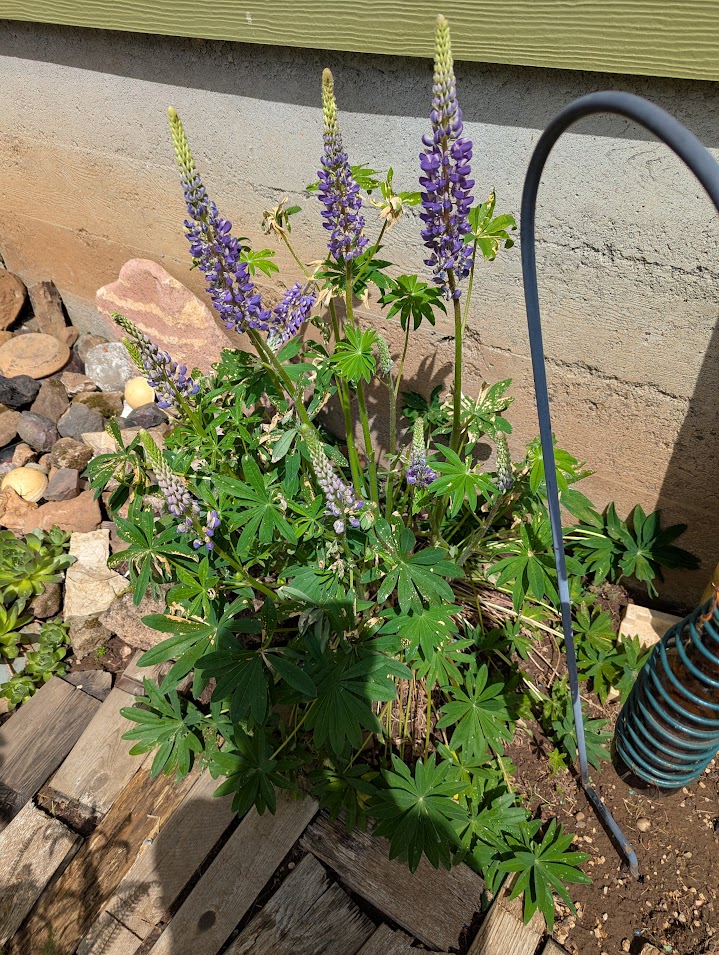
I can’t swear to the identification. It came in the same wildflower seed packet as the California poppy, and was just labeled “lupine”. Lupines are among my favorite wildflowers, and there are so many varieties! Unfortunately, it was infested with white aphids earlier and I sprayed it with an herbal concoction that burned the leaves (dang!). A better solution was to spray the nasty things off with a small stream of water. I keep checking and they have not re-infested, so… Here’s hoping. I have several of these throughout the yard as well.

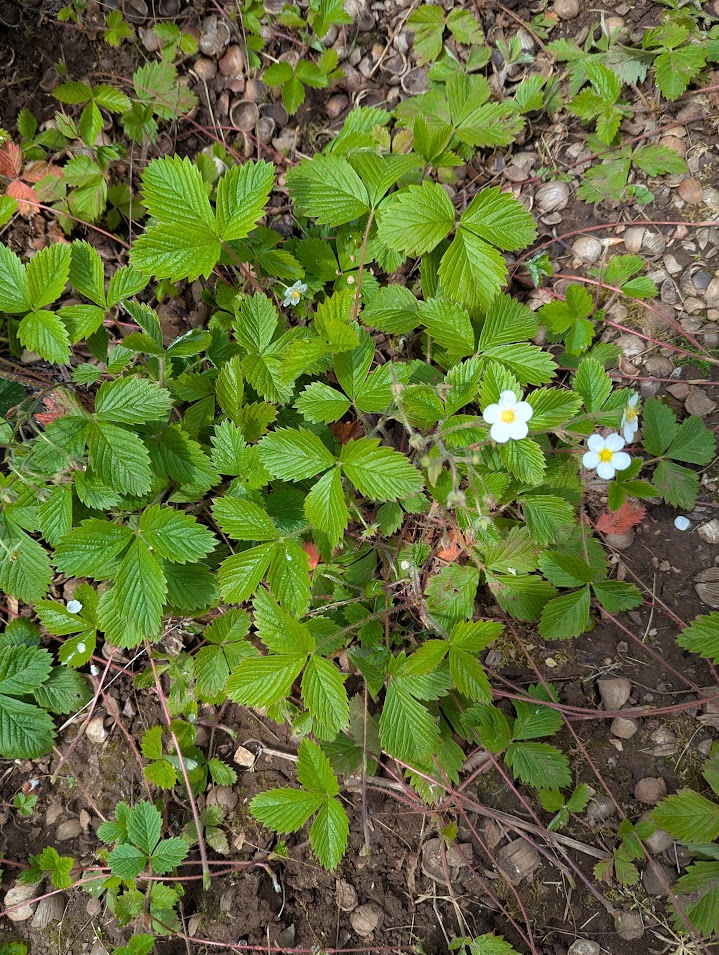
woodland strawberry (Fragaria vesca)

Another little ground cover that has exceeded! Don brought this home and I was dubious because of how quickly it spreads, but it hasn’t crowded out anything and sometimes there are actual tiny berries on it.

pearly everlasting – anaphalis margaritacea

I wish I had a photo of this in bloom! This makes a great dried flower in the fall with its tiny white flowers with yellow centers. It spreads through rhizomes and I have to be careful weeding out the insidious grass that entangles it in the winter and spring. But when it blooms, the flowers are well worth it.

Columbia Plateau Pricklypear – Opunta columbiana

This one is a bit of a stray. I have moved it several times, trying to find the right spot for it to thrive – and maybe bloom! Those long thorns are nasty little suckers! We dug this baby out of the roadside between Arlington and Hermiston, Oregon, on the Columbia Plateau. It is planted in sand, in a well-draining planter. I moved it to its present location (very carefully!) a year ago, and it seems very happy here. Whether or not it will ever bloom is a question: we might get too much rain for it to be that happy,

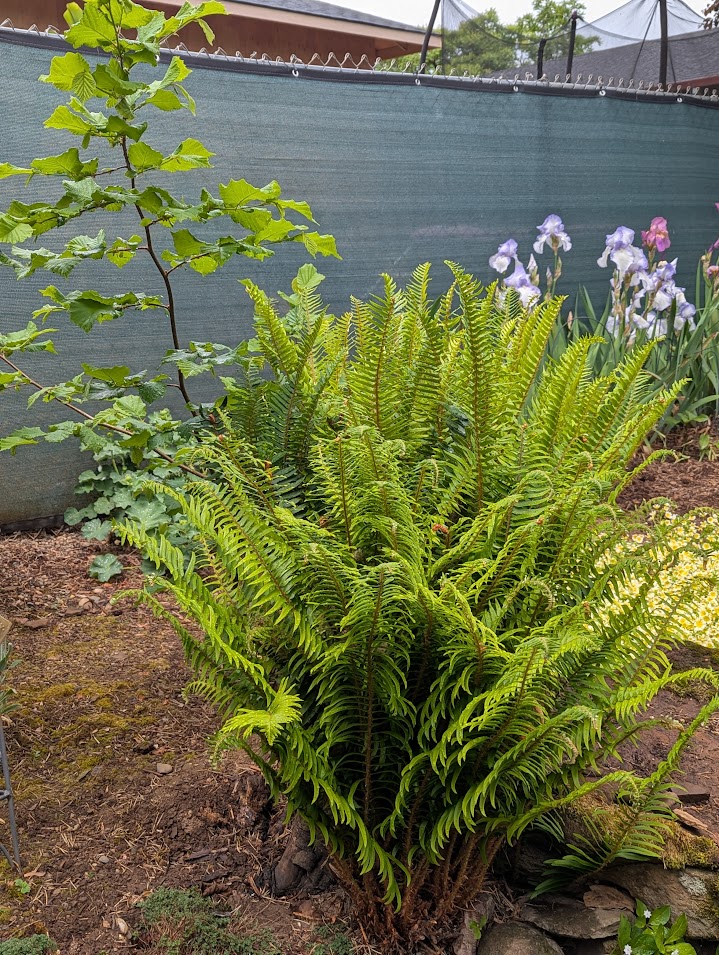
I don’t think you can have a yard or garden in Western Oregon without having to fend off the Western Sword fern! It can grow quite large. I have several that came with the house and I am slowly moving some of the off-spring to the north side of the garage where we have a rather inaccesible 3′ set back. It was lawn, but who wants to mow a lawn you can’t get to easily? Ferns are an easy answer: they grow naturally in this part of the world, they fill in the space, and don’t need extra watering! They can be ignored.

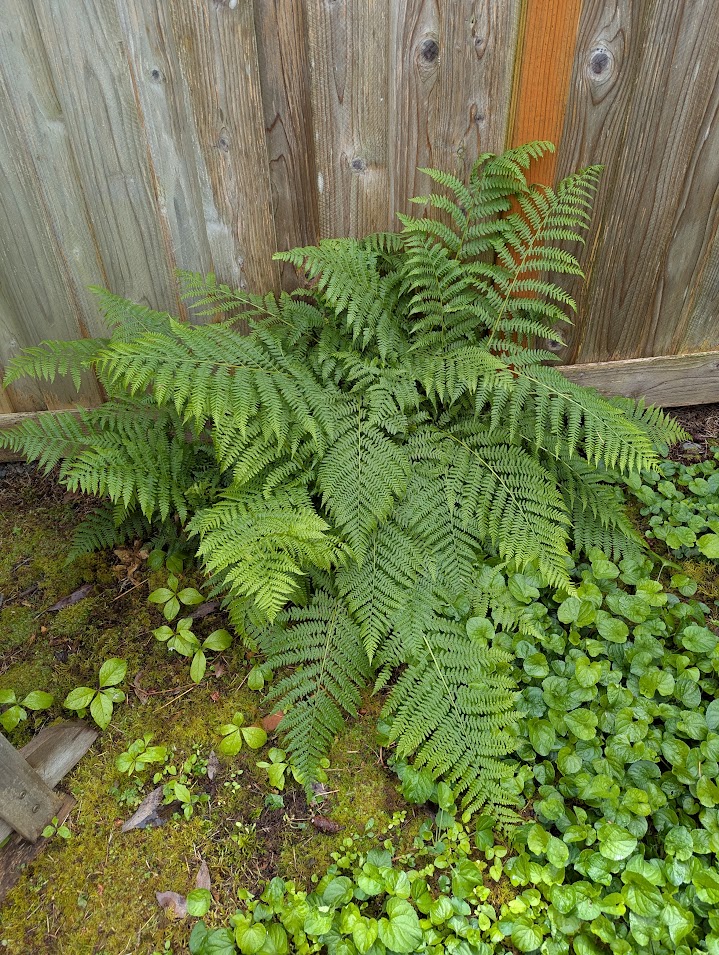
The Lady fern came from a single plant my husband brought home. It dies back completely every fall and comes back even bigger every spring. The deer fern is just an interesting border plant, also something my husband dragged home for me to adopt. I think I helped him with that one. ;P

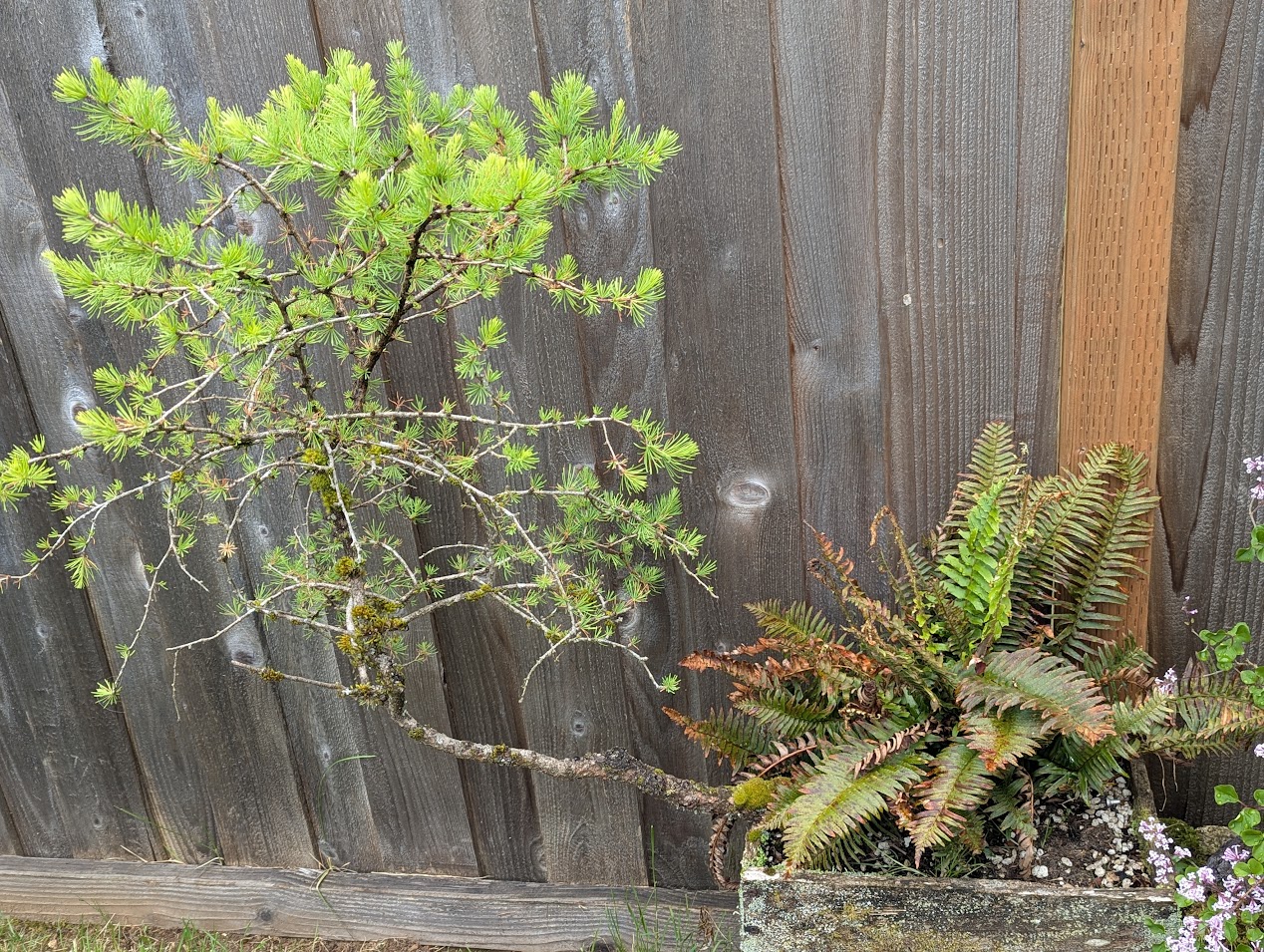
And the western larch (known colloquially as a Tamarack) is just one of those Bonsai trees Don dug up in the middle of a USFS road and made into a Bonsai. I added it to this gallery because of the fern in the pot: how easily the Western sword fern attaches itself!

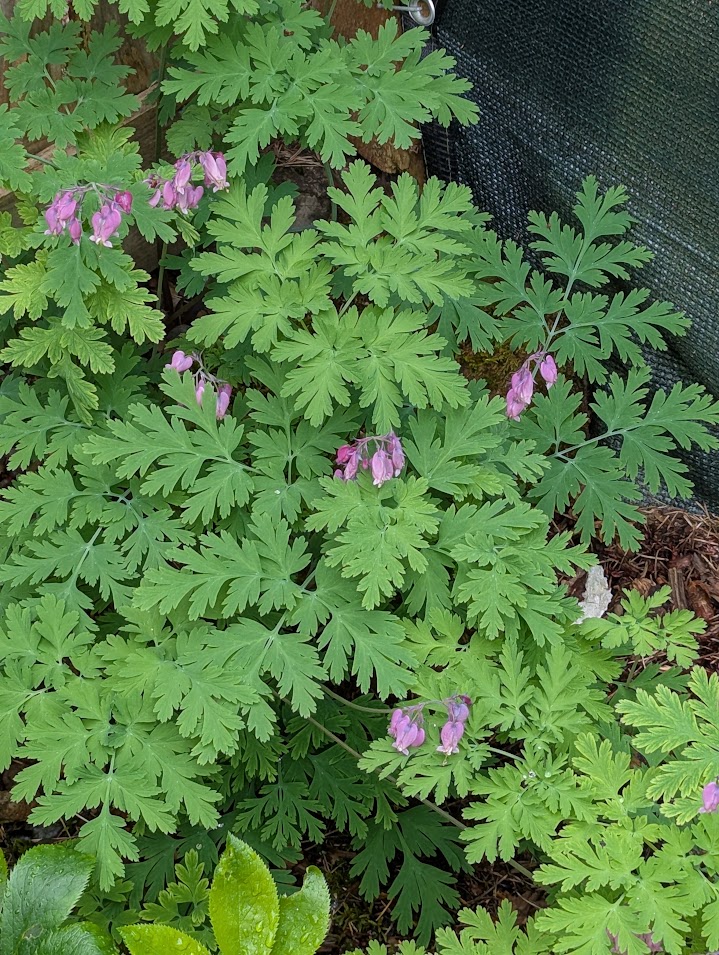
Pacific bleeding hearts – dicenta formosa

Where ferns grow, Pacific bleeding hearts grow. They spread via rhizomes and they spread profusely. Some may even refer to them as weeds. I rip them out enthusiastically when they grow into areas where I don’t want them. They look best in late winter and early summer, then the heat comes and they fade quickly: wild bleeding hearts like the moist, cool, shade of the Western half of Oregon. And I happen to like them better than their commercial cousins with the larger and more colorful blooms.

Blue elderberry – sambuca nigra subsp. cerulea

It is easy to get a red elderberry around here, but I grew up with blue ones. I don’t know if there is any use for red elderberry outside of herbal ones (I could be so very wrong on this, just speaking from my experience, not knowledge). Blue elderberries: syrup, wine, jelly… My husband swears they make the best syrup, I swear by chokecherry syrup (but we don’t have chokecherries in this climate). I’m not going to go into the benefits, but a great place to start looking is on WebMD. I do think I will try dyeing with my elderberry this year (hoping I get flowers and berries! It looks very healthy).

oregon hazelnut – corylus cornuta

I am going to stop this post with this plant: Oregon hazelnut. A filbert tree. Oregon and Turkey are the leading producers of hazelnuts. Roast them, dip them in chocolate, use them in your beer brewing. This bush planted by birds. It is around 20′ in height, has been pruned back by neighbors and us, and all the shells are empty of meat. You need two trees to have nuts form inside the shells, something we learned after watching this on take over our corner for nearly 20 years. A year ago, my husband brought home two small hazelnut starts from the woods, and (hopefully) (the squirrels and jays are praying) we will eventually get nuts.

I have more Natives in the yard. I just planted several. And I haven’t started on the herbs. 🙂

Read Full Post »

Lewis’ or Oregon mock orange – philadelphus lewisii

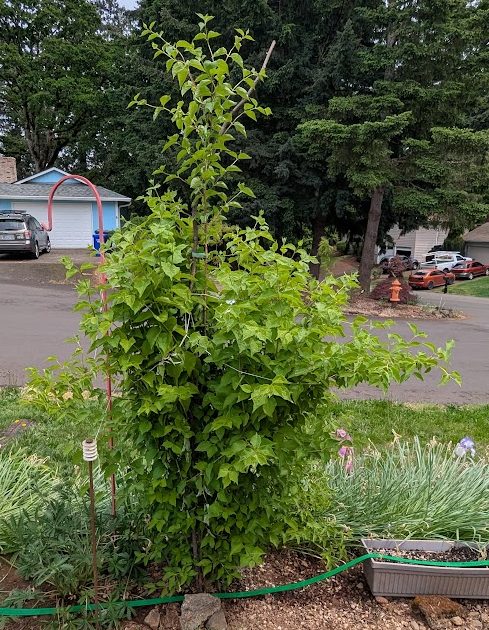
It has not bloomed yet, but I’ve only had it since 2023. It grows rather spindly – perhaps too much good soil and water and growing too quickly? But I found if i staked those spindly branches, they were much stronger the next year. One of my favorite wild bushes, blooms in June – July, smells amazing, and reminds me of rattlesnake draws in Eastern Oregon or Nevada where it commonly grows along a spring in the basalt.

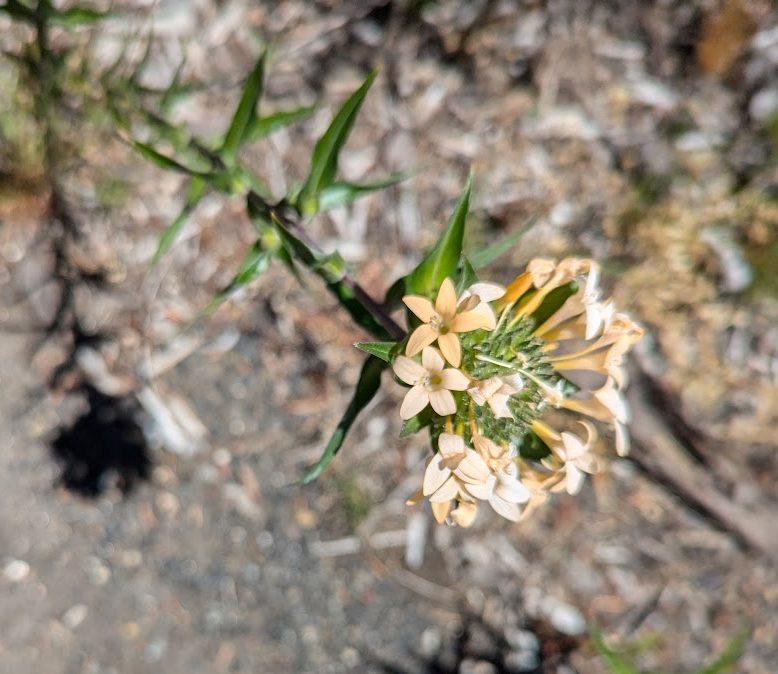
We discovered this growing along the roadside after a fire. It grows about 3-4′ tall. It is a native annual and we could purchase seeds (we tried seed collecting last fall, but beetles had devoured most of them!). This year, we dug one up (you can get a permit at the USFS). Hopefully, it makes it. Pic on the left is the one we dug up, pic on the right is a photo from last summer.

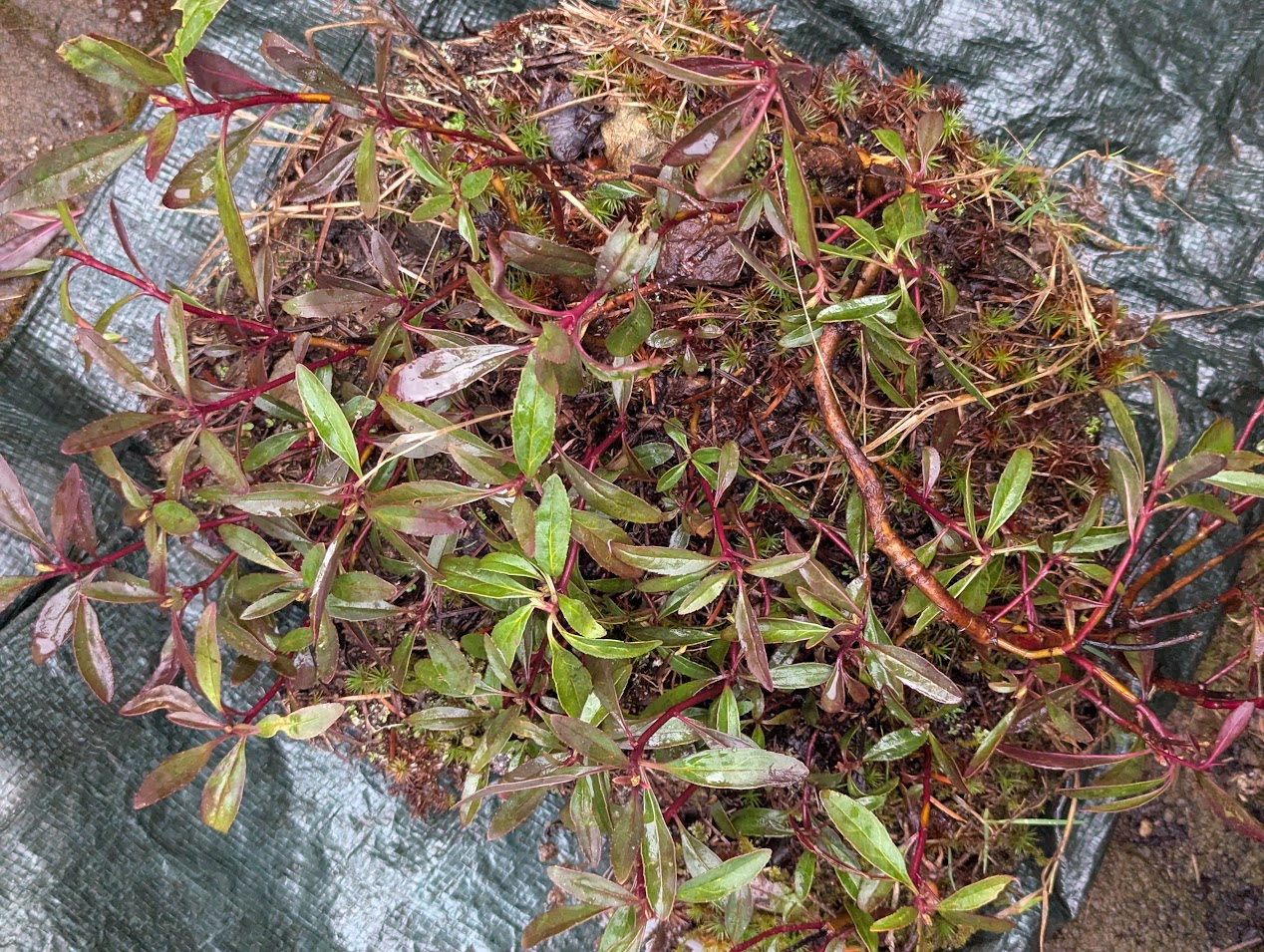
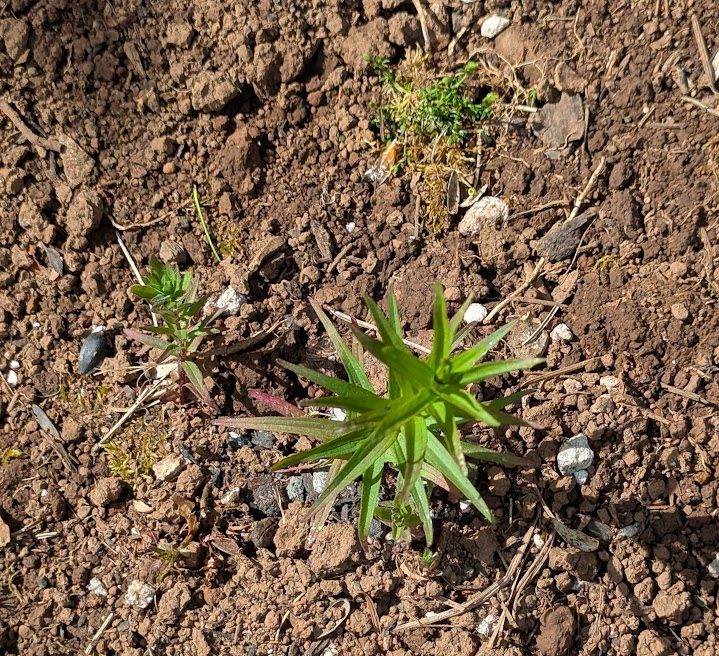
Penstemmons are hard to identify without a field guide and a key, but we love them. The one on the left is one we dug up on Saturday (we dug up two, we won’t know if they are the same species or not until they bloom. There’s a fourth one in the front garden, but it is still very tiny and hasn’t bloomed. The one on the right – I am fairly certain it is the Little Flower penstemmon: the flowers are tiny. It came with a yew and Rocky Mountain maple (both dead and gone now). Penstemmons make great ground covers, especially in those dry, rocky spots.

Note: we don’t know what killed the trees, but all the plants that came with survived. The trees thrived for about five years, the maple died off first. The yew lived a couple more years before suddenly dying on us.

Who doesn’t love paintbrush? It is parasitic which I didn’t know (and which explains why I’ve never succeeded in growing it in the past). The plant on the right is one I just purchased from a native plant nursery, complete with instructions on how/where to plant it and what plants it might want to attach to. The second one is one we just dug up. Unfortunately, it is attached to an oxeye daisy – a native daisy, but one that is a bit of a weed. I prefer my Shasta daisies which stay in their place, but they aren’t natives, so…

I planted the purchased paintbrush near a large leaf arnica (also a native, no photo). I will plant the new one nearby as well.

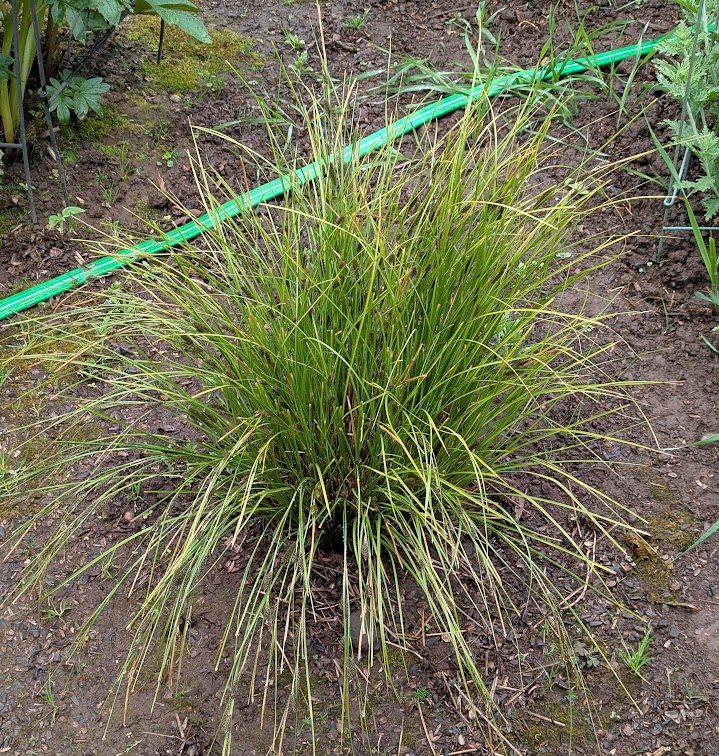
I’ll be honest: this could be an ornamental sedge. I don’t know. Birds planted it in our yard. I made the decision not only to keep it, but to move it to a better spot. I’d be happy if I learned it was a native dense sedge as my husband thinks.

black hawthorne – cretaegus douglasii

Ah – the Hawthorne! Long ago we lived in a trailer park next to a large open space full of nasty Himalayan blackberries (very invasive) and a lot of native plants (including the afore-mentioned oxeye daisy). This little tree was bulldozed a couple times by our landlord and chewed on a lot by the local black tail deer population. When we purchased our house, my husband dug this up (it was about 3′ tall at the time) and planted it in the ground. I believe he was planning on making a Bonsai out of it, but it just loved its new location.

trumpet honeysuckle – lonecera cilosa

I bought a honeysuckle from a nursery. It is pretty. The aphids love it. But I *really* wanted a native one. Last summer, my husband and I made a foraging trip into the Cascades and found this growing there. No, I don’t have pics of the flowers (yet), but we know it is a hummingbird plant and it is what I wanted.

But the real story is about the bear. I have only seen one in real life, and that was a grizzly in Yellowstone when I was ten (1965). I take that back: I saw a black bear once as it raced across the road in front of us in Central Oregon. I was in a car. I’ve hiked, camped, and hiked some more, and never seen a bear in the wild that I could count. Until we were digging the honeysuckle. A young black bear was making its way downhill toward us as we finished up our lunch. Not a scary thing, but we had the dog with us (unleashed – we weren’t anywhere near other people or dogs). So we quickly packed up to leave and we let the bear wander off in another direction as we secreted the dog out of the area.

fireweed – amaenerion angustifoliam

I have seen this for sale at garden shows. That factoid makes me laugh: fireweed is invasive. Once you have it in your yard, you will never get rid of it. I know: I planted it. And I ripped it out. It is pretty, I will grant you that. Alaska’s State flower (my daughter tells me that you can tell when winter is near because the fireweed quits blooming in Alaska). It blooms all summer. I found this survivor of the fireweed I killed nearly ten years ago (hahaha!) hiding behind the shed. And I am letting it go because it is better than English Ivy, black nightshade (Solanum americanum), and Himalayn blackberries – all of which we also have (only the nightshade is native).

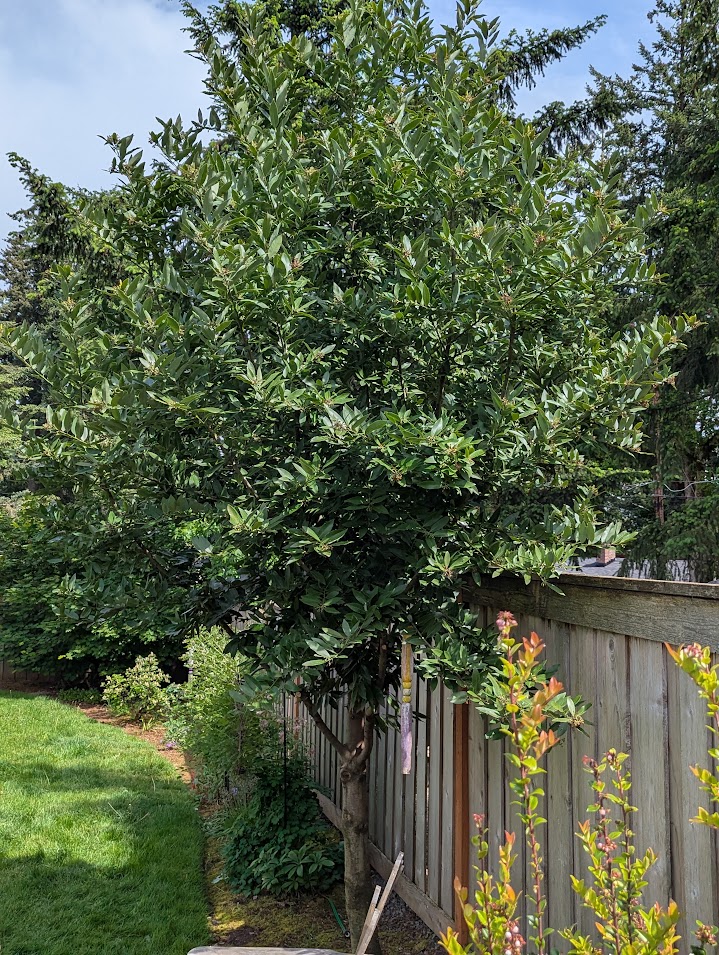
California bay – umbelluria californica

The birds planted this. I fell in love with it. I trim it up and will allow it to grow, It is not the same as a Bay Laurel, but it smells the same and you can use the leaves the same. Pretty yellow flowers in the early spring. Easy keeper.

This is just the beginning of a blog post I have been mulling for quite some time: what native plants do we already have in our garden? It began as a small idea but I soon discovered I have more native plants than I previously thought – and some plants I thought were native are really “naturalized” introductions (foxglove, common mullein, ground or creeping juniper). It also grew with the photos ♥

Read Full Post »