Feeds:
Posts
Comments

Posts Tagged ‘pollinators’

It is time to cut the milkweed out of my garden.

I planted it many years ago. It never sprouted. Four years later, there was a tiny plant that looked suspiciously like a milkweed growing next to some peonies. I clipped a leaf off to see if it would ooze the sticky white sap that gives milkweed its name: it oozed. Excited, I let it grow. The milkweed plants are limited to a “triangle” between the garage and two sidewalks. I cut them down when the seed pods appear: I don’t need more plants. Also, I don’t want to wait another four years for the seeds to sprout when the plant does just fine by sending out runners from those very sturdy rhizomes.

I was afraid the milkweed would crowd out the peonies and the asters. It doesn’t. The three plants grow together happily. What the milkweed did affect was my arum, dracunculus vulgaris, or “Dragon Lily”. The milkweed runners take up the space the lily’s bulbs are in and I’ve slowly lost many plants in that tiny garden space. There are a few left and this fall I will dig them up and move them to a better location, free of water- and space- hogging competition.

Unfortunately, milkweed does nothing to impede the growth of grape hyacinth, I don’t think anything short of a heavy-duty herbicide affects grape hyacinth (and I refuse to go that route). Every year I pull several hundred bulbs out of the ground and compost them. (Sometimes, I will give them away to a desperate gardener who doesn’t know better than to start them in their yard. I’m pretty sure I’m digging up bulbs to send to my brother in Reno this fall. “Hey, Bro, your yard needs some early spring color. I promise you won’t hate me in ten years…”)

Now, when the first purple grape flowers begin to bloom, I do my first – and only – weeding of the space. I cut hyacinths for a bud vase. I toss the ones that pull up with the ever-present grass. I do my best to rid the space of grape hyacinth bulbs while enjoying the aroma and color. Of course, I fail and the hyacinth prevails.

In the Spring, I cut back the old stalks of peony and aster just as the first new stems begin to push their way skyward around the fading hyacinth. Purple stems of peonies, green stems of aster, the spotted stems of Dragon Lily rise above the fading green and brown stems of faded hyacinth. Buds form on the peonies and soon the area bursts with pink and red peonies so thick I have to tie them to stakes to keep them upright.

The peonies fade and drop their petals just as the aster and the milkweed stalks begin to mature. The green of the aster is first to top out at 2-3’ tall. Milkweed will soon tower over the asters and all one will see will be the green stalks of milkweed.
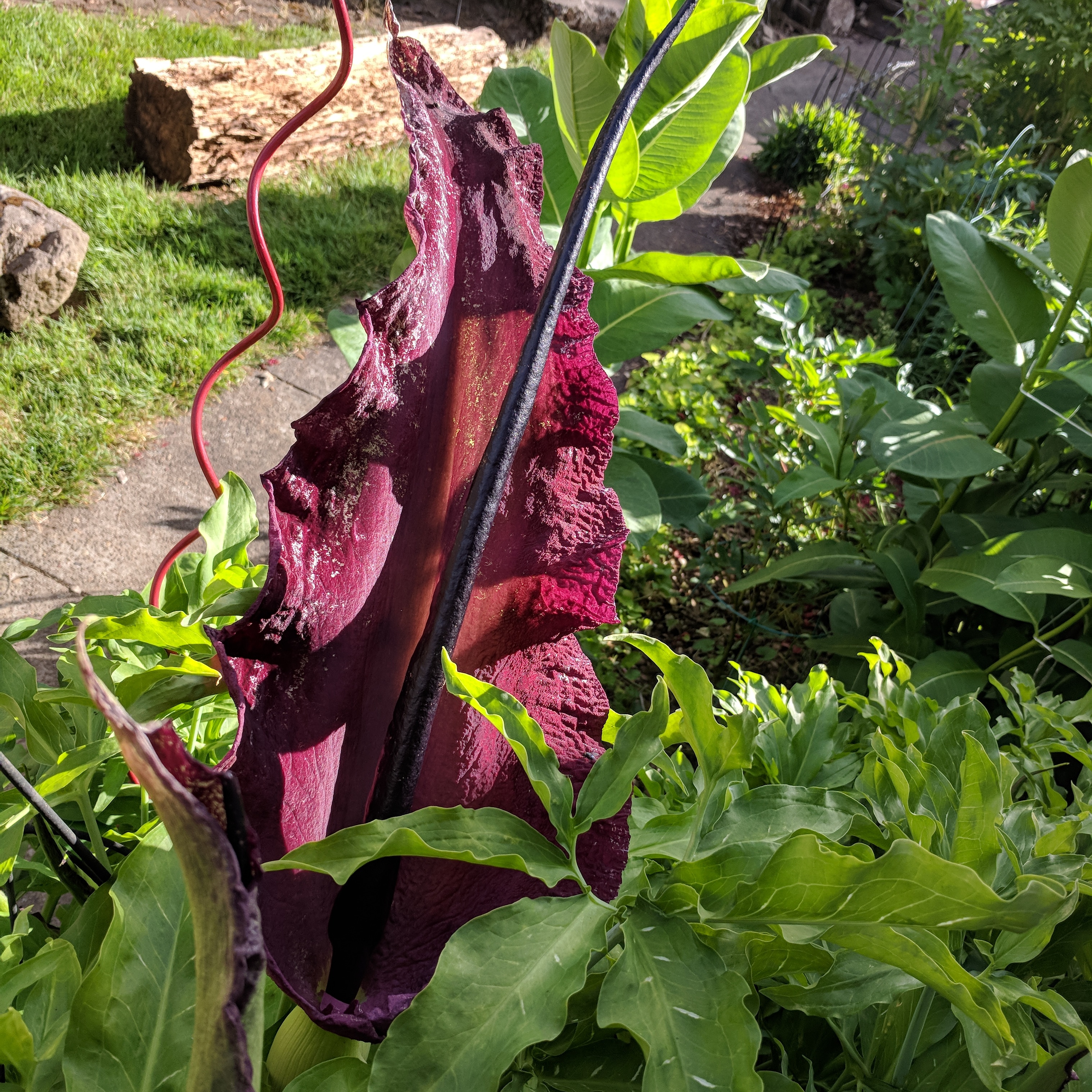
But before it does, at the end of May and always on our anniversary on the 7th of June, the aroma of rotten hamburger wafts in the air: the Dragon Lilies have opened. Flies and beetles rush in to await their demise in bowl of this carnivorous beauty. The smell lasts a couple days. The flowers wilt and the entire plant begins to wilt and turn yellow.

Now it is the milkweed’s turn.

I have two varieties: Showy milkweed (Asclepias speciosa – native to Oregon) with pink florets and California milkweed (A. Californica) with white florets. The latter isn’t a native to Oregon, and it doesn’t grow as prolifically as the Showy milkweed does, but the blooms are pretty and the aroma is the same: sweet and enticing, the polar opposite of the faded Dragon lily.

I planted milkweed thinking I could attract migrating Monarch butterflies. I didn’t know then that this part of the lower end of the Willamette Valley is not on the migratory path for these beautiful and endangered butterflies. No worries: the value blooming milkweed has for other pollinators outweigh my misplaced intentions. Every early bee, butterfly, and tiny wasp brave the sticky edges of the flowers to get at the pollen inside. Occasionally, a honeybee will get stuck and will have to struggle free. A few plants wilt and die, host to the milkweed beetle which does exist in this half of the valley.

Below the tall stems that now tower between four and six feet, a junco might build a ground nest. The nests are soft grass circles, now much larger than the palm of my hand. We won’t know there’s a nest there until a fledgling bird hops out of the cover while the parent birds hover nearby.
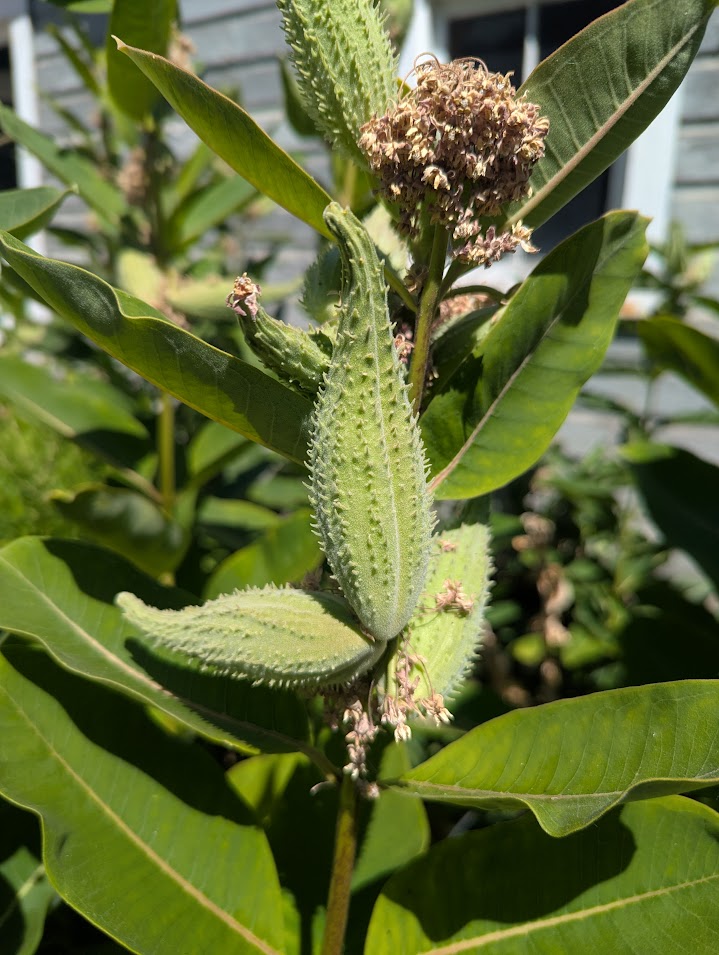
The bloom of milkweed lasts a couple weeks giving us quite a show of pink and white, and busy pollinator insects. But then the flowers fade and the few that were pollinated will start developing seed pods. These are green and soft, and quite edible if you are not allergic (I am). When the pods ripen, they turn brown and hard then pop open to release thousands of sees hanging from wispy “umbrellas”. The wind catches the seeds and like the dandelion – well, you know the rest of the story! The ground is soon covered in tiny, milkweed parachutes looking for a home.

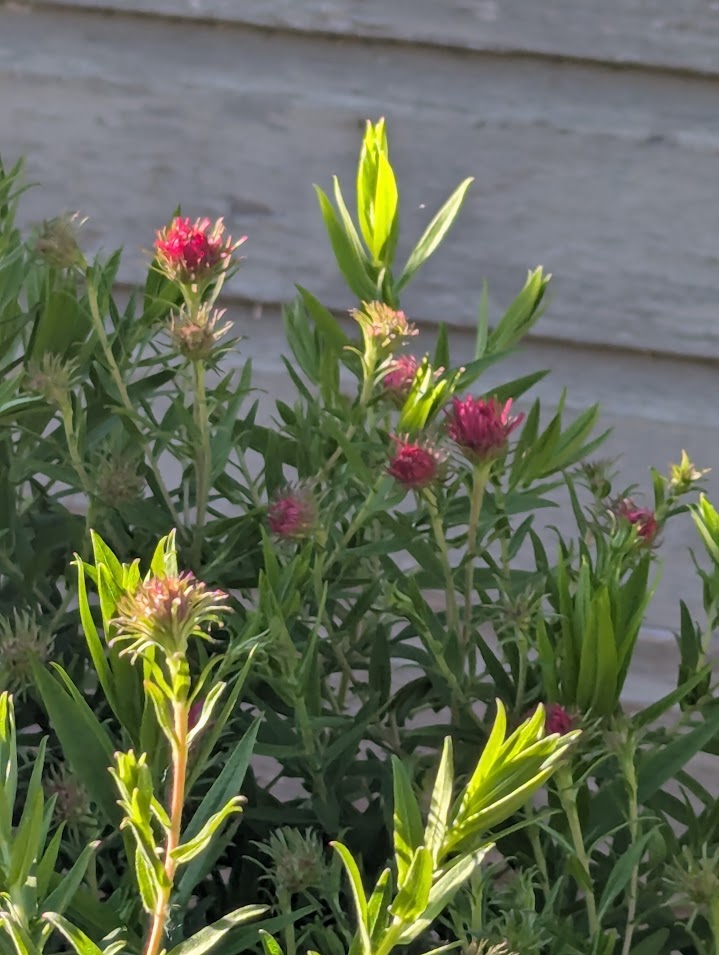
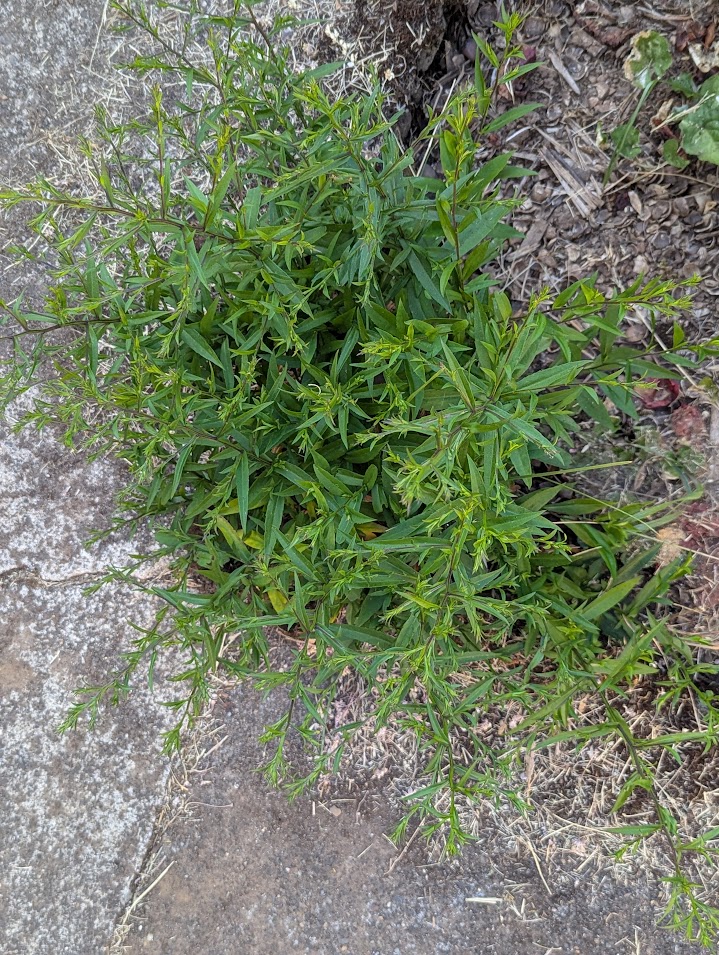
But I mow down the milkweed, not simply to avoid the parachutes, but because the milkweed towers above the asters. And the asters put on a late show of color lasting through August and into September. The tall asters are a riot of magenta pink. The aster that grows in the crack in the sidewalk puts out lilac-colored flowers. The tiny bees – those mining bees and other ground dwellers – love the asters.

The milkweed is gone now, and I wait for that last eruption of color. Too soon, the rain will come and everything will turn brown. (Photo is of a year I did not cut down the milkweed stalks and the seeds flew everywhere.)

Read Full Post »

The Weed Called Oregano.           

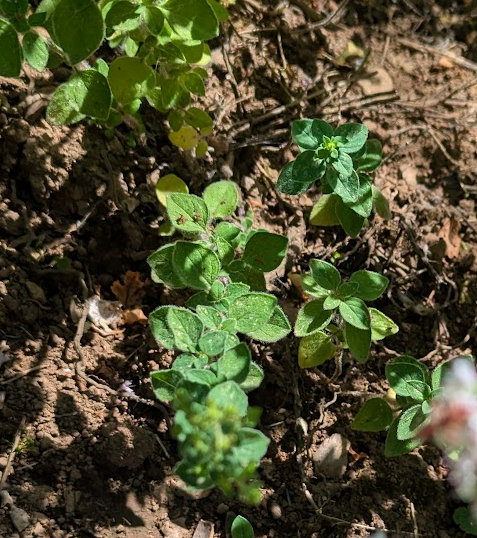
I don’t remember when I first planted oregano in my yard. We moved here in 2002 and I started carving out the “island” in 2003, so it was probably 21 years ago?

The “bed” of oregano has gone through some changes over the years: choked with that pesky grass, fenced off from dogs and to keep it upright, and it’s current incarnation that is 10x the original plant. I didn’t bother to rein it in this summer, but I did get rid of (most) of the pestilence grass.

We don’t purchase dried oregano in jars. Sometimes, I cut a handful of sprigs before it blooms, hang them upside down to dry, and scrape the dry leaves into an old jar that still has the original label on it: “Oregano”. We use it fresh during the spring and summer months when we can step outside and clip what we need off the plant. By Autumn it is fading and come winter, only dead stalks remain that I cut down and compost.

In spring, the cycle begins again.

I find new plants growing everywhere in the yard: oregano is self-seeding. I pull it with the other weeds, savoring the aroma as I do. I could allow it to grow everywhere and some day when I am too old to do my weeding by hand, that is probably what will happen: it will grow around the peonies, the rosemary, the lavenders, and the evening primroses.

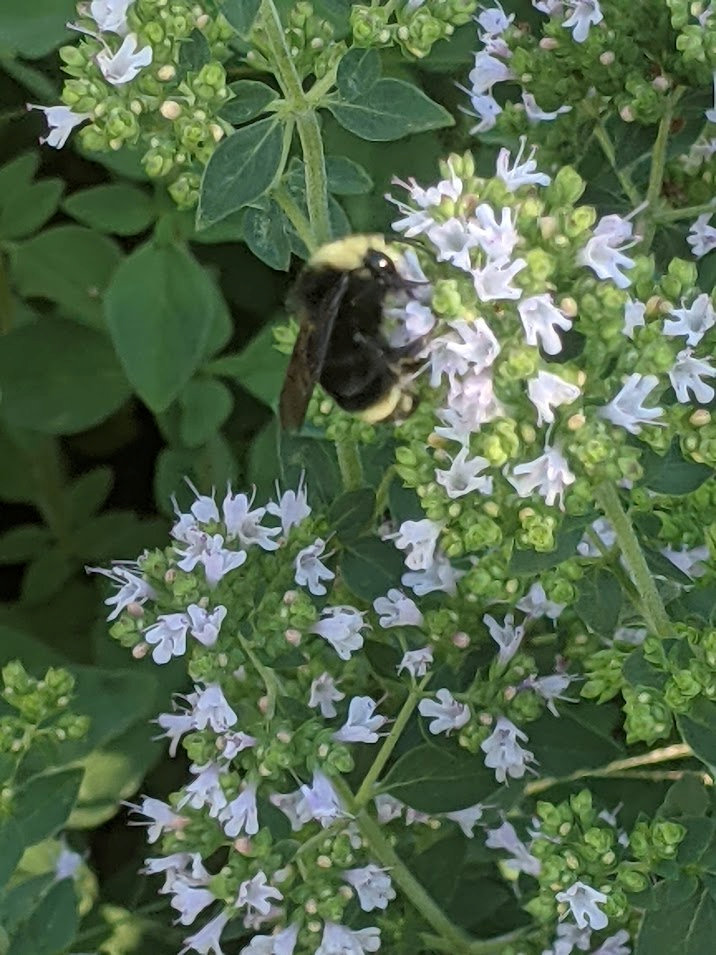
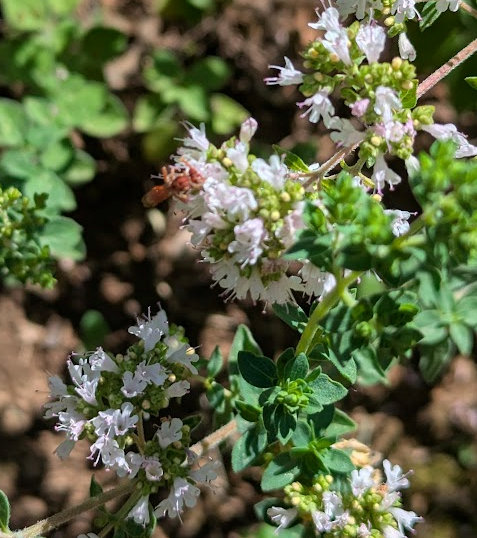
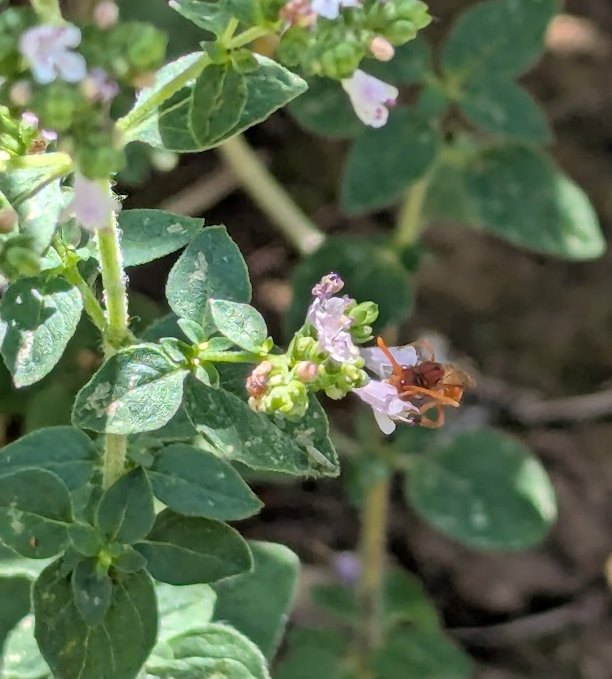
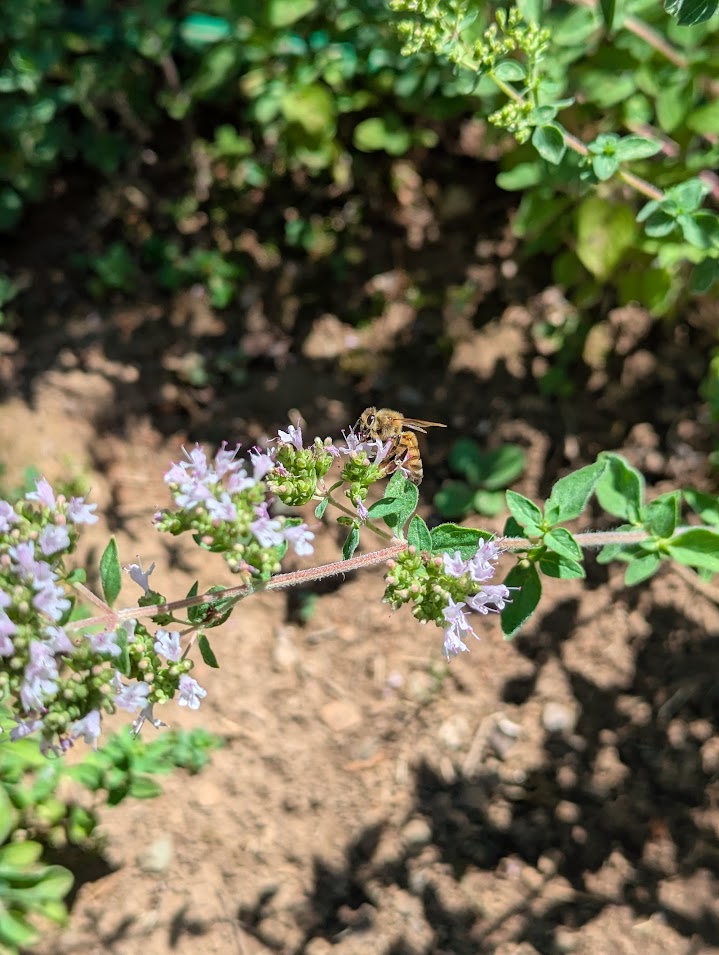
I wouldn’t mind and the pollinators would certainly benefit from the profuse tiny purple blooms. I wonder what oregano honey tastes like? Some honeybee keeper must know: as soon as it begins to bloom, the bed is covered with honeybees and other pollinators.

Our dogs (one at a time over the years) will stand with their noses deep in the aroma, snapping at whatever bees they see. They get stung and jump back, shaking the head furiously before wading back in to snap at another bee. Our mantra is, “Leave the bees alone <Ruger, Murphy, Harvey, Sadie>!” They leave, but they always return to the scene of the crime.

I wonder if the bees taste like honey or like a good Italian dish spiced generously with oregano?

Read Full Post »

It froze this morning. It has been freezing for the past week or so. It has also been reaching into the upper forties and lower fifties (Fahrenheit). The fruit flies have not died off and some small mayflies have hatched already. The pine siskins have moved on, but the year-round resident birds have been hitting the feeders with regularity.

There is not much one can do in the garden right now: too early to prune, too early to plant, still winter. February is often the month we get our “big” storm of the season: snow, ice, melt, floods. January is a month of holding patterns, waiting.

While we wait for the first peeks of green (or red, in the case of peonies), the insect pollinators are snug in their cocoons and hiding places. They are insulated under layers of fallen leaves (assuming you adhere to “leave the leaves” – our neighbors don’t, but they allow my husband to collect the leaves they have gathered, and we use them as mulch to prevent spring weeds and help the pollinators). Our yard is “pollinator friendly”.

We recently learned what we are doing right to help pollinators and what more we can do. And right now, in the still of January as it tips into February, is the time to think about emerging insects. Bees, specifically, need our help. There are several hundred species of bees in the United States alone, a few hundred in the State of Oregon, and possibly two- to three- hundred in our town alone. Our yard is likely host to over 40 species of native bees. I know we have identified close to thirty different species, not including the non-native (and non-threatened) European honeybee.

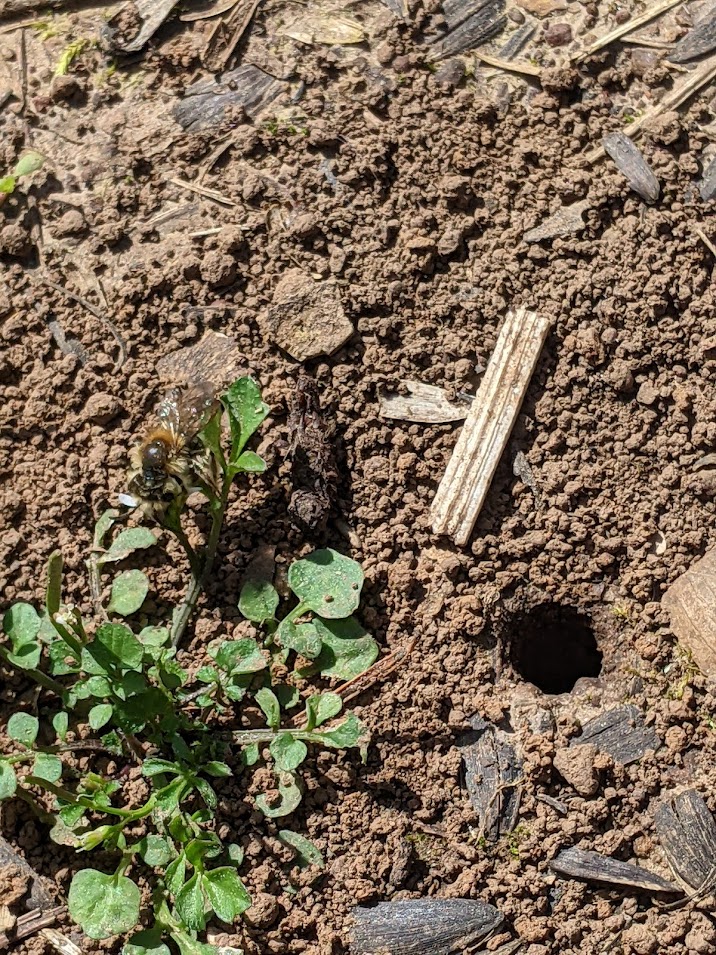
I wish I had photos of all the bees we have found on our little quarter of an acre. We have ground-dwelling bees, bees that love hollow stems, bees that are less than 3/8” of an inch (2CM) all the way up to the big, fat bumblebees that seek out our rhododendron blooms in the early Spring. The bumblebee is especially “of concern” ecologically. Some species of bumblebee are teetering on extinction, like the rusty-patched bumblebee. Bumbles pollinate more plants than honeybees and are native to our continent. (Honeybees are not native bees, are not threatened, and are a thriving industry. They are fine.)

We don’t begin to rake up the leaves and clear out the dead fall around the daylilies until the temperature has been hovering around 50° (F) for a week. This allows the bees, butterflies, moths, and beetles time to warm up, hatch out, stretch their lags and wings, and begin the summer-long process of pollinating flowers, vegetables, and fruits. Certainly, some of these are harmful insects (non-beneficial) but most of them are “good” guys: the beneficials. And beneficials are necessary for the ecosystem.

We learned recently that it helps to not “deadhead” all of the flower stalks, but to cut them down in lengths. Bees and other beneficials hibernate inside the plant stalks, slowly emerging as the air warms and the days get longer. I don’t deadhead a lot of the seed plants: evening primrose, mullein, asters, and goldenrod. The birds dine on the seeds throughout the winter. I never thought about insects.

That messy pile of tree limbs and branches we have yet to get rid of is not only home to our dog’s “beaver hut” (he has quite an excavation under the pile!) but is home to more insects trying to find a good place to overwinter. And here I was, thinking we’d have to finally cut the wood up and recycle it somehow!

That patchy mess we loosely refer to as a “lawn” out front encourages ground dwelling bees and gives us impetus to turn the yard into a meadow of native wildflowers, further encouraging native pollinators to stay and thrive. I am excited to add native plantings to the lawn with more flowers and less mowing! (I will probably have to paint a sign explaining to my neighbors why our yard isn’t as “pristine” as their golf-club perfect lawns or patches of sterile gravel.)

We already grow a lot of native plants, some purchased from nurseries, some collected from the wild, and some that birds introduced by pooping on our yard. The Xerxes Society provided me with a list of more natives, many of which I can purchase seeds for through local nurseries. Yee haw! I’m watching little $$ fly out the window, but it is SO worth it to create a habitat for miniscule creatures like bees.

I’m not going to go into how we depend on native pollinators and how their declining numbers impact our very own survival. You can find that information and more through The Xerxes Society. This non-profit is based here in the Pacific Northwest but reaches out across the continent. It is my favorite non-profit, close to my heart (BUGS!), and is highly rated as a non-profit. You may not think something so Lilliputian might impact our giant lives, but we depend on insects and invertebrates for so much. I’m not a rabid “tree hugger” but when it comes to insects… Well, I’m probably a rabid “bee hugger.”

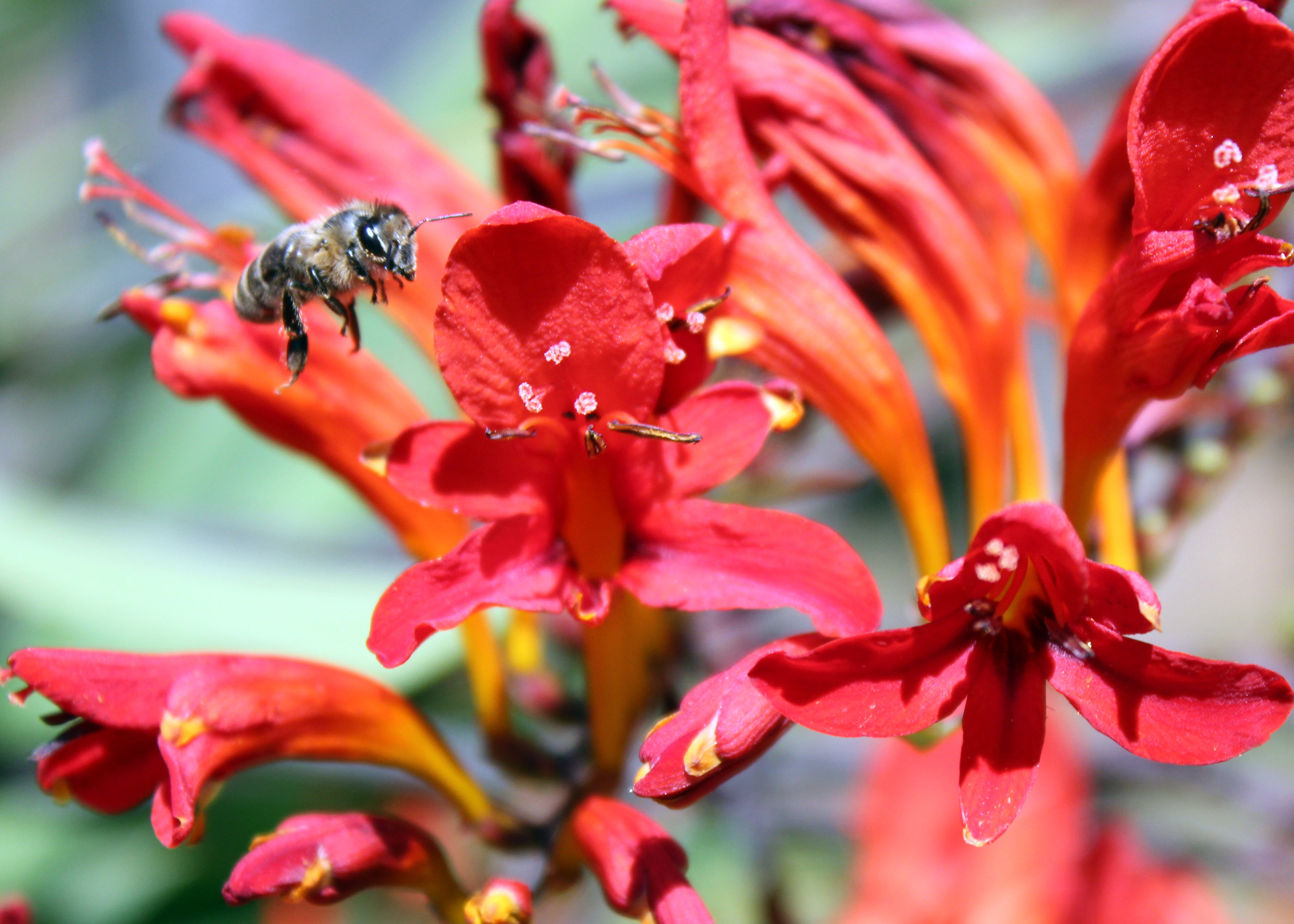
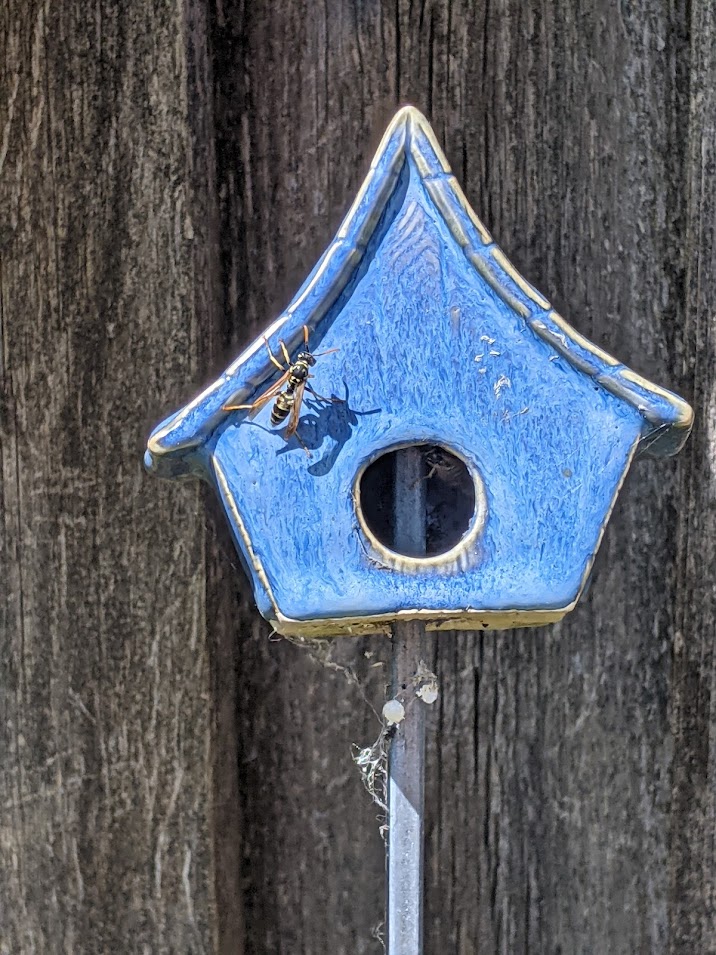
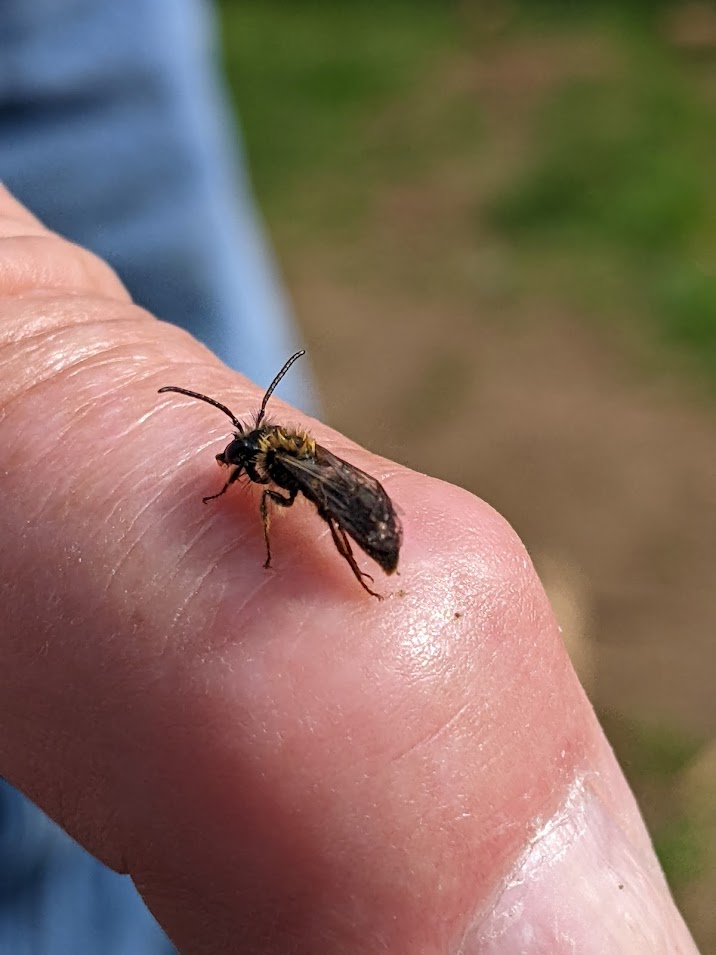
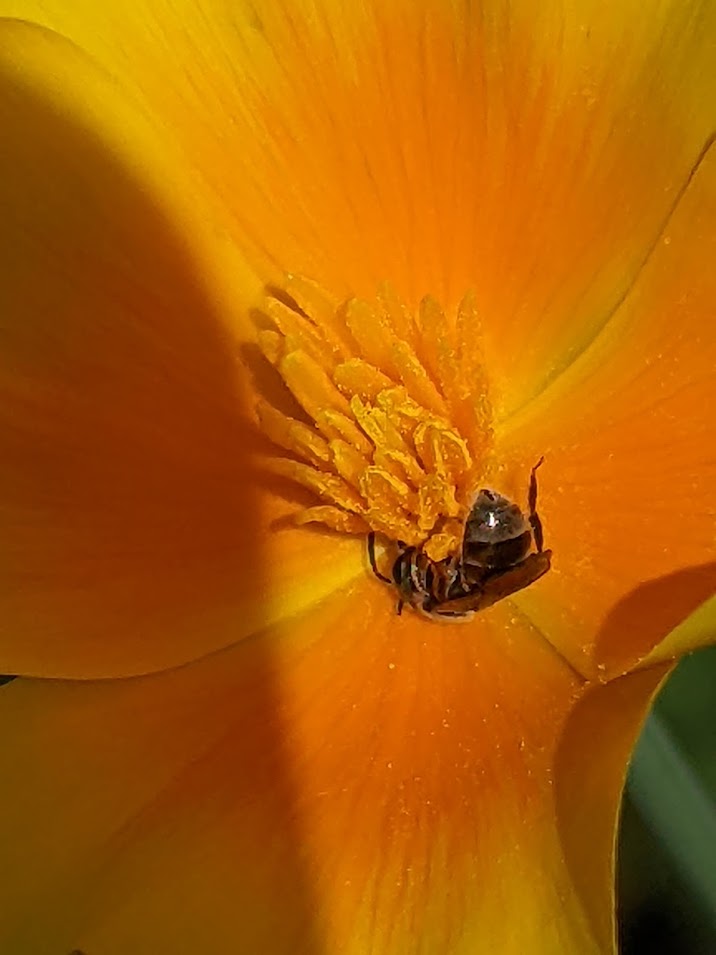
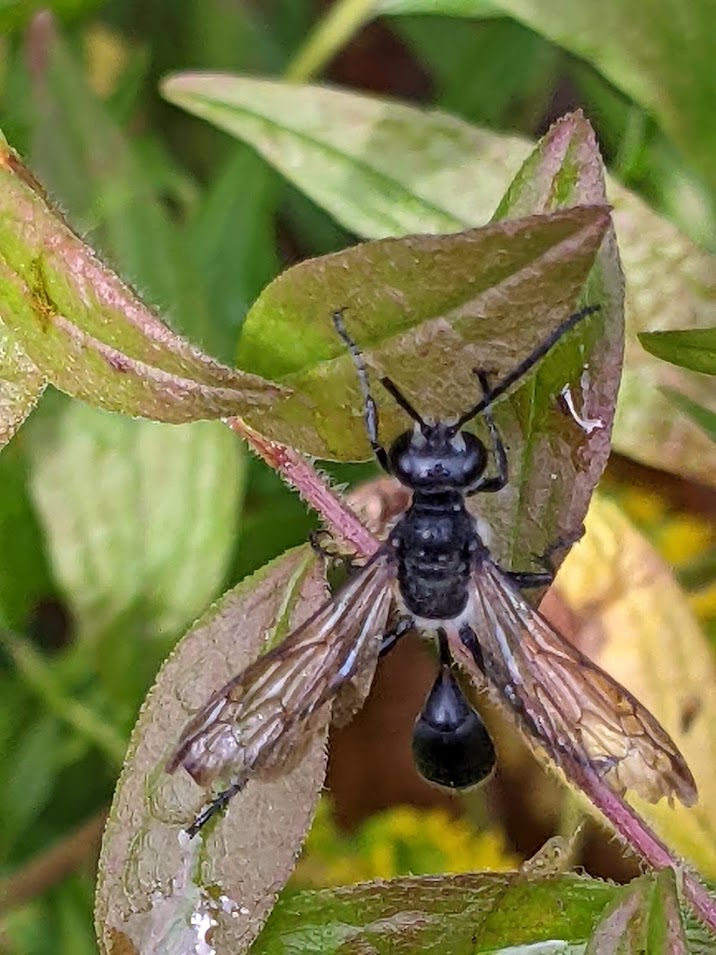
(I also do not know all the bees, wasps, and hover flies I photographed and posted to this article. I apologize for the oversight, but all photos are mine.)

Read Full Post »