Our yard is a curious yard for flower and herb gardening: nearly full shade during the winter when the sun is low and the Doug firs around us block its rays (there are no trees (per se) in our yard). In the summer, there are large swaths of the yard that are full sun to part sun. And there are sections that remain shady all year round, with just a little sunshine in the middle of the summer.
And the soil! Where once there were livestock over seventy years ago, the soil is rich, loamy, and wormy. Ignored sections tend to be clay, the predominant soil type of this area. I have well-drained areas and a few areas that remain wet. I battle fungus: black and brown spot, moss, and – in some corners, powdery mildew. Aphids are the biggest insect pestilence, but I have to be careful in my battle against them because our yard is also a pollinator habitat: birds and beneficial insects teem year-round.
My battle against invasive plants is slow and deliberate, executed with extreme caution: I have a liquid herbicide that I apply with a paint brush on the newly cut stems of offending plants: Himalayan blackberry, the neighbor’s flowering fruit tree that insists on shooting up starts in out yard, and a few miscellaneous “weeds”. It has to be done when the sun is out for several days in a row and protected from the curious nose of our doggo.
I have also applied the salt-vinegar-soap mixture to certain leafy plants, but that also needs to be done with caution. The salt will render the soil unfertile for a few years if you use too much. And it doesn’t outright kill, it merely stops the growth and then I have to go in and snip off any green starts I see, denying the offending plant needed sunshine and air. (1-gallon white vinegar – best to use 30% stuff you can get at places like Home Depot – + 1 cup salt and a dash of Dawn liquid soap to help it adhere to the leaves and stalks). A hot day works best. I killed the Comfrey that was taking over part of my yard with that solution and a LOT of snipping. It took three or four years to win the battle.
(Yes, I know: Comfrey is a wonderful herb and a pollinator friend. But it is also invasive, tends to powdery mildew, and causes lovely rashes on contact. Borage, a close relative, is much easier to contain and the pollinators love it just as well.) (An opinion, not a rule.)
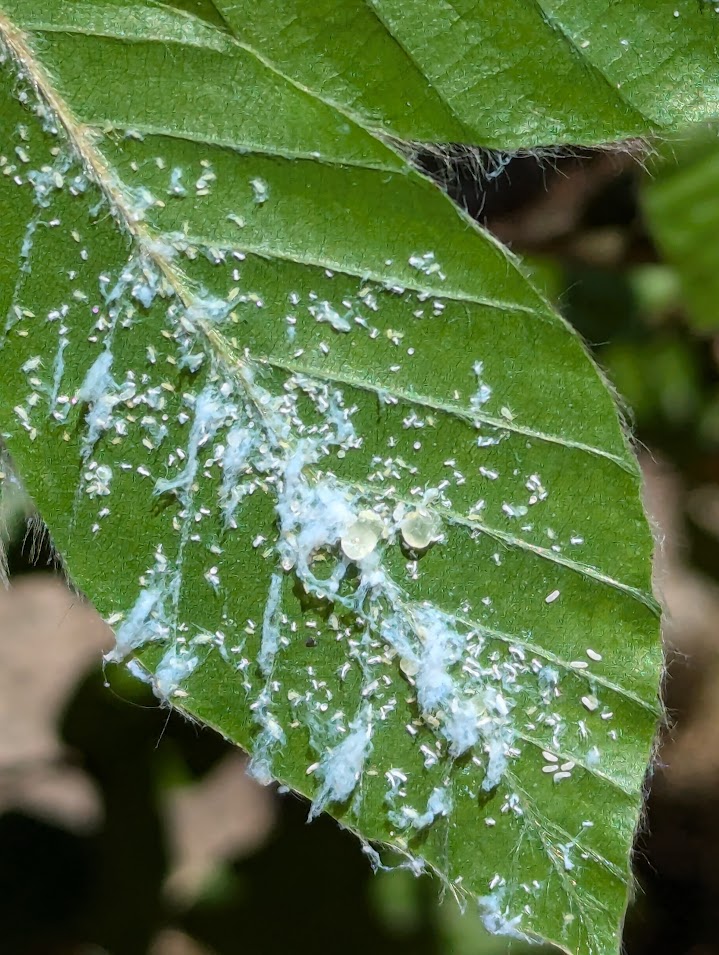
Aphids are trickier. I’ve tried Neem and I have tried a natural recipe of soap and water (easy on the soap and it must be Dawn). I planted Marigolds between my hybrid tea roses, but I haven’t tried that around my honeysuckle. I started using a natural spray of essential oils last summer (too late, I am afraid): thyme, peppermint, cloves, and rosemary mixed in a quart of water and sprayed liberally. I also planted two native honeysuckles to complement the cultivar I already have, and I am hoping that the native ones have some resistance to aphids.
I purchased copper fungicide last year to help combat the brown- and black- spot fungus that is ever present in a Pacific Northwest semi-shade yard. I applied it to the ground when I mulched my roses, but I do need to apply it to my peonies as well (and my yard is full of peony cultivars!). My understanding is that the fungus lives in the soil (or profligates there). I also found two natural remedies in my Garden Notes file today.
- 1 litre 7-Up (less 1 cup – you drink that) + 1 cup mouthwash + dash Murphy’s oil or Dawn liquid soap. Doesn’t specify what brand mouthwash, but I will assume it is one that is “minty” fresh.
- 1 T baking soda + 1 gallon water + 1 T white vinegar + 1 T cannola oil. Since it is being used on plant foliage, I would assume you use the food variety of vinegar, less acidic. I can foresee this leaving a white residue of baking powder of plants, but it is quite diluted. The only other problem I have with this is the cannola oil. We don’t use cannola oil in any of our cooking or baking.
The former recipe looks doable for me, but I’d love to hear from other folk what remedies wou have tried (natural, mind you).
Slugs and snails are our “other” pestilence here in the Pacific Northwest. You can pour beer into a receptacle and let them drown themselves (rather gross to throw away every morning with their fat carcasses, and a waste of beer). You can use slug bait (I do, but only in places where I can shelter it from birds, mice, and doggo). But the best deterrent is simply removal. Toss those puppies into the middle of the asphalt street and let Nature (or tire treads) take its course. Eliminate hiding places (this is a biggie: the fewer places for slugs to hide, the fewer slugs you have. Snails, too.)
I do have another trick up my sleeve, but it is for potted plants: copper tape applied around the base of the pot. Copper conducts electricity which gives slugs what is equivalent to a “hot wire” shock to a horse. My husband has copper piping that he places around the lettuce and similar greens in the vegetable garden. Science, folks.
I’d love to have your input on solutions!

 Jaci Dawn