It froze this morning. It has been freezing for the past week or so. It has also been reaching into the upper forties and lower fifties (Fahrenheit). The fruit flies have not died off and some small mayflies have hatched already. The pine siskins have moved on, but the year-round resident birds have been hitting the feeders with regularity.
There is not much one can do in the garden right now: too early to prune, too early to plant, still winter. February is often the month we get our “big” storm of the season: snow, ice, melt, floods. January is a month of holding patterns, waiting.
While we wait for the first peeks of green (or red, in the case of peonies), the insect pollinators are snug in their cocoons and hiding places. They are insulated under layers of fallen leaves (assuming you adhere to “leave the leaves” – our neighbors don’t, but they allow my husband to collect the leaves they have gathered, and we use them as mulch to prevent spring weeds and help the pollinators). Our yard is “pollinator friendly”.
We recently learned what we are doing right to help pollinators and what more we can do. And right now, in the still of January as it tips into February, is the time to think about emerging insects. Bees, specifically, need our help. There are several hundred species of bees in the United States alone, a few hundred in the State of Oregon, and possibly two- to three- hundred in our town alone. Our yard is likely host to over 40 species of native bees. I know we have identified close to thirty different species, not including the non-native (and non-threatened) European honeybee.
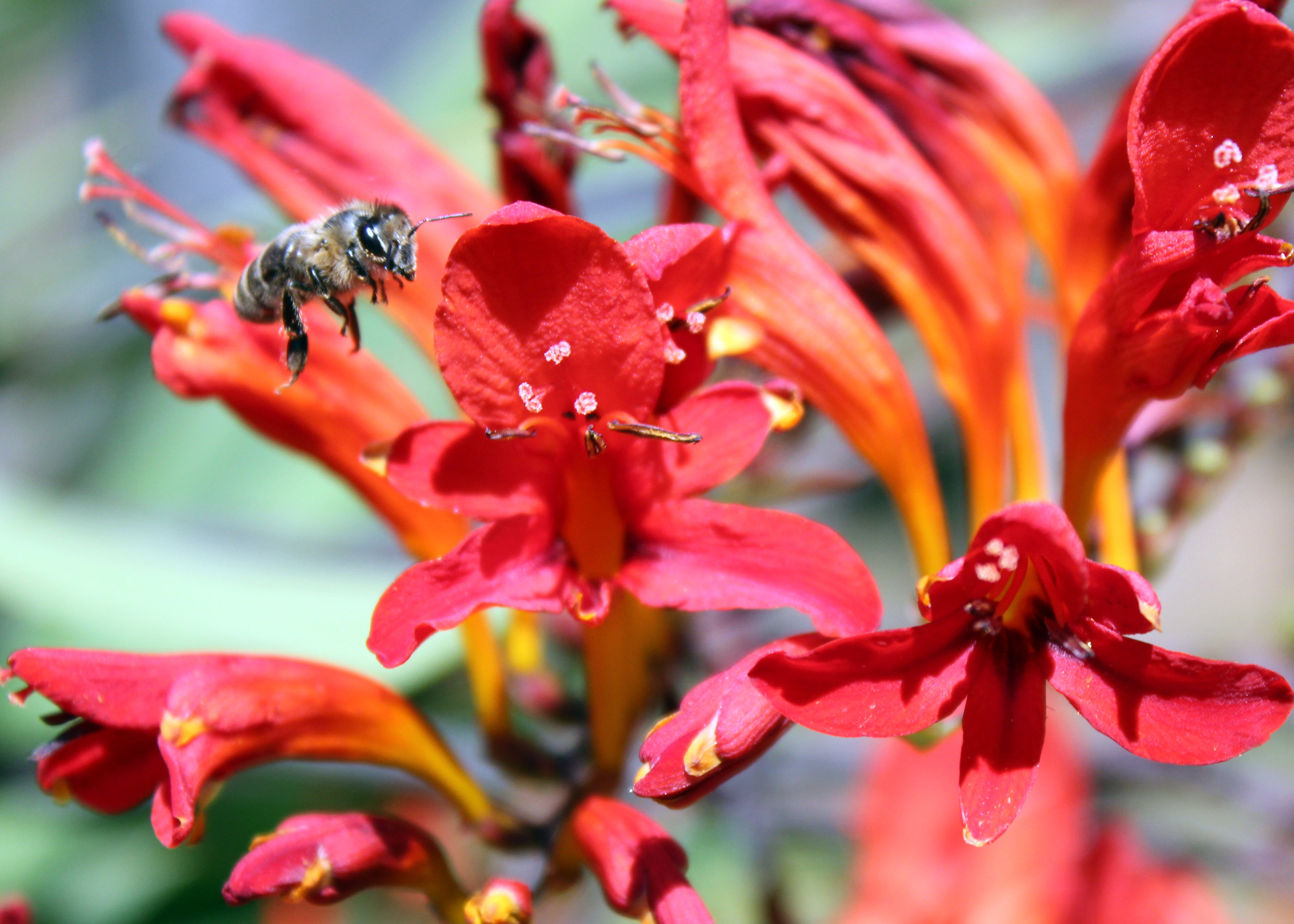

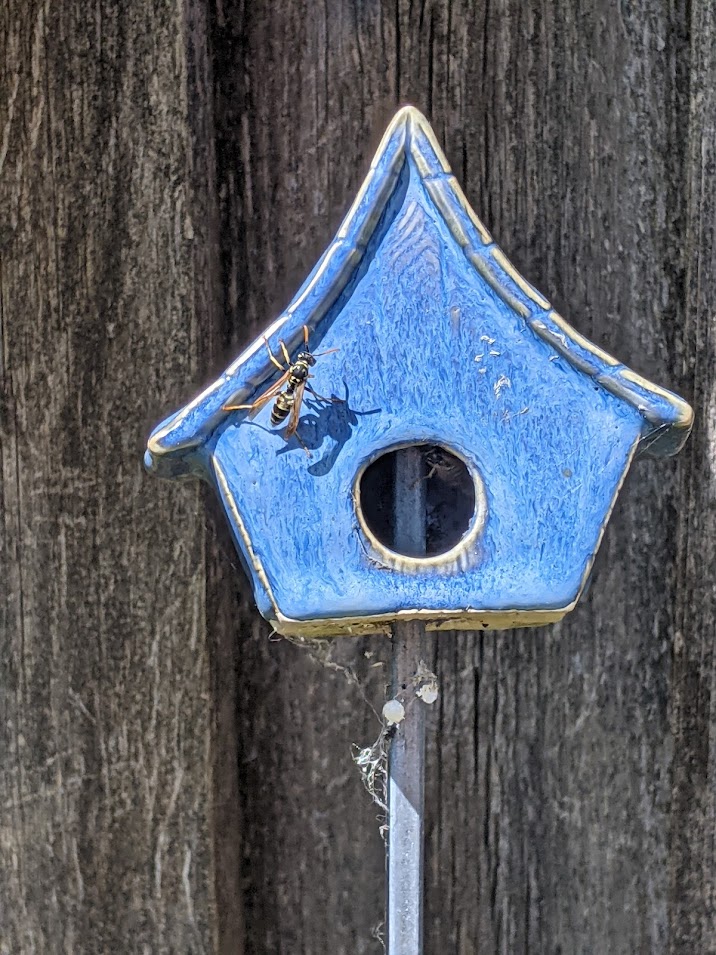


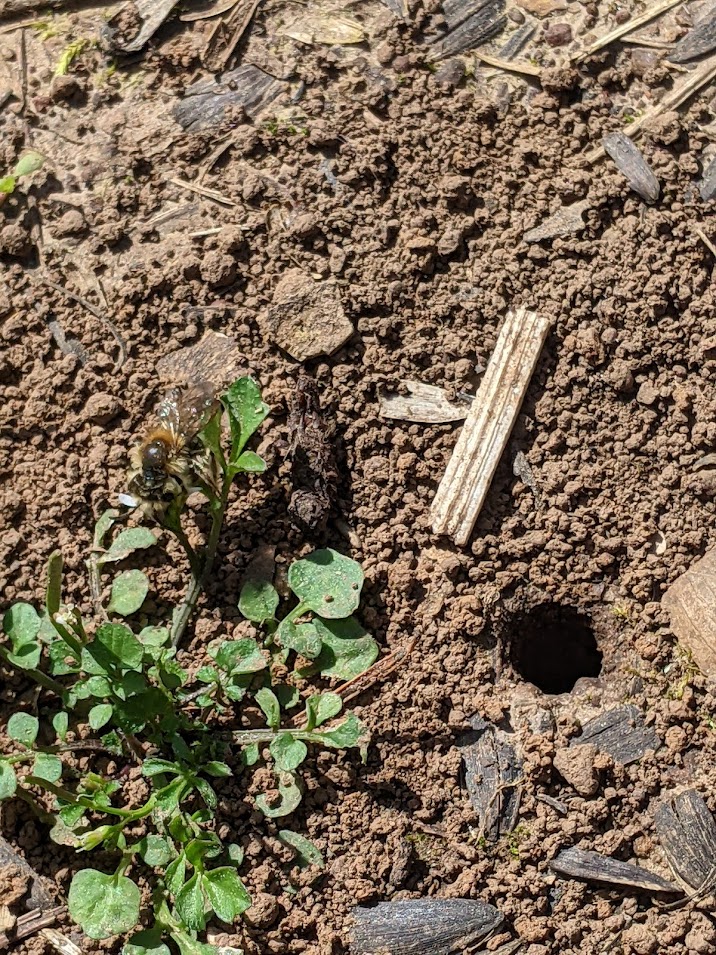
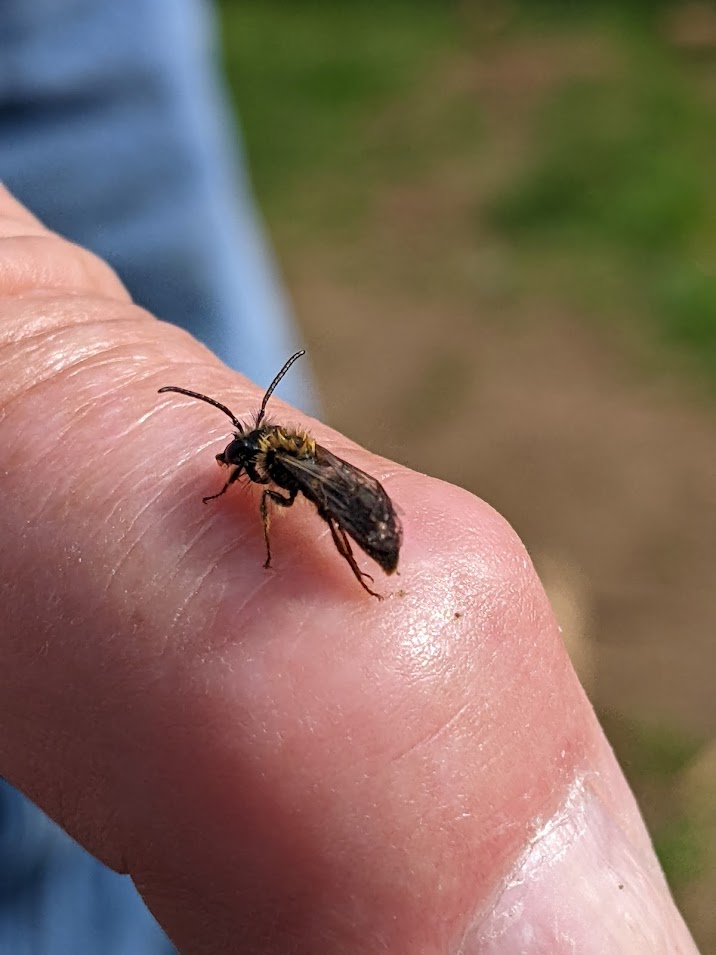


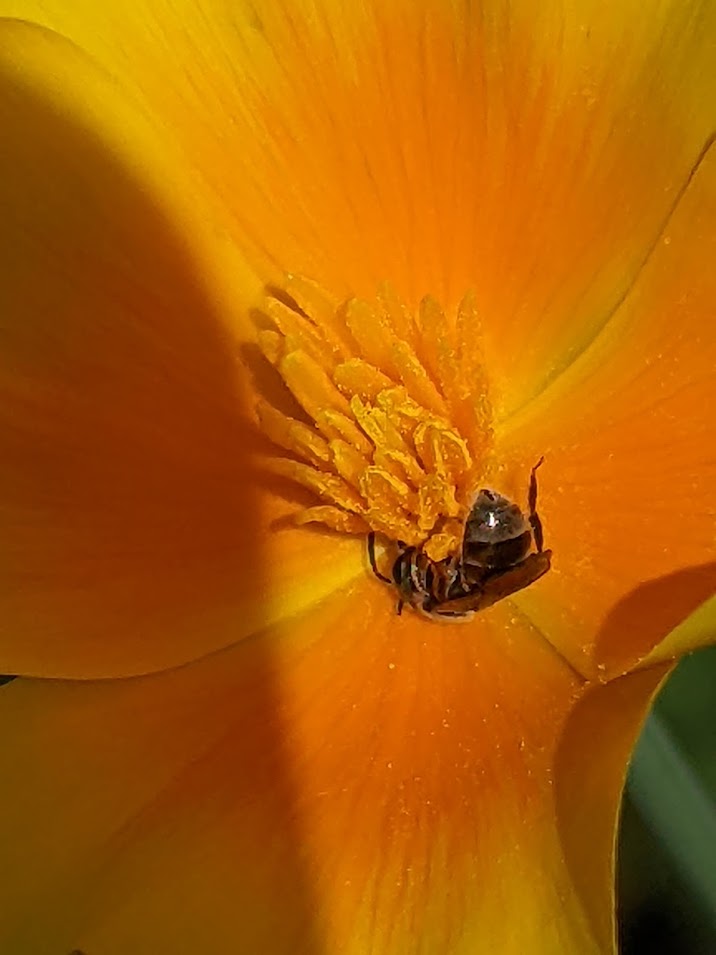


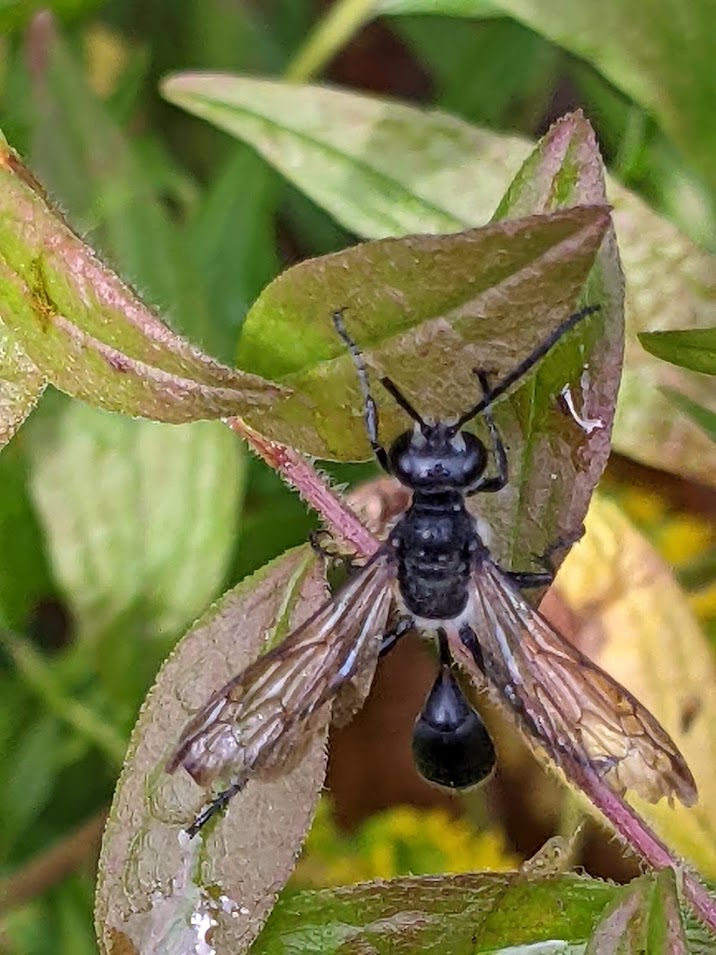

I wish I had photos of all the bees we have found on our little quarter of an acre. We have ground-dwelling bees, bees that love hollow stems, bees that are less than 3/8” of an inch (2CM) all the way up to the big, fat bumblebees that seek out our rhododendron blooms in the early Spring. The bumblebee is especially “of concern” ecologically. Some species of bumblebee are teetering on extinction, like the rusty-patched bumblebee. Bumbles pollinate more plants than honeybees and are native to our continent. (Honeybees are not native bees, are not threatened, and are a thriving industry. They are fine.)
We don’t begin to rake up the leaves and clear out the dead fall around the daylilies until the temperature has been hovering around 50° (F) for a week. This allows the bees, butterflies, moths, and beetles time to warm up, hatch out, stretch their lags and wings, and begin the summer-long process of pollinating flowers, vegetables, and fruits. Certainly, some of these are harmful insects (non-beneficial) but most of them are “good” guys: the beneficials. And beneficials are necessary for the ecosystem.
We learned recently that it helps to not “deadhead” all of the flower stalks, but to cut them down in lengths. Bees and other beneficials hibernate inside the plant stalks, slowly emerging as the air warms and the days get longer. I don’t deadhead a lot of the seed plants: evening primrose, mullein, asters, and goldenrod. The birds dine on the seeds throughout the winter. I never thought about insects.

That messy pile of tree limbs and branches we have yet to get rid of is not only home to our dog’s “beaver hut” (he has quite an excavation under the pile!) but is home to more insects trying to find a good place to overwinter. And here I was, thinking we’d have to finally cut the wood up and recycle it somehow!
That patchy mess we loosely refer to as a “lawn” out front encourages ground dwelling bees and gives us impetus to turn the yard into a meadow of native wildflowers, further encouraging native pollinators to stay and thrive. I am excited to add native plantings to the lawn with more flowers and less mowing! (I will probably have to paint a sign explaining to my neighbors why our yard isn’t as “pristine” as their golf-club perfect lawns or patches of sterile gravel.)
We already grow a lot of native plants, some purchased from nurseries, some collected from the wild, and some that birds introduced by pooping on our yard. The Xerxes Society provided me with a list of more natives, many of which I can purchase seeds for through local nurseries. Yee haw! I’m watching little $$ fly out the window, but it is SO worth it to create a habitat for miniscule creatures like bees.
I’m not going to go into how we depend on native pollinators and how their declining numbers impact our very own survival. You can find that information and more through The Xerxes Society. This non-profit is based here in the Pacific Northwest but reaches out across the continent. It is my favorite non-profit, close to my heart (BUGS!), and is highly rated as a non-profit. You may not think something so Lilliputian might impact our giant lives, but we depend on insects and invertebrates for so much. I’m not a rabid “tree hugger” but when it comes to insects… Well, I’m probably a rabid “bee hugger.”
(I also do not know all the bees, wasps, and hover flies I photographed and posted to this article. I apologize for the oversight, but all photos are mine.)

 Jaci Dawn