How I love thee, False Spring! I love the sunshine! The warm air! The wee buds poking up out of the ground!
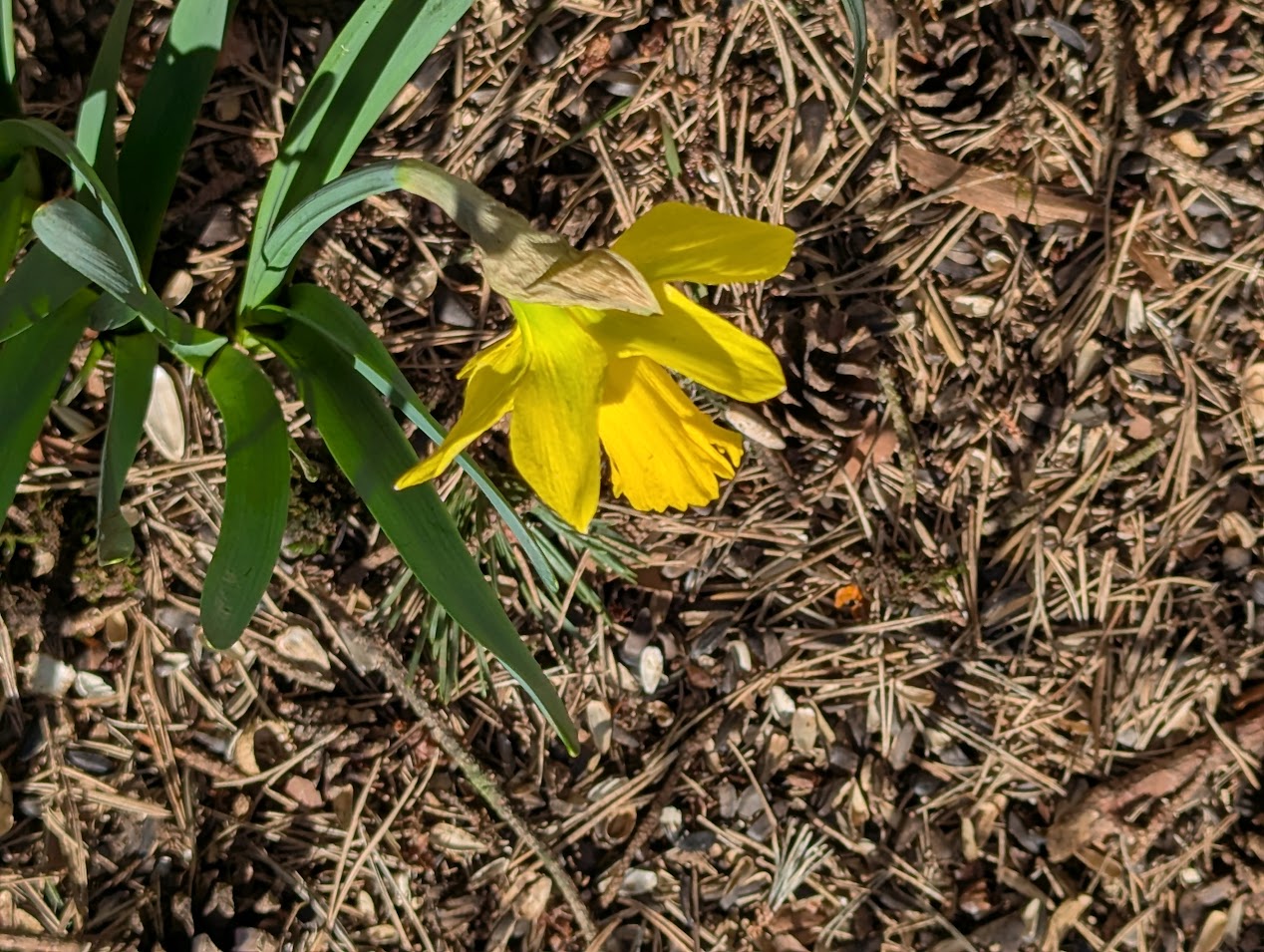
Daffodils! (Except the parts the slugs came and nibbled on!)
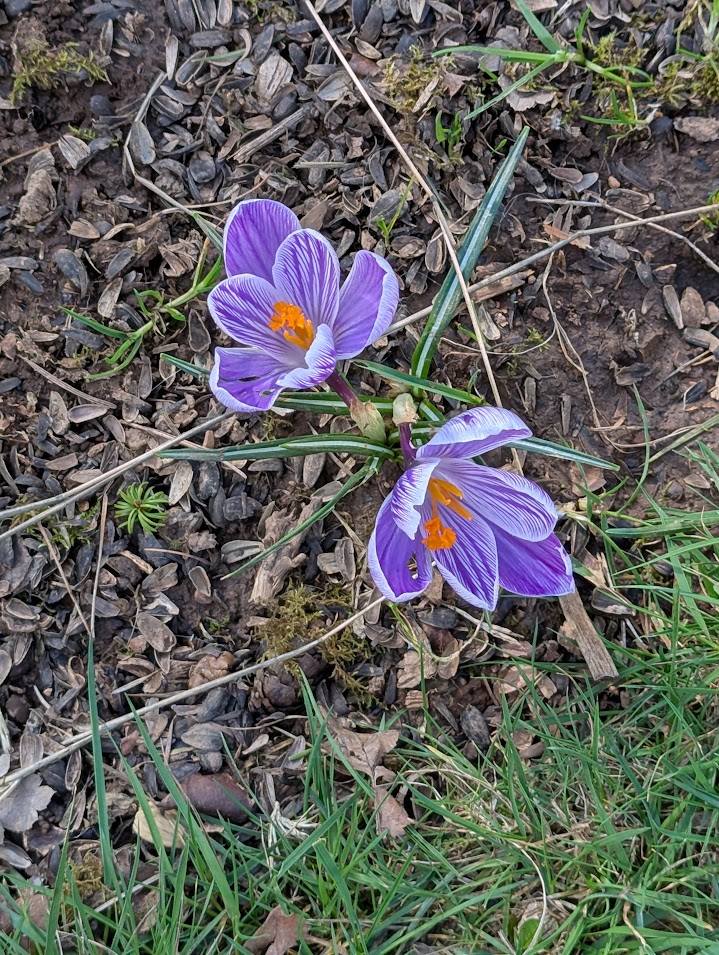
Crocus! (Until the dang squirrel makes off with the flower and eats it all!)

The Camellia! (What buds have escaped both the dog and the squirrel! What the dog tastes in Camellia buds is beyond me but it isn’t harmful to him – surprise! – and he only picks off the blossoms on the lowest branches. Squirrels tend to the upper blossoms where I cannot see, so that leaves the bulk of the bush to me! Me, me, me!)

The Lenten Rose (Hellebore)! (Mine needs some fungicide, I think. The leaves look rather sad.)

The grape hyacinth!
No. Just NO.
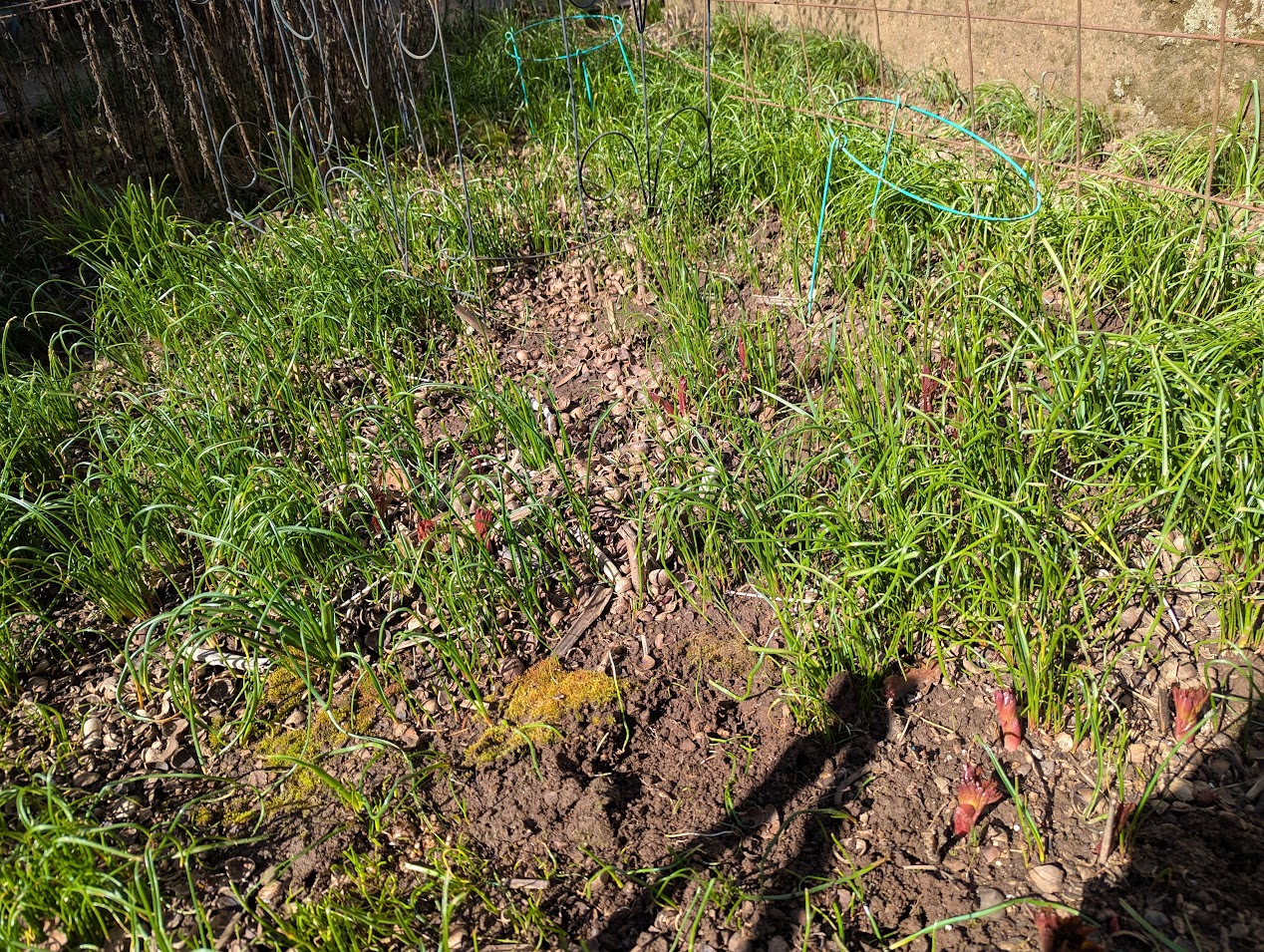
Look at them there in my flower bed, crowding out the peonies. All those clumps of impenetrable hyacinth bulbs! I think the last time I purged them was about five years ago. And today they came out in the handfuls, all those little bulbs crowded together just under the surface, clinging to each other like seeds in a pomegranate.
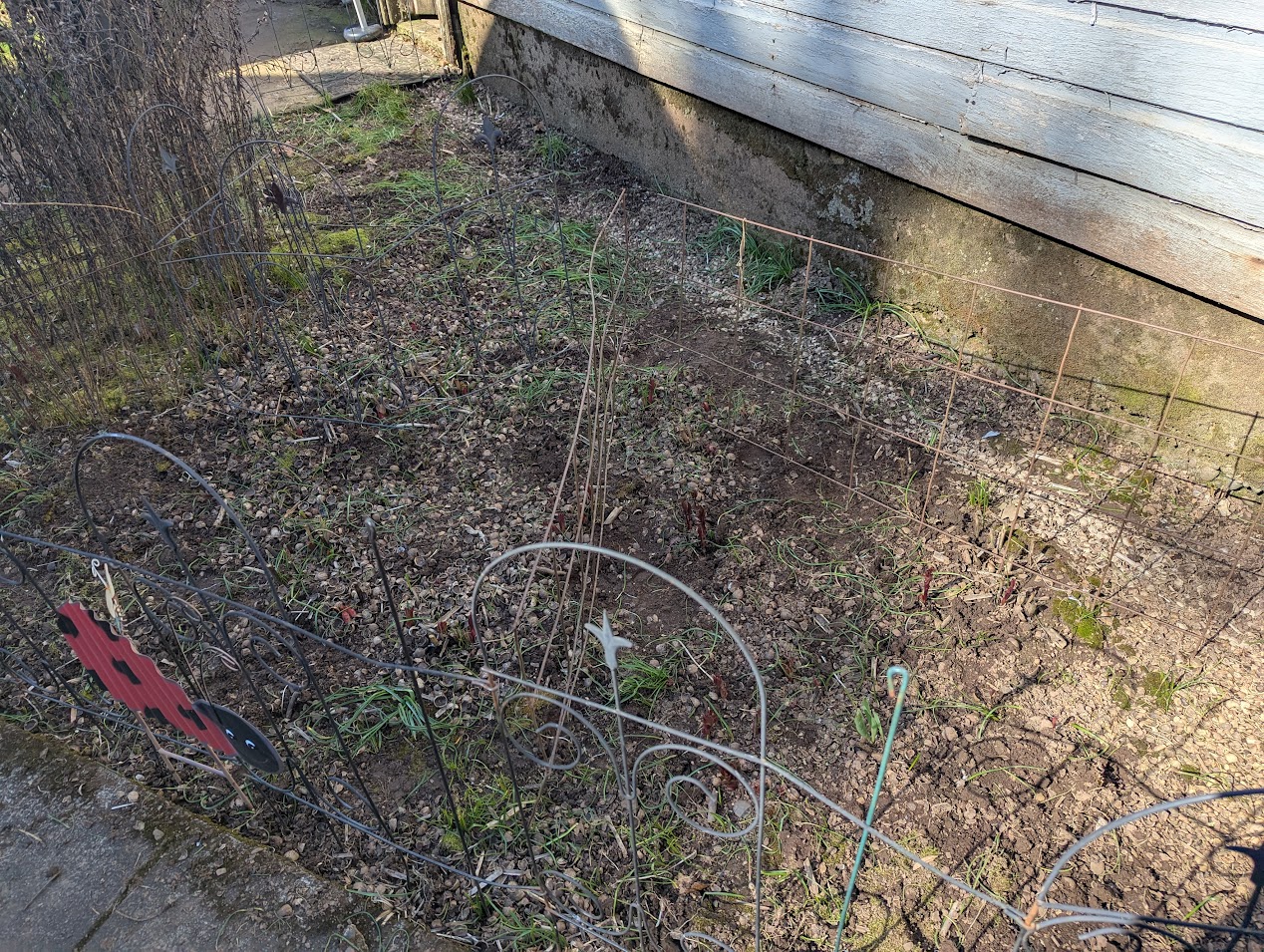
Kill! Pull! Purge!
Except they don’t all come out and there are some with tiny promises of fragrant grape-colored clusters of bell-shaped flowers. I left those.
And I know I will do this again in about five years.
Because grape hyacinths. They merely regroup.
This particular flower bed is my most successful. It is low maintenance, except for the every-five-years purge of invasive and stubborn grape hyacinths.
This garden bed blooms from early spring starting with the hyacinth, which I promise, will still raise up tiny spikes of purple flowers rimmed with a delicate white border. Not as fragrant as the larger hyacinths that come in a variety of pink, purple, and blue shades, but pretty enough to place in a bud vase and prolific enough to be a nuisance.
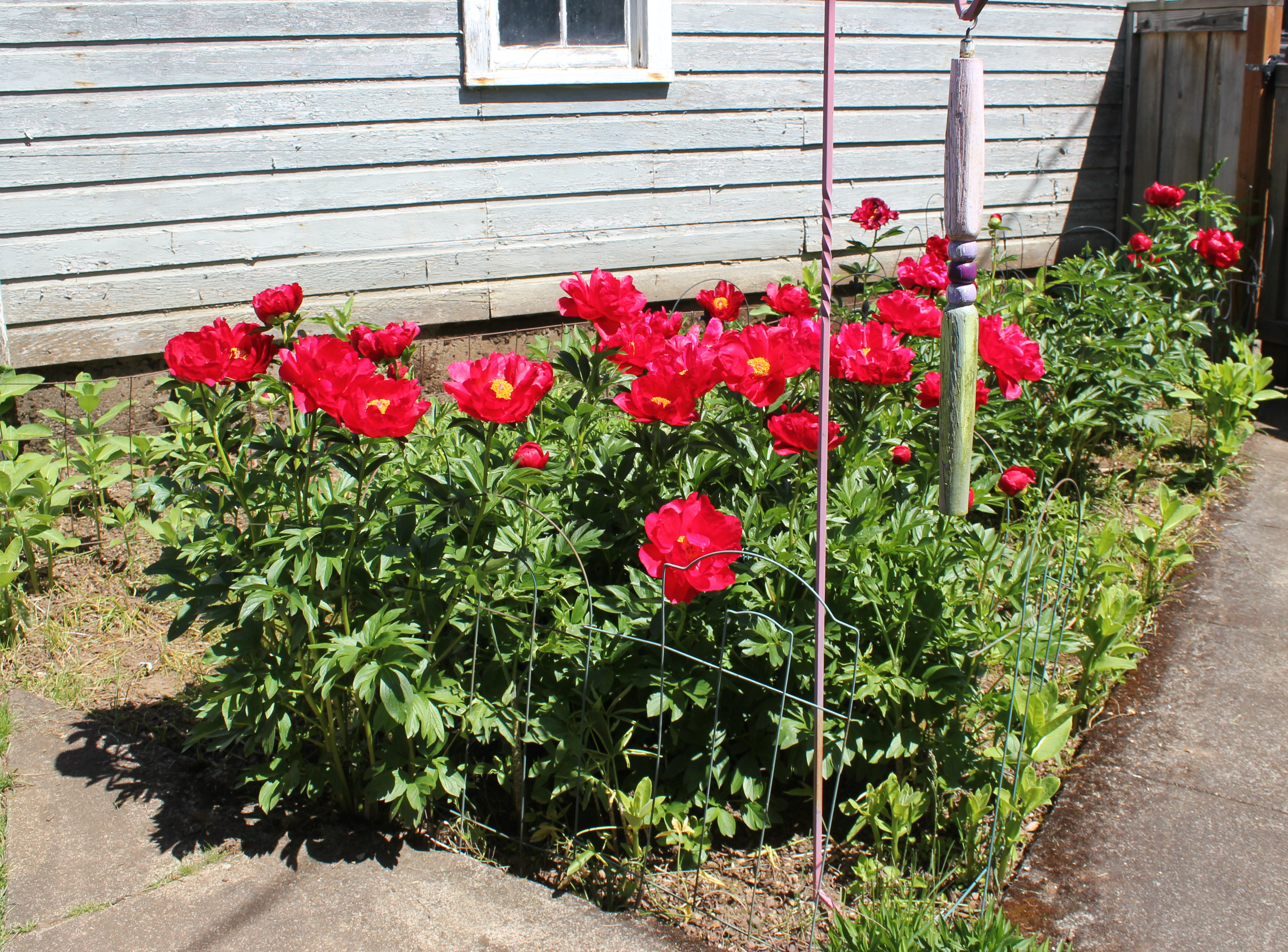
Then come the peonies. Blood red and scarlet. The peonies thrive despite the crowding of tiny bulbs. I throw them some light fertilizer early and a little copper fungicide to ward off brown spot, but otherwise, I ignore them. Well, I pick them and place them in pretty vases that I allow to sit outside overnight until all the ants fall off. Ants love peonies.
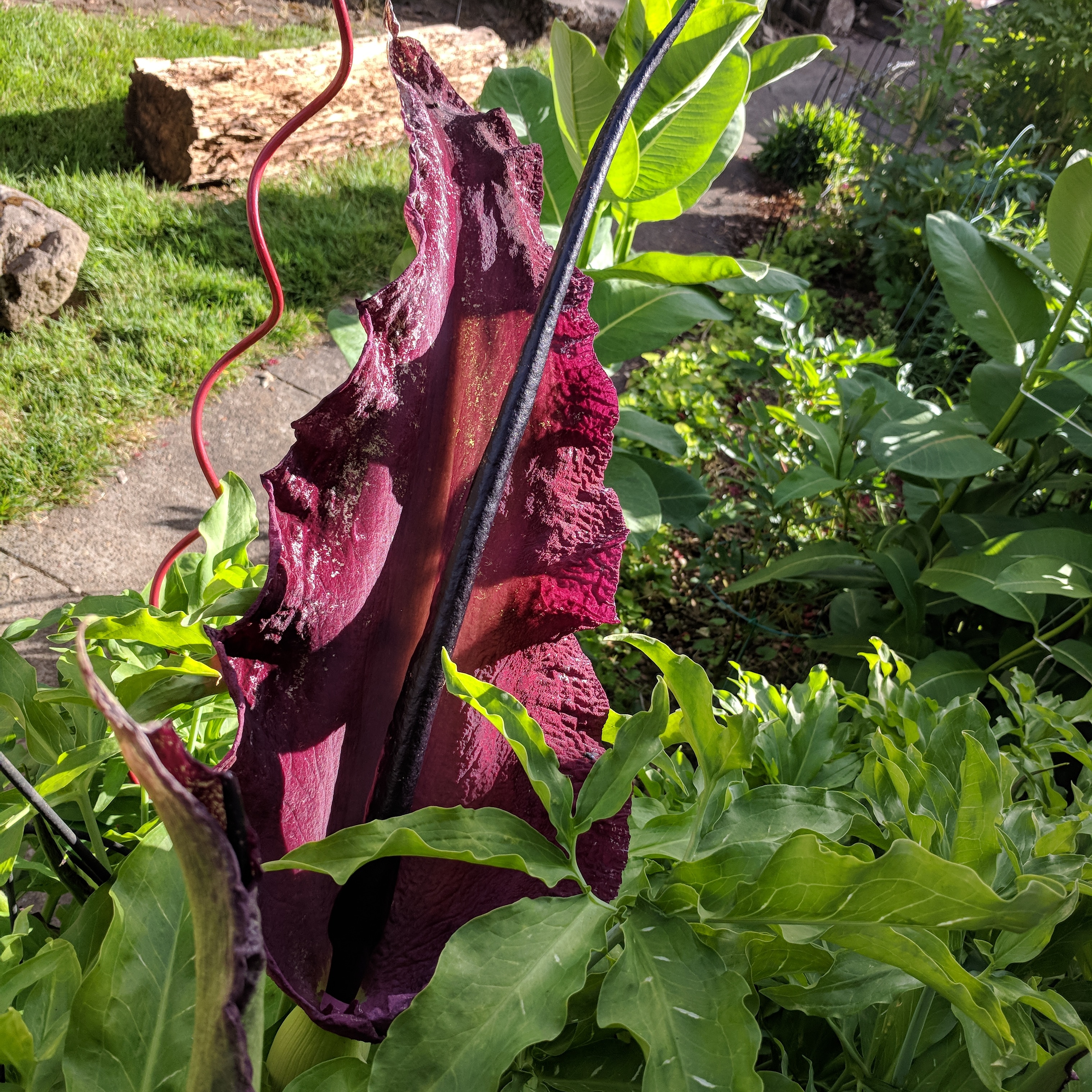
As the peonies fade, the Voodoo Lily comes on. Pungent, odiferous, and so dark a purple as to be almost black. We dug the parent plant up at a rental we lived in some 40 years ago. Didn’t think anyone would care if we took such an obnoxious smelling plant with us, and no doubt they haven’t missed it: surely we missed some of the bulbs.
It smells like rotten hamburger. It attracts beetles and flies (and not a few dogs). It repels neighbors and guests, but it also piques their interest: what is this mysterious plant? Dracunculus Vulgaris. Voodoo Lily. The harbinger of our wedding anniversary (it blooms the first week of June).

And when the lily fades and dies back, the milkweed springs upward. And upward. It blooms with a strong aroma, something far less offensive than the former: milkweed is aromatic and sweet, enticing and hypnotizing. Here come the bees, wasps, flies, butterflies, and beetles. Pink and white clusters of hundreds of flowers. And with it, our hope of seeing a magnificent orange-and-black Monarch butterfly or the yellow-green-and black striped Monarch caterpillar (that feeds exclusively on milkweed).
If you plant it they will come. We hope.

The milkweed, in turn, goes to seed and begins to fade, the seed pods hardening. Summer is at an end. And with a burst of color, the asters open up: tall magenta ones and shorter light purple ones. The bees and wasps that filtered off to other flowers when the milkweed faded are back in force. It is one last feast of nectar, of pollen, of summery intoxication.
Then it all fades away and the grape hyacinth begins to poke its persistent leaves upward, greening the winter brown ground.
**note: the only photo that is not mine is that of the grape hyacinth. Credit goes to NickyPe and Pixabay.

 Jaci Dawn