I don’t remember when I first planted oregano in my yard. We moved here in 2002 and I started carving out the “island” in 2003, so it was probably 21 years ago?
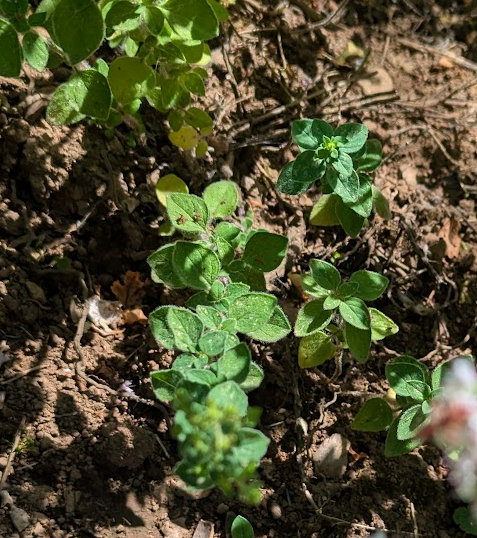
The “bed” of oregano has gone through some changes over the years: choked with that pesky grass, fenced off from dogs and to keep it upright, and it’s current incarnation that is 10x the original plant. I didn’t bother to rein it in this summer, but I did get rid of (most) of the pestilence grass.
We don’t purchase dried oregano in jars. Sometimes, I cut a handful of sprigs before it blooms, hang them upside down to dry, and scrape the dry leaves into an old jar that still has the original label on it: “Oregano”. We use it fresh during the spring and summer months when we can step outside and clip what we need off the plant. By Autumn it is fading and come winter, only dead stalks remain that I cut down and compost.
In spring, the cycle begins again.
I find new plants growing everywhere in the yard: oregano is self-seeding. I pull it with the other weeds, savoring the aroma as I do. I could allow it to grow everywhere and some day when I am too old to do my weeding by hand, that is probably what will happen: it will grow around the peonies, the rosemary, the lavenders, and the evening primroses.
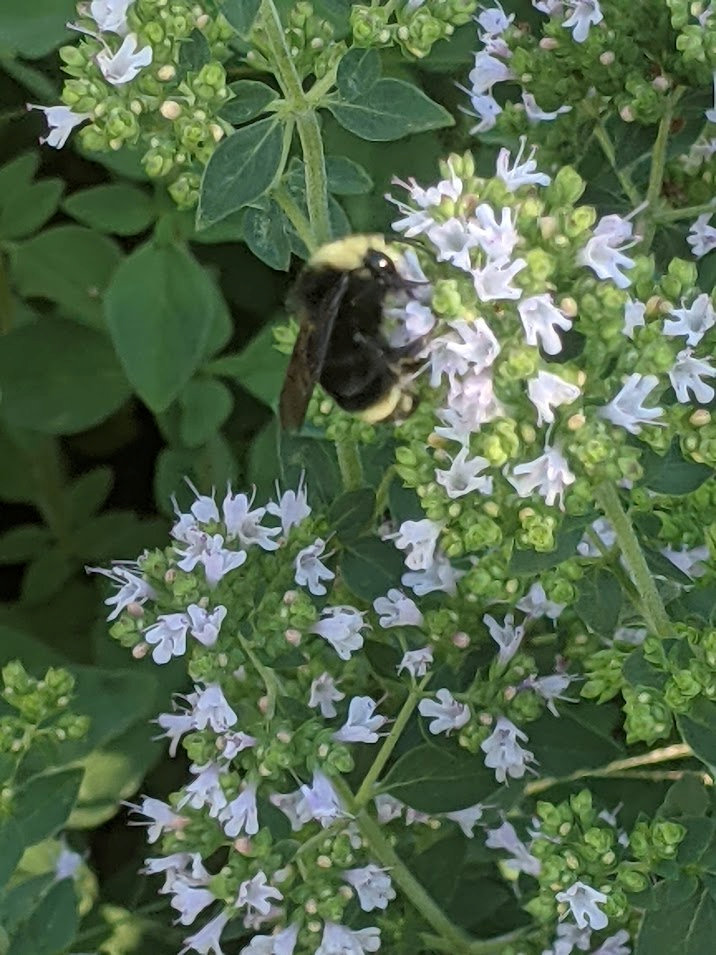
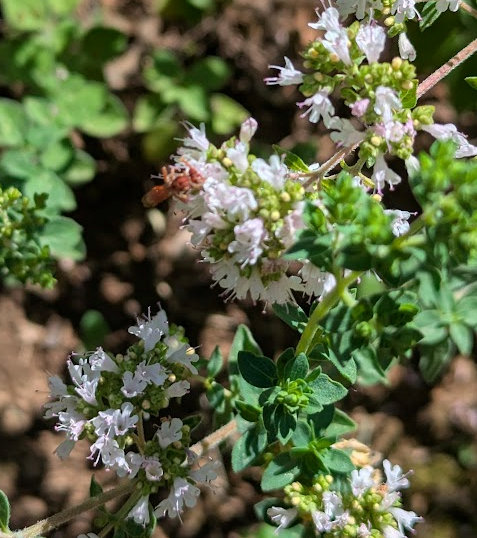
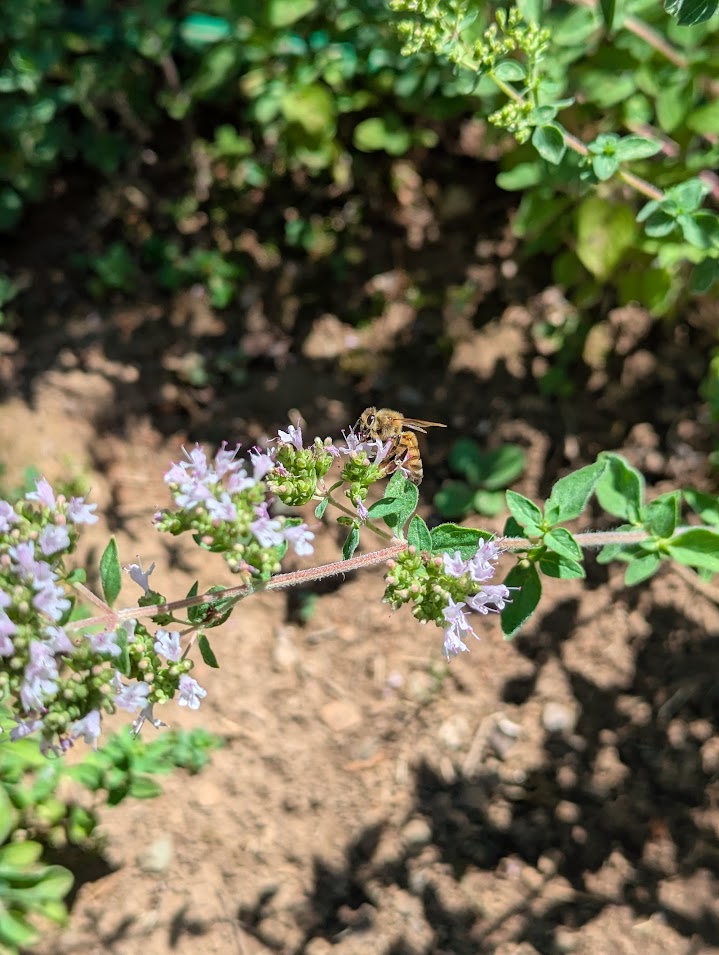
I wouldn’t mind and the pollinators would certainly benefit from the profuse tiny purple blooms. I wonder what oregano honey tastes like? Some honeybee keeper must know: as soon as it begins to bloom, the bed is covered with honeybees and other pollinators.
Our dogs (one at a time over the years) will stand with their noses deep in the aroma, snapping at whatever bees they see. They get stung and jump back, shaking the head furiously before wading back in to snap at another bee. Our mantra is, “Leave the bees alone <Ruger, Murphy, Harvey, Sadie>!” They leave, but they always return to the scene of the crime.
I wonder if the bees taste like honey or like a good Italian dish spiced generously with oregano?
Rain, rain, rain. Weeds, grass, plant sales. March and April are months when the sun comes out and warms the earth, then the rain comes down and soaks the ground. We still have frost some mornings and other days we can break out the shorts and t-shirts. I keep trying to find good subjects to write about.
A summary of my weeks:
The Native Plant “Sale” was not a plant sale. Tables of pamphlets and flyers from every conservation and forestry group within fifty miles, a few tables hawking garden tools, a lot of free evergreens (Noble fir and Douglas fir for the most part), and one single, lowly table with a few native plants that I have already dug up in the woods and started at home. Waste of time.
On dry days, I have argued with the different grasses, but the soil is saturated and weeding just isn’t productive.
Veteran gardeners in the area know that you don’t start setting out plants or sowing seeds until after Mother’s Day (a few cold crops are excepted but I’m not a vegetable gardener). It is far too muddy to rototill the veggie plot and make the beds, at least in our yard. We did get some pruning done, but I have already posted about that.
We had a three-day streak of lovely dry weather last week, but three days is not long enough for the saturated earth to dry out sufficiently for weeding or tilling. I did pull up cardboard from a couple areas in the hopes the ground would dry enough for me to try my nifty new electric hand tiller. It was not long enough. But I still tried.
The tiller works reasonably well on sod, but the mud clings to the tines and I had to stop three times, unplug the tiller, and clean out the tines for another go at it. The tiller tends to bounce along the surface, not really digging into the hard clay so I can see myself making several run throughs to get the ground broken up enough to plant. But where I’ve already done the work of removing the sod – oh, that tiller LOVES to dig.
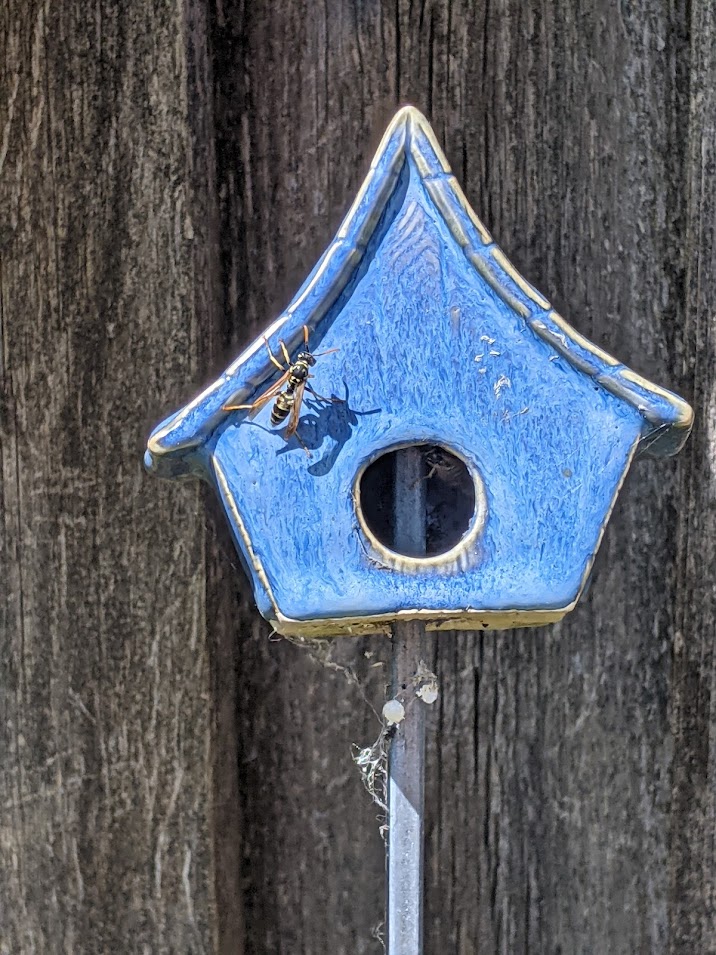
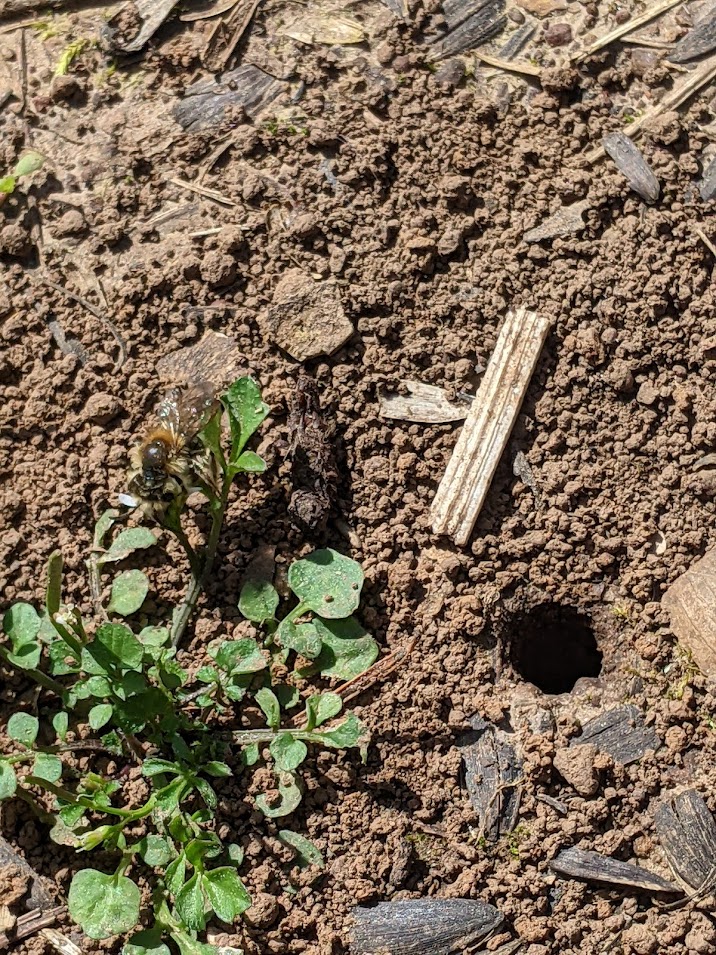
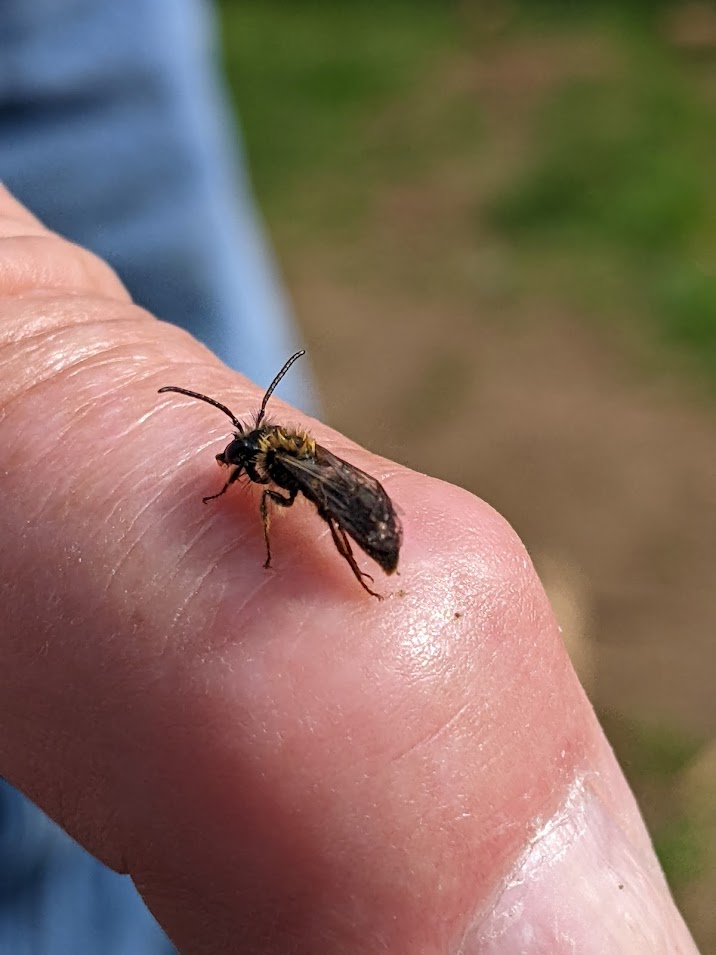
Native bees are starting to come out of their hives: a field of mining bees in the neighbor’s yard was buzzing with happy bees in the sunshine and our paper wasps have returned for another year of building nests and pollinating flowers. We have even spotted a few tiny butterflies, too small and too quick to identify. I was attacked by thrips one afternoon (apparently, they like beer and human flesh). Hm. Will need to watch for plant damage from those pests!
The turkey vultures have returned. I love the turkey vultures. The bald eagles are sitting on a nest in the nearby wild park, but we see them soaring on thermals on nicer days. The crows are rebuilding a nest across the street. And three pairs of small songbirds have scoped out the little birdhouse under the grape arbor!
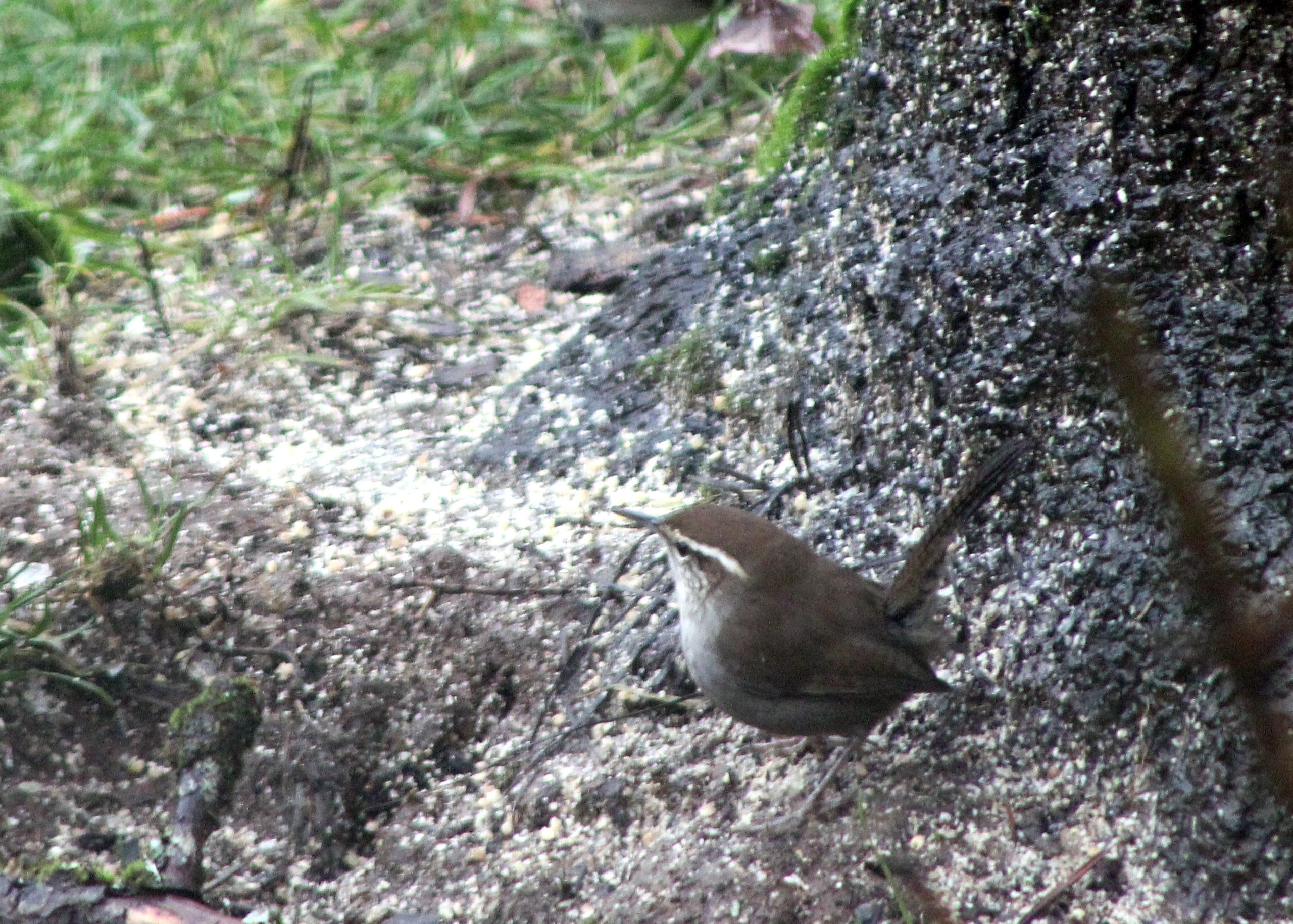
We’ve seen white-breasted nuthatches look at it, and yesterday the chestnut-backed chickadees tried to claim it (the black-capped chickadees raised a brood in it a few years ago – photo on the right is from then). But the Bewick’s wrens (photo on the left) have first dibs this year! When the chickadees used it, they didn’t bother with a nest or any filler: those little eggs and hatchlings grew up on the hard wood floor. But Bewicks have carried grass, stems of last year’s goldenrod, and feathers into the little house until the lip of the nest is even with the little hole on the side.
I don’t think the birdhouse is actually meant for birds, just for backyard decoration. There’s no hinge to lift for easy cleaning in the fall, for one thing. We’ll have to completely dismantle it this fall in order to clean out the nest debris. But we love that it gets used and now I think I need to find a couple more similar sized bird houses for the nuthatches and chickadees!
Finally, we have a huge plant sale coming up the end of this week, and this one really IS a plant sale: “Garden Palooza” out at Bauman’s Farm. We go every year and every year we find unique plants to add to the garden as well as the few annuals I like to grow (petunias and nasturtiums). They aren’t very strong on native plants, but I would like to find some creeping phlox and some “walkable” ground covers to grow between pavers. I have some more room for sempervivums in my rock garden as well.
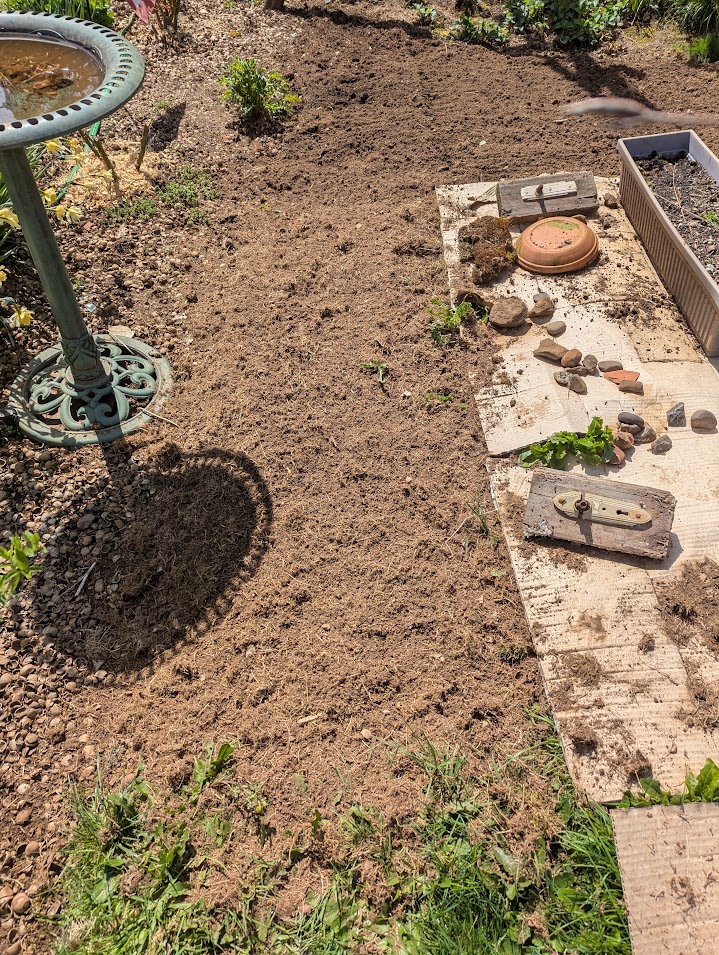
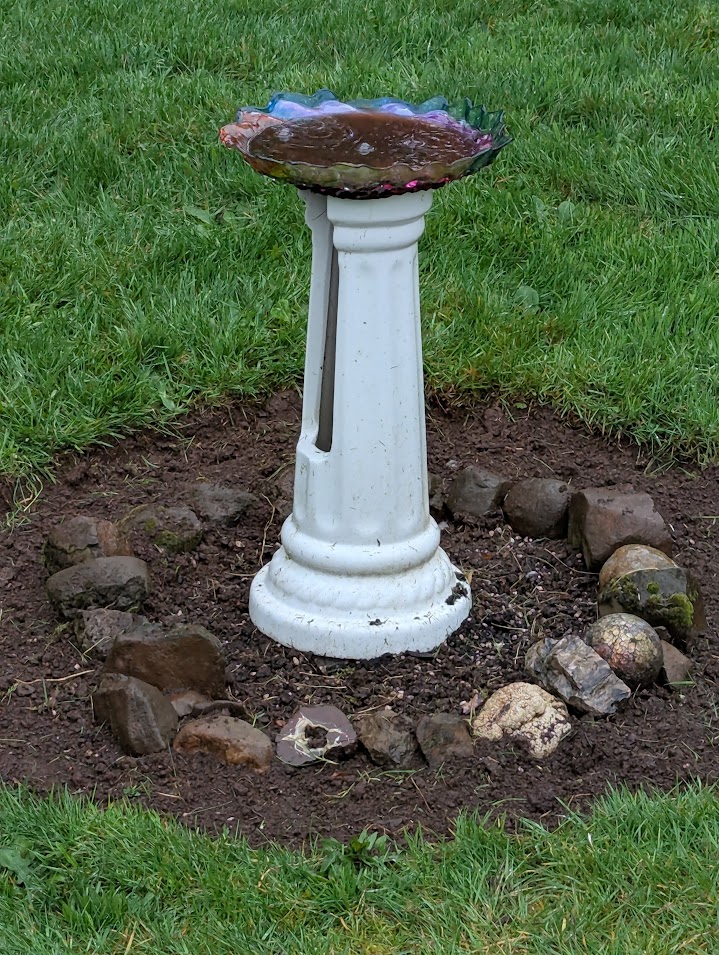
Last, because it was nice out, I glued to decorative bowl back onto the porcelain pedestal for a pretty bird bath. The crows found it as soon as it filled with water and they immediately picked up peanut-laced dog poop to wash in it. As I have no hoses out yet, the water remains gross and smelly.
It froze this morning. It has been freezing for the past week or so. It has also been reaching into the upper forties and lower fifties (Fahrenheit). The fruit flies have not died off and some small mayflies have hatched already. The pine siskins have moved on, but the year-round resident birds have been hitting the feeders with regularity.
There is not much one can do in the garden right now: too early to prune, too early to plant, still winter. February is often the month we get our “big” storm of the season: snow, ice, melt, floods. January is a month of holding patterns, waiting.
While we wait for the first peeks of green (or red, in the case of peonies), the insect pollinators are snug in their cocoons and hiding places. They are insulated under layers of fallen leaves (assuming you adhere to “leave the leaves” – our neighbors don’t, but they allow my husband to collect the leaves they have gathered, and we use them as mulch to prevent spring weeds and help the pollinators). Our yard is “pollinator friendly”.
We recently learned what we are doing right to help pollinators and what more we can do. And right now, in the still of January as it tips into February, is the time to think about emerging insects. Bees, specifically, need our help. There are several hundred species of bees in the United States alone, a few hundred in the State of Oregon, and possibly two- to three- hundred in our town alone. Our yard is likely host to over 40 species of native bees. I know we have identified close to thirty different species, not including the non-native (and non-threatened) European honeybee.
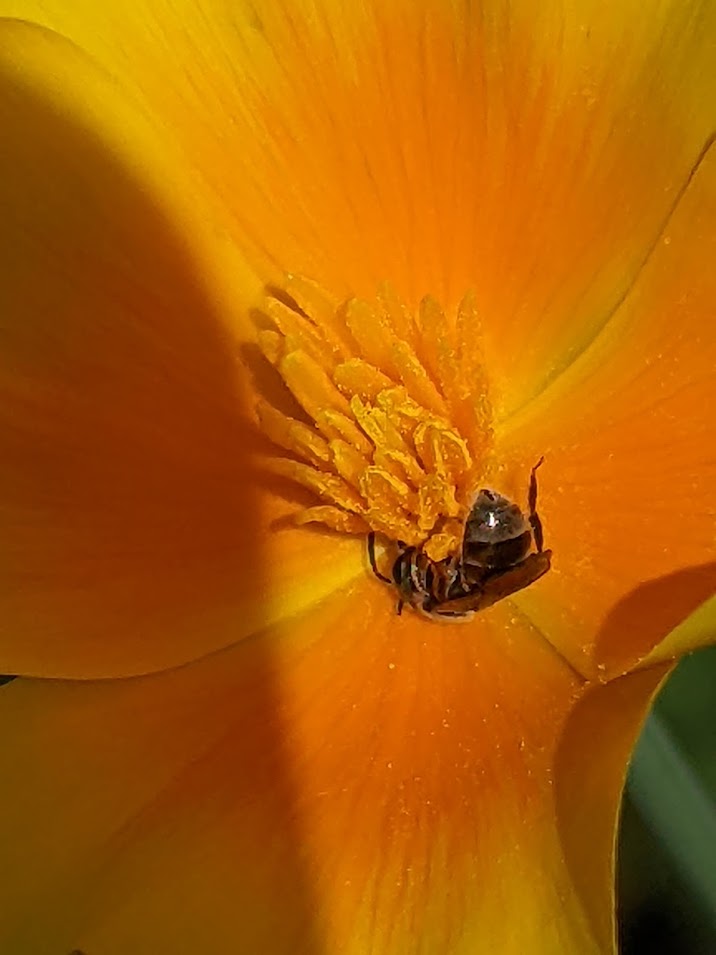
I wish I had photos of all the bees we have found on our little quarter of an acre. We have ground-dwelling bees, bees that love hollow stems, bees that are less than 3/8” of an inch (2CM) all the way up to the big, fat bumblebees that seek out our rhododendron blooms in the early Spring. The bumblebee is especially “of concern” ecologically. Some species of bumblebee are teetering on extinction, like the rusty-patched bumblebee. Bumbles pollinate more plants than honeybees and are native to our continent. (Honeybees are not native bees, are not threatened, and are a thriving industry. They are fine.)
We don’t begin to rake up the leaves and clear out the dead fall around the daylilies until the temperature has been hovering around 50° (F) for a week. This allows the bees, butterflies, moths, and beetles time to warm up, hatch out, stretch their lags and wings, and begin the summer-long process of pollinating flowers, vegetables, and fruits. Certainly, some of these are harmful insects (non-beneficial) but most of them are “good” guys: the beneficials. And beneficials are necessary for the ecosystem.
We learned recently that it helps to not “deadhead” all of the flower stalks, but to cut them down in lengths. Bees and other beneficials hibernate inside the plant stalks, slowly emerging as the air warms and the days get longer. I don’t deadhead a lot of the seed plants: evening primrose, mullein, asters, and goldenrod. The birds dine on the seeds throughout the winter. I never thought about insects.
That messy pile of tree limbs and branches we have yet to get rid of is not only home to our dog’s “beaver hut” (he has quite an excavation under the pile!) but is home to more insects trying to find a good place to overwinter. And here I was, thinking we’d have to finally cut the wood up and recycle it somehow!
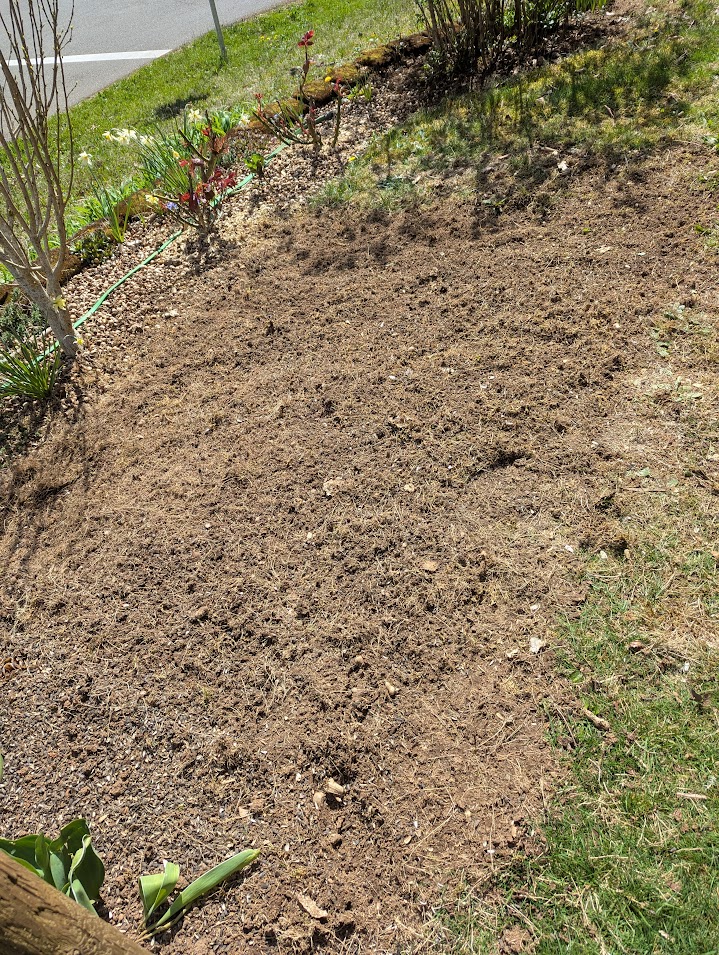
That patchy mess we loosely refer to as a “lawn” out front encourages ground dwelling bees and gives us impetus to turn the yard into a meadow of native wildflowers, further encouraging native pollinators to stay and thrive. I am excited to add native plantings to the lawn with more flowers and less mowing! (I will probably have to paint a sign explaining to my neighbors why our yard isn’t as “pristine” as their golf-club perfect lawns or patches of sterile gravel.)
We already grow a lot of native plants, some purchased from nurseries, some collected from the wild, and some that birds introduced by pooping on our yard. The Xerxes Society provided me with a list of more natives, many of which I can purchase seeds for through local nurseries. Yee haw! I’m watching little $$ fly out the window, but it is SO worth it to create a habitat for miniscule creatures like bees.
I’m not going to go into how we depend on native pollinators and how their declining numbers impact our very own survival. You can find that information and more through The Xerxes Society. This non-profit is based here in the Pacific Northwest but reaches out across the continent. It is my favorite non-profit, close to my heart (BUGS!), and is highly rated as a non-profit. You may not think something so Lilliputian might impact our giant lives, but we depend on insects and invertebrates for so much. I’m not a rabid “tree hugger” but when it comes to insects… Well, I’m probably a rabid “bee hugger.”
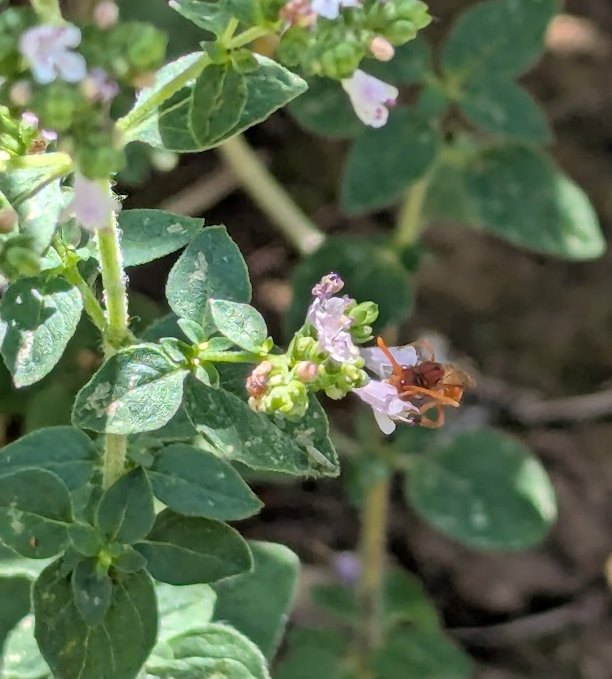
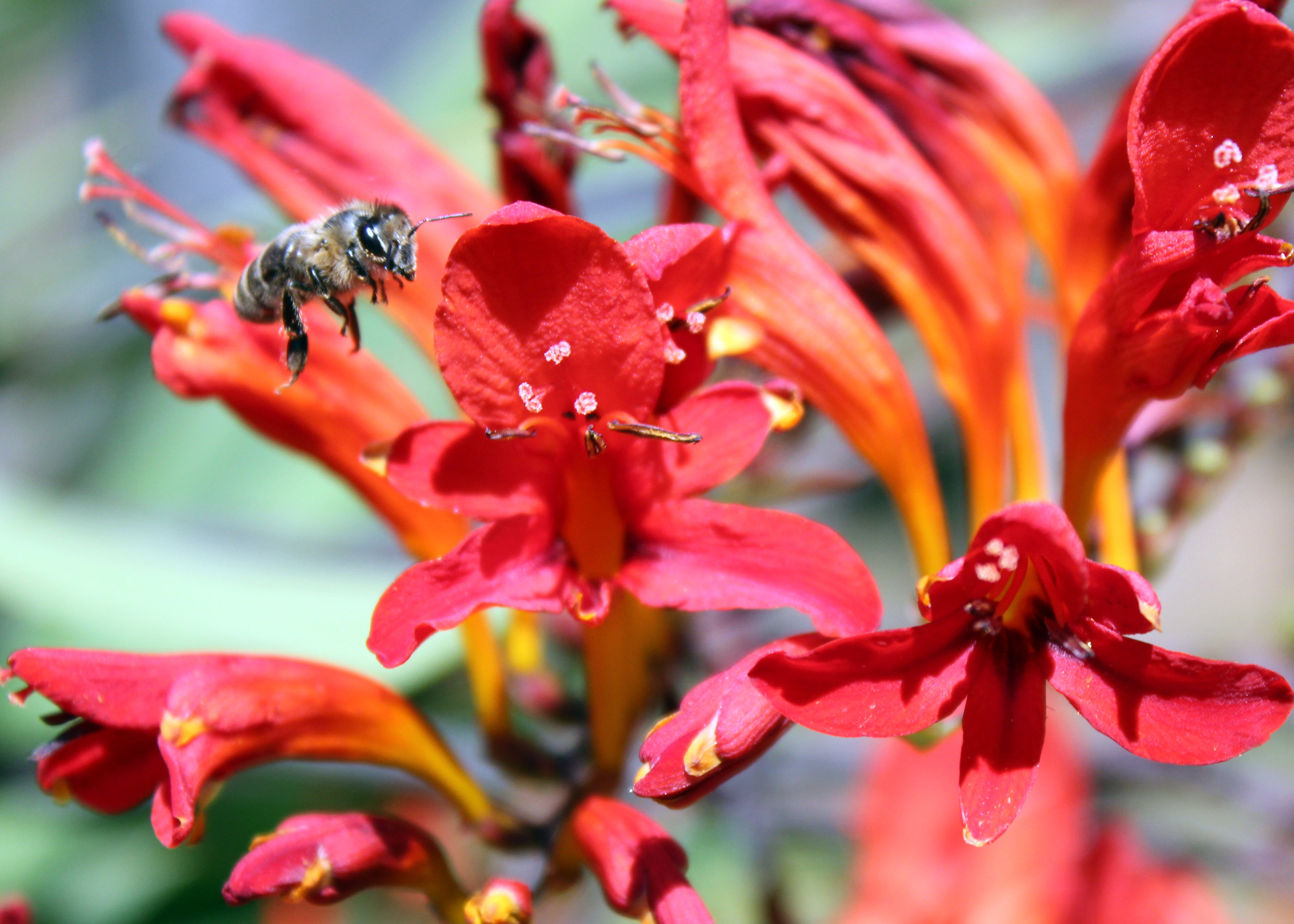
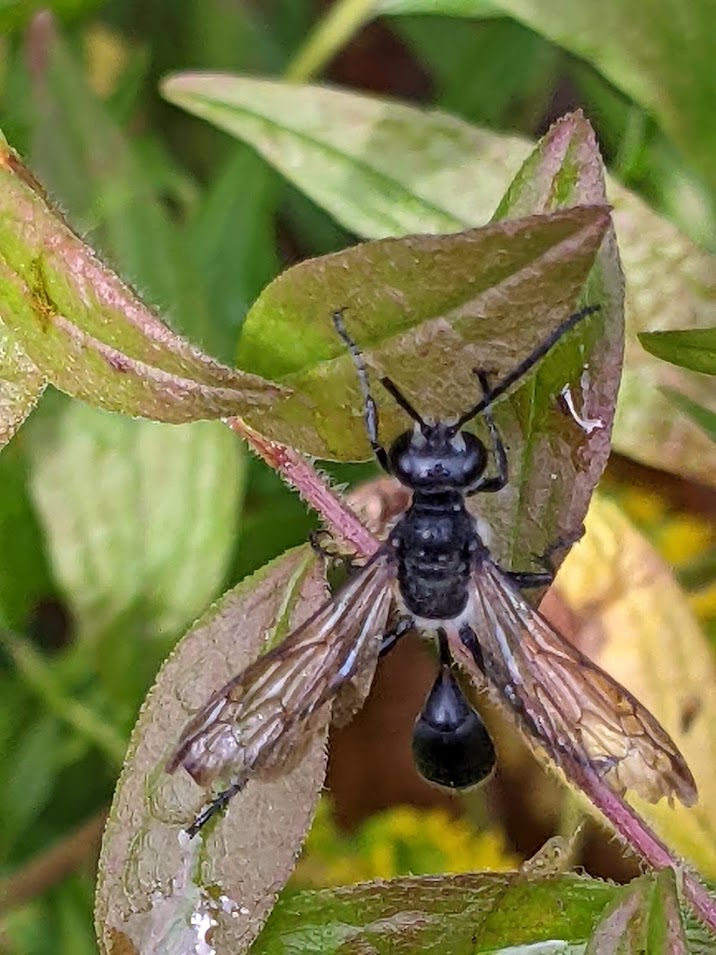
(I also do not know all the bees, wasps, and hover flies I photographed and posted to this article. I apologize for the oversight, but all photos are mine.)














 Jaci Dawn