Feeds:
Posts
Comments

Archive for the ‘dracunculus vulgaris’ Category

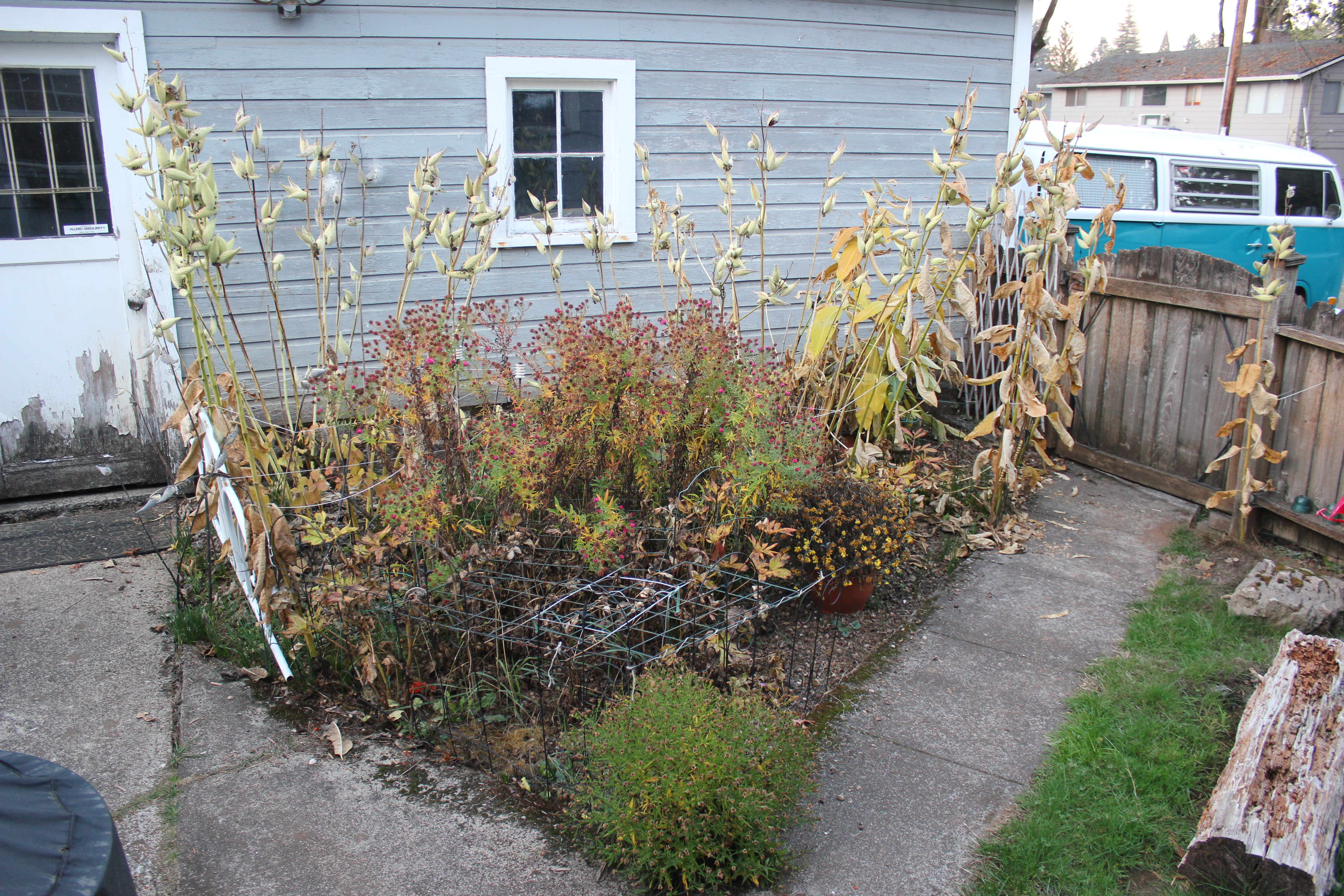
It is time to cut the milkweed out of my garden.

I planted it many years ago. It never sprouted. Four years later, there was a tiny plant that looked suspiciously like a milkweed growing next to some peonies. I clipped a leaf off to see if it would ooze the sticky white sap that gives milkweed its name: it oozed. Excited, I let it grow. The milkweed plants are limited to a “triangle” between the garage and two sidewalks. I cut them down when the seed pods appear: I don’t need more plants. Also, I don’t want to wait another four years for the seeds to sprout when the plant does just fine by sending out runners from those very sturdy rhizomes.

I was afraid the milkweed would crowd out the peonies and the asters. It doesn’t. The three plants grow together happily. What the milkweed did affect was my arum, dracunculus vulgaris, or “Dragon Lily”. The milkweed runners take up the space the lily’s bulbs are in and I’ve slowly lost many plants in that tiny garden space. There are a few left and this fall I will dig them up and move them to a better location, free of water- and space- hogging competition.

Unfortunately, milkweed does nothing to impede the growth of grape hyacinth, I don’t think anything short of a heavy-duty herbicide affects grape hyacinth (and I refuse to go that route). Every year I pull several hundred bulbs out of the ground and compost them. (Sometimes, I will give them away to a desperate gardener who doesn’t know better than to start them in their yard. I’m pretty sure I’m digging up bulbs to send to my brother in Reno this fall. “Hey, Bro, your yard needs some early spring color. I promise you won’t hate me in ten years…”)

Now, when the first purple grape flowers begin to bloom, I do my first – and only – weeding of the space. I cut hyacinths for a bud vase. I toss the ones that pull up with the ever-present grass. I do my best to rid the space of grape hyacinth bulbs while enjoying the aroma and color. Of course, I fail and the hyacinth prevails.

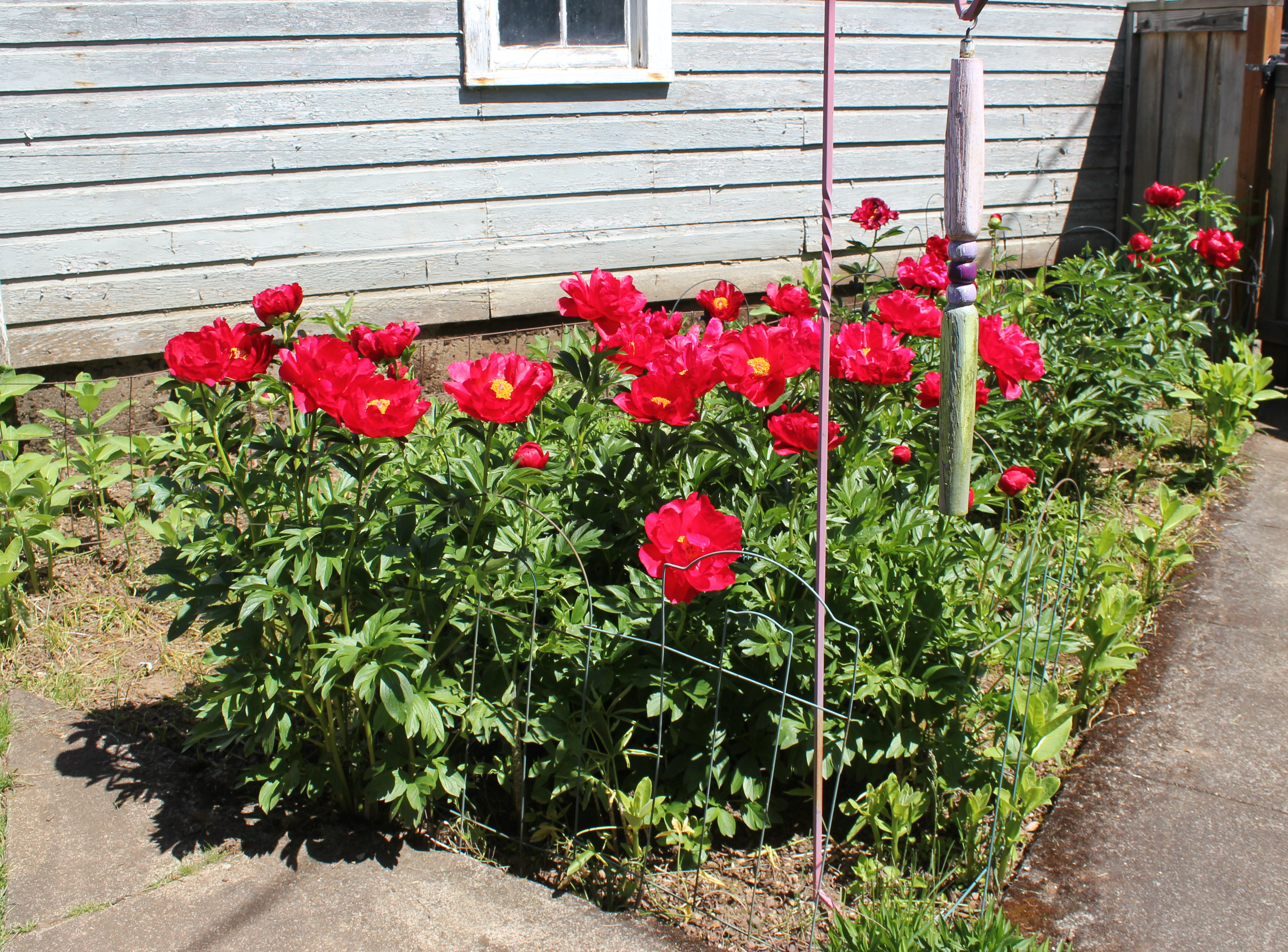
In the Spring, I cut back the old stalks of peony and aster just as the first new stems begin to push their way skyward around the fading hyacinth. Purple stems of peonies, green stems of aster, the spotted stems of Dragon Lily rise above the fading green and brown stems of faded hyacinth. Buds form on the peonies and soon the area bursts with pink and red peonies so thick I have to tie them to stakes to keep them upright.

The peonies fade and drop their petals just as the aster and the milkweed stalks begin to mature. The green of the aster is first to top out at 2-3’ tall. Milkweed will soon tower over the asters and all one will see will be the green stalks of milkweed.
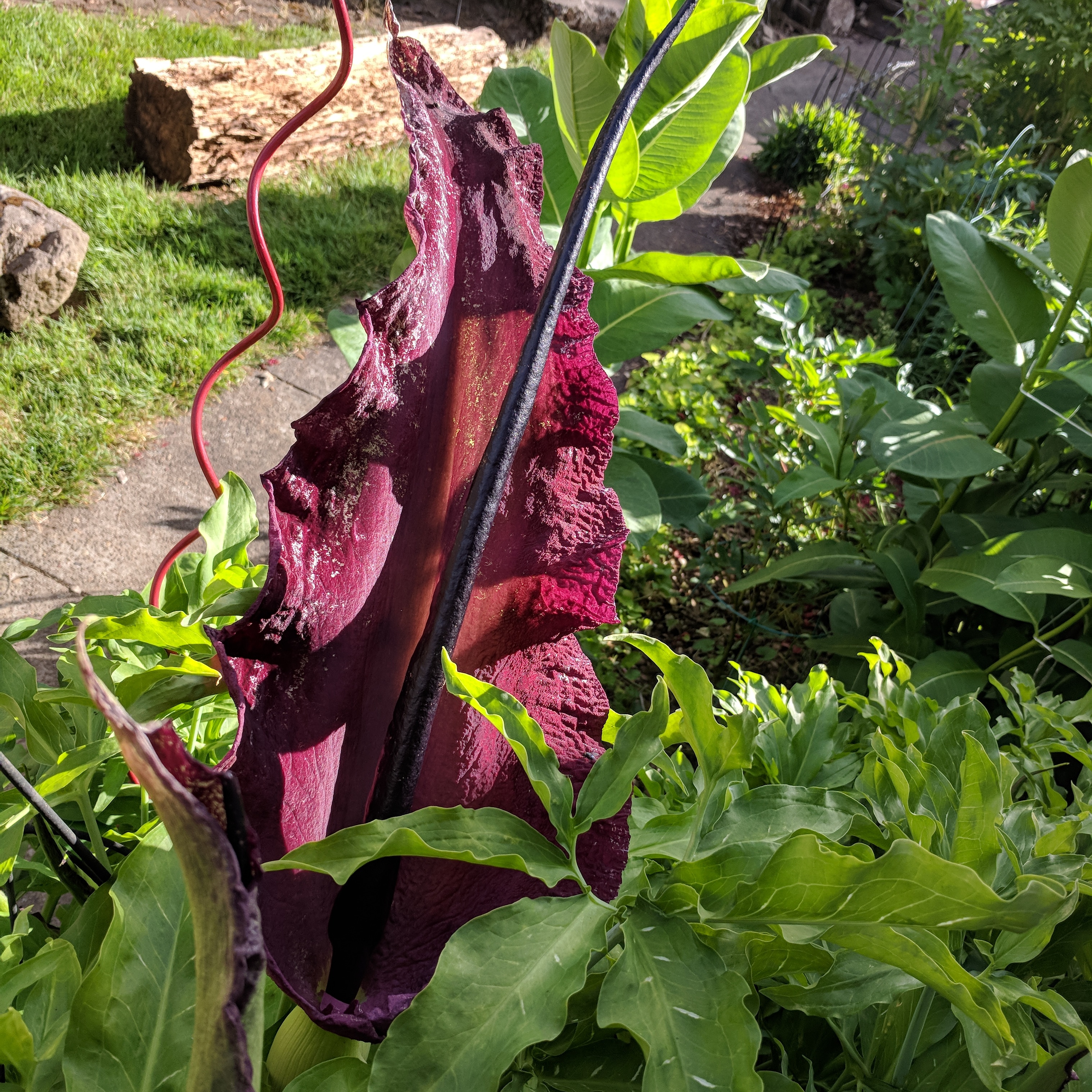
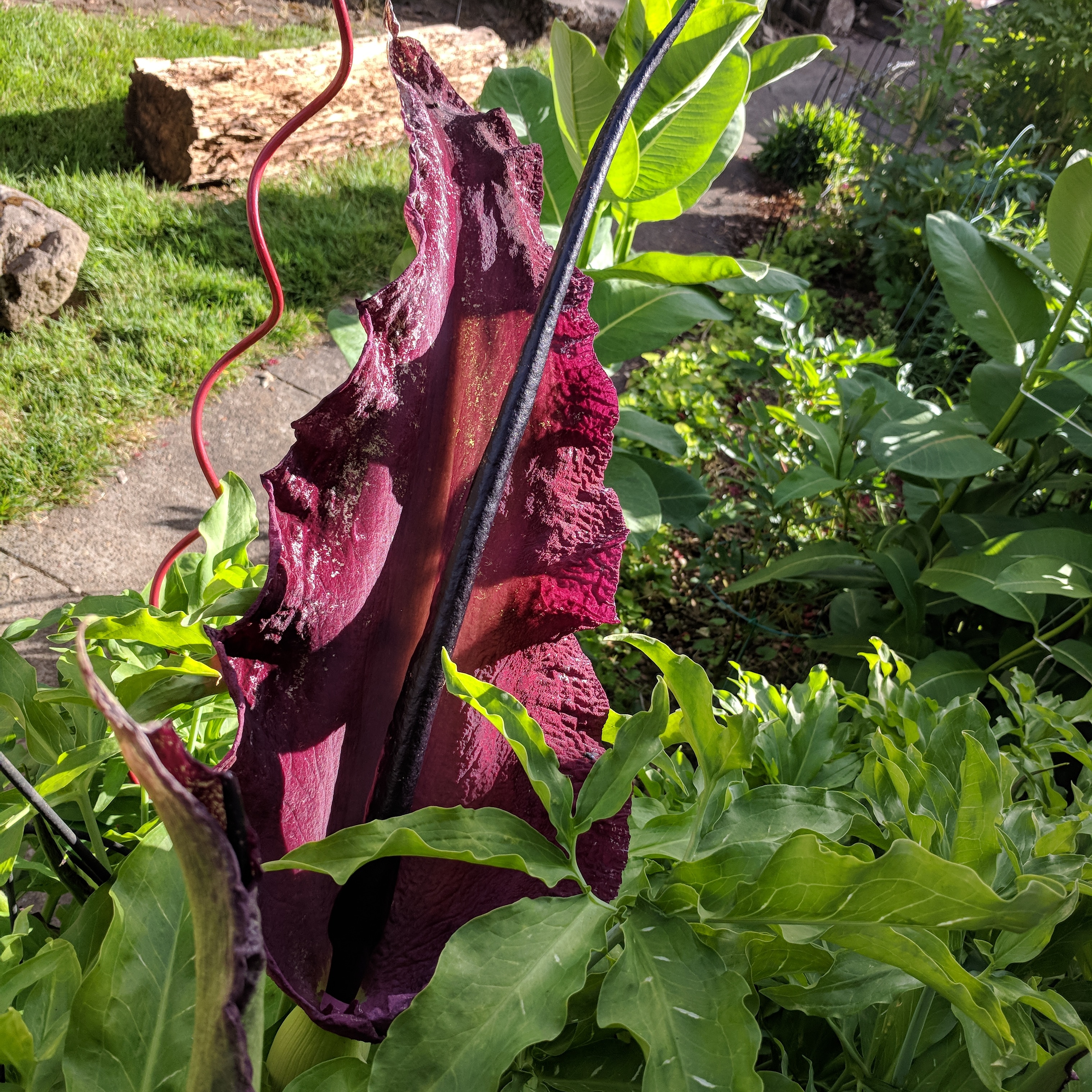
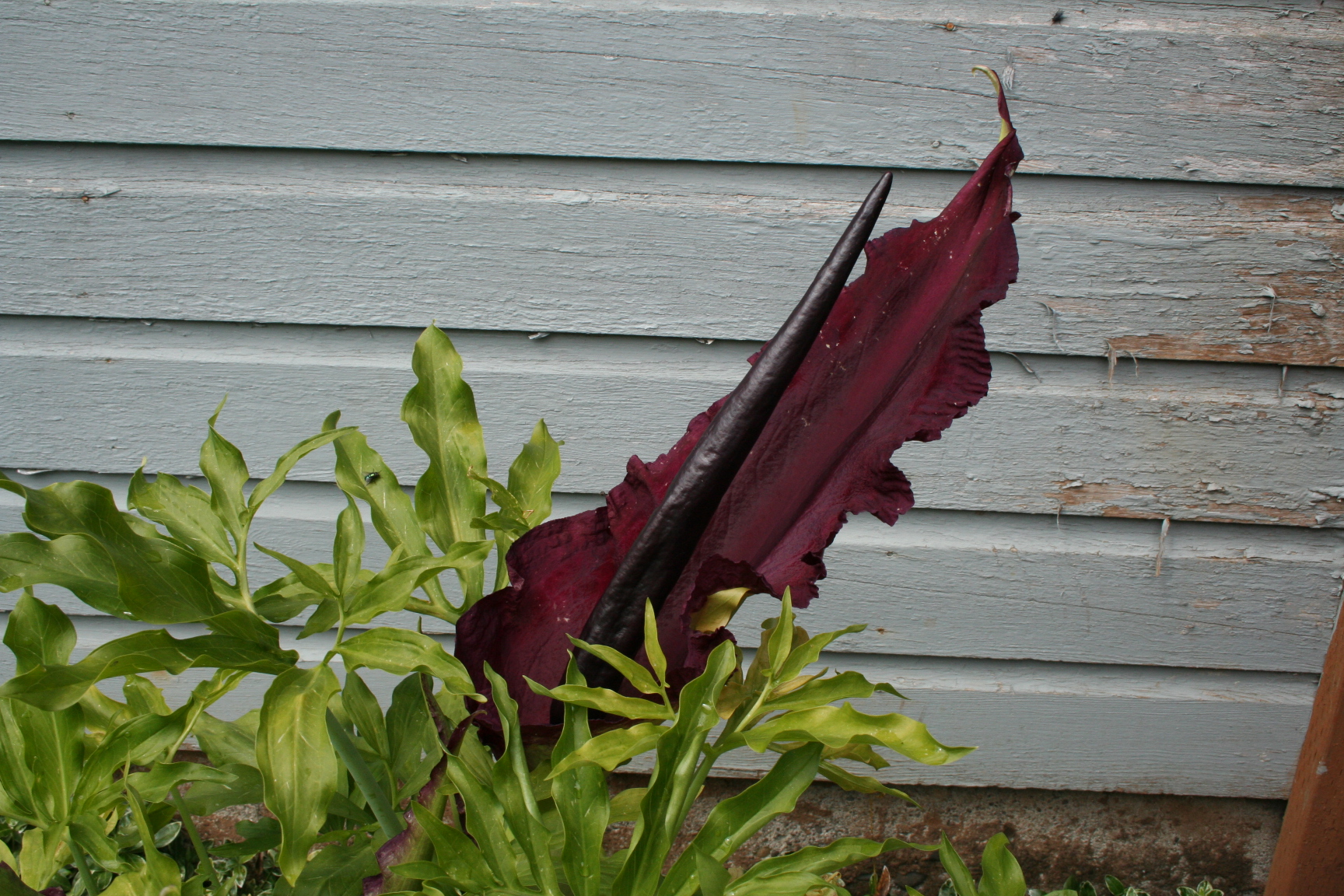
But before it does, at the end of May and always on our anniversary on the 7th of June, the aroma of rotten hamburger wafts in the air: the Dragon Lilies have opened. Flies and beetles rush in to await their demise in bowl of this carnivorous beauty. The smell lasts a couple days. The flowers wilt and the entire plant begins to wilt and turn yellow.

Now it is the milkweed’s turn.

I have two varieties: Showy milkweed (Asclepias speciosa – native to Oregon) with pink florets and California milkweed (A. Californica) with white florets. The latter isn’t a native to Oregon, and it doesn’t grow as prolifically as the Showy milkweed does, but the blooms are pretty and the aroma is the same: sweet and enticing, the polar opposite of the faded Dragon lily.

I planted milkweed thinking I could attract migrating Monarch butterflies. I didn’t know then that this part of the lower end of the Willamette Valley is not on the migratory path for these beautiful and endangered butterflies. No worries: the value blooming milkweed has for other pollinators outweigh my misplaced intentions. Every early bee, butterfly, and tiny wasp brave the sticky edges of the flowers to get at the pollen inside. Occasionally, a honeybee will get stuck and will have to struggle free. A few plants wilt and die, host to the milkweed beetle which does exist in this half of the valley.

Below the tall stems that now tower between four and six feet, a junco might build a ground nest. The nests are soft grass circles, now much larger than the palm of my hand. We won’t know there’s a nest there until a fledgling bird hops out of the cover while the parent birds hover nearby.
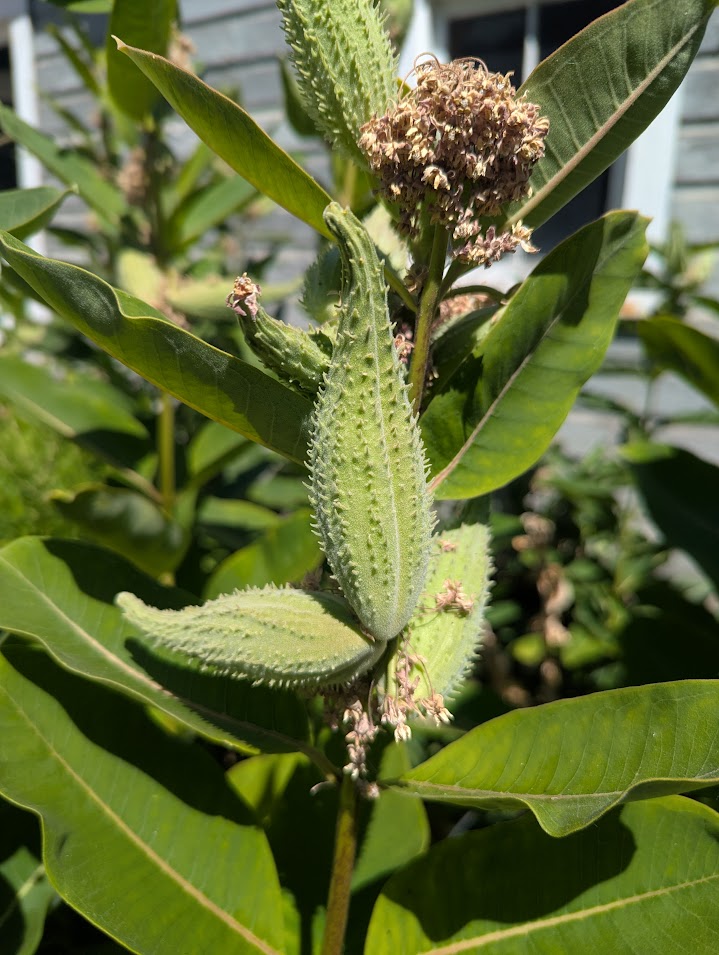
The bloom of milkweed lasts a couple weeks giving us quite a show of pink and white, and busy pollinator insects. But then the flowers fade and the few that were pollinated will start developing seed pods. These are green and soft, and quite edible if you are not allergic (I am). When the pods ripen, they turn brown and hard then pop open to release thousands of sees hanging from wispy “umbrellas”. The wind catches the seeds and like the dandelion – well, you know the rest of the story! The ground is soon covered in tiny, milkweed parachutes looking for a home.

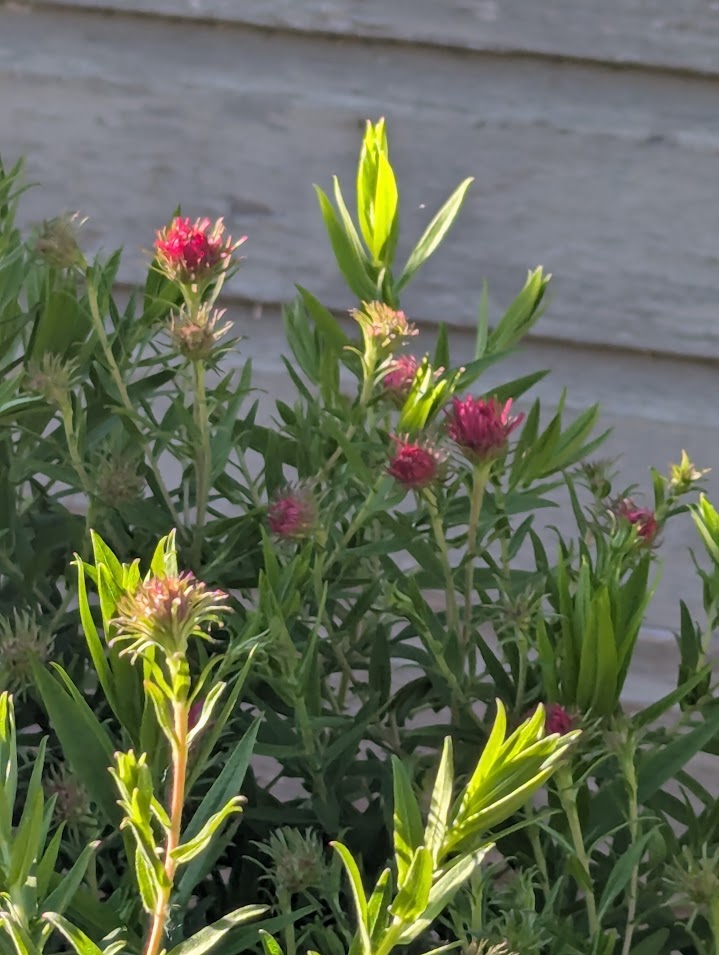
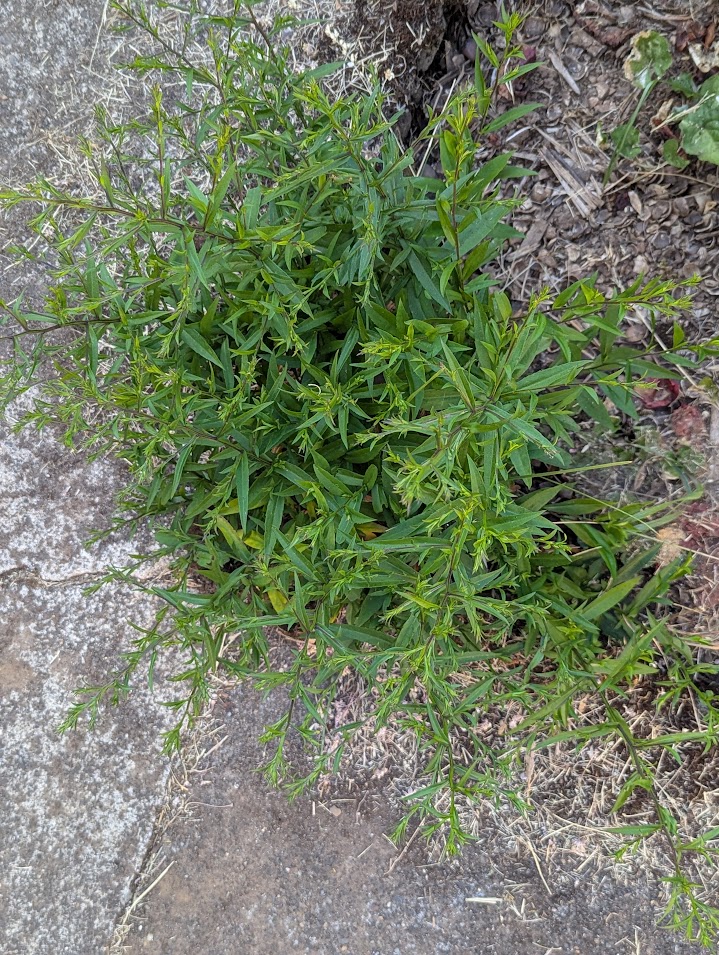
But I mow down the milkweed, not simply to avoid the parachutes, but because the milkweed towers above the asters. And the asters put on a late show of color lasting through August and into September. The tall asters are a riot of magenta pink. The aster that grows in the crack in the sidewalk puts out lilac-colored flowers. The tiny bees – those mining bees and other ground dwellers – love the asters.

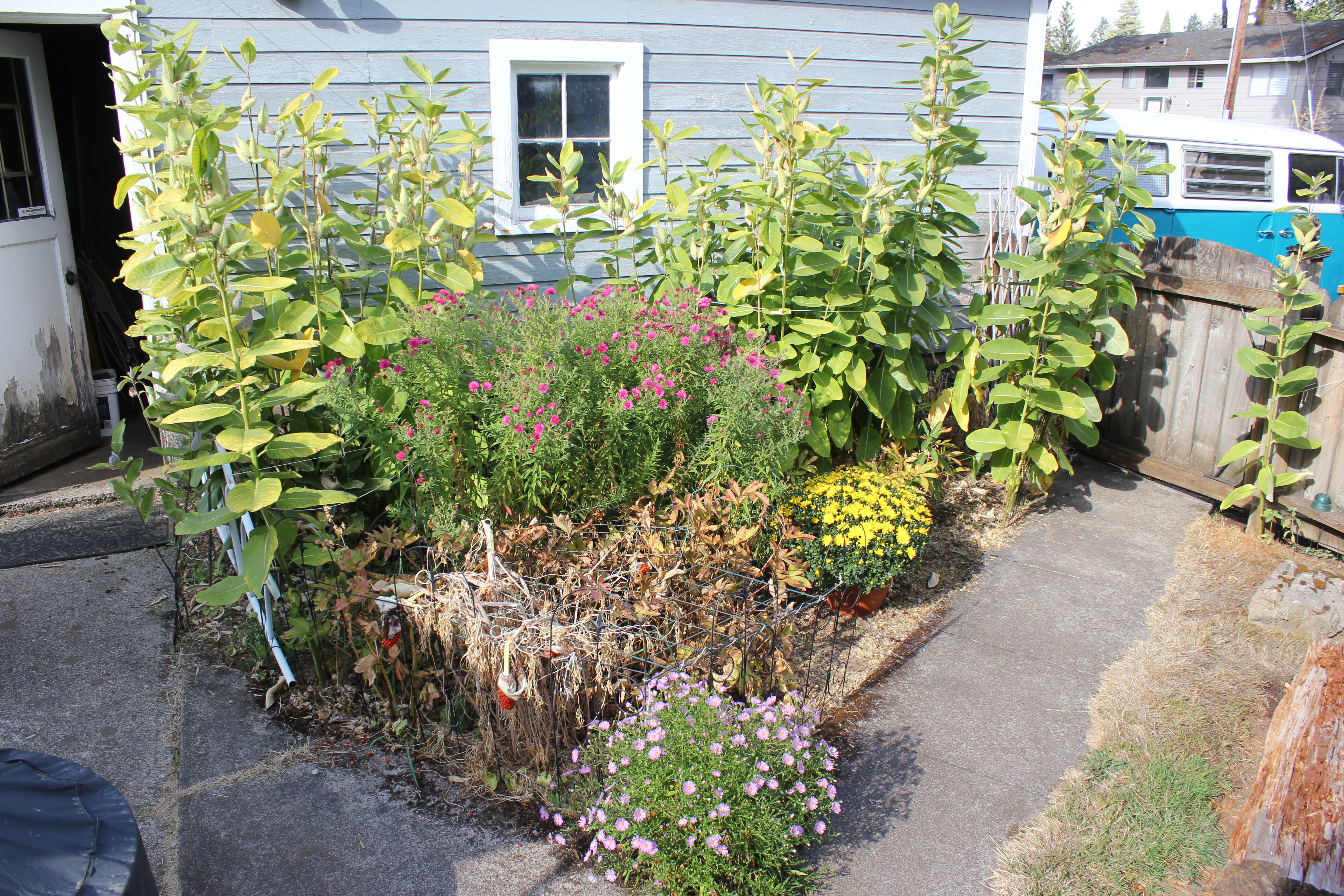
The milkweed is gone now, and I wait for that last eruption of color. Too soon, the rain will come and everything will turn brown. (Photo is of a year I did not cut down the milkweed stalks and the seeds flew everywhere.)
Read Full Post »

 How I love thee, False Spring! I love the sunshine! The warm air! The wee buds poking up out of the ground!

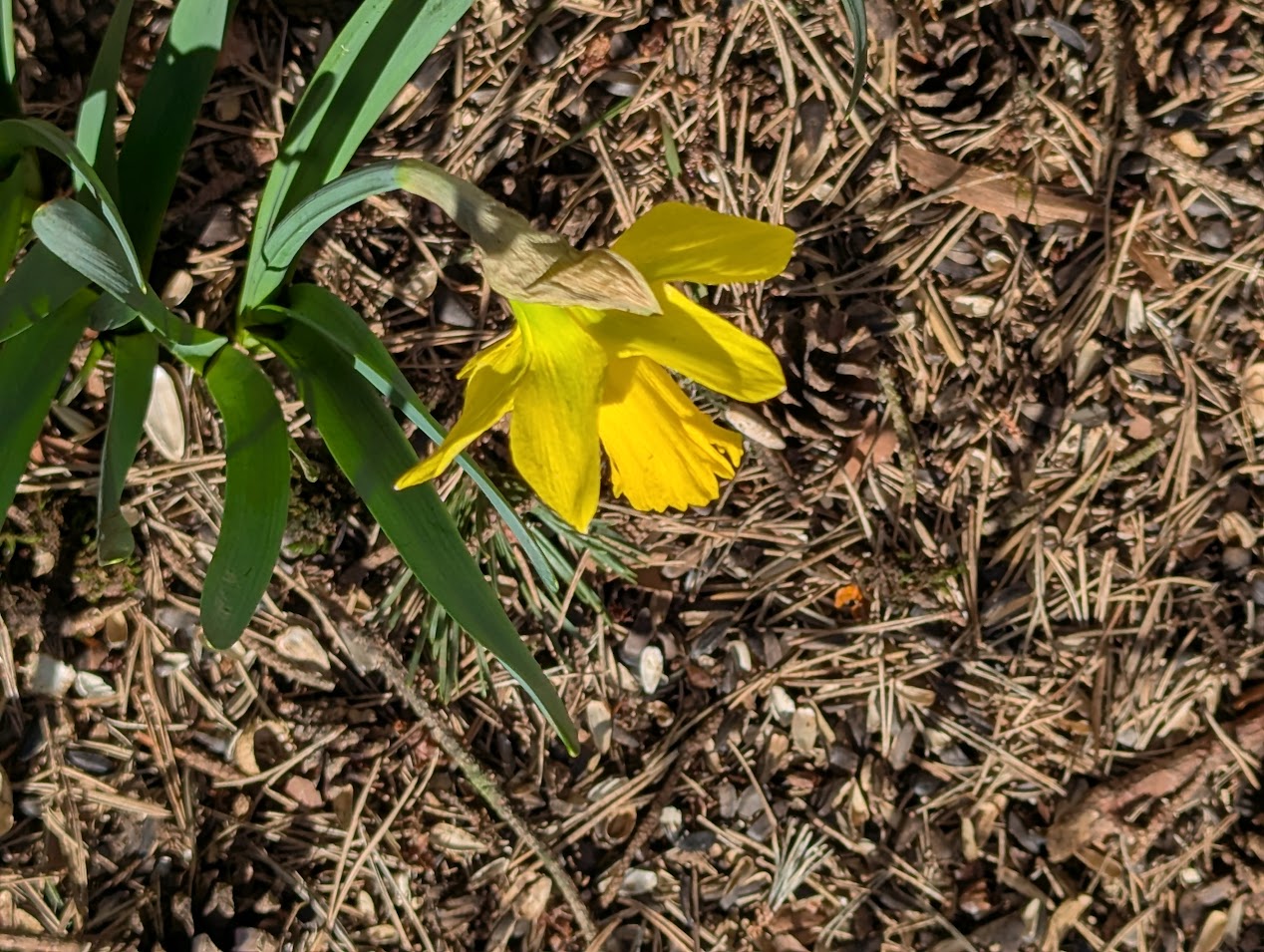
Daffodils! (Except the parts the slugs came and nibbled on!)

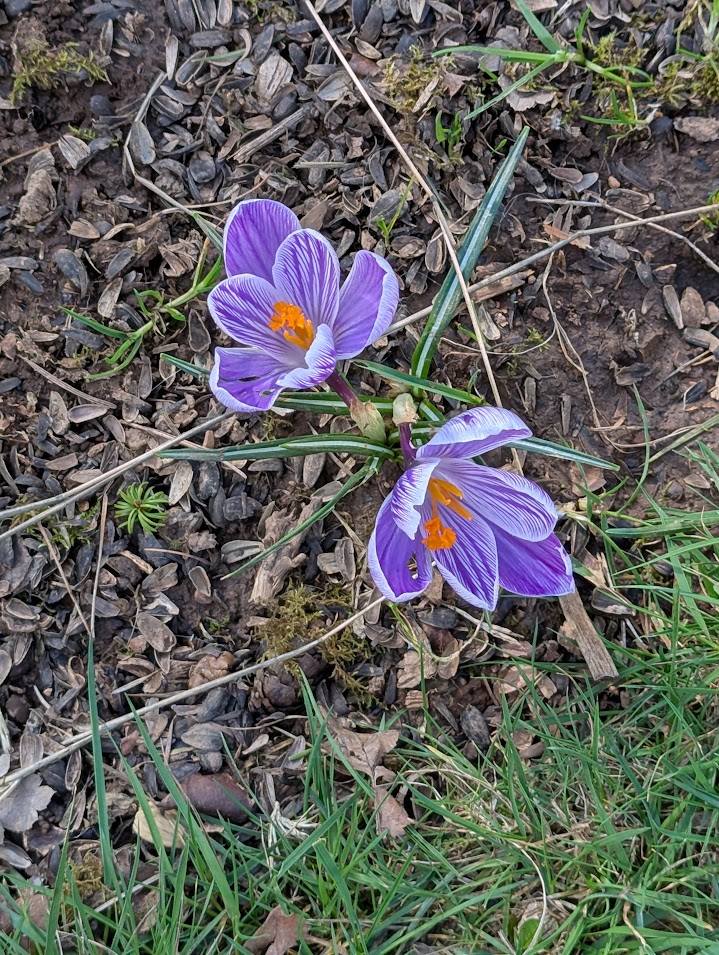
Crocus! (Until the dang squirrel makes off with the flower and eats it all!)

The Camellia! (What buds have escaped both the dog and the squirrel! What the dog tastes in Camellia buds is beyond me but it isn’t harmful to him – surprise! – and he only picks off the blossoms on the lowest branches. Squirrels tend to the upper blossoms where I cannot see, so that leaves the bulk of the bush to me! Me, me, me!)

The Lenten Rose (Hellebore)! (Mine needs some fungicide, I think. The leaves look rather sad.)

The grape hyacinth!

No. Just NO.

Look at them there in my flower bed, crowding out the peonies. All those clumps of impenetrable hyacinth bulbs! I think the last time I purged them was about five years ago. And today they came out in the handfuls, all those little bulbs crowded together just under the surface, clinging to each other like seeds in a pomegranate.

Kill! Pull! Purge!

Except they don’t all come out and there are some with tiny promises of fragrant grape-colored clusters of bell-shaped flowers. I left those.

And I know I will do this again in about five years.

Because grape hyacinths. They merely regroup.

This particular flower bed is my most successful. It is low maintenance, except for the every-five-years purge of invasive and stubborn grape hyacinths.

This garden bed blooms from early spring  starting with the hyacinth, which I promise, will still raise up tiny spikes of purple flowers rimmed with a delicate white border. Not as fragrant as the larger hyacinths that come in a variety of pink, purple, and blue shades, but pretty enough to place in a bud vase and prolific enough to be a nuisance.

Then come the peonies. Blood red and scarlet. The peonies thrive despite the crowding of tiny bulbs. I throw them some light fertilizer early and a little copper fungicide to ward off brown spot, but otherwise, I ignore them. Well, I pick them and place them in pretty vases that I allow to sit outside overnight until all the ants fall off. Ants love peonies.

As the peonies fade, the Voodoo Lily comes on. Pungent, odiferous, and so dark a purple as to be almost black. We dug the parent plant up at a rental we lived in some 40 years ago. Didn’t think anyone would care if we took such an obnoxious smelling plant with us, and no doubt they haven’t missed it: surely we missed some of the bulbs.

It smells like rotten hamburger. It attracts beetles and flies (and not a few dogs). It repels neighbors and guests, but it also piques their interest: what is this mysterious plant? Dracunculus Vulgaris. Voodoo Lily. The harbinger of our wedding anniversary (it blooms the first week of June).

And when the lily fades and dies back, the milkweed springs upward. And upward. It blooms with a strong aroma, something far less offensive than the former: milkweed is aromatic and sweet, enticing and hypnotizing. Here come the bees, wasps, flies, butterflies, and beetles. Pink and white clusters of hundreds of flowers. And with it, our hope of seeing a magnificent orange-and-black Monarch butterfly or the yellow-green-and black striped Monarch caterpillar (that feeds exclusively on milkweed).

If you plant it they will come. We hope.

The milkweed, in turn, goes to seed and begins to fade, the seed pods hardening. Summer is at an end. And with a burst of color, the asters open up: tall magenta ones and shorter light purple ones. The bees and wasps that filtered off to other flowers when the milkweed faded are back in force. It is one last feast of nectar, of pollen, of summery intoxication.

Then it all fades away and the grape hyacinth begins to poke its persistent leaves upward, greening the winter brown ground.

**note: the only photo that is not mine is that of the grape hyacinth. Credit goes to NickyPe and Pixabay.

Read Full Post »

One of my favorite flower beds is right out the back door. It’s a little triangle that is always full of something growing from May through October. This year, I tried to snap a photo diary of the corner garden.

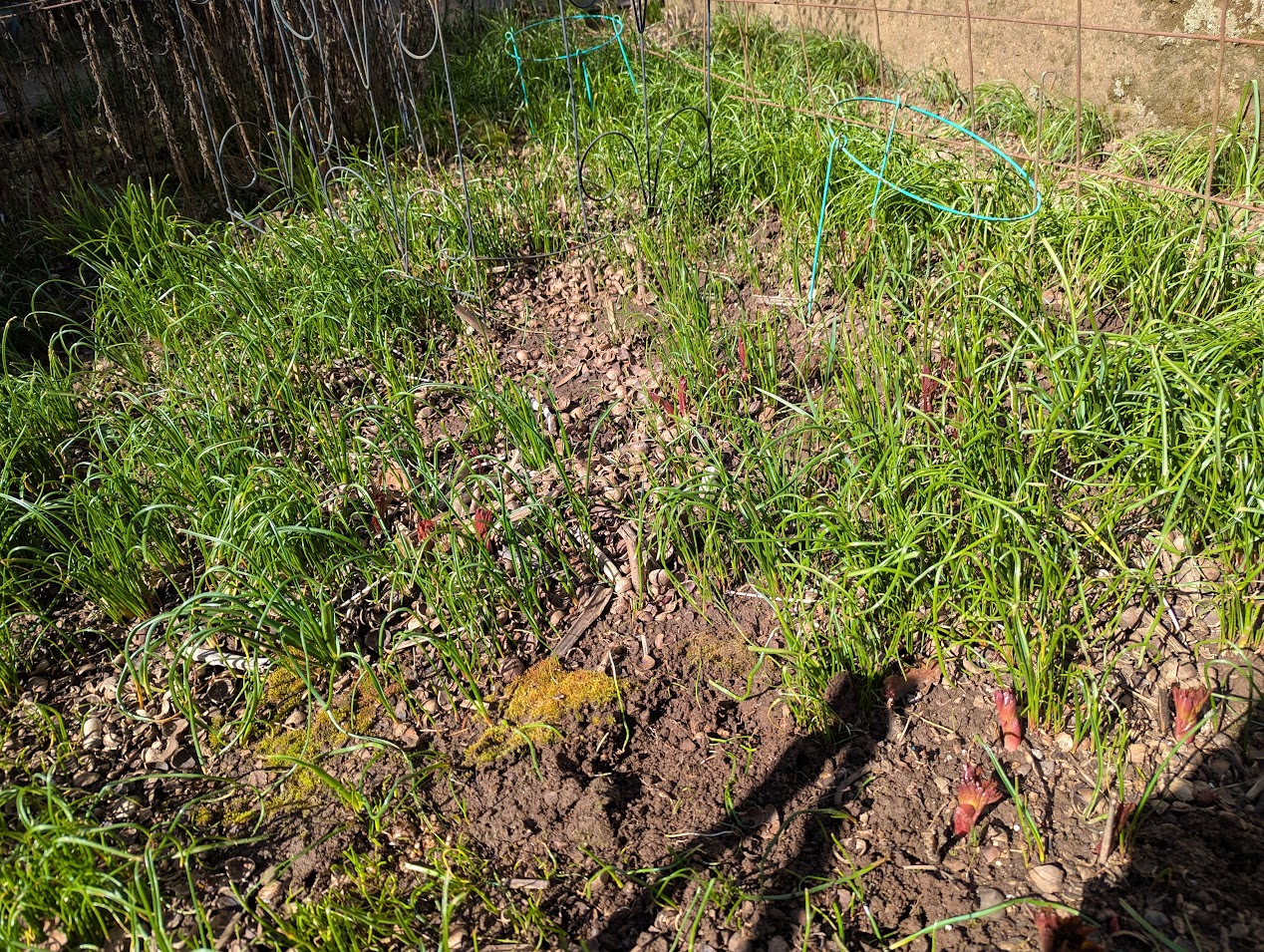
I missed April – when the grape hyacinth and the tiny wild violets are the only color in this little corner.

May

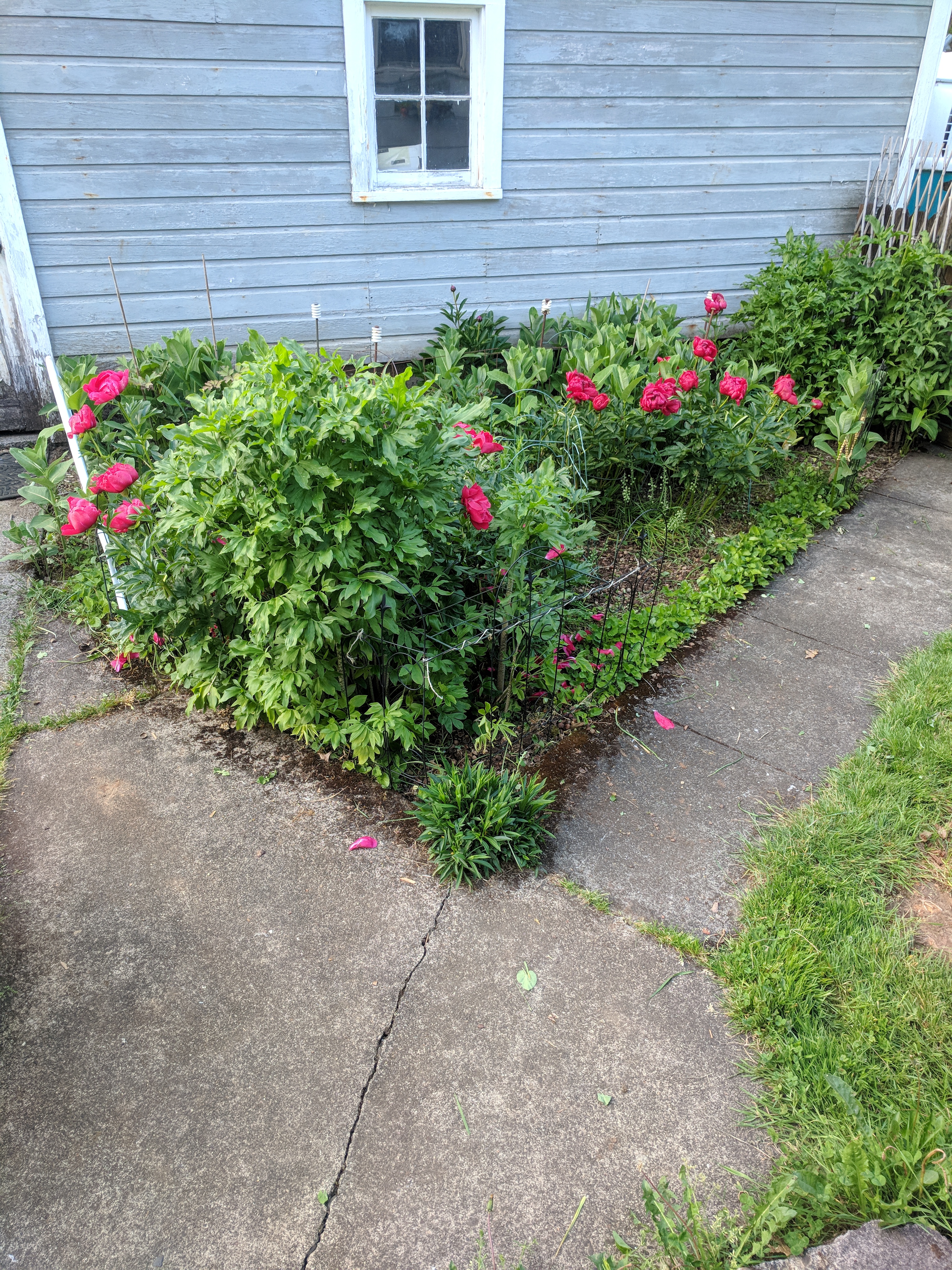
May is peony time.

IMG_20180529_182502_288

The Dragon Lily (dracunculus vulgaris) ends May and starts June with its stench – and striking beauty.

June

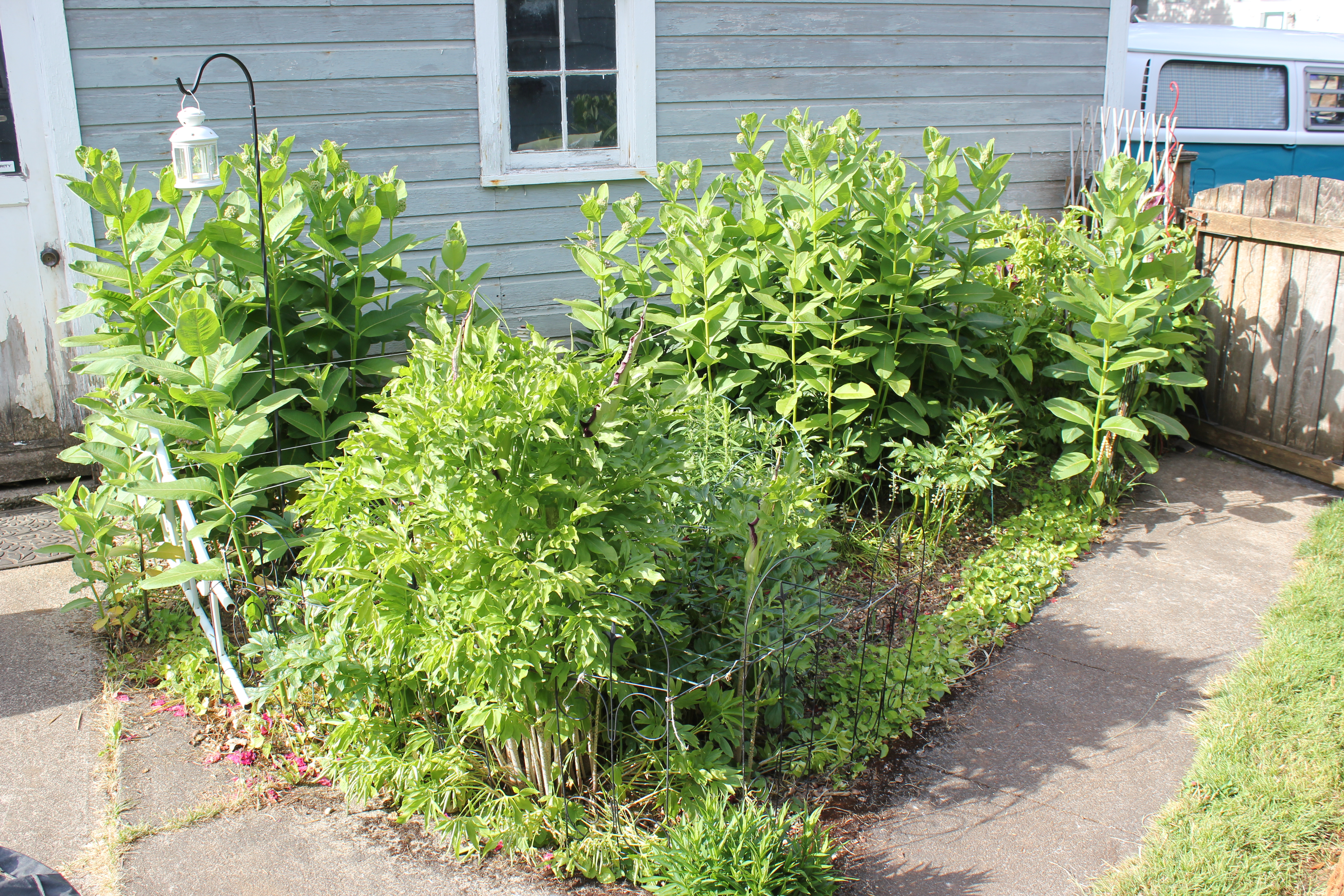
Even though the Dragon Lily is in full bloom, the corner seems a sea of green as the peonies fade, the milkweed and the asters push upward.

July

July. The peonies and dragon lilies fade as the milkweed blooms, fragrant and alluring. The corner goes from one aroma (dead meat) to another (sweet milkweed) in a matter of weeks.

August

August. The asters bloom when the milkweed fades – red and tall in the back, purple and lodged in a crack in the sidewalk. (The yellow mum was a potted plant.) You can see the faded glory of the Dragon Lilies, seed heads brilliant red, and the peony leaves turning brown. Seed pods are forming on the milkweed plants now.

Sept

And just like that the sun is low in the sky and September is leaching the color from the milkweed plants.

Oct

It is late October now. The rains have held off. The leaves have fallen from most of the milkweed. The asters cling to a little bit of green, but their blooms are all but faded now.

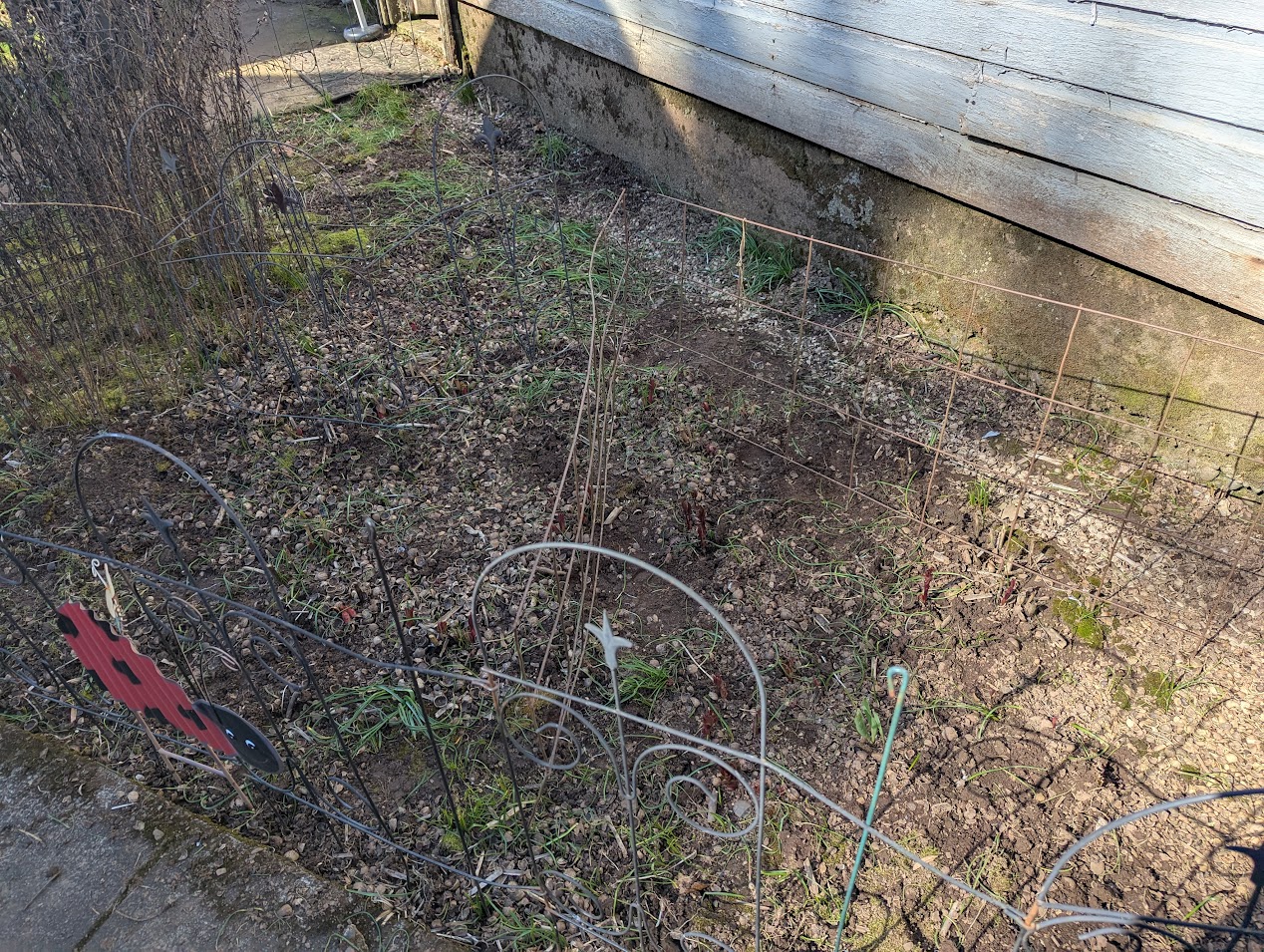
Soon, it will be an empty space of grown, brown and sad, all the stalks cut back before the new growth begins again in April. The rains will come, the days grow dark and – for me – depressing. But the cycle will resume in four short months.

The grape hyacinth, the violets, and the peonies came with the house and this little corner. I pulled back a blanket of creeping myrtle (aka periwinkle or variegated vinca minor) to bare the ground. We planted the Dragon Lilies, babies from a single corm we stole from a rental many moons ago and have carried around with us for 30 years. (Want some? We’ll gladly ship – up to zone 8.) I planted the little purple aster from a plant a dear friend gave me some 25 years ago. It’s been divided and planted elsewhere, but this little bit insists on pushing up through a crack in the sidewalk right at the apex of the flower bed. The tall red aster surprised me that first autumn in the house – an added bonus of the many flowers already here and hidden by neglect.

The milkweed, now – that was a project. I tried two or three times over the years to grow it by seed. I gave up four or five years ago, but one fine day three years ago, a small plant survived long enough for me to identify that it was, indeed, showy milkweed. Last year, more came up and they flowered for the first time. This year, they tripled in number. They are truly one of my finer moments in gardening, even if they are now rather prolific.


Read Full Post »

Today was such a beautiful and mostly dry day that I decided to take advantage of the break in the weather and get some last minute gardening done. I rarely get an opportunity like this in November, and I had a number of peonies that I wanted to rescue from the choke-hold of the Creeping Myrtle.

The Myrtle is pretty, but it grows thick and deep and eventually it chokes out everything that was there before. Fortunately, it does not spread as quickly as an ivy, and a gardener who pays attention can hold myrtle at bay, confining it to one corner of a garden by pruning it back.

I like Periwinkle. It has several names: vinca minor, Periwinkle, Creeping Myrtle. I call it all of those names. The flowers are pretty in the Spring and it makes an excellent ground cover that springs back from a lot of abuse. I did not plant the Periwinkle in my yard, it came with the house. It wasn’t as widespread at it is now, but I neglected that corner of the garden a little too long.

That’s how it looked after I was finished digging and pulling and walking on it. It will spring back.

That corner is also choked with grape hyacinth bulbs. I did not plant them, either. I do not particularly care for them, but the ground in that corner is so littered with their bulbs that I can’t make any headway in getting rid of them. I’ve tried.

I divided five peonies and moved them to new plots. I dug up my purple aster and moved it to a sunnier and more open spot to allow for expansion. I also rolled back the Creeping Myrtle and dug out a handful of the dracunculus vulgaris bulbs (sometimes known as a “Voodoo Lily”I found enough bulbs to make two more clumps of the smelly carnivorous beauty.

As my husband said, I “shared the love” around the yard.

I wanted to weed the grass back from my Fothergilla Major Blue Shadow. It is supposed to be a showy plant through three seasons: when it flowers, after it flowers with it’s blue leaves, and in the Autumn when the leaves turn bright red. Hm. Not quite bright red, but it is pretty.

It’s behind a make shift “fence” because guess what dogs decided to use it as a marker?

All that digging and dead-heading and moving and bending over left me sore and tired, and covered with mud from head to foot. It felt good. I may not think so tomorrow. But I will think it was worth it next Spring, when the peonies bloom in their new locations and the “Voodoo Lilies” open their black hearts to spread the aroma of rotting meat around my yard.

I am so weird, I like that.

Read Full Post »

Normally our dracunculus vulgaris blooms on the 7th of June. And this year, we were all set for a Stinkin’ 30th Wedding Anniversary barbecue. But the rain didn’t stop, the cold didn’t warm and the Dragon Plant didn’t bloom.

I was piddling around in the back yard Sunday (putting something together for Harvey) and I kept smelling this horrid dead animal smell. I thought:  Don really needs to clean his barbecue… Then I thought: turn around and LOOK, Stupid!

Oh yeah. It bloomed in time for the Stinkin’ Summer Solstice, a full two weeks late.

This plant STINKS. It smells so much like dead meat that the past two years, Murphy has bitten off the spadix on every bloom. I think he has not bothered the plant this year is that it must taste bad and he somehow (finally!) remembers that. Or he’s distracted with the temptation to get Harvey to play.

Today, I smelled that smell (again) and realized another one had opened up. They only stink for a day which is a good thing because the flower is spectacular.

I’m certain I have blogged about their history before: Don & I discovered them in the yard of a rental we lived in around 1984. The one plant that bloomed smelled so awful but produced such an incredible black flower that we figured no one would notice if we dug it up and moved it with us. And we did.

That one bulb has been planted and replanted in every home we’ve lived in since, until it is now several clumps of plants in serious need of another dividing. The best thing about this flower (aside from the incredible beauty and obnoxious odor – that only lasts one day) is that it invariably blooms for our anniversary, June 7.

Except for this year.

This year, one clump has begun to bloom just this week – in time for the Summer Solstice (June 21). But the second clump (pictured above) won’t open for a few more days.

Don’s birthday is next week. We should have at least one of these beauties in bloom for his birthday.

And then they will fade, the flower will wilt and the spathe will sag. The striking foliage will turn yellow and die back.

And we will dig one or both clumps up, separate and divide the bulbs, and spread them around the garden.

Tonight is the first time I have been able to find numerous sources on the Internet regarding this plant. We’ve loved it since our first whiff (OK, not so much the smell, but the deep purple-black flower) and no one has been able to provide us with much information. This year, I googled it and – wow! – all kinds of references.

So, for your pleasure & education:

Paghat’s Garden

The Garden Helper

Just remember: they really stink for that one day. After that, they are just incredible to view. And they are not little plants! Ours are HUGE.

Read Full Post »