Here’s a garden hint for the do-it-yourself old-timey organic gardener: cardboard.
I have spent too many years with an edger and muscle power digging out sod for new flower beds (or just to preserve flower beds already invaded by grass). I would cut out little squares, then slice the edger underneath and lift up the square of sod. In the right conditions, you can shake out most of the soil caught up in the roots, but that doesn’t happen most of the time. What you have just lifted out of the ground is now something you can’t put into your personal compost (grass, roots, seeds of weeds are all a huge no-no in a small compost.) or into the public yard debris bin (if your community does yard debris pickup, even).
The “lawn” consists of at least six different types of grass in our yard. From what I can discern there’s two kinds of pasture grass (a fescue and one “Yorkshire Fog”), two bluegrass, one rye grass, and one native bent grass. Several of those spread by rhizomes and “root runners” – those are the worst!
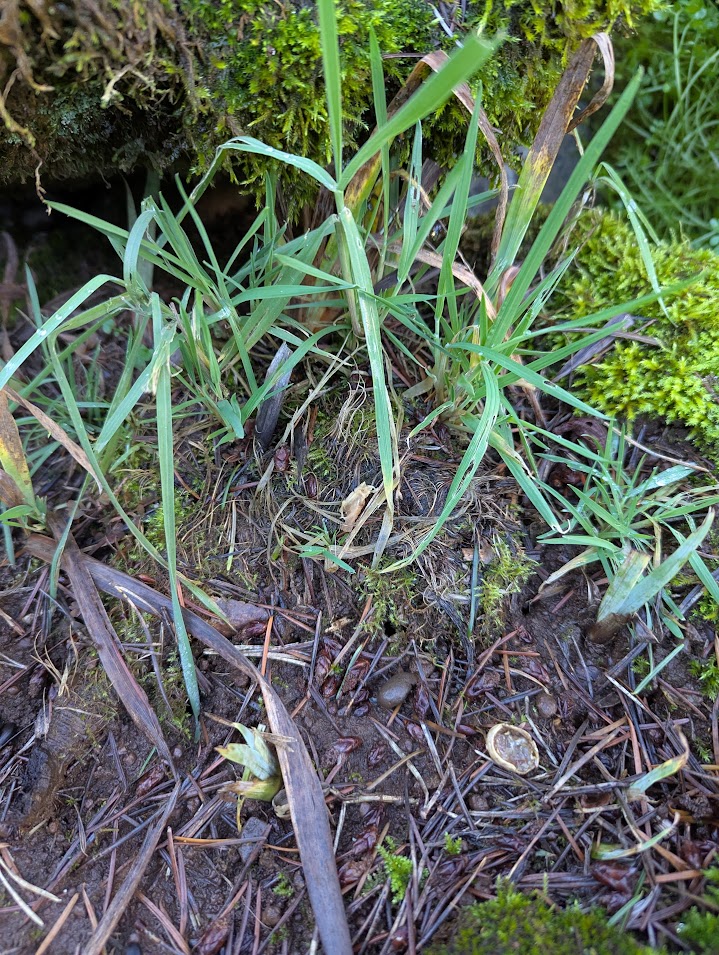

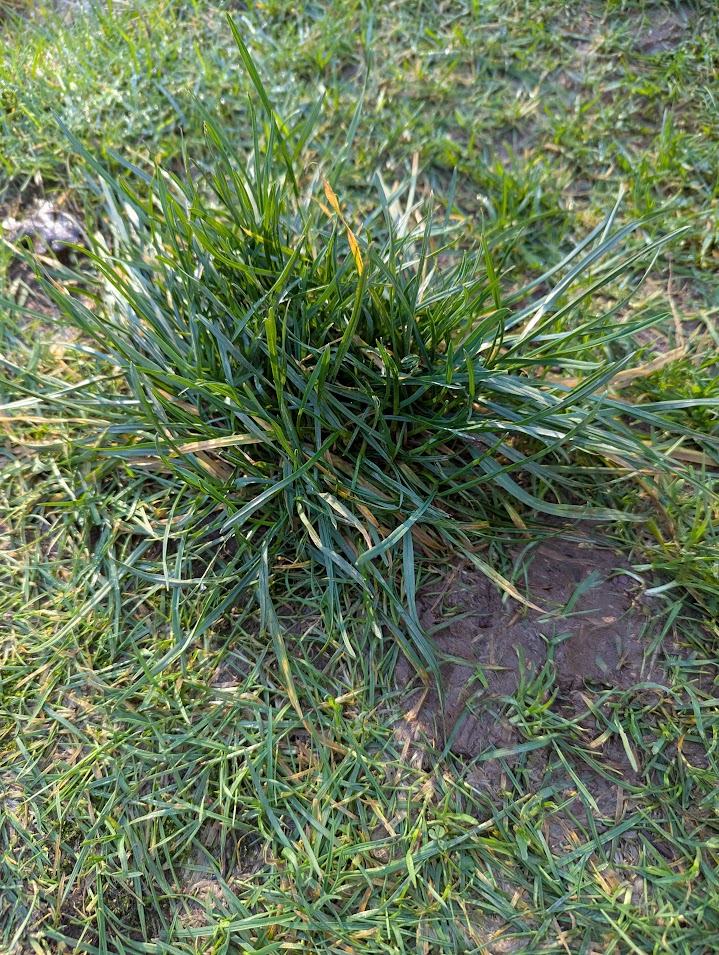
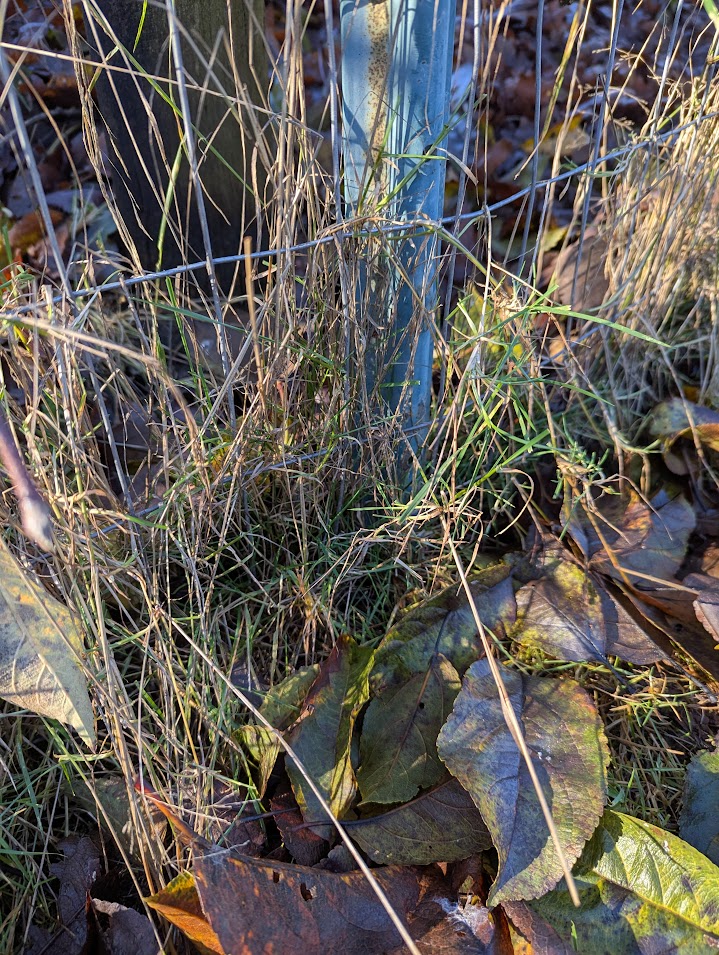


Your personal small compost pile probably does not get “hot” enough to kill the grass roots or weed seeds. They will break down (albeit VERY slowly) into something resembling soil, but when you use it, the grass and weed seeds will gaily sprout upward and you have more weeding to do.
Where we live, we have a yard debris service that is “free” (included in your monthly garbage bill, extra for extra bins which we always need). This yard debris is hauled to a commercial composter where the compost gets hot enough to destroy all those seeds and grass starts, but here’s the caveat: they don’t accept sod with soil clinging heavily to the roots. And sod *is* heavy.
I developed a system whereby I hauled the sod to the hazelnut tree and tossed it underneath, root side up, to die. Nothing grows under it except for the stray Himalayan blackberry and a bit of escaped English ivy (both are a pestilence). I have tried. Everything ends up dying like the sod I toss under it, and the sod takes years to break down into soil under the hazelnut (but doesn’t resprout, because nothing grows under hazelnuts except the aforementioned invasive plants. I’m working on getting rid of those).
I was young and had energy and muscle tone in those days. I also knew I was losing a lot of precious topsoil with that approach. My new flower beds were lower than the ground around them.
The cardboard idea has been around for a long time. I simply hadn’t tried it. Who wants large, open boxes of brown cardboard melting in your yard in the rain over the winter. (Love all those prepositional phrases in one sentence!) The winter of 2023/24 changed my mind. I’m getting older and slower and the edger is losing its sharpness (I know: a trip to a tool sharpener would fix that issue in a jiffy and for a sum). I decided to give the appearance factor a good “who cares?” and I placed cardboard in the front yard where I wanted a new flower bed.
The result was wonderful. Awesome. The grass (such as it is in our yard – more on that later) and the sorrel, the false dandelions, dandelions, and even the thistles all died. I approached it the same way I had been doing, but now that the sod was dead, the soil just fell off the roots leaving me with just a handful of dead grass and roots. I tossed those items into the yard debris bin and shook out the soil (and consequent insects and arthropods and worms necessary for good soil) back into the bed. Sifted a few rocks out (OK, a LOT of rocks out – we live on top of a bluff formed by ancient lava flows and some sedimentary rocks, plus there was gravel dumped in the front yard by previous owners). The result was a fluffy bed ready for planting, rich in nutrients, and poor in repeat unwanted plant growth. My herbs thrived and I had little weeding to do through the growing season.
This Autumn, I added a lot more cardboard cover to the yard, estimating the amount of energy I hope to have in the Spring/Summer and where I want new flower beds.


This Spring, I hope to add a small rototiller to my repertoire, replacing the edger. I don’t know why I never got a small rototiller in the past. I enjoy the manual labor, I was only working with small yards, and I was too cheap to spend the money. My husband has a rototiller for the vegetable garden, but it is too large for the small spaces I work in and is never available when I want to work. That search and the result will be another blog post in the future.

 Jaci Dawn