I wrote last week’s garden post without remembering that I own a manual tiller. I don’t use it for tilling which is why it didn’t register on my brain. I use it to help turn the compost. I do have a compost turning tool, but between the pair of them, I can get quite a bit of things turned and mixed inside the compost bin.
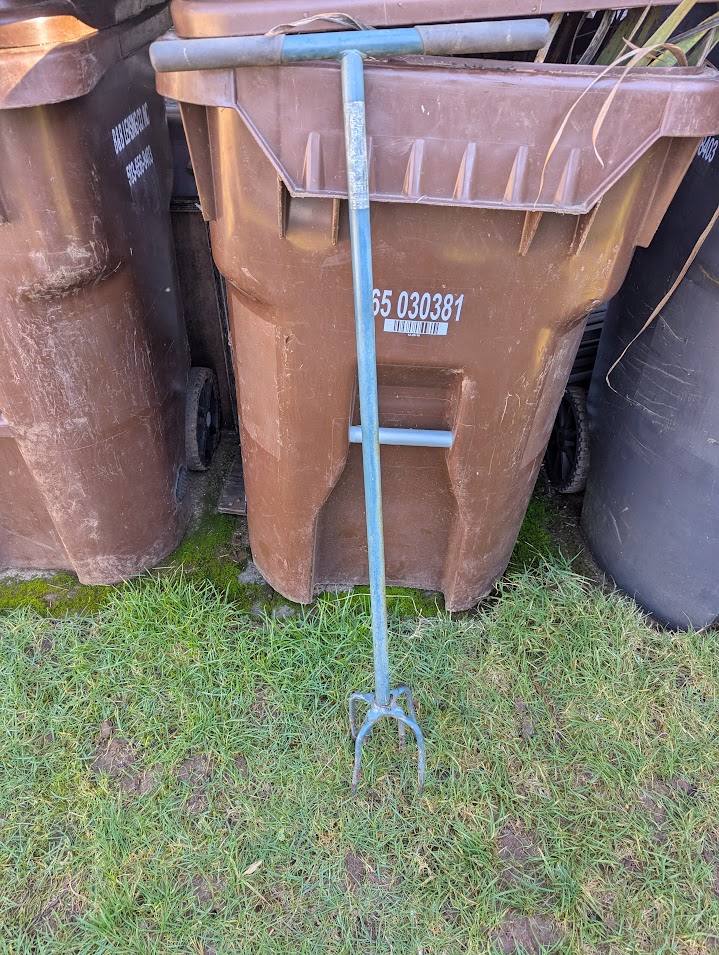

Here’s the tool. You are supposed to press it into the ground and twist, but I never had much luck with that maneuver. The ground needs to be soft, to being with. Compact grasses and sod are too much for it. It does work well in muddy soil.

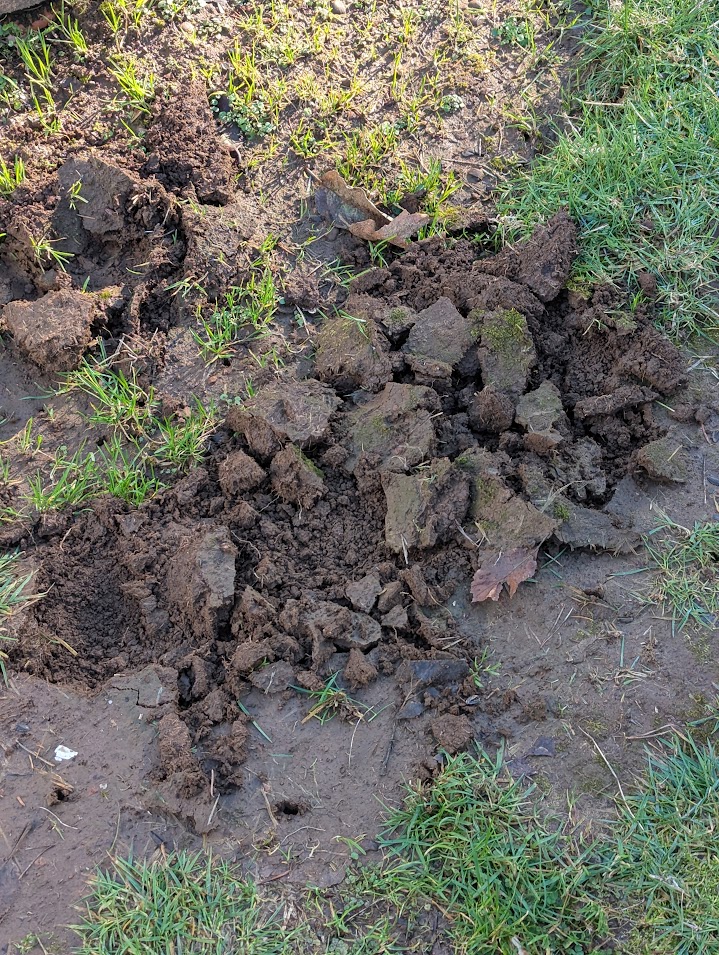

I tried it out today with varying degrees of success. The most important thing to remember is that it still requires a lot of twisting which eventually screws up my old back. I got it to work in mossy grass, in already loose soil, and in muddy soil. Bottom line is: it is only going to work to a moderate degree and I still need to purchase a motorized small tiller of some variety.


While I was at it, I turned the soil inside the compost bin with the official compost bin tool. You push the tool deep into the compost and pull it out. The little blades open and pull up stuff from the bottom of the compost. I pulled up a lot of decomposed matter, soldier fly maggots, and red worms. The latter two creatures are extremely beneficial to compost and a sign that one’s compost bin is working.
I purchased the bin for a small fee from Metro. The tools I bought online. The compost comes from several areas: the kitchen, the lawnmower, and the firepit. We compost eggshells, rotten vegetables, leftovers from vegetables, and whatever we pare from fruits, onions, potatoes, and the like. Grass clippings get added in the early part of the growing season, before the grass goes to seed. Flower discards, but never weed discards. Charcoal and burnt ends from the barbecue and the firepit. It takes a couple of years to heat up enough to create soil or mulch, but that’s just that our yard sits in the shade for six – eight months of the year. The bin gets as much sun as possible.


Soldier flies are only one of the major composting insects we harbor, but they are probably the most important. They are large flies, don’t come into the house (except by accident), and live only to mate and lay eggs in the compost. The compost keeps the eggs and maggots warm, then they pupate, and more flies are born. It’s a very cool life cycle. The red worms are great for bait fishing, but they seem to stay inside just the compost bin: we have a yard full of earthworms that aerate the soil and feed the few moles that dig through the yard in search of a meal.
Earthworms and moles are both beneficial to the yard, although moles do occasionally upset some plant roots whilst they search for their favorite protein: earthworms. Moles also prey on crane fly* larva and cut worms, both very destructive insects.
*We used to call crane flies “Mosquito hawks” because they look like giant mosquitoes without the proboscis. They don’t eat in their adult stage: that’s for mating and laying eggs, hovering around outdoor lights, and scaring the bejesus out of people who don’t know what they are. It’s their larvae that damage the roots of grasses and plants, but mostly grasses.

 Jaci Dawn