Feeds:
Posts
Comments

Posts Tagged ‘ancestry’

I paused my research on my maternal side of the family to scan photos and documents from the paternal side. My father took the time to identify and label most of the photos and that has been a great help, but there are still a few unknowns waiting to be identified.

Speaking of identifying things: Dad identified more with his mother’s family than he did with his father’s family line. He told us how he was Irish, and he could even remember a few words of Gaelic when he was younger.  Sadly, the knowledge I have of his family ends with the first emigrant to America who sailed from Northern Ireland and who was Presbyterian by faith. My own DNA registers no Irish ancestors, but tracing ancestry by DNA is only as good as the pool of people (relatives) who also have their DNA tested.

I have a lead that might be my Irish ancestors, but it bears more research. If it pans out, they were originally from south Ireland and migrated to the north, possibly due to religious differences (again, the family was Presbyterian, not Catholic). Traditionally, Northern Ireland is Protestant and Ireland is Catholic. Orange vs. Green despite both colors being in the national flag.

Whatever the differences, the Cusick (possibly Cusack misspelled at some point in time) side of the family identified as Irish Nationals who emigrated across the Pond.

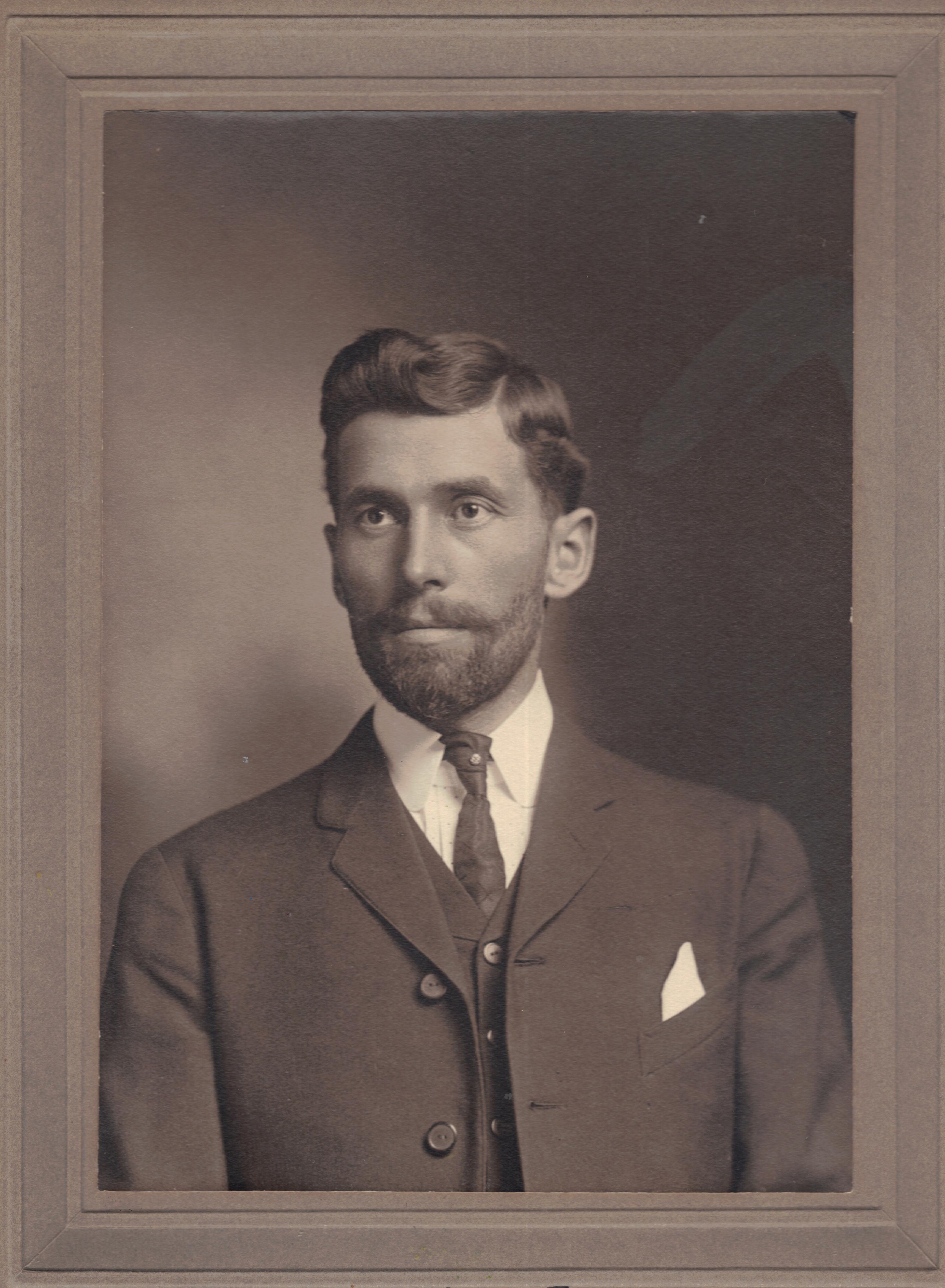
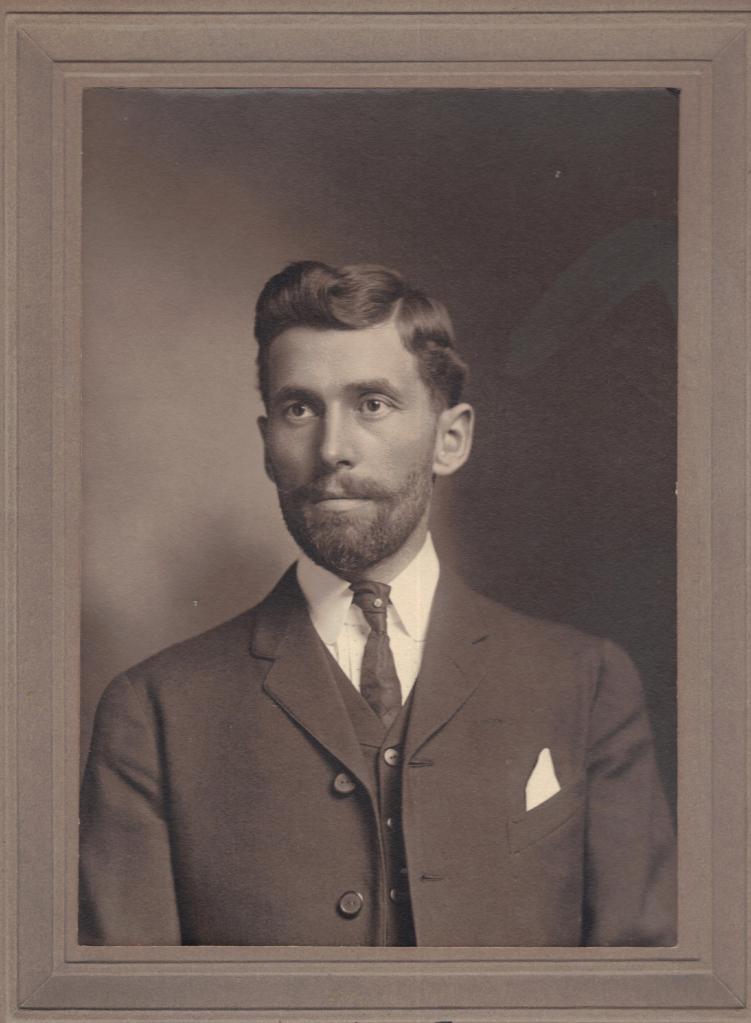
John Timothy Wilcox I

Dad’s immediate family was riddled with tragedy and not a little bit of mystery. He was a Wilcox, descendant of John Timothy Wilcox I. JT as I believe he was known, had several siblings but I never heard a whisper of cousins on that side of the family until I got into genealogy. As far as I knew, JT was an only child (he wasn’t). JT married Azema Kimmey and they had two children: Fred Orson “Fritz” and Mary Elizabeth. The latter died within a year or two of her birth.

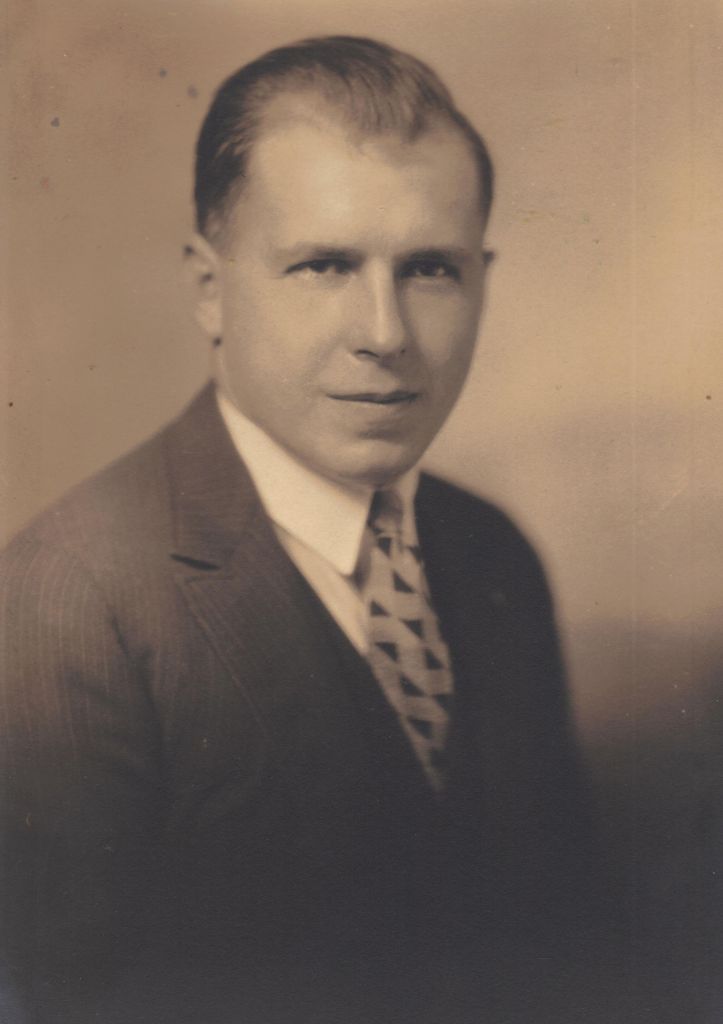
FO “Fritz” Wilcox

Fritz, or Gramps as I knew him, was married three times. There may have been some affairs in between wives, Dad was never very clear. What Dad was clear on was that he very much resented his father, Fritz. A cousin recently told me why: apparently Fritz would come home drunk and then beat Dad for no reason. I think the marriages after the death of Dad’s mother had some bearing on the estrangement as well. But I am supposing and Dad is gone so I can’t ask him anymore.

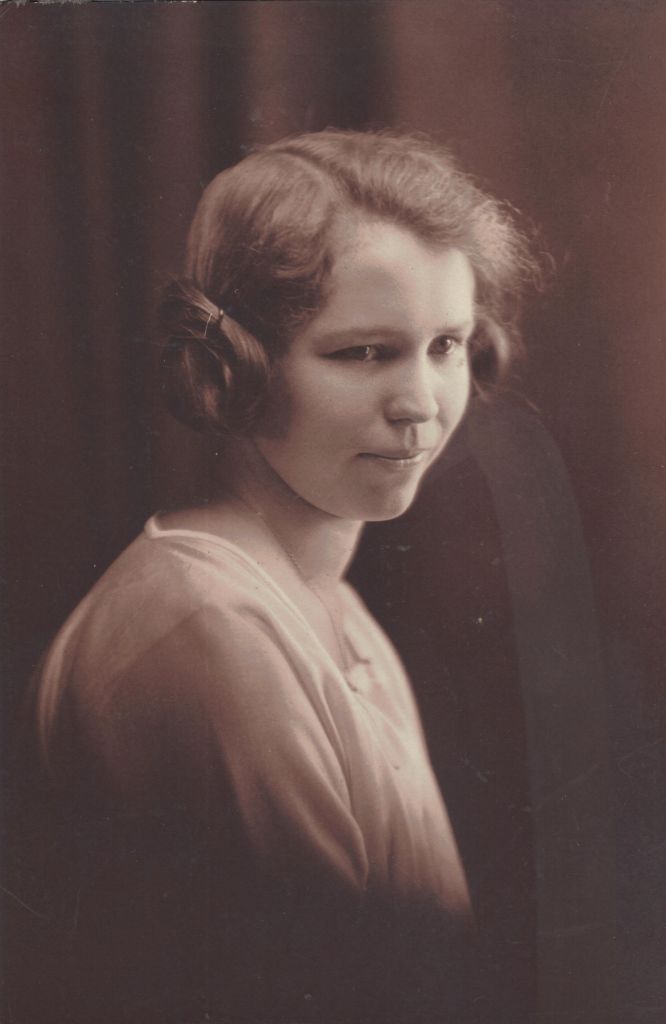
Sylvia Cusick Wilcox

Fritz’s first wife was Sylvia Cusick, daughter of the Irish. All the photos I have show a very happy family. Oldest born was Mary Elizabeth (for Fritz’s baby sister) and then John Timothy Wilcox II (Jack, or Dad – to me). Sylvia contracted necrotizing faciitis at the age of 26 and passed away before my father was 2.  Today I am choosing to concentrate on this core family of four; more were added over the years through different marriages.

Mary E. and Jack 1929

Mary was the eldest, always. Dad was next. All the step and half siblings were younger (and are still a part of the family story). They were not a happy family, but they were a family and bonds were formed. Sadly, after Mary married and had her own first child, she was killed in a tragic drunk driving accident. Mary was barely 21 years old. Her death reverberated in my Dad’s heart and he named his third born after her: Mary Denise Wilcox.*

Dad had a half-brother and three step siblings. I have a little of the genealogy of Uncle Mike’s mother (Dad’s half-brother). I knew his step-siblings as Aunt and Uncles, and Gramps’ third wife, Thelma, as my Granny. Gramps and Granny were fixtures in my childhood despite my father’s ambivalence toward his father.

Jack Wilcox, Mary Wilcox, JR Bromley, Peggy Bromley, Mike Wilcox, Dick Bromley (Top to Bottom)

Top-Bottom: Jack Wilcox, Mary Wilcox, JR Bromley, Peggy Bromley, Mike Wilcox, Dick Bromley

*Deni died in 2000 just shy of her 41st birthday, but that is another story. Of note is that she died of necrotizing faciitis.

Read Full Post »

Switching Gears

I am gearing up for the last “pop-up“ market of the season while other people are gearing up for the big food event. My studio is littered with papers, feathers (yes, feathers), binders, acrylics, markers, and a few Christmas gifts that need to be wrapped and shipped. I have parsley hanging to dry, the last of the garden harvest I will hang this year. I am using this “down” time to catch up on genealogy.

My genealogy has waited for decades to be digitized. I’m not getting younger, and my memory is starting to fade. I have a pretty decent family tree started but I want to get done with the scanning and converting all my files to digital. Photos, old letters, old land deeds, and typewritten memories from my ancestors who also dabbled in family history. Get done with that, then convert my husband’s paperwork to digital.

Whew – I have a lifetime of work ahead of me. At least enough to fill the winter months for the foreseeable future.

I have already scanned all the deeds my mother collected whenever she happened to visit Wisconsin where her people were from. Mom did a lot of leg work, and I am reaping the benefits. She concentrated on the “newest” Americans: the Melrose clan. She never got into the Scotland roots, but I can understand why: every other son was named Phillip or John.

Phillip Melrose begat John Melrose who immigrated to the Americans before the American Civil War. John moved to Wisconsin and sired Phillip George Melrose. Phillip George sired two sons: Dale and John Vaughn Phillip Melrose. Phillip – John – Phillip – John. Dale died when he was young (see Letters From Dale in my archives). John VP Melrose fathered three girls, no sons: Phyllis, Donna, and Mary Lou (my mother). Phyllis was the closest he came to naming another child Phillip.

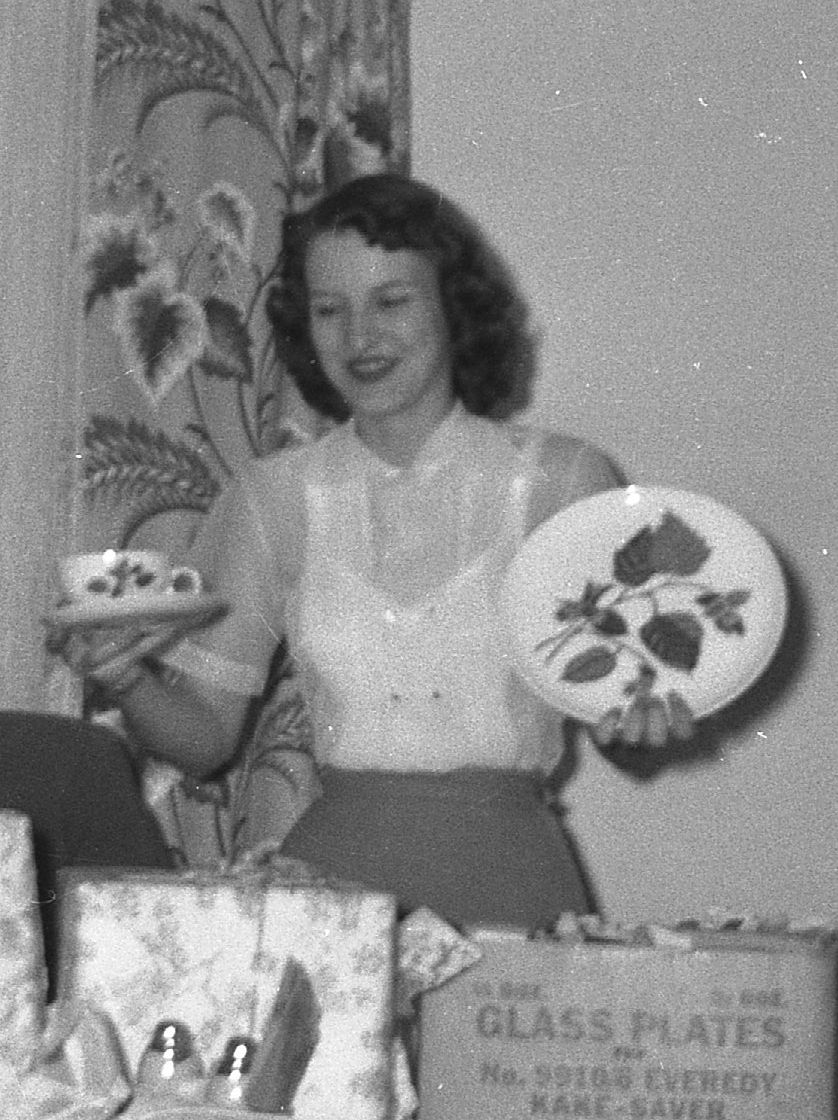
Mary Lou Melrose 1952

That original immigrant bought and sold quite a bit of land in Wisconsin and Illinois.

I came across some deeds that seemed to have nothing to do with my family line: A patent deed to Mary Eliza Drury (1878), Ormal Walker to Harvey Hakes (1889), and Preston King to Hiram Walker ((1860). That latter one is truly a puzzle, but I will get to it in a moment. It was the deed from Hakes to Walker that finally helped me figure it out (I think) because I have a second deed from Harvey Hakes to Phillip Melrose. Same property.

My hypothesis is this: instead of a “Title Search” as we know it in modern real estate transactions, the original deed was presented to the buyer as proof that the seller had the right to sell. I couldn’t find a deed from Drury to Melrose or Walker to Melrose, but those could simply be missing. Things got lost when Mom passed in 1995 or maybe she never acquired those deeds. Makes sense to me.

It doesn’t explain the original land deed from Preston King to Hiram Walker, signed by the 84th President of the United States. On parchment, hand signed, with a seal. Preston King was deeded the land after the Black Hawk War (a nasty piece of history). He was a private who served under Captain Campbell’s Illinois Militia.

I framed it. It has been folded and stored incorrectly for decades. I think it deserves wall space and maybe one day I will solve the mystery surrounding why I own it.

Read Full Post »

I dusted off the vintage books this afternoon, not to read but to, literally, dust. Spring cleaning. I can’t just dust books. I have to smell them, hold them, and gently open the covers to reveal what might be hidden inside: the claim of former ownership, the lack of a publication date or a copyright. My heart beats a little faster and I sometimes read a paragraph or two. Cleaning vintage book shelves takes more time than simply running a duster over them.

Many of them I purchased at yard or library books sales, careful to check the copyright and condition of the covers and pages. There is a significant portion of the books on that particular shelf I was dusting that are inscribed with the names or initials of my forebears. They are not only family in the sense that all good books are family, but in the sense that someone in my direct lineage once read and treasured them and oftimes someone else read and treasured them enough to save them and pass them on to me.

Most of them were handed down through the Cusick side of my family tree from my Great-grandmother Susan (Miller) Cusick and her husband, my Great-grandfather, Oscar H. Cusick. Some are treasures from one or another of the Cusick siblings: Uncles Art and Ed and my paternal Grandmother Sylvia (Cusick) Wilcox. My father’s sister’s name is in several of the books: Mary Wilcox. A few have my grandfather’s initials in them: Fred Orson Wilcox, husband of Sylvia. The books passed down by my mother are children’s books she treasured.

The collection of mini leather-bound classics belonged to Sylvia (I never knew her, therefor she is “Sylvia” to me, not “Grandma”). The yellowed pieces of paper slipped in above the volumes are the type-written index to all the books therein. I have seen other collections similar to this at antique stores but Sylvia’s is the most complete I have so far located. Shakespeare, Browning, Poe, Lincoln, Anderson, Kipling, Carroll, Dante, Dickens, Hugo, Thoreau, Tolstoy, Emerson, Dumas, and Longfellow – just a few of the featured authors in this treasure trove of literature and poetry.

Surely Sylvia was a dreamy child and prone to spending hours with her nose in a book!

I counted 21 books in the larger size. This is a smattering of the more colorful bindings. I have read Robert Service forward and back over the years. Stevenson’s “A Child’s Garden of Verses” is charming and dreamy. the Courtship of Miles Standish (center) is a bit worse for wear on the inside – the pages are separating from the binding.

One book had a note from my dad: “This was always one of my favorites”. Neihardt’s “Song of Hugh Glass” which many a reader will recognize as the text from which the script for the movie, “The Revenant” was taken. it’s pretty heady reading in the form of an epic poem.

I need to write here who owned which books as a record of genealogy and ancestry:

Mrs. OH Cusick (Susan Miller): Ballads of a Cheechako (Service), The Spell of the Yukon (Service), and Sartor Resartus (Carlyle), Those owned by Oscar Cusick: Courtship of Miles Standish (Longfellow), Snow-Bound (Whittier), and In Memoriam (Tennyson).

Uncle Art Cusick: Tales of a Wayside Inn (Longfellow).

Uncle Ed Cusick: Whittier’s Poems (Whittier).

Sylvia (Mrs. FO Wilcox): Romeo & Juliette (Shakespeare), She must have loved that particular play!

FO Wilcox (Gramps): The Tragedy of King Lear (Shakespeare), Emerson’s Essays (Emerson), The Vicar of Wakefield (Goldsmith), and The Song of Hugh Glass (Neihardt).

Aunt Mary Wilcox: A Midsummer’s Night’s Dream (Shakespeare).

Mary Lou (Melrose) Wilcox (Mom): Campfire Girls (Jane Stewart), Mother Goose, Pilgrim’s Party (Lowitz), and A Child’s Garden of Verses (Stevenson).

I have a lot of reading to do to catch up with the ancestors (I have, in truth, read most of the books and more than once). The love of books and the love of reading runs deep in my blood. I imagine rocking chairs, a fire in the woodstove, and flickering electric lights as the books were read in the evening. I imagine a young teenager curled up with her favorite Shakespeare tale, sitting in a front window where the sun warms her and lights the pages.

These are my priceless possessions, my books. I am never so rich as what I have books to read, and better so: my ancestors read the same works.

Read Full Post »

Where was I? Oh, researching the Scots. Got a little side-tracked by the Germans, but discovered some exciting things about my family history through those little shaking leaves on Ancestry.com. Like how German I am.

I pulled up some military records for my 3rd Great Grandfather on my maternal side: Henry B. Rowe was a Private in the 18th Division, Wisconsin Infantry, during the Civil War (that’s on the North side for those of you not familiar with history).

Both 6th Great Grandfathers up the same maternal line were Privates in the American Revolution: Benjamin Reigel (or Riegel, there’s some discrepancy in spelling so it’s either pronounced with the long I (Reigel) or the long E (Riegel). Benjamin was a Private in the 1st Battalion, Northampton County Militia (Pennsylvannia). Peter Kern was Private 2C1 under Captain Arndt’s Company, 1st Battalion of Associators, Northampton (also PA).

Peter Kern is where I ran into trouble with those cute little fluttering leaves of hints. I could accept the data leaves with verifiable written history, but the “other ancestry trees” veered way off course. I had to back way the heck up.

Start with his wife, one Catharine (Catharina) Deshler, born 11 JAN 1746 and died 11 Hmmm… February of 1825 or November of 1815. Wait… She might have been born 11 JAN 1751. Oh, and her maiden name may have been Hoffert. What the…?

I’ll explain in a minute, after I tell you about Peter.

Peter Kern was born either 11 April 1741 or 23 July 1741. He may have been known as John Peter. He died either 31 May 1820 or 25 May 1820. And his surname may have been Daudistel.

I can’t accept those”hints” because I have no record tying them together. Someone did a lot of interesting research, but how did they tie those names (and dates) together? What records?

Or did someone do what I did ONCE (and one time, only) on Ancestry? Just blindly accepted a hint because the dates were similar and the names were “close enough” that maybe there was room for doubt?

STOP.RIGHT.HERE.

Do NOT accept those hints. Back off. Find another way to verify this person is your ancestor. I now need to find the birth records, marriage records, death records – the actual verifiable bits of history to tie up the loose ends of the Kern/Deshler connections. The children are right and the siblings match, but where the heck did those alternate surnames come in?

UGH. I have a headache just thinking about untangling that web of misinformation.

On the other hand, I as able to follow the hints into the Rheinland down that same maternal line by veering into a paternal line. 6th great Grandfather Benjamin Riegel’s father, Matthias, immigrated from Rheinland-Pfalz, Germany during the early 1700’s. His spouse, Maria Margaetha (Unknown) immigrated around the same time from Rheinland-Palatine.

BINGO: family came out of the German Palatine immigration.My husband’s ancestors also immigrated from the same area around the same time (darn! We might be related outside of marriage – haha). I know another family line came out of the same area (too tired to look it up, but it was up a patriarchal line on my father’s side).

What is interesting to me is how much more connected I am to the Scots/Irish connections than to the German, although the German probably played a greater role in my DNA. Considering how religious the Palatine Germans were, when did that heritage drop off and the Irish/Scots Protestant kick in? (Pretty certain my German ancestors were Protestant, although many were Catholic).

I’m excited about the possibilities even though I feel I’ve reached a dead end up this particular family line as Ancestry has proven ambiguous. But never trust in a single source. I’ll just have to go old school on this line, so I am tabling it for now.

I did save documents about occupations (a lot of carpenters in there), military records, and how people died. Certain records are historic proof.

Oh-Oh-Oh! Rose became Rau the closer I got to Germany. Heinrich Rau was my fourth great grandfather, but the spelling of his surname quickly changed to Rowe, and his son, Johannes, became John. I can trace that and the names are similar enough to make that transition.

Common names often went through a period of misspellings: Presley/Priestly/Pressler/Pressley or Willcocks/Wilcox/Willcox. Johannes is the same as John in German. Rau to Rowe is a simple hop. Americanization. Assimilation. I even noted one stenographer who interpreted the hand-written “ROWE” signature to be “RONE” (I looked at the record. It’s clearly ROWE to me).

But Daudistel to Kern??? Or Deshler to Hoffert??? That’s not a simple leap. And the disparate birth/death dates are a huge red flag.  I’m backing way the heck off on that one until my brain quits hurting.

Read Full Post »
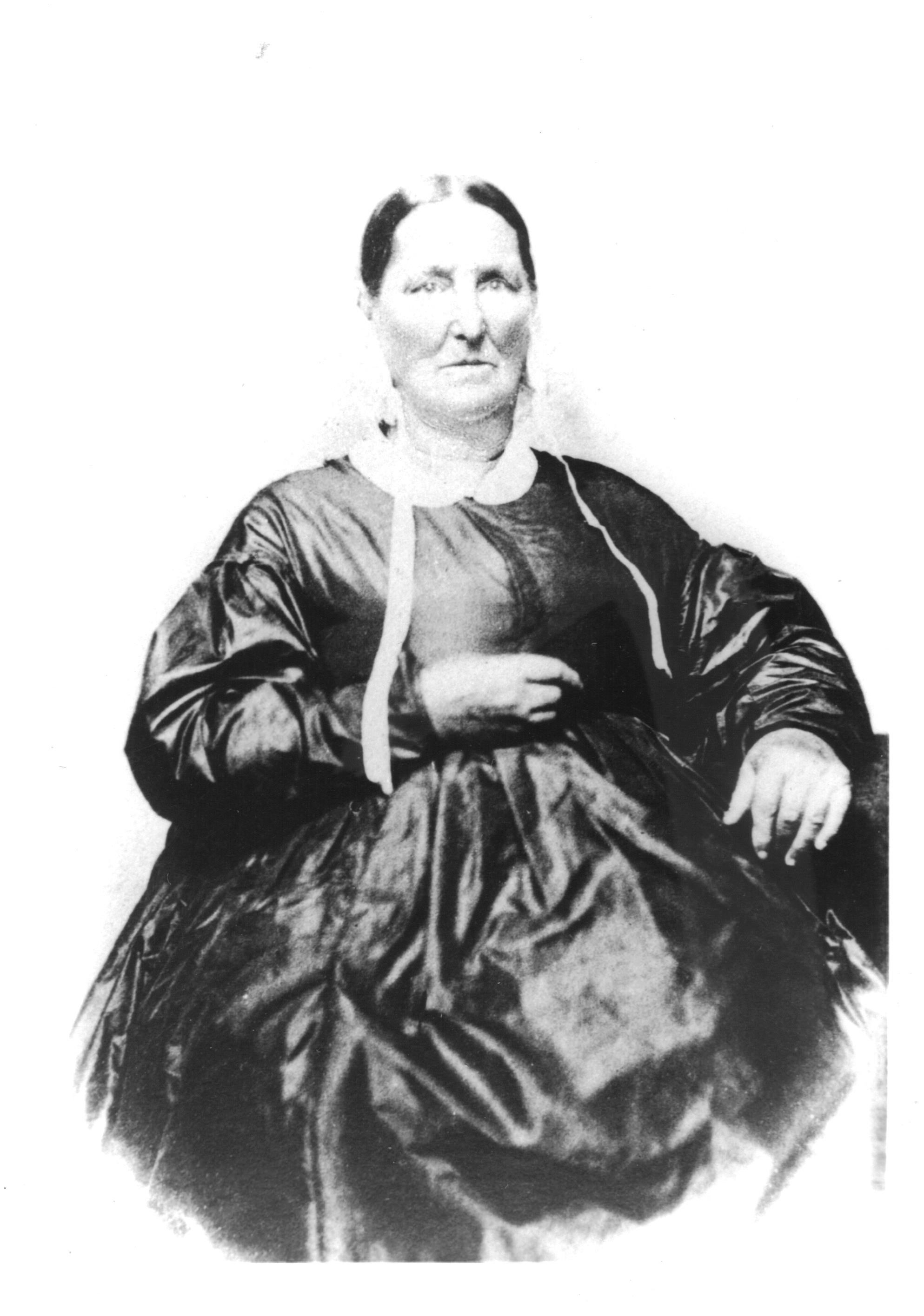
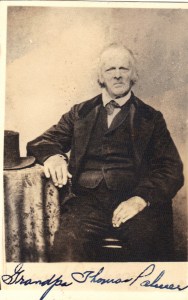
6f61bd97-961f-420f-9c8d-36147952a501Thomas Force Palmer 1787-1865

I found a hand-written “history” of the Palmer clan in my file cabinet that I have reserved solely for genealogy. This is where I stuffed everything my father sent me: all my mother’s notes on her side of the family, and anything my dad had on his side of the family. My father was the grandson of John and Irene Wilcox. Joseph Snow Palmer was my great-great-great grandfather.

I have not researched the hand-written history, but I am going to transcribe it below (verbatim). It was written in pencil on faded note-paper, but is still legible. I’d like to capture it before it fades completely.

Here goes:

Coat of Arms was granted to Ralph Palmer in 14 century and brought (?) to the coming of the clan to America.

Ralph Palmer was of great note in the South of England and resided at Sussex. Sir Edward who was a descendant in the 8th generation was our ancestor. he (sic) married a daughter of Sir Richard Clement. She had three sons (think of it3) (sic) triplets and they were born on three successive Sundays, the first one on Palm Sunday*. Some Record (see coat of arms)**

The first of Palmers of our line in America: William. He came from Sommersetshire, England in 1621 on the good ship Fortune. He had a son, William. The second Wm. was a lieutenant under Capt. Miles Standish and has been designated as Lieutenant William Palmer. he was a man of large affairs and held many positions of trust. He married Judith Feake and had five sons & one daughter. One of his sons Ephraim married Sarah Messenger & they had seven children. One of whom was John, who married Sarah Close and had five children, one being Justus who married Amy Lockwood and had six children, all sons & the third of these was Ephraim our Revolutionary ancestor.

He was born in 1760, married Margaret Force in 1786 and had 11 children, seven sons and four daughters. The eldest of these was Thomas Force Palmer born in 1787. Married Rebecca Snow 1813 and then had six children, four girls & 2 boys.

Joseph Snow Palmer, b. 1819

*I’m trying to verify that story. Sounds like a tall tale: giving birth to triplets, but each one a week apart, beginning on Palm Sunday?? I can verify the boys were triplets, but not the story. That link also hints at the tragic death of my ancestor, Sir Thomas Palmer. (Cause of death: beheaded after the Lady Jane Grey conspiracy.) That bears a lot more research!

** Coat of ArmsPALMER-FAMILY-CREST--COAT-OF-ARMS_art

Read Full Post »