Feeds:
Posts
Comments

Posts Tagged ‘american civil war’

In which the Wilcox brothers write home while their brother, my G-G-G-Grandfather stayed home and tended the farm.

Vicksburg, March 13, 1863

Most of the regiments have moved up on the levee, and we have drawn our guns up. Half a mile below us the country is flooded.

Camp near Vicksburg, March 28, 1863

We arrived in camp last night after dark. We started on the 20th from here with one section of our battery. Thomas and I went on the YazooRiver about ten miles, then turned into Steele Bayou, on the left side of the river as you go up the bank. We went about 60 miles from the Yazoo. We were landed to guard the bayou, to keep them from felling timber into it. We camped on the first dry ground we came to on the Black Bayou. We enjoyed the time we were in camp very well, sailing in the canoes we found along the bayou.We came back on the gunboat Louisville. About 200 negroes, women and children, came back with us. The whole thing was one complete failure. The infantry had to wade in water up to their knees.

                Willard Wilcox

~

Camp before Vicksburg, March 29, 1863

Willard and I have returned from an expedition up the Yazoo river. It was a failure. The order came about 10:00 at night. Of the 19th, for the two howitzers. We went over 60 miles. Came back on gunboat. We were on a plantation.

                Thos. Wilcox

April 5, 1863

Thomas ill: “I have stayed in camp, and the boys have taken first rate care of me.”

~

Milliken’s Bend, May 3, 1863

Wilber was up in the Chickasaw and fought the battery for three hours without being disabled, but was struck a great many times.

Rear of Vicksburg, May 5, 1863

Have to stay at the guns most all the time. We were called up every night to fire ten or fifteen shots. The squads take turns of two hours each in firing it, or 25 shots at a time. Our men are getting all the heavy guns mounted and rifle pits dug to within 100 yards of the rebel works. Every battery on the line opened up on them one morning about 3:00 o’clock; for hours it seemed like a stream of fire from one end of the line to the other. One thing is certain, they cannot stand it much longer. We keep getting closer every night, and will dig them out. I would like to come home when we take Vicksburg. It seems a long time since I went away. Willard is as strong as ever. The Captain said that he is the only one that stays at the cassion that he can depend on to get anything done when he wants it. I do not like soldiering, no way you can fix it.

                Thomas Wilcox

~

Milliken’s Bend, La. 25 miles from Vicksburg. May 7, 1863

Willard has got over his fever. I am about well. The boys came back from their expedition without firing a gun. They went up the Yazoo River to Haines’ Bluff. The troops have all gone below Vicksburg except our division. We have a nice camp. We left Milliken’s Bend May 6, and went to Grand Gulf, and started for the bridge across the Black River. Water was scarce, and the roads so dusty we could not see two rods, and we were on half rations, but we stoof it first rate. We were in position three times but did not fire; were under fire several times. General Sherman ordered our battery up to the river bank, but after five shots they hoisted the white flag. Squad 2 crossed the pontoon bridge first with six horses.

Near Vicksburg, May 30, 1863

Left Young’s Point day before yesterday to join the company. Went up the Yazoo about 12 miles. We landed, found the battery near the place on the opposite side of the Chickasaw bayou from where we were last fall, near the place where 6th Mo., undertook to cross. Wilber and Thomas are here.

                W. J. Wilcox

~

We have been under fire for six days, within 400 yards of the breastworks. The four gun squads have to stay at the guns night and day.

Rear of Vicksburg, May 30, 1863

Thomas and Wilber are looking well. Our line of battle is on one range of hills, theirs on another, being about 400 yards apart. Where our battery is, we have got our line intrenched, but skirmishers keep firint at one another when they see anyone. Ore battery fires more or less every day. They brought in four 30-pound Parrotts last night. Our boys have one to man. They have to keep it going all the time, so they take turns at it. They fire all over, sometimes clear in to the center of town.

                Willard Wilcox

Near Vicksburg, May 31, 1863

The most trouble is to stand the heat. We are on the side of a high ridge without any shade, and in the middle of the day it is very hot, especially if we shoot. Yesterday we got up a 30-pound Parrott gun and fired 100 shots from it, and at 6:00 A.M. we fired from one end of the line to the other. They have got so that they don’t fire back but very little.

Camp in rear of Vicksburg, June 4, 1863

Our lines have not advanced since I came here excepting in places where they are making approaches which I don’t know much about. Both parties lie behind their works occasionally exchanging shots with small arms. We have fired a great deal with the artillery. You can form some idea of the amount, as the gun that I belong to fired 633 shots. If the Eastern armies could gain a victory, it would be a better feeling.

                Willard Wilcox

~

Camp in rear of Vicksburg. June 16, 1863

Vicksburg is not yet taken, but Grant and Sherman are working as fast as the rough nature of the ground will permit. The amount of work done by the army since we have been here is almost past belief, yet the men work with a good will, confident that we will have Vicksburg in spite of Johnston. There is not a day passes, but more or less men are killed.

                Wilber Wilcox

~

Camp near Vicksburg, June 23, 1863

We have a new battery, five light 12-pounders and one 10-pound Parrott gun. They will carry farther than our old battery; our men are at work making approaches. They are within a few feet of the enemy’s ditch in several spaces, but there has got to be a parallel ditch dug to hold many men before they can storm it. Our pickets are in one ditch while theirs are in another. They used to talk a great deal, but that has been forbidden, so they write on pieces of paper and pass backward and forward. One of our boys threw over a part of a loaf of bread and they threw back a biscuit. You can talk to them quite easy from the guns where Thomas stays, when they are on the breastworks.

                Willard Wilcox

The siege ended on the 4th of July, 1863. The brothers would then march to the sea with Sherman, Eventually, one of them would die and only the two would make it back home (John having already died at Chickamagua).

A “Parrott” gun was a cannon.

If you want to learn more about the Battle of Vicksburg, the following are some links to get you started.

https://www.battlefields.org/learn/maps/vicksburg-campaign-1863

https://www.battlefields.org/visit/virtual-tours/vicksburg-virtual-tour
Read Full Post »

The following letters precede the battle at Vicksburg and the subsequent surrender there. I have, so the sake of brevity, left out a lot of details of the battles and skirmishes, and tried to concentrate only on the actual letters.

Memphis, Tennessee Dec. 1, 1862

We have orders to be ready to leave to-morrow. One rainy night he took three rails and laid them on one, and spread a blanket with rubber over. We kill the sheep, cattle, and pigs in the woods where found.

Thos. Wilcox

Thomas was under General Sherman at this time. Not sure who “he” is.

Near Tallahatchie, Dec. 3, 1862

We are in Smith’s division. Thomas and Wilber were at Oxford. They went with Sherman’s body guard.

W.J. Wilcox

Smith would have been Union General Morgan L. Smith.

Jan 8, 1863

Vicinity of Memphis, on the Mississippi, near the mouth of the White River. We withdrew our forces from the swamp near Vicksburg New Year’s night. We brought off everything, not leaving so much as a bag of grain. The gap in our division was about 180 killed and wounded. I heard to-day that Andrew Mullen was killed. He was badly wounded and left on the field. The men that told me thought that he would have gotten over it if he had been taken care of; but he laid out one day and two nights – raining all the first night – so when they got him he was dead.

Willard Wilcox

Battle of Arkansas Post – Jan 10,11 1863

Proceeded up the Arkansas Jan 9. Late in the afternoon, they halted about three miles below the fort, and began landing for the night. At noon on the 10th we began movement toward the fort. The field artillery, numbering 45 pieces, was disposed in the intervals of Sherman’s and Morgan’s lines. The artillery opened fire, and kept it up half an hour, then ceased, and the infantry assaulted. Lindsey, of Morgan’s corps, with four guns, took position above the fort. Fort surrendered. Troops re-embarked 16th and 17th.

Moved to Young’s Point. Was engaged in the Vicksburg campaign until the surrender of Vicksburg, July 4, 1863, then moved to Jackson, Miss. After the siege and surrender of Jackson, moved to Black River, and remained in camp there until Sept. 27, when ordered to Chattanooga.

Camp on Stone River near Murfreesboro.

(unsigned)

February 1863.

It is two months since I had a letter from home. I stand ready to go into battle and endure all the hardships of war, but to be deprived of hearing from friends whom I may never see again, is asking me to become a stone. The government should take more pains to forward the mail. We expect to march as soon as the condition of the roads make it possible.

John Wilcox, with 88th Infantry.

Haines’ Bluff – 1863

Blaine’s division embarked on ten steamboats about 10:00 A>M> April 29. Proceeded to Yazoo April 30, to within easy range of enemy’s batteries. Four hours demonstration kept up. Toward evening disembarked, seemingly prepared to assault. April 31, similar movements. Dropped back to camp at Young’s Point, reaching there the night of May 1st.

Our division went up to Haines’ Bluff. I was not well enough to go.

Willard J. Wilcox

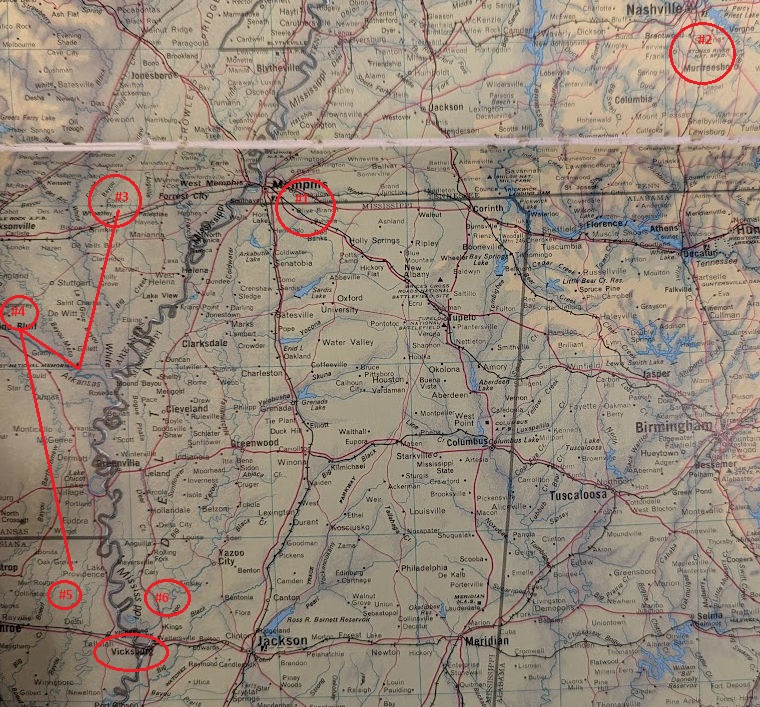
I tried to locate all their positions on a map. All of this is leading up to the Siege of Vicksburg which took place May 18 – July 4, 1863 which cost the Confederacy some 32,363 souls. It was a decisive Union victory and led to the ultimate push by General Sherman to the sea.

The population of the city I live in was around 38,000 in 2025.

Read Full Post »

I am transcribing this from a 40-page typewritten photocopied document that was among my father’s research. I do not know the veracity of it all nor do I know how many posts the series will take up.  What is in italics is what I transcribed. My notes are not in italics.

In 1861 the war began. Four of her (Sarah Lord Wilox’s) sons enlisted; only two came back, one of the two shattered in health from a long imprisonment.

Sarah Wilcox died October 2nd, 1883.

Immediately after the firing on Ft. Sumpter (sic), came President Lincoln’s first call for troops. Wilbur I. Wilcox was at this time teaching. Willard J. Wilcox was engaged in making brooms. They immediately dropped their employment, and enlisted in the first company and first regiment that left Illinois for three months’ service – Co. A, 1st Regiment, Chicago Light Artillery. Willard was then 26, Wilber, 24 years of age. Saturday they went to Chicago and enlisted; Sunday they were journeying toward Cairo. They returned home on a furlough at the expiration of their enlistment, but re-enlisted for three years, or during the war, before returning home. After a few days at home they started again for Cairo and rejoined their battery.

                Cairo (Kay-ro), Illinois, was where U.S. Grant based his operations out of.

Willard fell from a caisson in Dec. 1861. As soon as (he) was able to travel after this injury, he visited his mother, remaining with her until after the marriage of his sister Mary on Jan. 1, 1862.

Before his furlough had expired he was recalled to his company. He was with the company which moved from Cairo, Jan. 10, 1862, on a reconnoisance (sic)  into Kentucky, returning Jan 22nd. At the battle of Shiloh, Willard and Wilber were both wounded. Willard carried a minie ball* in his head the remained of his life in consequence of this injury.

During the advance on Corinth, Willard and others were sent out after horses, at which time Willard was again wounded, receiving six buckshot wounds in the shoulder, and back of the head.

                The Battle of Shiloh was a Union victory at heavy cost. It was one of the bloodiest battles in the war with nearly 24,000 casualties. My brain can’t fathom that number! Corinth is a short distance from Shiloh, across the border in Mississippi, and was a Confederate stronghold.

Wilber was Sergeant when killed July 22, 1863. (Vicksburg?)

Willard re-enlisted in the veteran corps after three years’ service. He received four hundred dollars and a 30-days’ furlough. He was sergeant when mustered out in July, 1865.

Thomas Wilcox enlisted Aug. 11, 1862. He joined Co. A Chicago Light Artillery at Memphis. He was taken prisoner at the battle of Atlanta, July 22, 1864. He was released at the close of the war.

John Wilcox enlisted Sept. 4, 1862, 1st Sergeant Co. K, 88th Ill. Infantry/ He was killed at the battle of Chickamauga, Sept 20, 1863. He is buried with the unknown dead at Chattanooga.

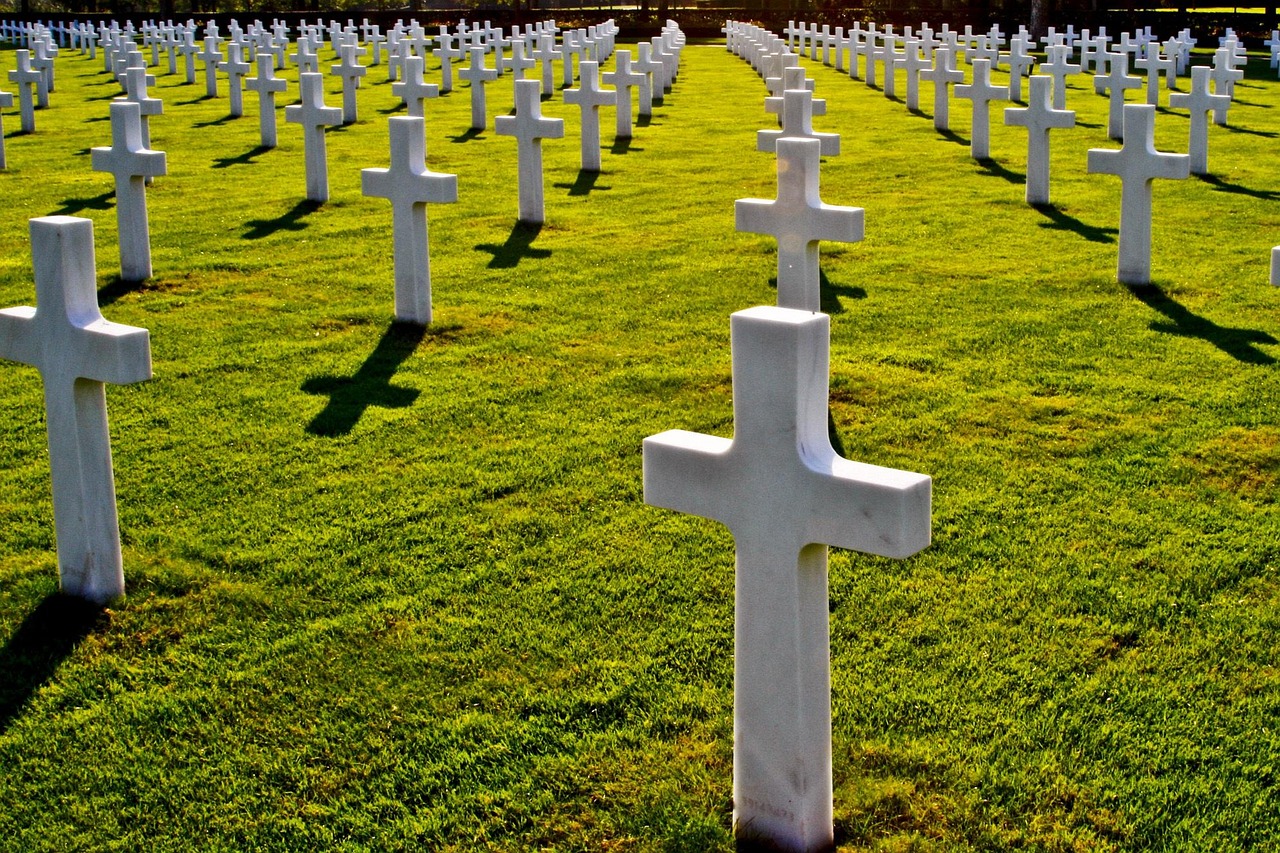
Unknown Civil War Dead Chatanooga (credit: Pixabay – giselaFotografie)

Daniel E. Barnard enlisted Sept. 4, 1862, Capatin Co. K, 88th Ill, Infantry; mustered out at the close of the war.

Erastus A. Barnard was drafted Sept 27, 1864; assigned to Co. H, 30th Infantry; mustered out June 4, 1865. He marched with Sherman’s army to the sea.

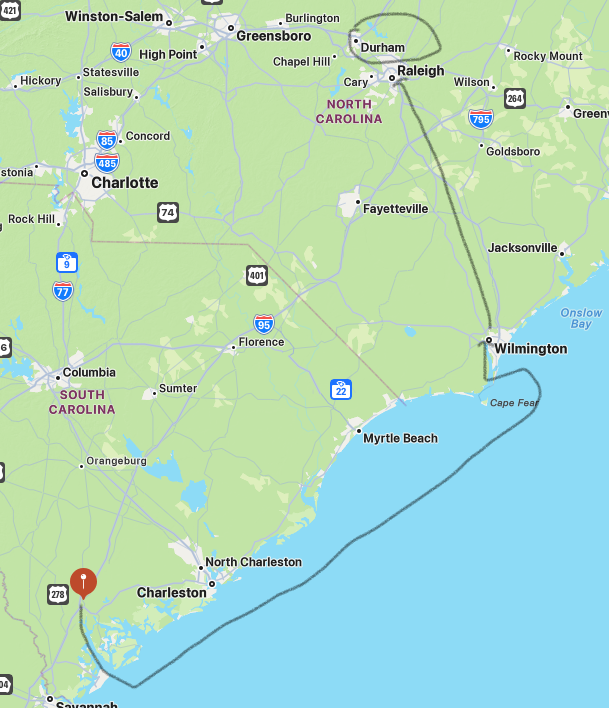
E.A. Barnard was taken ill during the march to Savannah. He remained with the army until Savannah was entered. He was in the hospital there from Dec. 24, 1864 to April 1, 1865. Thence he went to Pocotaligo; from there by boat to Wilmington; then marched to Raleigh and joined his regiment the day before Johnston surrendered.

General Joseph E. Johnston surrendered to General Sherman at Bennett’s Place, Durham’s Station, N.C., in April of 1865.

                Erastus A. Barnard married Mary L. Wilcox. Daniel E. Barnard was his brother.

                William Orson Wilcox (my ancestor) did not serve. I do not know why except, perhaps, he was left in charge of Sarah and his brother’s respective families.

*The Minié ball, or Minie ball, is a type of hollow-based. Invented in 1849 shortly followed by the Minié rifle, the Minié ball was used in the  American Civil War where it was found to inflict significantly more serious wounds than earlier round musket balls. (Source: Wikipedia)

Read Full Post »