
One small plant Don dug up in the forest has turned into a spreading clump of wild ginger ground cover. It is nestled beneath the forsythia, one of the rhododendrons, and a sword fern. I don’t think there is any use for it (I could be wrong, but it is not the same thing as the ginger root used in cooking – that’s from Asia). It does smell the same!

We just purchased this. I’ve tried to grow bunchberry several times and failed miserably, but this time I hope to succeed! Planted in a shady place with lots of rotten wood to latch onto. It has pretty white flowers like a Dogwood tree, but is a wild ground cover.

It is not blooming yet. But I have quite a little collection of this – one of my favorite roadside wildflowers. My husband is not a fan, but what does he know?
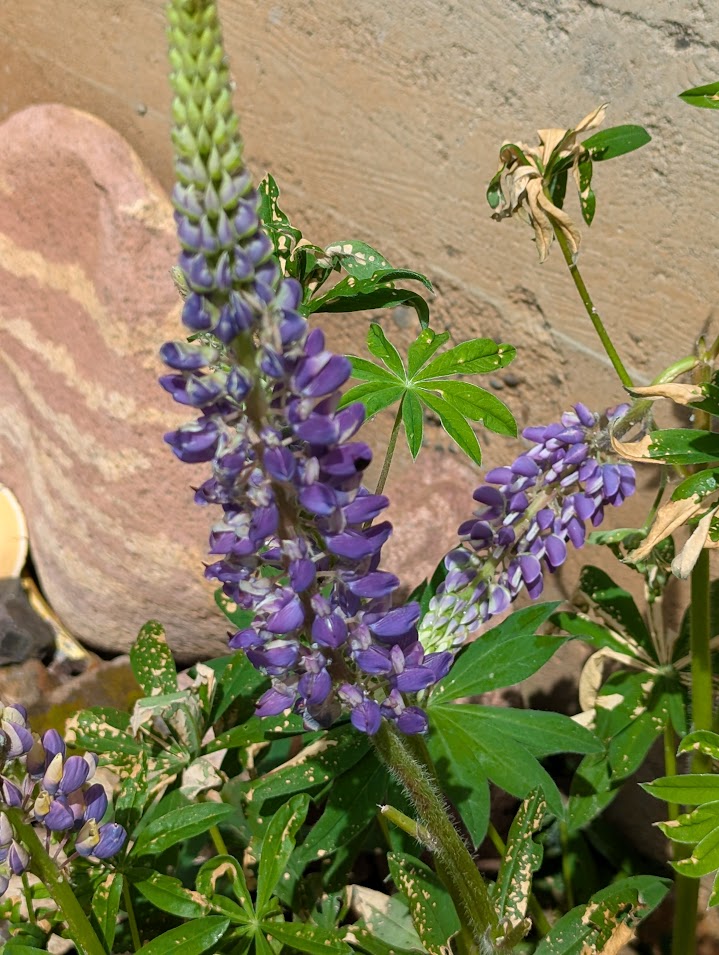
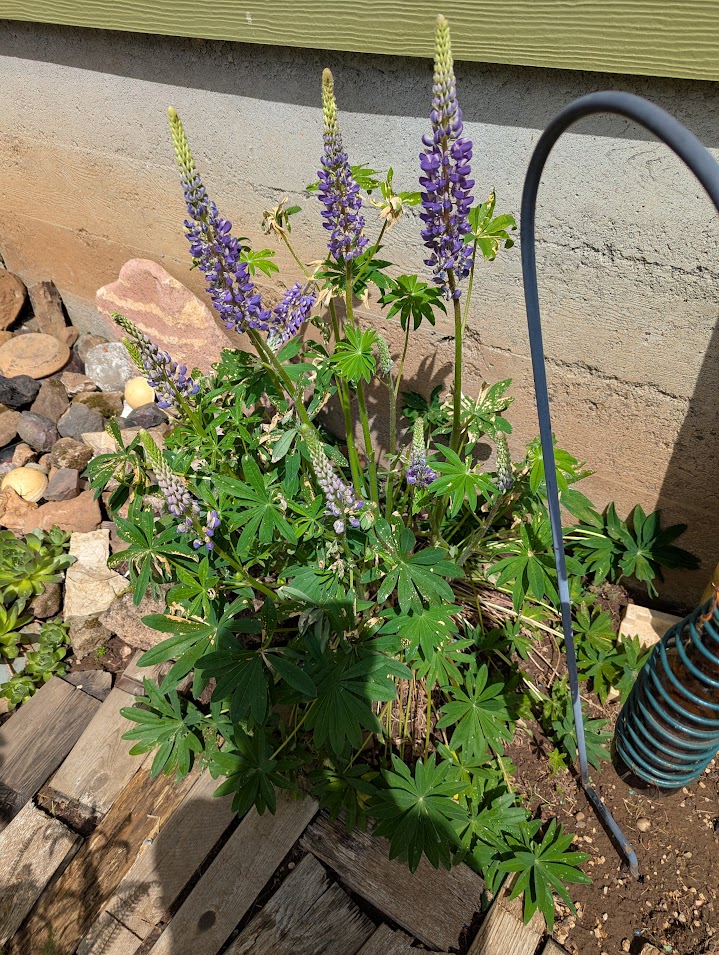
I can’t swear to the identification. It came in the same wildflower seed packet as the California poppy, and was just labeled “lupine”. Lupines are among my favorite wildflowers, and there are so many varieties! Unfortunately, it was infested with white aphids earlier and I sprayed it with an herbal concoction that burned the leaves (dang!). A better solution was to spray the nasty things off with a small stream of water. I keep checking and they have not re-infested, so… Here’s hoping. I have several of these throughout the yard as well.
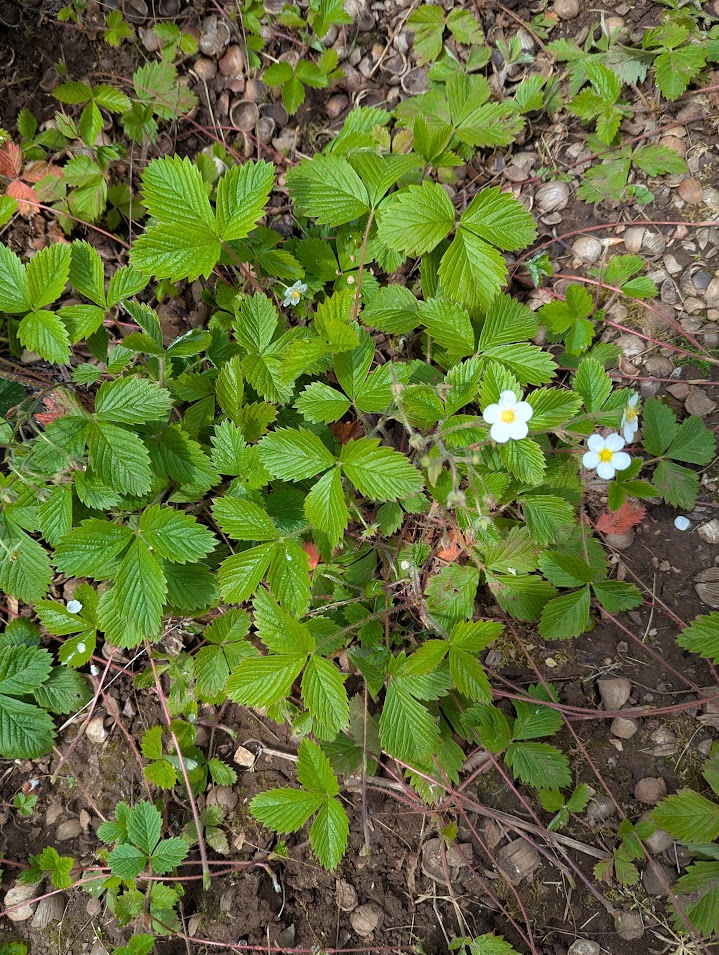
Another little ground cover that has exceeded! Don brought this home and I was dubious because of how quickly it spreads, but it hasn’t crowded out anything and sometimes there are actual tiny berries on it.

I wish I had a photo of this in bloom! This makes a great dried flower in the fall with its tiny white flowers with yellow centers. It spreads through rhizomes and I have to be careful weeding out the insidious grass that entangles it in the winter and spring. But when it blooms, the flowers are well worth it.

This one is a bit of a stray. I have moved it several times, trying to find the right spot for it to thrive – and maybe bloom! Those long thorns are nasty little suckers! We dug this baby out of the roadside between Arlington and Hermiston, Oregon, on the Columbia Plateau. It is planted in sand, in a well-draining planter. I moved it to its present location (very carefully!) a year ago, and it seems very happy here. Whether or not it will ever bloom is a question: we might get too much rain for it to be that happy,
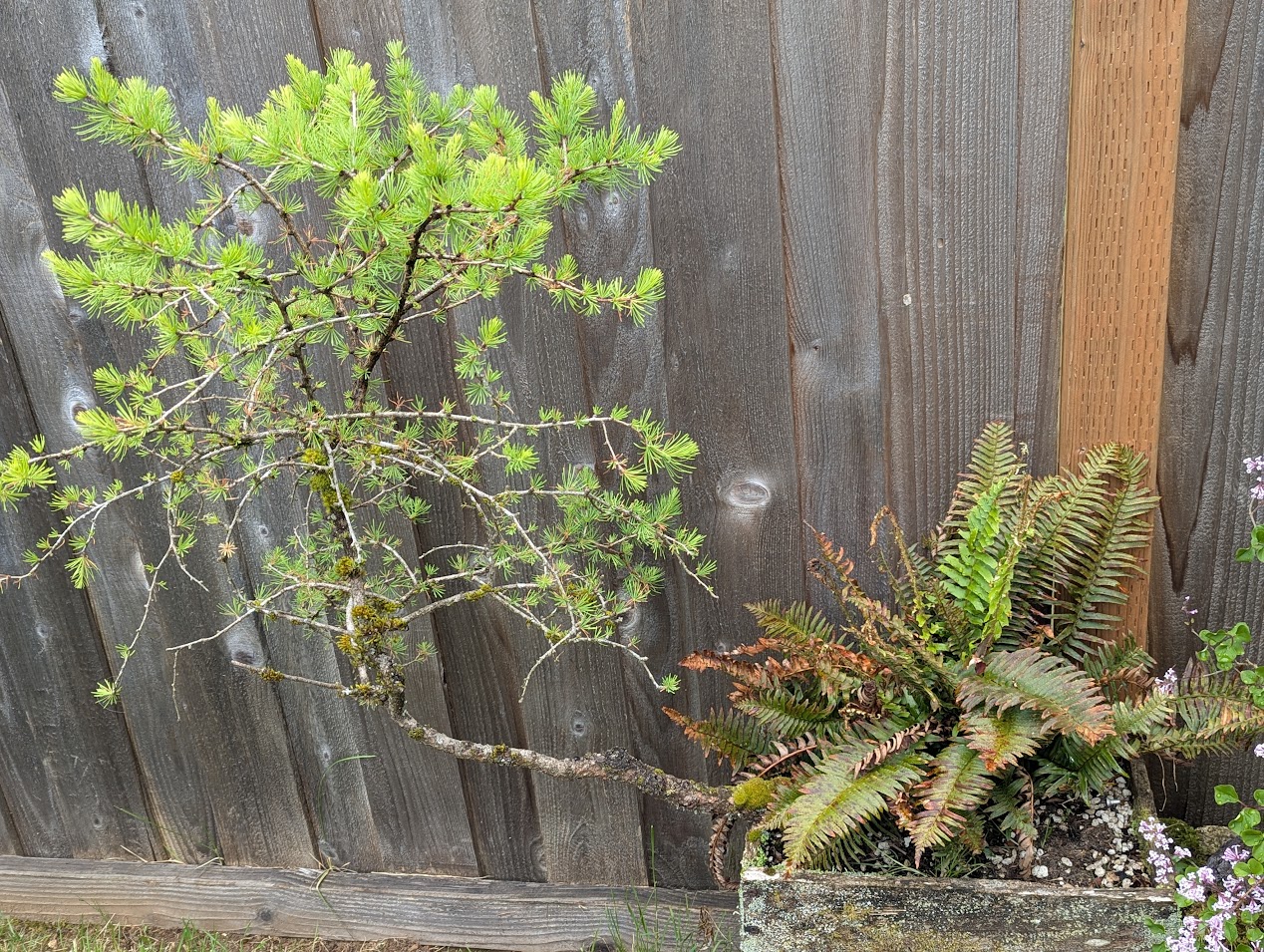
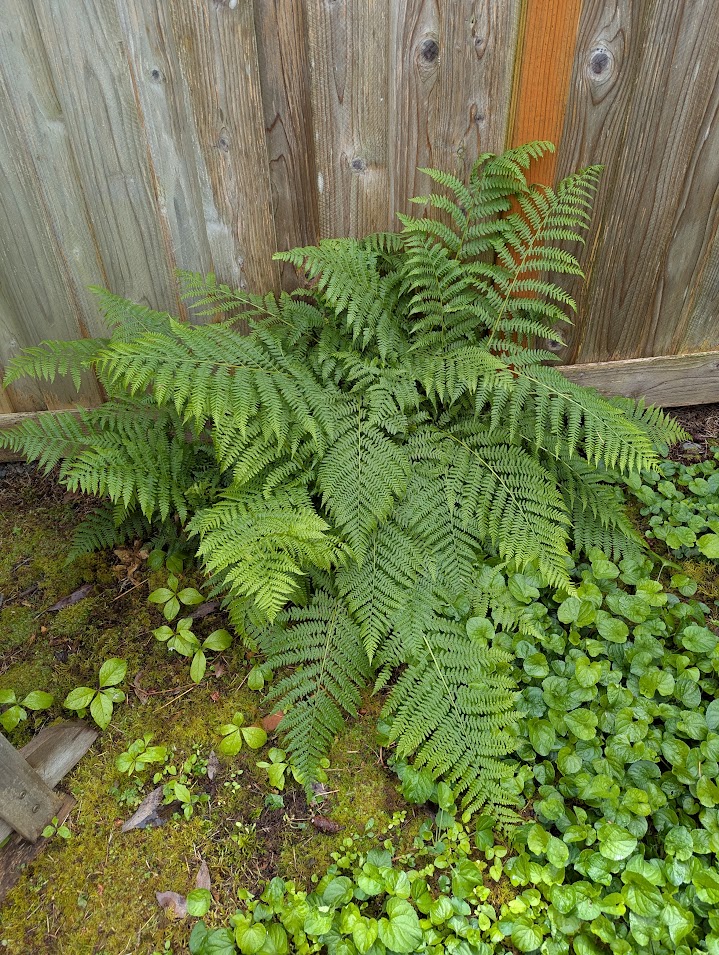

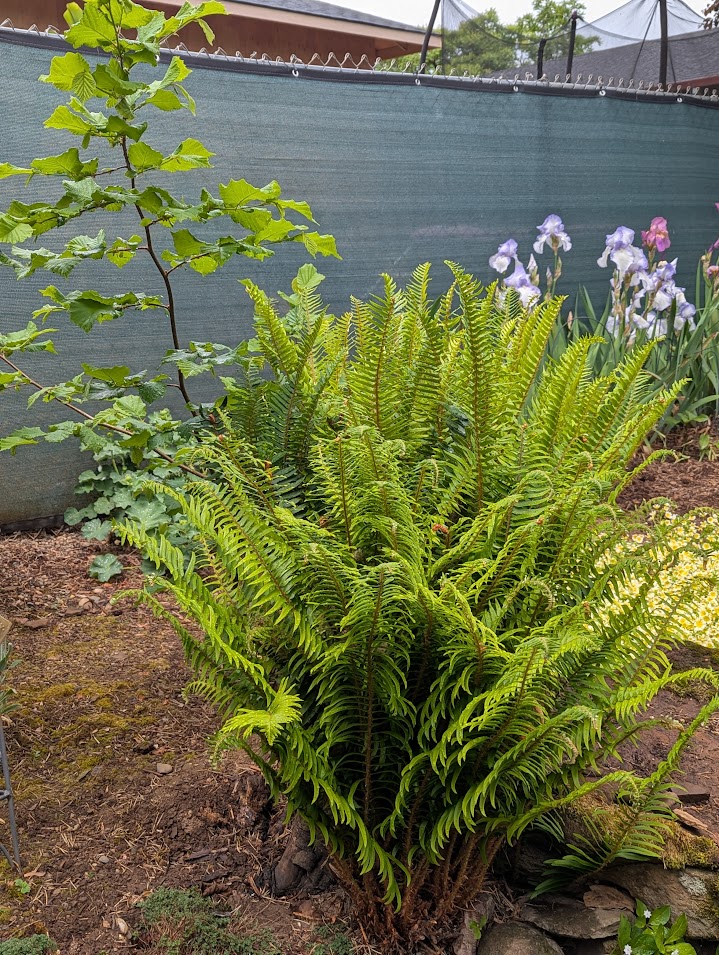
I don’t think you can have a yard or garden in Western Oregon without having to fend off the Western Sword fern! It can grow quite large. I have several that came with the house and I am slowly moving some of the off-spring to the north side of the garage where we have a rather inaccesible 3′ set back. It was lawn, but who wants to mow a lawn you can’t get to easily? Ferns are an easy answer: they grow naturally in this part of the world, they fill in the space, and don’t need extra watering! They can be ignored.
The Lady fern came from a single plant my husband brought home. It dies back completely every fall and comes back even bigger every spring. The deer fern is just an interesting border plant, also something my husband dragged home for me to adopt. I think I helped him with that one. ;P
And the western larch (known colloquially as a Tamarack) is just one of those Bonsai trees Don dug up in the middle of a USFS road and made into a Bonsai. I added it to this gallery because of the fern in the pot: how easily the Western sword fern attaches itself!
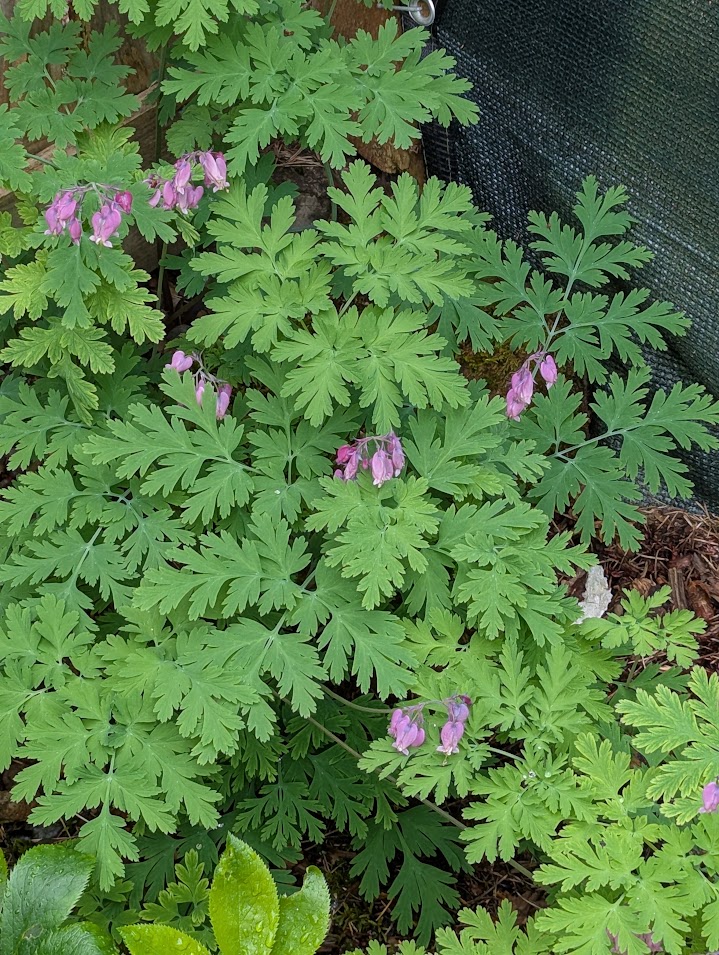
Where ferns grow, Pacific bleeding hearts grow. They spread via rhizomes and they spread profusely. Some may even refer to them as weeds. I rip them out enthusiastically when they grow into areas where I don’t want them. They look best in late winter and early summer, then the heat comes and they fade quickly: wild bleeding hearts like the moist, cool, shade of the Western half of Oregon. And I happen to like them better than their commercial cousins with the larger and more colorful blooms.

It is easy to get a red elderberry around here, but I grew up with blue ones. I don’t know if there is any use for red elderberry outside of herbal ones (I could be so very wrong on this, just speaking from my experience, not knowledge). Blue elderberries: syrup, wine, jelly… My husband swears they make the best syrup, I swear by chokecherry syrup (but we don’t have chokecherries in this climate). I’m not going to go into the benefits, but a great place to start looking is on WebMD. I do think I will try dyeing with my elderberry this year (hoping I get flowers and berries! It looks very healthy).

I am going to stop this post with this plant: Oregon hazelnut. A filbert tree. Oregon and Turkey are the leading producers of hazelnuts. Roast them, dip them in chocolate, use them in your beer brewing. This bush planted by birds. It is around 20′ in height, has been pruned back by neighbors and us, and all the shells are empty of meat. You need two trees to have nuts form inside the shells, something we learned after watching this on take over our corner for nearly 20 years. A year ago, my husband brought home two small hazelnut starts from the woods, and (hopefully) (the squirrels and jays are praying) we will eventually get nuts.
I have more Natives in the yard. I just planted several. And I haven’t started on the herbs. 🙂

 Jaci Dawn