Feeds:
Posts
Comments

Archive for August, 2010

I promise: just a couple more desert posts. I’m merely trying to prolong my visit to the desert and pretend I am not sitting here in the city, surrounded by asphalt and traffic. I am also in denial that the shadows are getting longer and the days shorter and cooler.

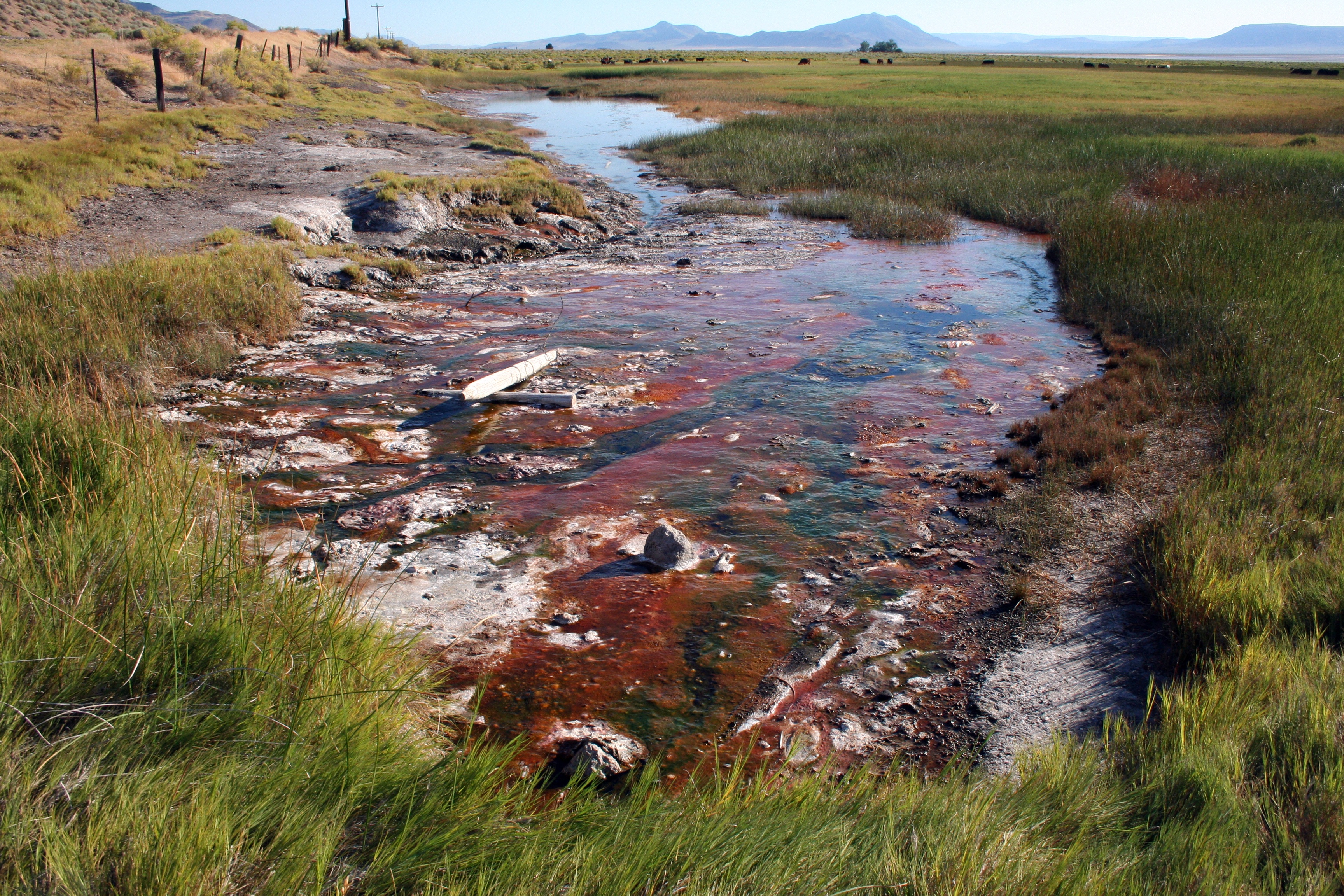
I’m going to pretend all I have to do is get in my rig and drive on down to the Alvord Hot Springs…

The hot springs are a place of gathering: you never know who you will meet there (or if they will have clothes on – best to use some discretion when you have children with you). Part of the springs are walled in and most of the nudists move into the private tub when they see people with children approaching – we’ve never once had a bad encounter with rude people. Met some strange ones, but strange is what the desert is all about.

I like to think of the hot springs as a melting pot of humanity in the center of absolutely gorgeous nowhere. We usually go early in the morning when one is less likely to meet other soakers. Not that we’re anti-social or anything: we’ve met some of the most interesting folks in the hot springs and they’ve come from all walks of life. The equalizer is we all come to the desert because it draws us there: archaeologists, ranchers, cowboys, land-sailers, upland game hunters, cougar and antelope hunters, bird-watchers, neo-hippies on a road trip, European travelers exploring, arthritic men and women looking for a cure, families and singles, men and women.

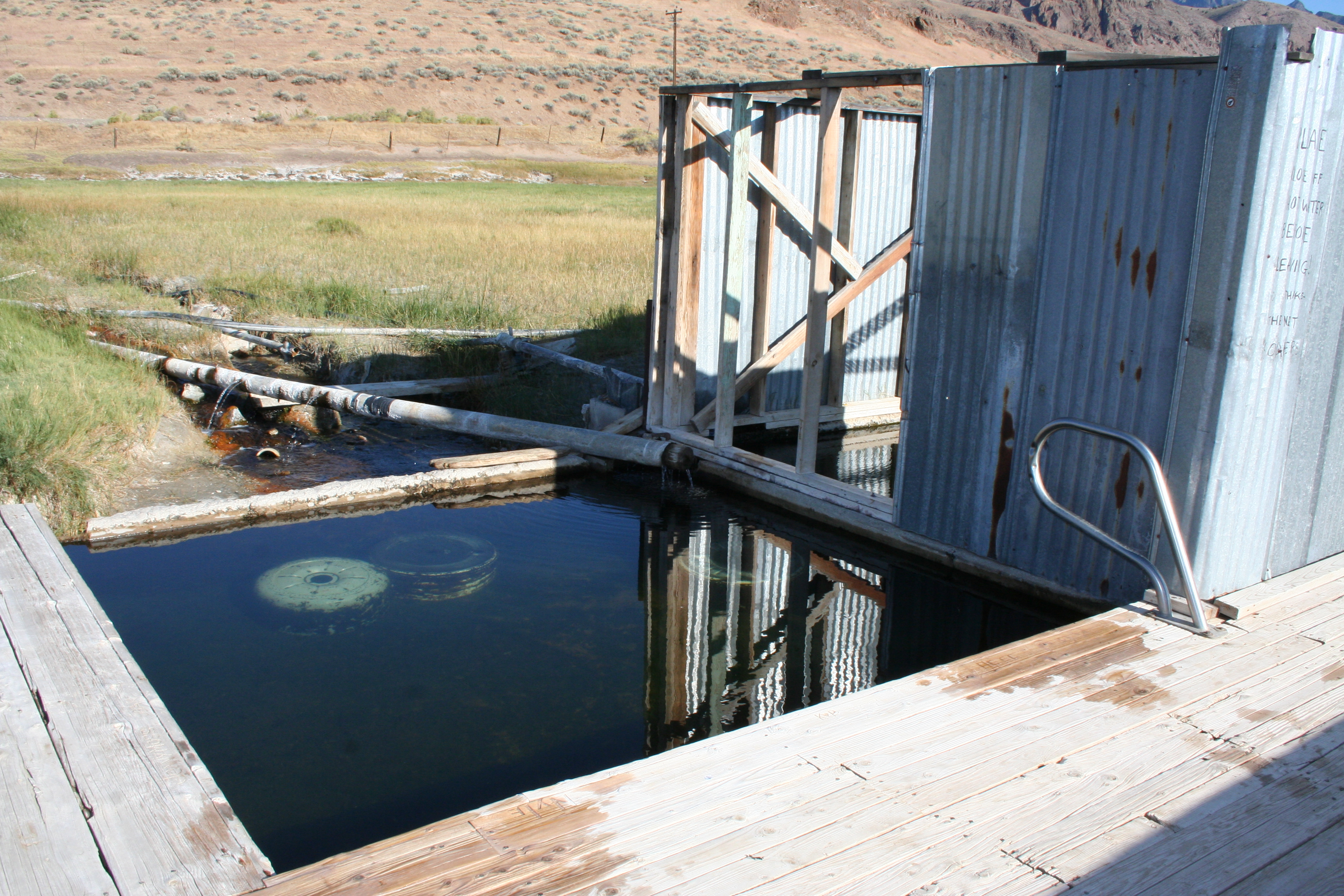
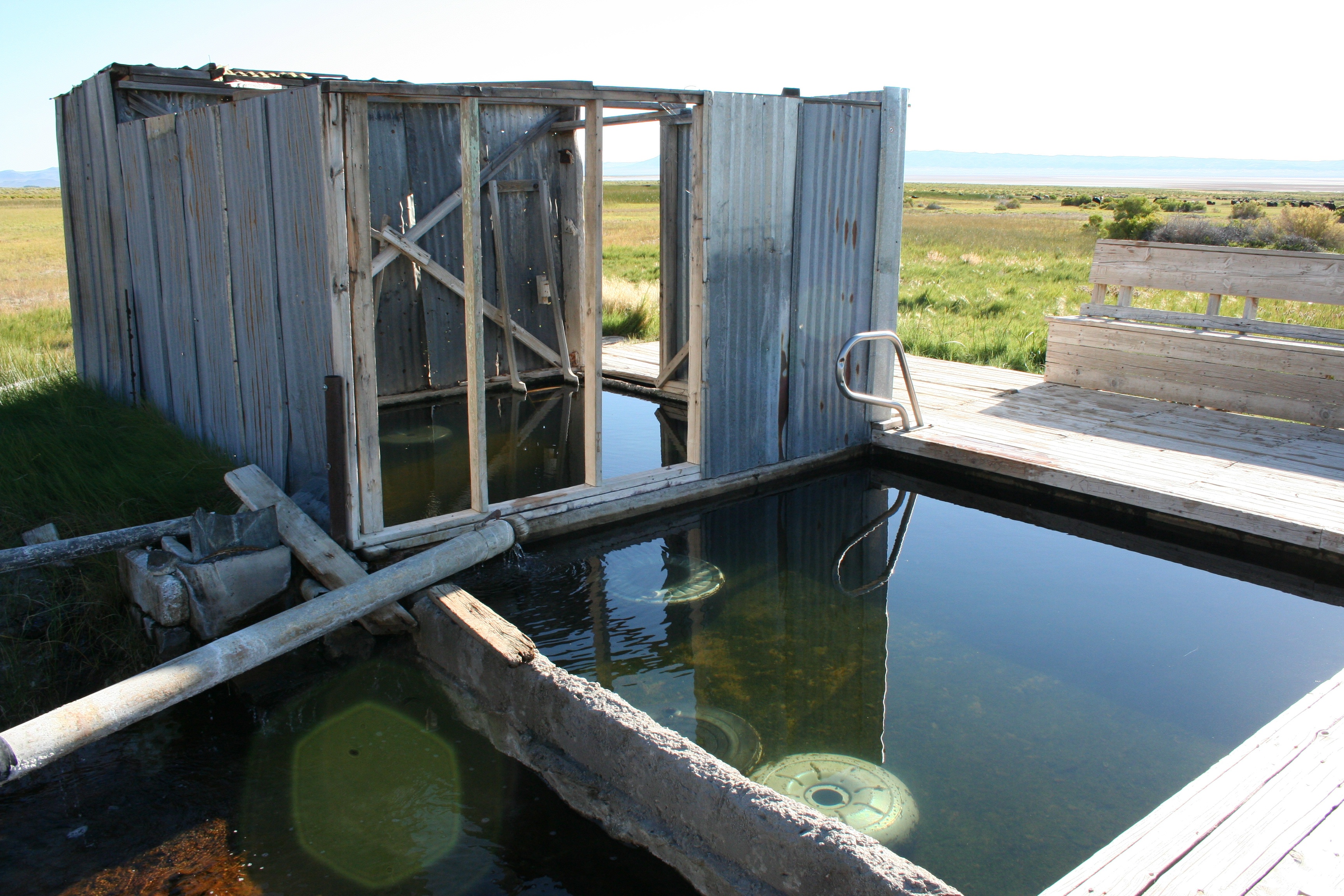
Private parties like the land sailers and upland bird hunters maintain the tubs and they are open to the public (free) year-round.

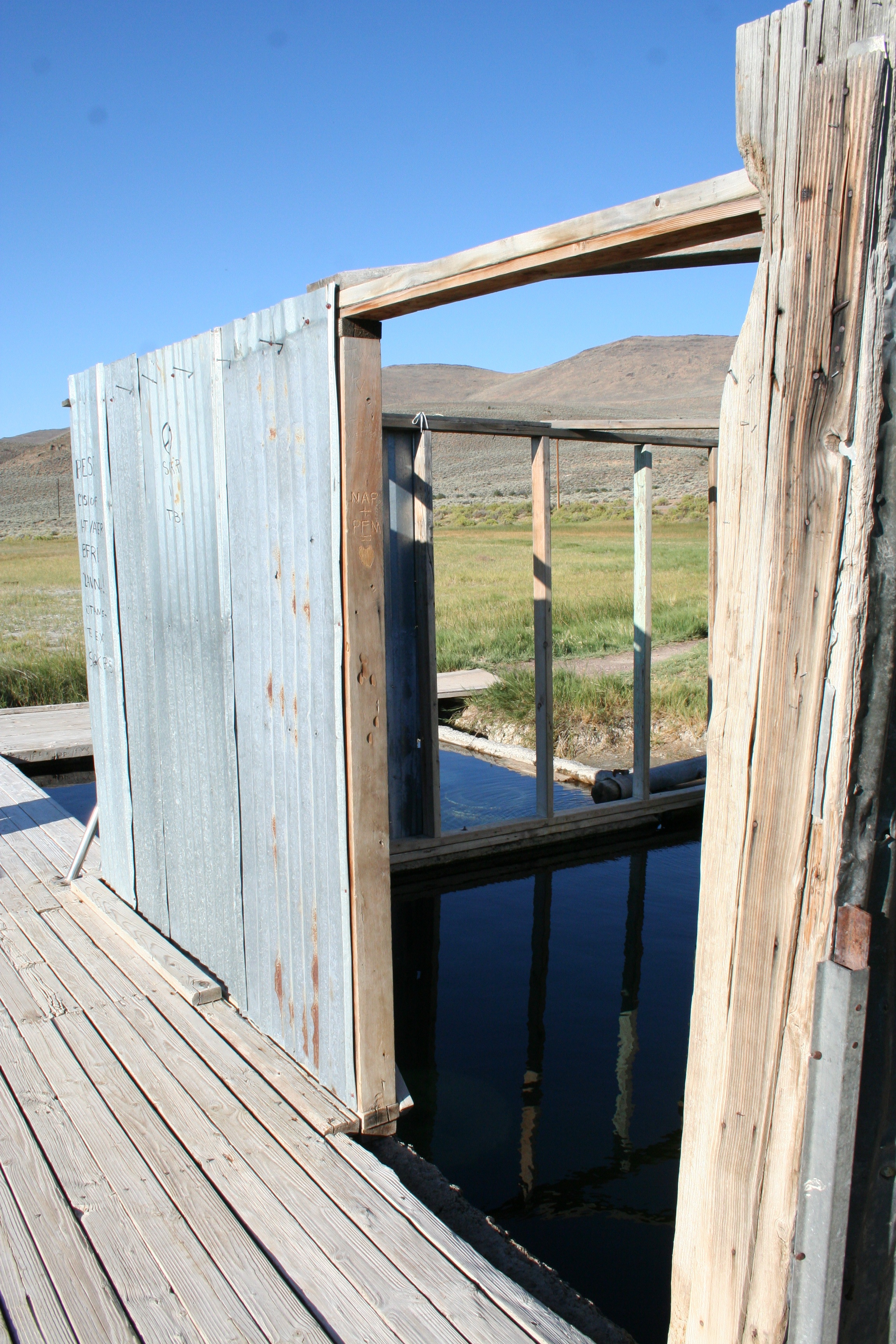
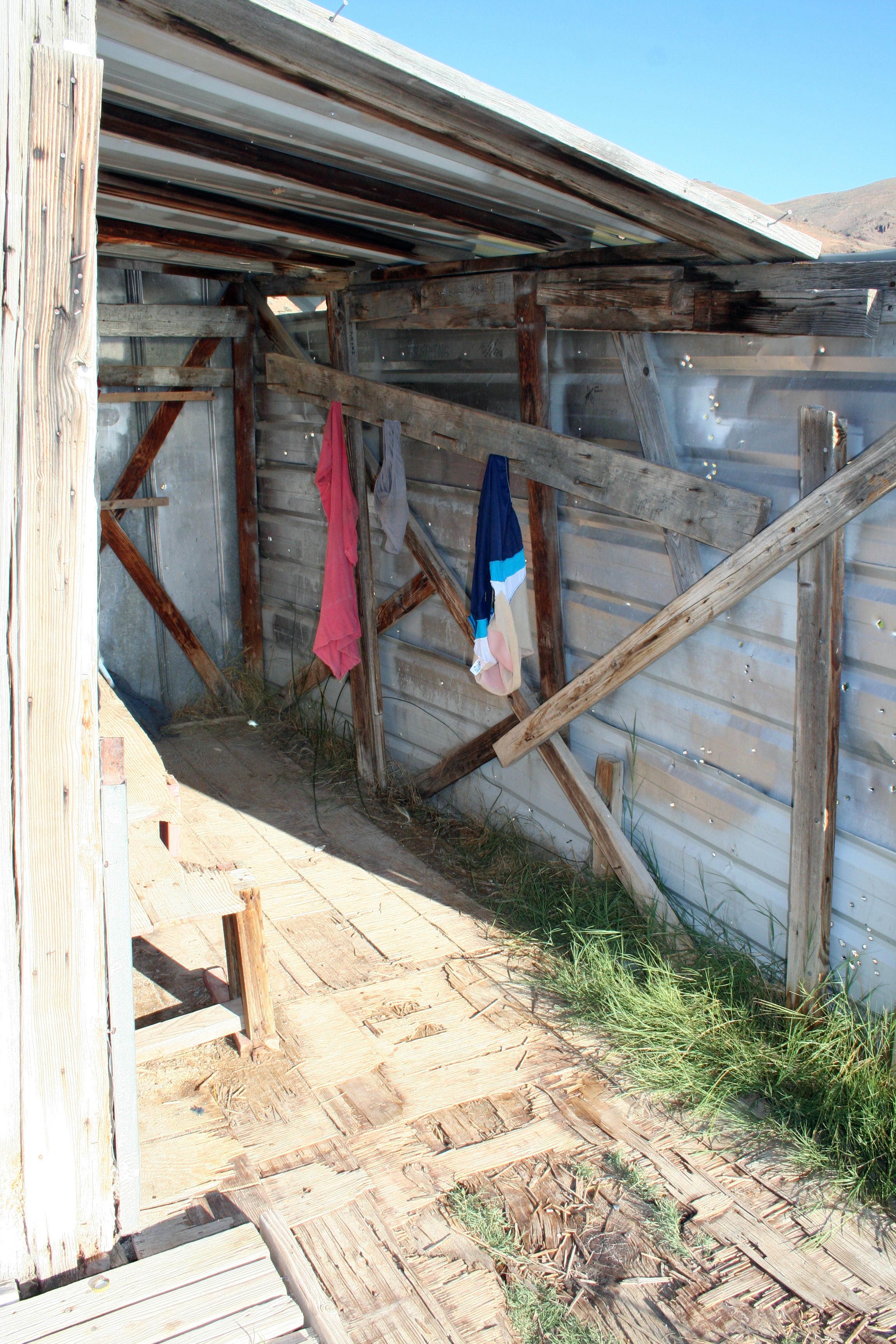
Someone got drunk and forgot their clothes in the “dressing room”. The “door” opens to a vast six-mile wide desert view: it is VERY private except for the bovine observers.

Closing off the hot water means plug the pipe from the hot springs otherwise the tubs get wayyyyyyyy too hot.
After soaking, it’s time for a drive onto the desert floor.
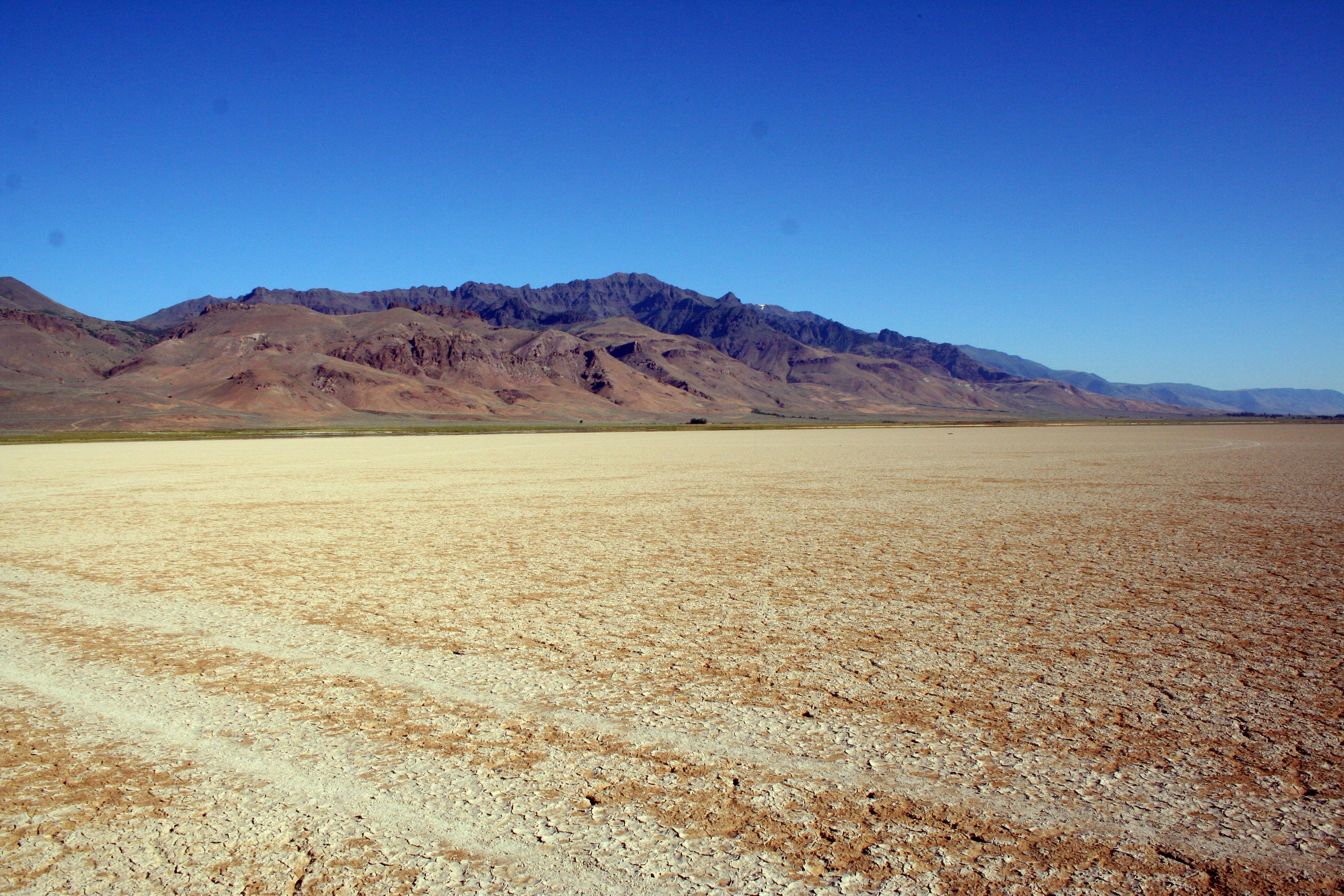
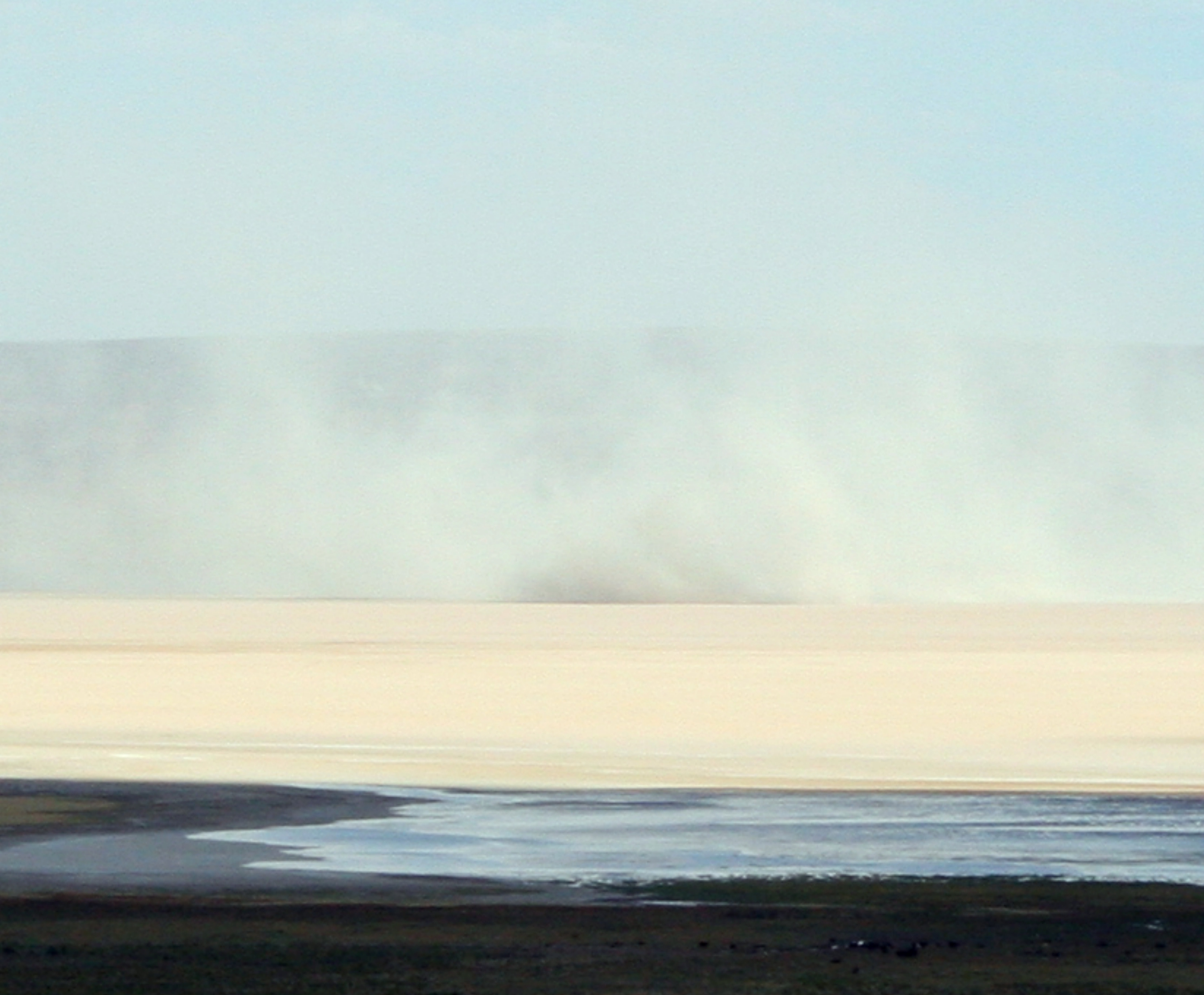
The playa is 11 miles long and 6 miles across. We didn’t even go half-way but I can assure you that it all looks like this. No wonder they land-sail on this! It can get brutally hot or brutally cold here.

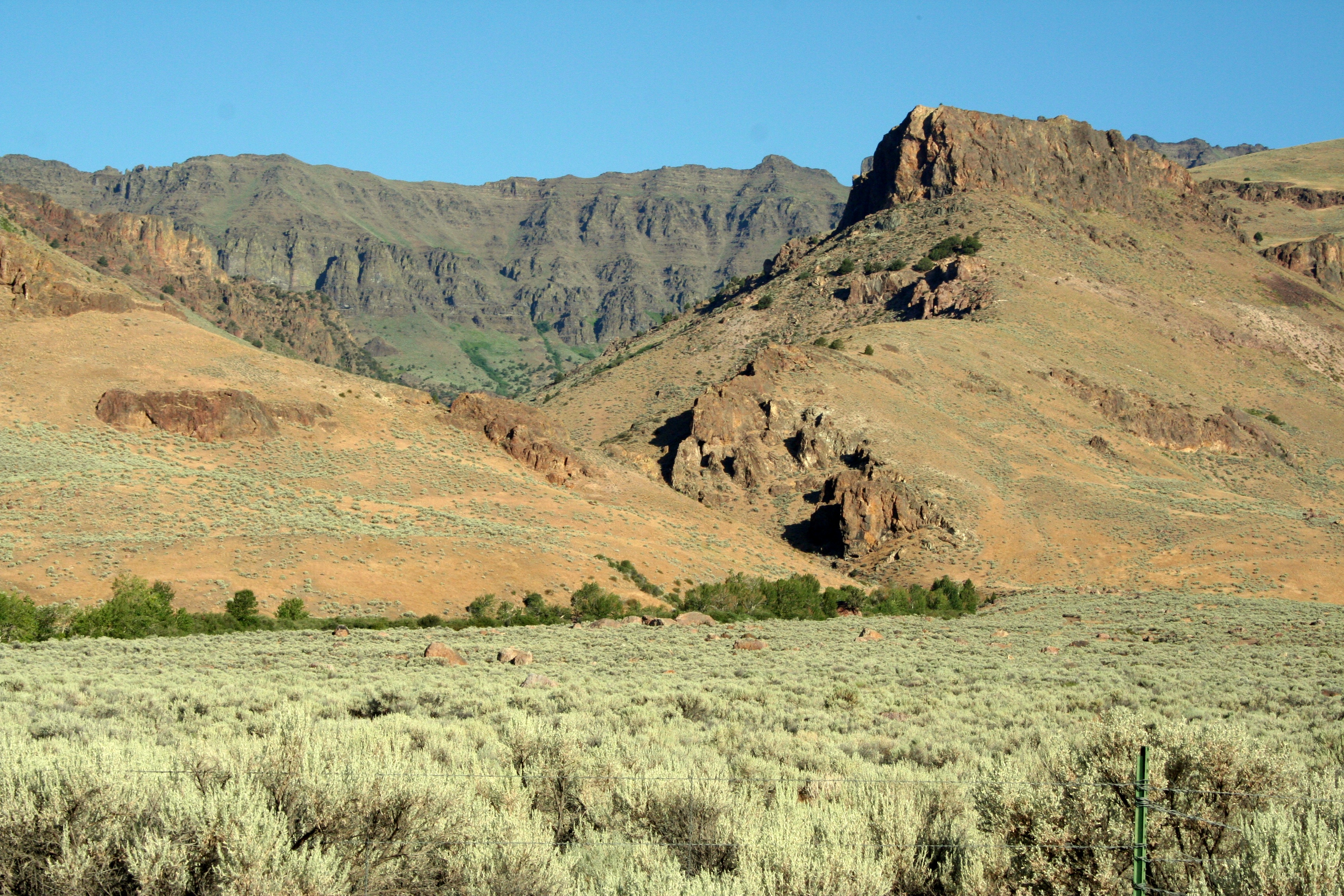
That’s the east view of Steens Mountain. The desert is at 4,000 feet (1200 m) and the Steens is 9733 feet (2966.6 m)

After all this fun in the sun, it is time for a run down to the town of Fields (population 86 in 2000) and to Fields Station for a World Famous Milk Shake.

I intend to linger in the desert for a few more days just to dry out my skin.

Read Full Post »

Birds

I wish I could set up a bird blind and photograph birds every time I go camping. Once again, I am faced with the “I need a bigger/better/faster camera” as I seek to talk about something I saw. Birds, this time.

There are always birds and sometimes you never see them (like the mysterious warbler of the Cascades. I still don’t know what bird it is except that it is probably a drab little bird that can hide well but has a beautiful melody). Sometimes they just move too fast: a hummingbird that zeroes in on something red in camp and comes in to hover and investigate and just as quickly buzzes off. The hawk that nearly landed on the big rock by Don’s head before realizing there was a human being and two big dogs right there, so it did an acrobatic reversal before Don could get a good look at it.

We had plenty of bird visitors out on Pike Creek. There was a female black-headed grosbeak that was busy making short work of the few chokecherries left.

I could get close to her (grosbeaks are normally quite friendly) but she refused to pose. She was rather gluttonous instead.

We were visited by sage sparrows as well. Driving in to Fields Station one morning, we counted ravens, crows, turkey vultures and a number of unidentified hawks as well. The Western meadowlark is a favorite of ours: the radio station out of Winnemucca always opened business in the Spring to the song of the meadowlark. We also saw some Northern shrikes hunting grasshoppers. Those are striking birds in more ways than one (after I realized I just punned): pretty to look at and quick to kill small creatures that it impales on something sharp, like barbed wire.

Of course, we both were watching for Mountain bluebirds (the Nevada State Bird) and we saw several flocks in the juniper-and-pine forests of Fremont National Forest.

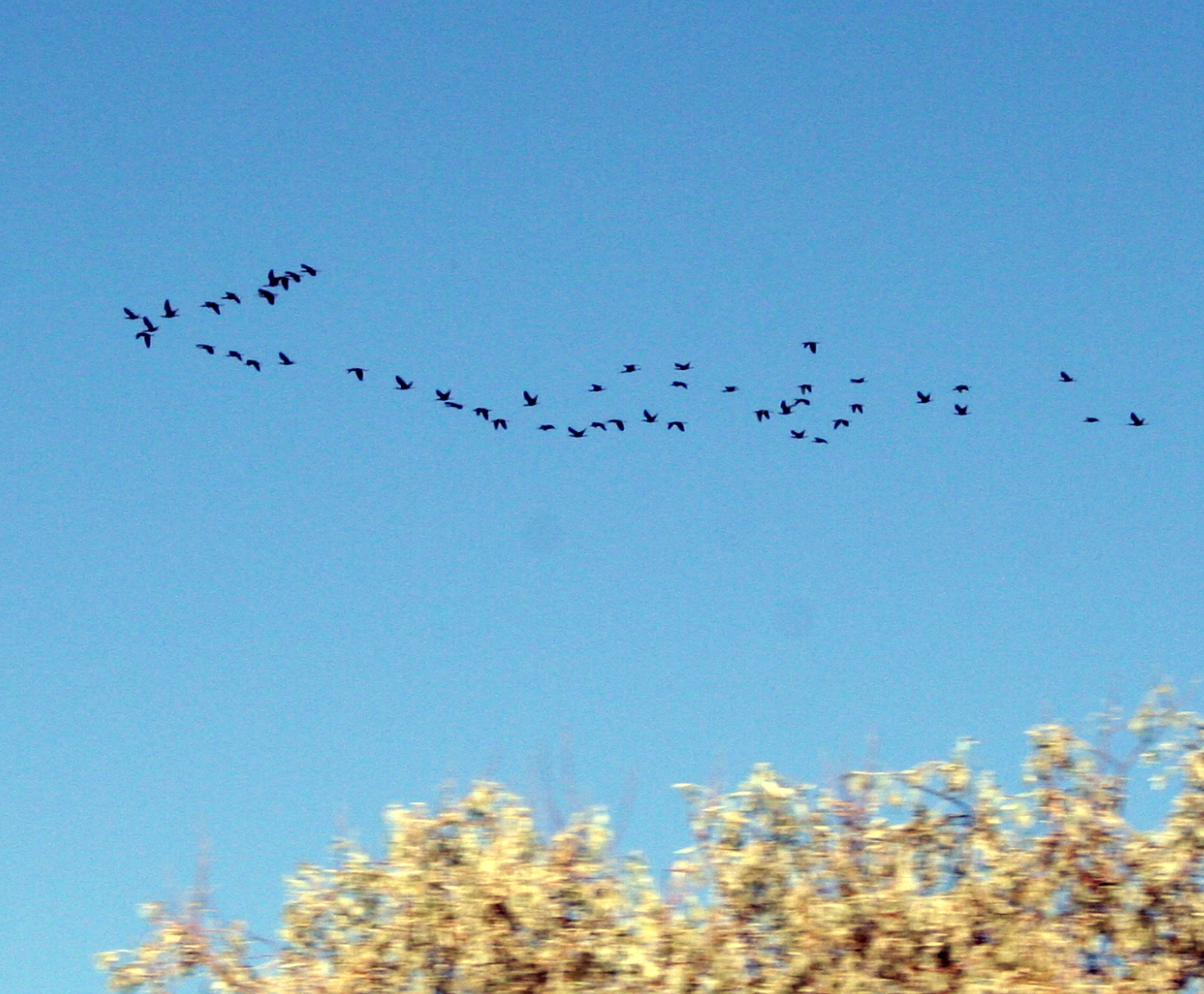
On the same drive in to Fields Station that we counted birds on, we noted a huge flock of something flying south along the Steens Mountain. At first we thought we were watching Canada geese, but upon closer examination, we determined we were following a large flock of white-faced ibis.

I took that from the car as we kept pace with the ibises. I always want to call them “black ibis” because they are large black birds with a little bit of white through their eyes. They’re pretty common on the marshes of the Malheur Wildlife Refuge and in the grass by the Alvord Hot Springs.

One morning, Harvey and I took a walk down through the empty campsites to where the house-size boulders are all tumbled together. The creek takes a turn south at that point and the tree line follows the creek, so the boulders are shadeless and uninviting as a camp site. But they are unusual and if you climb onto them, it’s a wonderful view of the basin.
Shadows were still long but the sun was warm and I was enjoying the promise of a hot day. Besides, Don was back at camp trying to change a flat tire and I didn’t want to be anywhere near. But that’s a story in itself: a long drive to Burns to get a flat changed on the day we had planned on going hiking.
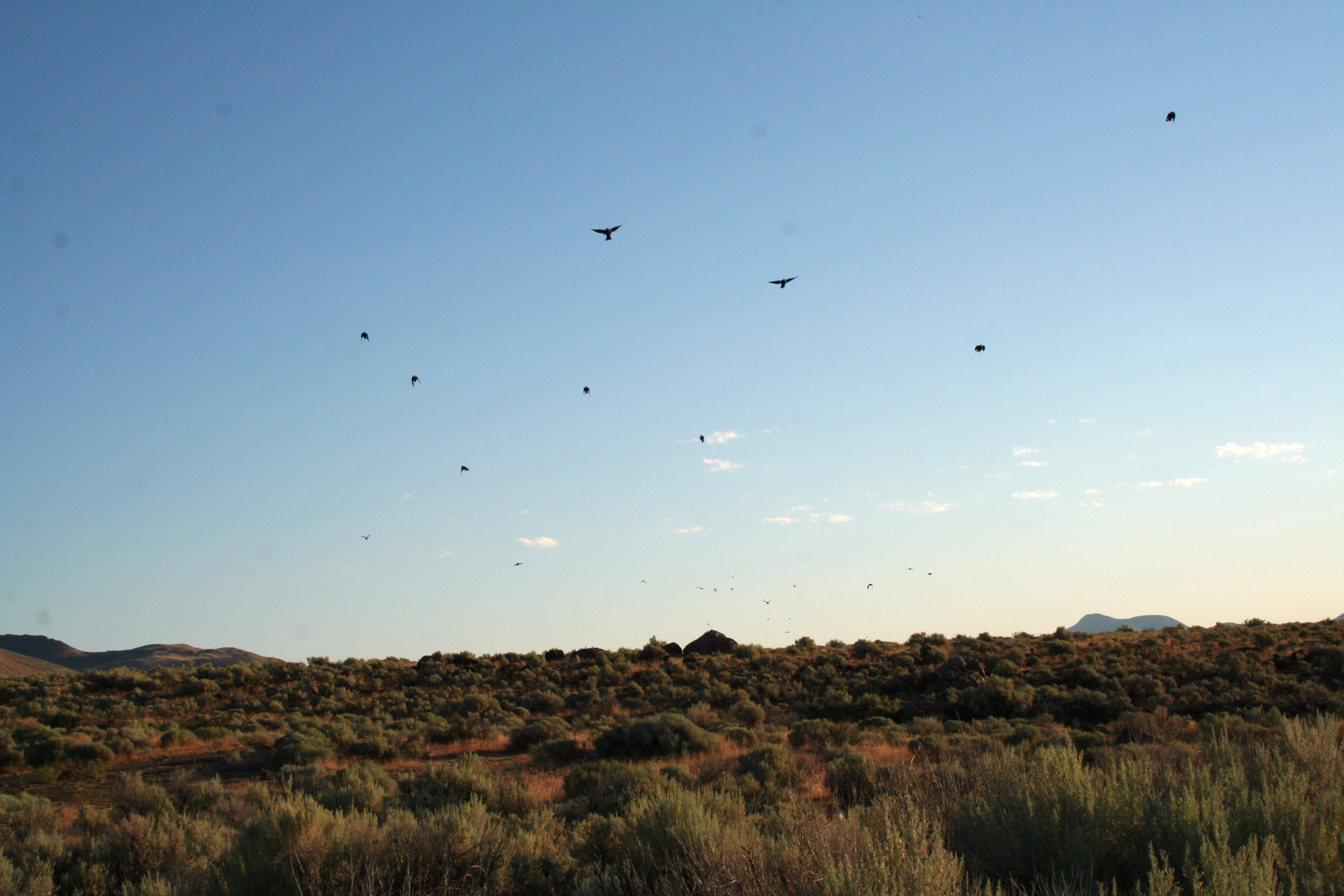
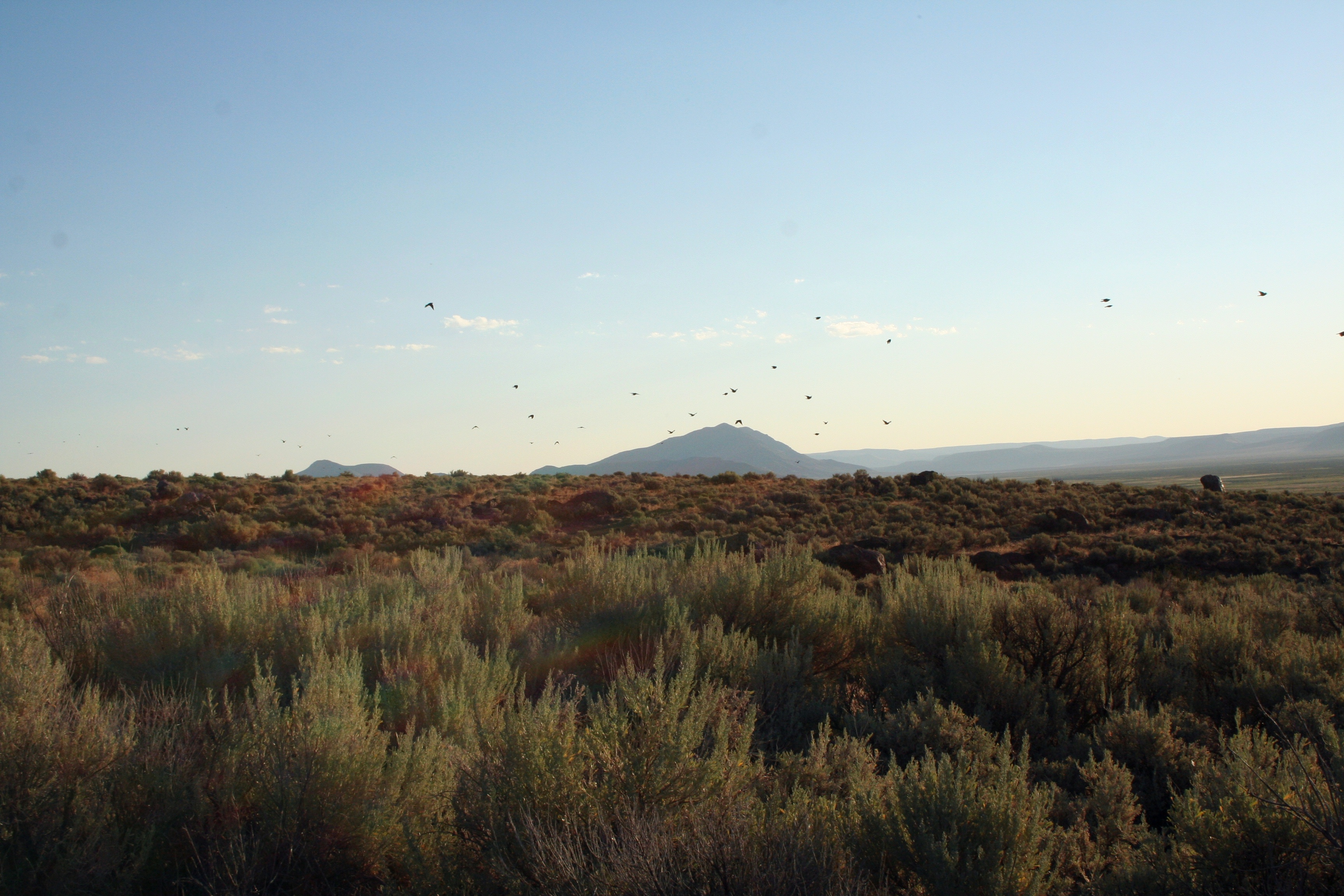
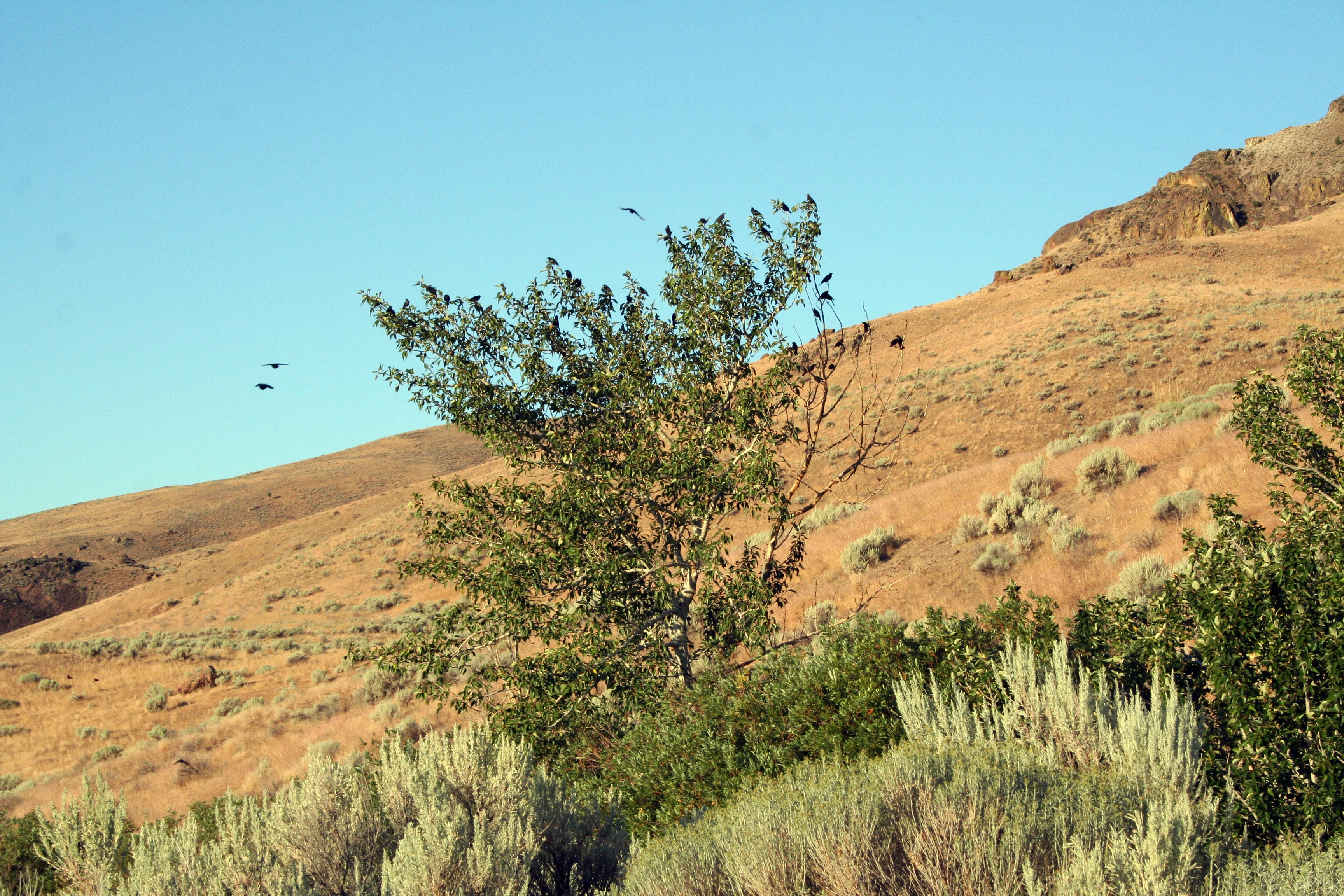
Standing among the rocks, I noticed a flock of black birds coming overhead. And another flock. And more.

It was a little disconcerting to see so many black birds (there were upwards of hundreds) flying over the sagebrush toward me and settling into the cottonwoods around me. I had a momentary flash that I was Tippi Hedron and someone was watching me, yelling “DON’T OPEN THE DOOR!”.

Alfred Hitchcock aside, it was just a huge flock of mixed blackbirds (Yellow-headed, Brewer’s, and Brown-headed cowbirds) chasing grasshoppers.

There are some elusive birds out in the Alvord country. Further up the creek, we have seen green-tailed Towhees and Don nearly always finds his favorite: the Indigo bunting. Small wonder that we should encounter a hiker with large binoculars who claimed he was a bird-watcher! (These guys always mystify us: they set out in the afternoon of a hot day, hiking in the full sun, and making for the steep reaches of the canyon. The birds are resting like all other wise creatures. If you want to see birds – or any other creature worth seeing – you get up before the sun and hike in the cool of the day when the rattlers are still snoozing. But that’s just us…)

Possibly my favorite encounter came early one morning on a camping trip not so many years distant: we were awakened by sounds in the cottonwoods overhead and a who-who WHO who-who WHO round of calls. A pair of Flammulated owls settled down to peer in the car windows at us, turning their heads and exchanging comments about those crazy humans parked in their favorite cottontail hunting grounds.

I asked Don if he thought we would ever see the owls again. We heard a pair of Great-horned owls at another campsite, but I wanted to see or hear our Flammulated ones again. Don was doubtful that we’d see the owls, but I held out some hope anyway. And in the wee hours of our last night above the Alvord desert we were awakened by the exchange of who-who WHO? who-who WHO? as a pair of Flammulated owls settled into the cottonwoods above it.

I rolled over and smiled, content that God was still out there, watching over us and granting us small gifts. I think maybe He comes dressed like a Flammulated owl.

Read Full Post »

Of Bugs

I love insects for the most part. And a healthy high desert stream has a lot of insect life.

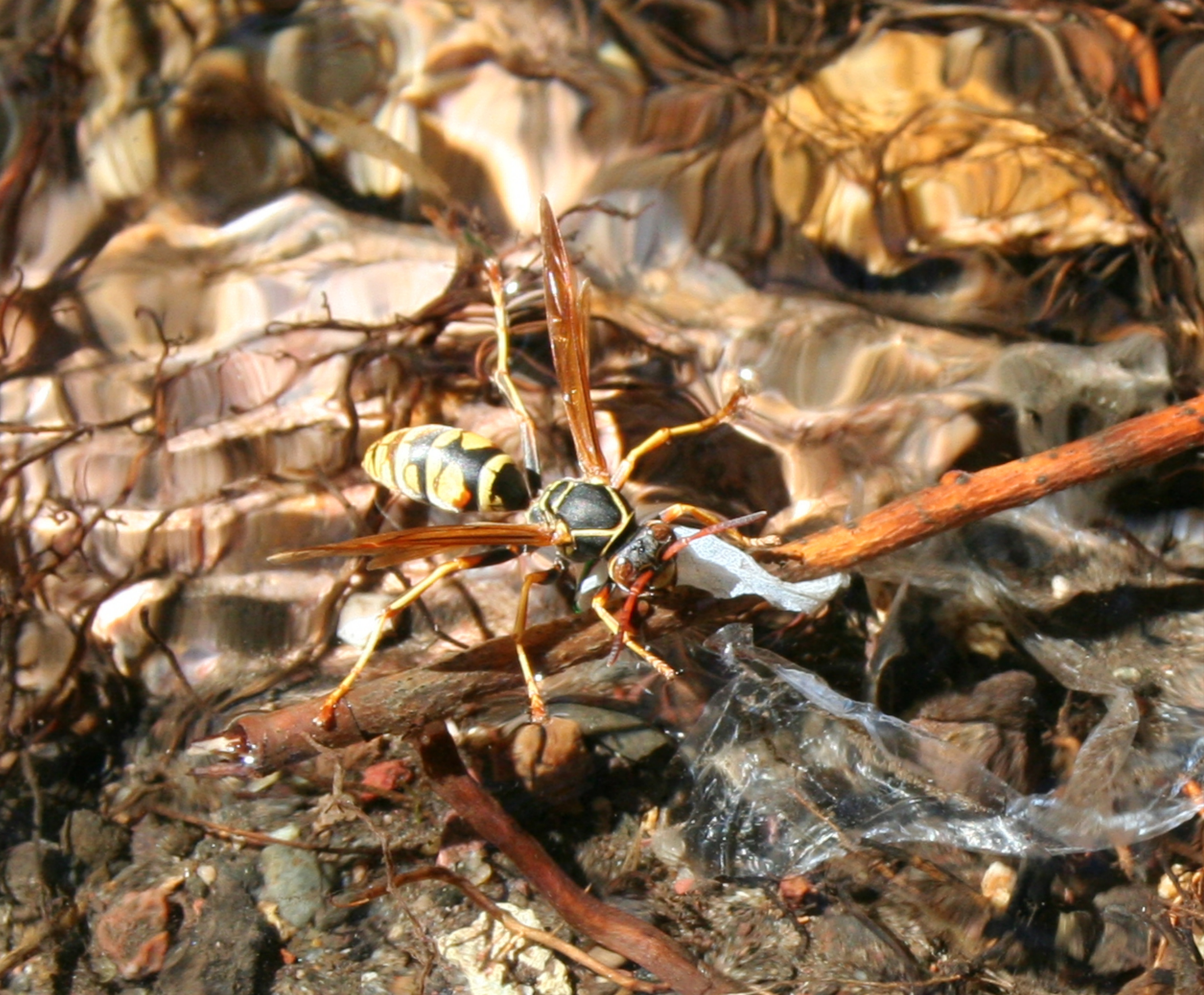
Apart from the nasty mosquitoes (tiny buggers that leave fluid-filled welts), most of the insects we encountered were fairly benign creatures (to humans and dogs). Well, the western yellowjackets (Vespula pensylvanica) are probably not entirely benign to humans and dogs (especially Murphy) but they weren’t trying to attack anyone and Murphy didn’t annoy them enough to get stung. Harvey did, but he’s not allergic and he got over it rapidly.

The wasps were thirsty and came to the water’s edge time after time, delicately balancing on their six legs atop the water’s surface and floating like the water skippers.

Other insects (like the grasshopper infestation) tend to sink and drown, but the yellowjackets are like tiny rafts on rippling water. I assume they are somehow storing water that they take back to their nest to distribute to the wasp grubs, but I really have no idea. Any takers?

Lorquin’s Admiral is a very common butterfly of the high country.

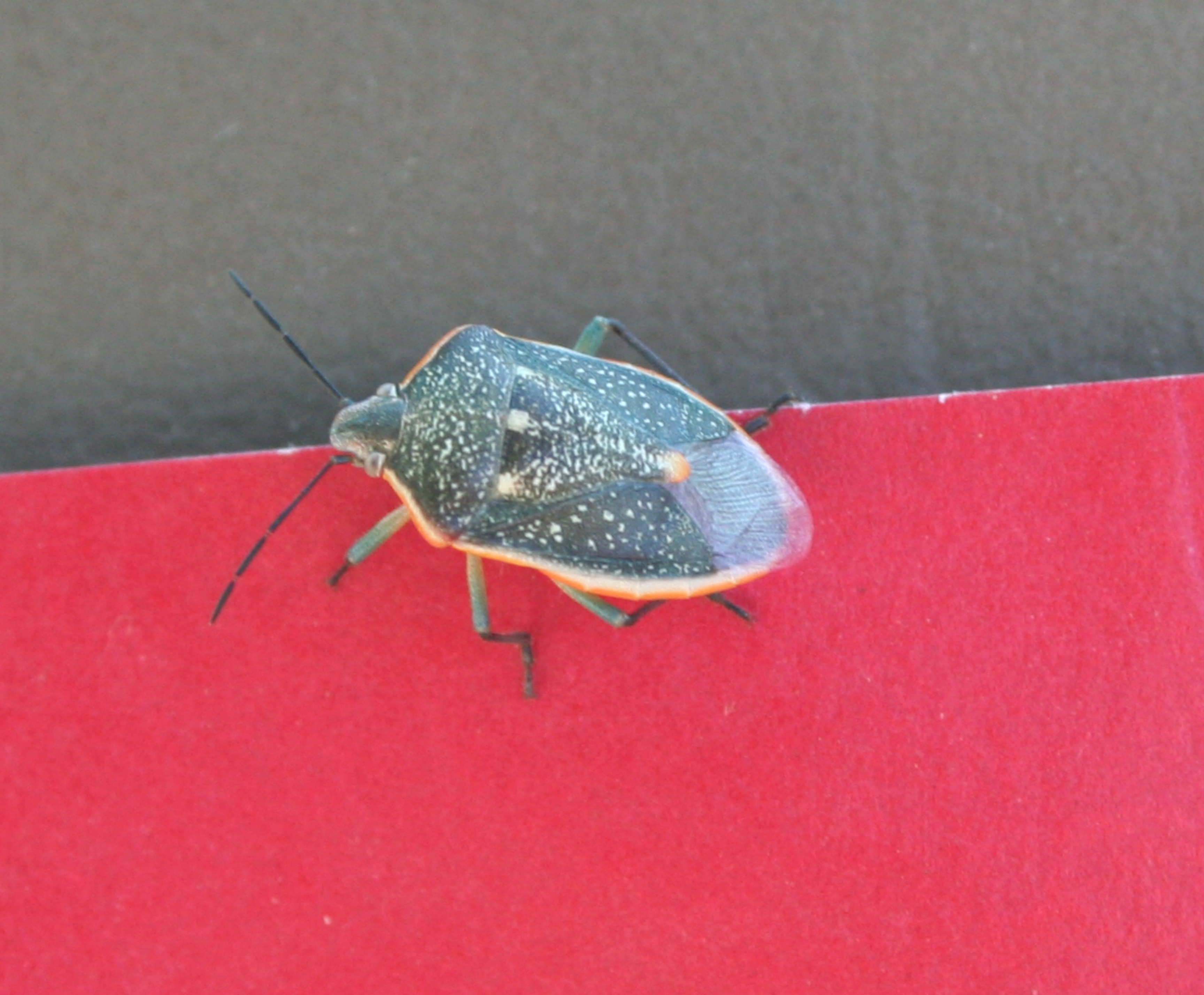
This stink bug hitched a ride into Field’s Station with us. I looked it up and discovered it is a Say’s Stinkbug (chlorochroa sayi).

Whatever this caterpillar will be when it grows up, it likes cockleburs. It didn’t move much the entire few days we camped by the big rock. Colorful fellow but camoflaged by the pink rock and colorful lichens.

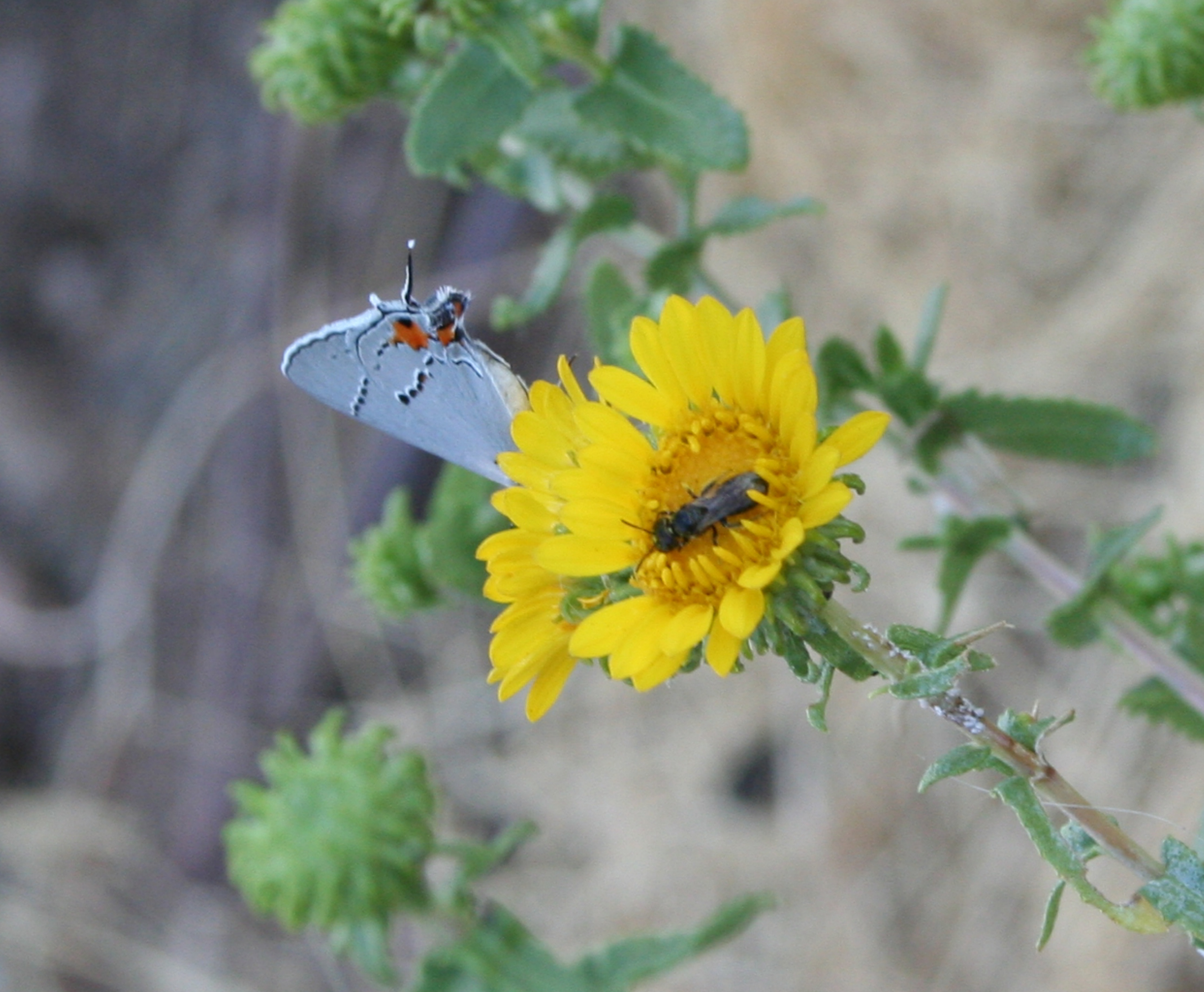
This tiny Gray Hairstreak (Strymon melinus) liked the cockleburs, too. And yes, it really is called a “hairstreak” – if only the grey hairs on a human head could be so striking!

This little butterfly is hard to capture with a camera. Great Basin wood nymph (cercyonis sthenele).

While I was chasing the Great Basin wood nymph, I accidentally captured resting dragon flies. There are always dragon flies.

This one was an accidental capture as well. I turned the camera back where the wood nymph had just been a second ago and discovered a different butterfly hiding there. I’m fairly certain this is Milbert’s Tortoiseshell (nymphalis milberti).

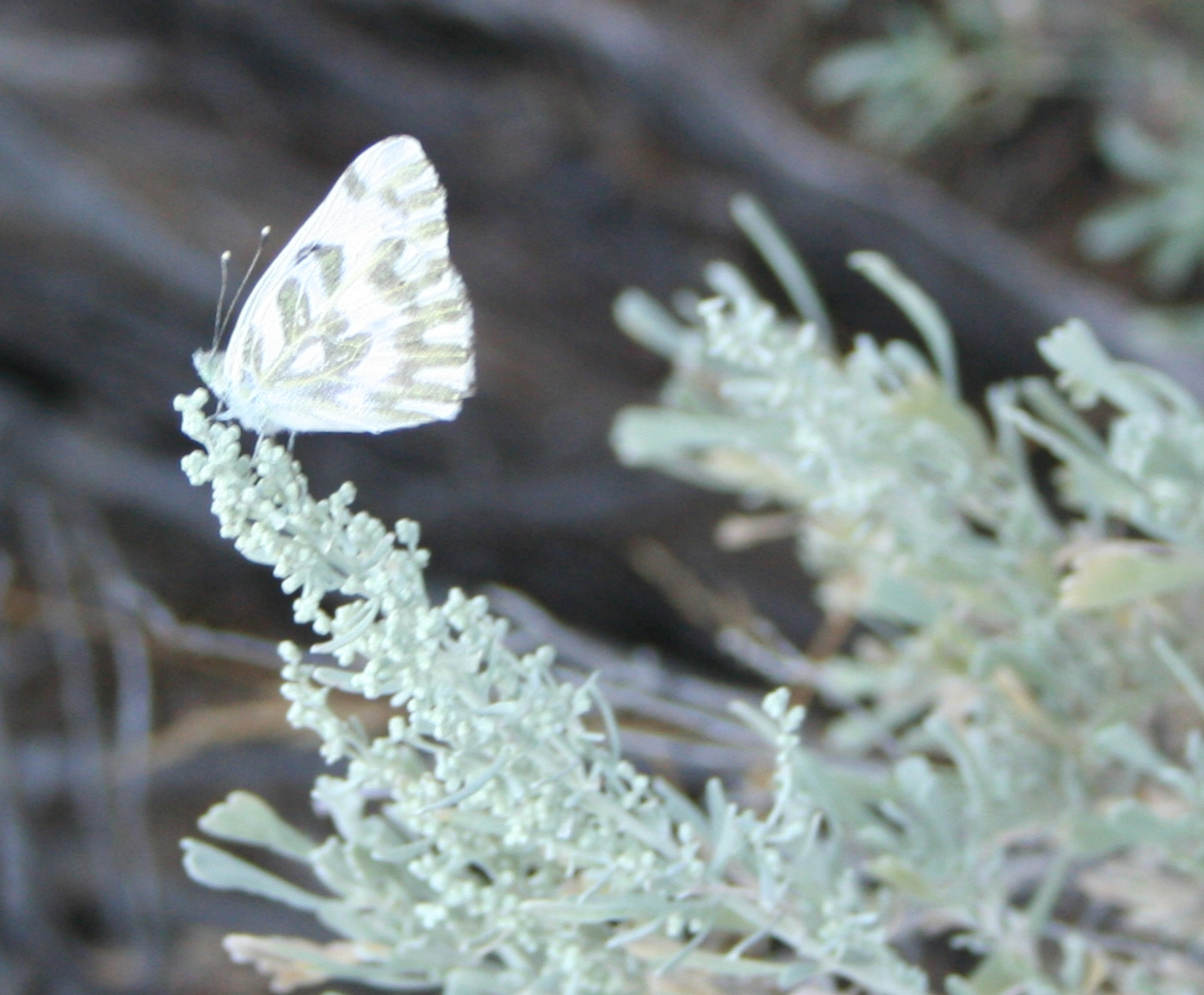
My camera caught this one on the sagebrush way up the draw. I tried to get a better closeup so I could later identify it but this was the best I could do. i am pretty certain it is a Becker’s white (pontia beckerii).

This was not a very focused photo (thanks, Harvey) , but it was enough for me to deduce the butterfly is a Pine white (neophasia menapia).

I had a great time tracking down the insects (butterflies mostly). It really helps if you have a good field guide (I used Kaufman’s Field Guide for Butterflies) and the Internet (the bugguide.net). There were way more insects than I could photograph. A person would need to spend three seasons sitting with a notebook, a camera with a great macro and several field guides to really understand the insect culture of a high desert creek and ecosystem.

So – for my NEXT camera: Macro lens and huge Zoom lens. Oh yeah, Baby!

ttfn!!

Read Full Post »

The Rocks

One of the reasons I love Pike Creek (and the entire Steens Mountain, but especially this one little creek) is the rocks.

There are the familiar basalt cliffs, shale talus slopes, and hidden thunder eggs. Before the public lands were turned into Wilderness, we used to rock hound up above the old mine for thunder eggs (geodes).

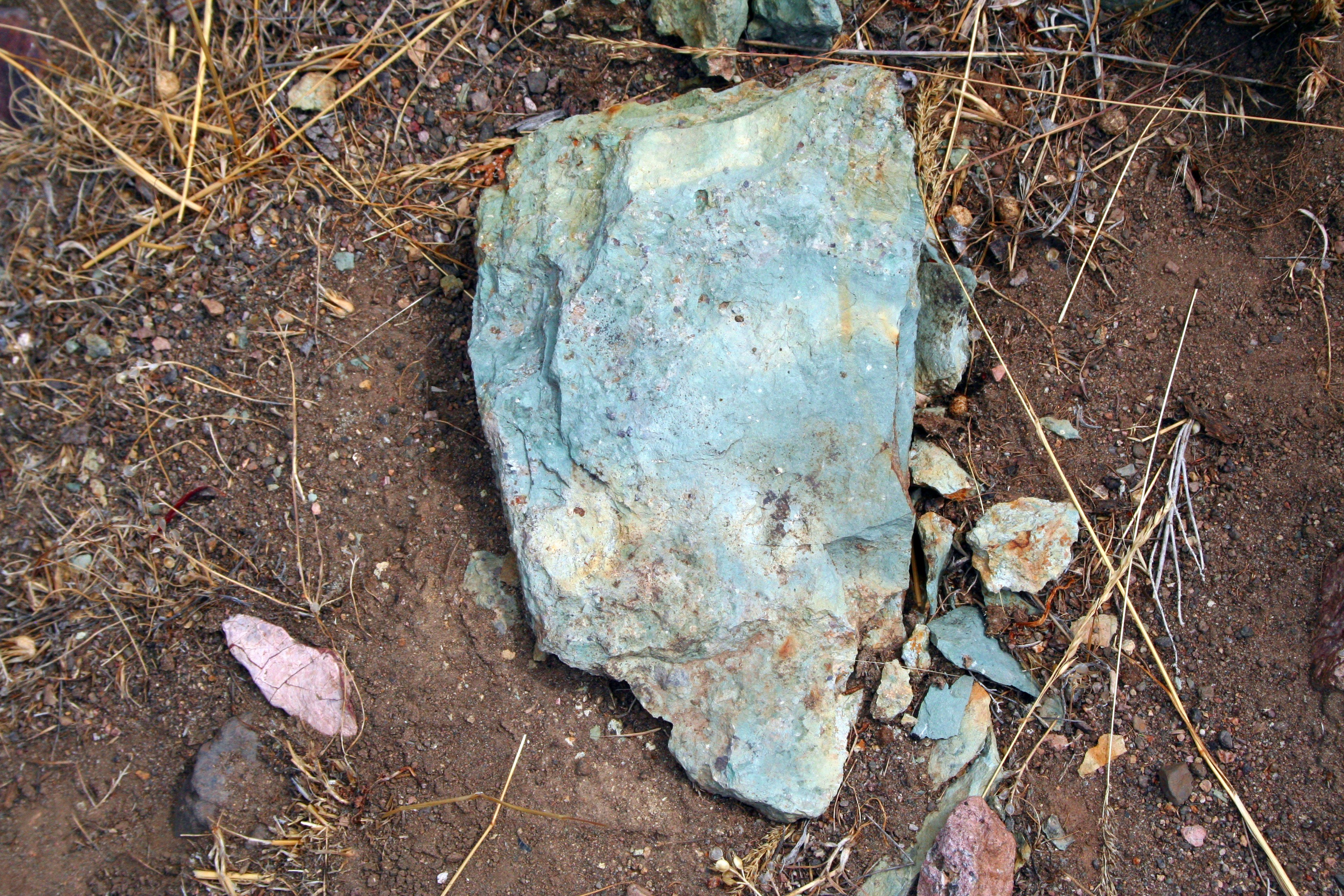
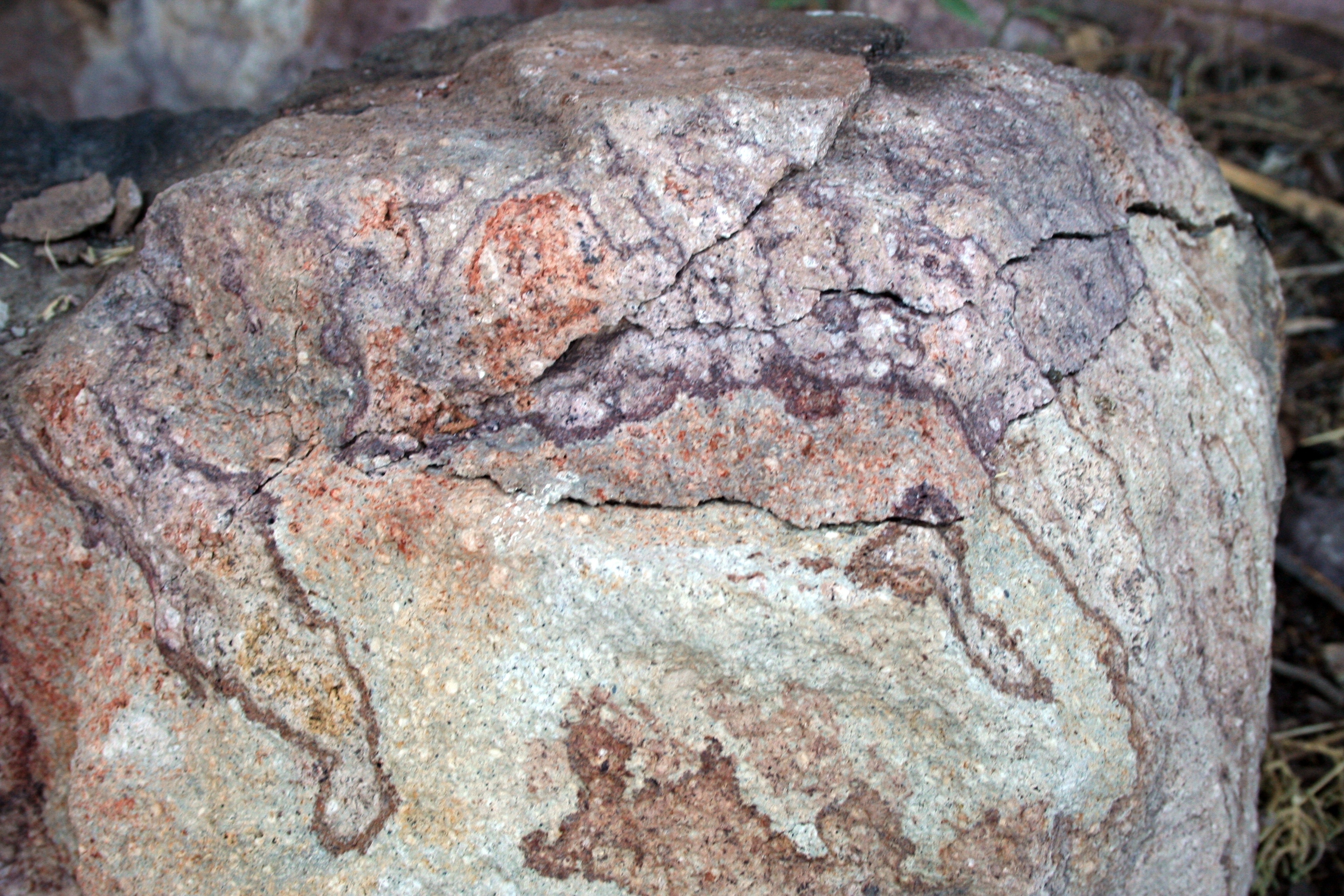
Down on the private property section of the creek, the boulders are house size and made up of some pink-and-white sedimentary composition. There are green rocks, too: startling green rocks.

I thought I’d post a photo blog of rocks tonight.

Green rocks and pink rocks and all kinds of rocks.

Pale green rocks and more.

Green rocks to pink rocks…

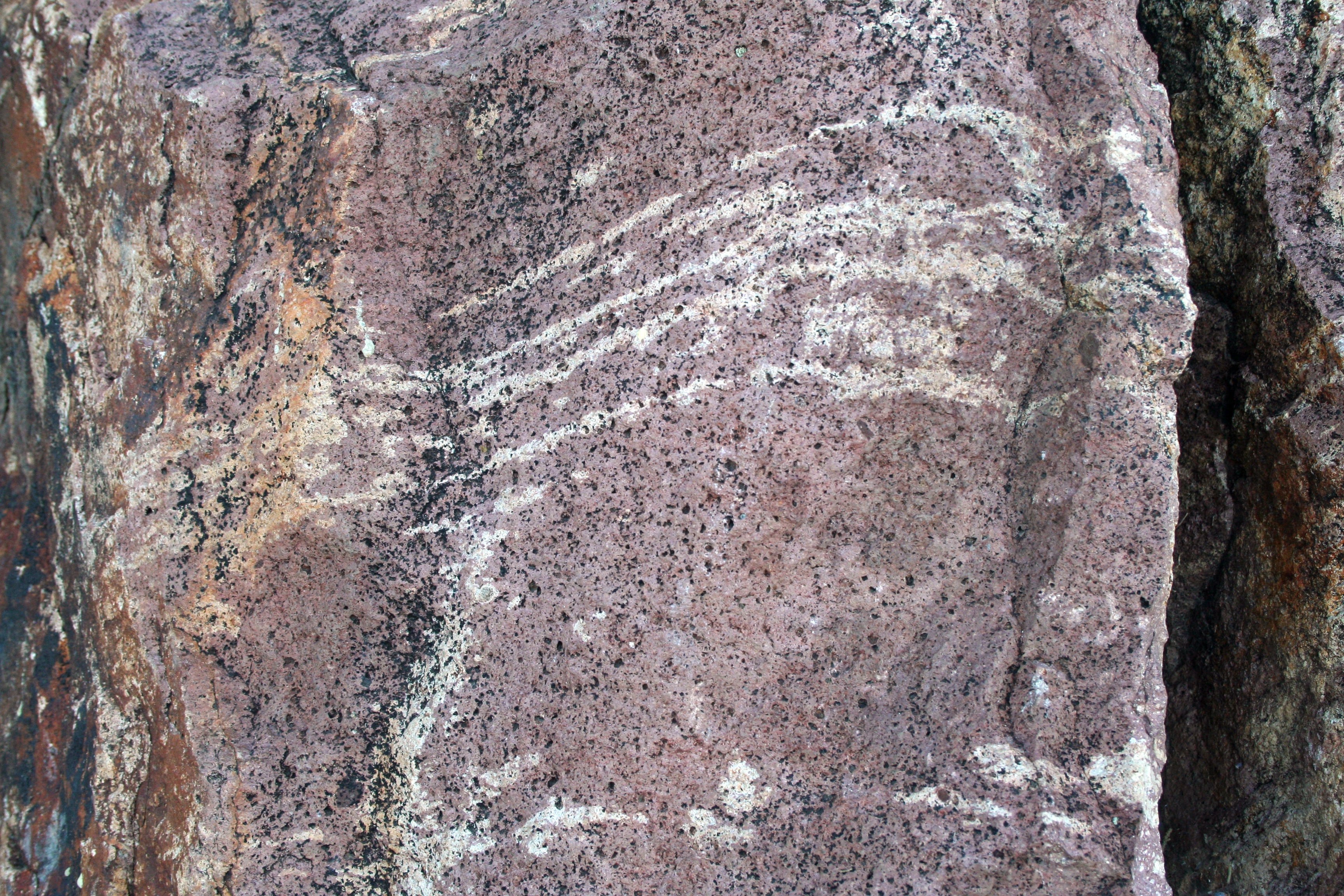
The pattern of white rock in the pink rock looks like some sort of ancient graffiti, but it isn’t: it’s a natural streaking.

It’s not just on one pink rock, but all of the big pink boulders are striated with white.

A different combination of colors: pink, peach, grey, purple.

Strange green boulders and green slide composition abut next to the pink rocks up the canyon.

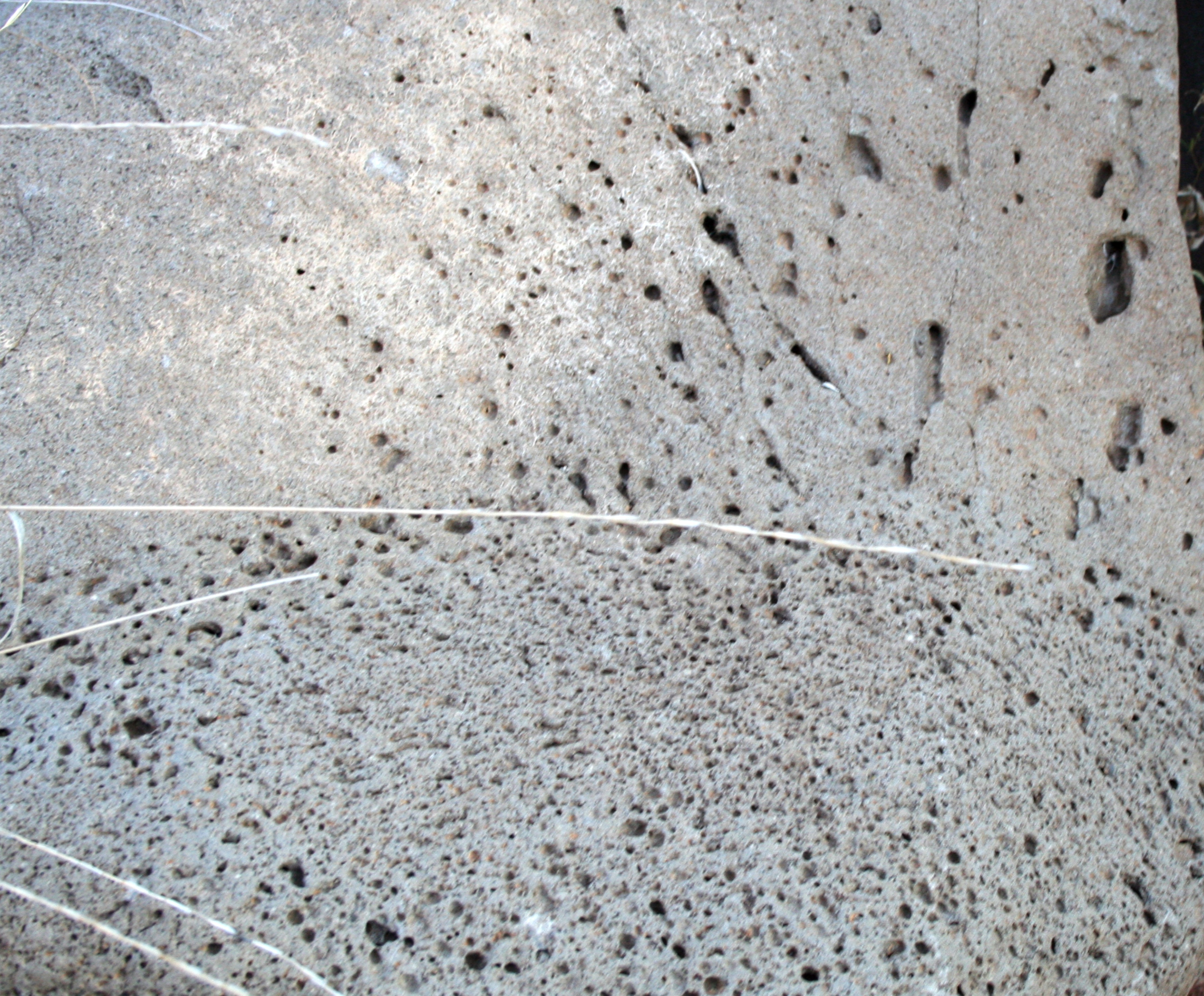
Something altogether different in a pale grey stone chock full of tiny holes.

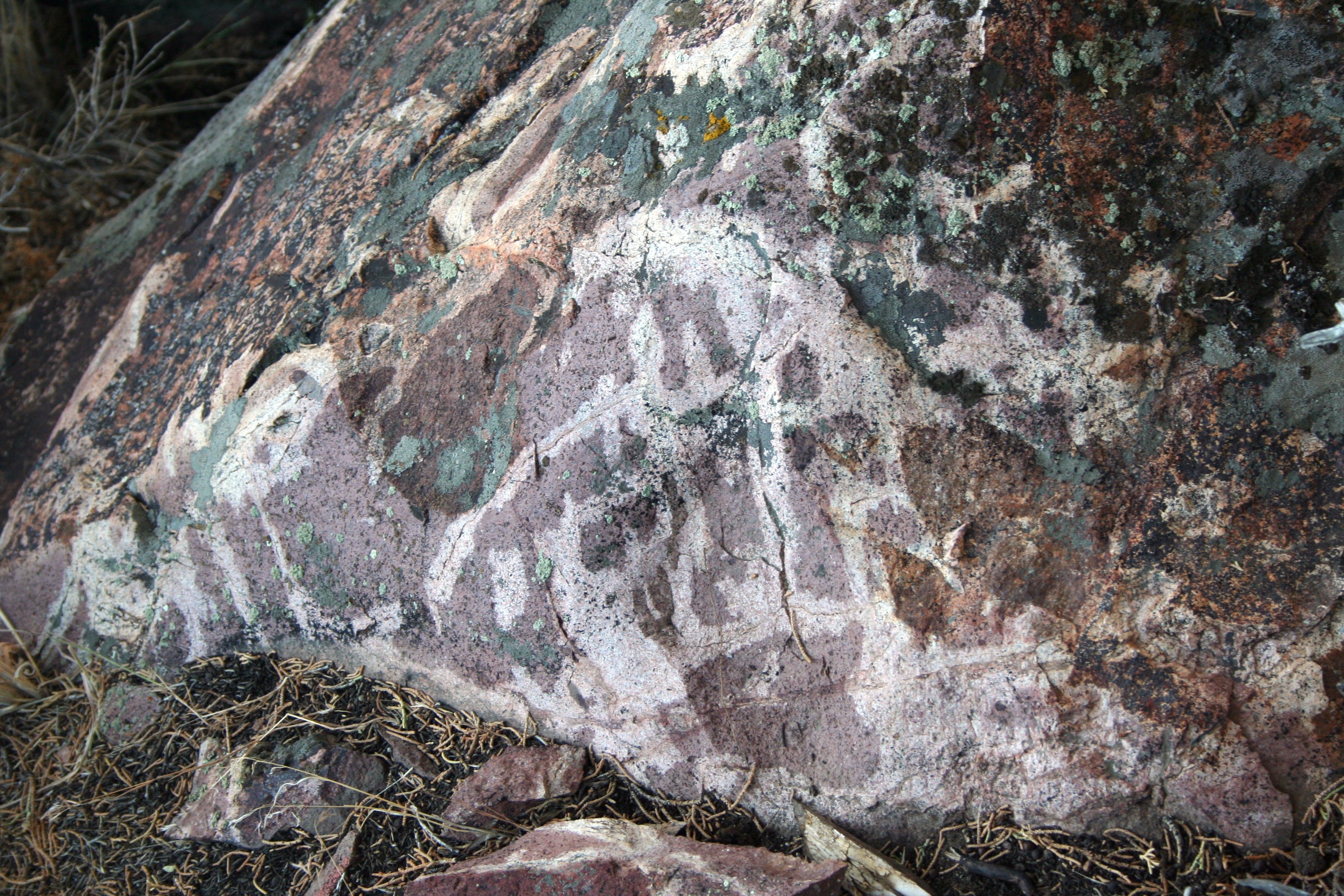
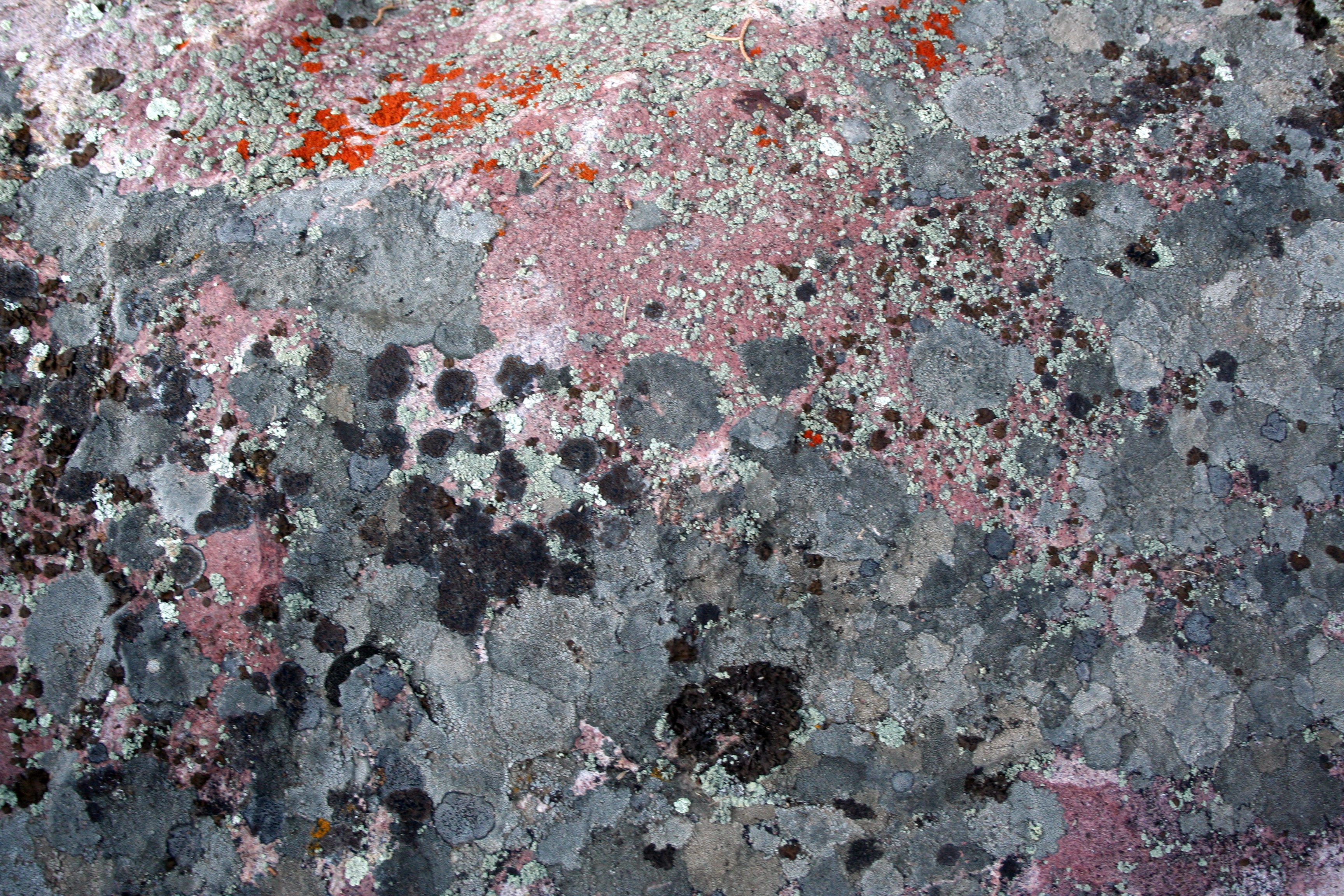
Add old lichens and new ones to the pink-and-white rocks and the effect is breath-taking.

Read Full Post »

Ahhhhhhhh

I don’t know what it is about dropping over the pass and into the Alvord country, but I feel a sudden “Ahhhhhhhhhhhh” settle over my spirit when we do. There’s a junction at the bottom of the grade: south two miles to Fields and on to Nevada or north. We took north. The first five miles are paved, but then it turns into a wide gravel road that winds through ranches, the community of Andrews, and more ranches, turning along property lines and taking you steadily north. Cheat grass faded white, sagebrush and green alfalfa fields pass by until the last rise.

Suddenly, the earth drops off and you’re staring at the dry lake bed of the Alvord Desert on one side and rolling sagebrush foothills to Steens Mountain on the other side. There’s very little green except what is irrigated or where there is a natural water source (small springs up the draws and the natural hot springs at privately owned Alvord Hot Springs). One draw is always green: Pike Creek.

Pike Creek is glacier-fed from a multitude of springs in that high box canyon on the east side of Steens. It is a year-round creek, but I’ll post more on the water flow later.

It’s the house-sized boulders that fascinate. You can see them, littered down the canyon: remnants of some great glacial melt, push from that canyon and deposited along the hill side. They are not basalt rock, but some sort of sedimentary rock. And they aren’t ordinary colors: they are pink, green, purple, and then brown, black and white. The rocks are amazing and I will do an entire blog on them.

The road up takes some skill to navigate as the smaller boulders make up much of it.

You can’t see if anyone else is camped up there until you are right on top of them, so we always hold our breath going up: we want the campsite under the “big rock” with the juniper growing out of it, right at the very top of the camp ground.

(Yes, that’s Harvey barking. Harvey is always barking. Harvey can be a pest.)

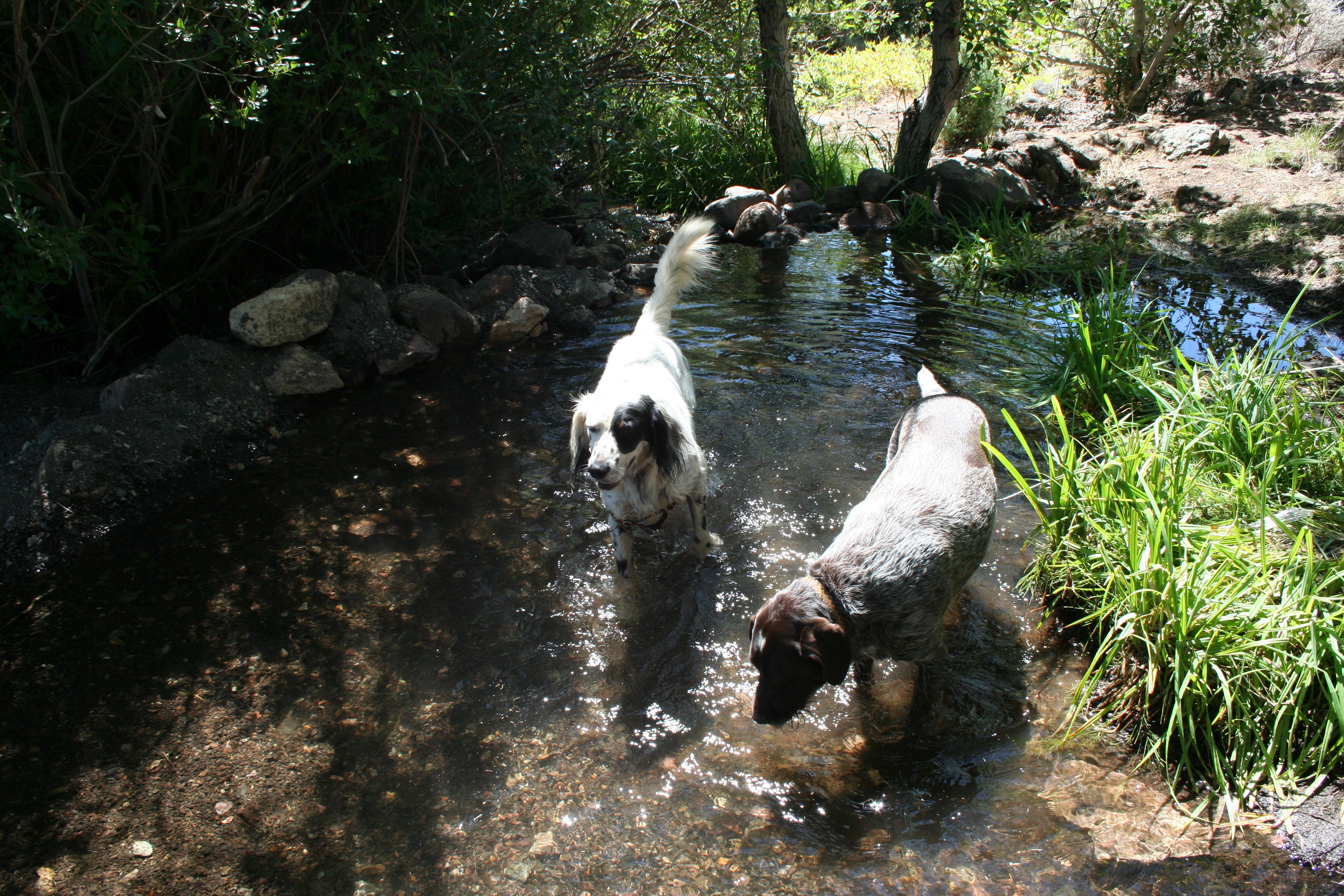
We made it, we got our camp site, and we’re ready to do NOTHING for the next few days except to sit in our chairs and watch dogs play in the water or the wind blow up dust storms down on the Alvord.

ttfn –

Read Full Post »

We left our pretty (but littered) campsite on Sunday morning after I warmed up some. It was a short drive down off the mountain and into Burns where we stopped to resupply our groceries and get gas. From Burns we were heading south to French Glen and on down along the Catlow Valley to the junction to Fields Station before turning north again and coming around the east face of Steens Mountain. In essence, we were circling the mountain.

It’s a long old drive through some fascinating country. Just south of Burns, you climb a steep hill – sort of like up and over a short, narrow ridge of basalt and sagebrush. On the other side, you drop down into a dry lake bed. Actually, it is two dry lake beds: Malheur and Harney Lakes. 24 years ago when I first saw this country, the lakes were at a five-hundred-year flood level and actually met out there, flooding out homes and the highway (which is built on a dike). But the water has long since receded and memories are short (we saw new homes out on those alkali flats that not so long ago were under deep water).

The highway circles around Malheur National Wildlife Refuge which is a marshy refuge that is home to birds most often associated with the ocean: pelicans, avocets, white-faced ibises, a myriad of ducks, geese and even occasional swans. It’s great country for an avid birder. Also hiding out on the refuge are trophy mule-deer bucks and big antelope bucks.

All around this country are large cattle ranches and much of the drive is through what we call “open range”. Basically, cattle have the right of way.

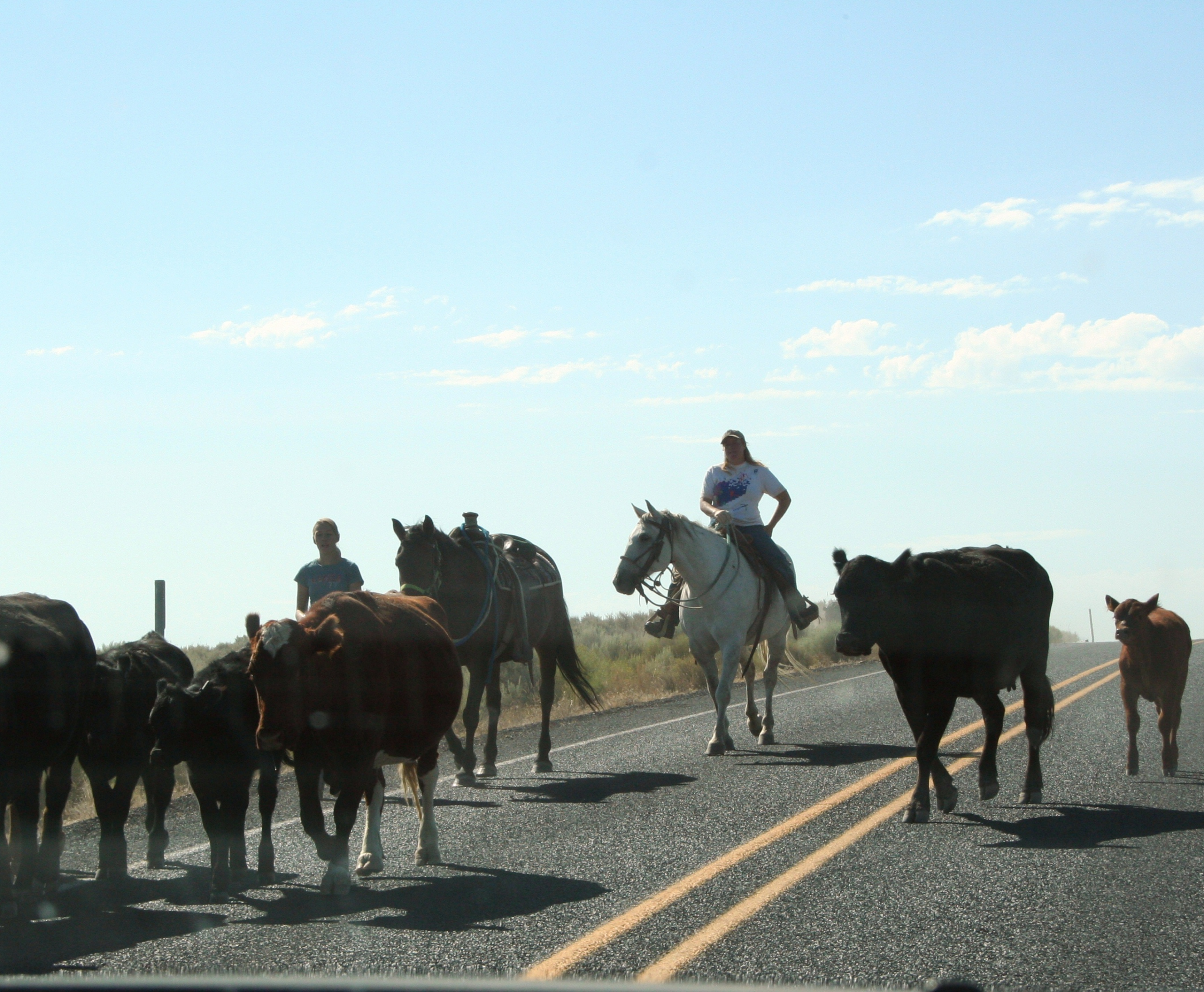
Which brings me to the cattle drive. There’s nothing quite like being stuck in the middle of a cattle drive. Don and I may be from Portland these days, but we grew up in rural counties of Oregon and Nevada. We grew up with the knowledge of how to drive through one: essentially, you slow down to a mere crawl and wait for the cows to part. Try to move too quickly and Bossy might kick out a head lamp. And there’s the cow poop to deal with.

I did the tourist thing and took photos through the windshield. I mean, why not?

Here we have a nice crowd of Angus-cross cows and calves, with plenty more trailing up the highway to meet us. You can see why coming to an almost stop might be necessary: bovine intelligence comes to a complete standstill as the cows contemplate bolting to one side or another or back the way they just came from.

Back the way they just came from ride the cowboys on ATVs or horses.

In this case, back the way they came were two very tired, hot, dusty cowgirls and their equally hot, tired, dusty Quarterhorses. After I snapped the photo, the girls gave us a Princess wave and we all laughed.

There were cowboys coming up, too, but they were big boys on ATVs and not as photogenic.

We continued on to French Glen without incident. At French Glen, you are on the western slope of Steens Mountain and it seems less than impressive because you are on the gradual side. But that changes on the eastern side.

It’s a steep climb out of French Glen over a long plateau before you drop down into the Catlow Valley and the Roaring Springs Ranch country. You really have to watch for loose cattle on this section of the drive, but we were more focused on what might be crossing the road without any legs.

(Wanna hear a bad joke? What do you call a cow with no legs? Answer at the end of this post.)

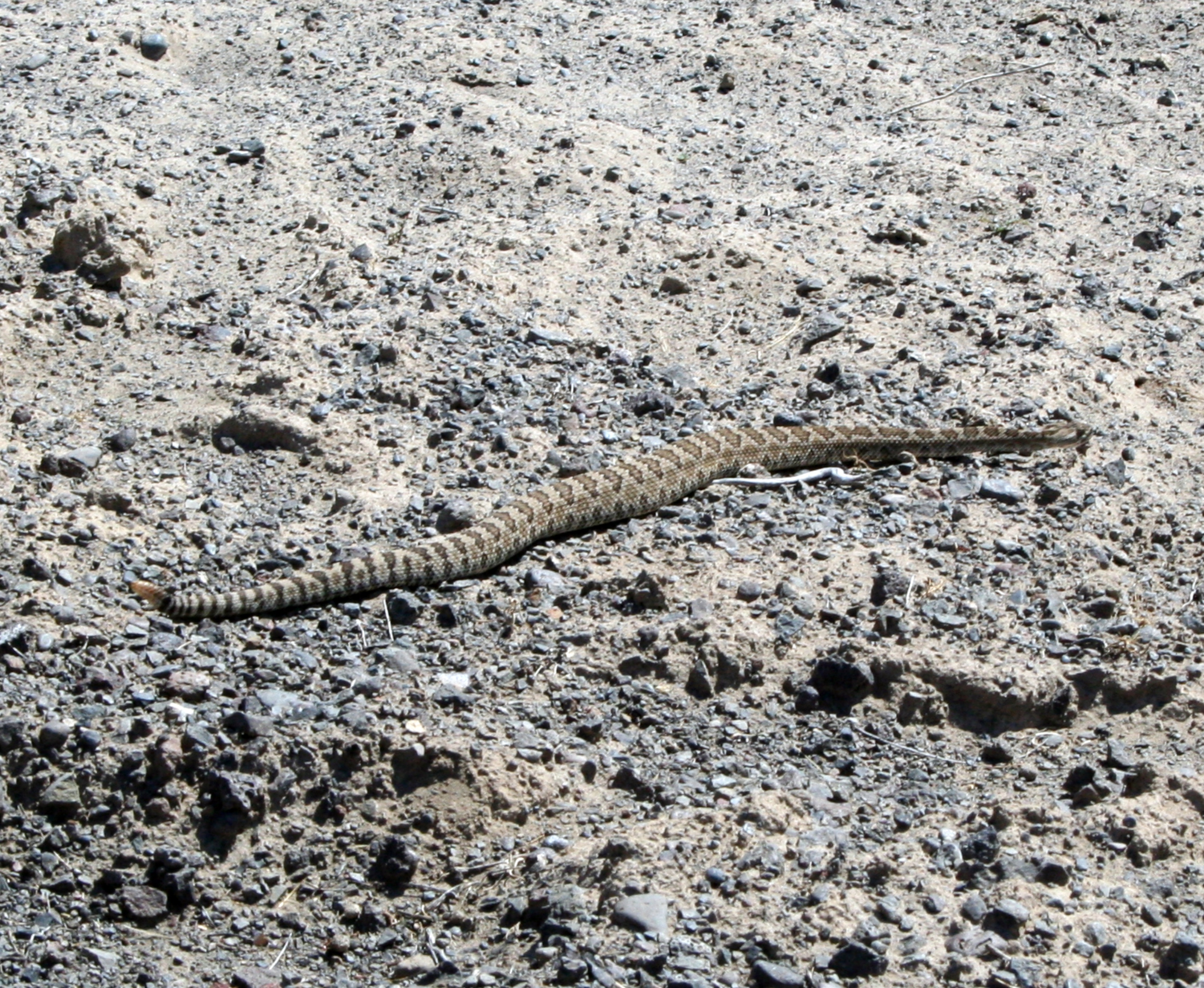
We try to avoid running over snakes. They could be bull snakes, for one thing, and who wants to kill a bull snake? Or they could be a racer or something else “benign”. But most often they are exactly what we found: a Great Basin rattlesnake. A fat one, too, full of some poor golden-mantle groundsquirrel dinner and making for the sagebrush as quickly as it could.

This is the only time I approach a rattler: when it is clearly on the retreat off of hot pavement. Even so, I didn’t get anywhere near striking distance to this beauty.

We made sure it cleared the road, then we headed on down to the pass between the Catlow Ridge and the Pueblo Mountains that would drop us down into the ancient lake bed of Lake Lahontan. And there will be more on that tomorrow (or when next I update my blog).

Answer: Ground beef. I told you it was BAD.

Read Full Post »

I have very little time for the computer tonight (I’m behind on reading blogs but I *will* get caught up). How time just flies right now.

Last Saturday we crossed over the Cascades and dropped down into the more arid part of the state. It always fascinates me how you can be in the midst of fir forests with thick underbrush and moss on one side and on the other side, you’re into tall Ponderosa pine forest and a different kind of underbrush. Right on the Santiam Pass, the forest is all dead sticks: a reminder of forest fires past and a legal battle over salvage logging. The loggers lost that battle and the snags stand rotting, but the thick undergrowth provides a different kind of habitat and smaller mammals thrive. The corridor into Sisters and Bend has been managed to look like a forest preserve along the highway with all the undergrowth burned out (presumably to help stop wildfires through all the resorts).

Once past Sisters, we veered into Redmond and Prineville and country that is a mix of sagebrush land and pine forest, sometimes giving way to juniper forest. We took a back road to Post (the geographical center of Oregon) and on to Izee before we dropped south on a Forest Service road. A side note on Post: we once stopped there when the entire town was having a yard sale.

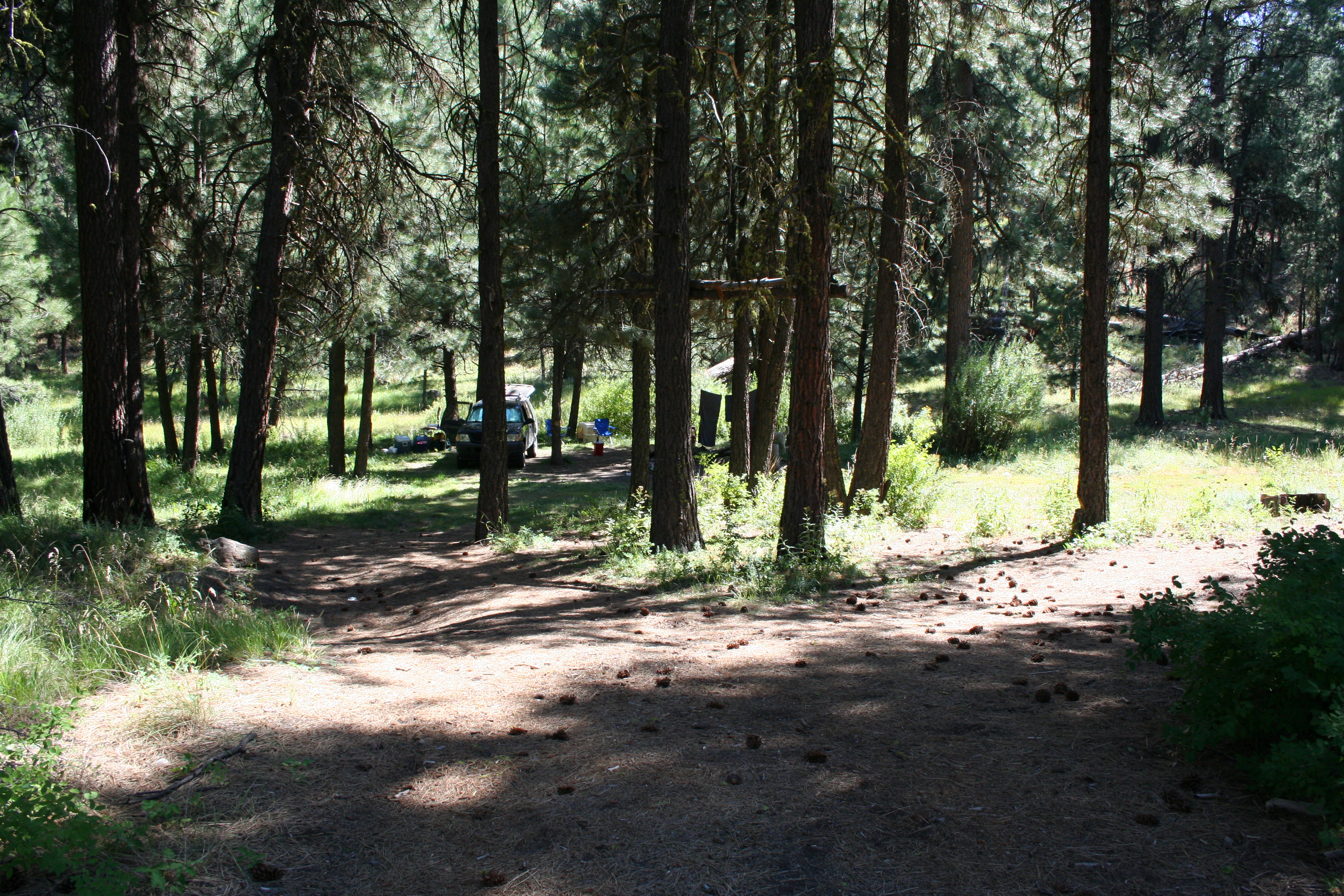
Don had an idea that we could camp at a USFS designated campground but when we got to that site, it was full. And full was really not what we wanted with two big dogs that like to bark at other dogs and children on bicycles. So we back-tracked a little and took a chance on a spur road and found a beautiful site right on a creek.

The only problem was…

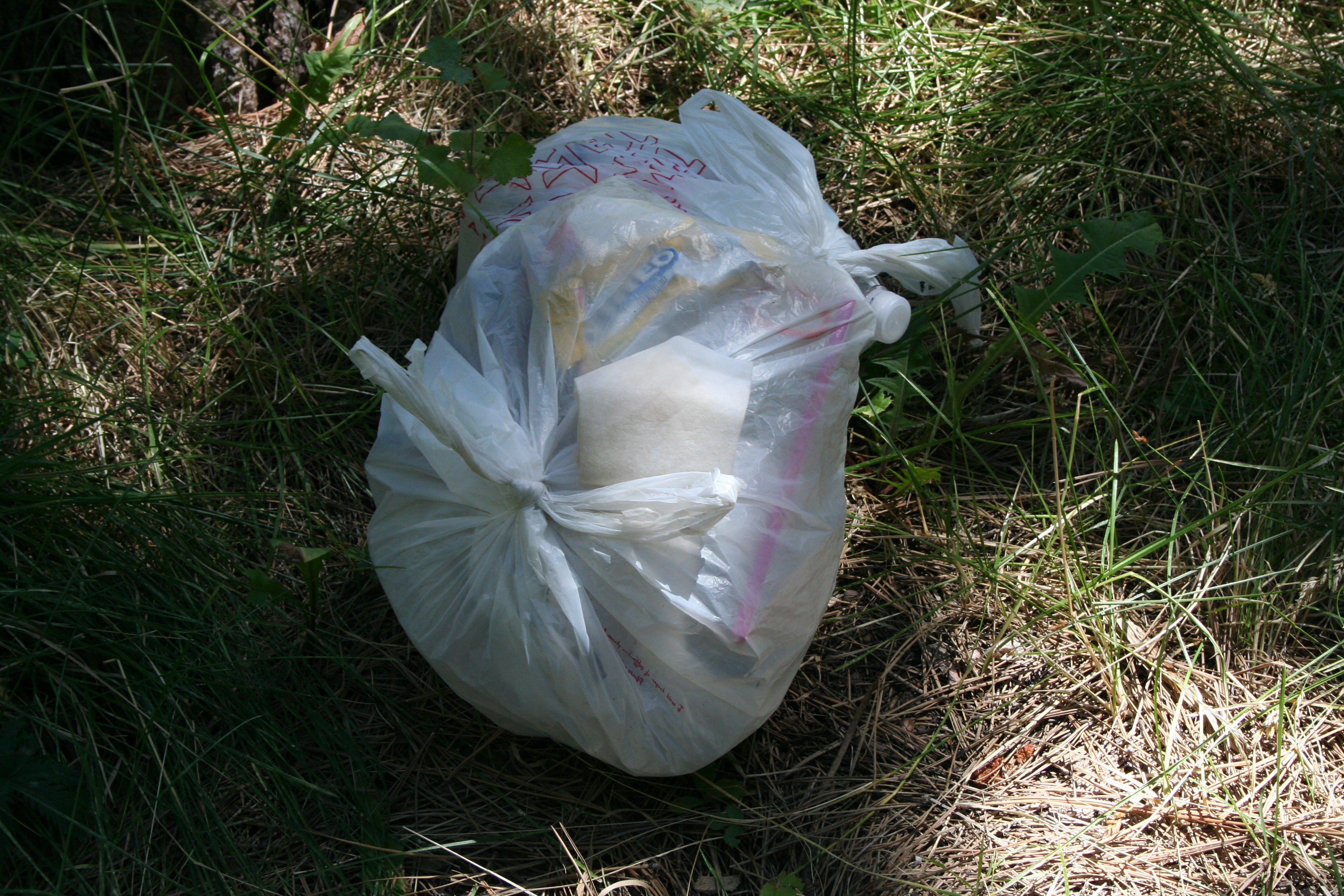
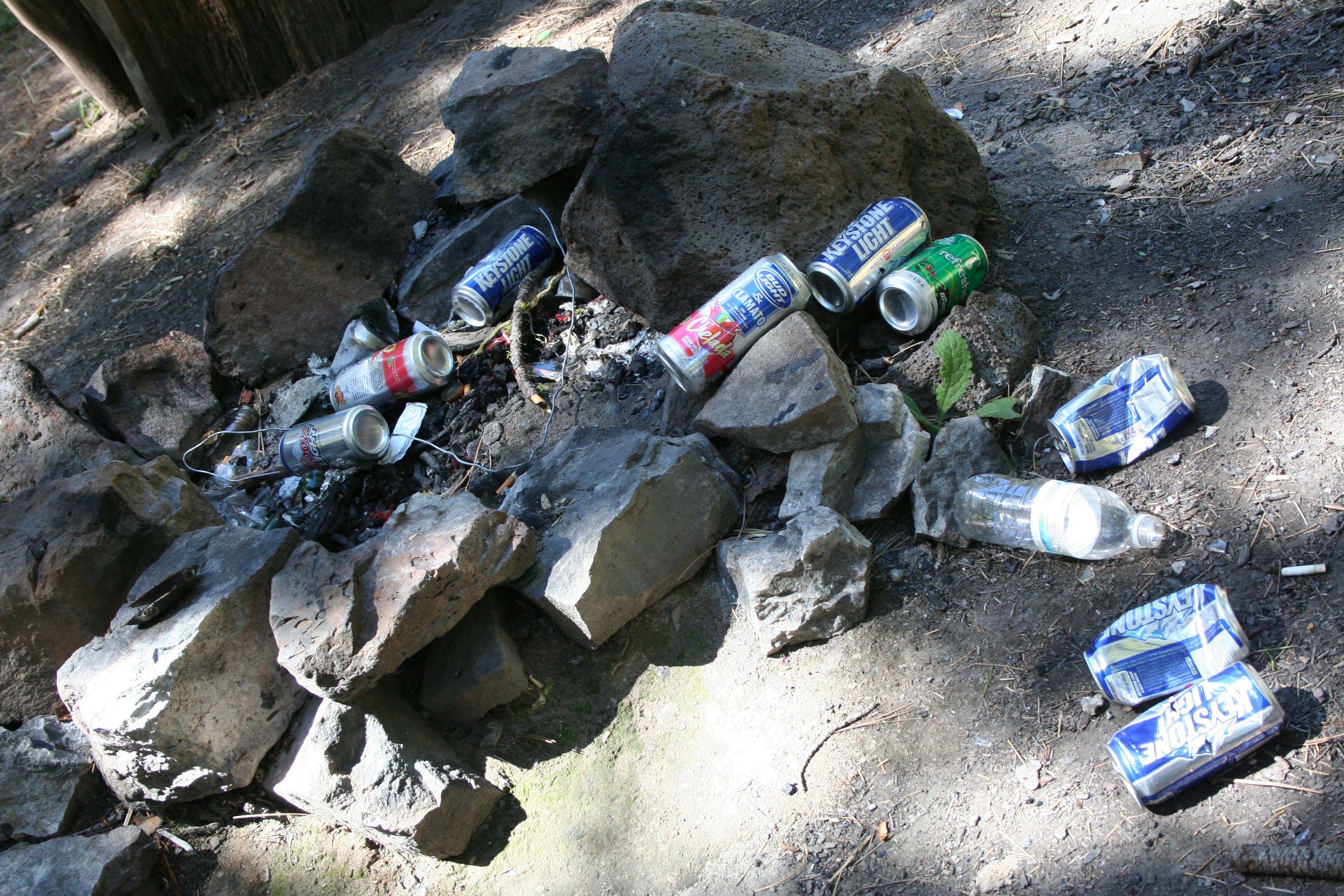
We got to clean up after the previous campers.

There were more in the trees everywhere. Nearly all of the junk had been purchased at Safeway, so my bet is that the culprits live in Burns (the nearest Safeway). They used the cans for target practice. After we cleaned it up, the site was nice. And on our way through Burns, I deposited all the trash in the Safeway trash cans. Had anyone attempted to stop me, I would have pointed out that it was all Safeway trash and they ought to thank me for cleaning up the campsite and returning the items to the store that sold them.

It’s one of my pet peeves: people can haul all this stuff out into the woods (or on a backpack trip) when it’s full. But when it is empty and no longer weighs anything, they can’t be bothered to life a finger to pick it up and haul it back out. Yeah, I see that as real macho.

But garbage aside, we were beginning to relax.

We didn’t see many wild animals (probably pretty gun-shy after the last party), but we were at least in a healthy strip of Ponderosa pine with currants and sagebrush and wild grasses still green for the undercover. The stream had a healthy population of frogs, fingerling trout, and dragonfly nymphs. The mosquitoes were minimal, but that could have been our fancy new ‘Skeeter Beaters and the fact that the temperature dropped to less than 37-degrees (F) overnight.

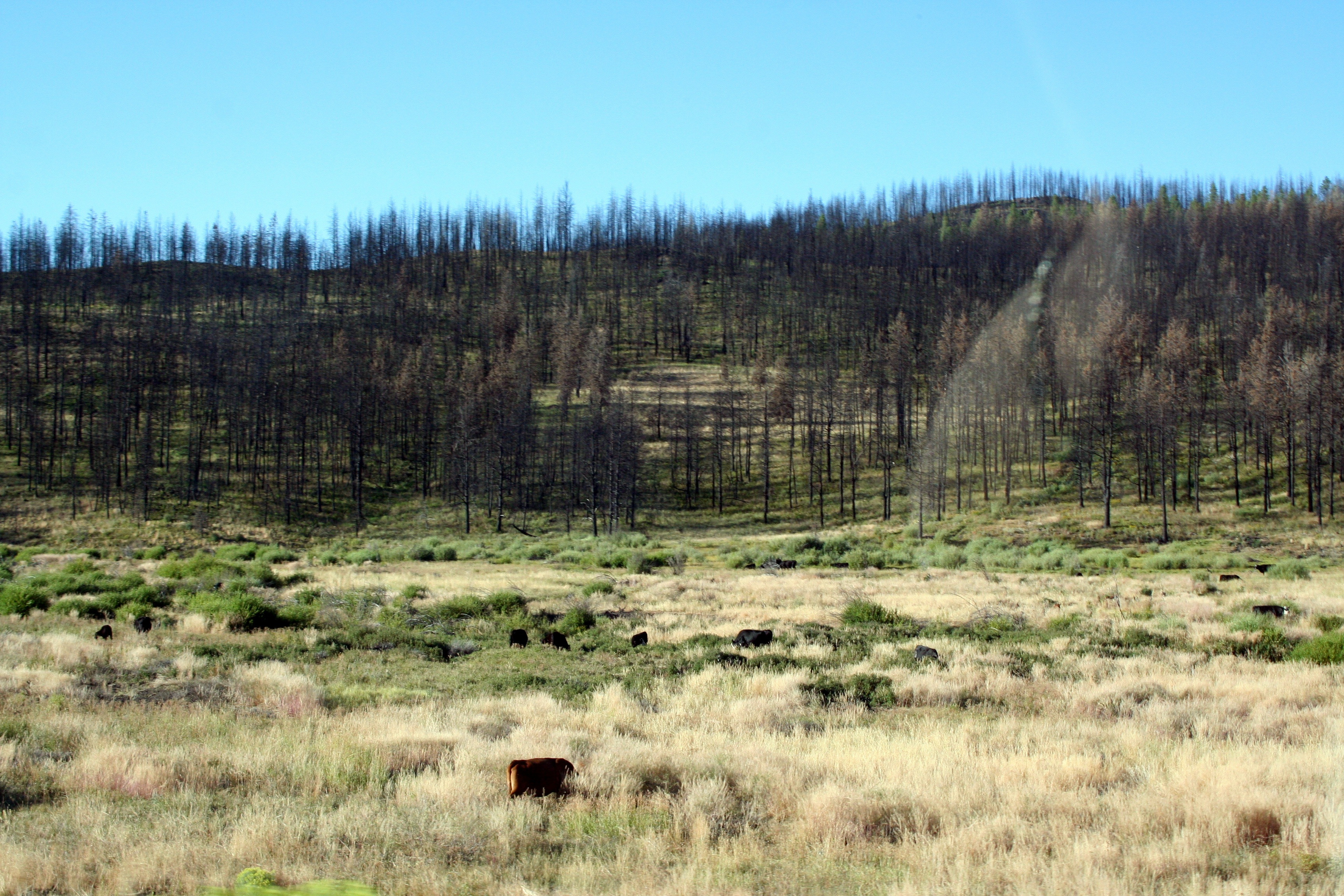
Yeah, it got cold. Good thing we pack our winter coats when we go on vacation to the desert in August: I wore mine all morning plus a pair of fleece gloves to keep my hands cold. No camp fire: fire danger was “Extreme” or “High” everywhere we went. And just around the corner from this camp was a grim reminder of why a camp fire in August is not such a great idea.

I took the photo on the move, hence the window reflection.

Love the cows.

Until the next post – Jaci

Read Full Post »

Whirlwind Outta Here!

I crave the desert. It’s been nearly three years since I’ve been camping on the desert and I can feel it in my soul. The quick drive through to Colorado last year was not quite enough to sate my hunger for the lonely stretches of sagebrush and alkali. I think I have alkali in my blood. Alkali and high reaches.

In planning our week of vacation, I vacillated on where to go: explore new country in the timber or press Don to go clear across the state to the Alvord with two large dogs? In the end, he was the one who decided we could manage the trip to the desert with the dogs. He even planned how we could camp by water nearly every night. It was an incredible relief to me to think I was going back to the high desert country! I need sagebrush and white dust and magpies, mountain bluebirds, western meadowlarks, and the vast vistas. You cannot see nearly as far in this country as you can in the high desert mountains. I get claustrophobic when I cannot see long distances.

We set a little contest: who would see the first meadowlark (me)? Mountain bluebird (Don)? Magpie (me)? Black-tailed jack rabbit (Don)?

When we set out on a trip like this, I keep a notebook handy to record how many animals we see and what kind: birds for my life-list, butterflies, mammals and reptiles. If we go during wildflower season, I track the wildflowers we discover. I journal more during vacation than any other time during the year, probably because I haven’t got the distractions of a wired life hanging over me.  I also usually take along a box to put little things in: bits of wood, rocks, wildflower seeds – anything that is interesting that I think could be translated into art (seeds plant my garden which is art). This year, I merely took photos of the things I saw that inspired me.

We live at about 180-feet elevation and our destination is always 3,000-feet or more above sea level. High desert refers to the elevation as much as it does the arid country. It is not a “desert” that is devoid of life (those are very rare – even the Sahara has life in the endless dunes). High desert is full of life: plants, creeks, pools, insects, reptiles, birds, mammals. There is no void. Indeed, I did not know that other people thought of desert as a place that is always hot and has no life in it until I left the high desert!

Hot? It also has extremes in cold. Lifeless? Sandy? Desolate? I guess it depends on your point of view. If you have lived all your life in places where the horizon is green and not shades of brown, grey, and purple, then the desert is devoid. But, honestly: how many shades of green are there? They seem infinite in the Willamette Valley or the Cascades. The high desert country has more variety of color in a single vista, and not merely shades of green. (Don’t get me wrong: I love the vistas of the Oregon Cascades. They are steep, intimidating, rugged, and innately wild.)

A “hot” streak was moving into the lower Willamette Valley as we headed out. Temperatures were predicted to hit triple digits with corresponding humidity, a rare occasion in the Valley. We were headed into country that is dryer and sometimes a whole lot warmer.

We hit the road on Friday night as soon as I was off work. Traffic was a nightmare, so we took a backroad through Molalla and Silverton (I need to take my brother to Silver Falls out of Silverton sometime) down to Oregon Hwy 20. Then we turned east and cruised up along the North Santiam River to Detroit.

This was Harvey’s first real road trip and we learned a lot about Harvey. He gets car sick if you feed him before you leave (we had one other dog that did that and I get car sick if I can’t be in the front seat, so there’s a lot of empathy for him). He barks going down the road, but we attributed that to getting car sick.

Our first destination was Presley Lake which we are certain is named for some ancestor of Don’s but we haven’t discovered the history of the lake (yet). We’ve been there many times over the years. Sadly, this year other campers were staked out on the only available shoreline and we had to camp back in the trees. It was probably just as well because the wind came up and blew all night. It did curtail photo opportunities, however, since we could not get down to the water.

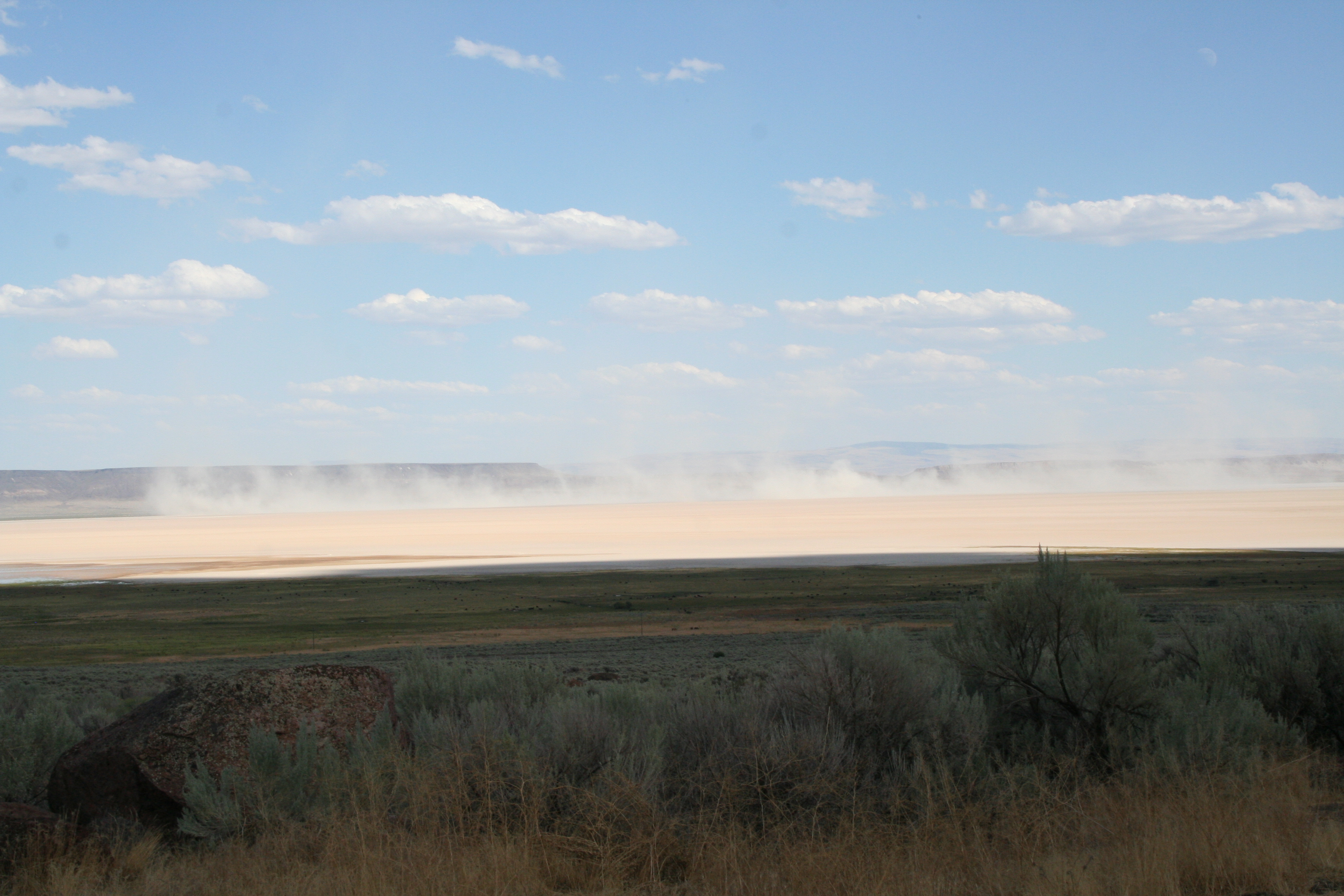
(whirlwinds on the Alvord Desert)

Read Full Post »

Did You Miss Me?

I’ve been out of town for the past nine days and today was spent sorting through over 260 photos (narrowed down to 190-something).

Don and I loaded up the dogs into their car kennels and took them on a road trip to the high desert of Oregon’s Outback country. Our destination was in the very southeastern corner of the state: the Alvord Desert which is situated at the eastern base of Steens Mountain. It’s country that is rife with interesting geology, a healthy insect population, migratory birds (Malheur Wildlife Refuge is on the northwestern side of Steens Mountain with all of its wild marshes), reptiles and a few mammals. It is also one of our very favorite vacation destinations.

I will be posting about our adventures and the critters over the next few days (unless something else comes up and interrupts me). For now, I need to continue on with sorting through all those photos.

But before we left, we welcomed a new little life into our own little world: Eliran Jeremy Weisser was born at 6:37PM on August 12, 9#4oz and 21″ long. Eliran is Hebrew for “God is my Song”. He’ll be called Eli for short and he seemed so tiny when I held him Friday afternoon.

What can I say?

This is why they call them GRAND children. 🙂

Read Full Post »

Black and White

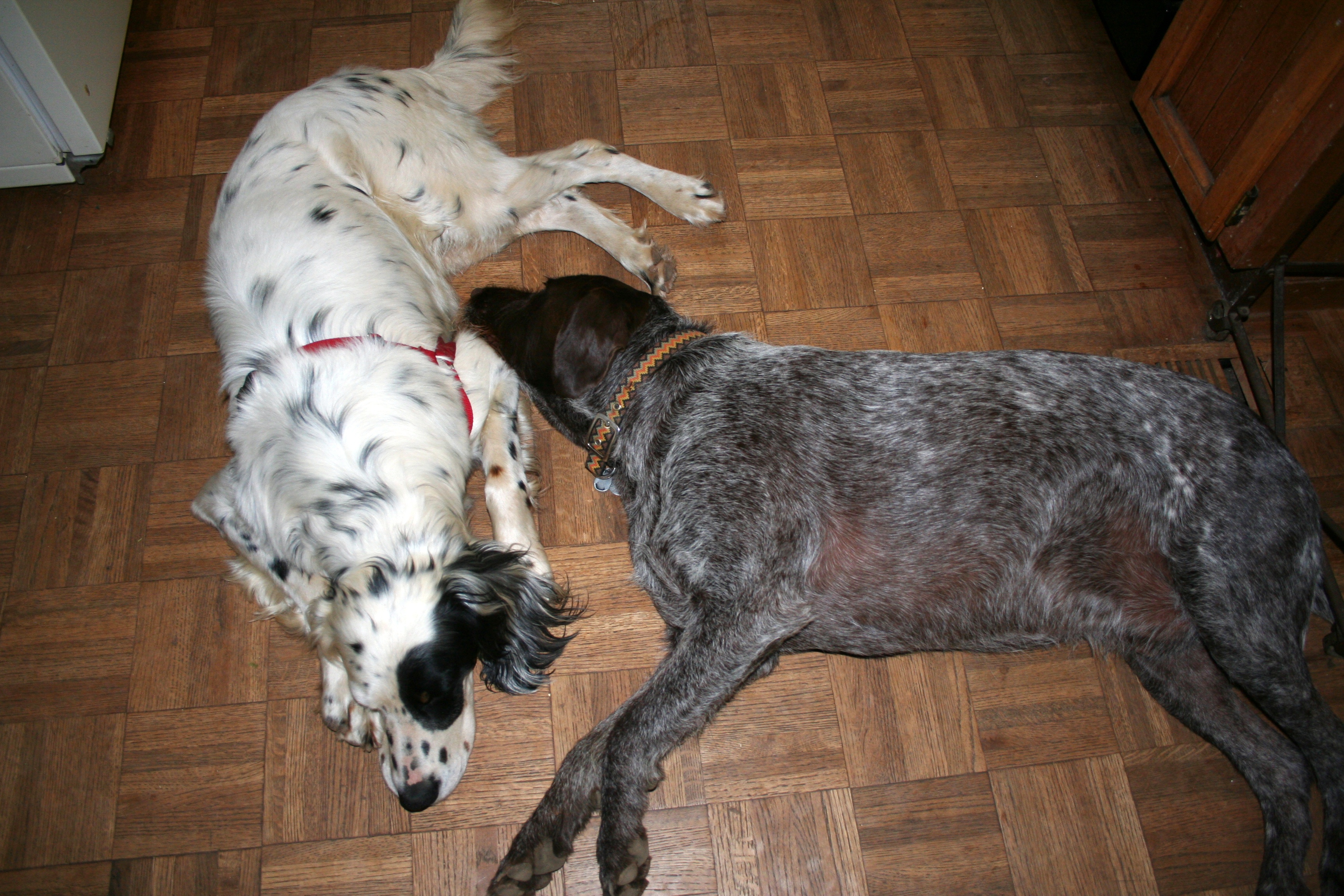
Two boys, finally exhausted from bowling each other over in the back yard.

Read Full Post »

Older Posts »